


There is a corner in your yard where nothing good happens. The mower goes around it. An empty pot sits in it. Maybe a hose got coiled there two summers ago and never moved. You have probably saved a few garden corner ideas already, looked at that patch, and decided none of them would work back there.
Here is what most of those ideas leave out. Filling a corner with plants and a chair is not what makes people use it. Plenty of pretty corners sit empty all summer. A corner gets used when it does two things: you can see it from inside the house, so you remember it exists, and it is comfortable enough to sit in for twenty minutes, so you stay once you walk out. Every step below serves one of those two goals.
The work runs from the ground up. Clear the space, shape the edge, and lay a floor solid enough to hold a chair steady. Build height at the back so the spot feels enclosed instead of exposed. Then add the seat, the plants, the path, and the light.
Plan on two weekends. The corner is sittable after the first one, so you are not staring at a half-finished project in between. No contractor, no permit, no machinery.
Start inside. Go look out the window you stand at most.
Also read: DIY Solar Jar Lanterns You Can Make for Under 10 Dollars
Choose the corner you already see from a window
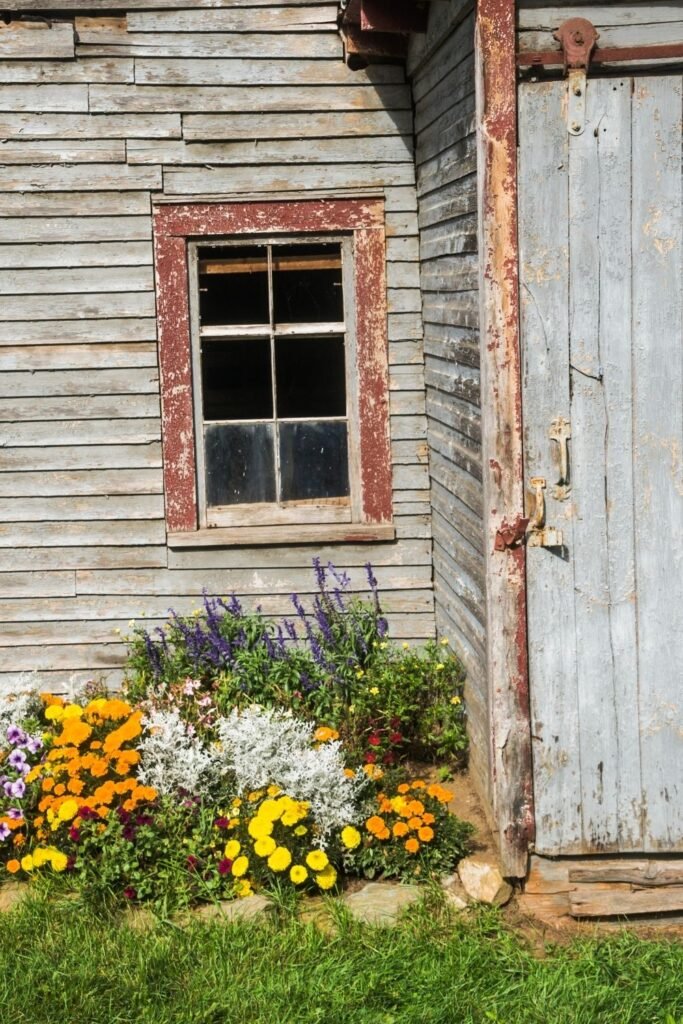
Not every corner deserves this. The one worth building is the corner you can see from a room you use daily, usually a kitchen sink window or a back door. Corners you never see from inside get built, admired once, and forgotten by August. Go inside and check the view from two or three windows before committing. The corner that shows up in your day without effort is the one you will actually walk to.
Strip the corner back to bare ground
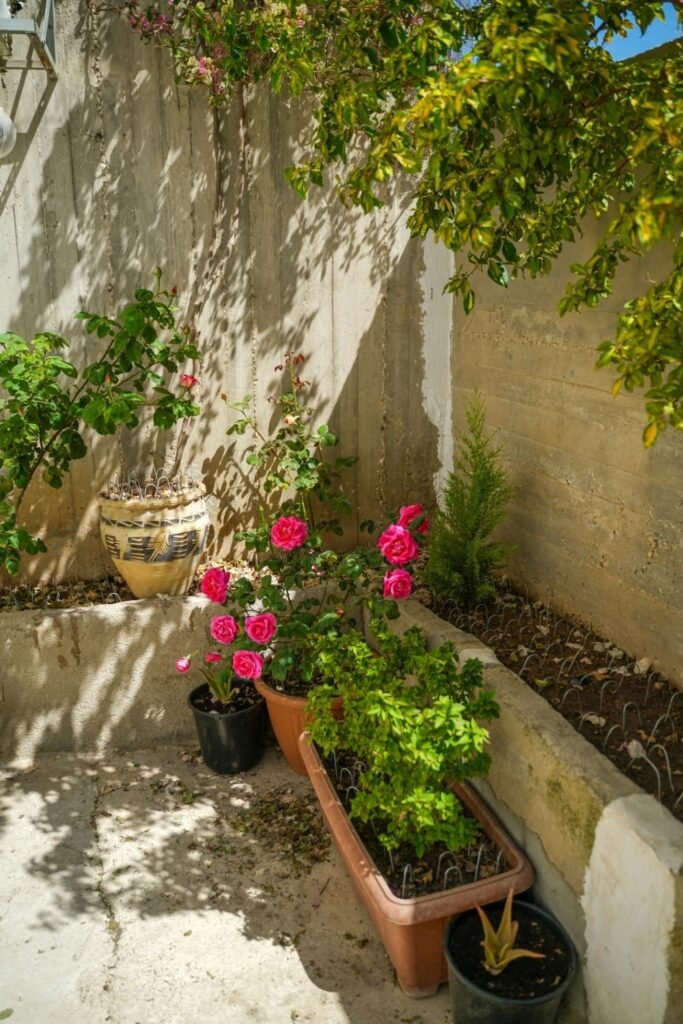
Pull everything out, including the things you plan to keep. Weeds, volunteer saplings, that coiled hose, the leaning pot. Rake out the leaf litter down to soil so you can see the true shape and slope of the ground underneath. Old debris left in place is what makes a finished corner look half-done later.
Cut a curved edge to give the corner a shape
A straight line where lawn meets planting reads as a boundary. A curve reads as an invitation, which is why almost every garden that draws you in uses one. Lay an old garden hose on the grass and shape it until the curve looks right from the window, not from where you are standing. Then work through these in order:
- Check the shape from inside the house
- Adjust the hose, then check again
- Score along the hose with a spade
- Lift the hose and cut a clean trench 4 inches deep
- Sink the edging strip so 1 inch sits above soil level
Curves that look too shallow from the window almost always are. Push the arc further into the lawn than feels natural.
Lay a firm floor the chair can stand on
Chair legs sink into soil and grass within days, and a wobbling seat is the reason people stop sitting somewhere. You need a hard pad of about 4 by 4 feet for one chair and a small table, a little more if the chair reclines. Dig out 4 inches of soil across that footprint, lay landscape fabric, then add 3 inches of paver base and tamp it flat with the back of a rake.
Set your surface on top. Pavers and flagstone look the most finished. Compacted gravel is the most forgiving for a first attempt, since it does not need to be level to the millimetre and you can top it up later.
Build the back and side walls with the tallest element first
Height is what makes a corner feel like a room instead of a spot in the open. Two sides are usually fence already, so you are adding height behind and beside the chair, aiming for at least 6 feet so the enclosure holds when you are seated. A trellis panel with a climber, a narrow evergreen like holly or arborvitae, or a large ornamental grass all work. Avoid bamboo, willow, and mint in the ground, since their roots spread under fences and into pipes faster than you can pull them back.
Set one chair facing back toward the house
One chair, not two. A pair reads as seating for company and tends to sit empty, while a single chair reads as yours and gets used. Point it back toward the house so you have something to look at when you sit down. Facing the fence gives you a fence.
Plant in three depths in front of the back wall
Leave 18 inches between your tall screening plants and whatever goes next, so nothing gets crowded out in two years. Then fill forward in three bands:
- Tall at the back, already planted in Step 5
- Mid-height shrubs at 2 to 3 feet, three to five of them
- Low edging plants along the curve you cut
Repeat the same mid-height plant rather than buying five different ones. Repetition reads as a designed border. Variety reads as leftovers from a garden centre trolley.
Carve a visible path leading to the corner
You know the path works when you take it without thinking about it. Run it from your back door or patio edge, and let it curve slightly rather than shooting straight across the lawn. Stepping stones sunk flush with the grass are the cheapest version and the easiest to mow over. Gravel between two edging strips is the next step up. Either way, keep the width at 24 inches minimum so it does not feel like a tightrope.
Place one focal object at seated eye level
Your eye needs somewhere to land once you sit down. Put one object at roughly 40 inches high, which is about eye level from a garden chair, and set it off to one side rather than dead centre. A tall glazed pot, a birdbath, or a single sculptural plant all do the job. One object works. Three compete.
Add a small surface within arm’s reach
If there is nowhere to set a mug down, you will not stay. That is the whole reason for this step. Anything at roughly 20 inches high works, so a tree stump, an upturned crate, a small metal side table, or a stack of two paving slabs all do the job. Put it on the side you would reach with your dominant hand, close enough that you do not have to lean forward.
Light the corner so it reads after sunset
Evening is when most people would actually sit out there, and an unlit corner disappears from the yard the moment the sun drops. You want two kinds of light doing two different jobs. Low path lights mark the route so the corner still pulls you outside after dark. A second, warmer light at the corner itself gives you something to sit inside rather than beside.
Solar stakes are the simplest version and need no wiring, though they dim badly in shaded gardens. A single string of lights looped through the plants behind the chair, or one lantern on the side table, does more for the mood than six path lights ever will. Keep every bulb warm white. Cool white turns a garden corner into a car park.
Plant something scented beside the seat
Scent is what turns a nice-looking corner into one you remember. Put the plant within 12 inches of the chair arm, on the side you walk past, so you brush it on the way in. Lavender, rosemary, mint in a pot, and jasmine on the trellis all release scent on contact. One is enough.
Frequently Asked Questions
What if my corner gets almost no sun?
Shade is a plant problem, not a design problem, and the structure of the corner does not change at all. Swap the sun-lovers for plants that expect low light. Ferns, hostas, hydrangeas, and boxwood all handle deep shade and give you the same three depths. For the scented plant, sweet box and lily of the valley work in shade where lavender and rosemary would sulk and rot. Shaded corners also stay damp longer, so gravel is a safer floor than pavers, and solar lights will underperform badly. Use a plug-in low-voltage set or battery lanterns instead.
How much should I expect to spend?
Somewhere between 300 and 800 dollars if you buy everything new, with the floor and the screening plants taking most of it. Paver base and slabs for a 4 by 4 foot pad usually land around 120 dollars. A mature screening shrub costs far more than a young one, so buying smaller plants and waiting a season is the biggest saving available. Stepping stones, a secondhand chair, and a stump for a side table can bring the whole project under 200 dollars if you are patient about sourcing.
Do I need to remove the grass, or can I build on top of it?
Remove it under the floor pad and the path, and leave it everywhere else. Grass left under pavers decomposes unevenly and the surface dips within months. For the planting beds you have a choice. Digging the turf out is faster to plant into. Smothering it with cardboard and 4 inches of mulch takes about three months but saves your back and feeds the soil while it works. Start that in autumn and the bed is ready by spring.
My yard is tiny. Does this still work?
It works better in a small yard than a large one, because a small space needs a destination more. Scale the numbers down rather than skipping steps. A 3 by 3 foot pad holds one chair comfortably. Use one narrow screening plant instead of three, a trellis instead of shrubs to save floor space, and stepping stones rather than a full gravel path. The one thing to keep at full size is the chair. A small chair in a small corner makes both look like an afterthought.
What if the corner is against a neighbour’s fence I do not own?
Do not attach anything to it. Trellis screwed to a fence you do not own causes arguments, and in many places the neighbour can ask you to remove it. Free-standing options solve this cleanly. Use a trellis panel sunk into two post spikes about 12 inches in front of the fence, tall planters with climbers, or a row of narrow evergreens. The gap between your structure and the fence also improves airflow, which cuts the mildew that builds up on anything pressed flat against timber.
How long before the corner actually looks finished?
The hard structure looks finished on day one, and that is deliberate. The floor, the chair, the path, and the trellis all read as complete the moment they go in. Plants are the slow part. Expect mid-height shrubs to fill their gaps by the end of the second season and climbers to cover a trellis panel in two to three years. Adding a few annuals in pots the first summer covers the thin patches while the permanent planting catches up.
Will this attract wasps, mosquitoes, or other pests?
Standing water is what brings mosquitoes, so the drainage fall you built into the floor pad already handles the main risk. Empty any saucers under pots after rain and tip out a birdbath weekly. Scented plants like lavender and rosemary attract bees, which is a good outcome rather than a problem, since bees browsing flowers ignore people sitting nearby. If wasps are a known issue in your area, keep food and sweet drinks covered and avoid planting anything that fruits heavily right beside the seat.
Can I do this in stages instead of two weekends?
Yes, and splitting it often produces a better corner. Do the floor and the chair first, then live with it for a couple of weeks. You will learn where the sun actually falls at the hour you sit, which side you keep reaching for a table on, and whether the path route you imagined matches the one you naturally walk. Plant after that. Working in stages also spreads the cost, and buying plants in autumn rather than spring usually cuts the nursery bill significantly.
The Corner Is Finished When You Sit in It
You built a floor, a wall, a seat, and a route. That is a destination.
Go out there at dusk with a drink and stay twenty minutes. That is the real test, and it will tell you the one thing still missing better than any plan would.
These garden corner ideas scale to a balcony, a side return, or the far end of a driveway. The order stays the same every time.
Pin this to your garden board so it’s there when the weather turns.