
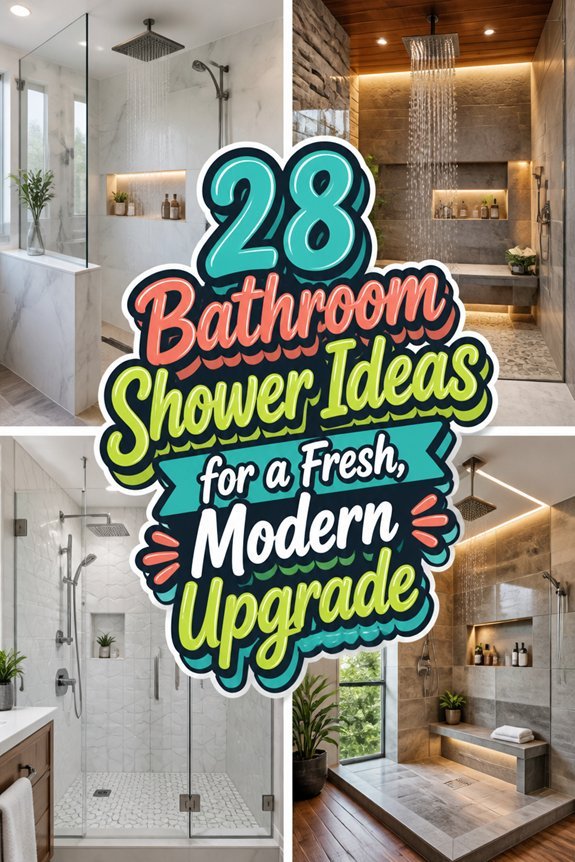
When I renovated my bathroom last year, I found that walk-in showers with frameless glass truly maximize light and space. Rainfall showerheads add a luxurious touch, while compact corner designs work efficiently in smaller rooms.
Consider tile accent walls or bronze fixtures for visual interest. Budget-friendly updates like new showerheads and fresh caulk cost under $2,000. High-end options include steam systems and heated towel racks. Proper waterproofing guarantees durability regardless of your chosen style.
28 Modern Bathroom Shower Ideas
Whether you’re swapping a tired showerhead or gutting the whole space, there’s something here for your budget. The list runs from simple finish changes like matte black and brushed brass through to steam enclosures and curbless walk-ins.
I’ve also included a few ideas that make showering easier as the years go by, like bench seating and grab bars that don’t look clinical. Plenty of them work beautifully together, so treat this as a menu rather than a set of rules.
Walk-In Showers With Frameless Glass Enclosures
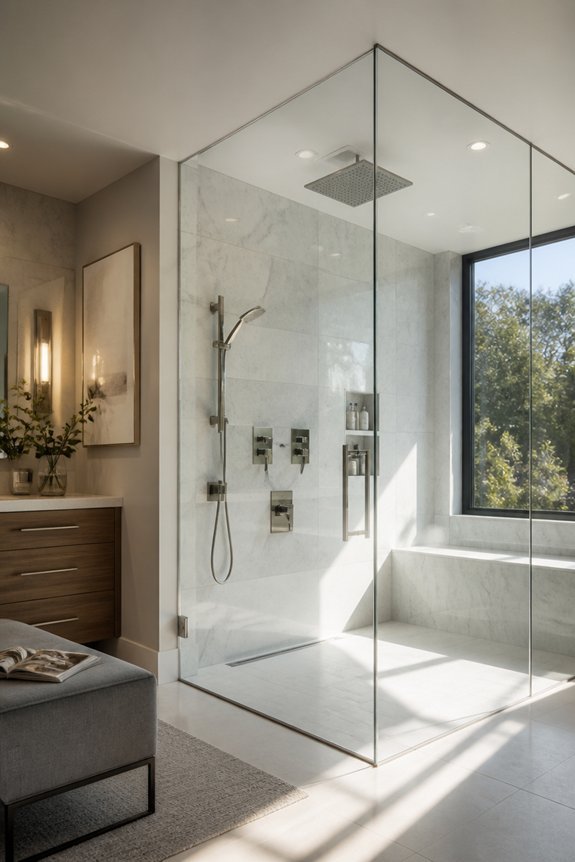
Walk-in showers with frameless glass enclosures offer a clean, open appearance to any bathroom space.
These designs eliminate bulky frames, creating an uncluttered look. The glass panels allow light to pass through, making bathrooms feel larger.
Installation requires proper waterproofing and drainage systems.
Common dimensions range from 36 to 60 inches wide. Frameless enclosures work well in contemporary and minimalist bathroom styles.
Rainfall Showerheads for a Luxurious Experience
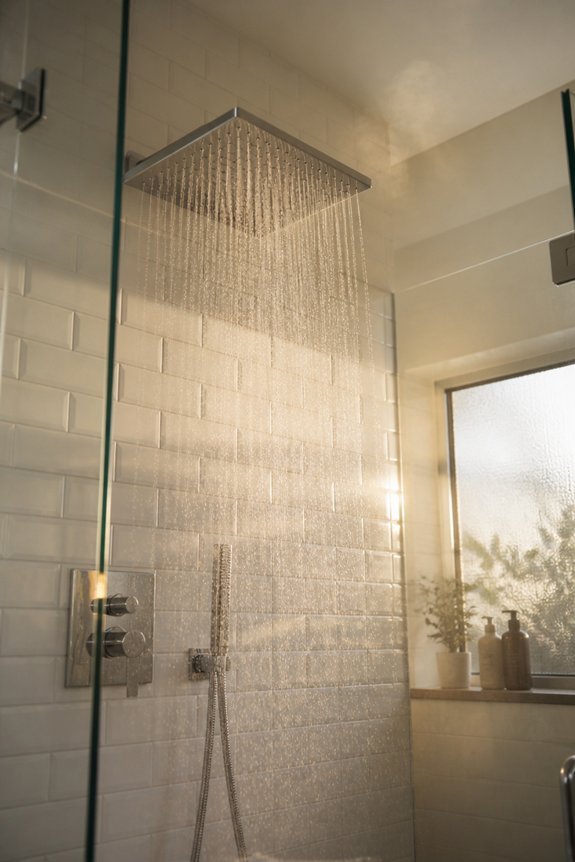
Rainfall showerheads deliver water from above, mimicking natural rain and creating a spa-like bathing experience.
These fixtures typically feature wide coverage, measuring eight to twelve inches in diameter.
Popular options include ceiling-mounted models and wall-mounted arms. Materials range from stainless steel to chrome finishes.
Installation requires adequate water pressure and plumbing adjustments for ideal performance and even water distribution.
Compact Corner Showers for Small Bathrooms
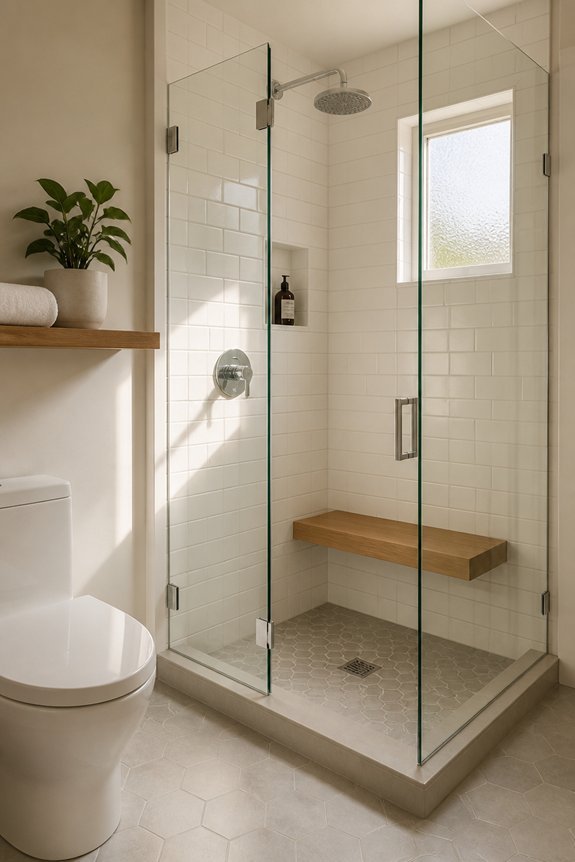
Corner showers maximize limited bathroom space by utilizing two walls, rather than requiring a separate enclosed area or spacious layout. These units fit snugly into room corners, leaving floor space open for other fixtures.
Options include neo-angle enclosures, which angle across the corner, or curved glass designs.
Compact corner showers work well in apartments, guest bathrooms, and renovated spaces with space constraints.
Tile Accent Walls That Make a Statement
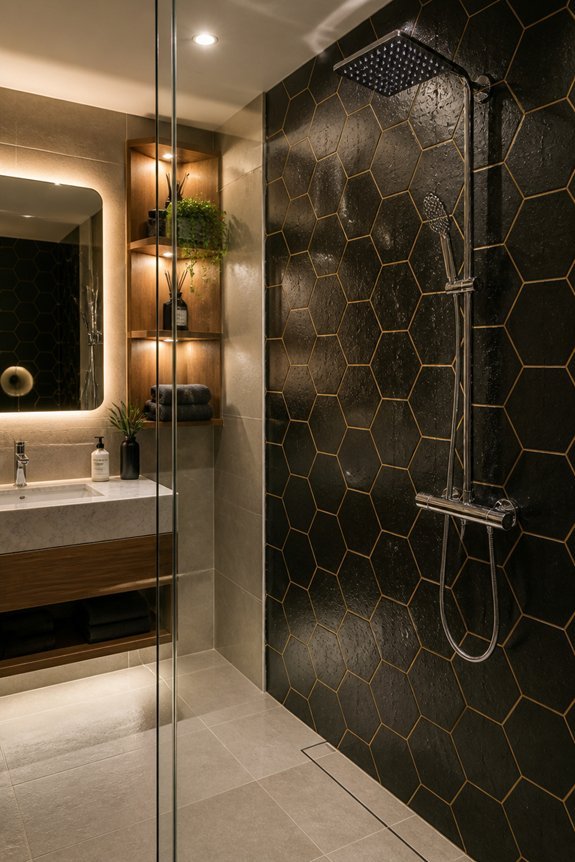
Many homeowners use decorative tile on one bathroom wall to add visual interest and personality to shower spaces. Popular options include geometric patterns, subway tiles in contrasting colors, and natural stone finishes.
Accent walls behind the showerhead or along the back wall create focal points. Glass tile, porcelain, and ceramic materials offer durability and easy maintenance.
Bold colors like navy, charcoal, or terracotta complement neutral bathroom fixtures effectively.
Double Showerheads and Dual Functionality
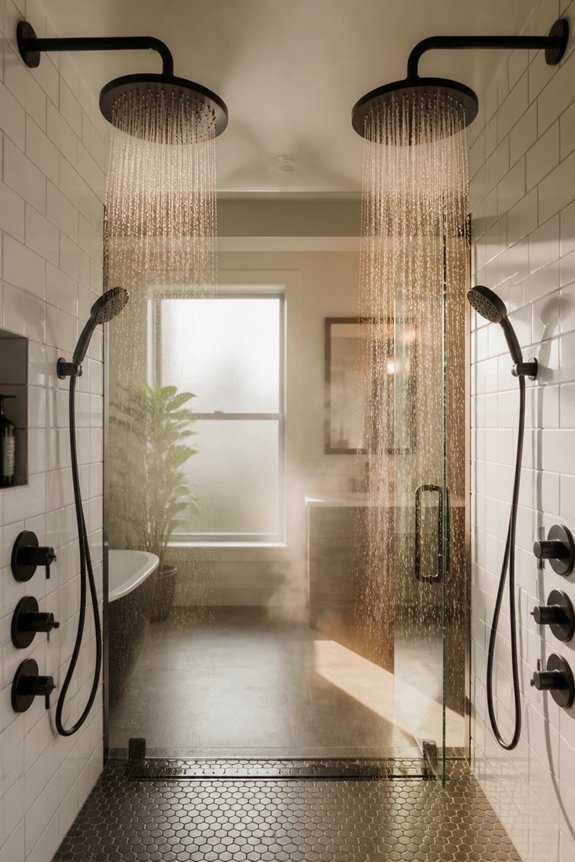
Dual showerhead systems provide flexibility and enhanced water coverage in modern bathrooms. One head typically mounts overhead, while the second attaches to the wall at body level.
This setup allows simultaneous use by two people, or individual preference for rainfall and handheld spray combinations.
Installation requires professional plumbing adjustments to existing water lines and drainage systems.
Natural Stone and Pebble Flooring
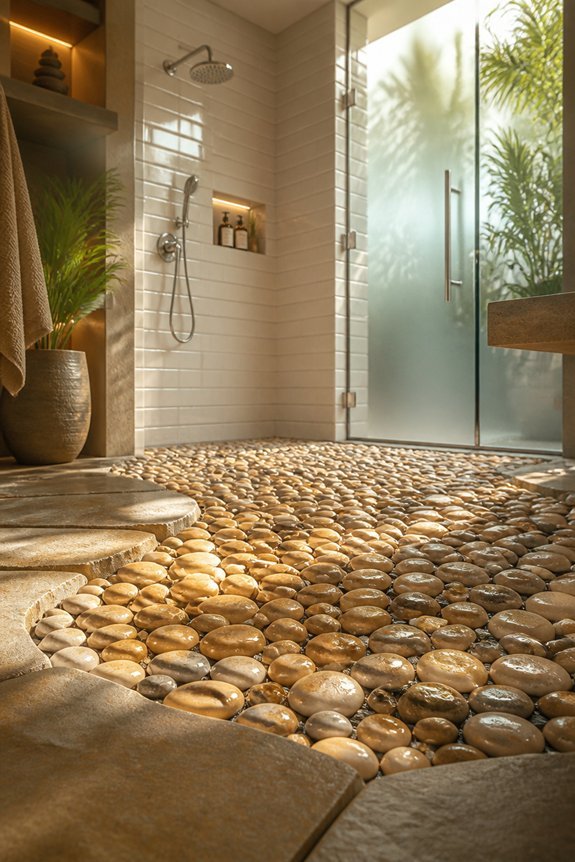
Natural stone and pebble flooring transforms shower floors into durable, textured surfaces that resist water damage and provide secure footing. Options include river rocks, slate, and granite tiles.
These materials require sealing to prevent moisture absorption. Installation involves mortar and proper drainage slopes.
Maintenance includes regular cleaning and periodic resealing to extend longevity and preserve appearance.
Steam Shower Enclosures for Spa Vibes
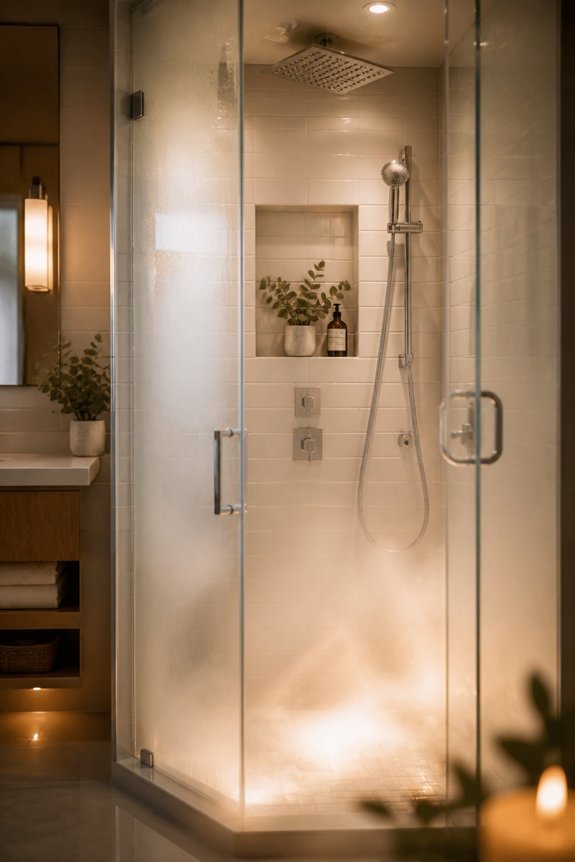
Steam shower enclosures create humid, warm environments that mimic spa experiences in residential bathrooms. These systems include generators, controls, and sealed glass doors.
Popular features include body jets, rainfall showerheads, and chromotherapy lighting.
Installation requires proper ventilation, waterproofing, and electrical work.
Maintenance involves regular cleaning and descaling to prevent mineral buildup.
Niche Shelving for Minimal Clutter
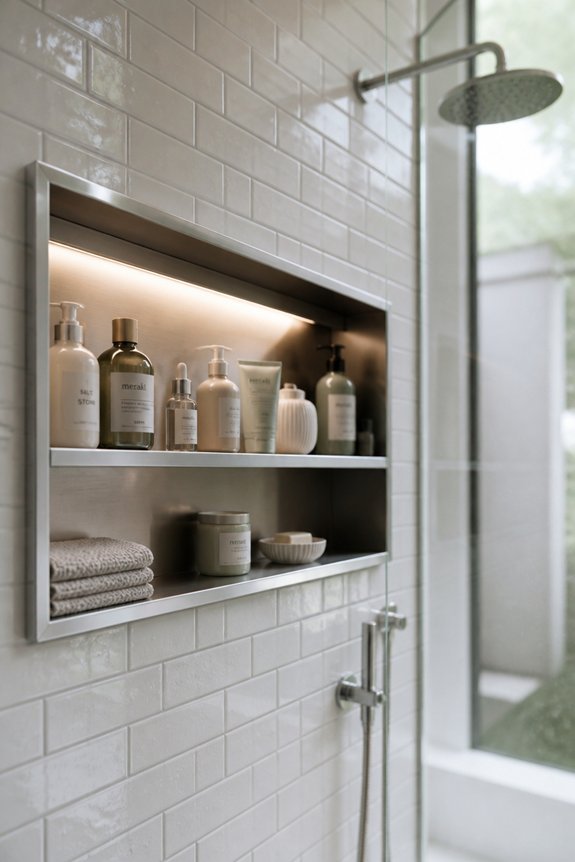
While clutter accumulates easily in bathrooms, niche shelving offers a practical storage solution that maximizes wall space without requiring floor area. Recessed shelves, installed directly into shower walls, hold toiletries, soaps, and shampoo bottles efficiently. Stainless steel or ceramic niches suit various bathroom styles. These shelves prevent water pooling through angled designs, reducing mold growth and maintenance needs. This approach aligns with the minimalist principle of limiting to five essential items to maintain a clean, intentional space, as seen in daily maintenance tips.
Heated Towel Racks Positioned for Comfort
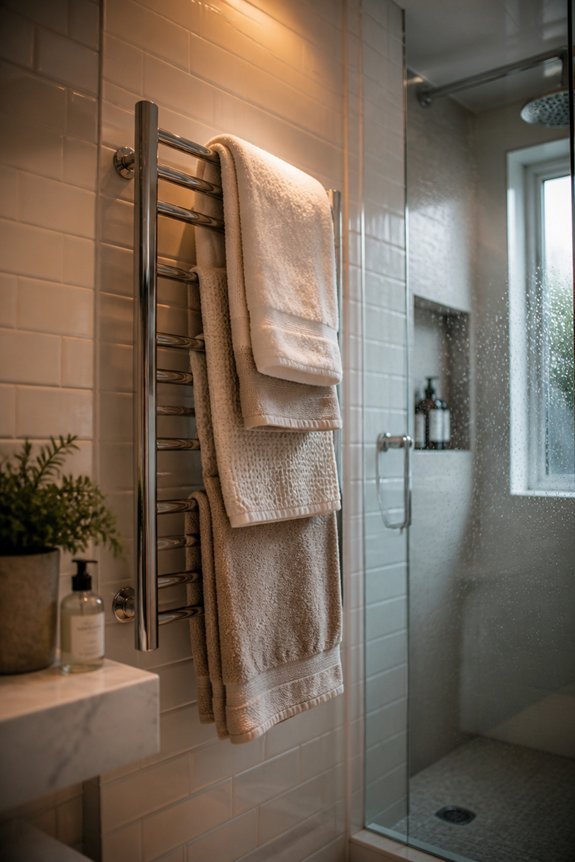
Heated towel racks serve a functional purpose beyond storage, warming towels and bathroom air while reducing moisture that promotes mold growth.
Position racks near the shower entrance for convenient access to warm towels immediately after bathing.
Electric models, like wall-mounted chrome racks, require outlet proximity. Hydronic versions connect to home heating systems.
Both options improve comfort and bathroom hygiene effectively.
Sliding Glass Doors vs. Pivot Hinges
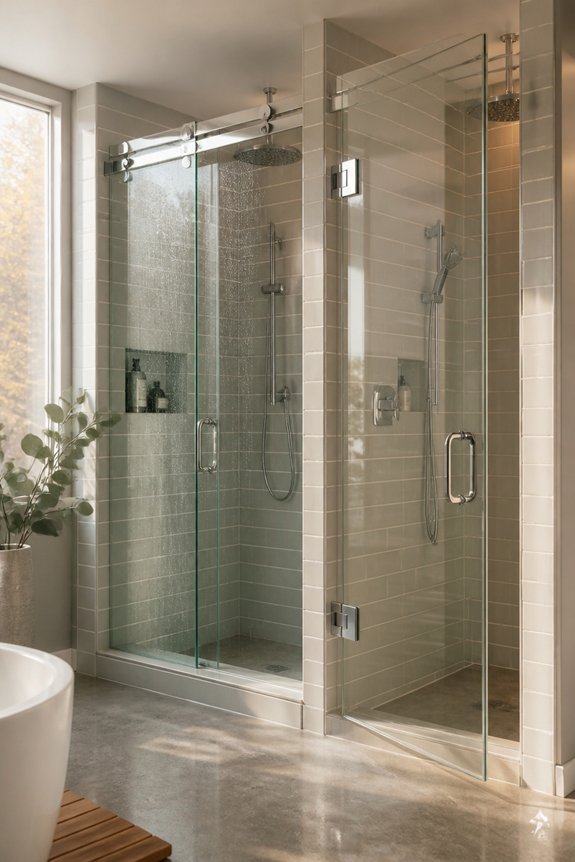
How do homeowners choose between sliding glass doors and pivot hinges for shower enclosures?
Sliding doors operate on tracks, requiring minimal clearance, making them ideal for compact bathrooms.
Pivot hinges swing outward, demanding more space but offering easier access and simpler cleaning.
Sliding doors cost less initially, while pivot hinges provide superior durability and water containment.
Space availability and maintenance preferences typically determine the best choice for each bathroom.
Open Concept Showers Without Enclosures
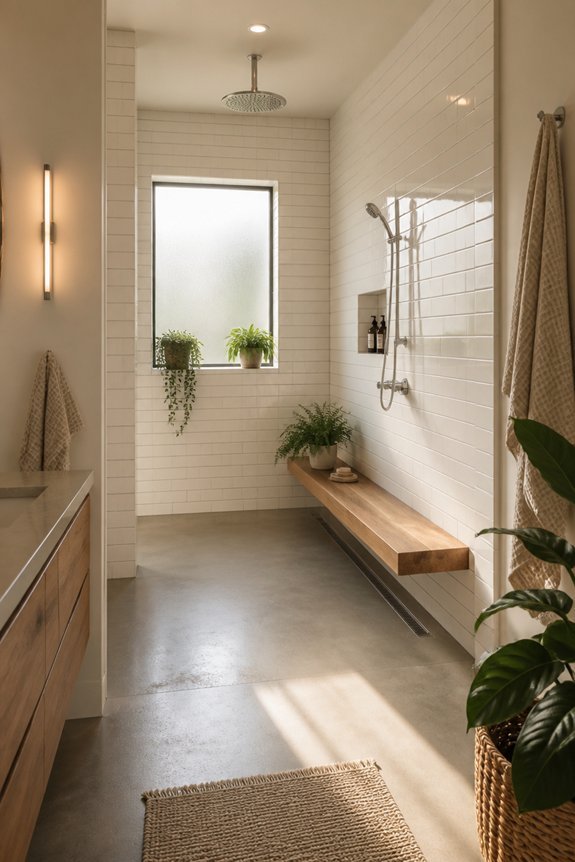
Three distinct design approaches characterize open concept showers: the walk-in wet room, the corner niche, and the alcove style.
Walk-in wet rooms feature sloped floors and floor drains, eliminating barriers entirely.
Corner niches utilize two existing walls, reducing construction costs.
Alcove styles fit between three walls, offering practical containment.
Each approach requires proper waterproofing, tile selection, and drainage planning for effective functionality and longevity.
LED Lighting Built Into Shower Fixtures
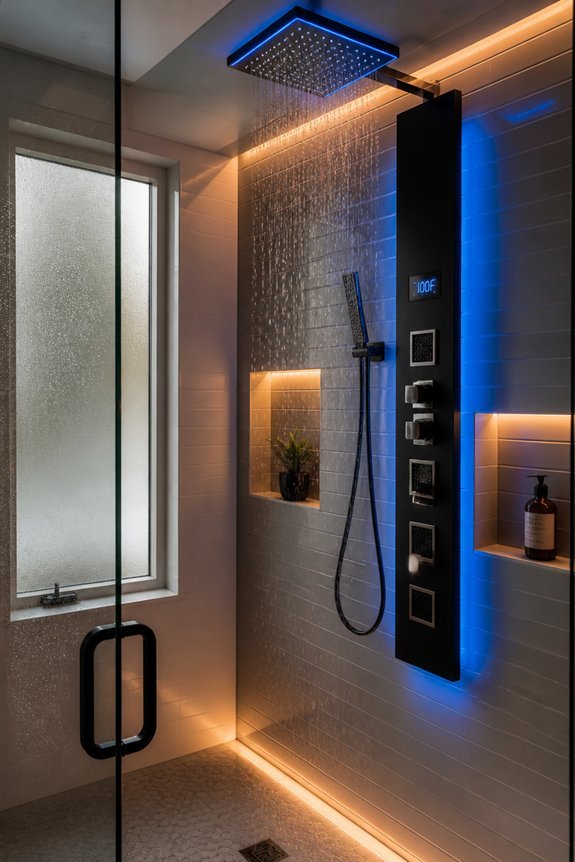
Why should bathroom showers include integrated LED lighting? LED fixtures provide functional illumination, energy efficiency, and customizable color options for different moods.
Popular choices include rainfall showerheads with embedded lights, wall-mounted panels, and accent strips. These systems reduce electricity costs compared to traditional bulbs, offer waterproof designs, and create spa-like atmospheres.
Installation typically requires professional plumbing assistance for proper wiring and water safety compliance.
Waterfall Showerheads With Modern Aesthetics
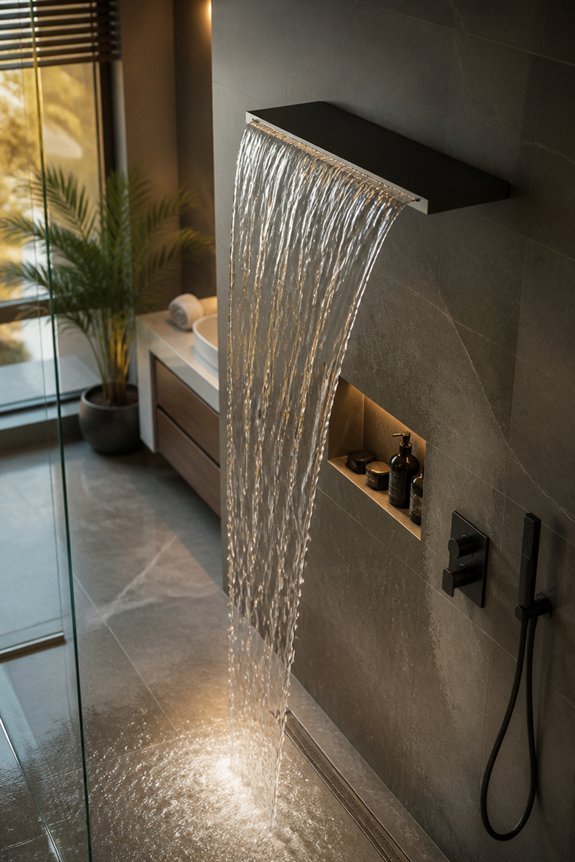
Waterfall showerheads represent a distinct category of shower fixtures that emphasize visual design alongside water delivery. These fixtures feature wide, flat panels that distribute water in sheet-like streams, creating a rainfall effect.
Modern versions use stainless steel or matte black finishes, integrating seamlessly with contemporary bathroom aesthetics.
Popular brands include Kohler and Moen, offering various sizes and water-saving technologies for efficient performance.
Geometric Tile Patterns and Color Blocking
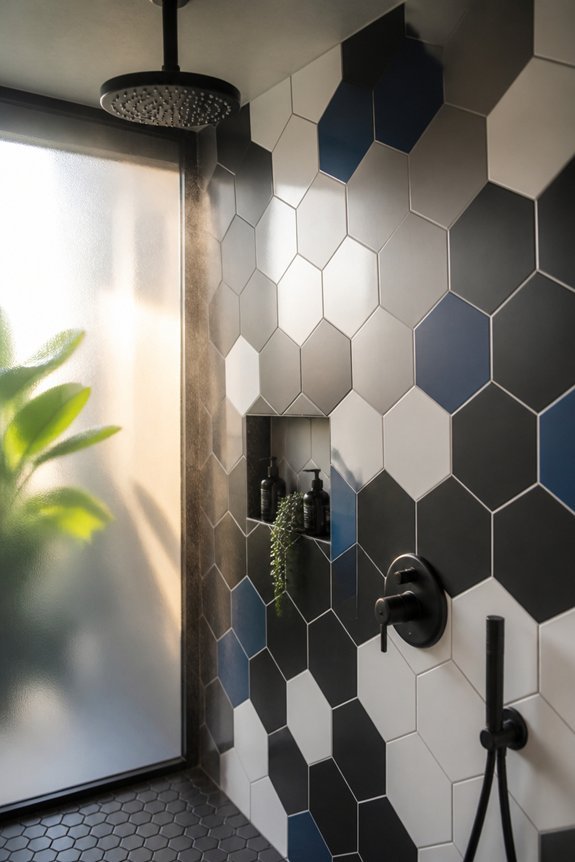
Geometric tile patterns and color blocking create visual structure in shower spaces through the strategic arrangement of shapes and contrasting hues.
Hexagonal tiles paired with solid accent walls, or checkerboard designs using black and white, establish focal points effectively.
Subway tiles combined with mosaic borders offer practical alternatives.
These patterns enhance visual interest while maintaining functional, durable surfaces suitable for wet environments.
Grab Bars Disguised as Sleek Accessories
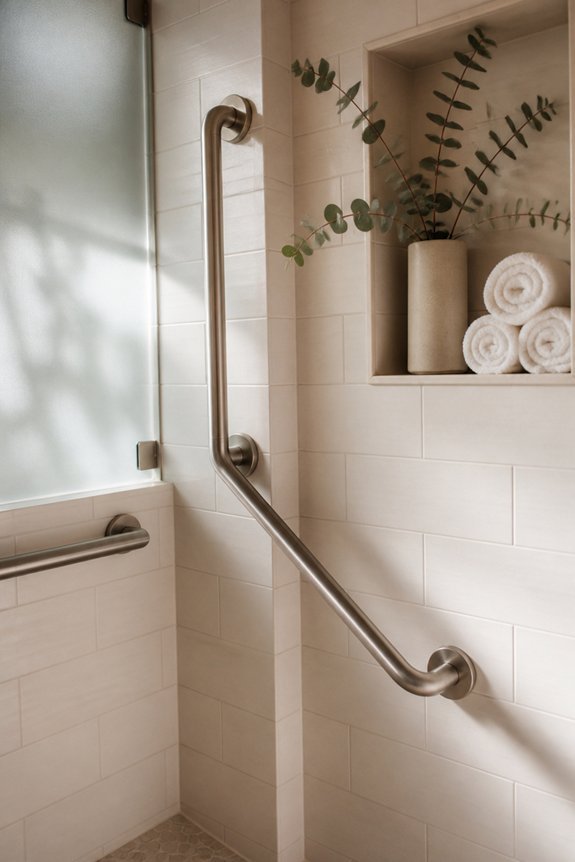
Safety and aesthetics need not conflict in modern bathroom design, as grab bars now serve dual purposes through innovative styling.
Manufacturers offer brushed nickel, matte black, and brass finishes that complement contemporary fixtures.
These bars function as towel racks, shelving units, or decorative elements while providing essential support.
Options include corner-mounted designs, angled configurations, and integrated storage solutions that blend seamlessly with shower enclosures and tile work.
Bench Seating for Comfort and Accessibility
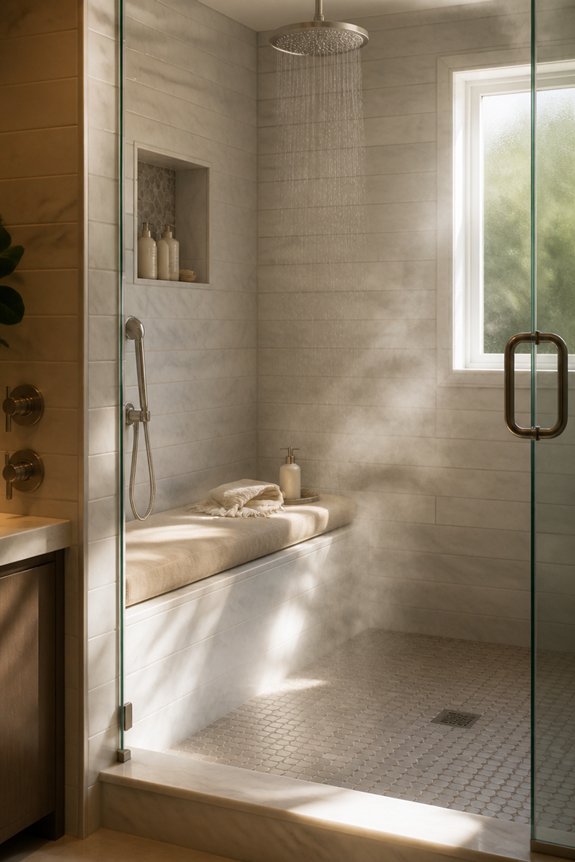
Comfort and accessibility converge in modern shower design through thoughtfully positioned bench seating.
Teak or waterproof composite benches provide durable seating options for bathing and grooming tasks.
Corner installations maximize space efficiency, while wall-mounted designs accommodate mobility limitations.
These benches support aging adults, individuals with disabilities, and anyone requiring seated bathing.
Proper drainage and non-slip surfaces guarantee safety and functionality during daily use.
Matte Black Fixtures for Contemporary Style
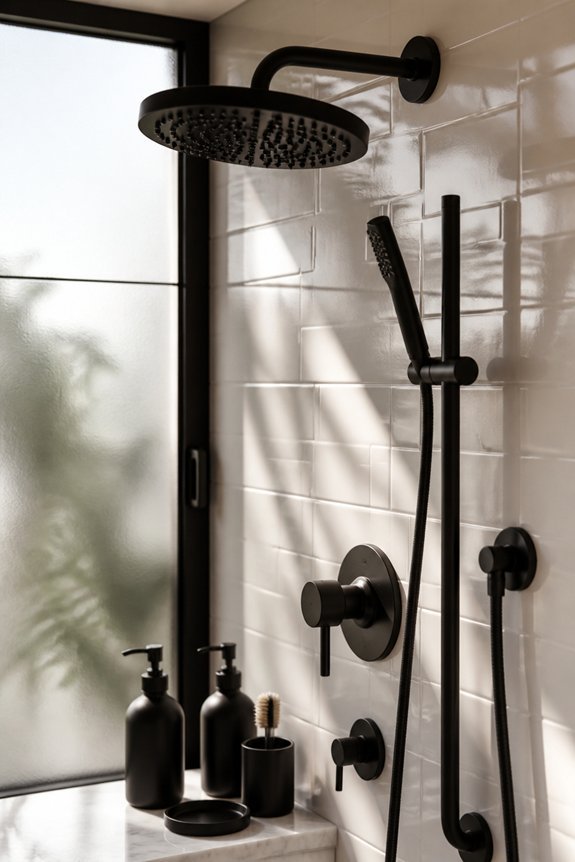
While chrome and polished finishes dominated bathroom design for decades, matte black fixtures now offer a modern aesthetic that complements various décor styles.
Matte black showerheads, faucets, and handles create clean lines and contemporary appeal. This finish resists fingerprints better than polished alternatives, requiring less frequent cleaning.
Popular options include rainfall showerheads and wall-mounted fixtures that coordinate with tile and stone elements effectively.
Body Spray Jets and Multi-Zone Water Flow
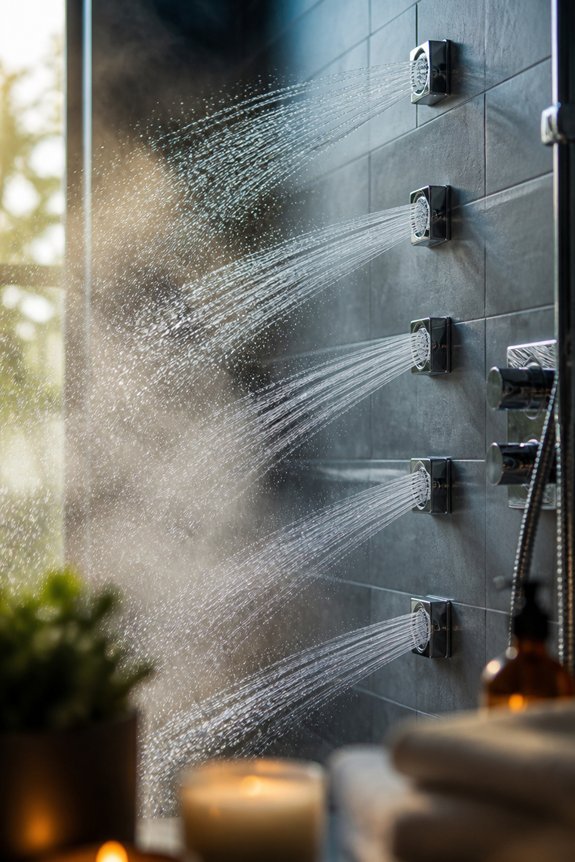
Beyond fixture finishes, shower systems now incorporate body spray jets and multi-zone water flow technology to enhance the bathing experience.
These systems direct water from multiple points along shower walls, targeting different body areas simultaneously. Brands like Kohler and Moen offer adjustable spray patterns, allowing users to customize water pressure and coverage zones.
This technology creates a more thorough, efficient shower than traditional single-head options.
Curbless Walk-In Designs for Easy Access
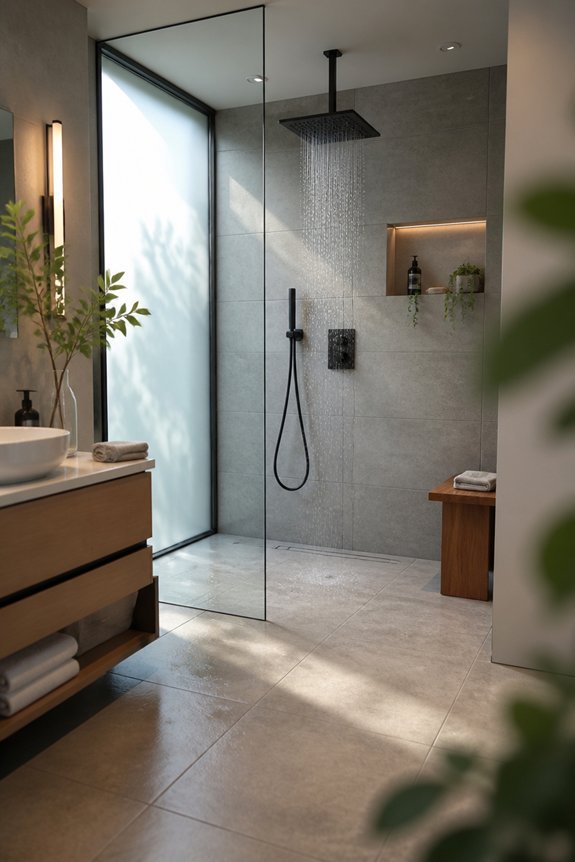
Modern bathrooms increasingly feature curbless walk-in showers, which eliminate the raised threshold traditionally found at shower entrances. These designs improve accessibility for elderly individuals, children, and people with mobility challenges.
The floor slopes gently toward a drain, preventing water from spilling into the bathroom.
Curbless showers require proper waterproofing and sloped flooring installation.
This style creates an open, spacious appearance while accommodating various user needs.
Recessed Niches to Maximize Wall Space
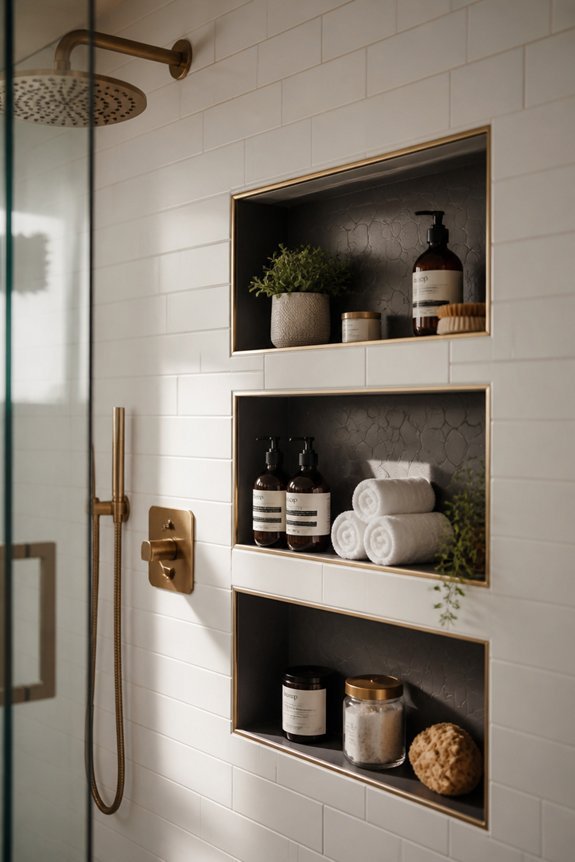
Storage within the shower itself serves multiple practical purposes in modern bathroom design. Recessed niches, built directly into shower walls, provide dedicated spaces for toiletries, shampoo bottles, and soap without cluttering the floor.
These niches eliminate the need for external shelving units, creating a streamlined appearance. Tile or waterproof materials line the recesses, ensuring durability.
Placement at various heights accommodates different items and user needs.
Mixed Material Combinations (Tile, Metal, Wood)
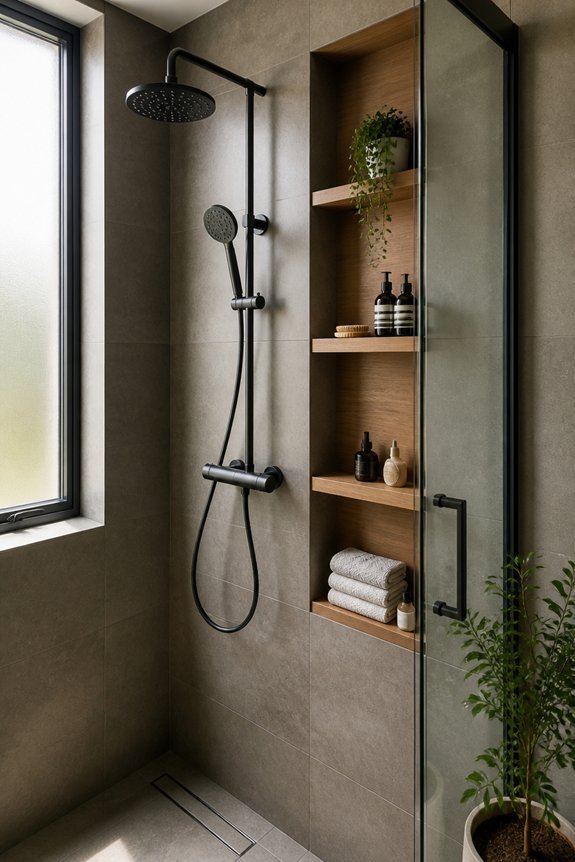
While recessed niches offer practical storage solutions, combining different materials in shower design creates both functional and visual interest.
Pairing subway tile with brushed metal fixtures, or mixing ceramic with natural wood accents, establishes visual contrast.
These combinations resist moisture damage when properly sealed, and they offer design flexibility.
Concrete tile paired with copper piping, or marble with stainless steel frames, exemplifies modern material mixing approaches.
Subway Tiles Reimagined in New Colors
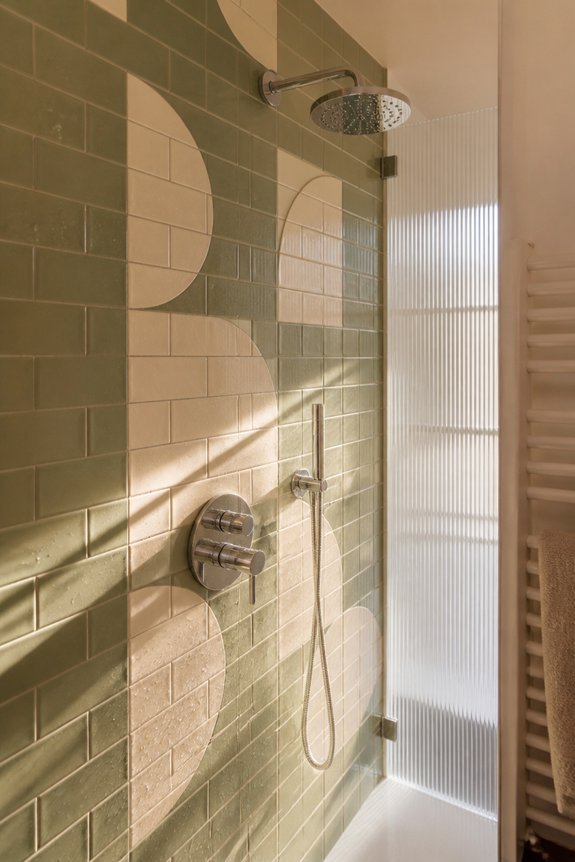
The classic subway tile format, traditionally white or cream, now appears in expanded color palettes that maintain its clean aesthetic while offering design variety.
Soft gray, pale blue, and warm black options provide subtle visual interest without overwhelming the space.
These reimagined tiles work well in contemporary bathrooms, complementing both minimalist and eclectic design schemes effectively.
Smart Shower Systems With Temperature Control
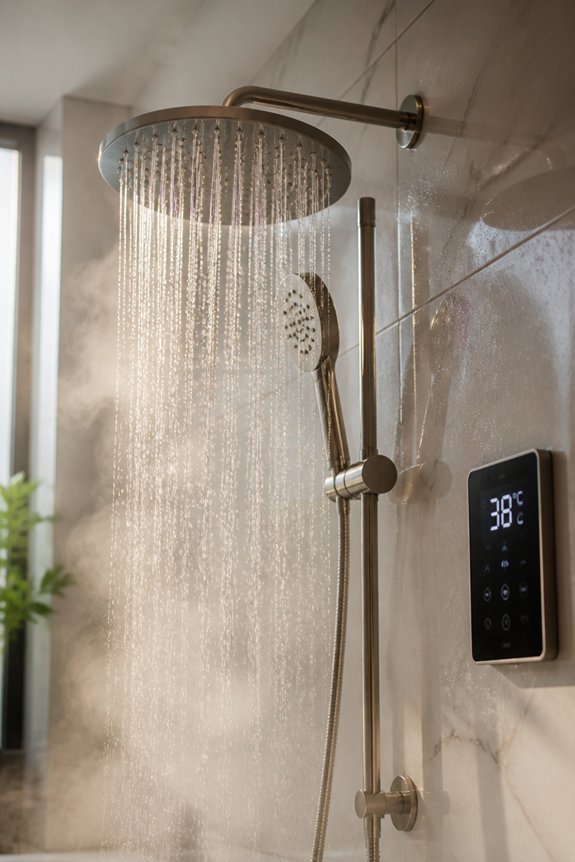
How can a shower deliver consistent water temperature while reducing energy waste? Smart shower systems use digital controls, thermostatic valves, and preset temperature settings to maintain precise heat levels.
Brands like Kohler and Moen offer models with memory functions, allowing users to save preferred temperatures.
These systems prevent scalding, reduce water heating costs, and provide reliable comfort through automated temperature regulation.
Plants and Greenery in Shower Spaces
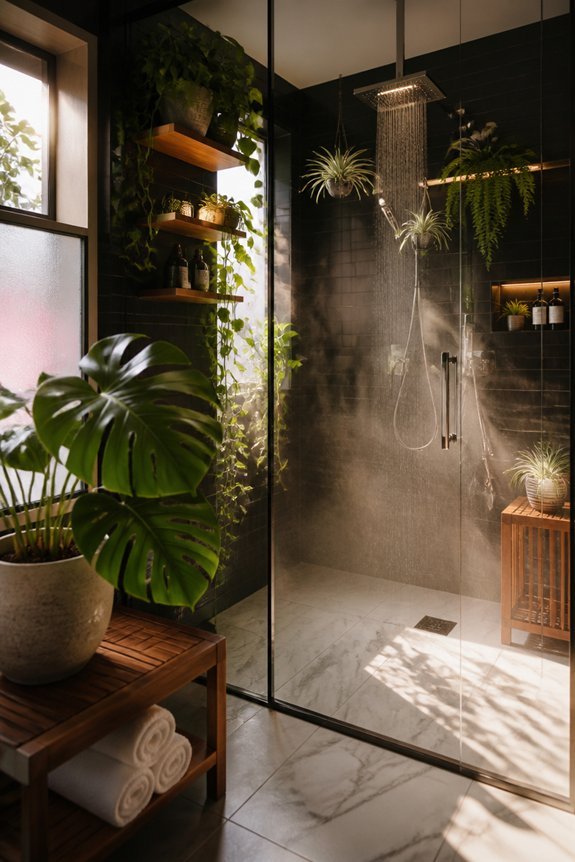
Adding plants to shower spaces has become increasingly common in modern bathroom design.
Humidity-loving species like pothos, bamboo palm, and ferns thrive in shower environments. These plants improve air quality, reduce moisture buildup, and add visual interest.
Placement on shelves, hanging baskets, or corner stands works well.
Drainage considerations and adequate indirect light remain essential for plant survival in bathrooms.
Bronze and Brushed Brass Fixtures
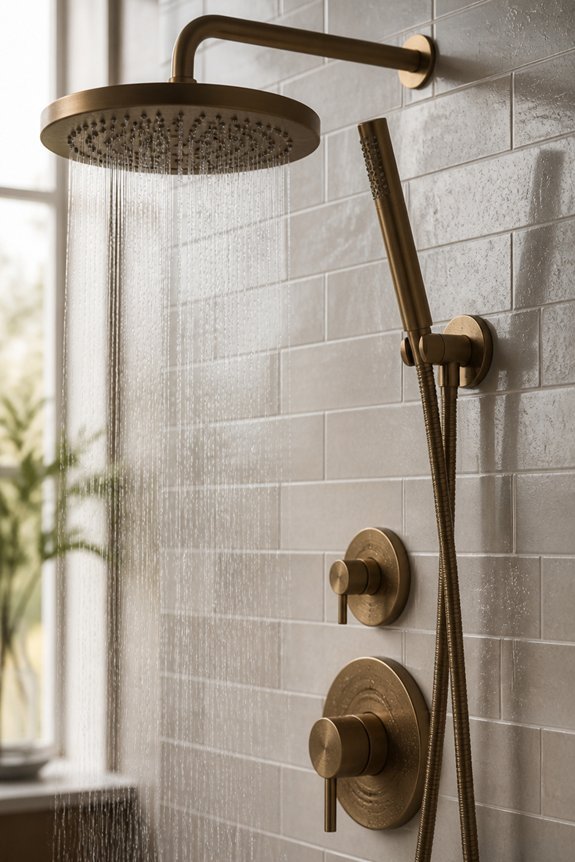
While bronze and brushed brass fixtures have gained popularity in bathroom design, they offer both aesthetic and practical advantages for shower spaces.
These finishes resist fingerprints and water spots better than chrome alternatives. Bronze and brushed brass complement various tile colors and styles effectively. They develop a natural patina over time, adding character.
Installation requires standard plumbing connections, making replacement straightforward for most bathrooms.
Porcelain vs. Natural Stone: Which Works Best?
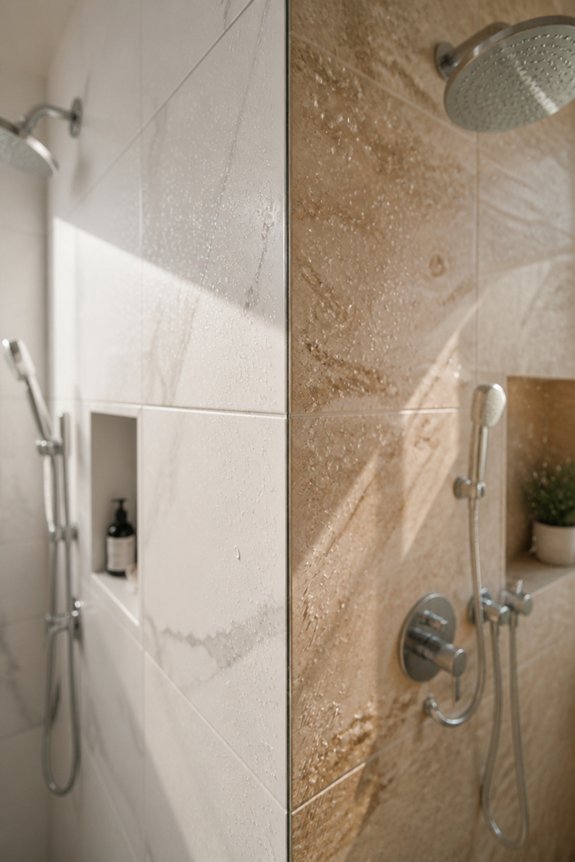
When selecting shower materials, homeowners must choose between porcelain and natural stone, each offering distinct advantages and drawbacks.
Porcelain tiles resist moisture, staining, and require minimal maintenance.
Natural stone, including marble and granite, provides aesthetic appeal but demands regular sealing and upkeep.
Porcelain suits budget-conscious projects, while stone works for those prioritizing visual impact and willing to invest in maintenance costs.
Budget-Friendly Upgrades Under $2,000
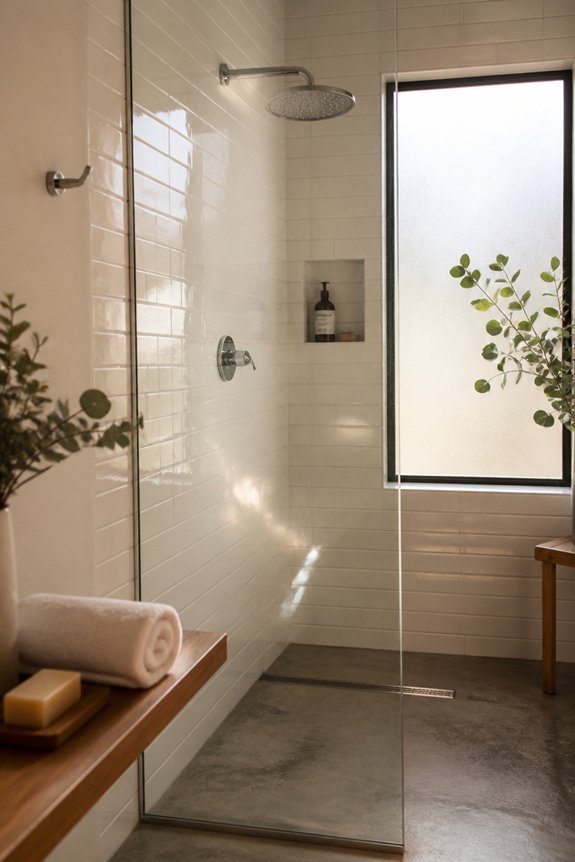
How can homeowners refresh a shower without exceeding a modest budget? Several upgrades deliver noticeable results under $2,000.
New showerheads, ranging from $50 to $300, improve water pressure and efficiency.
Fresh caulk and grout refresh tired corners.
Affordable tile alternatives, like peel-and-stick options, update surfaces.
New lighting fixtures and ventilation fans enhance functionality.
Paint-grade fixtures and hardware replacements provide significant visual improvements at minimal cost.
Luxury Spa Showers: What to Splurge On
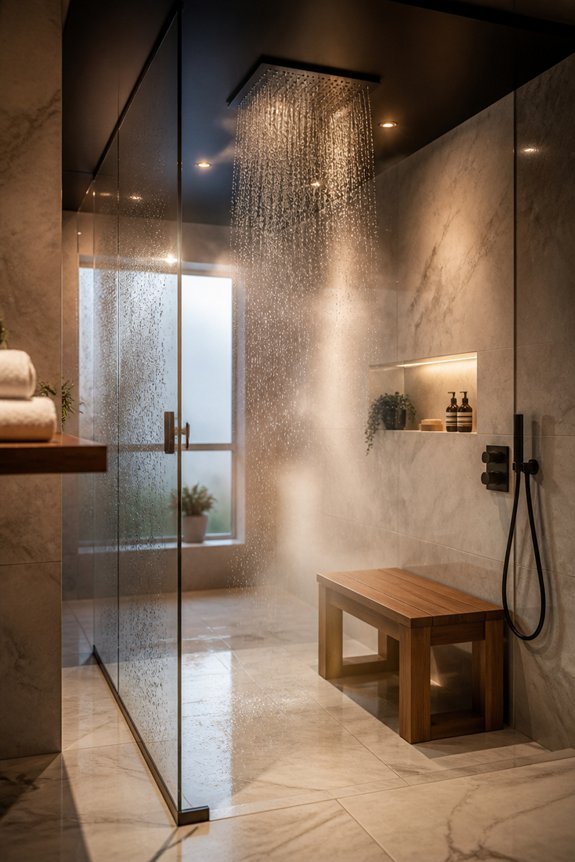
As bathroom budgets expand beyond $2,000, homeowners can invest in high-end features that transform showers into spa-like retreats. Premium rainfall showerheads, body jets, steam systems, and heated floors deliver therapeutic experiences.
Luxury options include frameless glass enclosures, natural stone tile, heated towel racks, and chromotherapy lighting.
Quality fixtures from brands like Kohler and Moen guarantee durability and performance for long-term enjoyment.
Frequently Asked Questions
How Long Does a Bathroom Shower Renovation Typically Take to Complete?
A typical bathroom shower renovation requires three to seven days for completion. The duration depends on project complexity, including factors such as plumbing modifications, tile work, fixture installation, and whether structural changes are necessary.
What Is the Average Cost of Installing a Modern Shower System?
Modern shower system installation typically costs between $3,000 and $8,000, depending on complexity, materials, and labor rates. High-end systems with rainfall heads or steam features may exceed $10,000, while basic upgrades start around $2,000.
Do I Need a Contractor or Can I Install Shower Features Myself?
One can install basic shower features independently if possessing plumbing knowledge and tools. However, complex systems involving plumbing connections, waterproofing, and building codes typically require a licensed contractor to guarantee proper installation and warranty compliance.
How Do I Maintain and Clean Modern Shower Materials Like Natural Stone?
Natural stone shower materials require gentle, pH-neutral cleaners to prevent damage. One should avoid acidic products and seal stone regularly. Weekly wiping prevents mildew, while professional cleaning annually maintains longevity and appearance.
What Plumbing Requirements Are Needed for Dual Showerheads and Body Spray Jets?
Approximately 60% of homeowners upgrade to dual showerheads for enhanced functionality. Installing them requires separate supply lines, a mixing valve capable of handling increased water flow, and properly sized pipes—typically ¾ inch—to distribute water evenly throughout all jets.
Conclusion
Like a ship steering through different waters, homeowners must chart their shower upgrade course through various options, materials, and budgets. Frameless glass enclosures, rainfall showerheads, and fixture finishes each serve as waypoints in the journey. Whether selecting budget upgrades under $2,000 or luxury spa features, the destination remains consistent: a functional, modern bathroom. Success depends on matching choices to individual needs, space constraints, and financial parameters.