

A sun-drenched deck can quickly become uncomfortable without the right deck shade canopy idea in place.
Permanent structures like pergolas and aluminum covers offer lasting protection and strong visual appeal, while retractable awnings and shade sails provide flexibility for changing weather and sun angles.
Budget, maintenance tolerance, and how much adjustability is needed all factor into choosing the right deck shade canopy for a given space.
Some homeowners prioritize a set-it-and-forget-it solution, while others prefer the ability to adjust coverage throughout the day.
There is no single best option among these deck shade canopy ideas, only the one that fits a given space and lifestyle.
Before You Start Shopping
Consider your deck’s orientation before choosing a structure. A north-facing space behaves very differently than one that gets direct afternoon sun.
Decide early whether permanence or flexibility matters more. A fixed awning or pergola works well for consistent conditions, while a retractable system or shade sail suits decks with variable sun exposure.
Factor in local wind and weather patterns too. Coastal or high-wind areas generally require reinforced anchoring regardless of which shade option is chosen.
13 Deck Shade Ideas
Some of these solutions require a permanent installation, while others adjust or retract based on the weather.
A few work well as standalone structures, and others combine effectively for year-round coverage.
Review the options below to find the one best suited to the deck’s layout and climate.
Pergolas: Classic Architecture That Filters Shade and Light
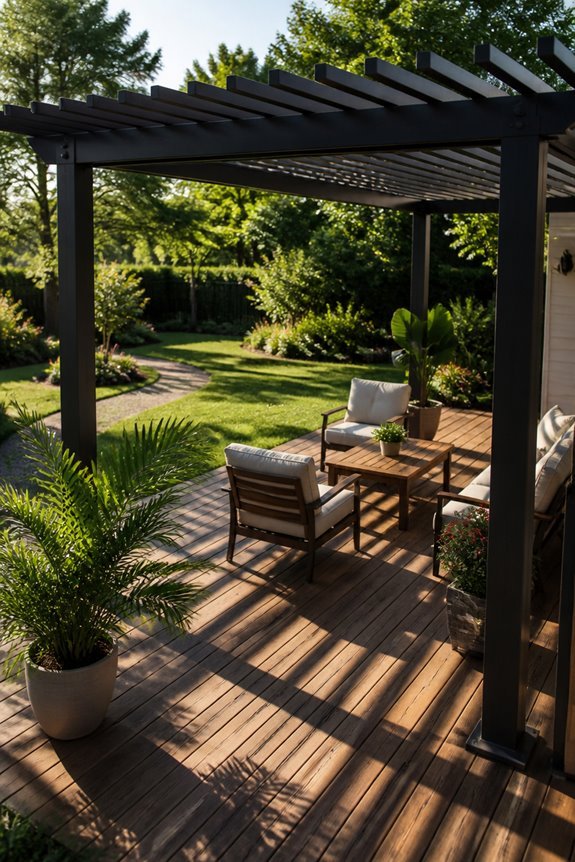
A pergola consists of a framework of beams, lattice, or slatted roof panels that create partial shade by allowing sunlight to pass through in a controlled manner. This structure provides relief from direct sun exposure while maintaining visibility and airflow across deck spaces.
Pergolas function through their open design, permitting approximately 50 percent of sunlight penetration depending on slat spacing and orientation. Materials include wood, vinyl, and aluminum, each offering distinct durability and maintenance profiles. Wood requires regular sealing; vinyl and aluminum demand minimal upkeep.
Positioning matters substantially. North-facing pergolas deliver consistent afternoon shade, while east-west orientations provide seasonal variation. Adding retractable shade cloth or climbing vines enhances protection during peak heat hours. Homeowners can adjust coverage density by modifying slat width and spacing between elements.
Also read: 10 Modern Canopy Bed Ideas for a Minimalist Bedroom
Fixed Awnings: Permanent Deck Shade and Curb Appeal
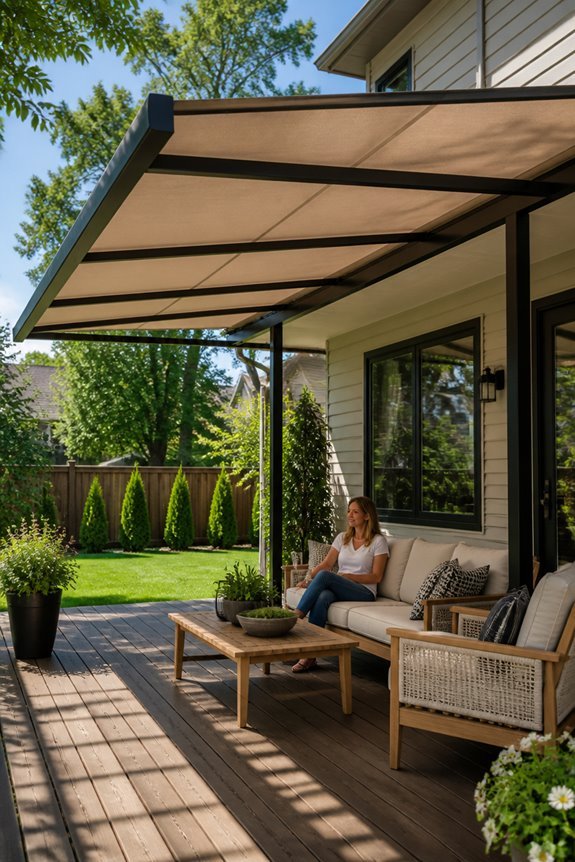
Fixed awnings offer homeowners a more permanent solution than pergolas, providing consistent, reliable shade without the adjustability of retractable systems. These structures attach directly to the house or deck frame, creating solid coverage from sun and light rain.
Fixed awnings come in various materials, including canvas, acrylic, and metal. Canvas options provide traditional aesthetics and UV protection. Acrylic fabrics offer durability and fade resistance. Metal awnings, typically aluminum, require minimal maintenance.
Installation involves securing the frame to existing structures with brackets and fasteners. Professional installation guarantees proper slope for water drainage and structural stability.
Fixed awnings enhance curb appeal through color coordination with siding and trim. They reduce cooling costs by blocking direct sunlight. Unlike retractable systems, fixed awnings require no mechanical components, reducing repair needs and maintenance demands over time.
Retractable Deck Awnings: Flexible Shade on Demand
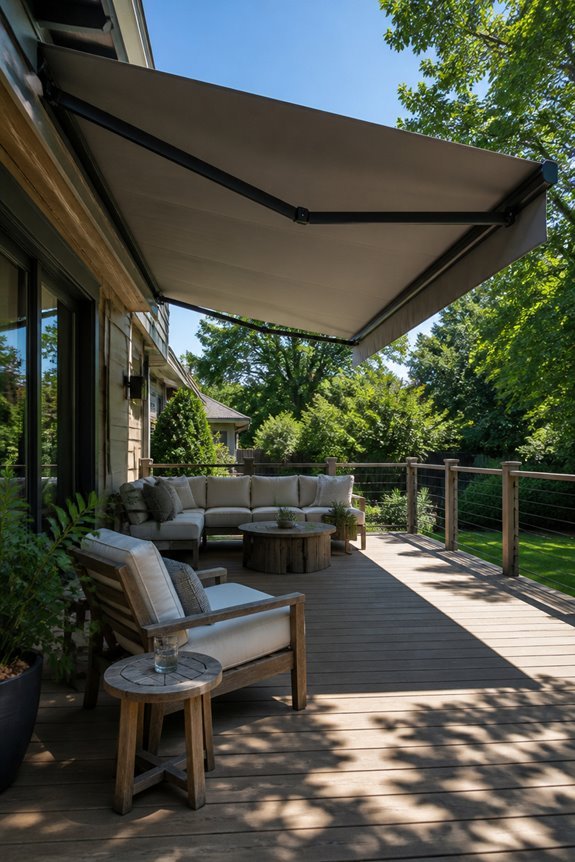
Many homeowners prefer retractable awnings because they provide shade when needed and retract when conditions change. These motorized or manual systems offer flexibility that fixed structures cannot match.
Retractable awnings work well for decks receiving variable sunlight throughout the day. Homeowners can extend them during peak heat hours, then retract them during cooler periods or when rain approaches. Brands like Sunesta and Advaning offer durable options with weather-resistant fabrics and aluminum frames.
Installation typically requires professional setup, though some models mount directly to deck railings or fascia boards. Maintenance involves occasional cleaning and lubricating moving parts.
These awnings generally cost between $2,000 and $5,000 installed, positioning them as a mid-range investment between basic umbrellas and permanent structures.
Shade Sails: Modern Design for Any Deck Shape
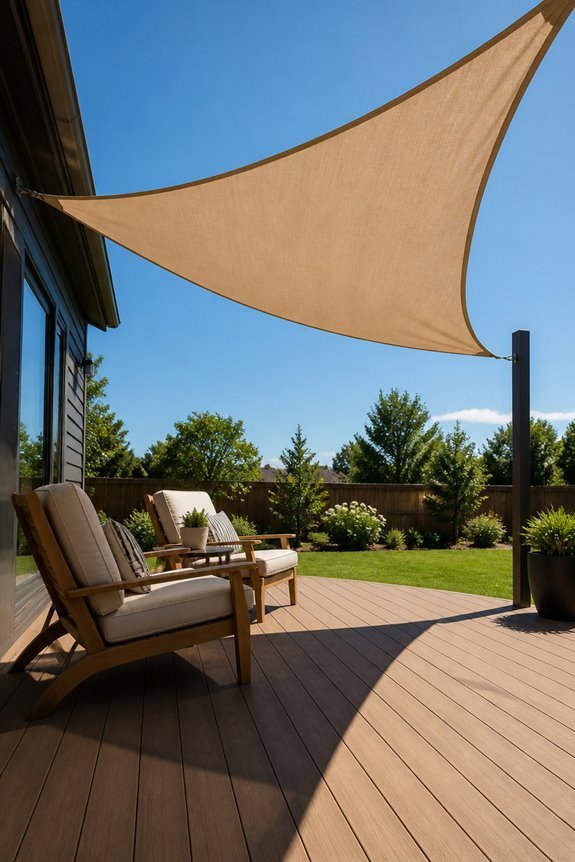
Shade sails provide a versatile alternative to traditional awnings, using tensioned fabric stretched between anchor points to create triangular or custom-shaped coverage areas. These structures accommodate various deck configurations, from rectangular patios to irregular layouts, offering flexibility that fixed canopies cannot match.
Shade sails consist of high-strength polyester or HDPE fabric, typically rated for UV protection and water resistance. Installation requires sturdy anchor points, such as posts, walls, or ground-mounted hardware. Common sail configurations include single triangles, multiple overlapping sails, or quadrilateral designs.
Materials range from basic models to premium options with enhanced durability. Maintenance involves periodic cleaning and fabric inspection. Professional installation guarantees proper tension and structural integrity, preventing sagging and extending product lifespan.
Louvered Pergolas: Adjustable Shade You Control
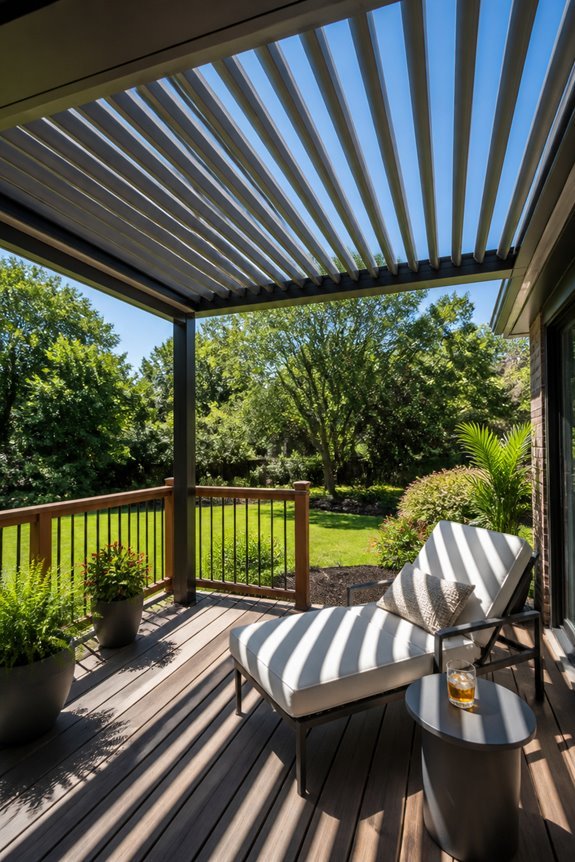
Louvered pergolas offer adjustable overhead slats that rotate to control sunlight, airflow, and weather protection on decks. Homeowners can manually or motorize the slats to open and close based on conditions and preferences.
Materials include aluminum, wood, and vinyl options. Aluminum models resist rust and require minimal maintenance. Wood pergolas provide aesthetic appeal but need regular treatment. Vinyl offers durability with low upkeep demands.
The adjustable feature allows users to manage temperature, glare, and rain exposure throughout the day. Fully open slats permit maximum ventilation and light. Closed positions block rain and intense sun. Many systems integrate with smartphone controls for convenience.
Installation requires professional assessment of deck structure, load capacity, and local building codes to guarantee proper support and safety compliance.
Polycarbonate Canopies: Tough, Lightweight Shade That Lasts
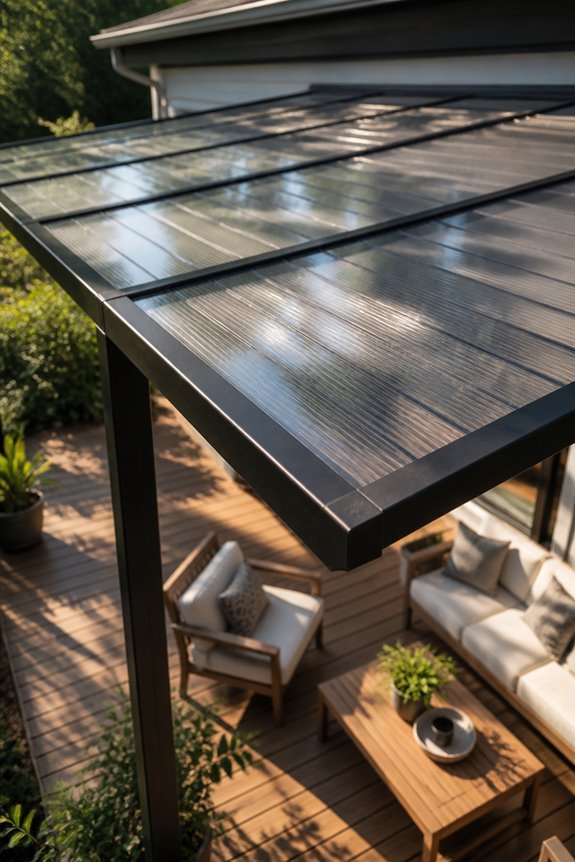
Because polycarbonate resists impact and UV rays better than many traditional materials, it has become a popular choice for deck canopies. This plastic-based material withstands hail, falling branches, and intense sunlight without cracking or yellowing as quickly as acrylic alternatives.
Polycarbonate canopies offer several practical advantages. They weigh considerably less than glass or metal panels, reducing installation complexity and structural demands. The material filters harmful UV radiation while allowing diffused light penetration, creating usable shade without complete darkness.
Common thicknesses range from 6mm to 10mm, with thicker versions providing enhanced durability and insulation.
Maintenance requires minimal effort. Routine cleaning with mild soap and water preserves clarity and appearance. Polycarbonate panels typically last fifteen to twenty years, making them a durable investment for homeowners seeking reliable deck shade solutions.
Living Shade Walls: Growing Coverage With Vines and Climbing Plants
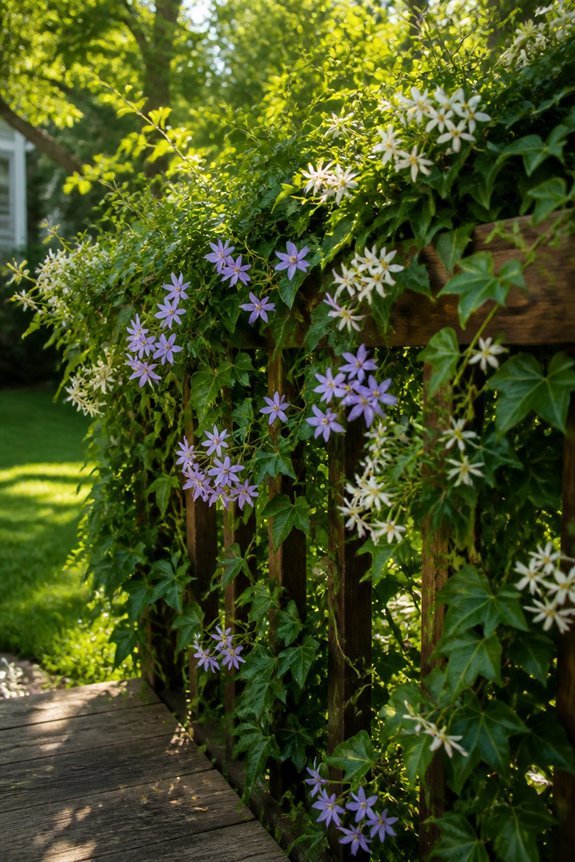
While polycarbonate panels offer durable manufactured solutions, living shade walls provide an alternative approach using natural plant growth. Climbing vines and plants create dense coverage that blocks sunlight, reduces temperature, and improves air quality around deck areas.
Popular options include clematis, ivy, and honeysuckle varieties, which attach to trellises, lattice panels, or wire systems. These plants require regular watering, seasonal pruning, and structural support to thrive. Installation involves positioning a frame or support system along the deck perimeter, then planting vines at the base.
The coverage develops gradually over several growing seasons, reaching full density within two to three years. Living walls offer aesthetic appeal and environmental benefits, though they demand ongoing maintenance and cannot provide immediate shade solutions like manufactured canopies.
Pop-Up Canopies: Portable Shade for Events and Gatherings
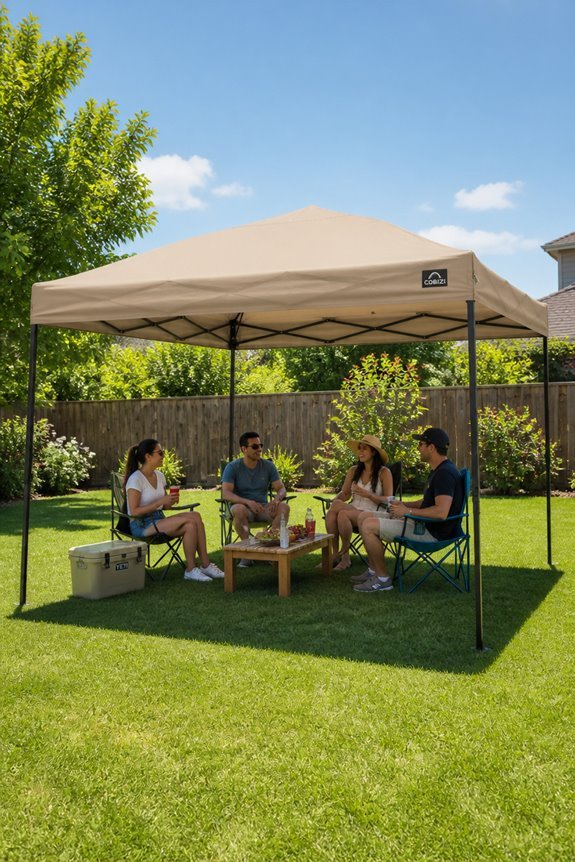
Portable pop-up canopies serve as temporary shade structures for outdoor events, backyard gatherings, and deck entertainment spaces. These canopies typically feature metal or aluminum frames with polyester or vinyl fabric tops, offering quick assembly and disassembly. Standard sizes range from 8×8 feet to 20×20 feet, accommodating various group sizes and deck configurations.
Pop-up models like the E-Z UP and Coleman brands provide easy setup without tools, requiring only leg extension and fabric attachment. Weight capacity varies by model, generally supporting 50 to 100 pounds of overhead load. UV-protective fabrics reduce sun exposure while maintaining visibility, and ventilation options prevent heat accumulation during warm weather.
Storage bags facilitate transportation and off-season storage. These portable structures work well for temporary shade solutions without permanent deck modifications.
Aluminum Patio Covers: Set-It-and-Forget-It Deck Shade
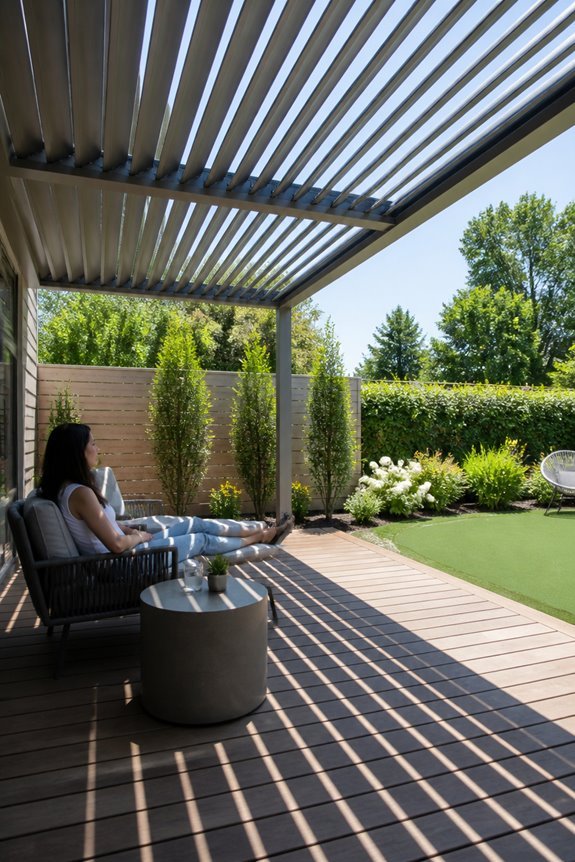
Unlike temporary pop-up canopies, aluminum patio covers provide permanent shade structures that require minimal ongoing maintenance once installed. These covers consist of durable aluminum frames with polycarbonate or metal panels, offering long-lasting protection from sun and light rain. Homeowners can choose from various styles, including louvered designs that adjust to control sunlight and ventilation.
Installation typically involves securing the structure to a home’s existing deck or installing support posts. Aluminum patio covers withstand harsh weather conditions, resist rust and corrosion, and maintain their appearance for years. Common dimensions range from 10 by 12 feet to 20 by 20 feet, accommodating different deck sizes.
While initial costs exceed portable canopies, the permanent solution eliminates repeated setup and storage needs, making it practical for regular outdoor use.
Market Umbrellas: Movable Shade You Can Reposition
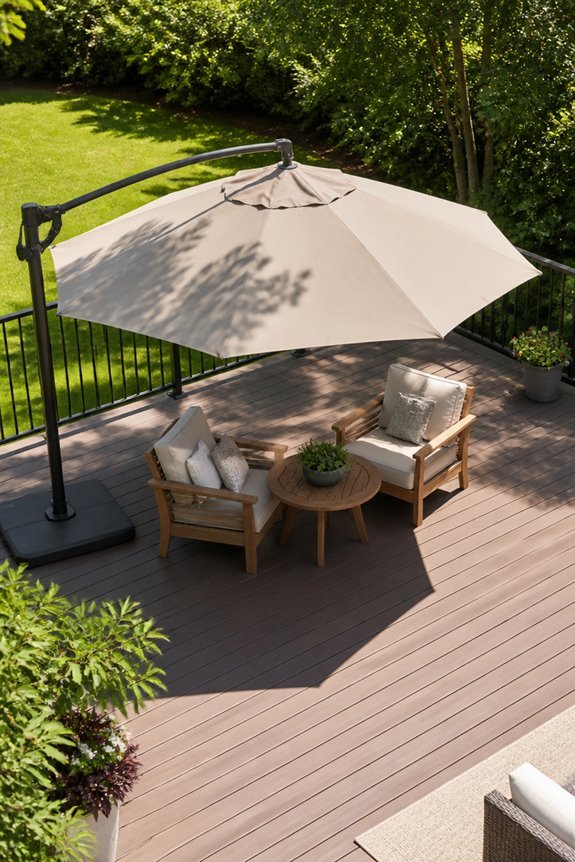
Market umbrellas offer flexible shade solutions that homeowners can move and reposition throughout the day as the sun shifts across their deck. These umbrellas come in various sizes, typically ranging from 6 to 11 feet in diameter, accommodating different deck dimensions and seating arrangements.
Common materials include polyester canopies with aluminum or wooden poles. The base weights vary, with options like concrete, sand-filled, or weighted stands providing stability against wind. Popular styles include offset umbrellas with side-mounted poles, allowing unobstructed seating space beneath the canopy.
Market umbrellas require minimal installation, involving only placement and base securing. They function independently from permanent deck structures, offering portability for seasonal storage or repositioning.
Maintenance involves occasional cleaning and canopy inspection for wear or damage, making them practical for homeowners seeking temporary shade coverage.
DIY Bamboo Screening: Build Custom Shade on a Budget
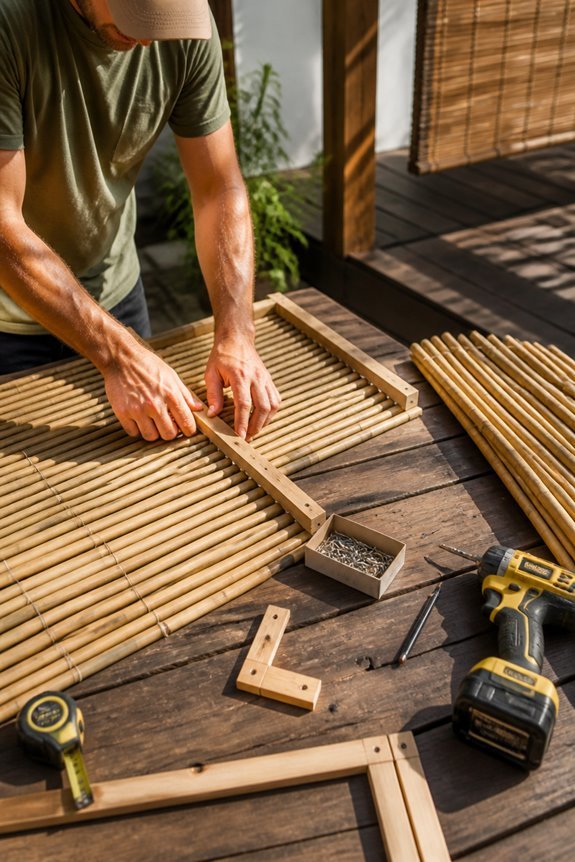
Bamboo screening provides homeowners with a stationary shade option that requires upfront building effort but offers long-term cost savings compared to purchased canopies. Bamboo panels attach to wooden frames using wire, creating barriers that block sunlight while allowing air circulation. The material resists rot and withstands weather exposure for several years.
Installation involves measuring deck dimensions, constructing a frame from pressure-treated lumber, and securing bamboo slats with fasteners. Costs typically range from $200 to $600 depending on deck size. Maintenance includes occasional cleaning and treating the bamboo with sealant to extend its lifespan. This approach works well for patios requiring permanent or semi-permanent shade solutions without extensive structural modifications.
Hybrid Shade Systems: Stacking Multiple Solutions for Year-Round Coverage
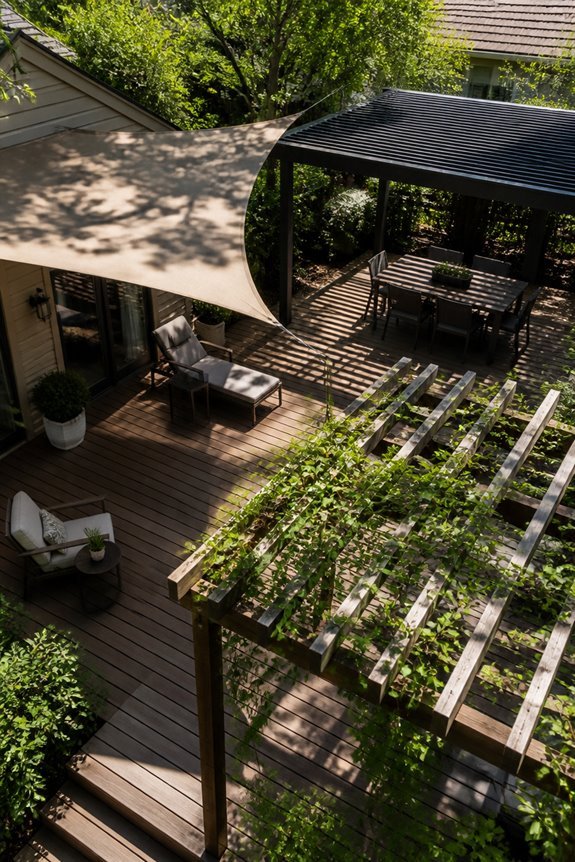
Combining multiple shade methods creates flexible coverage that adapts to seasonal changes and varying weather conditions throughout the year. Homeowners can layer retractable awnings with pergolas, adding shade cloth during summer months, then removing it for winter sunlight.
Installing a fixed roof structure alongside adjustable panels allows for customized protection based on temperature and time of day. Combining shade sails with climbing vines provides immediate coverage while vegetation grows for additional filtering.
Stacking systems offers practical benefits: retractable components adjust to specific needs, permanent structures provide consistent anchoring, and temporary additions optimize seasonal comfort. This approach maximizes usable deck space while maintaining flexibility for different activities and weather requirements throughout all seasons.
Frequently Asked Questions
How Much Does It Cost to Install a Deck Shade Canopy System?
Installation costs typically range from $1,500 to $5,000.
Size, materials, and complexity all factor into where a project lands within that range. Professional installation adds labor costs, while DIY approaches reduce the total. Motorized systems and premium materials tend to push the price higher.
What Permits or Regulations Apply to Adding Shade Structures to Decks?
Regulations vary depending on location, but most areas require a building permit.
Local building codes typically address setback requirements, height restrictions, and wind load specifications. Checking with the municipal building department before installation helps avoid complications later.
How Do I Maintain and Clean My Deck Canopy During Winter?
Removing debris and snow regularly prevents unnecessary strain on the structure.
Checking for ice accumulation and clearing it gently protects the frame and fabric from damage. Applying a protective sealant before winter and reviewing hardware connections helps the canopy hold up through the season.
Which Shade Option Works Best for Windy or Coastal Environments?
Fixed pergolas built with wind-resistant materials tend to perform well in coastal settings.
Securely anchored retractable awnings are another strong option, since they can be retracted during severe weather. Both approaches hold up to gusts while maintaining long-term durability.
Can I Combine Multiple Shade Solutions Without Structural Complications?
Yes, multiple shade solutions can work together effectively.
Layering options such as retractable awnings with pergolas or umbrellas creates flexible, adaptable coverage. Proper spacing and reinforced posts help prevent structural conflicts while maximizing shade throughout the year.
Conclusion
Choosing the right deck shade solution comes down to weighing permanence against flexibility, and budget against long-term maintenance.
Pergolas, aluminum covers, and fixed awnings offer lasting protection for those who want a set-it-and-forget-it structure, while retractable systems and umbrellas suit homeowners who prefer to adjust coverage as conditions change.
Shade sails and bamboo screening provide budget-friendly alternatives with genuine aesthetic appeal, particularly for irregularly shaped decks.
Climate and wind exposure should factor heavily into the decision, especially for coastal or high-wind properties.
Combining multiple solutions often provides the most reliable coverage across changing seasons and varied outdoor activities.
Share your thoughts in the comments below on which shade solution best fits your deck.