


Small backyards present a unique shade challenge, requiring solutions that maximize coverage without overwhelming limited space.
Retractable canopies, wall-mounted options, and shade sails all offer flexibility suited to tight corners and irregular layouts.
Rolling canopies and umbrella clusters provide mobility for homeowners who need shade in different areas throughout the day.
Budget, yard shape, and maintenance tolerance all factor into which option works best.
The right solution ultimately depends on matching the structure to the specific constraints of the space.
A Few Things Worth Knowing First
Start by mapping your yard’s actual layout before choosing a style. Irregular corners and narrow side yards often call for different solutions than open rectangular spaces.
Think about how much flexibility you actually need. A retractable or rolling option makes sense if your sun exposure changes throughout the day, while a fixed structure works fine for consistent shade needs.
Don’t overlook local permits and HOA rules for anything permanent. Checking early saves you from having to modify or remove a structure later.
15 Small Backyard Canopy Ideas
Some of these options bolt down for the long term, while others move with you as your needs change.
A few work well on their own, and others pair naturally with existing structures like a deck or fence line.
Review the ideas below to find the one that fits your yard’s shape and your budget.
Retractable Canopies: Maximum Shade, Minimum Space
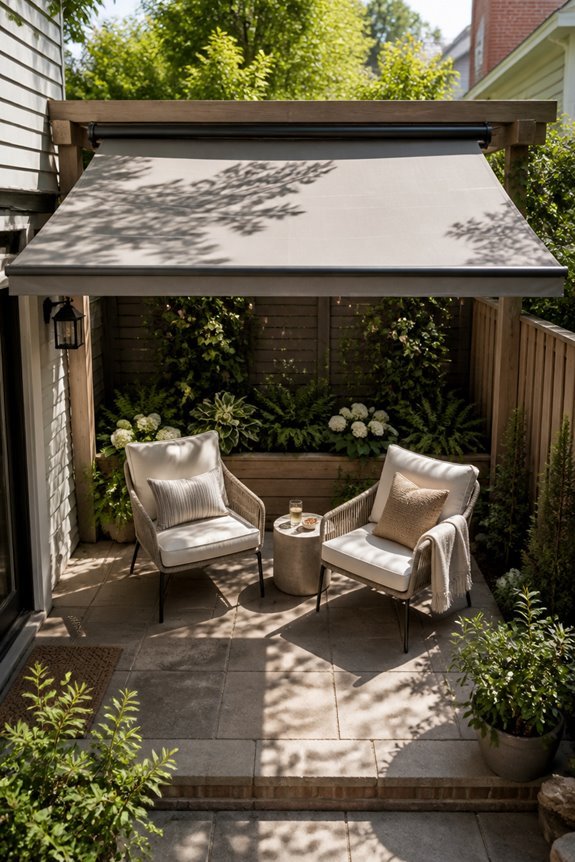
Because yard space often comes at a premium, retractable canopies offer a practical solution for homeowners seeking shade without permanent structures. These systems feature motorized or manual mechanisms that extend and retract as needed, allowing users to control sun exposure throughout the day.
Retractable canopies work well for patios, decks, and small yards where fixed installations would consume valuable space. Popular options include motorized awnings from brands like SunSetter and Advaning, which operate via remote control or wall switches. Manual versions provide budget-friendly alternatives requiring hand-crank operation.
Key considerations include installation location, fabric durability, and weather resistance. Most models accommodate winds up to 25 miles per hour, though users should retract them during storms. Maintenance involves occasional cleaning and lubricating moving parts for peak performance.
Also read: 15 Patio Canopy Ideas on a Budget That Look Expensive
Wall-Mounted Canopies for Corner Coverage
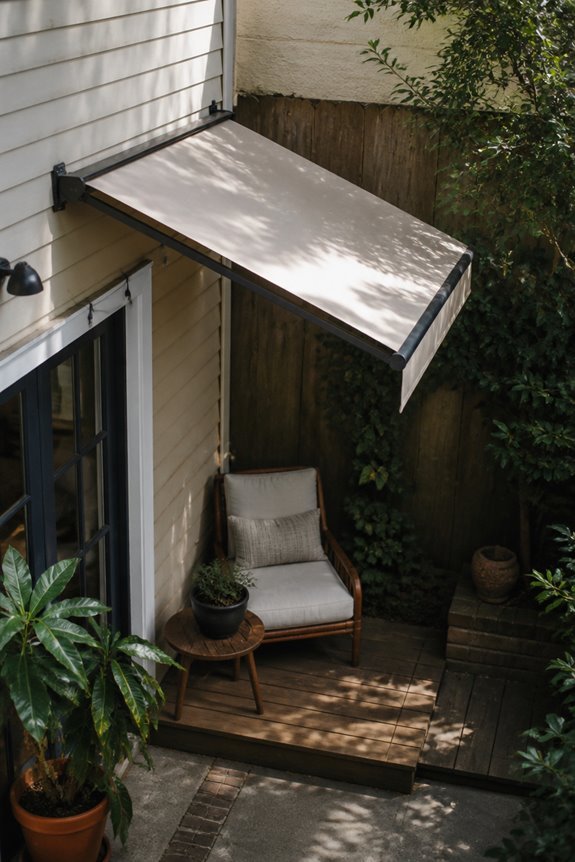
Where yard layouts feature awkward corners or narrow spaces between structures, wall-mounted canopies provide targeted shade solutions. These structures attach directly to exterior walls or fences, eliminating the need for ground-level support posts that consume valuable space.
Wall-mounted canopies work well for patios, deck edges, and side yards. Aluminum frames with retractable fabric offer flexibility, allowing homeowners to extend or retract coverage based on weather conditions. Fixed options using metal frames and permanent canvass material provide consistent shade without adjustment.
Installation requires secure wall anchors and proper reinforcement. Models range from small six-foot units to larger twenty-foot installations. Popular styles include motorized versions controlled by remote, manual crank systems, and fixed designs.
Homeowners should verify wall construction adequacy before mounting, as improper installation risks structural damage or canopy failure.
Shade Sails: Diagonal Coverage for Odd-Shaped Yards
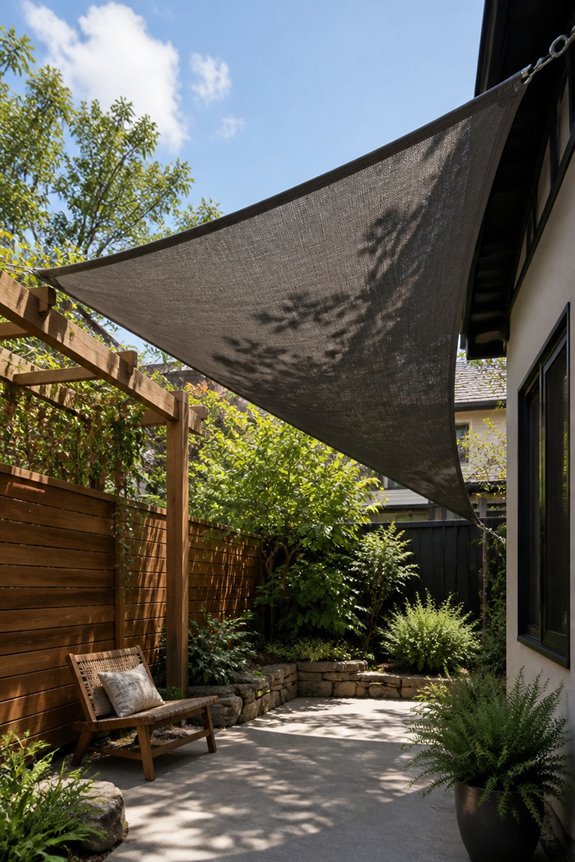
Shade sails offer flexible coverage solutions for yards with irregular layouts, triangular spaces, or areas unsuitable for traditional canopy structures. These tensioned fabric systems mount diagonally between fixed points, adapting to various yard configurations. Homeowners can position shade sails at angles to cover L-shaped patios, narrow side yards, or corners where standard canopies won’t fit.
Installation requires anchoring posts or cables to secure structures against wind. Materials like high-density polyethylene provide UV protection and water resistance. Shade sails typically reduce temperatures by 5-10 degrees compared to uncovered areas.
Options include single sails for modest coverage or multiple overlapping sails for larger spaces. Neutral colors such as tan, gray, or beige blend with most landscapes. Maintenance involves occasional cleaning and inspection of attachment points for wear or damage.
Pergola Canopies With Adjustable Louvers
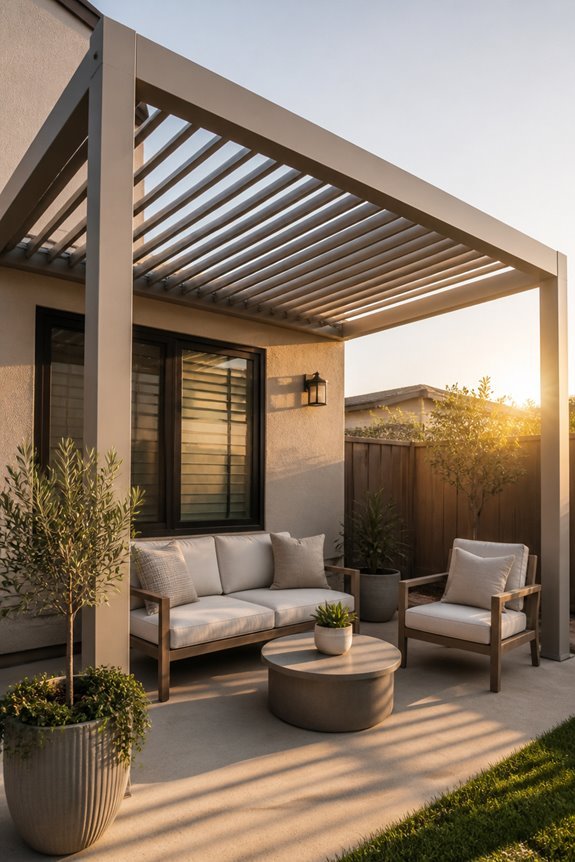
While traditional pergolas provide limited sun control, adjustable louver systems offer homeowners variable shade through rotating horizontal slats. These motorized or manual systems allow users to modify light penetration throughout the day, accommodating changing sun angles and weather conditions.
Adjustable louver pergolas work well in compact yards where flexible shade solutions matter. Homeowners can open slats during cooler months for maximum sunlight, then close them during peak heat. Materials typically include aluminum or wood frames with durable slat components.
Installation requires secure mounting to guarantee stability during wind. Many systems integrate with smart home technology, enabling remote operation. Costs vary based on size, automation level, and material quality. Regular maintenance keeps mechanisms functioning smoothly.
Umbrella Canopy Clusters: Layered Shade Without Installation
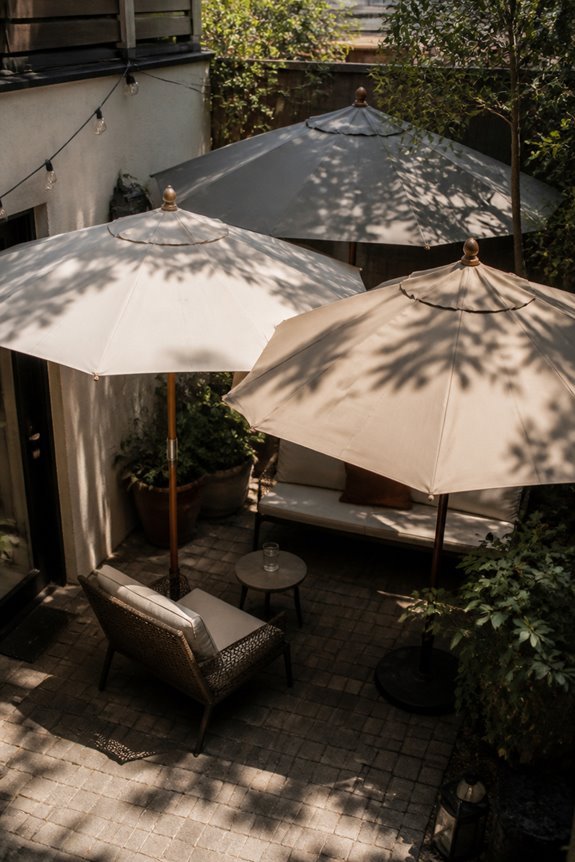
For homeowners seeking shade solutions without permanent installation, umbrella canopy clusters provide an alternative to fixed structures like adjustable louver pergolas. Multiple umbrellas positioned together create layered shade coverage, protecting larger seating areas effectively.
Standard patio umbrellas, offset umbrellas, and cantilever models work well for clustering arrangements. Spacing umbrellas approximately two to three feet apart allows overlapping shade zones while maintaining visual balance.
The clusters require minimal setup, involving only placement and anchoring to prevent wind displacement. Weight bases, ground stakes, or sandbags secure umbrellas reliably. This approach suits renters and homeowners avoiding construction. Umbrella clusters accommodate various backyard sizes, from compact patios to expansive yards.
Adjusting umbrella angles throughout the day optimizes shade positioning as sun movement changes. Seasonal storage protects equipment from weather deterioration, extending product lifespan considerably.
Lean-To Canopies Against Existing Structures
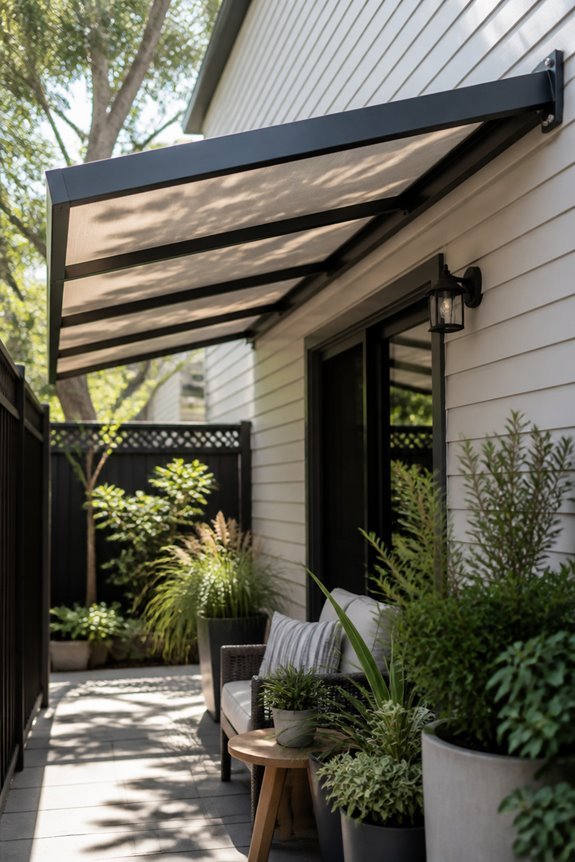
Lean-to canopies attach directly to existing structures like houses, garages, or garden sheds, creating permanent shade solutions with minimal independent support. These structures rely on one side anchored to the building wall, while the opposite side uses posts or columns for support.
Materials include aluminum frames with fabric or polycarbonate panels, offering durability and weather resistance. Installation requires securing the canopy to the structure’s wall with brackets and bolts.
Benefits include space efficiency, as lean-tos occupy minimal footprint while providing substantial coverage. They work well for patios, entryways, and storage areas. Homeowners should check local building codes before installation and verify the existing structure can support additional weight. Maintenance involves periodic cleaning and inspecting attachment points for deterioration.
Living Canopies: Green Shade + Privacy
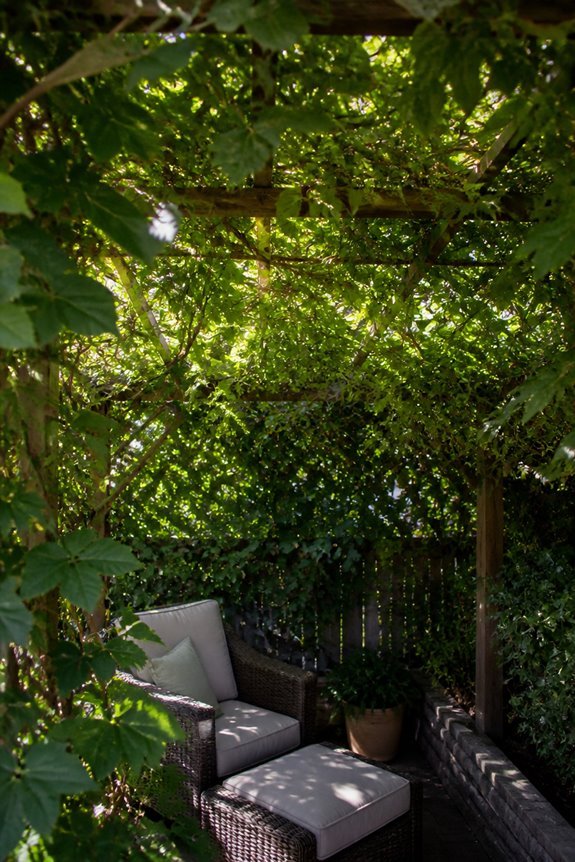
Living canopies use climbing plants, vines, and trees to create natural shade structures that offer both coverage and privacy for outdoor spaces. Ivy, clematis, and climbing roses grow along trellises or pergolas, developing dense foliage over time. Mature trees like oaks and maples provide substantial shade for larger yards.
Bamboo creates fast-growing privacy screens, reaching full height within seasons. Grapevines serve dual purposes, producing fruit while blocking sunlight and sight lines.
Living canopies require regular maintenance including watering, pruning, and pest monitoring. They develop gradually, taking months or years to reach maximum coverage. Climate zone determines which plants survive year-round.
Initial costs remain lower than permanent structures, though upkeep demands ongoing attention throughout growing seasons.
Triangular Canopies for Awkward Corners
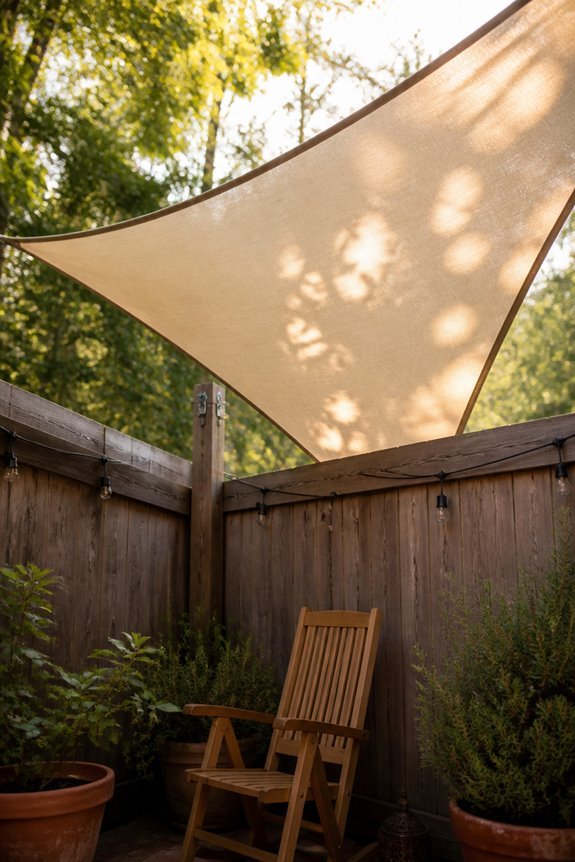
Corners of yards often present design challenges where rectangular or curved structures fit poorly, making triangular canopies an effective solution. These structures align naturally with corner angles, utilizing otherwise wasted space efficiently. Triangular canopies work particularly well in L-shaped yards or spaces where two fence lines meet at right angles.
Materials for corner canopies include metal frames with canvas fabric, or wooden posts with shade cloth. Brands like ShelterLogic offer corner-specific designs. Installation requires securing posts firmly into ground, ensuring stability against wind and weather conditions.
Corner triangular canopies provide shade coverage for seating areas, small dining zones, or garden tool storage. They occupy minimal square footage while delivering practical protection from sun and light rain exposure throughout the day.
Pop-Up Canopies for Flexible Outdoor Living
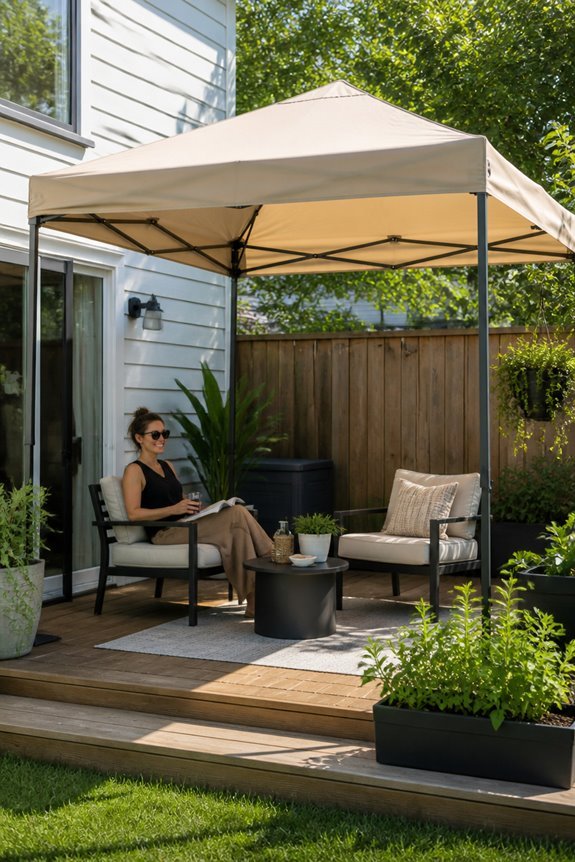
Because they require minimal setup time and move easily between locations, pop-up canopies offer versatility that permanent structures cannot match. These portable shelters accommodate changing backyard needs, whether for temporary gatherings, seasonal storage, or rotating entertainment areas.
Pop-up canopies come in various sizes, typically ranging from 8×8 feet to 20×20 feet, fitting different space constraints. Common materials include polyester fabric tops with aluminum frames, providing lightweight durability. Brands like Coleman and E-Z UP manufacture reliable models suitable for residential use.
Setup involves extending the frame and securing the fabric covering, usually completed in minutes by one or two people. Models feature adjustable legs, allowing placement on uneven surfaces. Owners can store canopies during off-seasons, preserving limited backyard space year-round.
Deck-Attached Canopies That Expand Your Patio
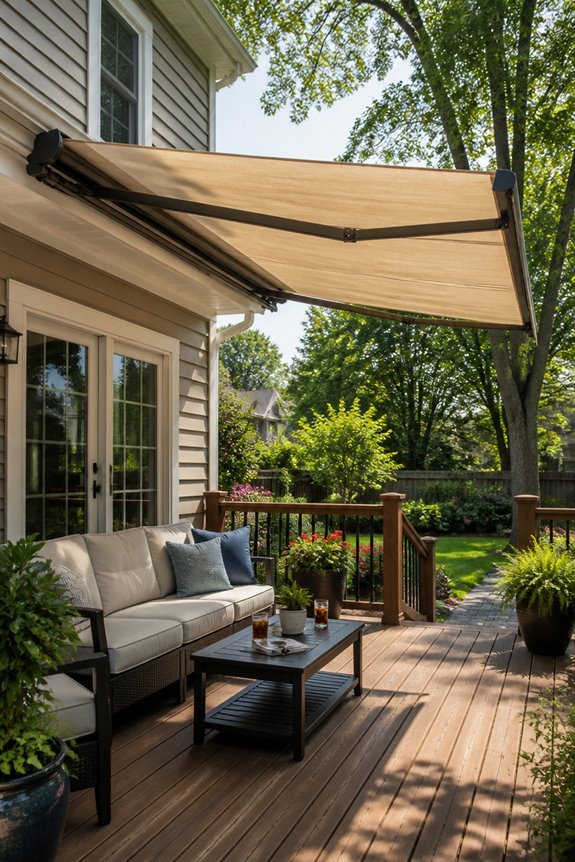
Deck-attached canopies provide a more permanent solution than portable models, anchoring directly to existing patio structures and creating extended outdoor living space. These installations connect to deck posts or house exteriors, offering stability and weather protection year-round.
Common materials include aluminum frames with polycarbonate or fabric panels. Aluminum resists rust and requires minimal maintenance. Polycarbonate panels transmit light while blocking UV rays. Fabric options provide traditional aesthetics but need periodic cleaning.
Installation involves securing mounting brackets to deck framing, ensuring proper slope for water drainage. Most units accommodate 10-by-12-foot dimensions, though custom sizes exist.
Benefits include increased usable patio area, protection from rain and sun, and improved home value. Deck-attached canopies suit small yards by maximizing existing structures rather than requiring ground space.
Rolling Canopies: Move Shade Where You Need It
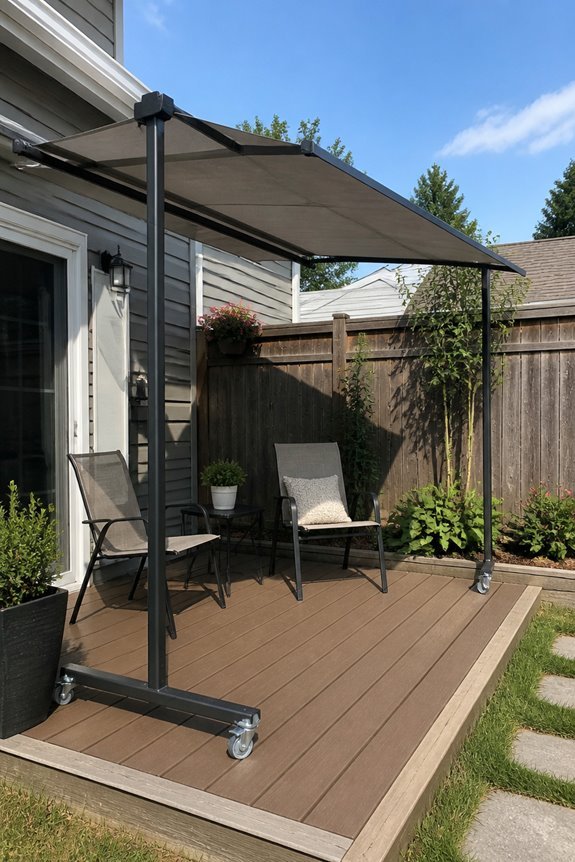
What if homeowners need shade in different yard areas throughout the day? Rolling canopies offer a practical solution, providing portable shelter that moves with the sun’s position. These structures feature wheeled bases, allowing users to relocate them easily across patios, gardens, and seating zones.
Rolling canopies work well for small backyards because they require no permanent installation or deck attachment. Models come in various sizes, from 8-by-8-foot options to larger configurations. Common materials include polyester fabric tops and steel or aluminum frames. Many include adjustable height settings, side panels, and UV-protective coverings.
This flexibility makes rolling canopies ideal for homeowners who entertain in multiple yard sections or need shade in changing locations throughout the season. They store compactly during winter months.
Lightweight Fabric Canopies: Minimal Frame, Maximum Coverage
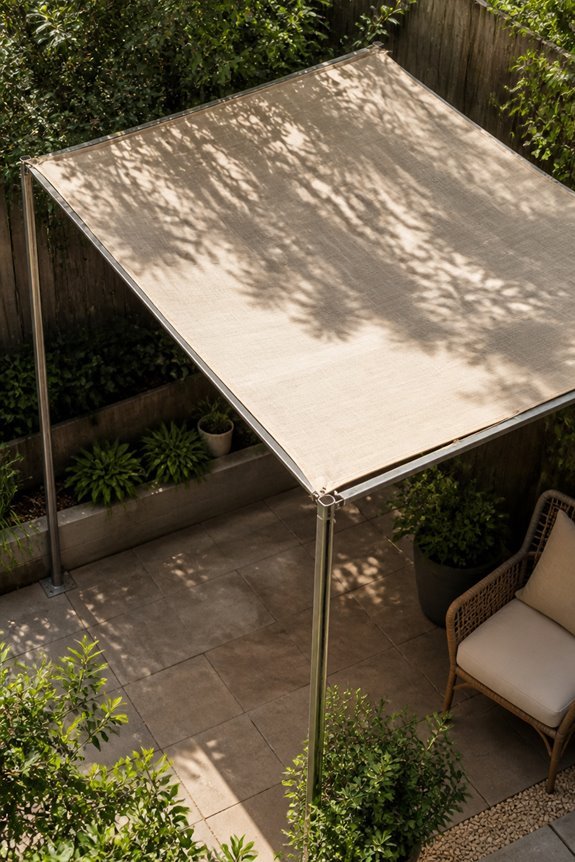
While rolling canopies provide mobility, lightweight fabric canopies offer a different advantage: maximum shade coverage with minimal structural support. These canopies use thin metal frames, typically aluminum or steel, paired with durable polyester or canvas fabric. The frame design distributes weight efficiently, allowing larger coverage areas without requiring extensive installation.
Lightweight fabric canopies work well for small backyards because they provide substantial shade in compact spaces. Models like pop-up canopies and shade sails exemplify this approach. Pop-up versions assemble quickly and cover 100 to 200 square feet. Shade sails stretch between anchor points, adapting to various yard configurations.
The fabric blocks ultraviolet rays while remaining breathable, preventing excessive heat buildup underneath. Installation typically requires minimal tools and preparation, making these canopies practical for renters or temporary setups.
Window Awnings and Balcony Shades
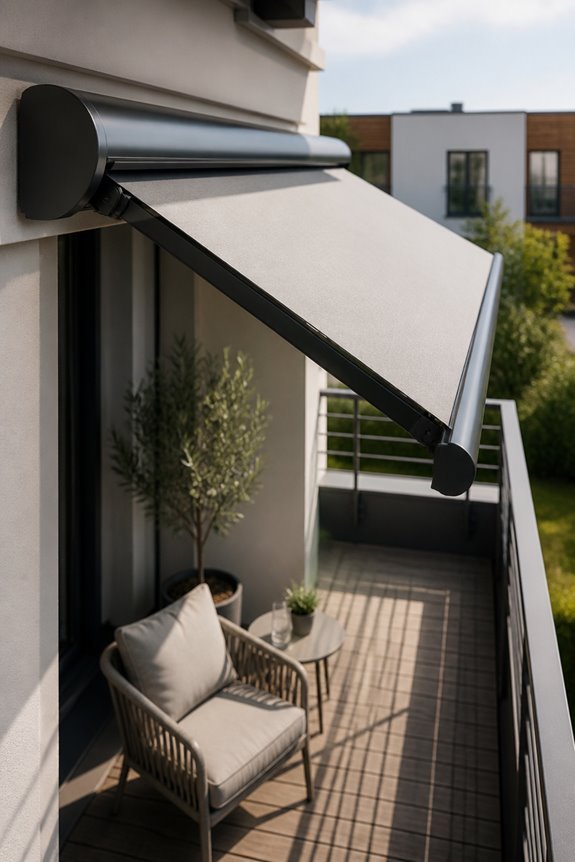
Window awnings and balcony shades extend shade protection to the home’s exterior surfaces, complementing freestanding canopy systems. These structures attach directly to walls, windows, or railings, providing fixed coverage for patios and entryways.
Retractable awnings offer flexibility, deploying when needed and retracting during unfavorable weather. Fabric options include solution-dyed acrylic and polyester, which resist fading and moisture. Metal frames, typically aluminum, support the fabric while remaining lightweight. Balcony shades work similarly, draping over railings to block direct sunlight.
Installation requires mounting hardware, brackets, and appropriate wall anchors. Fixed awnings suit permanent coverage areas, while retractable models accommodate changing sun angles. These solutions integrate seamlessly with existing canopy systems, creating layered shade throughout outdoor spaces. Maintenance involves occasional cleaning and hardware inspection for rust or damage.
DIY Canopies Under $200
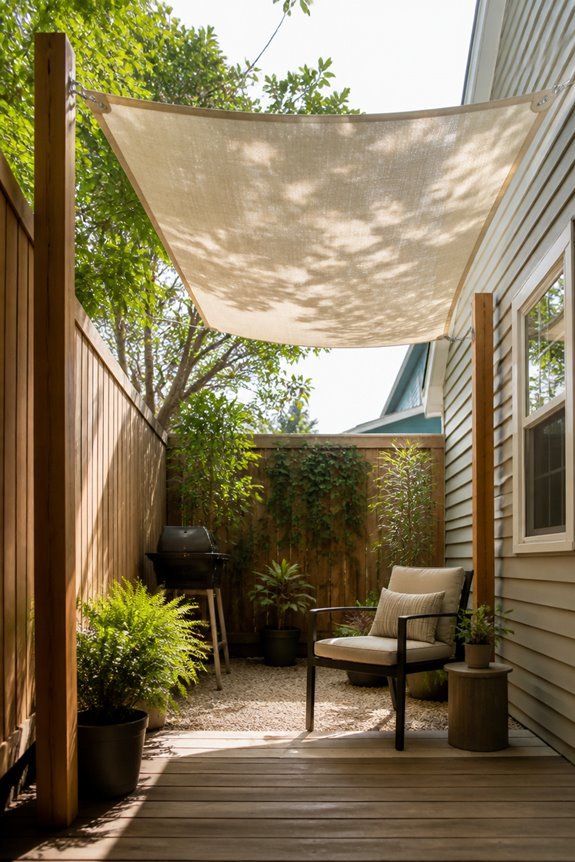
Budget-friendly shade solutions allow homeowners to construct functional canopies using materials and tools readily available at hardware stores.
PVC pipe frames, combined with outdoor fabric or tarps, create sturdy structures for under $200. Homeowners can purchase PVC pipes, connectors, and fittings for approximately $60 to $80, then add a quality tarp or canvas fabric for $100 to $120. Metal conduit offers another option, providing durability at similar costs.
Rope and carabiners secure fabric panels to existing structures like fences or posts. Simple A-frame designs require minimal fastening hardware. Adjustable tension systems allow for seasonal modifications and repairs. Hardware stores stock all necessary components, eliminating special orders.
This approach produces practical shade without expensive professional installation or custom fabrication.
Frequently Asked Questions
How Long Do Outdoor Canopies Typically Last Before Needing Replacement or Maintenance?
Most outdoor canopies last five to fifteen years, depending on material quality and climate exposure.
High-end models tend to last longer with proper maintenance, while budget options usually need replacing sooner. Keeping up with regular upkeep stretches that lifespan considerably either way.
What Permits or HOA Approval Might Be Required Before Installing a Permanent Backyard Canopy?
Permanent installations typically require a building permit from your local municipality.
If you’re part of an HOA, their approval usually comes into play too. Setback requirements, height restrictions, and structural inspections can all factor in depending on where you live.
Can Canopies Withstand High Winds, Heavy Rain, or Snow in Various Climates?
It really comes down to the material and design you choose.
Premium models handle moderate wind and rain without much trouble. Heavy snow calls for a reinforced frame, and harsher climates generally need professional installation along with regular maintenance to perform well long term.
What’s the Best Canopy Material for UV Protection and Durability in Sunny Climates?
Polycarbonate and high-density polyethylene stand out here.
Both resist fading and hold up well under intense sun exposure. You’ll get noticeably better longevity from these materials compared to standard fabric options in a sunny climate.
How Much Weight Can Different Canopy Types Support if Accessories Are Added?
This depends a lot on the type of canopy you have.
Pop-up models typically support 50 to 75 pounds, while permanent structures handle 200 to 400 pounds. If you’re adding lights or fans, make sure the weight is distributed carefully so you don’t overload the frame.
Conclusion
Choosing shade for a small backyard really comes down to matching the structure to your space and how much flexibility you need.
I helped a friend set up a rolling canopy in her narrow side yard last summer, and it’s become the one piece of furniture she moves around more than anything else she owns.
Retractable options and shade sails work beautifully for irregular corners, while rolling canopies and umbrella clusters suit anyone who wants shade to follow the sun.
DIY builds are worth considering too if you’re comfortable with basic tools and want to keep costs down.
Whatever you choose, even the smallest backyard can get real, usable shade without a big investment or a permanent commitment.
I’d love to hear which option fits your space best. Leave a comment below and let me know what your yard is working with.