

Backyard canopies offer a practical way to transform outdoor spaces into true retreats, whether the goal is shade, style, or both.
Permanent pergolas add architectural presence and support climbing vines, while retractable options allow homeowners to adjust coverage as sun and weather change throughout the day.
Shade sails create a flexible, budget-friendly alternative that suits contemporary landscapes.
Specific needs should guide the decision, since entertaining spaces require generous coverage, poolside areas demand moisture resistance, and small patios call for more compact designs.
Proper placement remains essential regardless of style, preventing afternoon glare and extending outdoor living well beyond peak summer heat.
Where Most People Go Wrong
Choosing a style before considering the yard’s actual layout is one of the most common mistakes. A structure suited to a large open space may overwhelm a smaller patio.
Overlooking drainage and wind exposure causes problems later. Sloped and slanted designs need careful positioning to shed water effectively rather than pooling near seating areas.
Skipping permit research before installation can lead to costly changes down the line. Checking local regulations early prevents having to modify or remove a structure after the fact.
30 Backyard Canopy Ideas
Some of these designs prioritize permanence and architectural detail, while others focus on flexibility and ease of installation.
A few are built for specific purposes like outdoor kitchens, pools, or play areas, while others work as general-purpose shade solutions for any part of the yard.
Review the options below to find the style best suited to the space and its intended use.
Classic Fabric Canopies for Timeless Elegance
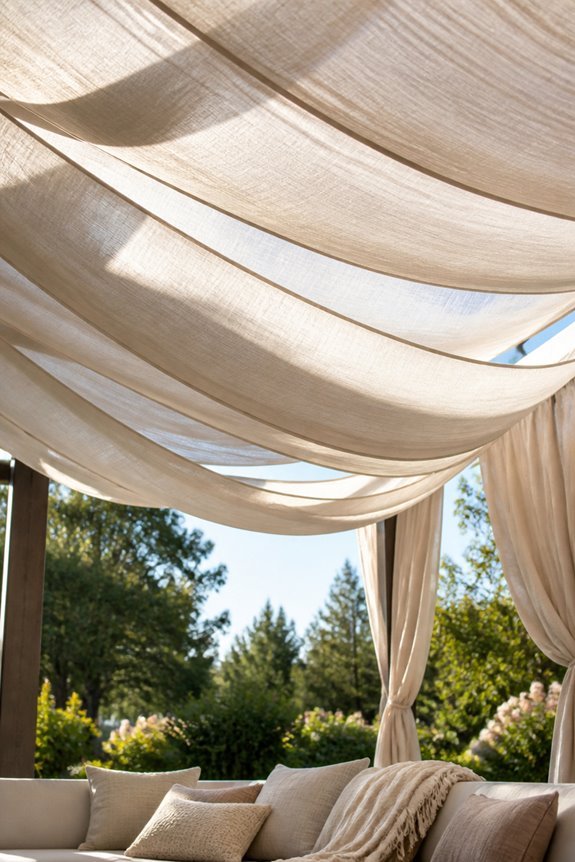
When selecting a canopy for outdoor spaces, classic fabric options offer durability, aesthetic appeal, and functional protection from weather conditions. Materials like Sunbrella and solution-dyed acrylic provide fade resistance and water repellency. Canvas represents another traditional choice, though it requires periodic maintenance and treatment.
Neutral colors, including beige, cream, and gray, complement most outdoor settings and landscapes. These fabrics typically last five to ten years with proper care. Installation options include permanent structures with posts or portable frames with legs. Classic designs work well over patios, decks, and garden areas.
Regular cleaning prevents mildew and extends fabric lifespan. Cost ranges from moderate to high depending on size and material quality.
Also read: 10 Modern Canopy Bed Ideas for a Minimalist Bedroom
Modern Pergolas With Clean Lines
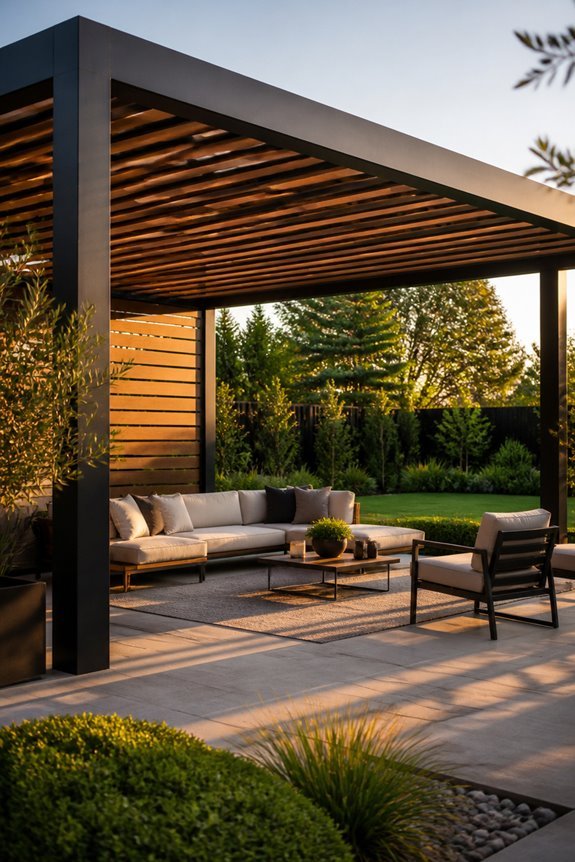
How do modern pergolas differ from traditional canopies? Modern pergolas feature straight lines, minimalist designs, and geometric patterns, whereas traditional canopies often include ornate details and curved elements. Contemporary pergolas use materials like aluminum, steel, and composite wood, offering durability and low maintenance. These structures typically include adjustable louvers or slats, allowing shade control throughout the day.
Modern pergolas work well in small spaces, attached to homes, or freestanding in yards. Popular styles include slatted designs with horizontal beams, pergolas with retractable covers, and structures incorporating integrated lighting. These functional outdoor solutions provide partial shade while maintaining an open, airy feel.
Installation often requires anchoring to concrete or decking, and sizing ranges from eight-by-eight feet to larger customized dimensions. Modern pergolas complement contemporary home architecture effectively.
Shade Sails for Contemporary Spaces
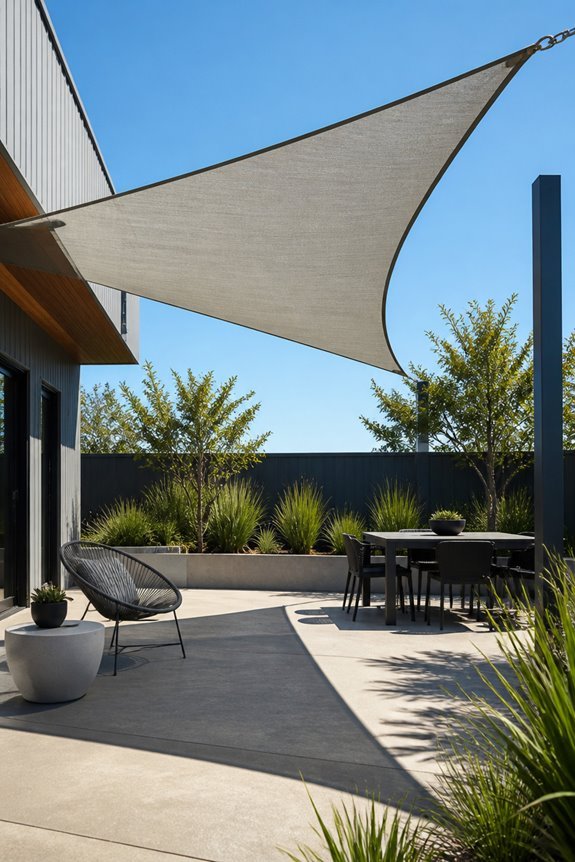
Shade sails offer a flexible alternative to traditional pergolas, providing coverage in contemporary outdoor spaces through tensioned fabric structures. These triangular or quadrilateral canopies attach to existing posts, walls, or trees, creating geometric patterns that complement modern landscapes.
Shade sails feature several advantages for homeowners. The fabric filters sunlight while allowing air circulation, reducing heat buildup compared to solid structures. Installation requires minimal construction, making them ideal for renters or temporary solutions.
Materials like high-density polyethylene provide UV protection and durability. Common configurations include single sails for small patios, multiple overlapping sails for larger areas, and angled designs that maximize coverage. Color options range from neutral tones to bold hues.
Maintenance involves occasional cleaning and fabric inspection for wear.
Rustic Wooden Frame Canopies
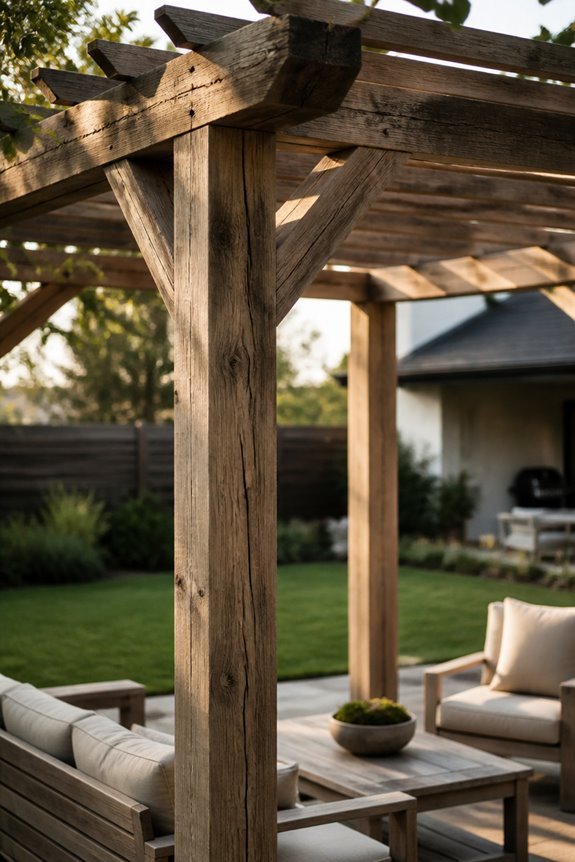
Rustic wooden frame canopies provide a traditional alternative to contemporary fabric systems, offering permanent structures that blend into natural outdoor settings. These canopies typically feature beams constructed from cedar, redwood, or pressure-treated lumber, materials that withstand weather exposure while developing natural patina over time.
Homeowners can customize dimensions and roof configurations, choosing between open lattice designs for filtered shade or solid wood panels for maximum coverage. Installation generally requires concrete footings and structural reinforcement to guarantee stability. Maintenance involves periodic staining or sealing to prevent rot and insect damage.
These structures accommodate various attachments, including climbing vines, hanging lights, and fan installations. Cost ranges from moderate to high depending on wood quality and size, with larger spans requiring additional support beams for safety and durability.
Retractable Canopies for Flexible Coverage
Retractable canopies offer adjustable shade coverage, allowing homeowners to extend or retract fabric panels based on weather conditions and sun exposure. These structures function through motorized or manual mechanisms, providing control over outdoor comfort levels.
Popular models include pergola-style retractable canopies and awning systems. Motorized versions offer convenience, responding to remote controls or weather sensors that automatically close during wind or rain. Manual options require less maintenance but demand more physical effort.
Installation typically occurs above patios, decks, or seating areas. The fabric panels roll into compact housing units when not needed, preserving yard aesthetics. Material choices include acrylic, polyester, or vinyl, each offering different durability and UV protection levels.
Retractable canopies accommodate changing seasonal needs and personal preferences throughout the day.
Metal Arch Canopies With Climbing Vines
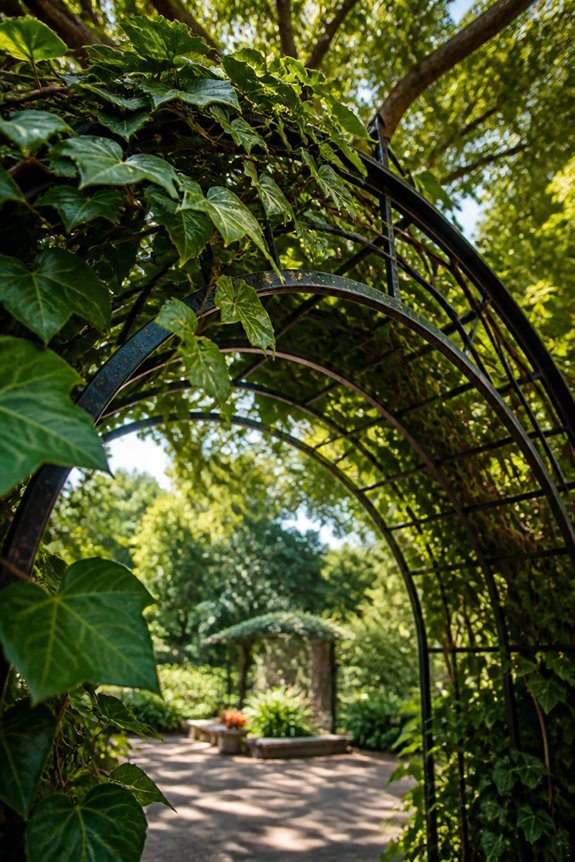
Metal arch canopies provide a permanent garden structure that combines aesthetic appeal with functional shade, offering a different approach from adjustable fabric systems. These structures feature curved metal frameworks, typically constructed from steel or aluminum, which support climbing vegetation like clematis, ivy, or jasmine.
The plants gradually cover the framework, creating natural shade while adding visual interest to outdoor spaces. Installation requires a stable foundation and proper positioning to guarantee adequate support for mature plant growth. Metal arch canopies work well in gardens with sufficient sunlight for vine development.
Maintenance involves regular pruning, training vines along the structure, and monitoring plant health. Unlike retractable systems, these permanent installations become integral landscape features that improve with age as vegetation matures and fills the framework completely.
Peaked Roof Canopies for Maximum Style
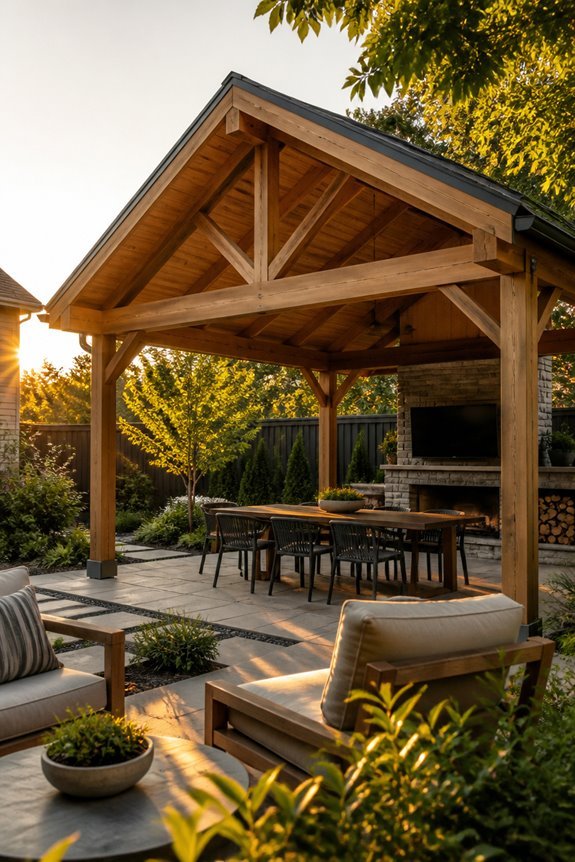
Peaked roof canopies offer a structured alternative to curved designs, providing enhanced weather protection and a defined architectural presence in outdoor spaces. These canopies feature two sloped sides meeting at a ridge, directing rain and debris away from underneath areas.
Materials like aluminum, wood, or steel support this framework effectively. Peaked designs accommodate gutters and downspouts for water management. The style complements traditional or contemporary homes, offering visual consistency with existing rooflines.
Vinyl, polycarbonate, or fabric panels cover the peaked structure, controlling sunlight and precipitation. Installation requires proper foundation anchoring and support posts, typically spaced eight to twelve feet apart. Homeowners can customize colors and dimensions to match landscaping preferences.
These canopies work well over patios, decks, or seating areas requiring dependable shade and weather resistance.
DIY PVC Pipe Canopies on a Budget
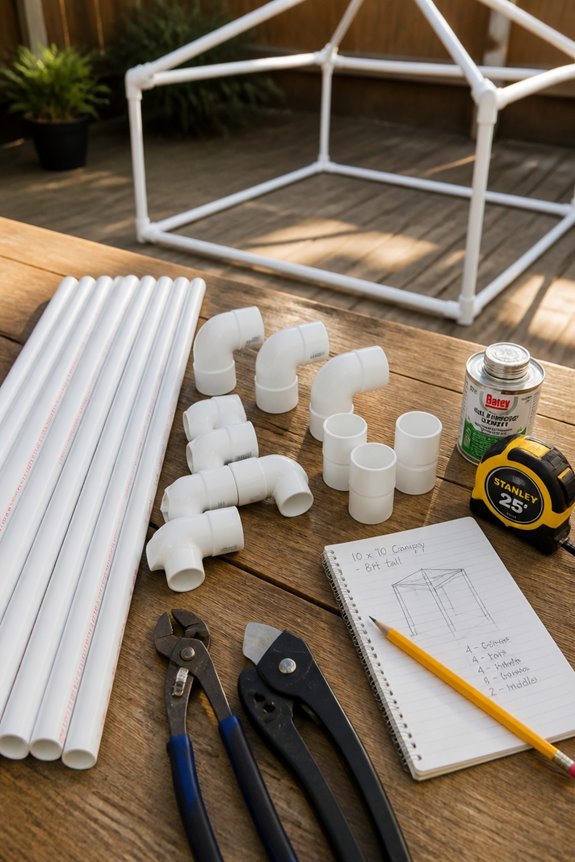
Building a canopy from PVC pipe offers homeowners an affordable alternative to prefabricated structures, requiring minimal tools and materials. PVC pipes, connectors, and fabric form the basic components needed for assembly. Common pipe diameters range from one to two inches, supporting various canopy sizes and weights.
Construction involves connecting pipe segments using T-joints, elbows, and four-way connectors, then securing fabric panels with zip ties or grommets. Polyester or canvas fabric withstands weather conditions effectively. The frame requires anchoring to prevent movement from wind.
Cost savings are significant compared to metal or wood alternatives. Basic tools include a PVC cutter, measuring tape, and a drill. Projects typically take one to two days for completion, depending on canopy dimensions and complexity.
Vintage Market Umbrella Clusters

When multiple umbrellas are arranged together in a yard, they create a vintage market aesthetic that combines functionality with nostalgic appeal. Grouping umbrellas of varying sizes, colors, and patterns generates visual interest while providing flexible shade coverage.
Market umbrellas, typically 7 to 9 feet in diameter, work well for this purpose. Placing them at different heights using stands or pole extensions adds dimension to the space. Neutral tones like cream, tan, or gray pair easily with existing landscaping. Alternatively, bold stripes or solid colors create focal points within the yard.
Clusters near seating areas, dining zones, or garden beds offer practical shade solutions. This approach accommodates repositioning umbrellas seasonally or for different events. Vintage market umbrella arrangements require minimal permanent installation while maintaining aesthetic flexibility.
Bamboo Canopies for Natural Aesthetics
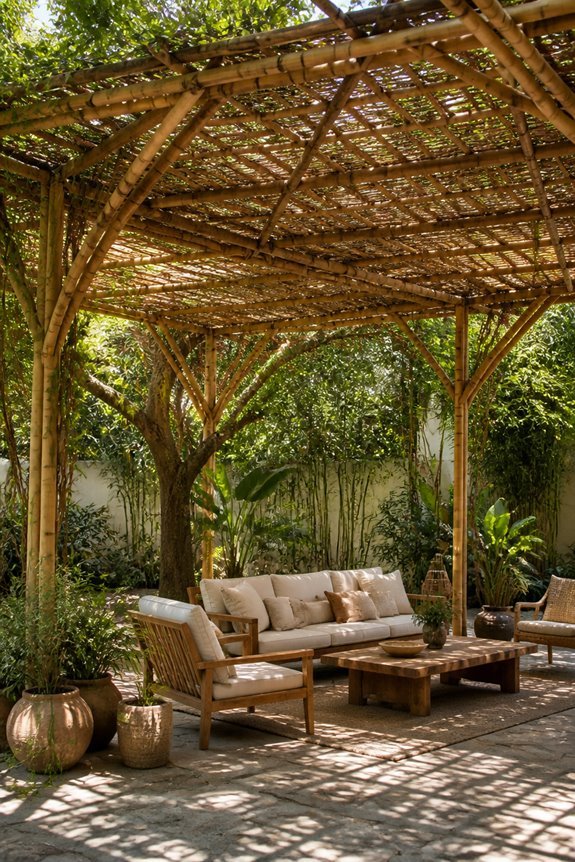
Bamboo canopies offer a natural alternative to portable umbrellas, providing permanent or semi-permanent shade structures with organic appeal. These structures use bamboo poles and panels, creating a cohesive aesthetic that complements landscaping designs. Bamboo canopies work well in gardens, patios, and outdoor dining areas, offering filtered sunlight and privacy simultaneously.
Installation requires a level foundation and proper anchoring systems, ensuring stability during wind and weather. Maintenance involves periodic cleaning and, in certain climates, treating the bamboo to prevent decay and insect damage. Materials like bamboo screening or woven panels extend durability while maintaining the natural look.
Cost varies based on size and complexity, ranging from moderate to high for custom installations. Bamboo canopies typically last five to ten years with proper care, making them a practical long-term investment for permanent yard improvements.
Transparent Polycarbonate Canopies
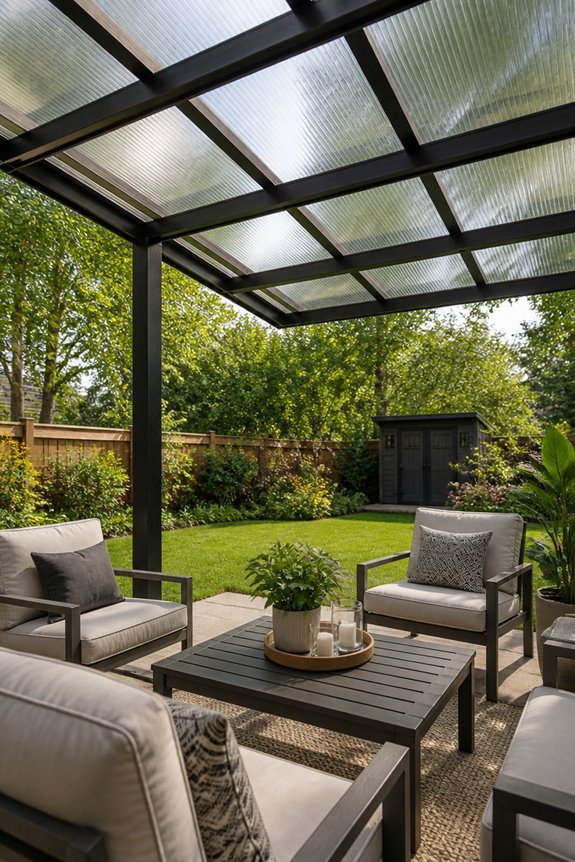
Polycarbonate panels, a durable plastic material, serve as an excellent alternative to traditional canopy coverings, offering transparency while blocking harmful ultraviolet rays. These panels allow natural light to filter through, creating bright outdoor spaces without excessive heat. Homeowners can install polycarbonate canopies over patios, decks, or garden areas for practical shade solutions.
The material resists cracking, shattering, and weathering, making it suitable for various climates. Polycarbonate sheets come in different thicknesses and opacity levels, from clear to frosted options. Installation requires aluminum or steel frames to support the panels securely.
Maintenance involves occasional cleaning with mild soap and water to remove debris and maintain clarity. Polycarbonate canopies typically cost less than glass alternatives while offering comparable durability and light transmission. Their longevity and minimal upkeep make them practical investments for long-term backyard improvements.
Canopies With Integrated Lighting
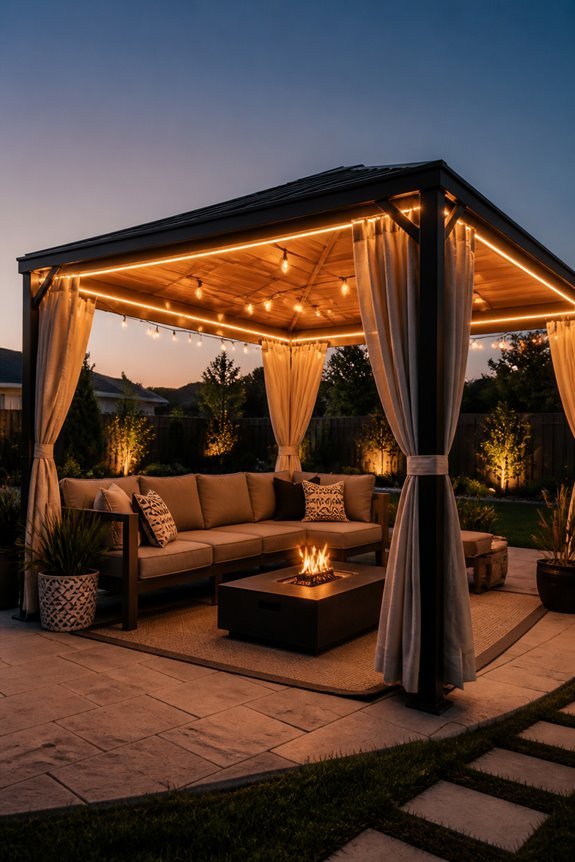
Adding integrated lighting systems to canopies enhances their functionality beyond daytime use, allowing homeowners to enjoy outdoor spaces well into evening hours. LED strip lights, recessed fixtures, and pendant lamps offer various installation options for different canopy styles.
Solar-powered lights provide energy efficiency without requiring electrical wiring, making them practical for many backyards. String lights and uplighting create ambient atmosphere, while task lighting beneath the canopy improves visibility for dining or reading. Homeowners can choose dimmable systems for adjustable brightness levels. Smart lighting controls enable remote operation through mobile devices.
Proper fixture placement along canopy edges, corners, or suspended from overhead structures guarantees even illumination. These lighting solutions transform canopies into functional evening retreats while maintaining aesthetic appeal.
Motorized Canopies for Convenience
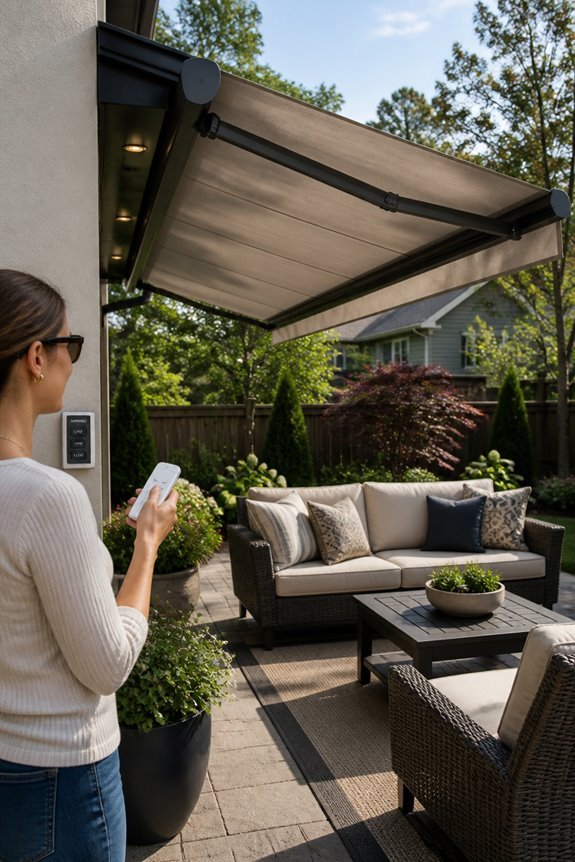
Motorized canopies offer homeowners automated control over their outdoor shade structures, eliminating manual adjustment requirements. These systems use electric motors and remote controls, allowing users to extend or retract the canopy with a button press.
Popular options include retractable awnings and motorized pergolas, which adjust based on sun position or weather conditions. Many models feature wind sensors that automatically retract the canopy during strong gusts, protecting the structure from damage.
Installation typically requires professional setup to guarantee proper electrical connections and motor alignment. Costs vary depending on canopy size and motor quality, ranging from moderate to significant investments. Homeowners benefit from convenience, reduced physical effort, and enhanced protection for outdoor furniture and spaces.
Canopies With Mosquito Netting
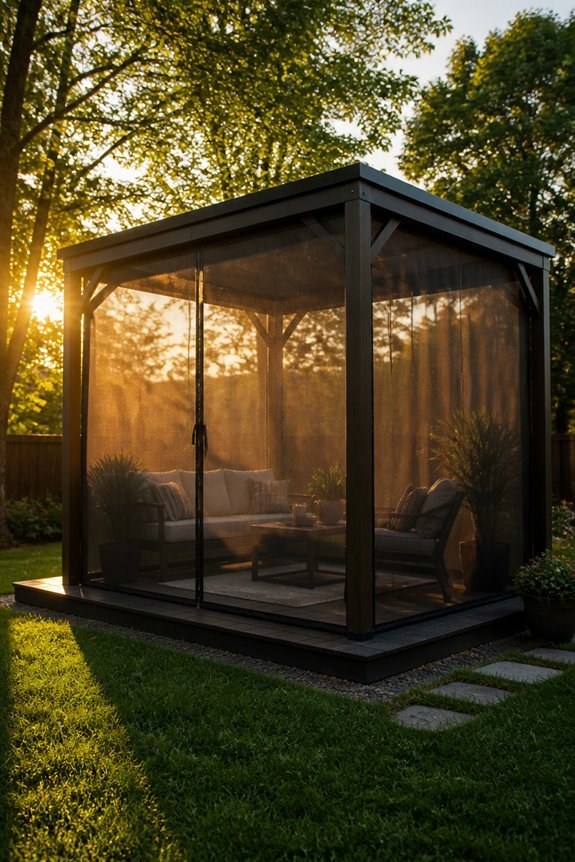
While motorized systems provide convenience and automated protection, canopies with mosquito netting address a different outdoor concern: insect control. These structures combine shade canopies with fine mesh screening, creating enclosed outdoor spaces. The netting keeps mosquitoes, flies, and other insects away from occupants while allowing air circulation and visibility.
Popular configurations include attached netting that rolls up or down, permanent mesh panels, and removable screens. Materials like polyester mesh work effectively for durability and visibility. Brands such as Coleman and Sunnydaze offer pre-made options with integrated netting systems.
Installation typically involves securing netting to frame edges using adhesive strips, velcro, or grommets. Maintenance requires regular cleaning to prevent dust accumulation and occasional mesh repairs.
These canopies prove particularly useful in areas with high insect populations during warm seasons.
Coastal-Inspired Striped Canopies
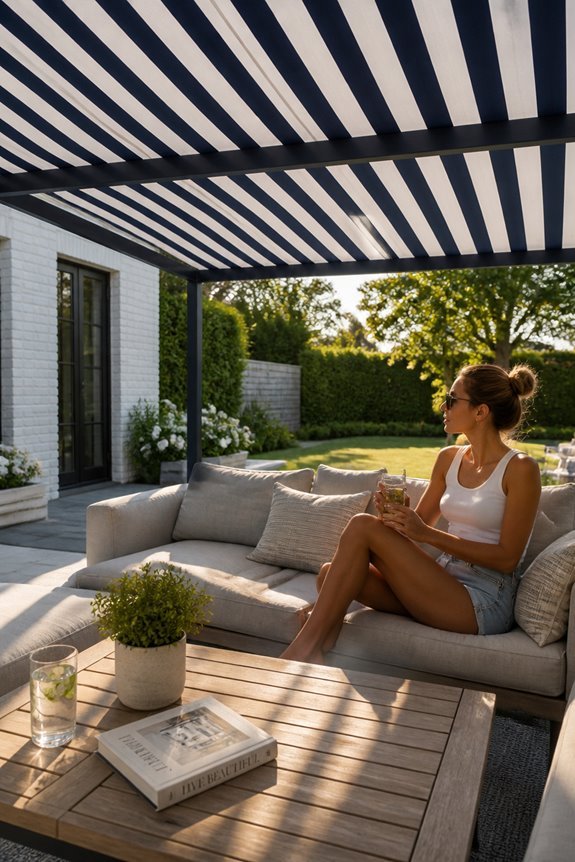
Stripes represent a classic aesthetic choice for outdoor canopies, particularly those designed with coastal themes in mind. Blue and white striped canopies evoke beach environments, while navy and cream combinations offer more sophisticated appearances. These striped patterns work well with various canopy styles, including freestanding structures, pergolas, and retractable awnings.
Striped canopies typically feature fabric with horizontal lines, creating visual interest without overwhelming outdoor spaces. The color combinations complement coastal décor, nautical accessories, and weathered wood furniture.
Materials like solution-dyed acrylic resist fading and moisture damage, essential for maintaining appearance near water features. Striped canopies pair effectively with other elements: rope railings, anchor-themed decor, and neutral landscaping.
Installation options include deck attachment, ground anchoring, or post mounting. These canopies provide shade while establishing cohesive outdoor design themes with minimal maintenance requirements.
Mediterranean Stone Column Canopies
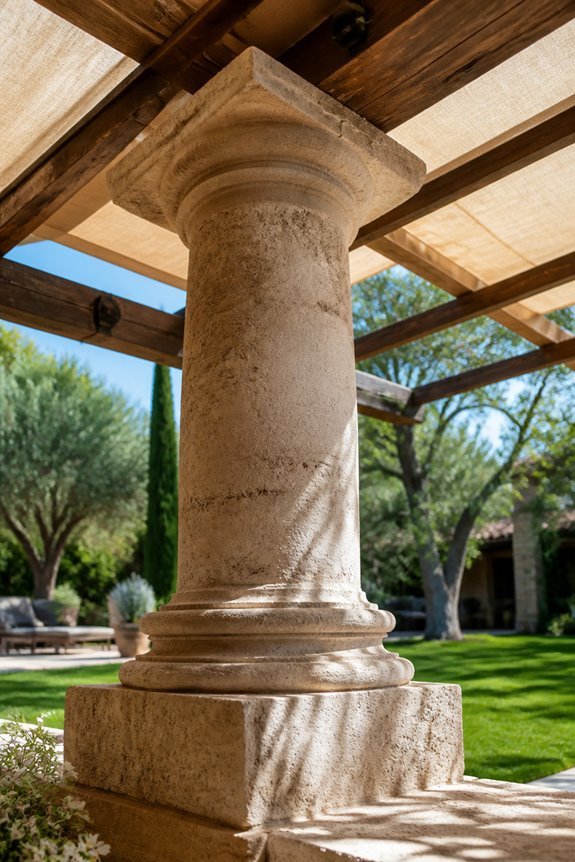
Mediterranean stone column canopies offer a different aesthetic approach to outdoor shade structures, moving beyond the coastal striped designs to incorporate classical architectural elements. These canopies feature sturdy stone or stone-like columns that support overhead beams, creating an elegant, timeless appearance.
Materials include natural limestone, marble, or composite stone products that mimic traditional Mediterranean architecture. The structures work well in backyards with existing stone features, such as patios or walkways.
Installation requires a solid foundation, typically concrete footings, to support the column weight. These canopies provide durable, long-lasting shade while adding visual interest and architectural value to outdoor spaces.
Maintenance involves periodic cleaning and sealing to preserve the stone’s appearance and protect against weathering and staining over time.
Living Green Wall Canopies
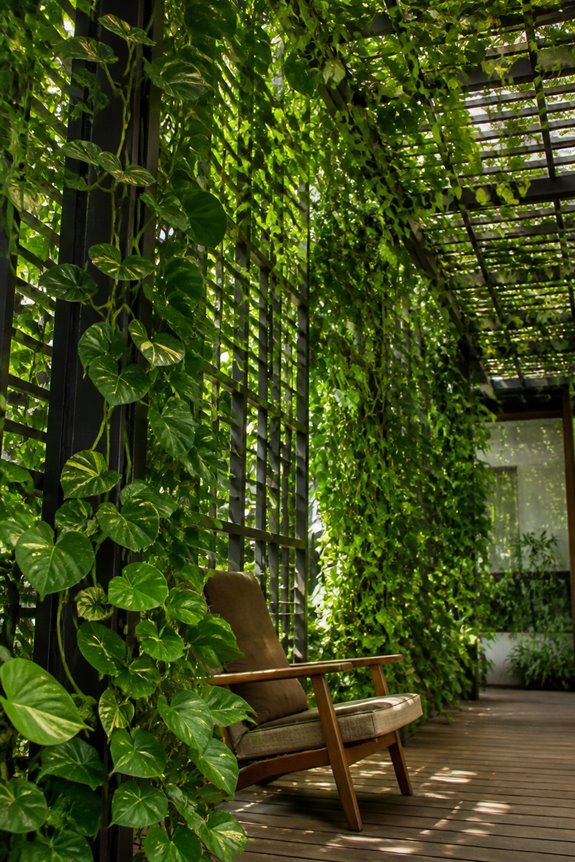
Living green wall canopies represent an alternative approach to outdoor shade, incorporating vegetation into structure rather than relying solely on metal frameworks or fabric panels. These canopies use climbing plants, such as ivy, clematis, or climbing roses, trained across trellises or pergolas to create natural coverage.
The vegetation provides shade while allowing air circulation beneath. Plants filter sunlight gradually, reducing glare and heat more gently than solid materials. Green walls also improve air quality and attract pollinators to yards.
Maintenance requirements include regular watering, pruning, and seasonal care. Climbing plants need support structures, typically wooden or metal frames, installed before planting begins.
Soil preparation and proper drainage systems guarantee healthy growth. These canopies develop fuller coverage over multiple growing seasons.
Canopies Over Outdoor Kitchens
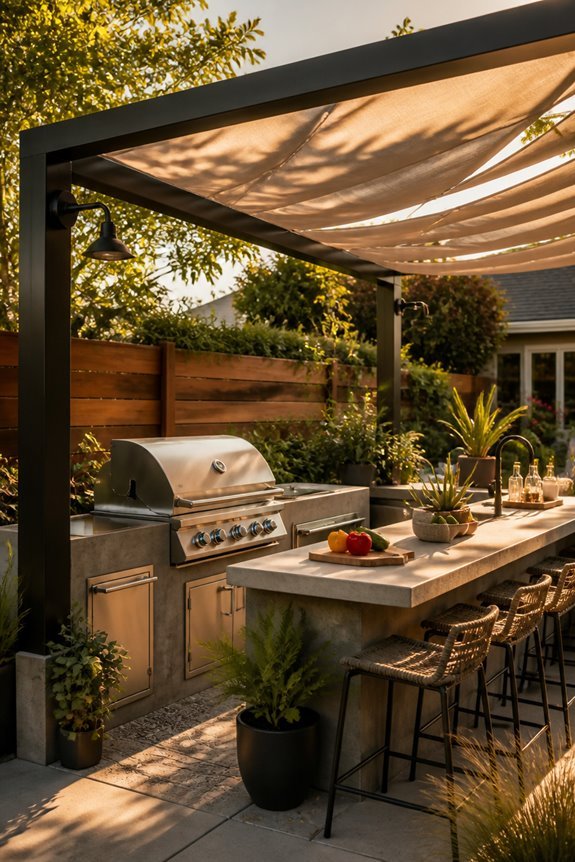
Outdoor kitchens frequently benefit from overhead shade structures that protect cooking equipment, food preparation surfaces, and users from direct sunlight and weather exposure. Retractable awnings work well for kitchens requiring flexible coverage, since they extend during use and retract when not needed. Pergolas offer partial shade while allowing air circulation around grills and countertops.
Polycarbonate panels provide durable, weather-resistant protection and permit light diffusion. Metal or aluminum frame canopies deliver sturdy, long-lasting solutions suitable for permanent installations. The ideal canopy height accommodates cooking appliances, ventilation systems, and comfortable standing room. Materials should resist moisture, heat, and UV damage to maintain functionality. Proper drainage prevents water pooling on canopy surfaces, protecting equipment and users below.
Canopies for Play Areas and Kids’ Zones
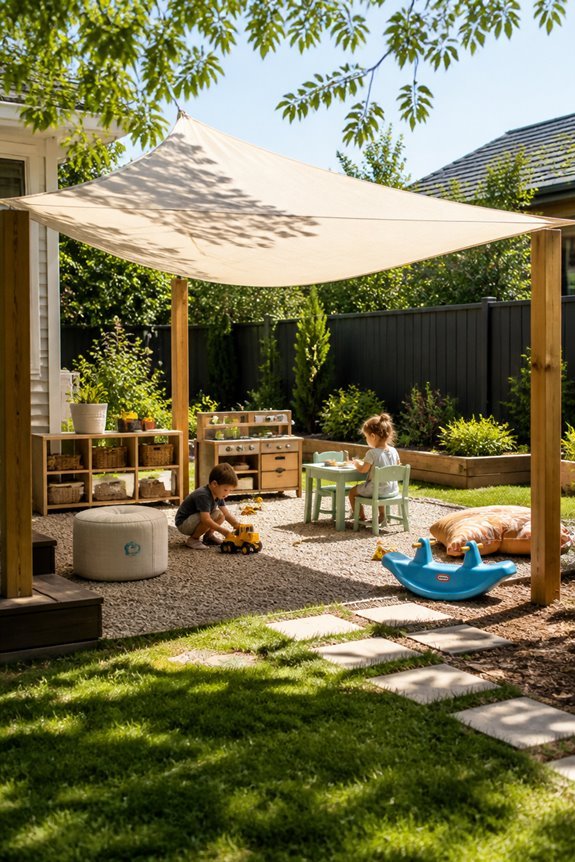
Play areas benefit greatly from shade structures that protect children from harmful UV rays, intense heat, and unexpected rain while allowing supervised outdoor activity. Retractable canopies work well for sandbox areas, swings, and climbing structures, offering flexible coverage that adjusts to weather conditions. Permanent fabric canopies provide consistent protection over playgrounds and seating zones where parents supervise children.
Shade sails stretch between posts over monkey bars, slides, and open play spaces, creating geometric patterns while maintaining visibility. Material selection matters considerably: breathable fabrics prevent heat buildup underneath while blocking UV radiation effectively. Anchor points require secure installation to withstand wind and active children.
Regular maintenance includes cleaning debris, checking fabric deterioration, and inspecting structural integrity. These canopies reduce heat-related stress and skin damage during extended outdoor play sessions.
Wave-Shaped Canopies
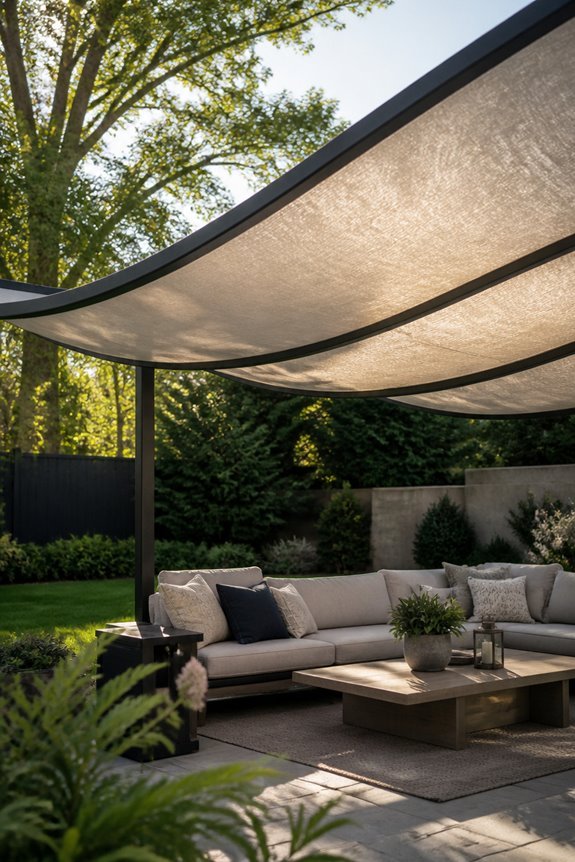
Wave-shaped canopies offer a distinctive aesthetic while providing functional outdoor shade coverage. These structures feature curved, undulating fabric panels that create visual interest in play areas and children’s zones.
The wave design allows water drainage during rain, preventing pooling on flat surfaces. Installation typically involves multiple support posts positioned at varying heights, creating the characteristic flowing pattern. Materials commonly include polyester, canvas, or vinyl, selected based on durability and UV protection requirements.
Wave-shaped canopies work well over sandbox areas, swing sets, and climbing structures. The curved design accommodates taller equipment while maintaining adequate shade coverage. These canopies require periodic inspection of attachment points and fabric condition, ensuring structural integrity and safety for children playing underneath.
Canopies With Built-In Seating
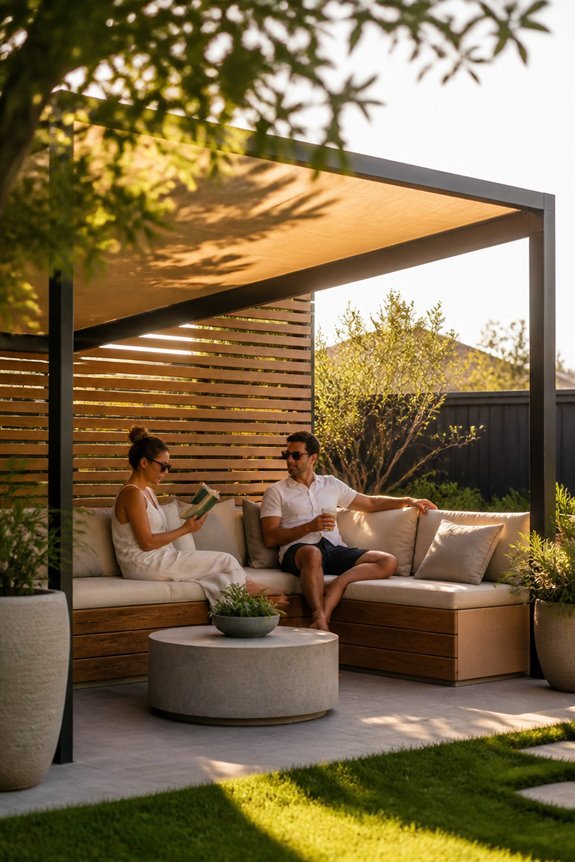
Because seating comfort enhances outdoor relaxation, canopies with built-in seating integrate benches, chairs, or lounges directly into the structure’s design. This approach combines shade and seating functionality into one consolidated unit.
Built-in options typically include attached wooden benches along the canopy’s perimeter, providing fixed seating for multiple people. Cushioned lounge chairs integrated into the frame offer reclined positions. Curved bench seating follows the canopy’s shape, maximizing space efficiency.
These designs work well in patios, gardens, and gathering areas. Materials vary, including wood, metal frames with fabric cushions, and composite materials.
Built-in seating reduces clutter, eliminates extra furniture placement, and creates designated rest areas. The structure provides weather protection while people sit, making it practical for extended outdoor use throughout seasons.
Bohemian Draped Fabric Canopies
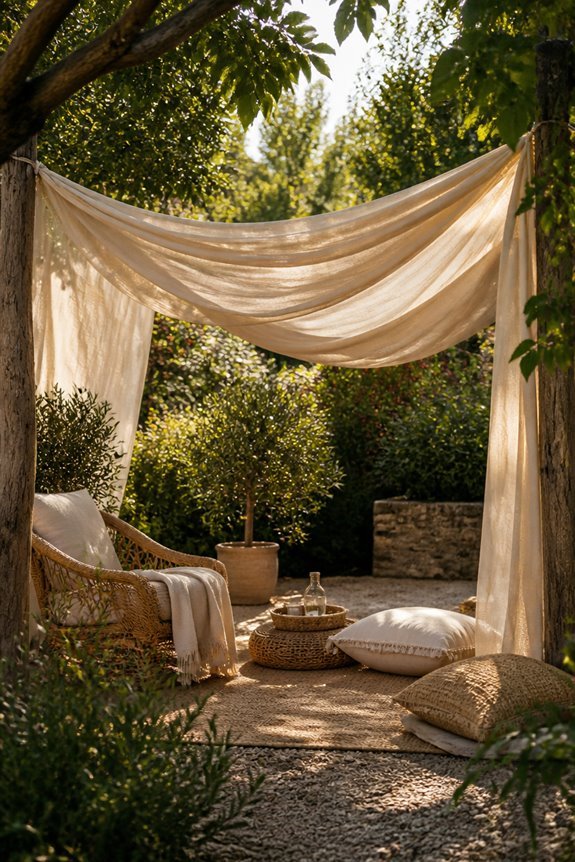
Many outdoor spaces benefit from bohemian draped fabric canopies, which feature flowing textiles suspended from overhead structures to create layered, informal shade areas. These canopies use lightweight materials like cotton, linen, or sheer fabrics that drape naturally while allowing filtered light through.
Installation typically involves securing fabric to existing pergolas, wooden frames, or metal posts using clips, rings, or ties. Popular fabric choices include macramé panels, patterned scarves, or solid-colored linens that coordinate with existing outdoor decor.
The draped style creates visual interest and casual atmosphere while providing functional shade protection. Maintenance requires occasional cleaning and repositioning of fabric as weather conditions change.
This approach works well for patios, garden areas, and event spaces seeking relaxed aesthetic appeal.
Slanted Single-Slope Canopies
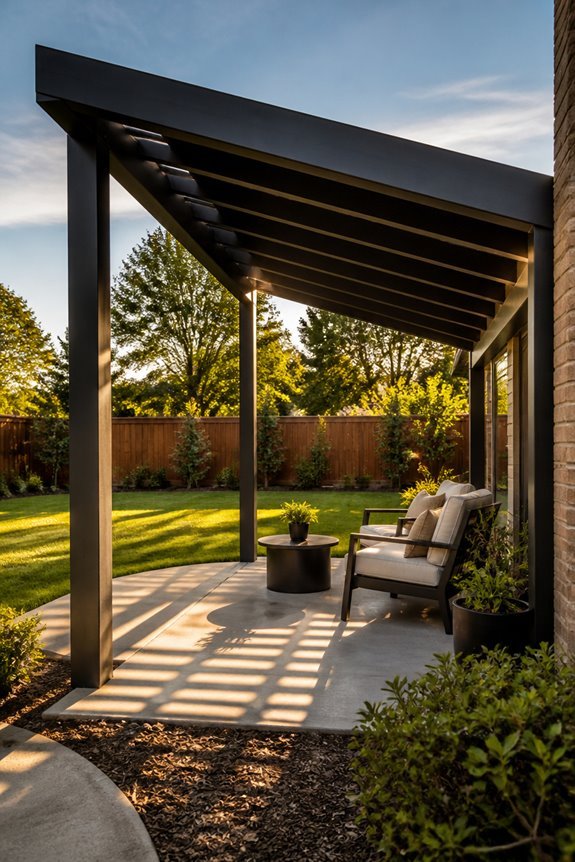
Slanted single-slope canopies feature a roof panel angled in one direction, typically ranging from 15 to 45 degrees, which naturally sheds water and provides directional shade coverage. This design works well in yards with established trees or structures serving as anchor points.
The angled structure channels rainfall away from seating areas, making these canopies practical for regions with moderate precipitation. Installation requires sturdy posts, typically four inches in diameter, positioned at varying heights to support the slope. Materials include metal frames with shade cloth or polycarbonate panels.
Examples include pergola-style aluminum canopies and fabric-covered wooden structures. The slope direction should face away from prevailing winds and accommodate sun angles throughout the day. Maintenance involves checking fasteners and clearing debris from the angled surface.
Retractable Side Panels for Weather Protection
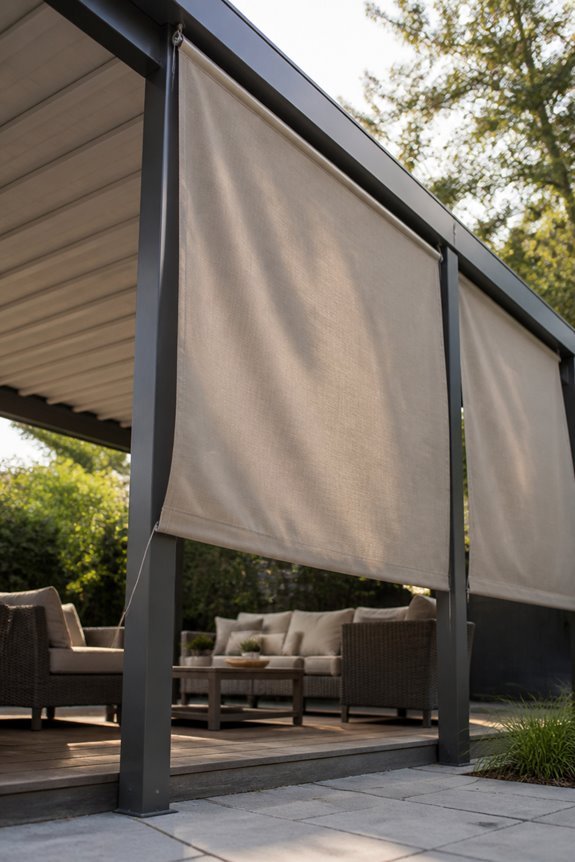
How do retractable side panels enhance canopy functionality? These panels attach to canopy frames, rolling or sliding to provide flexible weather protection. When extended, they shield users from wind, rain, and sun exposure, transforming open structures into semi-enclosed spaces. Popular materials include vinyl, polyester, and clear acrylic options.
Retractable panels offer practical advantages. Users adjust coverage based on weather conditions without removing permanent fixtures. Installation typically involves mounting hardware along canopy edges. Models range from manual systems requiring hand operation to motorized versions with remote controls.
Considerations include panel durability, cleaning requirements, and storage space when retracted. Quality panels resist mildew and UV damage. Many homeowners choose panels for patios, decks, and garden areas, extending outdoor usability during unpredictable weather.
Minimalist Steel and Cable Canopies
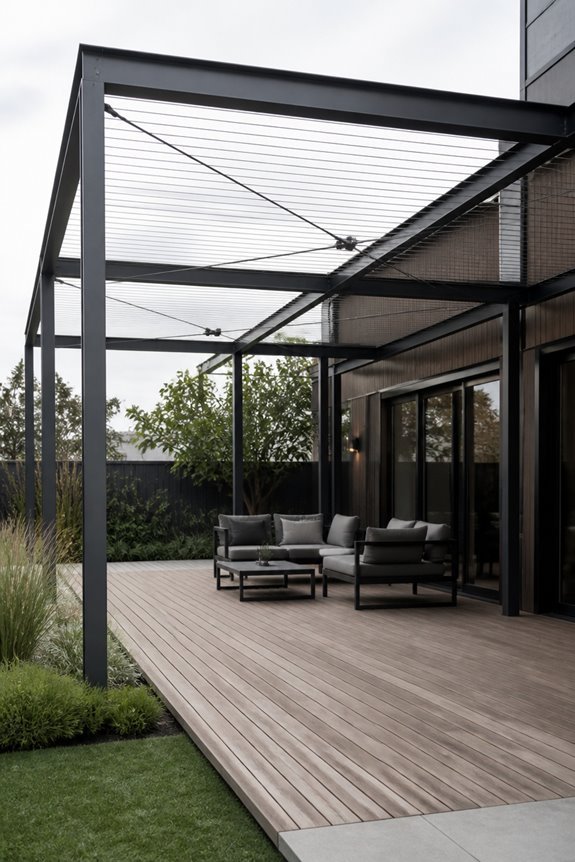
Steel and cable canopies offer a streamlined alternative to traditional fabric-based systems, prioritizing minimalist design over enclosed coverage. These structures use thin steel frames, typically measuring 2-3 inches in diameter, paired with stainless steel cables for support. The design creates open-air spaces with minimal visual obstruction, allowing light penetration while reducing wind resistance.
Installation requires concrete footings, anchor points, and professional tensioning of cables to guarantee structural integrity. Common applications include pergola-style coverings over patios, deck areas, and garden spaces.
Materials withstand rust and weathering effectively. Maintenance involves periodic cable inspection and frame cleaning. Cost ranges from moderate to high, depending on span and customization. These canopies work well for properties prioritizing contemporary aesthetics and durability over full weather protection.
Canopies Over Hot Tubs and Pools
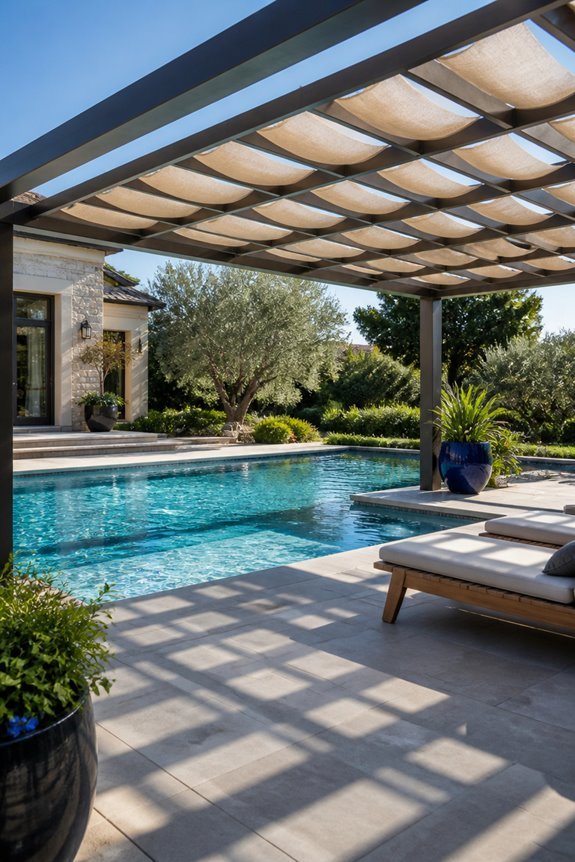
Because hot tubs and pools require protection from debris, falling leaves, and excessive sun exposure, canopies designed for these water features serve both functional and aesthetic purposes. Retractable canopies work well for pools, allowing users to open or close coverage as needed. Pergolas with shade cloth provide partial filtering of sunlight while maintaining visibility.
Polycarbonate panels offer durable, weather-resistant protection without blocking light entirely. For hot tubs, enclosed canopies help retain heat and reduce chemical evaporation. Materials must resist moisture, chlorine, and saltwater damage. Aluminum frames, vinyl covers, and marine-grade fabrics are common choices.
Proper drainage prevents water pooling on the canopy surface. Installation should account for wind resistance and structural support requirements near water features.
Japanese-Inspired Wooden Canopies
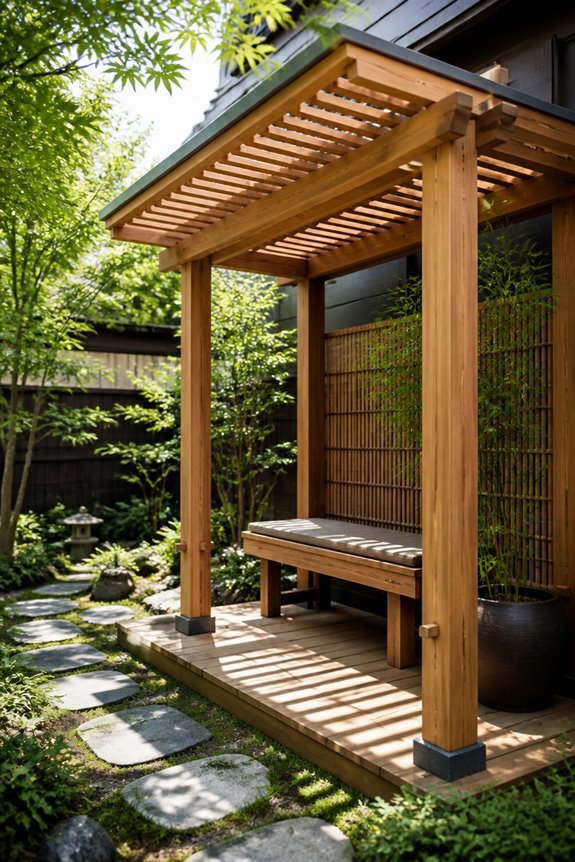
What aesthetic and structural benefits do traditional Japanese design principles bring to backyard canopies? Japanese-inspired wooden canopies incorporate clean lines, minimalist aesthetics, and natural material emphasis. These structures feature pergola-style frameworks using cedar or treated timber, allowing filtered sunlight while providing shade.
Key design elements include post-and-beam construction, offering stability and visual simplicity. Slatted roofing patterns create dappled light effects. Integrated bench seating runs along perimeter edges, while gravel or stone ground surfaces sit beneath the structure.
Materials remain unfinished or lightly stained, preserving wood grain visibility. The designs complement Japanese gardens, meditation spaces, and modern landscapes equally. These canopies typically span ten by twelve feet, fitting residential backyards.
Installation requires proper foundation footings and weather-resistant fasteners for durability. Maintenance involves annual staining and wood inspection for structural integrity.
Canopies With Integrated Planter Boxes
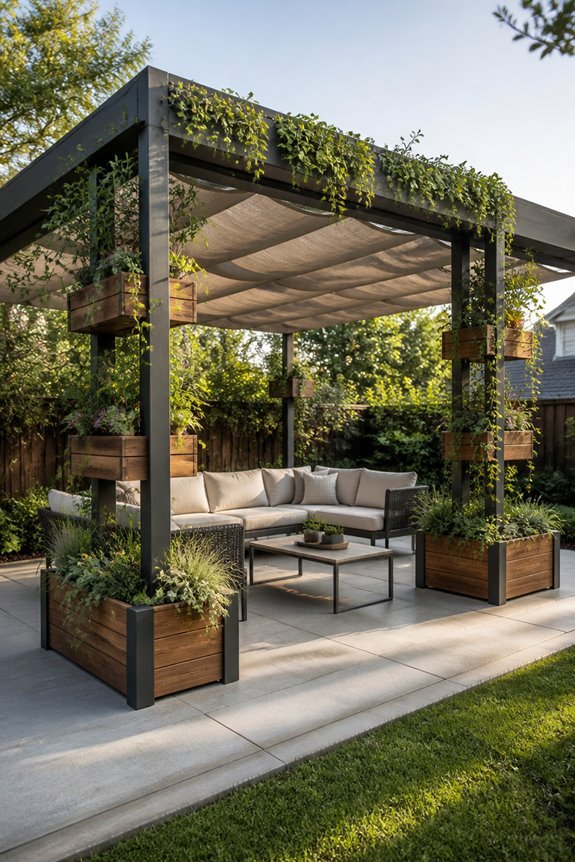
Two primary approaches exist for combining canopy structures with planter boxes: mounting boxes directly to canopy posts and beams, or building planter boxes into the canopy’s base perimeter. Direct mounting works well for climbing vines, herbs, and trailing flowers, utilizing vertical space efficiently.
Perimeter boxes, constructed from cedar or composite materials, create defined garden boundaries while supporting the canopy frame structurally. Cedar resists rot naturally, though composite options require less maintenance.
Drainage considerations are critical, as water from mounted boxes may drip onto areas below. Irrigation systems can be incorporated during installation to reduce manual watering. Weight distribution must account for soil moisture, especially in larger configurations.
This integration maximizes small spaces while providing both shade and horticultural functionality.
Budget-Friendly Pallet Canopies
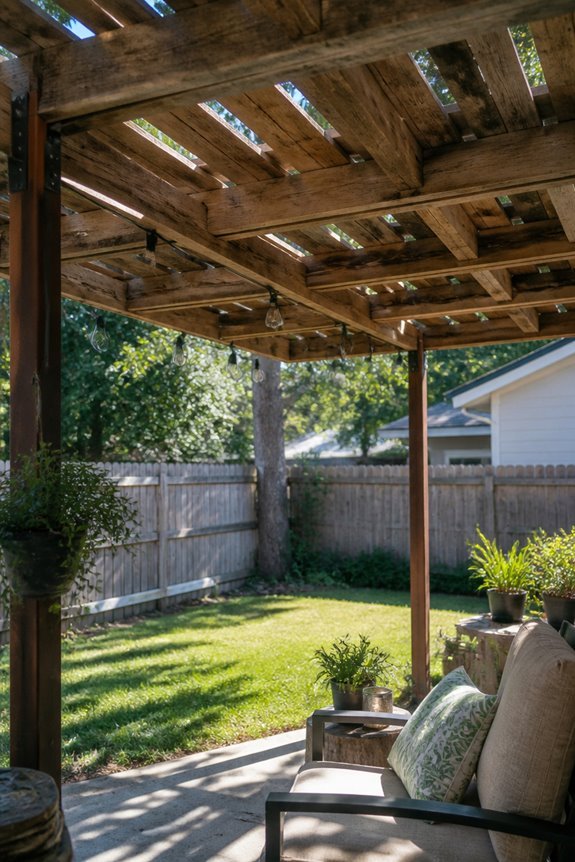
Wooden pallets offer a practical and economical foundation for backyard canopy structures, requiring minimal financial investment compared to traditional materials. Pallets, often available free or inexpensive from warehouses and retailers, can be stacked, reinforced, and arranged to create sturdy overhead frames.
The wood can be left natural, painted, or stained to match existing outdoor décor. Adding fabric sheets, tarps, or shade cloth across the top provides weather protection and UV filtering. Metal brackets and bolts secure connections, ensuring stability. Climbing vines like clematis or ivy planted nearby add organic coverage.
Pallet canopies work well over seating areas, patios, or garden spaces. This approach combines affordability with functional design, making shade accessible for budget-conscious homeowners seeking outdoor improvements.
Frequently Asked Questions
What Permits or Regulations Apply to Installing a Backyard Canopy in Residential Areas?
Most residential areas require a building permit for permanent canopy structures.
Regulations vary by jurisdiction regarding size, height, setback distances, and foundation requirements. Checking local zoning codes and securing approval before installation helps avoid complications later.
How Much Does It Typically Cost to Install a Professional Backyard Canopy?
Professional installation typically ranges from $2,000 to $10,000.
Size, materials, and overall complexity all factor into where a given project falls within that range. Custom features and structural requirements can push costs toward the higher end.
What Is the Best Canopy Material for Extreme Weather Conditions and Durability?
Polycarbonate and high-grade vinyl stand out as the top choices for extreme weather resistance.
Both materials hold up well against UV rays, heavy rain, and strong winds. Polycarbonate offers superior durability and clarity, while vinyl provides excellent waterproofing and long-term performance.
How Long Do Different Canopy Materials Last Before Requiring Replacement or Maintenance?
Lifespan varies considerably depending on the material.
Polyester typically requires maintenance every two to three years, while Sunbrella fabric holds up for five to seven years. Vinyl stretches further, generally lasting ten to fifteen years. Aluminum frames last fifteen to twenty years, and steel structures can withstand decades with proper care.
Can I Install a Canopy Myself, or Do I Need Professional Installation Help?
This depends largely on the canopy type and its complexity.
Simple pop-up models require minimal assembly and suit most DIY skill levels. Permanent structures involving concrete footings generally call for professional expertise. Experienced homeowners can manage straightforward installations, while more complex projects are better suited to hiring a contractor for safety and warranty purposes.
Conclusion
Selecting the right backyard canopy comes down to matching the structure to the yard’s layout, climate, and intended use.
Classic fabric options and modern pergolas suit those seeking a more traditional or architectural look, while shade sails and retractable systems offer flexibility for changing weather and sun exposure.
Specialized designs, such as those built for pools, outdoor kitchens, or play areas, address specific functional needs beyond general shade coverage.
Budget-conscious options like pallet canopies and DIY PVC builds make this upgrade accessible without a large investment.
Ultimately, the best canopy is one that balances practicality with the aesthetic the homeowner wants for their outdoor space.
Share your thoughts in the comments below on which backyard canopy style fits your space best.