


Roses in containers have a way of making even the smallest balcony feel like a proper garden.
You don’t need sprawling beds to enjoy that soft fragrance and steady color all season.
These rose container gardening ideas start with the basics: a sturdy pot, well-draining soil, and a disease-resistant variety suited to tight quarters.
Get those pieces right early, and everything else follows easily.
From there, it’s just a gentle rhythm of good light, consistent water, and maybe a companion plant or two. None of it feels like real work once you settle in.
A Few Things I Wish I Had Known Earlier
Container size matters more than most beginners expect. Miniature roses need real room too, so don’t undersize your pot just because the plant looks small at the nursery.
Watering consistency beats watering frequency every time. Roses in containers dry out faster than garden roses, so checking soil moisture regularly matters more than sticking to a rigid schedule.
Disease resistance genuinely simplifies everything. Choosing a variety like ‘Knock Out’ from the start saves you a lot of the fungicide and pest battles other roses demand.
13 Container Rose Ideas
Growing roses in pots really comes down to choosing the right variety and then supporting it with consistent basics like light, water, and feeding. Some roses, like miniatures and shrub types, adapt to container life easily, while climbing varieties ask for more space and support than most small patios can offer.
I’ve covered everything from variety selection through winter care, so you can build the full picture before choosing your first pot and plant.
Work through the list below and see which parts of your setup could use a little more attention.
Select Rose Varieties That Thrive in Containers
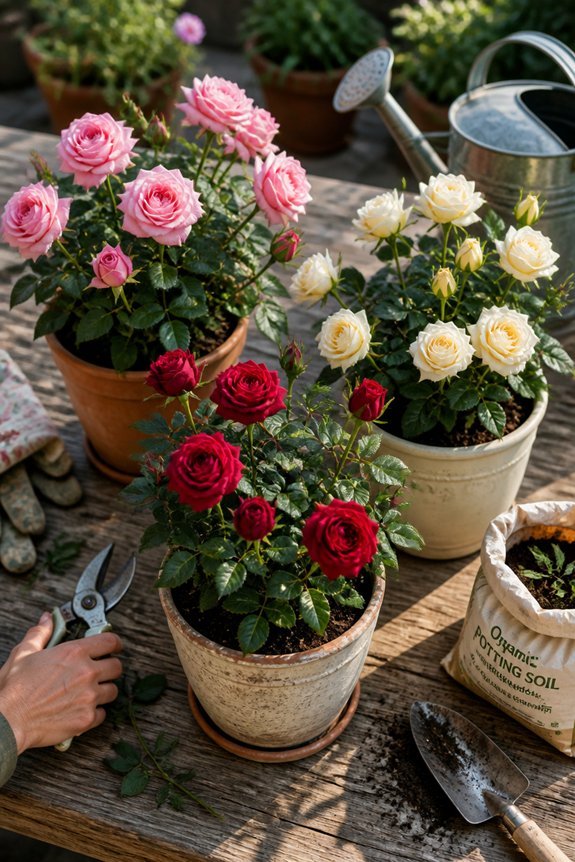
Not all roses grow well in pots. Some varieties adapt much better than others.
Miniature roses, patio roses, and shrub roses make excellent choices. Their compact size fits comfortably in containers. Their natural branching creates a full, attractive shape without overwhelming the space.
‘Knock Out’ roses work beautifully in pots. They fight off disease naturally and bloom all season long. You’ll spend less time worrying and more time enjoying the flowers.
English roses also adapt well to container life. ‘Abraham Darby’ and ‘Lady of Shalott’ offer lush, fragrant blooms that fill small outdoor spaces with color and scent.
Climbing roses present more challenges. They need larger pots and strong supports. Most small-space gardeners should skip these varieties.
Container depth matters significantly. Plan for twelve to eighteen inches minimum. This gives roots room to spread and thrive.
Match your selections to your preferences. Consider bloom colors you love. Think about how much fragrance you want. Factor in your local climate too. Disease-resistant varieties simplify care considerably.
Also read: 10 Container Gardening Vegetables That Grow Well in Pots
Choose the Right Pot: Size, Material, and Drainage
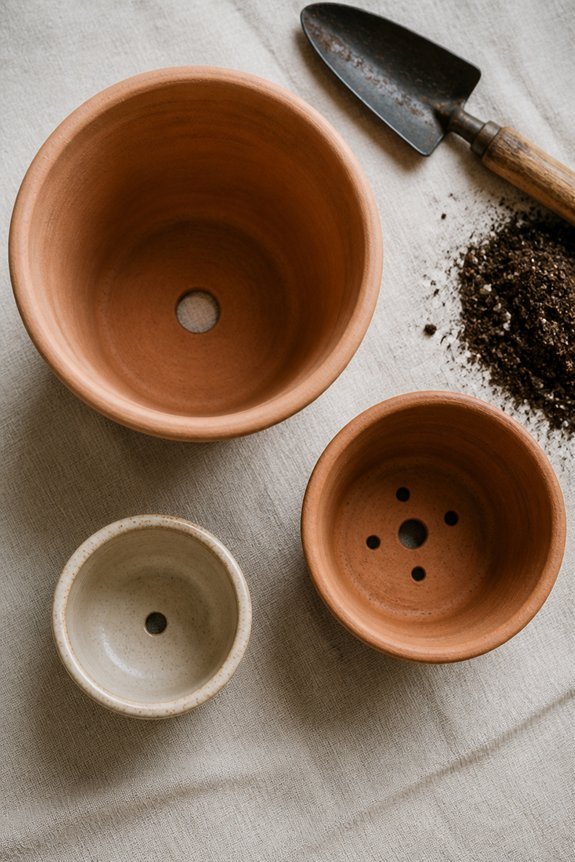
The right pot makes all the difference for your roses. Container size matters more than you might expect. Miniature roses need at least 5 gallons. Larger varieties require 15 to 20 gallons. This gives roots room to spread and thrive.
Drainage holes are non-negotiable. Without them, water sits and rots the roots. Check that holes are clear before planting.
Terracotta allows airflow but dries fast. You’ll water more often with these. Plastic holds moisture and weighs little. Moving heavy pots becomes much easier. Ceramic looks beautiful and drains at a moderate rate. Pick what suits your climate and schedule.
Always choose pots with holes in the base. Light colors bounce heat away in hot summers. Dark colors absorb warmth, which helps in cooler regions. Raise pots slightly on feet or stands. This lets water escape freely underneath.
Build the Ideal Soil Mix: Drainage, pH, and Amendments
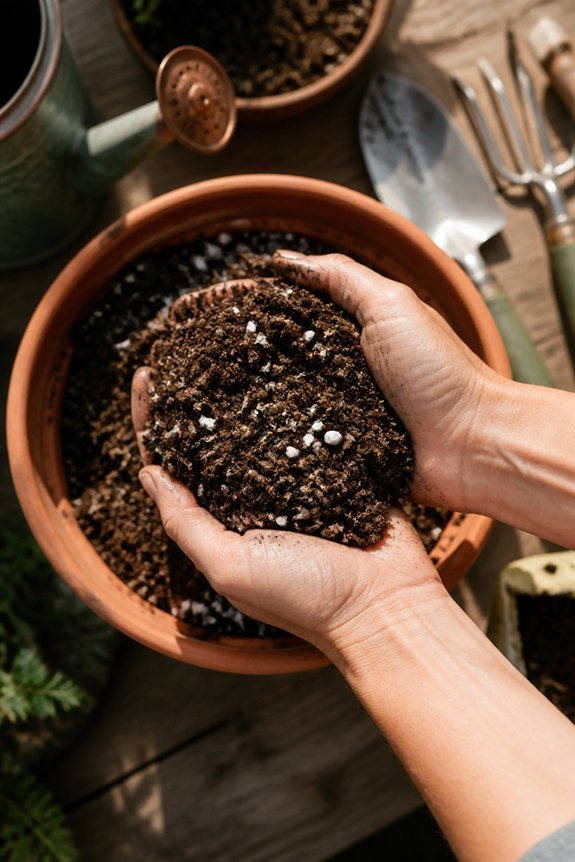
Good soil mix separates thriving container roses from struggling ones. Roses need well-draining soil that prevents waterlogging while still holding some moisture.
A quality mix combines peat moss, compost, and perlite in equal parts. This creates ideal texture and aeration for healthy roots.
pH matters quite a bit for rose health. Roses prefer slightly acidic soil, ranging from 6.0 to 6.5.
Test your soil pH before planting. This simple step prevents nutrient absorption problems down the road.
Amendments enhance soil performance in several ways. Add aged compost for nutrients and organic matter. Mix in perlite or coarse sand to improve drainage.
Include slow-release fertilizer granules. These support steady growth throughout the season.
Avoid garden soil alone in containers. It compacts too easily and restricts root development.
Commercial potting soil labeled for roses works well. It offers a reliable foundation for your container gardening success.
Sunlight Requirements for Container Roses: 6+ Hours Daily
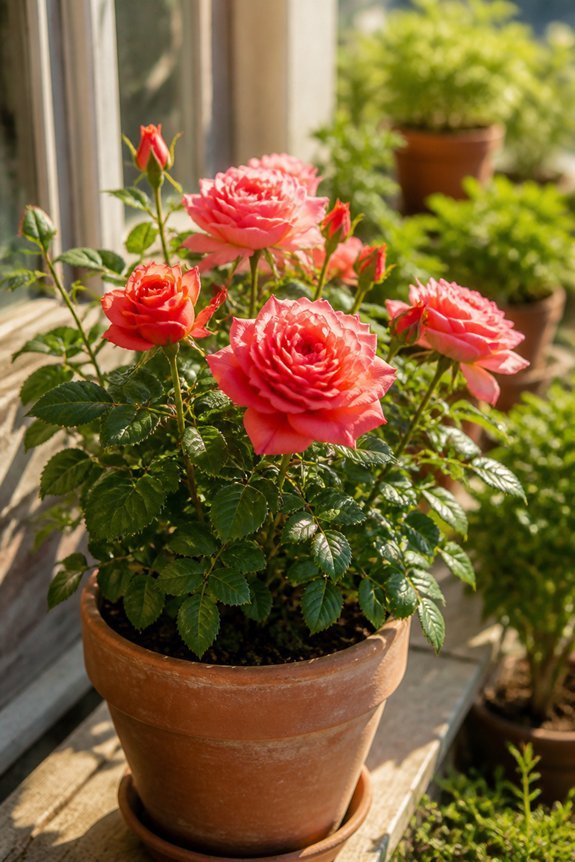
Once your soil is ready, light becomes the key to success. Container roses need at least six hours of direct sun each day. This keeps the foliage healthy and the blooms coming.
South-facing spots usually deliver the best light from morning to evening. East or west locations can work well too. In very hot climates, a bit of afternoon shade protects petals from scorching.
Morning sun offers extra benefits. It dries off dew quickly and helps prevent disease problems. Without enough light, your roses will grow weak and flower poorly. They also become more vulnerable to pests and fungi.
Check your container placements as seasons change. The sun shifts angle throughout the year, so small adjustments help. Light-colored walls or fences nearby can bounce extra light onto your plants.
Water Like a Pro: Frequency and Technique
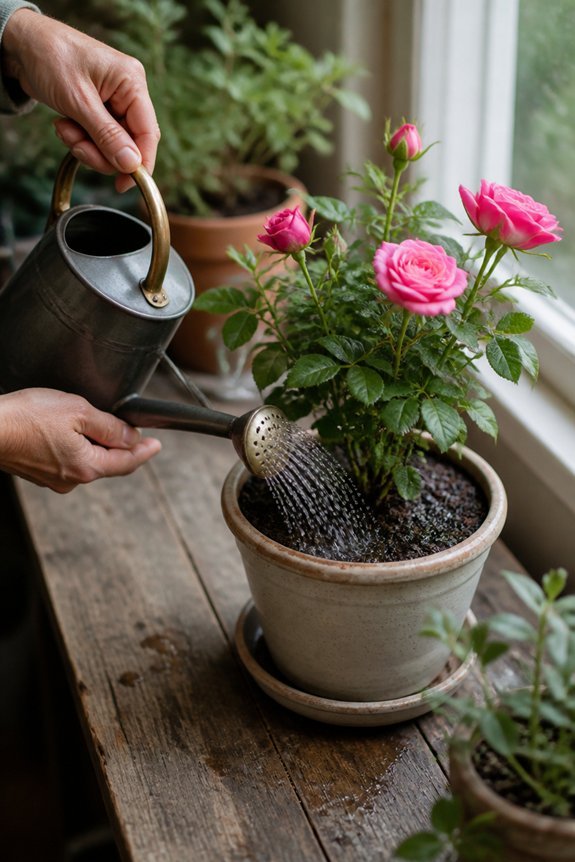
Proper watering can make or break your container roses. It is one of the most important things you get right.
Container roses need steady moisture. Check the top inch of soil with your finger. If it feels dry, it is time to water. During the growing season, this usually means every two to three days. Hot days, dry air, and small pots will all speed up drying.
Water right at the soil surface. Aim for the roots, not the leaves. Wet foliage invites trouble like fungus and mildew.
A soaker hose or drip system works best. These tools put water where it belongs without waste. Always make sure your pots have drainage holes. Standing water causes root rot, which can kill your plant fast.
Scale back in cooler months. Soil dries slower when temperatures drop. Keep checking moisture and adjust your routine. Good drainage paired with smart watering keeps roses happy and growing strong.
Fertilizer for Container Roses: Feeding Schedule and Ratios
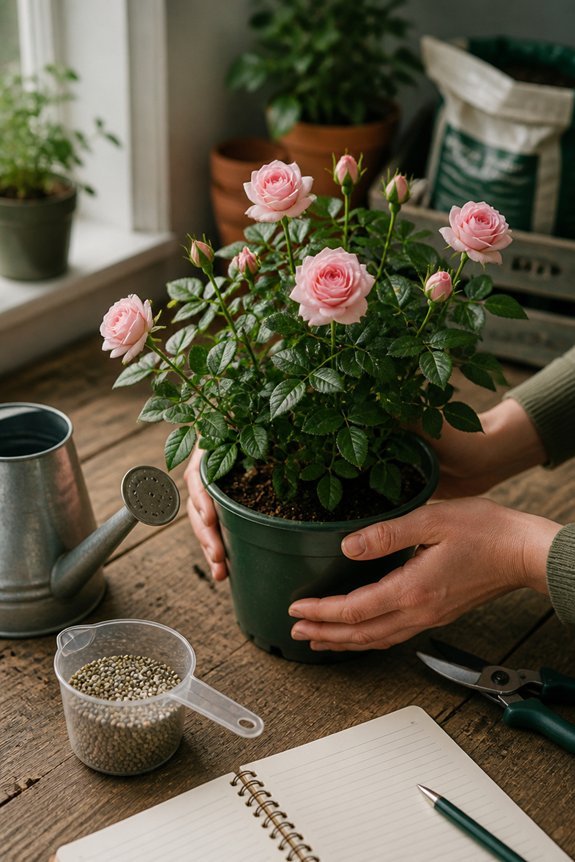
Container roses need regular feeding. Their limited soil runs out of nutrients fast. This leads to poor blooms and weak growth without help.
Look for balanced ratios like 10-10-10 or 5-10-5. The numbers stand for nitrogen, phosphorus, and potassium. Higher phosphorus levels support better flowering. Your roses will reward you with more color.
Apply fertilizer every two to three weeks from spring through fall. Cut back in winter when plants rest. Liquid formulas act quickly. Granular types feed slowly over time.
Always dilute to half-strength. This prevents root burn in confined spaces. Water well before and after adding nutrients. Container roses outpace garden plants in hunger. Frequent watering washes nutrients away, so stay consistent with your schedule.
Prune Container Roses for More Blooms
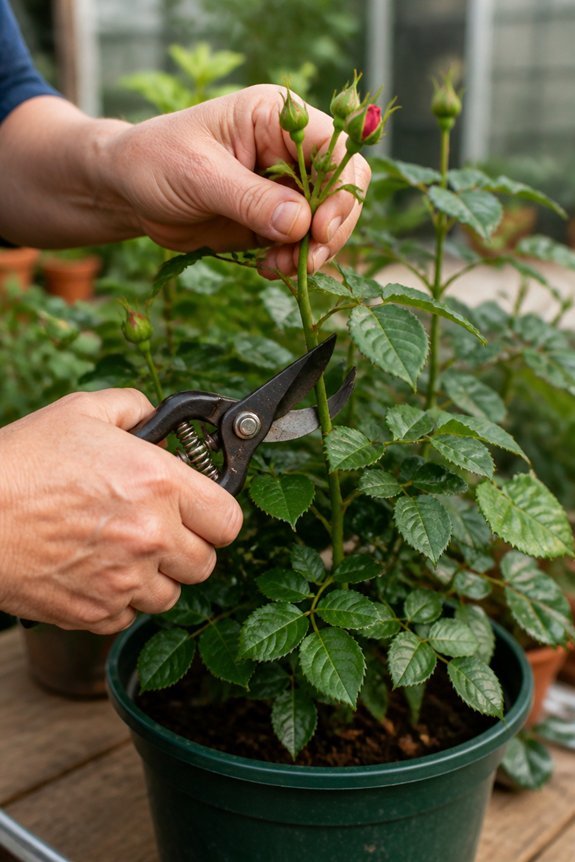
Pruning shapes your roses and removes dead wood. This encourages fuller growth and more flowers.
Start in early spring when you see new growth. Cut stems back by one-third to one-half their length.
Remove dead, diseased, or crossing branches first. This prevents pests and improves airflow.
Cut just above outward-facing buds at a 45-degree angle. This directs new growth away from the center.
Deadhead spent blooms throughout the year. This redirects energy into new flowers instead of seeds.
Light pruning between major cuts helps maintain shape. It also removes weak growth as you go.
Keep your tools sharp and clean between cuts. This stops diseases from spreading.
Regular pruning produces bushier plants with denser foliage. Your reward is far more blooms than unpruned roses ever give.
Design Ideas: Create a Tiered Rose Display
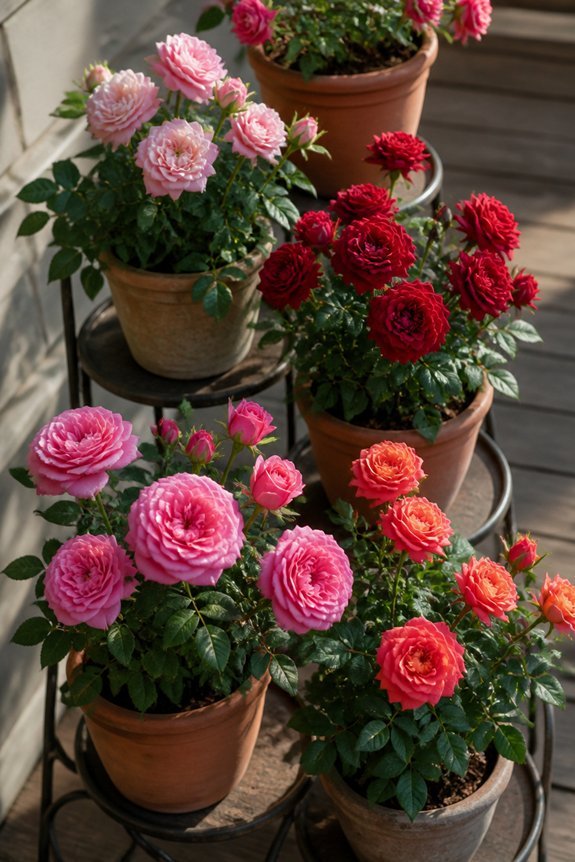
Stacked containers add instant visual appeal to any garden space. Shorter roses sit up front where you can admire their blooms up close. Taller varieties anchor the back row. Mid-height plants fill the middle ground for a balanced look.
Mixing container sizes creates even more dimension and charm.
Plant stands, shelves, and stepped platforms all work beautifully. Try a three-tier metal stand for a classic look. Wall-mounted brackets save precious floor space. Custom wooden structures let you build exactly what your space needs.
Air flows more freely around elevated plants. This simple change cuts down on common diseases and keeps your roses thriving.
Play with different pot colors and rose varieties for eye-catching combinations. Pair soft pink shrub roses with crisp white climbers for a fresh, coordinated feel. This layered approach fits anywhere space is tight. Patios, balconies, and front entryways all benefit from this smart setup.
Pair Your Roses: Best Companion Plants for Containers
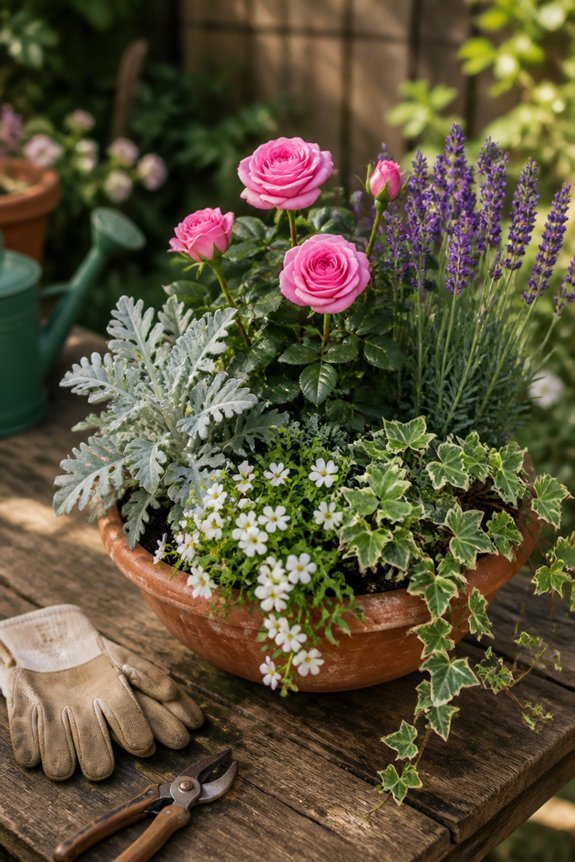
Roses thrive alongside thoughtful companion choices in containers. Lavender, catmint, and salvia make excellent partners. They add lovely texture and bring pollinators to your garden. These plants need similar water and sun, so they grow happily together.
Ornamental grasses create beautiful vertical contrast. Try fountain grass or feather reed grass against soft rose blooms. Herbs like rosemary and santolina fill lower spaces with fragrance.
Trailing plants soften container edges nicely. Ivy and creeping thyme tuck into gaps between upright roses. Dusty miller adds silvery foliage that makes rose colors pop.
Choose companions with care. Check mature sizes, bloom times, and root depth first. This ensures your container stays balanced and beautiful all season.
Prevent Pests and Diseases in Container Roses
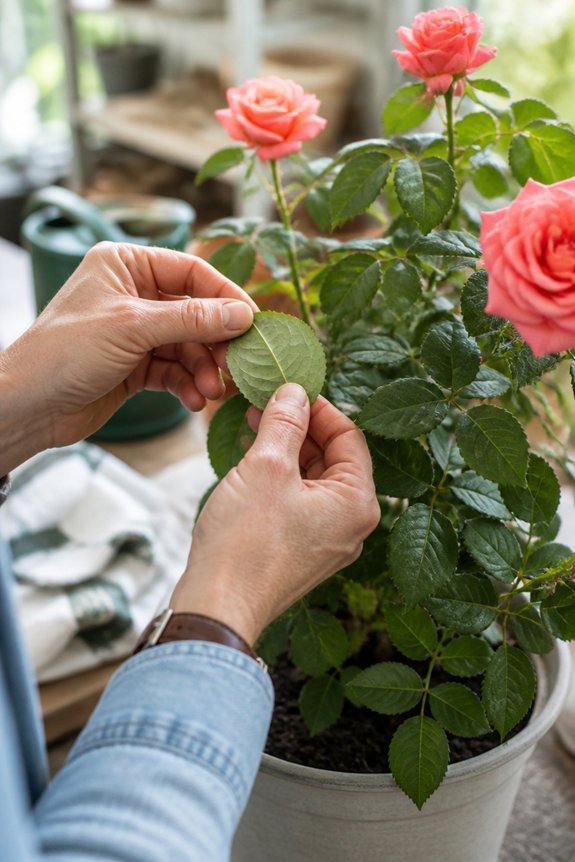
While companion plants bring visual appeal and support pollinator activity, container roses need protection from common pests and diseases. Confined growing spaces can harbor problems that spread quickly.
Spider mites, aphids, and powdery mildew frequently affect potted roses. Poor air circulation makes these issues worse. Gardeners should inspect plants weekly. Check leaf undersides and stems for pests or white fungal coating.
Remove affected foliage right away. This stops problems from spreading. Space containers adequately apart. Better airflow keeps plants healthier.
Water at soil level rather than overhead. This reduces moisture on leaves and minimizes disease risk. Neem oil and sulfur fungicide work well when used as directed on the label.
Select disease-resistant rose varieties when possible. Maintain consistent watering schedules. These simple steps reduce problems and help container roses thrive.
Protect Your Roses Through Winter: Seasonal Care
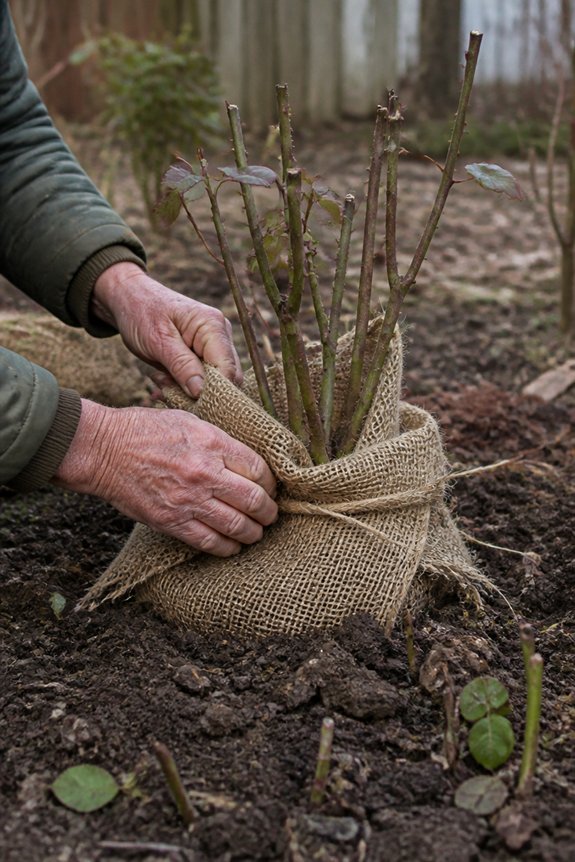
Move your potted roses to sheltered areas as temperatures fall. South-facing walls and building foundations offer excellent protection. These spots shield plants from harsh winds and provide gentle ambient heat.
Apply a generous layer of mulch to help roots survive freezing temperatures. Two to three inches of organic material works perfectly. For extra protection in severe climates, wrap containers with burlap or frost cloth.
Cut back on watering during dormancy, but check that soil never becomes bone dry. Remove any dead growth and stop fertilizing until spring returns. Hardy rose varieties handle cold much better than tender types.
Visit your containers periodically throughout the winter months. This simple habit ensures your roses stay healthy until warmer days arrive and new growth begins.
Frequently Asked Questions
Can I Grow Roses in Containers Indoors Under Grow Lights Year-Round?
Yes, this is genuinely doable if you’re willing to commit to the setup. Roses need somewhere between 12 and 16 hours of light daily under grow lights to thrive indoors.
Consistent temperatures between 65 and 75 degrees, along with proper humidity and good air circulation, round out what they need. Regular watering stays just as important indoors as it would be outside.
How Long Do Container Roses Typically Live Before Replanting Needed?
Most container roses thrive for three to five years before they really need replanting. That timeline assumes you’re keeping up with basic maintenance along the way.
Refreshing the soil annually and repotting every two to three years helps prevent your rose from becoming root-bound. Skipping these steps tends to shorten that lifespan considerably.
What’s the Best Time of Year to Start Container Rose Gardening?
Spring is really your best window here, once frost has passed and the soil has started warming up. Starting during this season gives roots time to establish before summer heat arrives.
This timing sets your rose up for its strongest blooming potential throughout the growing season. Waiting until later in the year often means a weaker first season while the plant plays catch-up.
Can I Successfully Propagate New Roses From Container Rose Cuttings?
Absolutely, this is a great way to expand your collection without buying new plants. Selecting healthy, semi-hardwood stems gives you the best starting material.
Treating the cutting with rooting hormone before placing it in well-draining soil under controlled humidity really improves your odds of success. It takes some patience, but it’s a rewarding process once you see new roots form.
How Do I Revive an Underperforming Container Rose Plant?
Start by checking your soil drainage and nutrient levels, since those are often the root cause of a struggling rose. Poor drainage in particular can quietly undermine an otherwise healthy-looking plant.
Pruning away dead wood helps stimulate new growth once you’ve ruled out drainage issues. Repotting into fresh soil with proper fertilization often gives an underperforming rose the boost it needs to bounce back.
CONCLUSION
Container roses prove that a proper rose garden doesn’t require proper garden beds at all. Sometimes one good pot on a small patio is all it takes.
That first ‘Knock Out’ rose of mine is still going strong years later, and it taught me that disease resistance really does make this hobby feel far more approachable than I expected going in.
Whether you’re drawn to compact miniatures or the fuller look of English roses, the foundation stays the same. Good soil, consistent water, and enough sunlight carry most varieties through a full season of reliable blooms.
Companion plants like lavender or creeping thyme add a finishing touch that makes the whole container feel intentional rather than just functional. Small additions like these often make the biggest visual difference.
Winter care matters just as much as everything else, even though it’s easy to forget once the blooms fade. A little insulation and reduced watering through dormancy sets your rose up to come back strong the following spring.
I’d love to hear which rose variety you’re considering, or how your own container rose garden is coming along. Leave a comment and let me know.