

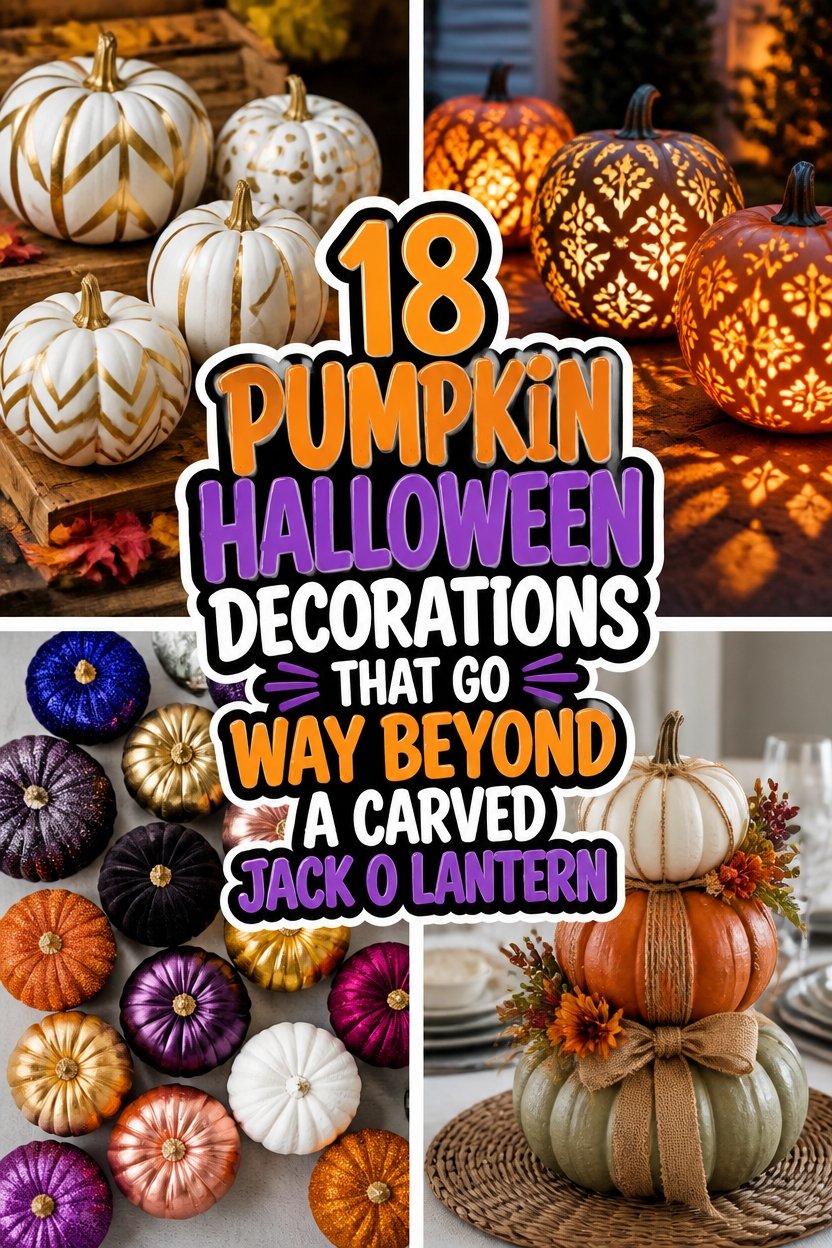
Pumpkin decorating has come a long way since I first tried carving one as a kid. These days, I’m drawn to painted designs with metallic finishes and geometric patterns that actually survive the whole season.
My neighbor recently created an ombre gradient piece that caught everyone’s eye. Glitter applications and gilded surfaces add unexpected elegance to porches that used to only display traditional jack-o’-lanterns.
For something truly different, decoupage and minimalist white pumpkins blend beautifully with modern interiors.
Spray-painted unconventional colors let these decorations transition into November, making them worth the creative effort.
Geometric and Ombre Painted Pumpkins
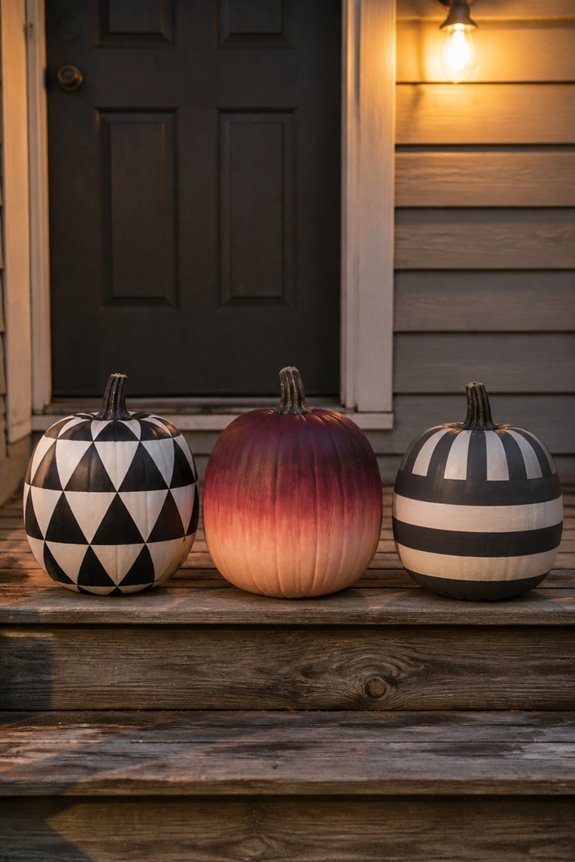
While traditional pumpkin designs rely on carving, geometric and ombre painted pumpkins offer an alternative decorating approach that does not require cutting. Paint supplies like acrylic paint, brushes, and stencils enable decorators to create triangles, stripes, and color gradients on pumpkin surfaces. Metallic gold, silver, and copper paints produce polished effects. This method preserves pumpkins longer than carving and requires minimal artistic skill to achieve professional-looking results. Consider non-toxic paint options to ensure safer indoor air quality when displaying decorated pumpkins in living spaces.
Glitter and Metallic Finishes for Maximum Sparkle
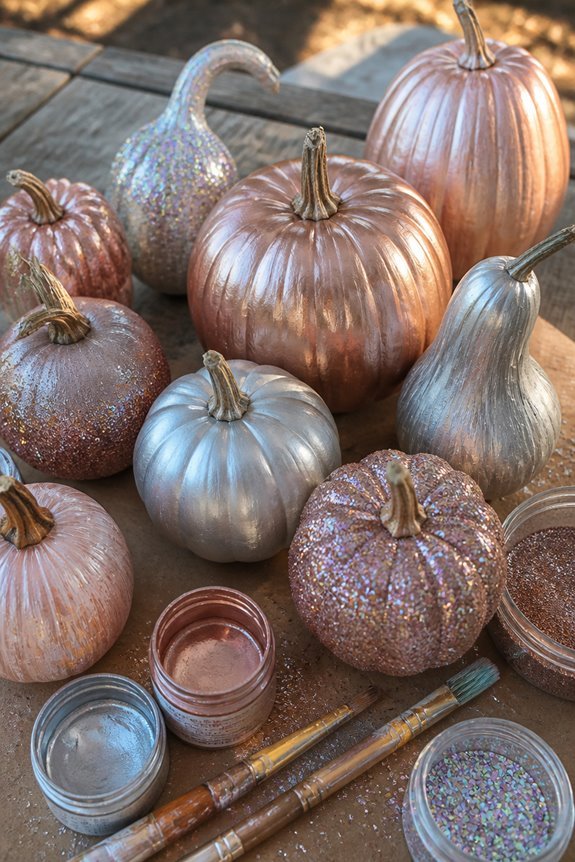
Glitter and metallic finishes transform pumpkins into eye-catching decorations through adhesive-based application methods. Gold, silver, and copper spray paints provide uniform metallic coverage, while loose glitter applied with craft glue creates textured surfaces. Combining both techniques produces layered effects.
Metallic markers add fine details and accents. These finishes work on real pumpkins, foam pumpkins, and paper mache varieties, offering durable, weather-resistant decoration options for outdoor displays. Glossy finishes reflect light and enhance the perception of depth and dimension on decorated pumpkin surfaces.
Gilded Gold and Silver Pumpkins
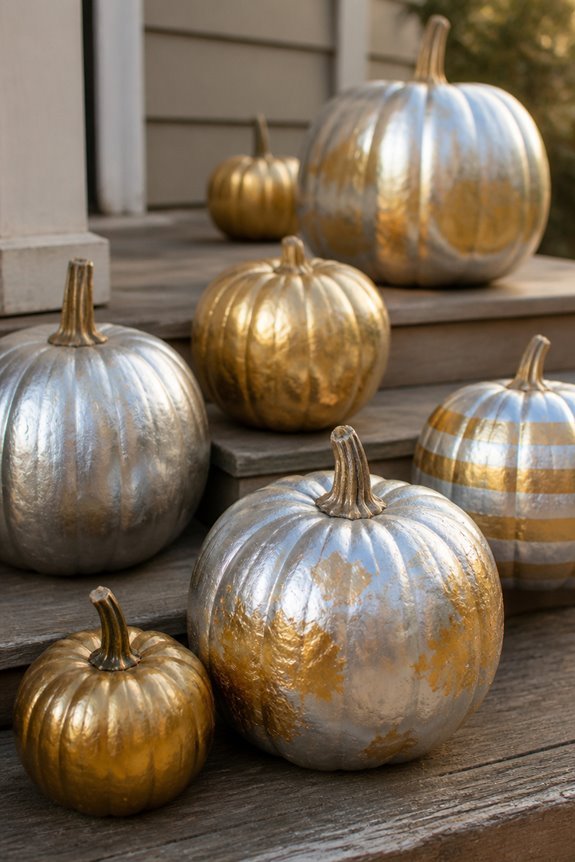
Metallic leaf application creates luxurious finishes on pumpkins through traditional gilding techniques, producing surfaces that reflect light and maintain appearance throughout the season. Gold leaf and silver leaf adhere to pumpkin surfaces using adhesive sizing, creating durable, shimmering effects.
These gilded pumpkins work effectively as table centerpieces, entryway displays, and mantelpiece arrangements, offering an elegant alternative to standard orange varieties. The soft candlelight from cream-colored pillar candles enhances the reflective metallic surfaces, creating a warm, sophisticated ambiance for evening gatherings.
Decoupage Pumpkins: Layering Paper and Mod Podge
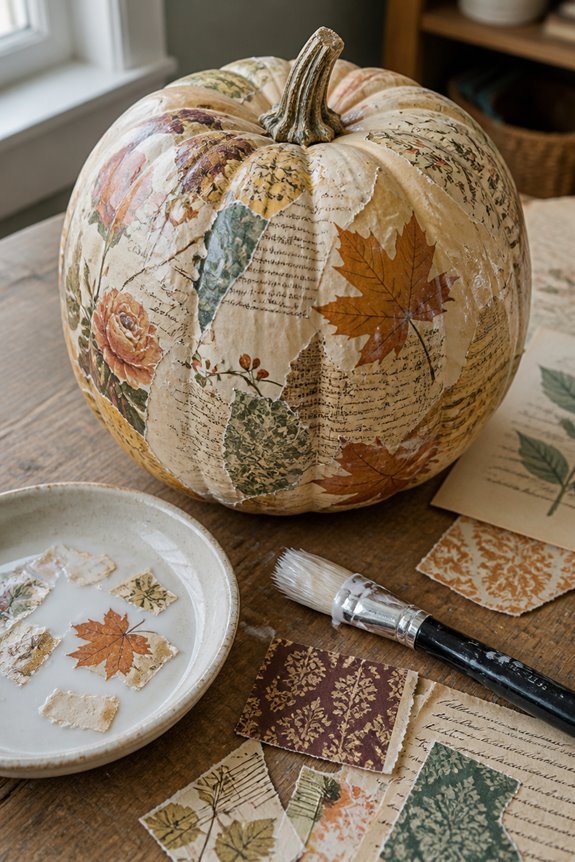
Beyond metallic finishes, decoupage offers a versatile decorating method that combines paper cutouts with adhesive sealant to create textured, patterned pumpkin surfaces. Decorators apply Mod Podge, a popular adhesive, to pumpkins, then layer decorative paper, fabric scraps, or magazine clippings onto the surface. Multiple coats of sealant protect the design, creating durable, customized pumpkins with intricate patterns, seasonal imagery, or personalized artwork. This technique mirrors the layered compositions found in sophisticated kitchen canvas art, where building up materials creates depth and visual interest.
White-Painted Pumpkins for Modern Minimalist Displays
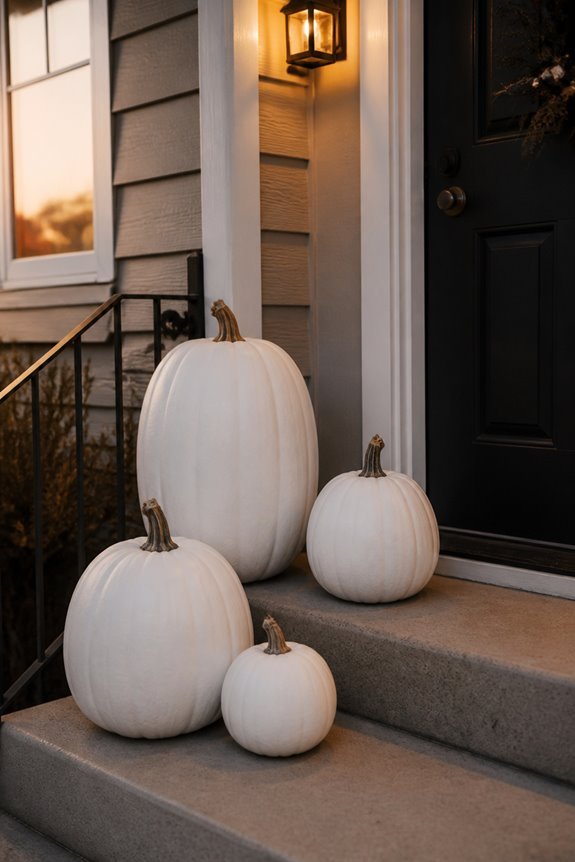
White-painted pumpkins create clean, understated displays that complement contemporary home décor and minimalist design aesthetics. Acrylic paint works well on pumpkin surfaces, requiring minimal preparation. Matte finishes provide subtle sophistication, while metallic accents add restrained elegance.
These pumpkins pair effectively with neutral seasonal arrangements, monochromatic décor schemes, and streamlined outdoor settings. White pumpkins suit modern porches, entryways, and interior shelving displays without visual clutter. For a cohesive minimalist approach, position candles toward the back of shelves for visibility without obstruction, similar to how minimalist Christmas displays maintain clean sightlines.
Chalkboard Pumpkins You Can Customize Anytime
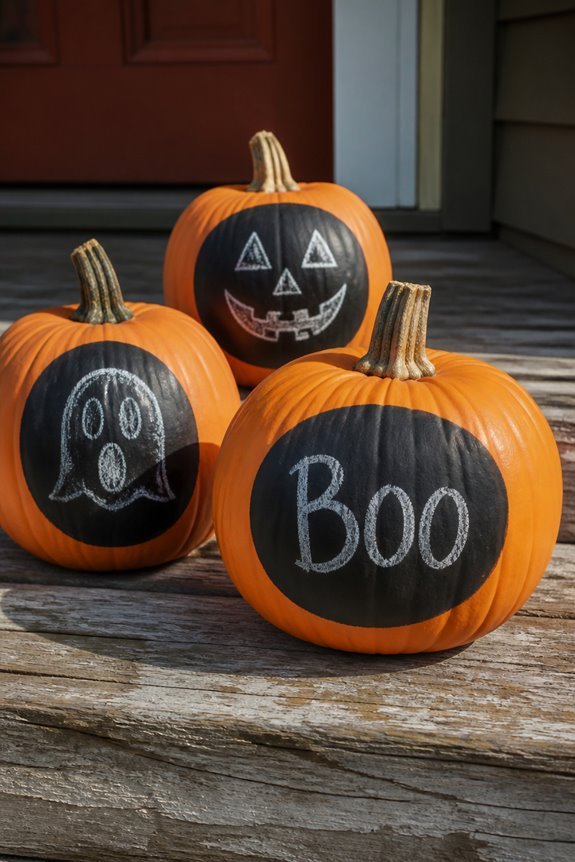
Chalkboard paint transforms pumpkins into reusable, interactive decorations that homeowners can update throughout the season. A fresh coat of black or colored chalkboard paint adheres to pumpkin surfaces, creating a writable canvas. Owners can draw seasonal messages, Halloween designs, or rotating artwork using chalk markers.
This approach eliminates carving mess while offering flexibility for different decorative themes across multiple occasions. Like chalkboard paint used on bedroom walls for creative expression, these pumpkins become a fun, interactive element for personalizing your Halloween space.
Stacked Pumpkin Towers and Pyramids
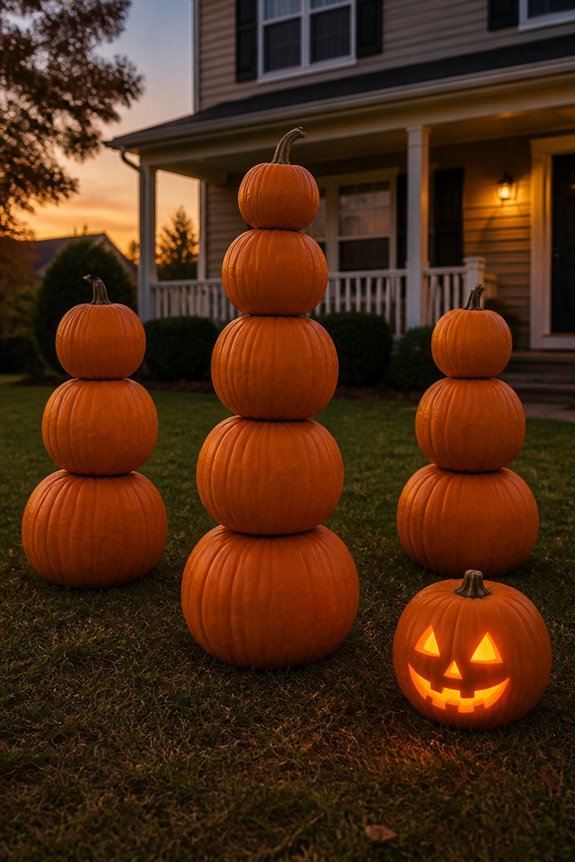
Vertical stacking arrangements create eye-catching focal points for outdoor Halloween displays, using pumpkins of varying sizes to build height and visual interest.
Builders can arrange pumpkins in pyramid formations, placing larger gourds at the base and progressively smaller ones toward the top. Alternatively, tower structures stack pumpkins in single columns, secured with dowels or wooden supports for stability against wind and weather conditions.
Much like how console tables serve both functional and decorative purposes in interior spaces, these stacked pumpkin arrangements combine practical stability with striking visual appeal to transform any outdoor area into a memorable seasonal display.
Elevated Pumpkin Displays With Florals
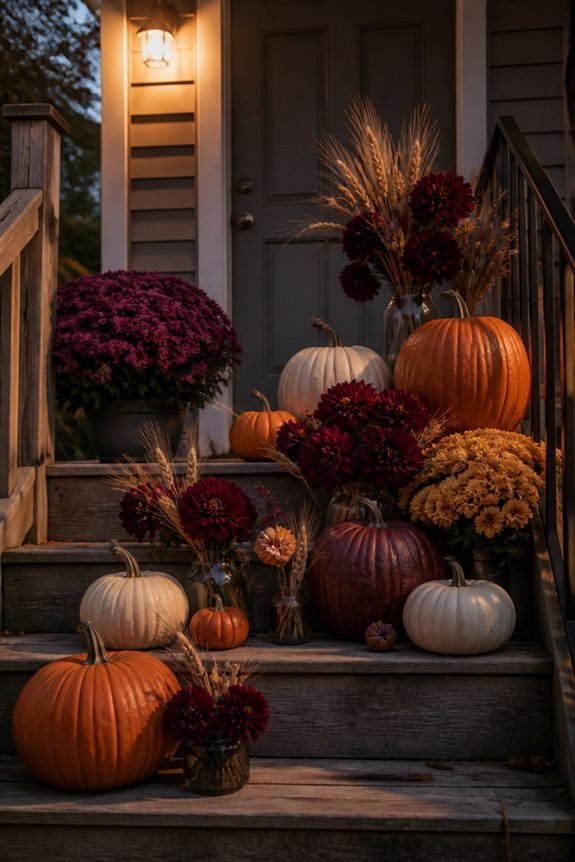
Adding flowers and plants to pumpkin arrangements creates layered, dimensional displays that extend visual appeal beyond stacked gourds alone. Dried wheat, burgundy dahlias, and orange chrysanthemums complement pumpkin colors effectively.
Incorporating trailing ivy, ornamental grasses, and dark foliage adds contrast and texture. Arranging these elements around pumpkin bases in urns or planters produces cohesive autumn compositions suitable for porches, entryways, and outdoor spaces. The addition of fairy lights woven through the arrangement creates a magical ambiance as evening approaches, extending the display’s impact into nighttime hours.
Monochromatic Pumpkin Clusters
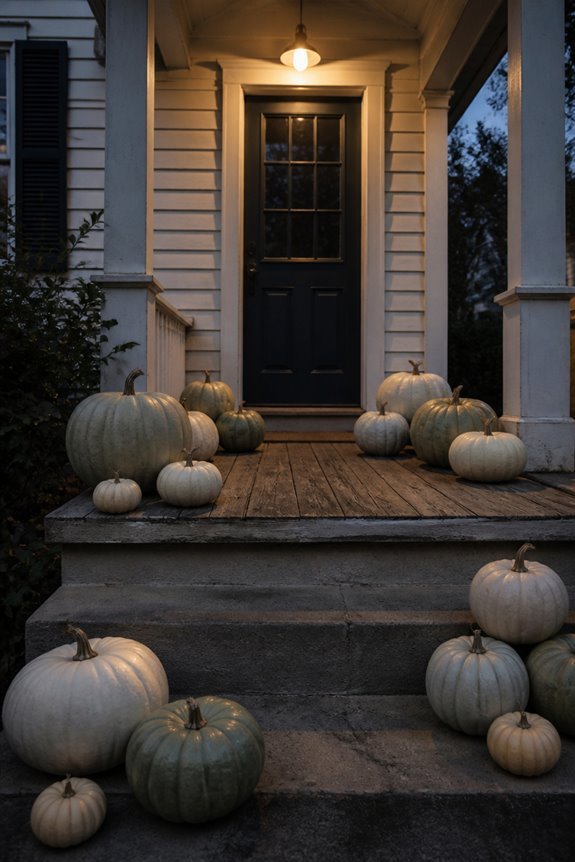
Because single-color pumpkin groupings create visual harmony and simplicity, they offer an alternative to mixed arrangements. Clustering white, orange, or deep green pumpkins together produces cohesive displays. Varying pumpkin sizes within one color adds visual interest while maintaining uniformity.
This approach works effectively on porches, entryways, and garden beds. Monochromatic arrangements require minimal planning and coordinate easily with existing décor. Layering elements creates depth and interest in these displays, much like elegant holiday table designs.
Succulent and Moss-Topped Pumpkins
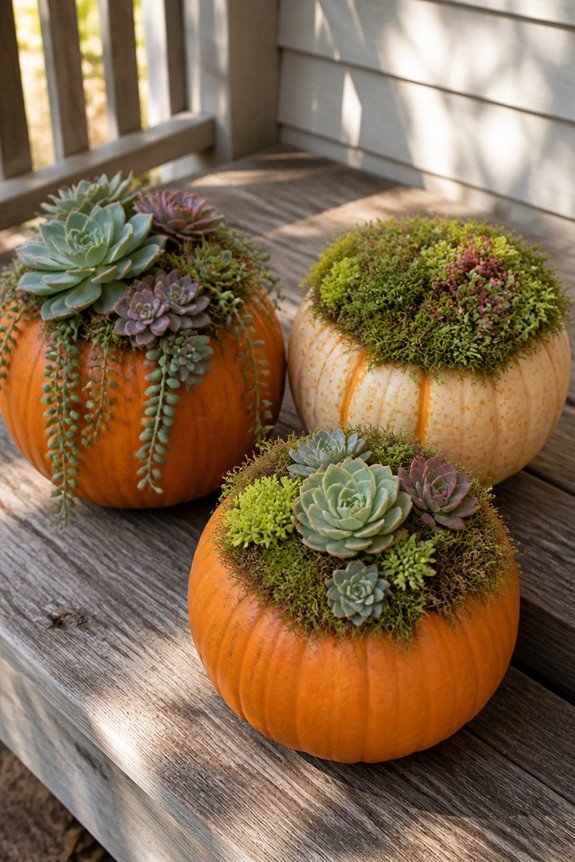
Pumpkins topped with succulents and moss create textured displays that combine natural elements in unexpected ways. Gardeners arrange echeveria, jade plants, and sedum varieties across pumpkin surfaces, securing them with floral adhesive or picks. Moss layers fill gaps between plants, adding visual depth.
This approach works well for front porches and tablescape arrangements, lasting several weeks before plant deterioration occurs.
Fabric-Wrapped Pumpkins for Texture and Warmth
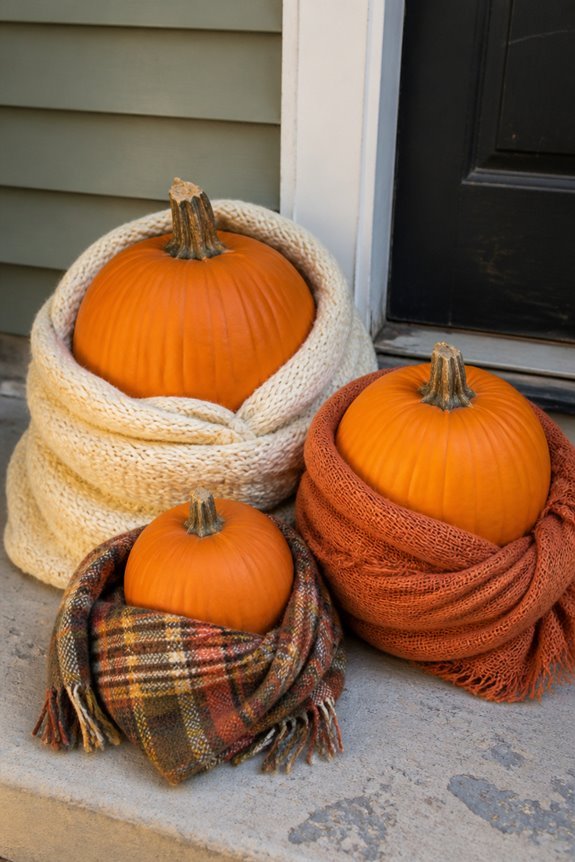
Fabric wrapping transforms pumpkins into textured decorative pieces by layering cloth materials across their surfaces. Burlap, linen, and velvet create varied tactile effects, while autumn-colored fabrics like rust, gold, and burgundy enhance seasonal appeal.
Secured with hot glue or twine, wrapped pumpkins offer dimensional alternatives to painted designs. This method suits any pumpkin size and requires minimal crafting experience. Similar to how fabric scraps can be sewn into simple throw pillows for budget-friendly bedroom decor, leftover textile pieces work beautifully for pumpkin wrapping projects.
Hand-Lettered Designs and Calligraphy on Pumpkins
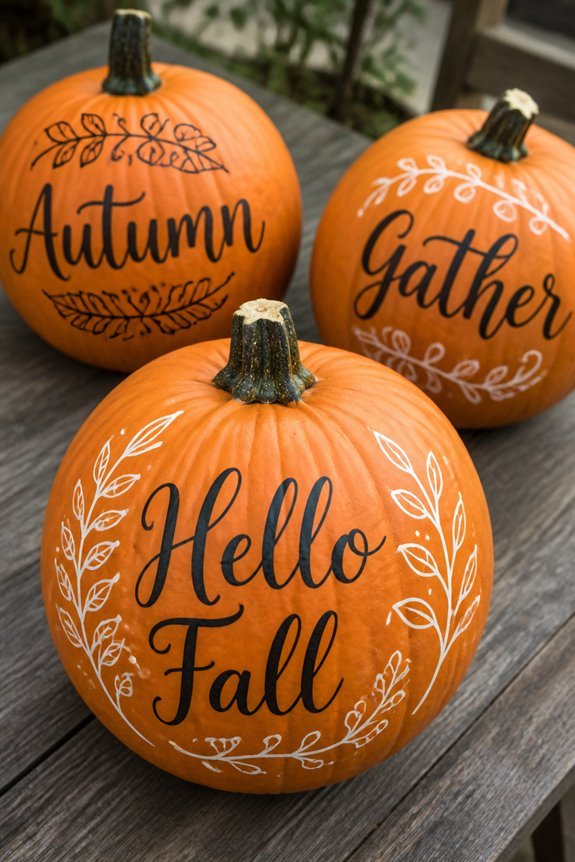
Hand-lettered designs bring personalized text and decorative writing to pumpkin surfaces, transforming them into display pieces with custom messages. Artists use paint markers, acrylic paint, and calligraphy pens to create designs. Popular options include Halloween phrases, names, dates, and elaborate flourishes.
The technique requires a steady hand, practice, and appropriate surface preparation. Sealed pumpkins work better than fresh ones for longevity and ink adhesion.
Copper and Bronze Pumpkin Wraps
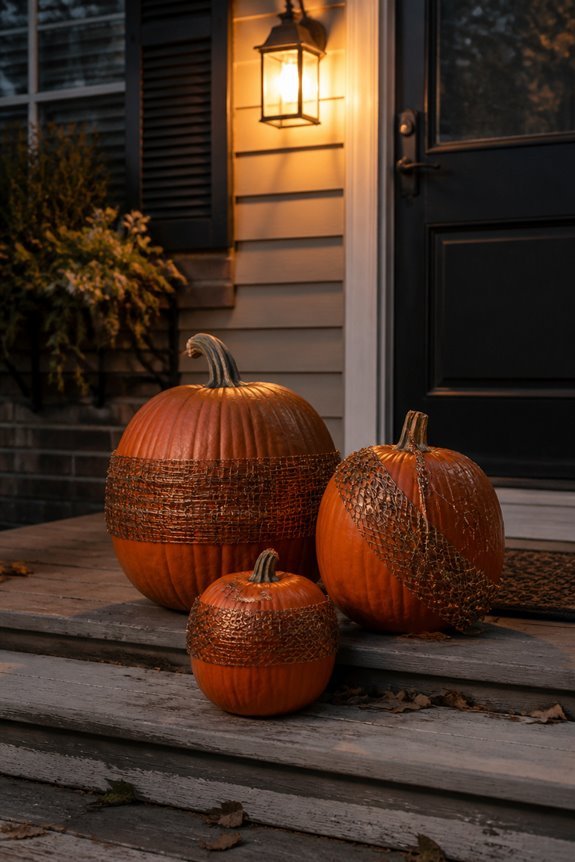
Metallic wraps offer an alternative to hand-painted designs, providing a polished, finished appearance without requiring artistic skill. Copper and bronze adhesive sheets, available at craft stores, adhere directly to pumpkin surfaces. These wraps create uniform, reflective finishes suitable for modern decorating schemes.
Apply wraps smoothly, avoiding air bubbles and wrinkles. Metallic pumpkins coordinate effectively with autumn foliage, candles, and traditional Halloween displays.
Light Up Your Pumpkins With String Lights
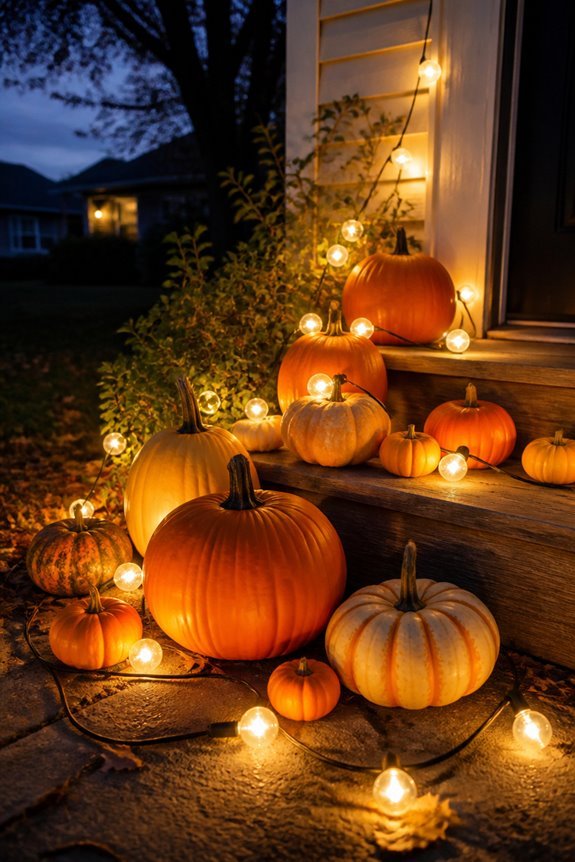
Adding illumination to pumpkin displays creates visual interest and extends decorating appeal into evening hours. Warm white string lights, solar-powered options, and battery-operated strands work effectively for outdoor pumpkins.
Draping lights around pumpkin clusters or weaving them through arrangements enhances visibility and creates defined focal points. LED lights generate less heat than traditional bulbs, reducing fire risk near dried gourds and decorative materials.
Pumpkin Jewelry and Bead Art
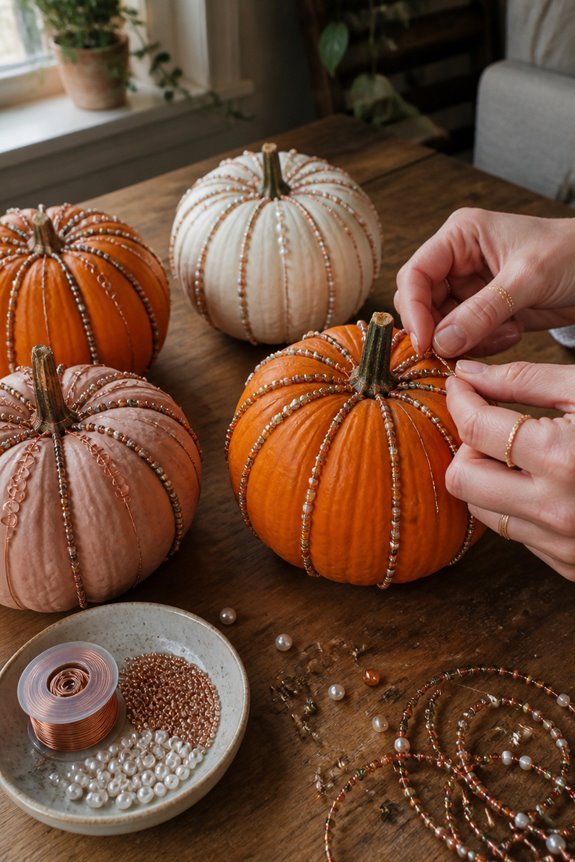
While string lights illuminate pumpkins from the outside, bead art and jewelry offer decorative options that attach directly to gourds. Beaded pumpkin pins, adhesive rhinestone designs, and wire-wrapped embellishments create textured surfaces. Glue beads, sequins, and small gems directly onto pumpkins using craft adhesive.
Alternatively, drape beaded necklaces and bracelets around pumpkin stems, or attach clip-on earrings to create dimensional ornamentation.
Mini Pumpkin Halloween Centerpieces
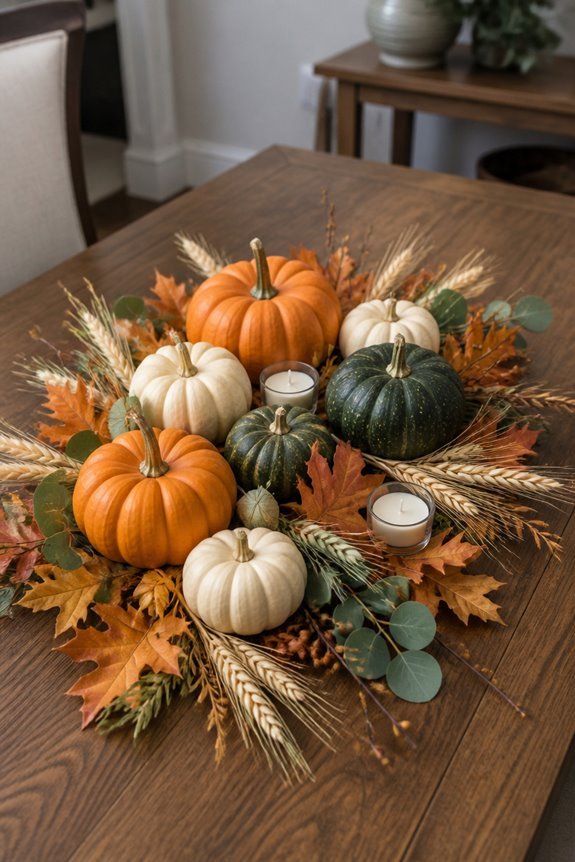
Small pumpkins serve as effective base elements for table and shelf decorations during the Halloween season. Creators arrange miniature gourds in groupings, combining them with candles, dried corn, and dark foliage.
Popular arrangements include clustered centerpieces for dining tables, windowsill displays, and mantel compositions. Painting mini pumpkins orange, black, or white, or leaving them natural, provides customization options for various décor styles and themes.
Embrace Raw Pumpkins: Weathered and Unpainted
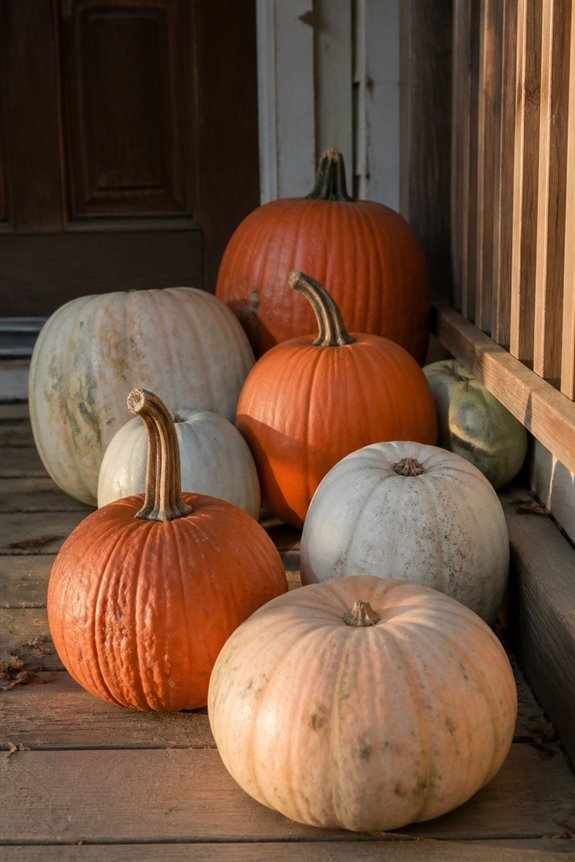
Why settle for painted pumpkins when natural gourds offer authentic autumn appeal? Weathered pumpkins, displaying natural discoloration, cracks, and earthy tones, create genuine seasonal ambiance. Leaving pumpkins unpainted preserves their organic texture and color variations.
Positioning them on porches, mantels, or tables requires minimal arrangement effort. Their aged appearance complements rustic and traditional décor styles effectively, providing economical decoration alternatives.
Spray-Painted Pumpkins in Unconventional Halloween Colors
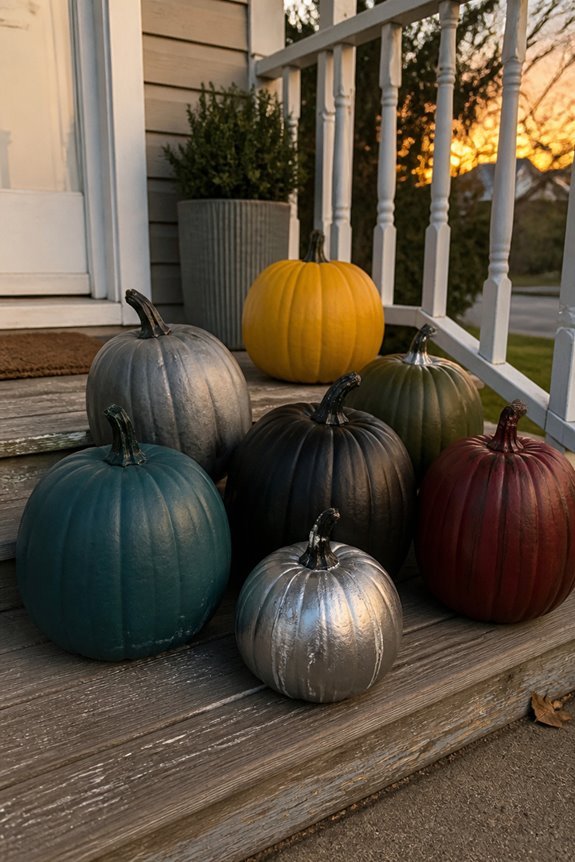
Spray paint offers decorators a straightforward method to transform standard pumpkins into eye-catching seasonal displays.
Black, silver, and deep purple finishes create gothic effects, while metallic gold and copper produce elegant results. Neon shades, including bright green and electric blue, offer modern alternatives to traditional orange. Multiple color combinations and patterns further expand design possibilities for varied aesthetic preferences.
Frequently Asked Questions
How Long Do Decorated Pumpkins Last Before They Start to Rot or Deteriorate?
Decorated pumpkins typically last two to four weeks before deterioration begins. Carved pumpkins deteriorate faster, while uncarved ones persist longer. Storage in cool environments, regular misting, and protective coatings extend their lifespan considerably beyond initial estimates.
What’s the Best Adhesive for Attaching Embellishments Like Beads, Fabric, or Moss to Pumpkins?
Like a master painter selecting the perfect brush, decorators should choose hot glue guns for lightweight beads and fabric, while heavy moss requires construction adhesive or florist picks for secure, lasting attachment to pumpkin surfaces.
Are Painted Pumpkins Safe for Homes With Pets or Small Children?
Painted pumpkins are generally safe for pets and small children when using non-toxic, water-based paints. One should verify pumpkins remain intact and supervise young children to prevent ingestion of paint chips or pumpkin material.
Can I Use Real Pumpkins for These Decorations or Should I Buy Artificial Ones?
A homeowner who stacked real pumpkins for an outdoor display found them deteriorating within two weeks. Both real and artificial pumpkins work; real ones offer authenticity but decay quickly, while artificial options provide durability and reusability for long-term decoration.
How Do I Preserve Decorated Pumpkins Throughout the Entire Halloween Season?
One preserves decorated pumpkins by storing them in cool, dry locations away from direct sunlight. Applying acrylic sealant protects surfaces from moisture and decay. Artificial pumpkins require minimal maintenance, while real ones benefit from regular inspection and prompt mold removal.
Conclusion
Modern pumpkin decorating has bloomed into a garden of possibilities beyond traditional carving. Painted finishes, metallic accents, glitter applications, and paper techniques offer durable alternatives. Minimalist white pumpkins, weathered raw displays, and unconventional color schemes provide varied aesthetic options. Mini pumpkins serve centerpiece functions, while bead art and jewelry embellishments add dimension. These methods extend seasonal decor longevity, reduce waste, and accommodate different style preferences and skill levels effectively.