


Setting up an outdoor wedding canopy involves far more than selecting an attractive tent.
Ground conditions, weather forecasts, and available anchor points all influence how the structure ultimately comes together.
Overlooking any one of these details can leave guests scrambling for cover mid-ceremony.
Matching the canopy style to the venue is the essential first step, since soft grass, concrete, and sand each require different anchoring approaches.
Securing the structure against wind and rain remains the priority throughout, from weighted bases to proper drainage planning.
Before You Start Shopping
Confirm the venue’s ground type before selecting a canopy style, since grass, gravel, and concrete each demand different anchoring methods. This decision affects nearly every step that follows.
Check local permit requirements early in the planning process. Many parks and event spaces enforce specific rules regarding temporary structure size and placement.
Calculate space needs generously, allowing 10 to 12 square feet per seated guest along with a buffer zone around the perimeter. Adding 15 to 20 percent extra space accommodates unexpected furniture or vendor equipment changes.
Choosing the Right Wedding Canopy Style for Your Venue
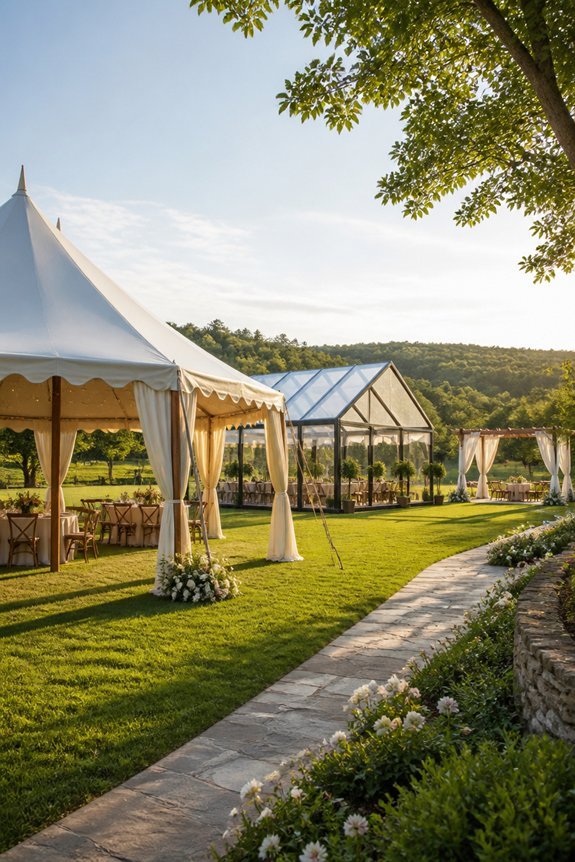
Choosing the right canopy style depends on the venue type, the wedding size, and the overall aesthetic the couple wants to achieve. A garden setting works well with a pole tent or sailcloth tent, which create soft, elegant lines. A flat, open field suits a frame tent, since it requires no center poles and allows flexible interior layouts. For beach weddings, a pagoda or canopy sail offers lightweight coverage without blocking ocean views.
Rustic venues pair naturally with wooden pergola-style canopies draped in fabric. Couples should also consider guest count, since larger groups need canopies with higher clearance and wider spans. Local weather conditions, including wind and rain, should also guide the final choice of canopy structure and material.
Also read: 18 Boho Canopy Bed Ideas for a Relaxed Bedroom
How to Assess Your Venue for Ground, Permits, and Anchor Points

Once the canopy style has been selected, the venue itself must be assessed before any setup begins. The ground type matters greatly, as grass, gravel, concrete, and sand each require different anchoring methods. Soft ground allows for stake anchors, while hard surfaces need weighted bases or sandbags.
Couples should contact local authorities early to confirm whether permits are required for temporary structures. Many parks and event spaces enforce strict rules about canopy size and placement.
Anchor points must also be identified in advance. Trees, fence posts, and vehicle hitches can serve as secondary support, but structural integrity must be verified first. Overhead obstructions like low branches, power lines, and awnings can limit placement options. A physical walkthrough of the site helps identify these factors before setup day arrives.
How Much Space Does a Wedding Canopy Actually Need?
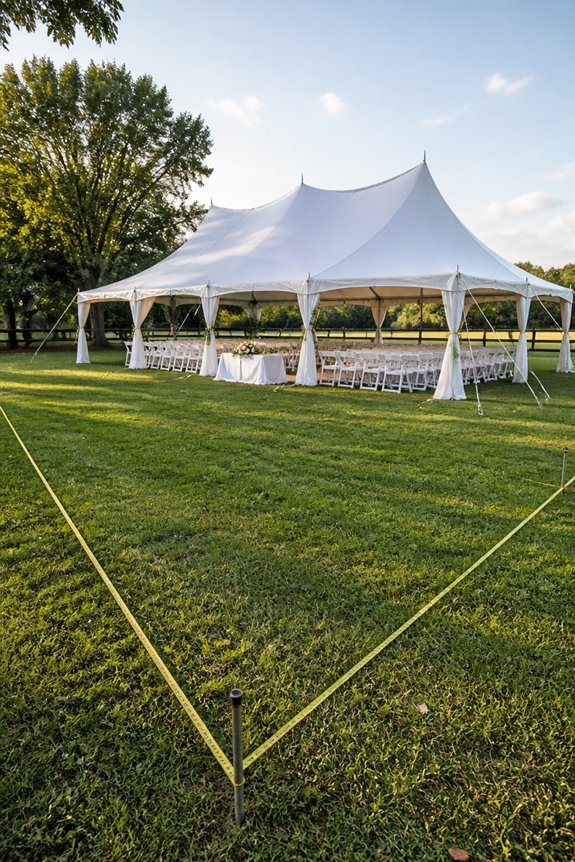
Determining how much space a wedding canopy needs depends on guest count, furniture layout, and buffer zones around the structure’s perimeter. A general rule allows 10 to 12 square feet per seated guest, accounting for chairs, tables, and moderate movement.
A 100-guest wedding typically requires a canopy measuring 40×60 feet or larger. Additional space is needed for a dance floor, catering tables, and a ceremony altar.
Buffer zones of at least 5 feet on each side protect against wind stress and allow safe entry and exit. Sloped terrain, nearby trees, and vendor stations reduce usable square footage.
Couples should calculate their layout needs carefully, then add 15 to 20 percent extra space to accommodate unexpected furniture changes or vendor equipment placement.
The Tools and Supplies You Need Before Setup Begins
Before any canopy goes up, crews need the right tools and supplies gathered and ready on site. A standard setup typically requires rubber mallets, stake drivers, and ratchet straps to secure the frame properly. Ground anchors, tent stakes, and sandbags provide stability depending on the surface type. Crews should also have a level on hand to check frame alignment during assembly.
Supply lists commonly include zip ties, guy wires, and adjustable tensioners for added support. A cordless drill with lag bolt attachments speeds up connector work on larger frames. Having two or more ladders available allows simultaneous work on opposite sides. Tarps, spare poles, and extra hardware should stay nearby as backup, reducing delays if components are missing or damaged during setup.
How to Set Up Your Wedding Canopy Step by Step
Setting up a wedding canopy begins with laying out all frame components on a flat, open area near the installation site. Legs, crossbars, and connectors should be sorted and identified before assembly starts. Most canopy frames connect through pin-lock or push-button mechanisms, requiring no tools.
Once the frame is loosely assembled, it can be walked out and positioned over the designated area. Stakes or weight bags are then secured at each leg base to anchor the structure. The canopy fabric is draped over the top frame and attached using Velcro straps, ties, or clips, depending on the design.
Final adjustments include tightening all connections, checking for level positioning, and confirming that anchoring points are firmly set before decorating begins.
How to Secure and Weatherproof Your Canopy Before the Wedding
Once the canopy frame is assembled and positioned, securing it against wind and weather becomes the next priority. Canopy legs should be anchored using tent stakes, sandbags, or weighted water barrels, depending on the ground surface. Grass and dirt surfaces allow for stakes, while concrete or pavement requires weighted bases.
Ratchet straps or guy-wires can add tension between the frame and anchor points, reducing movement during wind gusts. Canopy fabric should be pulled taut and fastened tightly to prevent pooling water or flapping edges.
For rain protection, a waterproof or water-resistant canopy cover is recommended. Seam sealer spray can be applied to stitched areas where leaking is common. Sidewalls made of clear vinyl or polyester offer additional protection against wind-driven rain while preserving visibility.
Dress It Up With Lighting, Draping, and Décor
With the canopy secured and weatherproofed, attention can shift to lighting, draping, and decorative elements that define the overall look. String lights, lanterns, and uplights are common choices that provide both function and atmosphere after sunset. Lights should be attached to the frame using zip ties or clamps, keeping wires tucked along poles to avoid hazards.
Draping fabric such as chiffon or organza along the canopy frame softens the structure and adds visual depth. Fabric can be gathered at corners, swaged between poles, or layered at the entrance.
Floral arrangements, greenery, and hanging accents like crystals or ribbons complete the décor. All decorative items should be secured firmly, checked for weight distribution, and inspected to guarantee nothing interferes with the canopy’s structural integrity.
Frequently Asked Questions
Can a Wedding Canopy Be Rented Instead of Purchased Outright?
Yes, renting is a common and practical option.
Event rental companies, party supply stores, and wedding vendors typically offer canopies for rent. Delivery, setup assistance, and pickup services are often included, making this a convenient alternative to purchasing a canopy outright.
How Far in Advance Should Canopy Setup Begin Before the Wedding?
Most experts recommend starting installation at least 24 to 48 hours before the ceremony.
That window allows time for adjustments, proper anchoring, and decorating without rushing. It also leaves room to address unexpected weather or structural issues before guests arrive.
How Many People Are Needed to Safely Set up a Canopy?
A minimum of four to six people is typically recommended for most setups.
Larger structures may require eight or more hands on deck. Extra helpers make it easier to stabilize poles, tension the fabric properly, and secure stakes safely and efficiently.
What Happens if the Canopy Gets Damaged During the Wedding?
The event coordinator should assess the damage right away if this happens.
Guests may need to be relocated temporarily while repairs are attempted. Notifying the rental company promptly matters too, both for liability purposes and to arrange a replacement if needed.
Are There Noise Restrictions Associated With Outdoor Canopy Wedding Setups?
Noise restrictions vary quite a bit depending on location.
Researching local ordinances ahead of time helps avoid surprises, since many municipalities impose sound limits and curfews. These restrictions can significantly affect entertainment choices for an outdoor canopy wedding.
Conclusion
Setting up a wedding canopy successfully comes down to careful planning at every stage, from venue assessment to final decor.
Matching the canopy style to the venue’s ground type and weather conditions lays the foundation for a stable, reliable structure.
Securing proper anchoring and weatherproofing early protects against the unpredictability of outdoor conditions on the day itself.
Calculating space needs accurately, with room to spare, prevents last-minute layout problems once furniture and vendor equipment arrive.
Decorative elements like lighting and draping should always come after the structural work is complete and confirmed secure.
Share your thoughts in the comments below on how your own outdoor canopy setup came together.