


Worried a canopy bed will swallow your small bedroom? It doesn’t have to.
A slim frame becomes the room’s quiet anchor instead of its biggest obstacle.
My first apartment bedroom barely fit a dresser, yet a slim metal frame with sheer curtains made it feel finished rather than cramped.
Corner placements, ceiling mounts, and lighter woods all help keep sightlines open.
Twelve ideas ahead, each built for rooms where every inch counts.
Small Changes That Make the Biggest Difference
Scale matters more than anything else in a small room. Look for slim posts, narrow frames, and fabric that breathes rather than pools on the floor.
Placement can make or break the room too. Pushing the bed into a corner or against a single wall frees up space for everything else you need.
Color and fabric choice matter just as much as the frame itself. Sheer panels in pale tones keep light moving through the room instead of trapping it.
12 Canopy Bed Ideas for Small Rooms
Some of these frames disappear into the room, while others become the star of the show.
A few work best tucked into a corner, and others need a full wall to themselves.
Find the one that fits your square footage and go from there.
Slim Metal Canopy Frames That Keep Sightlines Open
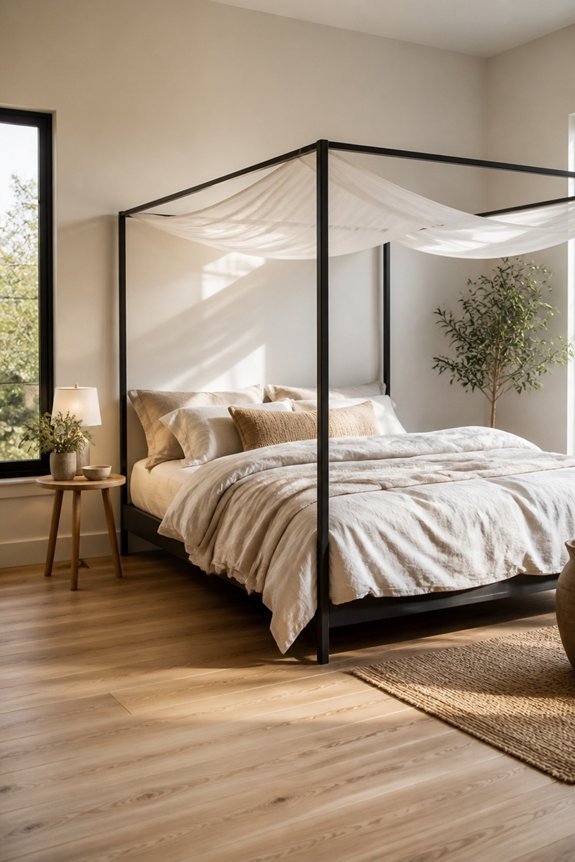
Because small rooms depend on visual space to feel larger, slim metal canopy frames offer height without bulk. Thin iron or steel posts, often finished in matte black, brass, or white, create a defined structure while allowing light and sightlines to pass through freely. Unlike heavy wooden frames, these designs avoid blocking walls or windows, keeping the room feeling open on all sides.
Many small-space layouts benefit from four-post frames with narrow diameters, paired with sheer or lightweight fabric panels rather than thick drapes. Some designs use open-top frames, which skip a full canopy top to reduce visual weight further. Placing the bed against a single wall, rather than centering it, also preserves floor space, letting the frame act as a subtle architectural accent rather than a dominant feature.
Also read: 25 Front Door Canopy Ideas to Boost Curb Appeal
Sheer Curtain Canopy Beds for a Soft, Airy Feel
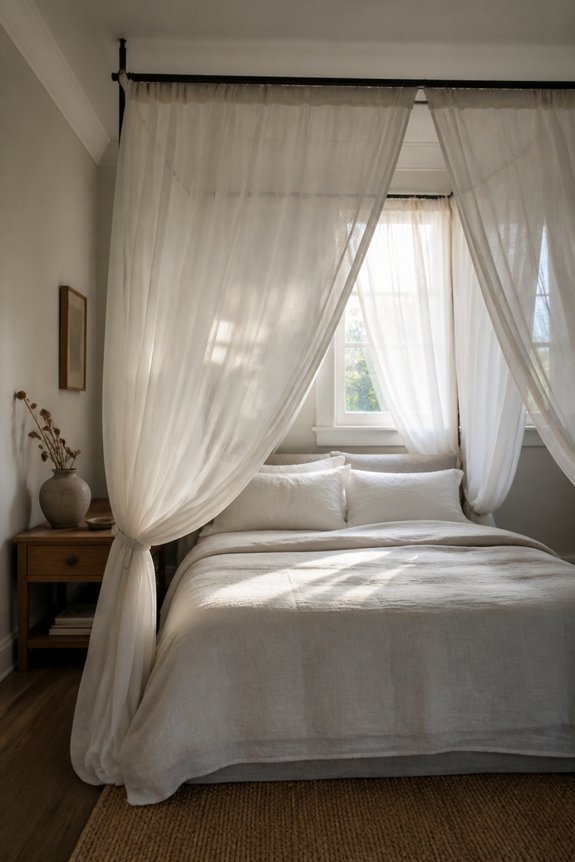
Where slim metal frames rely on structure to keep a room feeling open, sheer curtain canopy beds achieve a similar effect through soft, translucent fabric rather than visible hardware. Lightweight voile or chiffon panels hang from a ceiling-mounted hoop, track, or simple four-post frame, allowing light to pass through while still defining the bed as a separate space.
Unlike heavier drapes, sheer fabric does not block sightlines or make the room feel smaller, making it suitable for compact bedrooms. Curtains can be tied back during the day and released at night, offering flexibility without permanent visual weight. White, ivory, or pale gray tones tend to work best, since darker colors can appear heavier and reduce the airy quality this style aims to create.
Corner Canopy Beds That Save Floor Space
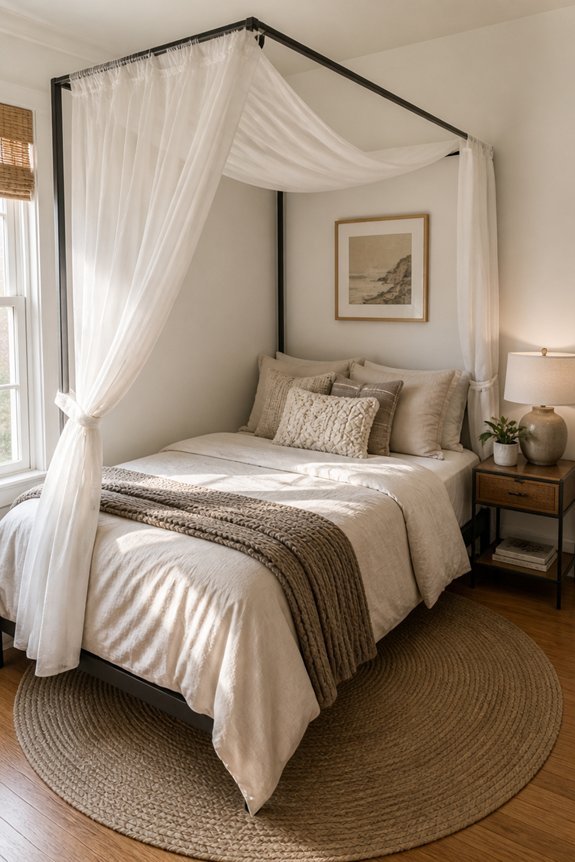
Corners often go unused in small bedrooms, making them a practical location for a canopy bed frame that would otherwise take up central floor space. Placing a bed diagonally or flush against two intersecting walls frees up the remaining floor area for storage, seating, or walking room.
Corner frames typically rely on two walls to support part of the canopy structure, reducing the need for a full four-post design and cutting down on visual bulk. Some models use an L-shaped frame with posts on only the exposed side, while others attach canopy rods directly to the walls.
This setup works well in rooms with awkward layouts, sloped ceilings, or limited square footage, since it allows other furniture, such as dressers or desks, to occupy the remaining open space.
Scaled-Down Four-Poster Beds for Tiny Rooms
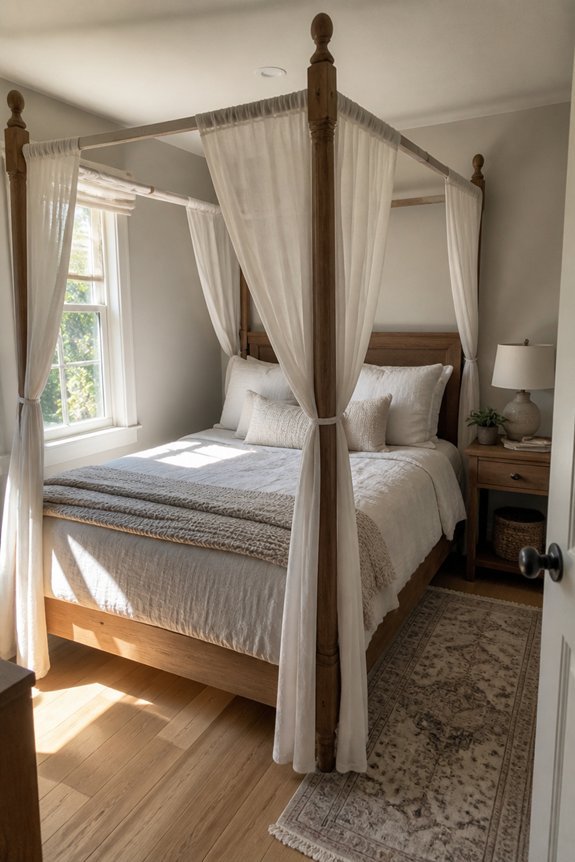
A number of manufacturers now produce four-poster beds with shortened posts and slimmer frames, designed specifically for compact bedrooms. Posts typically measure 40 to 50 inches, compared to the 70 or more inches found on traditional models, reducing visual weight while keeping the classic shape. Frame widths are often narrower as well, with twin and full sizes more common than queen or king in this category.
Materials play a role in scale perception. Metal frames with thin posts read as lighter than solid wood versions, while pale finishes like whitewash or natural oak avoid a boxy feel. Some designs eliminate the top canopy frame entirely, keeping only the four corner posts for a partial silhouette. This approach maintains architectural interest without enclosing the room or blocking window light.
Ceiling-Mounted Canopy Beds With No Bulky Frame
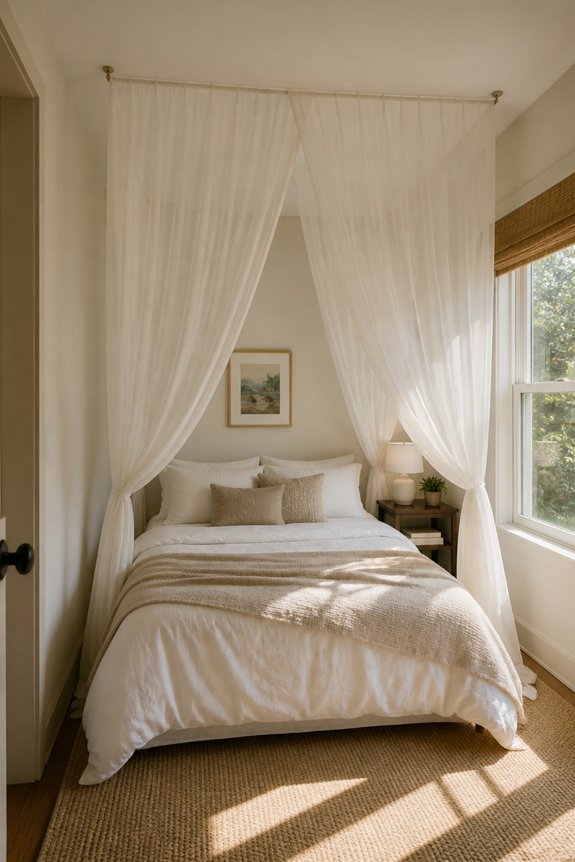
Since floor space stays limited in small bedrooms, ceiling-mounted canopy systems offer an alternative that requires no bedposts at all. A metal hoop, square frame, or set of hooks attaches directly to the ceiling above the bed, holding fabric panels that drape down around the mattress. This method removes the visual weight of corner posts, leaving walls and floor areas open for furniture or walking space.
Common installation points include wooden ceiling joists, which provide secure anchoring for hooks or brackets. Drywall anchors rated for the fabric weight work well when joists are not accessible. Track systems allow curtains to slide open or closed easily.
Sheer voile, cotton muslin, or linen fabrics work well, since lightweight materials avoid straining the mounting hardware.
Light Wood Canopy Beds That Keep Rooms Bright
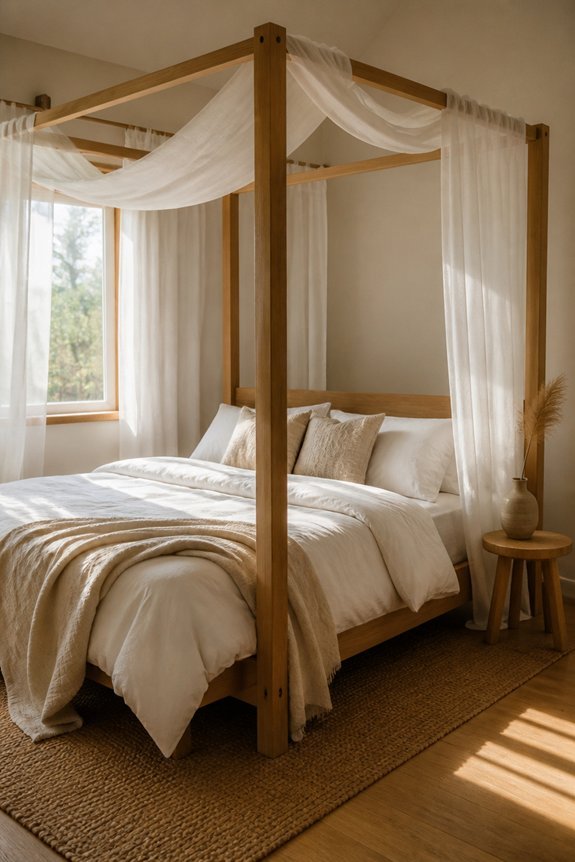
Wood tone plays a large role in how spacious a canopy bed feels within a small room, and lighter finishes tend to keep the space feeling open rather than closed in. Ash, birch, and pale oak frames reflect more natural light than dark walnut or espresso stains, which can make a canopy structure appear less heavy.
Whitewashed or natural raw wood finishes work well against neutral walls, creating a seamless look that avoids visual clutter. Pairing light wood posts with sheer curtains, rather than thick fabric panels, adds to the airy effect. Smaller rooms benefit from frames with slimmer wooden posts, since thinner lines take up less visual space.
Choosing a matte finish over a glossy one also helps reduce glare while maintaining brightness throughout the room.
Half-Canopy Beds for a Subtler Statement
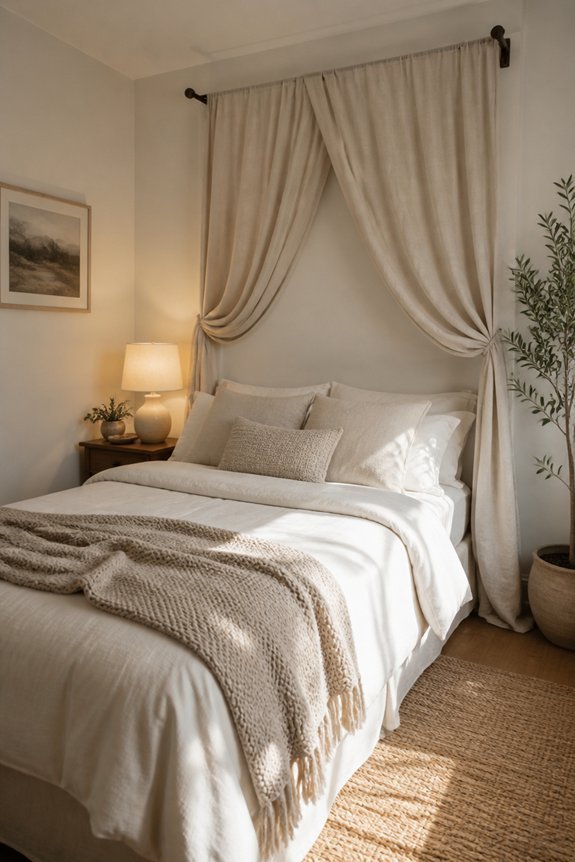
When a full four-poster feels too heavy for a small bedroom, half-canopy designs offer a lighter alternative that still adds visual interest. These beds typically feature posts or a frame at the headboard only, with fabric draping partway down instead of enclosing the entire bed. This structure creates a sense of height without blocking sightlines across the room, which helps small spaces feel less cramped.
Common options include a canopy attached to the wall above the headboard, or a metal frame with curtains that hang loosely on either side. Sheer fabrics, like linen or cotton voile, keep the look soft and unobtrusive. Darker or patterned fabrics can add contrast without overwhelming the room. This approach works well in bedrooms with lower ceilings or limited floor space.
Draped Fabric Canopy Tricks That Add Height, Not Weight
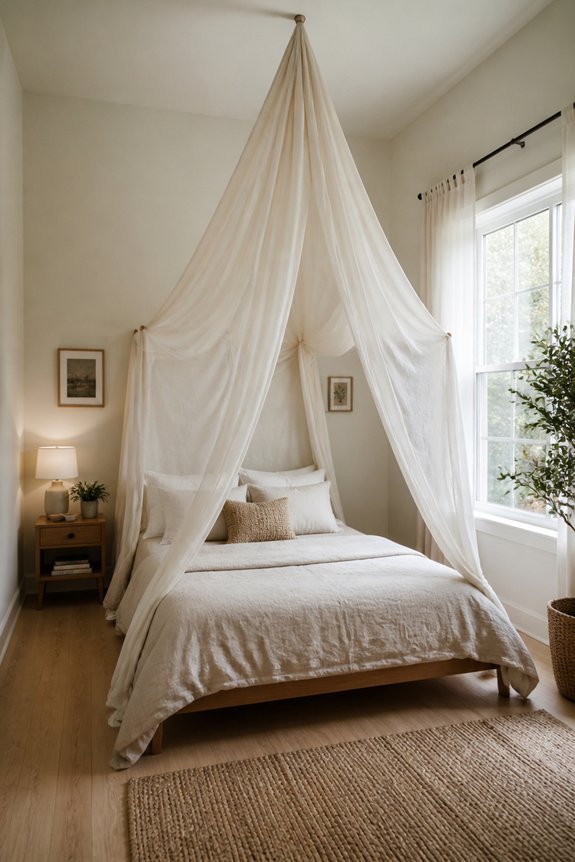
Fabric alone can create the illusion of a canopy bed, without the cost or bulk of a permanent frame. Lightweight materials, such as voile, muslin, or sheer linen, can be mounted to the ceiling above the bed using curtain rods, hooks, or a simple ceiling-mounted ring.
Draping the fabric so it falls in loose vertical panels, rather than pooling on the floor, keeps the look airy instead of heavy. Gathering panels at the corners of the bed frame, rather than covering all four sides, adds height while leaving the room feeling open. Choosing pale or neutral tones helps light pass through, preventing the space from appearing smaller.
Layering two sheer panels of slightly different lengths can add depth without adding visual weight.
Neutral-Palette Canopy Beds for Small Spaces
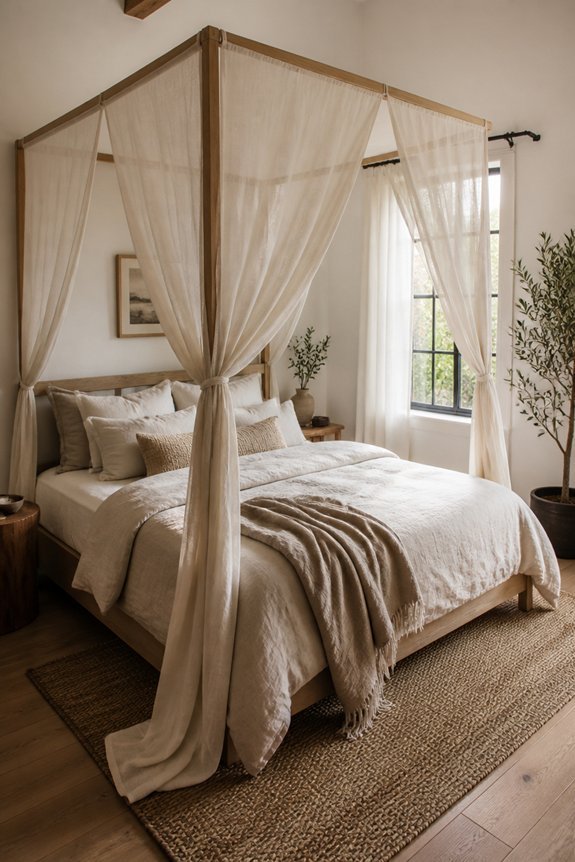
Because small rooms often struggle with visual clutter, keeping the color scheme limited to whites, creams, soft grays, or pale beige tones can prevent a canopy bed from overwhelming the space. A neutral palette allows the frame and drapery to blend with surrounding walls, ceilings, and floors, creating a sense of continuity rather than division.
Matching the canopy fabric to bedding, curtains, or nearby furniture helps the eye move smoothly through the room instead of stopping at contrasting edges. Light wood or white-painted frames, paired with sheer or linen-toned drapes, keep the structure from appearing heavy.
Textured neutrals, such as bouclé or waffle-weave fabric, add depth without introducing bold color. This approach makes a canopy bed feel like a natural extension of a small room, not a competing focal point.
Bohemian Canopy Beds That Feel Cozy, Not Cramped
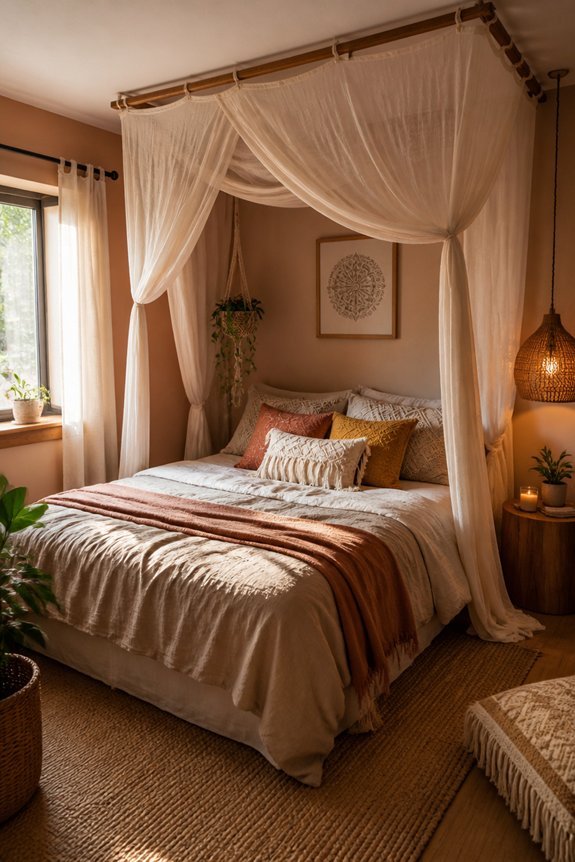
Neutral palettes create calm, but some small rooms benefit from a warmer, more layered look, which is where bohemian canopy beds come in. A macrame canopy or a fringed textile draped over a simple frame adds texture without adding bulk, since these materials remain lightweight and airy.
Layering patterned throw pillows, a woven rug, and a rattan headboard introduces visual interest while keeping the furniture footprint small. Hanging dried flowers, small tapestries, or beaded strings from the canopy frame adds personality without requiring extra floor space.
Choosing warm neutrals, such as terracotta, rust, or mustard, alongside natural wood tones keeps the room grounded rather than cluttered. This approach works well in studio apartments or guest rooms where warmth matters more than minimalism, provided accessories stay curated rather than excessive.
Multifunctional Furniture Paired With Canopy Beds
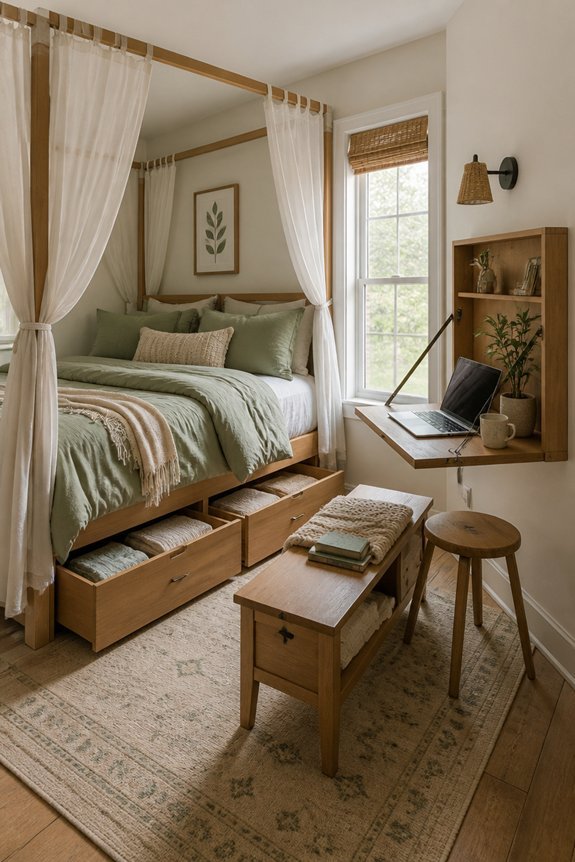
Since small rooms rarely allow space for extra pieces, pairing a canopy bed with multifunctional furniture becomes a practical solution. Storage beds with built-in drawers reduce the need for separate dressers, while slim nightstands with shelves can hold books, lamps, and personal items without adding bulk.
Fold-down desks attached to walls near the canopy frame allow the space to serve as a workspace during the day. Ottomans with hidden storage can double as seating and blanket holders, keeping the room organized. Ladder shelves placed beside the bed provide display space without occupying much floor area. Choosing furniture with dual purposes, such as a bench that opens for storage, helps maintain an open feel while keeping the canopy bed as the room’s focal point.
Compact Canopy Bed Frames Worth Shopping For
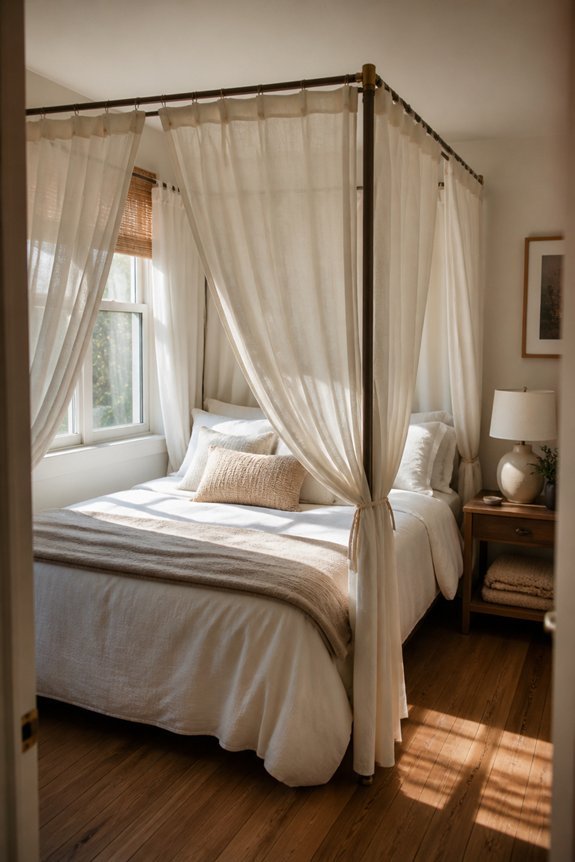
Pairing a canopy bed with smart furniture only solves part of the challenge in a small room, since the frame itself also needs to fit the space without overwhelming it. Twin and full-size canopy frames work best in tight quarters, since queen or king versions often crowd walkways and closets.
Metal frames with thin posts, such as those found in modern minimalist designs, take up less visual space than heavy wooden four-posters. Some brands offer canopy beds with built-in headboard storage or low-profile bases, reducing the need for extra furniture nearby. Frames with slatted or open designs also allow light to pass through, keeping the room from feeling boxed in.
Shoppers should measure ceiling height before buying, since taller canopy posts can make low-ceilinged rooms feel cramped.
Frequently Asked Questions
Will a Canopy Bed Make My Small Room Feel More Crowded?
Not really, as long as you choose the right frame.
Slim posts, sheer fabric, and open frames all let light travel through instead of getting stuck. Your eye can glide upward instead of stopping at a heavy edge.
The trick is picking a silhouette that suggests space rather than fills it.
What Size Room Is Too Small for a Canopy Bed?
Rooms under about 80 square feet, or roughly 9 feet by 9 feet, tend to struggle with a full canopy setup.
Ceiling height matters just as much as floor space. Anything under 8 feet can make the frame feel like it’s pressing down on you.
If your room is on the smaller side, look for a half canopy or an open frame instead of a full four poster.
How Do I Clean and Maintain Canopy Bed Curtains?
Cleaning your canopy curtains is easier than it looks.
A regular vacuum with a brush attachment handles dust between deeper cleans. For a full refresh, check your fabric type first.
Lightweight cotton usually holds up fine in a gentle machine wash. Delicate sheers are safer left to a professional cleaner so they don’t snag or shrink.
Can I Install a Canopy Bed Frame Without Drilling Into Walls?
Yes, you can skip the drilling entirely.
Freestanding frames use four corner posts to support the whole structure on their own. There’s no need to attach anything to your walls.
This makes them a great option if you’re renting or just don’t want to deal with wall damage down the line.
What’s the Best Mattress Size for a Canopy Bed in a Small Room?
Twin and full mattresses tend to work best here, since they keep the frame’s footprint small.
A queen can still work if your room allows for it. Just make sure the frame stays slim and proportionate to the space around it.
Measure your room before you commit, since a mattress that’s too big can make the whole setup feel tight
CONCLUSION
A small room and a canopy bed can absolutely coexist, you just have to be a little more intentional about it.
When I helped my sister set up her studio apartment, we almost skipped the canopy altogether, worried it would eat up the little space she had. A slim frame and sheer curtains ended up being the thing that made the room feel finished.
Scale, placement, and fabric choice do most of the heavy lifting here. Get those right and the frame works with your room instead of against it.
Whether you go bohemian and layered or keep things neutral and airy, the goal is the same, a bed that feels like a retreat instead of a squeeze.
I’d love to know which of these ideas fits your space best. Leave a comment below and tell me what your room is working with.