
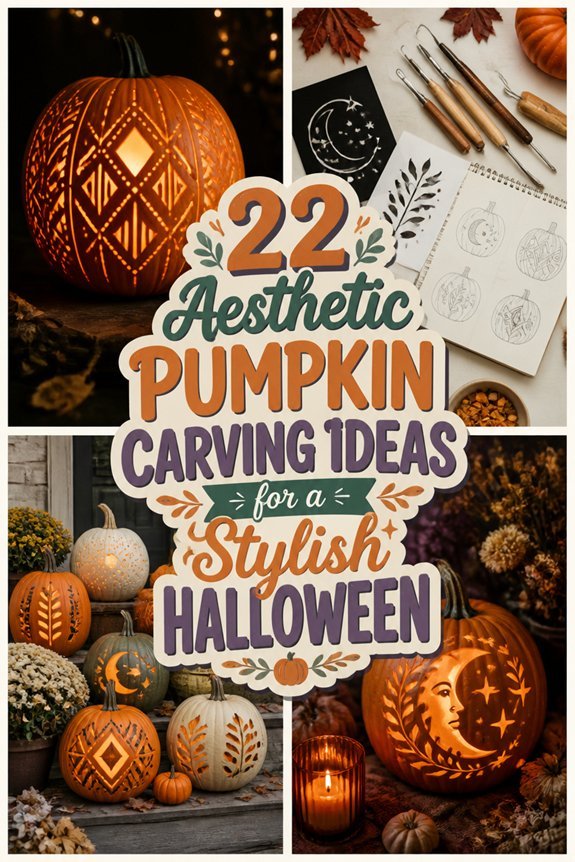
Pumpkin carving doesn’t have to mean the same triangle eyes every year. There’s something endlessly satisfying about transforming an ordinary gourd into a piece of seasonal art. Whether you’re drawn to clean minimalist lines or intricate celestial scenes, the options feel surprisingly endless.
I’ve found that starting with your aesthetic in mind saves plenty of frustration later. Gothic florals and vintage 1970s patterns each demand different tools and patience levels. Pick what genuinely excites you, gather the right stencils, and let the knife do its work.
Minimalist Line Art Pumpkins
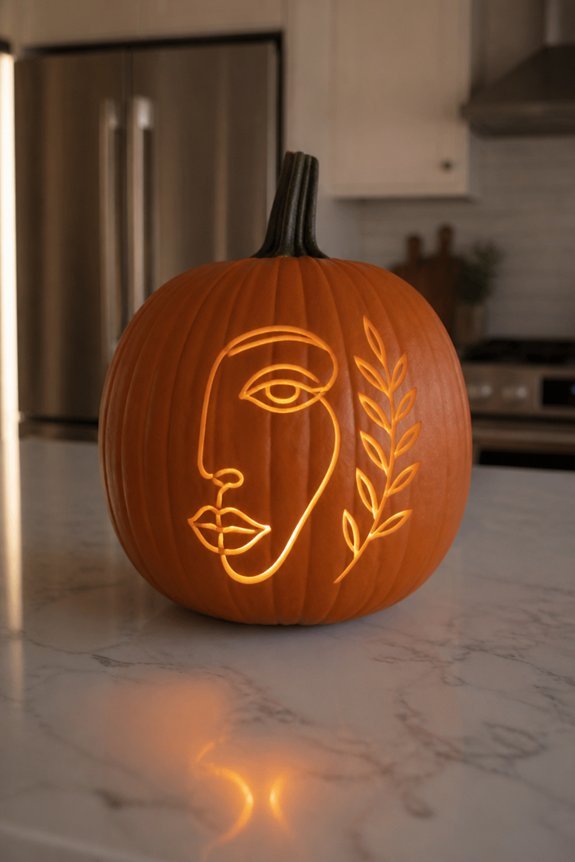
Many people find minimalist line art designs appealing for their simplicity, clean appearance, and ease of execution on pumpkin surfaces. Single continuous lines, geometric shapes, and abstract faces work effectively.
Examples include thin curved lines forming eyes, straight lines creating angular features, and simple dot patterns.
These designs require basic carving tools and minimal planning, making them accessible for various skill levels.
Celestial Moon and Star Designs
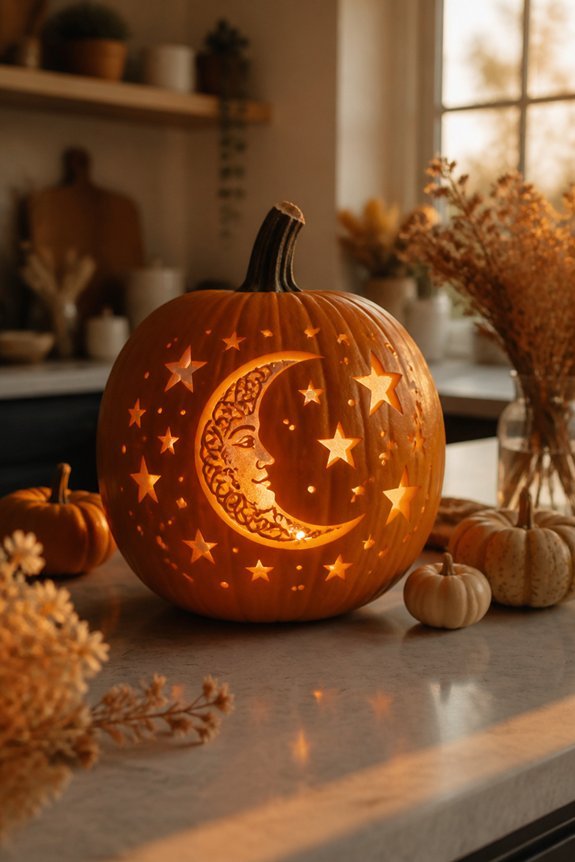
Celestial designs offer an alternative approach to pumpkin carving, shifting focus from geometric simplicity to thematic imagery.
Moon phases, stars, and planets create recognizable patterns that require moderate carving skill.
Crescent moons work well for beginners, while constellation maps suit experienced carvers. Using stencils helps establish accurate celestial arrangements.
Night sky scenes combine multiple elements: moons, stars, and planets on a single pumpkin surface.
Gothic Floral Patterns
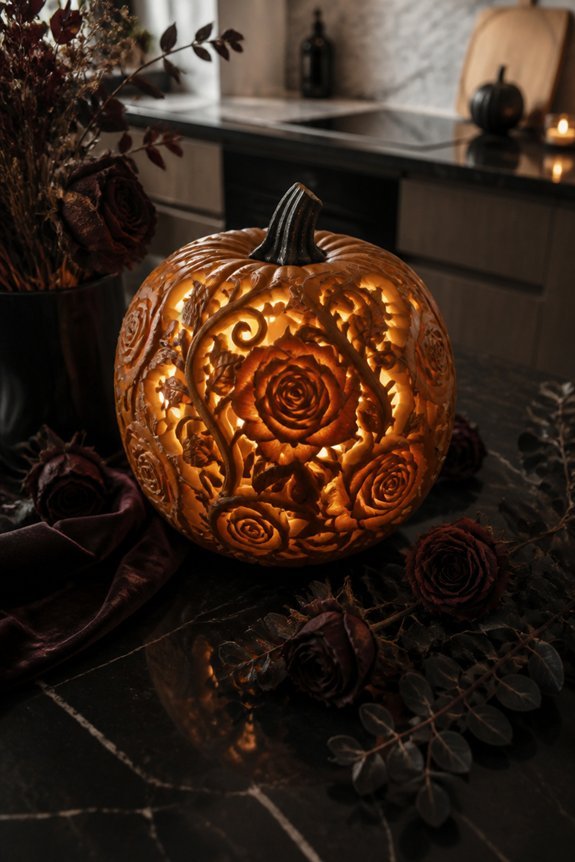
Gothic floral patterns represent a darker aesthetic choice for pumpkin carving, blending ornate botanical imagery with dramatic visual elements. Carvers can incorporate roses, thorns, and vines with shadowy backgrounds.
Designs featuring skulls intertwined with flowers create striking contrast. Black backgrounds intensify the gothic mood.
This style suits experienced carvers who manage intricate detail work and multiple depth levels effectively.
Geometric Shape Carvings
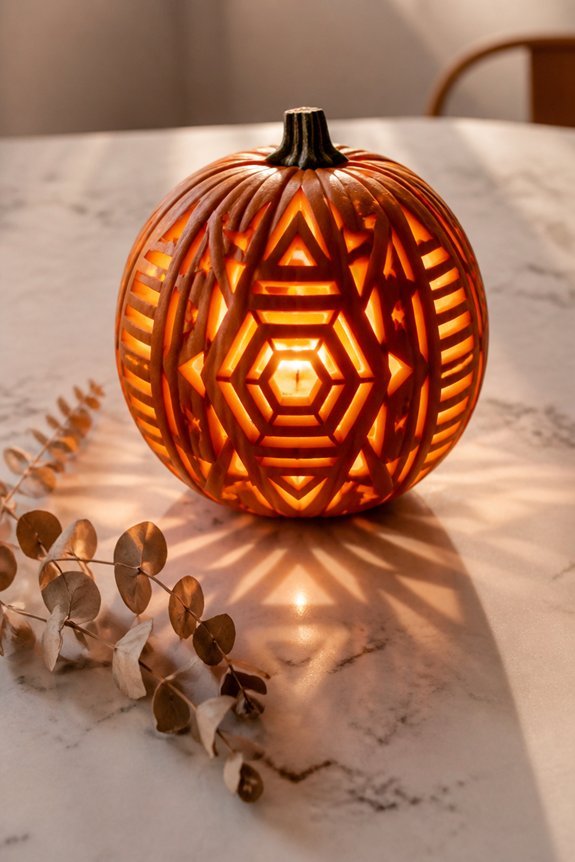
Geometric shape carvings offer a straightforward alternative to detailed designs, relying on clean lines, symmetrical patterns, and basic forms rather than intricate imagery.
Carvers can create triangles, circles, diamonds, and hexagons across the pumpkin surface. These designs require less skill than realistic portraits, making them accessible to beginners.
Popular options include concentric squares, starburst patterns, and interlocking shapes for visual interest.
Boho Mandala Inspirations
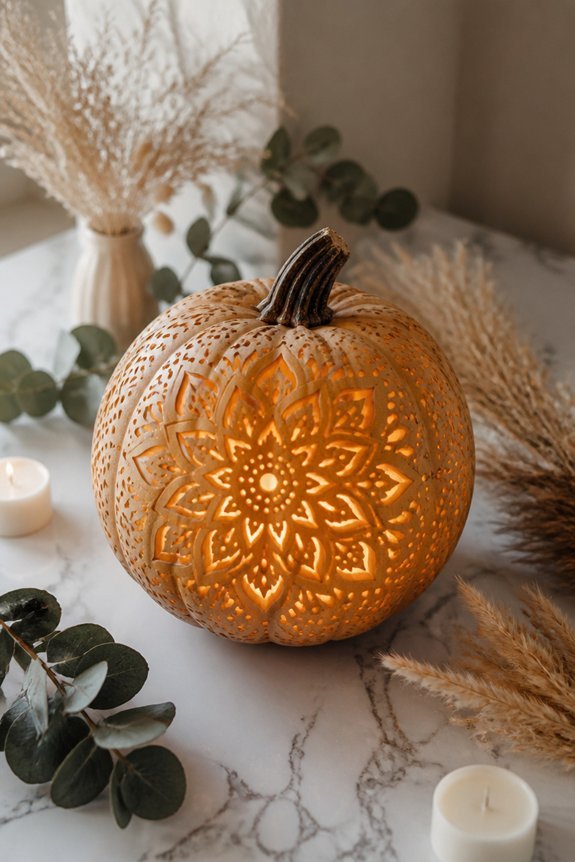
While geometric shapes provide a solid foundation for pumpkin carving, mandala designs expand the approach by incorporating circular, radiating patterns that blend structure with artistic depth.
Mandalas feature concentric circles, symmetrical lines, and repeating motifs like florals or geometric elements.
Carvers can sketch templates beforehand, then carefully remove pumpkin flesh layer by layer, creating depth through varying cut intensities and shadow effects.
Mystical Symbols: Pentacles, Sigils & Runes
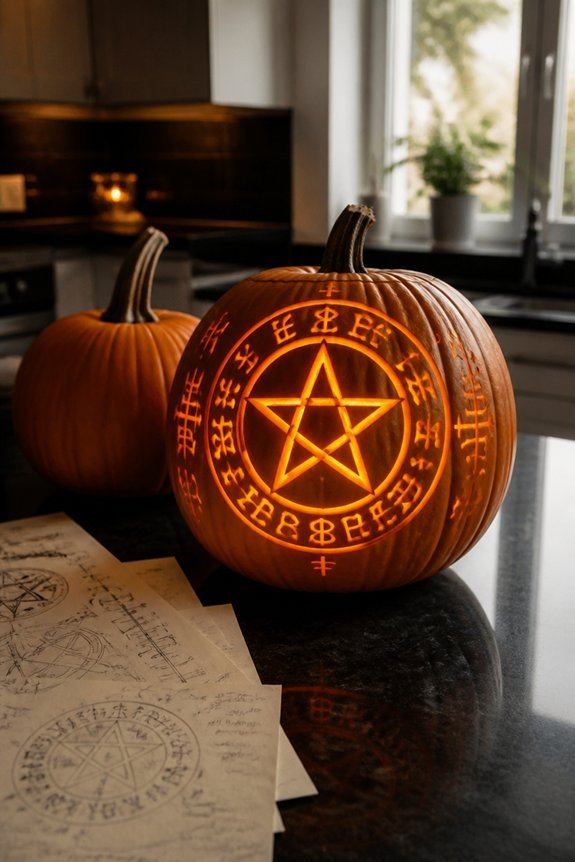
Mystical symbols offer another carving direction for those seeking designs with spiritual or occult themes.
Pentacles, five-pointed stars enclosed in circles, provide geometric patterns suitable for pumpkin surfaces. Sigils, personalized magical symbols, allow custom designs.
Runes, ancient alphabet characters, offer individual letter options like Fehu or Dagaz.
These symbols require steady hand carving or stencil use for precise, clean lines.
Haunted Mansion Skyline Carvings
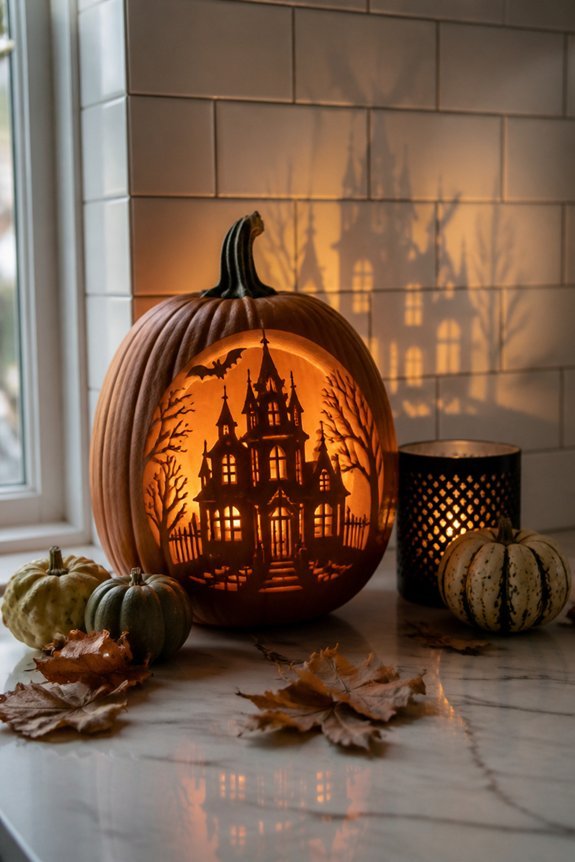
Silhouettes of old buildings create an effective carving option for those wanting architectural designs on their pumpkins. Victorian mansions, gothic towers, and crooked rooflines work well for this approach.
Carvers should sketch the skyline outline first, then remove the outer pumpkin flesh.
This technique produces dramatic shadow effects when lit from inside, making the carved design clearly visible.
Spiderweb and Spider Details
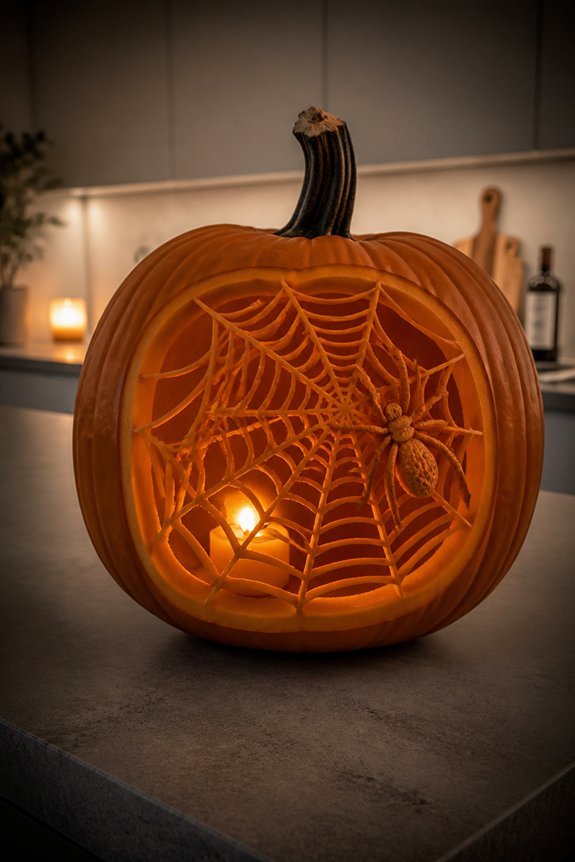
Spiderweb and spider designs offer another popular carving option for Halloween pumpkins. Carvers can etch intricate web patterns across the pumpkin’s surface, using curved lines that radiate from center points.
Adding a detailed spider positioned within the web increases visual interest.
These designs work well on medium to large pumpkins, providing sufficient space for fine details and clear visibility from a distance.
Cat Face Carving Ideas
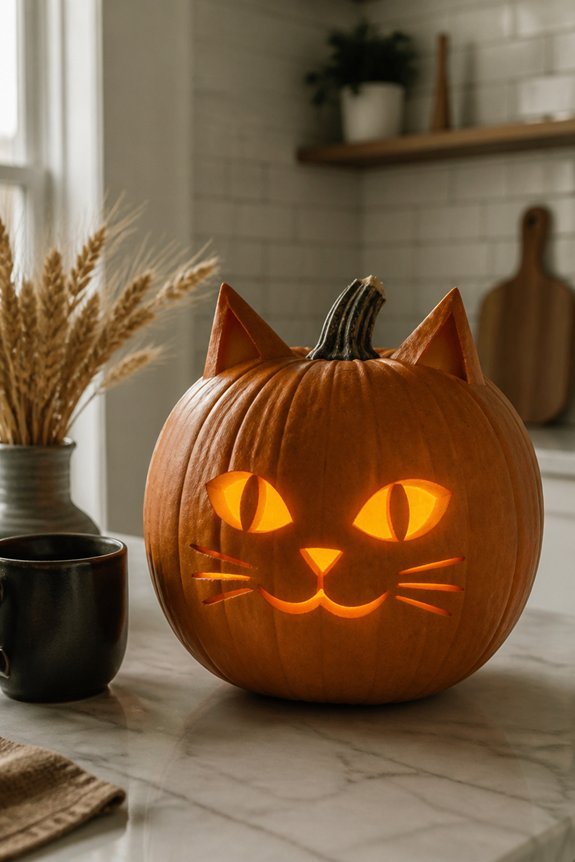
Feline faces represent a straightforward carving option for Halloween pumpkins, requiring basic shapes and minimal detail work. Carvers can create triangular ears, circular eyes, and a curved mouth using simple cuts.
Adding whiskers with shallow etches enhances the cat design.
Black cats offer traditional appeal, while orange pumpkins produce lighter, more visible features. This approach suits beginners seeking recognizable results.
Skeleton and Skull Designs
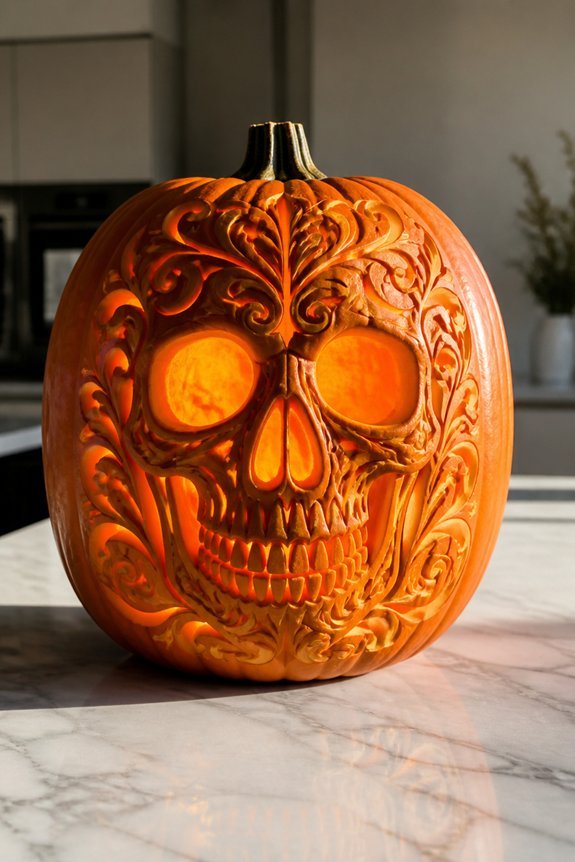
Because skeletal imagery remains popular for Halloween, carvers frequently choose skull and skeleton designs for their pumpkins.
Simple designs feature basic eye sockets and teeth patterns, requiring minimal carving skill. Advanced versions include detailed jawbones, spinal columns, and ribcages across the pumpkin surface.
Carvers can combine skeletal imagery with other elements, such as crossbones or haunted settings, for increased visual impact and complexity.
Bat Wing Patterns
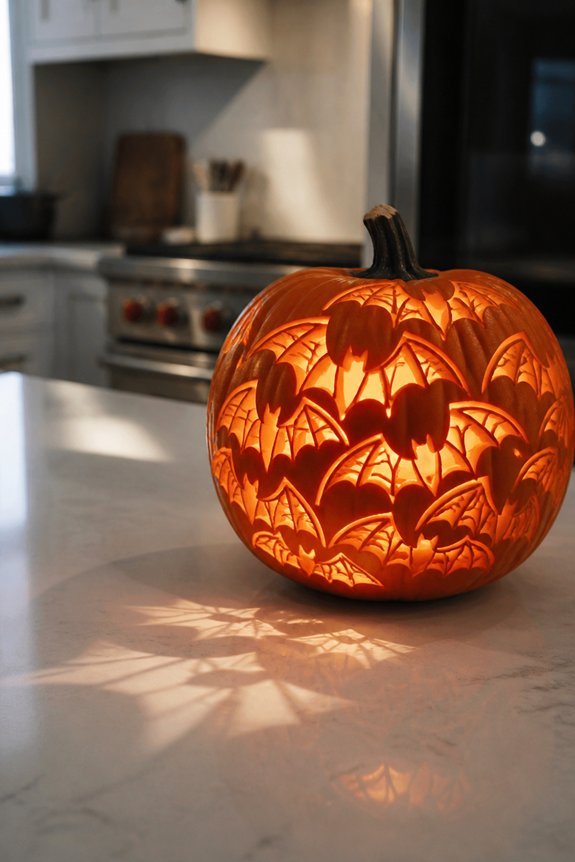
Bat wing patterns rank among the most recognizable Halloween pumpkin designs, appealing to carvers seeking distinctive silhouettes. These designs feature symmetrical wings extending from a central body, typically carved as solid shapes or detailed with internal line work.
Carvers can choose simple triangular wings or more complex patterns with membrane details.
Templates remain widely available online, simplifying the transfer process onto pumpkin surfaces.
Botanical Illustration & Pressed Flower Designs
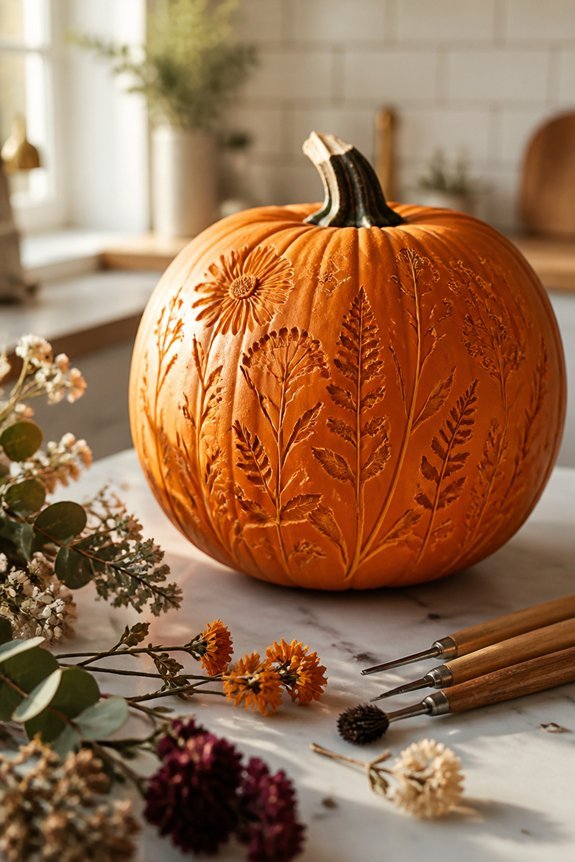
Many carvers pursue botanical themes when seeking nature-inspired pumpkin designs that differ from traditional Halloween imagery. Pressed flower patterns, delicate ferns, and intricate leaf illustrations create elegant results.
Carvers can stencil designs featuring sunflowers, roses, or tulips onto pumpkin surfaces. This approach requires careful tool selection and steady hand control.
Botanical designs appeal to those preferring sophisticated, understated Halloween decoration alternatives.
Art Deco Geometric Elegance
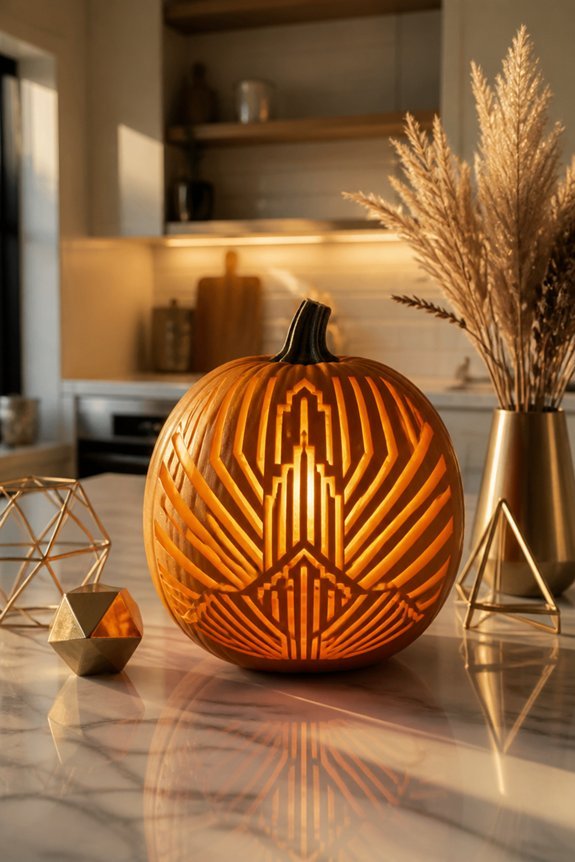
Art Deco geometric patterns offer a distinctly different aesthetic for pumpkin carvers seeking modern, structured designs. Triangles, sunbursts, and chevron shapes create visual impact through symmetry and clean lines.
Carvers can arrange these elements in repeating patterns across the pumpkin’s surface. Popular motifs include art deco borders, starburst fans, and interlocking diamonds.
These designs require steady hands and careful planning, yet deliver sophisticated, gallery-quality results.
Ombré Gradient Pumpkin Designs
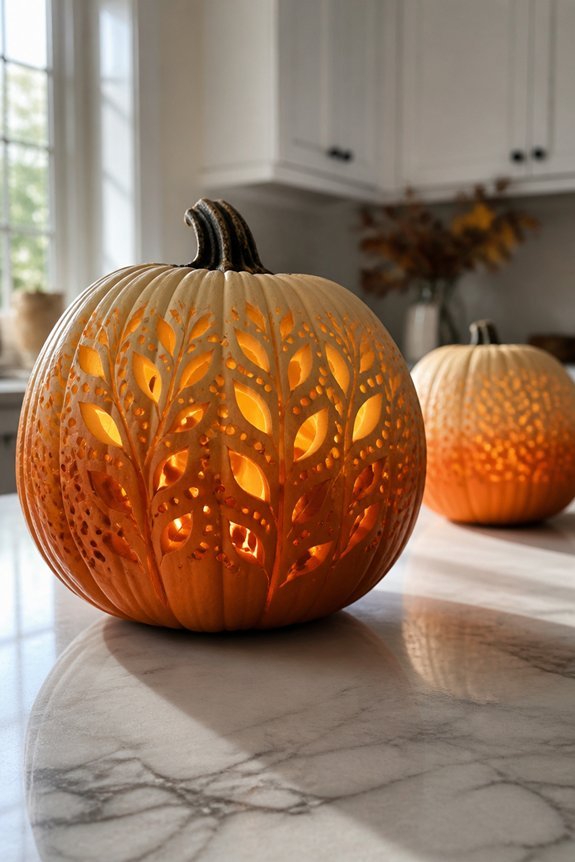
Ombré gradient pumpkin designs create depth through color shifts, moving from light to dark tones across the pumpkin’s surface. Carvers achieve this effect using paint, markers, or strategic knife work that removes varying amounts of skin.
Popular color progressions include cream to orange, white to black, and peach to deep burgundy. This technique requires patience and planning to guarantee smooth alterations between shades.
Star Constellations & Night Sky Patterns
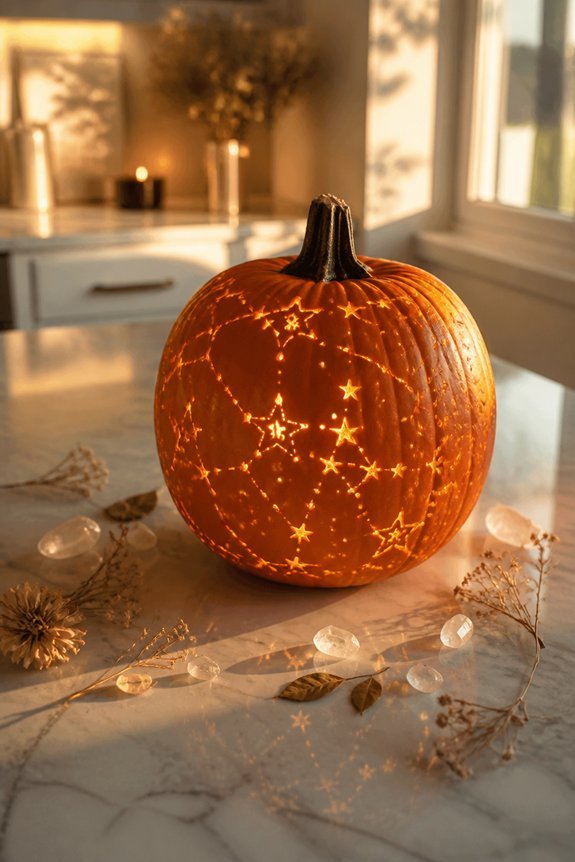
Star constellations and night sky patterns offer carvers an alternative approach to pumpkin decoration, shifting focus from gradient color work to celestial imagery and astronomical designs.
Carvers can depict Orion, the Big Dipper, or the North Star using small dots and connecting lines. This method requires a dotting tool, marker, or drill with a small bit.
The design works well on medium to large pumpkins with smooth surfaces.
Pop Culture Character Faces
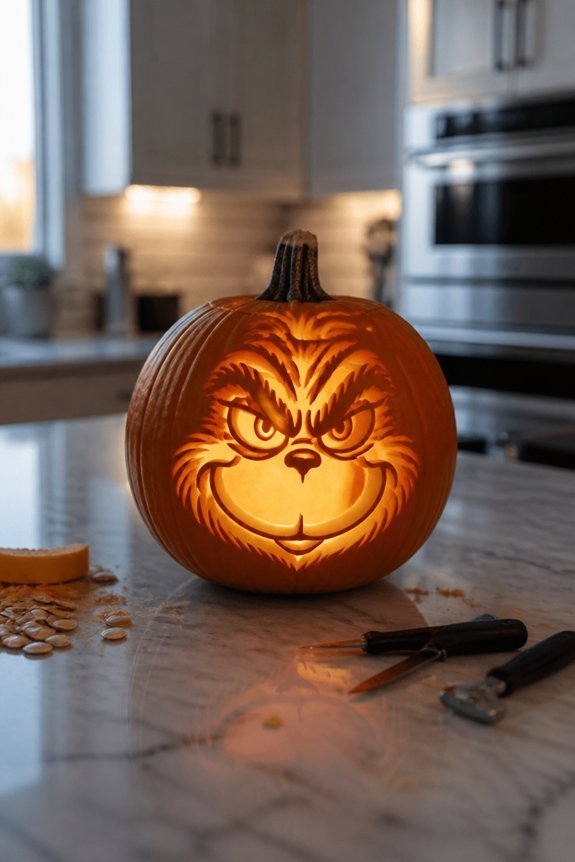
Pop culture character faces represent a popular approach to pumpkin carving, offering recognizable designs that appeal to broad audiences.
Popular options include superheroes like Batman and Spider-Man, animated characters such as Mickey Mouse and Minions, and movie villains like Freddy Krueger.
These designs work well because audiences immediately recognize them. Carvers can find templates online, then transfer patterns onto pumpkins before cutting.
Autumn Leaf Silhouettes & Botanical Line Art
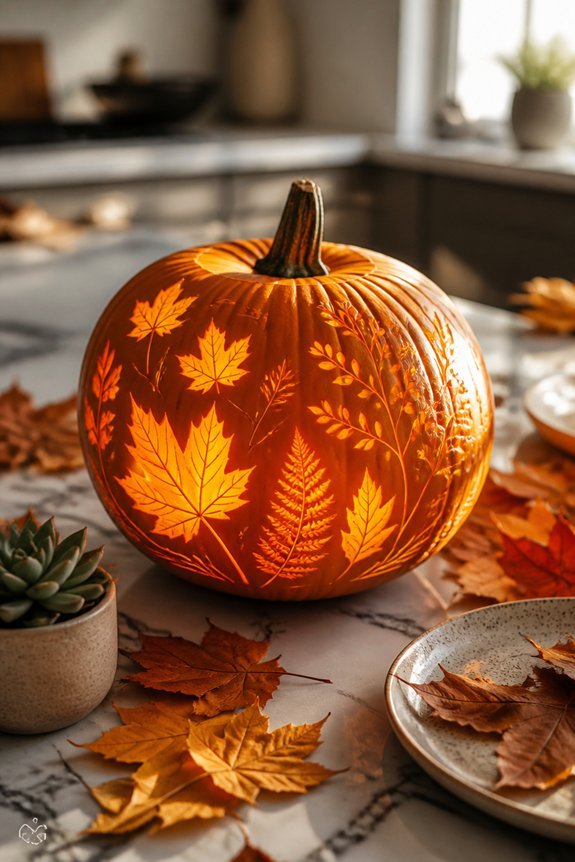
For carvers seeking designs with a more natural aesthetic, autumn leaf silhouettes and botanical line art offer an alternative to character-based imagery. Maple, oak, and birch leaves work well as stencil subjects.
Simple line drawings of ferns, vines, and flowering plants create elegant effects. These designs require basic carving tools and patience, producing sophisticated results suitable for various porch displays.
Dreamcatcher Carved Details
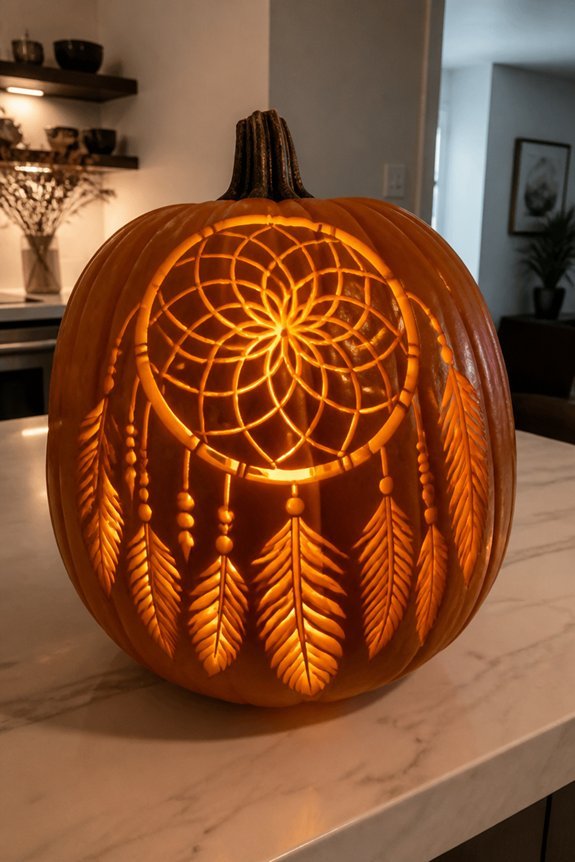
Geometric patterns and circular designs create the foundation for dreamcatcher-inspired pumpkin carvings. Carvers can achieve this style by etching concentric circles, then connecting them with straight lines to form web patterns.
Adding small leaf or feather shapes around the outer edges enhances the aesthetic.
This design works well on medium to large pumpkins, offering moderate difficulty for carvers with basic experience.
1950s & 1970s Retro Pumpkin Designs
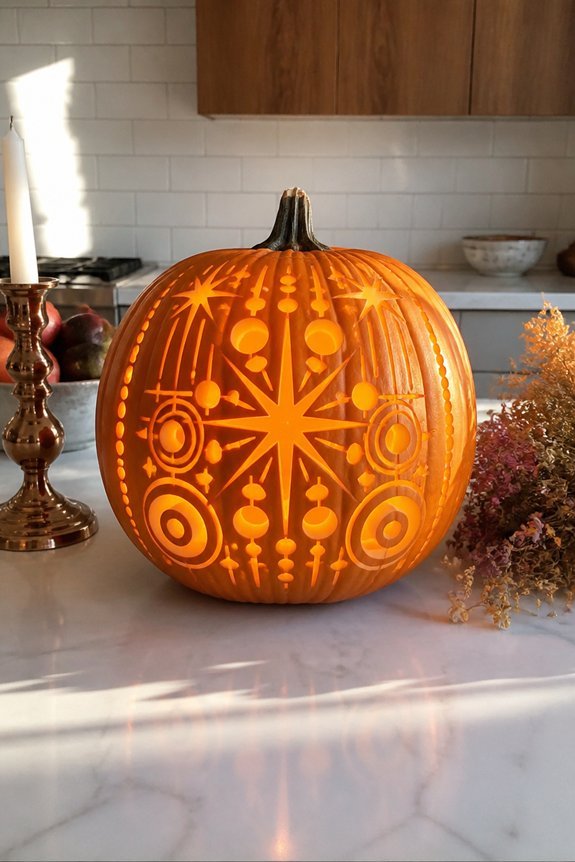
Retro pumpkin designs draw inspiration from mid-century aesthetics, offering carvers a departure from nature-based patterns like dreamcatchers. Popular 1950s motifs include atomic starbursts, boomerangs, and geometric shapes.
1970s designs feature groovy patterns, mushrooms, and abstract swirls. These designs work well on large pumpkins, where their bold lines remain clearly visible.
Carvers can use templates to guarantee accurate proportions and symmetry.
Delicate Lacework & Filigree Details
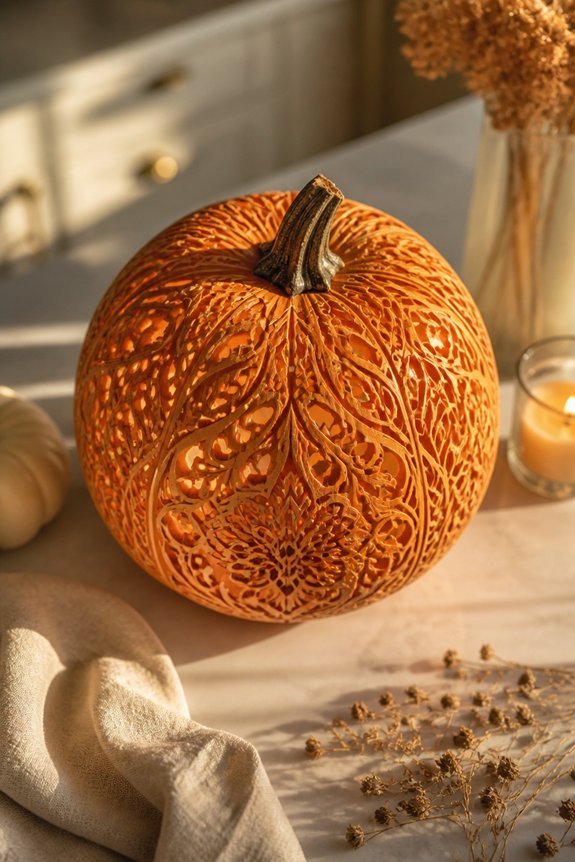
While bold retro designs command attention through size and contrast, delicate lacework and filigree details offer carvers an alternative approach that emphasizes precision and intricacy.
Intricate patterns, including florals, geometric designs, and mandala motifs, require steady hands and fine carving tools.
These designs work best on larger pumpkins with thick walls. Success depends on careful pattern transfer, proper tool selection, and controlled carving depth throughout the process.
Black & White Optical Illusion Carving
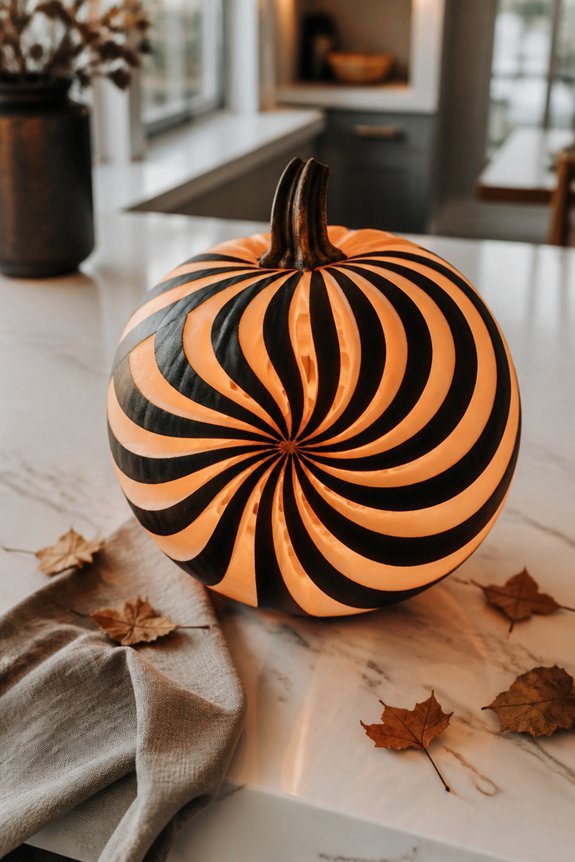
Optical illusions present another avenue for pumpkin carving, one that moves beyond the precision-focused approach of delicate lacework. Checkerboard patterns, concentric circles, and zigzag designs create visual movement when lit from within.
These designs rely on contrast between carved and uncarved sections.
The carver manipulates light and shadow through strategic placement, producing an effect that shifts depending on viewing angle and lighting conditions.
Carving Tools, Stencils & Technique Hacks
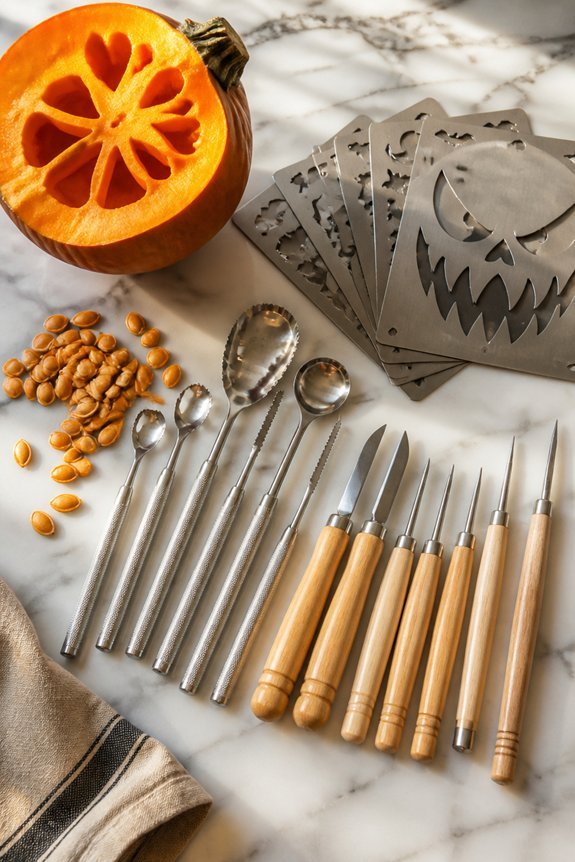
Several specialized tools and techniques can greatly improve pumpkin carving results. Professional carving kits include saws, scoops, and pokers for precise work. Stencils provide design templates, transferred onto pumpkin surfaces with markers or tape.
Technique improvements include scooping flesh thoroughly, carving from the back for depth, and using steady, controlled motions.
These methods produce cleaner lines and more detailed designs than basic knife approaches.
Frequently Asked Questions
How Long Do Carved Aesthetic Pumpkins Typically Last Before Rotting or Deteriorating?
Carved aesthetic pumpkins typically last between three to seven days before deteriorating, depending on environmental conditions. Cooler temperatures extend their lifespan, while warmer weather accelerates rotting. Applying petroleum jelly or bleach solutions to cut surfaces can preserve them longer.
Can I Carve Designs on Mini Pumpkins, or Do They Require Different Techniques?
Like sculpting on a grain of sand, carving mini pumpkins demands precision and patience. Yes, designs are possible, though one must employ smaller tools, simpler patterns, and gentler pressure to navigate their delicate shells effectively.
What’s the Best Way to Preserve Carved Pumpkins for an Extended Display Period?
One can preserve carved pumpkins by applying petroleum jelly or WD-40 to cut surfaces, storing them in cool conditions, misting them regularly with water, and keeping them away from direct sunlight and heat sources.
Are There Pumpkin Varieties Better Suited for Detailed Aesthetic Carving Than Standard Orange Pumpkins?
As the saying goes, “the right tool for the right job” applies to pumpkin selection. Lumina and Jarrahdale varieties offer superior carving precision due to their thinner shells and smoother surfaces compared to standard orange pumpkins, enabling intricate artistic designs.
How Do I Transfer Complex Design Patterns Onto Pumpkins Without Damaging the Surface?
One can transfer complex designs using several damage-free methods. Carvers apply patterns via printable stencils taped directly onto the pumpkin’s surface, or use a pushpin to prick design outlines through paper templates, creating dotted guides for carving without surface harm.
Conclusion
Aesthetic pumpkin carving balances simplicity with complexity, offering minimalist line art alongside intricate mandala designs. Beginners may choose geometric shapes, celestial themes, or retro patterns; experienced carvers can tackle lacework, optical illusions, and gothic florals. The right tools, stencils, and techniques bridge skill gaps, making sophisticated designs accessible. Whether selecting bold boho inspiration or delicate filigree details, each approach transforms pumpkins into functional seasonal décor that reflects individual preferences and technical abilities.