

Metal door canopies combine durability with design flexibility for modern entrances.
Steel and aluminum both hold up well against the elements, while finish choices like matte black or wood accents shape the overall look.
Sloped designs manage rainwater efficiently, while curved and asymmetrical frames add architectural interest.
Material, finish, and structural detail all play a role in how well a canopy suits a given home.
With so many configurations available, finding a style that fits both function and aesthetic is well within reach.
Getting the Foundation Right
Start with your home’s existing architecture before choosing a finish. A sleek steel frame reads very differently on a modern build than it does on a traditional one.
Water drainage deserves early consideration too. A slope of 15 to 30 degrees generally moves water away from the entry effectively without looking unbalanced.
Budget and maintenance expectations should factor in equally. Powder-coated finishes cost more upfront but reduce long-term upkeep considerably.
13 Metal Door Canopy Ideas
Some of these designs focus purely on clean, minimalist lines, while others introduce texture through wood accents or open-mesh detailing.
A few prioritize water drainage and structural efficiency, while others are built primarily around visual impact.
Review the options below to find the configuration that best matches the home’s architecture.
Steel Canopies With Clean, Minimalist Lines
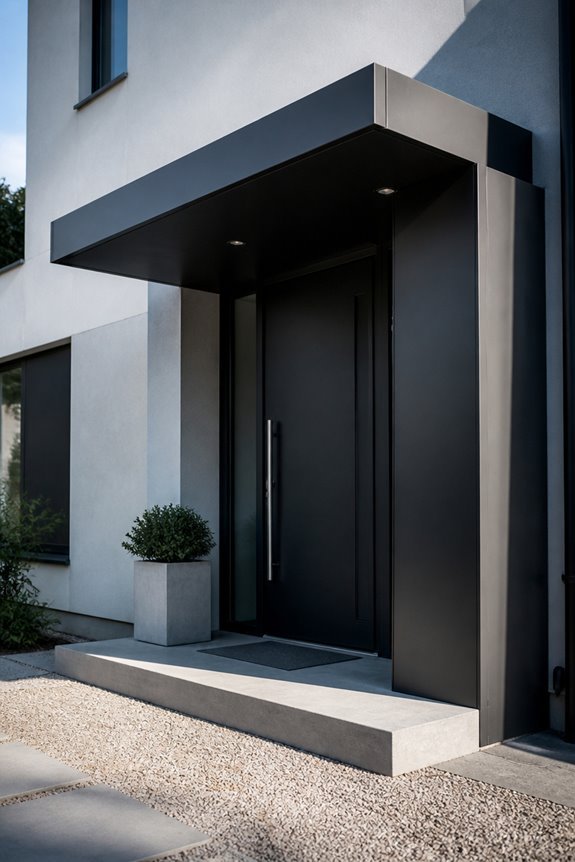
Steel canopies with clean, minimalist lines offer a straightforward approach to metal door coverings. These structures feature simple geometric shapes, typically rectangular or square forms, without decorative elements or ornate details. The design emphasizes functionality and modern aesthetics, making them suitable for contemporary homes.
Materials commonly used include powder-coated steel, aluminum, or stainless steel, all chosen for durability and low maintenance requirements. The canopy frame connects directly to the home’s exterior wall or support posts, providing weather protection for entryways.
Color options remain neutral, featuring black, gray, charcoal, or natural metal finishes. These canopies accommodate various door widths and depths, ranging from 36 to 48 inches wide. Installation typically involves wall-mounted brackets or freestanding posts, depending on structural preferences and architectural requirements.
Also read: 15 Patio Canopy Ideas on a Budget That Look Expensive
Aluminum Door Canopies With Powder Coating for Durability
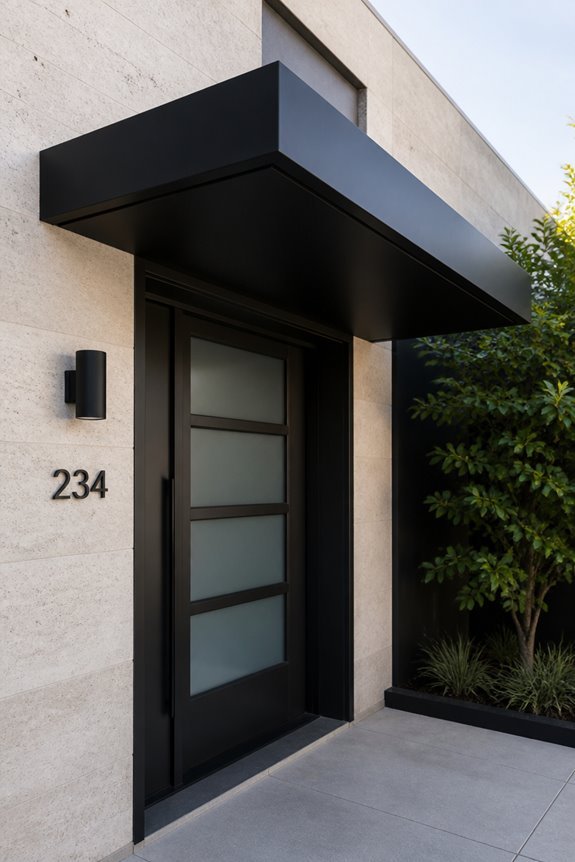
Aluminum door canopies, when finished with powder coating, provide superior protection against weathering, rust, and UV damage. This coating process involves applying a dry powder to the aluminum surface, then heating it to create a durable, uniform finish. Powder-coated aluminum resists fading, chipping, and corrosion better than painted alternatives.
The coating comes in various colors and finishes, including matte, gloss, and textured options. Installation requires minimal maintenance once applied. Homeowners benefit from extended lifespan, typically 15 to 20 years.
Common color choices include black, white, bronze, and gray. The powder coating process is environmentally friendly, producing no volatile organic compounds. This makes aluminum canopies with powder coating a practical choice for modern homes seeking durability and low maintenance.
Budget Metal Canopies That Look Expensive
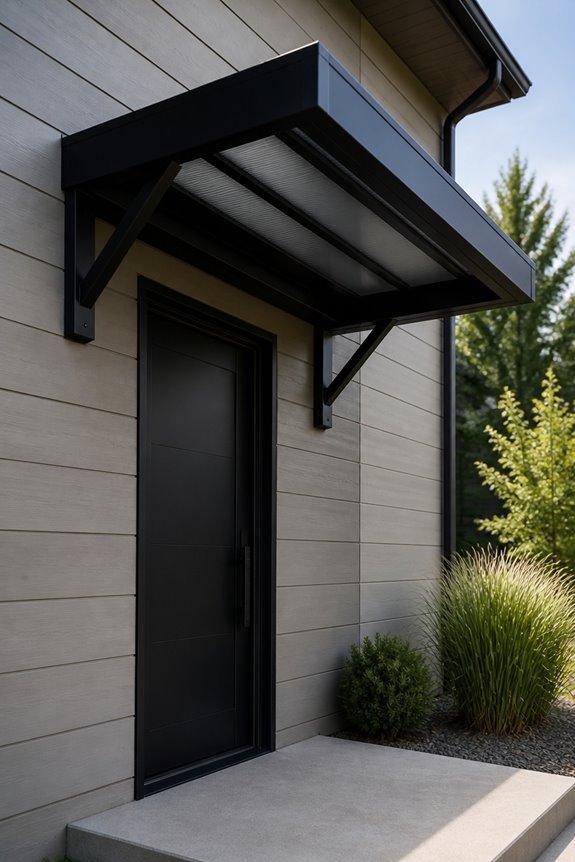
When homeowners want an upscale appearance without premium pricing, budget metal canopies offer a practical solution through strategic material selection and design choices. Steel canopies with matte black finishes create a contemporary look at moderate costs. Galvanized metal provides durability and clean aesthetics without expensive coatings.
Incorporating geometric patterns, clean lines, and minimalist designs enhances perceived value. Pairing budget materials with quality hardware, such as stainless steel brackets and hinges, elevates the overall appearance. Choosing simple rectangular or slightly angled designs reduces fabrication expenses while maintaining visual impact.
Adding subtle details like edge banding or uniform spacing between supports suggests careful craftsmanship. These approaches allow homeowners to achieve sophisticated styling through thoughtful material combinations and design restraint rather than expensive upgrades.
Sloped Metal Canopies That Shed Water Effectively
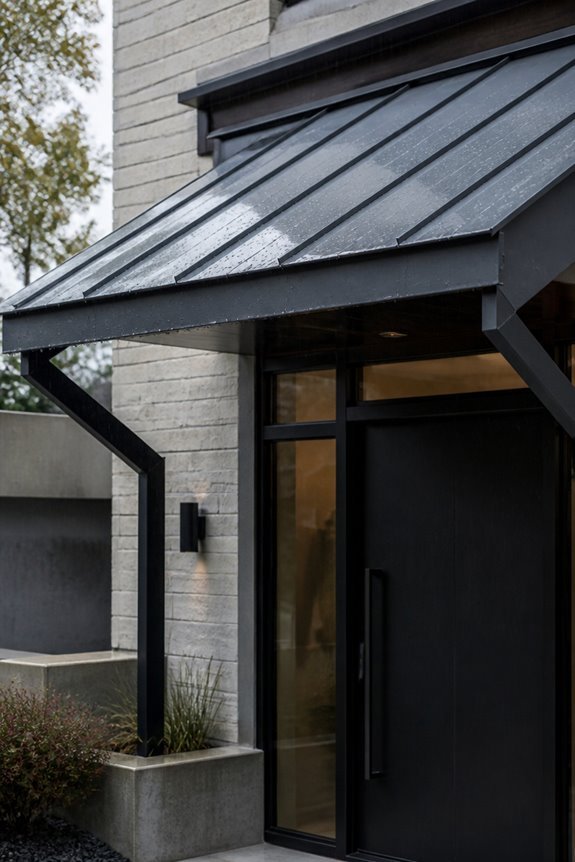
Sloped metal canopies direct rainwater away from entryways through angled surfaces, preventing pooling and water damage at doorways. A typical slope of 15 to 30 degrees allows water to flow efficiently toward gutters or drainage systems.
Aluminum and galvanized steel are common materials for sloped designs, offering durability and corrosion resistance. The angle must be steep enough to prevent standing water, yet not so extreme that it appears unbalanced.
Installation requires secure anchoring to the door frame or wall structure. Downspouts positioned at low points direct water safely away from the foundation. Regular maintenance, including debris removal and gutter cleaning, guarantees peak performance.
Sloped canopies complement modern architectural styles while providing essential weather protection for residential and commercial entrances.
Flat-Roof Metal Canopies for Sleek Modern Aesthetics
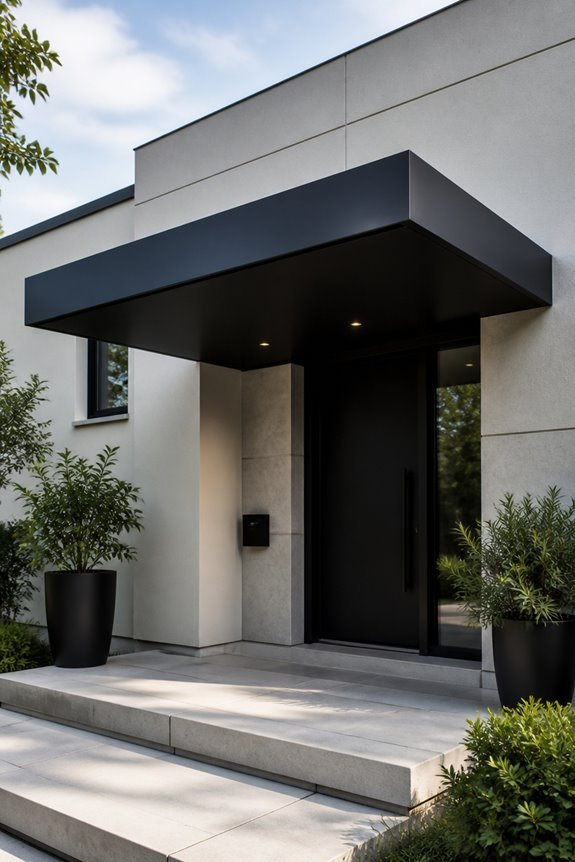
Flat-roof metal canopies offer a minimalist design that aligns with contemporary architecture, providing clean lines and uncluttered visual appeal above entryways. These structures feature horizontal profiles, creating a streamlined appearance that complements modern home designs.
Materials like steel and aluminum work well for flat configurations, offering durability and low maintenance requirements. The horizontal plane allows for integrated lighting fixtures, security cameras, or decorative elements mounted directly into the canopy surface.
Flat-roof canopies require proper drainage systems to prevent water pooling, making gutter installation essential. Powder-coated finishes in black, gray, or bronze are popular choices that coordinate with contemporary exteriors. These canopies typically measure between 4 to 8 feet in width, accommodating single or double doors while maintaining architectural proportion.
Metal Canopies With Built-In Lighting Features
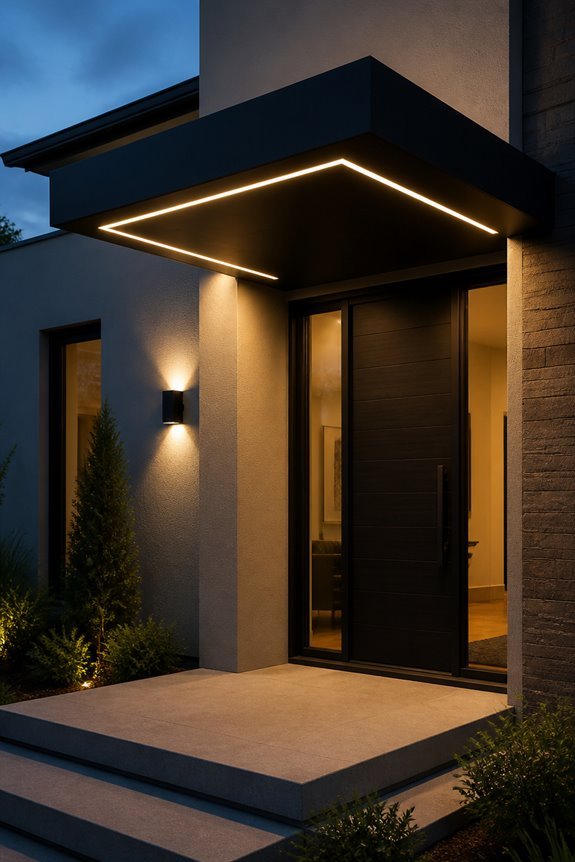
Because proper illumination enhances both functionality and safety, integrated lighting systems have become standard features in modern metal door canopies. LED strip lights, recessed fixtures, and pendant lamps offer various mounting options within metal frames. LED technology provides energy efficiency, longevity, and consistent brightness for entryways and covered porches.
Designers typically integrate lighting into soffit areas, along frame edges, or as downward-facing spotlights. Motion-sensor systems activate lights automatically when movement occurs near the entrance. Dimmable controls allow users to adjust brightness levels according to preference and time of day.
Weatherproof wiring and corrosion-resistant fixtures guarantee durability in outdoor conditions. Metal canopies with built-in lighting eliminate the need for separate exterior light installations, creating streamlined, functional entryway designs that combine structural protection with practical illumination solutions.
Open-Mesh Metal Canopies for Filtered Sunlight
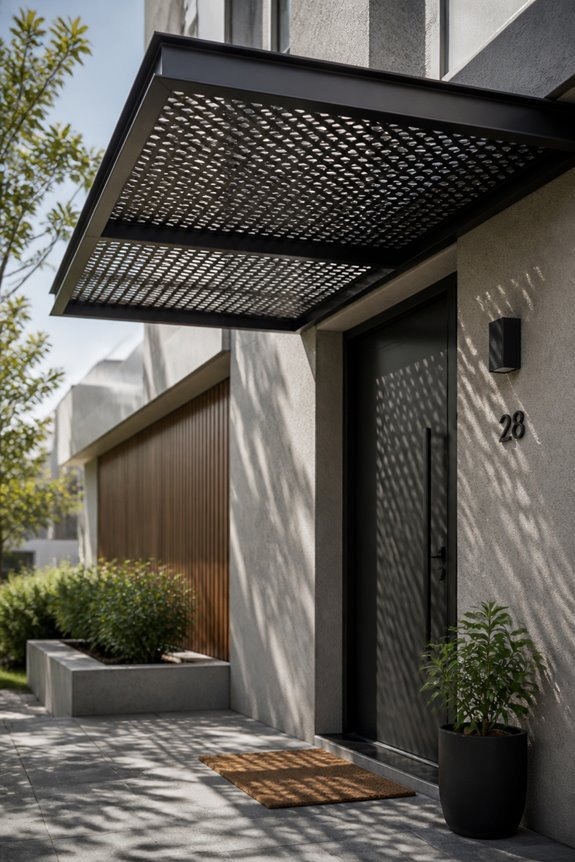
Open-mesh metal canopies offer homeowners a practical alternative to solid overhead structures, allowing filtered sunlight to pass through while providing partial shade and weather protection. These canopies feature perforated metal panels or lattice designs that reduce glare and heat while maintaining visibility from underneath. Materials like aluminum and steel mesh withstand outdoor conditions effectively.
The open design permits air circulation, preventing heat buildup during warm months. Popular configurations include diagonal grid patterns and expanded metal sheets. Installation typically occurs above entryways, patios, or driveways. Maintenance involves periodic cleaning to remove debris and rust prevention on steel components.
Open-mesh canopies cost less than solid alternatives while offering aesthetic flexibility. Homeowners can paint or powder-coat the metal to match existing exterior colors and architectural styles.
Curved Metal Canopies for Architectural Interest
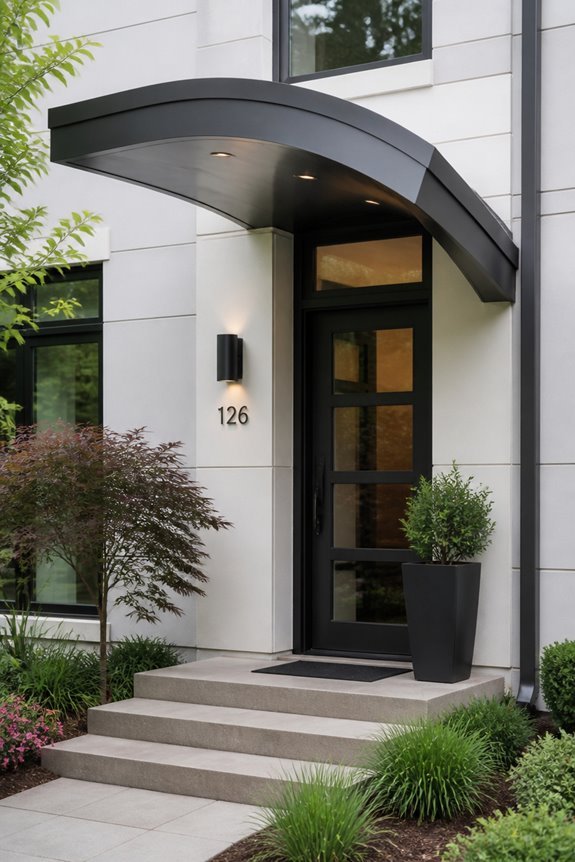
Curved metal canopies introduce distinctive architectural elements to residential entryways, distinguishing them from conventional flat or angular designs. These structures feature arched or domed tops, creating visual interest while providing functional weather protection.
Materials commonly used include steel, aluminum, and wrought iron, each offering different aesthetic qualities and durability levels. Curved designs work particularly well with modern homes, contemporary styles, and adaptable architecture.
The curved profile directs water runoff effectively, reducing pooling and maintenance issues. Installation requires precise measurements and specialized support structures to maintain structural integrity.
Curved canopies can accommodate various widths, typically ranging from four to eight feet. Custom fabrication options allow homeowners to match existing architectural details, such as rooflines or trim elements, creating cohesive exterior designs.
Bold Black Metal for High-Contrast Exteriors
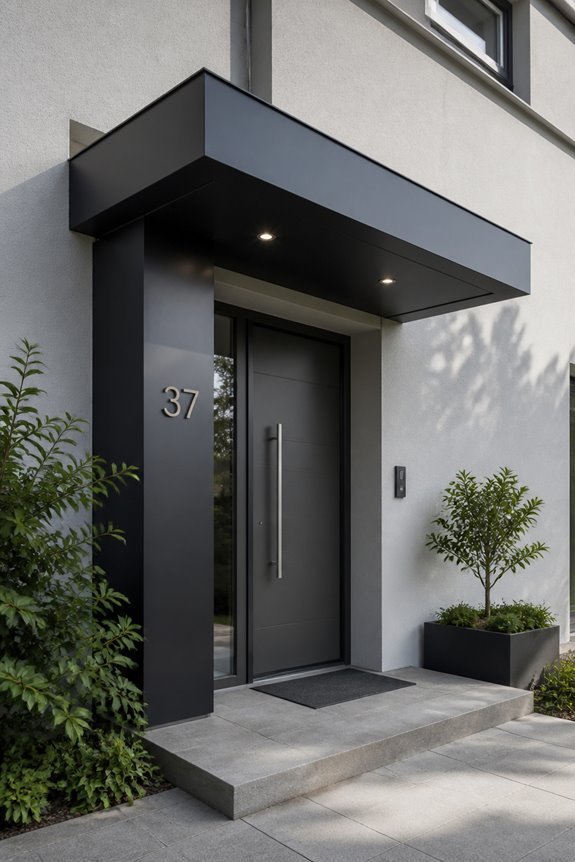
Black metal door canopies offer homeowners a striking alternative to the curved designs discussed previously, delivering high-contrast visual impact against lighter exterior surfaces. This design choice works particularly well on homes with white, cream, or gray facades, where the dark metal creates dramatic definition around entryways.
Steel and wrought iron canopies in matte black finishes provide clean lines and contemporary aesthetics. Popular configurations include rectangular frames, angular supports, and minimalist overhangs. The contrast between dark metal and light walls emphasizes architectural features and draws attention to entry points.
Maintenance requirements remain straightforward, involving regular cleaning and occasional repainting to prevent rust. Black finishes effectively conceal weathering and dust accumulation compared to lighter metal alternatives, making them practical for various climates and architectural styles.
Metal Canopies With Wood Accents for Warmth
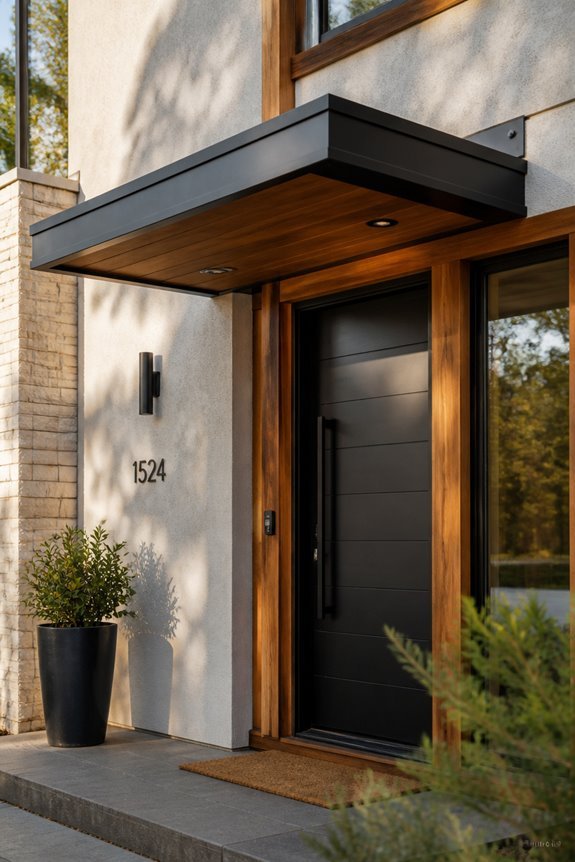
When metal structures combine with natural wood elements, they create canopies that balance industrial strength with organic warmth. This combination appeals to homeowners seeking contemporary designs with accessible, natural touches.
Metal frames, typically steel or aluminum, provide durability and clean lines. Wood accents, such as cedar or composite beams, add visual interest and soften the overall appearance. The pairing works well in various settings, from modern farmhouse exteriors to adaptable homes.
Common configurations include metal posts supporting wooden roof slats, or metal canopy frames with wood trim detailing. Stainless steel brackets holding timber beams create defined visual breaks. Cedar siding panels integrated into metal frameworks offer additional texture options.
Maintenance requires regular inspection of both materials, as wood needs periodic treatment and metal connections require corrosion monitoring. This hybrid approach delivers functional protection while achieving balanced aesthetic appeal.
Asymmetrical and Angular Frames for Contemporary Homes
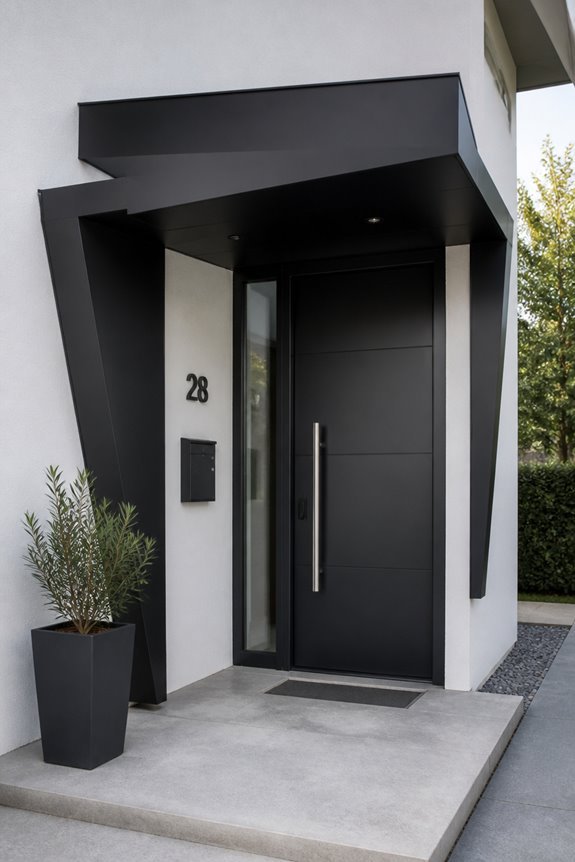
Modern architecture increasingly favors asymmetrical designs and angular geometries, which metal door canopies can reflect through bold structural choices. These frames feature slanted lines, offset peaks, and irregular angles that create visual interest while maintaining functionality.
Angular canopies work well with contemporary home exteriors, particularly those with flat roofs, glass elements, and minimal ornamentation. Steel and aluminum frames support these geometric forms effectively. Examples include canopies with one side extending higher than the other, or frames featuring diagonal bracing patterns.
Asymmetrical designs offer practical benefits beyond aesthetics. They direct water runoff efficiently, accommodate varied entry configurations, and maximize coverage on one side when needed.
Homeowners can choose powder-coated finishes in black, charcoal, or metallic tones to complement modern siding materials and architectural details.
Frequently Asked Questions
How Much Does It Cost to Install a Metal Door Canopy on Average?
Installation costs typically fall between $1,500 and $5,000.
Basic aluminum canopies sit at the lower end of that range, while custom steel designs push the price higher. Professional installation fees also vary depending on the region.
What Is the Lifespan of a Metal Door Canopy Before Replacement?
Most metal canopies last 15 to 25 years with proper care.
Quality materials and correct installation extend that range considerably. Premium options with strong maintenance routines can surpass three decades in some cases.
Do Metal Canopies Require Regular Maintenance or Special Cleaning Procedures?
Maintenance stays fairly minimal for most metal canopies.
Periodic cleaning with mild soap and water prevents dirt buildup over time. An annual inspection for rust, corrosion, or loose fasteners helps catch small issues before they affect structural integrity.
Can Metal Door Canopies Withstand Extreme Weather Conditions Like Hurricanes?
Yes, when properly engineered and installed.
Hurricane-rated designs use reinforced steel or aluminum paired with secure fastening systems. This combination allows the structure to resist high winds and debris impact effectively.
What Permits or Professional Installation Are Needed for Metal Canopy Installation?
Building permits are typically required before installation begins.
Local building codes determine the specific requirements in a given area. Professional installation is strongly recommended to guarantee proper anchoring, structural integrity, and compliance with those regulations.
Conclusion
Selecting a metal door canopy comes down to balancing durability, water management, and visual style.
Steel and aluminum options offer long-term reliability, while finish choices like matte black or wood accents shape how the structure reads against a home’s exterior.
Sloped and curved designs each solve drainage differently, and asymmetrical frames offer a distinct architectural statement for homes with more contemporary lines.
Budget-conscious options can still achieve a polished look through thoughtful material pairing and design restraint.
Ultimately, the right canopy should reflect both the home’s architecture and the homeowner’s maintenance expectations over time.
Share your thoughts in the comments below on which style best suits your entryway.