

Backyard canopy lighting does more than illuminate a space, it shapes the entire mood of an outdoor gathering.
String lights, Edison bulbs, and solar options each bring a different character to a canopy, from cozy and warm to clean and modern.
Installation ranges from simple temporary setups to permanent wired fixtures, depending on how often the space gets used.
Budget doesn’t need to limit the outcome, since affordable strands can look just as impressive as premium systems when placed thoughtfully.
Layering ambient, task, and accent lighting together tends to produce the most polished result.
Before You Start Shopping
Decide on a budget range before comparing fixtures, since options span from simple string lights to full LED systems. That range determines which installation methods are realistic.
Think through how the space actually gets used. A dedicated entertaining area benefits from permanent, hardwired lighting, while an occasional-use canopy suits temporary or solar-powered options better.
Plan for layering from the start. Ambient light overhead, task lighting near seating, and a few accent pieces like lanterns create far more depth than a single lighting type alone.
17 Backyard Canopy Lighting Ideas
Some of these options rely on simple plug-in convenience, while others call for permanent electrical work.
A few focus purely on ambiance, and others bring smart, app-controlled functionality into the mix.
Review the ideas below to find the combination that best suits the space and its intended use.
How to Choose: Budget, Style, and Installation Type
When selecting a backyard canopy lighting system, homeowners must consider three primary factors: budget constraints, aesthetic preferences, and installation methods.
Budget ranges vary widely, from basic string lights costing fifty to one hundred dollars, to professional-grade LED systems exceeding five hundred dollars. Aesthetic choices include warm white bulbs for traditional spaces, cool white for modern settings, and colored lights for festive occasions.
Installation types differ greatly: temporary string lights attach to existing structures, permanent fixtures require electrical wiring, and solar-powered options eliminate wiring needs entirely. Hardwired systems offer durability and consistent brightness but demand professional installation. Plug-in options provide flexibility and easier maintenance.
Solar lights require minimal setup yet depend on weather conditions and daylight hours. Homeowners should evaluate their specific space, usage frequency, and long-term maintenance preferences before purchasing.
Also read: 10 Modern Canopy Bed Ideas for a Minimalist Bedroom
Classic String Lights for Timeless Elegance
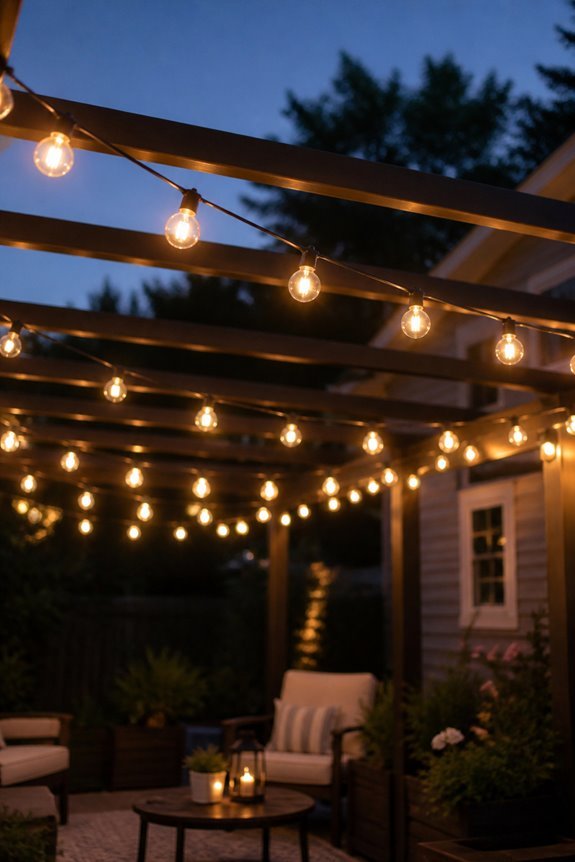
Classic string lights represent a popular choice for homeowners seeking reliable, affordable canopy illumination that complements various outdoor aesthetics. These lights consist of small bulbs attached to a wire or cord, strung between posts, trees, or structures. Common types include incandescent, LED, and vintage Edison-style bulbs.
LED options consume less energy and last longer than traditional incandescent versions. Installation typically involves securing the wire at anchor points and connecting to an outdoor power source. String lights work well in various configurations: draped loosely for casual appearance, arranged in geometric patterns for modern spaces, or wrapped around canopy frames.
Warm white bulbs create inviting atmospheres, while cool white produces cleaner aesthetics. Proper spacing between bulbs and secure fastening prevent sagging and safety hazards during wind or weather changes.
Vintage Edison Bulbs for Warm Ambiance

Vintage Edison bulbs offer a distinct aesthetic upgrade beyond standard string light configurations, delivering warm, amber-toned illumination that creates a nostalgic atmosphere. These bulbs feature visible filaments, typically in teardrop or globe shapes, that emit light in the 2000-2700 Kelvin range.
Popular options include the ST64 bulb, known for its classic shape, and the G95 variant, which provides broader light coverage. Edison bulbs consume more energy than LED alternatives, though LED versions now replicate their appearance while reducing electricity usage. Installation requires compatible sockets and appropriate voltage ratings, typically 110-120 volts.
Spacing bulbs 8-12 feet apart along canopy lines produces ideal visual balance. These bulbs work well for pergolas, gazebos, and fabric canopies, creating defined ambiance zones in outdoor entertaining areas.
Fairy Lights and Delicate Strands for Whimsical Touches
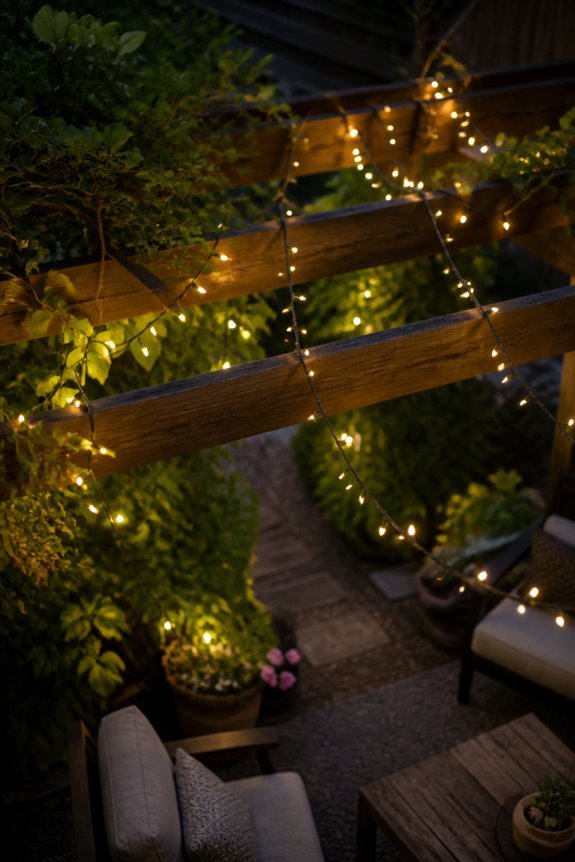
Fairy lights and delicate strands offer a softer, more delicate lighting alternative to traditional bulb configurations, producing small pools of light across canopy surfaces through miniature bulbs spaced closely together. These strands come in various styles: warm white, cool white, and multicolored options.
Installation methods include draping lights loosely across canopy frames, weaving them through fabric panels, or wrapping them around support poles. Battery-operated variants provide flexibility without requiring electrical outlets.
Common applications involve string lights with 20 to 100 bulbs per strand, solar-powered options for energy efficiency, and weatherproof designs for outdoor durability. Spacing considerations affect overall brightness and visual effect: closer spacing creates continuous illumination, while wider spacing emphasizes individual light points.
Maintenance involves checking connections periodically and storing lights properly during off-seasons.
Hanging Lanterns for Layered Lighting
Hanging lanterns create depth and visual interest by introducing multiple lighting layers to backyard canopies. These fixtures work effectively when positioned at varying heights, allowing light to distribute evenly across outdoor spaces. Paper lanterns, metal fixtures, and glass enclosures each produce different atmospheric effects depending on their construction and bulb type.
Lanterns function best when suspended from sturdy mounting points, such as pergola beams or cable systems. Spacing them approximately four to six feet apart prevents overlapping shadows and maintains consistent illumination. Solar-powered lanterns eliminate wiring requirements, while electric versions offer brighter, more reliable performance.
Combining warm white and cool white bulbs within different lanterns creates visual layering. This approach accommodates various activities, from dining to relaxation, by providing flexible brightness levels throughout the canopy space.
Rope Lighting to Define Your Canopy’s Edges
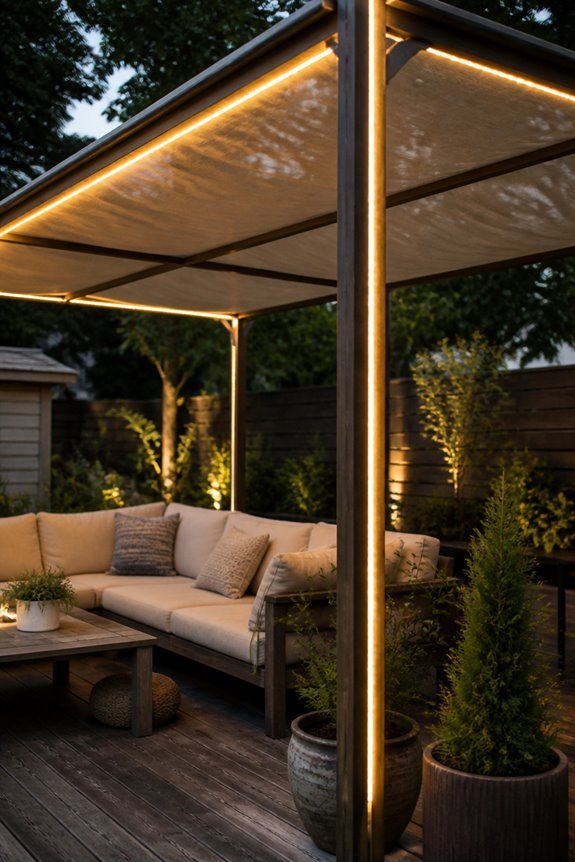
Because rope lighting runs along linear surfaces, it effectively outlines canopy perimeters and creates clear visual boundaries in outdoor spaces. This flexible lighting option adapts to various canopy shapes, whether rectangular, hexagonal, or irregular configurations.
Rope lights come in warm white, cool white, and colored varieties, allowing homeowners to match existing décor schemes. Installation involves securing the flexible tubing along frame edges using clips, adhesive backing, or zip ties. Solar-powered rope lights eliminate electrical wiring needs, while plug-in models offer consistent brightness levels.
LED rope lighting consumes minimal energy and produces low heat output, making it practical for extended evening use. The continuous glow creates subtle definition without overwhelming adjacent landscape features.
Spacing considerations should account for canopy dimensions and desired illumination intensity.
Spotlights to Draw Attention Where It Matters
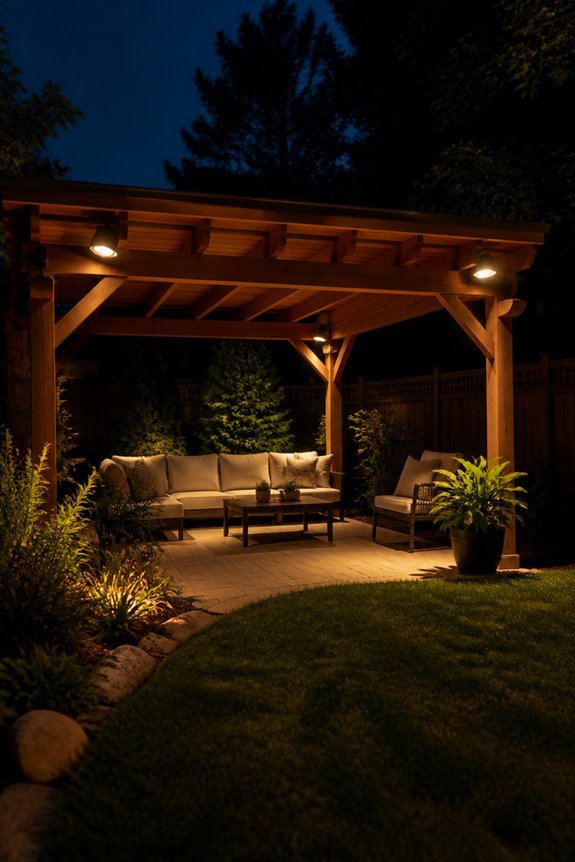
While rope lighting provides ambient definition around canopy edges, spotlights serve a different purpose by directing illumination toward specific features or areas. These focused lights highlight architectural details, landscape elements, or seating zones beneath the canopy. Uplighting, which points beams upward, accentuates the canopy structure itself, creating visual depth and dimension. Downlighting directs illumination from above onto surfaces below, such as dining tables or lounge areas.
LED spotlights offer energy efficiency and directional control, allowing adjustment of beam angles and intensity. Placement considerations include positioning lights away from direct sightlines to avoid glare, while ensuring adequate coverage of intended focal points. Accent lighting on trees, plants, or architectural features nearby creates layered visual interest and defines the canopy’s surrounding landscape.
Uplighting to Showcase Your Canopy’s Architecture
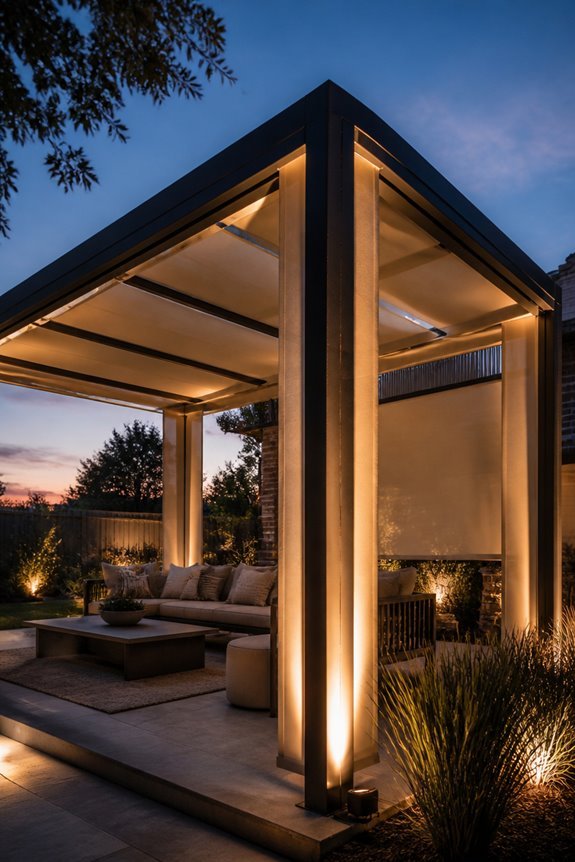
Uplighting serves as a fundamental technique for emphasizing the canopy structure itself, transforming it into a prominent visual element after sunset. This method involves positioning lights below the canopy frame, directing beams upward to highlight architectural details, support posts, and fabric texture.
Uplighting works effectively with metal frames, wooden beams, and decorative pergola designs. LED spotlights or floodlights deliver consistent illumination while consuming minimal energy. Warm white bulbs, ranging from 2700K to 3000K, create ambient atmosphere without harsh glare.
Installation requires placing fixtures at ground level or mounting them on lower structures. Spacing lights approximately six to eight feet apart guarantees even coverage and prevents dark spots. This approach reveals the canopy’s structural beauty while establishing functional outdoor lighting for evening use.
Solar-Powered Canopy Lights for Eco-Friendly Spaces
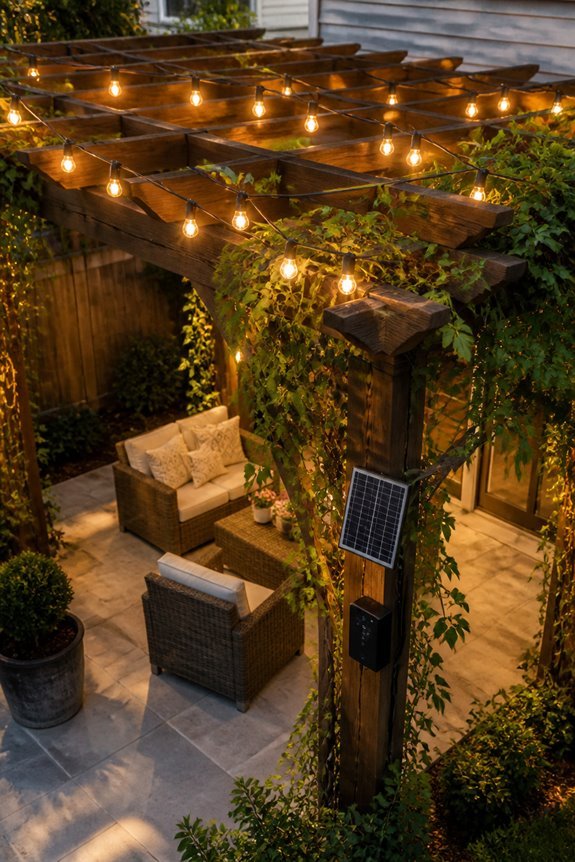
Solar-powered canopy lights offer a practical lighting solution that reduces electricity consumption while maintaining outdoor illumination. These lights charge during daylight hours and automatically illuminate at dusk, requiring no wiring or electrical connections.
Popular options include solar string lights, pendant fixtures, and spotlights designed specifically for outdoor canopies. Models like the Brightech Ambience Pro and Newhouse Lighting solar strands provide reliable performance for residential spaces.
Key considerations include battery capacity, light output measured in lumens, and weather resistance ratings. Solar lights work best in areas receiving six to eight hours of direct sunlight daily. Installation involves simple mounting on canopy frames or hanging structures. These systems eliminate ongoing electricity costs while supporting environmentally conscious outdoor design choices.
LED Strip Lighting for Maximum Energy Efficiency
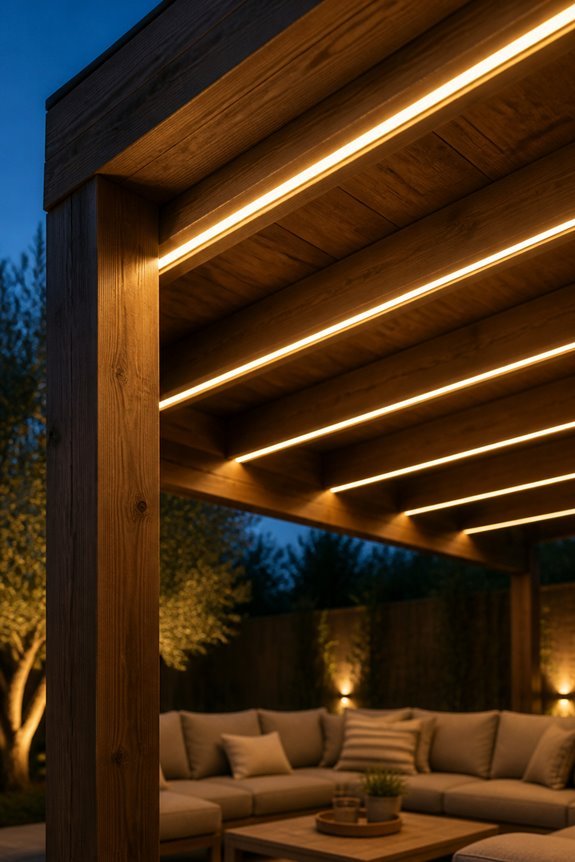
LED strip lighting delivers superior energy efficiency compared to traditional canopy fixtures, consuming considerably less power while producing bright, consistent illumination. These flexible strips use LED technology to operate at roughly 80% less energy than incandescent options, reducing electricity costs dramatically.
LED strips mount easily along canopy edges, beams, or frames, providing even light distribution across outdoor spaces. Common configurations include RGB strips for color adjustments, warm white options for ambient settings, and cool white varieties for task lighting. Installation requires basic wiring to a power source or solar battery system.
Lifespan extends 25,000 to 50,000 hours, minimizing replacement frequency. Durable models withstand moisture and temperature fluctuations typical in backyards. LED strips integrate with dimmer switches for adjustable brightness levels, allowing customization based on occasion and preference.
Dimmable Lights for Flexible Mood Control
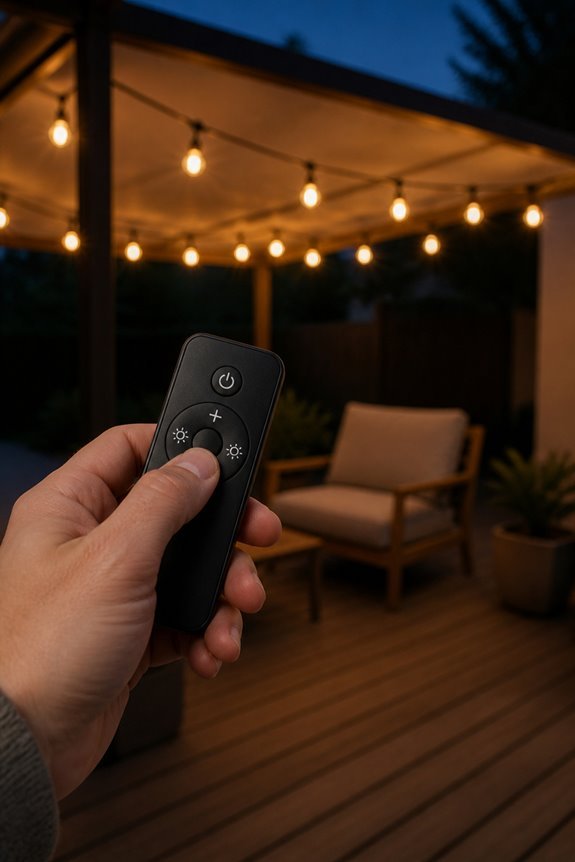
Adjustable brightness controls extend the functionality of canopy lighting systems beyond simple on-off operation, allowing users to customize illumination levels for different activities and times of day. Dimmable LED fixtures provide practical advantages for various scenarios, including dinner gatherings, entertainment events, and relaxation periods.
Motion-sensor dimmers automatically adjust light intensity based on ambient conditions, reducing energy consumption while maintaining adequate visibility. Remote-controlled dimming systems enable convenient adjustments from multiple locations within the yard. Smart home integration allows scheduling and preset lighting scenes through smartphone applications.
Traditional rheostat dimmers offer budget-friendly options for basic brightness modification. Layered lighting designs combining dimmable accent lights with adjustable task lighting create flexible environments. Warm color temperature settings at lower brightness levels promote evening comfort and relaxation.
Smart Bulbs for App-Controlled Convenience
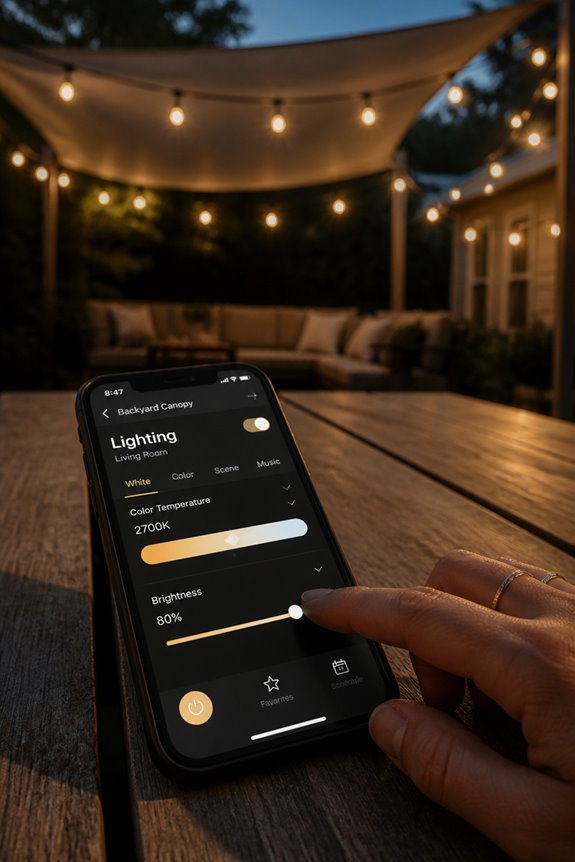
When integrated into outdoor canopy systems, smart bulbs offer remote control capabilities that extend beyond traditional dimming options. Users can adjust lighting through smartphone applications, scheduling on-off cycles, or changing color temperatures from warm to cool tones.
Popular brands like Philips Hue and LIFX provide compatibility with voice assistants such as Alexa and Google Home, enabling hands-free commands. Smart bulbs connect via WiFi or Bluetooth, requiring a compatible hub or direct smartphone connection. These systems allow customization of lighting scenes for different occasions, storing preferred settings for quick activation.
Battery life varies by model, typically lasting several seasons before replacement becomes necessary. Installation involves standard bulb fitting into existing canopy fixtures without additional wiring requirements.
Color-Changing Lights for Dynamic Entertaining
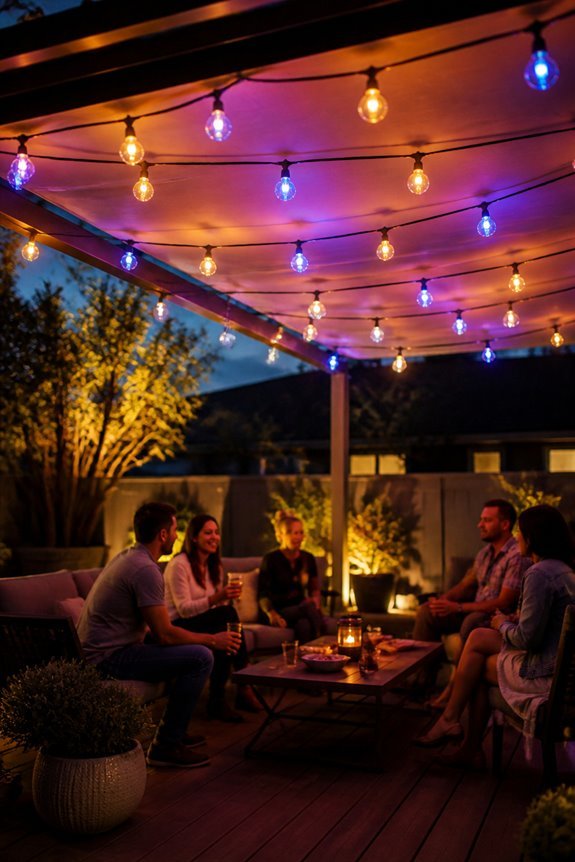
Color-changing lights take the customization capabilities of smart bulbs further by offering dynamic visual effects suited to entertaining. These lights shift between colors, allowing homeowners to match ambiance with events or moods. Popular options include RGB LED strips, which display millions of color combinations, and color-changing Edison bulbs that fit standard fixtures.
Users control colors through smartphone apps, selecting preset scenes for parties, dinners, or relaxation. Some systems offer synchronized music features, where lights pulse with audio rhythms. Installation typically involves mounting strips along canopy edges or replacing existing bulbs.
Color-changing lights work best in covered spaces where ambient light remains controllable. The technology consumes moderate energy while providing functional and atmospheric benefits for outdoor entertaining spaces.
Flameless Candles for Safe, Hassle-Free Glow
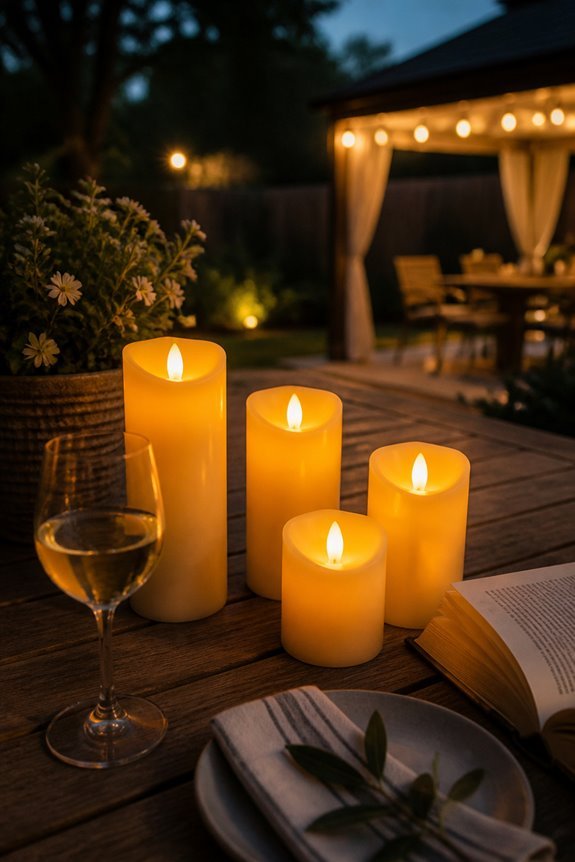
Flameless candles provide a practical lighting solution for backyard canopies, eliminating fire hazards and maintenance concerns associated with traditional open flames. These battery-operated devices offer consistent illumination without smoke, ash, or heat damage to overhead structures.
LED flameless candles come in various styles, including pillar candles, tea lights, and votive designs. Models like Luminara and Real Flame feature realistic flickering effects through amber or white light options. Battery life typically ranges from 24 to 200 hours, depending on the device and usage frequency.
Placement options include candle holders, hanging lanterns, and decorative arrangements along canopy edges. Remote-controlled versions allow users to adjust brightness and timing settings without manual operation. These products withstand outdoor weather conditions better than traditional candles, making them suitable for extended outdoor entertaining.
Safe, Professional Installation Checklist
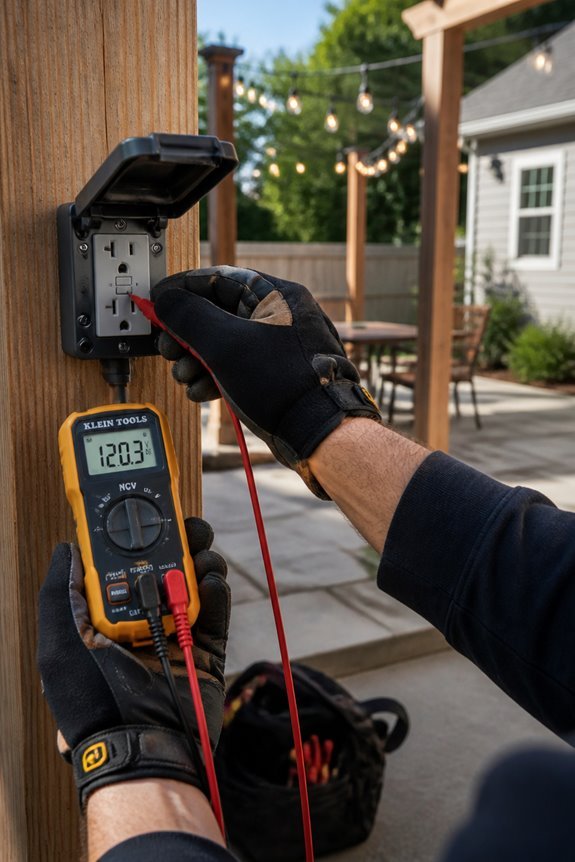
A proper installation’s foundation requires careful planning before mounting any lighting equipment to the canopy structure. Homeowners should inspect the canopy frame, checking for rust, weak joints, and weight capacity limits. Electrical outlets must be grounded, positioned away from water sources, and protected with weatherproof covers.
All wiring should be secured with clips, kept at safe distances from sharp edges, and inspected for damage. Professional electricians should handle any hardwired installations, while battery-powered or solar options may require simpler setup. Mounting brackets need verification against manufacturer specifications.
Testing all lights before final installation prevents later adjustments. Documentation of warranty information and maintenance schedules guarantees long-term functionality and safety compliance.
Frequently Asked Questions
How Long Do Outdoor Canopy Lights Typically Last Before Needing Replacement?
Lifespan depends heavily on the type of light chosen.
LED options last the longest, often reaching 25,000 to 50,000 hours before replacement becomes necessary. Traditional incandescent bulbs fall far short of that, typically lasting only 1,000 to 2,000 hours.
What’s the Best Way to Weatherproof Electrical Connections for Year-Round Outdoor Use?
Weatherproofing starts with sealing junction boxes properly.
Silicone sealant around those boxes keeps moisture out effectively. Waterproof connectors rated IP67 or higher add another layer of protection, and dielectric grease helps prevent corrosion at connection points over time.
Can I Mix Different Lighting Types Together in One Canopy Setup?
Yes, mixing lighting types often produces the best results.
Combining string lights, lanterns, and uplighting creates visual depth that a single light source can’t achieve on its own. Proper spacing and balance between each type keeps the overall look cohesive rather than cluttered.
How Do I Calculate the Correct Wattage Needed for My Canopy Size?
Start by measuring the canopy’s square footage.
Multiply that number by 5 to 10 watts per square foot, depending on how bright the space needs to be. Larger canopies need more total wattage, and task lighting generally requires more power than simple ambient lighting.
What Maintenance Schedule Keeps Outdoor Canopy Lights Looking Their Best?
A little regular upkeep goes a long way here.
Monthly cleaning removes dust and debris before it builds up. Quarterly inspections catch corrosion or damage early, and an annual deep clean with the right solvents keeps fixtures looking their best.
Replacing bulbs every six to twelve months helps maintain consistent brightness and prevents premature fixture wear.
Conclusion
Lighting a backyard canopy well comes down to matching the fixtures to how the space actually gets used, and layering different light sources for depth.
String lights and Edison bulbs create warmth and character, while solar and smart options add convenience without sacrificing style.
Permanent installations suit dedicated entertaining spaces, while temporary setups offer flexibility for those who want to change the mood from one evening to the next.
Budget never has to be the limiting factor, since thoughtful placement can make even affordable lighting feel intentional and polished.
A well-lit canopy ultimately transforms an ordinary backyard into a space people genuinely want to spend their evenings in.
Share your thoughts in the comments below on which lighting combination works best for your outdoor space.