

Canopy beds have moved well beyond their traditional, ornate origins to become a versatile bedroom staple.
Classic four-posters remain a timeless choice, while industrial metal frames and minimalist platforms suit more contemporary spaces.
Fabric selection plays a major role in the final look, with sheer materials creating an airy feel and velvet adding warmth and depth.
Budget need not be a barrier, since DIY builds and options under $500 can achieve a polished result.
Even smaller bedrooms have practical options, with low-profile and storage-integrated designs proving that function and style can coexist.
Getting the Foundation Right
Start by considering ceiling height and floor space before choosing a style. A tall four-poster needs real vertical clearance, while low-profile and platform designs work better in smaller rooms.
Fabric weight affects the overall feel of the room. Sheer materials keep a space feeling open, while heavier fabrics like velvet create a more enclosed, cozy atmosphere.
Budget and long-term maintenance should be weighed together. Solid wood and metal frames cost more upfront but tend to hold up better over time than lower-cost alternatives.
25 Canopy Bed Ideas
Some of these designs lean traditional and ornate, while others favor clean, minimalist lines suited to modern interiors.
A few focus on function, incorporating storage or adjustable drape systems, while others are built primarily around aesthetic impact.
Review the ideas below to find the style best suited to the room and its intended use.
Classic Four-Poster Canopy Beds for Timeless Elegance
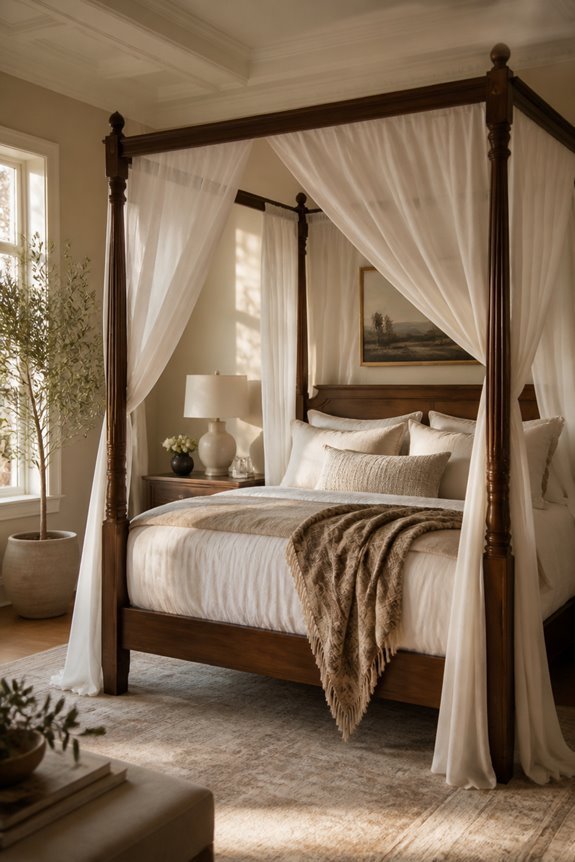
Many homeowners choose classic four-poster canopy beds for their bedrooms because they combine structure, function, and visual appeal. These beds feature four vertical posts at each corner, supporting a frame across the top. The frame holds fabric panels, which drape down the sides and create an enclosed sleeping area.
Four-poster canopy beds work well in various bedroom styles. Traditional designs feature ornate wooden posts and heavy fabric, while modern versions use sleek metal frames with minimal draping. The beds provide practical benefits: the canopy reduces drafts, contains warmth, and offers privacy.
Fabric choices include velvet, linen, and cotton, each affecting the room’s appearance and feel. These beds require adequate ceiling height and floor space. Popular wood options include cherry, mahogany, and oak, each bringing distinct character to a bedroom.
Also read: 10 Modern Canopy Bed Ideas for a Minimalist Bedroom
Canopy Beds for Kids: Creating Playful, Imaginative Retreats
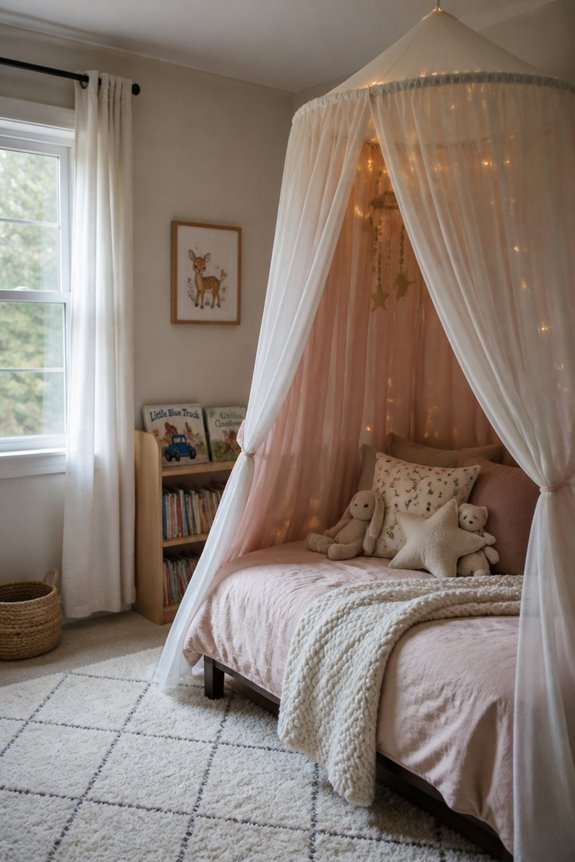
A canopy bed transforms a child’s bedroom into a personal sanctuary, offering both functional sleeping space and imaginative play area. The enclosed space naturally encourages creative play, whether through fort building, storytelling, or role-playing scenarios. Fabric draping, available in various colors and patterns, allows customization to match existing décor or themes.
Popular options include princess canopies with flowing curtains, adventure-themed designs with cargo netting, and minimalist frames with sheer panels. Safety considerations include secure frame assembly, sturdy construction capable of supporting additional weight from climbing, and flame-resistant fabric choices. Storage solutions, such as shelves or hanging organizers attached to the frame, maximize functionality.
Lighting elements, including battery-operated string lights or clip-on lamps, enhance the retreat atmosphere while maintaining visibility. Age-appropriate designs guarantee long-term usability as children develop.
Small-Space Canopy Beds That Maximize Your Room
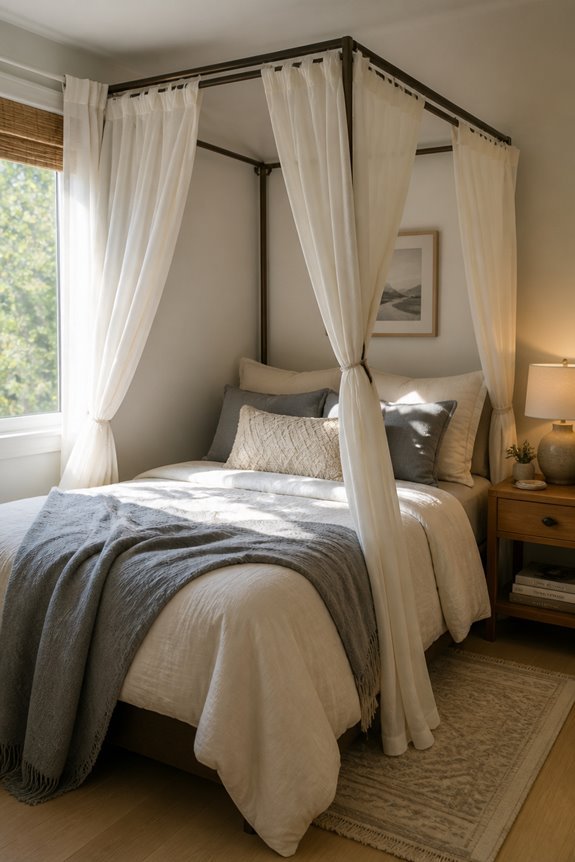
Compact living spaces require strategic furniture choices, and canopy beds offer surprisingly practical solutions for rooms with limited square footage. Vertical designs draw the eye upward, creating an illusion of greater space without consuming additional floor area. Four-poster frames with minimal fabric, like sheer curtains or lightweight drapes, provide the canopy aesthetic while maintaining an open feel.
Murphy bed canopy combinations fold away when not in use, maximizing daytime space. Corner placements against walls optimize room layout. Narrow platform bases reduce the footprint compared to traditional bed frames. Loft-style canopies elevate sleeping areas above storage or seating zones below.
Lightweight materials including bamboo frames and cotton curtains keep visual weight low. These configurations work effectively in studio apartments, bedrooms under 100 square feet, and shared spaces where flexibility matters.
Sheer Fabric Canopies for a Romantic Bedroom
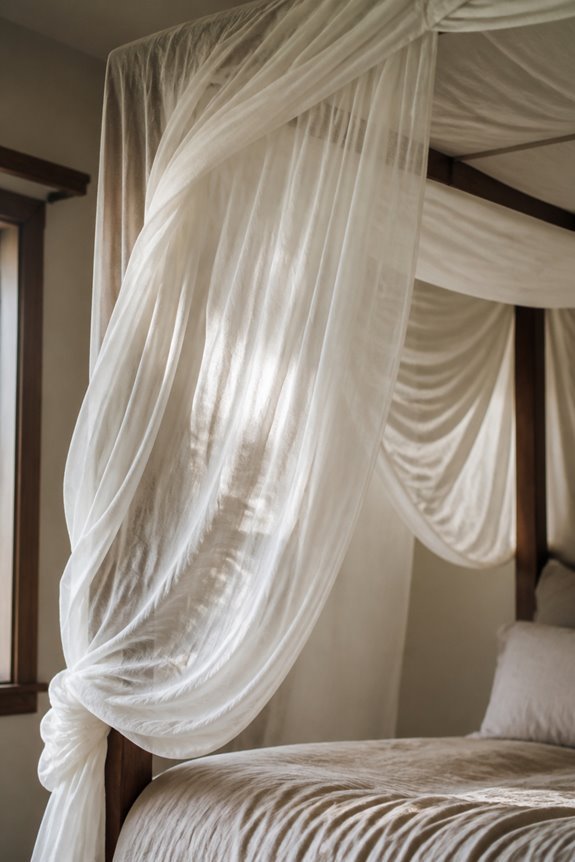
How can sheer fabrics transform a bedroom into a romantic retreat? Sheer canopy fabrics, such as voile, tulle, and lightweight linen, create an elegant visual effect while maintaining airflow. These materials drape softly from ceiling-mounted frames or four-poster beds, establishing an intimate atmosphere without overwhelming small spaces.
Sheer fabrics filter light effectively, diffusing harsh rays into gentle, warm illumination. Colors like ivory, blush, and pale gold enhance the romantic aesthetic. White sheer canopies offer versatility and pair well with various bedroom styles and color schemes.
Installation requires minimal hardware: ceiling hooks, tension rods, or existing bed frames work adequately. The fabrics can be adjusted seasonally and cleaned easily through gentle washing. Sheer canopies serve both decorative and functional purposes, making them practical choices for creating romantic bedroom environments.
Velvet Canopy Beds for a Luxe, Hotel-Like Feel
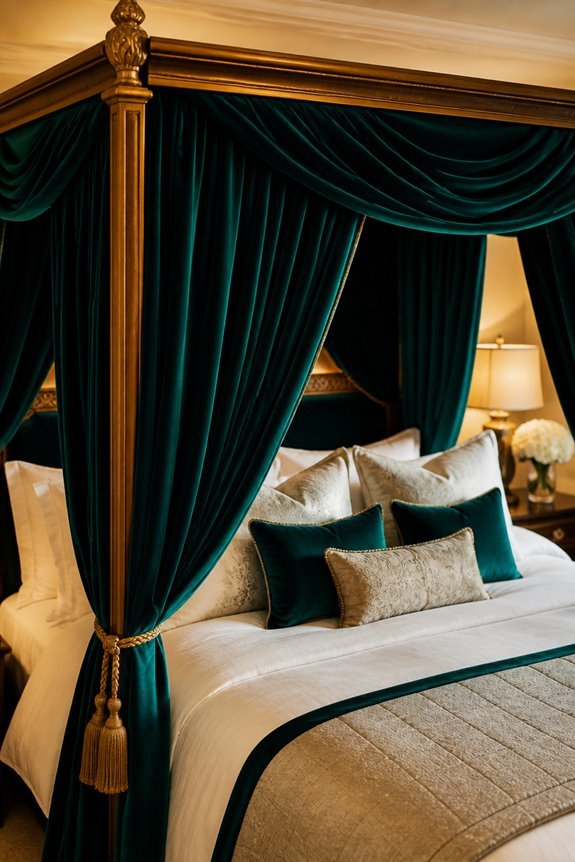
Velvet canopy beds create a luxurious, hotel-inspired bedroom aesthetic through their rich textures and sophisticated appearance. The fabric drapes elegantly from frame posts, offering visual depth and refined style. Velvet absorbs light rather than reflecting it, producing a subdued, upscale ambiance similar to high-end hotel suites.
Velvet canopies work well in various color palettes. Deep jewel tones like emerald, sapphire, and burgundy convey elegance and formality. Neutral shades such as charcoal, taupe, and cream provide understated luxury. The fabric pairs effectively with metal frames in brass, gold, or black finishes.
Maintenance requires regular vacuuming and occasional professional cleaning to preserve the material’s appearance. Velvet canopies complement decorative elements including throw pillows, blankets, and nightstands.
This style suits master bedrooms and creates an intentionally curated, upscale sleeping environment.
Minimalist Metal Frame Canopies for Modern Spaces
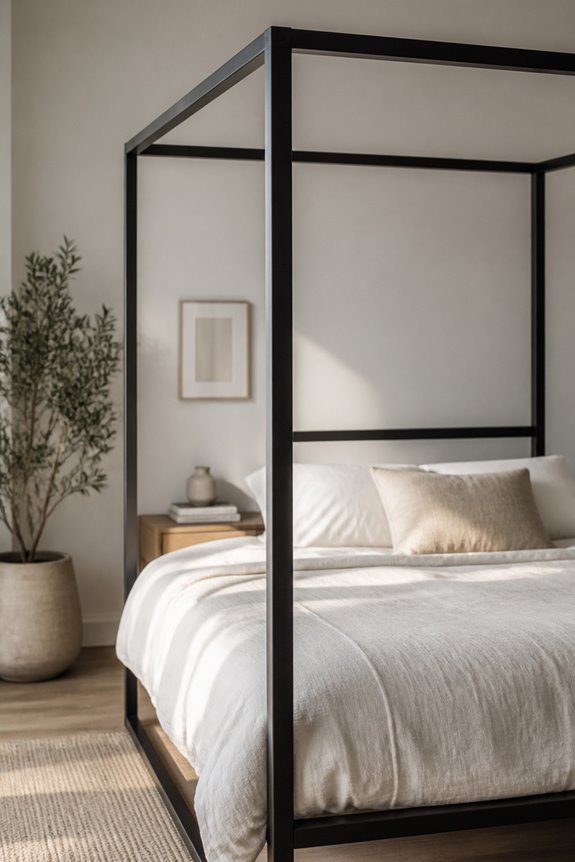
Minimalist metal frame canopies offer clean lines and understated elegance for contemporary bedrooms. These structures feature sleek, geometric designs in black, silver, or brushed bronze finishes. Metal frames work well in modern spaces because they provide visual lightness while maintaining structural support.
Popular options include rectangular frames with no fabric draping, adjustable height models, and designs incorporating LED lighting. Steel construction guarantees durability and stability for various mattress sizes. These canopies pair effectively with neutral bedding in white, gray, or charcoal tones.
Metal frame canopies require minimal maintenance and adapt easily to changing décor. They occupy less visual space than fabric canopies, making rooms feel more open and airy. This style suits industrial, Scandinavian, and contemporary design schemes effectively.
Nordic Canopy Beds With Clean Lines and Natural Materials
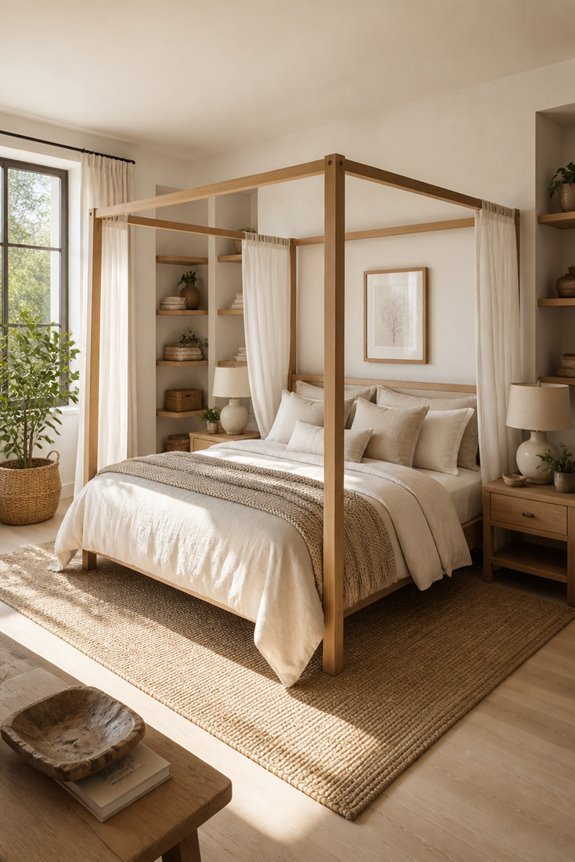
Nordic canopy beds combine Scandinavian design principles with natural wood frames, creating functional sleeping spaces that prioritize simplicity and sustainability. These beds feature light wood materials like pine, birch, or ash, selected for durability and minimal environmental impact. The design emphasizes clean geometric lines without ornamental details, allowing the natural grain and texture of wood to serve as primary aesthetic elements.
Common characteristics include simple rectangular frames, neutral color palettes of whites and light grays, and minimal fabric accents. Hardware remains visible and functional rather than hidden, contributing to the honest design philosophy. Many Nordic canopy beds incorporate linen or cotton drapes in muted tones, providing softness while maintaining the overall aesthetic restraint. This style suits bedrooms prioritizing clarity, organization, and connection to natural materials.
Bohemian Macramé Canopy Beds With Textured Details
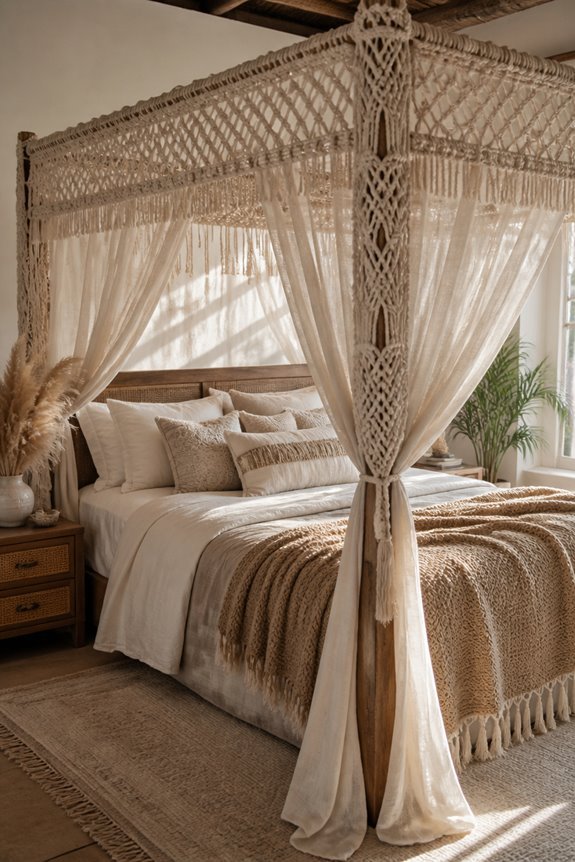
Macramé canopy beds bring knotted textile elements, layered fabrics, and handcrafted details to bedroom spaces, creating visually complex sleeping environments that contrast sharply with minimalist design approaches. These beds feature suspended macramé panels, woven wall hangings, and fringe details that add texture and dimension.
Natural materials like cotton rope, jute twine, and linen work well for constructing frames and draping elements. Bohemian designs often incorporate earth tones, including cream, tan, rust, and deep brown hues. Accessories such as hanging plants, tassels, and patterned throw pillows complement the aesthetic.
The layered approach creates focal points through varied textures and knotwork patterns. Maintenance requires occasional dusting and gentle cleaning to preserve delicate fibers and prevent dust accumulation in textured areas.
Wooden Canopy Beds With Natural Warmth
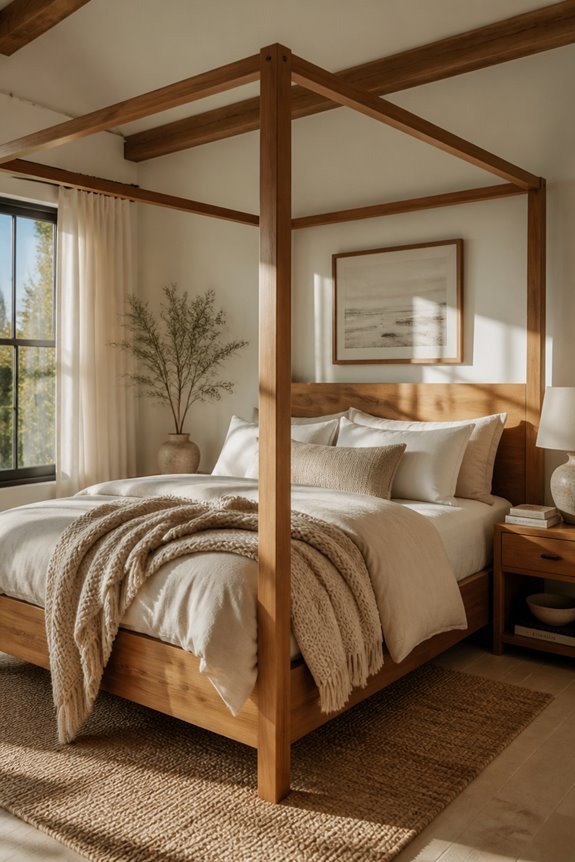
Wooden canopy beds offer solid construction, durability, and a warm aesthetic that contrasts with the intricate textile focus of macramé designs. Oak, walnut, and pine frames provide structural stability while contributing natural color variations to bedroom spaces. These beds accommodate various mattress sizes, from twin to California king configurations.
Wood finishes range from light honey tones to dark espresso stains, allowing coordination with existing furniture pieces. Four-poster designs support fabric draping or remain unfurnished for minimalist approaches. Wooden canopies require periodic maintenance, including dusting and occasional refinishing to preserve appearance.
The material resists wear from regular use, making it a long-term investment. Pairing wooden frames with neutral bedding creates balanced room environments. Construction quality determines longevity, with solid wood outperforming engineered alternatives in durability and aesthetic appeal
Canopy Beds With Curved Frames for Softer, Modern Lines
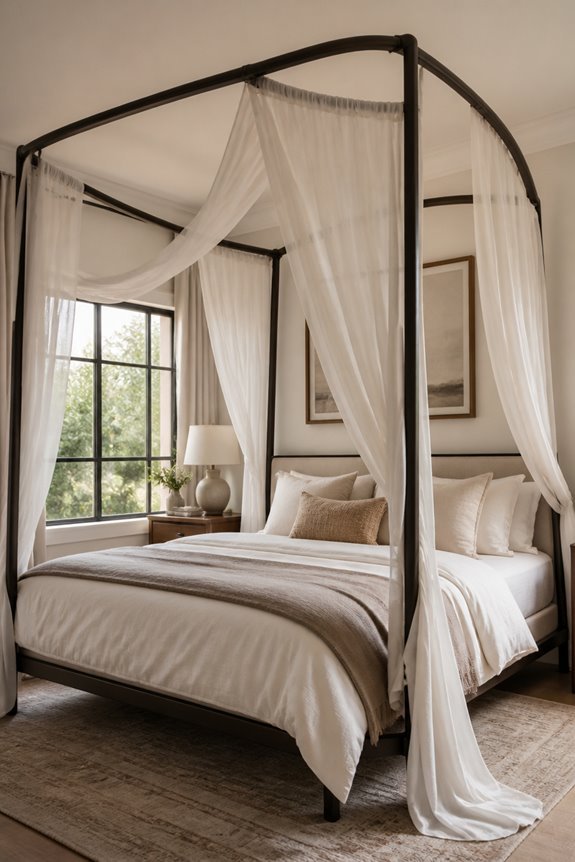
Curved canopy frames offer an alternative to angular industrial designs and geometric wooden structures, providing rounded lines that soften bedroom spaces while maintaining contemporary aesthetics. These frames feature arched tops, sweeping side posts, and gentle curves throughout their construction. Materials include brushed metal, powder-coated steel, and bentwood options. Arc-shaped tops create visual flow, while curved legs distribute weight evenly across flooring.
Design variations include half-moon canopies, fully rounded frames, and asymmetrical curves. The aesthetic complements minimalist, Scandinavian, and mid-century modern décor styles. Fabric draping follows the curved lines naturally, enhancing the softer appearance. Installation typically requires wall anchoring or weighted bases for stability. These frames work well in bedrooms with vaulted ceilings or limited floor space, as curves optimize visual proportions.
Platform Canopy Beds for Low-Profile Sophistication
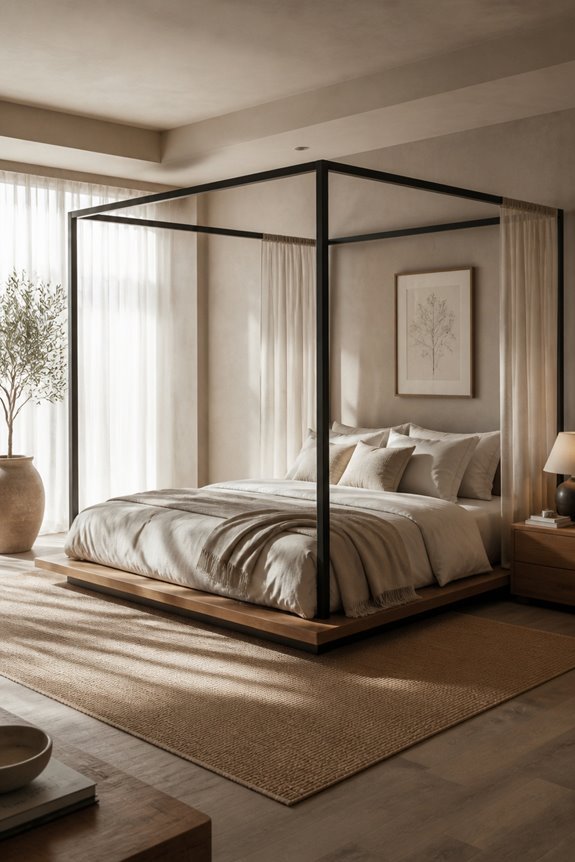
Platform canopy beds combine a low-profile frame structure with overhead canopy elements, creating a streamlined aesthetic that suits contemporary and minimalist bedroom designs. The bed platform sits close to the floor, reducing visual bulk while the canopy frame extends upward, providing height and definition without heaviness.
These beds work particularly well in smaller bedrooms, where traditional four-poster canopies might feel cramped. Materials like metal, light wood, or upholstered bases pair effectively with fabric draping or solid canopy tops. Some designs feature integrated storage within the platform base, maximizing functional space.
Platform canopy beds accommodate various mattress sizes, from twin to California king. The low-profile structure allows easier access compared to elevated frames, while maintaining the sophisticated canopy aesthetic. This style appeals to homeowners seeking modern elegance with practical bedroom solutions.
Statement Color Canopy Beds That Anchor Your Room
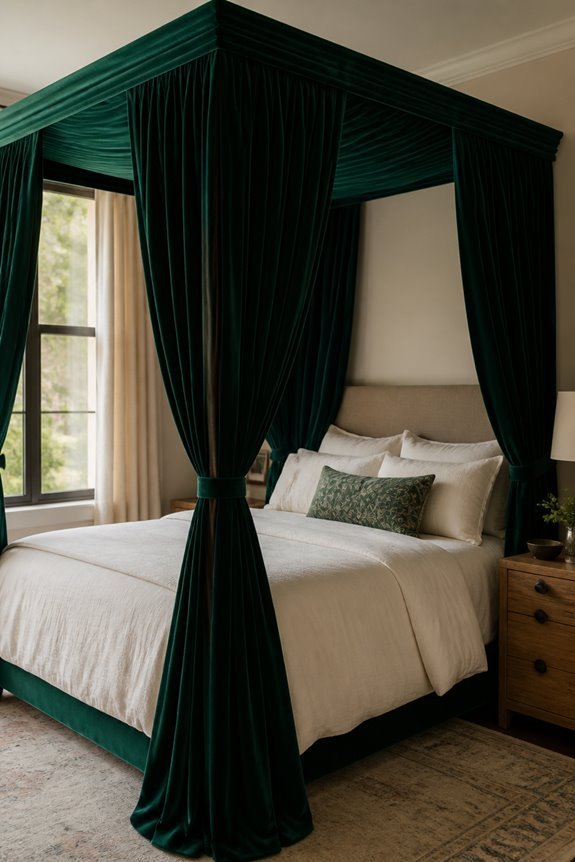
When a canopy bed features bold, saturated colors, it becomes a focal point that defines the entire bedroom’s design scheme. Deep jewel tones like emerald, sapphire, and amethyst create visual anchor points, grounding the room and establishing its aesthetic direction. Rich burgundy or navy canopy frames pair effectively with neutral walls, allowing the bed to command attention without overwhelming the space. Warm tones such as terracotta or burnt orange introduce earthiness and coziness.
Color selection should consider existing furniture, flooring, and lighting conditions. A statement color canopy typically works best in larger bedrooms where it has adequate breathing room. Coordinating bedding, throws, and accent pillows with the canopy color enhances cohesion while maintaining the bed’s dominant presence in the room.
Vintage-Inspired Canopy Beds With Ornate Details

Ornate detailing distinguishes vintage-inspired canopy beds from contemporary designs, offering intricate craftsmanship through carved posts, decorative finials, and elaborate footboards. These beds typically feature Victorian, French, or Baroque influences with scrollwork, floral motifs, and turned wood elements. Materials commonly include mahogany, oak, or wrought iron frameworks combined with fabric draping.
Vintage canopy beds serve functional purposes beyond aesthetics. The posts and framework support heavy curtains or sheers, creating enclosed sleeping spaces that improve temperature regulation and sound dampening. Ornamental details like crown molding at the top and beaded trim along edges add visual interest and historical authenticity.
Selecting vintage-inspired canopy beds requires considering room dimensions, ceiling height, and existing décor. Lighter wood finishes suit smaller spaces, while darker woods work better in larger rooms with adequate proportions.
Eclectic Canopy Beds Combining Vintage and Modern Elements

By blending historical design features with contemporary aesthetics, eclectic canopy beds create unique bedroom focal points that appeal to varied decorating preferences. These beds combine ornate carved wooden frames from traditional styles with sleek metal accents, minimalist fabric panels, or industrial elements.
A wrought iron canopy paired with modern linen curtains exemplifies this approach. Glass or chrome fixtures may replace ornamental finials, while vintage velvet drapes coordinate with contemporary bedding in neutral tones. Reclaimed wood frames work alongside brushed steel hardware.
This fusion allows homeowners to merge nostalgia with current design trends, resulting in functional pieces that avoid appearing strictly period-specific or dated. Eclectic canopy beds suit transitional or bohemian bedroom schemes, accommodating diverse personal style preferences without committing entirely to one aesthetic direction.
Canopy Beds With Layered Fabrics to Add Visual Dimension
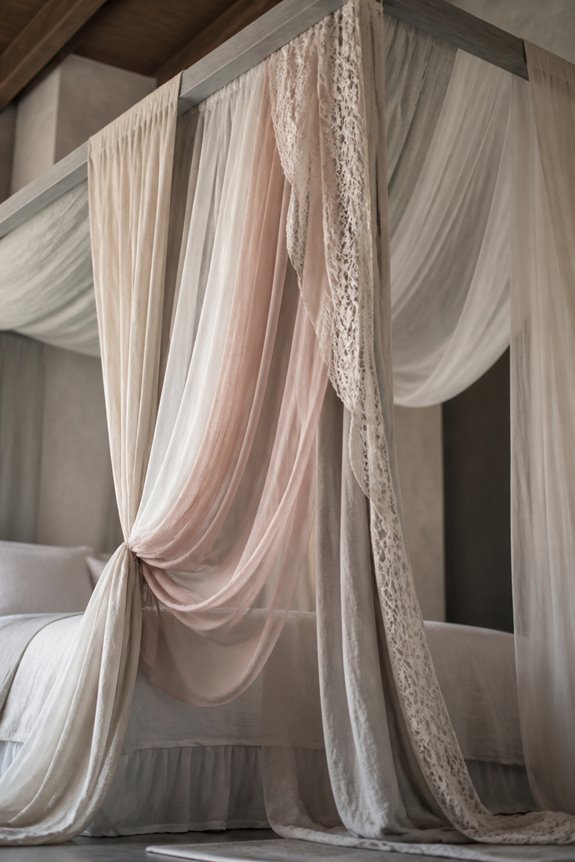
Layered fabrics transform a canopy bed into a visually complex focal point through strategic combinations of multiple textures. Sheer voile panels paired with heavier linen drapes produce contrast, while silk accents add subtle sheen. Layering different weights allows light to filter variably, creating shadow patterns throughout the day.
Consider these fabric pairings: gauzy cotton with velvet trim, lace overlay on solid damask, and lightweight chiffon beneath textured linen.
Color gradation enhances the dimensional effect further. A pale base fabric topped with progressively darker overlays builds visual movement. The layering technique accommodates seasonal changes, as lighter fabrics can replace heavier ones when needed. This approach accommodates both aesthetic preferences and functional requirements simultaneously.
Flowing Linen Drapes for an Airy, Relaxed Canopy Bed
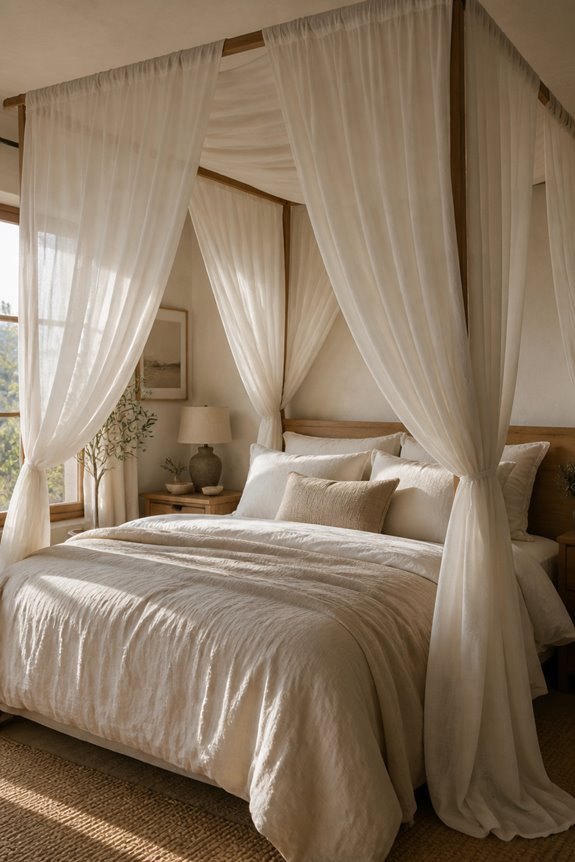
Linen drapes offer a straightforward solution for canopy beds that prioritize airiness and casual comfort. The natural fabric allows light to filter through while maintaining privacy, creating an open yet defined sleeping space.
Linen wrinkles naturally, which adds texture and visual interest without requiring extensive maintenance. Neutral colors like cream, beige, and light gray complement most bedroom styles and avoid visual heaviness. Sheer linen works well for summer months, while heavier linen weights provide insulation during colder seasons.
Installation involves mounting rods or tension wires to the canopy frame, then draping fabric loosely for a relaxed appearance. The fabric moves gently with air circulation, enhancing the sense of openness. Linen’s durability makes it a practical long-term investment for canopy bed designs seeking understated elegance.
Styling Your Canopy Bed: Accessories and Decor Pairings
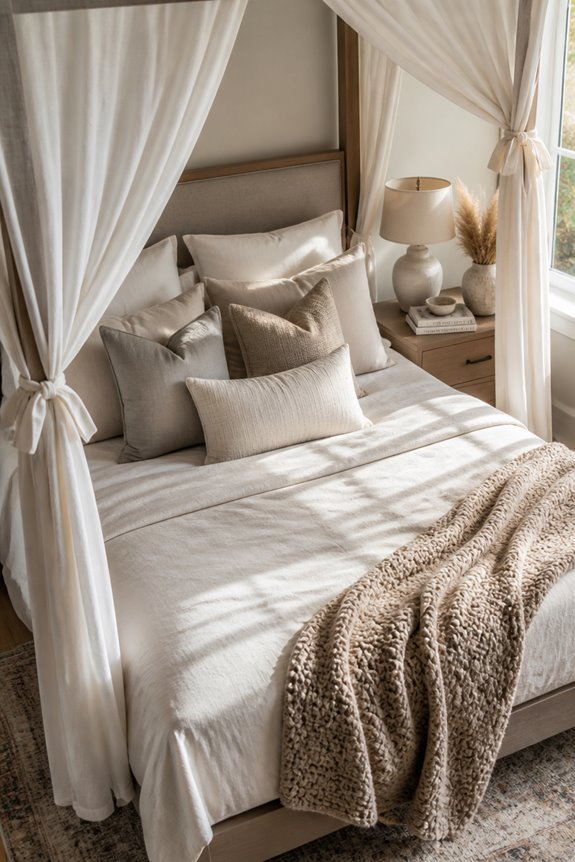
Once the canopy frame and drapes are in place, accessories and decor selections determine the overall aesthetic and function of the bed. Throw pillows, blankets, and cushions add comfort and visual interest to the sleeping surface. Select pieces that coordinate with the drape color and fabric weight.
Nightstands positioned on either side provide functional surface space for lamps, books, and personal items. Lighting options include pendant fixtures suspended from the frame or traditional bedside lamps. Wall art, mirrors, or floating shelves near the canopy create balanced room composition.
Decorative elements like string lights, plants, or fabric pouches can enhance the space without overwhelming it. Layering textures through varied materials, such as velvet pillows with linen throws, adds depth and sophistication to the overall design scheme.
Canopy Beds With Integrated and Twinkle Lighting for Ambiance
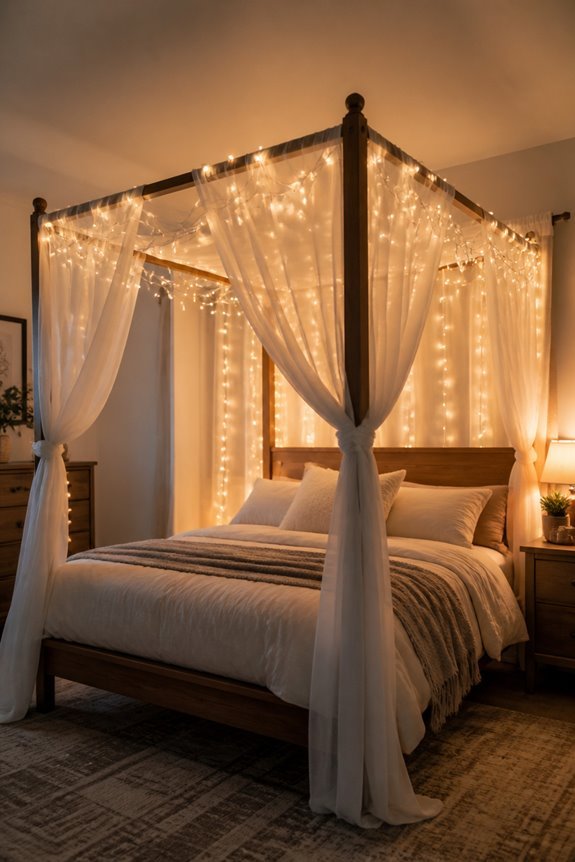
Lighting transforms a canopy bed from a simple furniture piece into an atmospheric focal point, creating mood and function within the bedroom space.
Integrated LED strips mounted along canopy frame edges provide consistent illumination without visible wires or fixtures. Twinkle lights, such as fairy lights or string lights with warm white bulbs, create layered ambiance when draped across fabric panels or frame corners.
Smart lighting options allow users to adjust brightness and color temperature through remote controls or mobile applications. Battery-powered lights offer flexibility for renters or those avoiding electrical installation.
Dimmable fixtures work particularly well for reading, relaxation, and evening routines. Combining multiple light sources at different heights produces depth and visual interest while maintaining functional bedroom lighting standards.
Canopy Beds With Blackout Curtains for Better Sleep
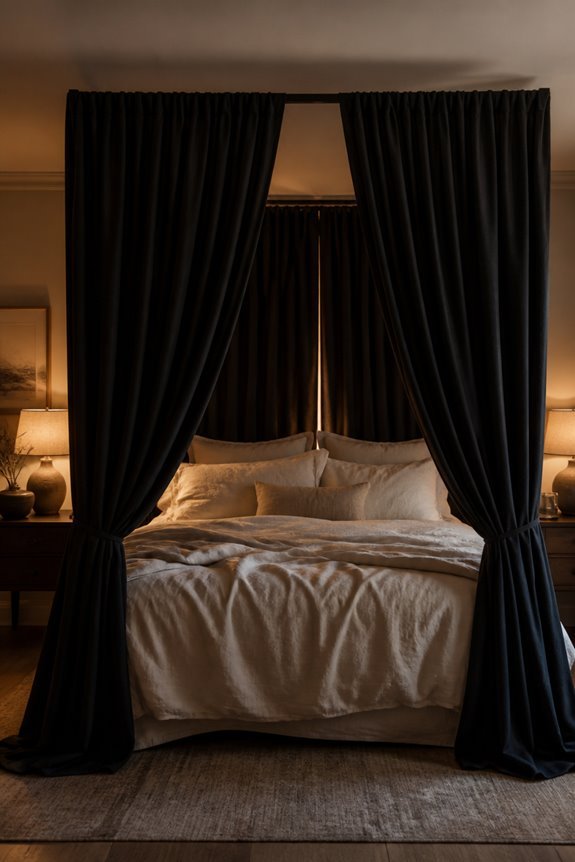
Many individuals struggle with sleep quality due to excess light, and blackout curtains attached to canopy bed frames provide an effective solution for controlling bedroom darkness. These curtains block external light sources, including streetlights, car headlights, and early morning sunlight, creating an ideal sleep environment.
Blackout curtains typically feature multiple fabric layers designed to absorb and reflect light. Common materials include polyester blends and thermal-insulated fabrics. Mounting options include rod systems, velcro strips, and clip attachments that integrate with existing canopy frames.
Benefits extend beyond darkness control. These curtains also provide temperature regulation, noise reduction, and privacy. Users report improved sleep duration and quality when utilizing blackout canopy configurations.
Customization options allow selection of colors, patterns, and fabric weights. Installation requires measuring canopy dimensions and selecting appropriate mounting hardware compatible with bed frame construction.
Canopy Beds With Built-In Storage Solutions
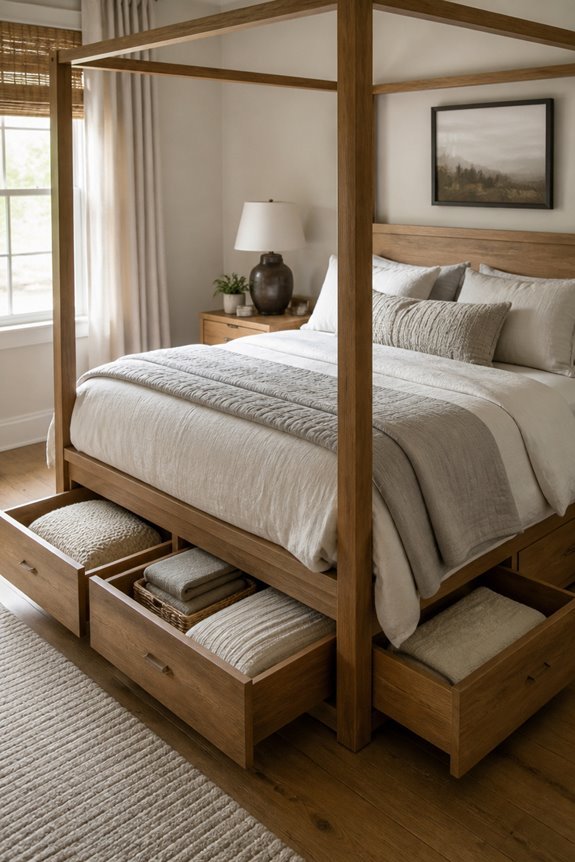
Bedroom space constraints often motivate homeowners to seek furniture that serves multiple functions, making canopy beds with integrated storage an attractive option. These beds incorporate drawers, shelves, and compartments beneath the frame, maximizing vertical and horizontal space efficiently.
Common storage features include underbed drawers for seasonal clothing, bedding, or blankets. Some models feature side shelving for books, décor items, or personal belongings. Built-in cubbies provide organized storage without requiring additional furniture pieces.
Material choices affect functionality and appearance. Wood frames accommodate heavier items, while metal frames support lighter storage needs. Upholstered headboards sometimes include pockets for small items.
Canopy beds with storage solutions reduce clutter, improve organization, and eliminate the need for separate storage furniture, making them practical investments for bedrooms with limited square footage.
Canopy Beds With Adjustable Drape Systems for Flexibility
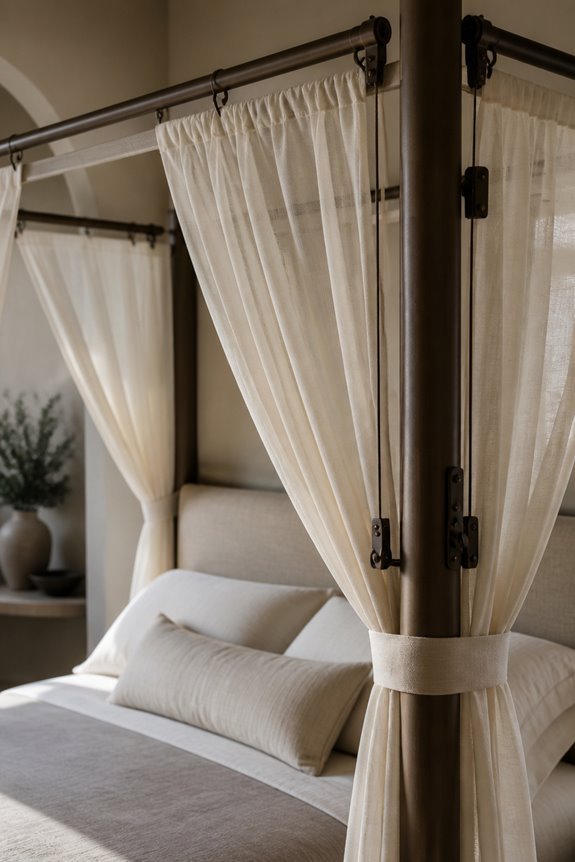
While storage solutions address organizational needs, adjustable drape systems offer customization that adapts to changing preferences and functional requirements. These systems use various mechanisms, including rod clips, hooks, and tie-back attachments, allowing users to modify fabric positioning throughout the day.
Sheer curtains can filter light during morning hours, while heavier fabrics provide privacy and darkness for sleep. Some beds feature motorized systems that raise or lower drapes electronically, offering convenience without manual adjustment. Others use simple pulley systems or magnetic fasteners for repositioning.
Users can fully enclose the bed for a cocoon effect, partially drape one side for asymmetrical aesthetics, or remove fabric entirely during warmer months. This flexibility transforms a canopy bed’s function based on seasonal changes, time of day, and personal comfort needs without permanent alterations.
Mosquito Netting Canopy Beds for Porch and Outdoor Spaces
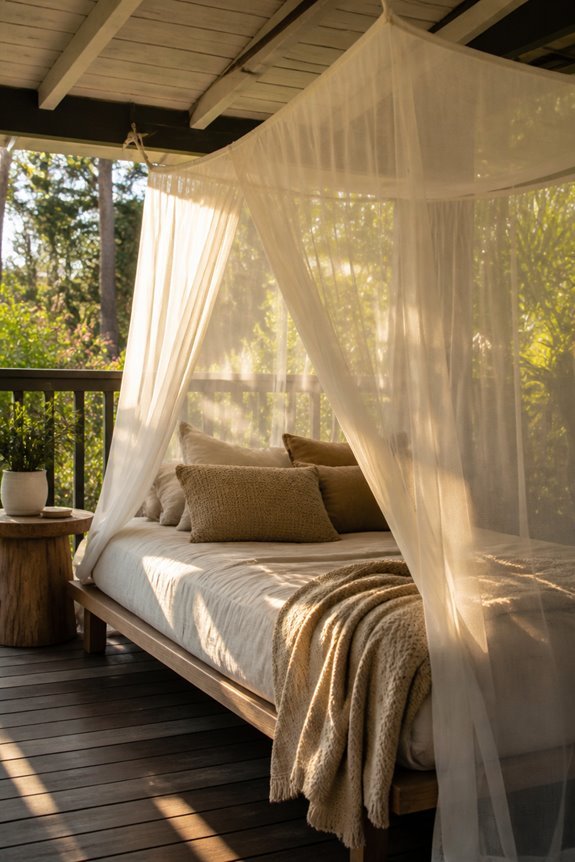
Outdoor entertaining spaces benefit from mosquito netting canopy beds, which provide both shelter and pest protection. These structures feature lightweight frames, typically aluminum or steel, supporting mesh panels that keep insects away while allowing airflow and visibility.
Porch canopies work well in humid climates, gardens, and patios where mosquitoes pose problems. The netting can be rolled up during cooler months or when pests are inactive. Installation requires secure anchoring to prevent wind damage.
Popular models include freestanding designs and mounted versions that attach to existing structures. Mesh quality varies, with some featuring smaller holes for better protection against tiny insects. Maintenance involves regular cleaning and inspection for tears or weakening seams, ensuring long-term functionality and effectiveness.
DIY Canopy Beds: Budget-Friendly Projects and Hacks
Creating a canopy bed does not require expensive furniture purchases or professional installation services. Budget-friendly options include using PVC pipes, wooden dowels, or tension rods as frame materials. Fabric choices span from sheer curtains and bed sheets to lightweight cotton and muslin.
Installation methods vary by setup type, involving ceiling hooks, corner brackets, or freestanding frames. Common DIY approaches include draping fabric over existing bed frames, attaching rods to walls, or constructing simple wooden structures. Materials sourcing from hardware stores, fabric retailers, and online suppliers keeps costs manageable.
Users can customize dimensions, colors, and fabric types to match bedroom aesthetics. Basic tools like drills, measuring tapes, and level equipment suffice for most projects. This approach allows renters and homeowners alike to create personalized canopy beds affordably.
Affordable Canopy Beds Under $500 and Store-Bought Alternatives
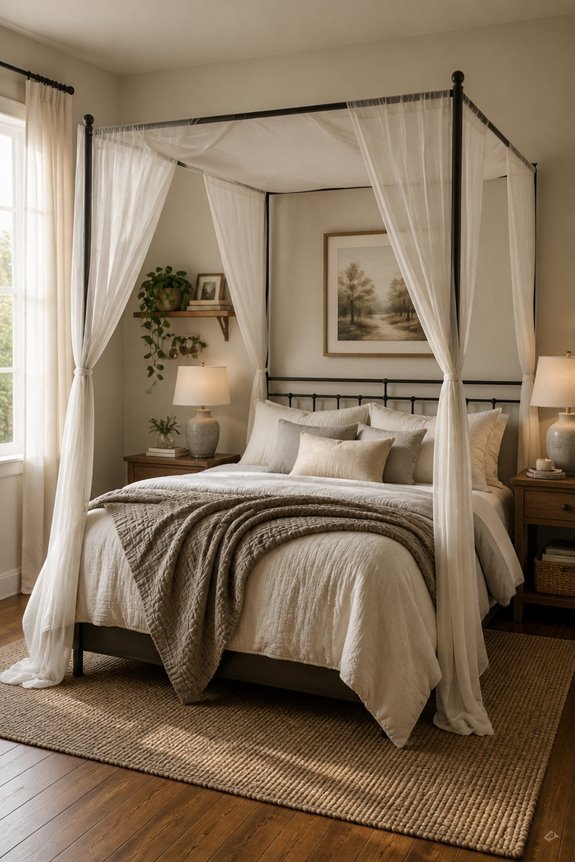
Many retailers offer ready-made canopy beds at price points below $500, providing an accessible alternative to DIY construction. IKEA, Wayfair, and Amazon stock metal frame canopies, ranging from $200 to $450, featuring various finishes and sizes. Target carries fabric canopy options, typically priced between $300 and $400. Walmart offers basic steel frame models for approximately $250.
These store-bought alternatives require minimal assembly, usually taking 30 to 60 minutes with basic tools. Buyers should verify mattress compatibility, ceiling height clearance, and weight capacity before purchasing. Online retailers frequently provide detailed dimension specifications, customer reviews, and return policies.
Comparing prices across multiple platforms often reveals sales or discounts. Purchasing during seasonal promotions, particularly spring furniture sales, can yield additional savings on inventory.
Frequently Asked Questions
How Do I Properly Measure My Bedroom to Ensure a Canopy Bed Fits?
Start with the basics: length, width, and ceiling height, all measured with a standard tape measure.
Compare those numbers against the bed’s dimensions before purchasing anything. Leaving at least two feet of clearance on all sides, along with adequate headroom above the frame, helps the bed fit comfortably within the room.
What Is the Average Cost to Install a Professional Canopy Bed?
Professional installation typically runs between $500 and $2,500.
Bed complexity, materials, and local labor rates all affect where a project falls within that range. Custom designs and high-end installations can exceed $3,000, while simpler assemblies cost noticeably less.
Can Canopy Beds Work in Rooms With Low Ceilings?
Yes, though the frame height needs adjusting accordingly.
Low-ceiling rooms generally call for shorter frames, typically in the four to five foot range. This keeps the proportions balanced and maintains enough headspace for comfortable everyday use.
How Do I Clean and Maintain Canopy Bed Fabrics and Drapes?
Regular vacuuming with an upholstery attachment handles most everyday dust.
Spot cleaning works well for small stains using a mild detergent and water. Lightweight drapes can typically go through a delicate machine wash cycle, while heavier materials are safer left to a professional dry cleaner.
Dusting the curtain rods once a month prevents buildup from accumulating over time.
What Are the Best Ways to Prevent Canopy Beds From Wobbling or Squeaking?
Wobbling and squeaking usually point to loosened joints over time.
Tightening bolts and screws on a regular basis addresses most of the issue. Adding felt pads beneath the legs reduces friction and noise considerably.
Periodically checking the frame’s overall stability helps catch small problems before they turn into bigger ones.
Conclusion
Choosing the right canopy bed comes down to balancing room size, fabric preference, and budget.
Four-poster and vintage-inspired frames suit those seeking a timeless, elegant look, while minimalist metal and platform designs work well in more contemporary or space-conscious rooms.
Fabric choice, from sheer linen to rich velvet, shapes the overall mood of the space just as much as the frame itself.
Budget-friendly and DIY approaches make this style accessible regardless of financial constraints, while built-in storage options add practicality for smaller bedrooms.
Ultimately, the right canopy bed should reflect both the room’s proportions and the atmosphere the homeowner wants to create.
Share your thoughts in the comments below on which canopy bed style best fits your space.