


Ever walked into a bedroom that felt calm the second you stepped inside? A well-chosen canopy bed can do exactly that.
Minimalist canopy beds skip the heavy drapes and ornate carving in favor of clean lines and quiet materials.
I swapped my old four-poster for a slim metal frame last year and the whole room instantly felt bigger.
Brands like IKEA and West Elm make this look surprisingly accessible, without the custom furniture price tag.
Ceiling height, room size, and your own taste all play into which version actually works for you.
Getting the Foundation Right
Start by measuring your ceiling height before you fall for a tall four-poster online. Most low-profile frames stay comfortable in rooms with standard eight-foot ceilings.
Think about whether you actually want fabric panels or just the frame itself. A lot of the minimalist look comes from restraint, not from adding more.
Matte finishes tend to age better than glossy ones, and they photograph a lot nicer too if that matters to you.
10 Minimalist Canopy Bed Ideas
Some of these frames lean industrial, and others feel closer to a quiet Japandi retreat.
A few work best bare, while others really come alive with a simple sheer panel draped over them.
Take a look and see which one matches the room you’re actually working with.
Sleek Metal Frame Canopy Beds for a Clean Modern Look
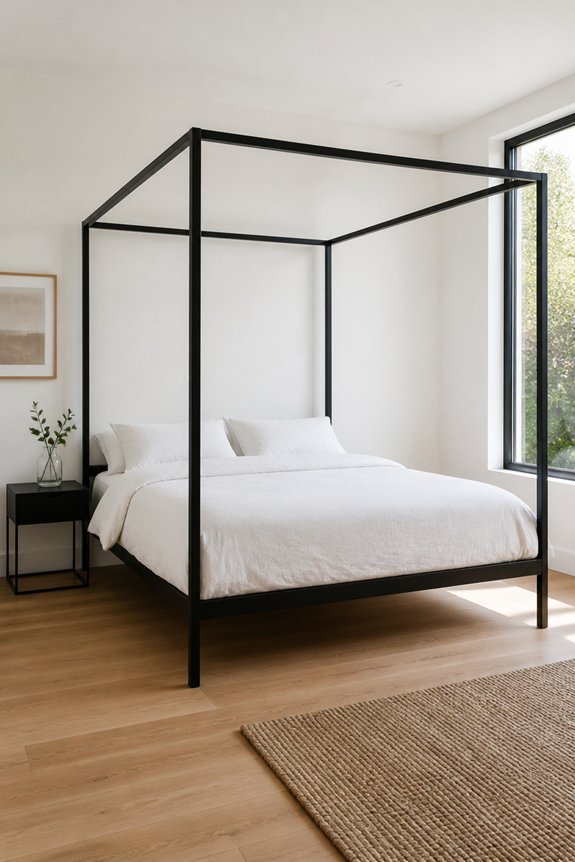
Metal frame canopy beds work well in minimalist bedrooms because they add structure without visual clutter. Thin steel or iron frames in matte black, brushed nickel, or gunmetal finishes keep the design clean and simple. Brands like West Elm, CB2, and IKEA offer models with straight lines and no ornate detailing.
These beds pair well with neutral bedding, simple nightstands, and bare walls. The open frame allows light to pass through, which keeps the room feeling spacious. Canopy drapes are optional and not required for the look to work.
Choose frames with square or rectangular tubing for a modern profile. Avoid twisted or curved metalwork, which adds unnecessary decoration. Matte finishes reduce glare and complement flat-painted walls effectively.
Also read: 15 Patio Canopy Ideas on a Budget That Look Expensive
Minimalist Wooden Canopy Beds That Bring Natural Warmth
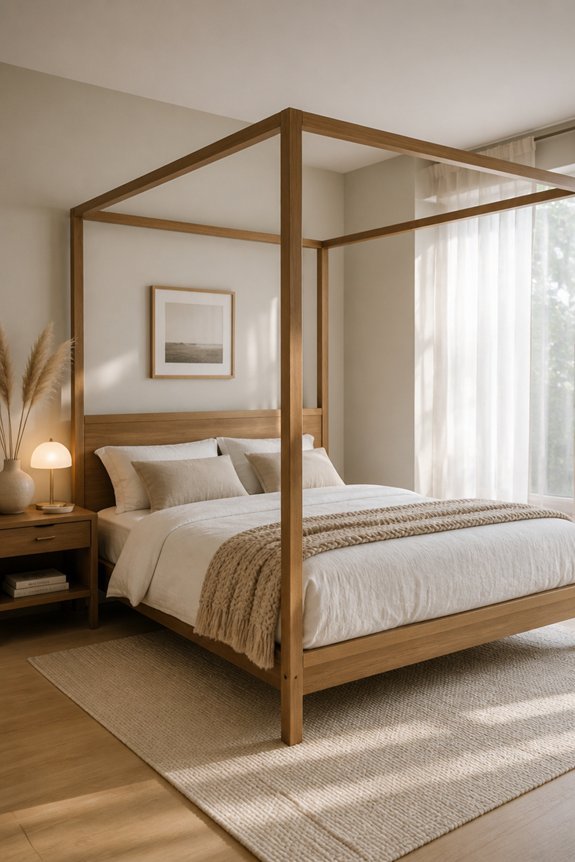
For those who want warmth without added decoration, wooden canopy beds offer a quieter alternative to metal frames. Light woods like oak, ash, and maple keep the look neutral, while darker options like walnut add depth without visual clutter. Straight posts, flat rails, and minimal joinery details define this style well.
Brands such as IKEA, Article, and West Elm carry solid wood canopy frames that fit minimalist spaces. The natural grain of the wood adds texture, so additional ornamentation is rarely needed. These beds pair well with linen bedding, simple nightstands, and neutral flooring like cork or light hardwood.
A low-profile mattress helps maintain the clean proportions that this bed style depends on for balance and visual calm.
Low-Profile Minimalist Canopy Beds Built for Smaller Bedrooms
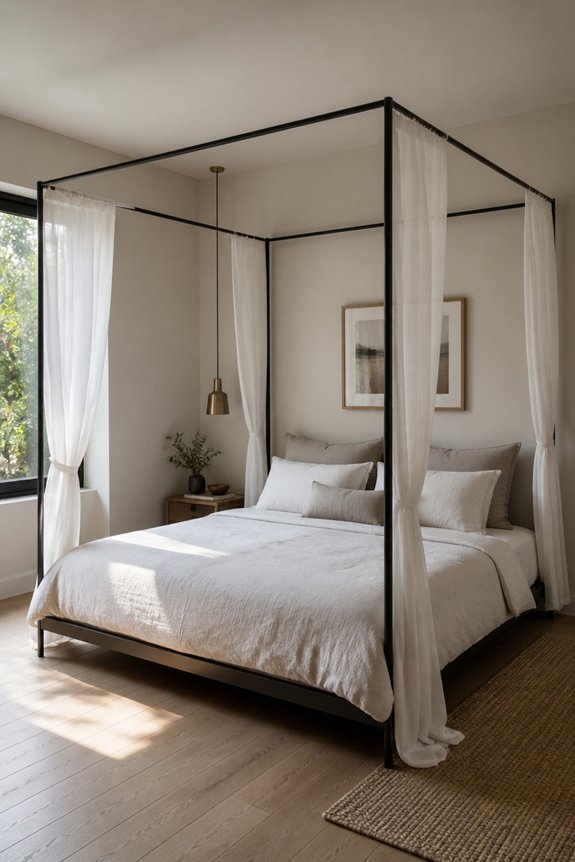
Smaller bedrooms benefit from canopy beds with lower overall heights, since ceiling clearance and floor space both limit what works well. Low-profile frames, typically standing between 60 and 72 inches tall, avoid overwhelming compact rooms.
Brands like West Elm and IKEA offer slim canopy designs with narrow posts and minimal crossbars, keeping the visual footprint light. Platform bases are common in these designs, eliminating the need for a box spring and reducing total bed height.
A low-profile canopy also works well without fabric panels, allowing open sightlines across the room. Metal frames in matte black or brushed nickel suit smaller spaces, since their thin profiles take up less visual weight. Keeping the canopy structure simple and low maintains proportion, order, and balance in tighter rooms.
Floating Canopy Beds With Ceiling-Mounted Frames
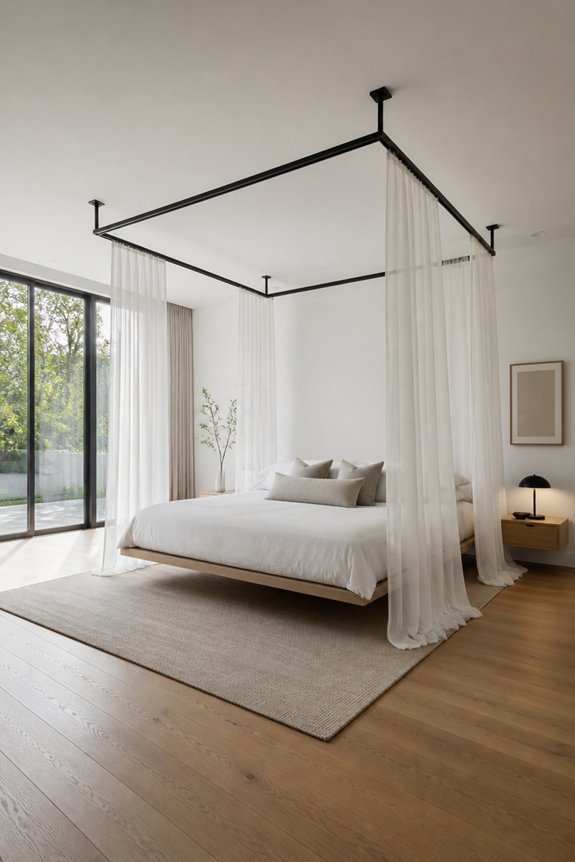
Ceiling-mounted canopy frames eliminate the need for floor posts entirely, which frees up visual and physical space around the bed. A suspended frame is anchored directly into ceiling joists, and thin cables or metal rods hold the structure in place. This design works well in rooms with standard 8-foot ceilings, though higher ceilings create a more dramatic effect.
Common materials include powder-coated steel, black iron, and brushed brass. Lightweight linen or sheer cotton panels are often draped from the frame, adding softness without visual weight. Brands like CB2 and West Elm offer ceiling-mount canopy kits that suit minimalist interiors. The hardware remains compact, and the overall look appears clean, intentional, and uncluttered, which aligns with minimalist design principles focused on reducing excess elements throughout a space.
Sheer Fabric Canopy Beds That Keep Things Light and Airy
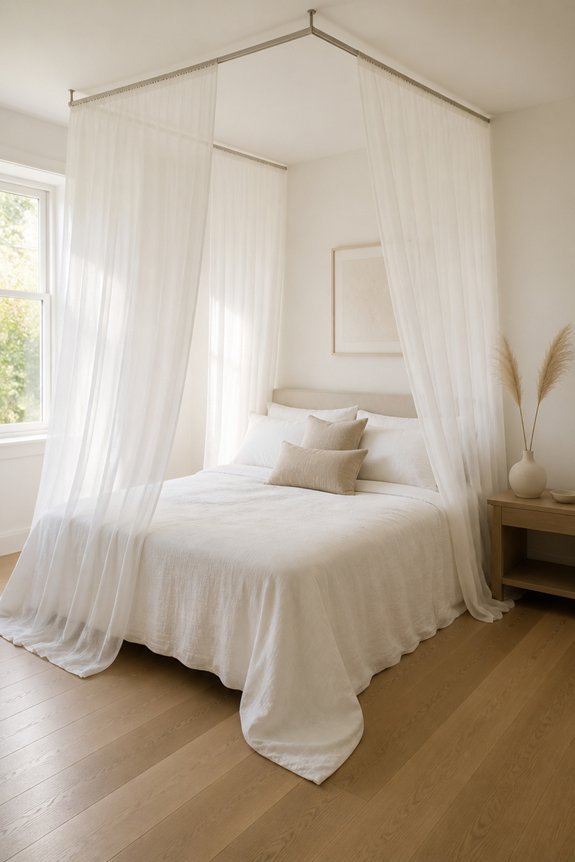
Fabric choice plays a large role in how a canopy bed feels inside a minimalist bedroom. Sheer fabrics, such as voile, chiffon, and lightweight linen, allow natural light to pass through, keeping the space open and uncluttered. These materials drape softly from ceiling-mounted rods, four-poster frames, or simple wooden dowels positioned above the mattress.
White and off-white tones are the most common choices, as they blend with neutral walls and minimal furniture. Pale gray and soft cream also work well in this setting. The fabric should hang loosely rather than be pulled tight, which creates a relaxed, unstaged appearance.
Avoiding heavy blackout curtains or layered panels helps maintain the clean, open aesthetic that minimalist bedroom design typically requires.
Platform Canopy Beds That Make a Quiet Statement
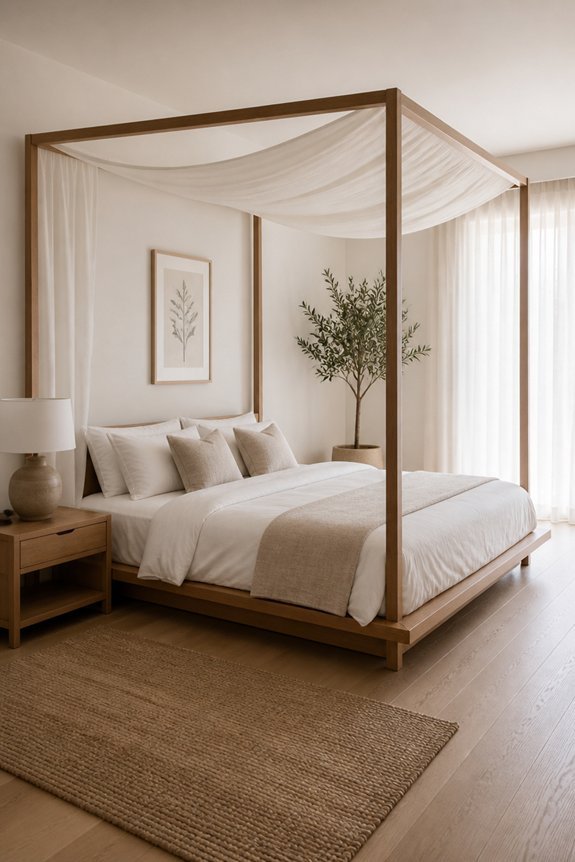
Simplicity defines the platform canopy bed, where a low-profile base meets a minimal frame overhead. This style works well in rooms with limited vertical space, keeping the overall look grounded and clean.
The frame typically features four thin posts, a flat headboard, and a rectangular top rail with no canopy fabric attached. Materials like matte black steel, natural oak, and walnut are common choices. Brands such as West Elm and Article offer platform canopy frames that fit minimalist interiors well.
The low base sits close to the floor, which visually expands a small room. Neutral bedding in white, gray, or beige complements the structure without competing with it. This bed style suits modern, Japandi, and Scandinavian-inspired bedroom designs equally.
Industrial Canopy Beds With Exposed Metal Details
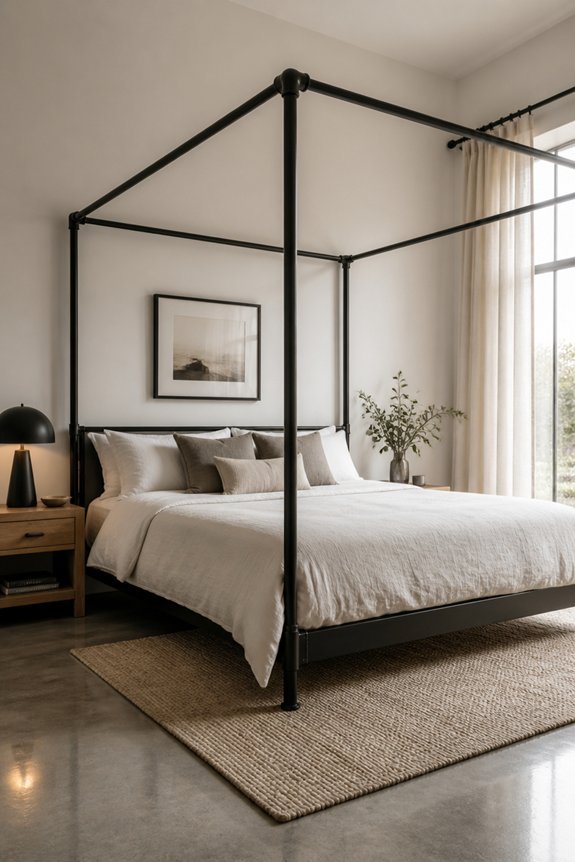
Many industrial canopy beds use exposed metal frames, with raw steel, black iron, and brushed pipe fittings as the most common materials. These beds pair well with concrete floors, bare brick walls, and neutral bedding. The metal frame does most of the visual work, so heavy curtains and decorative canopies are rarely needed.
Key features found in industrial canopy beds include welded joints left visible rather than hidden, matte black or gunmetal finishes over polished surfaces, square or rectangular tubing instead of curved rods, and open corners with no decorative caps.
Brands like West Elm and CB2 offer ready-made versions with clean welds and consistent finishes. The style works best in rooms with high ceilings, open layouts, and limited decorative accessories.
Neutral Canopy Beds That Disappear Into Minimalist Interiors
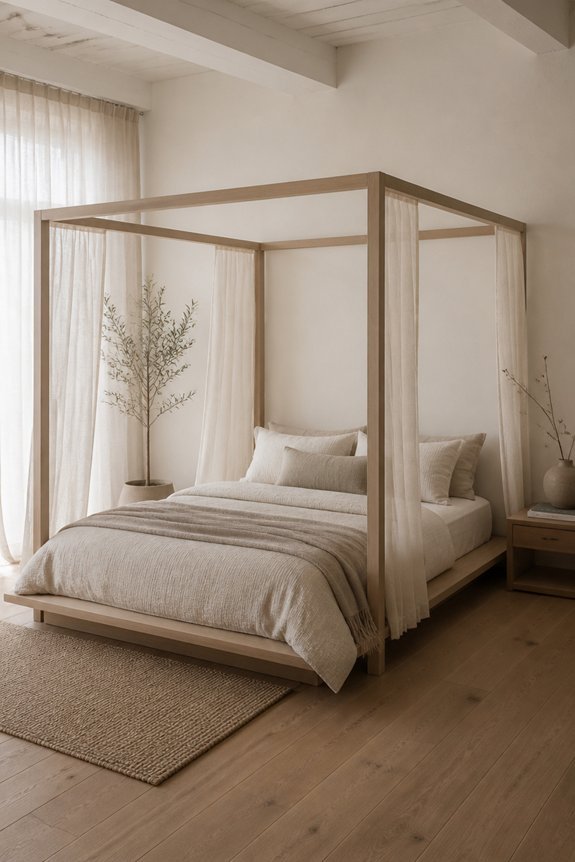
Some canopy beds are designed to blend into a room rather than stand out as a focal point. These beds use neutral colors like white, cream, beige, or light gray to match surrounding walls and ceilings. The frame often disappears visually when it shares the same tone as the room.
Common choices include white powder-coated metal frames, natural linen canopies, and unfinished wood posts. Brands like West Elm and IKEA offer simple canopy frames that work well in this approach.
The canopy fabric, when used, stays sheer or untextured to avoid drawing attention. Bedding follows the same neutral palette, with minimal pattern or contrast. This method works well in rooms where calm, open space is the main design goal.
Japandi Canopy Beds for a Quietly Minimal Bedroom
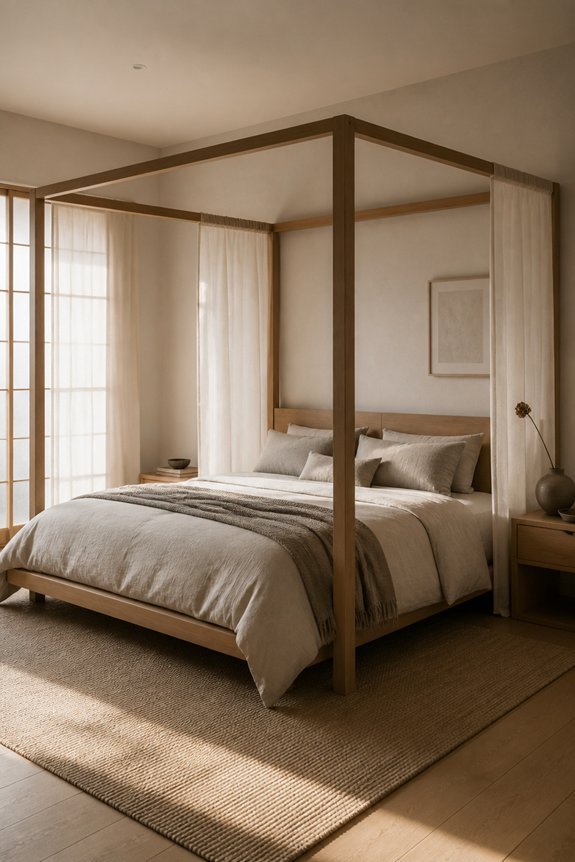
Where neutral canopy beds aim to disappear into a room, Japandi canopy beds take a different approach by combining Japanese and Scandinavian design principles into something quiet but intentional. The result is a bed frame that feels deliberate, restrained, and carefully considered.
Common features include natural wood tones like white oak or walnut, low-profile frames, and simple rectangular canopy structures without ornate detail. Linen or cotton fabric panels in warm white or soft taupe are typical choices. Brands like Muji and Ethnicraft produce pieces that reflect this aesthetic well.
The surrounding space matters equally. Tatami-inspired floor textures, minimal bedside furniture, and muted lighting support the overall look. Japandi canopy beds work best when the entire room follows the same restrained approach.
Frequently Asked Questions
What Mattress Size Works Best With a Minimalist Canopy Bed?
A queen mattress tends to hit the sweet spot here.
It gives you enough scale to balance the frame without making the room feel crowded. Anything larger can start to overwhelm the clean lines this style depends on.
Are Canopy Beds Safe for Rooms With Low Ceilings?
Low ceilings do make this trickier, so it’s worth checking your numbers first.
Most experts recommend at least eight feet of clearance before you commit to a canopy frame. Anything lower can start to feel cramped or even a little unsafe depending on the design.
If your ceilings run short, a low-profile or two-post frame is usually your safer bet.
How Do You Clean and Maintain Canopy Bed Fabric Drapes?
Cleaning your drapes is easier than it looks.
Take them down and machine wash on a gentle cycle with mild detergent. For smaller stains, spot cleaning works fine without a full wash.
A quick iron on low heat smooths out wrinkles, and a fabric refresher spray keeps things feeling fresh between washes.
Can Canopy Beds Be Assembled Without Professional Help?
Most of these frames are genuinely doable on your own.
Manufacturers usually include clear instructions, basic tools, and pre-drilled components, so you’re not left guessing. Give yourself an afternoon and you’ll likely have it done.
Do Canopy Beds Work Well in Shared Bedroom Spaces?
They actually work really well here.
The frame creates a natural visual boundary, giving each person a defined personal zone without needing an actual wall. You get that sense of privacy while keeping the whole room feeling open and connected.
Conclusion
A canopy bed can be the one piece that ties a whole minimalist bedroom together.
When I finally found the right frame for my own space, it was such a small change on paper, just swapping one bed for another, but the room felt completely different afterward.
Some of these styles add warmth, others save space, and a few just quietly anchor a neutral room without asking for attention.
Whatever direction you lean toward, keep your ceiling height and room size in mind before you commit to anything.
The right frame lets the rest of your room breathe instead of competing with it.
I’d love to know which style speaks to you most. Leave a comment below and tell me what your bedroom is missing.