
Most living rooms lose their calm the moment everything has to look perfect. Spotless white sofas, matching sets, and glossy finishes leave little room to relax. Wabi sabi flips that thinking. It treats a creased linen cushion, a scarred wood table, and a hand-thrown pot as the good parts, and rooms built from them feel warmer and easier to live in. That’s a real advantage if you’re renting or working with a small budget.
To help you create a calmer, more lived-in home, here are 19 wabi sabi living room ideas that use plaster, wood, linen, and clay in simple, doable ways.
Go Low With Slouchy Linen
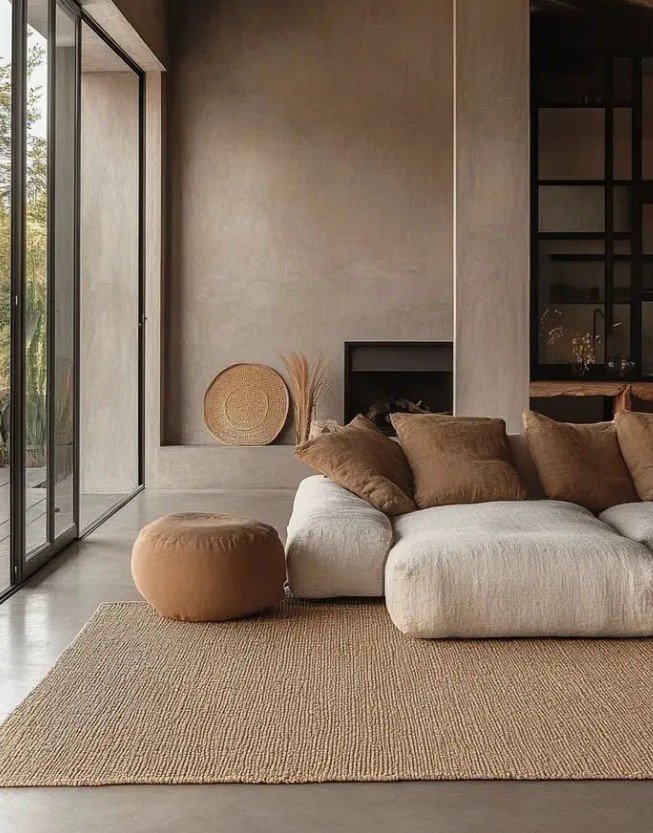
Low seating makes a big room feel relaxed. In this living room, a pale, pillowy sofa sits close to the floor, with rust-toned cushions piled on top and a round pouf in the same clay shade beside it. A thick jute rug anchors the group while the concrete floor and plaster walls stay quiet. On a budget, oversized floor cushions in washed cotton give a similar loose feel.
Also Read:
Hang Lopsided Pendants
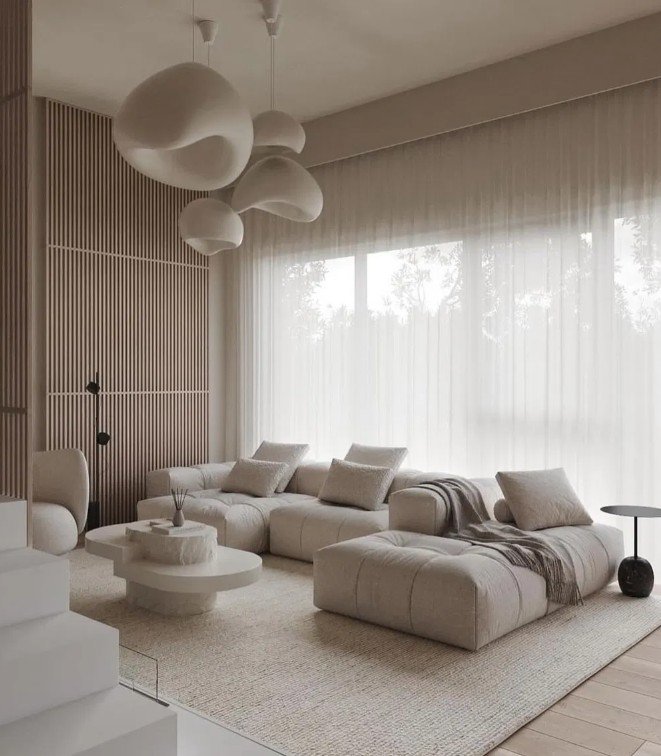
If a room feels too polished, an uneven light can loosen it up. Here, a cluster of soft, pebble-like pendants in a pale matte finish hangs at different heights, and no two match. They stand out against a wall of narrow wood slats and long sheer curtains that let the daylight through. Hang two or three odd shapes at uneven heights instead of a row of identical globes.
Add One Inky Accent
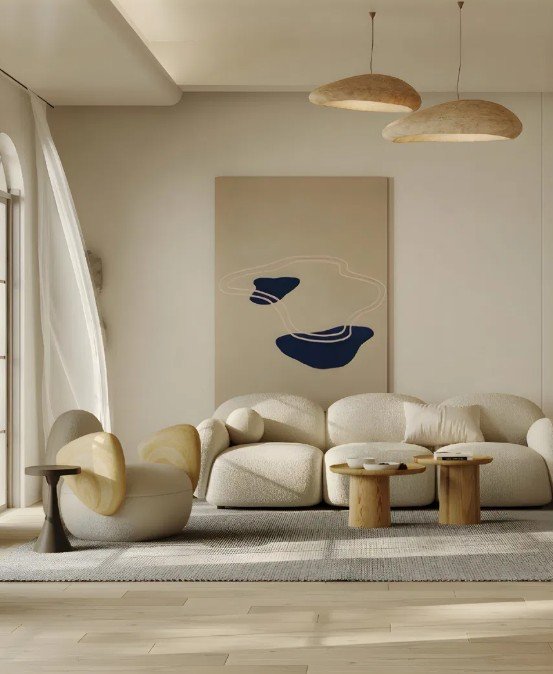
Here, a tall beige canvas holds two deep blue shapes joined by a thin pale line, and it’s the only dark color in the room. Everything else stays creamy, from the rounded bouclé sofa to the pebble-shaped chair and the woven pendants. The blue gives the eye somewhere to rest, so the soft shapes don’t blur together. Keep the accent to a single piece and let the rest stay quiet.
Pick a Live Edge Table
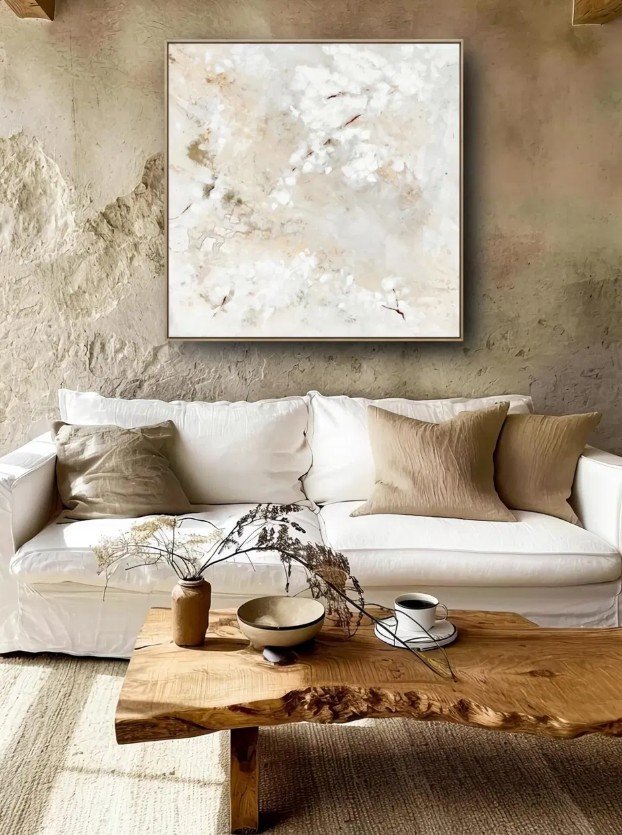
A rough-edged table doesn’t have to feel rustic. In this space, a live edge slab with a wavy, uneven side sits in front of a slouchy white sofa and a heavily textured plaster wall. What we like most here is the loose bunch of dried stems trailing across the tabletop, which looks picked, not arranged. Skip the matching coasters and let one bowl, one vase, and a cup do the work.
Repeat the Circle
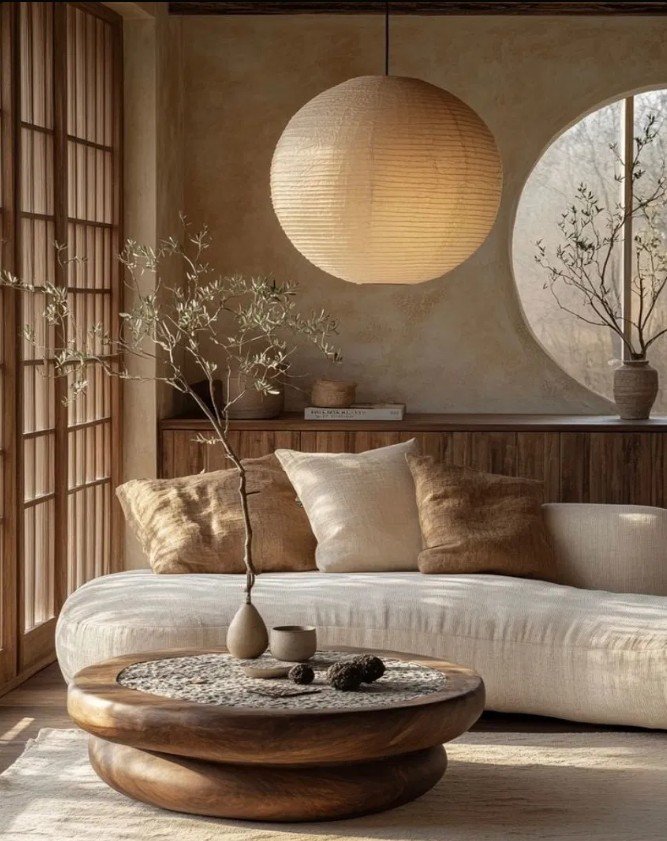
Echo one shape and the whole room falls into place. Take a cue from this room, where a round paper lantern, a round window cut into the plaster, and a chunky two-tier table in dark wood all repeat the same circle. The tabletop is filled with pale pebbles like a tiny rock garden, with a single olive branch in a small vase. The curved cream sofa behind it keeps the repeat soft.
Mix Salvaged Wood With Molding
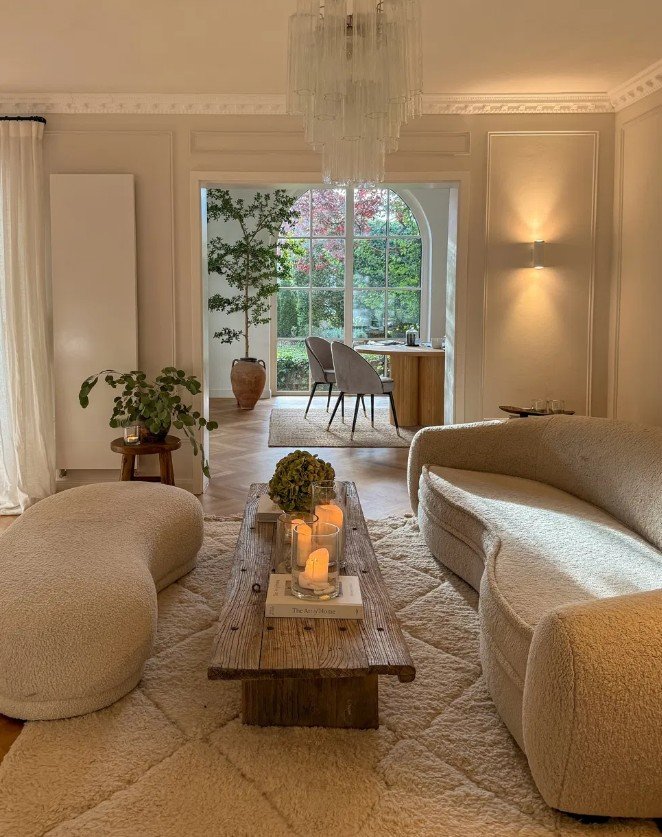
What a pairing. As seen in this space, a battered plank table with dark metal fixings sits between kidney-shaped bouclé seats, under crown molding and paneled walls. The old wood keeps the formal room from feeling stiff, and candles in tall glass holders warm it up at dusk. If your home has classic trim, this mix works well, and a secondhand plank bench makes a low cost stand-in.
Group Handmade Bowls Together
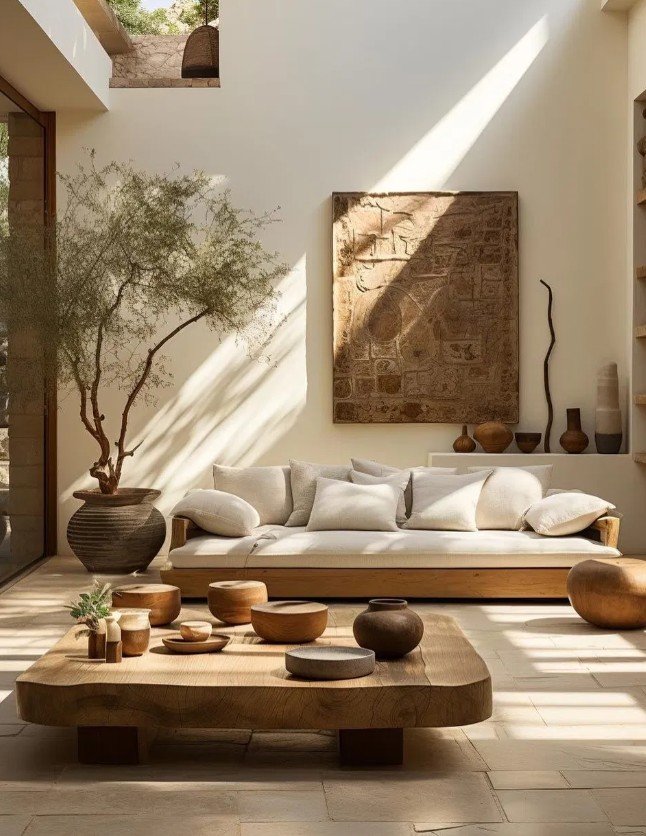
Handmade pieces look best in groups. Like this living room, try a thick, low wooden slab holding a loose cluster of wood bowls, clay pots, and a small stone dish, all in earthy browns with no two alike. Our favorite detail is how the pieces sit at different heights, which feels collected over time. Set out three or more in one color family and leave some bare wood between them.
Choose Matte Brass
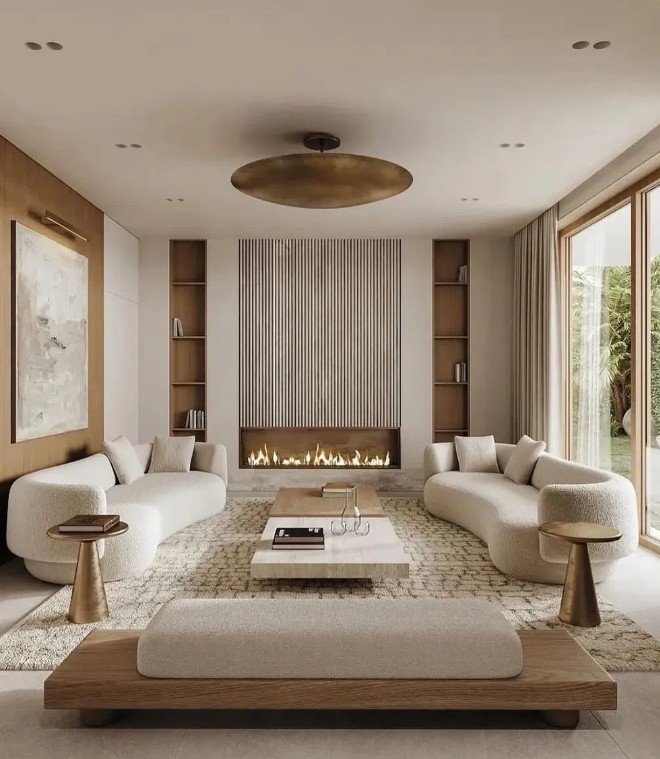
If brass feels too shiny for you, look for a soft, matte finish. This setup pulls it off with a wide, dull brass disc overhead and two cone-shaped side tables in a similar warm metal at each end of the seating. Because the finish is muted, the metal reads as aged rather than new. It sits easily beside the pale bouclé sofas and the wood slat wall around the fireplace.
Fill Corners With Clay Jars
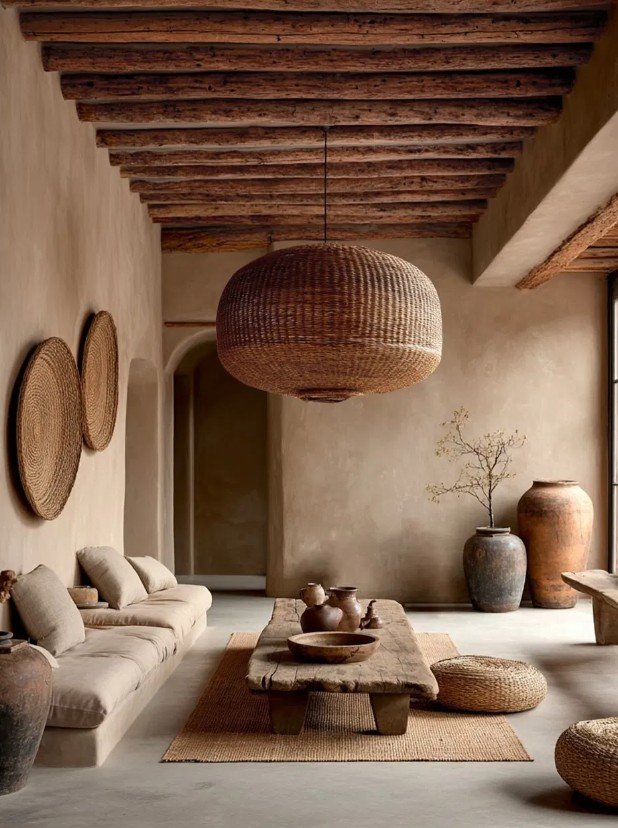
Big, weathered jars stand in the corners of this living room like quiet sculptures, one holding a single flowering branch. Their dusty clay colors match the earthen walls, the woven pendant, and the round baskets on the wall, so nothing looks added on. Look for old or worn pots at antique shops and leave them mostly empty, since one branch is plenty.
Sculpt the Wall With Arches
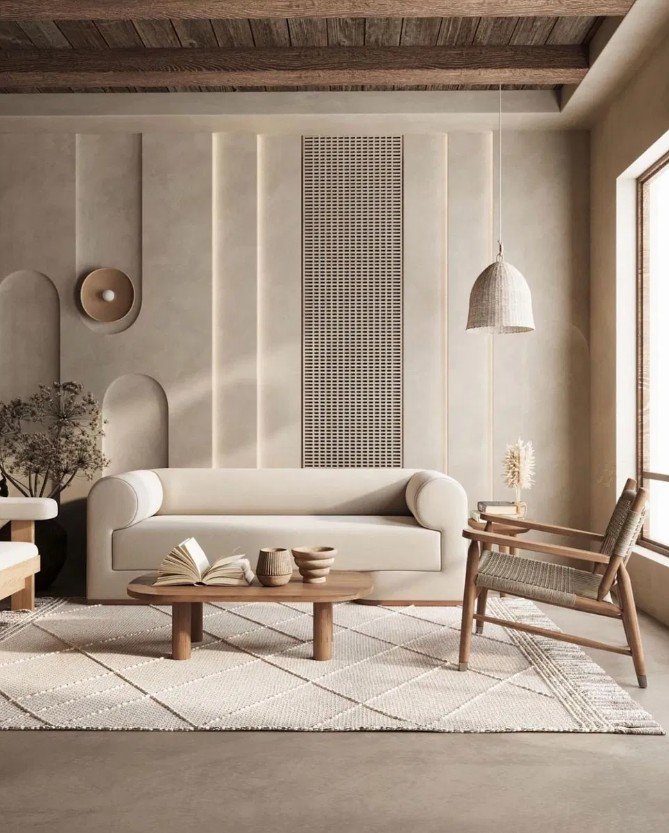
Plaster walls don’t have to be flat. We can’t get over the soft arches pressed into this one, with tall, pale ridges running up beside a narrow wooden lattice panel. It gives the wall depth without a single picture, and the window light makes the shadows shift through the day. Keep the furniture simple, like the rounded sofa and low wood table here, so the wall stays the star.
Cluster Paper Lanterns
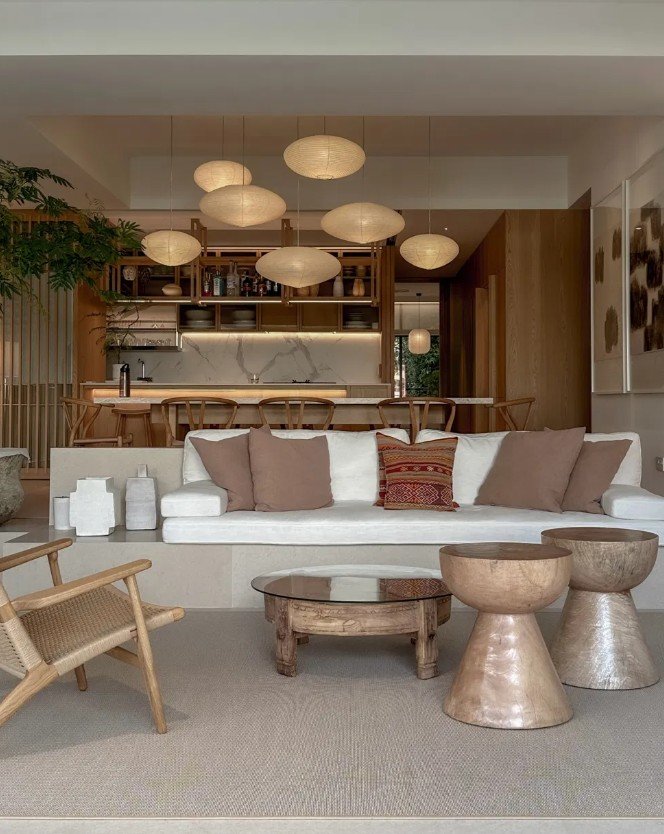
An open plan room needs one thing that ties the zones together. Here, a loose group of paper lanterns in slightly different oval and round shapes glows over the kitchen bar, and the warm light reaches the white linen sofa in front of it. We’re big fans of the chunky hourglass wood stools used as side tables, each one carved and slightly different. Paper shades are easy to find at a low price, so this one works on almost any budget.
Layer Oak Through the Room
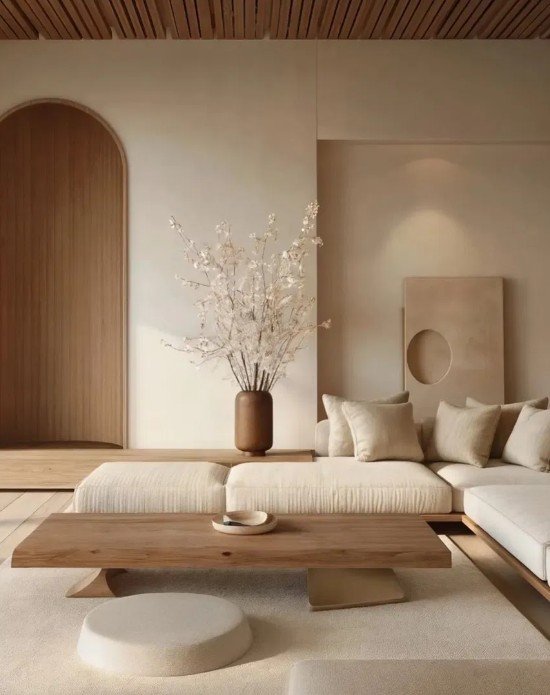
If your living room feels a little flat, more of one wood can add depth. This room repeats oak in a slat ceiling, an arched door, a thick slab coffee table, and the low frame under the sofa, all in slightly different tones. Cream cushions and a round floor pouf keep it soft. One tall vase of pale branches is the only decoration it needs. Keep the wood tones close, but don’t try to match them exactly.
Wrap Shelves in a Curve
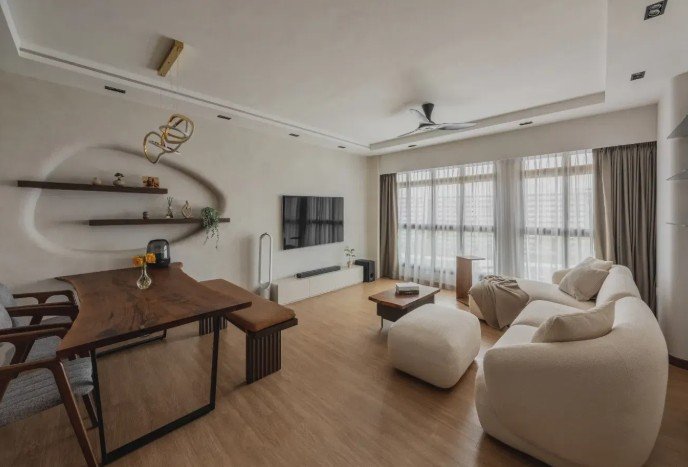
Give a shelf a soft outline and it starts to feel like part of the wall. Take a cue from this space, where a wide oval relief in pale plaster frames two dark floating shelves holding small pots, a trailing plant, and a diffuser. The curve is echoed by a rounded bouclé sofa and a live edge dining table nearby. Renters can get a similar look by painting a slightly darker oval behind plain shelves.
Ground Pale Sofas With Dark Wood
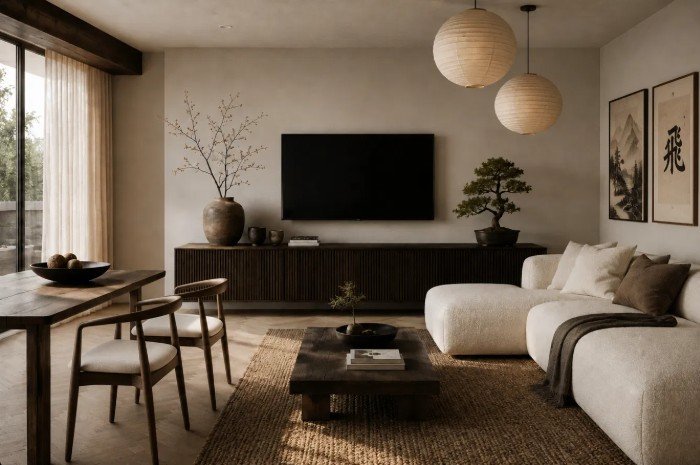
A pale room doesn’t have to float away. Here, a creamy, textured sectional sits beside a chunky, dark plank coffee table and a low fluted sideboard, all on a woven jute rug. A gnarled bonsai and a big clay vase with bare branches add a little green and height. Choose dark wood in a matte finish so it reads as weathered instead of glossy.
Paint a Narrow Room Clay
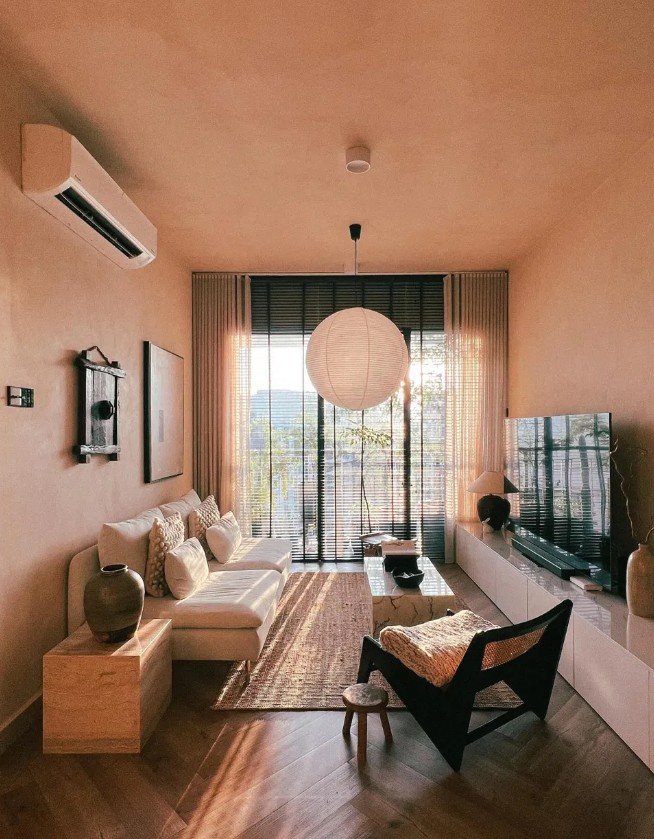
Talk about a glow. In this small living room, the walls and ceiling are washed in the same soft, clay-toned pink, so the corners blur and the space feels wrapped instead of boxed in. A big round paper lantern hangs in front of tall windows, and a travertine block doubles as a side table beside the white sofa. Painting the ceiling the same color as the walls is a simple way to make a tight room feel calmer.
Pair Worn Leather With Linen
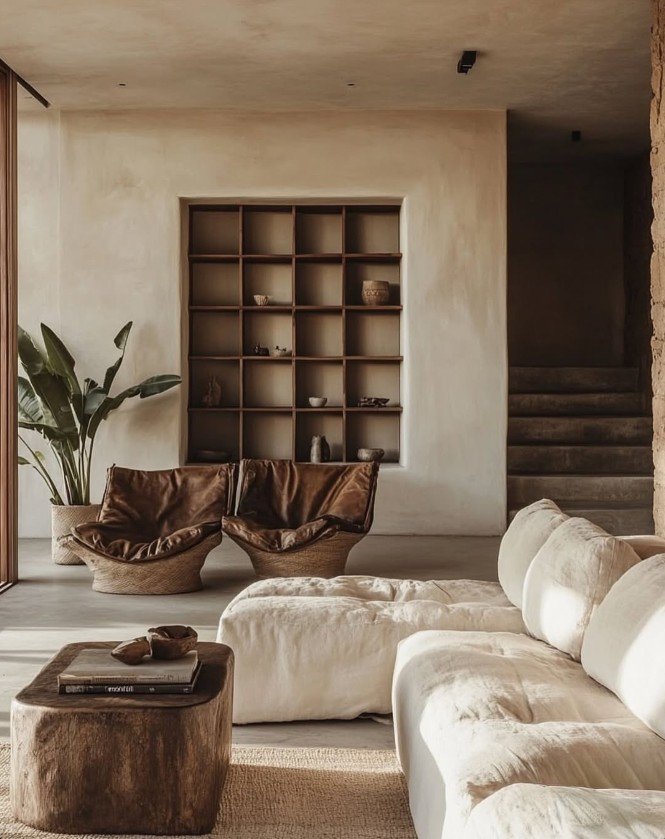
If your seating is all soft and pale, one worn leather piece gives the room some backbone. In this room, a pair of creased brown leather chairs sits in woven bases beside a slouchy cream linen sofa, so neither material feels flat. A chunky, rough-cut wood block works as the coffee table, and a square grid of open cubbies in the plaster wall holds only a few small bowls. Secondhand leather chairs are an easy way to get the same lived-in look.
Lean Art on the Mantel
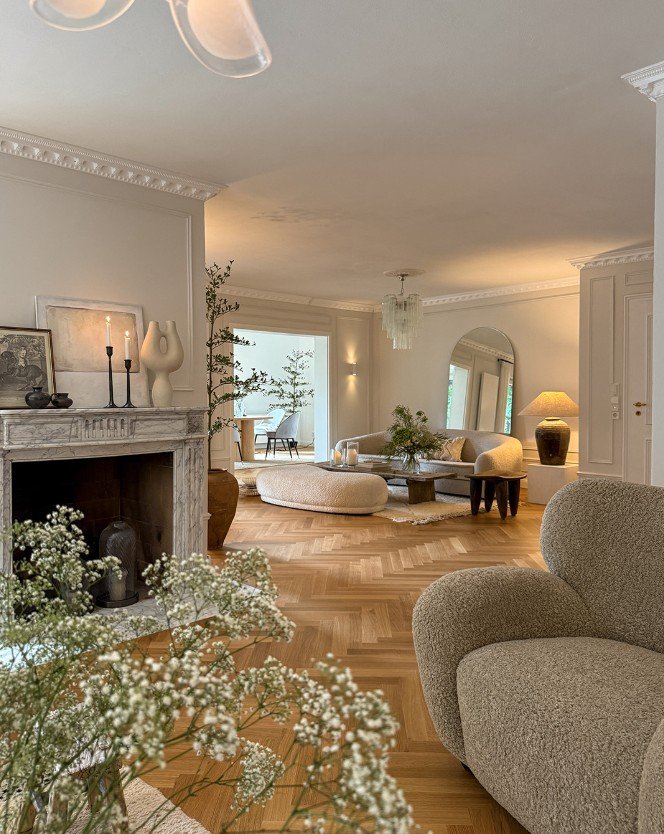
A mantel feels more relaxed when nothing is hung. In this living room, a pale abstract canvas rests against the wall behind two tall black candlesticks and a curvy cream vase, with an old framed print tucked in at the side. Airy white blooms spill in front of the veined stone surround, and the herringbone floor adds warmth below. Leaning art costs less than hanging it, and you can swap pieces whenever the mood changes.
Keep It Tonal in Greige
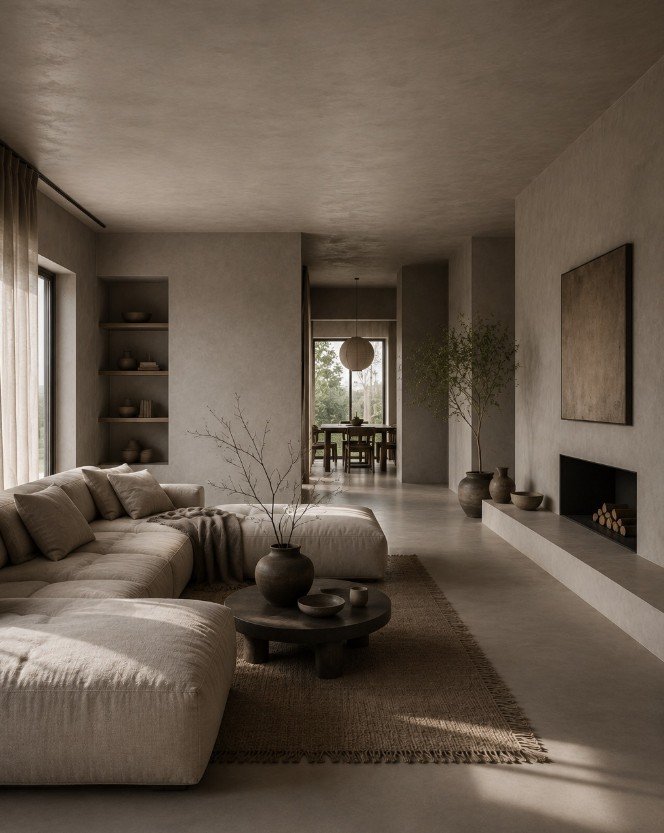
Earthy doesn’t have to mean warm brown. In this living room, the plaster walls, ceiling, and floor all sit in the same soft gray-beige, so the low tufted linen sectional and the round dark wood table stand out without effort. A fringed jute rug and a few clay jars add just enough texture. If a whole room feels like too much, try one wall in a matte greige limewash.
Try an Olive Green Sofa
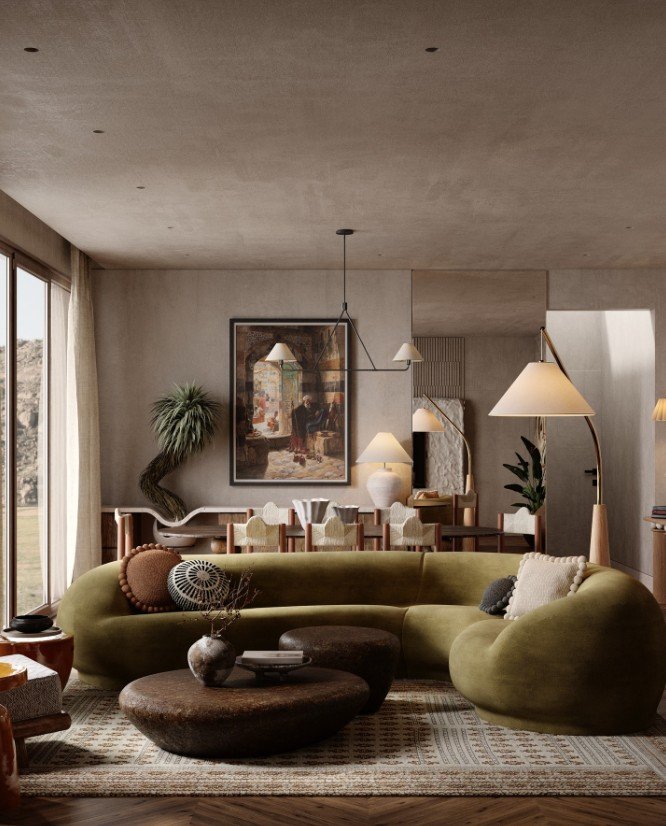
Wabi sabi doesn’t have to mean beige. Take a cue from this room, where a big curved sofa in soft olive green anchors the seating, trimmed with pom-pom cushions in rust, cream, and charcoal. Two pebble-shaped dark tables sit low in front of it, and a patterned rug in cream and clay ties the colors together. Keep everything else muted so the green stays calm. A slipcover or an olive throw is a lower cost way in.
Conclusion
The best rooms in this style feel collected, not staged. Start with one rough material, like a plank table or a textured plaster wall, and add slowly from there. Let the linen wrinkle and the wood keep its marks. Save these wabi sabi living room ideas for the next time your living room needs a warmer, quieter refresh.