

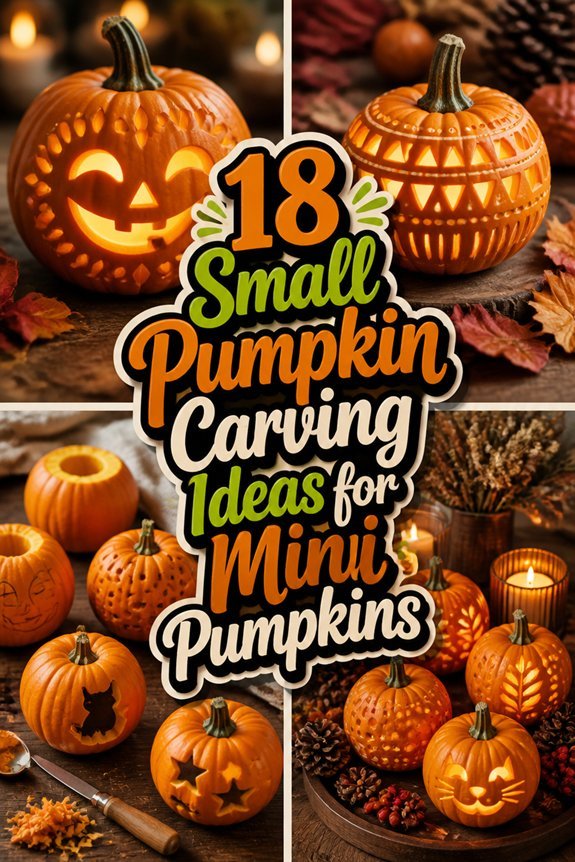
Mini pumpkins are perfect for quick, satisfying projects that don’t demand an entire afternoon or a garage full of tools. Classic grins and spooky ghosts never fail, though lately I’ve been drawn to simple celestial shapes and clean geometric lines that feel fresh and modern.
Grouping them by color or theme creates instant impact on a mantel or doorstep. A few well-placed tea lights, and these little gourds transform any space into something truly seasonal.
Classic Jack-O’-Lantern Face
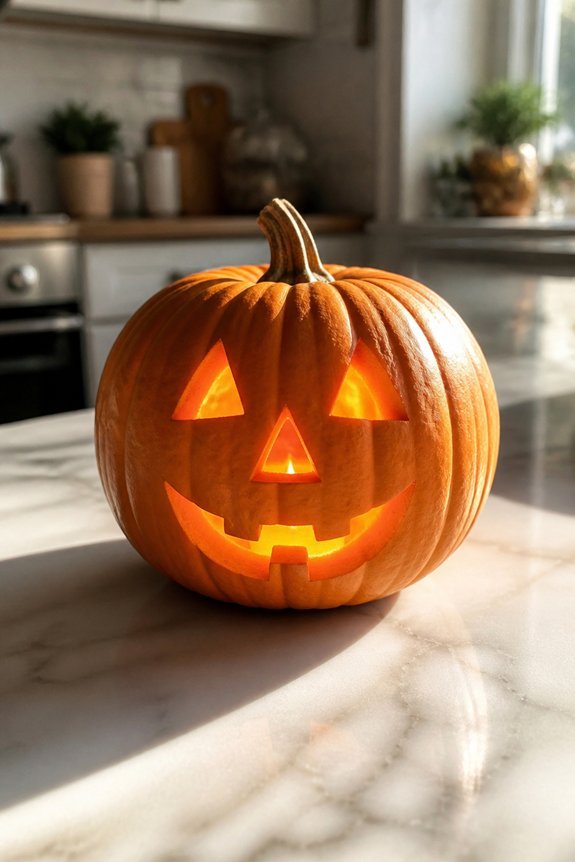
The timeless jack-o’-lantern represents the most recognizable pumpkin design, featuring a carved face with triangular eyes, a triangular or square nose, and a wide grin.
Small pumpkins work well for this design since their compact size requires minimal carving effort.
Beginners can sketch the face lightly with a marker before carving, using a small saw or carving knife for precise cuts along the outlined features.
Spooky Ghost Design
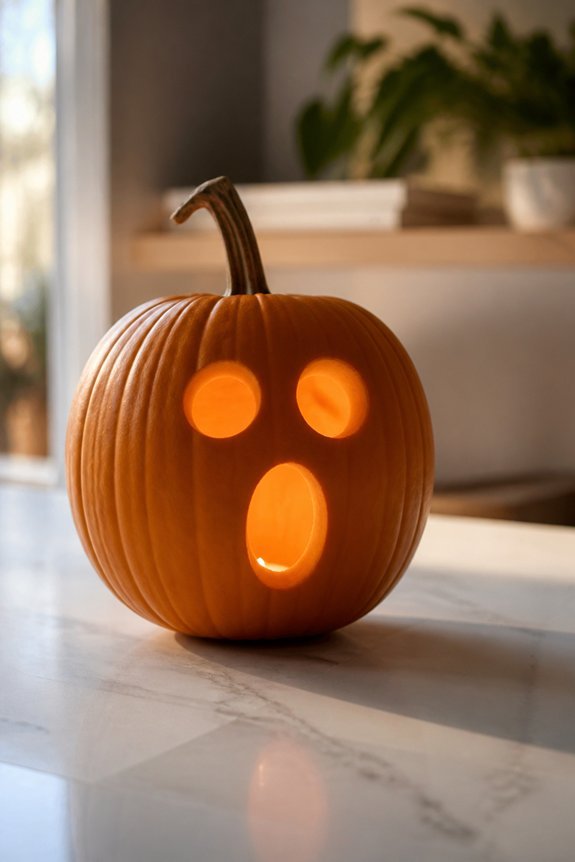
For those seeking a simpler alternative to facial features, a spooky ghost design offers an effective option for small pumpkins. Carvers create a rounded ghost shape, adding two oval eyes and a wavy mouth opening.
This design requires fewer cuts than detailed faces, making it suitable for smaller surfaces.
The ghost silhouette produces adequate light diffusion when illuminated from within, creating a recognizable Halloween decoration.
Cute Animal Faces
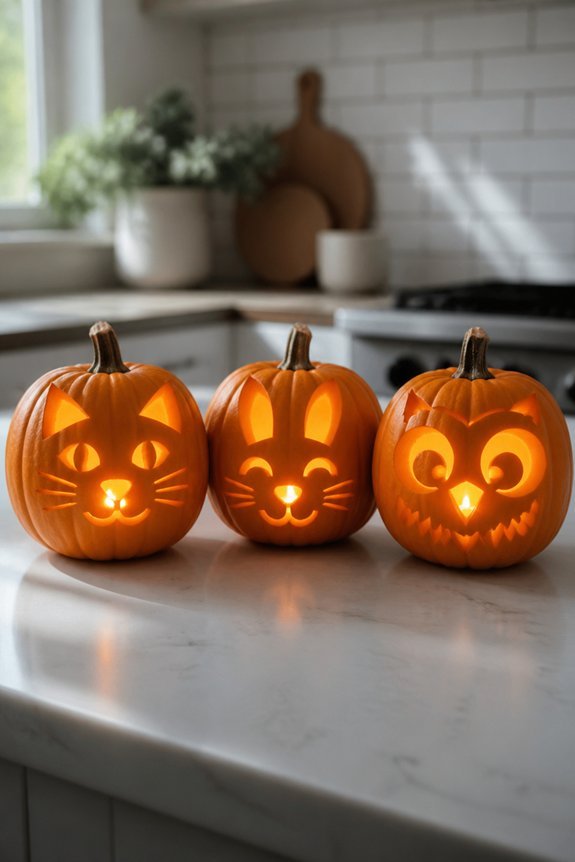
Several animal designs work well for small pumpkins, including cats, owls, and pigs. Carvers can create simple features like triangular ears, round eyes, and curved mouths using basic knife techniques.
Cats require pointed ears and whiskers. Owls need large circular eyes and small beaks. Pigs feature round snouts and floppy ears.
These designs offer straightforward carving patterns suitable for miniature pumpkins.
Celestial Magic: Stars, Moons, and Planets
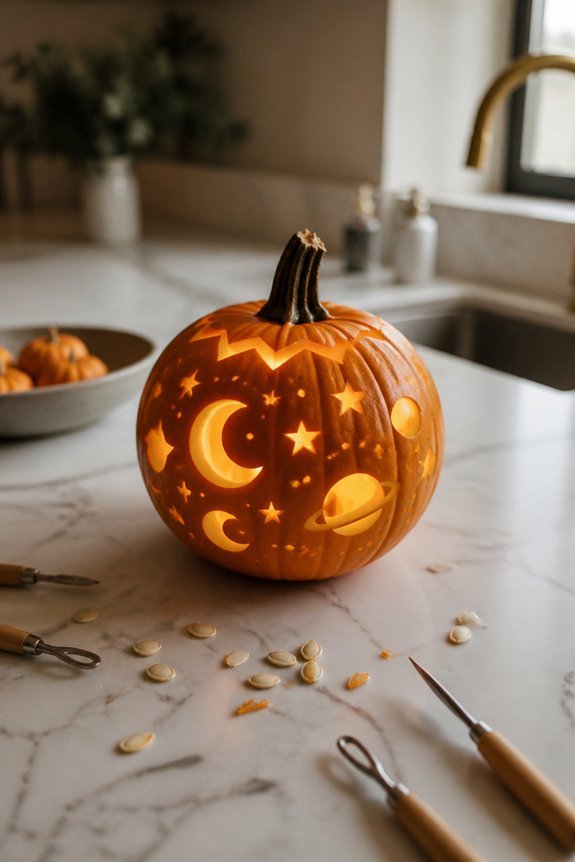
Celestial designs offer another category of small pumpkin carving options, featuring stars, moons, and planets as the primary motifs.
Carvers can create crescent moons, five-pointed stars, or Saturn with its rings. These patterns work well on miniature pumpkins because they require minimal detail and allow for various size adjustments.
Celestial themes complement autumn decorating schemes effectively.
Punny Pumpkin Designs
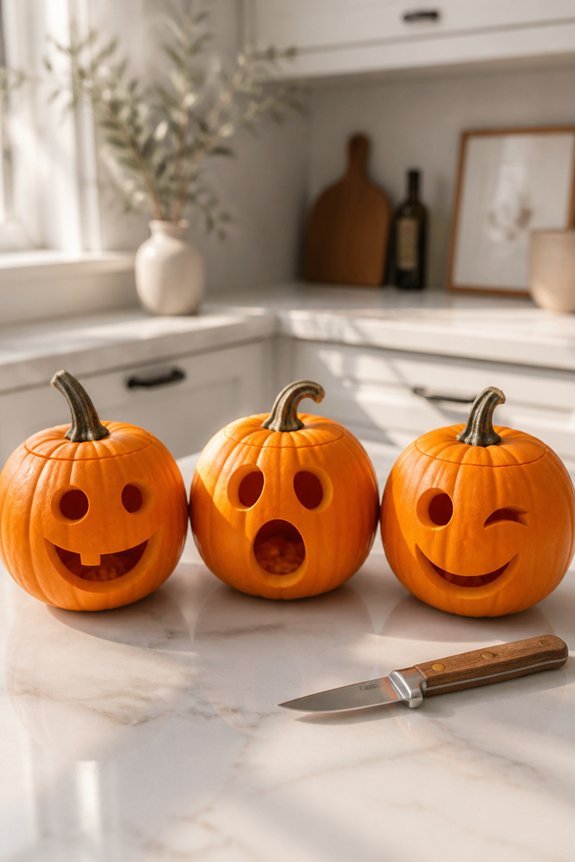
When carvers seek designs that incorporate wordplay and humor, punny pumpkin patterns offer a practical alternative to traditional imagery. Examples include orange you glad, featuring text designs, or vegetable-themed puns like lettuce celebrate.
Small pumpkins work well for these straightforward carved messages.
Carvers can sketch pun-based designs beforehand, ensuring legible lettering on the pumpkin’s surface before cutting begins.
Movie and TV Character Faces
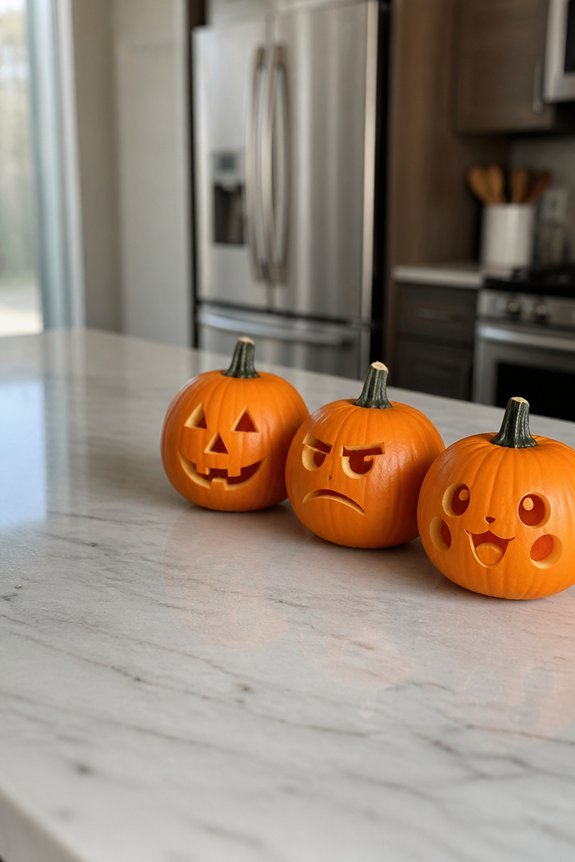
Beyond text-based designs, carved pumpkins can feature recognizable faces from popular entertainment. Small pumpkins work well for characters like Mickey Mouse, SpongeBob SquarePants, or Harry Potter. The simplified facial features of these characters translate effectively to pumpkin carving.
Carvers should sketch templates beforehand, focusing on distinctive elements: large eyes, unique markings, or characteristic expressions. This approach guarantees proportional accuracy on miniature surfaces.
Go Geometric: Patterns and Symmetry
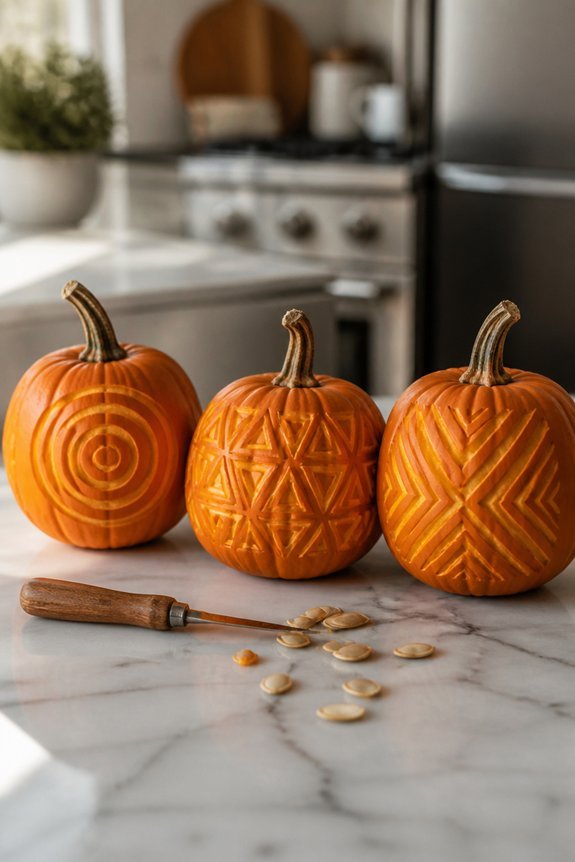
Geometric designs offer an alternative approach to pumpkin carving that relies on mathematical precision rather than representational imagery. Small pumpkins work well for symmetrical patterns, including concentric circles, triangles, and hexagons.
Straight lines and repeated shapes create visual interest without requiring artistic skill. Stencils help maintain accuracy.
These designs suit modern décor and minimize carving complexity compared to detailed character work.
Haunted House Scene
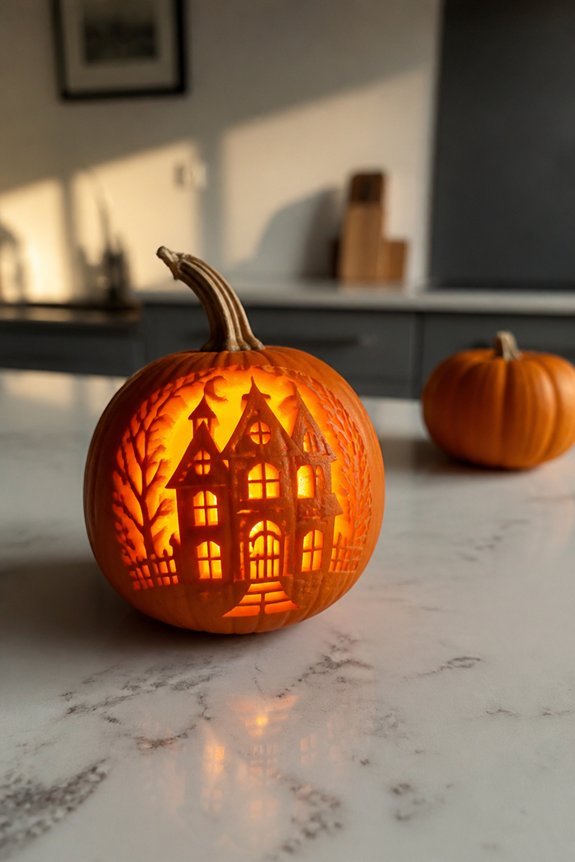
For those seeking narrative depth beyond geometric abstraction, a haunted house carved into a small pumpkin presents an opportunity to combine architectural elements with thematic imagery.
A simple two-story structure with windows, a door, and a crooked roof works well. Adding bare trees, a fence, or a moon enhances the scene.
Fine detail tools create window panes and architectural shadows effectively.
Witch Hat and Broomstick
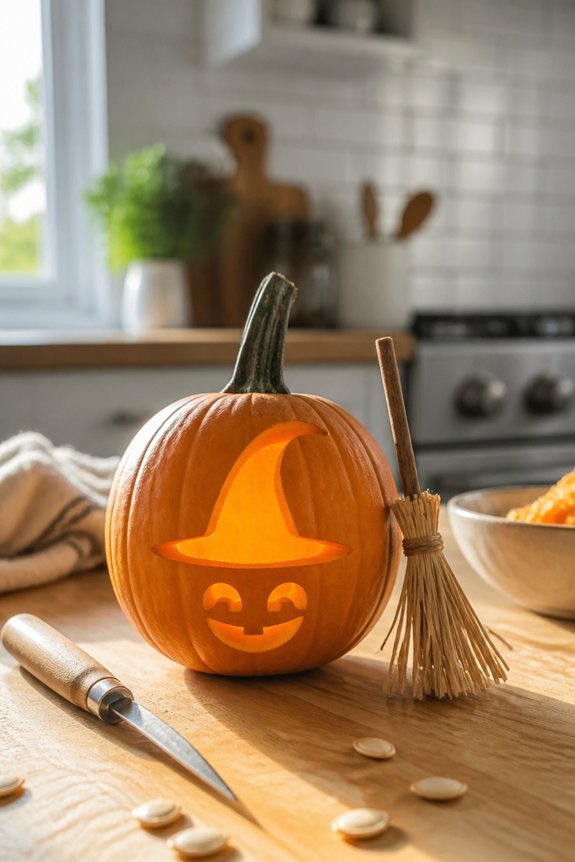
A witch hat and broomstick design offers a straightforward carving option for small pumpkins. The hat requires drawing a simple triangle shape on top, while the broomstick extends downward with thin parallel lines.
Carvers can sketch the pattern with a marker before cutting. This design works well for beginners because the shapes remain basic and forgiving during execution.
Skeleton Skull Design
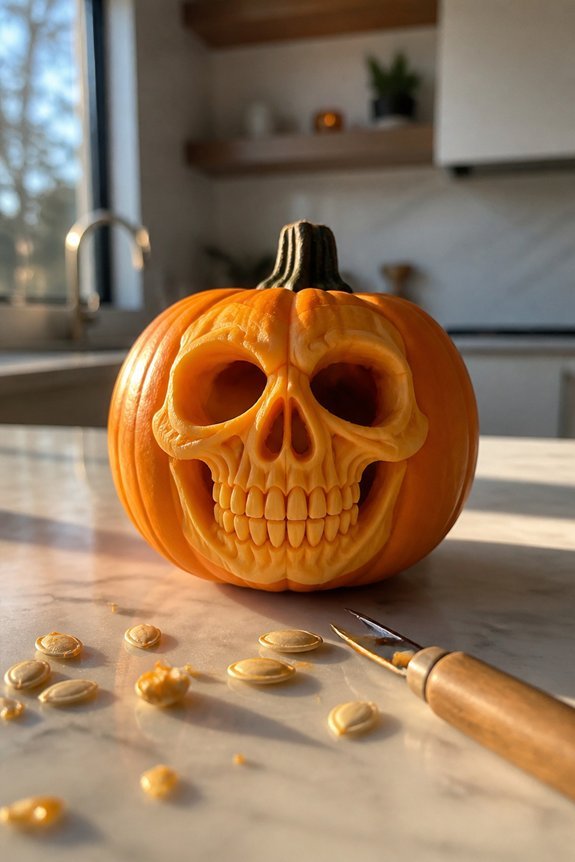
Skeleton skull designs present another option for small pumpkins, building on the straightforward approach of simpler patterns. Carvers can create eye sockets, nasal cavities, and teeth using knife cuts or a saw.
The basic outline requires marking the skull shape first, then removing sections to expose the pumpkin’s interior.
This design works well for miniature pumpkins due to its bold, recognizable features.
Floral and Nature Motifs
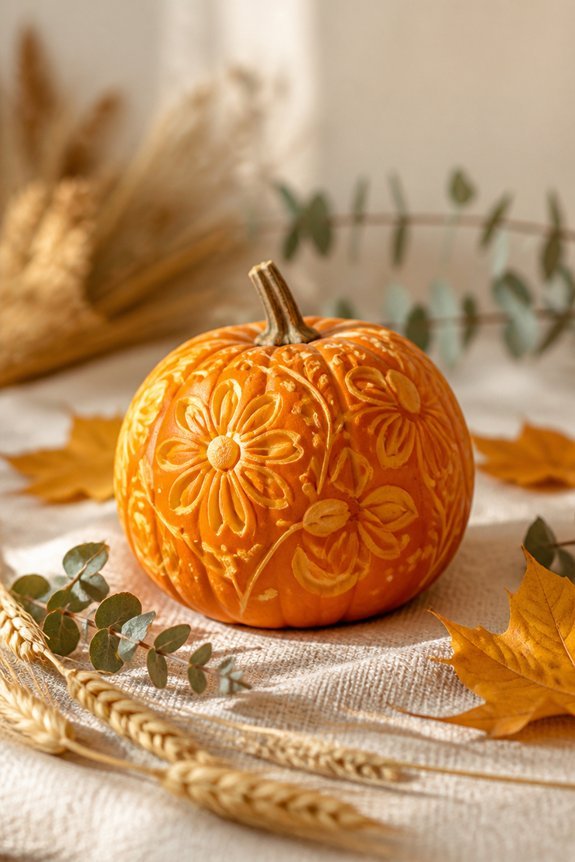
While skeleton designs rely on bold geometric shapes, floral and nature motifs offer a different approach using curved lines and organic patterns. Designs featuring roses, sunflowers, leaves, and vines work well on small pumpkins.
These patterns require careful carving to preserve thin stems and petals. Floral designs benefit from shallow cuts rather than deep gouging, allowing light to illuminate delicate details effectively.
Creepy Monster Faces
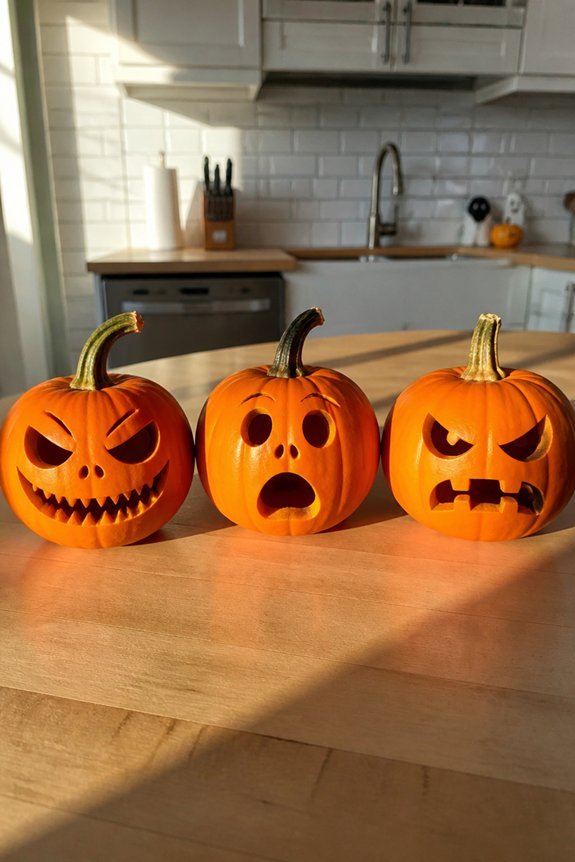
Monster faces offer a straightforward carving option for small pumpkins, using exaggerated features like large eyes, jagged teeth, and asymmetrical proportions.
Carvers can create menacing expressions by positioning triangular or circular eye holes off-center, adding curved mouths with uneven edges, and incorporating nose cavities of varying sizes.
These designs work effectively on small surfaces, requiring minimal detail while maintaining visual impact through contrast and shape variation.
Funny Expression Combinations
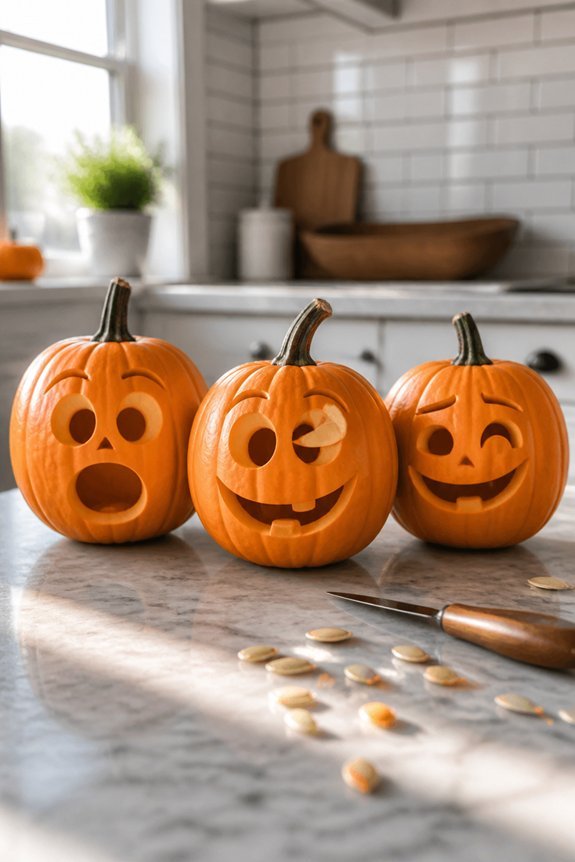
Several approaches exist for creating humorous facial expressions on small pumpkins through strategic carving choices.
Combining asymmetrical eyes with a lopsided mouth produces comedic results. Carving one eye larger than the other, alongside a tilted grin, generates an unbalanced appearance.
Alternating happy and sad expressions on opposite sides creates contrast.
These combinations transform ordinary pumpkins into distinctive decorative pieces with visual interest.
Minimalist Line Art
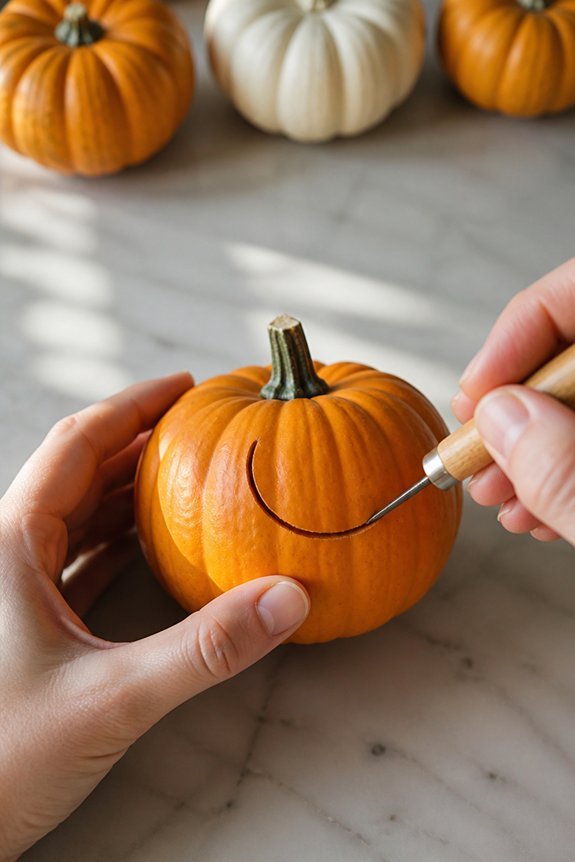
Simple line designs offer an efficient carving approach for small pumpkins, requiring fewer cuts and less detail work than complex patterns.
Geometric shapes, curved lines, and simple facial features work well for this method.
Examples include crescent moons, straight lines forming grids, or basic star outlines.
This approach minimizes carving time while maintaining visual clarity on smaller surfaces.
Glowing Galaxy Effect
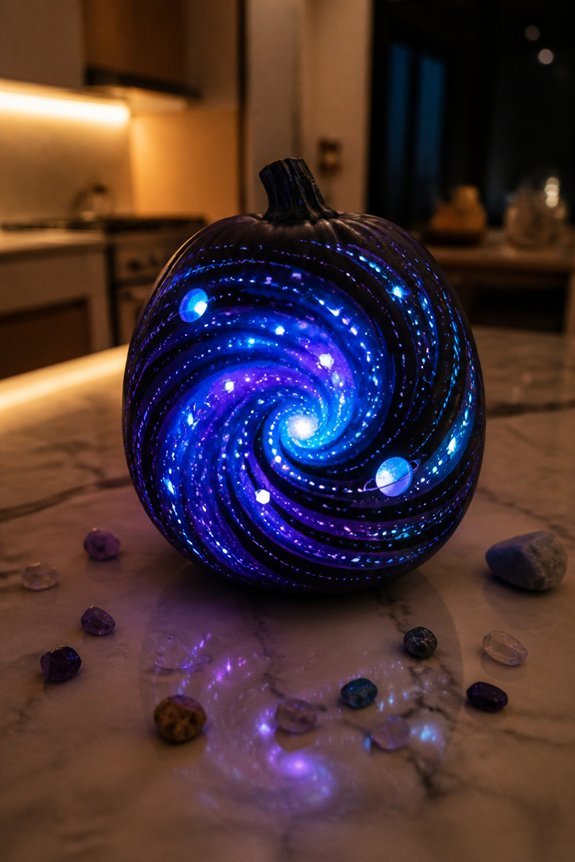
A celestial theme transforms small pumpkins into miniature night skies through strategic carving and lighting techniques. Carvers create star patterns, nebula swirls, and planet silhouettes by removing portions of the pumpkin skin.
Placing LED lights, glow sticks, or colored bulbs inside produces the luminous effect. Blue, purple, and white lighting colors enhance the cosmic appearance.
This method works particularly well on smaller pumpkins, where detailed carving remains manageable and light projection appears more dramatic.
Seasonal Holiday Mashups
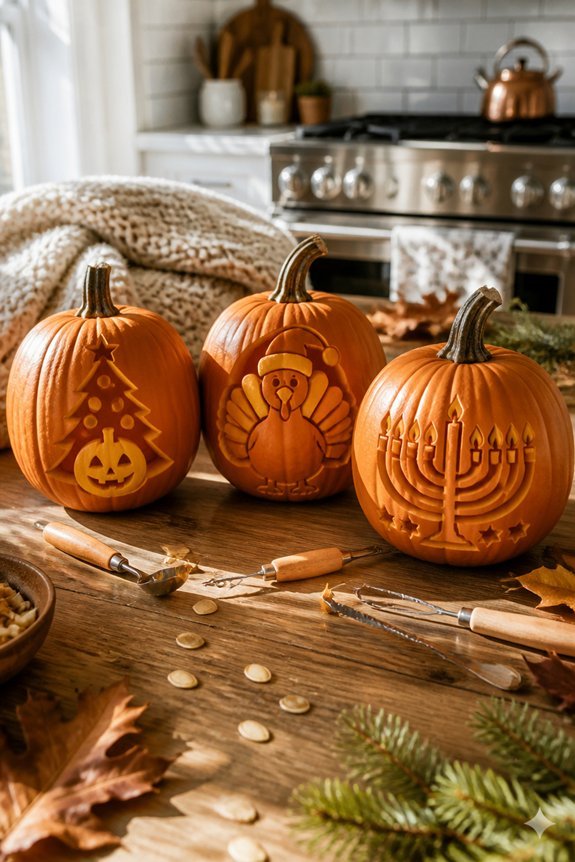
Why limit pumpkin designs to October when holiday seasons offer multiple carving opportunities throughout the year?
Christmas pumpkins can feature snowflakes, ornaments, or Santa faces.
Valentine’s Day designs include hearts and cupids.
Easter mashups combine pumpkins with bunnies, eggs, and spring flowers.
Thanksgiving variations incorporate cornucopias, turkeys, and harvest themes.
These seasonal combinations extend decorating possibilities beyond autumn months.
Carving Tools and Techniques for Small Pumpkins
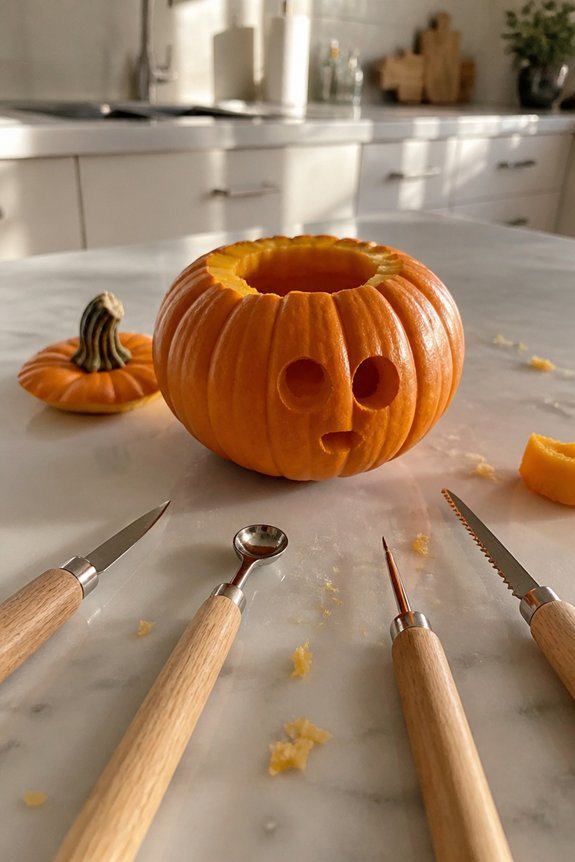
Once the design is selected, whether a seasonal mashup or traditional pattern, the carver needs appropriate tools and methods suited to small pumpkin dimensions.
Standard carving kits include scoops, saws, and poker tools.
Small pumpkins require precision instruments like serrated knives, detail scoops, and fine-tipped etching tools.
Carvers should work slowly, applying steady pressure to avoid puncturing walls.
Professional-grade tools produce cleaner results than kitchen utensils.
Styling Your Mini Pumpkin Display
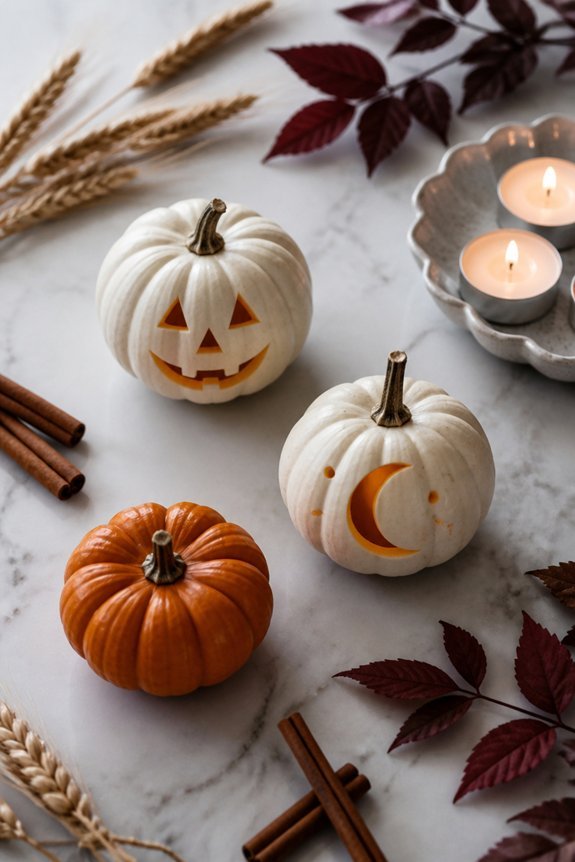
Several styling options can enhance the visual impact of carved mini pumpkins in any display setting.
Grouping pumpkins by size, color, or carving style creates visual organization. Placing them on wooden stands, hay bales, or fabric surfaces adds dimension.
Incorporating battery-operated lights inside carved designs increases visibility and appeal.
Adding complementary decorations like corn stalks, leaves, or candles completes the arrangement effectively.
Frequently Asked Questions
How Long Do Carved Mini Pumpkins Last Before Rotting or Deteriorating?
Carved mini pumpkins typically last five to ten days before deteriorating. The lifespan depends on environmental factors such as temperature, humidity, and sunlight exposure. Keeping them in cool conditions and applying petroleum jelly to cut surfaces can extend their longevity considerably.
Can You Carve Mini Pumpkins the Day Before Halloween or Advance?
Mini pumpkins can be carved several days in advance of Halloween. To maximize freshness, one should store carved mini pumpkins in a cool location and apply petroleum jelly to cut surfaces to slow deterioration and maintain their appearance.
What’s the Best Way to Preserve Carved Mini Pumpkins Longer?
Carved mini pumpkins last longer when stored in a cool, dry place between 50-60°F. Applying petroleum jelly or vegetable oil to cut surfaces slows decay. Refrigeration extends freshness further. Misting with water daily prevents drying and shrinking, keeping them presentable for several days.
Are Mini Pumpkins Safe for Pets if Accidentally Ingested?
Mini pumpkins are safer than a fortress for pets if accidentally ingested. Raw pumpkin flesh poses minimal toxicity risk to dogs and cats. However, carved pumpkins with candles present burn hazards, and seeds may cause digestive upset in large quantities.
How Do You Safely Dispose of Carved Mini Pumpkin Pieces?
One should place carved pumpkin pieces in a compost bin or yard waste container. Alternatively, they can be disposed of in regular household trash. Burying pieces in garden soil promotes decomposition and provides natural nutrients to soil.
Conclusion
Mini pumpkin carving transforms seasonal decorating through accessible creativity. Classic faces, celestial designs, punny themes, and galaxy effects offer varied options for different skill levels. Proper tools, including small scoops and detail knives, guarantee precise results. As the saying goes, “the whole is greater than the sum of its parts”—grouped displays of carved mini pumpkins create striking autumn arrangements. Thoughtful styling by size, color, and theme maximizes visual impact throughout fall.