

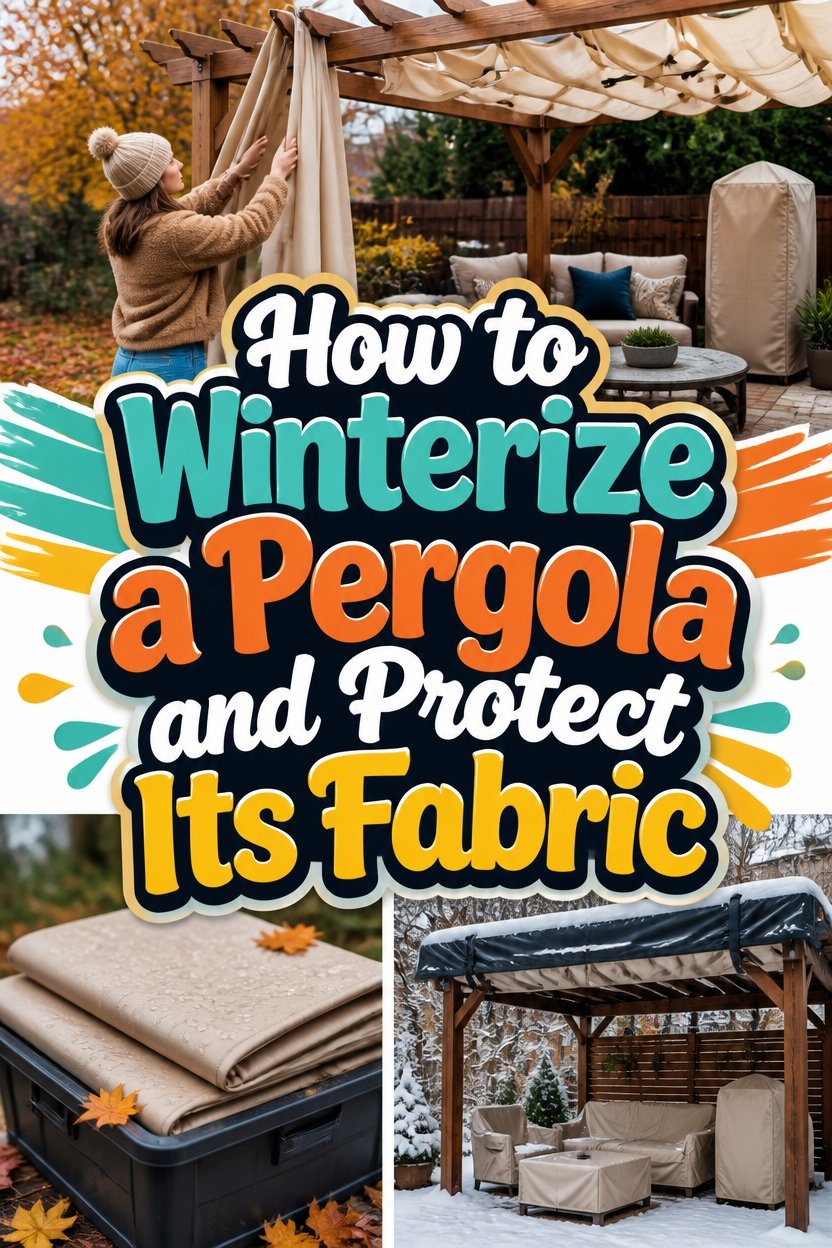
Winterizing a pergola honestly saves so much headache come spring. Canopies, curtains, and fixed panels each need their own approach before freezing weather hits.
I’ll admit I learned this the hard way: storing damp fabric once ruined my favorite curtains. Now I always clean thoroughly, dry completely, then fold everything loosely in breathable containers.
The frame deserves equal care—wood needs sealing, metal needs tightening.
Small efforts now prevent costly replacements later. Trust me, future you will be grateful when warm weather returns and everything looks ready to enjoy again.
When Should You Start Winterizing Your Pergola?
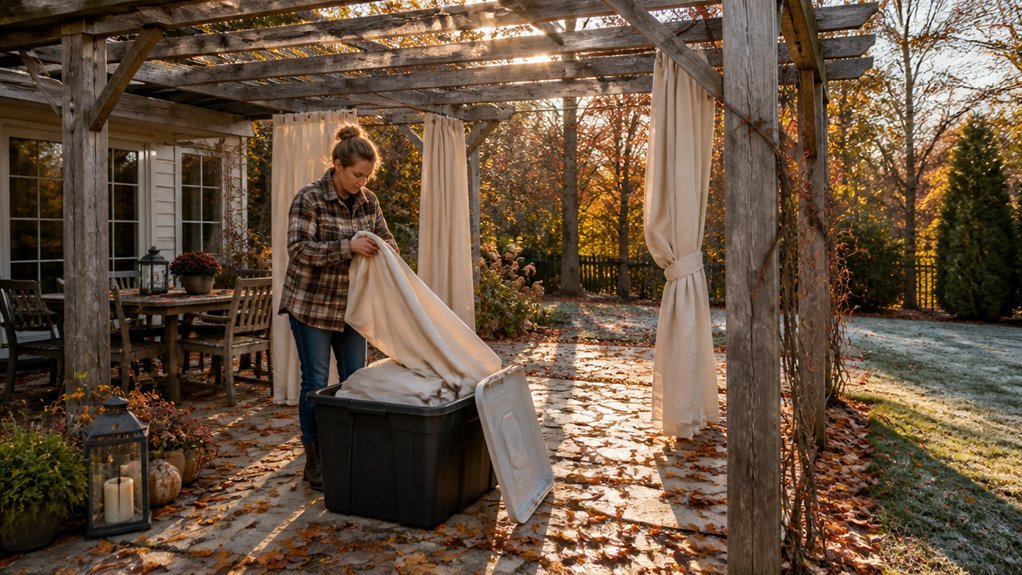
Timing matters when it comes to winterizing a pergola, and most homeowners should begin the process in early to mid-fall. Starting around September or October allows enough time to clean, inspect, and cover the structure before freezing temperatures arrive.
Waiting too long risks damage from early frost, heavy rain, or wind-driven debris. Fabric canopies, retractable shades, and soft materials are especially vulnerable during seasonal changes.
Homeowners in colder climates, such as the Midwest or Northeast, should prioritize earlier preparation than those in milder regions. Watching the forecast for the first expected frost date provides a practical deadline.
Most pergola manufacturers recommend completing winterization at least two weeks before consistent overnight temperatures drop below 40 degrees Fahrenheit.
How to Inspect Pergola Fabric Before Winter Sets In
Once the pergola structure has been cleaned and the winterization schedule is set, fabric inspection becomes the next practical step. Homeowners should examine pergola canopies, shade sails, and retractable covers for visible damage before cold weather arrives.
Key areas to check include seams and stitching, which can fray or separate after prolonged sun and rain exposure. Surface stains and mildew indicate moisture retention and potential fabric breakdown. Tears or thinning spots may appear, especially along edges where tension stress is highest. Hardware attachment points, including grommets, clips, and tensioners, may have loosened.
Fabrics showing significant wear should be removed and stored or replaced before freezing temperatures arrive. Minor damage can often be treated with fabric repair tape or professional patching before winter sets in.
How to Clean Pergola Fabric Before Storing It
Cleaning pergola fabric before storage removes dirt, mildew, and debris that can cause permanent damage during the off-season. Most fabrics respond well to a mild soap solution, such as dish soap mixed with warm water, applied with a soft-bristle brush.
Scrubbing in circular motions loosens embedded grime without damaging the weave or coating. Rinse thoroughly with a garden hose, ensuring no soap residue remains, as residue attracts mold during storage.
For mildew stains, a diluted white vinegar solution or fabric-safe cleaner like Star Brite works effectively. Allow the fabric to air dry completely before folding or rolling, since trapped moisture accelerates mold growth. Storing damp fabric, even briefly, creates conditions that degrade fibers and void some manufacturer warranties.
How to Remove and Fold Canopies and Curtains Without Damaging Them
Removing canopies and curtains carefully helps prevent tears, bent grommets, and creased fabric that can weaken material over time. Starting from one end and working toward the other keeps tension even and reduces strain on attachment points. Unclipping curtain rings, sliding panels off tension rods, and detaching hook-and-loop fasteners before pulling fabric free avoids stress on seams.
Two people handling larger canopies prevents dragging across rough pergola beams. Once removed, fabric should be folded in clean, even sections rather than bunched loosely. Rolling polyester or acrylic panels around a cardboard tube prevents deep creases that trap moisture and stress fibers. Accordion-style folding works well for lighter curtains made from sheer or cotton blends. Each folded piece should be secured loosely with fabric ties, not tight rubber bands.
How to Store Pergola Fabric So It Lasts Through Winter
Proper storage keeps pergola fabric in good condition and extends its usable life by several seasons. Once fabric is clean and fully dry, it should be folded or rolled loosely to prevent permanent crease lines. Tight folding can weaken fibers along fold edges over time.
Storage containers matter as much as folding method. Breathable bags, cotton storage sacks, or ventilated plastic bins allow air circulation and reduce moisture buildup. Airtight plastic bags trap humidity, which encourages mildew growth.
Fabric should be kept in a cool, dry location, such as an indoor closet, garage shelf, or climate-controlled storage room. Cedar blocks or silica gel packets help control moisture and deter pests. Labels identifying each fabric piece simplify reinstallation in spring.
How to Handle Pergola Fabric That Can’t Be Removed
Some pergola fabrics are fixed in place and cannot be taken down for the season, which means weatherproofing them in position becomes the priority. Applying a waterproof spray, such as Scotchgard Outdoor or Star Brite Waterproofing, adds a protective layer against moisture and mildew.
Fabrics should be cleaned thoroughly before any treatment is applied, removing dirt, debris, and existing mold. Outdoor fabric covers or tarps can be secured over fixed panels to reduce direct exposure to snow and ice. Tension straps or bungee cords help keep covers firmly in place during wind.
Checking the fabric periodically throughout winter allows homeowners to spot pooling water, sagging, or early mildew growth. Addressing these issues quickly prevents deeper damage to the fabric fibers and the pergola structure beneath.
How to Protect Your Pergola Frame From Winter Damage
While fabric care keeps the coverings in good shape, the pergola frame itself needs attention before winter sets in. Wood frames benefit from a fresh coat of sealant or stain, which blocks moisture and prevents cracking. Metal frames, including aluminum and steel, should be wiped down and checked for rust spots, then treated with rust-inhibiting primer if needed.
Loose bolts, cracked joints, and weakened posts should be repaired before freezing temperatures make damage worse. Debris like leaves and wet branches should be cleared from the frame, since trapped moisture accelerates rot and corrosion. For added protection, breathable covers or tarps can shield frame sections during heavy snowfall.
Regular inspection throughout winter helps catch new damage before it becomes a costly structural problem.
Which Pergola Covers and Wraps Are Actually Worth Buying?
Not every pergola cover on the market offers the same level of protection, and choosing the wrong one can leave a frame exposed to moisture, wind, and cold. Heavy-duty polyester covers with reinforced grommets, such as those made by Classic Accessories or Coolaroo, tend to hold up better than lightweight nylon options. Waterproof PVC wraps work well for metal and vinyl frames, while breathable covers suit wood better, reducing trapped moisture.
Buyers should look for UV resistance, a waterproof rating above 300D, and secure tie-down systems. Foam pipe insulation wrap protects joints and connectors effectively. Covers sold without wind vents often trap condensation, leading to mold. Spending slightly more on a quality cover typically costs less than repairing weather damage later.
How to Reinstall Pergola Fabric After Winter Without Causing Damage
Once winter ends and temperatures stay consistently above freezing, reinstalling pergola fabric becomes a straightforward task if done carefully. Fabric should be inspected before attachment, checking for mold, tears, or weakened seams that developed during storage. Canopy panels, shade sails, and curtain panels all attach differently, so reviewing the manufacturer’s guide prevents misalignment or hardware damage.
Attachment points like grommets, hooks, and tension cables should be examined for rust or bending before use. Forcing fabric onto damaged hardware causes tears along edges and stress points. Panels should be attached on a calm, dry day, since wind creates tension that pulls fabric unevenly.
Once secured, fabric tension should be adjusted gradually, tightening incrementally rather than pulling hard in one motion.
Frequently Asked Questions
Can Winter Moisture Permanently Warp or Crack a Wooden Pergola Frame?
Yes, winter moisture can permanently warp or crack a wooden pergola frame. Repeated freeze-thaw cycles cause wood fibers to expand and contract, leading to splitting, warping, and structural damage if left unprotected during colder months.
Does Pergola Fabric Warranty Coverage Include Damage From Winter Weather?
Most pergola fabric warranties explicitly exclude damage caused by winter weather, including snow load, ice accumulation, and freezing temperatures. Homeowners should carefully review their warranty documentation, as manufacturers typically classify harsh weather conditions as uncontrollable environmental factors.
How Do Freezing Temperatures Affect Pergola Fabric Color and Dye?
Like a slow thief in the night, freezing temperatures gradually strip pergola fabric of its vibrancy. Repeated freeze-thaw cycles break down dye molecules, causing fading, discoloration, and uneven pigmentation, notably diminishing the fabric’s original aesthetic appeal over time.
Can You Use a Pergola Safely During Light Winter Snowfall?
During light snowfall, one can safely use a pergola if its fabric and structure are rated for winter conditions. Users should monitor accumulating snow weight, as excessive buildup risks structural strain and potential fabric damage.
What Pests Are Most Likely to Nest in Stored Pergola Fabric?
Spiders, mice, and moths are most likely to nest in stored pergola fabric. Rodents seek warm shelter, moths target natural fibers, and spiders inhabit undisturbed folds. Proper sealing in airtight containers greatly reduces infestation risks.
Conclusion
Winterizing a pergola takes planning, but the process protects fabric and frames from costly damage. Owners who clean, store, and cover materials properly before temperatures drop will find reinstallation far easier in spring. Like a medieval scribe preserving manuscripts for future generations, careful storage guarantees nothing is lost to the elements. Regular inspections throughout winter catch small problems early, preventing larger repairs later.