
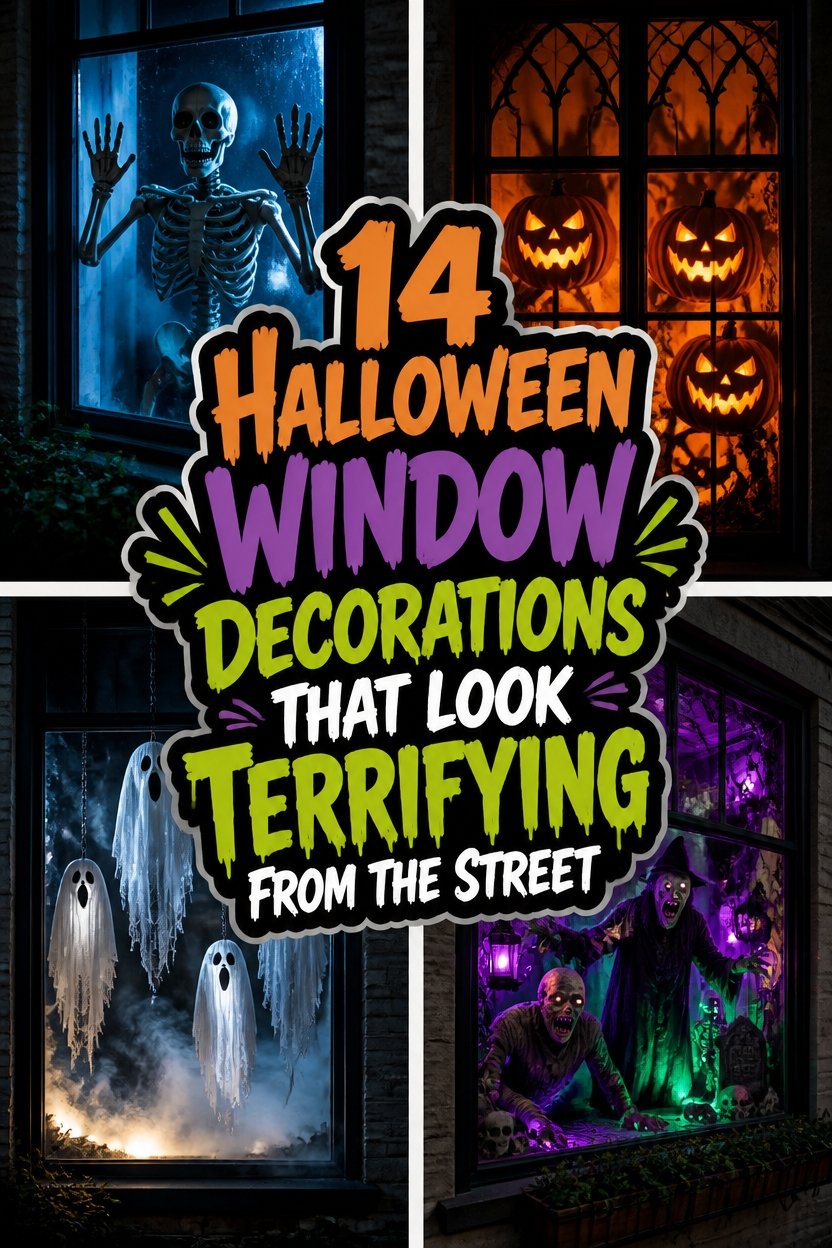
There’s something delightfully wicked about transforming ordinary windows into street-level nightmares. Backlit silhouettes cut from black cardboard, ghostly faces hovering behind sheer curtains, and fog-clouded panes hiding lurking shapes—these classics never fail to make pedestrians quicken their pace.
Mirrors angled just so create dizzying, endless reflections that seem to swallow the street itself.
Add some sickly colored bulbs or a flickering projection, and suddenly your living room becomes a fever dream visible from the sidewalk.
The real magic happens when you layer these tricks together. Start simple, play with the lighting, and watch neighbors cross to the other side of the street.
Ghostly Silhouettes Pressed Against Glass
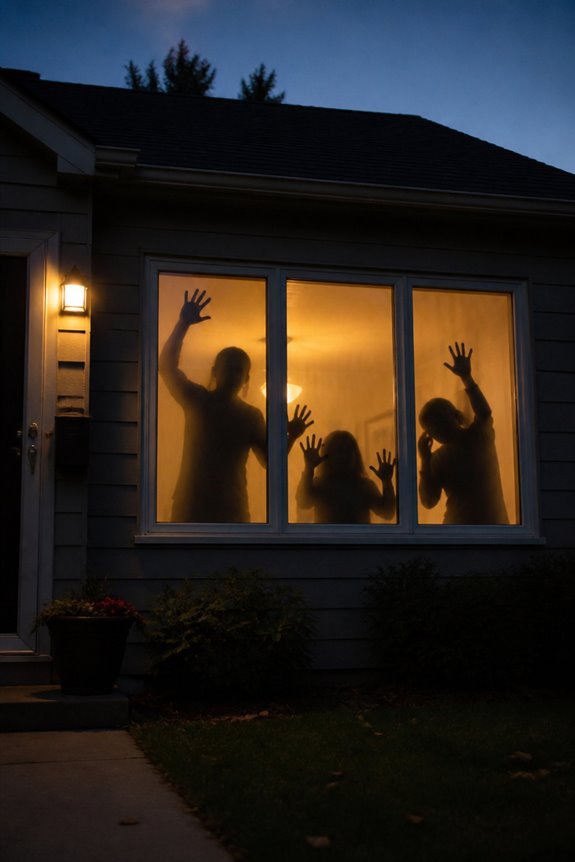
Ghostly silhouettes pressed against windows create an illusion of spirits trapped behind glass, and this effect works by positioning dark shapes against backlit windows at night. Black cardboard cutouts, white sheets, or painted silhouettes serve as effective materials.
Positioning them close to interior lights amplifies the contrast, making figures appear more prominent and eerie from street level. For a gallery-like display effect, consider creating series of small canvases arranged across multiple windows to tell a haunting visual story.
Floating Ghostly Faces Behind Curtains
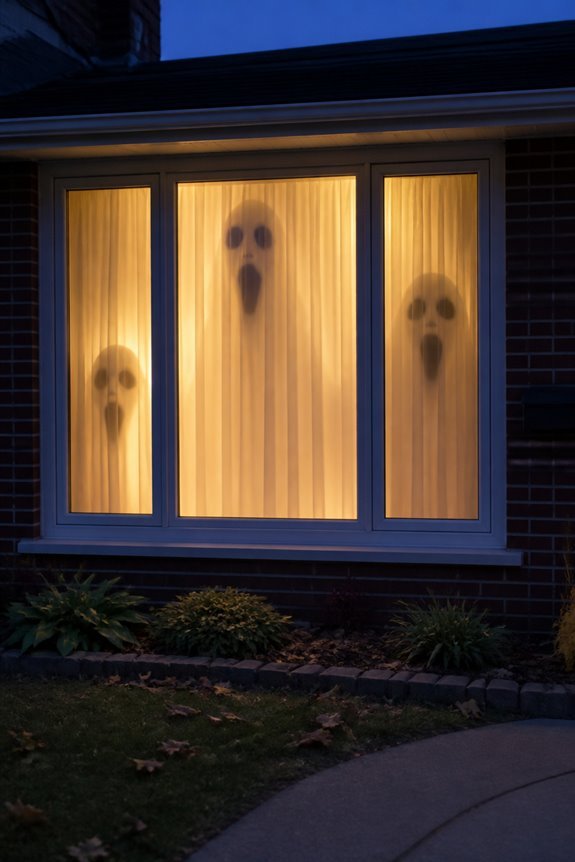
Faces-behind-curtains effects create an appearance of spirits hovering within windows, achieved by positioning illuminated head shapes behind semi-transparent fabric layers. White foam heads, plastic mannequins, or balloons serve as bases, lit from behind with LED lights or glow sticks. Sheer curtains diffuse the light, producing an eerie floating effect.
Positioning multiple faces at varying depths enhances the illusion, creating dimension and unsettling visual impact for street viewers. Staggered layouts and alternating heights create rhythm and flow that maximize the eerie visual impact from different viewing angles.
Haunted Mirror Illusions
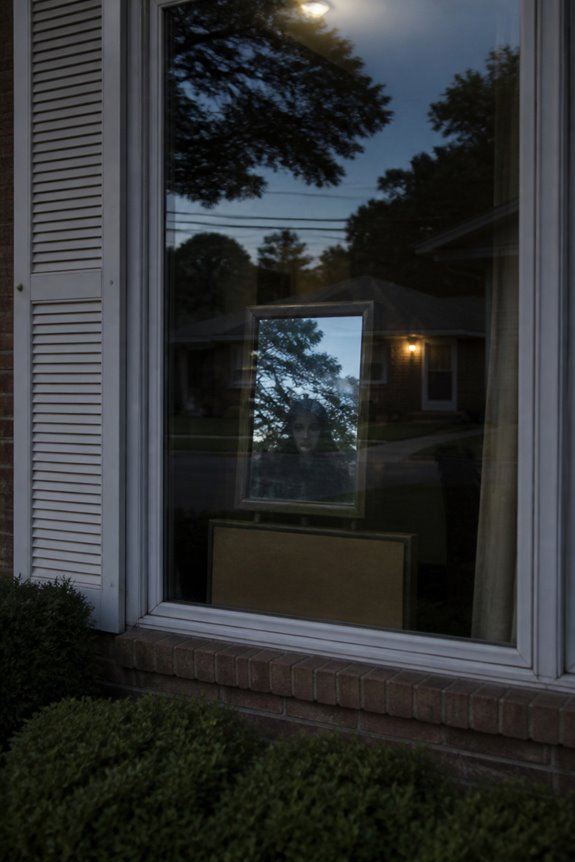
Mirrors positioned strategically within windows create disorienting reflections that suggest supernatural presences. Placing angled mirrors reflects adjacent decorations, outdoor scenery, or interior lighting to produce unexpected images.
Layering multiple mirrors generates complex visual distortions. Adding LED lights behind mirrors amplifies the illusion. Covering mirror sections with black fabric creates shadowy voids. These techniques produce unsettling effects visible from the street without requiring complex installation. The reflective qualities of mirrors can amplify overall brightness from interior lights, making the supernatural effects more visible and dramatic to passersby.
Glowing Eyes Peering From the Darkness
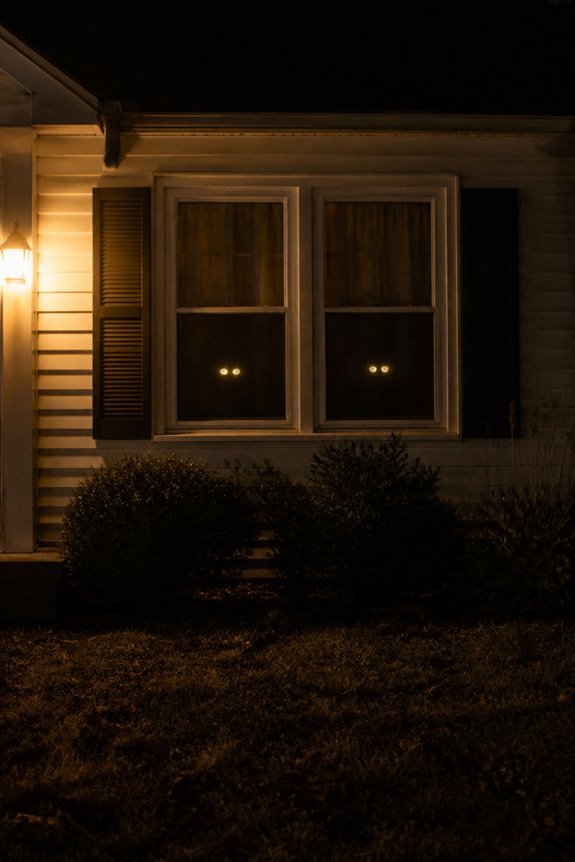
As darkness falls across the evening hours, simple light sources positioned within windows can create the appearance of eyes watching from inside. LED lights, battery-operated candles, or small flashlights work effectively for this purpose.
Placing two light sources at eye level, spacing them apart, produces a realistic watching effect. Yellow, red, or green bulbs enhance the unsettling appearance. Positioning lights behind sheer curtains increases the illusion’s impact. Sheer curtains work similarly to how layered lighting in holiday decor creates magical ambiance.
Zombie Hands Clawing at Window Panes
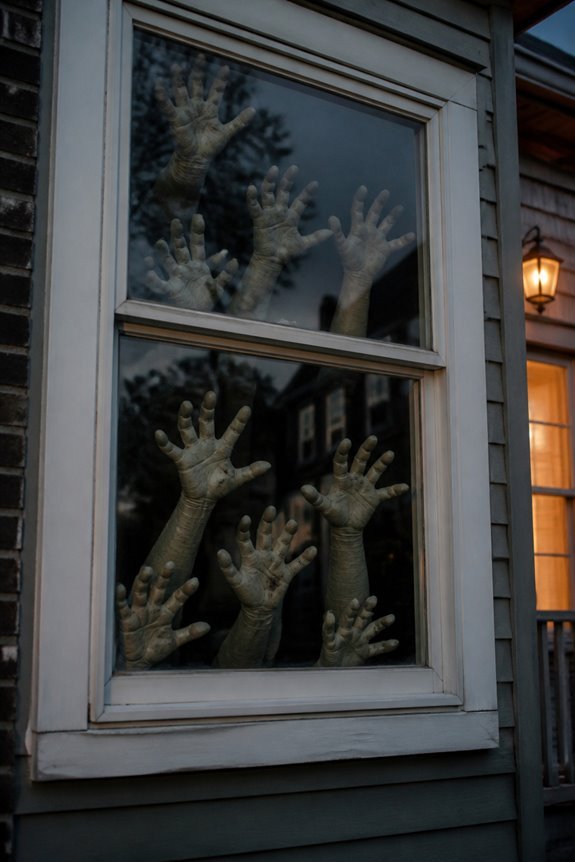
Creating the illusion of zombie hands pressing against window glass requires props, positioning, and lighting coordination. Foam or latex hands, attached to window frames or ledges, effectively simulate clawing motions. Dark clothing behind hands increases contrast. Green or gray paint adds decay appearance. Interior backlighting creates silhouettes.
Positioning hands at varying heights along multiple windows enhances the effect. This setup generates visible street-level impact from exterior viewing angles.
Severed Limbs on the Sill
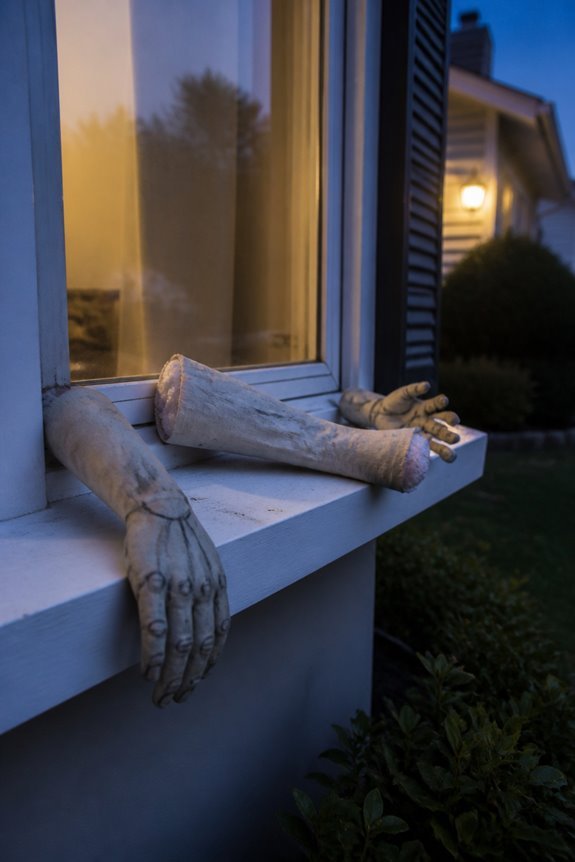
Placing foam or rubber limbs along windowsills produces a stark, unsettling display that captures viewer attention from street level. Realistic severed arms, legs, and hands arranged on exterior sills create a convincing horror scene.
Products like foam limbs from costume retailers work effectively, requiring minimal setup. Positioning limbs to appear as though reaching outward or dangling enhances the effect. Paint adds authenticity through blood-like coloring.
Dripping Blood Down the Glass
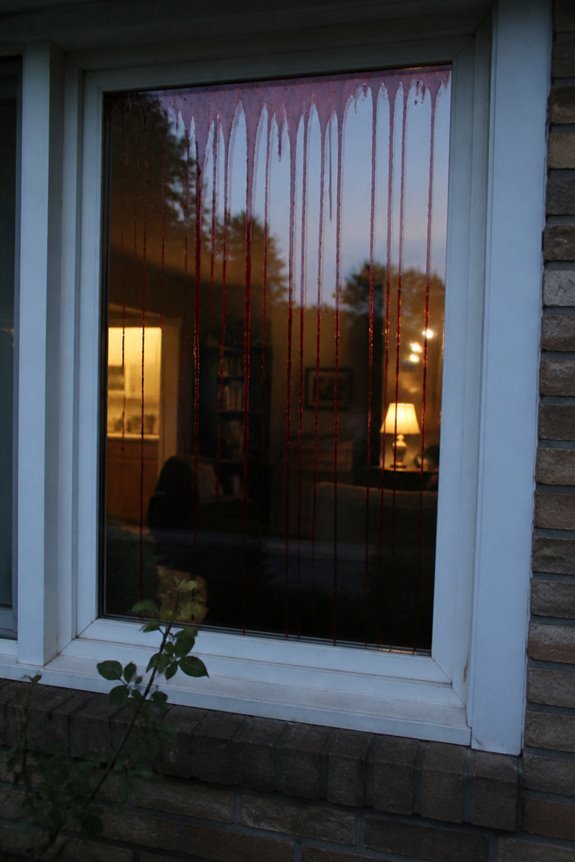
Blood dripping down window panes extends the horror effect beyond the windowsill itself. Red paint or corn syrup mixtures create realistic streaks when applied to glass surfaces. The substance flows downward naturally, mimicking actual blood trails.
Applicators include brushes, sponges, and squeeze bottles for varying drip patterns. This technique works effectively on both interior and exterior windows, enhancing overall Halloween visibility from the street. For those with sensitive skin, be mindful of any prosthetics or makeup you might wear while installing these decorations, as hypoallergenic products are recommended for delicate skin types.
Hanging Skeletons That Sway
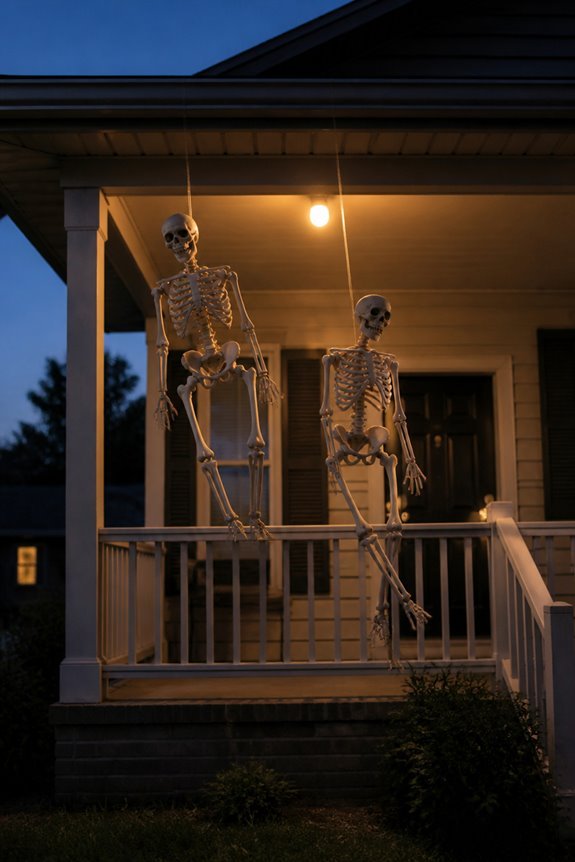
Motion and realism combine when skeleton decorations suspend from windows, trees, or eaves. Plastic or foam skeletons, attached to monofilament line or thin wire, create movement in wind or breeze. Positioning skeletons at varied heights increases visual impact and depth perception. Mounting brackets secure suspension points firmly.
LED lighting beneath skeletons enhances their visibility during evening hours. This approach produces an effective, dynamic display.
Shadowy Creature Silhouettes in Corners
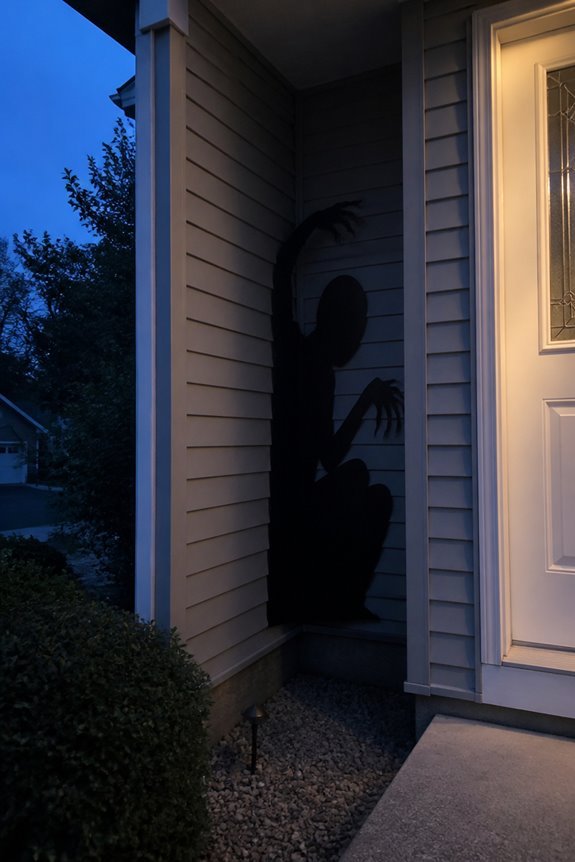
While suspended skeletons provide dynamic movement, stationary silhouettes offer a different visual strategy for window displays. Black cardboard cutouts of werewolves, bats, and ghosts positioned in corners create depth and shadowing effects.
Placing silhouettes at varying heights, using backlighting, and layering multiple shapes produces an illusion of creatures lurking within the window space, enhancing overall visual impact. Much like how accent walls transform a room’s personality with intentional bold choices, these layered silhouettes create maximum visual impact when positioned behind the main window area or opposite the street view.
Cemetery Scene Cutouts Across Windows
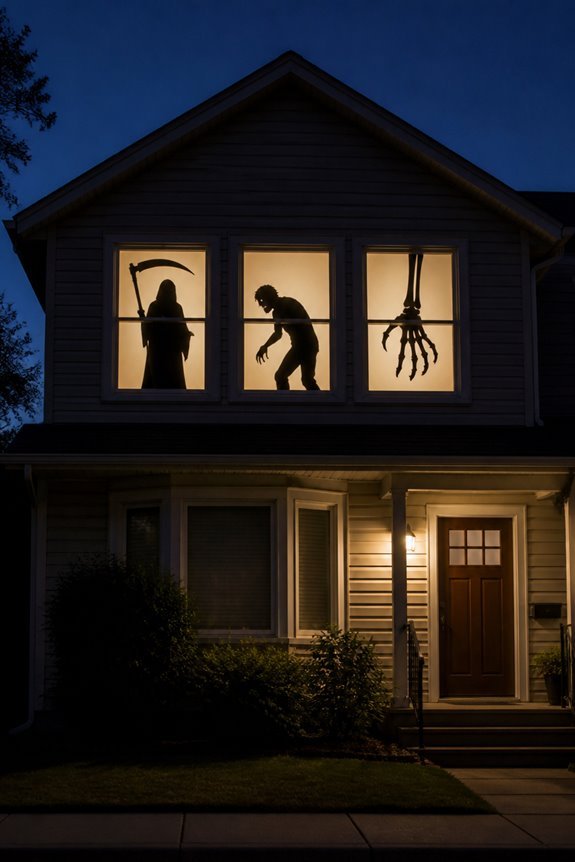
To create an expansive themed display, cardboard cutouts of tombstones, crosses, and cemetery gates can be arranged across multiple window panes. Layering these elements at varying depths produces dimension, making the scene appear more realistic and immersive.
Silhouettes of bare trees, gravestones with names, and wrought-iron fencing enhance the effect. Securing cutouts with tape or adhesive guarantees they remain in place throughout the season.
Consider color psychology in design when selecting black or dark gray materials to maximize contrast against interior lighting for optimal street visibility.
Backlit Grim Reaper in the Window
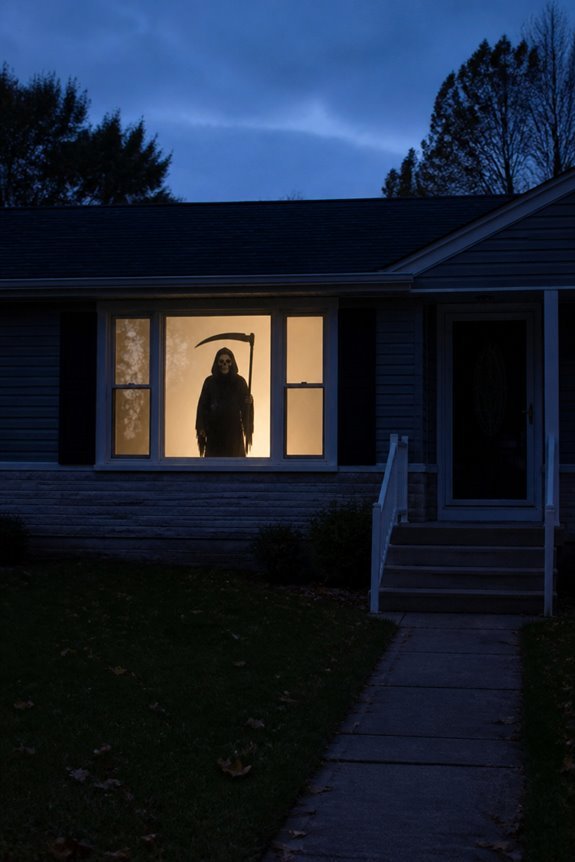
A grim reaper silhouette positioned behind window glass creates a striking visual effect when backlit from inside, offering an alternative to stationary cemetery scenes. Interior lighting, such as green or purple bulbs, enhances the figure’s menacing appearance. Black cardboard or fabric cutouts work effectively for this display.
The backlit technique produces a shadowed outline visible from the street during evening hours, making it a practical decoration option. Similar to how classic string lights create a magical atmosphere in outdoor spaces, strategic lighting placement transforms ordinary windows into captivating nighttime displays.
Creepy Crawling Spiders Across Frames
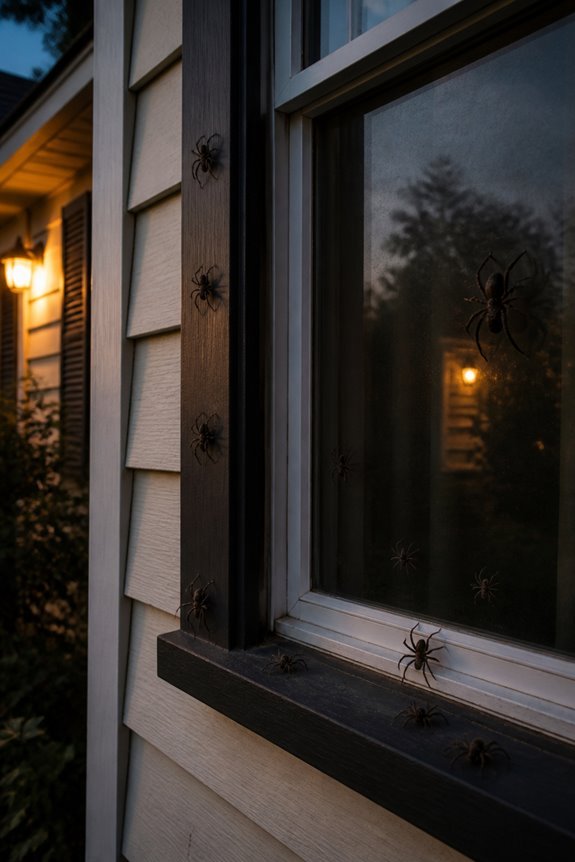
Spiders crawling across window frames create an effective Halloween display using simple materials and basic placement techniques. Black construction paper or plastic spiders work well for this decoration.
Position them along window edges, corners, and mullions using transparent tape or fishing line. Varying spider sizes and spacing creates visual interest. Adding fake cobwebs between spiders enhances the creepy effect substantially. Cascading vines around window frames can create an unexpected botanical-horror hybrid that makes the spider display feel like an overgrown, abandoned greenhouse.
Animated Projections on Your Windows
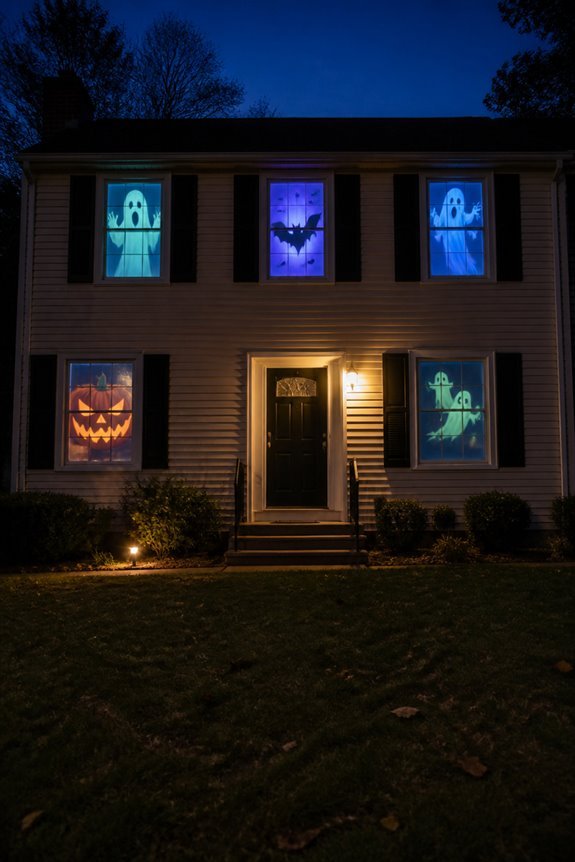
While static spider decorations provide an effective display, animated projections offer a more dynamic approach to Halloween window design. Projectors cast moving images, such as ghosts, zombies, or haunted scenes, directly onto windows or walls. Popular options include fog-compatible projectors and preset horror themes.
Installation requires a projector, screen surface, and power source. This method creates visible effects from the street without permanent modifications.
Fog-Filled Windows With Hidden Creatures
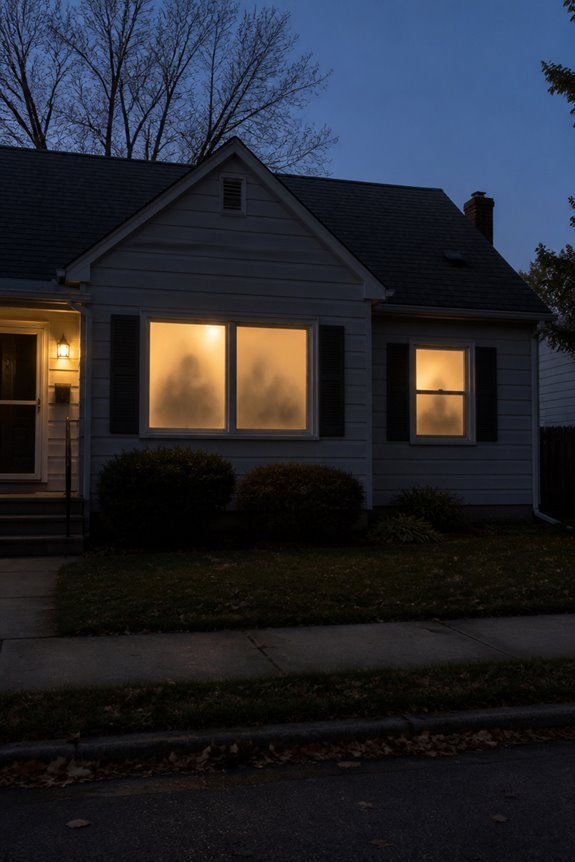
Because fog creates an obscured viewing environment, hidden creatures become more effective decorative elements within window displays. Fog machines produce dense mist that conceals plastic skeletons, zombie figures, and animatronic creatures partially. Passersby cannot immediately identify what lurks within the foggy windows, creating suspense and intrigue.
Adding colored lighting, typically green or purple, enhances the mysterious atmosphere while silhouetting the concealed creatures inside.
Frequently Asked Questions
What Materials Are Safest to Use on Windows Without Causing Permanent Damage?
Removable materials prove safest for windows. One should consider window clings, removable static decals, and painter’s tape for securing decorations. Avoid permanent adhesives, spray paint, and etching compounds. Temporary solutions protect glass surfaces from lasting damage while enabling easy seasonal removal.
How Can I Make Decorations Visible at Night Without Excessive Electricity Costs?
One might think illuminating windows requires astronomical electricity bills, yet resourceful decorators discover otherwise. Solar-powered lights, reflective materials, and strategically positioned LED strips create dramatic nighttime displays while consuming minimal energy, proving frightfully effective décor needn’t drain wallets.
Are There Legal Restrictions on Scary Window Displays in Residential Neighborhoods?
Most residential neighborhoods lack specific laws prohibiting scary decorations. However, homeowners should consult local ordinances regarding noise, lighting brightness, and nuisance complaints. Some HOAs may impose restrictions. Generally, stationary visual displays face minimal legal challenges.
How Do I Remove Decoration Residue After Halloween Without Harming Window Panes?
One should use warm soapy water and soft cloths to gently remove decoration residue. For stubborn adhesive, rubbing alcohol or commercial adhesive removers work effectively. Avoiding abrasive scrubbers protects window panes from scratches and damage during the cleaning process.
What’s the Best Way to Secure Decorations During Windy or Rainy Weather?
One should use removable adhesive strips rated for outdoor use, ensuring decorations are positioned away from window edges. Suction cups with reinforced grips work well for heavier items. Alternatively, decorators might install temporary frames or secure pieces with fishing line attached to window frames.
Conclusion
These window displays transform homes into visual focal points through strategic use of lighting, props, and effects. Silhouettes, fog, projections, and mirrors create layered scares that engage passersby. Black cardboard, fabric backdrops, colored lights, and animated elements work together to produce immersive scenes. Effective displays balance visibility from the street with atmospheric depth, requiring minimal materials like foam, cardboard, and standard lamps to achieve maximum impact.