
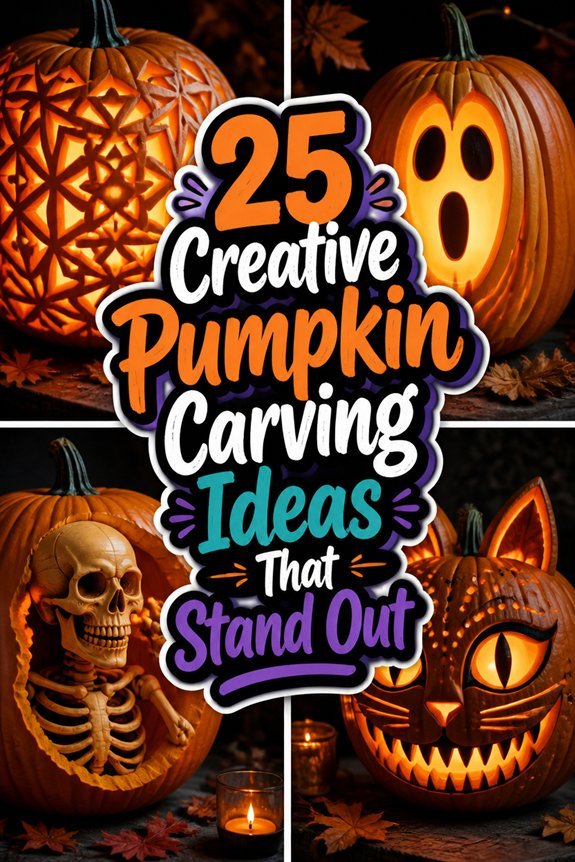
There’s something magical about moving beyond the classic triangle-eyed jack-o’-lantern. I’ve always loved watching galaxies come alive through star-patterned carvings, or seeing Stranger Things scenes glow eerily on a porch. Geometric mandalas and silhouette landscapes offer that perfect balance of striking visuals and manageable complexity.
Skill level shouldn’t limit creativity here. Minimalist line art works beautifully for beginners with just a basic knife, while advanced carvers might spend hours layering multiple techniques for dimensional effects. Whatever your timeline allows, the right tools and a bit of planning transform ordinary pumpkins into genuine conversation pieces.
Classic Jack-O’-Lanterns Reimagined
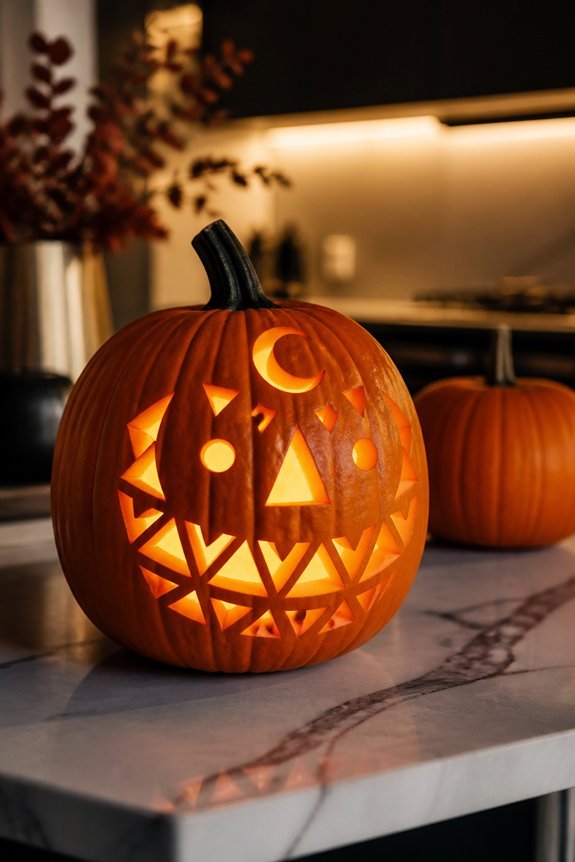
While traditional jack-o’-lanterns feature simple triangular eyes and a carved smile, modern variations incorporate different design approaches to create more sophisticated results.
Contemporary designs include geometric patterns, detailed portraits, and intricate scenes carved into pumpkin surfaces.
Carvers use varied depth techniques, negative space carving, and multiple pumpkins arranged together.
Popular themes feature animals, landscapes, and cultural symbols, offering alternatives to conventional expressions.
Galaxy & Celestial Scenes
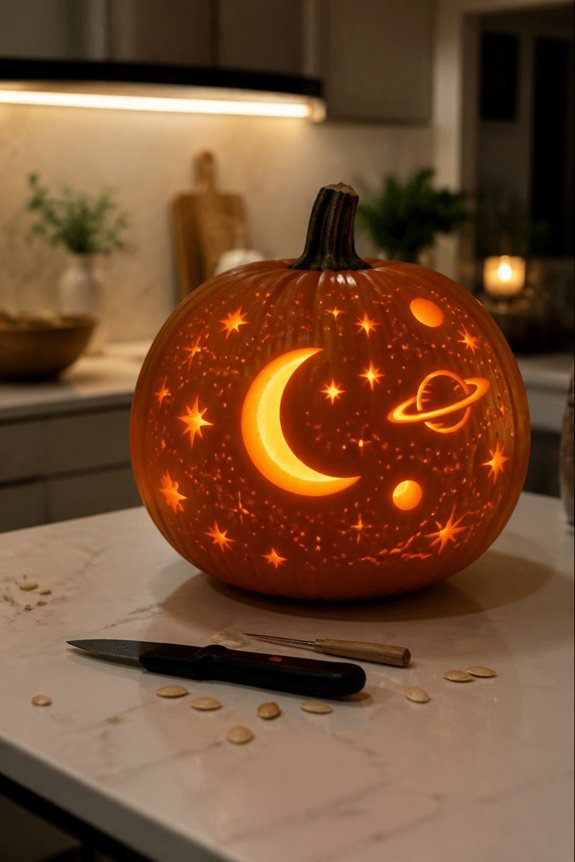
Since pumpkin carving has expanded beyond traditional designs, celestial themes offer carvers an opportunity to create visually striking displays.
Carvers can depict planets, stars, moons, and constellations using various techniques. Stippling creates star fields through dotted patterns, while larger cutouts form celestial bodies. Galaxy designs incorporate swirling cloud effects.
Popular choices include Saturn with rings, crescent moons, and zodiac constellations like Orion or the Big Dipper.
Movie & TV Character Portraits
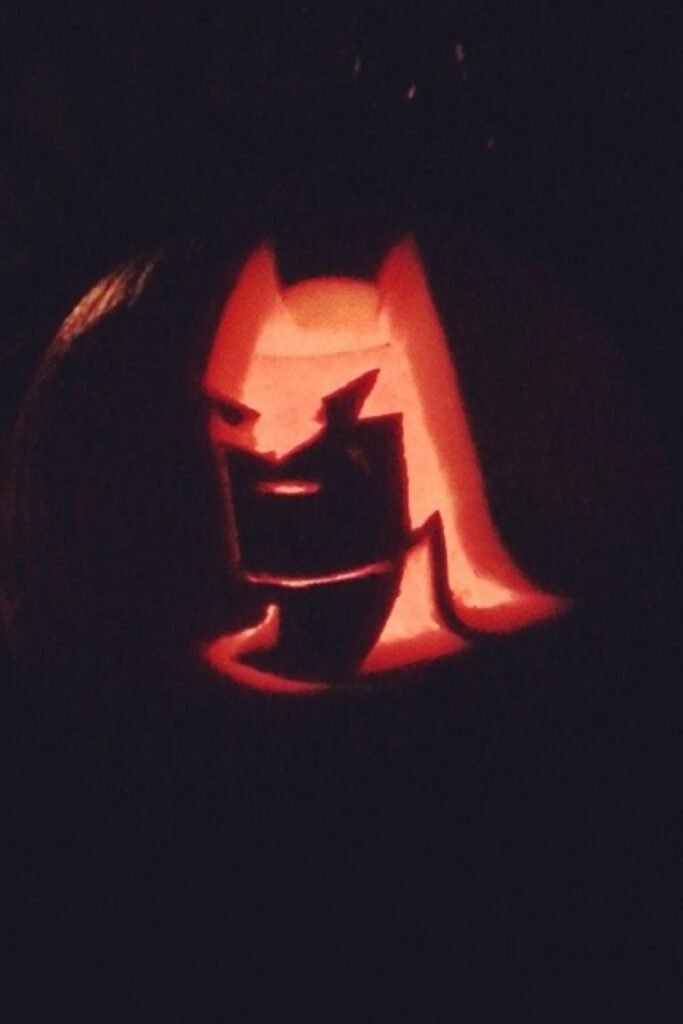
As pumpkin carving has progressed beyond simple faces and scenes, character portraits from popular films and television shows have become common choices for carvers.
Popular options include Harry Potter, Star Wars characters, and iconic figures like Darth Vader or Yoda.
Carvers typically select characters with distinctive features, strong silhouettes, and recognizable facial characteristics, making the designs easier to execute and identify.
Geometric & Mandala Patterns
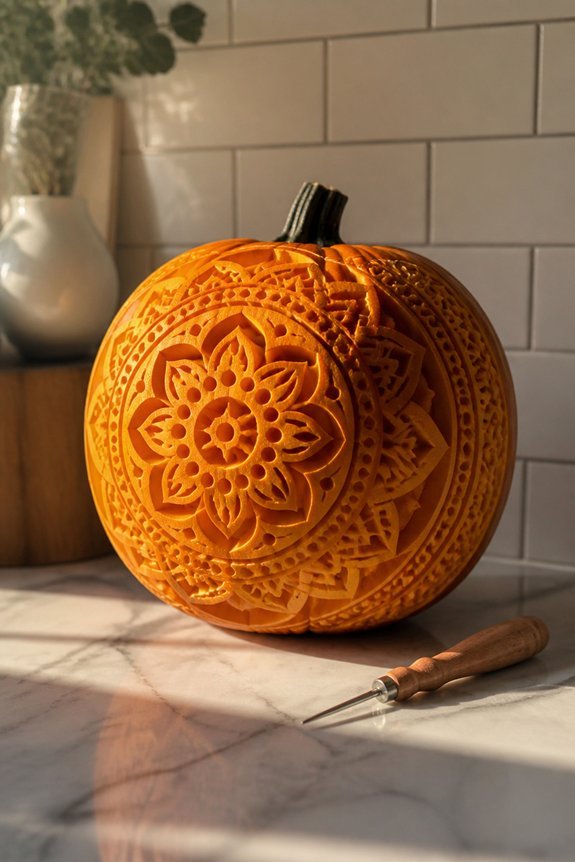
Geometric and mandala patterns offer carvers an alternative approach to representational designs, focusing instead on symmetry, repetition, and mathematical precision.
These designs include concentric circles, radiating lines, and tessellating shapes.
Carvers can utilize stencils or draw guidelines with markers before cutting. Popular patterns feature star motifs, diamond grids, and flower-like arrangements.
This approach requires steady hands and careful measurement for balanced results.
Silhouette Landscape Scenes
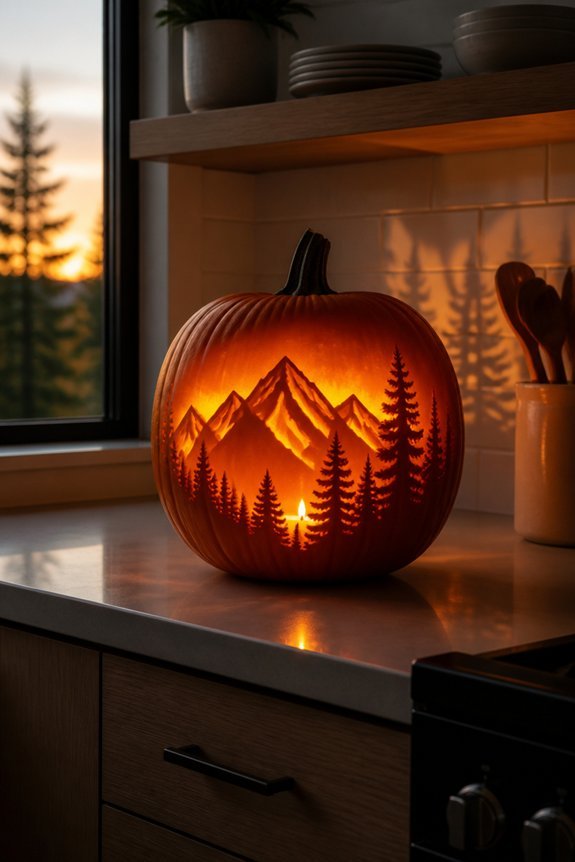
While geometric patterns emphasize mathematical precision and structured repetition, silhouette landscape scenes take a different approach by depicting recognizable outdoor views through solid, dark shapes.
Trees, mountains, and horizons work effectively for this technique. Carvers can choose simple designs, such as a forest treeline, or more complex scenes featuring multiple layers.
Backlighting enhances these designs, creating dramatic contrasts between the carved areas and the pumpkin’s interior glow.
LED Neon Glow Effects
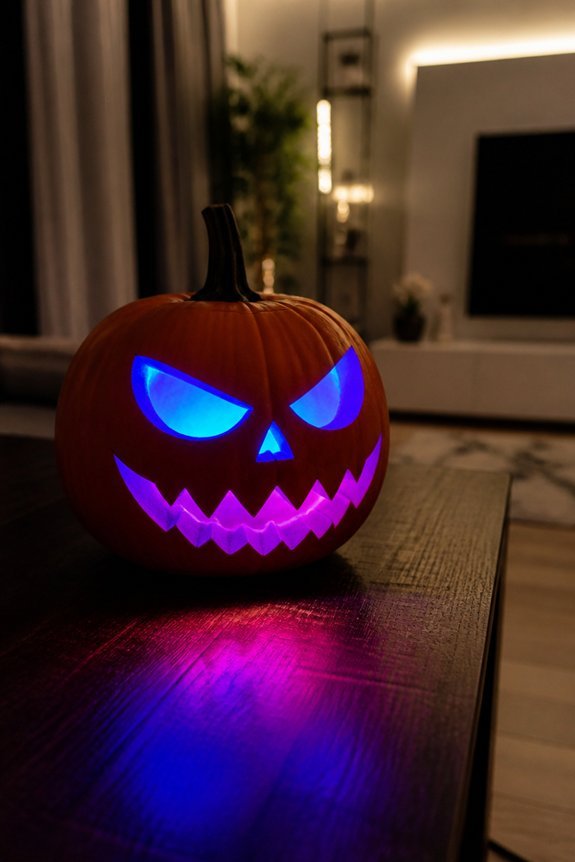
LED neon glow effects represent a modern approach to pumpkin illumination, using colored light sources to enhance carved designs rather than relying solely on traditional candles or standard orange lighting.
RGB LED strips, placed inside or behind pumpkins, produce blue, purple, green, and pink hues.
Battery-operated options offer convenience, while timer functions allow automated on-off cycles, reducing manual maintenance throughout October evenings.
3D Layered & Depth Carvings
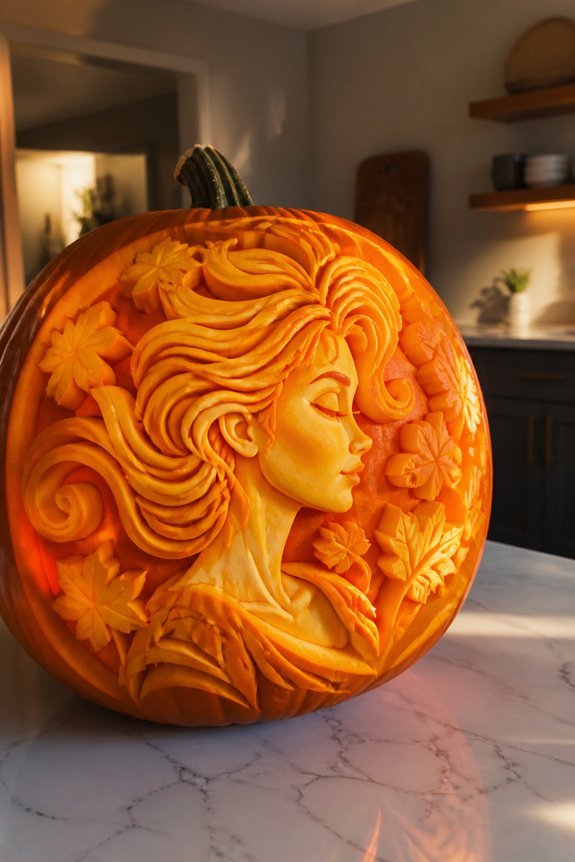
Three-dimensional layered carvings transform pumpkins into multi-depth art by removing skin at varying levels rather than cutting completely through the flesh.
Carvers scrape away outer orange layers to reveal lighter flesh beneath, creating shadowed areas and highlighted sections. This technique produces designs with apparent depth, making images like skulls, portraits, and landscapes appear more realistic and dimensional than traditional flat carvings.
Haunted Houses & Cemeteries
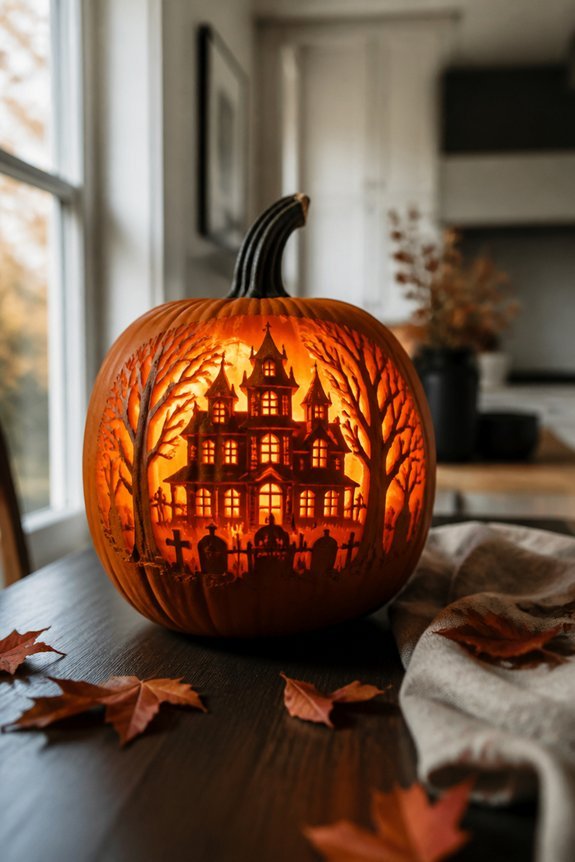
Many carvers choose haunted house and cemetery themes for their pumpkins, creating spooky scenes with multiple elements.
Typical designs include graveyards with crooked tombstones, bare trees, and ghostly figures. Haunted houses feature boarded windows, doors, and bats flying overhead.
Carvers combine negative space techniques with layered cuts to achieve depth and dimension, making scenes appear three-dimensional and detailed.
Pop Culture Logos & Icons
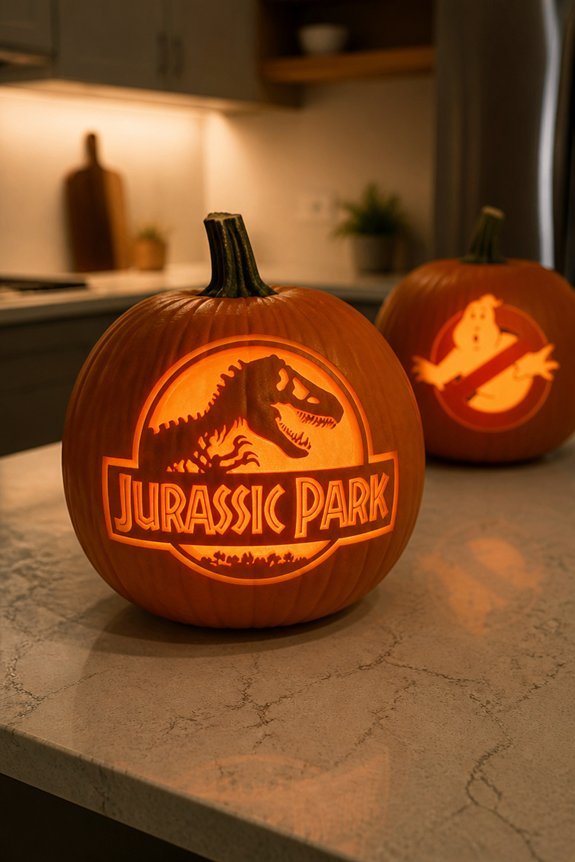
While haunted scenes focus on atmospheric depth through layered cuts, pop culture designs take a different approach by featuring recognizable brands and entertainment symbols.
Popular choices include superhero logos like Batman and Superman, streaming service icons such as Netflix and Disney Plus, and movie franchises like Star Wars.
These designs work well because people instantly recognize them, making carved pumpkins conversation starters at gatherings.
Animal Faces & Wildlife
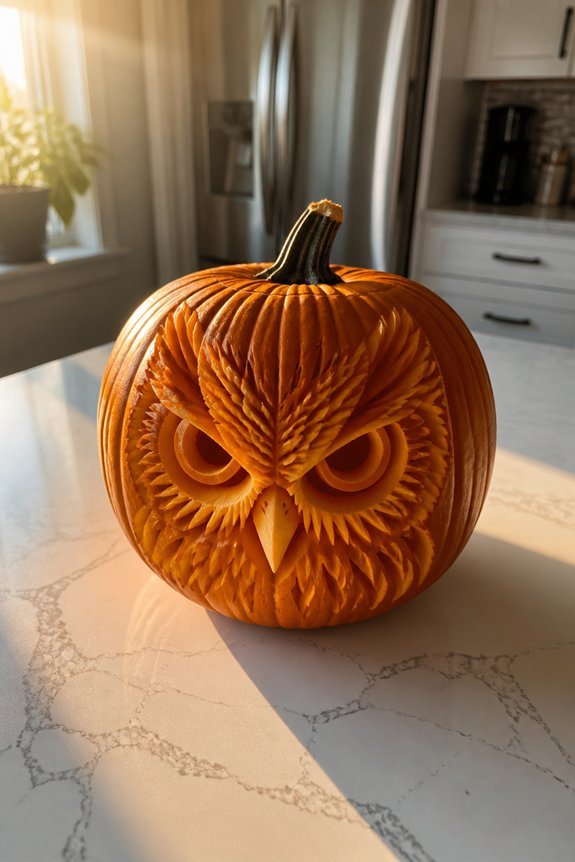
Animal faces offer a straightforward carving option that appeals to a broad audience. Owls, bears, cats, and wolves serve as popular choices for pumpkin designs.
These wildlife patterns require basic shape recognition and moderate carving skill. Carvers can sketch facial features directly onto pumpkins, then remove skin sections accordingly.
Animal designs work well for various skill levels and produce recognizable results consistently.
Spiderweb & Spider Designs
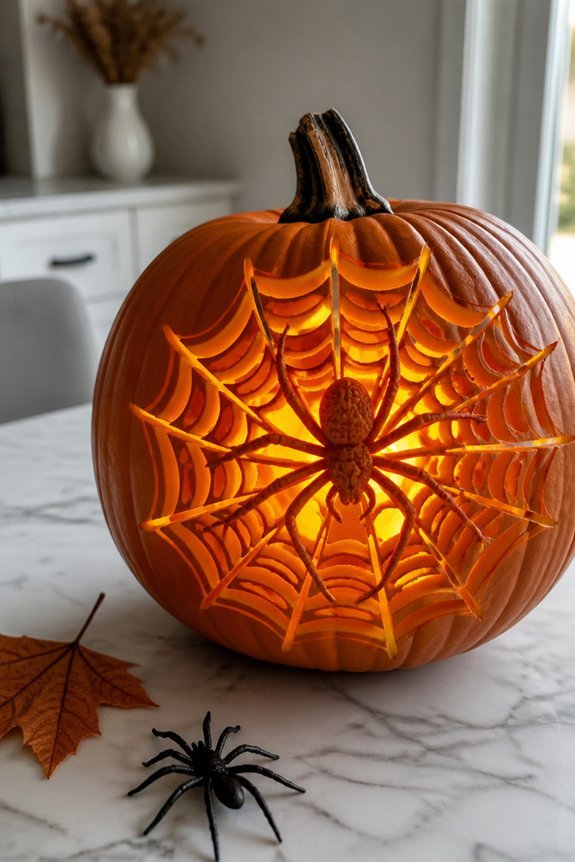
Spiderweb and spider designs shift focus from recognizable animal faces to geometric and arachnid-themed patterns.
Carvers can etch concentric circles connected by straight lines to form webs, or carve detailed spider body segments and legs.
These designs work well on medium to large pumpkins, offering flexibility in complexity levels.
The geometric nature allows beginners and experienced carvers alike to adapt patterns according to skill level and available time.
Skeleton & Skull Portraits
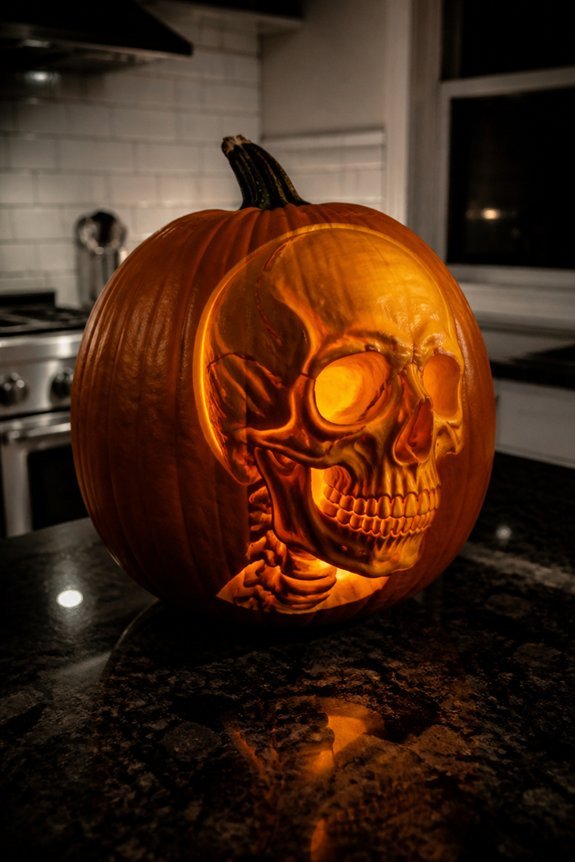
Classic imagery of death and decay translates effectively into pumpkin carvings through skeleton and skull designs. Carvers can create simple skulls with hollow eye sockets, nasal cavities, and tooth rows, or elaborate full skeletons with ribcages and bone structures.
These designs work well on large pumpkins, allowing detailed carving. Popular variations include jaw designs, crown-topped skulls, and skeletal hands extending across the pumpkin surface.
Literary & Book Character Carvings
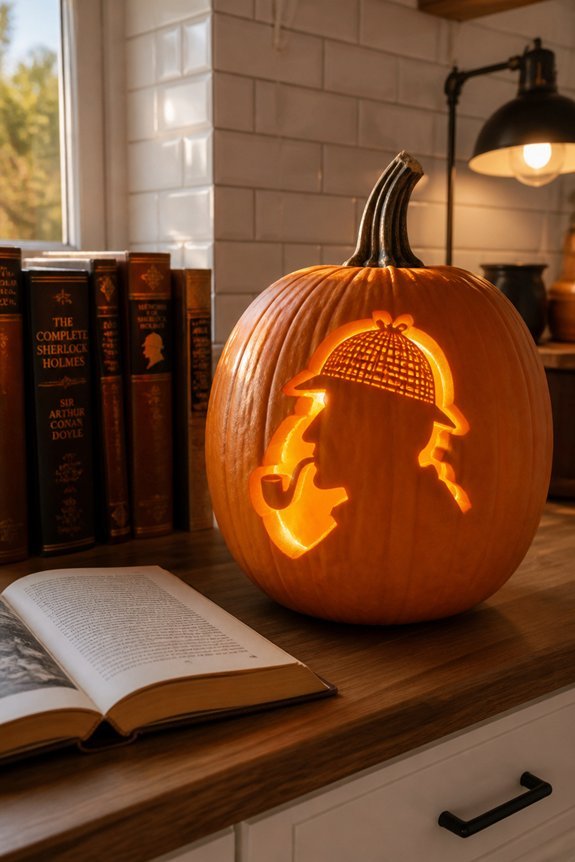
Beyond the anatomical designs of skeletons and skulls, pumpkin carvers can explore characters from literature and beloved books.
Harry Potter’s lightning bolt scar, Sherlock Holmes’ silhouette, and Dr. Seuss characters offer recognizable designs.
Classic literature figures like Frankenstein’s monster or characters from Alice in Wonderland provide distinctive visual elements.
Book-themed carvings require identifying characteristic features, symbols, or iconic imagery associated with specific literary works or their protagonists.
Retro & Vintage Styles
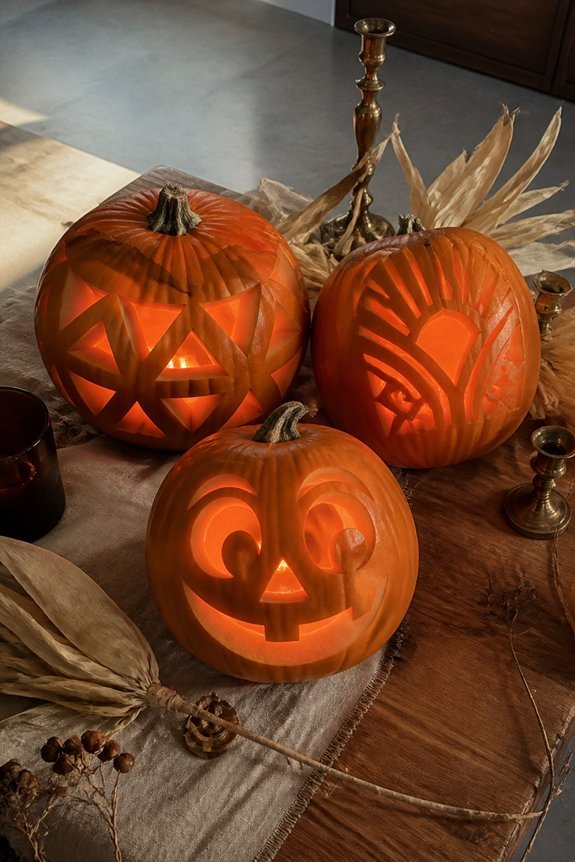
What design elements defined past decades, and how can carvers capture that aesthetic on a pumpkin? Retro styles incorporate geometric patterns, art deco lines, and color palettes from the 1950s or 1970s.
Carvers can use stencils featuring vintage typography, polka dots, or sunburst designs. Monochromatic schemes with bold contrasts work well.
References to retro advertising imagery, classic car silhouettes, or period-appropriate fashion elements provide authentic nostalgic appeal through careful stencil selection and precise carving technique.
Optical Illusions & Impossible Patterns
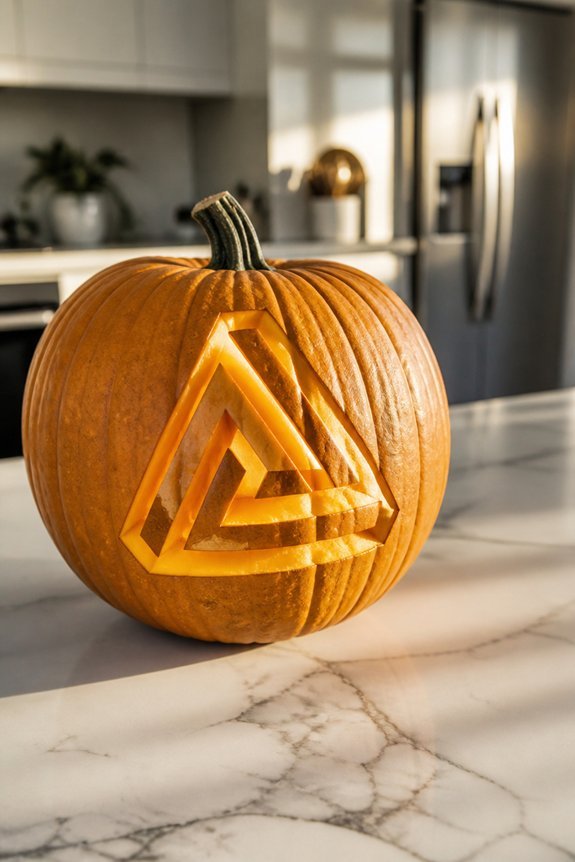
Optical illusions and impossible patterns offer carvers a different approach to pumpkin design, moving beyond the structured aesthetic of retro styles.
Geometric designs, such as tessellations and Penrose triangles, create visual complexity. Carvers can also attempt M.C. Escher-inspired patterns featuring interlocking figures.
Spiral designs and concentric circles produce depth effects.
These patterns require precision planning and steady carving technique for accurate results.
Underwater & Ocean Creatures
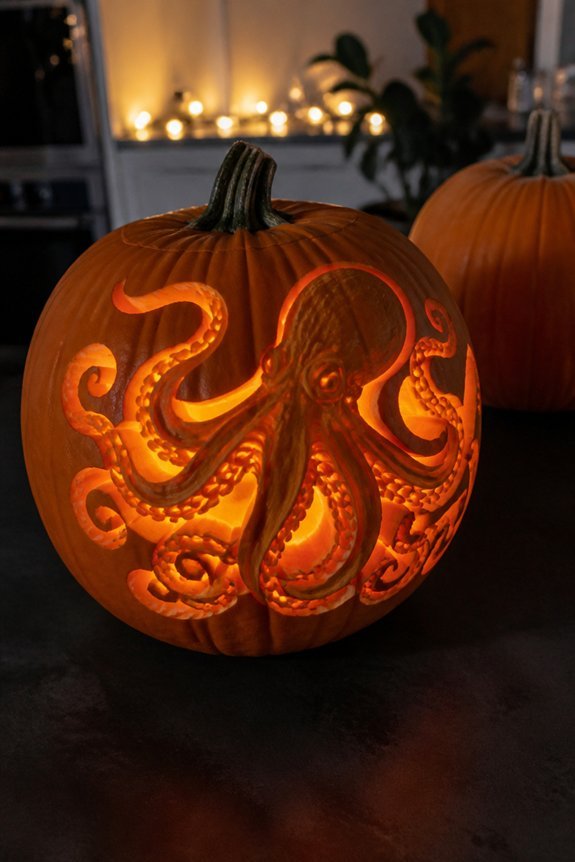
Underwater and ocean creatures provide carvers with recognizable subjects that work well for pumpkin designs.
Jellyfish, starfish, and seahorses translate effectively into carved patterns.
Octopuses offer multiple tentacles for detailed work. Sharks and dolphins present dynamic silhouettes.
Fish schools create repeating elements across the pumpkin surface.
These marine subjects work particularly well for designs emphasizing curved lines and flowing shapes rather than geometric precision.
Music & Band References
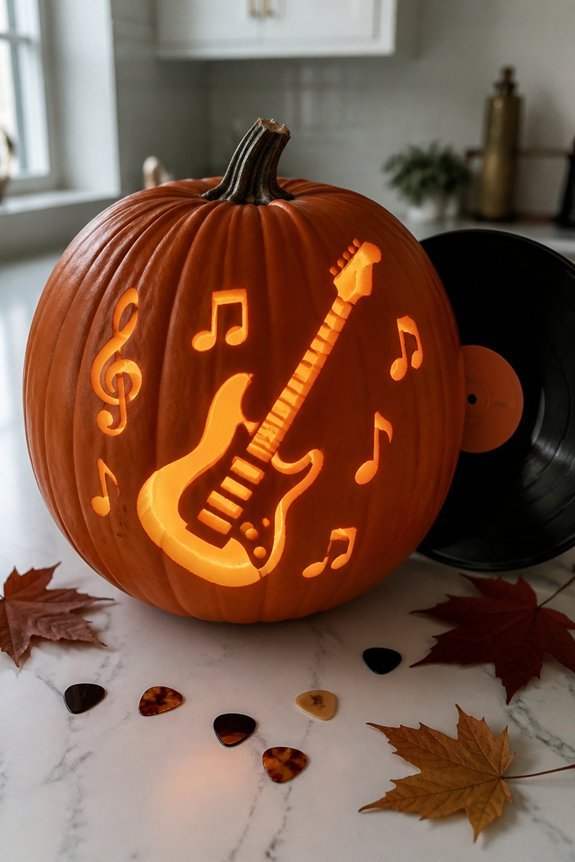
Music and band references frequently appear in pumpkin carving designs, offering recognizable imagery for carvers of various skill levels. Popular options include guitar silhouettes, musical note patterns, and band logos.
Classic rock symbols like The Beatles’ apple or Led Zeppelin’s symbols work well.
Treble clefs, drum kits, and microphone designs provide additional choices. These designs appeal to music enthusiasts and require moderate carving precision for effective results.
Lace & Filigree Details
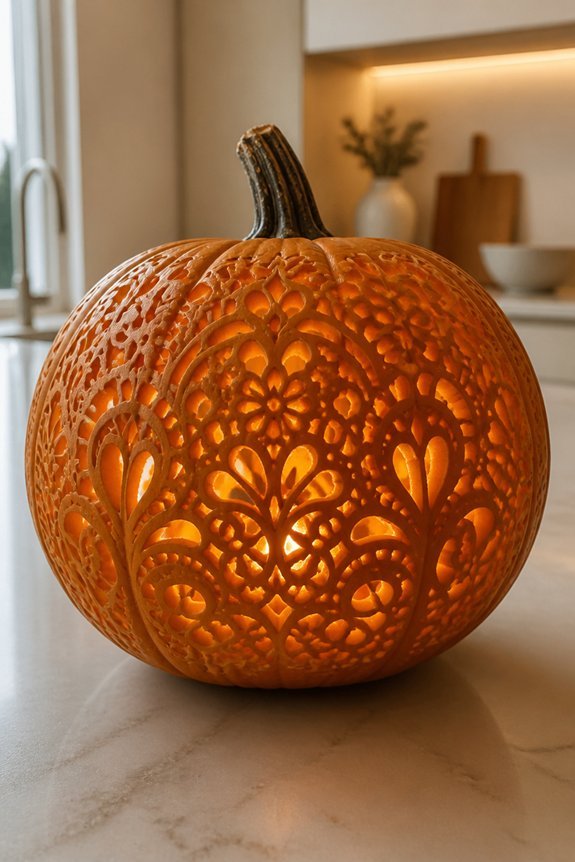
Intricate lace and filigree details offer an elegant approach to pumpkin carving, creating delicate patterns across the pumpkin’s surface.
Carvers can use thin, interconnected lines to form doilies, Victorian borders, or geometric designs. Fine tools and steady hands are necessary for precision work.
Popular patterns include rosettes, scrolls, and lattice arrangements.
These designs require patience and moderate carving experience to execute successfully without damaging the pumpkin.
Video Game & Pixel Art
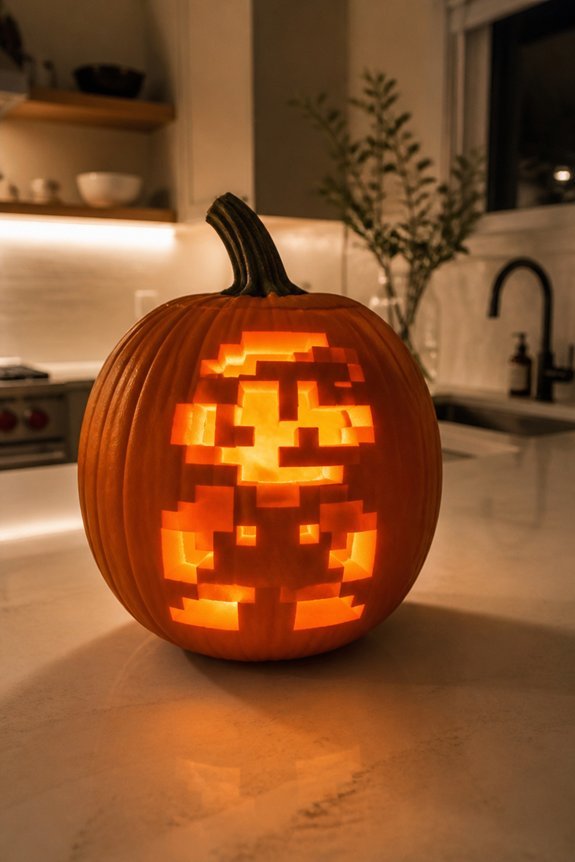
Video game and pixel art designs offer a modern approach to pumpkin carving, translating digital imagery into carved patterns on the pumpkin’s surface. Popular options include Space Invaders, Pac-Man, and Tetris blocks.
The geometric, blocky nature of pixel art suits pumpkin carving well. Carvers can print grid templates, map designs onto the pumpkin, and carve accordingly.
This method produces clean, recognizable results.
Historical & Cultural Icons
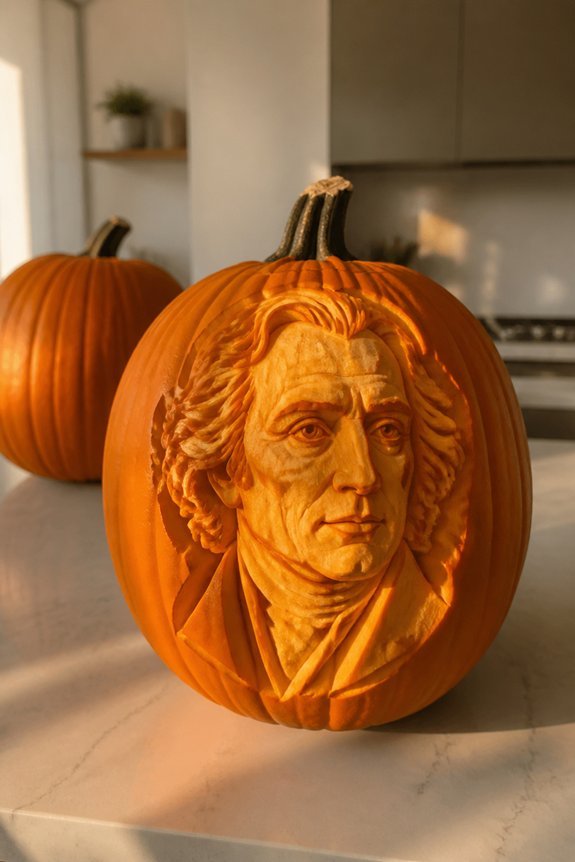
Carved pumpkins depicting famous historical figures and cultural symbols present carvers with recognizable subjects that appeal to broad audiences. Abraham Lincoln, Cleopatra, and Martin Luther King Jr. offer distinctive facial features suitable for pumpkin carving.
Cultural icons like the Statue of Liberty or Japanese torii gates provide geometric designs. These subjects require moderate carving skill and yield visually impressive results.
Sports Logos & Mascots
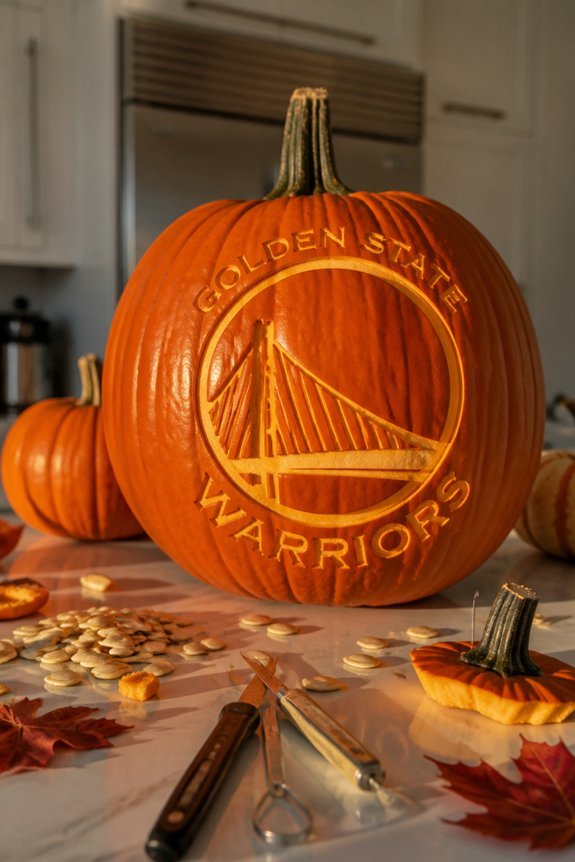
Because sports fans represent a substantial portion of pumpkin carvers, team logos and mascots offer practical design choices.
Popular options include the NFL’s Dallas Cowboys star, NBA team mascots like the Chicago Bulls, and college football emblems.
These designs feature bold outlines, recognizable shapes, and limited color palettes, making them suitable for carving.
Sports enthusiasts can select logos matching their preferred teams or regions.
Floral & Botanical Designs
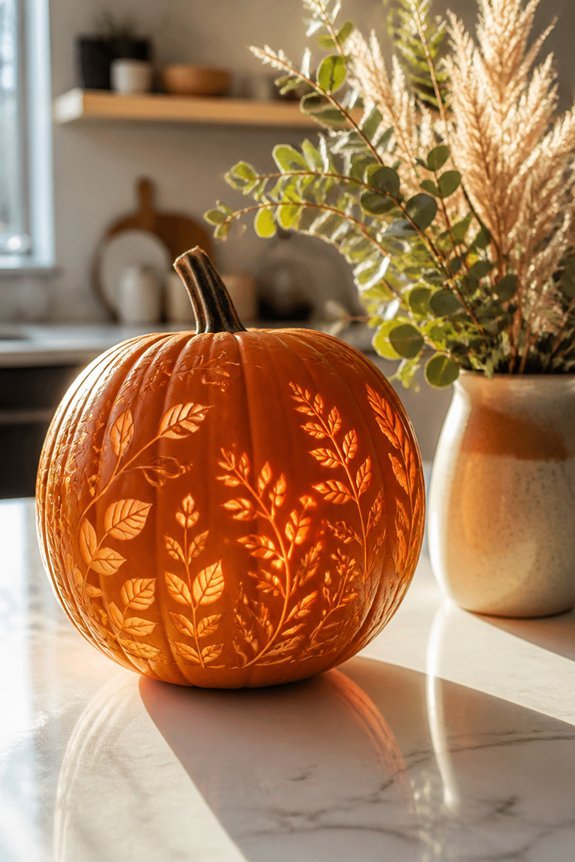
Floral and botanical designs offer an alternative approach to pumpkin carving for those seeking patterns beyond geometric shapes and recognizable symbols.
Carvers can select sunflowers, roses, or tulips as focal points. Fern fronds, vine patterns, and leaf motifs work well for filling empty spaces.
These organic designs require steady hands and moderate detail work. Templates sourced from gardening websites or botanical illustrations provide useful carving references.
Cartoon Character Carvings
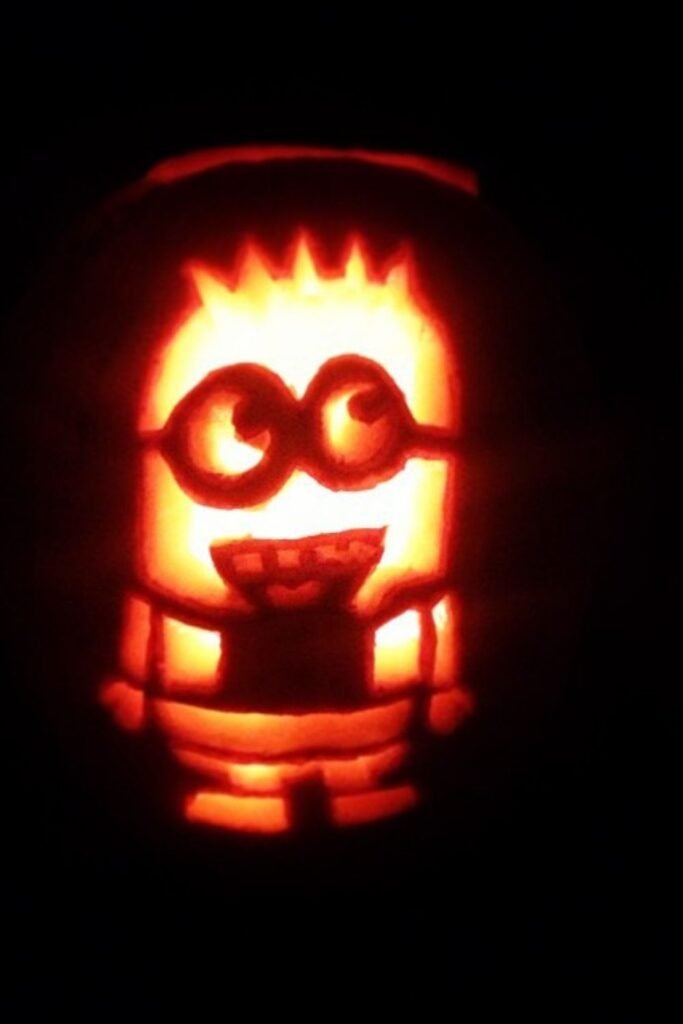
Why do cartoon characters work well for pumpkin carving? Their simple, bold outlines translate easily onto pumpkin surfaces, making them recognizable and straightforward to execute.
Popular choices include Mickey Mouse, SpongeBob SquarePants, and Minions. These designs require fewer detail lines than realistic portraits, reducing carving complexity.
Characters with distinctive silhouettes work best, as their shapes remain identifiable even with basic tool marks and lighting variations.
Minimalist & Line Art
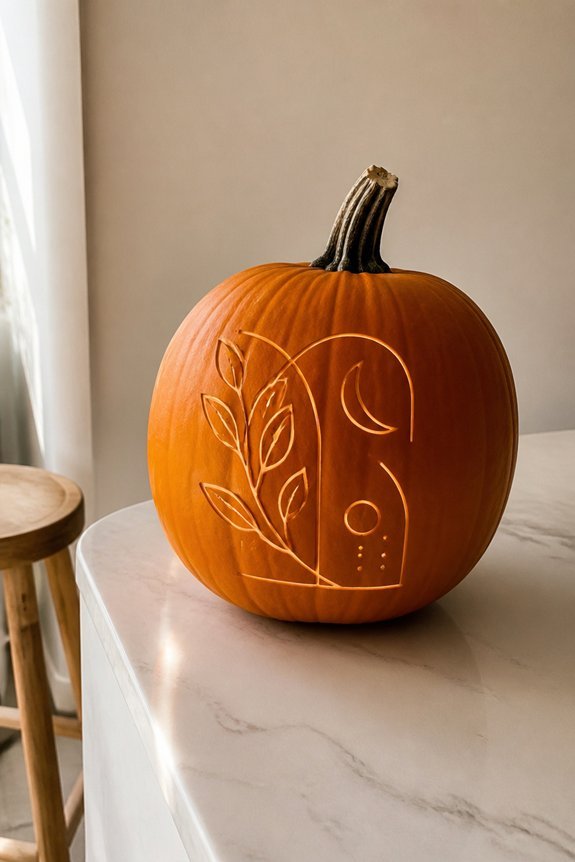
Minimalist and line art designs offer an alternative approach to pumpkin carving, emphasizing simplicity and clean execution. These patterns rely on single, continuous lines, creating geometric shapes, abstract forms, or stylized faces.
Examples include thin crescent moons, straight-line grids, or simple leaf outlines.
This technique requires steady hands and sharp tools, producing elegant results with minimal detail work compared to elaborate designs.
Hybrid Carving Techniques
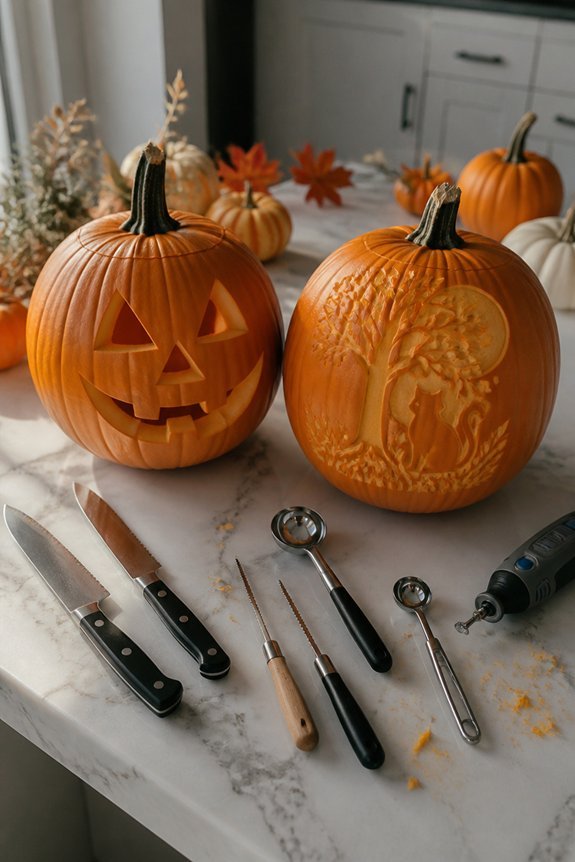
By combining multiple carving methods within a single pumpkin, carvers can achieve complex designs that blend the strengths of different approaches.
Etching creates shallow details, while cutting produces bold outlines. Scraping removes skin for shading effects.
A single pumpkin might feature etched facial features, carved geometric patterns, and scraped gradient backgrounds.
This layered approach produces depth and visual interest impossible with single techniques alone.
Frequently Asked Questions
What Type of Pumpkin Works Best for Detailed Carving Designs?
Sugar pumpkins work best for detailed carving designs due to their smaller size, thinner walls, and smoother surface texture. Their manageable proportions allow carvers to execute intricate patterns with greater precision and control compared to larger varieties.
How Long Do Carved Pumpkins Typically Last Before Rotting?
Carved pumpkins typically last five to ten days before decay sets in, their exposed flesh softening and browning at the edges. Cooler temperatures, proper sealing techniques, and indoor placement extend their vibrant appearance considerably longer than outdoor specimens.
What Tools Do Professionals Recommend for Pumpkin Carving?
Professionals recommend using specialized pumpkin carving kits containing serrated saws, scoops, and detail picks. Quality tools like those from pumpkin-specific brands guarantee cleaner cuts. Alternatively, small saws, melon ballers, and dental picks effectively carve intricate designs while minimizing crushing and deterioration.
Can Carved Pumpkins Be Preserved Longer With Special Techniques?
Yes, carved pumpkins can be preserved longer through several techniques. Applying vegetable oil or petroleum jelly to cut surfaces slows decay. Storing them in cool temperatures, misting with bleach solution, and keeping them away from direct sunlight greatly extends their lifespan.
How Far in Advance Should Pumpkins Be Carved Before Halloween?
Pumpkins should ideally be carved no more than three to five days before Halloween. Carved pumpkins deteriorate quickly due to exposed flesh oxidizing and developing mold. Carving closer to the holiday guarantees maximum freshness and appearance.
Conclusion
The 25 pumpkin carving ideas presented offer varying complexity levels, from basic jack-o’-lanterns to intricate mandala patterns. Research suggests that carving detail correlates with viewer engagement, yet simpler designs often prove more practical for most people. Galaxy scenes, geometric patterns, and silhouette landscapes provide balanced difficulty. Success depends on available tools, pumpkin quality, and individual skill rather than design choice alone. These concepts accommodate diverse preferences and abilities effectively.