
You’re looking at your front yard and noticing how outdated your pathway appears compared to your neighbors’ clean, modern designs. Your current walkway doesn’t reflect the sophisticated aesthetic you want visitors to see when they approach your home. Whether you’re dealing with cracked concrete, uneven stones, or simply a bland entrance, the right pathway design can transform your property’s entire curb appeal. These eighteen carefully selected front yard step solutions will show you exactly how to achieve that pristine, professional look you’ve been wanting.
Poured Concrete Pathways With Decorative Finishes
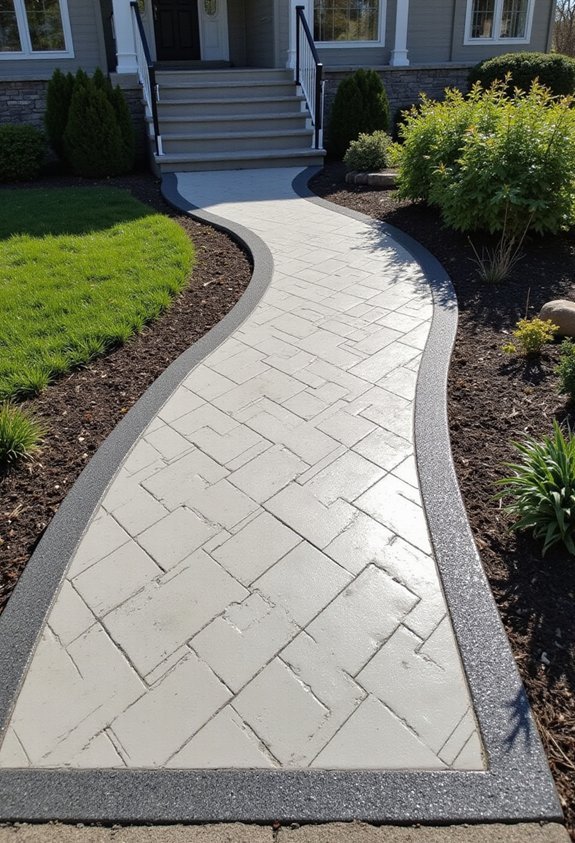
When you’re considering pathway options for your front yard steps, poured concrete with decorative finishes offers an excellent combination of durability, affordability, and visual appeal that can transform your home’s entrance. You can choose from stamped patterns that mimic brick, stone, or tile, exposed aggregate finishes that reveal colorful stones, or acid staining that creates marbled effects in various colors. These decorative techniques cost considerably less than natural materials while providing superior longevity and low maintenance requirements. You’ll need to prepare the area with proper grading, install forms, pour the concrete, and apply your chosen finish while it’s still workable.
Also read: 19 FRONT YARD WATER FEATURE Styles That Feel Luxurious!
Stamped Concrete Steps That Look Like Natural Stone
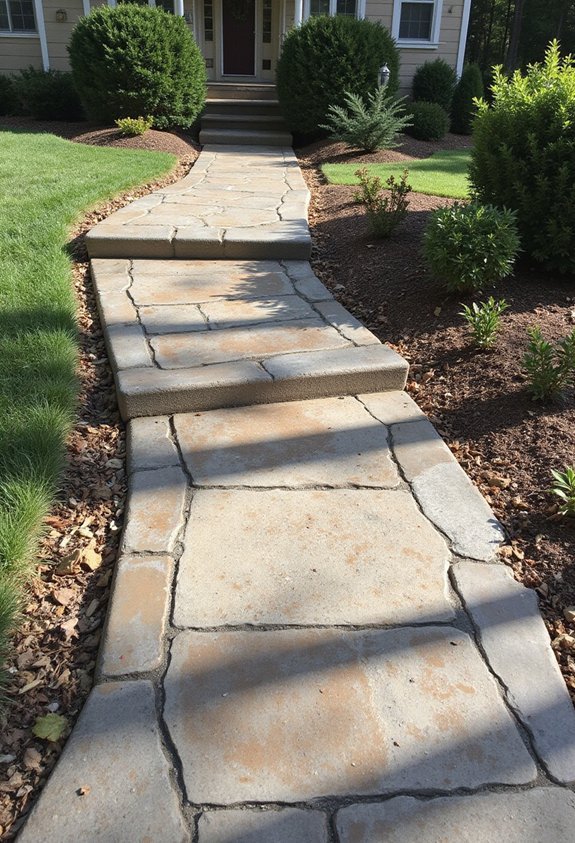
Stamped concrete steps provide one of the most convincing alternatives to natural stone, allowing you to achieve the luxurious appearance of fieldstone, slate, or limestone at a fraction of the cost while maintaining the structural benefits of reinforced concrete. You’ll select from numerous texture patterns that replicate authentic stone surfaces, including ashlar slate, cobblestone, and flagstone designs. The stamping process occurs while concrete remains workable, pressing detailed patterns into the surface using specialized rubber mats or metal stamps. You can enhance realism by applying integral color during mixing, then adding accent colors through dry-shake hardeners or acid stains after stamping completes.
Simple Brick Walkways With Geometric Patterns
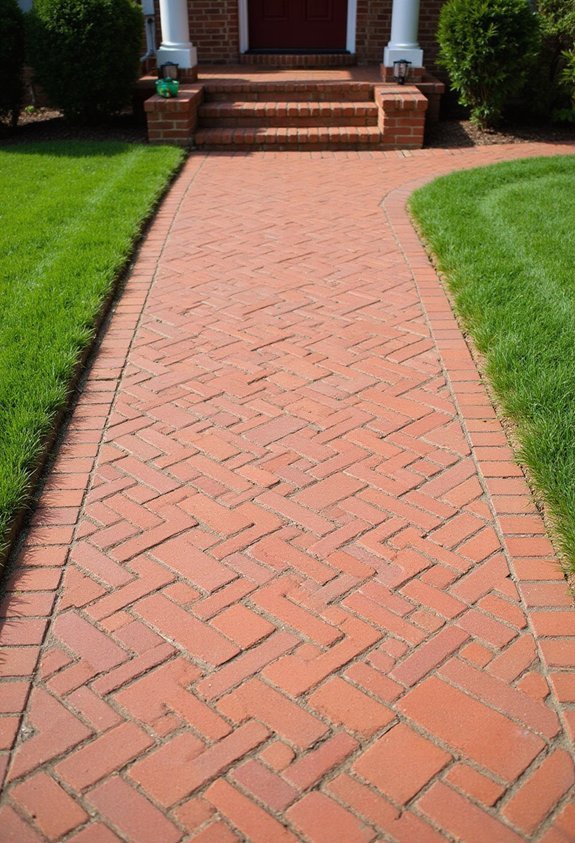
While stamped concrete mimics expensive stone materials, simple brick walkways offer timeless appeal through classic geometric patterns that transform ordinary pathways into striking architectural features. You’ll find herringbone, basketweave, and running bond patterns create visual interest without overwhelming your landscape design. These traditional layouts use standard red clay bricks arranged in precise configurations that guide visitors naturally toward your entrance. The repetitive geometric shapes provide structure and formality while maintaining cost-effectiveness compared to natural stone alternatives. You can enhance these patterns by incorporating contrasting border bricks or sand-swept joints that highlight each individual brick’s placement within the overall design scheme.
Gravel Pathways With Floating Wooden Steps
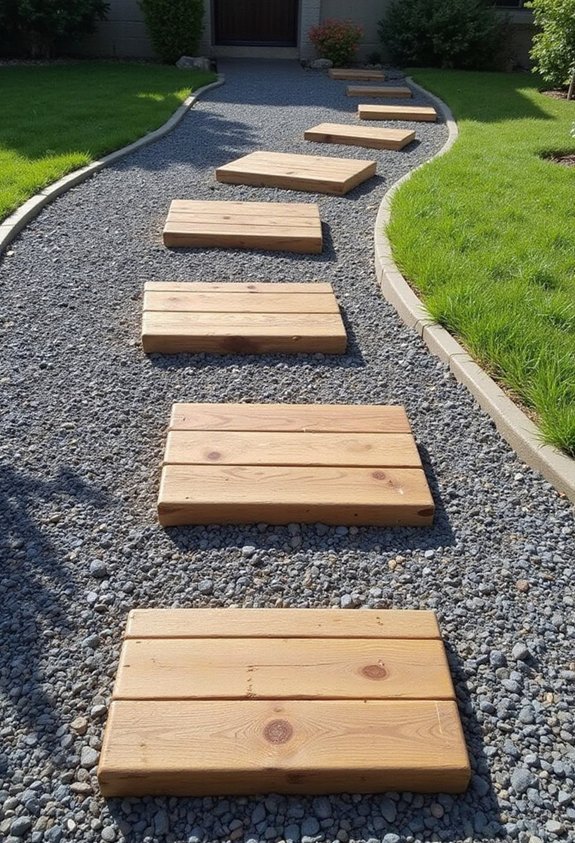
How do you create a pathway that combines natural texture with modern design elements while maintaining excellent drainage and visual appeal? You’ll achieve this striking combination by installing gravel pathways with floating wooden steps that appear to hover above the stone surface. First, you’ll excavate your pathway area to a depth of four inches, then install landscape fabric to prevent weed growth. Next, you’ll spread and level a layer of pea gravel or decomposed granite across the prepared surface. Finally, you’ll position rectangular wooden planks or stepping stones at regular intervals, creating the floating effect that defines this contemporary design approach.
Basic Flagstone Steps With Grass Accents
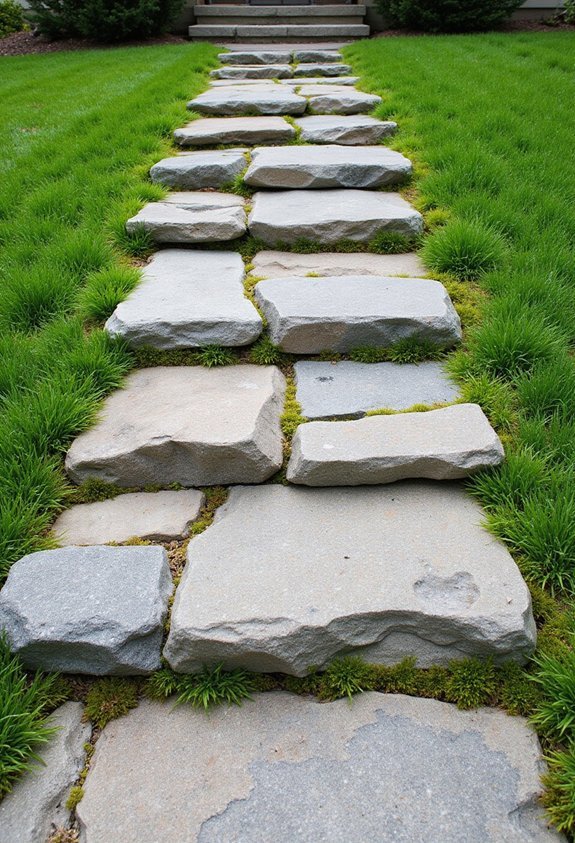
When you combine the natural beauty of flagstone with strategically placed grass accents, you’ll create an organic pathway that seamlessly blends hardscape materials with living elements to achieve a balanced, earth-friendly design. Space your flagstones approximately twelve to eighteen inches apart, allowing sufficient room for grass strips to establish between each stone. Choose drought-resistant grass varieties that can withstand foot traffic, such as buffalo grass or zoysia, which maintain their appearance throughout different seasons. This design approach reduces the amount of hardscape material needed while creating visual interest through the contrast between stone textures and green grass.
Composite Decking Pathways That Never Fade
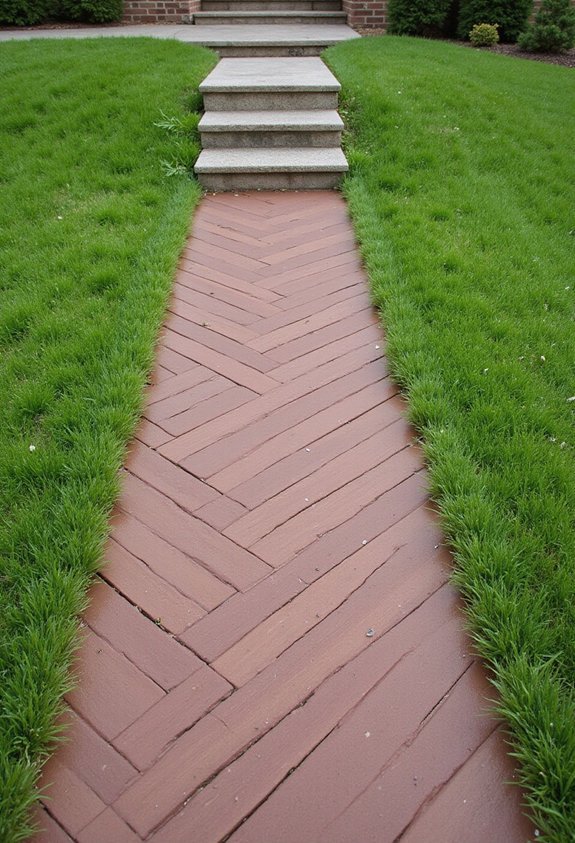
Composite decking materials offer homeowners a durable alternative to natural stone pathways, providing consistent color retention and weather resistance that eliminates the maintenance challenges associated with traditional materials. You’ll find composite boards resist fading from UV exposure, maintaining their original appearance for decades without staining or sealing requirements. Installation involves creating level ground, laying a gravel base, and securing boards to treated lumber framework using hidden fasteners. You can choose from wood-grain textures and multiple color options that complement your home’s exterior. These pathways won’t splinter, crack, or require annual refinishing like traditional wood alternatives.
Natural Stone Pathways With Modern Lines
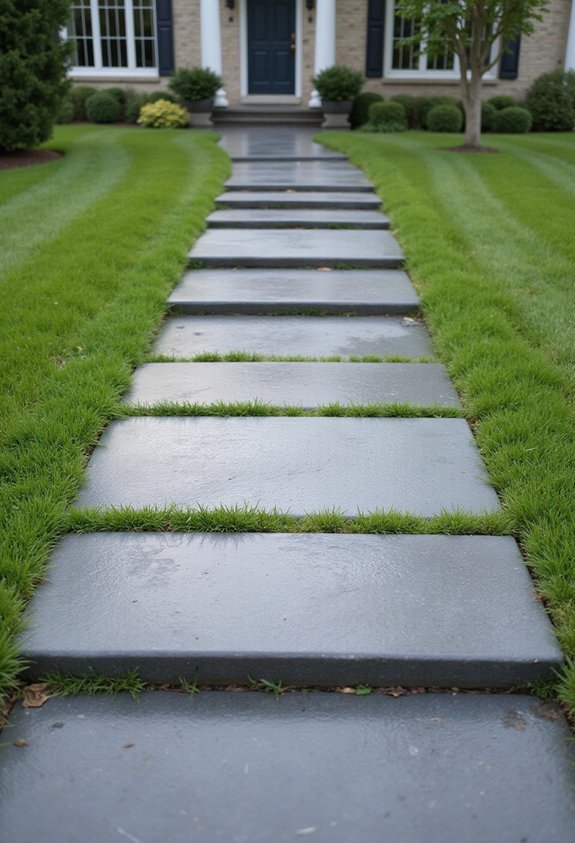
While composite materials excel in consistency, natural stone pathways create striking contemporary designs through carefully planned geometric arrangements and precise cutting techniques that transform traditional materials into sleek, modern installations. You’ll achieve clean lines by selecting uniform stone thicknesses and maintaining consistent spacing between each piece. Large-format stones like bluestone, limestone, or granite work best for modern aesthetics when cut into rectangular shapes. You can enhance the contemporary look by installing stones with tight joints, using minimal mortar, and incorporating linear patterns that guide visitors toward your front entrance with purposeful geometric precision.
Terraced Stone Steps For Sloped Front Yards
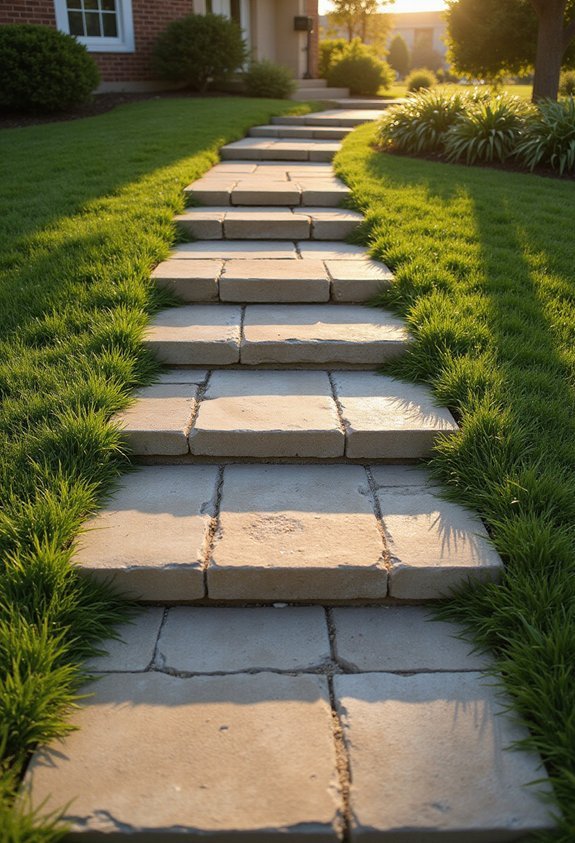
Since sloped front yards present unique challenges for creating safe and attractive pathways, terraced stone steps offer an elegant solution that transforms steep terrain into a series of manageable levels while adding architectural interest to your landscape. You’ll need to plan each terrace carefully, ensuring proper drainage and consistent riser heights between six and eight inches for comfortable navigation. Install retaining walls behind each step using natural stone that matches your home’s exterior materials. Fill terraced areas with decorative gravel or low-maintenance ground cover plants that won’t require frequent watering or trimming in these elevated positions.
Wide Flagstone Walkways With Perfect Joints
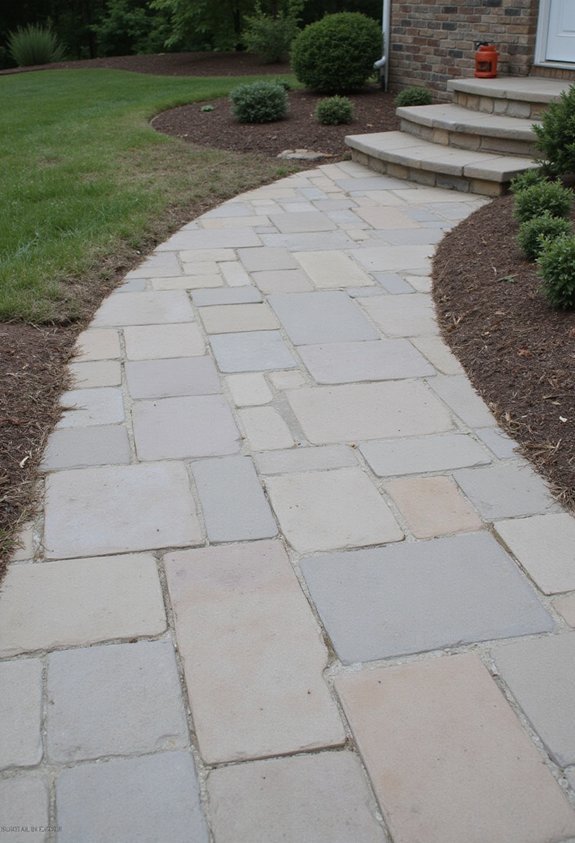
When you choose flagstone for your front yard walkway, you’ll create a durable and visually appealing path that can last for decades with proper installation techniques. You’ll need to excavate the area to a depth of four inches, then add two inches of compacted gravel base for proper drainage and stability. Place each flagstone piece carefully, ensuring consistent spacing between stones for your joints. Fill the joints with polymeric sand or mortar, depending on your climate and preference. You’ll want to use a rubber mallet to level each stone, checking frequently with a level tool for evenness.
Linear Stepping Stones With Landscape Integration
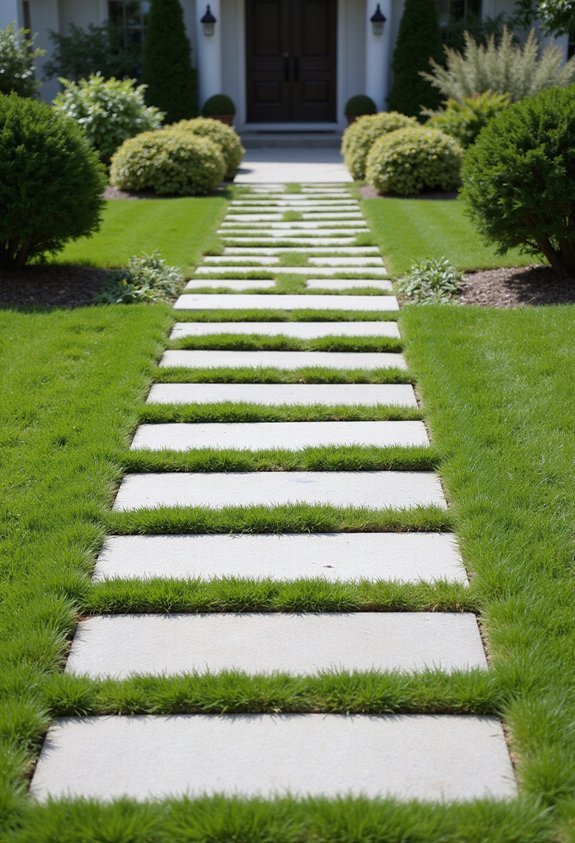
Linear stepping stones offer a modern approach to front yard pathways that seamlessly blends hardscaping with your existing landscape features. You’ll create clean lines by spacing rectangular or square stones at consistent intervals, typically eighteen to twenty-four inches apart for comfortable walking strides. Install these stones flush with your lawn surface to maintain smooth mowing patterns while allowing grass or groundcover plants to grow between each piece. You can integrate native plantings, decorative gravel, or mulched areas around the stones to enhance visual appeal. This design method works exceptionally well with contemporary home styles and minimalist garden concepts.
Curved Garden Steps Through Planted Borders
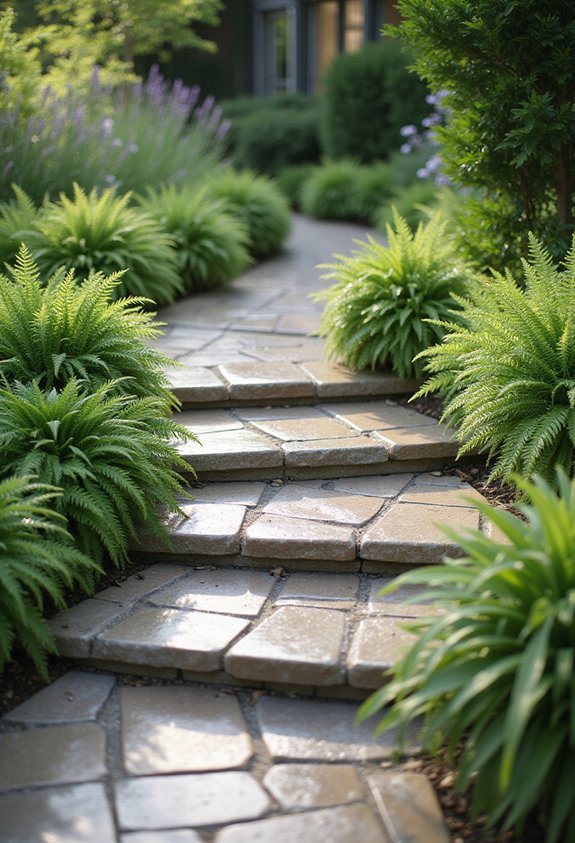
As curved pathways naturally guide visitors through your front yard landscape, you’ll discover that incorporating garden steps through planted borders creates an inviting journey that enhances both functionality and aesthetic appeal. Design your curved steps using natural stone or concrete pavers that complement your home’s architecture, spacing them eighteen to twenty-four inches apart for comfortable walking. Plant low-growing perennials, ornamental grasses, and seasonal flowers along the borders to create visual interest throughout the year. Install subtle landscape lighting between plantings to illuminate the pathway safely during evening hours while highlighting your carefully selected botanical elements.
Split-Level Stone Steps With Seating Areas
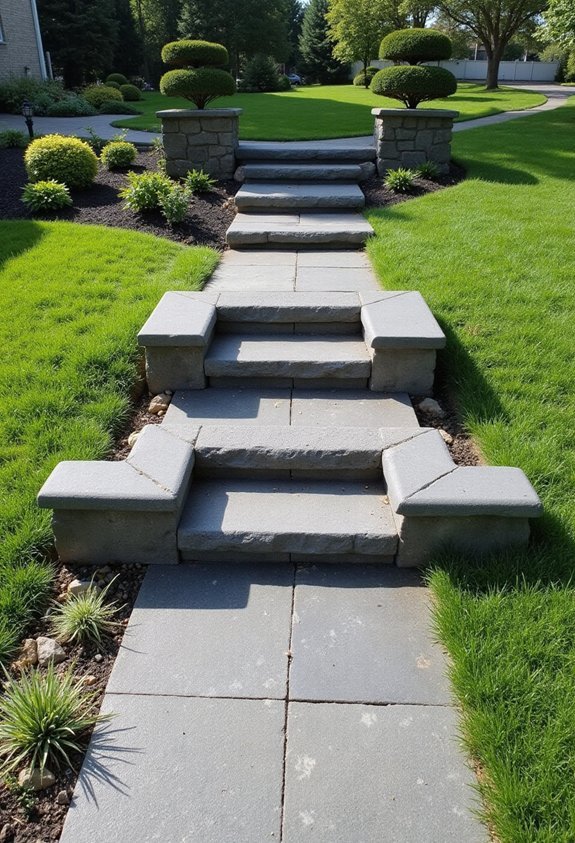
Because split-level stone steps create natural opportunities for rest and conversation, you’ll find that incorporating seating areas transforms your front yard’s vertical changes into welcoming gathering spaces. You can build wider stone platforms at strategic intervals, creating natural benches by extending the step depth to eighteen inches or more. Consider installing low stone walls alongside your steps, which serve dual purposes as retaining structures and comfortable seating ledges. You’ll maximize functionality by positioning these seating areas where views are most appealing, whether overlooking your garden beds or facing toward interesting architectural features of your home’s exterior.
Sleek Concrete Steps With Integrated LED Lighting
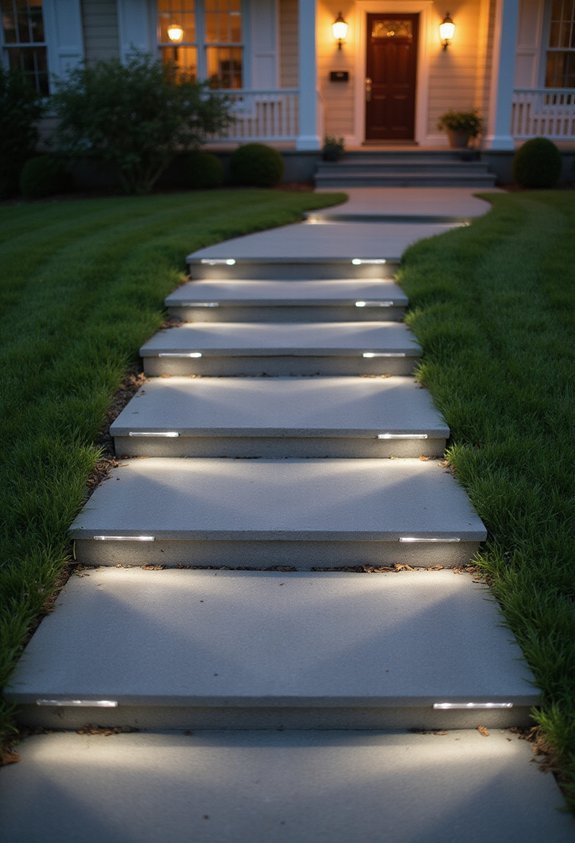
When you choose sleek concrete steps with integrated LED lighting, you’ll create a modern entrance that combines contemporary aesthetics with enhanced safety and functionality. These steps feature clean lines and smooth surfaces that complement minimalist architectural styles, while embedded LED strips provide consistent illumination along edges and risers. You’ll need to plan electrical connections during construction, ensuring weatherproof fixtures and proper voltage requirements. The lighting improves visibility during evening hours, reduces trip hazards, and creates dramatic visual appeal. You can select from various color temperatures, from warm white to cool blue, depending on your desired ambiance and existing exterior lighting scheme.
Steel And Concrete Combination Stairways
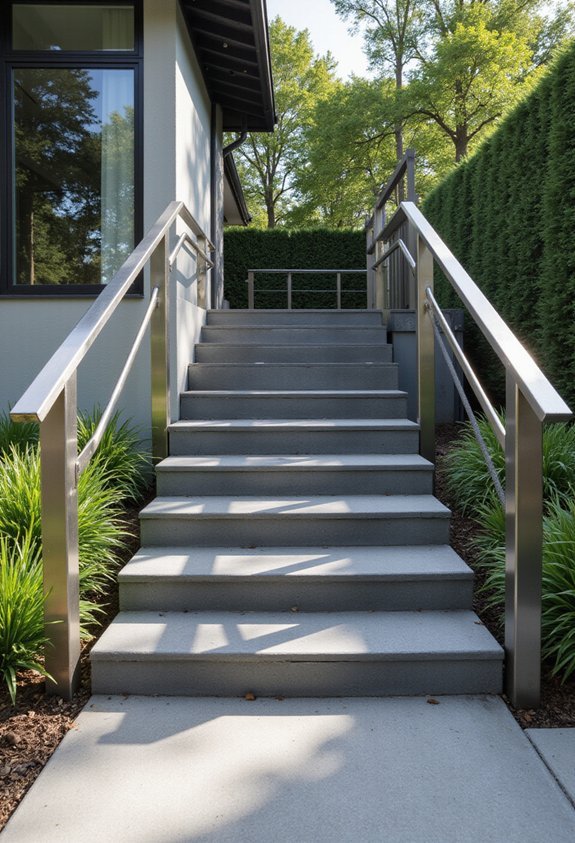
Steel and concrete combination stairways offer a perfect balance between industrial strength and contemporary design, creating front yard pathways that stand out with their distinctive dual-material construction. You’ll find these stairs combine steel’s structural flexibility with concrete’s durability, allowing for creative designs that can’t be achieved with single materials. The steel framework provides support while concrete treads offer stability and weather resistance. You can customize the finish by choosing brushed steel railings with smooth concrete steps, or incorporate steel inlays within concrete surfaces. This combination requires professional installation but delivers long-lasting performance with minimal maintenance needs.
Porcelain Tile Walkways For Zero Maintenance
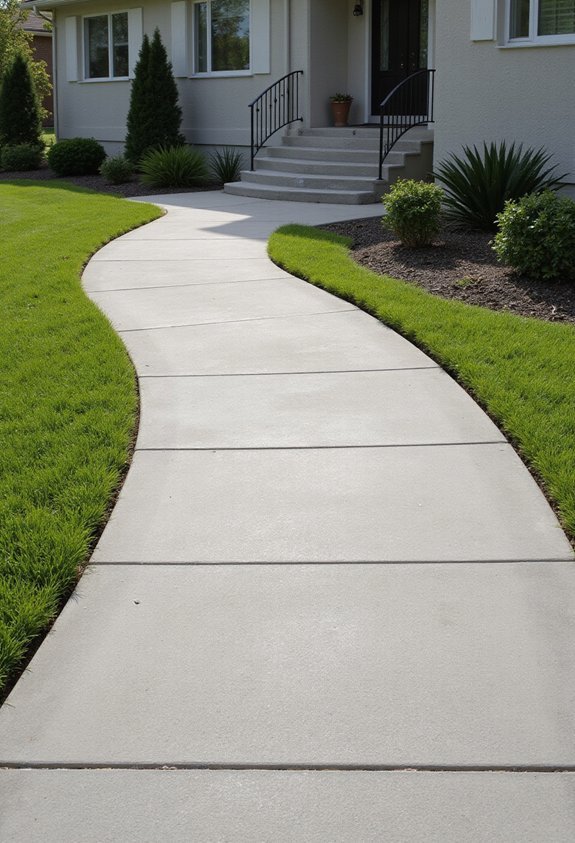
Although porcelain tile walkways require a higher initial investment than traditional materials, they deliver truly maintenance-free performance that makes them ideal for busy homeowners who want beautiful front yard pathways without ongoing upkeep. You’ll find that porcelain tiles resist staining, scratching, and weather damage better than natural stone or concrete alternatives. These tiles won’t crack from freeze-thaw cycles, and they don’t require sealing treatments like other materials. You can simply hose them down occasionally to remove dirt and debris. The non-porous surface prevents moss growth and water absorption, ensuring your walkway maintains its appearance for decades.
Glass Block Steps For Ultra-Modern Homes
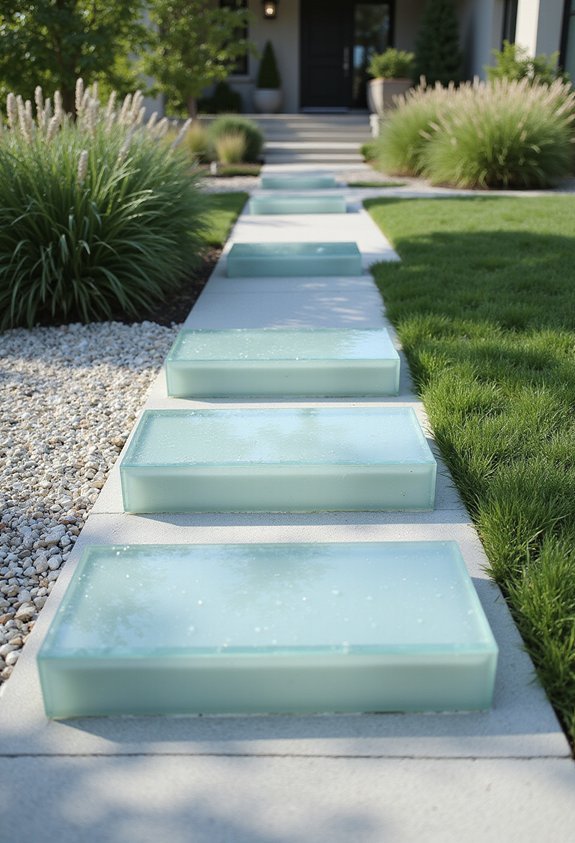
Nothing transforms your home’s entrance quite like glass block steps, which create a stunning architectural statement that perfectly complements contemporary and ultra-modern design themes. You’ll achieve maximum visual impact by incorporating LED lighting systems within the hollow glass blocks, creating an illuminated pathway that guides visitors safely during evening hours. These translucent building materials allow natural light to filter through during daytime while maintaining structural integrity under heavy foot traffic. You can install glass blocks in various sizes and textures, from smooth surfaces to ribbed patterns that provide enhanced slip resistance for outdoor weather conditions.
Metal Grid Walkways With Built-In Drainage
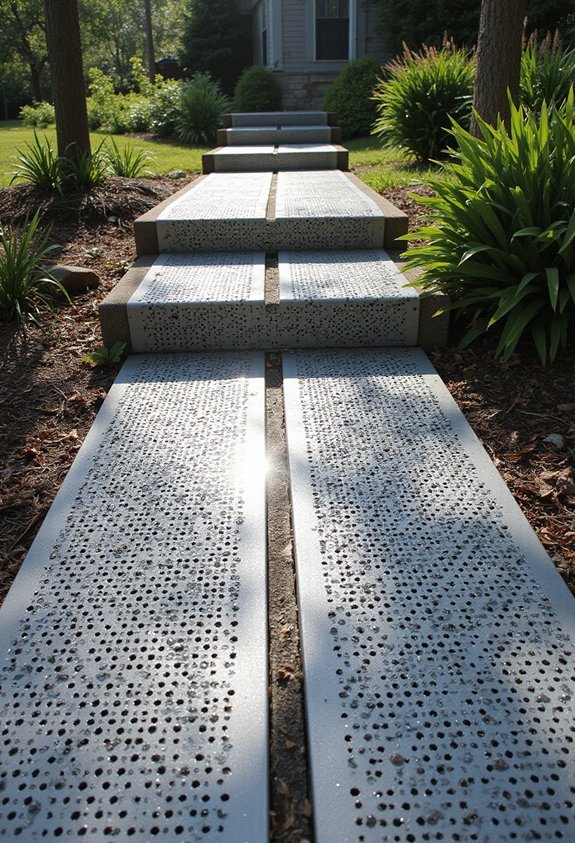
When you need a durable pathway solution that handles both foot traffic and water management simultaneously, metal grid walkways offer an engineered approach that combines functionality with industrial aesthetics. These systems feature perforated steel or aluminum panels that allow water to drain directly through the surface, eliminating standing water and ice formation. You’ll install them over a prepared gravel base with proper slope for drainage, ensuring water flows away from your home’s foundation. The open grid design prevents debris accumulation while providing excellent traction in wet conditions, making them ideal for areas with heavy rainfall or snow.
Raised Walkways With Integrated Planter Boxes
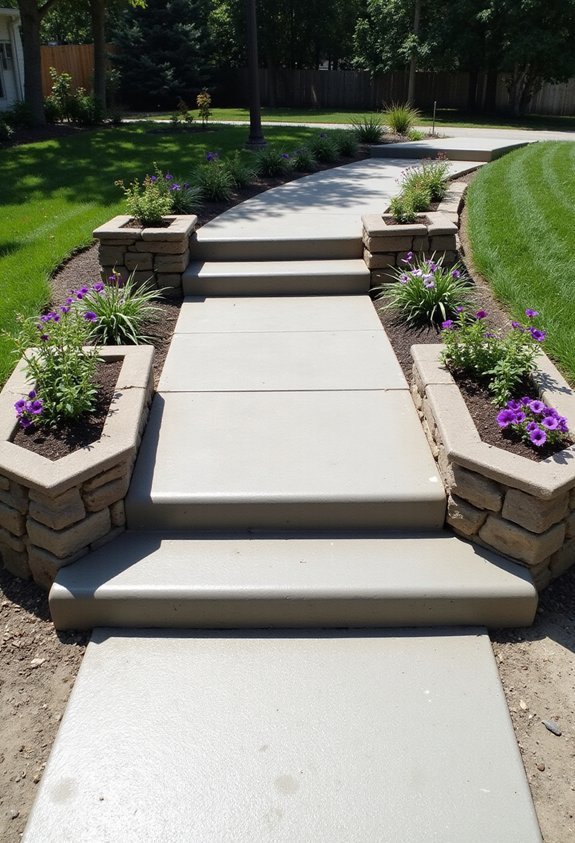
Raised walkways with integrated planter boxes create dual-purpose pathways that elevate your landscaping while providing defined routes through your front yard space. You’ll construct these systems using concrete, composite decking, or treated lumber for the walkway base, incorporating rectangular or curved planter sections along the sides. The raised design improves drainage beneath the pathway while allowing proper soil depth for plants above ground level. You can install built-in irrigation systems within the planters, connecting them to your existing sprinkler network. These walkways work particularly well on sloped terrain, creating terraced planting areas that prevent soil erosion.
Conclusion
You’ve explored eighteen pathway designs that combine visual appeal with practical functionality, ranging from low-maintenance porcelain tiles to modern glass block installations. Each option offers distinct advantages, whether you’re prioritizing drainage solutions, decorative elements, or minimal upkeep requirements. Consider your home’s architectural style, local climate conditions, and maintenance preferences when selecting your pathway design. These clean, sophisticated options will enhance your property’s curb appeal while providing safe, accessible routes to your front entrance.