
A real estate agent once told me she could spot which homes would sell fast just by standing at the curb for thirty seconds. That comment stuck with me, and made me look at my own front yard differently.
Curb appeal gets treated like a luxury concern, something for sellers or awards, when really it shapes how you feel pulling into your own driveway every day.
Big results rarely need a full overhaul. A new front door, refreshed lawn, or well placed planter can shift a property’s entire feel. I repainted my porch in one afternoon and was shocked how much that single change elevated everything else.
The Decisions That Matter Most
Before you start buying plants and paint, think about which changes will be visible from the street versus up close. The front door, walkway, and lawn carry the most visual weight since they’re what people notice first.
Sequencing your projects matters more than people expect. Tackling your lawn and walkway before adding decorative touches like planters gives you a clean foundation to build on rather than dressing up a yard that still needs basic work.
Budget for materials that hold up to weather, not just ones that look good on installation day. A cheaper edging or fixture that fades or warps within a year ends up costing more in the long run.
22 Front Yard Makeover Ideas
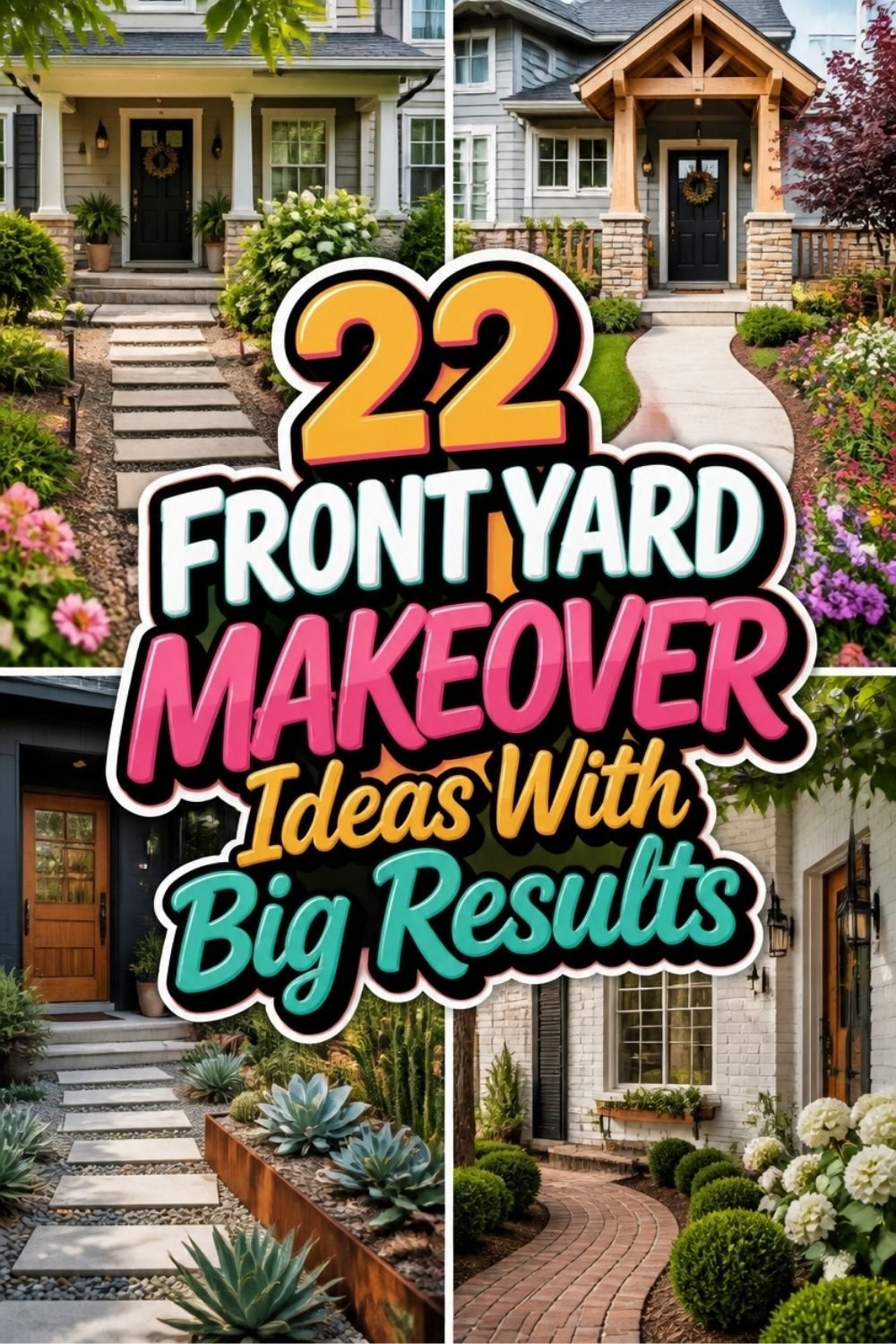
This list moves from high impact structural changes like door replacement and walkway installation through to smaller decorative touches like planters, lighting, and seasonal containers. Some of these projects you could finish in a weekend, others are worth planning out over a season as you budget and source materials.
I tried to cover the full range so whether you’re working with a tight budget or planning a bigger transformation, there’s a clear starting point here for your specific yard.
Pick whichever change feels most overdue and start building your front yard’s curb appeal from there.
Replace Your Front Door for Maximum Curb Appeal
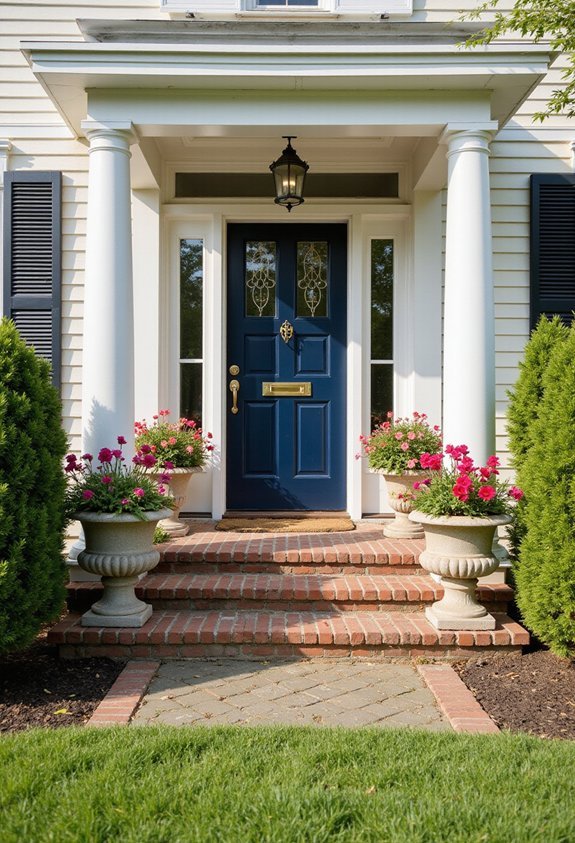
When you’re looking to transform your home’s exterior appearance, replacing your front door delivers one of the most significant visual improvements you can make with a single upgrade.
Choose a door color that complements your home’s existing palette while creating visual interest against your siding or brick. Bold colors like navy blue, forest green, or classic red work well with neutral exteriors.
Consider upgrading to a door with glass panels, decorative hardware, or unique textures to add architectural detail. Measure your existing frame carefully before purchasing, and don’t forget to update your door hardware for a cohesive, polished appearance.
Also read: 19 FRONT YARD WATER FEATURE Styles That Feel Luxurious!
Refresh Your Lawn With Overseeding and Fertilizing
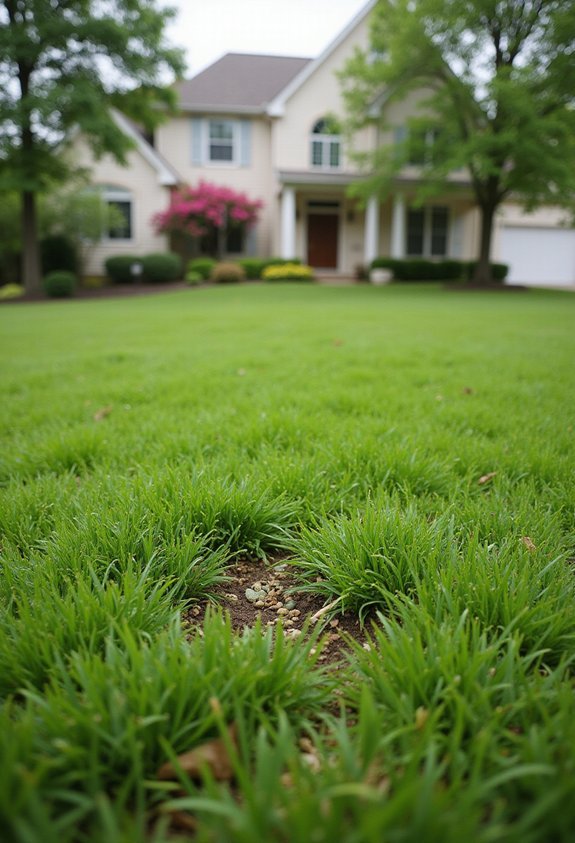
After months of foot traffic, weather stress, and natural wear, your lawn needs targeted care to restore its thick, vibrant appearance that forms the foundation of your home’s curb appeal.
Overseeding fills bare patches and thickens existing grass by spreading new seed over your current lawn, while proper fertilizing provides essential nutrients for healthy growth.
Begin by mowing your grass shorter than usual, then rake to remove debris and create seed-to-soil contact. Apply grass seed evenly across thin areas, followed by a starter fertilizer that’s high in phosphorus to promote root development and establishment.
Install a Natural Stone Front Walkway
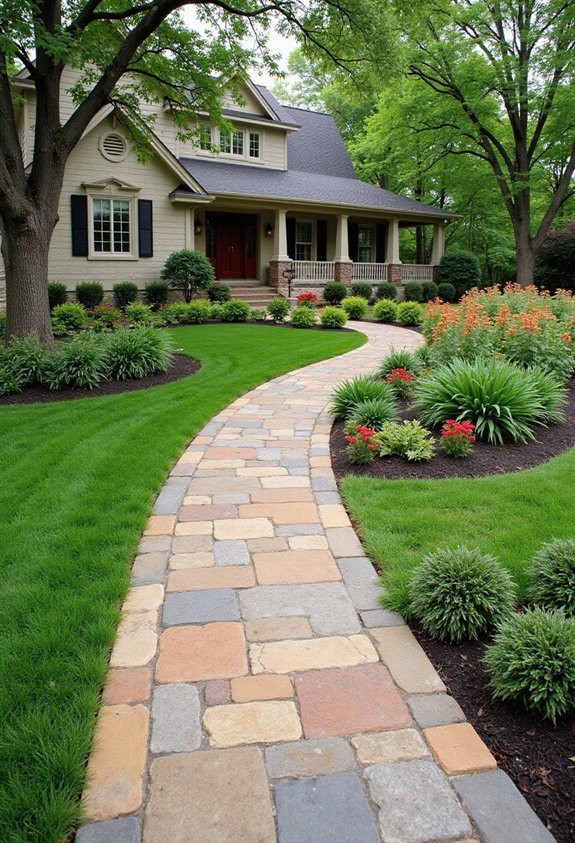
While a beautiful lawn sets the stage for your front yard, a well-designed natural stone walkway creates the elegant pathway that guides visitors to your door and instantly elevates your home’s visual appeal.
Choose durable materials like flagstone, slate, or bluestone that complement your home’s architecture and withstand weather conditions. Plan your walkway’s width between three to four feet for comfortable passage, ensuring proper drainage by creating a slight slope away from your foundation.
Excavate the path six inches deep, add a compacted gravel base, then lay stones with consistent spacing for a professional, long-lasting installation.
Paint Your Front Porch or Add New Railings
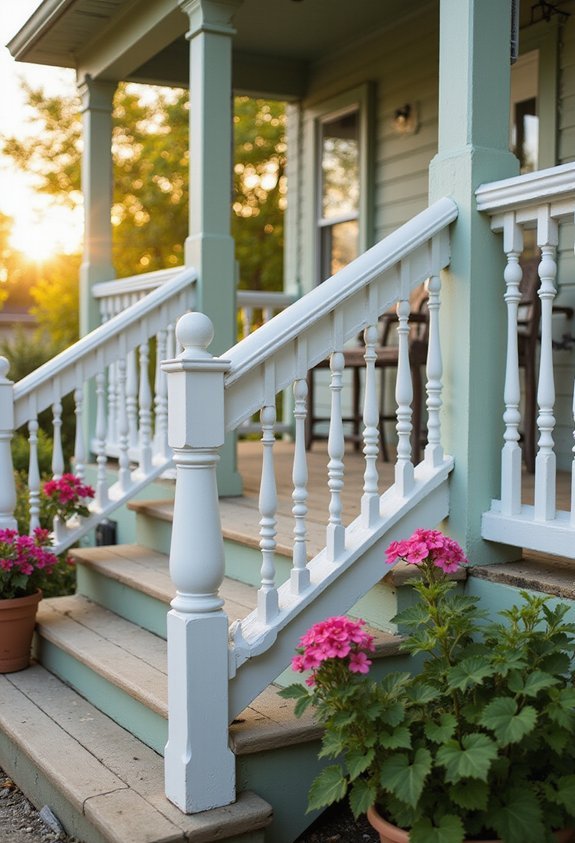
Since your front porch serves as the welcoming shift between your walkway and front door, rejuvenating it with a new coat of paint or installing updated railings can dramatically transform your home’s curb appeal and create a polished, cohesive look.
Choose paint colors that complement your home’s exterior palette, ensuring proper surface preparation by cleaning, sanding, and priming before application. For railing upgrades, consider materials like wrought iron, composite, or wood that match your architectural style.
Replace worn balusters, refresh existing railings with paint or stain, or install entirely new systems for maximum visual impact and enhanced safety.
Create Colorful Flower Beds That Bloom All Season
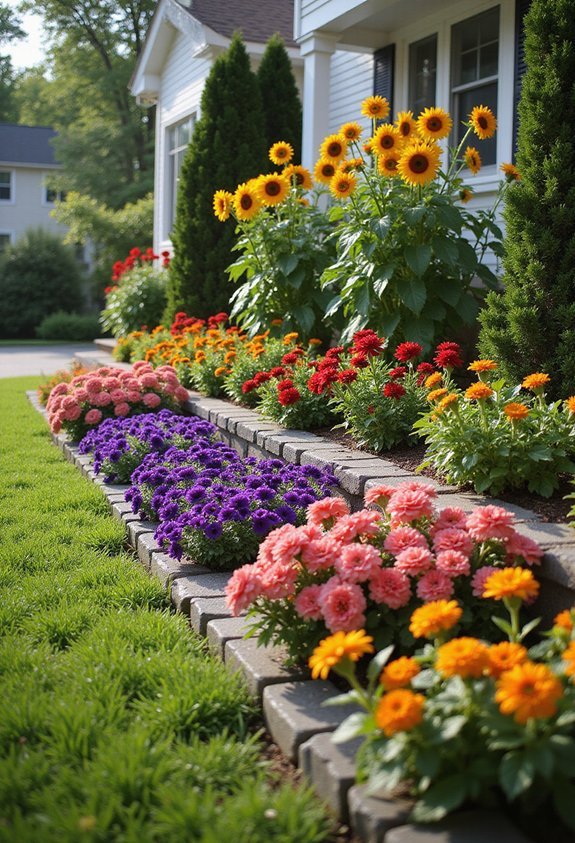
Strategic flower bed design transforms your front yard into a vibrant, eye-catching display that maintains its beauty from early spring through late fall by incorporating plants with staggered blooming periods and complementary growth habits.
You’ll need to select early bloomers like crocuses and daffodils, followed by tulips and hyacinths for mid-spring color. Summer requires heat-tolerant perennials such as coneflowers, black-eyed Susans, and bee balm, which bloom for extended periods.
Add late-season performers like asters and mums to carry color into autumn. Plant bulbs in clusters of odd numbers, space perennials according to mature size, and mulch beds to retain moisture and suppress weeds effectively.
Build Raised Planters Along Your Foundation
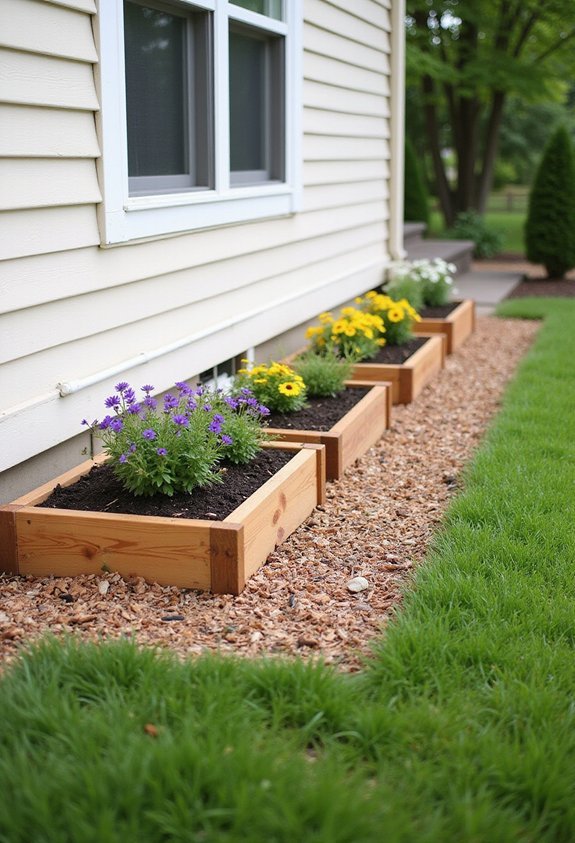
Foundation planters create an attractive border between your home’s exterior walls and the surrounding landscape while solving common drainage issues and providing better growing conditions for plants that struggle in compacted soil.
You’ll need to construct these planters using materials like concrete blocks, natural stone, or pressure-treated lumber that can withstand moisture exposure.
Build the planters approximately eighteen to twenty-four inches wide and twelve to eighteen inches deep, ensuring proper drainage by adding gravel at the bottom before filling with quality potting soil mixed with compost for ideal plant health and growth.
Add Decorative Mulch to Define Garden Beds
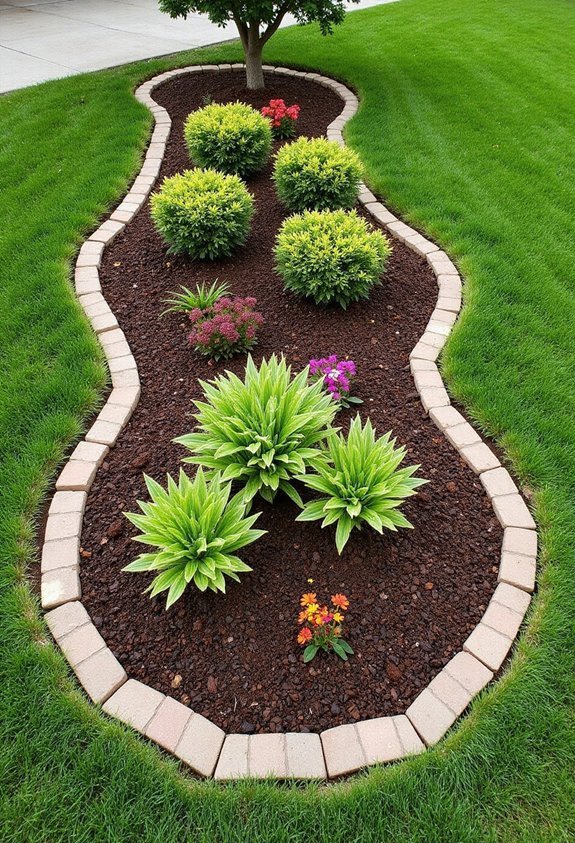
Decorative mulch transforms ordinary garden beds into polished landscape features while providing essential benefits for plant health and soil moisture retention.
You’ll create clean, defined borders by selecting organic materials like shredded bark, wood chips, or cocoa hulls that complement your home’s exterior colors.
Apply a three-inch layer around plants, keeping mulch six inches away from tree trunks and plant stems to prevent moisture damage and pest issues. Choose darker mulches to make colorful flowers pop, or lighter options to brighten shaded areas. Replace mulch annually to maintain appearance and maximize soil protection benefits.
Create Symmetrical Plantings for Classic Balance
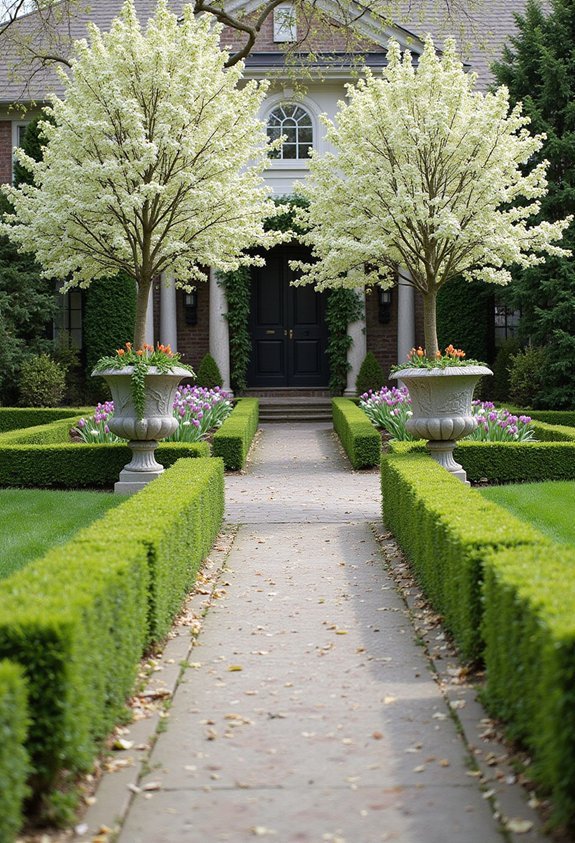
When you arrange plants in mirror-image patterns on both sides of your front entrance, walkway, or central focal point, you’ll establish a timeless design principle that instantly elevates your home’s curb appeal through balanced visual harmony.
Start by selecting matching plant pairs with similar heights, textures, and seasonal interest, then position them equidistant from your central axis.
Consider using identical containers, shrubs, or perennial groupings to reinforce the symmetrical effect. This formal approach works particularly well with traditional architectural styles, creating an organized appearance that guides visitors’ eyes naturally toward your front door while maintaining visual equilibrium throughout the landscape.
Add Trees for Instant Height and Impact
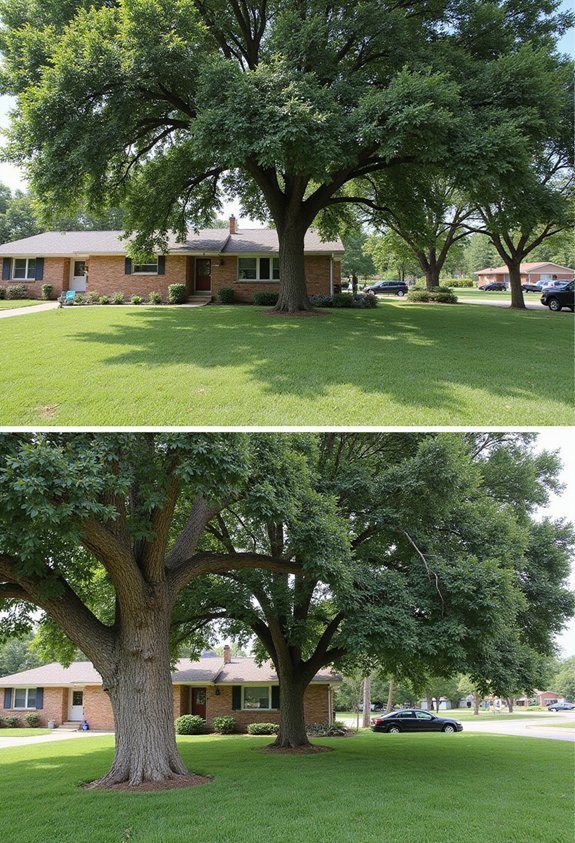
Several well-placed trees can transform your front yard from a flat, one-dimensional space into a dynamic landscape with impressive vertical presence that immediately catches the eye and adds substantial value to your property.
Choose fast-growing varieties like red maples, flowering dogwoods, or ornamental cherries for quick results within two to three years.
Position larger specimen trees as focal points near corners or property lines, while smaller accent trees work effectively flanking your entrance or driveway. Consider mature height, spread, and seasonal characteristics when selecting varieties, ensuring they won’t interfere with power lines or structures.
Choose Evergreen Shrubs That Look Good All Year
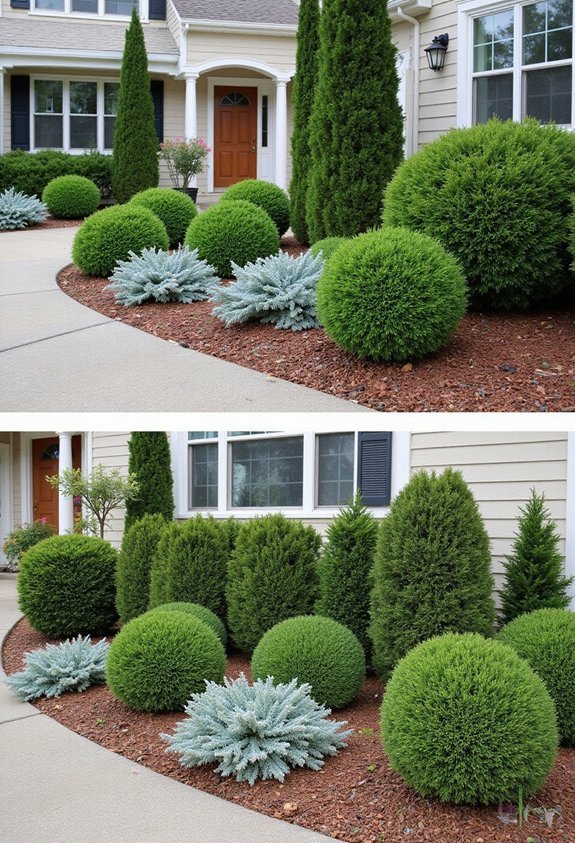
While trees provide the vertical framework for your landscape design, evergreen shrubs form the backbone that maintains visual interest throughout every season, offering consistent color, texture, and structure when deciduous plants go dormant during winter months.
You’ll want to select shrubs with varying heights, foliage colors, and growth patterns to create dynamic layers in your front yard. Consider boxwood for formal hedging, juniper varieties for textural contrast, and rhododendrons for spring blooms with year-round foliage.
Plant these shrubs in groupings of odd numbers, spacing them according to their mature size to prevent overcrowding and guarantee proper air circulation.
Create Layered Plantings With Varying Heights
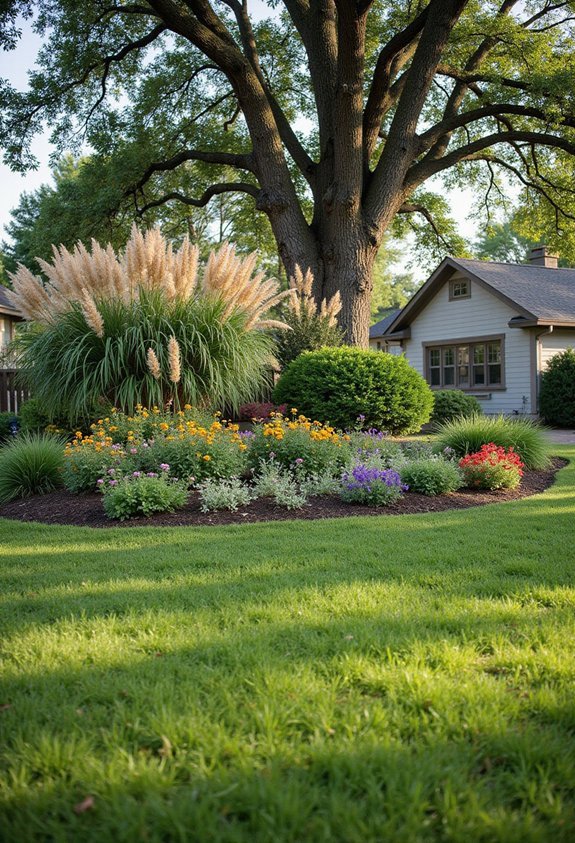
Successfully layered plantings create visual depth and natural beauty by mimicking how plants grow in nature, with taller specimens positioned in the background and progressively shorter plants arranged toward the front of your planting beds.
You’ll want to place trees or large shrubs as your backdrop layer, medium-sized shrubs and perennials in the middle section, and low-growing plants, groundcovers, or annual flowers along the front edge.
This three-tier approach prevents any single plant from being hidden while ensuring each specimen contributes to the overall composition, creating a professionally designed landscape that draws the eye naturally through your front yard space.
Add Climbing Vines to Walls or Fences
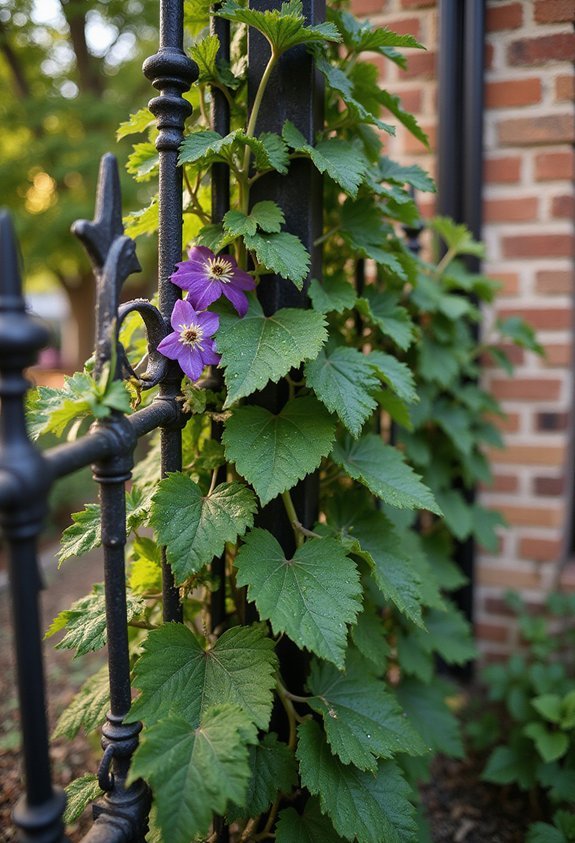
Climbing vines transform bland vertical surfaces into living walls of color and texture, turning ordinary fences, walls, and structures into stunning focal points that enhance your front yard’s visual appeal.
You’ll want to select appropriate vine varieties based on your climate, available sunlight, and desired coverage speed. Fast-growing options like morning glories and clematis provide quick results, while slower varieties like ivy offer permanent coverage.
Install sturdy support systems such as trellises, wire mesh, or wooden lattices before planting, ensuring they can handle mature vine weight. Position plantings eighteen inches from structures to allow proper root development and air circulation.
Install Pathway Lighting for Evening Appeal
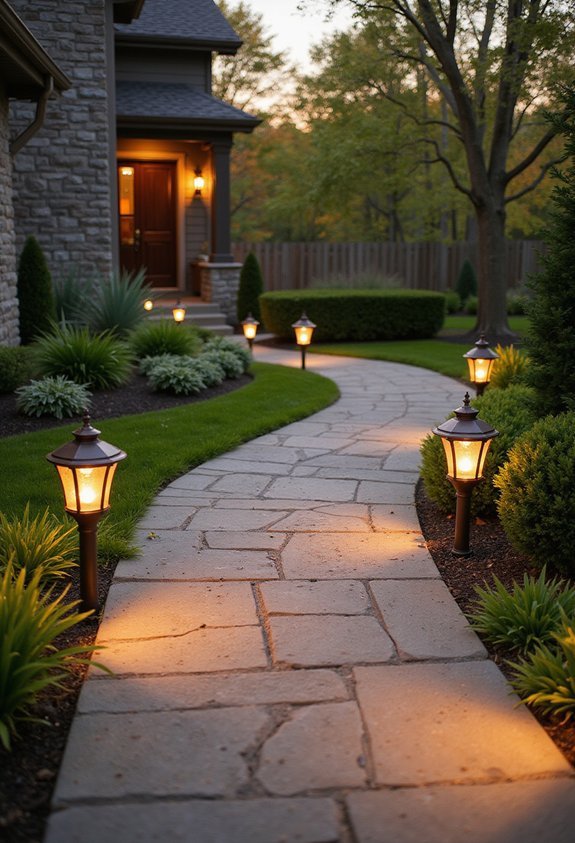
After darkness falls, strategically placed pathway lighting transforms your front yard into an inviting landscape that guides visitors safely to your door while showcasing your property’s best features.
You’ll want to install low-voltage LED fixtures along walkways, spacing them six to eight feet apart for ideal illumination without creating harsh shadows.
Solar-powered options offer easy installation since they don’t require electrical wiring, while hardwired systems provide more consistent brightness throughout the night. Focus on highlighting key elements like steps, curves, and entrance points, ensuring the light fixtures complement your home’s architectural style for a cohesive appearance.
Add Low-Voltage Landscape Lighting
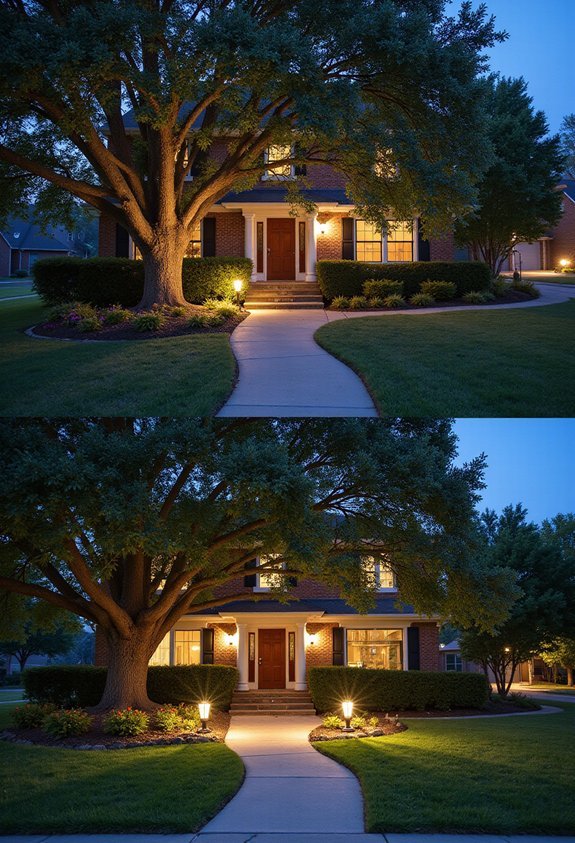
Beyond illuminating walkways, low-voltage landscape lighting allows you to create dramatic visual effects throughout your entire front yard by highlighting architectural features, mature trees, and carefully chosen focal points that define your property’s character.
You’ll install transformers that reduce standard 120-volt electricity to safer 12-volt power, making installation straightforward and energy-efficient. Position uplights at tree bases to cast shadows upward, place spotlights on architectural details like columns or stonework, and use wash lights to illuminate large surfaces evenly.
You can easily adjust fixtures, add new lights, or relocate existing ones without professional electrical work or extensive rewiring.
Upgrade Your Porch Light Fixtures
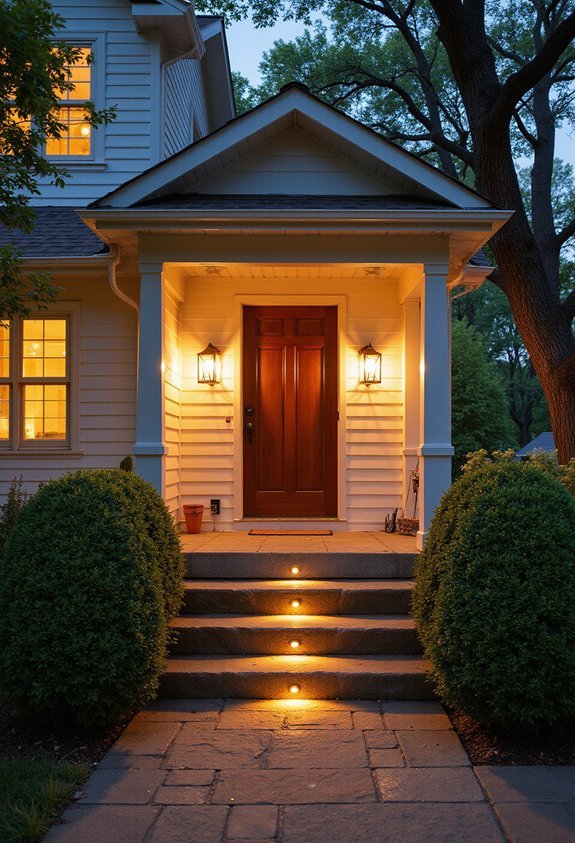
The right porch light fixtures serve as both functional necessities and striking design statements that immediately communicate your home’s style to visitors and passersby.
You’ll want to select fixtures that complement your home’s architectural elements, whether you’re choosing sleek modern sconces for contemporary homes or traditional lanterns for colonial styles. Consider the fixture’s size in proportion to your porch area, ensuring it’s neither too small to be noticed nor too large to overwhelm the space.
Install fixtures with adequate wattage to provide proper illumination for safety while creating welcoming ambiance that enhances your front yard’s overall aesthetic appeal.
Add Window Boxes With Seasonal Plants
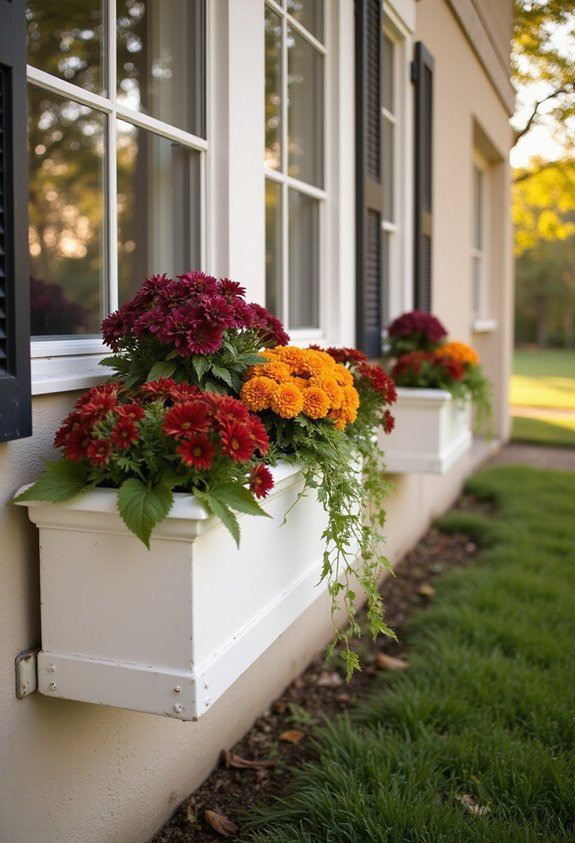
Window boxes transform ordinary windows into vibrant focal points that add layers of color, texture, and seasonal interest to your home’s exterior while creating an inviting atmosphere that draws attention upward from ground level landscaping.
You’ll need sturdy brackets that support the box’s weight when filled with soil and plants. Choose boxes made from cedar, composite materials, or metal that complement your home’s architectural style.
Install drainage holes to prevent water accumulation, then fill with potting mix and seasonal flowers like pansies for spring, petunias for summer, mums for fall, and evergreen branches for winter displays.
Place Seasonal Containers Near Your Entry
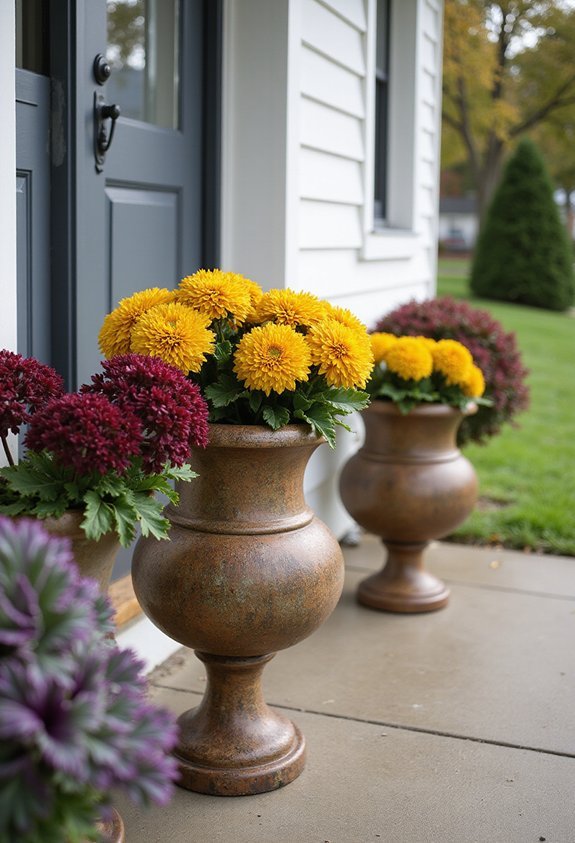
Since container gardens offer flexibility and instant impact, positioning them strategically near your front entry creates an immediate welcome that you can readily update throughout the year to reflect changing seasons and preserve fresh curb appeal.
You’ll want to select containers in varying heights and sizes to create visual depth, placing larger pots closest to your door and smaller ones extending outward.
Choose plants that complement your home’s color scheme, such as vibrant mums for fall, evergreen arrangements for winter, bright tulips for spring, and colorful annuals for summer to guarantee year-round visual interest.
Install Decorative Garden Edging
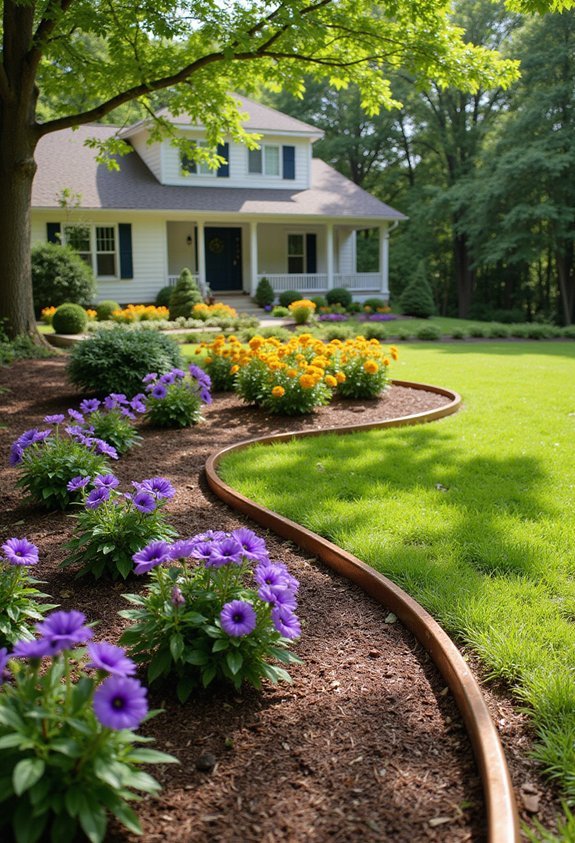
After establishing your container displays, you’ll want to create clean, defined boundaries around your planted areas by installing decorative garden edging that separates your flower beds from your lawn while adding visual structure to your landscape design.
Choose from materials like stone, brick, metal, or plastic edging based on your home’s architectural style and budget constraints. Measure the perimeter of each bed, then dig a shallow trench along the border using a spade or edging tool. Install your chosen edging material at ground level, ensuring it’s straight and properly aligned for maximum visual impact.
Add a Small Water Feature for Visual Interest
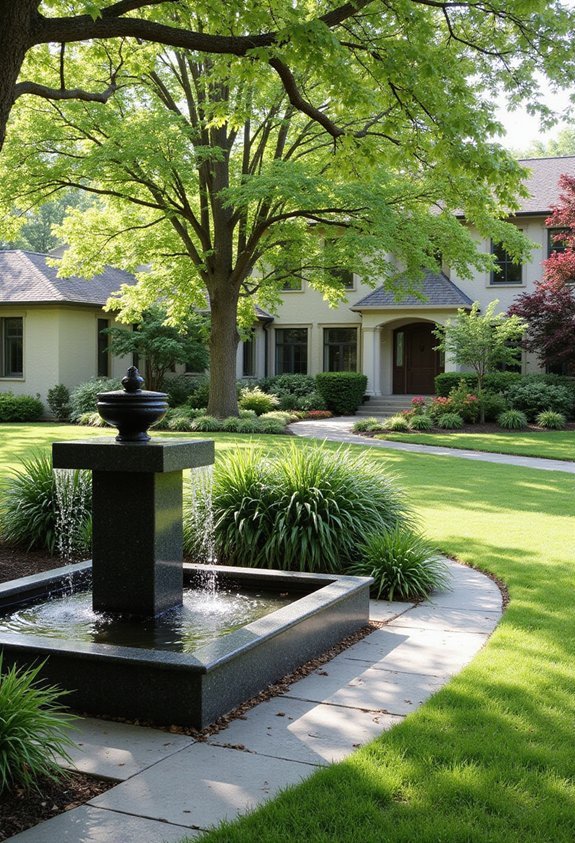
When you incorporate a small water feature into your front yard design, you’ll create a focal point that adds movement, sound, and tranquility to your landscape while increasing your property’s visual appeal and perceived value.
Choose from fountains, birdbaths, or small ponds that match your home’s architectural style and yard size. Position the feature where it’s visible from both the street and your front entrance, ensuring proper electrical access for pumps if needed.
Select materials like stone, ceramic, or metal that complement existing hardscape elements, and consider adding aquatic plants or decorative stones to enhance the overall aesthetic impact.
Upgrade Your House Numbers and Mailbox
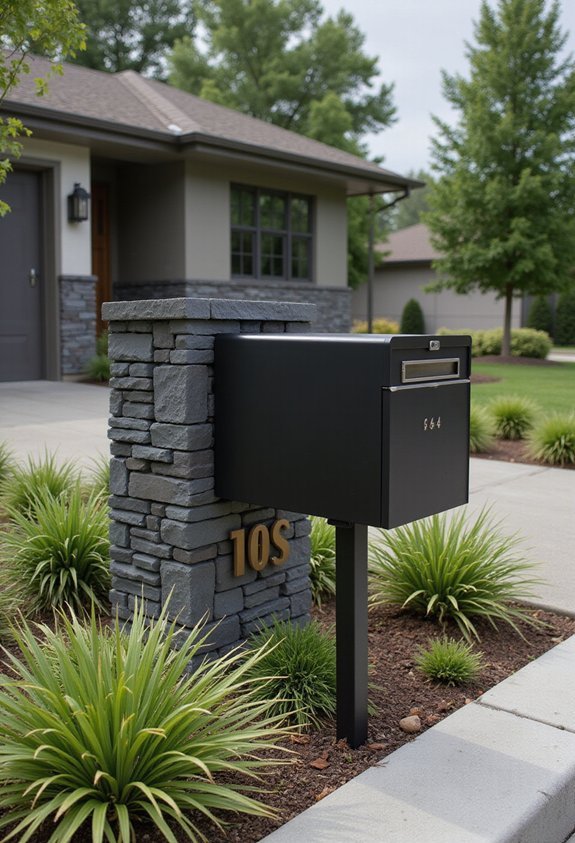
Although many homeowners overlook these essential elements, upgrading your house numbers and mailbox creates an immediate impact on your property’s curb appeal while serving the practical purpose of helping visitors and delivery personnel locate your home efficiently.
Choose house numbers that contrast with your home’s exterior color, ensuring visibility from the street during both day and nighttime hours. Select materials like brushed metal, ceramic, or weather-resistant plastics that complement your home’s architectural style.
Position numbers at eye level on your front door, porch pillar, or dedicated post. Coordinate your mailbox design with your house numbers for a cohesive, polished appearance.
Create a Welcoming Front Yard Seating Area
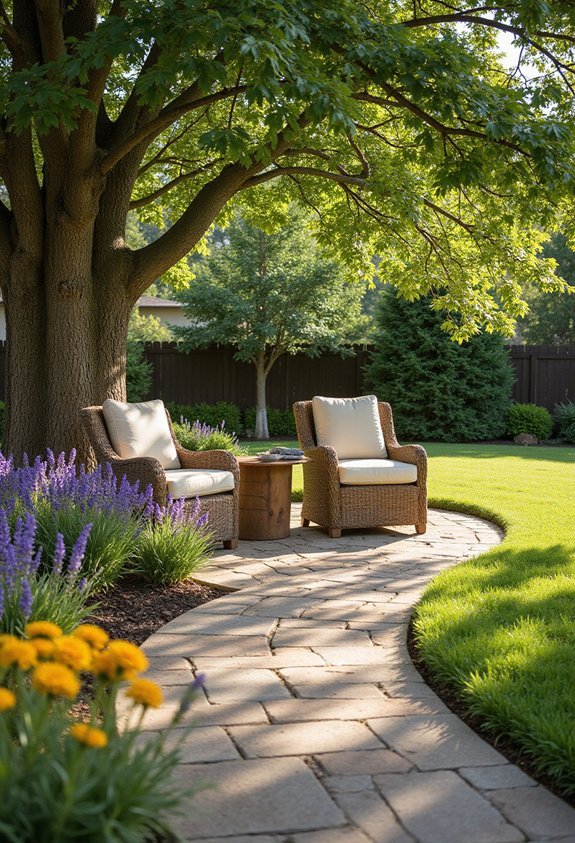
While most homeowners focus solely on landscaping and architectural features, incorporating a thoughtfully designed seating area in your front yard transforms an underutilized space into a functional gathering spot that enhances your home’s welcoming atmosphere and creates opportunities for neighborhood interaction.
Position weather-resistant furniture like benches or chairs near your entrance, ensuring they’re visible from the street but maintain privacy.
Add comfort elements such as outdoor cushions, small side tables, and strategic shade through umbrellas or pergolas. Include surrounding plantings and pathway lighting to define the space, creating an inviting environment that encourages relaxation and social connection.
Add Decorative Planters and Garden Accessories
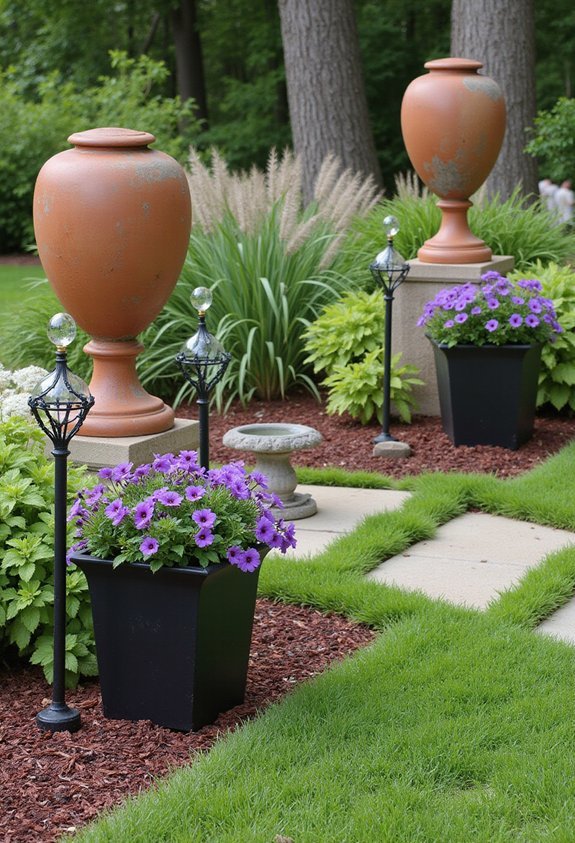
Since decorative planters and garden accessories serve as versatile design elements that can instantly elevate your front yard’s visual appeal, you’ll find they offer the perfect opportunity to introduce color, texture, and personality to areas where permanent landscaping might not be practical or desired.
You can strategically place large ceramic pots near your entrance, arrange smaller containers along walkways, and incorporate garden sculptures, decorative stones, or metal art pieces to create focal points. Choose accessories that complement your home’s architectural style, select weather-resistant materials, and vary heights to establish visual interest throughout your landscape design.
Conclusion
A front yard makeover doesn’t have to mean tearing everything out and starting from scratch. Most of the biggest improvements come from a handful of well chosen changes rather than an overwhelming list of projects tackled all at once.
I still think about how surprised I was at the difference new house numbers and a coordinated mailbox made on my own home. It’s such a small detail, and yet it changed how finished the whole property looked from the street.
Prioritize the high impact changes first, things like your front door, your walkway, and your lawn. Those foundational pieces set the tone that everything else gets layered on top of.
Once those basics are solid, the smaller decorative touches like planters, lighting, and seasonal containers start to really shine. They’re the details that make a yard feel cared for rather than just functional.
Whatever combination of ideas you choose, remember that curb appeal benefits you just as much as anyone walking past. Coming home to a yard you’re proud of changes something small but real about your day.
I’d love to hear which project you’re tackling first, or what’s already transformed in your own front yard. Leave a comment below and tell me how your makeover is coming along.