
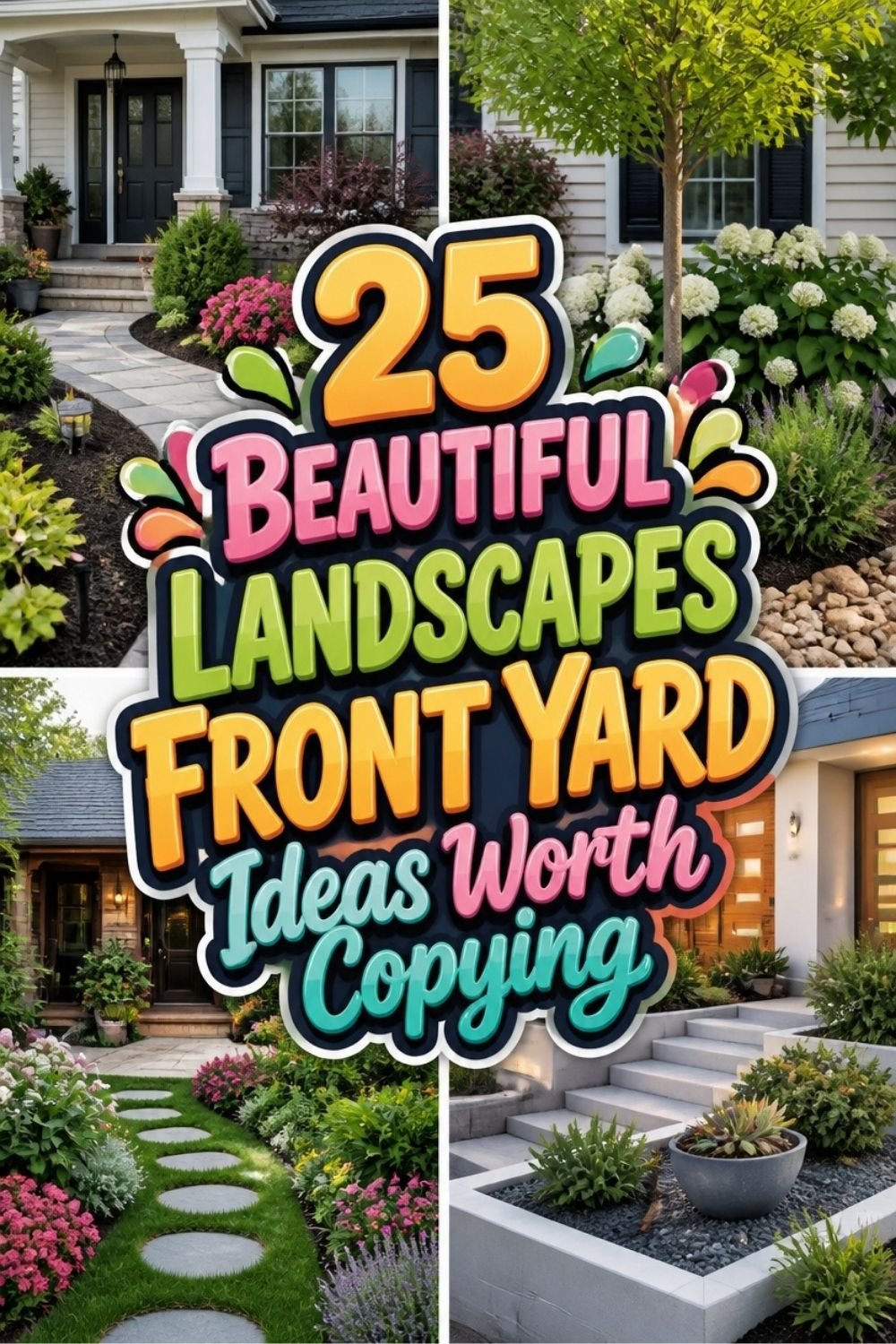
A well-designed front yard serves multiple purposes, from increasing property value to creating a welcoming first impression for visitors. The process of transforming this space requires careful attention to color coordination, material selection, and sustainable plant choices that suit local climate conditions.
Curved pathways, layered vegetation, and functional outdoor elements can maximize even limited square footage. With 25 distinct approaches to evaluate, homeowners face important decisions about which combinations best address their specific needs, budgets, and maintenance preferences. The following strategies, organized from foundational planning to specialized techniques, provide structured guidance for achieving lasting results.
Start With a Cohesive Color Palette and Materials Plan
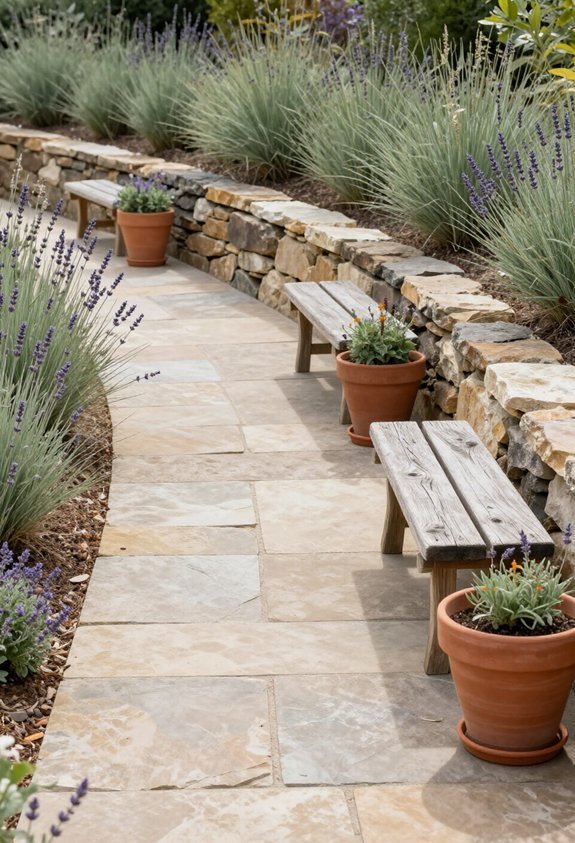
Harmony serves as the foundation upon which all successful front yard designs are built, and achieving this quality demands deliberate attention to the relationship between color and material from the earliest planning stages. Designers select two to five complementary colors that recur throughout plantings, hardscaping, and architectural elements to create visual unity across the entire space.
Material selection reinforces this cohesion when textures and finishes echo one another across different features. Natural stone patios paired with matching stone edging, or warm wood fences complemented by cedar planter boxes, establish consistency that ties disparate elements together. Climate-appropriate choices guarantee longevity while maintaining intended aesthetics through seasonal changes.
Thoughtful documentation of selected colors and materials prevents impulse additions that disrupt established schemes. This systematic approach yields front yards where every component contributes to an integrated, purposeful whole.
Keep Reading
Working with a really narrow strip out front? These layering tricks go even further when you pair them with clever space illusions.
22 Tiny Front Yard Ideas That Feel Surprisingly Spacious ›Create a Welcoming Entry With a Curved Front Yard Path
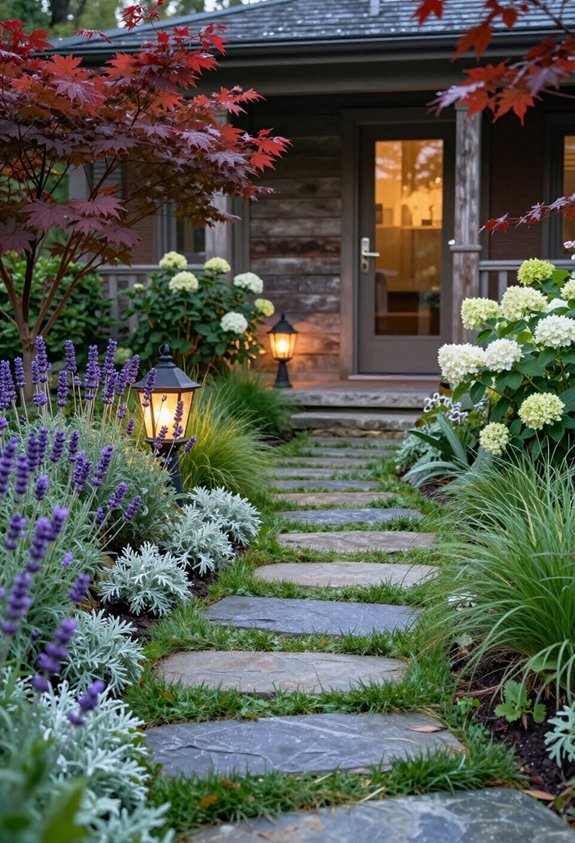
Few elements shape the first impression of a home as decisively as the path that leads visitors from curb to door, and a gently curving route accomplishes this purpose with particular effectiveness. A curved front yard path softens the approach, creating visual interest while naturally slowing pedestrian traffic and encouraging observation of surrounding plantings.
The design requires careful calculation of width, typically four to five feet for comfortable passage, with materials selected for texture, durability, and cohesion with the home’s exterior. Edging, whether stone, metal, or concrete, maintains clean lines and prevents material migration. The curve’s radius must accommodate maintenance equipment and avoid awkward angles.
Lighting fixtures placed at intervals guarantee safe navigation after dark. Proper drainage, achieved through subtle grading or permeable materials, prevents pooling and extends the path’s functional lifespan through seasonal weather variations.
Keep Reading
Once the yard looks the part, it is worth planning how it actually works on the night you invite everyone over.
18 Front Yard Party Set Up Ideas For Hosting ›Plant a Low-Water Xeriscape for Dry Climates
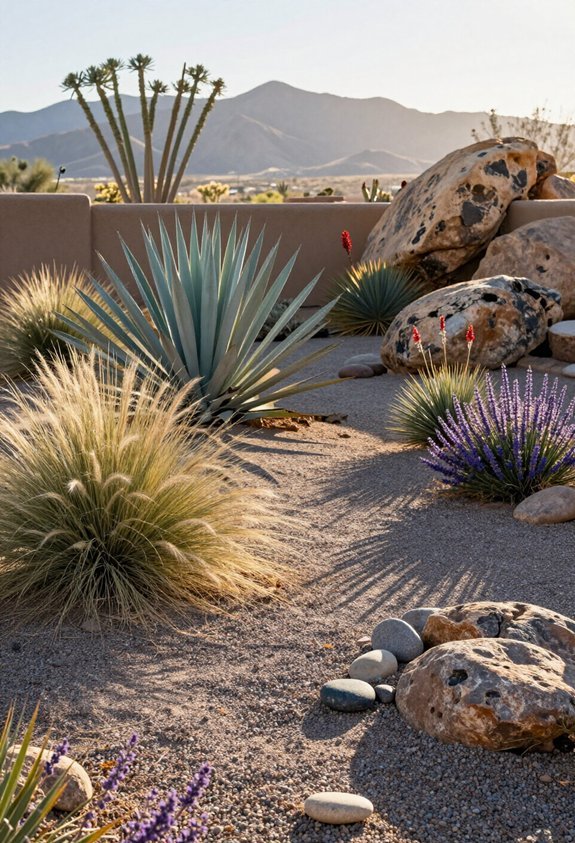
While a curved path guides movement through the landscape, the plants surrounding it determine how much maintenance and resources that space demands over time. A low-water xeriscape addresses this concern through deliberate plant selection and soil preparation. Native species adapted to arid conditions require minimal irrigation once established, reducing water consumption greatly compared to traditional lawns.
Drought-tolerant options include lavender, sage, yarrow, and ornamental grasses, which provide texture and seasonal color without demanding constant attention. Soil amendment with organic matter improves water retention at root depth, while mulch layers minimize evaporation and suppress weed growth. Irrigation systems should target specific zones, delivering water directly to plant bases rather than broadcasting across empty soil. Zoning plants by water needs further refines efficiency, grouping thirstier specimens together while allowing established xerophytes to thrive on rainfall alone.
Use Gravel and Succulents for Nearly Zero Maintenance
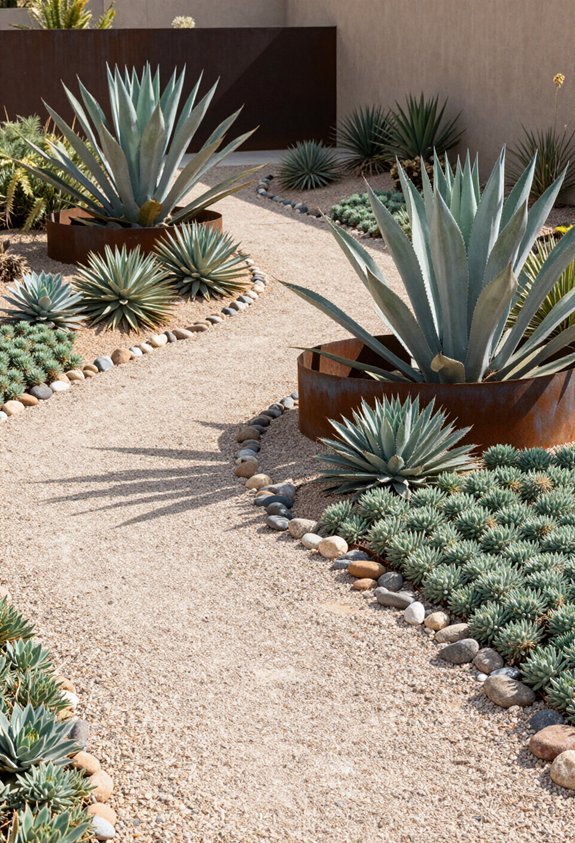
Combine gravel hardscaping with drought-adapted succulents to establish a front yard landscape that demands almost no ongoing maintenance. This approach eliminates regular watering, mowing, and fertilizing while creating visual texture through varied plant forms and stone surfaces.
Select compact succulents such as sedum, echeveria, or agave, spacing them to allow for mature growth without overcrowding. Install landscape fabric beneath the gravel layer to suppress weed germination, reducing the only remaining task to occasional debris removal. Choose angular gravel in sizes between three-quarters and one inch, which interlocks firmly and resists displacement. Incorporate boulders or larger stones to provide height variation and thermal mass, which stabilizes soil temperature around root zones.
For pathways, use packed decomposed granite or flagstone set in sand, ensuring permeability and preventing erosion during rain events.
Keep Reading
21 Gravel Front Yard Ideas That Look Clean & Modern!Pea gravel, river rock, or crushed stone, plus the colour choices that decide how polished it ends up looking.
Swap Your Lawn for a Native Meadow Garden
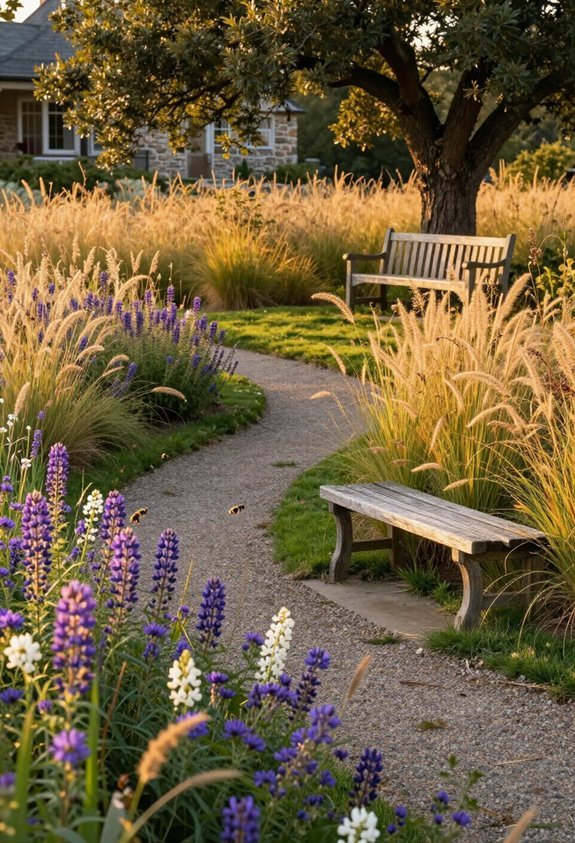
Although traditional lawns demand constant watering, mowing, and chemical treatments, a native meadow garden offers a self-sustaining alternative that supports local wildlife and reduces long-term maintenance commitments. Property owners seeking functional front yard transformations should select indigenous wildflowers and grasses adapted to regional rainfall patterns, soil conditions, and seasonal temperature fluctuations.
Black-eyed susans, purple coneflowers, and butterfly milkweed attract pollinators including bees and monarch butterflies, while deep root systems of native species prevent erosion and improve water infiltration. Installation requires removing existing turf grass, adding organic compost, and broadcasting seed mixtures appropriate for sun exposure levels. Initial establishment demands regular watering and weed management during the first growing season, after which the meadow becomes largely self-regulating. Seasonal mowing once annually maintains neat appearance and prevents woody encroachment.
Mix Ornamental Grasses for Year-Round Structure
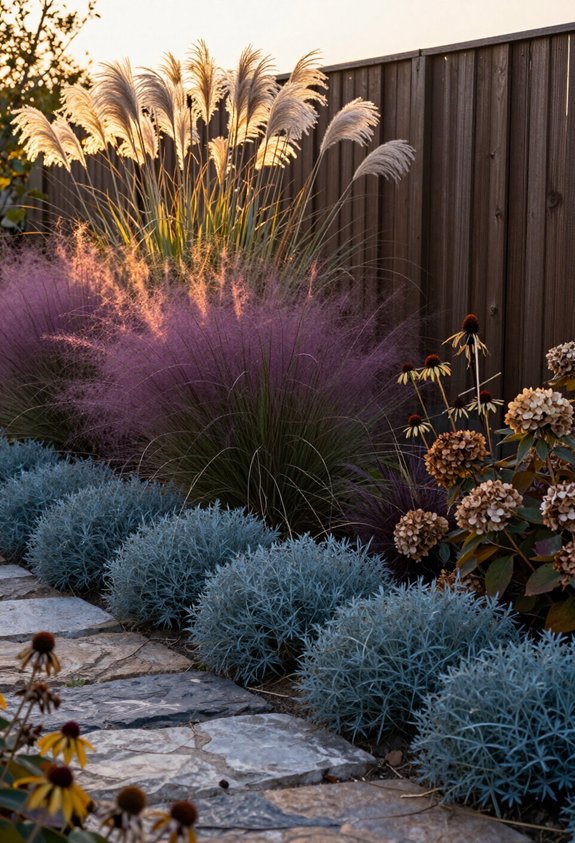
A native meadow garden introduces movement and texture through its varied plant heights, yet property owners seeking more pronounced architectural elements may incorporate ornamental grasses to establish permanent visual anchors throughout all seasons. These grasses provide consistent form when flowering perennials retreat into dormancy, guaranteeing the landscape maintains definition during winter months.
Selection requires attention to mature dimensions, with tall varieties such as feather reed grass positioned toward rear borders and compact blue fescue placed along pathway edges. Color variation emerges through foliage ranging from silver-blue to deep burgundy, while seed heads capture frost and snow to create luminous effects in low winter light. Maintenance demands minimal intervention, typically involving annual cutting in late winter before new growth emerges. Proper spacing prevents overcrowding, allowing air circulation that reduces fungal issues. Combined plantings of warm-season and cool-season types assure continuous coverage.
Design a Cottage-Style Flower Border That Blooms for Months
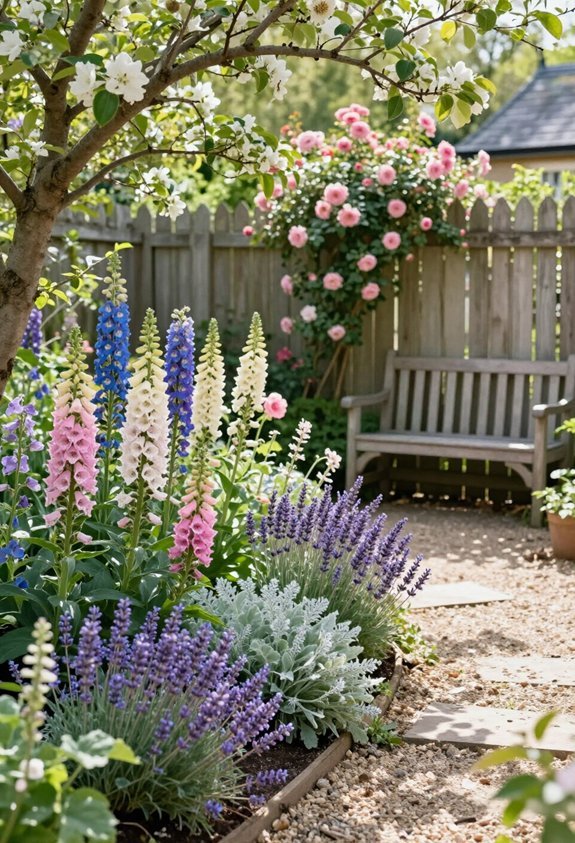
The cottage-style flower border draws its enduring appeal from an intentionally informal arrangement that prioritizes continuous color over rigid structure, making it particularly suitable for property owners who desire visual interest from late spring through early autumn.
To achieve months of successive blooms, one layers plants by height and bloom time, placing tall delphiniums and hollyhocks toward the back, mid-height roses and foxgloves in the center, and low-growing geraniums and candytuft along the front edge. Early bulbs such as daffodils and tulips establish initial color, while perennial salvias and nepeta sustain display through summer heat.
Long-blooming annuals, including cosmos and zinnias, fill temporary gaps. Dense planting minimizes bare soil and reduces maintenance. Selecting plants with overlapping flowering periods guarantees no single season dominates, creating a seamless progression of color that evolves naturally without requiring formal replanting or intensive care.
Install Modern Pavers With Drought-Tolerant Ground Cover
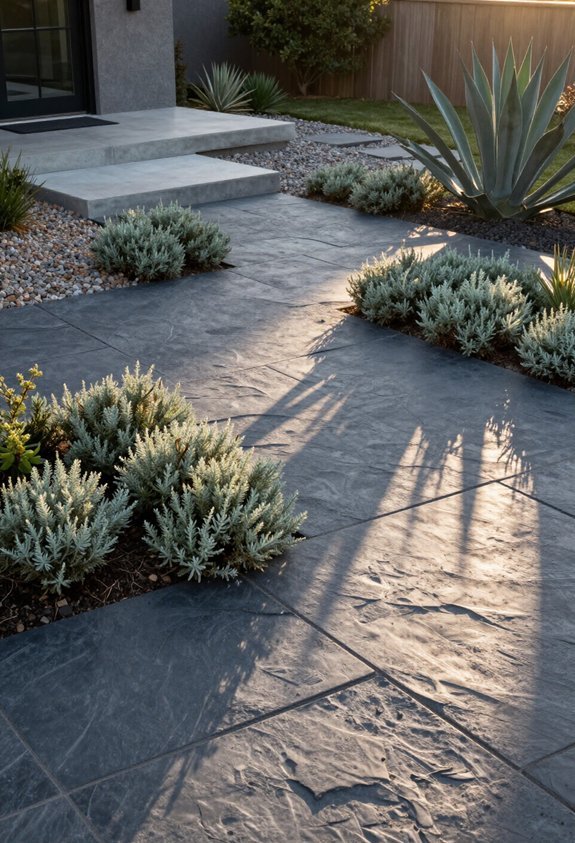
Shifting from the soft, shifting colors of cottage-style planting, hardscape elements offer an alternative approach to front yard design that emphasizes clean geometry and sustained functionality. Large-format concrete pavers, installed in uniform patterns with deliberate gaps, create structured walkways and patios that reduce water demand considerably.
Between these pavers, drought-tolerant ground covers such as creeping thyme, sedum, or dwarf mondo grass establish living joints that soften the hardscape while requiring minimal irrigation. These plants tolerate foot traffic, suppress weeds, and reduce surface temperatures compared to solid concrete installations.
Proper base preparation involves excavating six to eight inches, adding compacted gravel, and setting pavers on sand for drainage and stability. This combination yields a low-maintenance surface that manages stormwater, reduces urban heat island effects, and maintains visual consistency through seasonal changes with reduced resource inputs.
Build a Small Front Yard Patio for Outdoor Living
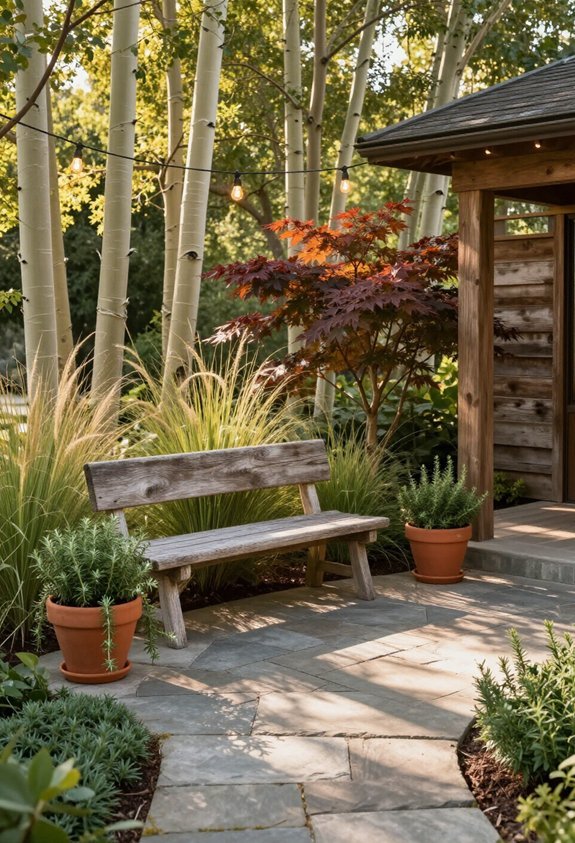
Where space permits, a small front yard patio creates a functional outdoor room that extends living space beyond the home’s interior walls. Positioned near the entrance or set back from the sidewalk, this paved area accommodates seating for two to four people, establishing a semi-private zone for morning coffee or evening conversation. Materials such as concrete pavers, natural stone, or poured concrete form the surface, with gravel or sand providing drainage beneath.
The patio requires a level substrate, compacted to prevent settling and cracking over time. Scale matters: dimensions typically range from six by eight feet to ten by twelve feet, sufficient for a bistro set or built-in bench. Edging materials, including brick or metal strips, contain the surface and define boundaries. Shade structures, umbrellas, or small trees reduce sun exposure, increasing usability during warmer months. Permits may apply, depending on local codes and setback requirements.
Frame Your Door With Symmetrical Container Gardens
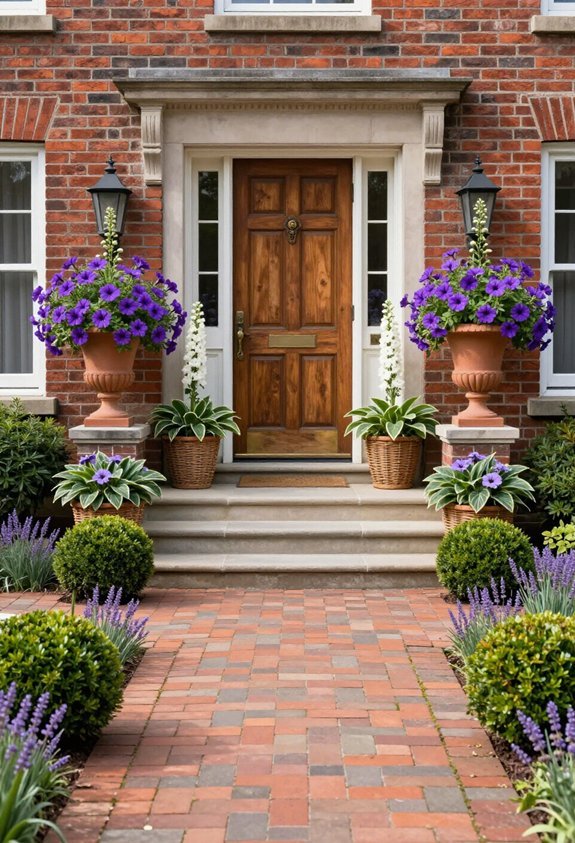
Whether a home features a modest stoop or a grand formal entrance, symmetrical container gardens establish visual balance and direct attention toward the doorway with deliberate precision. This approach requires selecting two identical containers—whether ceramic urns, wooden boxes, or metal planters—and positioning them equidistant from the door’s center line. The contents demand equal consideration: matching plant species, similar heights, and coordinated color schemes prevent visual disruption. Evergreens provide year-round structure, while seasonal annuals introduce rotating color. Scale matters considerably; oversized containers dwarf narrow entries, while diminutive pots disappear against expansive facades. Drainage holes prevent root rot, and matching saucers protect flooring materials. For sustained symmetry, plants require synchronized watering, pruning, and replacement schedules. This method proves especially valuable for renters or those avoiding permanent landscape modifications, as containers relocate without soil disturbance.
Save Space With a Living Wall or Espalier Trees
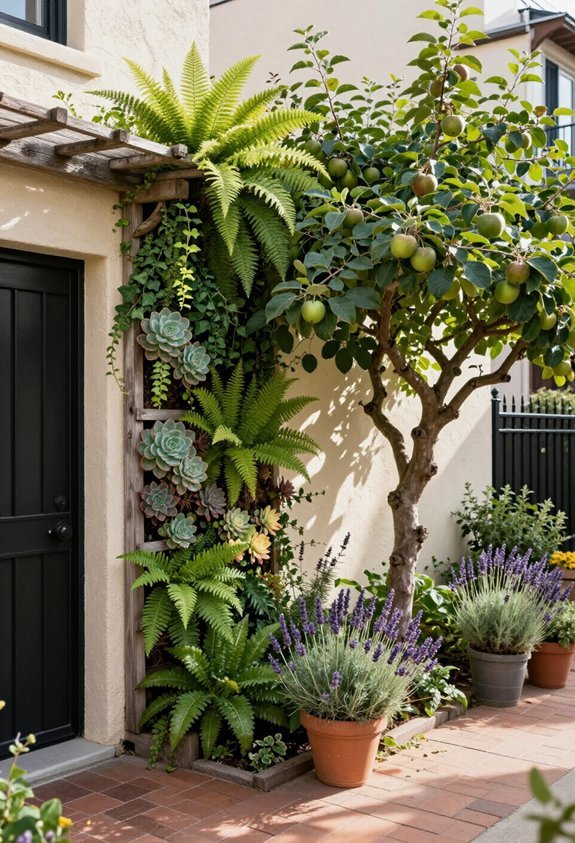
Many front yards offer limited ground area, yet vertical surfaces present abundant opportunities for cultivation through living walls and espalier techniques. Living walls, also called green walls, attach modular planters to fences or house exteriors, allowing vines, ferns, and succulents to grow upward rather than outward. These systems require irrigation planning and appropriate substrate selection to guarantee root health.
Espalier represents a traditional method where fruit trees, typically apples or pears, grow flat against wire frameworks mounted on walls or freestanding supports. Gardeners prune branches horizontally in tiered patterns, creating two-dimensional forms that maximize sun exposure and air circulation while occupying minimal horizontal space. Both approaches demand regular maintenance, including precise pruning schedules and moisture monitoring, yet reward practitioners with substantial visual impact and functional harvests within constrained footprints.
Add Landscape Lighting for Evening Drama
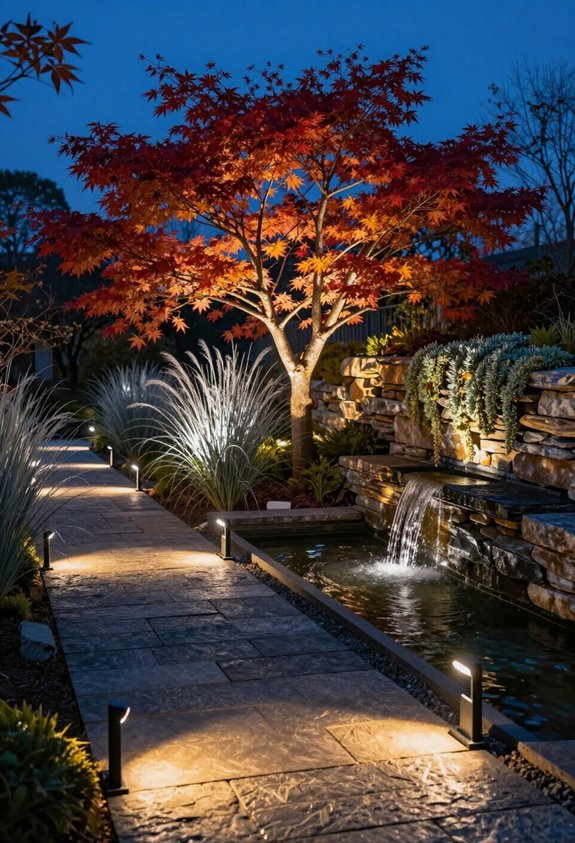
Several strategic lighting techniques transform front yard landscapes into visually compelling environments after sunset, extending the functional hours of outdoor spaces and highlighting architectural or botanical features that remain unnoticed during daylight.
Uplighting casts illumination upward from ground level, emphasizing tree trunks, textured bark, or structural columns. Path lighting guides movement safely along walkways while maintaining visual coherence. Silhouetting positions fixtures between the viewer and an object, creating dramatic dark shapes against lighter backgrounds. Moonlighting places fixtures high within tree canopies, directing soft beams downward to mimic natural lunar effects. Cross lighting eliminates shadows by illuminating subjects from multiple angles, revealing dimensional form. Fixtures should utilize LED technology for efficiency, with color temperatures between 2700K and 3000K to avoid harsh blue tones. Timers or photocell sensors automate activation, ensuring consistent operation without manual intervention while reducing energy consumption through precise scheduling.
Edge Your Beds With Natural Stone for Instant Polish
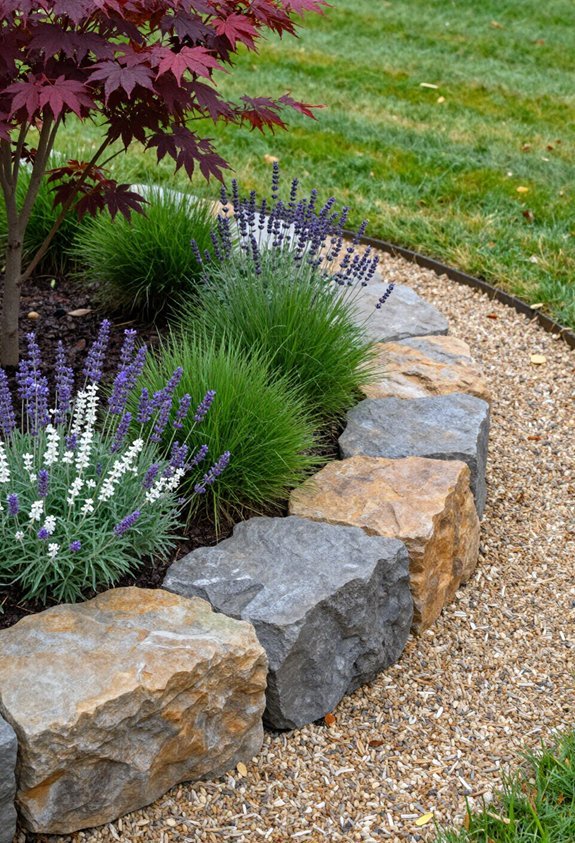
Once a front yard has been structured with light and shadow, attention shifts to the physical boundaries that define garden spaces themselves. Natural stone edging provides a clear separation between lawn and planted beds, creating visual order without excessive ornamentation.
Materials such as flagstone, bluestone, or fieldstone offer durability and weather resistance, requiring minimal maintenance across seasons. Stone borders prevent soil erosion, contain mulch, and inhibit grass encroachment into flower beds. Installation demands precise trenching, ensuring stones sit level with or slightly above the soil surface for clean mowing edges.
Irregular stones suit informal cottage gardens, while cut rectangular blocks complement structured, symmetrical plantings. Color selection should harmonize with existing hardscape elements, such as walkways or foundations. Properly executed stone edging elevates perceived property value through refined, intentional craftsmanship.
Design a Minimalist Stone Garden Entry
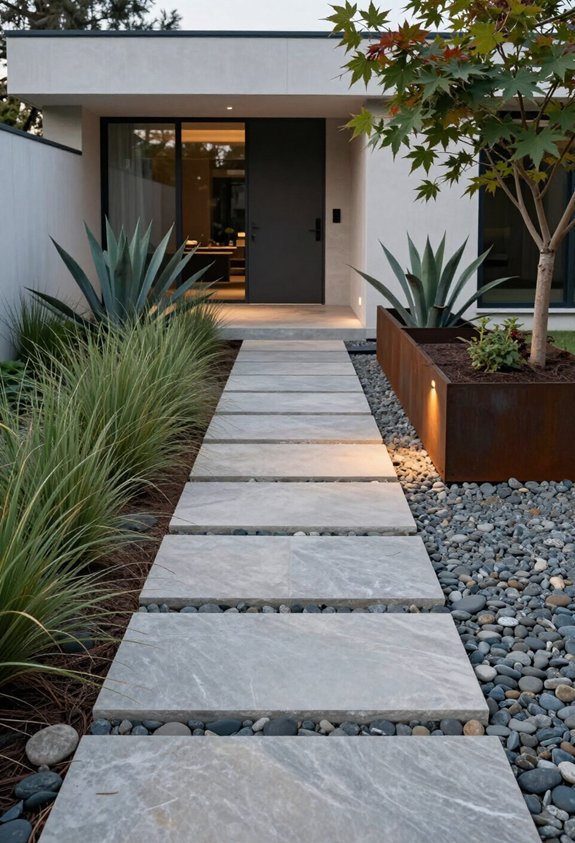
Although stone edging defines the boundaries of a garden, the entry point determines how visitors experience the space beyond. A minimalist stone garden entry relies on restraint, clean lines, and purposeful material selection to create visual impact without excess.
Select large, rectangular paving stones in uniform dimensions, arranging them with deliberate gaps filled with fine gravel or low ground cover. This spacing reduces material costs while allowing drainage and softening the rigid geometry. Choose stones in muted tones—gray, beige, or charcoal—that complement rather than compete with the home’s exterior.
Flank the pathway with precisely clipped evergreen shrubs or ornamental grasses placed at measured intervals, avoiding crowded plantings that would break the minimalist intention. The entry should read as a single, cohesive gesture, guiding movement from sidewalk to door through deliberate, uncluttered design choices that prioritize function and quiet visual harmony.
Frame Your Yard With a Rose-Covered Picket Fence
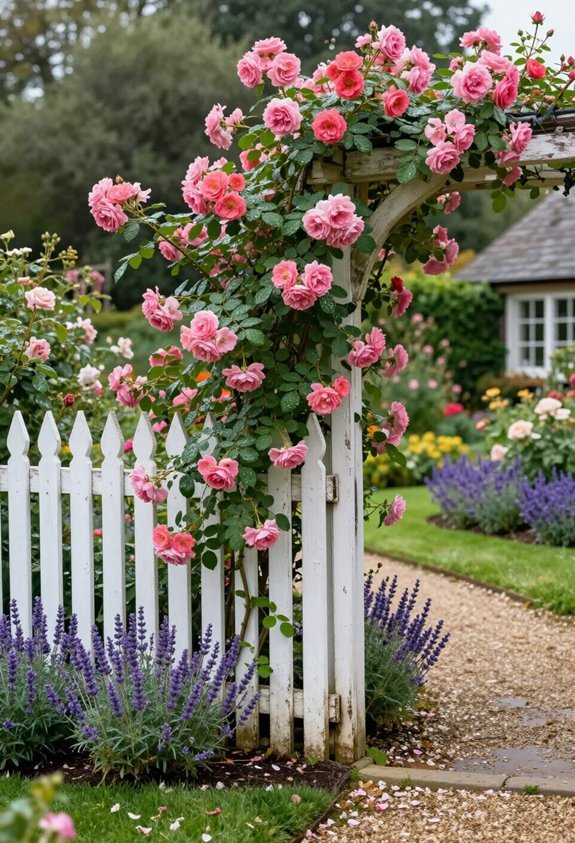
A picket fence serves not only as a boundary marker but also as a structural framework for introducing color, texture, and vertical interest to a front yard landscape. When roses climb this structure, the combination creates a living boundary that changes with the seasons. Climbing varieties such as ‘New Dawn’ or ‘Eden’ produce abundant blooms that cascade over horizontal rails, softening the fence’s rigid geometry. The spacing between pickets allows air circulation, reducing fungal diseases common in dense plantings. Installation requires pressure-treated posts set two feet deep in concrete, with rails positioned to support mature canes. Pruning occurs in early spring, removing dead wood and directing growth outward. This approach demands regular maintenance, including tying new growth and seasonal feeding, yet yields a defined property edge that integrates built and natural elements.
Build a Dry Creek Bed That Solves Drainage Problems
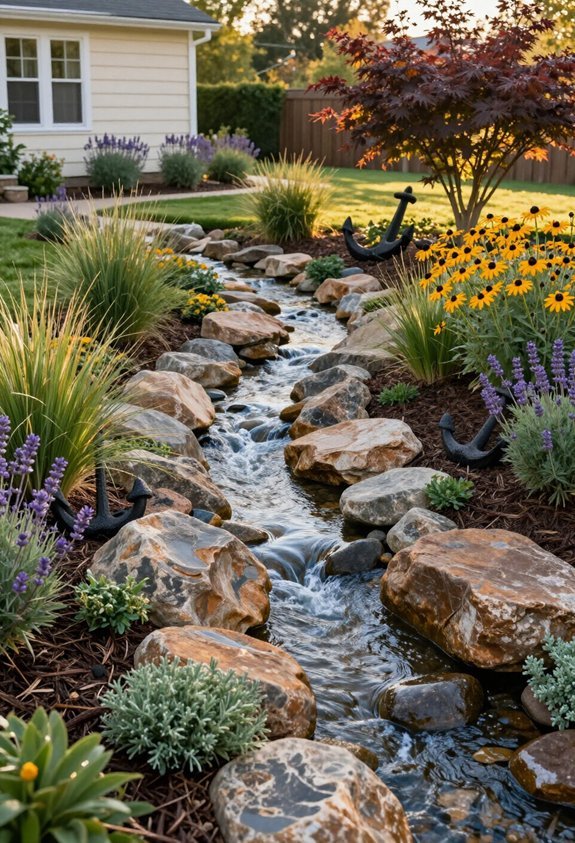
Channel excess rainwater through your landscape by constructing a dry creek bed, a functional drainage solution that prevents erosion and standing water while adding visual structure to the front yard. Excavate a shallow, winding trench approximately twelve to eighteen inches deep along the natural water flow path, sloping it gradually toward a suitable drainage point. Line the trench with heavy-duty landscape fabric to block weed growth and soil migration. Arrange river rocks and boulders of varying sizes throughout the bed, placing larger stones along the edges to create boundaries and smaller gravel in the center channel to facilitate water movement. Position flat stones intermittently to serve as stepping elements during dry periods. Maintain the creek bed by removing debris seasonally and replenishing displaced stones as needed.
Create Seasonal Waves of Color With Bulbs and Annuals
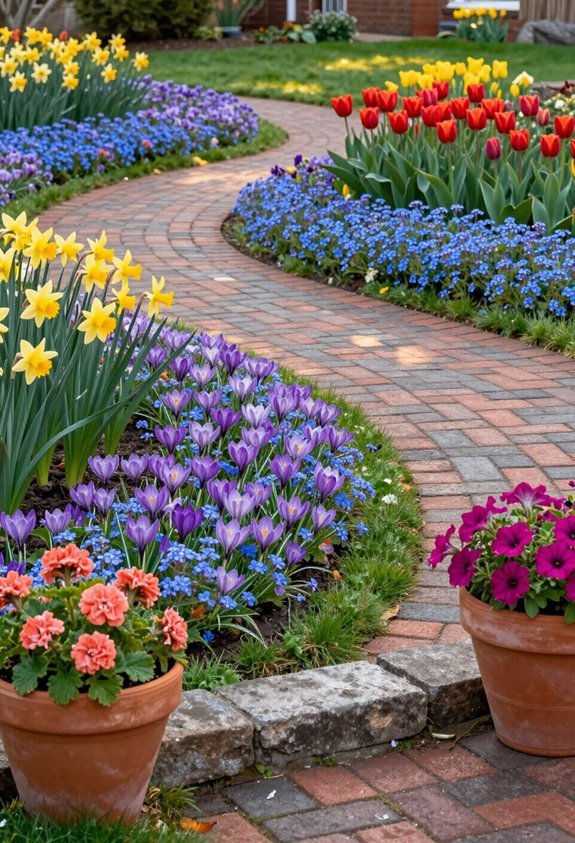
Establish a dynamic display of shifting hues throughout the growing season by integrating bulbs and annuals into a coordinated planting strategy that layers early, mid, and late bloomers across distinct garden zones. Crocus, tulip, and daffodil bulbs provide initial spring color, followed by summer annuals such as petunia, marigold, and zinnia that fill gaps left by fading bulb foliage. Fall-blooming chrysanthemum and aster extend visual interest until first frost. Plant bulbs at depth recommendations specific to each variety, typically three times the bulb’s height, positioned in clusters rather than scattered rows for concentrated impact. Annuals require spacing based on mature spread to prevent overcrowding and disease. Select complementary color schemes, such as cool blues and purples or warm oranges and yellows, applied consistently across sequential plantings for cohesive shifts.
Add a Water Feature That Masks Street Noise
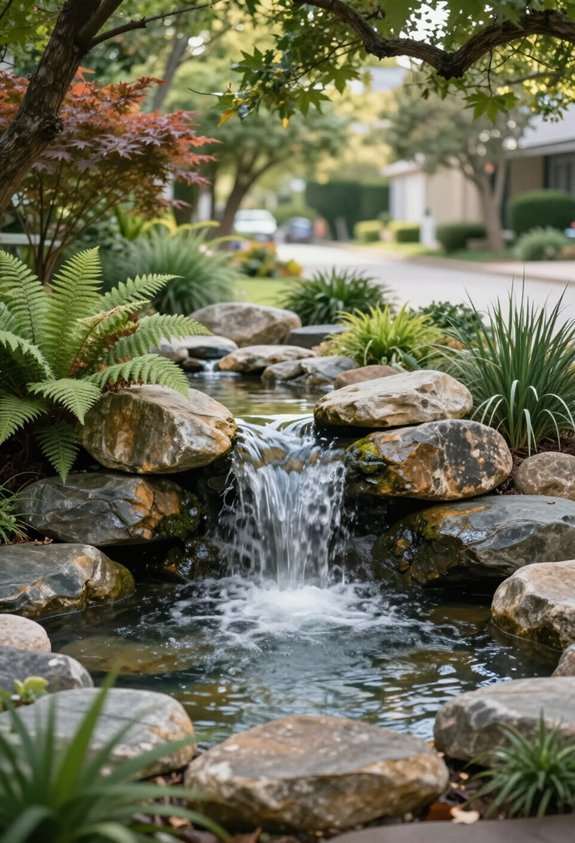
Because street noise often disrupts the tranquility of outdoor spaces, installing a water feature serves as an effective acoustic barrier that introduces soothing sound while masking unwanted traffic and neighborhood disturbances.
Selecting the appropriate water feature requires consideration of scale, maintenance requirements, and visual integration with existing landscape elements. Small bubblers and urn fountains suit compact front yards, producing gentle, consistent sound without overwhelming the space. For larger properties, cascading waterfalls or multi-tiered fountain systems generate more substantial white noise capable of covering heavier traffic volumes. Strategic placement near seating areas or property lines maximizes acoustic benefits while creating focal points that draw attention away from street activity. Solar-powered and recirculating pump options reduce energy consumption and water waste. Proper installation includes level foundations, adequate electrical access, and winterization protocols for climates with freezing temperatures. Regular cleaning prevents algae accumulation and maintains pump efficiency.
Plant Fragrant Flowers That Reach the Sidewalk
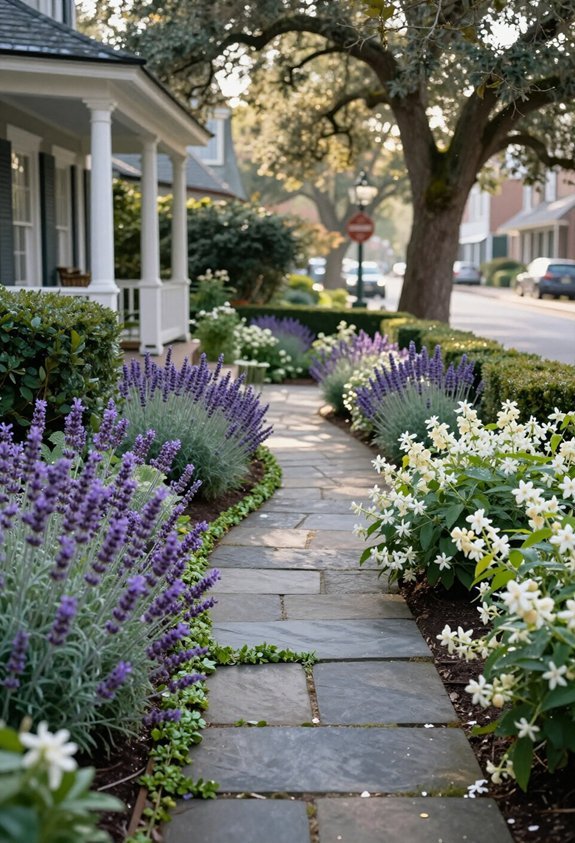
Where should a front yard make its most memorable impression? The answer lies at the boundary between private property and public space, where fragrant flowers planted near the sidewalk create an immersive sensory experience for passersby. Gardenias, jasmine, and lavender release their scent most effectively when positioned three to six feet from pedestrian pathways, allowing their perfume to drift upward at human nose level. Low-growing varieties such as sweet alyssum and creeping thyme work well as border plantings, while taller mock orange or lilac shrubs establish background structure. Gardeners should select species with staggered blooming periods to maintain fragrance throughout multiple seasons. Drought-tolerant options reduce maintenance requirements and guarantee consistent performance. Proper spacing prevents overcrowding, which diminishes air circulation and weakens scent dispersion. Strategic placement transforms an ordinary walkway into an aromatic corridor.
Design Around a Single Statement Tree
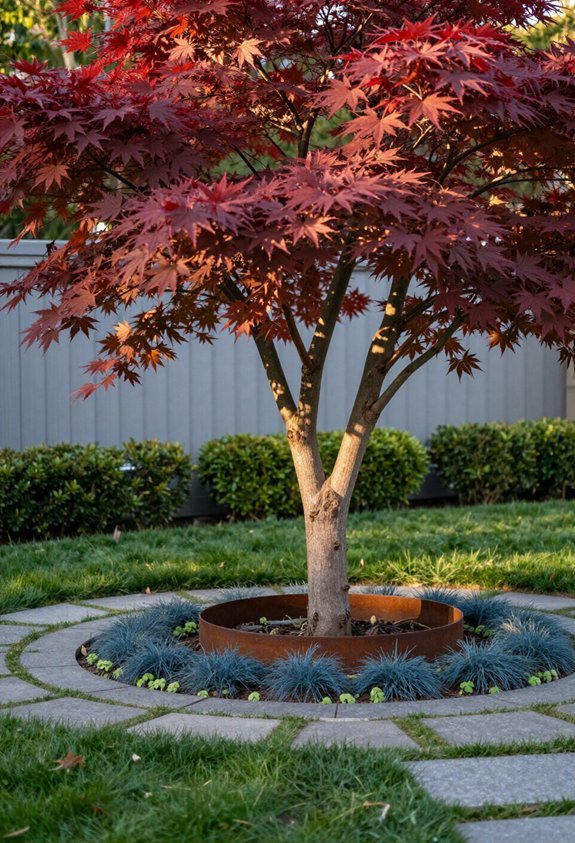
One carefully chosen tree can anchor an entire front yard design, providing structure, shade, and visual interest that smaller plants cannot achieve alone. A statement tree, such as a Japanese maple, crepe myrtle, or flowering dogwood, becomes the natural focal point around which all other elements are arranged. When selecting this central feature, homeowners should consider mature height, canopy spread, seasonal color changes, and root system requirements to guarantee long-term compatibility with the space.
Placement demands careful thought, typically positioning the tree slightly off-center for visual balance rather than direct symmetry. Underplanting with shade-tolerant groundcovers or low shrubs creates layered depth without competing for attention. The trunk itself offers architectural value, particularly during winter dormancy when deciduous specimens display their branching structure. Proper spacing allows the canopy to develop fully, ensuring the tree remains the undisputed centerpiece across all seasons.
Combine Bold Plants With Structural Hardscape
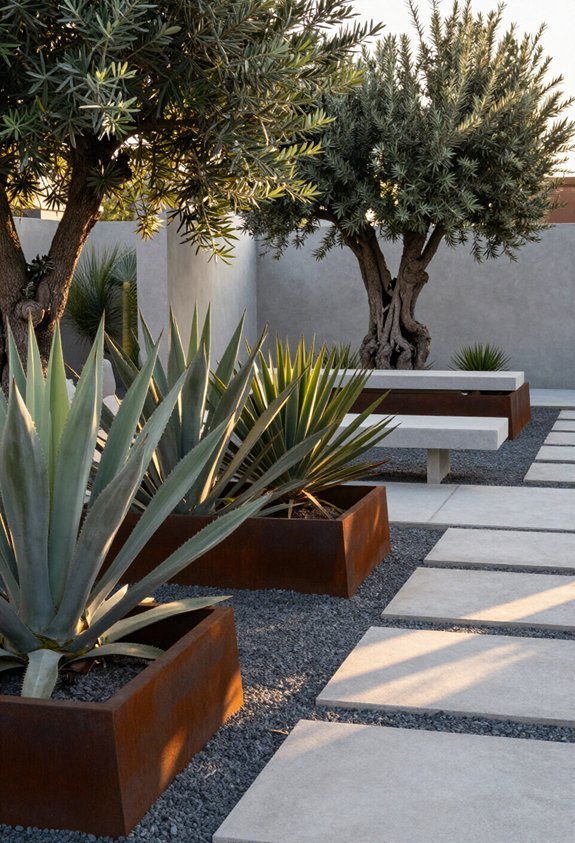
While a single tree commands attention through organic form and natural growth patterns, the deliberate pairing of dramatic vegetation with built elements introduces an equally compelling design strategy that merges softness with permanence. Large-leafed plants, such as hostas or ornamental grasses, create striking contrast when positioned against stone walls, concrete planters, or geometric paving. The interplay between organic shapes and rigid lines establishes visual tension that guides the eye through the landscape. Metal arbors support climbing vines, while wooden benches nestle within dense shrubbery, offering functional rest points amid greenery. Pathways edged with angular steel borders contain billowing perennials, preventing visual chaos. This approach requires careful scale consideration, ensuring that structural elements do not overwhelm plantings or vice versa. Material selection matters: weathered steel, natural stone, and untreated wood age gracefully alongside living components.
Plant a Pollinator Garden That Looks Beautiful All Season
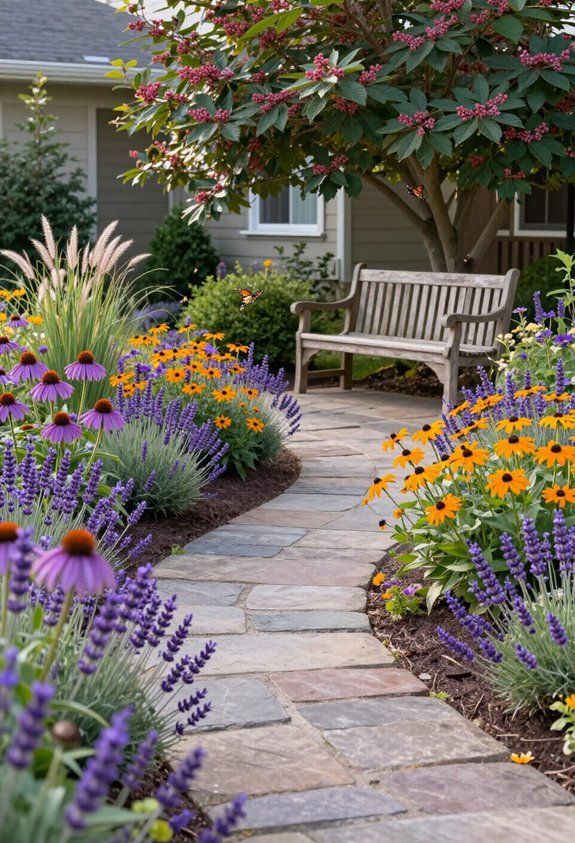
Because pollinators require continuous food sources throughout the growing season, a well-designed garden must incorporate plants that bloom in succession from early spring through late fall, ensuring that bees, butterflies, and other beneficial insects find nectar and pollen during every phase of their active cycles. Crocus and wild columbine provide early sustenance, while coneflowers and black-eyed Susans sustain summer populations. Asters and goldenrods carry the final blooms into autumn.
Native species prove superior to exotic ornamentals, as local pollinators have evolved alongside these plants and recognize them more readily. Grouping single species in clusters of at least three square feet allows efficient foraging, since pollinators expend less energy traveling between flowers. Diverse plant heights, ranging from ground-level creeping thyme to six-foot Joe Pye weed, create layered food sources accessible to insects of varying sizes.
Moisture-retaining mulch and avoided pesticides protect vulnerable larvae and nesting adults, completing a self-sustaining system.
Add Raised Beds for Polished, Productive Gardens
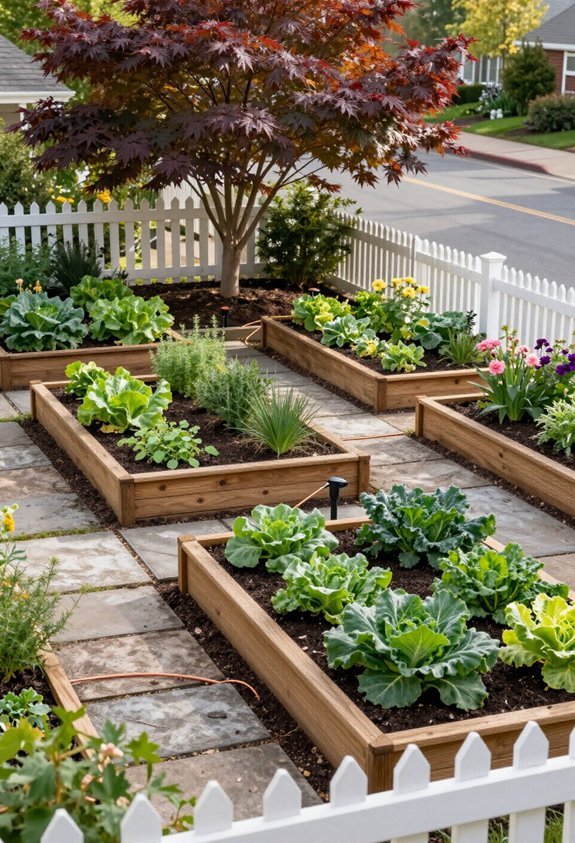
Elevating soil above ground level creates defined growing spaces that separate ornamental plantings from lawn areas while improving drainage, soil quality, and root development in compacted or clay-heavy front yards. Constructed from cedar, composite materials, or stone, raised beds warm earlier in spring and reduce strain during gardening activities. Sharp geometric outlines establish visual order, while staggered heights introduce dimensional interest.
Designers frequently arrange multiple beds in asymmetrical patterns, leaving gravel or mulch pathways between each structure for access and maintenance. Deep soil profiles accommodate root vegetables, leafy greens, and cutting flowers that might struggle in native ground conditions. Edging choices greatly impact aesthetic outcomes: rusted steel lends industrial character, while untreated wood supports traditional cottage appearances.
Productive integration demands strategic positioning to capture six to eight hours of direct sunlight, with taller crops placed toward northern perimeters to prevent shading lower growth. Companion plantings maximize limited square footage through vertical exploitation and beneficial insect attraction.
Match Your Porch Paint to Your Plant Palette
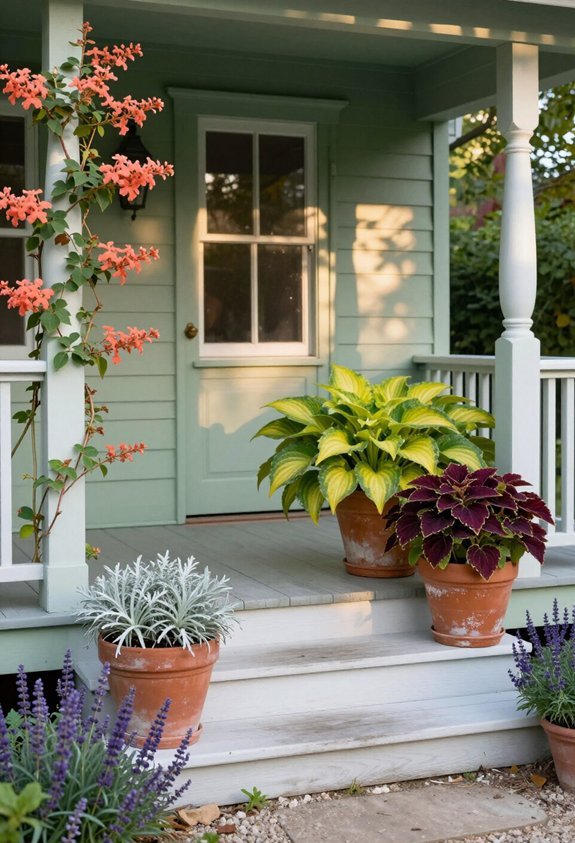
Coordinating exterior paint colors with surrounding vegetation creates visual harmony that unifies architectural and natural elements into a cohesive front yard composition. Property owners should observe existing plant colors throughout seasonal cycles before selecting porch paint. Spring blooms, summer foliage, autumn shades, and winter structures each contribute distinct hues that influence palette decisions. Warm-toned flowers like marigolds and zinnias pair effectively with coral, terracotta, or cream porch surfaces, while cool-toned hydrangeas and hostas complement slate blue, sage green, or soft gray. Evergreen shrubs provide year-round anchors for neutral paint selections. Testing paint samples at various times of day reveals how sunlight alters perceived color against living plants. This methodical approach prevents jarring contrasts between built structures and natural growth. The resulting integration strengthens curb appeal through deliberate, systematic color relationships rather than arbitrary decoration.
Layer Plants to Maximize a Tiny Front Yard
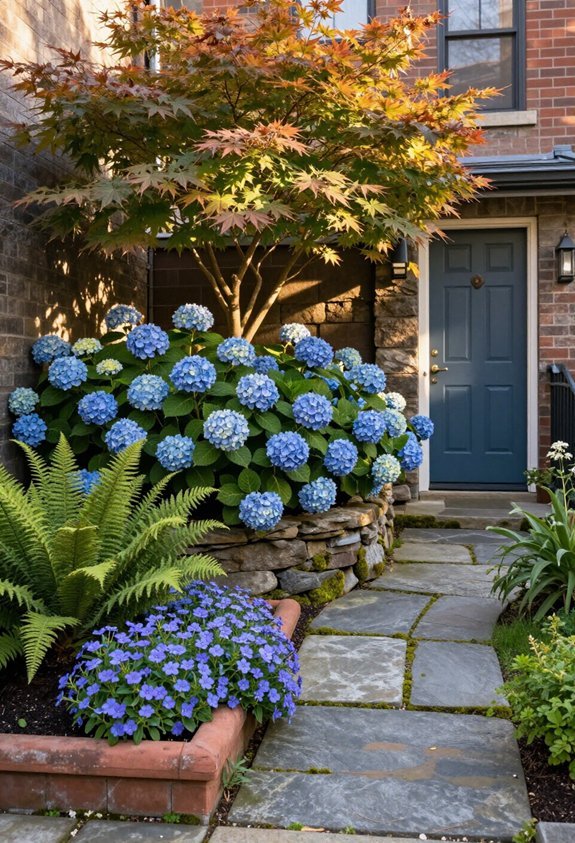
How does one create abundant visual interest when horizontal space remains severely limited? Vertical layering offers a practical solution, allowing multiple plant species to occupy the same footprint at varying heights. Begin with ground covers or low-growing perennials as the foundation layer. Add mid-height shrubs or ornamental grasses above this base.
Complete the composition with small trees, tall grasses, or climbing vines trained on trellises as the uppermost tier. This approach maximizes square footage while creating depth perception that visually expands confined areas. Select plants with staggered bloom times to guarantee continuous color throughout growing seasons. Consider foliage textures and colors that contrast yet complement adjacent layers. Proper spacing prevents overcrowding as specimens mature. Irrigation needs must align across all tiers to simplify maintenance routines in these compact installations.
Frequently Asked Questions
How Much Does Front Yard Landscaping Typically Cost?
Front yard landscaping typically costs $1,500–$5,000 for basic projects, $5,000–$15,000 for moderate upgrades, and $20,000+ for extensive designs. Variables include yard size, plant selection, hardscaping, labor rates, and regional pricing differences.
Do I Need Permits to Landscape My Front Yard?
Permits for front yard landscaping depend on local regulations and project scope. Structural elements, tree removal, drainage changes, or hardscaping typically require approval. One must verify requirements with municipal authorities before commencing work.
Which Projects Increase Home Value Most?
Hardscaping elements like patios, walkways, and retaining walls typically yield the highest returns. Mature trees, outdoor lighting, and irrigation systems also add substantial value. Professional designs with native plants require less maintenance and appeal to environmentally conscious buyers.
How Long Until New Landscaping Looks Established?
New landscaping typically appears established within three to five years. Trees and shrubs require two to four growing seasons to mature visibly. Perennials fill out by their second season. Mature appearance depends on plant selection and growth rates.
Should I Hire a Designer or DIY?
One weighs complexity against capability. Professionals yield cohesive results for intricate sites; DIY suits simple plans with time and basic skill. Budget, timeline, and vision determine the appropriate path forward for any individual.
Conclusion
A cohesive front yard design requires deliberate planning across multiple interconnected elements. Begin by selecting a unified color palette that extends from hardscape materials to plant selections, ensuring visual continuity throughout the space. Curved pathways guide movement naturally while creating organic flow between functional zones. Incorporate drought-tolerant species and raised beds to reduce maintenance demands and support ecological sustainability. Layer plants by height, texture, and bloom sequence to maintain year-round visual interest in compact areas. Finally, integrate outdoor lighting and living spaces to extend usability into evening hours, completing a landscape that balances aesthetic appeal with practical function.