
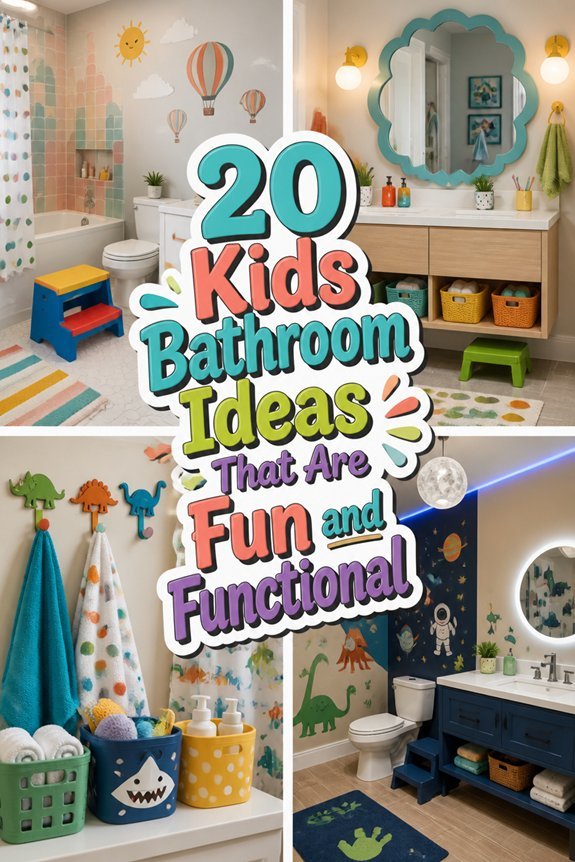
Creating a fun kids’ bathroom starts with practical choices like washable paint in soft blues and greens with semi-gloss finishes. Add mold-resistant, non-slip ceramic tiles to prevent accidents, plus bright LED lighting that cuts humidity. These basics set the foundation for a space that’s both safe and inviting.
Make it engaging with waterproof decals, character shower curtains, and glow-in-the-dark stars overhead. Install step stools with hidden storage and soap dispensers at child height so kids can reach everything easily. An interactive tooth-brushing chart turns daily routines into something they actually want to do.
20 Kids Bathroom Ideas
Walls and floors come first on this list, because they take the most wear from splashes, spills and the occasional bath-time flood. From there, you’ll move into kid-height mirrors, sinks, taps and storage.
The last group is all about making the room enjoyable, from rainfall showers to a starry ceiling. Getting your kids involved in choosing a few of these makes them far more likely to use the space properly.
Ask your kids which three ideas they’d pick, then see how many line up with yours.
Paint Walls With Washable, Kid-Approved Colors
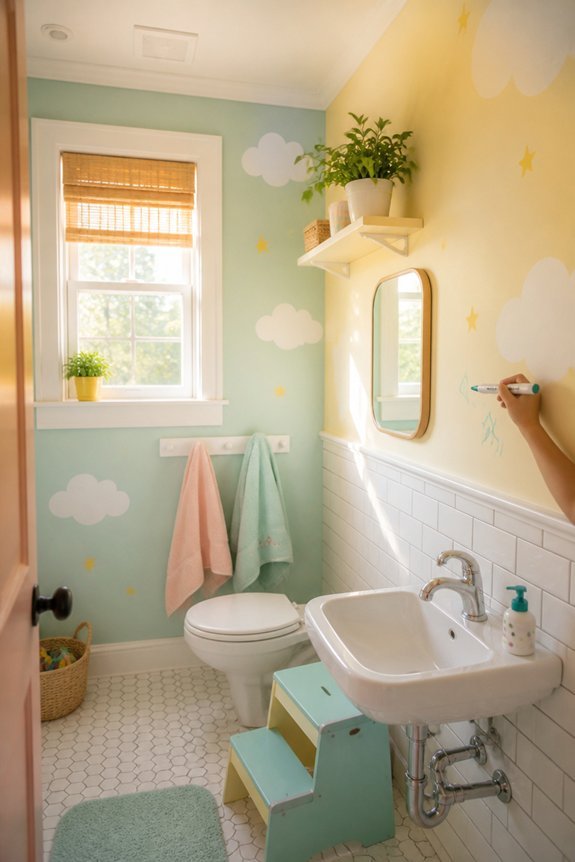
Since children’s bathrooms require frequent cleaning and occasional touch-ups from marks and splashes, selecting washable paint is essential.
Semi-gloss and satin finishes resist moisture and stains better than flat paint.
Recommended colors include soft blues, greens, and neutrals that hide marks effectively.
Brands like Benjamin Moore Aura and Sherwin-Williams ProClassic offer durable, washable formulas suitable for high-moisture bathroom environments.
Select Mold-Resistant, Non-Slip Flooring
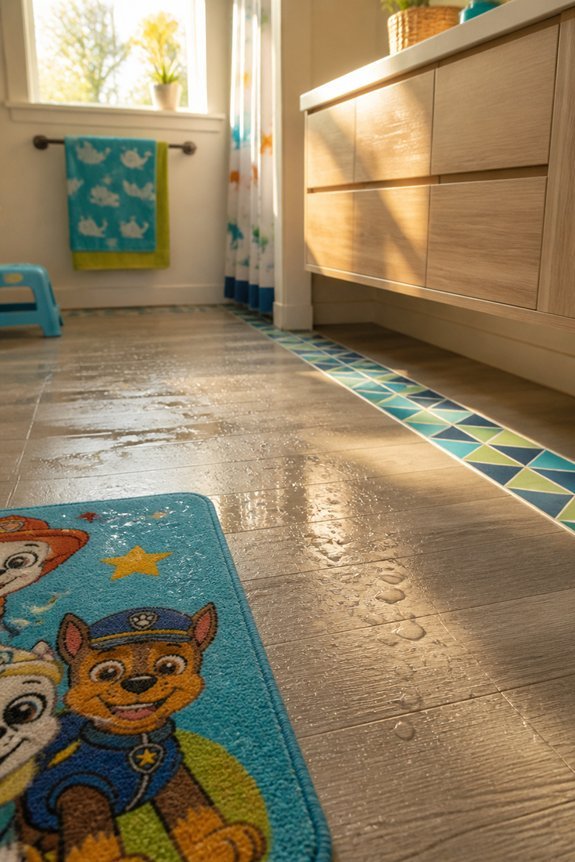
Bathroom flooring for children must handle moisture, foot traffic, and frequent cleaning while preventing slips and falls.
Ceramic tile with textured surfaces, vinyl plank flooring, and rubber tiles offer mold resistance and safety.
Porcelain tiles withstand water absorption better than standard ceramic.
Non-slip coatings and rubberized mats provide additional grip.
These materials endure regular scrubbing without deteriorating, making them practical choices for active bathrooms.
Install Bright LED Lighting to Reduce Humidity
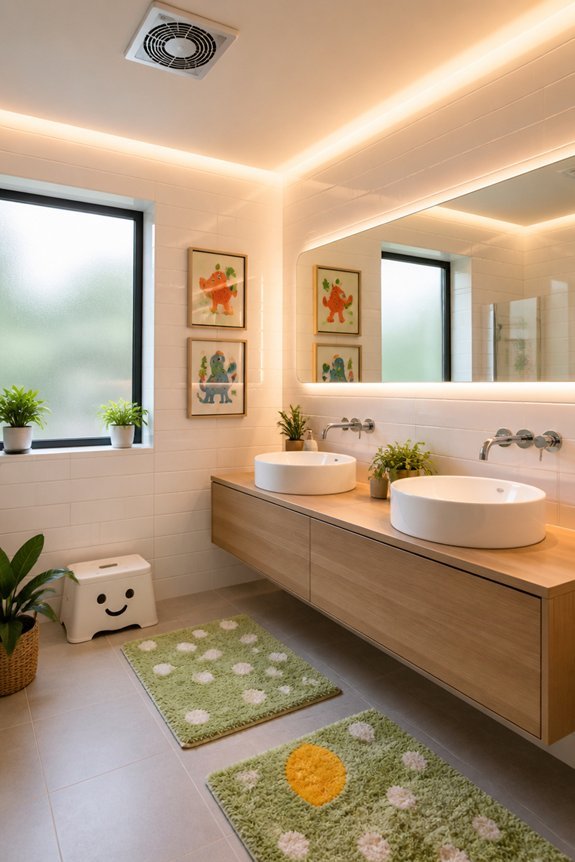
While moisture accumulates in bathrooms during showers and baths, proper lighting can help manage humidity levels and improve safety for children.
LED lights generate less heat than traditional bulbs, reducing additional moisture.
Bright, well-lit bathrooms encourage children to use exhaust fans, which remove excess humidity.
Install waterproof LED fixtures near mirrors and shower areas for ideal visibility and moisture control.
Add Waterproof Decals and Wall Art
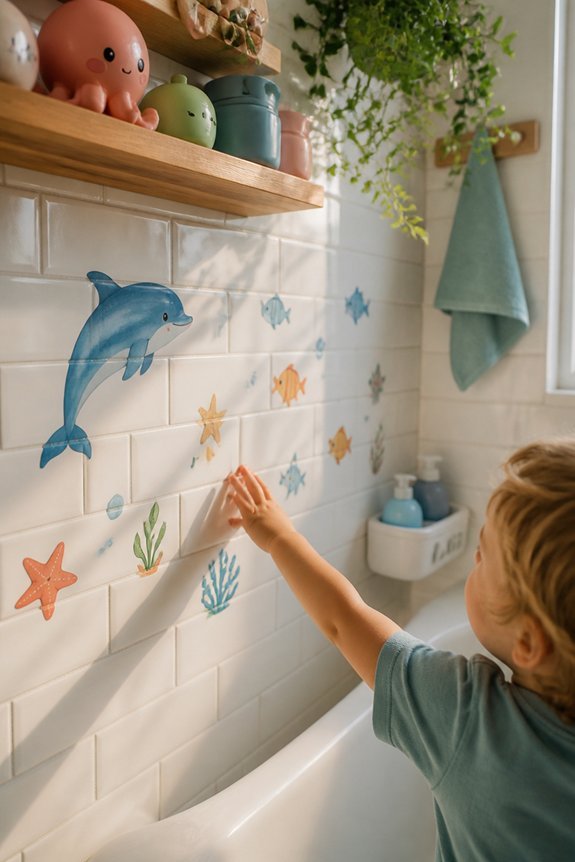
Many waterproof decals and wall art options can transform a kids’ bathroom while withstanding moisture and frequent cleaning.
Vinyl decals featuring ocean themes, animals, or alphabet letters adhere directly to painted walls. Framed waterproof prints in sealed cases provide durability.
Removable wall stickers allow design changes without permanent damage.
These options maintain appearance despite humidity and regular washing.
Install a Step Stool With Hidden Storage
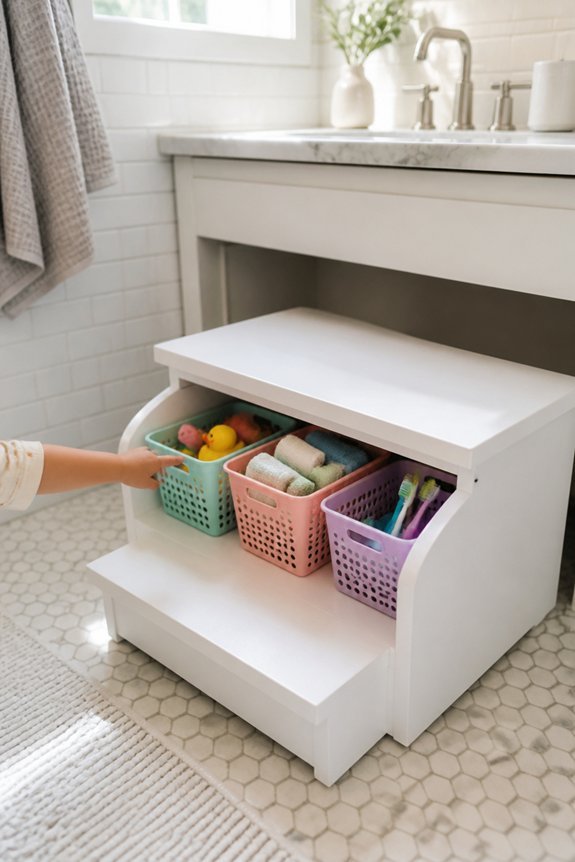
A step stool combining height accessibility with concealed storage solves two functional needs in a compact footprint. Options like the Guidecraft Storage Step Stool feature lift-top compartments holding bath toys, cleaning supplies, and first-aid items.
The sturdy construction supports children reaching sinks and mirrors safely.
Hidden storage eliminates bathroom clutter while maximizing limited space, making organization efficient and accessible.
Mount Mirrors at Waist Height (24–28 Inches)
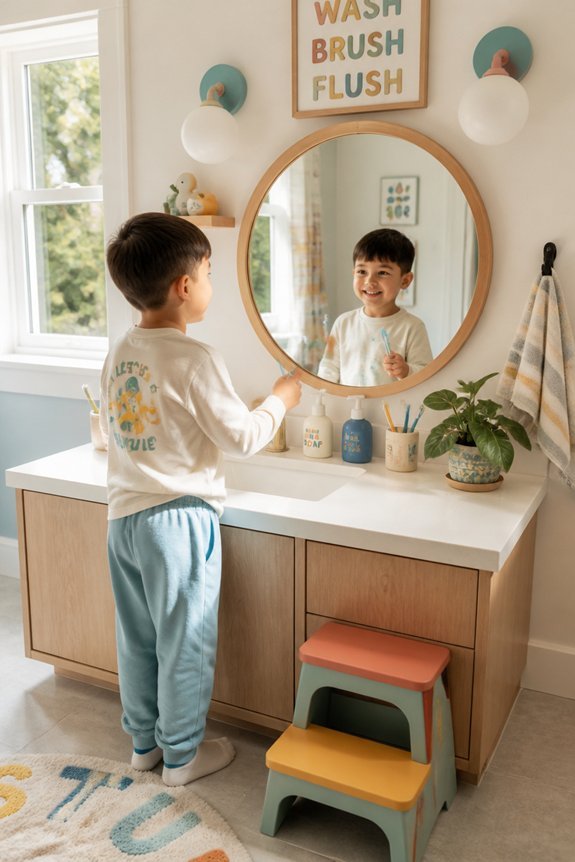
Beyond storage solutions, bathroom functionality improves when fixtures match children’s physical proportions.
Mounting mirrors at waist height, between 24 and 28 inches, allows children to see their faces without assistance. This height accommodates most elementary-age kids, reducing frustration during grooming tasks.
Adjustable mirrors or multiple mirror heights serve families with children of varying ages, promoting independence and proper hygiene habits.
Lower the Hand-Washing Station to Kid Height
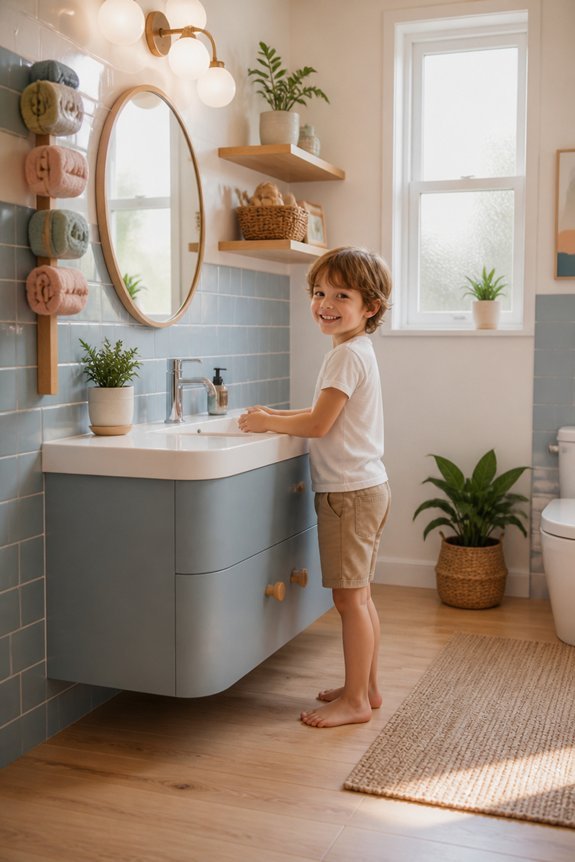
Standard bathroom sinks position faucets at heights between 30 and 36 inches, which forces children to stand on step stools or stretch uncomfortably to reach water and soap.
Installing a secondary sink at 24 inches accommodates younger users.
Alternatively, adjustable sink models lower to appropriate heights, eliminating step stool dependency while promoting independence and proper handwashing habits.
Choose Kid-Sized Faucets and Fixtures
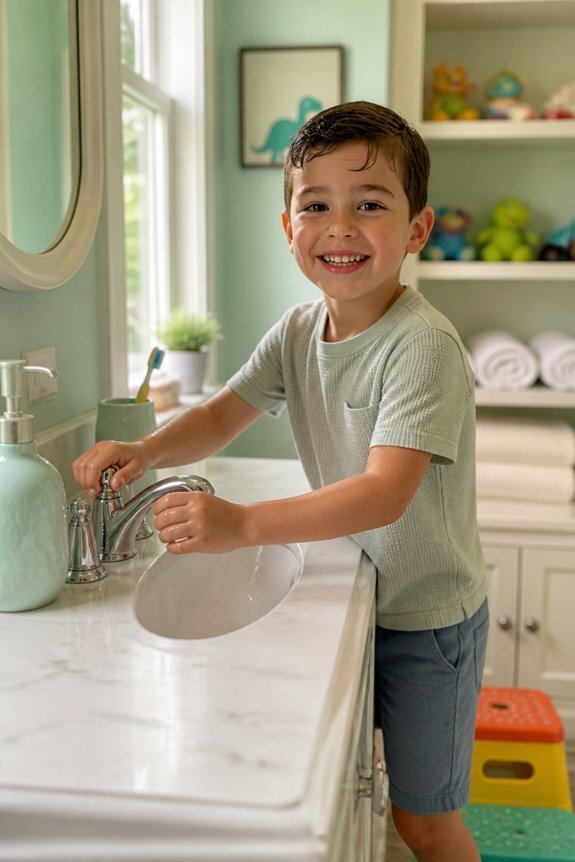
Lowering the sink itself represents only part of the solution, as standard faucet handles and spouts also require adjustment for children’s smaller hands and reach.
Single-lever faucets, lever handles, and wall-mounted spouts designed for kids offer easier operation than traditional knobs.
Touchless or motion-sensor faucets eliminate the need for gripping entirely, promoting independence and hygiene simultaneously.
Install Floating Shelves Within Arm’s Reach
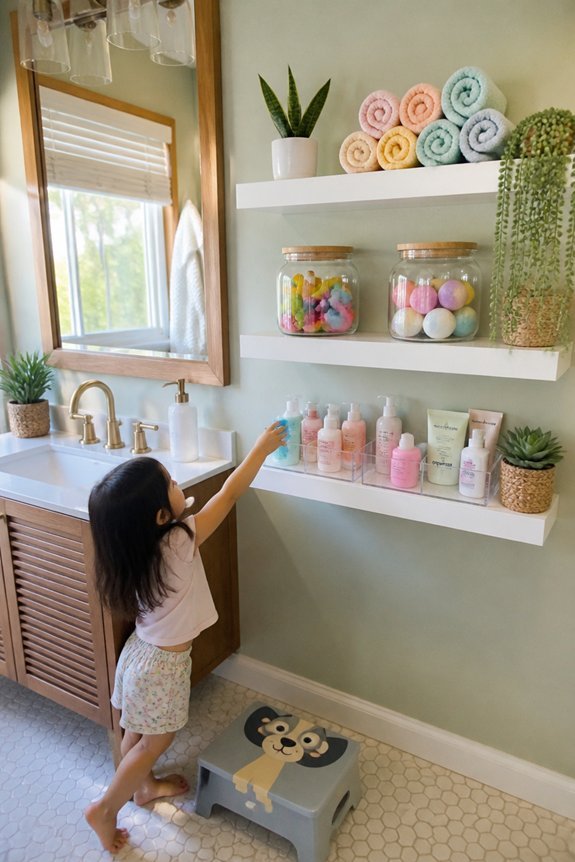
Accessible storage directly above the sink and counter areas encourages children to manage their own bathroom supplies, from toothbrushes and toothpaste to soap and washcloths.
Shelves mounted at child height, approximately 36 to 48 inches high, promote independence and organization.
Floating shelves prevent injuries from protruding hardware, while clear containers help children locate items quickly and maintain tidiness without adult assistance.
Stock Clear Bins to Sort Bath Products
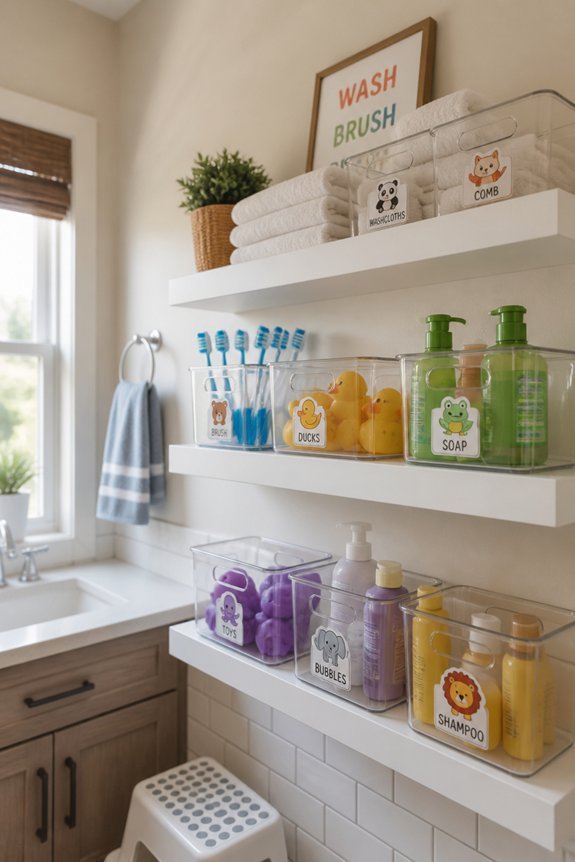
Organizing bath products into clear bins creates an efficient system where children can see contents, locate items, and maintain order independently.
Separate categories by type: hair care, soap, toothbrushes, and first aid supplies. Label each bin clearly.
Store bins on accessible shelves at child height.
This approach reduces clutter, prevents product waste, and teaches organizational skills through visibility and easy access to everyday bathroom necessities.
Add a Shower Caddy for Bath Toys
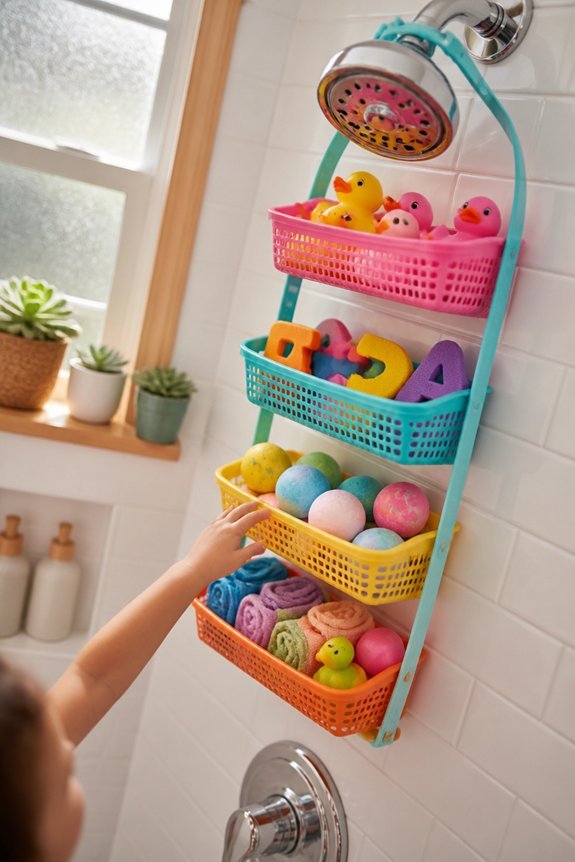
While clear bins handle bath product storage, shower caddies serve a different purpose by containing bath toys in the bathing area itself.
Caddies with suction cups attach directly to shower walls, holding items like rubber ducks, bath letters, and foam shapes.
Drainage holes prevent water accumulation and mold growth. This setup keeps toys accessible during bathing while reducing clutter on the tub floor.
Tuck a Laundry Hamper Into the Layout
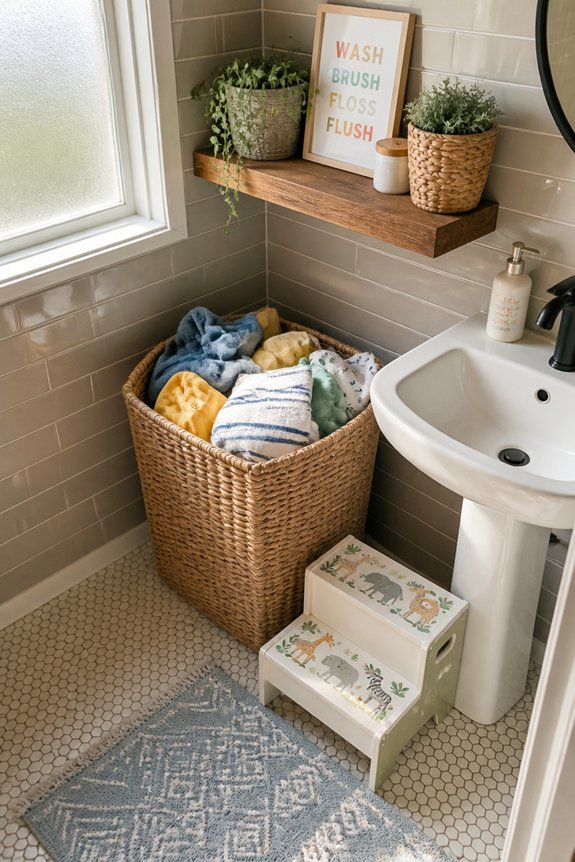
A designated laundry hamper in the bathroom teaches children where to place dirty clothes, establishing an orderly routine.
Corner placement or under-sink options work well for compact spaces. Mesh hampers allow visibility and air circulation, preventing odor buildup.
Choose lightweight, durable materials that withstand moisture.
This habit reduces clutter and simplifies laundry management for families. Wall-mounted baskets can also be incorporated into bathroom layouts to maximize vertical space while keeping dirty clothes organized and accessible.
Hang Towel Hooks at Multiple Heights
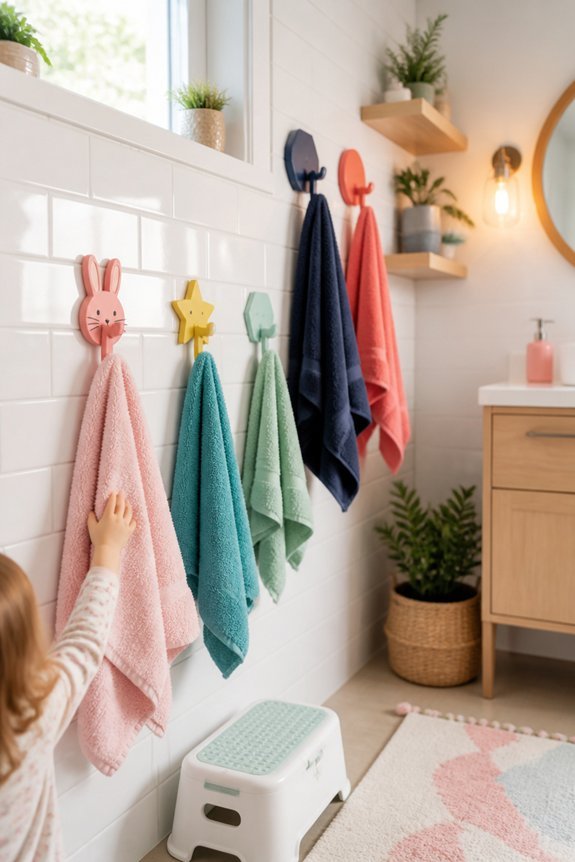
Towel hooks positioned at varying heights accommodate children of different ages and sizes, enabling independent bathroom use.
Installing hooks at 36 inches, 48 inches, and 60 inches allows toddlers, older children, and adults to access towels comfortably.
This arrangement reduces spills and mess, promoting responsibility.
Adjustable hook systems offer flexibility as children grow, making them practical long-term investments for family bathrooms.
Add Non-Slip Bath Mats With Soft Cushioning
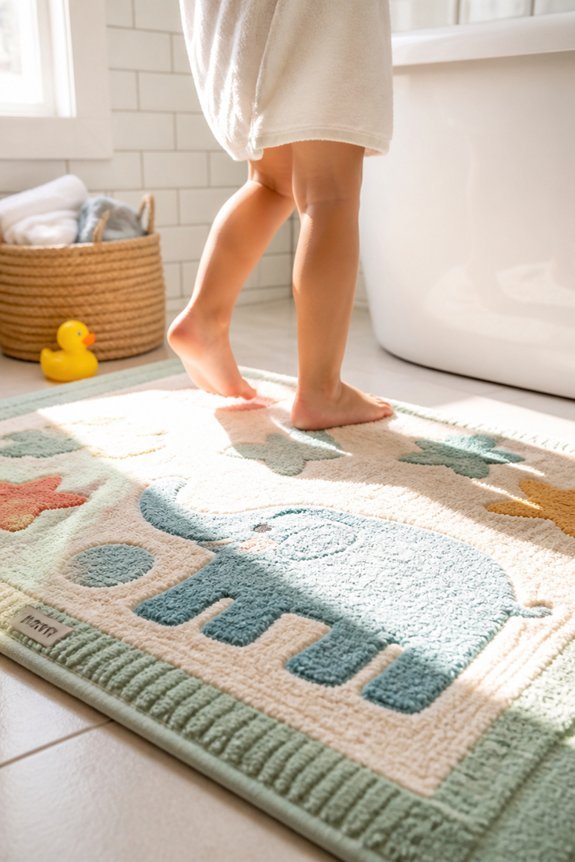
Safety in the bathroom extends beyond accessible storage to flooring surfaces where children stand and walk. Non-slip bath mats with cushioned padding reduce slipping hazards on wet tiles.
Products like Gorilla Grip or Kmat brand mats offer textured undersides and foam layers. These mats protect against falls while providing comfort underfoot.
Parents should select mats sized appropriately for their bathroom layout and wash regularly.
Install a Rainfall Showerhead for Fun
Most children enjoy shower time more when water flows like gentle rain rather than a forceful stream. Rainfall showerheads deliver water in a softer, more dispersed pattern that reduces fear and discomfort.
These fixtures mount directly overhead, creating an immersive experience.
Installation requires basic plumbing adjustments. Popular options include adjustable rainfall heads and dual-function models combining rainfall and standard spray patterns for versatility.
Place a Small Bench for Drying Off
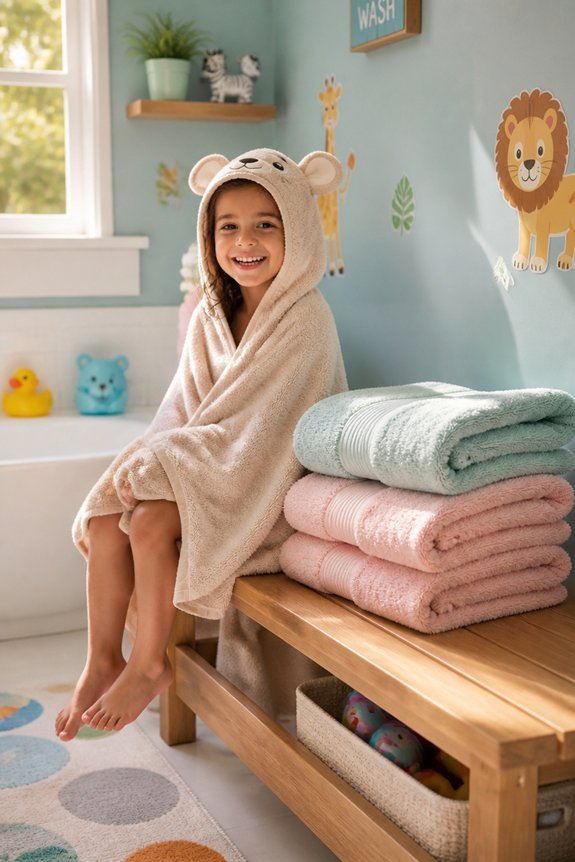
After shower time ends, children need a designated spot to sit while they dry off and get dressed. A small wooden or plastic bench works well in bathrooms.
Placing it near the towel rack keeps supplies accessible.
The bench should be sturdy, low to the ground, and easy to clean. This arrangement prevents wet children from dripping water across the floor while changing into dry clothes.
Choose Character Shower Curtains Kids Help Pick
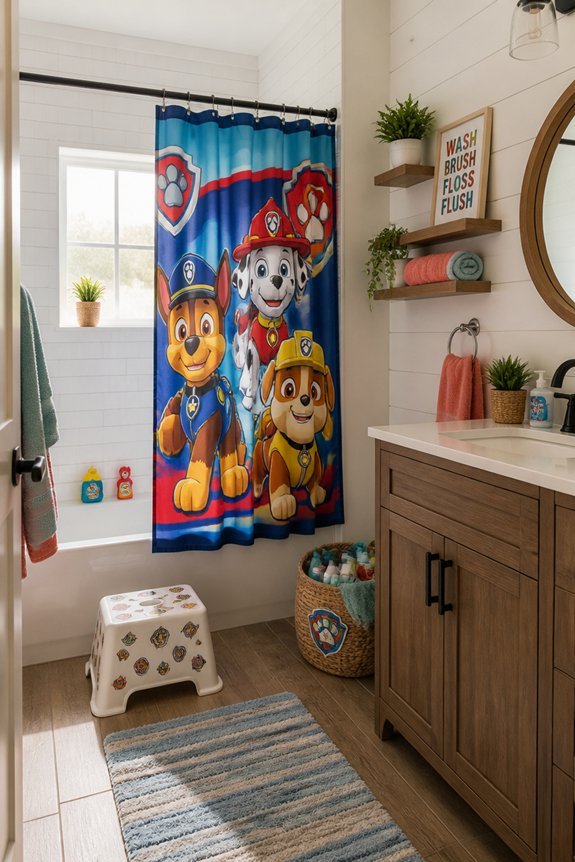
When children participate in selecting their bathroom décor, they develop ownership of the space and become more engaged with daily hygiene routines. Character shower curtains featuring popular figures, animals, or themes encourage this involvement.
Options include superheroes, dinosaurs, ocean creatures, and cartoon characters.
Allowing kids to choose designs they genuinely like increases bathroom usage frequency and promotes consistent bathing habits.
Install an Interactive Tooth-Brushing Chart on the Wall
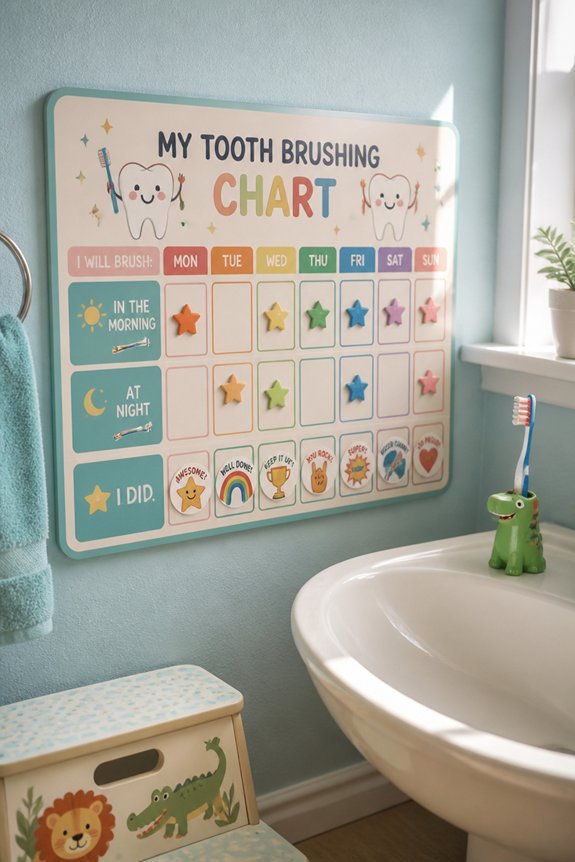
Establishing consistent dental habits requires visible accountability and regular reinforcement.
Interactive tooth-brushing charts, displayed at eye level in bathrooms, track daily brushing routines through stickers, checkmarks, or magnetic markers.
Charts featuring reward systems, such as earning privileges after consecutive weeks of compliance, encourage participation.
Examples include laminated weekly grids, dry-erase boards, or specialized commercial charts designed for children’s bathrooms.
Install Pump Soap Dispensers Kids Can Operate
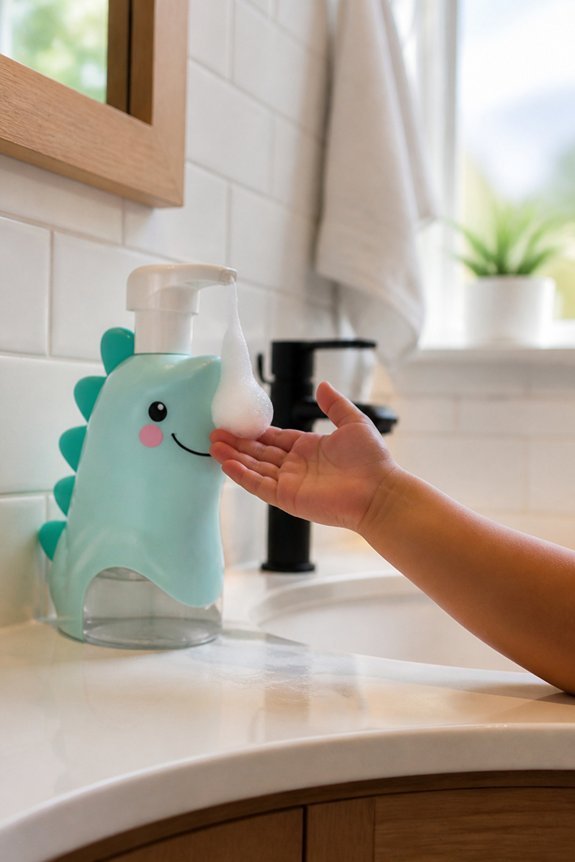
Many children struggle to use standard soap dispensers designed for adult hand sizes and strength.
Pump soap dispensers offer a practical solution, requiring minimal force to operate effectively. Models like Lysol or Softsoap pump dispensers work well for younger users.
Installing dispensers at child height, around 24-30 inches, guarantees accessibility.
Pump mechanisms are easier to manage than squeeze bottles or wall-mounted dispensers.
Paint the Ceiling With Stars and Clouds
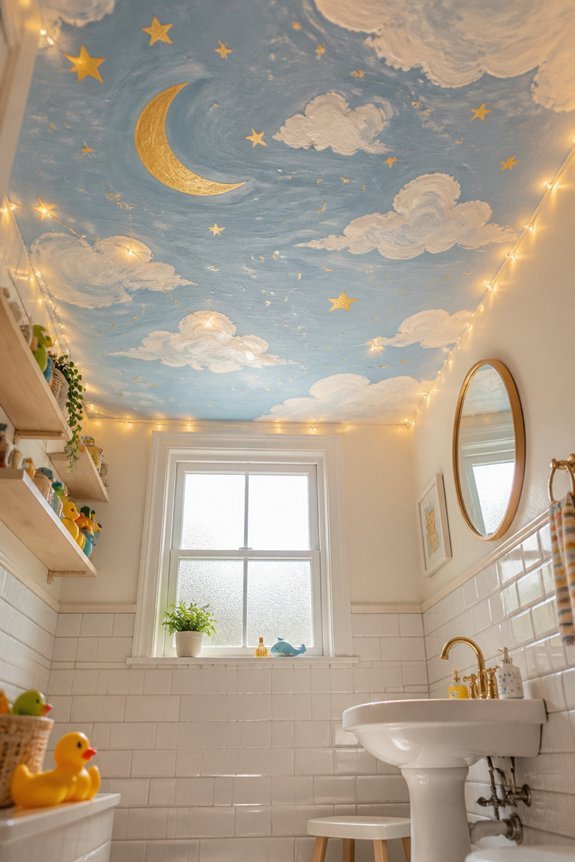
Transforming a bathroom ceiling into a nighttime sky creates visual interest and appeal for children. Parents can use glow-in-the-dark paint for stars, applying dots in constellation patterns.
Soft blue or deep purple base coats work well for the sky effect.
White puffy clouds can be added using sponge techniques. This ceiling treatment makes the bathroom visually engaging while remaining functional and durable.
Frequently Asked Questions
What’s the Best Age to Start Teaching Kids Proper Bathroom Hygiene Routines?
Most experts recommend beginning bathroom hygiene instruction around age two to three years old. At this developmental stage, children demonstrate readiness for toilet training and can understand basic routines like handwashing and teeth brushing with parental guidance and supervision.
How Can I Childproof a Bathroom to Prevent Accidents and Injuries?
While adults view bathrooms as routine spaces, children see dangerous territories. One secures cabinets with locks, installs safety gates, uses non-slip mats, stores medications high, adjusts water temperature, and adds corner guards. These measures transform hazardous environments into protected sanctuaries.
What Budget Should I Allocate for a Complete Kids’ Bathroom Renovation?
A complete children’s bathroom renovation typically costs between $5,000 and $15,000, depending on scope. Basic updates range from $2,000 to $5,000, while extensive remodels with fixtures and safety features reach $10,000 to $20,000 or higher.
How Do I Encourage Kids to Keep the Bathroom Clean and Organized?
Research shows children complete chores 65% more consistently when given ownership. Kids maintain bathrooms better through assigned responsibilities, colorful storage systems, reward charts, and making cleaning fun with timers or competitions.
Are There Eco-Friendly or Sustainable Options for Kids’ Bathroom Products?
Parents can select sustainable options including bamboo toothbrushes, natural soap bars, biodegradable wipes, and refillable containers. These alternatives reduce plastic waste while teaching children environmental responsibility through daily bathroom routines.
Conclusion
A well-designed kids’ bathroom combines practicality with child-friendly features. Washable paint, non-slip flooring, and LED lighting address moisture and safety concerns. Interactive elements like tooth-brushing charts and character shower curtains encourage bathroom habits. Step stools with storage maximize space efficiency. Yet one critical decision remains: how these elements work together determines whether the bathroom becomes functional or merely decorative. Thoughtful planning secures lasting results.