

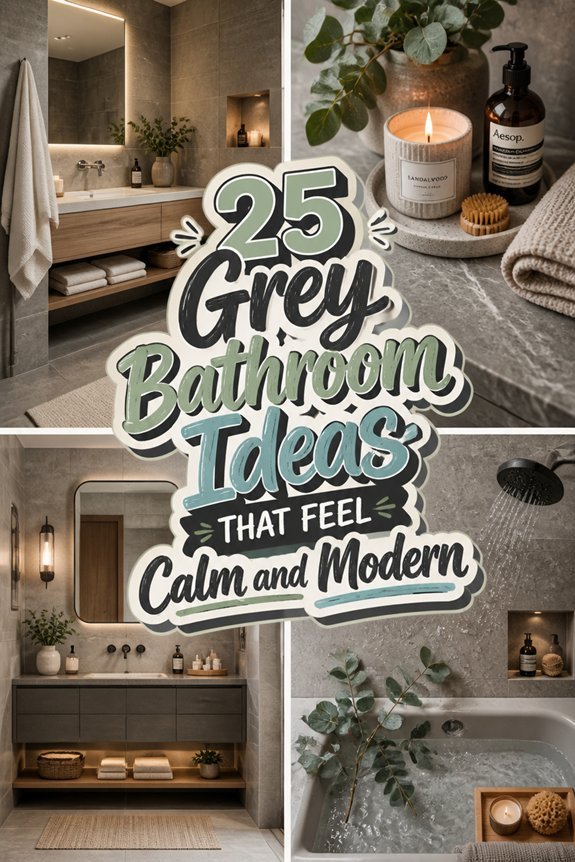
There’s something effortlessly soothing about stepping into a grey bathroom. Soft dove tones hide water spots beautifully, while deeper charcoal accents ground the space with quiet sophistication. Matte finishes and warm wood elements keep everything feeling cozy rather than cold.
Large-format tiles work wonders for a seamless look with minimal grout lines. If a full renovation isn’t in the cards, simple swaps like fresh paint, updated fixtures, or layered grey accessories can completely shift the mood. For smaller spaces, lean into light tones; expansive bathrooms can handle dramatic, darker palettes without feeling cramped.
25 Grey Bathroom Ideas
Grey gets called boring a lot, usually by people who’ve only seen one flat shade of it on every wall. The trick is mixing tones, textures and a little warmth.
This list moves from soft dove and moody charcoal through to concrete, stone, marble and shiplap. You’ll also find help with lighting, storage, small rooms and easing your way out of an all-white bathroom.
Tape a few paint swatches up beside your vanity and see which greys feel like home in your light.
Soft Dove Grey for a Serene Foundation
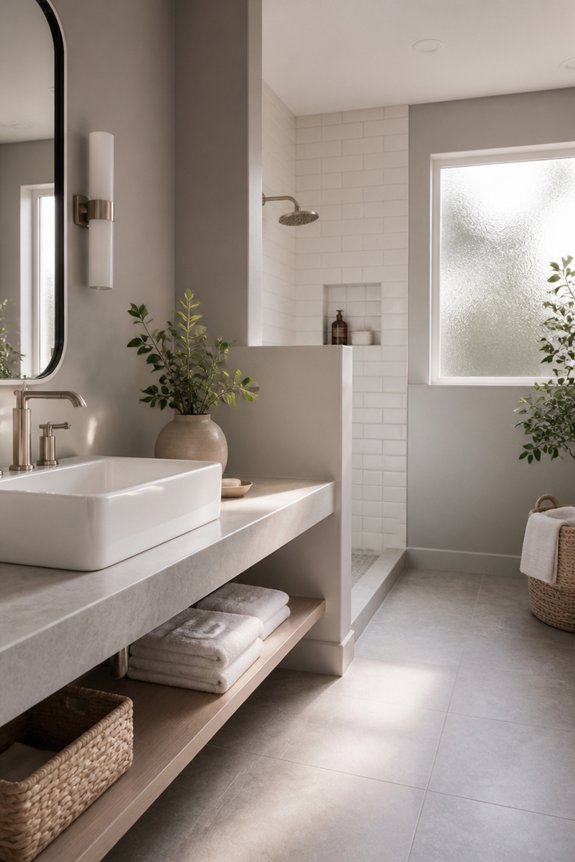
Soft dove grey functions as a neutral base color that creates a calm, understated atmosphere in bathroom spaces.
This shade pairs well with white tile, chrome fixtures, and natural wood accents.
Dove grey works on walls, cabinetry, or larger surfaces without overwhelming small bathrooms. It reflects light effectively, making rooms feel more spacious.
The color resists showing water spots and dirt compared to darker alternatives.
Charcoal Accents That Add Depth Without Drama
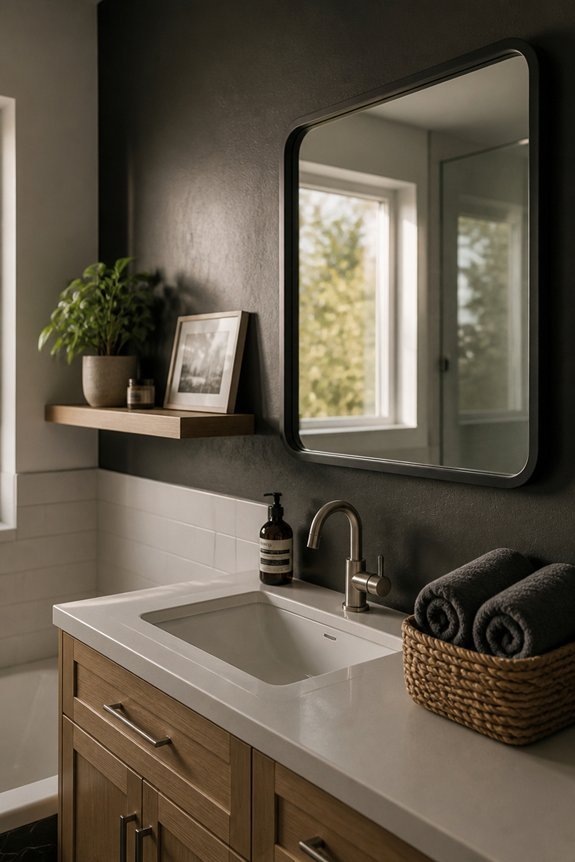
While dove grey establishes a calm foundation, charcoal grey introduces visual contrast and dimension to bathroom designs. Charcoal grout lines, towel racks, and cabinet hardware create defined boundaries without overwhelming spaces.
A charcoal accent wall or tile stripe adds depth strategically. These darker elements work best in small doses, paired with lighter grey surfaces, maintaining balance and preventing the bathroom from feeling heavy or confined.
Grey Tile Walls That Feel Spa-Like
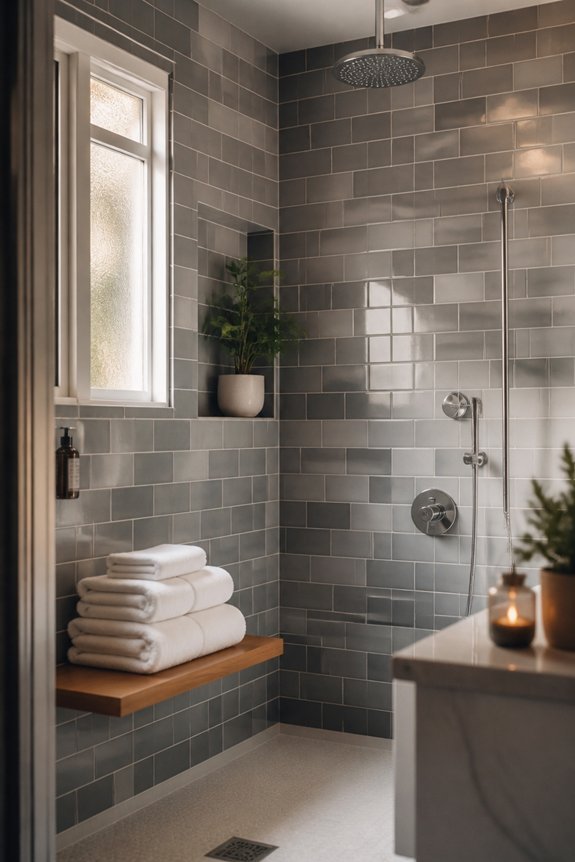
Grey tile walls create a serene bathroom environment by combining visual continuity with tactile qualities that evoke spa settings.
Large-format tiles, such as 12×24-inch porcelain options, minimize grout lines and create seamless surfaces. Matte finishes reduce glare, while subtle texture variations in shades like dove grey or warm taupe add depth.
These materials withstand moisture effectively and require minimal maintenance.
Pairing Grey With Warm Wood Tones
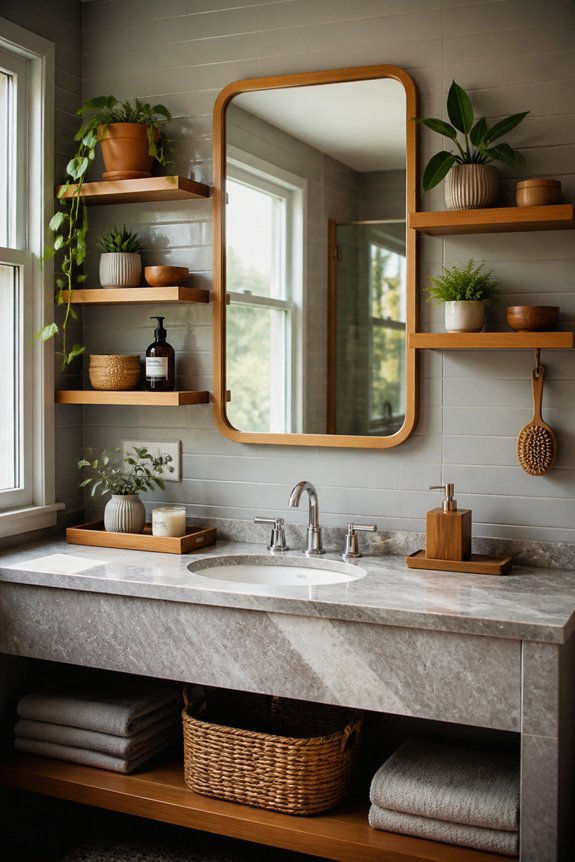
Combining cool grey surfaces with warm wood elements creates visual balance in bathroom design.
Wood vanities, shelving, and flooring complement grey walls and tiles effectively. Oak, walnut, and teak tones pair well with light or dark grey.
This combination reduces the cold feeling that grey alone can produce.
Wood accessories like mirrors and storage boxes enhance warmth further.
Minimalist Grey Bathrooms With Clean Lines
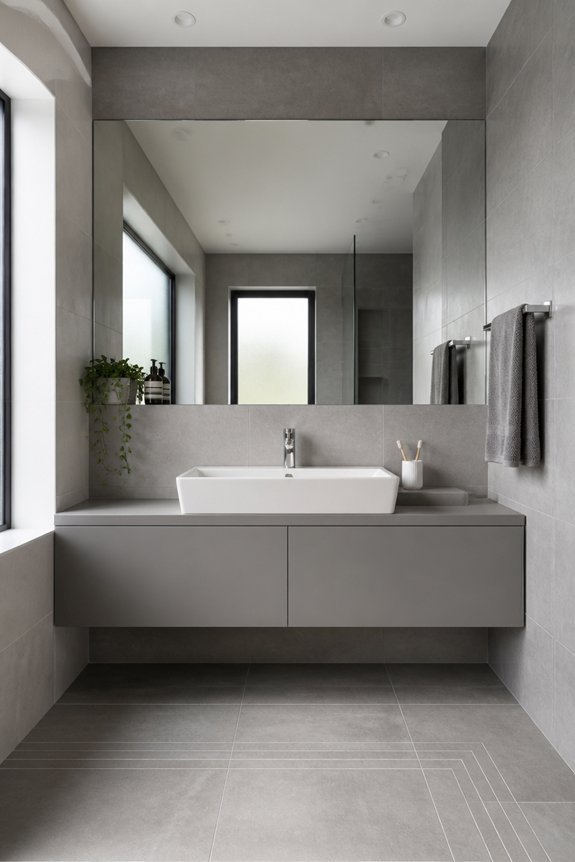
Minimalist grey bathrooms emphasize simplicity, functionality, and uncluttered design through the use of clean lines and streamlined fixtures.
Floating vanities, wall-mounted toilets, and sleek hardware reduce visual clutter. Neutral grey walls pair with white tile, chrome accessories, and minimal décor. Storage solutions hide behind cabinetry.
This approach creates organized, efficient spaces that feel calm through restraint and purposeful design choices.
Grey and White Subway Tile Combinations
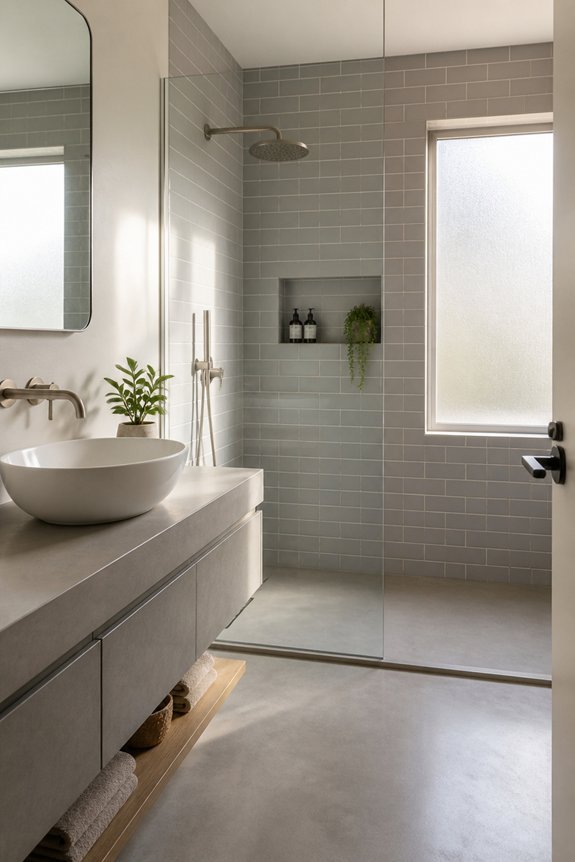
Subway tile in alternating grey and white patterns creates a classic, versatile backdrop for bathroom walls, showers, and accent areas. This combination offers visual interest while maintaining a clean aesthetic.
Horizontal layouts appear spacious, while vertical arrangements add height. Grout color choice affects the overall look: light grout blends seamlessly, dark grout emphasizes individual tiles.
Both options work well in modern bathrooms.
Statement Grey Vanities as Focal Points
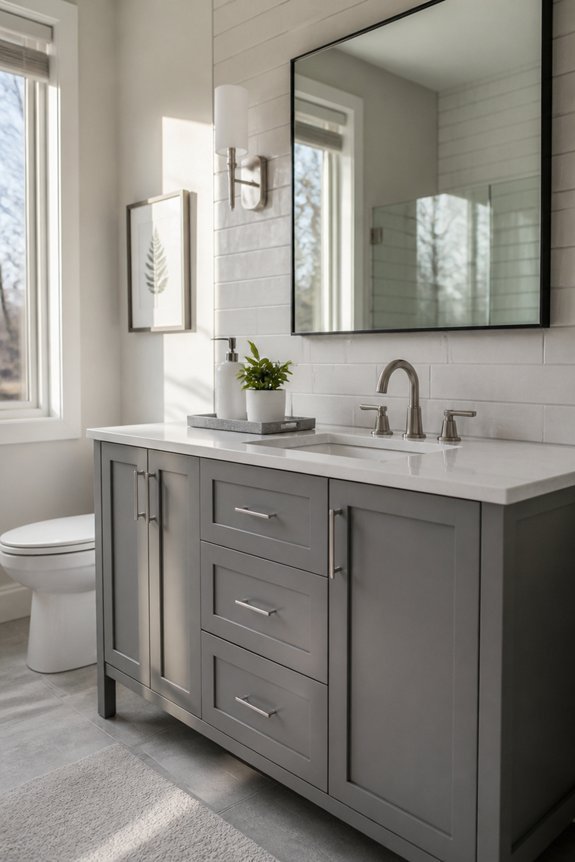
A well-chosen vanity anchors the bathroom’s visual design, commanding attention through size, finish, and placement.
Charcoal grey vanities with clean lines create modern focal points, while lighter grey tones offer subtle sophistication. Matte finishes reduce glare and convey contemporary style.
Pairing grey vanities with marble countertops or brushed nickel hardware enhances their visual impact.
Double-sink configurations maximize functionality and design presence simultaneously.
Lighting Design That Enhances Grey’s Sophistication
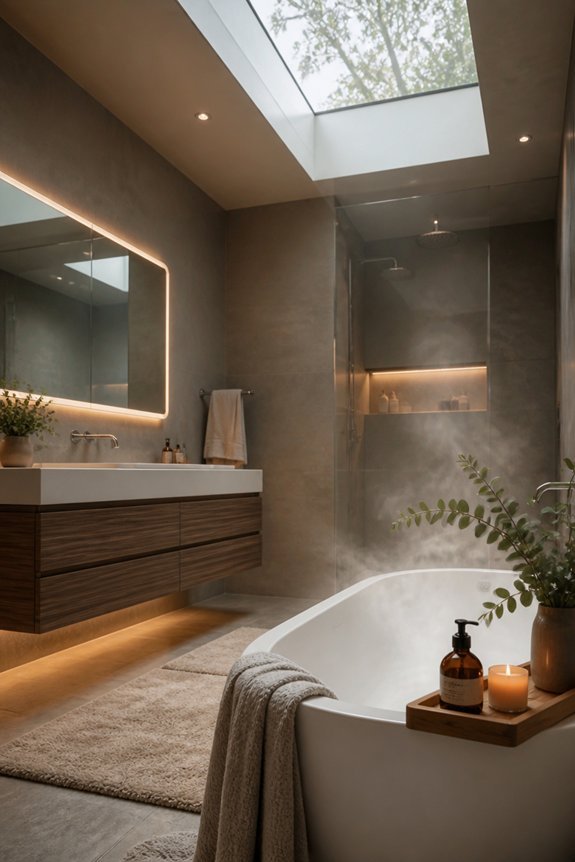
Proper illumination transforms grey bathrooms from flat and dull to refined and dynamic.
Layered lighting combines ambient fixtures, task lights near mirrors, and accent spotlights on vanities or architectural features.
LED strips behind floating shelves add subtle depth, while warm-toned bulbs prevent clinical appearances.
Dimmable options allow adjustments throughout the day, enhancing grey’s natural sophistication without overwhelming the space.
Grey Concrete Looks for Industrial Edge
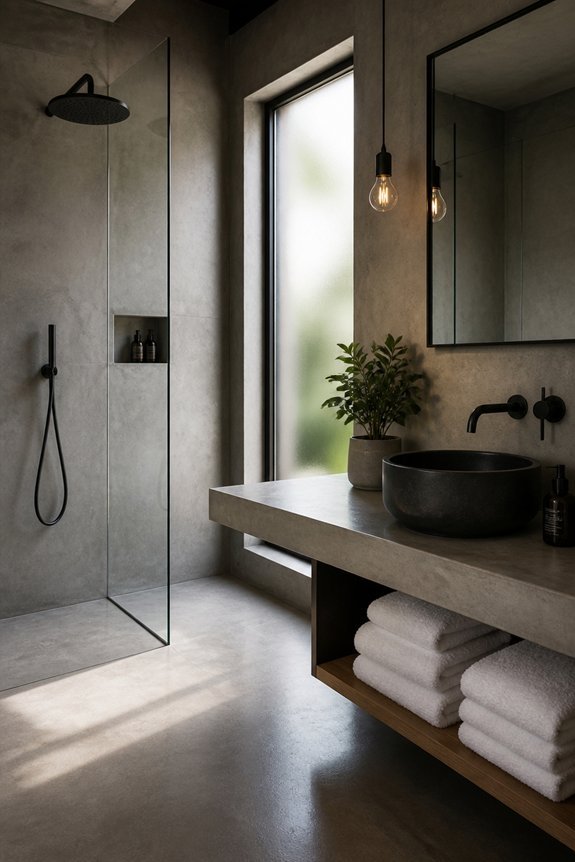
Concrete finishes bring raw, utilitarian aesthetics to grey bathrooms, creating spaces that prioritize function over ornamentation.
Polished concrete floors offer durability and minimal maintenance. Exposed concrete walls pair well with steel fixtures and minimalist vanities.
Stamped concrete can add subtle texture without compromising the industrial aesthetic. Matte grey concrete creates practical, straightforward environments suited for modern design preferences.
Incorporating Grey Stone and Natural Textures
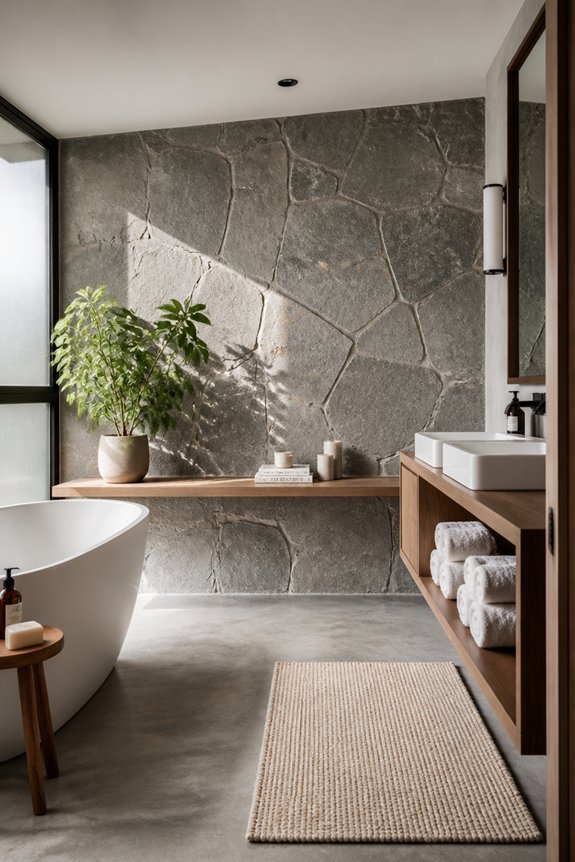
Grey stone and natural textures introduce organic elements that soften industrial aesthetics while maintaining the practical qualities of grey bathrooms.
Slate tiles, river rock accents, and limestone features create visual interest through varied surfaces. Pairing these materials with wood elements or plants enhances the natural feel.
Stone provides durability, water resistance, and timeless appeal for bathroom applications requiring both function and understated design.
Grey Bathroom Fixtures That Feel High-End
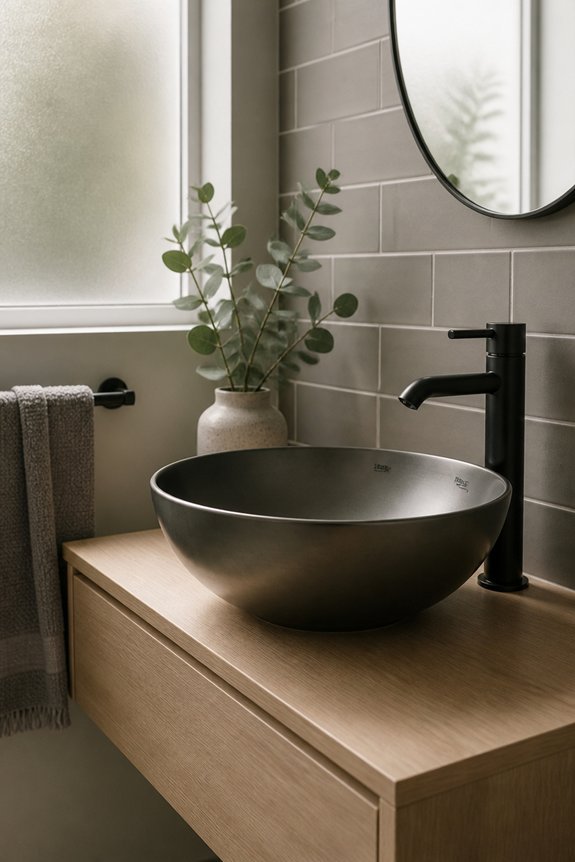
While natural stone and textures establish a grounded foundation, the fixtures themselves determine whether a grey bathroom reads as luxurious or ordinary.
Matte black faucets, brushed nickel hardware, and polished chrome accents elevate the space. Selecting fixtures with clean lines, quality finishes, and proper spacing prevents a cluttered appearance.
Investment-grade materials like solid brass or stainless steel withstand moisture better than plated alternatives.
Creating Contrast With Dark Grey and Light Fixtures
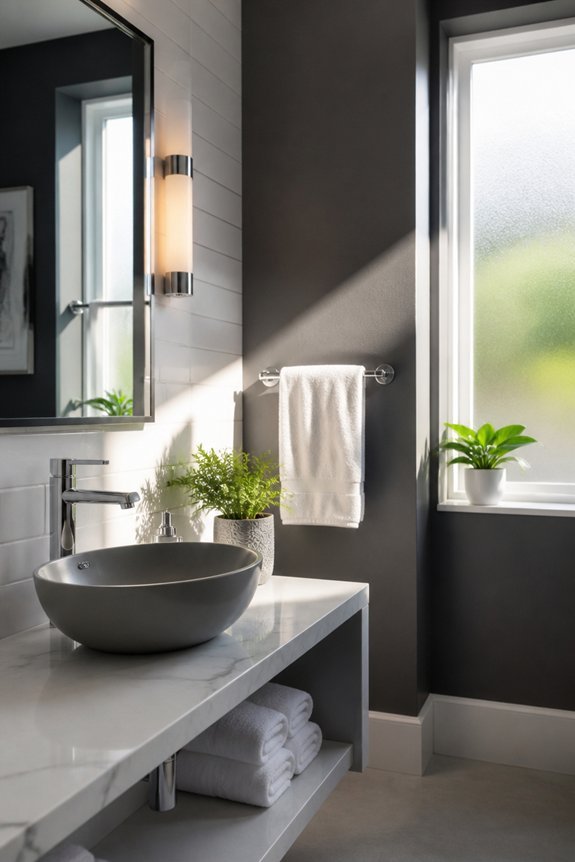
One of the most effective design strategies involves pairing dark grey walls or cabinetry with lighter fixture finishes, which creates visual separation and prevents monotony.
Chrome, brushed nickel, and white porcelain complement dark grey surfaces effectively.
This contrast draws attention to specific elements, such as faucets and hardware, while maintaining overall cohesion. The combination balances warmth and coolness throughout the space.
Grey Shiplap for Coastal Modern Vibes
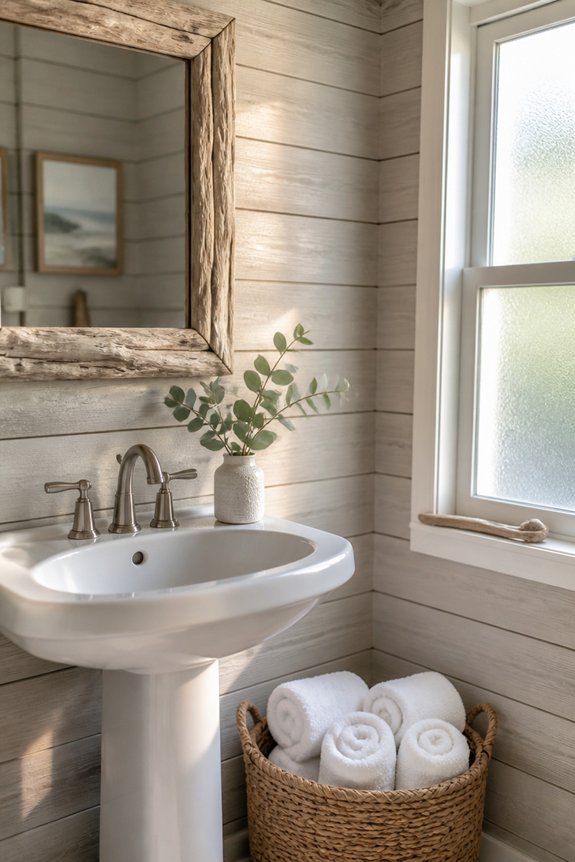
When installed on bathroom walls, shiplap in soft grey tones creates a clean, structured appearance that aligns with coastal modern design principles. This material pairs well with white trim, natural wood accents, and chrome fixtures.
Grey shiplap works effectively on feature walls behind vanities or bathtubs. The horizontal lines add visual interest while maintaining a serene, organized aesthetic suitable for contemporary bathrooms.
Layering Textures in a Monochromatic Grey Space
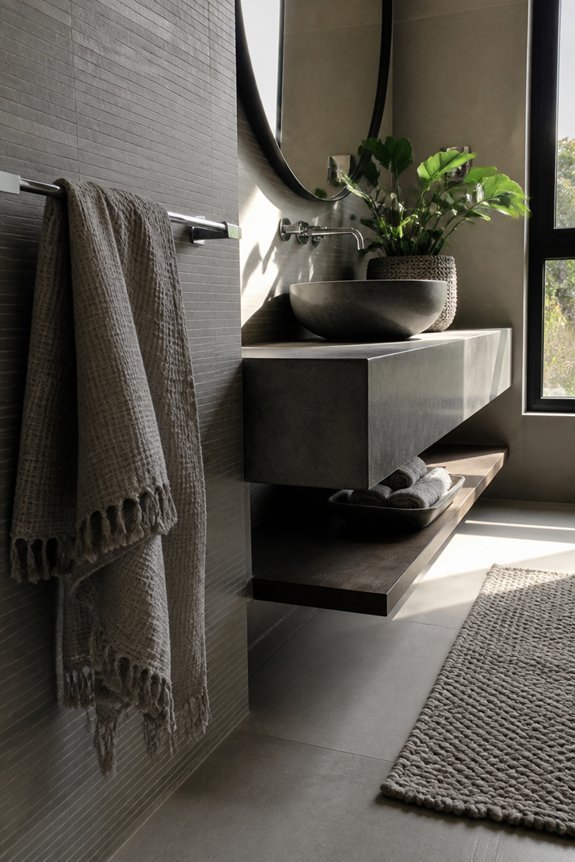
Texture becomes the primary design tool in bathrooms that rely on a single grey color palette, since variation in surface finishes replaces color contrast to create visual depth and interest.
Combining matte tiles, polished stone, woven towels, and brushed metal fixtures creates layered surfaces. This approach prevents monotony while maintaining cohesion, allowing the monochromatic scheme to feel intentional rather than flat or uninspired.
Grey Painted Ceilings to Expand Perception
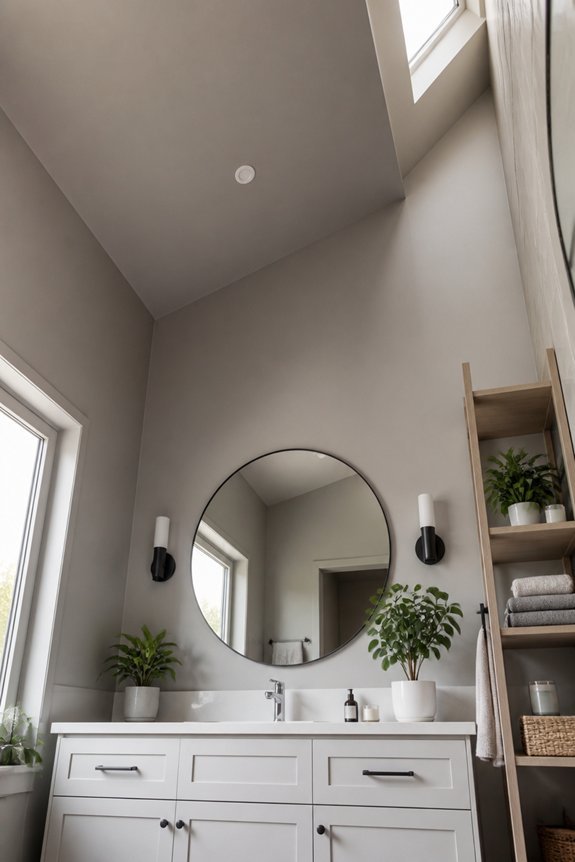
How does ceiling color affect the perceived size and height of a bathroom? Light grey ceilings reflect more light, making spaces feel larger and airier.
Darker greys create intimate atmospheres but may lower perceived ceiling height.
Matte finishes reduce glare, while soft grey tones maintain visual continuity with walls, enhancing cohesion throughout the bathroom environment.
Luxury Grey Bathrooms With Marble Accents
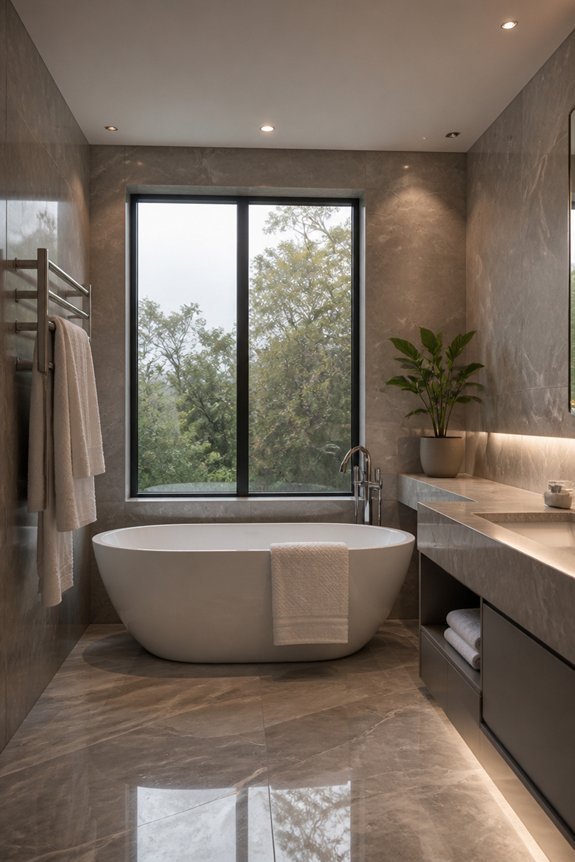
Marble accents elevate grey bathroom designs by introducing natural stone elements that combine durability with visual refinement. Carrara marble countertops, subway tile walls, and floor inlays create sophisticated surfaces that resist moisture and staining.
Grey grout between marble tiles maintains visual cohesion while preventing dirt accumulation.
Marble shelving and basin surrounds add functional luxury, making bathrooms appear upscale and timeless without excessive ornamentation.
Small Bathrooms That Feel Larger in Grey
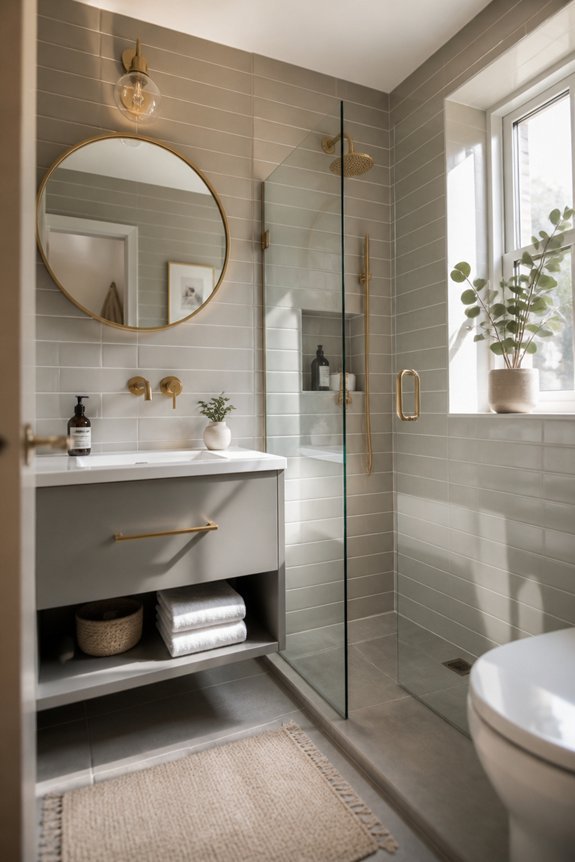
Grey bathrooms can appear considerably larger through strategic use of color, lighting, and design choices.
Light grey walls reflect natural and artificial light, creating openness. Vertical elements like tall cabinets and mirrors amplify perceived height.
Minimal clutter, streamlined fixtures, and consistent grey tones throughout maintain visual continuity.
Large-format tiles reduce grout lines, contributing to seamless expansiveness and cleaner aesthetics overall.
Mid-Tone Grey for Versatile, Balanced Spaces
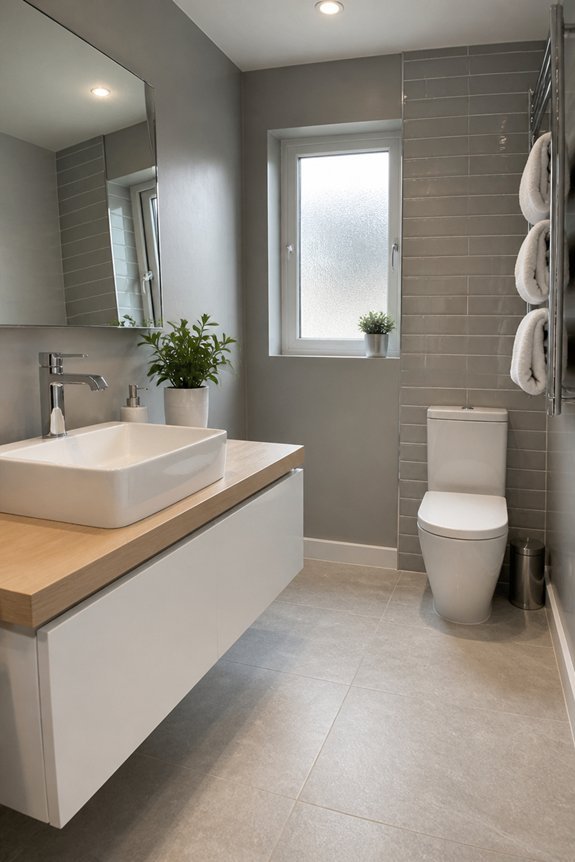
Mid-tone grey offers practical advantages for bathrooms seeking balance between light and dark elements.
This shade complements various fixtures, tile styles, and accessories effectively. Mid-tone grey walls pair well with white vanities, chrome hardware, and natural wood accents.
The color provides sufficient depth for visual interest while maintaining brightness. It accommodates different lighting conditions without appearing dingy or stark.
Grey Bathroom Storage That Doesn’t Compete Visually
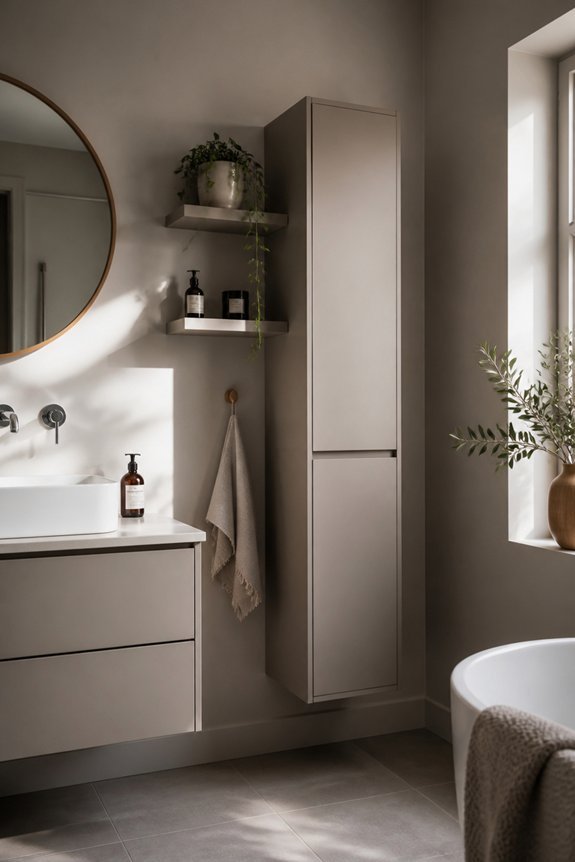
Storage solutions in grey bathrooms require careful consideration to maintain visual balance and prevent clutter from dominating the space.
Floating shelves in matching grey tones blend seamlessly with walls, while recessed cabinets minimize visual interruption.
Open shelving works when items are organized neatly.
Drawer fronts, towel racks, and vanity units in coordinating grey shades create cohesion without visual competition or distraction.
Scandinavian Grey Bathrooms With Minimalist Touches
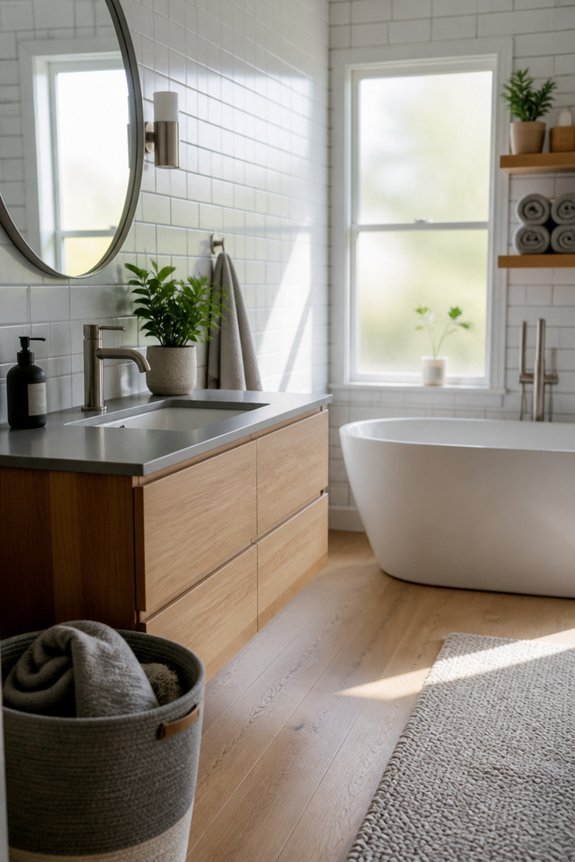
The Nordic design philosophy emphasizes simplicity, functionality, and restraint, making it an ideal approach for grey bathrooms that prioritize clean lines and uncluttered spaces.
Light grey walls pair with white fixtures, natural wood accents, and minimal décor. Floating vanities, open shelving, and stone countertops support this aesthetic.
Storage remains hidden behind closed cabinetry, maintaining visual calm throughout the space.
Adding Greenery and Plants to Grey Bathrooms
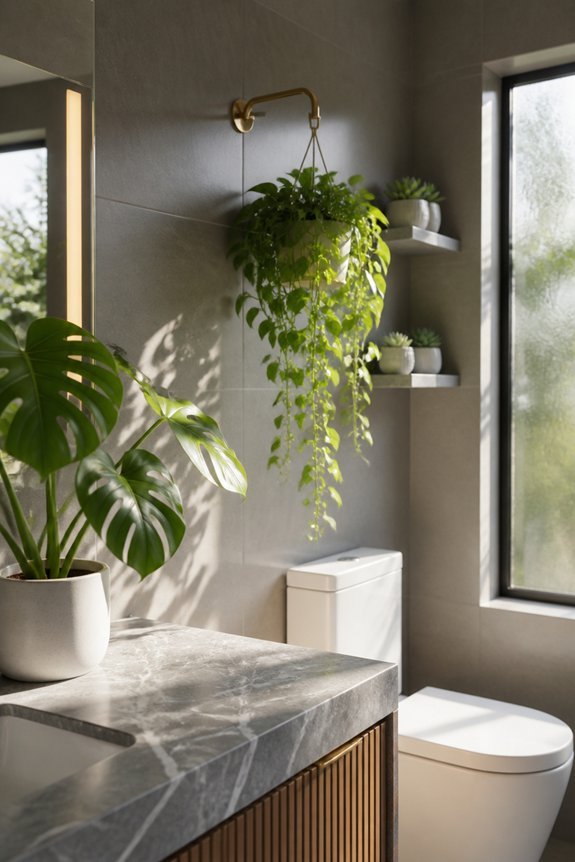
Adding living plants to a grey bathroom introduces organic elements that soften the minimalist aesthetic established in Scandinavian design.
Pothos, snake plants, and ferns thrive in bathroom humidity and low light conditions.
Placing plants on shelves, windowsills, or hanging from walls adds visual interest while improving air quality.
These additions create contrast against grey surfaces, establishing balance between natural and industrial elements throughout the space.
Grey Matte vs. Glossy Finishes: Which Works Best?
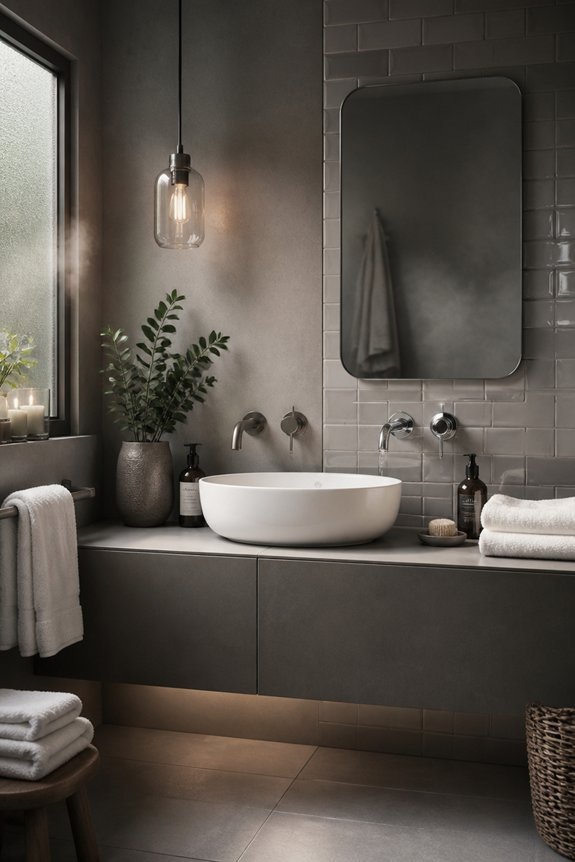
How do matte and glossy grey finishes differ in bathroom settings?
Matte finishes absorb light, creating subdued, sophisticated surfaces that hide water spots and fingerprints effectively.
Glossy finishes reflect light, appearing brighter and more reflective, though they require frequent cleaning.
Matte works well on walls, while glossy performs better on cabinets and trim exposed to moisture and daily contact.
Budget-Friendly Grey Bathroom Updates
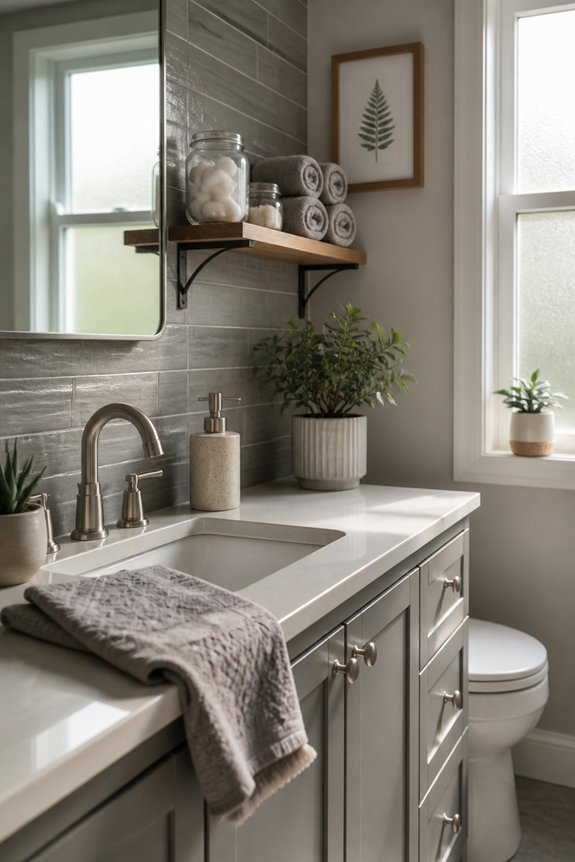
Several cost-effective approaches can refresh a grey bathroom without requiring a complete renovation or significant financial investment. Repainting walls, updating hardware, and replacing light fixtures offer noticeable improvements at lower costs.
Adding grey towels, bath mats, and shower curtains creates cohesion affordably.
Installing peel-and-stick tiles on accent walls provides visual interest. Swapping out mirror frames and caulking grout lines enhance the overall appearance economically.
Grey Bathroom Lighting Fixtures That Complement the Palette
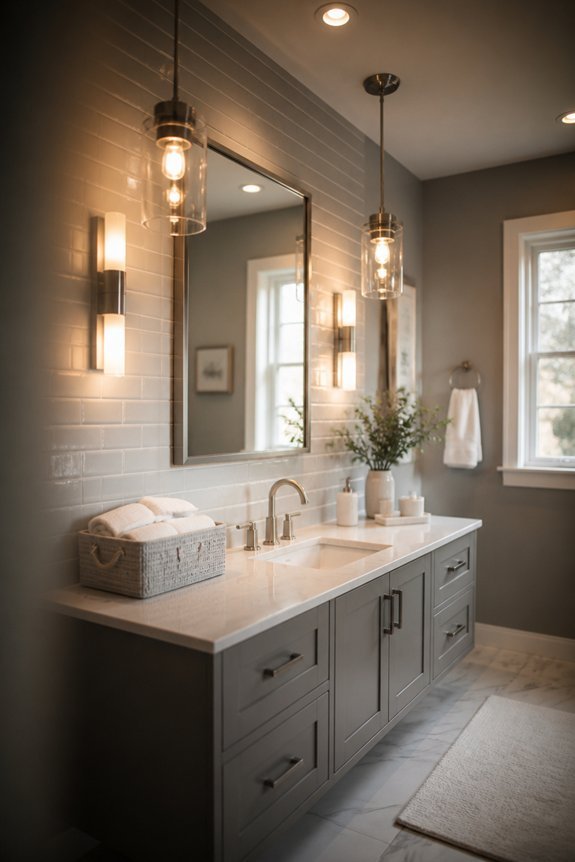
Proper lighting fixtures serve as both functional elements and design components within a grey bathroom space. Chrome and brushed nickel pendant lights, recessed ceiling fixtures, and vanity sconces complement grey walls effectively. LED options provide energy efficiency and neutral light tones.
Wall-mounted fixtures with frosted glass shades diffuse light evenly, reducing harsh shadows and creating balanced illumination throughout the bathroom environment.
Transitioning From Bright White to Sophisticated Grey
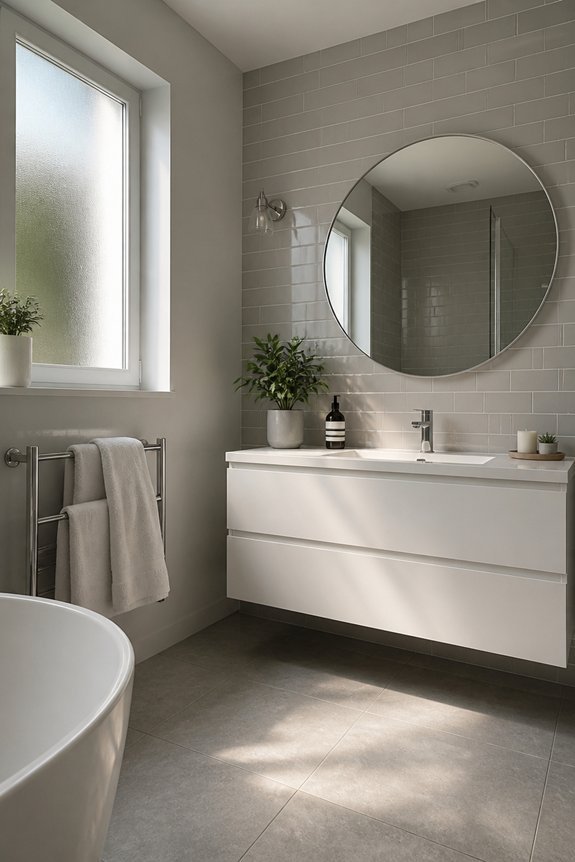
When moving away from bright white bathroom walls, homeowners can introduce grey through a gradual approach that minimizes visual jarring.
Starting with grey accents, towels, rugs, and shower curtains, allows adjustment before committing to wall paint.
Light grey paint, such as soft dove or pale slate shades, bridges white and darker tones effectively.
This measured shift maintains brightness while establishing a sophisticated aesthetic.
Frequently Asked Questions
How Long Do Grey Bathroom Renovations Typically Take to Complete?
Grey bathroom renovations typically require 4 to 8 weeks for completion. The timeline depends on project scope, including tile installation, fixture replacement, and painting. Simple updates may take 2-3 weeks, while thorough remodels involving plumbing changes require longer periods.
What Is the Best Way to Clean and Maintain Grey Bathroom Surfaces?
One should clean grey bathroom surfaces regularly with mild soap and water, avoiding abrasive scrubbers that cause damage. Using pH-neutral cleaners prevents discoloration. Sealing grout annually and wiping surfaces promptly after use maintains their appearance effectively.
Can Grey Bathrooms Work Well in Homes With Limited Natural Light?
Grey bathrooms can indeed work well in homes with limited natural light. Light grey shades and reflective surfaces like glossy tiles and mirrors maximize available light, creating an airy feel. Incorporating bright lighting fixtures further enhances the space’s brightness and modern aesthetic.
What Is the Cost Difference Between Grey and White Bathroom Renovations?
Like two sides of the same coin, grey and white bathroom renovations typically carry comparable costs. Material expenses, labor, and fixtures remain largely identical. The financial distinction lies primarily in tile selection and paint choices, which generally fluctuate minimally between these neutral palettes.
How Do Grey Bathrooms Perform in Terms of Resale Value and Appeal?
Grey bathrooms generally appeal to buyers seeking contemporary aesthetics. Neutral grey tones attract a broad demographic, potentially enhancing resale value. However, specific shade selection and design execution greatly influence buyer perception and long-term market appeal.
Conclusion
Grey bathrooms offer practical design solutions for homeowners seeking calm, modern spaces. Soft dove grey creates serene foundations, while charcoal accents add depth. Pairing grey with warm wood, matte finishes, and proper lighting produces sophisticated results. Budget-friendly updates include grey tile walls and minimalist styling. Like a telegram sent in 1952, these design choices communicate timeless elegance through restraint, making grey bathrooms enduring choices for contemporary homes.