
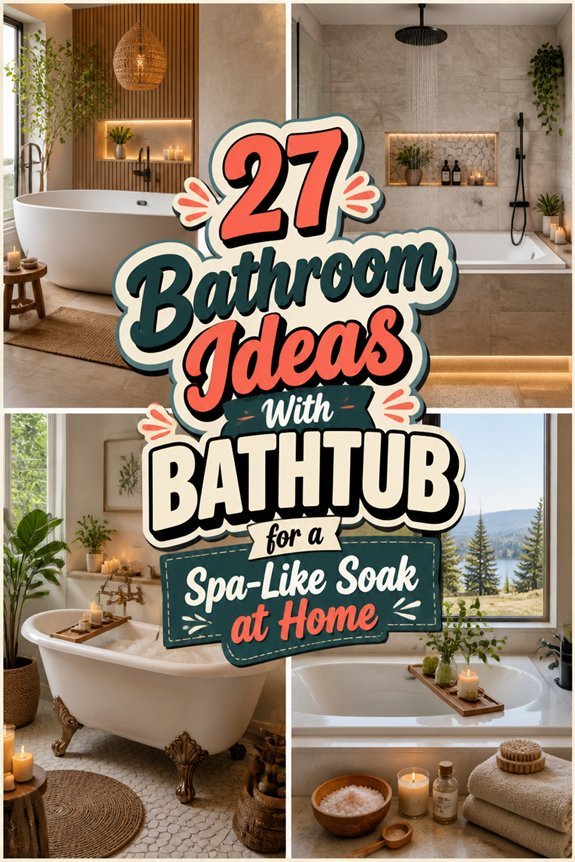
A bathtub changes how a bathroom feels, even on a rushed weeknight.
I grew up with a chipped pink tub I secretly adored, and I still judge every bathroom by whether I’d soak in it.
Getting everything around the bath right is where the real magic happens.
Tiles, lighting, storage and layout all play their part, and there’s something here for every budget.
Here are the ideas I keep coming back to, from the tub itself to the finishing touches.
Measure Twice Before You Fall in Love
Measure your room before you fall for a tub online. Leave space for the taps, the waste, and enough clear floor to step out without stubbing a toe.
Check that your floor can handle the weight, too. A stone or cast iron bath full of water (and you) is surprisingly heavy, so have a quick chat with your builder before you commit.
Then think about who’s actually using it. If you’re bathing little ones every night, a lower tub with a shower over it will be much kinder to your back than a deep freestanding beauty.
27 Bathroom Ideas With Bathtub
I’ve ordered these roughly from the big decisions to the finishing touches. You’ll start with tub styles, move through flooring, lighting and scent, then finish with three budget tiers so you can see what your money actually buys.
Some of these are weekend jobs and some need a plumber and a proper quote. Mix and match freely, because a cheap bamboo tray looks right at home beside a marble surround.
Grab a cuppa, save the ones that make you sigh a little, and come back to them when you’re ready to plan.
Freestanding Soaking Tubs for Ultimate Relaxation
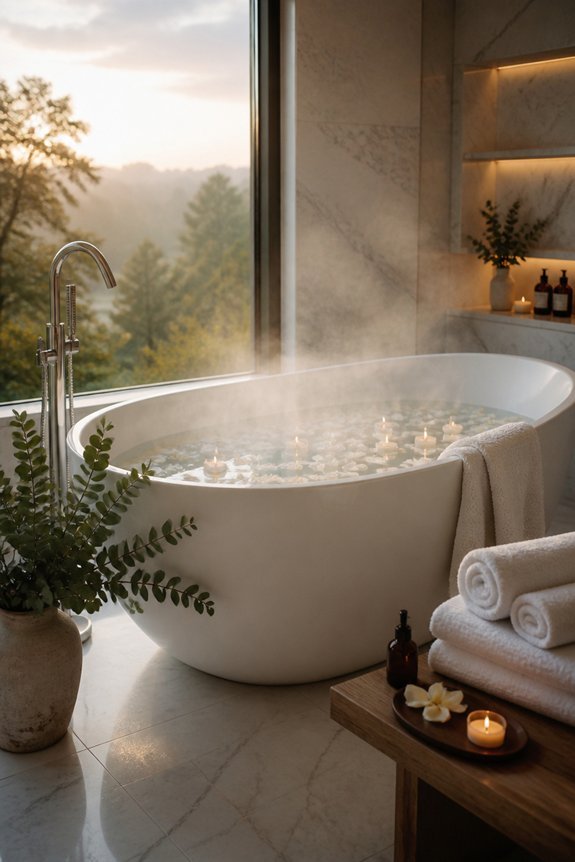
Freestanding soaking tubs offer a practical bathing solution that combines functionality with aesthetic appeal in modern bathrooms.
These tubs, available in materials like acrylic, stone, and cast iron, require adequate floor space and plumbing access.
Popular styles include Japanese soaking tubs and contemporary oval designs.
Installation demands proper drainage systems, structural support, and professional assessment of bathroom layout to guarantee ideal placement and performance.
Japanese Soaking Tubs for Deep Immersion
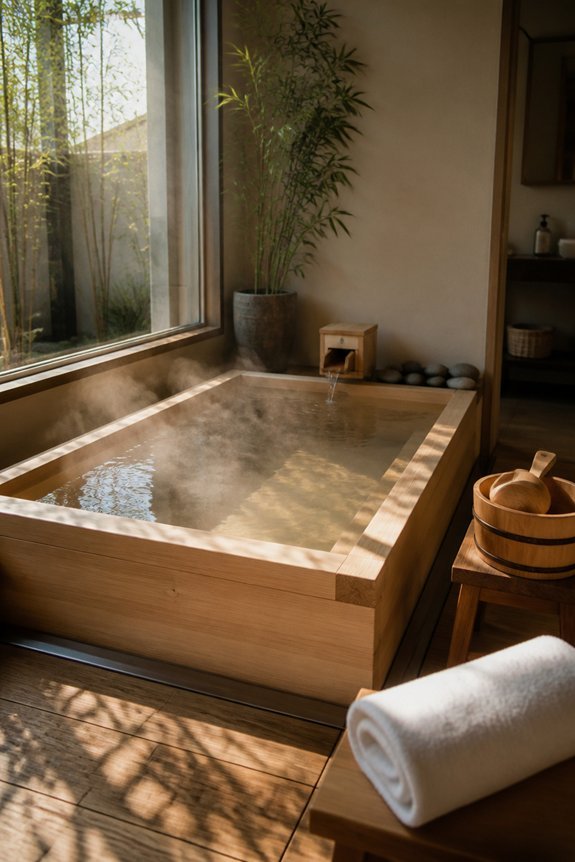
While traditional bathtubs emphasize sprawling dimensions, Japanese soaking tubs prioritize depth and compact footprints to enable full-body submersion in minimal space.
These tubs, typically 24-30 inches deep, accommodate sitting postures rather than reclining ones. Materials include hinoki wood, acrylic, and ceramic.
Soaking temperatures range from 104-108 degrees Fahrenheit.
Installation requires adequate drainage systems and structural support for water weight.
Clawfoot Tubs With Modern Finishes
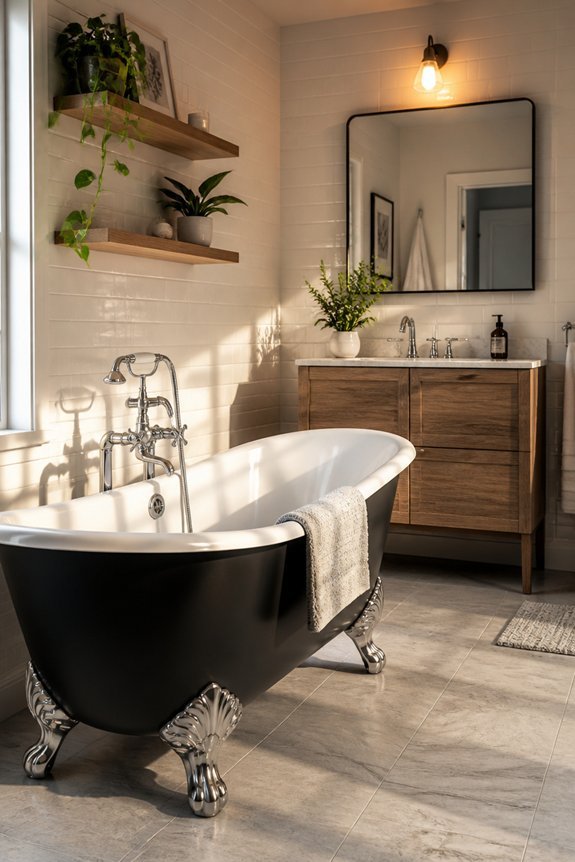
Several clawfoot tub designs now incorporate contemporary materials and finishes that blend vintage aesthetics with current bathroom standards.
Modern versions feature matte black, brushed nickel, and oil-rubbed bronze finishes instead of traditional shiny chrome.
Acrylic and composite materials offer durability alongside classic claw feet designs. These updated tubs accommodate modern plumbing systems, making installation straightforward in existing bathrooms.
Corner Bathtubs to Maximize Small Spaces
For homeowners with limited bathroom square footage, corner bathtubs offer a practical solution that differs from the standalone clawfoot designs discussed previously.
These tubs fit snugly into unused corner areas, freeing up floor space for other fixtures or movement.
Models like the Kohler Belmont or American Standard Cadet maximize room efficiency while maintaining comfortable soaking dimensions and functionality.
Drop-In Tubs With Seamless Tile Integration
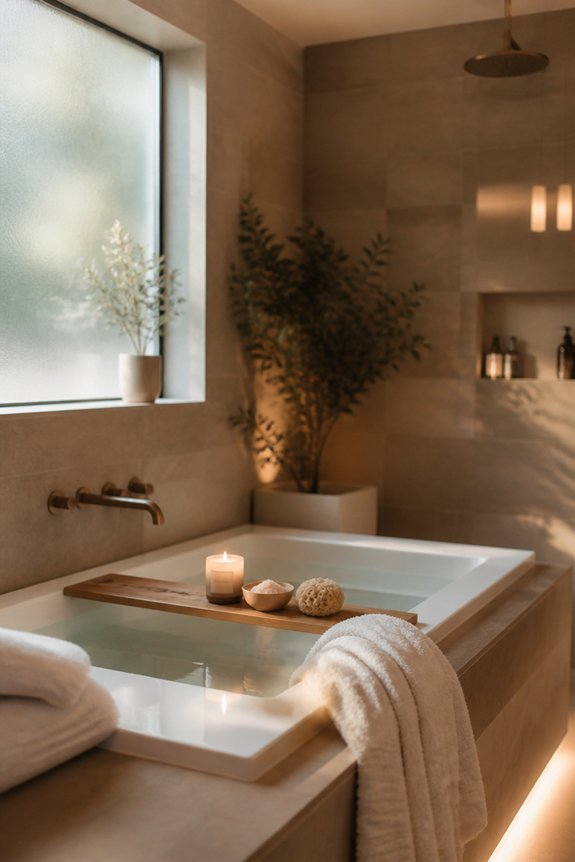
Drop-in bathtubs, installed flush with surrounding countertops or tile surfaces, create a unified aesthetic that flows visually from bathroom walls to tub edges.
Subway tiles, porcelain, and natural stone pair effectively with this installation method.
The seamless integration eliminates gaps where debris accumulates, simplifying cleaning. Proper waterproofing beneath the rim prevents water damage.
This approach works well in both modern and traditional bathroom designs.
Whirlpool Tubs With Therapeutic Jets
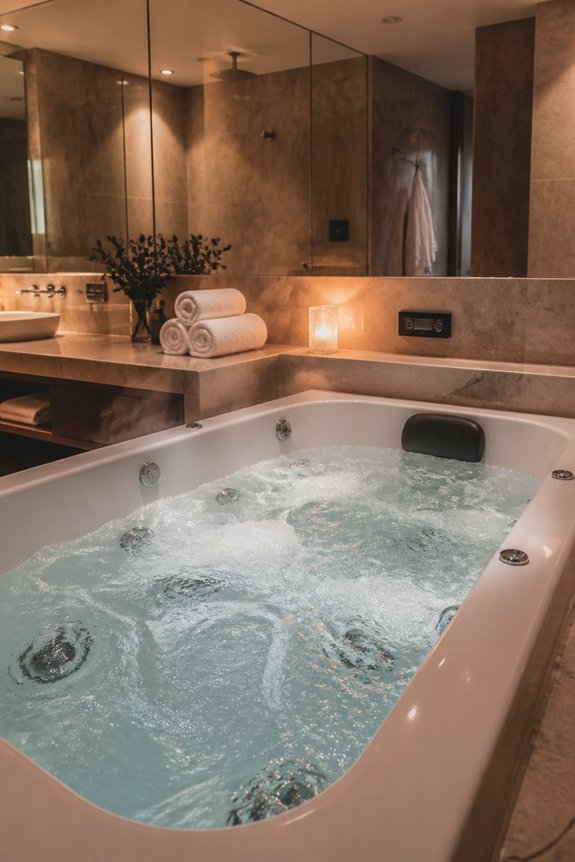
Whirlpool tubs combine traditional bathing with therapeutic jet systems, delivering targeted water pressure to muscles and joints. These tubs feature adjustable jets positioned at various heights, allowing users to customize water intensity and direction.
Common models include corner units with multiple jet zones and soaking tubs with back-focused jets. Installation requires proper plumbing connections and electrical setup for motor operation.
Air Jet Bathtubs for Gentle Bubble Massage
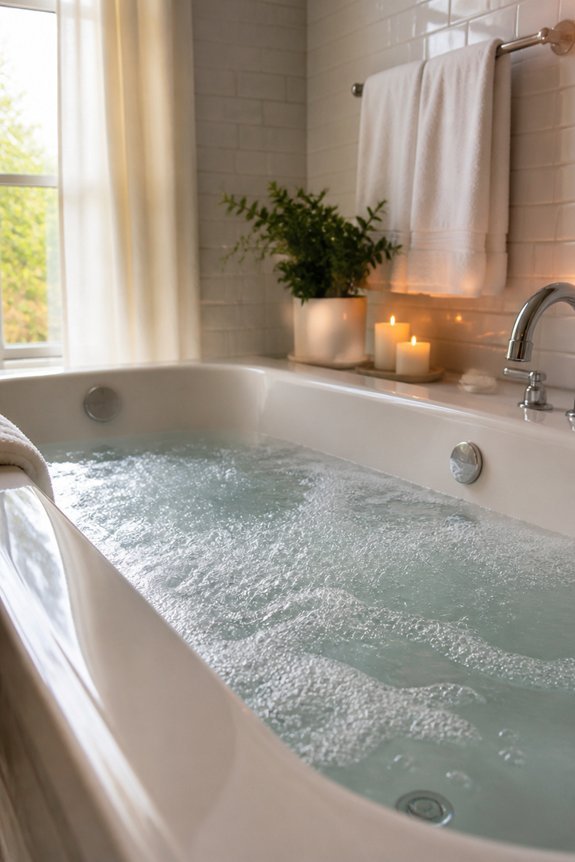
Air jet bathtubs use compressed air rather than water pressure, creating thousands of tiny bubbles that gently massage the entire body surface.
Unlike whirlpool tubs, air jets produce softer, less intense stimulation suitable for sensitive skin.
Models like Jacuzzi’s air jet systems and American Standard’s offerings feature adjustable settings.
Users can control bubble intensity and target specific areas, making this option practical for relaxation and mild muscle relief.
Radiant Floor Heating for Warm Feet and Comfort
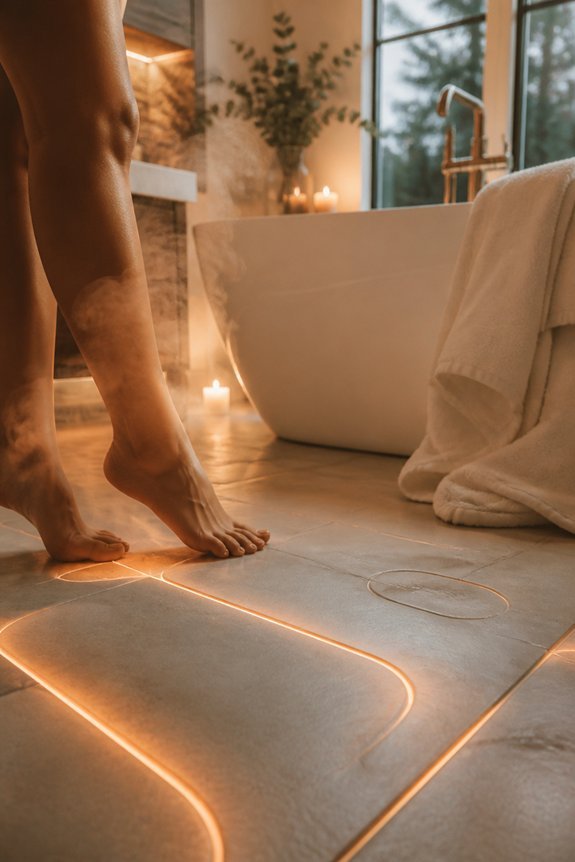
Radiant floor heating systems installed beneath bathroom flooring provide consistent warmth from the ground up, eliminating the cold tile surfaces common in most bathrooms. These systems use electric cables or water-filled tubing to distribute heat evenly across the floor.
Installation occurs during renovation projects, beneath tile or stone surfaces.
The systems maintain temperatures between 78-86 degrees Fahrenheit, creating a comfortable bathing environment year-round.
Natural Stone Finishes for Earthy Elegance
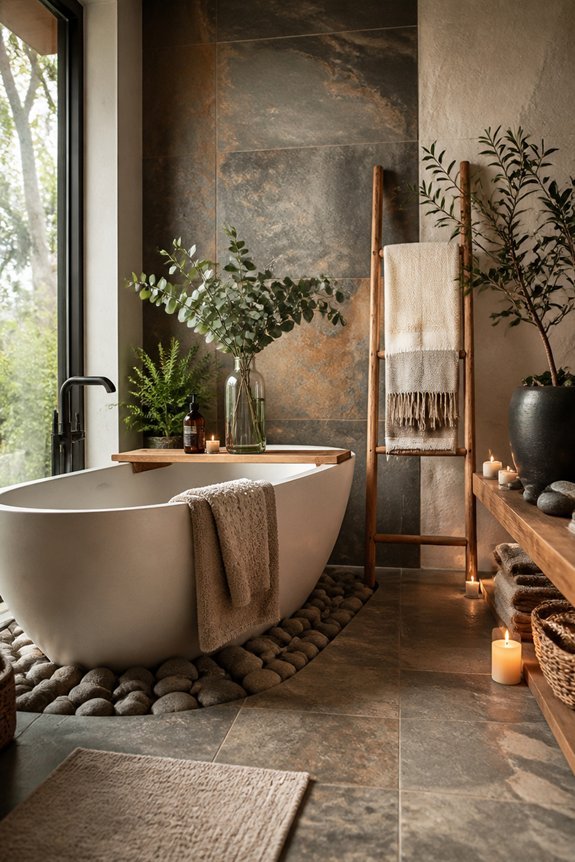
Natural stone brings warmth and character to bathroom spaces through its varied textures, colors, and durability. Granite, marble, and slate work well for countertops, flooring, and wall accents.
These materials resist moisture when properly sealed.
Stone finishes complement bathtub designs by creating cohesive, sophisticated aesthetics. Options range from polished surfaces to textured finishes, each offering distinct visual and functional qualities for bathrooms.
Marble Surround and Waterfall Filler Spouts
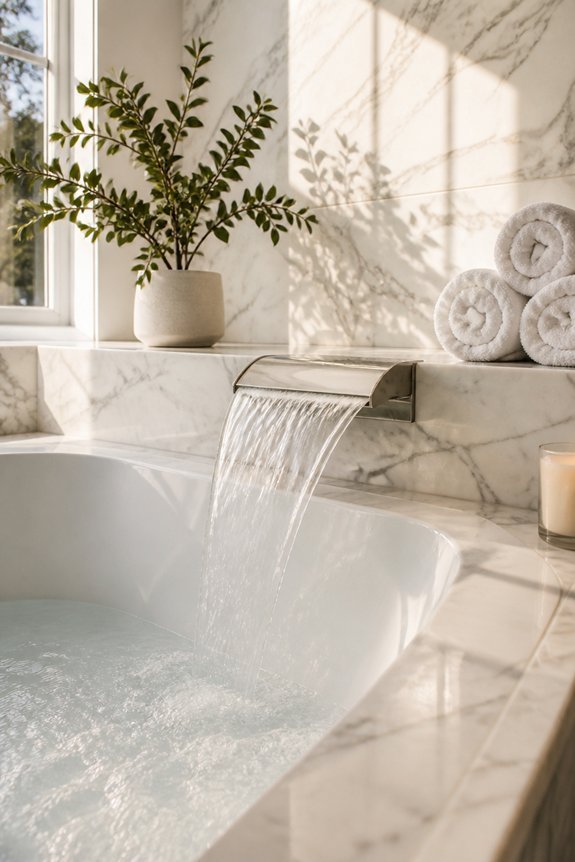
Because marble offers timeless visual appeal and practical durability, it serves as an ideal material for bathtub surrounds in modern and traditional bathrooms.
Waterfall filler spouts complement marble installations by delivering water in a cascading stream, creating a luxurious bathing experience.
This combination minimizes splashing, reduces maintenance needs, and enhances the overall aesthetic appeal of the bathroom space considerably.
Warm Lighting to Set the Spa Mood
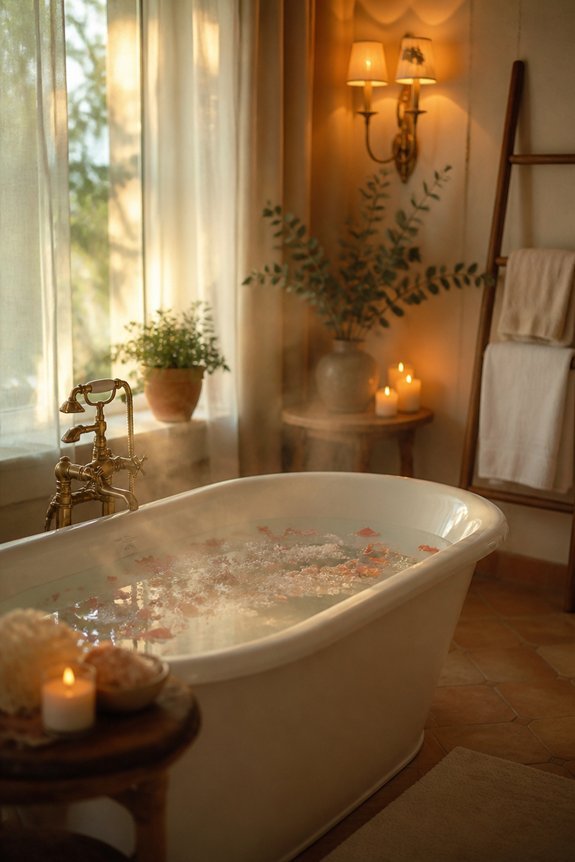
Proper lighting transforms a bathroom into a relaxing retreat, making it an essential element of spa-inspired design. Dimmable overhead fixtures, wall sconces, and LED candles create adjustable ambiance.
Warm color temperatures between 2700K and 3000K produce calming tones.
Layered lighting around the mirror and bathtub perimeter reduces shadows, while recessed fixtures provide soft, indirect illumination throughout the space.
Dimmable Sconces and Pendant Fixtures
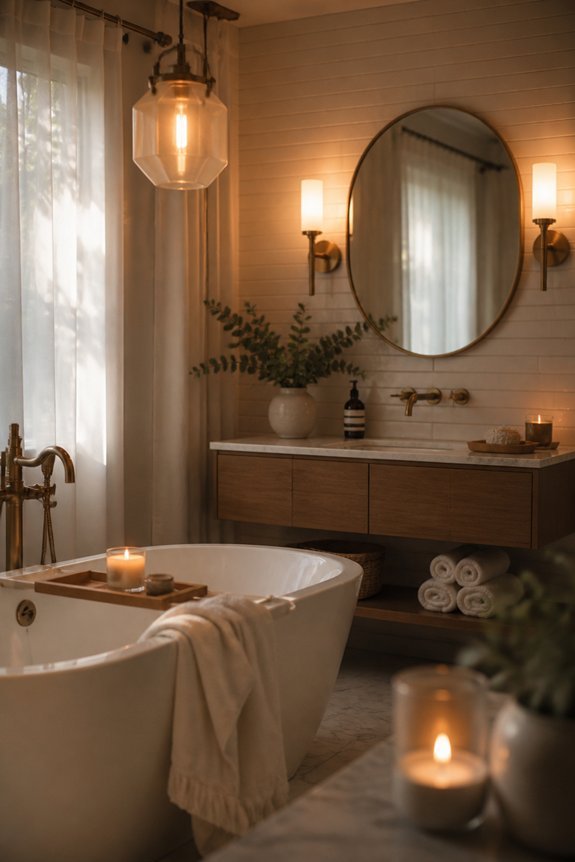
When installed on either side of the bathroom mirror or above the vanity, dimmable sconces provide focused, adjustable lighting that serves both functional and aesthetic purposes.
Pendant fixtures suspended above the bathtub offer similar control.
Both options allow users to lower light intensity during evening soaks, reducing harsh brightness.
Chrome, brass, and matte black finishes complement various bathroom styles while accommodating different bathing routines.
Skylights for Natural Sunlight and Ventilation
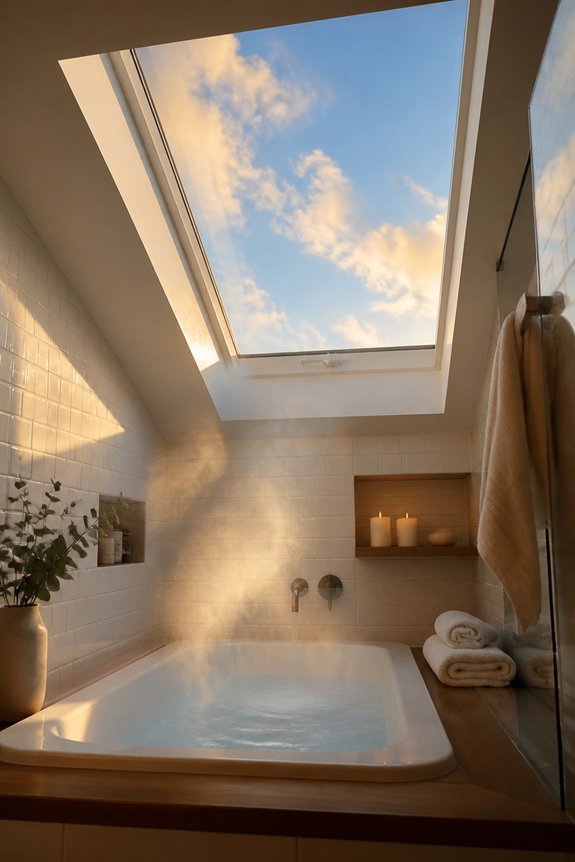
While artificial lighting fixtures offer immediate control over bathroom ambiance, skylights introduce natural daylight and air circulation into the space.
Skylights reduce daytime electricity use and minimize moisture buildup from bathing. Operable skylights allow adjustable ventilation, preventing mold and mildew growth.
Fixed skylights provide consistent illumination without mechanical operation.
Proper placement above bathtubs maximizes natural light during soaking sessions.
Aromatherapy Diffusers for Essential Oils
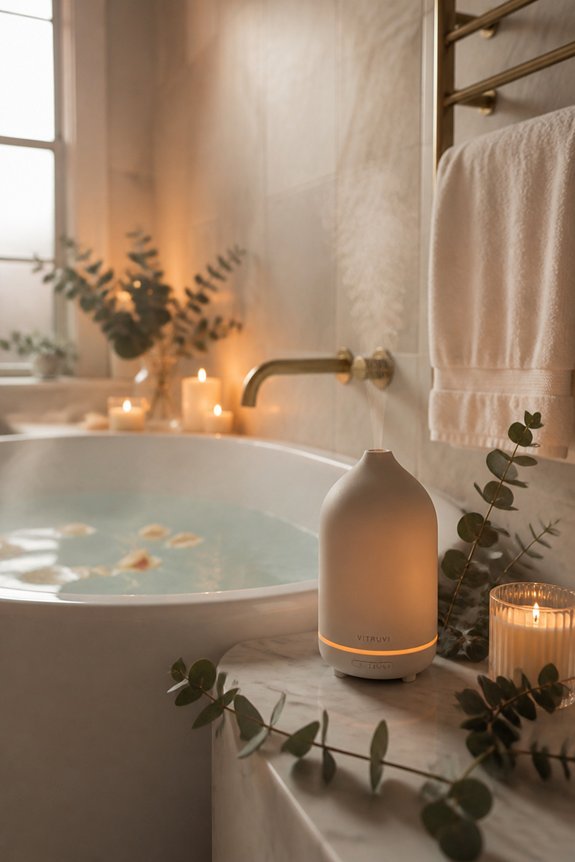
Many bathroom designs incorporate aromatherapy diffusers to disperse essential oils throughout the space, creating a functional wellness feature alongside bathing.
Ultrasonic diffusers, nebulizing models, and evaporative types each distribute scent differently.
Lavender oil promotes relaxation, eucalyptus aids breathing clarity, and peppermint provides invigoration.
Placing diffusers on shelving near the tub allows bathers to experience aromatherapy benefits during soaks without direct contact with oils.
Strategic Candle Placement for Ambient Lighting
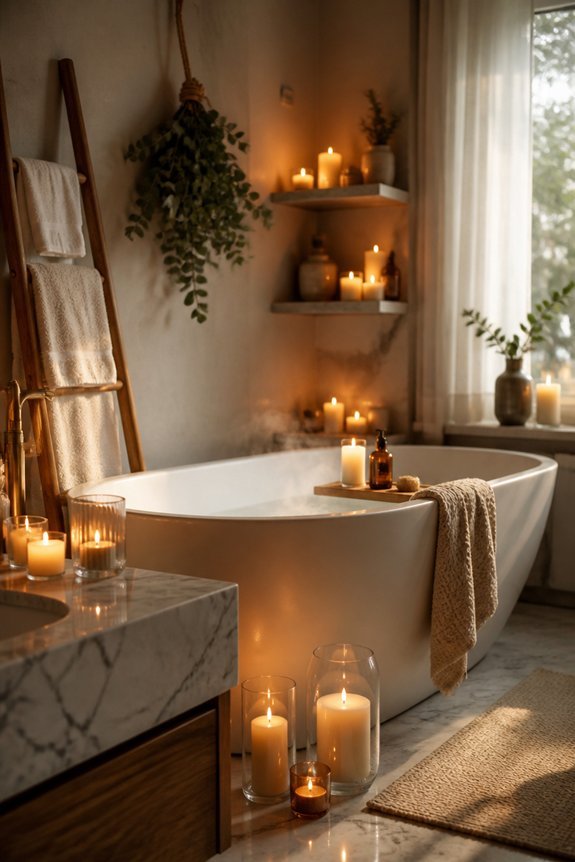
How can candles transform a bathroom into a relaxing environment? Strategic placement enhances ambiance effectively.
Position candles on the bathtub ledge, windowsill, and shelving to create layered lighting.
Use unscented varieties near the tub to avoid overwhelming aromatherapy diffusers. Glass holders protect surfaces and contain dripping wax.
Grouping three to five candles in clusters produces balanced illumination without excessive brightness or safety hazards.
Bamboo Bath Caddies and Organic Décor
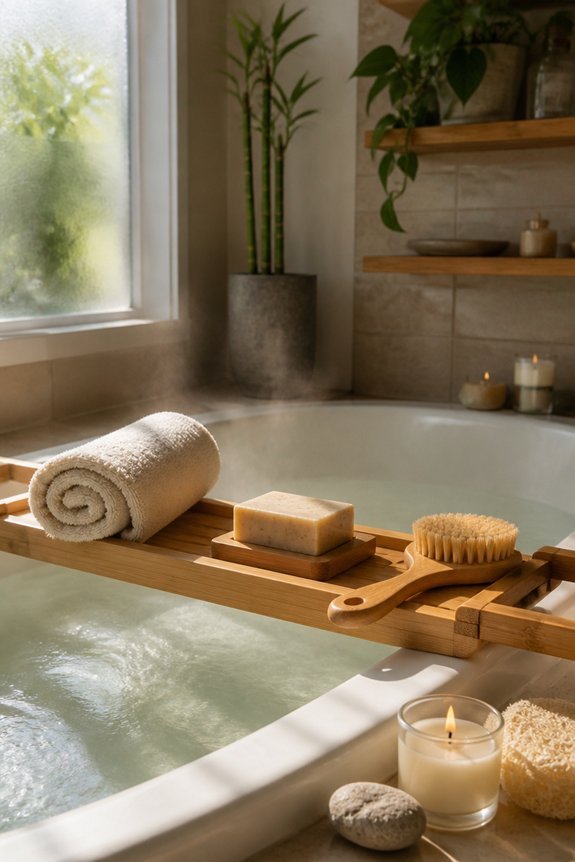
As bathtubs function primarily for bathing and relaxation, the accessories placed nearby should reflect natural materials and functional design.
Bamboo bath caddies offer practical storage for soap, washcloths, and bath products while maintaining an organic aesthetic.
Bamboo’s water-resistant properties make it suitable for humid bathroom environments.
Complementary organic décor includes natural fiber bath mats, wooden shelving, and stone accessories that enhance the spa-like atmosphere.
Rainfall Showerheads for Luxe Water Flow
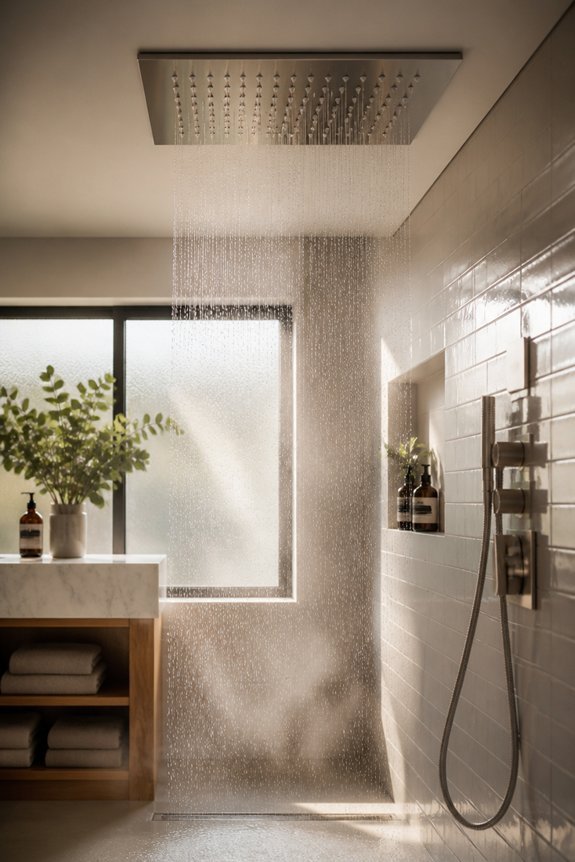
Rainfall showerheads deliver water in a gentle, wide spray that mimics natural rainfall rather than concentrated streams. These fixtures provide even coverage across the body, reducing water pressure while maintaining adequate flow.
Installation typically requires basic plumbing adjustments. Popular options include chrome finishes and adjustable models.
Rainfall showerheads pair well with spa-inspired bathrooms, complementing soaking tubs and natural décor elements like bamboo accessories.
Handheld Shower Wands for Flexibility
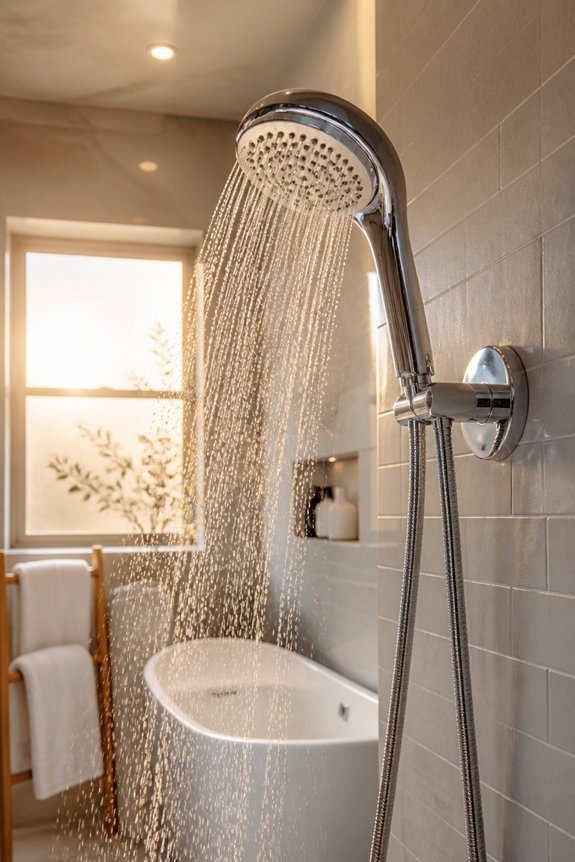
Why settle for a fixed showerhead when a handheld wand offers adjustable positioning and spray control? These devices attach to existing fixtures, allowing users to direct water precisely where needed.
Popular options include the Delta H2Okinetic and Moen Magnetix models, which feature multiple spray settings.
Handheld wands prove particularly useful for rinsing bathtubs, cleaning shower walls, and washing hair at various angles and heights.
Warm Towels: The Underrated Spa Essential
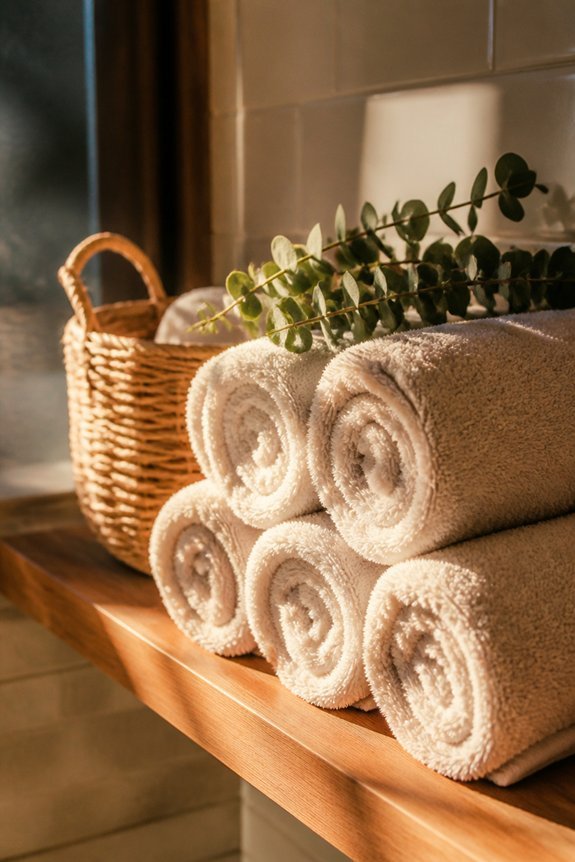
Comfort and practicality combine when towels are warmed before use, a detail that transforms the post-bath experience. Towel warmers, heated racks, or dryers accomplish this efficiently.
Warm towels reduce heat loss from wet skin, maintain body temperature longer, and provide functional comfort. This simple addition mimics professional spa environments and enhances the overall bathing routine’s effectiveness and satisfaction.
Potted Plants and Green Walls for Fresh Air

Beyond the physical comforts of a spa-like bathing space, the bathroom environment itself plays a measurable role in the bathing experience.
Potted plants, such as bamboo palms and snake plants, improve air quality by filtering toxins.
Green walls or climbing ivy add visual interest while increasing humidity levels.
These elements create a naturally balanced bathroom atmosphere conducive to relaxation and improved air circulation during bathing.
River Stone Flooring for Barefoot Spa Feel
River stones, smooth and naturally rounded from water erosion, create an effective flooring surface for bathrooms seeking a spa-like aesthetic. These stones provide barefoot comfort, warm naturally, and drain water efficiently.
Popular options include pebble mosaics and larger river rock arrangements.
Installation requires proper grout and sealant for durability and moisture protection in wet environments.
Soft, Neutral Colors That Calm Your Mind
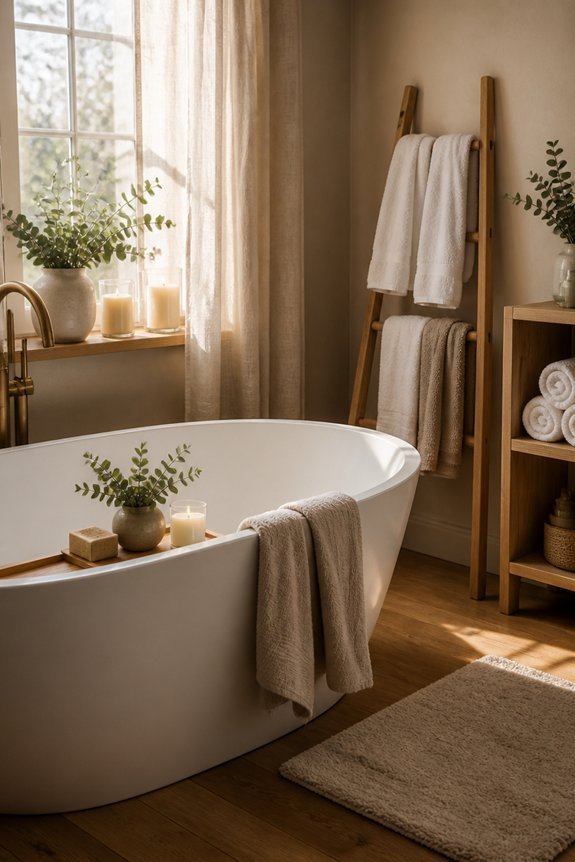
While designing a bathroom with a bathtub, color selection plays a functional role in creating a relaxing environment. Soft, neutral tones like beige, gray, and soft white reduce visual stimulation, lowering stress levels.
These colors pair well with natural materials such as wood and stone.
Neutral palettes also provide flexibility for changing accessories without requiring major renovations, making them practical long-term choices.
Hidden Storage That Keeps Clutter Out of Sight
A calm bathroom environment requires more than soothing colors; it demands organized spaces where toiletries, towels, and cleaning supplies stay concealed.
Floating vanities with closed cabinets, recessed wall shelving, and under-sink organizers eliminate visual clutter. Medicine cabinets, corner storage units, and drawer dividers provide designated spots for items.
These solutions maintain serene aesthetics while keeping necessities accessible and orderly throughout daily use.
Incorporating decorative boxes on shelves conceals bathroom clutter while maintaining style.
Elevated Tub Decks With Built-In Steps
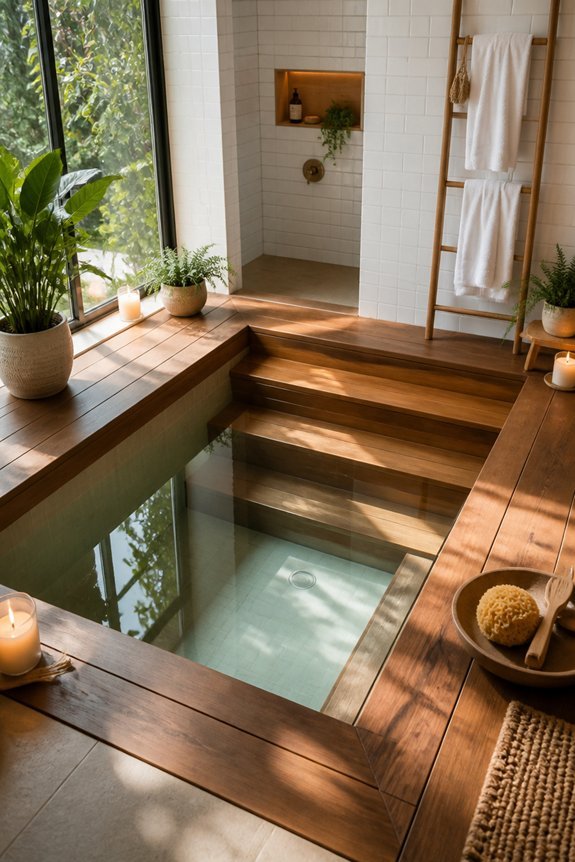
Many homeowners choose elevated tub decks as a practical solution for creating accessible bathing spaces while enhancing bathroom design.
Built-in steps provide safer entry and exit, particularly for elderly individuals or those with mobility concerns.
Materials like tile, stone, or composite decking offer durability and slip resistance.
Elevated platforms also create opportunities for storage underneath and improved visual interest within the bathroom layout.
Budget-Friendly Spa Upgrades Under $1,000
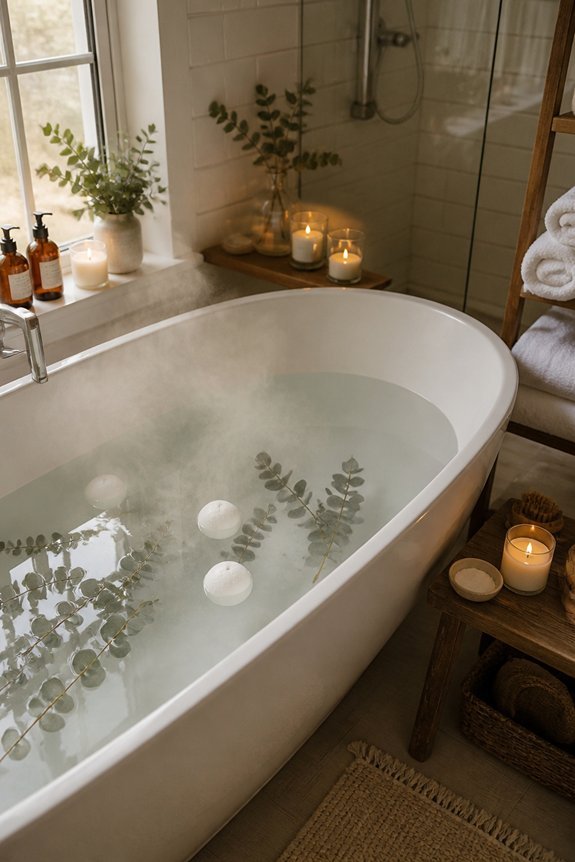
How can homeowners transform their bathtubs into spa-like retreats without expensive renovations? Installing affordable upgrades delivers noticeable results.
Waterproof speakers, priced around $30–$50, provide ambient music.
LED strip lighting, costing $20–$40, creates atmosphere.
Bamboo bath trays, approximately $25–$60, offer practical luxury.
Eucalyptus bundles, roughly $10–$15, provide aromatherapy benefits.
These additions, totaling under $1,000, enhance bathing experiences markedly.
Mid-Range Features for $1,000–$5,000
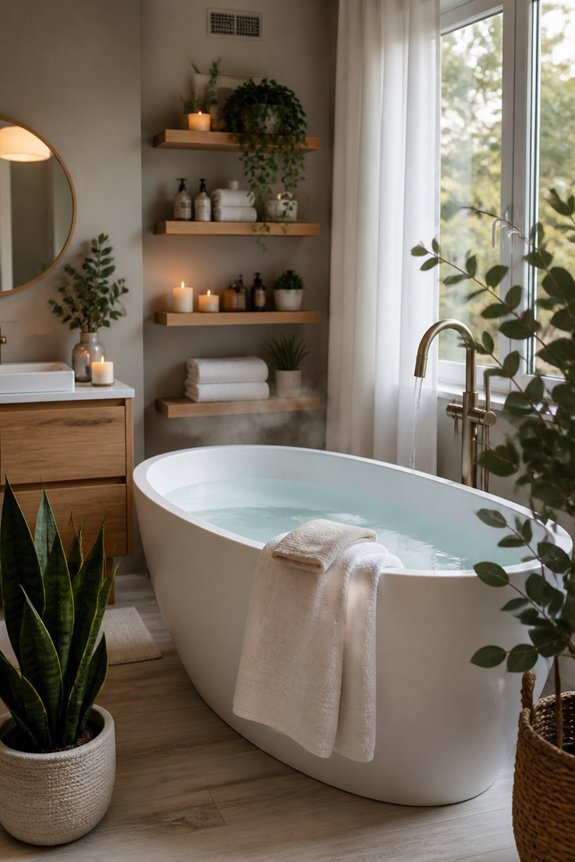
When homeowners move beyond basic upgrades, mid-range bathtub features deliver considerable improvements in comfort and functionality.
Soaking tubs, heated floors, and chromotherapy lighting systems fall within this budget. Jetted tubs provide therapeutic water massage.
Quality faucets and integrated storage enhance usability.
Professional installation guarantees proper setup.
These upgrades greatly elevate daily bathing experiences without requiring premium investments.
Premium Spa Installations for $5,000+
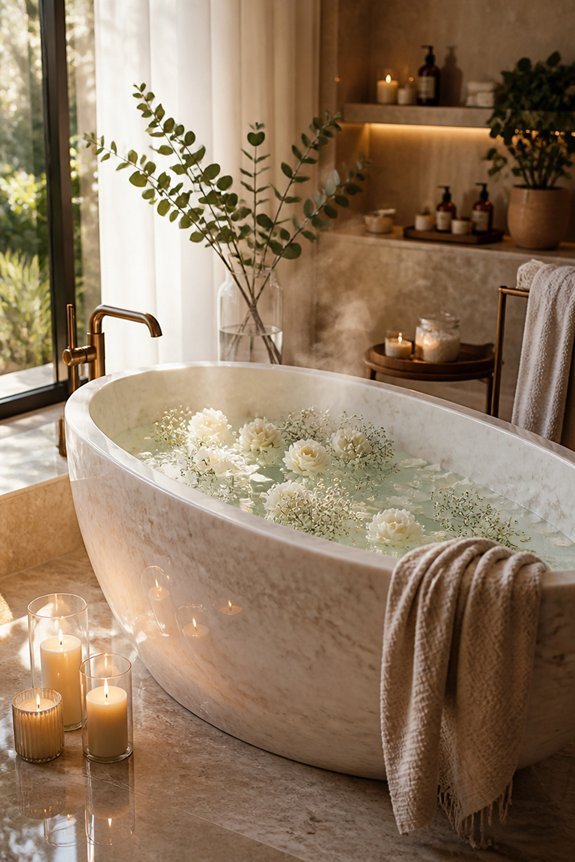
Beyond mid-range upgrades, premium spa installations transform bathrooms into luxury retreat spaces with high-end materials, advanced technology, and custom design elements.
Soaking tubs with heated surfaces, chromotherapy lighting, and jet systems cost $5,000–$15,000. Natural stone surrounds, rainfall showerheads, and smart climate controls enhance comfort.
Custom cabinetry, heated towel racks, and steam generators complete these installations, requiring professional installation and specialized plumbing work.
Frequently Asked Questions
How Often Should I Clean and Maintain My Soaking Tub to Prevent Buildup?
A quick rinse and wipe after every bath does most of the heavy lifting. Soap scum and hard water marks are much easier to deal with before they’ve had a chance to set.
Give your tub a proper clean once a week with mild soap and warm water. Then set a monthly reminder for a deeper scrub around the drain, taps and any seams.
Skip abrasive powders and scourers, especially on acrylic. They leave fine scratches that make buildup cling even harder next time.
What Is the Average Cost to Install a Spa Bathroom From Scratch?
Most spa bathrooms built from scratch land somewhere between $15,000 and $60,000. Where you fall in that range comes down to the size of your room, your fixtures and finishes, and labour costs in your area.
If you’re dreaming of stone everywhere, steam and custom joinery, the bill can climb past $100,000. Get at least three detailed quotes so you can see exactly where your money is going.
Leave yourself a buffer of 10 to 15 percent, too. Old bathrooms love hiding surprises behind the tiles.
How Can I Make My Small Bathroom Feel More Spacious While Adding a Tub?
Start with a compact soaking tub rather than squeezing in a full-size one. A deeper tub with a smaller footprint still gives you a proper soak without eating the whole floor.
Light colours and a big mirror bounce light around and make your walls feel further away. A floating vanity helps as well, because seeing more floor tricks your eye into reading the room as bigger.
Go vertical with your storage and keep surfaces clear. Swapping a shower curtain for a clear glass screen over the bath is another easy win.
Which Bathtub Type Is Best for People With Mobility or Accessibility Issues?
Walk-in bathtubs are usually the go-to choice. They have a watertight door, so you can step in without lifting your leg over a high side.
Most come with grab bars, a built-in seat and a non-slip floor. Keep in mind you’ll need to sit inside while the tub fills and drains, which can feel slow and a bit chilly.
If you or someone in your home has specific needs, an occupational therapist can assess your space. They’ll point you towards the right setup before you spend a cent.
How Much Water and Energy Does a Luxury Spa Bathroom Typically Consume Monthly?
It depends a lot on your tub size and how often you use it. A large soaking tub can take 200 litres or more to fill, so a daily soak adds up fast.
Heating that water is usually the bigger cost, not the water itself. Your hot water system, energy rates and local water charges all shape the final number.
To keep your bills in check, look for a well-insulated tub that holds its heat longer. A water-efficient showerhead for everyday washing helps too, so you can save the long soaks for when you really want them.
Conclusion
If I had to pick one thing from this whole list, it would be the warm towel. It costs far less than a new tub, and it makes every single bath feel finished.
When I redid my own bathroom, I spent weeks agonising over stone samples and barely gave the towel rail a thought. Guess which one I’m grateful for every winter morning?
Big-ticket items like a freestanding tub or heated floors are lovely, but they aren’t the only way in. A dimmer switch, a plant that loves humidity and one tidy shelf can shift the whole mood of your room in an afternoon.
Start with whatever bugs you most when you run a bath. Cold floor, harsh light, nowhere to put your tea. Fix that first and build from there.
I’d love to hear what’s on your wish list. Tell me in the comments which idea you’d try first, or the one bathroom detail you’d never give up.