
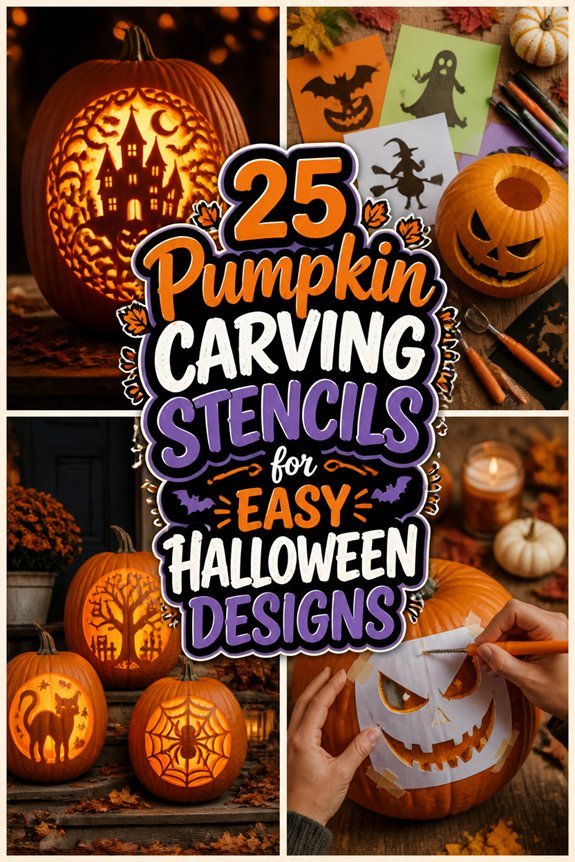
Finding the right stencil makes all the difference when pumpkin carving season rolls around. From simple grinning Jack-O’-Lanterns to elaborate sugar skulls and swirling bat swarms, there’s something for every skill level and time commitment.
Transferring your chosen design takes patience, but the payoff is worth it. Start with basic shapes if you’re pressed for time, or challenge yourself with intricate patterns when you’re ready to show off.
Classic Jack-O’-Lantern Face
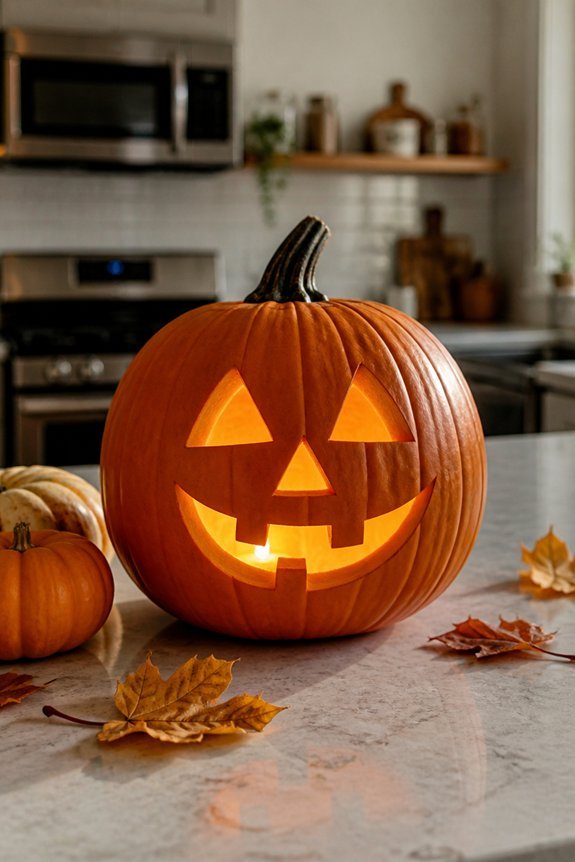
The traditional jack-o’-lantern face remains the most recognizable pumpkin carving design, featuring triangular eyes, a triangular nose, and a wide grinning mouth.
This design works well for beginners because the shapes are simple geometric forms.
Carvers can adjust the size and spacing of features to match their pumpkin’s dimensions.
Stencils for this style typically print on standard paper, requiring only a marker and carving tools to complete the project.
Friendly Ghost With a Smile
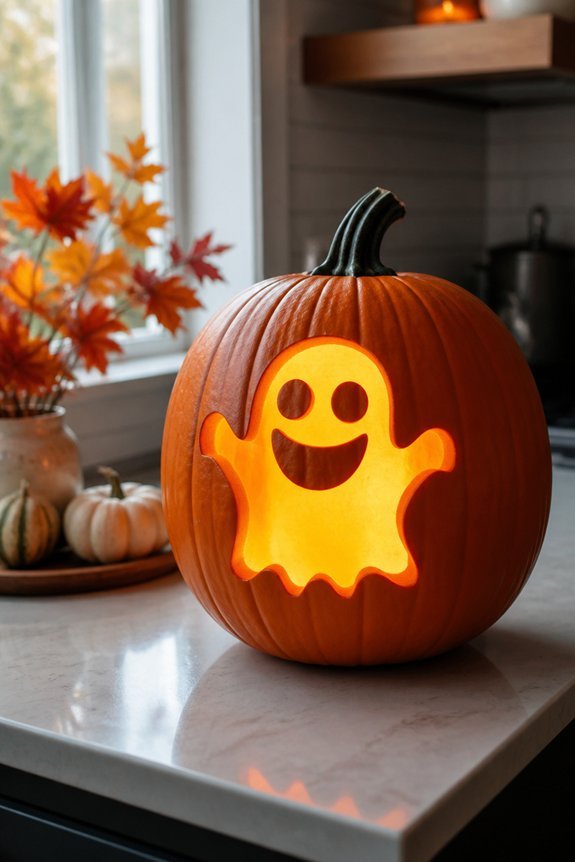
A ghost design offers an alternative carving option that differs from traditional jack-o’-lantern faces. This pattern features a rounded head shape, two circular eye holes, and an upward-curved mouth line creating a smile effect.
The simplicity of ghost designs makes them suitable for carvers of varying skill levels.
Stencils for this design typically require basic knife work, involving straightforward cuts along marked outlines without complex detail work.
Simple Black Cat Silhouette
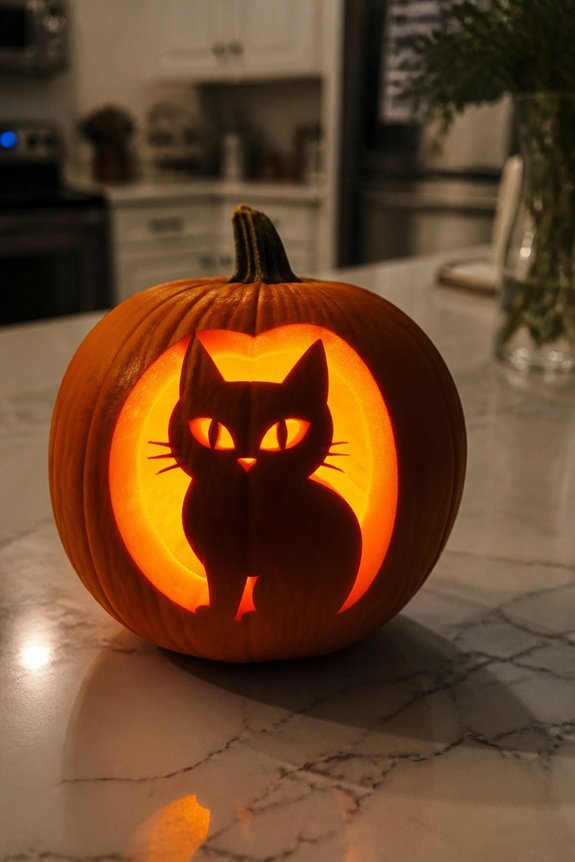
For carvers seeking designs beyond friendly spirits, cat silhouettes present another accessible option.
Black cat stencils feature simple outlines with pointed ears, curved bodies, and extended tails. These designs work well on medium and large pumpkins.
The solid silhouette approach requires minimal detail work, making carving straightforward.
Popular variations include sitting poses, arched backs, and walking positions.
Glowing Eyes Design
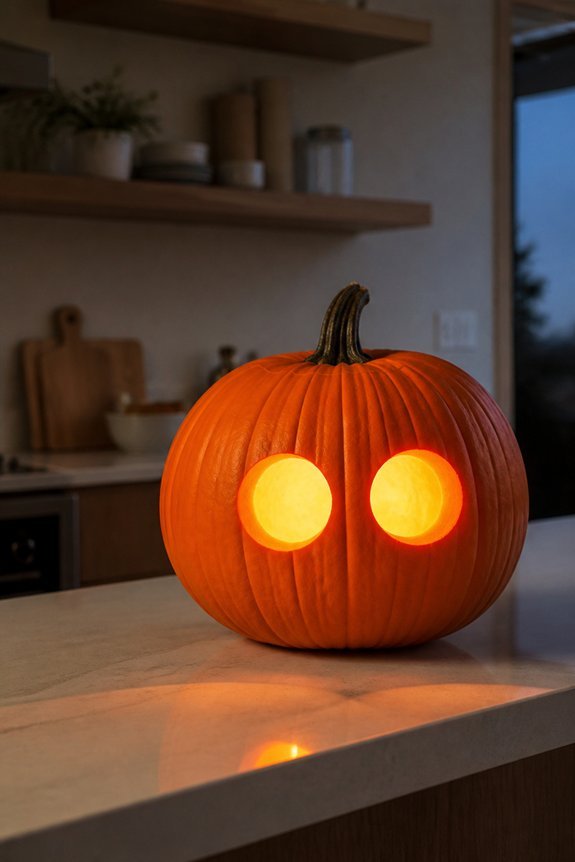
Carved eye openings that allow light to shine through create a striking visual effect on Halloween pumpkins. Stencils featuring large, asymmetrical eyes or traditional round shapes work effectively for this design.
Placing a candle or LED light inside the pumpkin illuminates the carved sections, producing an eerie glow.
Diamond-shaped eyes, crescent moons, and oval designs offer variations on this classic approach for different aesthetic preferences.
Bold Geometric Lightning Bolt
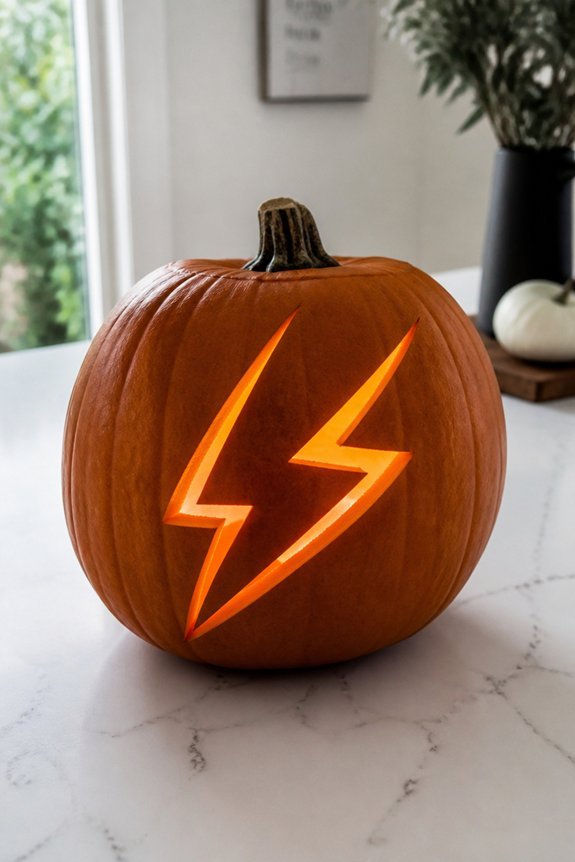
Zigzag patterns carved into pumpkins create a dramatic effect that contrasts sharply with traditional round or oval designs.
Lightning bolt stencils feature angular lines and sharp points, producing bold visual impact.
Carvers can use single bolts down the pumpkin’s center or multiple branching bolts across the surface. These geometric patterns work well with solid backgrounds, allowing the carved lightning to stand out prominently against the pumpkin’s remaining flesh.
Spooky Skull Design
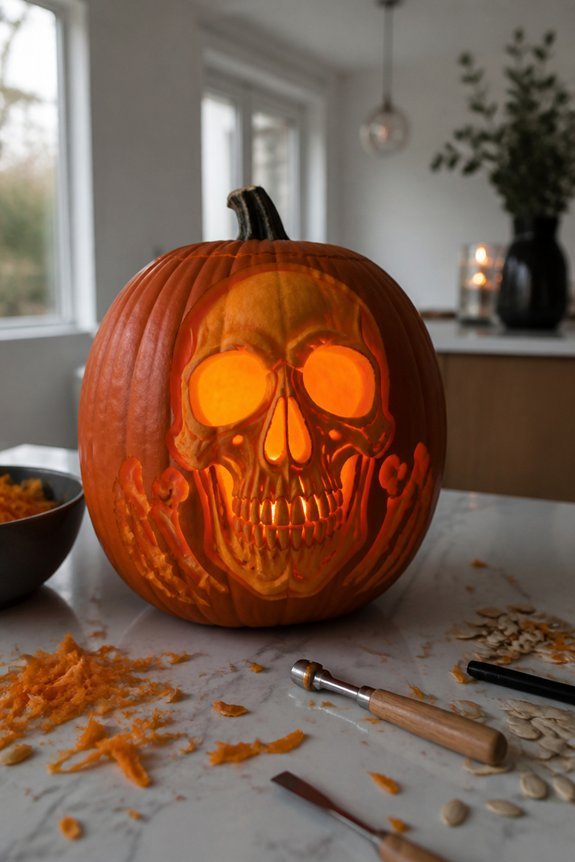
While lightning bolts deliver sharp, angular drama to jack-o’-lanterns, skull designs offer a classic alternative that appeals to those seeking traditional Halloween imagery.
Skull stencils feature eye sockets, nasal cavities, and teeth patterns. Popular variations include realistic anatomical skulls, cartoon skulls with exaggerated features, and ornate sugar skull designs with floral details.
These stencils range from simple outlines to complex multi-layer compositions suitable for different carving skill levels.
Witch Hat and Broomstick
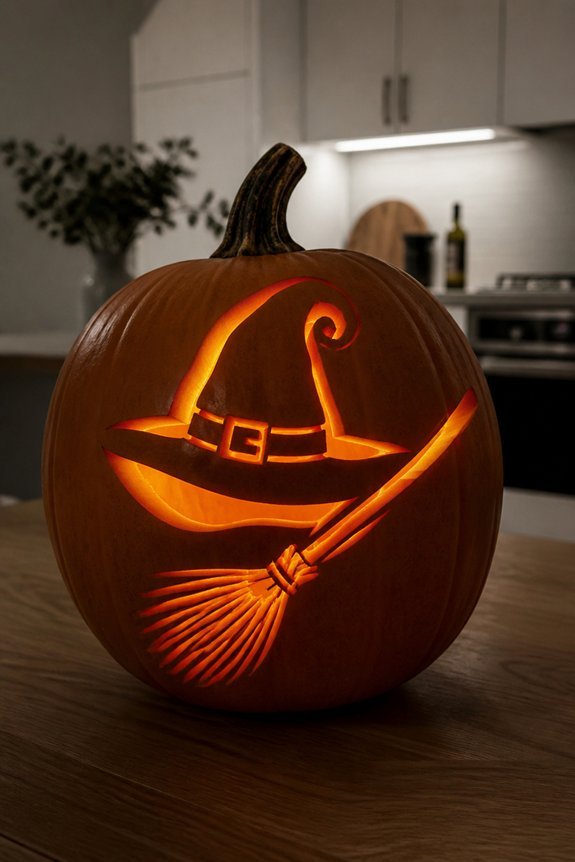
The witch hat and broomstick combination represents a quintessential Halloween symbol that carvers frequently choose for its recognizable silhouette and moderate difficulty level.
The design features a pointed hat with a wide brim positioned above a bristled broomstick. Carvers benefit from stencils that clearly outline the hat’s sharp angles and the broomstick’s textured bristles.
This pattern works well on medium to large pumpkins, requiring standard carving tools and moderate precision. Odd-numbered groupings of carved pumpkins featuring this design create better visual appeal and balance when displayed on porches or in yards.
Creepy Spider Web
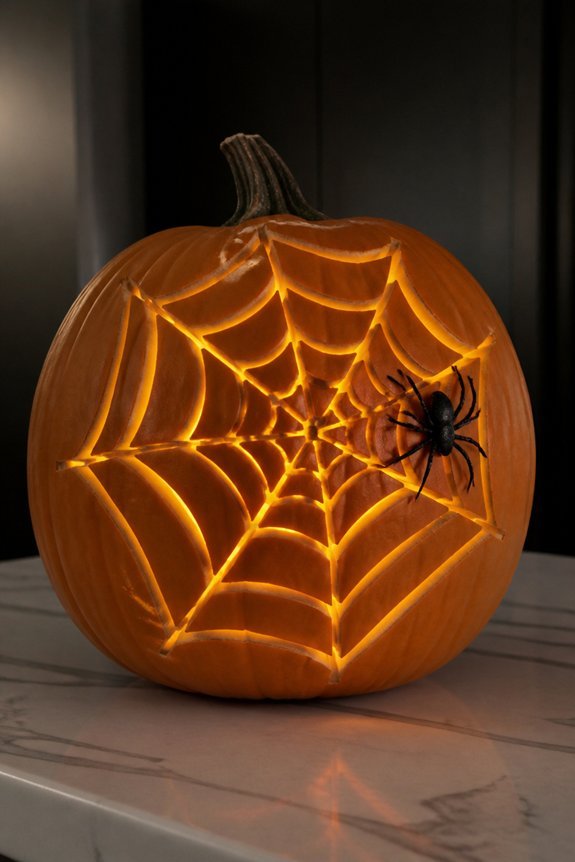
Spider web patterns offer carvers a flexible design option that adapts well to various pumpkin sizes and skill levels. These designs feature interconnected lines radiating from a central point, creating geometric sections across the pumpkin surface.
Carvers can adjust complexity by varying the number of web strands and intersection points.
Spider web stencils work effectively on medium to large pumpkins, where details remain visible and distinct after carving.
Haunted House Scene
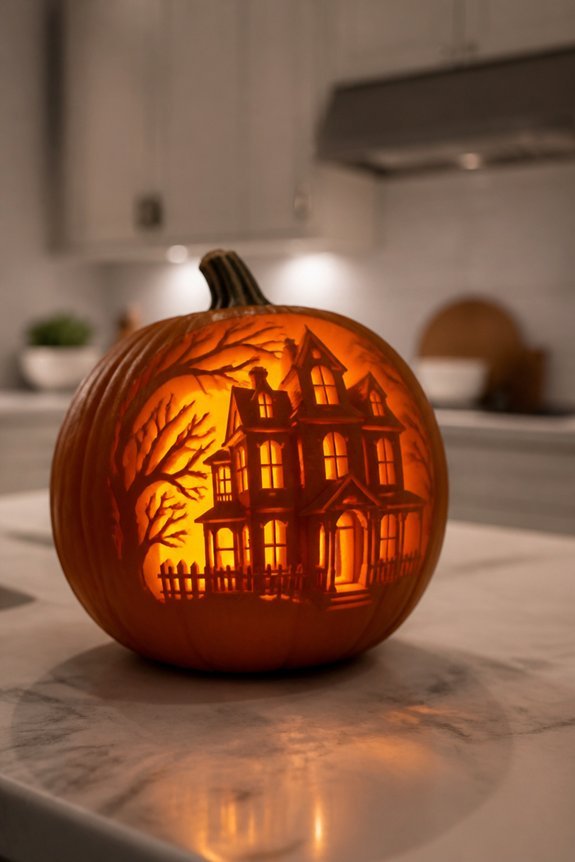
Architectural designs depicting haunted mansions present a more complex carving challenge, requiring multiple distinct elements arranged across the pumpkin surface. Stencils typically feature a central house structure, complete windows, a peaked roof, and surrounding bare trees.
Graveyards with tombstones, bats, and moons often accompany the main house design.
These multi-layered patterns demand careful planning and steady hand control during carving execution.
Grinning Vampire
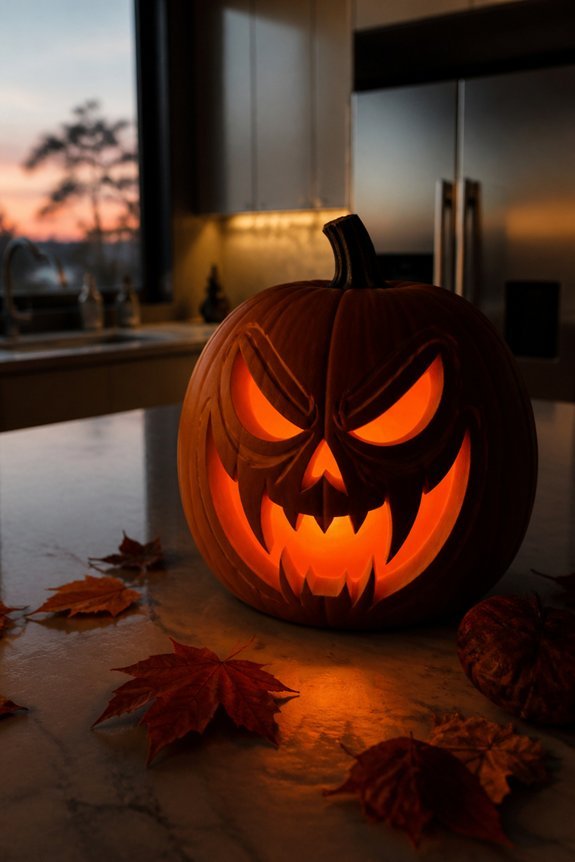
Fanged grins and piercing eyes characterize vampire stencils designed for jack-o’-lantern carving. These designs feature exaggerated canine teeth, arched eyebrows, and menacing expressions.
Popular variations include classic Dracula styles with slicked-back hair, modern interpretations with angular features, and cartoonish versions for younger carvers.
Vampire stencils range from simple two-dimensional profiles to complex multi-layered designs requiring intermediate carving skills and steady hand control.
Intricate Mandala Pattern
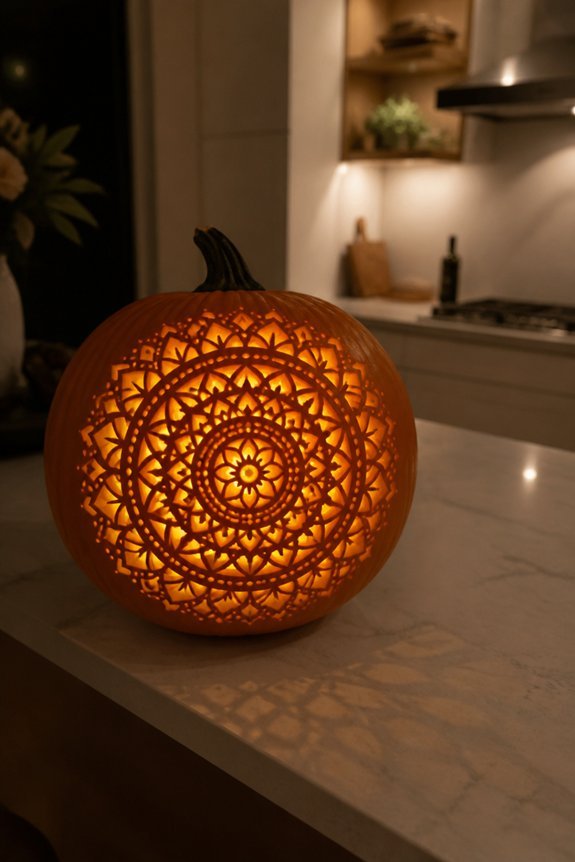
Mandala patterns offer a geometric approach to pumpkin carving, featuring concentric circles, symmetrical shapes, and repeating designs that radiate outward from a central point.
These stencils require precision and patience, making them suitable for experienced carvers. Designs include lotus flowers, star formations, and intricate webs.
The symmetrical nature demands careful planning and steady hand control. Templates are widely available online and in craft stores for reference.
Sugar Skull Design
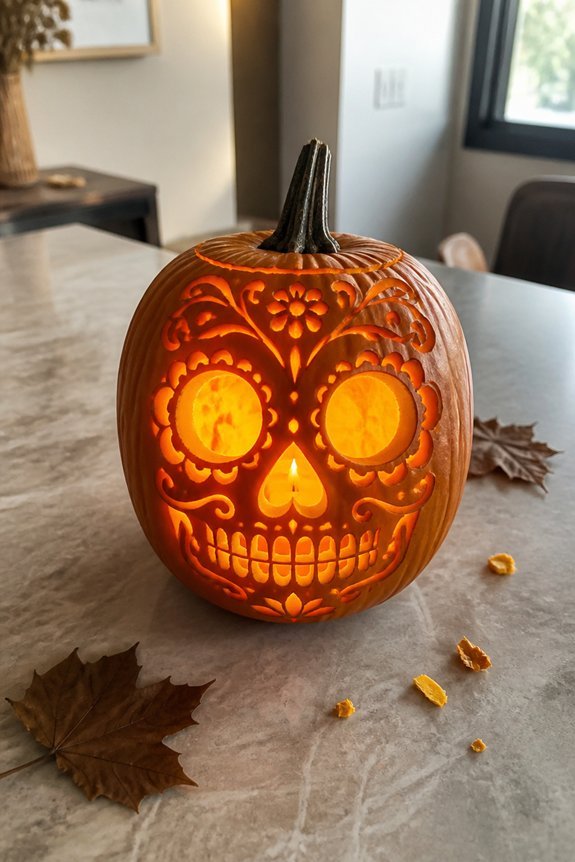
Sugar skull designs present a culturally rich alternative to geometric patterns, drawing inspiration from Mexican Day of the Dead traditions.
These stencils feature symmetrical face patterns with ornate eye sockets, nose cavities, and jaw decorations. Carvers can select designs ranging from simple outlined skulls to elaborate versions with floral motifs, religious symbols, and intricate linework details suitable for various skill levels.
Moonlit Bat Swarm
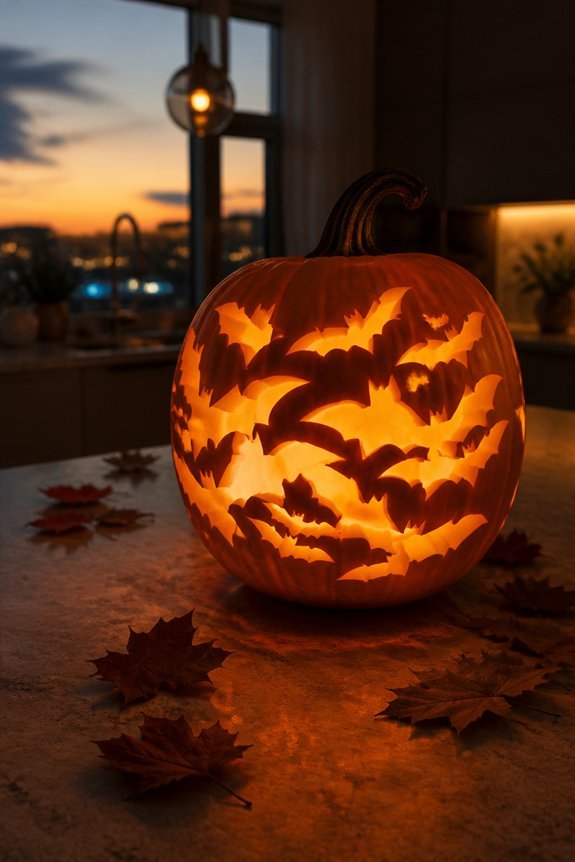
Multiple bat silhouettes create a dynamic Halloween pumpkin design that conveys motion and nighttime atmosphere.
This stencil features several bats positioned at varying angles, scattered across the pumpkin’s surface.
The design works well on medium to large pumpkins, allowing adequate space for each bat shape.
Carvers can arrange bats diving downward or ascending, enhancing the sense of movement throughout the composition.
Mummy Face With Bandages
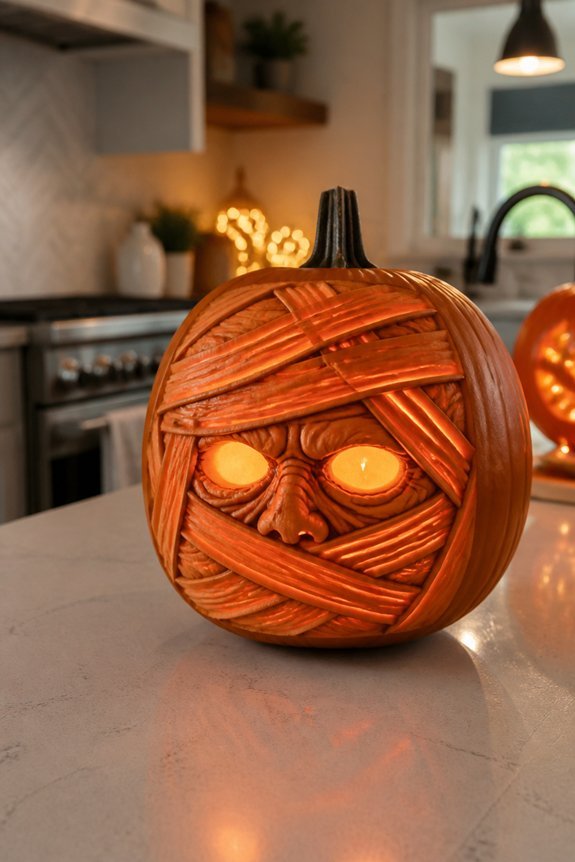
Shifting from dynamic movement to classic stillness, the mummy face offers a simpler carved design suited for carvers of various skill levels.
The stencil features wrapped bandages across the face, with hollow eye sockets creating the characteristic mummy appearance.
Carvers can use horizontal lines to represent gauze strips, leaving small uncarved sections for texture variation and depth throughout the design.
Skeleton Hands Emerging
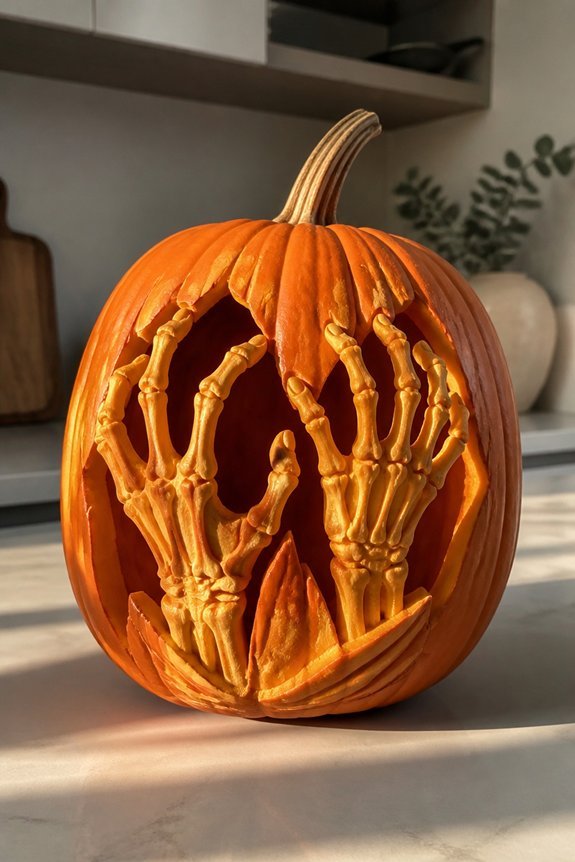
Skeletal hands clawing upward from a pumpkin’s surface create a dramatic focal point for intermediate carvers. This design requires careful planning, precise cutting, and attention to bone structure details.
Carvers should sketch finger positions, knuckle joints, and wrist areas beforehand. The emerging hand effect works best when positioned asymmetrically on the pumpkin’s front or side, creating visual depth and movement.
For added Halloween ambiance, consider pairing your carved pumpkin with skeletal centerpieces that feature plastic skulls and bone arrangements to extend the bone motif throughout your décor.
Frankenstein’s Monster
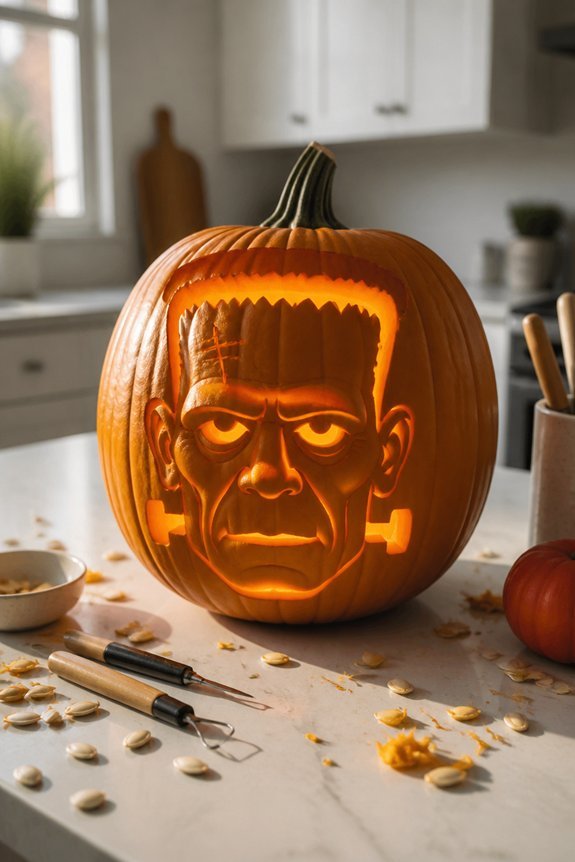
While skeletal hands showcase finger detail and bone structure, Frankenstein’s Monster focuses on facial features and head shape instead. This design requires carving the flat forehead, prominent eyebrows, and sunken cheeks characteristic of the classic monster.
The stencil emphasizes the creature’s rectangular face, bolts on the neck, and defined jawline.
Carvers can achieve recognizable results by concentrating on these distinct facial elements rather than intricate details.
Werewolf Transformation
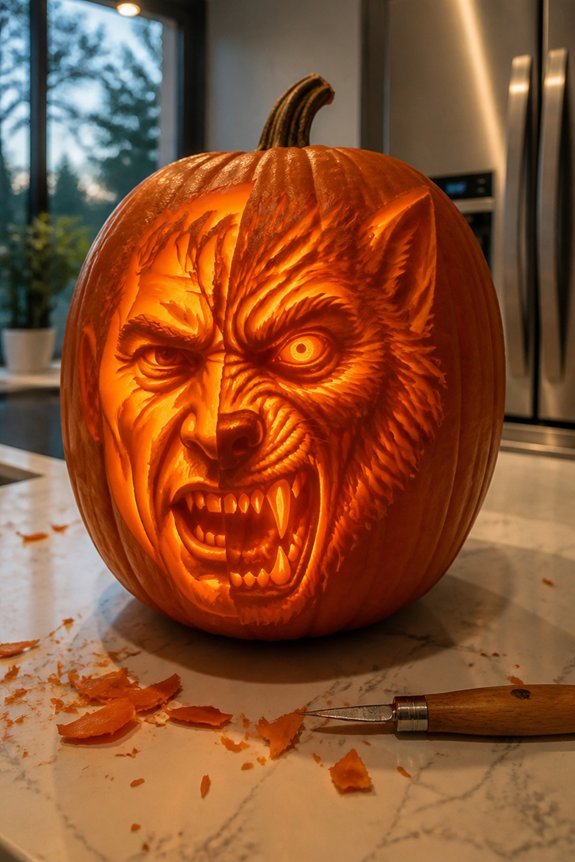
A werewolf pumpkin carving demands attention to animalistic facial features, including an elongated snout, prominent fangs, and intense eye placement. The design benefits from asymmetrical shading, created through varied carving depths.
Sharp cheekbones, a wrinkled brow, and pointed ears enhance the transformation effect. Stencils depicting mid-transformation states, showing partial human and wolf characteristics simultaneously, offer intermediate complexity for carvers seeking distinctive results.
Iconic Slasher Film Character
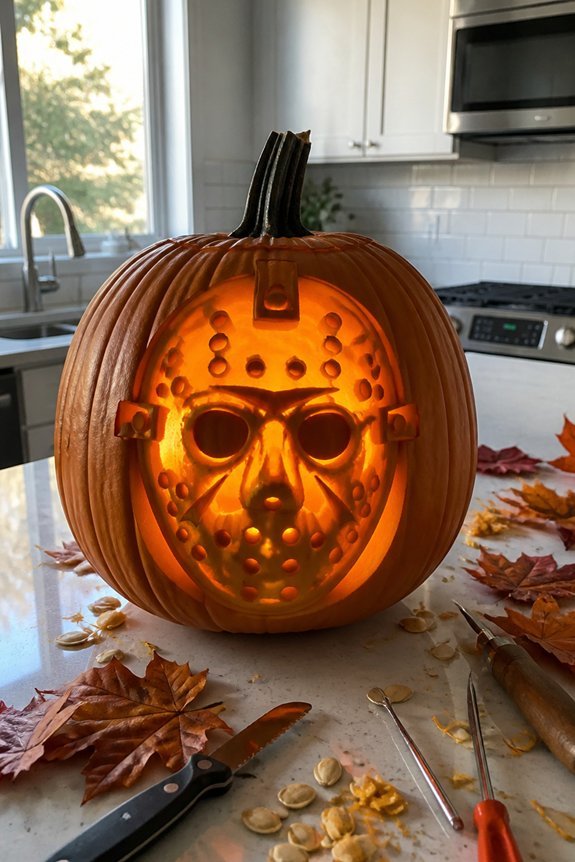
Carving a masked killer from classic horror cinema requires focus on geometric precision, stark contrasts, and symmetrical features.
Michael Myers’ blank white mask, featuring simple eye holes and mouth opening, translates well to pumpkins. The design’s straightforward geometry makes it accessible for carvers of varying skill levels.
Print stencils showing the mask’s outline, then use scoops and saws to remove flesh accordingly.
Game of Thrones Direwolf
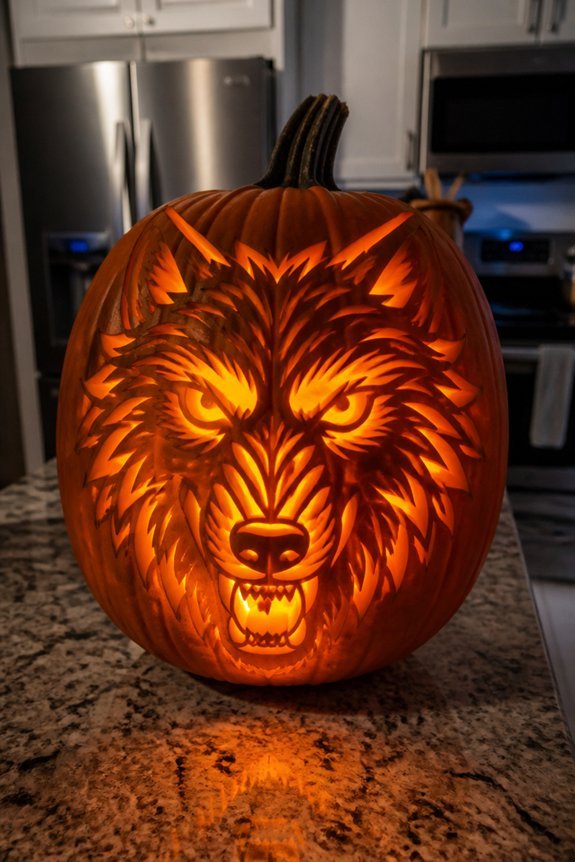
Moving beyond simple geometric masks, the direwolf emblem from Game of Thrones presents carvers with more complex animal features, including snouts, ears, and detailed facial structures.
The direwolf design requires steady hand control and sharp tools for precision carving.
Carvers should practice outlining the wolf’s profile first, then carefully remove pumpkin flesh around ears, eyes, and muzzle areas to create depth and definition effectively.
Marvel Superhero Logo
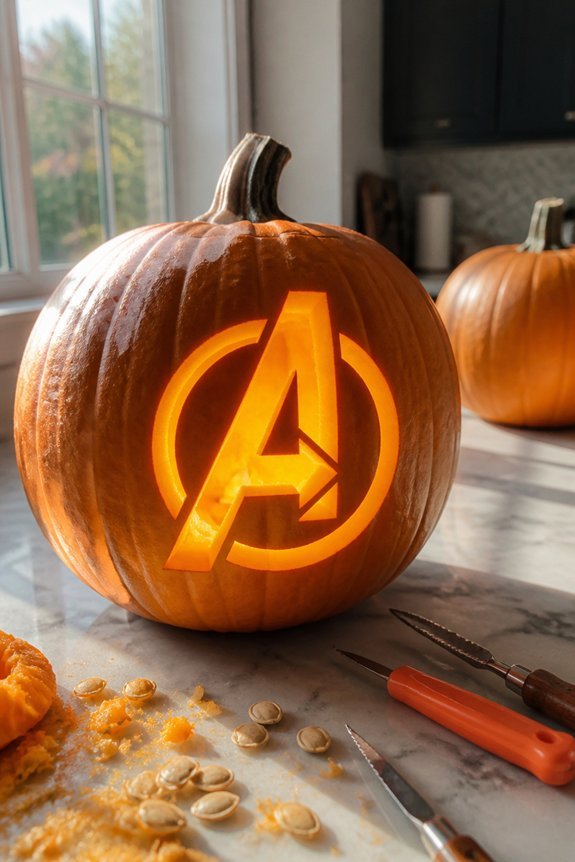
Because superhero emblems feature bold, geometric shapes and iconic symbols, they present moderate carving difficulty for pumpkin artists.
Popular choices include the Spider-Man web design, Batman’s bat symbol, and the Captain America shield.
These logos work well because their simple outlines translate easily to pumpkin surfaces. Carvers should select stencils with clear, defined edges and avoid intricate interior details for best results.
Disney Character Silhouettes
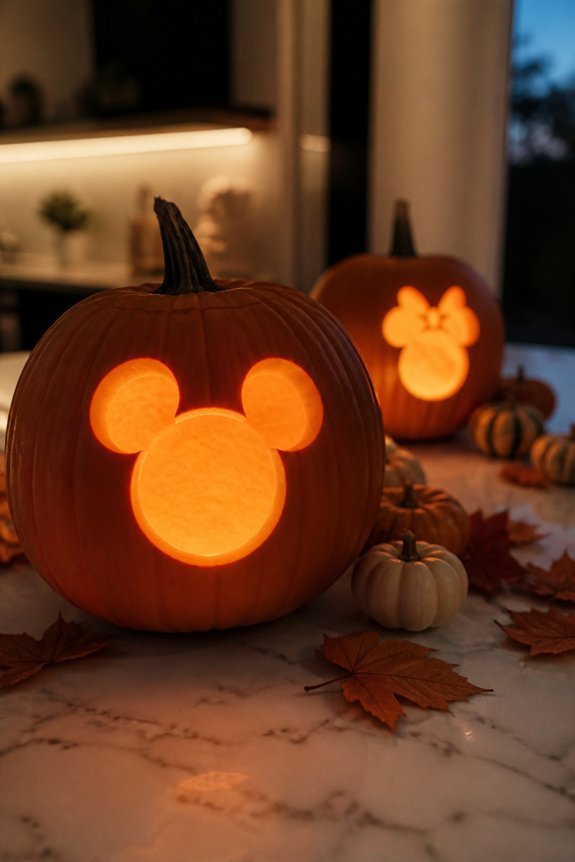
Disney character silhouettes offer another popular option for pumpkin carving enthusiasts. Mickey Mouse, Cinderella, and Elsa provide recognizable outlines suitable for carving.
These stencils feature clear, defined edges that transfer easily onto pumpkin surfaces. The simple shapes work well for carvers of varying skill levels.
Disney designs appeal to families with children and fans of the franchise.
Ghostly Graveyard
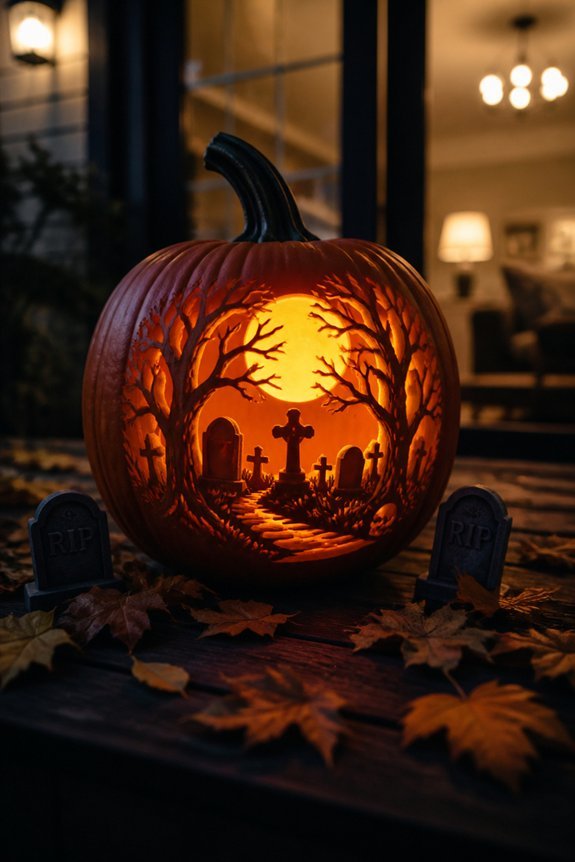
Several classic Halloween elements combine in ghostly graveyard pumpkin designs, which feature tombstones, skeletal figures, and floating ghosts carved across the pumpkin surface.
These stencils typically include crosses, bare tree branches, and crescent moons to enhance the cemetery atmosphere.
The designs work well on larger pumpkins, allowing space for multiple elements.
Carvers can arrange tombstones in rows, positioning ghosts above them for visual depth and balance.
For a polished display in professional settings, completed pumpkins can be paired with frosted window decals to extend the Halloween theme throughout office spaces.
Witch’s Cauldron
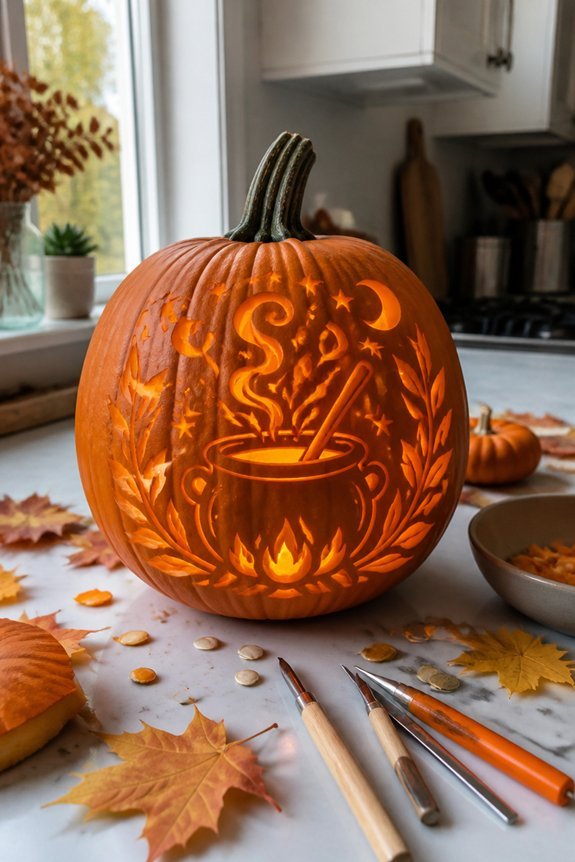
Witch’s cauldron designs feature a large bubbling pot as the central element, often surrounded by related imagery such as stirring spoons, magical flames, brewing ingredients, and mystical symbols.
The cauldron typically occupies the pumpkin’s center, with steam wisps extending upward.
Complementary details include scattered potion bottles, stars, and crescent moons positioned around the main pot, creating a balanced composition suitable for medium to large pumpkins.
Classic Horror Movie Monster Collage
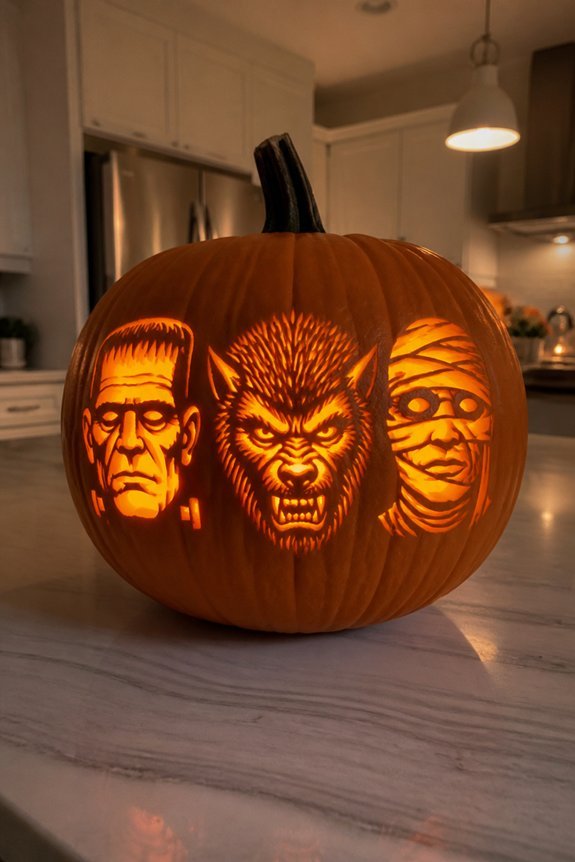
A collage arrangement combines multiple famous monsters from classic horror films into one unified pumpkin design.
Popular choices include Frankenstein’s monster, the mummy, Dracula, and the werewolf positioned together on the pumpkin’s surface.
Carvers can arrange these figures in horizontal rows or scattered patterns.
Stencils featuring monster collages typically offer moderate complexity, requiring careful knife control and steady hands for detailed facial features and layered elements.
How to Transfer Your Stencil to a Pumpkin
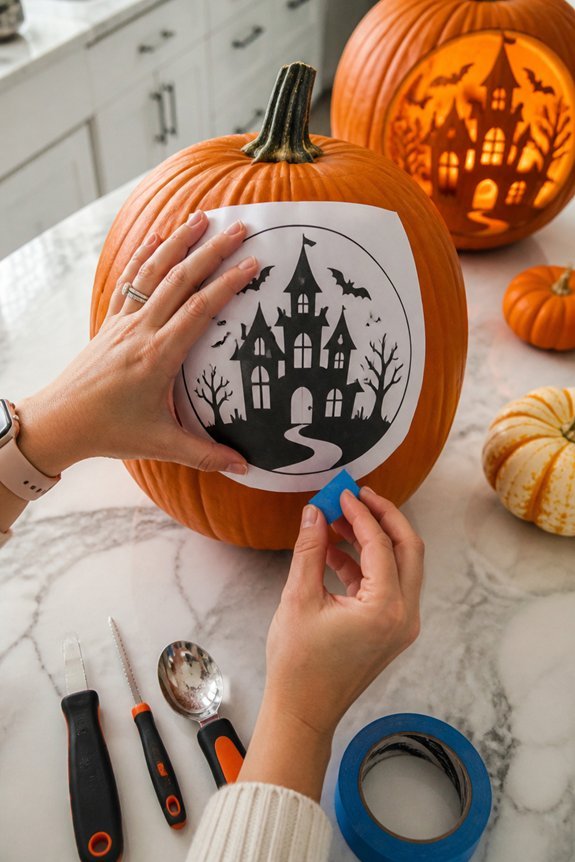
Once the carver selects a monster collage stencil, transferring the design onto the pumpkin surface becomes the next step.
Tape the stencil firmly to the pumpkin using painter’s tape or clear tape. Use a marker or ballpoint pen to trace around the stencil edges, pressing lightly.
Remove the stencil carefully.
The traced outline remains visible on the pumpkin surface, ready for carving.
Frequently Asked Questions
What Type of Pumpkin Works Best for Detailed Carving Stencils?
Larger pumpkins with flat sides work best for detailed carving stencils. They provide ample surface area and stability, allowing carvers to transfer intricate designs accurately. Sugar pumpkins offer excellent detail capability, while their smaller size suits moderate complexity patterns effectively.
How Do I Prevent My Carved Pumpkin From Rotting Quickly?
One might wonder what separates a vibrant jack-o’-lantern from a withered husk. The answer lies in applying petroleum jelly to exposed flesh, keeping it moisturized and protected from bacteria and fungi that accelerate decomposition.
What Tools Are Essential for Carving Pumpkin Stencil Designs Safely?
One should use a serrated carving knife, a sturdy scoop for seed removal, and a thin poking tool for stencil transfer. A saw facilitates detailed cuts, while a headlamp provides visibility. Quality tools guarantee precision and minimize accidental injuries during the carving process.
Can I Use These Stencils on Other Gourds Besides Pumpkins?
Yes, stencils can be applied to various gourds and squashes. Butternut squash, acorn squash, and decorative gourds work well. However, softer varieties may be more challenging to carve cleanly. One should select gourds with relatively firm surfaces for best results.
How Long Do Carved Pumpkins Typically Last Before Decomposing?
Carved pumpkins typically last between five to ten days before noticeable decomposition occurs. Factors such as temperature, humidity, and indoor versus outdoor placement considerably influence longevity. Refrigeration and protective coatings can extend their lifespan greatly.
Conclusion
Pumpkin carving stencils offer practical solutions for Halloween decoration. Individuals can select from classic designs like Jack-O’-Lantern faces, geometric patterns, and themed imagery such as witches’ cauldrons. These templates eliminate guesswork during carving, reducing errors and time investment. Success depends on careful stencil transfer, appropriate tool selection, and steady hand control. The resulting carved pumpkins serve as functional outdoor or indoor decorations throughout the Halloween season.