

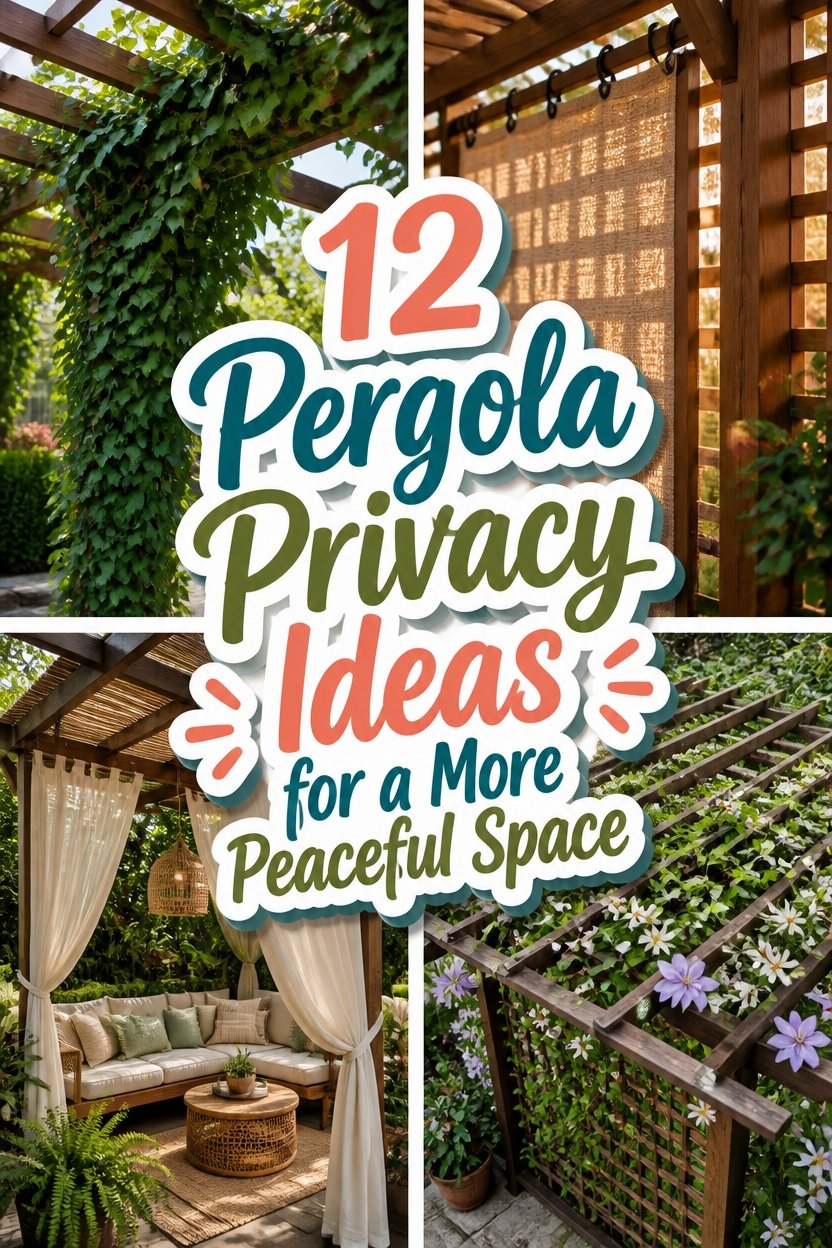
Pergolas offer a beautiful way to shade your outdoor space, but that open design leaves you exposed to curious neighbors and busy streets.
The good news? Privacy doesn’t require sacrificing style. You have plenty of options to create that secluded retreat you’re after.
Climbing vines soften the structure with living green, while lattice panels filter light without closing you in completely. Outdoor curtains bring hotel-pool elegance, and hardscape walls add permanence and structure. Each approach solves the visibility problem a little differently.
The right mix comes down to your specific space, what you want to spend, and the look you’re going for.
Below are twelve ideas to help you turn your basic pergola into the peaceful backyard escape you’ve been imagining.
A pergola looks gorgeous until you realize your neighbor can see every bite of your dinner. That open design is exactly what makes it beautiful, and exactly what makes privacy such a common afterthought.
I added outdoor curtains to my own pergola after one too many awkward waves from next door, and it completely changed how often we actually sit out there.
You’ve got more options than you’d expect. Climbing vines soften things naturally, lattice panels filter light without boxing you in, and hardscape walls add real permanence if that’s the direction you want to go.
The right combination really depends on your space, your patience for upkeep, and how quickly you want results.
Where Most People Go Wrong
Chasing one perfect solution instead of layering a few is probably the biggest mistake here. Vines alone take a season or two to fill in, so pairing them with something immediate solves the waiting problem.
Skipping climate considerations trips people up too. A material that thrives in a dry, hot region might warp or mildew somewhere humid.
Don’t ignore maintenance either. Fabric screens need almost none, but living walls and hedges ask for regular attention if you want them to actually look good.
13 Pergola Privacy Ideas
Every yard has its own privacy challenges, whether that’s a nosy neighbor, a busy street, or just wanting a more enclosed, cozy feel. Some solutions work in a weekend, others take a full growing season to reach their potential.
I’ve mixed instant fixes with longer-term natural options so you can start with what solves your most urgent problem right now.
Scroll through and find the combination that fits your yard and your timeline.
Choosing the Right Privacy Solution for Your Pergola
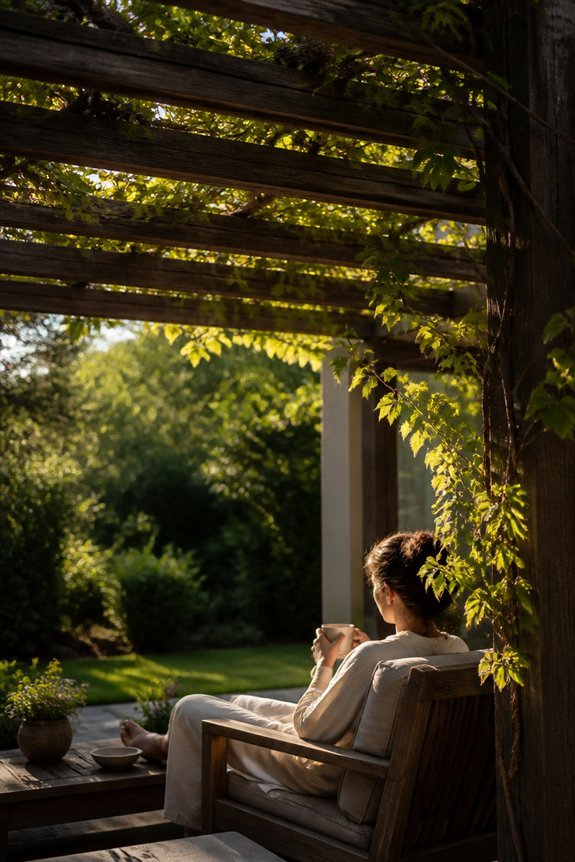
Finding the right privacy option starts with understanding your pergola. Look at its size, where it sits in your yard, and how it’s built. Your budget, local weather, and how much upkeep you want to do also shape your decision.
Natural Options
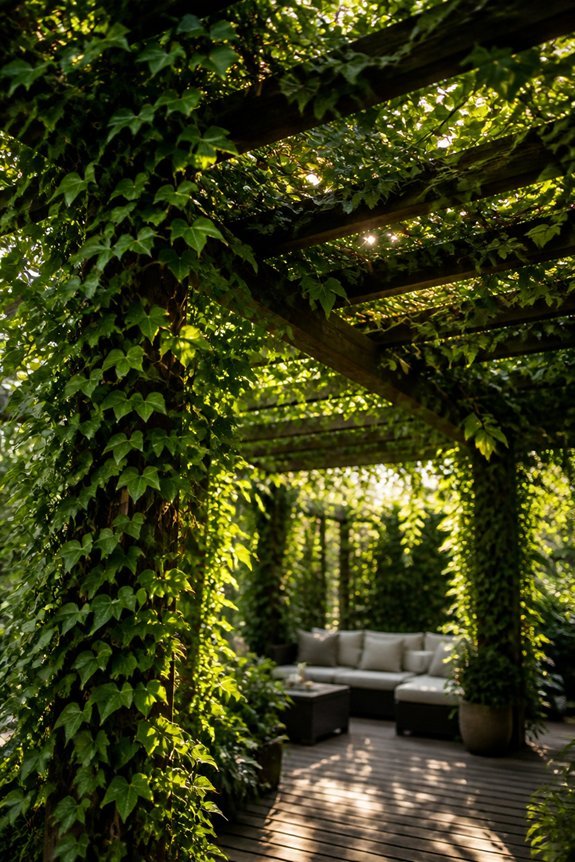
Climbing vines like ivy or clematis create a living green screen. They take time to fill in, but many homeowners love the organic look. Be ready for regular trimming and seasonal care.
Quick Solutions
Shade cloth gives you instant coverage. You can pick how thick or thin you want it. Fabric screens work similarly and move easily when you need a change.
Built to Last
Wooden lattice adds sturdy structure you can paint or stain. Vinyl stands up to rain, snow, and sun with minimal effort. Both skip the wait that comes with growing plants.
Making Your Choice
Start with what matters most to you. Love the idea of a garden feel? Go with vines. Need privacy by this weekend? Pick manufactured materials. Harsh winters or brutal summers in your area? Factor that into durability.
Mixing approaches often works beautifully. Some owners train vines up a lattice back while hanging shade cloth on the sides. This flexibility lets you balance beauty, speed, and resilience.
Also read: 10 Garden Pergola Ideas for a Relaxing Corner
Climbing Vines and Living Walls
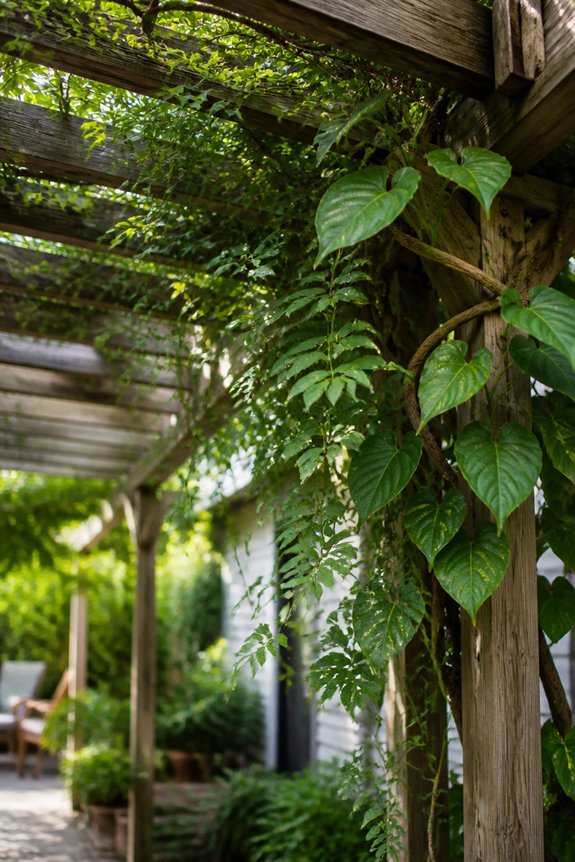
Climbing vines turn pergolas into living privacy walls. They offer a beautiful alternative to manufactured materials.
Common choices include ivy, clematis, and jasmine. Each provides dense coverage at different speeds.
Ivy grows fast. It creates solid screening within one to two seasons. Clematis adds decorative flowers while still blocking views.
Living Walls
Living walls use vertical planting systems. They make the most of limited space in smaller yards.
These systems rely on soil pockets or hydroponic frameworks. Multiple plant varieties grow at once.
Care and Benefits
Maintenance depends on your plant selection. Some need only occasional pruning. Others require regular watering.
Vines and living walls clean the air naturally. They reduce noise and add insulation too.
Choose based on your climate zone. Consider sunlight levels and how dense you want your screen to be.
Wooden Slatted Panels and Lattice
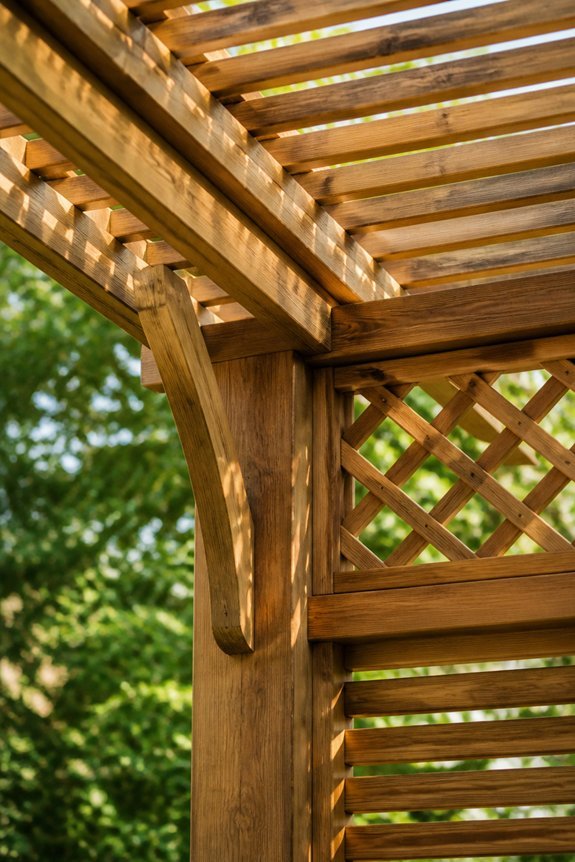
Wooden slatted panels and lattice structures bring durable, customizable privacy to your pergola. They create partial shade while letting air move freely. This makes them practical for many climates.
Horizontal slats give a clean, modern look. Diagonal lattice patterns feel more traditional. Cedar and pressure-treated lumber stand up well to weather and rot. They need little upkeep over the years.
You can adjust the spacing between slats to control both visibility and sunlight. Lattice panels also work great for climbing vines. This combines privacy with natural greenery.
Installation is straightforward. Simply secure panels to pergola posts with basic hardware. Paint or stain protects the wood and helps it match your existing structures.
Costs depend on material quality and panel size. They typically run moderate to high compared to fabric options.
Fabric Screens and Pergola Shade Cloths
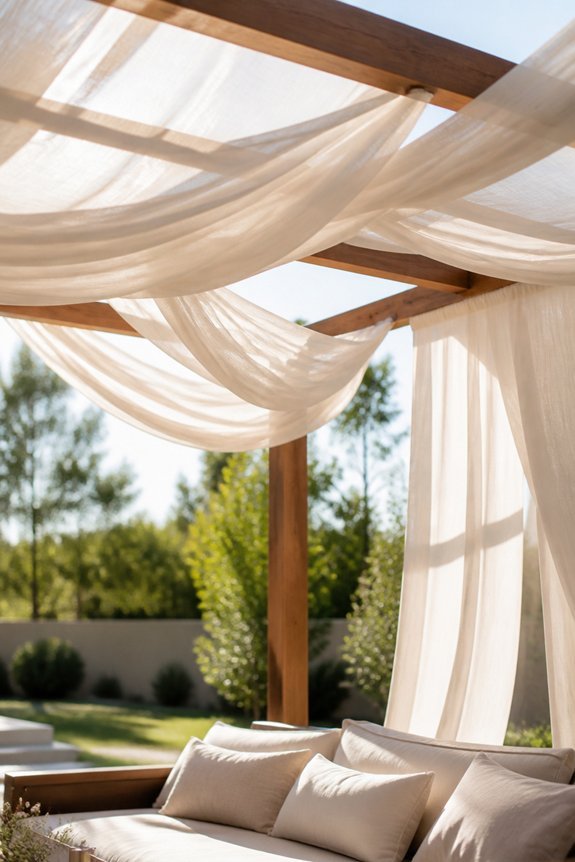
Fabric screens and shade cloths offer flexible privacy solutions for pergolas. They attach easily with clips, rings, or hooks. Installation and removal take little effort.
You can choose outdoor curtains made from polyester or acrylic. These materials resist fading and moisture. Shade cloth works differently. It is woven from high-density polyethylene and cuts sunlight while letting air pass through.
Flexible Coverage Options
Retractable shade systems let you adjust light levels throughout the day. Pull them out when the sun is strong. Roll them back to enjoy more brightness.
Fabric screens also soften wind and reduce neighborhood noise. They create a calmer outdoor space.
Easy Setup and Pairing
You need only basic tools and simple hardware to install these solutions. They blend well with existing wooden structures. This layered approach adds privacy without permanent changes.
Costs depend on material quality and size. Measure your space before buying.
Outdoor Curtains and Privacy Drapes
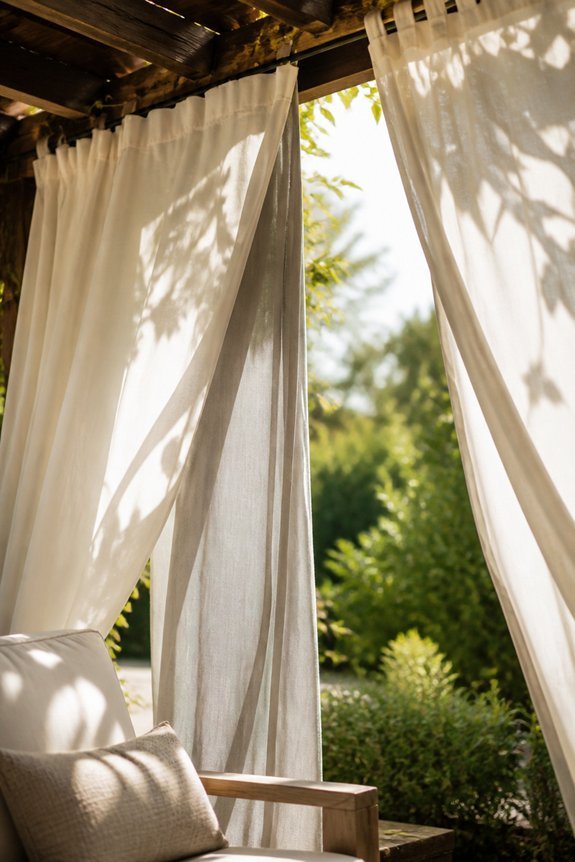
Shade cloths work well for basic coverage. Outdoor curtains and privacy drapes add a more polished look to your pergola. These fabric panels attach with hooks, rings, or rods. You can adjust them to create privacy when you need it.
Polyester, acrylic, and solution-dyed fabrics hold up against rain and sun. They resist fading better than standard materials. Curtains come in many colors and patterns. Mix and match with your landscaping or home exterior for a cohesive style. Larger setups can use motorized options for easy opening and closing.
Installation stays simple with just mounting brackets and support rods. Draw the drapes partially open or fully closed. Change your privacy level as the day goes on. Clean them occasionally with mild soap and water. This keeps the fabric looking fresh through many seasons.
Retractable Pergola Shade Systems
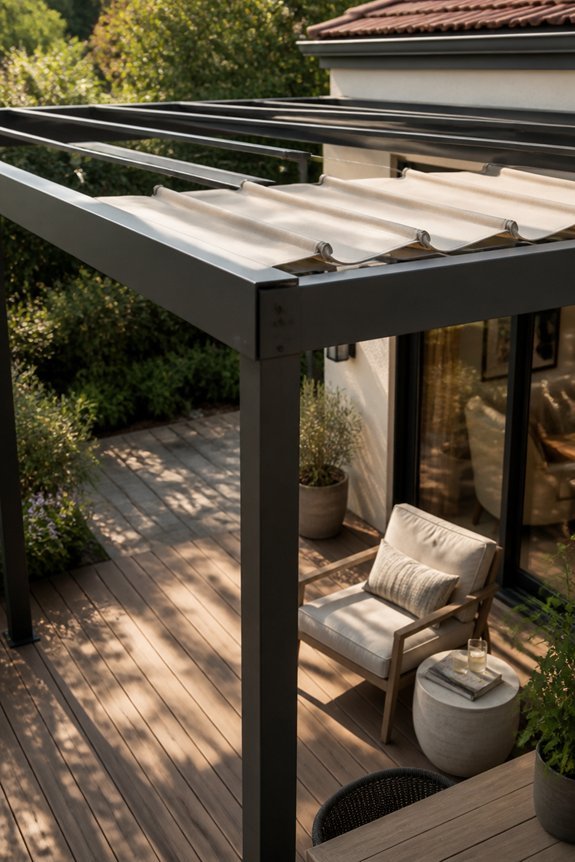
Retractable shade systems bring automation to your pergola. Fabric panels glide along tracks mounted to the frame. You control everything with a remote, wall switch, or phone app. No more wrestling with manual curtains.
ShadeFX and Sunesta lead the market. Both use weather-resistant fabrics and aluminum tracks built to last.
You get adjustable coverage all day long. Morning sun? Open them partly. Harsh afternoon rays? Close them completely. The fabric blocks harmful UV light without trapping air underneath.
Durability stands out here. These systems run consistently with little upkeep. Traditional drapes fade and tear. Motorized shades keep going.
Mounting tracks to your pergola beams takes some planning. You’ll need a nearby power source for the motor. Most homeowners bring in pros for this step.
Prices run from moderate to premium. Your final cost depends on pergola size and how much automation you want. Basic remote control costs less than full smart home integration.
Homeowners wanting convenience without constant maintenance love these systems. You set your shade level and forget about it. The technology handles the rest.
Bamboo Screening for Privacy
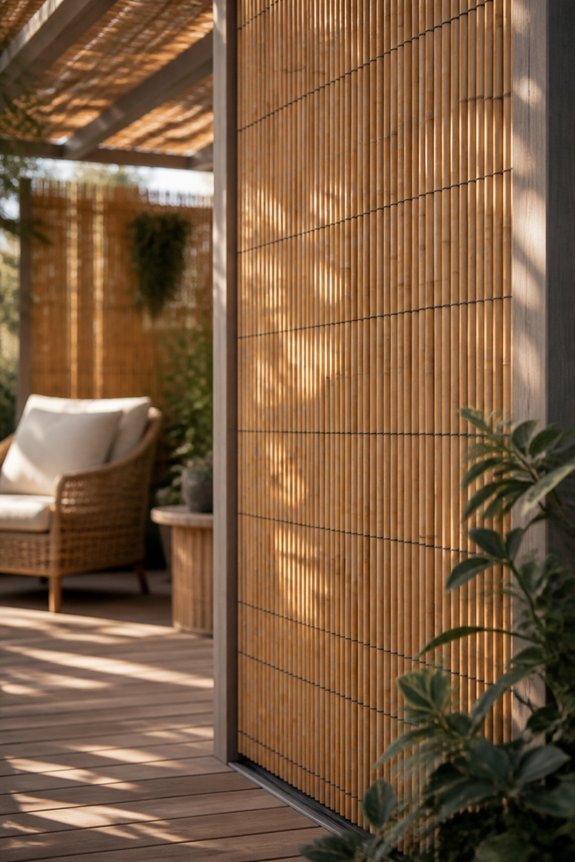
Bamboo screening offers a natural alternative to motorized systems. Most homeowners find it effective and easy to maintain.
Bamboo grows fast. Heights range from 15 to 40 feet based on variety. Dense barriers form quickly.
Installation Basics
Space plants 3 to 5 feet apart around pergolas. This spacing helps root systems connect naturally.
Popular Varieties
Timber bamboo, clumping bamboo, and running bamboo each behave differently. Growth patterns and upkeep needs vary by type.
Simple Care Tips
Water regularly at first. Provide moderate sunlight. Prune occasionally to keep shape.
Dense foliage stays green year-round in most areas. Some deciduous types thin out seasonally.
No electrical parts needed. This keeps maintenance low and hassle-free.
Layering Multiple Methods for Maximum Coverage
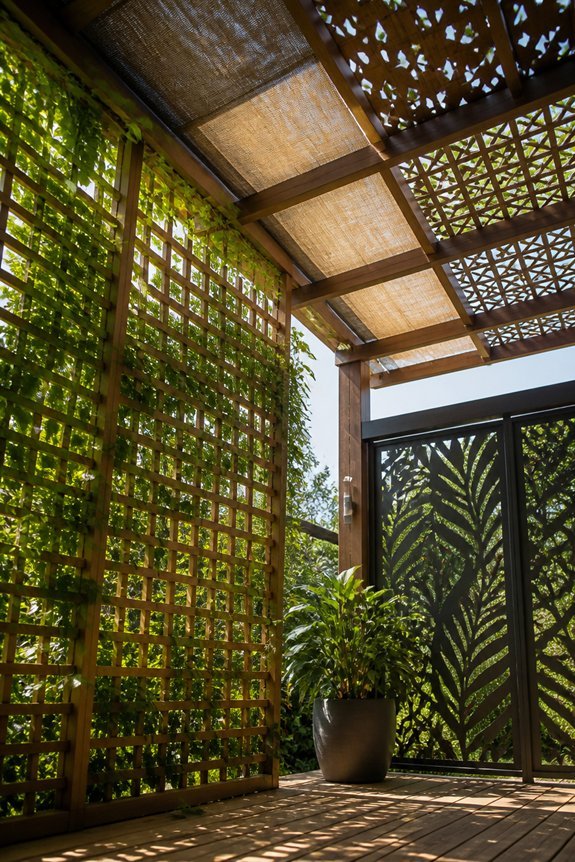
Multiple privacy techniques work better together than any single option. A pergola with climbing vines, lattice panels, and fabric screens blocks views from every direction.
Start with bamboo fencing at ground level. Add climbing plants to grow upward. Hang outdoor curtains on sides facing neighbors. This approach blocks sightlines at varied heights and distances.
Natural vegetation softens the space and fills gaps over time. Solid materials like wood or vinyl give instant coverage where you need it most. Fabric screens let you adjust for seasons or occasions.
Together these layers handle privacy from the ground up. Views from windows above get blocked too. The stacked setup also cuts wind and muffles nearby sounds. Your pergola becomes a true private retreat.
Privacy Hedges and Foundation Plantings
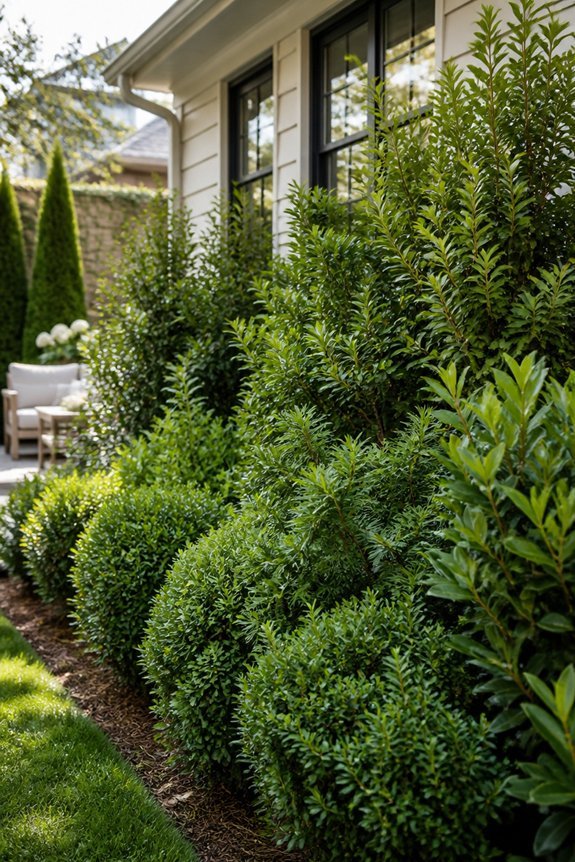
Foundation plantings and privacy hedges create natural barriers around a pergola. They screen views while adding greenery to your outdoor space.
Evergreen shrubs like boxwood and holly keep their leaves year-round. These dense plants block sightlines in every season. Deciduous options such as lilac and forsythia provide summer coverage plus seasonal blooms.
Position foundation plantings at ground level. Pair them with taller hedges to build layered screening. This combination creates depth and better coverage.
Choosing and Placing Plants
Space plants based on their mature size. This prevents overcrowding as they grow. Strategic placement along property lines and pergola edges maximizes privacy.
Prepare soil well before planting. Water regularly during the establishment period. This ensures healthy root development.
Mix different heights and textures for the best results. Varied plantings produce extensive coverage. They also add visual interest throughout the seasons.
Green Roofs and Overhead Plant Covers
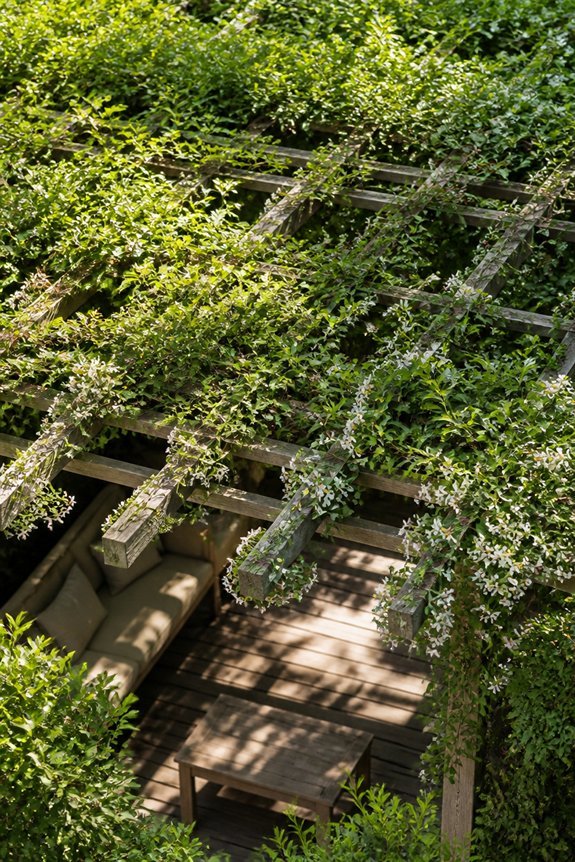
Overhead plant covers turn pergolas into shaded, living structures. Climbing vines like clematis, jasmine, and climbing hydrangea grow up support beams. They spread across the top to block views from neighbors.
Green roofs grow plants directly on horizontal pergola tops. Shallow-rooted sedums and moss varieties do well here. Both options need proper drainage and structural support for soil weight and moisture.
Choosing Your Approach
Vine-covered pergolas usually need less structural reinforcement than green roofs. Pick plants based on your local climate and sunlight exposure. Consider how much maintenance you’re ready for.
Benefits Worth Noting
Both methods give you privacy. They also improve air quality and reduce heat around outdoor spaces.
Hardscape Walls and Pergola-Adjacent Structures
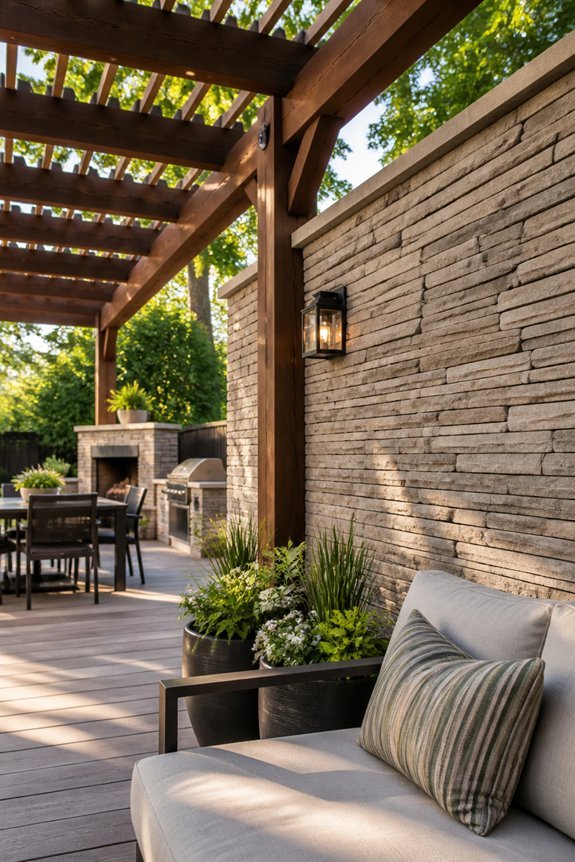
Pergolas work beautifully with solid structures. Brick walls, composite fencing, and stone barriers pair naturally with pergola frameworks. Together they create enclosed outdoor spaces.
These hardscape elements block unwanted sightlines. Pergolas add overhead coverage and soft, filtered light. The result feels private yet open.
Popular Configuration Options
Many homeowners place pergolas next to existing fences. Others build new walls perpendicular to the structure. Both approaches work well.
Lattice panels attached to posts offer adjustable privacy. You control how open or enclosed the space feels. Material choices range from pressure-treated wood to vinyl and metal. Each option suits different styles and maintenance preferences.
Practical Design Tips
Strategic placement shields pools, gardens, and seating areas from view. Leave proper spacing between walls and pergola posts. This ensures good airflow and prevents moisture buildup.
The combination creates protected outdoor rooms. These spaces invite relaxation and easy entertaining.
Keeping Your Privacy Setup Thriving Year-Round
Pergolas and hardscape walls face constant weather exposure. Regular maintenance keeps them functional and attractive all year. Your privacy structures will last longer with consistent care.
Wooden structures need annual staining or sealing. This prevents rot, warping, and insect damage. Metal components require rust treatment and protective coatings. Humid climates make this especially important.
Climbing vines need seasonal pruning. Remove dead growth and control their spread. This maintains structural integrity and keeps plants healthy.
Winter preparation starts with clearing gutters. Inspect for damage and secure loose components before cold weather hits.
Spring brings renewal tasks. Evaluate winter damage and reapply treatments. Trim new growth to guide future development.
Summer calls for pest monitoring. Check for infestations regularly. Ensure proper drainage during heavy rains.
Fall means final pruning and weather preparation. Get structures ready for harsh conditions ahead.
Consistent attention prevents costly repairs. Your privacy installations will serve you well for years to come.
Frequently Asked Questions
How Much Does It Cost to Install a Pergola Privacy System?
Costs typically fall between $1,500 and $5,000, depending on the materials and complexity you choose. Basic vinyl or wood panels sit on the lower end of that range.
If you’re drawn to motorized retractable systems or premium fabrics, expect the higher end of that scale. Size and how much automation you want both push the number up.
What Permits or Regulations Apply to Building Pergola Privacy Structures?
You’ll generally need to check local building permits and zoning rules before starting anything permanent. Setback regulations can affect how close to your property line you’re allowed to build.
It’s worth contacting your municipal building department directly, and checking any HOA rules if you have them. Verifying your property lines beforehand saves you from headaches once construction starts.
How Long Does a Typical Pergola Privacy Installation Take?
Most installations wrap up in one to three days, though this really depends on the structure’s size and how complex your chosen materials are. Fabric screens and curtains tend to go up fastest.
Professional installation usually moves quicker than a DIY approach, especially for anything motorized or requiring precise mounting. If you’re comfortable with basic tools, though, plenty of these projects are manageable yourself.
Can I Install Pergola Privacy Myself or Do I Need Professionals?
Plenty of homeowners handle this themselves with a bit of planning, especially for lattice panels, curtains, or shade cloth. These options generally just need basic hardware and some patience.
For anything motorized or involving structural changes, bringing in a professional makes sense. It guarantees things are installed securely and can save you time if permits or complex mounting are involved.
What Is the Best Climate for Different Pergola Privacy Materials?
Wood tends to perform best in moderate climates without extreme swings in humidity. If your weather stays fairly balanced, wood holds up well with basic upkeep.
Vinyl handles extreme temperatures and high humidity far better, so it’s a solid pick if your climate leans harsh in either direction. Metal suits hot, dry regions particularly well.
Fabric screens work in almost any climate, but keep in mind they’ll need shade themselves in especially intense sun to avoid premature fading.
CONCLUSION
Turning an open pergola into a private retreat rarely happens with just one solution. It’s usually a combination of a few things working together that gets you there.
My own setup started with just curtains for a quick fix, and over time I added climbing vines along one side once I realized how much I loved the growing greenery.
Vines, lattice, hardscape walls, hedges, there’s no single right answer here. What matters most is matching your choice to how quickly you need results and how much upkeep you’re actually willing to commit to.
Layering methods gives you the best coverage by far. Bamboo at ground level, vines climbing upward, and a curtain on the side facing your neighbors covers sightlines from nearly every angle.
Don’t feel like you need to solve this all in one weekend either. Plenty of these solutions, especially the natural ones, get better and fuller with time.
I’d love to hear which combination you’re considering, or what’s already working well in your own backyard. Leave a comment and let me know.