
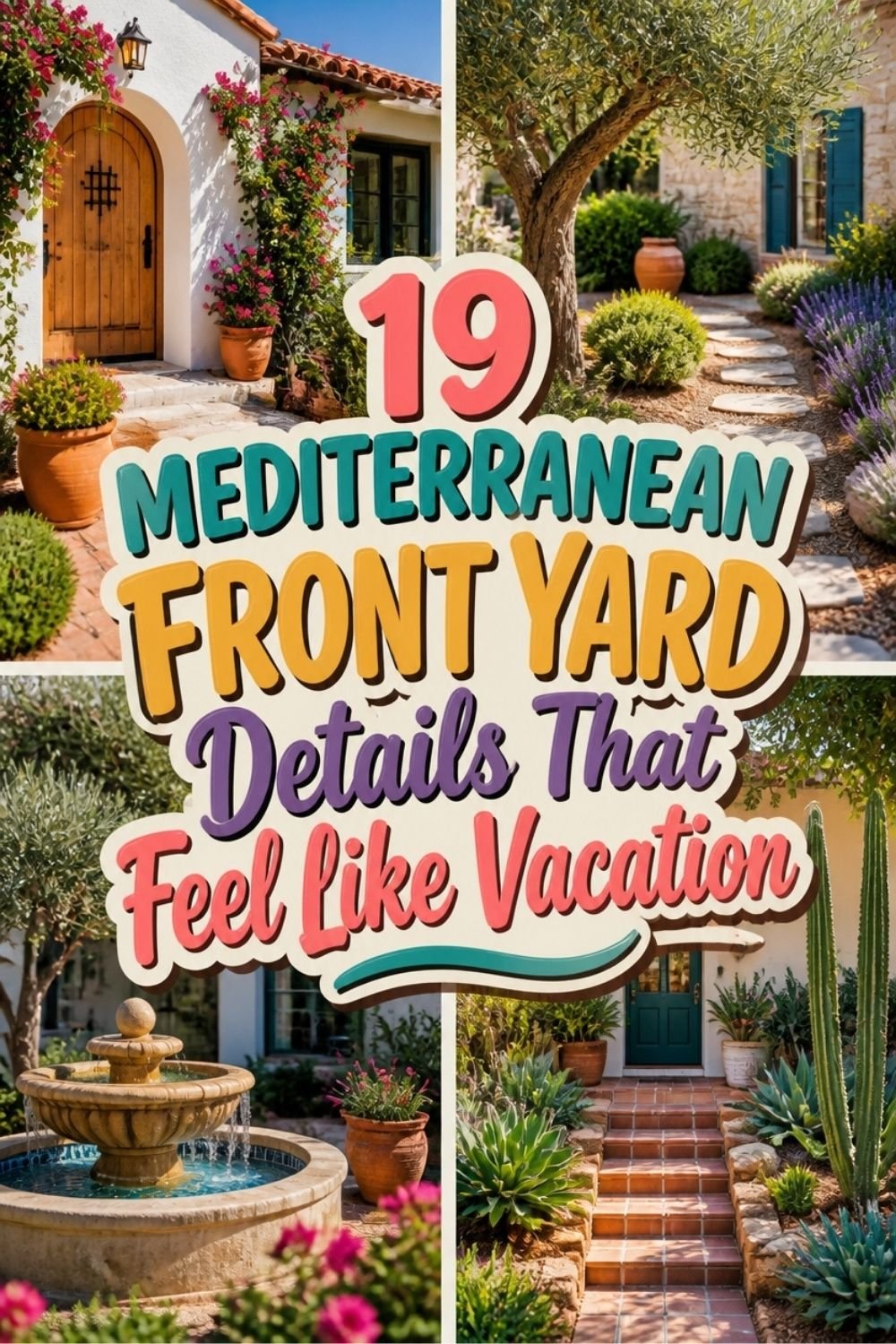
You’ll start by choosing materials that withstand sun and time—limestone, iron, and terracotta work together to create entryways that feel grounded and intentional. Each element, from a heavy gate to a bubbling stone fountain, serves both function and atmosphere. You’re building layers of texture and sound that transform arrival into ritual. But the real shift happens when you understand how these nineteen details connect to larger principles of Mediterranean design, and why certain combinations create that unmistakable vacation sensation.
Anchor Your Entry With Heavy Iron Gates
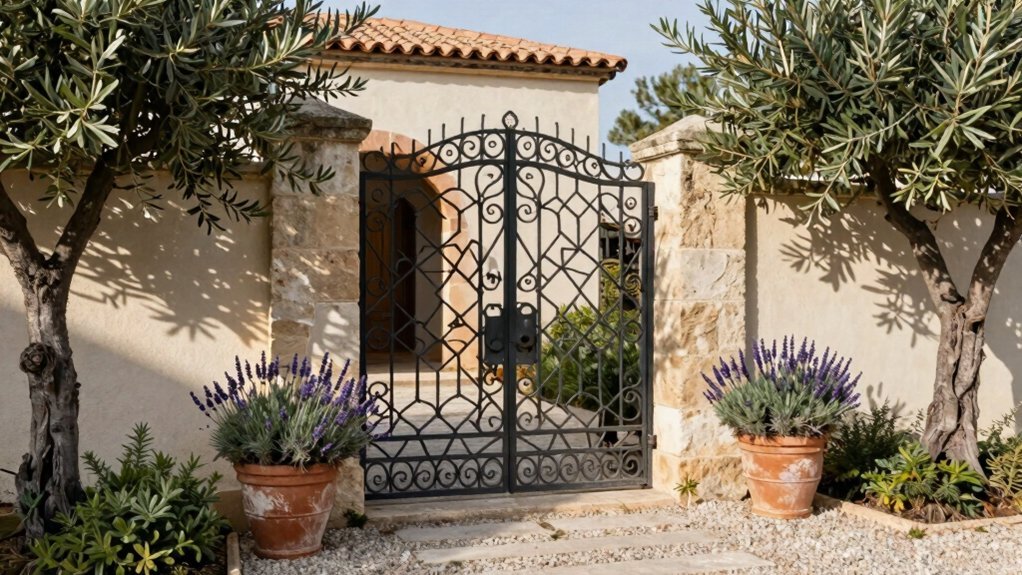
Though many homeowners overlook this element, you’ll find that heavy iron gates serve as the definitive anchor for your Mediterranean front yard, establishing both security and architectural character from the moment visitors arrive. You’ll want to select wrought iron with substantial thickness, typically three-quarter inch bars or larger, since flimsy alternatives undermine the authentic Mediterranean weight and permanence.
You’ll notice traditional designs incorporate scrollwork, spear points, or geometric patterns inspired by Spanish and Italian craftsmanship. You should consider dark bronze or matte black finishes, as these weather gracefully and complement terracotta roof tiles and stucco walls.
You’ll position your gate to frame a view toward your entry door, creating depth through the property. You must guarantee proper footing with concrete piers extending below frost line, preventing sagging that ruins alignment. You’ll add automated openers discreetly, preserving historical aesthetics while offering modern convenience.
Also read: 24 FRONT YARD FLOWER GARDEN Plans That Stay Pretty!
Pave Your Walk With Cool Limestone and Grass Joints
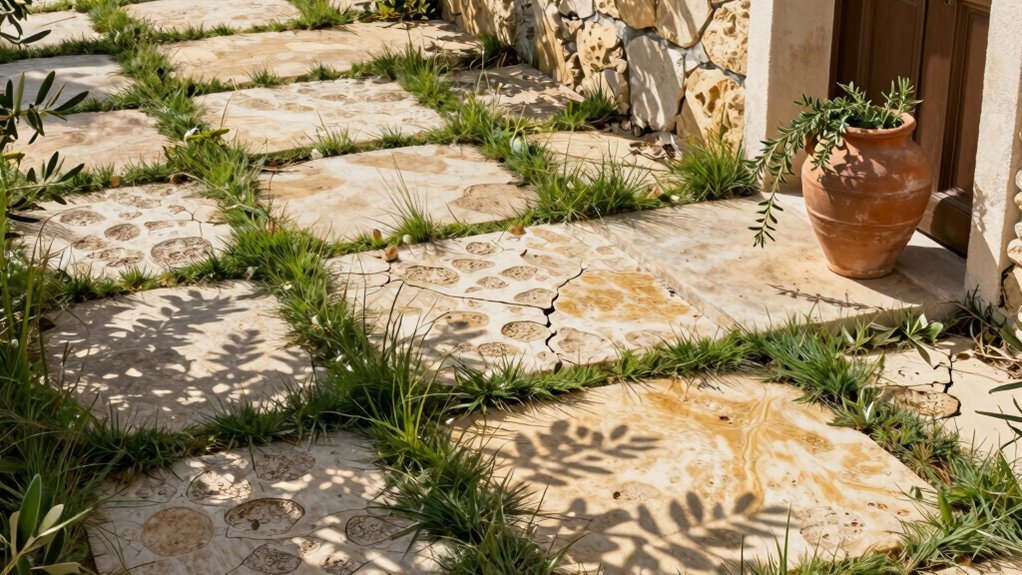
Once you’ve established your iron gateway as the formal threshold, you’ll turn your attention to the path that carries visitors toward your door, selecting cool-toned limestone pavers that temper the Mediterranean sun and create a welcoming surface underfoot. You’ll lay these rectangular stones in a running bond pattern, spacing them two to four inches apart to allow for soft, resilient grass joints that soften the hardscape and reduce runoff. You’ll choose a low-growing, drought-tolerant variety like dwarf mondo grass or blue fescue, which thrives in the gaps with minimal irrigation. You’ll set each paver on a compacted sand base, ensuring level placement that prevents wobbling underfoot. You’ll maintain the joints with occasional trimming and edging, keeping the path neat while preserving its relaxed, time-worn character that evokes ancient villa gardens.
Crunch Your Way Up a Gravel Path to the Door
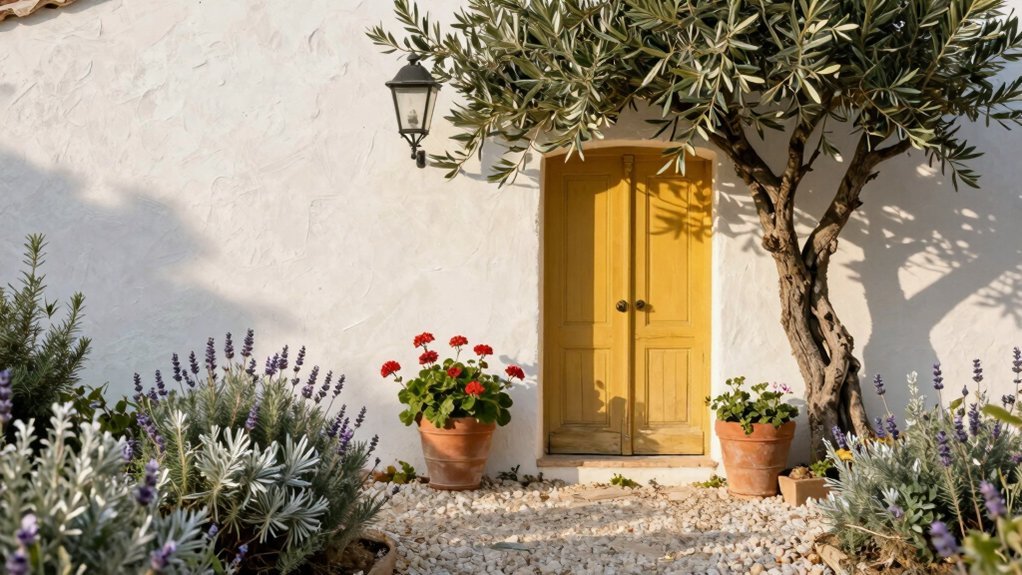
Choose crushed gravel for your approach when you want an affordable, permeable surface that announces each footstep with satisfying texture and sound. You’ll select angular stones roughly three-quarters inch in size, as these lock together underfoot and resist scattering better than rounded pebbles. Before spreading gravel, you’ll excavate soil to a depth of four inches and install landscape fabric to block weed growth while allowing drainage. You’ll edge the path with stone, brick, or metal to contain the material and define clean borders. Compact the base layer with a tamper, then spread gravel two to three inches deep, raking it smooth. You’ll maintain the path by replenishing gravel annually and raking surface irregularities. This surface stays cooler than stone in summer heat and pairs naturally with Mediterranean plantings like lavender and rosemary growing alongside.
Center Everything on a Solid Wooden Door With Iron Hardware
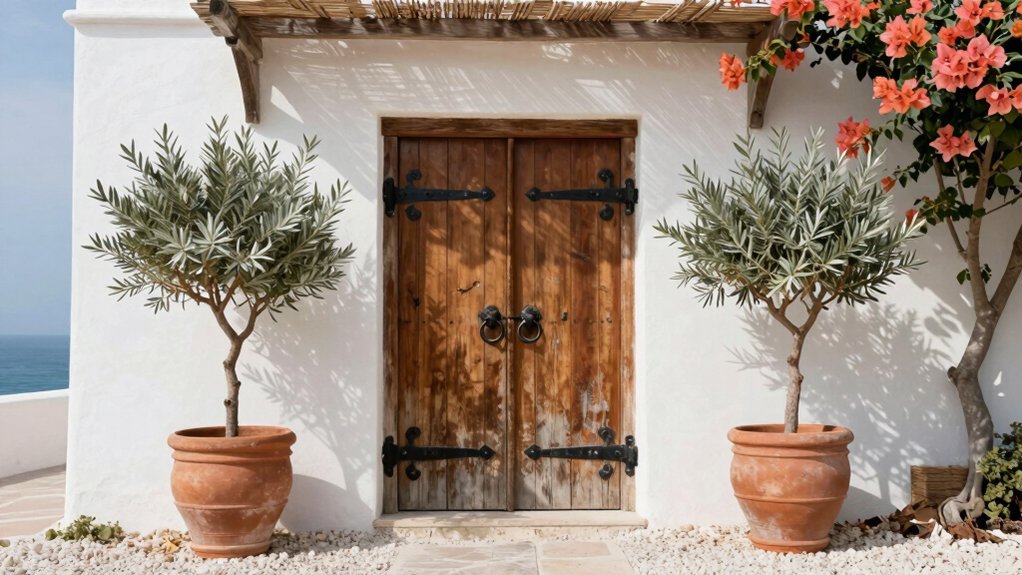
Because the front door serves as the focal point of your Mediterranean landscape, you’ll want to select a solid wood entry door that grounds the entire composition with weight and warmth. You’ll choose dense hardwoods like teak, mahogany, or oak, which resist warping and develop rich patinas over time. You’ll guarantee the door measures at least two and a half inches thick, creating substantial visual mass that anchors your entryway. You’ll pair this wooden foundation with hand-forged iron hardware, including strap hinges, clavos, and ring pulls, which introduce textural contrast and historical authenticity. You’ll position these iron elements symmetrically, balancing function with decorative rhythm. You’ll finish the wood with penetrating oil or low-sheen varnish, protecting against moisture while preserving natural grain visibility. You’ll step back to verify that door and hardware command attention without overwhelming surrounding plantings.
Mount a Stone Fountain You Can Hear From the Porch
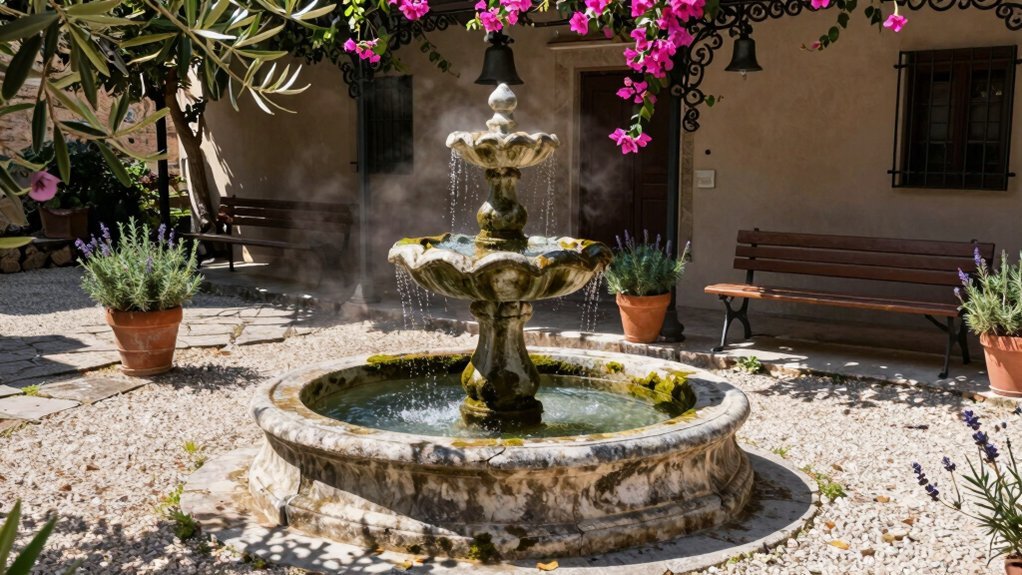
Three distinct sounds—running water, splashing droplets, and gentle gurgling—will transform your porch into a relaxing retreat when you install a stone fountain close enough to hear. You’ll want to position the fountain within fifteen to twenty feet of your seating area, ensuring the acoustic reach carries clearly without overwhelming conversation. Select a stone material, such as limestone or travertine, that weathers naturally and complements Mediterranean architecture. You’ll need a submersible pump rated for continuous outdoor use, plus a grounded electrical outlet or solar panel setup. Dig a stable basin, level the fountain base, and connect the water lines before testing the flow rate. Adjust the pump speed until you achieve a steady, audible stream that masks street noise. You’ll maintain the system by cleaning debris weekly and winterizing components before freezing temperatures arrive.
Build a Low Dry-Stack Wall to Frame Your Property Line
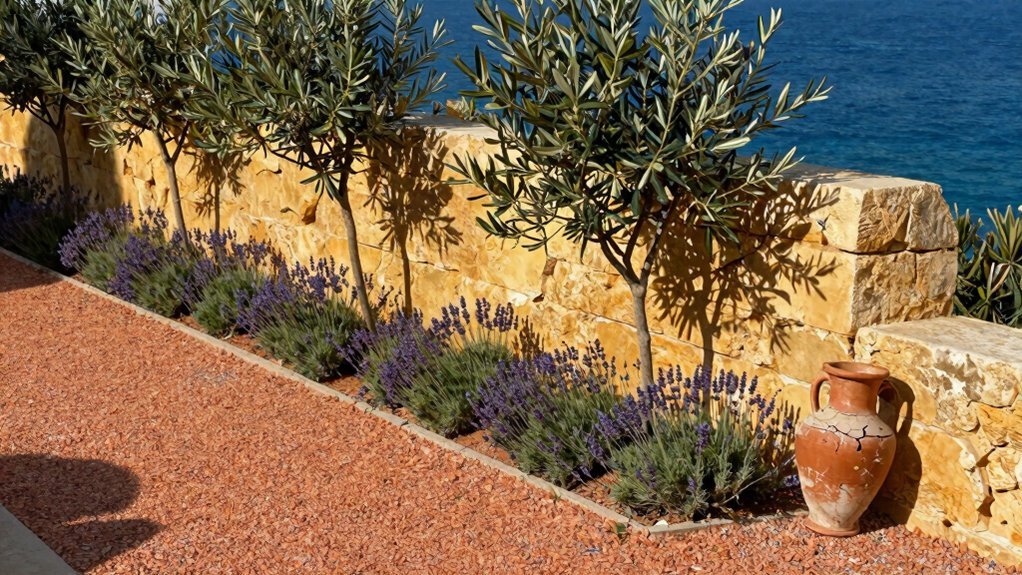
Once you’ve established the soothing presence of water near your porch, you’ll want to define the edges of your property with equal intention, and a low dry-stack wall offers a practical solution that anchors your Mediterranean landscape without overwhelming it. You’ll select native stone—limestone, sandstone, or fieldstone—that complements your region’s geology and your home’s exterior palette. You won’t use mortar; instead, you’ll stack stones with careful attention to weight distribution, creating friction-based stability through interlocking shapes. You’ll excavate a shallow trench, six inches deep, filled with compacted gravel to prevent settling. You’ll build the wall eighteen to twenty-four inches tall, sufficient for visual boundary without obstructing sightlines. You’ll angle stones slightly backward, ensuring rainwater drains away from the face. You’ll step back each course, maintaining structural integrity through gravity alone.
Edge Your Mediterranean Walk With Rosemary That Releases Scent
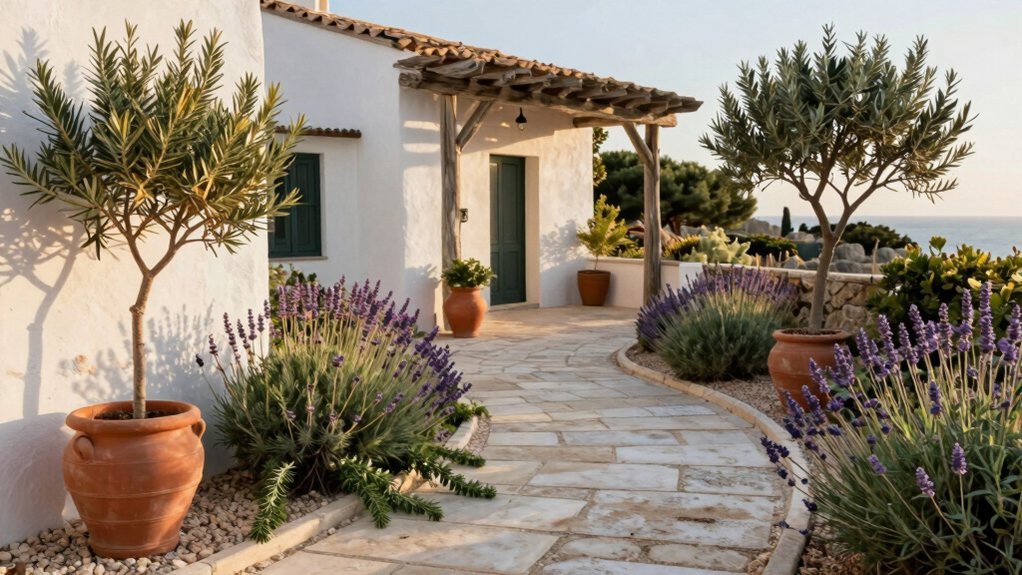
Several sensory elements deserve your attention when completing your Mediterranean front yard, and the fragrance you’ll introduce along your walkway ranks among the most rewarding. You’ll plant upright rosemary varieties, such as ‘Tuscan Blue’ or ‘Arp’, in a continuous line no more than eighteen inches from your path’s edge, spacing each plant twenty-four inches apart to allow for mature growth. You’ll select a sunny location with well-draining soil, amending with grit or sand if your ground retains moisture. You’ll brush against the needle-like foliage each time you pass, releasing volatile oils that carry pine and camphor notes through warm air. You’ll trim plants after flowering to maintain compact, hedge-like forms that won’t obstruct your steps. You’ll water deeply but infrequently, mimicking the dry summers this hardy perennial expects.
Cluster Potted Citrus: Lemon, Fig, Kumquat: Near Sunny Walls
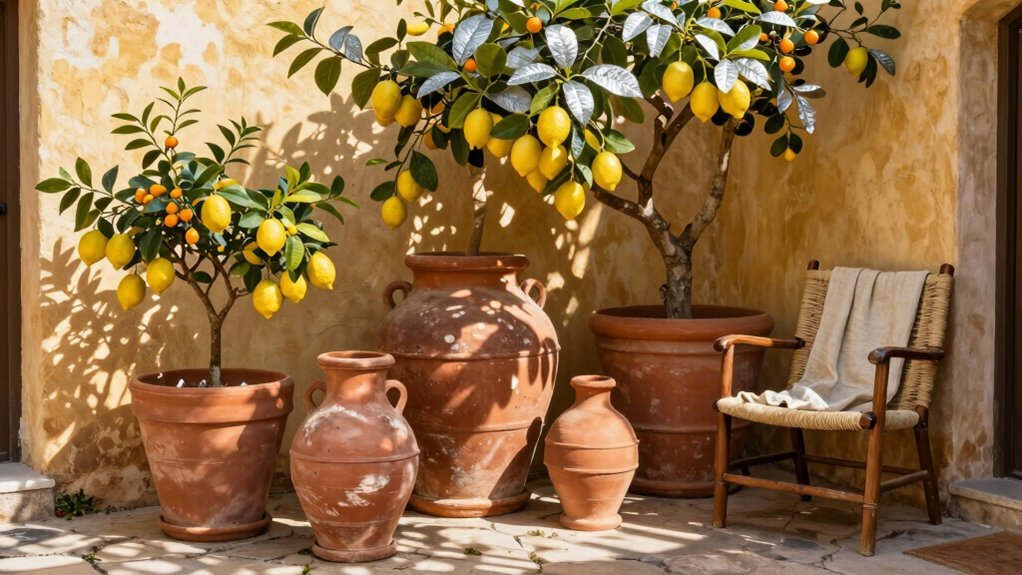
You’ll anchor your Mediterranean front yard‘s visual warmth by grouping container-grown citrus and fig trees against sun-drenched walls, where radiant heat extends your growing season and intensifies fruit sugars. Choose large terracotta or glazed ceramic containers with drainage holes, filling them with gritty, fast-draining potting mix formulated specifically for citrus. Position ‘Improved Meyer’ lemon, compact ‘Little Ruby’ fig, and cold-hardy ‘Nagami’ kumquat where they’ll receive at least six hours of direct sunlight daily, spacing pots two feet apart to allow air circulation.
You’ll water deeply when the top inch of soil dries, feeding with balanced, slow-release fertilizer every six weeks during active growth. Prune annually to maintain compact shapes suitable for containers. In colder zones, you’ll wheel pots into protected areas when frost threatens, returning them outdoors as temperatures stabilize.
Plant Olive Trees in Massive Urns for Instant Patina
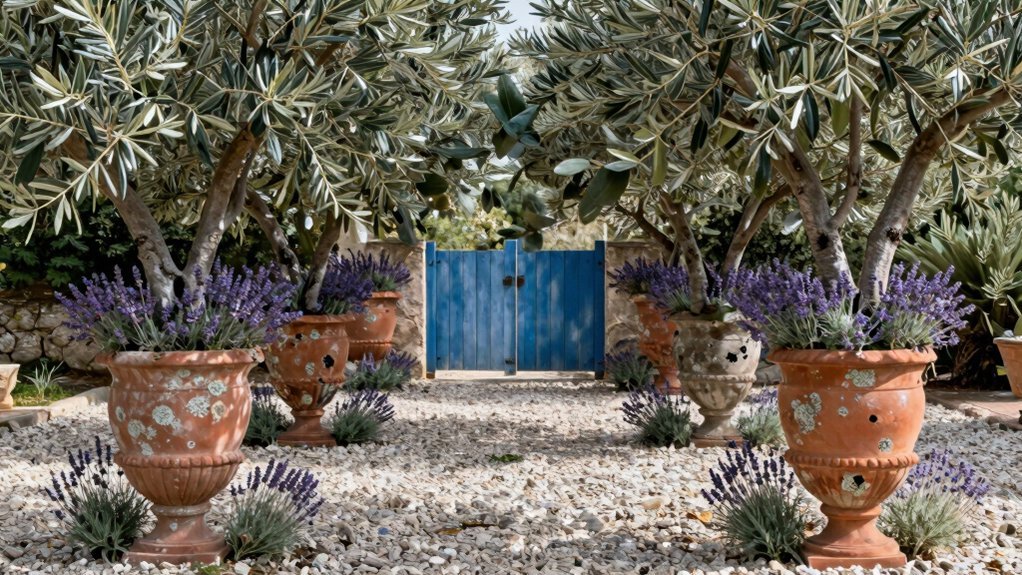
Beyond the clustered citrus, massive urns planted with olive trees introduce an immediate sense of age and permanence to your Mediterranean front yard. You’ll select urns with substantial scale, ensuring they anchor the visual weight of mature olives, which develop gnarled trunks and silvery-green foliage that reads as centuries-old even when relatively young. Position these containers strategically along pathways or flanking your entrance, where visitors encounter their sculptural presence immediately. Choose varieties like ‘Arbequina’ or ‘Mission’ that tolerate container constraints while maintaining characteristic form. You’ll fill urns with well-draining soil mixes, incorporating gravel or pumice to prevent root rot, since olives despise wet feet. In winter, you’ll monitor moisture carefully, reducing irrigation considerably. The patina you achieve through weathered stone and established growth transforms your space into something that feels collected and timeless.
Overflow Weathered Terracotta With Lavender and Drought Herbs
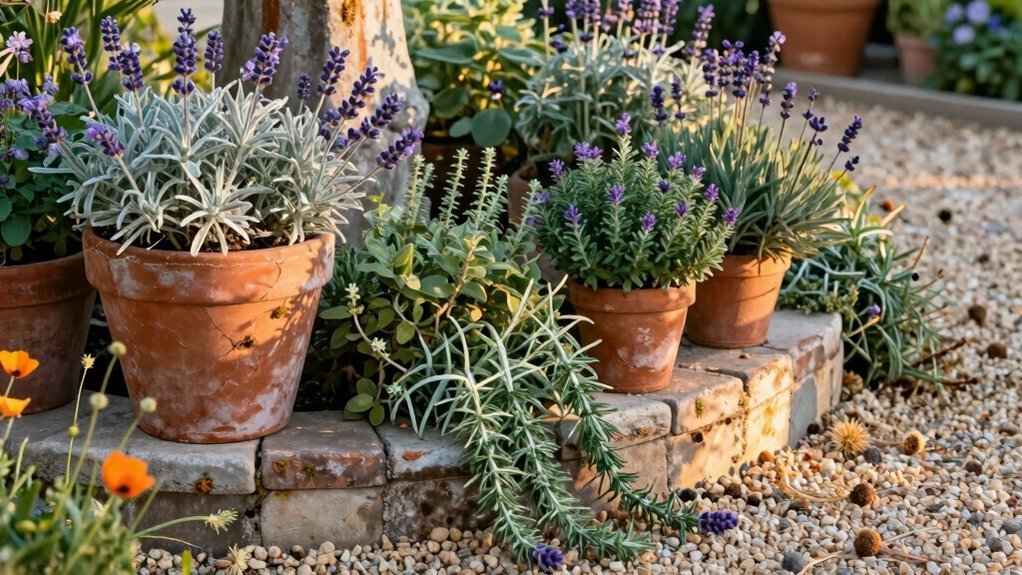
Though olive trees command attention with their sculptural weight, smaller containers layered with lavender and drought-tolerant herbs bring soft, fragrant abundance to your Mediterranean front yard at ground level. You’ll want to select weathered terracotta pots with visible age marks, cracks, and mineral deposits that suggest decades of sun exposure, since manufactured antiquing rarely achieves authentic character. Position these containers along pathways and steps, ensuring they spill over with silvery-green foliage and purple blooms that brush against your legs as you walk. You’ll combine lavender with rosemary, thyme, and oregano, all of which thrive in poor, fast-draining soil and require minimal water once established. The terracotta’s porous walls regulate moisture naturally, preventing root rot while encouraging the tight, compact growth that signals healthy, stressed Mediterranean plants.
Drench a White Stucco Wall in Bougainvillea Color
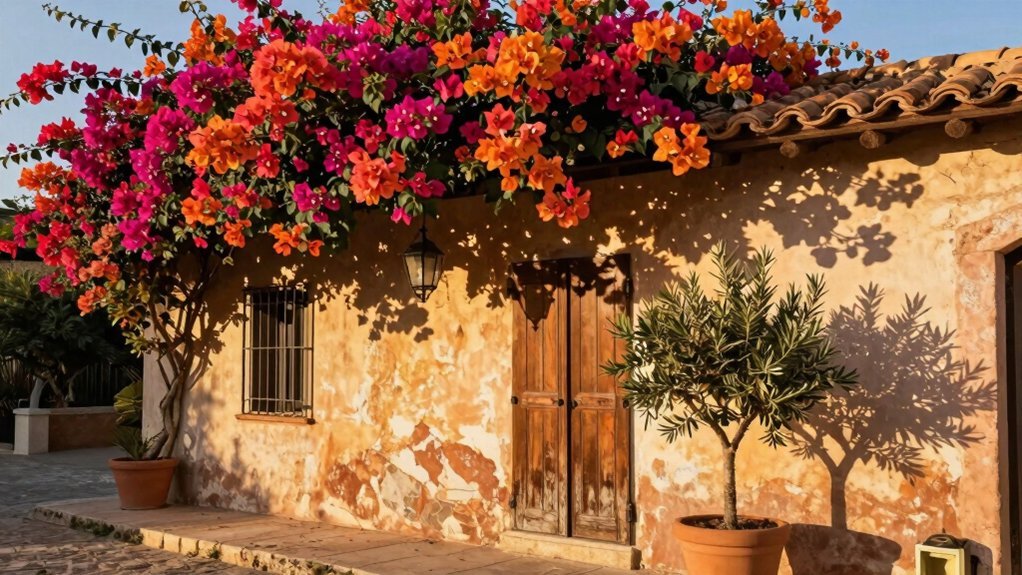
While container plantings anchor your Mediterranean landscape at eye level and below, vertical surfaces present an opportunity to multiply color without sacrificing precious ground space. You’ll select Bougainvillea for this vertical application, choosing varieties with bracts in magenta, coral, or deep purple depending on your regional climate and desired intensity.
You install galvanized wall brackets or heavy-gauge wire trellises directly into the stucco, spacing them eighteen inches apart horizontally and vertically to create a climbing grid. Plant established specimens at the wall’s base, angling roots slightly outward to encourage stems toward the support structure. You’ll tie flexible canes loosely to the hardware using soft plant tape, guiding growth upward and outward in a fan pattern.
Prune after each flowering cycle, cutting back lateral shoots to two or three buds to promote dense, return blooms. You’ll limit irrigation once established, as dry stress intensifies bract color.
Train Jasmine or Grapes Over a Simple Entry Pergola
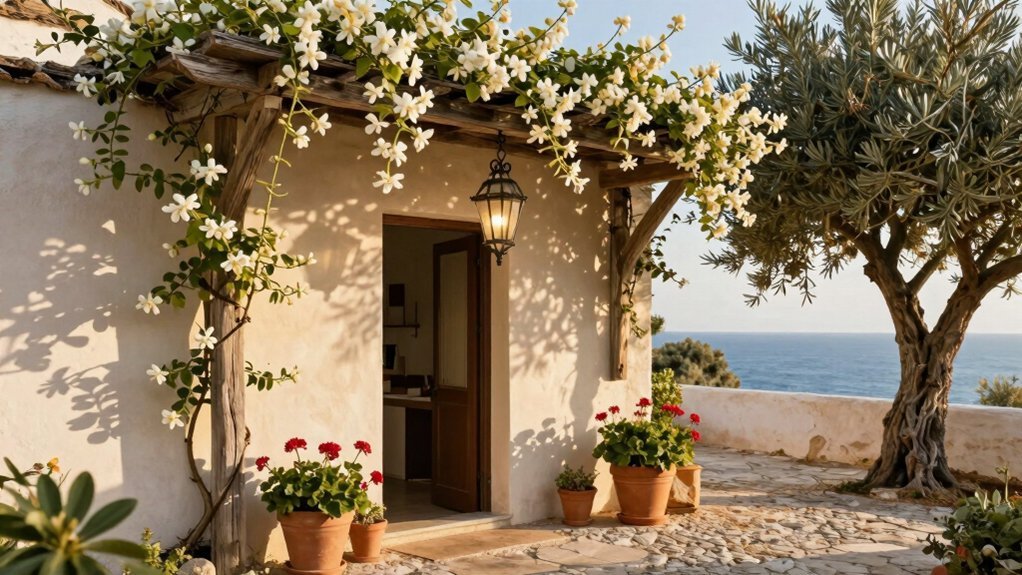
Your entry pergola frames the changeover between public street and private sanctuary, so you’ll select a climbing plant that matches both your maintenance capacity and your desired sensory experience. If you prefer fragrance with minimal pruning, you’ll train star jasmine across the beams, securing flexible stems with soft ties as they reach upward. The small white flowers release scent each evening, creating an aromatic threshold you pass through daily. For productive shade, you’ll establish grapevines instead, selecting a table variety suited to your growing zone. You’ll run galvanized wire between rafters to support the woody canes, pruning annually to maintain open structure beneath. Both options provide dappled light and seasonal change, transforming a simple wooden framework into a living architectural element that defines your home’s Mediterranean character.
Uplight Your Evenings With Wrought Iron Lanterns
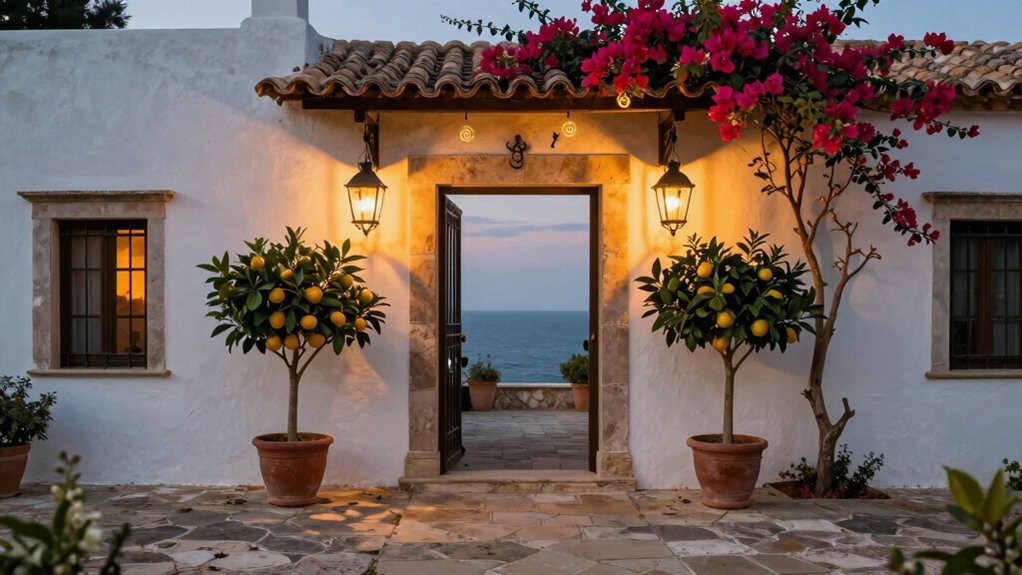
Three distinct placement strategies will help you position wrought iron lanterns where they’ll cast the warm, ambient glow that defines Mediterranean evenings. First, mount lanterns on either side of your front door at eye level, ensuring they’re spaced equally from the frame’s edge to create balanced symmetry. Second, suspend a larger lantern from a pergola’s central beam, allowing it to illuminate seating areas below while drawing the eye upward through layered shadows. Third, stake smaller lanterns along pathway edges, spacing them six to eight feet apart to guide visitors without overwhelming the landscape. You’ll want to select fixtures with seeded or amber glass, as these materials diffuse the harsh LED bulbs you’ve installed into softer, flame-like tones. Finally, connect your lanterns to a dimmer switch, so you can adjust brightness as twilight deepens into night.
Tint Your Trim in Soft Ochre, Sage, or Dusty Rose
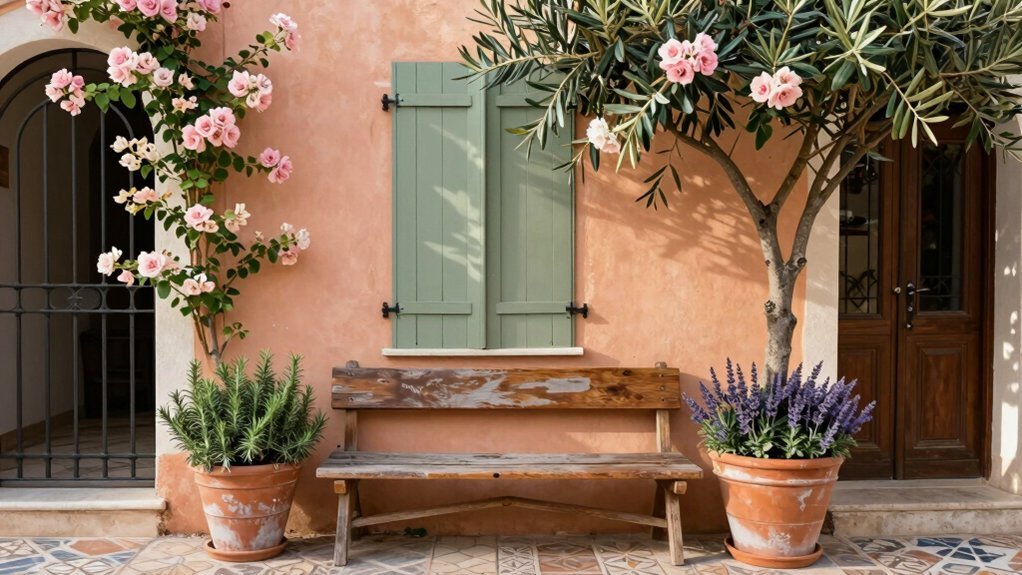
Once you’ve arranged your lanterns to cast their warm glow across the yard, you’ll notice how strongly the surrounding colors appear beneath that amber light, and this observation leads directly to your next decision about trim color. You’ll select soft ochre, sage, or dusty rose for your window frames, door casings, and corner moldings, because these muted earth tones absorb and reflect lantern light without creating harsh contrasts. You’ll apply two coats of exterior-grade paint, ensuring complete coverage on all exposed wood surfaces. You’ll examine your home’s existing stucco or stone facade, matching the trim’s undertones to the dominant warmth or coolness of your walls. You’ll find that sage complements gray-green stone, while ochre unifies with terracotta roofs, and dusty rose softens cream-colored exteriors. You’ll step back at dusk, confirming the trim disappears into the overall composition rather than competing for attention.
Mark Your House With Hand-Painted Ceramic Tile Numbers
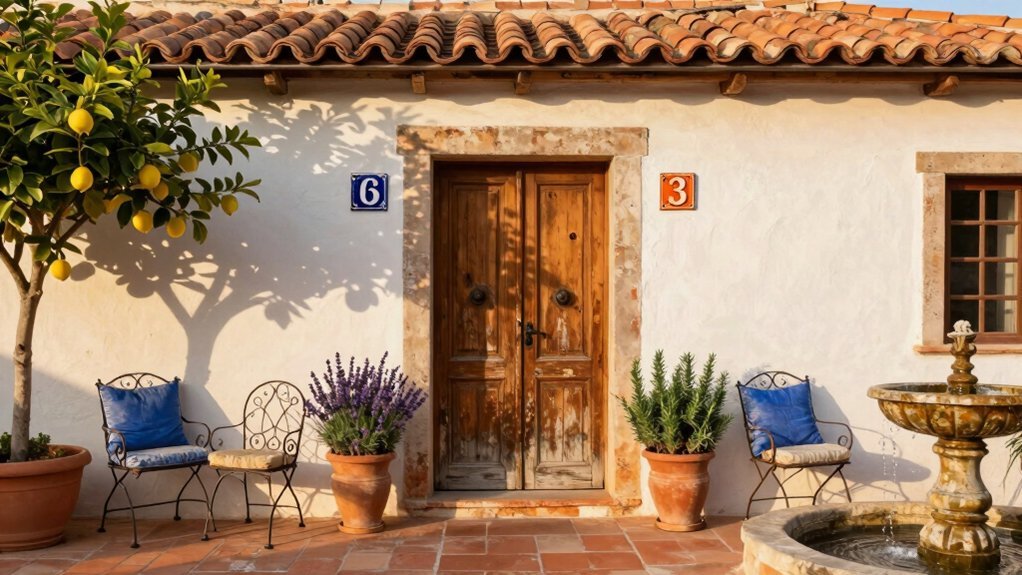
The distinctive warmth of your ochre or sage-trimmed facade creates an ideal backdrop for house numbers that announce your Mediterranean aesthetic with equal craft and clarity. You’ll select hand-painted ceramic tiles featuring cobalt numerals, amber accents, or verdigris borders that artisans fire in traditional kilns. These glazed pieces resist fading, cracking, and moisture damage through decades of sun exposure. You mount them on a stucco wall beside your entry door, or frame them within wrought iron holders that cast decorative shadows. You space individual tiles evenly, allowing grout lines to unify the composition. You choose serif or rustic fonts that complement your architecture’s period. You seal the installation properly, ensuring your address remains legible to visitors and emergency services while expressing your commitment to regional authenticity.
Tuck In a Shaded Stone Bench for Arrival Rituals
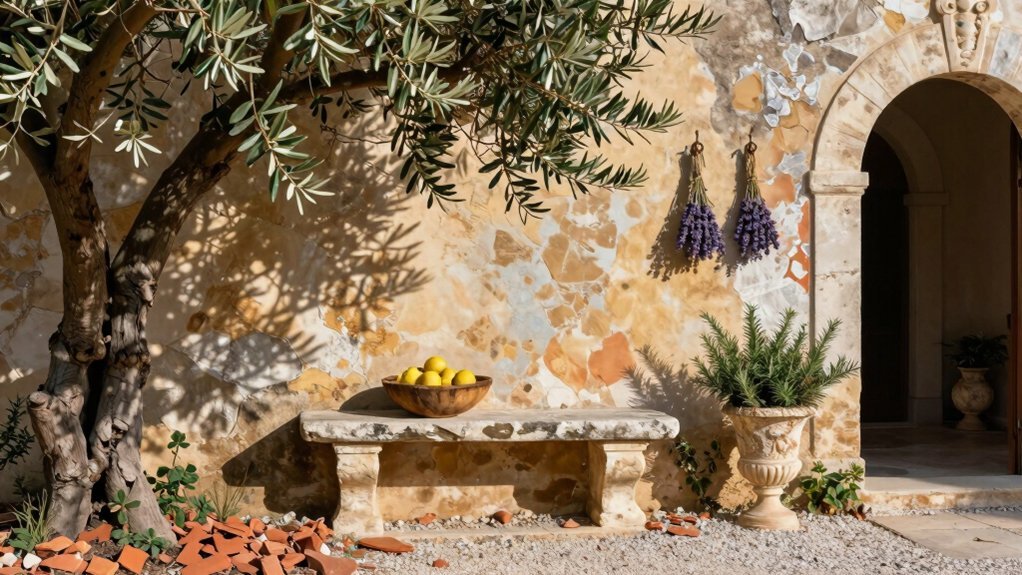
Your hand-painted tile numbers now mark your entry with unmistakable identity, and you will extend this Mediterranean character into the practical rhythms of daily arrival by placing a shaded stone bench where visitors and residents alike may pause, remove shoes, or set down parcels before crossing your threshold.
You’ll position this bench beneath an existing tree or a simple pergola draped with climbing vines, ensuring cool relief from harsh afternoon sun. Select limestone or weathered granite with a smooth, slightly contoured seat that won’t snag fabric or skin. The stone’s thermal mass stays pleasantly cool even when temperatures climb.
Place the bench within six feet of your door, angled to face the approach path rather than the street. This orientation creates a natural conversational pause and allows you to greet guests without turning your back to the entry. Add a small gravel bed beneath to improve drainage and prevent mud accumulation during rain.
Suspend Copper Pots That Catch Light and Weather
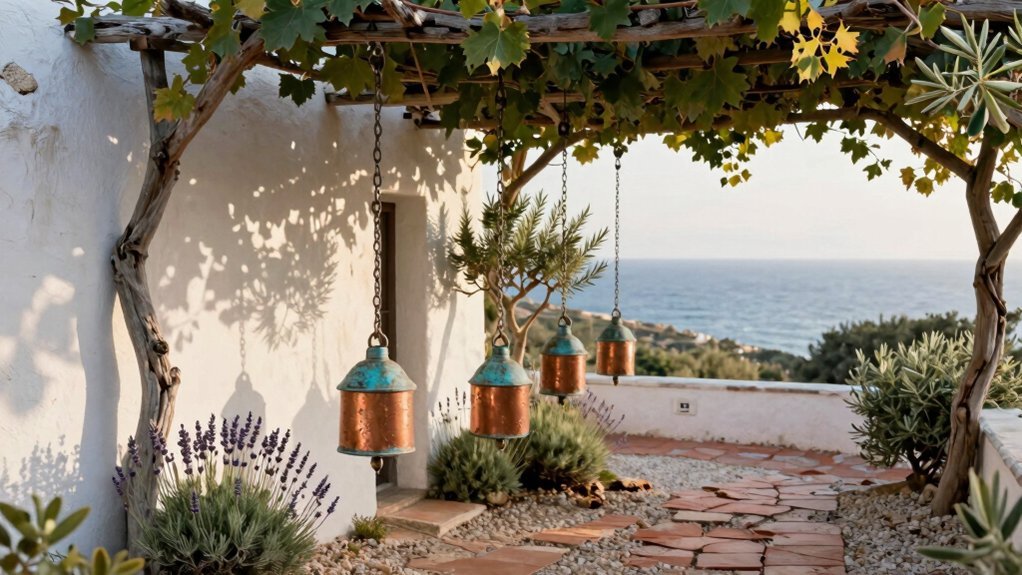
Overhead, you’ll hang copper pots that transform with every shift in daylight and season, their surfaces catching morning sun as warm amber and deepening to russet brown as oxidation slowly builds. You’re creating a living display that responds to rain, wind, and time itself.
You’ll select pots in graduated sizes, suspending them at varying heights with sturdy chains or wrought-iron hooks from a pergola beam, tree branch, or custom metal frame. You’re ensuring each vessel has drainage holes and stable attachment points that withstand outdoor conditions.
You’ll position them where they’ll intercept moving light, perhaps along a path or near seating, so passersby experience shifting reflections. As weeks pass, you’re allowing natural patina to develop, noting how verdigris eventually mingles with burnished areas where pots are frequently touched or rubbed by breezes.
Style Surfaces With Driftwood, Sea Glass, Natural Finds
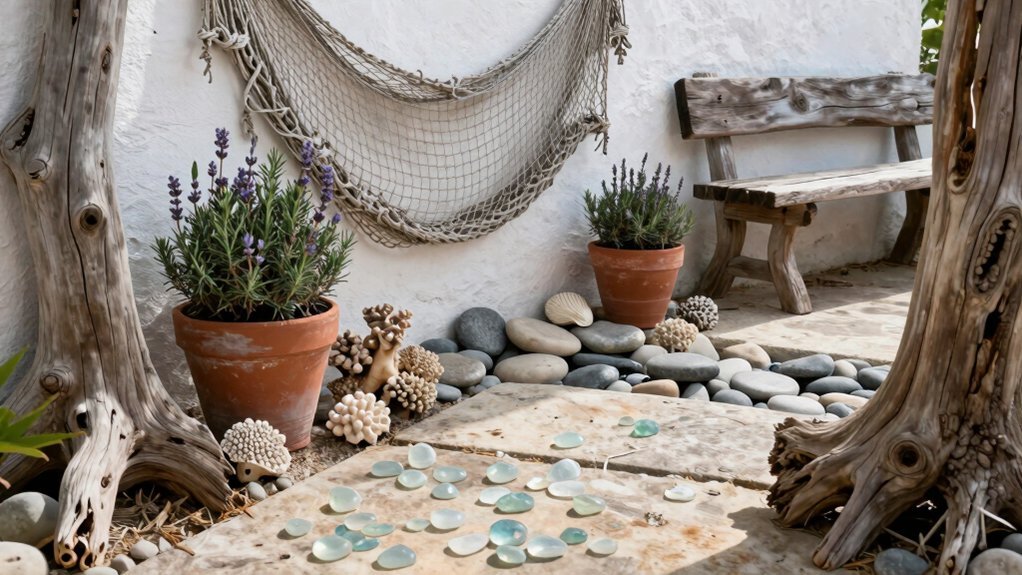
Three weathered pieces of driftwood, several handfuls of sea glass in varying blues and greens, and an assortment of smooth stones or shells form the foundation of surfaces that evoke coastal proximity without literal maritime themes. You’ll arrange these elements across stone tabletops, window ledges, or built-in benches where they catch natural light and cast subtle shadows. Place driftwood pieces at varying angles to create visual rhythm, and nestle sea glass in shallow dishes or mortar gaps where it glints like captured water. You’ll want to select stones with smooth, worn surfaces that suggest years of tidal tumbling, arranging them in small groupings that invite touch. These organic textures contrast deliberately with harder masonry surfaces, softening edges and introducing imperfection. Rotate displays seasonally, replacing sun-bleached finds with fresh discoveries from shoreline walks, ensuring your surfaces maintain authentic, unstudied character.
Finish With Ancient Olive Jars and Terra Cotta Fragments
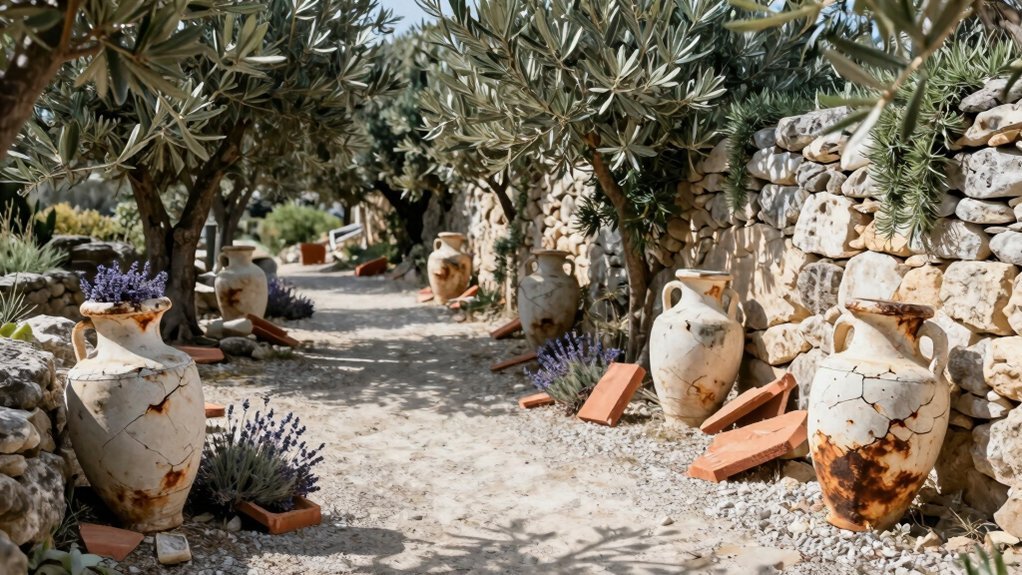
Ancient olive jars and terra cotta fragments carry centuries of utilitarian history into your front yard, grounding the space with artifacts that speak to agricultural tradition and weathered endurance. You’ll position these vessels strategically near entry paths or clustered beneath olive trees, creating focal points that draw the eye and anchor your design. Look for amphorae with intact handles or rim fragments with visible maker’s marks, since authentic imperfections add character that reproductions cannot replicate. You can partially bury larger jars to simulate archaeological discovery, or elevate smaller fragments on stone plinths for elevation and prominence. Group vessels in odd numbers, varying heights and angles to avoid rigid formation. You’ll want drainage holes for planted specimens, or leave them empty as sculptural elements that catch rainfall and cast interesting shadows. These fragments complete your Mediterranean narrative.
Frequently Asked Questions
What Climate Zones Suit Mediterranean Front Yards Best?
You’ll find Mediterranean front yards thrive in hot, dry summers and mild, wet winters. You’ll succeed in zones 9-11, or any area matching this pattern. You can’t go wrong with coastal California, southern Europe, or Australia’s similar climates.
How Much Does Mediterranean Landscaping Typically Cost?
You’ll typically spend $8,000-$25,000 for professional Mediterranean landscaping, though costs vary widely based on yard size, materials, and hardscape elements like stone pathways or terracotta features you choose to include.
Are Mediterranean Plants Safe for Pets and Children?
You’ll find most Mediterranean plants like lavender and rosemary pose minimal risks, but you’ll want to avoid oleander and foxglove since they’re toxic. You’re wise to research specific varieties before planting where pets and children play.
How Do I Maintain Mediterranean Style in Winter?
You’ll protect potted plants by moving them indoors and mulching garden beds heavily. Don’t overwater dormant species, and you’ll add winter-interest evergreens like rosemary to keep that Mediterranean feel alive through cold months.
Can Small Urban Lots Use Mediterranean Design Principles?
You absolutely can adapt Mediterranean design to small urban lots. You’ll use terracotta containers, compact drought-tolerant plants, and textured walls. You’re maximizing vertical space and creating intimate courtyards. It’s all about scale and smart material choices.
Conclusion
You’ve now explored nineteen practical methods for building a Mediterranean front yard that recreates the atmosphere of coastal European destinations, from structural elements like iron gates and limestone pavers to sensory details including water features and aromatic plantings. By combining heavy materials with natural textures and weathered finishes, you’ll establish an outdoor space that functions as a daily retreat, requiring thoughtful planning but rewarding you with lasting vacation-inspired tranquility you can experience without leaving home.