

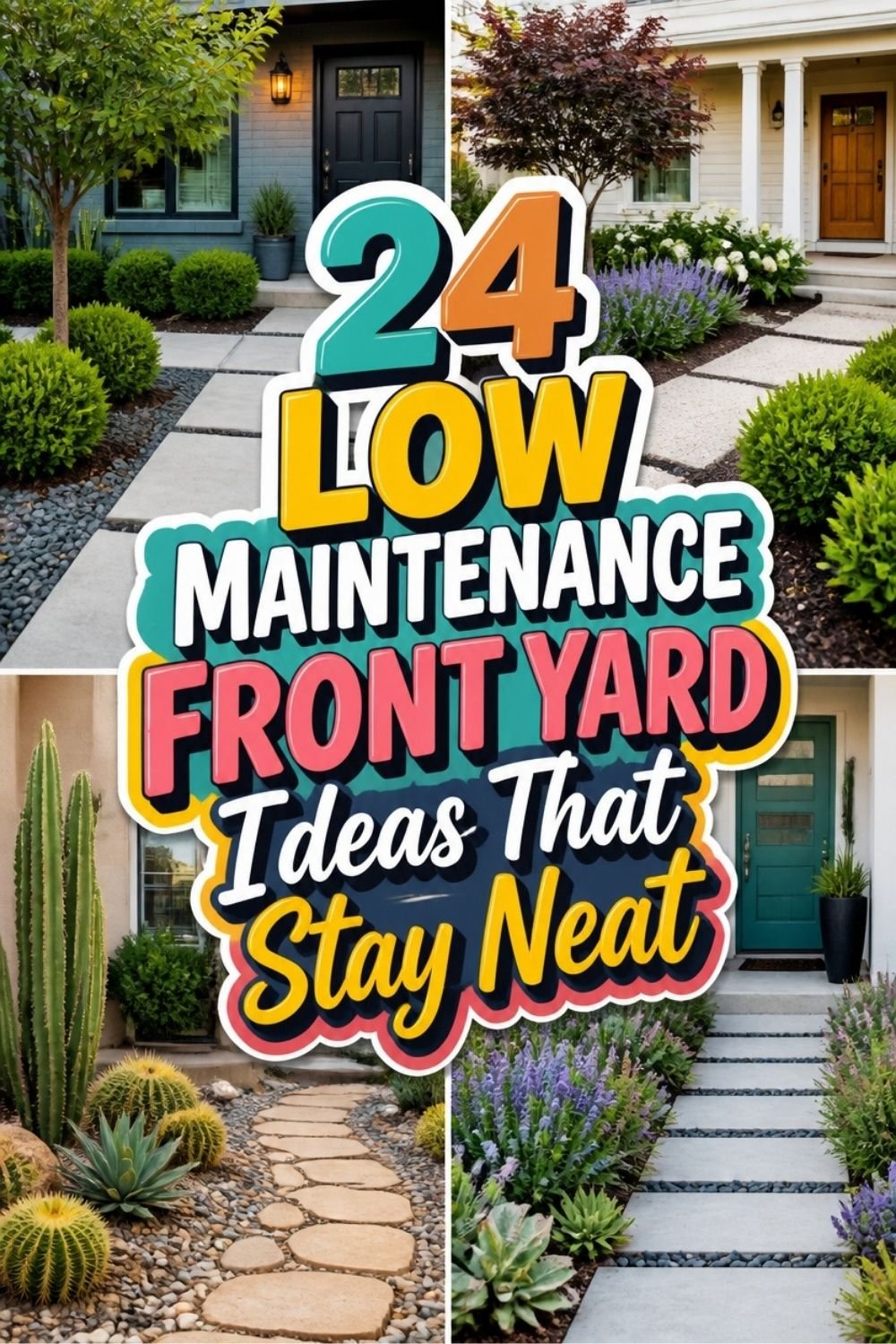
Every Saturday morning for years, I dragged myself outside to mow, edge, and fuss over a lawn that never thanked me for the effort. Eventually I asked why I kept fighting a yard that clearly wanted to be something else.
Traditional lawns demand more time than most of us have, watering, mowing, and fertilizing, only to still look tired by August.
A low maintenance yard isn’t about giving up curb appeal, it’s choosing plants built to thrive with less effort. I swapped grass for ornamental grasses and gravel, and my weekends have never felt the same.
Small Changes That Make the Biggest Difference
Before you tear out your lawn entirely, think about which areas actually need the most upkeep right now. Targeting those problem spots first often delivers noticeable relief without requiring a full yard overhaul on day one.
Drainage and soil quality matter more than people expect when choosing low maintenance plants. Many drought tolerant varieties actually prefer poor, well draining soil, so don’t waste effort amending ground that’s already working in your favor.
Layering hardscaping with plants tends to outperform an all plant approach for long term ease. Gravel, stone, and mulch reduce the total area that needs watering and weeding, leaving you with far less to manage overall.
24 Low Maintenance Front Yard Ideas
This list runs through ground cover swaps, drought tolerant plantings, and hardscaping solutions like gravel gardens and permeable paving that all share one goal, cutting down the time you spend maintaining your yard. Some ideas are quick plant swaps, others are bigger projects worth planning around a weekend or two.
I tried to include enough variety that whether you want to overhaul your entire front yard or just tackle one stubborn problem area, there’s a practical starting point here.
Pick whichever idea solves your biggest yard headache first and build outward from there.
Replace Traditional Grass With Native Ground Cover Plants
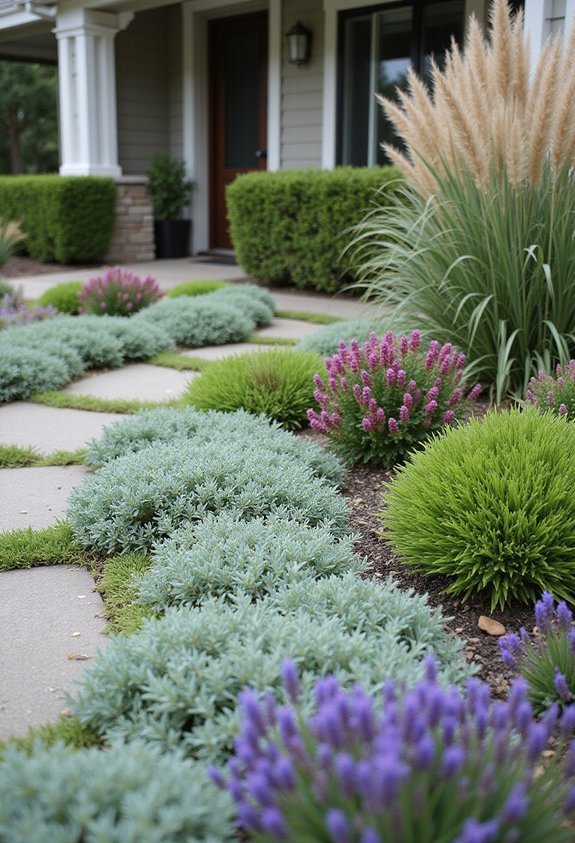
While traditional grass lawns require frequent watering, mowing, and fertilizing, native ground cover plants offer a sustainable alternative that thrives in your local climate with minimal intervention.
You’ll find that these plants naturally adapt to local soil conditions, rainfall patterns, and temperature fluctuations without constant maintenance.
Popular options include creeping thyme, wild strawberry, and moss phlox, which spread horizontally to create dense coverage that suppresses weeds effectively. You can establish these covers by planting small sections that’ll gradually expand, eliminating the need for regular seeding, watering schedules, and chemical treatments that traditional lawns demand.
Choose Drought-Resistant Plants For Minimal Watering
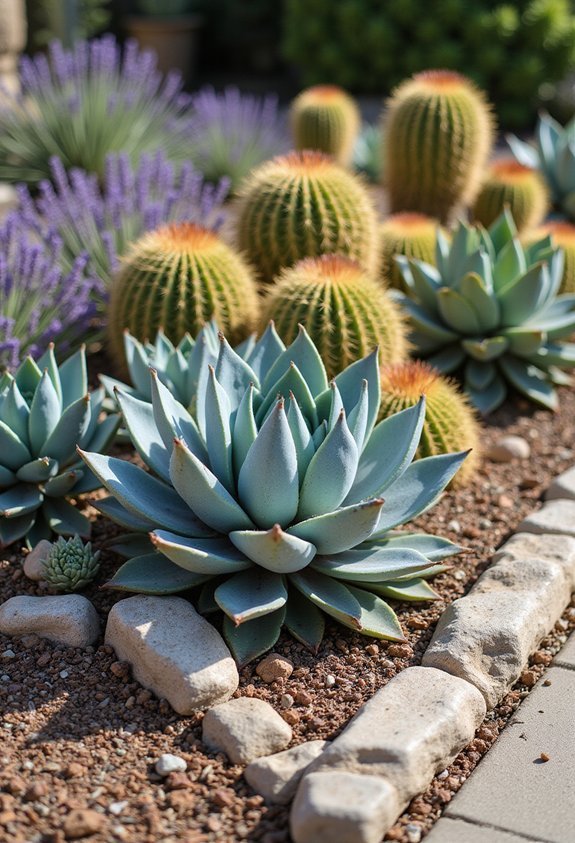
Once you’ve selected appropriate ground cover, you’ll want to incorporate drought-resistant plants throughout your front yard to create a landscape that thrives with minimal watering requirements.
Succulents like agave, aloe, and sedum store water in their leaves, making them perfect for dry conditions. Ornamental grasses such as fountain grass and blue fescue add texture while requiring little moisture.
Native shrubs like lavender, rosemary, and sage provide fragrance and color without frequent irrigation. These plants develop deep root systems that access groundwater naturally, reducing your maintenance responsibilities while creating an attractive, sustainable landscape that withstands seasonal weather variations.
Plant Dense Ornamental Grass Clusters For Easy Care
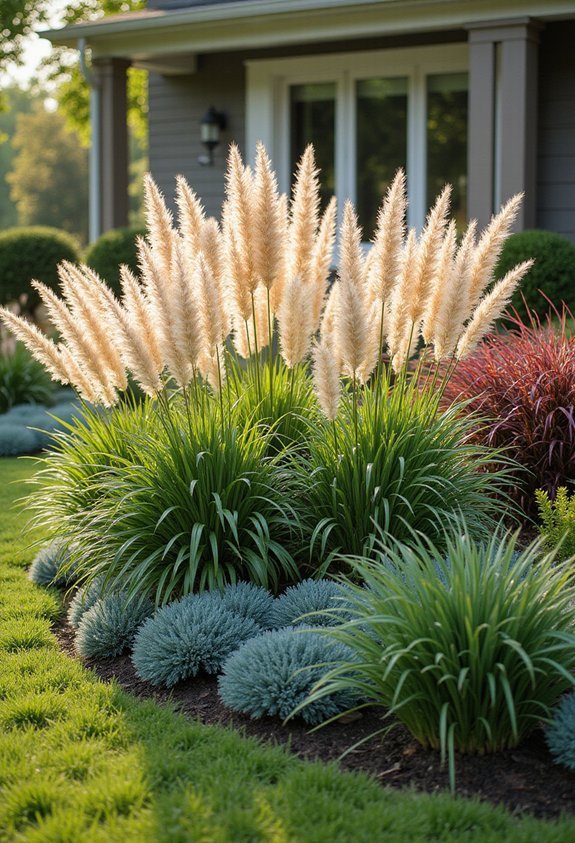
Why struggle with individual plant maintenance when dense ornamental grass clusters can transform your front yard into a stunning, low-maintenance landscape? You’ll create visual impact by planting groups of three to five identical grass varieties in triangular or circular formations, which naturally fills space and suppresses weeds.
Choose hardy options like fountain grass, feather reed grass, or blue fescue that require minimal watering once established. These clusters need only annual cutting in late winter, eliminating frequent trimming schedules. Dense plantings create natural mulch from fallen blades, reducing your need for additional ground cover while providing year-round texture and movement.
Create Low-Maintenance Succulent Garden Displays
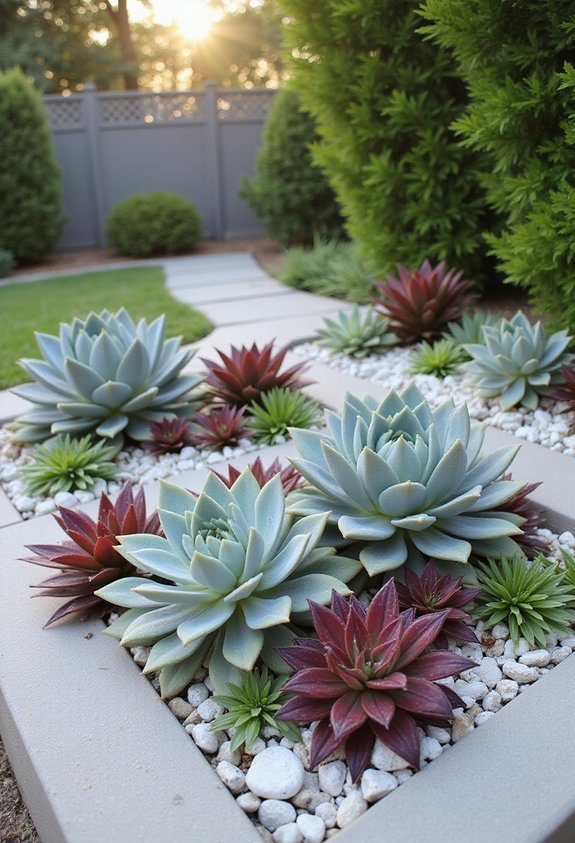
Since succulents naturally thrive in harsh conditions with minimal water and care, you’ll find them perfect for creating striking front yard displays that require almost no maintenance throughout the year.
You can arrange different varieties like jade plants, sedums, and agave in geometric patterns or natural clusters to establish visual interest.
These drought-resistant plants store water in their thick leaves and stems, which means you’ll only need to water them occasionally during extremely dry periods. You should plant them in well-draining soil with gravel or sand amendments, then watch them flourish with virtually no ongoing attention required.
Use Evergreen Shrubs For Year-Round Structure
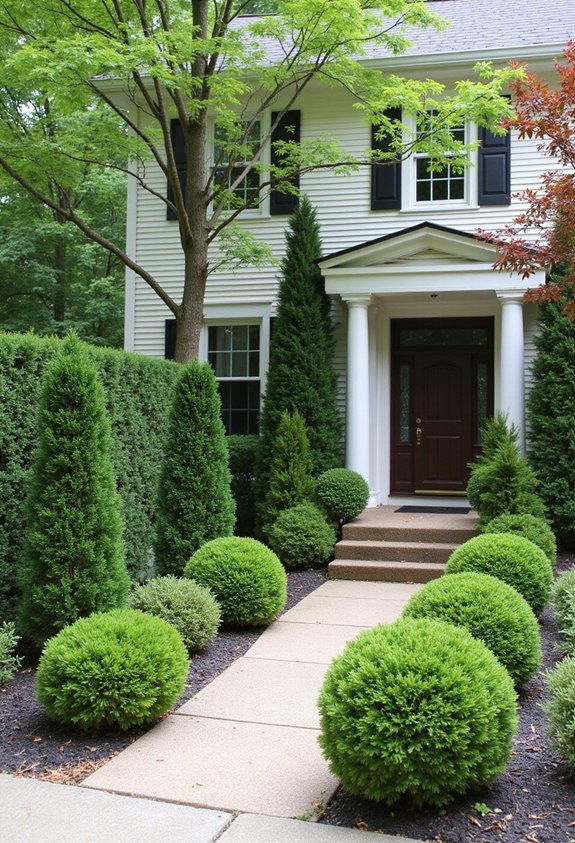
Evergreen shrubs provide the backbone of any low-maintenance front yard because they maintain their foliage throughout all seasons, creating consistent visual structure when other plants have died back or gone dormant.
You’ll want to select varieties that match your climate zone and mature size requirements, positioning them strategically near entryways, corners, and property lines where they’ll anchor your landscape design.
Consider boxwood for formal hedging, juniper for drought tolerance, or rhododendron for shaded areas with colorful blooms. These shrubs require minimal pruning, no replanting, and establish strong root systems that prevent soil erosion while reducing your overall maintenance workload.
Plant Self-Seeding Wildflower Meadows
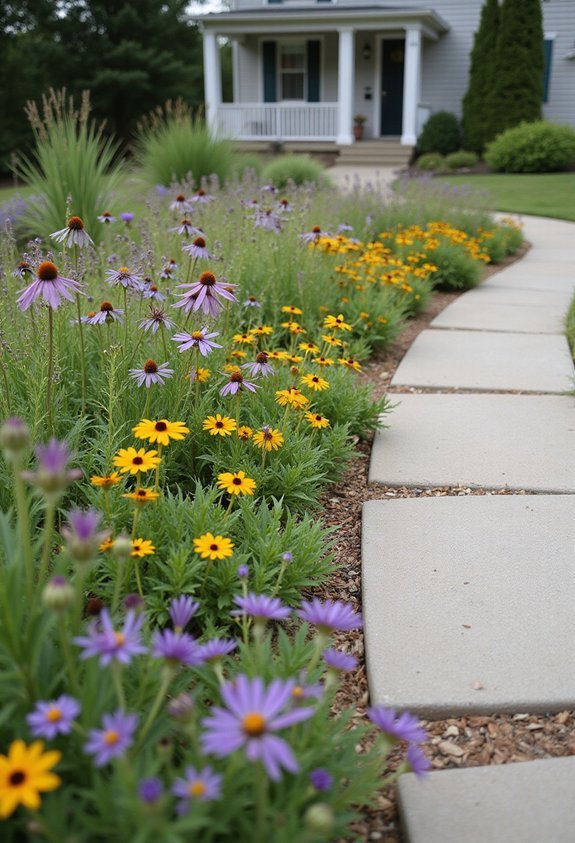
Although traditional flower beds require constant weeding, watering, and replanting, self-seeding wildflower meadows create vibrant displays that regenerate themselves year after year with minimal intervention from you.
You’ll prepare the soil once by removing existing grass, then scatter native wildflower seeds in early spring or fall. Choose species like cosmos, poppies, and black-eyed susans that naturally drop seeds and return annually.
After the initial planting, you’ll only need to mow the area once per year in late fall, allowing the flowers to complete their natural lifecycle and ensuring continuous blooms without additional seeding or maintenance.
Install Drip Irrigation Systems For Automated Watering
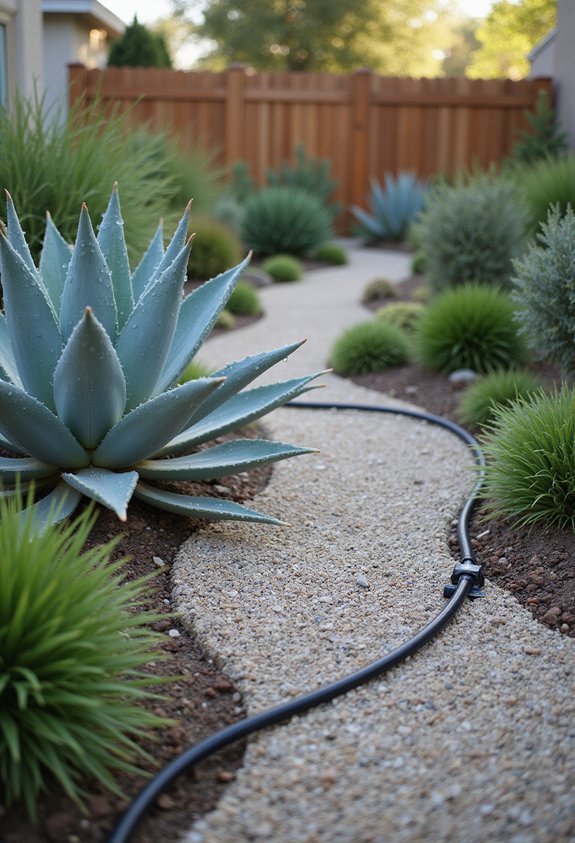
While manual watering consumes significant time and often leads to inconsistent moisture levels that stress plants, drip irrigation systems deliver precise amounts of water directly to plant roots through a network of tubes, emitters, and timers that operate automatically.
You’ll install the main supply line along your planting beds, then connect smaller tubes with emitters positioned near each plant’s base. The timer controls watering frequency and duration, ensuring your plants receive consistent moisture without your daily intervention.
This system reduces water waste by eliminating runoff and evaporation while maintaining ideal soil moisture levels throughout your low-maintenance landscape.
Stop Weeds Forever With Landscape Fabric Barriers
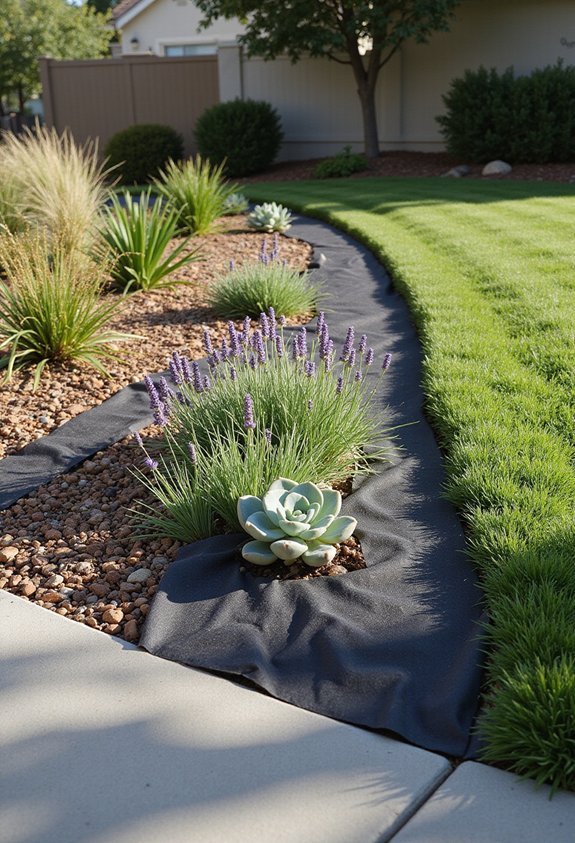
Beyond maintaining consistent watering, you’ll need to address weed control to truly minimize your front yard maintenance requirements, and landscape fabric creates an impermeable barrier that blocks sunlight from reaching weed seeds while allowing water and nutrients to penetrate through to your desired plants.
Install fabric by cutting precise holes for existing plants, then secure edges with landscape staples every twelve inches to prevent shifting. Cover the fabric with decorative mulch or gravel to improve appearance and provide additional protection. Quality woven fabric lasts five to ten years, effectively eliminating hand-weeding and reducing maintenance time considerably.
Apply Decorative Mulch For Moisture Retention
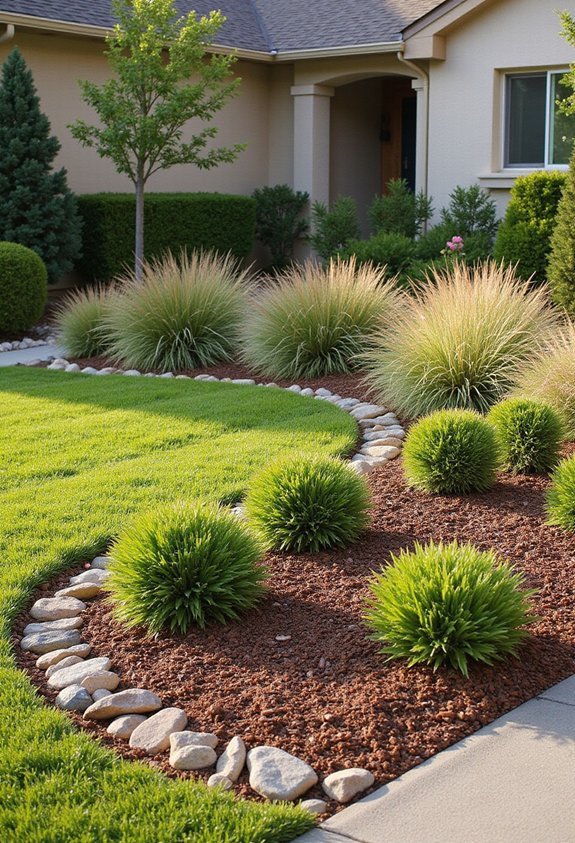
Once you’ve established your weed barrier system, decorative mulch becomes your next strategic tool for reducing watering frequency and creating a polished landscape appearance that requires minimal ongoing attention.
You’ll apply a three-inch layer of organic mulch, such as shredded bark or wood chips, directly over your landscape fabric, ensuring complete coverage around plant bases without touching stems.
This mulch layer insulates soil temperature, slows evaporation rates by up to seventy percent, and gradually decomposes to improve soil structure. You’ll need to replenish mulch annually, adding one inch of fresh material to maintain ideal moisture retention benefits.
Choose Slow-Release Fertilizers For Less Feeding
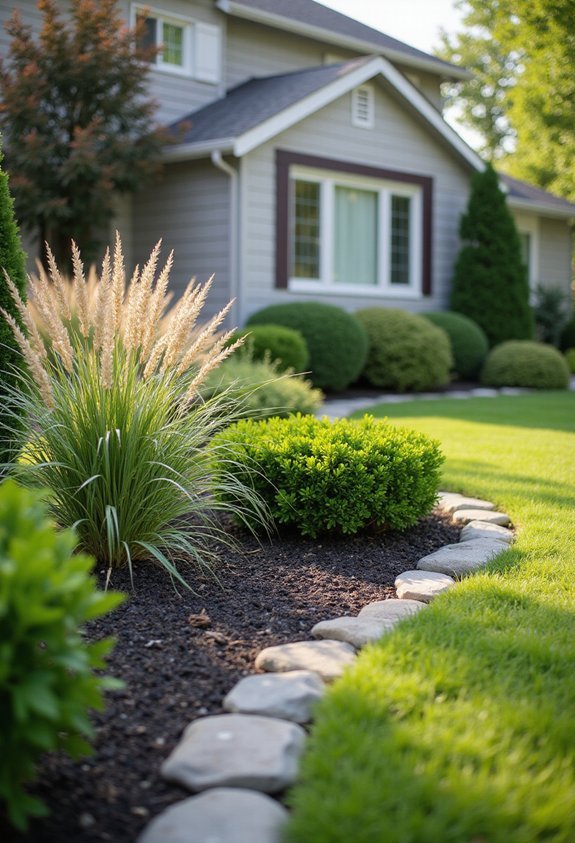
After establishing your mulching system, slow-release fertilizers become your most efficient solution for maintaining plant nutrition throughout the growing season without frequent applications.
These specialized fertilizers contain coated granules that break down gradually, releasing nutrients over three to six months depending on temperature and moisture conditions.
You’ll apply them once in early spring, eliminating the need for monthly feeding schedules that traditional fertilizers require. The controlled nutrient release prevents over-fertilization, reduces plant stress, and minimizes the risk of burning delicate root systems, while ensuring consistent growth throughout the entire growing season with minimal intervention required.
Design Gravel Gardens With Minimal Plant Care
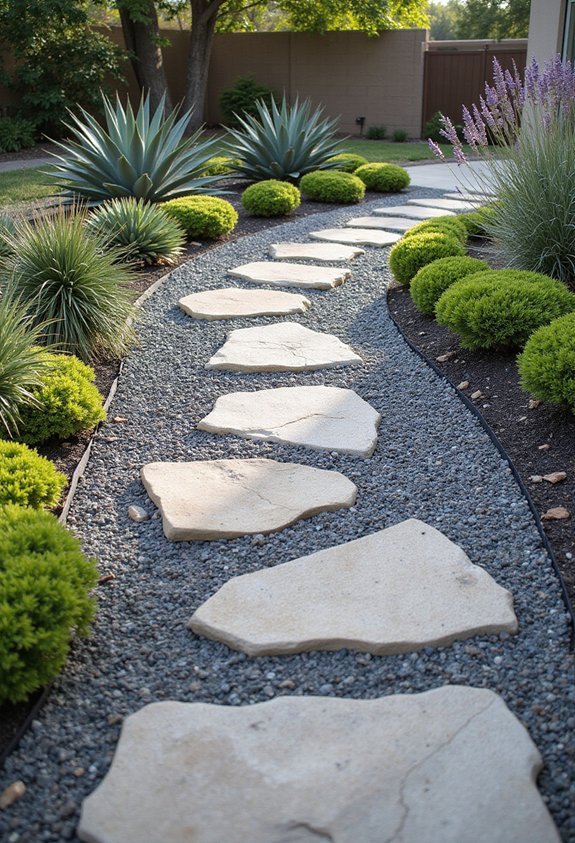
Gravel gardens represent one of the most effective approaches for creating visually striking front yards that require virtually no ongoing maintenance once properly established.
You’ll create designated planting zones by installing landscape fabric beneath three to four inches of decorative gravel, which prevents weeds while allowing proper drainage.
Select drought-tolerant plants like ornamental grasses, sedums, and native perennials that thrive in well-draining conditions, spacing them strategically throughout the gravel bed. You’ll only need to rake the gravel occasionally and trim plants annually, making this design incredibly sustainable for busy homeowners seeking attractive, functional landscaping solutions.
Install Artificial Turf For Zero-Maintenance Lawns
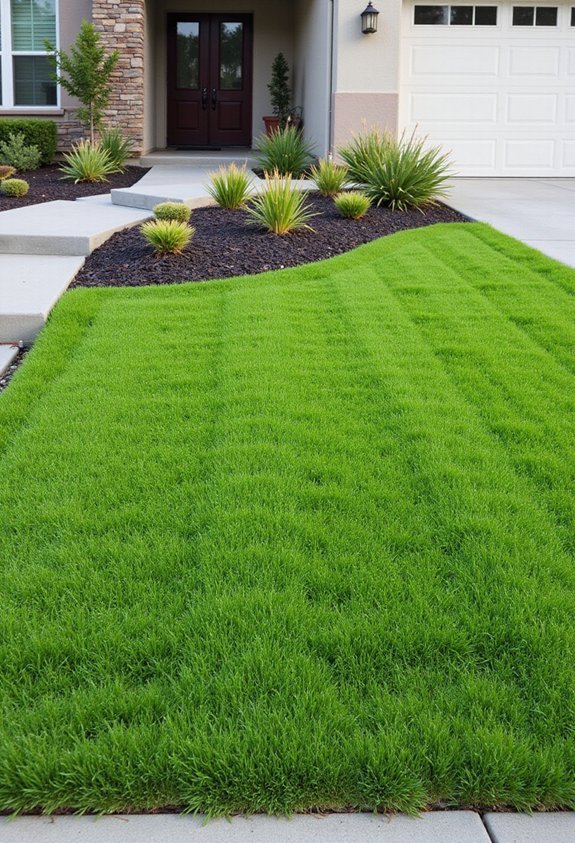
Modern artificial turf technology offers homeowners an exceptional solution for achieving consistently green, pristine lawns without the endless cycle of watering, mowing, fertilizing, and pest control that traditional grass demands.
You’ll find today’s synthetic grass products feature realistic textures, varied blade heights, and natural color variations that closely mimic real grass. Installation requires proper ground preparation, including excavation, base material compaction, and precise turf alignment with secure edges.
You’ll eliminate weekly mowing schedules, seasonal fertilizer applications, and expensive irrigation systems while maintaining year-round curb appeal that withstands heavy foot traffic, pet activity, and extreme weather conditions.
Build Raised Stone Planters For Better Drainage
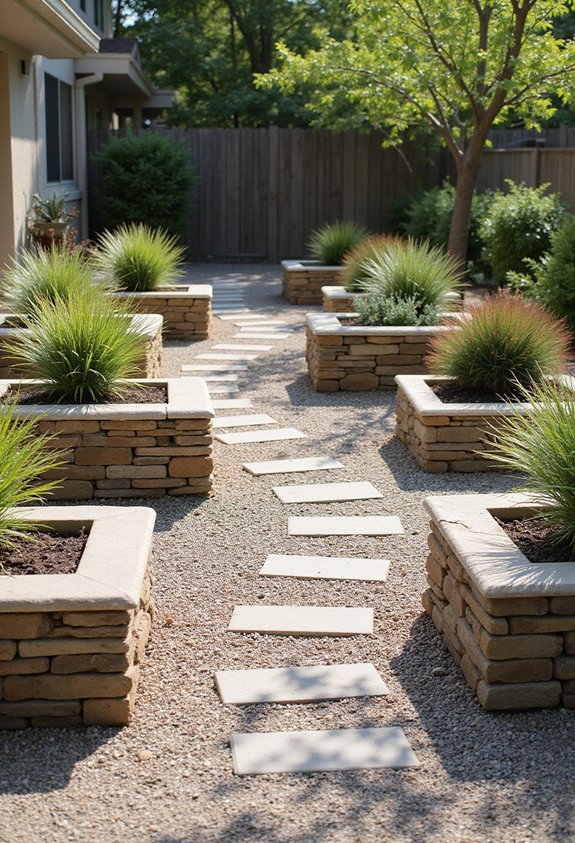
Building raised stone planters transforms your front yard drainage challenges while creating attractive focal points that require minimal ongoing maintenance throughout the seasons.
You’ll construct these planters by stacking natural stone blocks or concrete retaining wall stones, creating elevated beds that naturally drain excess water away from plant roots.
Choose materials like limestone, sandstone, or manufactured blocks that complement your home’s exterior colors and architectural style. Fill planters with well-draining soil mixed with gravel or sand, then plant drought-tolerant perennials, ornamental grasses, or native shrubs that thrive in improved drainage conditions without requiring frequent watering or intensive care.
Create Geometric Hardscaping With Accent Plants
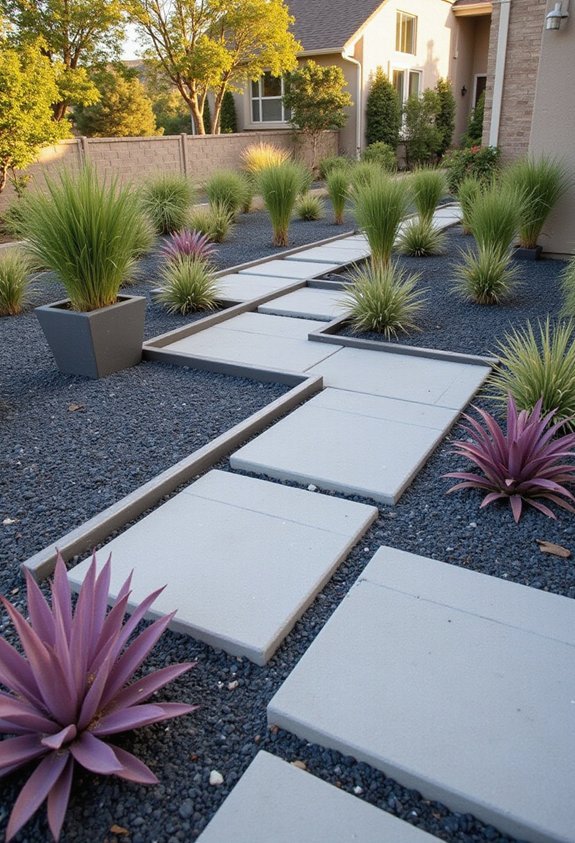
Sharp geometric lines and symmetrical patterns create striking visual impact in your front yard when you combine structured hardscaping materials with carefully selected accent plants that enhance the clean, organized design.
You’ll achieve this look by installing concrete pavers, steel edging, or rectangular planters arranged in precise patterns. Position low-maintenance plants like ornamental grasses, succulents, or boxwood shrubs at strategic intervals to soften hard edges without disrupting the geometric framework.
This approach requires minimal upkeep since the hardscaping defines boundaries naturally, while drought-tolerant accent plants reduce watering needs and maintain their shape throughout seasons.
Use Large Decorative Boulders As Natural Anchors
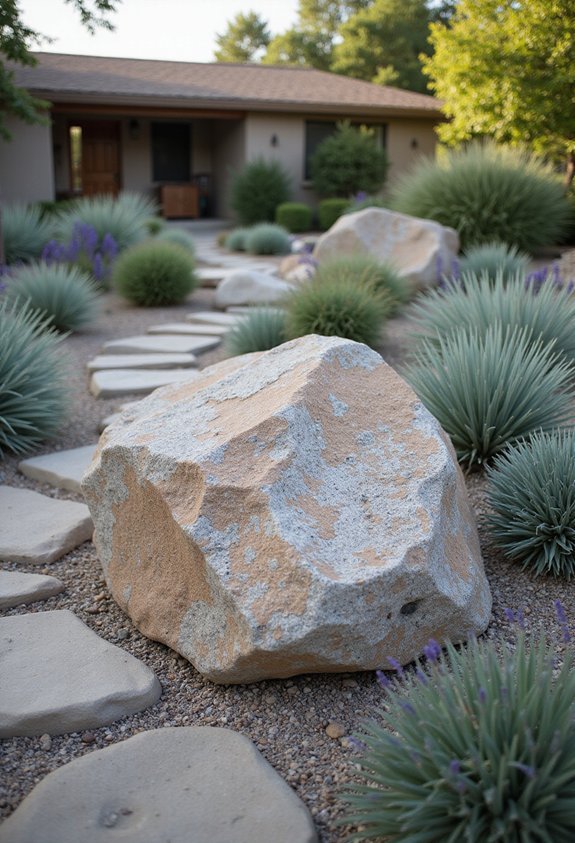
Several strategically placed decorative boulders transform your front yard into a low-maintenance landscape by serving as permanent focal points that require zero care while providing visual weight and natural texture.
You’ll position these large stones to anchor planting beds, define pathways, or create visual boundaries between different landscape zones.
Choose boulders with interesting colors, textures, or shapes that complement your home’s architecture, and arrange them in odd-numbered groupings for maximum visual impact. These natural elements eliminate the need for seasonal planting replacements while adding structural interest that withstands weather conditions without maintenance requirements.
Design Modern Concrete And Steel Landscapes
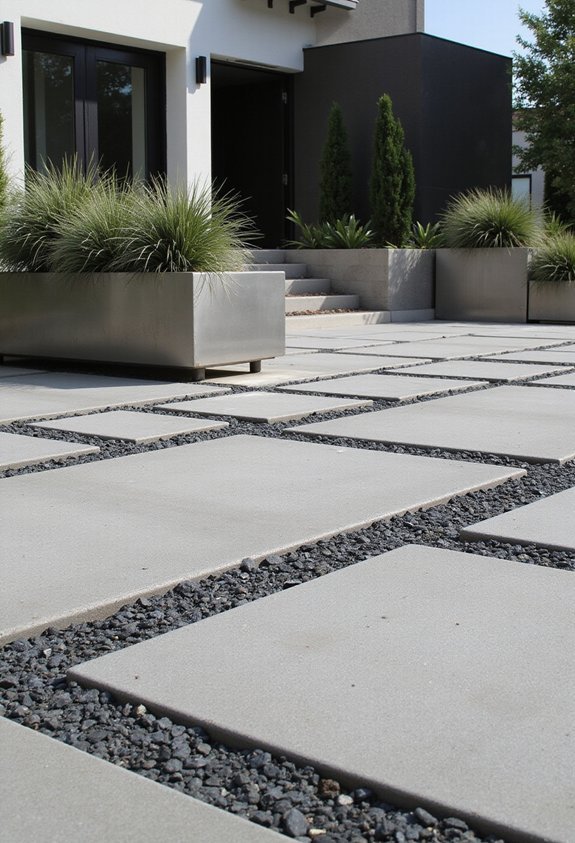
Contemporary concrete and steel elements create ultra-low maintenance front yards that deliver striking visual appeal through clean lines, geometric forms, and industrial textures that require virtually no upkeep once installed.
You can incorporate poured concrete planters with built-in steel edging to define spaces and contain minimal plantings like ornamental grasses or succulents.
Steel retaining walls, concrete pavers arranged in geometric patterns, and corten steel panels add architectural interest while eliminating traditional landscaping tasks. These materials withstand weather extremes, resist staining, and maintain their appearance for decades without painting, sealing, or regular maintenance requirements that burden homeowners.
Build Low Wooden Decks Instead Of Grass Areas
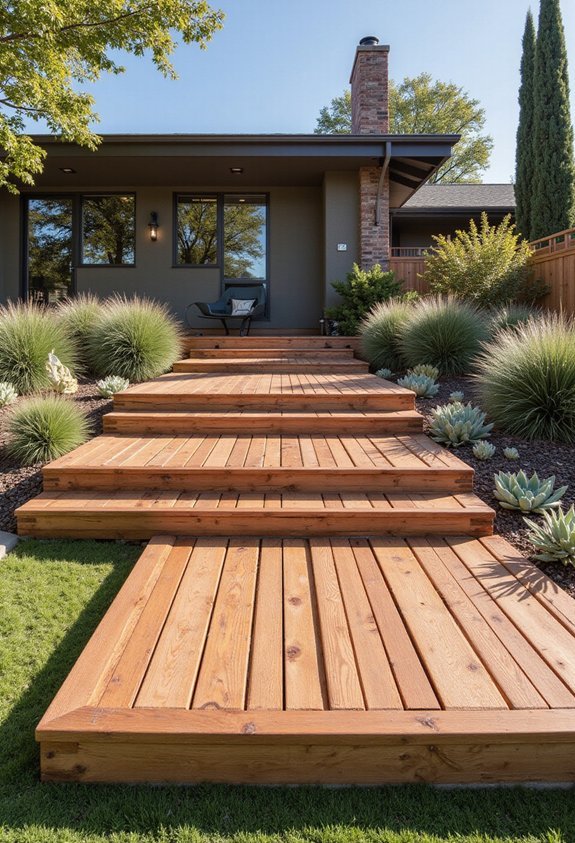
When you replace traditional grass lawns with low wooden decks, you’ll eliminate weekly mowing, fertilizing, watering, and seasonal reseeding while creating functional outdoor spaces that serve multiple purposes throughout the year.
These elevated platforms work best when built twelve to eighteen inches above ground level, allowing proper drainage underneath while preventing moisture damage to your home’s foundation.
You’ll need pressure-treated lumber or composite materials that resist rot, insects, and weather damage for long-term durability. Install proper spacing between deck boards to guarantee water drainage, and add built-in planters or seating areas to maximize your investment’s functionality and visual appeal.
Install Permeable Paving For Easy Drainage
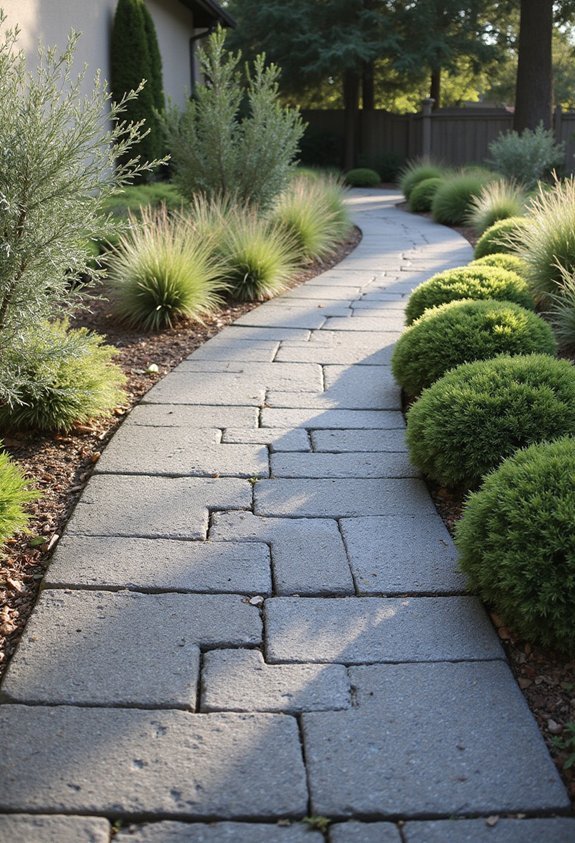
Since permeable paving materials allow water to pass through their surface directly into the ground below, you’ll solve drainage problems while creating durable pathways, patios, and parking areas that require minimal upkeep compared to traditional concrete or asphalt surfaces.
Choose from permeable concrete, porous asphalt, or interlocking pavers with gaps filled by gravel or sand. These materials reduce surface runoff, prevent puddles, and eliminate the need for complex drainage systems.
Installation requires proper base preparation with graded stone layers, but once established, permeable paving needs only occasional sweeping to remove debris that might clog the porous surface.
Create Defined Stone Pathways Through Gardens
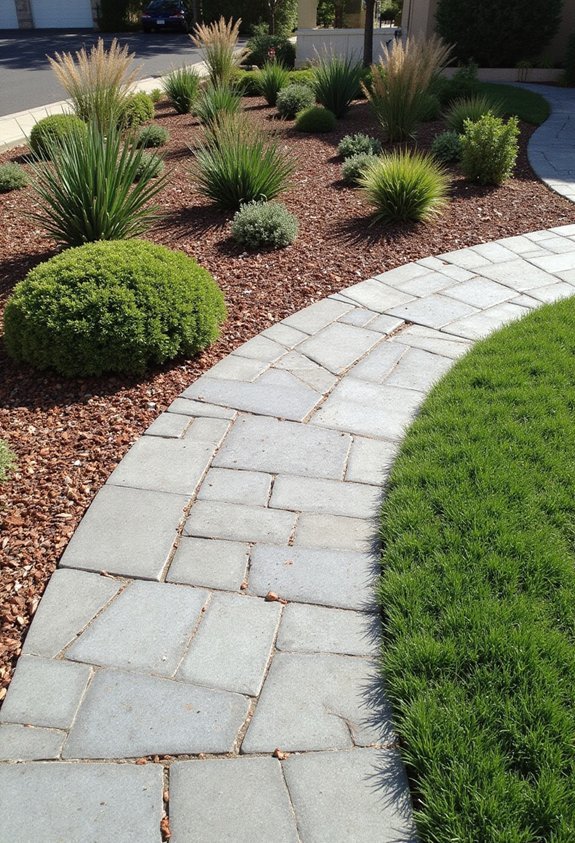
Natural stone pathways provide structure and visual appeal to your front yard gardens while requiring virtually no maintenance once properly installed, making them an ideal solution for homeowners who want clearly defined walking routes without ongoing upkeep demands.
You’ll create boundaries between planted areas and establish clear traffic patterns that prevent soil compaction in garden beds. Choose materials like flagstone, slate, or fieldstone for durability and natural aesthetics.
Install stones on a sand base with gravel underneath for proper drainage, ensuring each piece sits level and stable. These pathways complement existing plantings while guiding visitors through your landscape design.
Use Container Gardens For Flexible Low-Maintenance Design
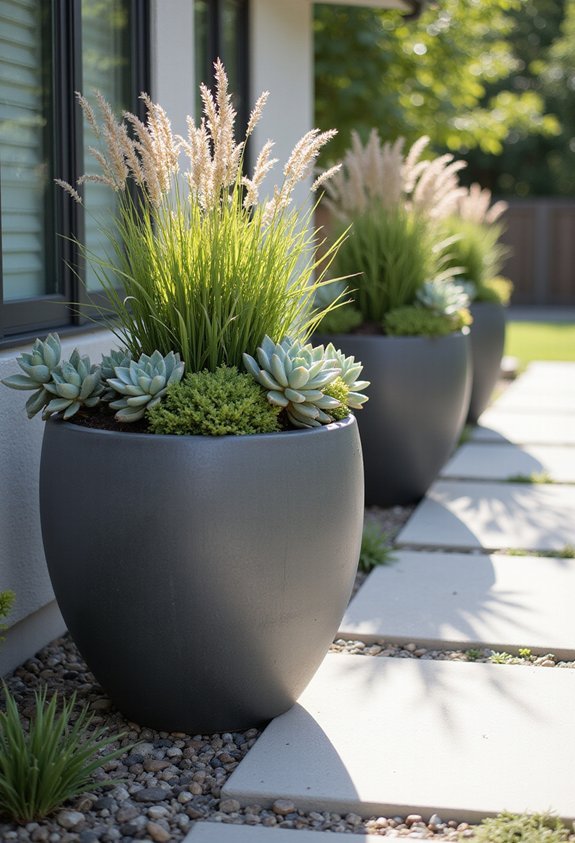
Container gardens offer unmatched versatility for front yard landscaping, allowing you to create stunning displays that require minimal long-term commitment while providing maximum visual impact throughout the seasons.
You can easily rearrange pots to refresh your design, swap out plants when they decline, and move containers to optimize growing conditions.
Choose weather-resistant materials like fiberglass, concrete, or ceramic for durability. Select drought-tolerant plants such as succulents, ornamental grasses, or native perennials that thrive with minimal watering. Group containers of varying heights and sizes to create dynamic focal points while maintaining complete control over soil quality and plant placement.
Plant Specimen Trees In Mulched Bed Islands
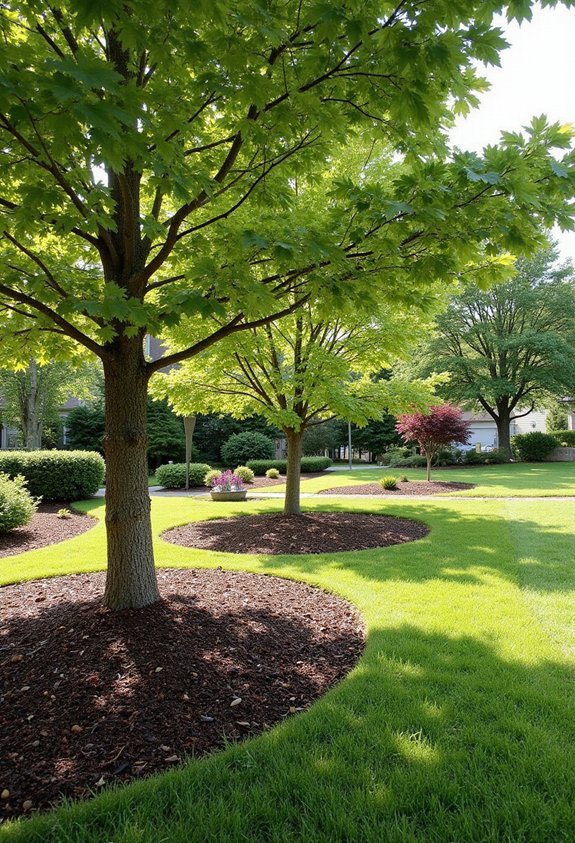
When you establish specimen trees as central focal points within well-defined mulched islands, you create architectural structure that anchors your front yard design while dramatically reducing maintenance requirements compared to traditional lawn areas.
Choose trees with interesting bark, foliage, or seasonal color like Japanese maple, dogwood, or ornamental cherry. Create circular or curved bed shapes around each tree, extending the mulched area to the drip line. Apply three to four inches of organic mulch annually to suppress weeds, retain moisture, and eliminate mowing needs.
This approach provides year-round visual interest while requiring minimal upkeep.
Design Minimalist Japanese-Inspired Garden Spaces
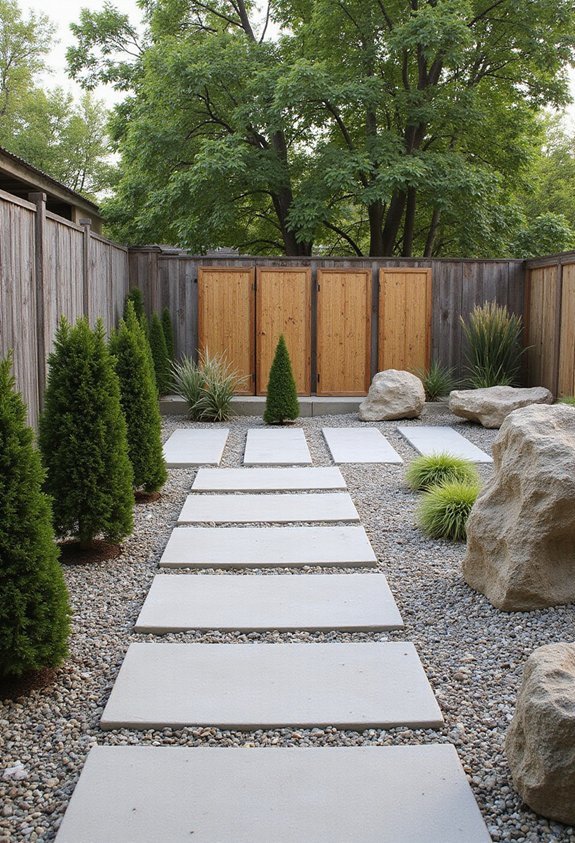
Building on the concept of structured focal points, Japanese-inspired garden design takes minimalism to its highest form by emphasizing clean lines, carefully chosen elements, and purposeful empty spaces that require virtually no maintenance once established.
You’ll create dramatic impact using three key components: ornamental grasses like mondo grass or Japanese forest grass, strategically placed rocks or boulders, and raked gravel or decomposed granite pathways. Position larger stones as anchors, then surround them with low-growing evergreen plants that won’t need pruning.
Add bamboo screening for privacy, and incorporate a simple water feature if desired, completing your serene, self-sustaining landscape.
Install Solar Lighting For Hands-Off Nighttime Appeal
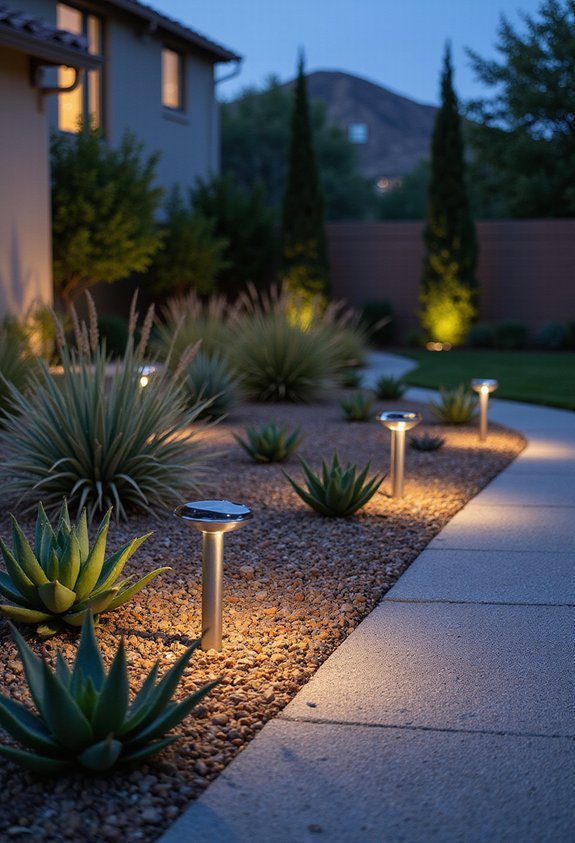
Solar lighting transforms your low-maintenance front yard into an enchanting evening landscape without requiring electrical wiring, monthly energy costs, or complicated installation procedures that would disrupt your existing garden design.
You’ll position solar path lights along walkways, driveways, and garden borders by simply pushing their stakes into soil or mounting them on existing surfaces. These fixtures automatically charge during daylight hours through built-in photovoltaic panels, then illuminate pathways and focal points from dusk until dawn.
You can choose from various styles including lanterns, spotlights, and string lights to complement your minimalist aesthetic while ensuring safe navigation after dark.
Choose Hardy Bulbs For Effortless Seasonal Color
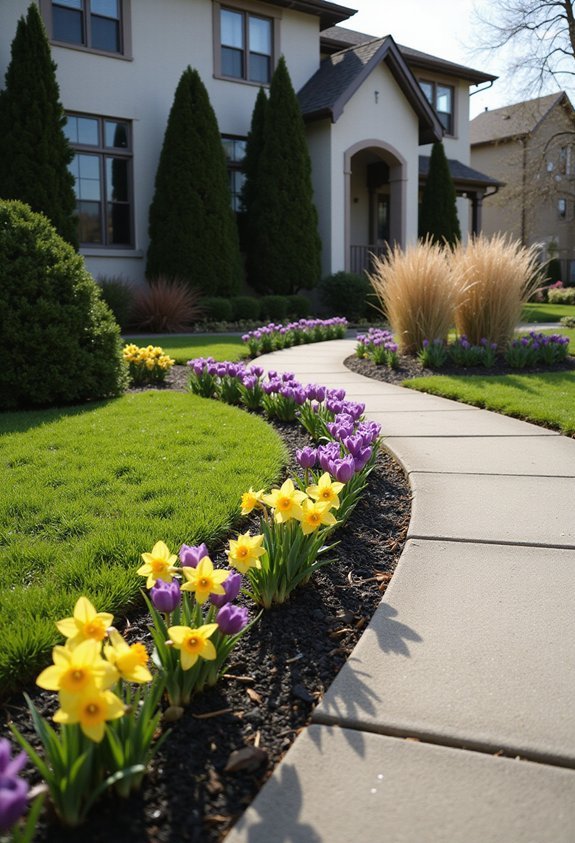
Hardy bulbs provide reliable seasonal color throughout your front yard while requiring minimal annual maintenance, as these resilient plants return year after year once you’ve planted them in appropriate locations.
You’ll achieve continuous blooms by selecting varieties that flower during different seasons, such as crocuses and daffodils for spring, followed by alliums for summer interest.
Plant these bulbs in well-draining soil during fall, spacing them according to package directions and placing them at depths three times their height. Once established, you’ll only need to allow foliage to die back naturally after blooming, which feeds next year’s flowers.
Conclusion
A low maintenance front yard was never about giving up on beauty, even though that’s the assumption I had walking into this myself. It’s about working with plants and materials that don’t demand constant attention to look genuinely good.
I still think about how much dread I used to feel looking at my calendar and seeing yard work scheduled in for the weekend. These days that dread is mostly gone, replaced by a yard that mostly takes care of itself.
Drought resistant plants, evergreen shrubs, and a little strategic hardscaping go a long way toward cutting your weekly workload down to almost nothing. The upfront effort pays off for years afterward.
You don’t need to convert your entire yard overnight either. Start with the area that bothers you most and expand gradually as you see what actually works in your specific conditions.
Whatever combination you settle on, the real win here is getting your weekends back without sacrificing how your home looks from the street. That tradeoff is worth chasing.
I’d love to hear which idea you’re starting with, or what’s already working in your own low maintenance yard. Leave a comment below and tell me how it’s coming along.