
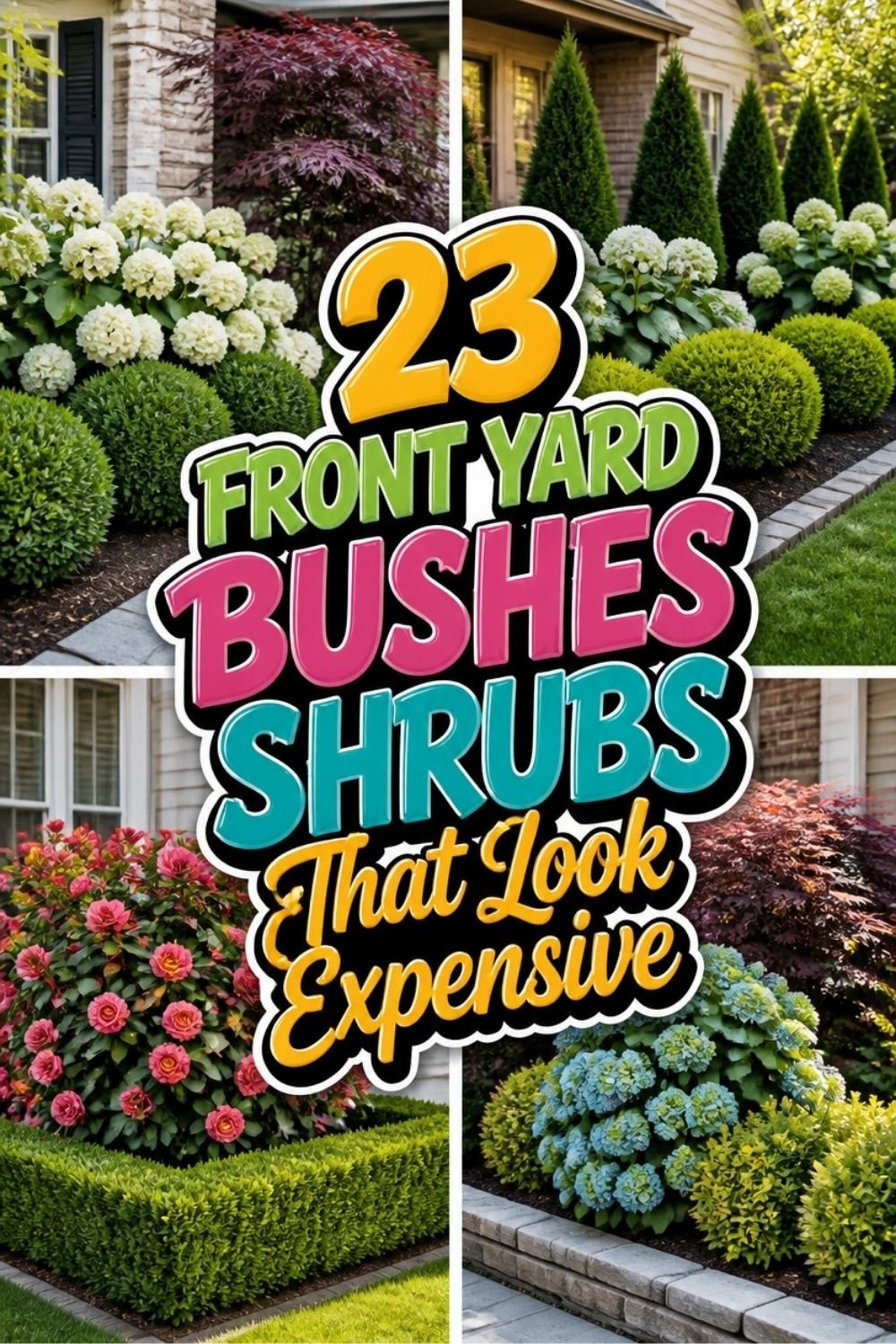
You’re probably spending thousands more than necessary on landscaping when strategic shrub selection can create that high-end look for a fraction of the cost. Professional landscape designers rely on specific varieties that deliver maximum visual impact while requiring minimal maintenance, and these plants consistently fool neighbors into thinking you’ve hired expensive help. The secret lies in understanding which bushes naturally develop that polished, manicured appearance that transforms ordinary front yards into magazine-worthy displays that command attention and respect.
Boxwood: The Classic Hedge That Never Goes Out Of Style
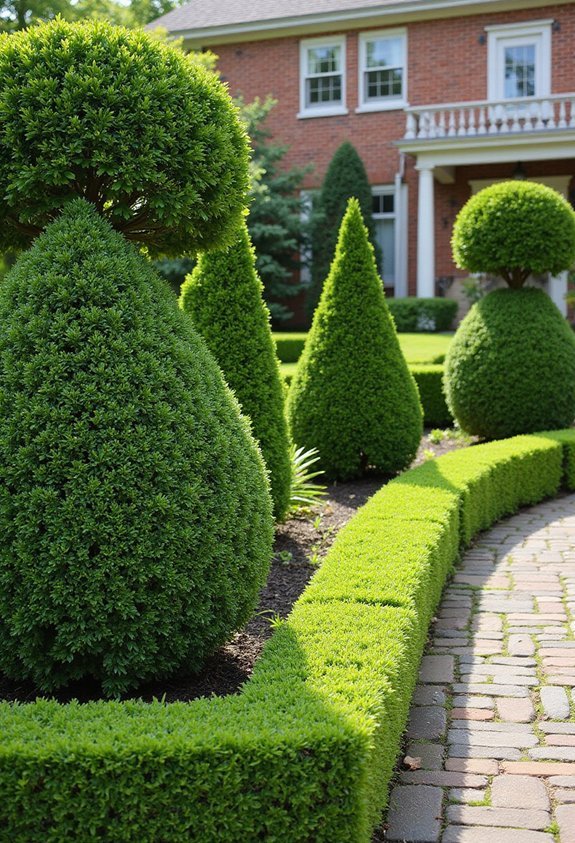
When you’re looking for a front yard shrub that combines timeless elegance with reliable performance, boxwood stands as one of the most dependable choices available to homeowners. You’ll find that boxwood’s dense, small leaves create a refined appearance that complements both traditional and modern architectural styles effectively. These evergreen shrubs maintain their vibrant green color throughout all seasons, providing consistent visual appeal regardless of weather conditions. You can easily shape boxwood through regular pruning, allowing you to create formal hedges, geometric forms, or natural borders that enhance your property’s curb appeal and overall landscape design.
Also read: 16+ FRONT YARD COURTYARD Designs With Instant Charm!
Japanese Yew: Easy-Care Evergreen That Looks Expensive
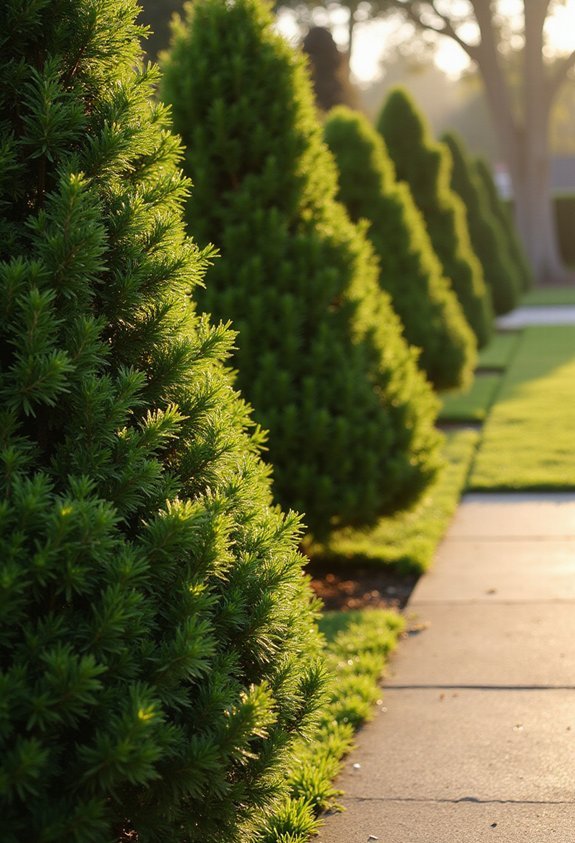
If you’re seeking a front yard shrub that delivers premium aesthetics without the premium maintenance requirements, Japanese yew represents an exceptional investment for your landscape design. This evergreen shrub maintains its deep green foliage throughout all seasons, creating year-round visual appeal that suggests professional landscaping. Japanese yew tolerates various soil conditions and light levels, from full sun to partial shade, making it adaptable to most front yard environments. You’ll appreciate its slow growth pattern, which means less frequent pruning, and its natural resistance to pests and diseases that typically plague other shrubs.
Holly Bushes: Glossy Leaves And Bright Winter Berries
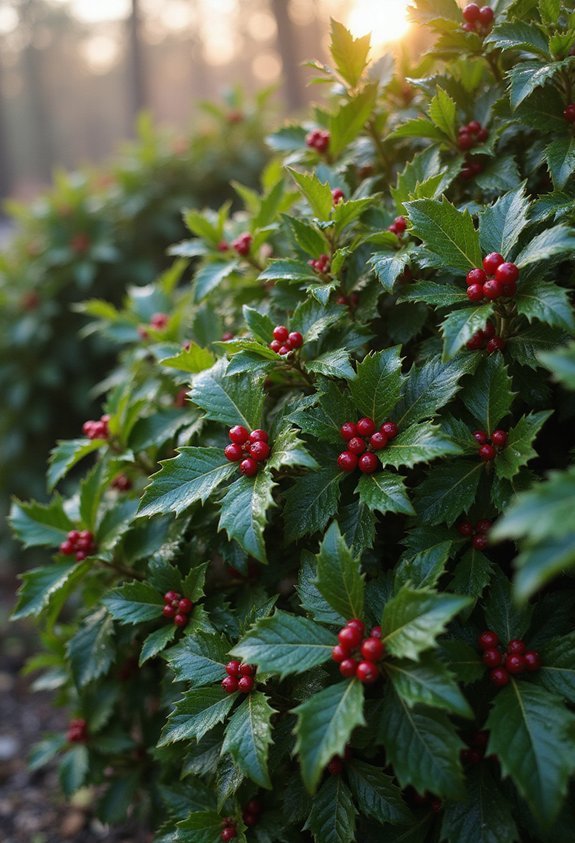
Few shrubs can match the dual-season beauty that holly bushes bring to your front yard landscape, combining lustrous evergreen foliage with vibrant red berries that create stunning winter displays. You’ll find holly varieties ranging from compact dwarf cultivars to towering specimens that reach fifteen feet, making them versatile choices for any garden design. These hardy shrubs thrive in partial shade to full sun conditions, requiring minimal maintenance once established. Plant female varieties alongside male holly plants to guarantee berry production, as cross-pollination is necessary for the brilliant red fruit that makes these bushes exceptional winter focal points.
Privet: Fast-Growing Hedge For Instant Privacy
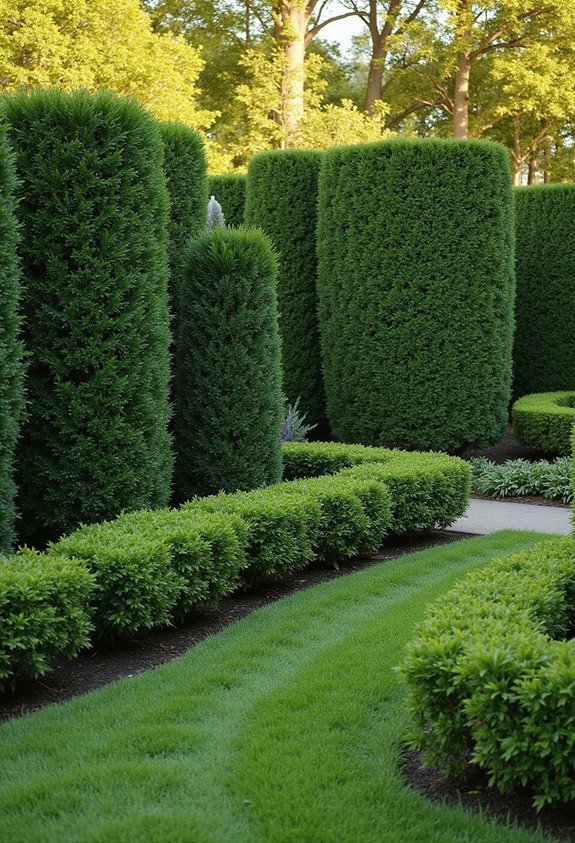
Most homeowners who need quick privacy solutions turn to privet hedges because these resilient shrubs can grow up to three feet per year, creating dense natural barriers in just one or two growing seasons. You’ll find privet adapts to various soil conditions and tolerates both full sun and partial shade, making it versatile for different yard locations. Plant individual shrubs eighteen to twenty-four inches apart for ideal hedge formation, and trim them twice yearly during spring and late summer to maintain desired height and shape. Regular pruning encourages bushier growth, resulting in thicker privacy screens for your front yard.
Azaleas: Vibrant Color Clouds That Stop Traffic
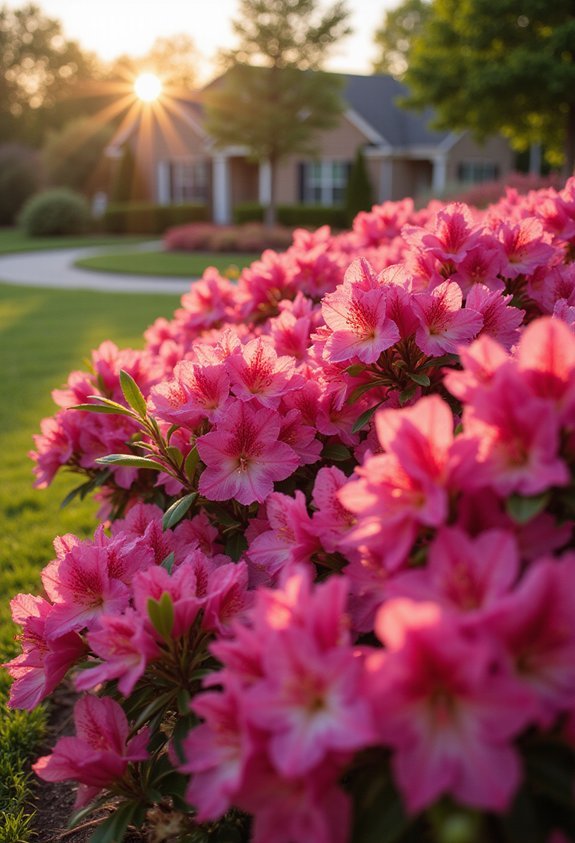
Nothing transforms a plain front yard into a breathtaking landscape quite like azaleas in full bloom, as these spectacular flowering shrubs produce masses of vibrant blooms that create eye-catching color displays from early spring through late summer depending on the variety you choose. You’ll find azaleas thrive in partial shade with well-draining, acidic soil that stays consistently moist but never waterlogged. Plant them in clusters of three or five for maximum visual impact, spacing them four to six feet apart to allow proper air circulation and prevent fungal diseases that can damage their delicate foliage.
Rhododendrons: Bold Blooms For Shady Spots
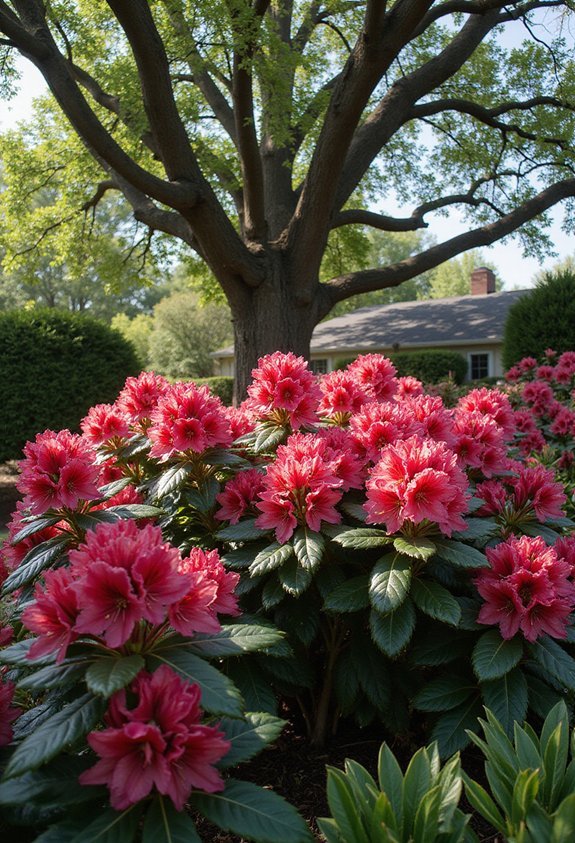
Rhododendrons deliver spectacular spring displays with their large, showy flower clusters that range from pure white and soft pink to deep purple and brilliant red, making them ideal choices for homeowners who want dramatic color in shadier areas where many other flowering shrubs struggle to perform. You’ll find these evergreen shrubs thrive in acidic, well-draining soil with consistent moisture and protection from harsh afternoon sun. Plant them in locations that receive morning light but afternoon shade, spacing them according to their mature size to guarantee proper air circulation and prevent overcrowding that can lead to disease problems.
Forsythia: Golden Yellow Branches That Herald Spring
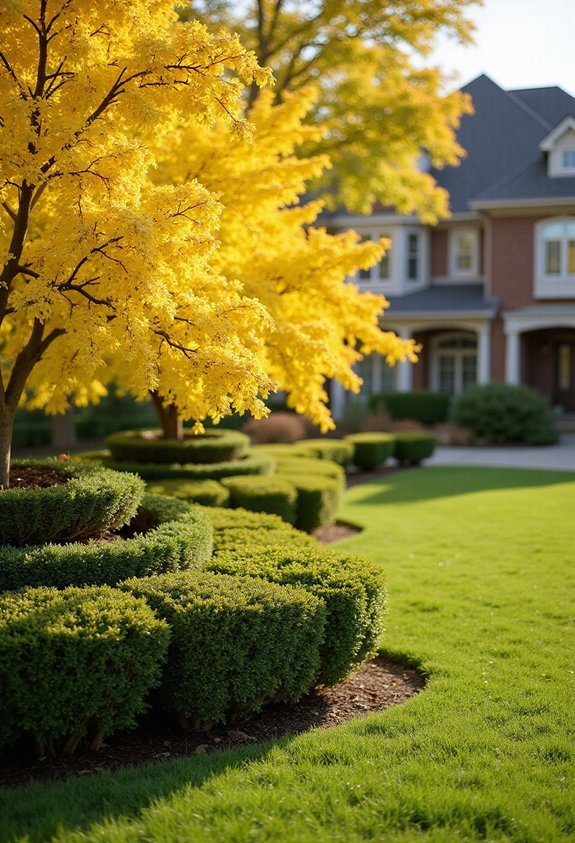
While rhododendrons provide stunning color in shaded locations, forsythia shrubs create equally impressive displays in sunny areas with their brilliant golden-yellow flowers that burst forth on bare branches before leaves emerge in early spring. You’ll find these hardy shrubs reach heights of six to ten feet, spreading equally wide when mature. Plant forsythia in well-draining soil with full sun exposure for maximum bloom production. Prune immediately after flowering ends to maintain shape and encourage next year’s blooms, since forsythia flowers on old wood from the previous growing season.
Lilac Bushes: Fragrant Purple Clusters Everyone Remembers
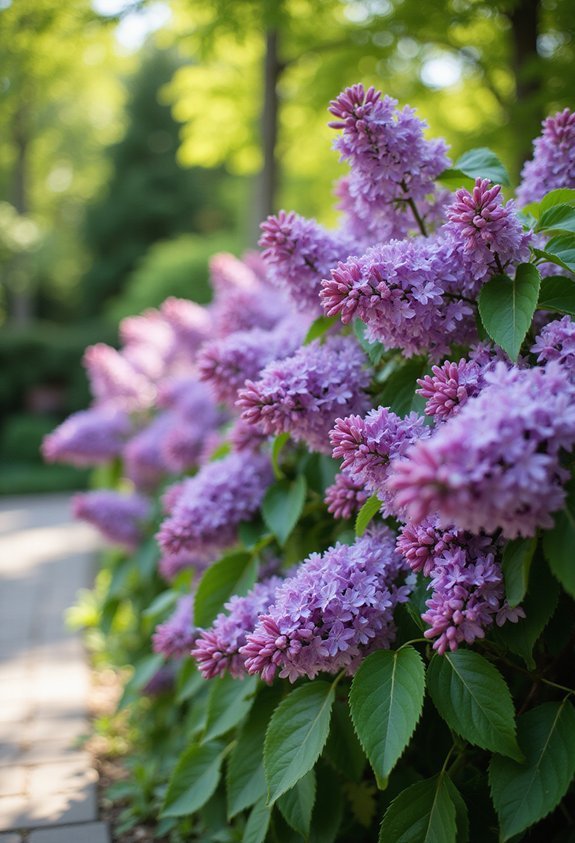
Because lilac bushes combine nostalgic charm with practical landscaping benefits, they’ve remained one of America’s most beloved flowering shrubs for generations of homeowners who appreciate their intoxicating fragrance and reliable spring blooms. You’ll discover these hardy perennials thrive in zones three through seven, requiring full sun to partial shade and well-draining soil with neutral to slightly alkaline pH levels. Plant lilacs six to eight feet apart to accommodate their mature spread, which typically reaches eight to twelve feet in both height and width, creating natural privacy screens while producing clusters of purple, white, or pink flowers that attract beneficial pollinators.
Japanese Pieris: Elegant Bell Flowers With Evergreen Leaves
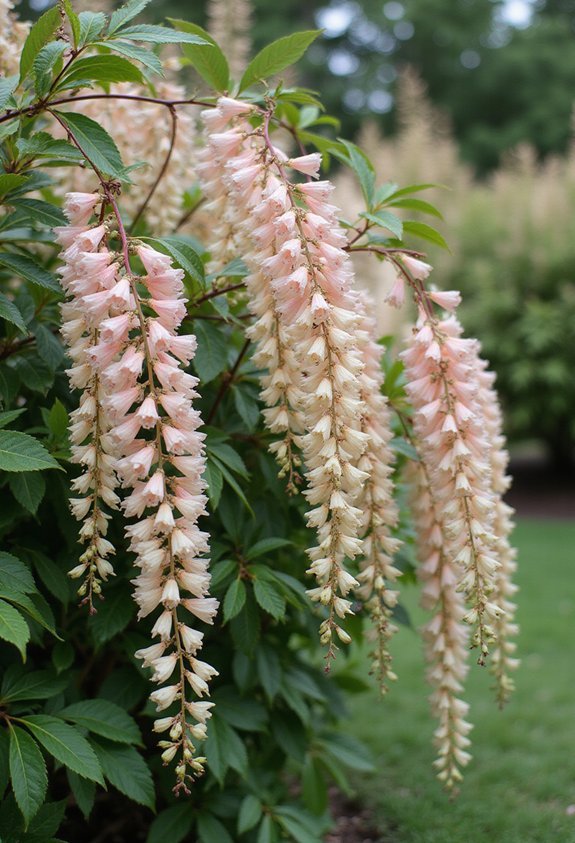
Japanese pieris offers homeowners an entirely different aesthetic appeal from the bold spring spectacle of lilac bushes, providing year-round visual interest through glossy evergreen foliage and delicate drooping clusters of bell-shaped flowers that bloom in early spring. You’ll find this shrub maintains its deep green leaves throughout winter months, creating consistent structure in your landscape design. The flowers emerge in white, pink, or red varieties, hanging gracefully like tiny lanterns from branch tips. You can plant Japanese pieris in partial shade locations where other flowering shrubs struggle, and it’ll thrive in acidic soil conditions similar to azaleas and rhododendrons.
Mock Orange: Sweet-Scented White Blooms
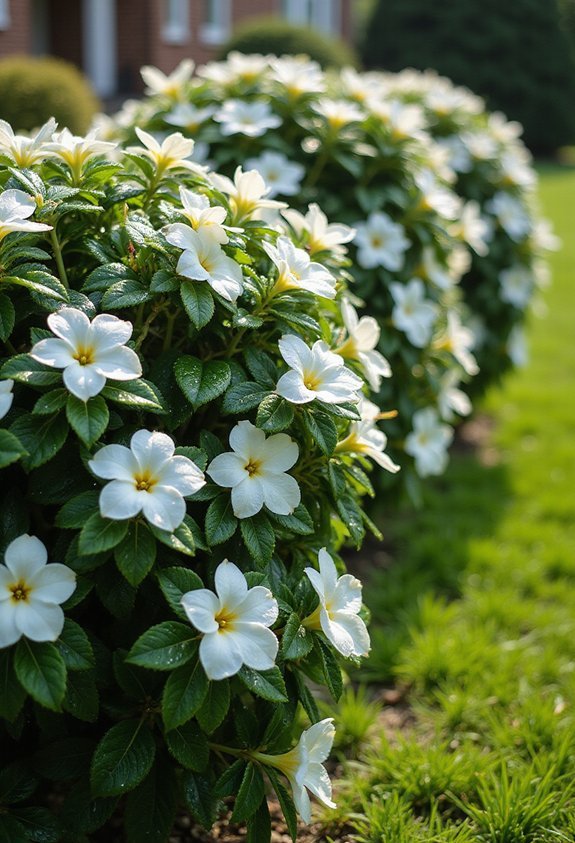
Mock orange shrubs deliver an exceptional fragrance experience that rivals expensive perfumes, producing clusters of four-petaled white flowers that emit an intoxicating citrus-like scent throughout late spring and early summer. You’ll find these deciduous shrubs reach four to eight feet tall, creating impressive vertical presence in your front yard landscape. Plant mock orange in well-draining soil with full sun to partial shade exposure for ideal blooming performance. The oval-shaped green leaves provide attractive foliage after flowers fade, maintaining visual interest through summer months. Prune immediately after blooming ends to encourage next year’s flower production and maintain desired shape.
Deutzia: Delicate Star-Shaped Spring Flowers
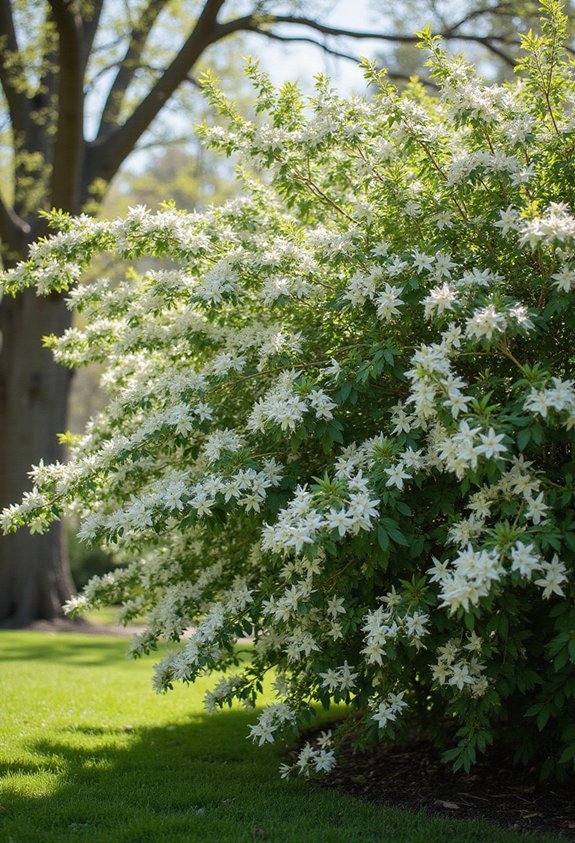
When spring arrives in your garden, deutzia shrubs transform into breathtaking displays of delicate star-shaped flowers that cascade along gracefully arching branches, creating an elegant focal point that draws attention from every angle of your front yard. You’ll find these deciduous shrubs produce clusters of white or pink blooms that completely cover the foliage during peak flowering season. Plant deutzia in well-draining soil with full sun to partial shade exposure for ideal bloom production. Regular pruning after flowering maintains the shrub’s natural arching form while promoting vigorous growth for the following year’s spectacular display.
Hydrangeas: Show-Stopping Blooms That Change Color
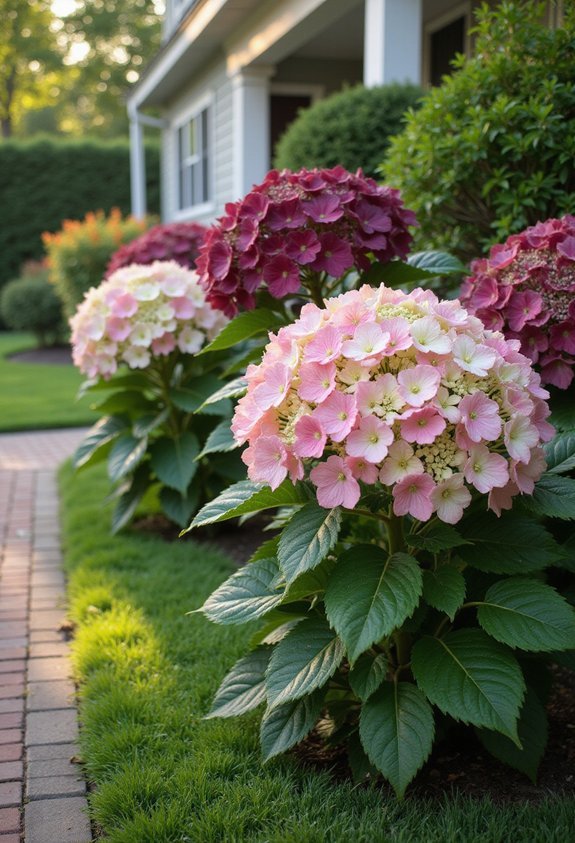
Hydrangeas deliver some of the most spectacular and dynamic flowering displays you can achieve in your front yard landscape, producing massive clusters of blooms that can dramatically shift from one color to another based on your soil’s pH levels and aluminum availability. You’ll find that acidic soils with pH levels below 6.0 typically produce blue flowers, while alkaline soils above 7.0 create pink blooms. White varieties remain unchanged regardless of soil conditions. You can plant these hardy shrubs in partial shade areas where they’ll thrive with consistent moisture and well-draining soil throughout the growing season.
Oakleaf Hydrangea: Cone-Shaped Flowers Plus Fall Fireworks
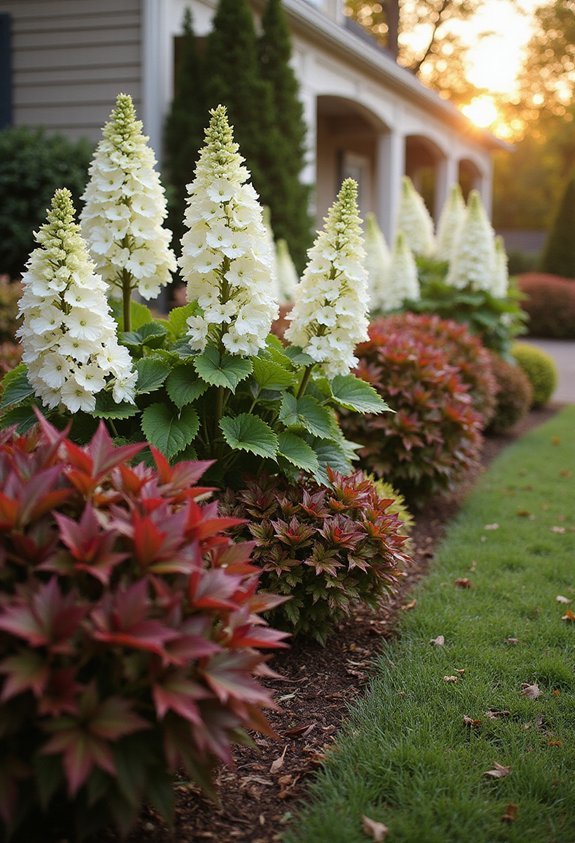
Unlike their mophead cousins that produce rounded flower clusters, oakleaf hydrangeas create distinctive cone-shaped blooms that rise majestically above broad, oak-shaped leaves during summer months. You’ll notice these white flower panicles gradually shift to pink and burgundy as they age, providing extended color throughout the growing season. The real spectacle arrives in autumn when the foliage transforms into brilliant shades of orange, red, and purple, creating stunning visual impact in your landscape. These hardy shrubs thrive in partial shade to full sun, reaching four to six feet tall, and they’re more drought-tolerant than traditional hydrangeas once established.
Rose Of Sharon: Late Summer Blooms When Others Fade
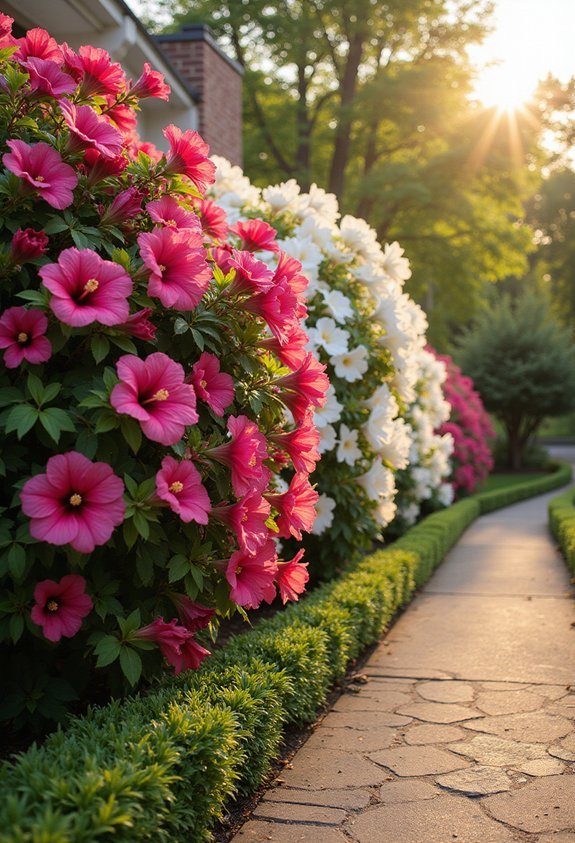
Rose of Sharon shrubs earn their reputation as garden workhorses by producing vibrant flowers from mid-July through September, precisely when most other flowering plants begin to fade in the summer heat. You’ll appreciate their trumpet-shaped blooms in colors ranging from white and pink to purple and blue, each measuring three to four inches across. These hardy shrubs reach heights of eight to twelve feet at maturity, making them excellent choices for privacy screens or focal points. You can plant them in full sun to partial shade, and they’ll tolerate various soil conditions while requiring minimal maintenance once established.
Spirea: Cascading Flowers On Graceful Arching Branches
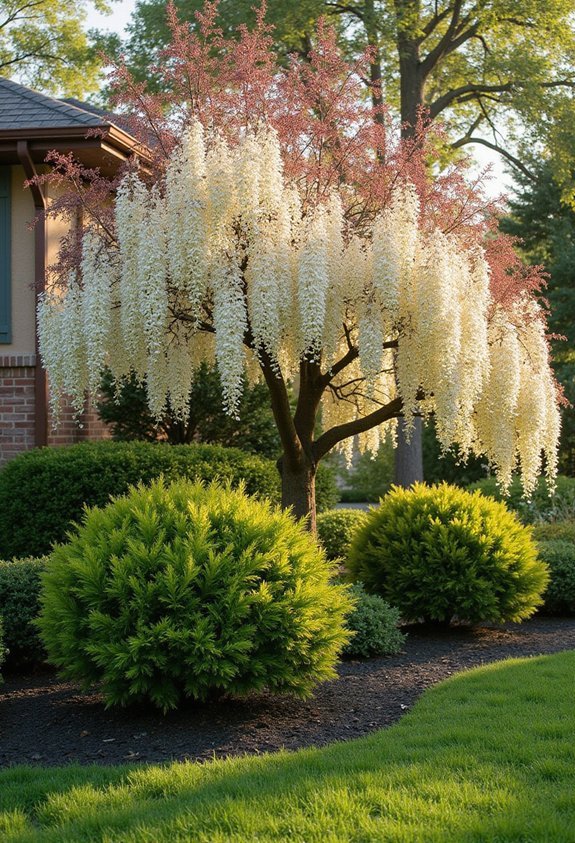
Spirea shrubs transform your front yard landscape with their distinctive weeping branches that create elegant, fountain-like silhouettes throughout the growing season. You’ll appreciate how these versatile shrubs produce masses of small flowers that cascade along their gracefully arching stems, creating dramatic visual impact from spring through early summer. Popular varieties like Bridal Wreath spirea offer white blooms, while Goldflame spirea provides pink flowers with colorful foliage that changes seasonally. You can plant spirea in full sun to partial shade, and they’ll thrive in most soil conditions while requiring minimal maintenance once established in your landscape.
Weigela: Pink Trumpet Flowers That Attract Hummingbirds
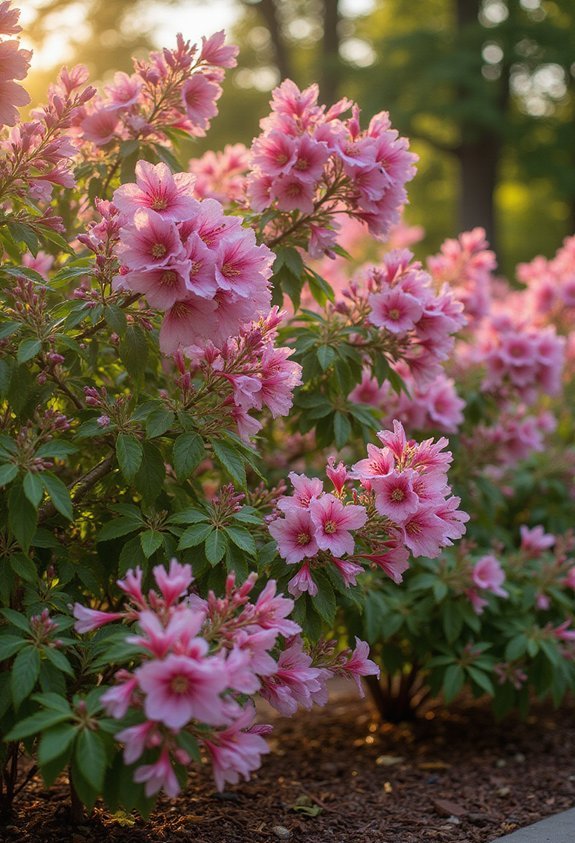
Weigela shrubs bring vibrant trumpet-shaped flowers to your front yard landscape while creating a natural magnet for hummingbirds and other pollinators throughout the late spring and early summer blooming period. You’ll find these hardy deciduous shrubs produce masses of tubular blooms in shades ranging from deep pink to light rose, depending on the specific cultivar you choose. The flowers emerge along arching branches that can reach four to six feet in height and spread, making weigela an excellent choice for foundation plantings or mixed shrub borders. You can plant weigela in full sun to partial shade locations.
Burning Bush: Fiery Red Fall Color That Commands Attention
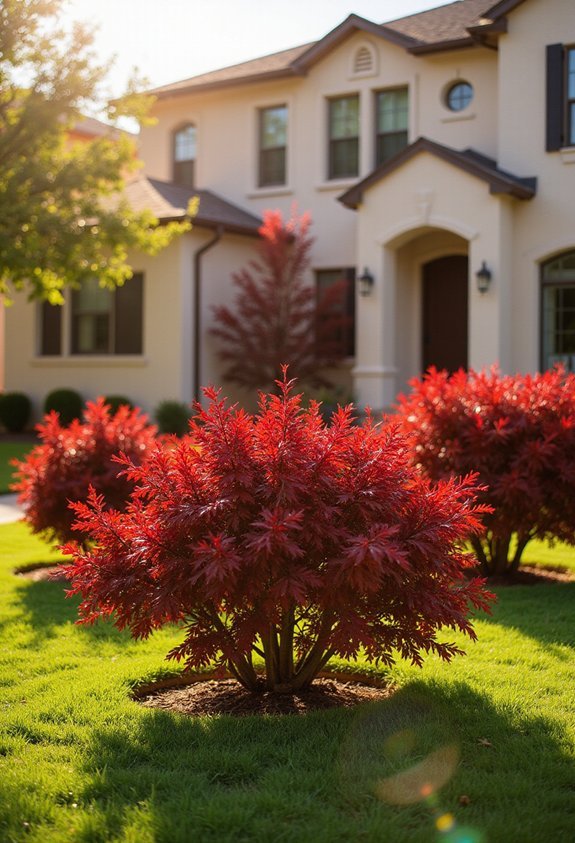
When autumn arrives, burning bush transforms your front yard landscape into a spectacular display of intense crimson foliage that creates one of the most dramatic seasonal color changes among all deciduous shrubs. You’ll appreciate this hardy shrub’s ability to thrive in various soil conditions, from sandy to clay compositions, while requiring minimal maintenance throughout the growing season. The compact, rounded growth habit reaches four to six feet in height and width, making it suitable for foundation plantings or focal points. You can plant burning bush in full sun to partial shade locations for ideal fall color development and year-round structural interest.
Japanese Maple Varieties: Compact Trees With Four-Season Appeal
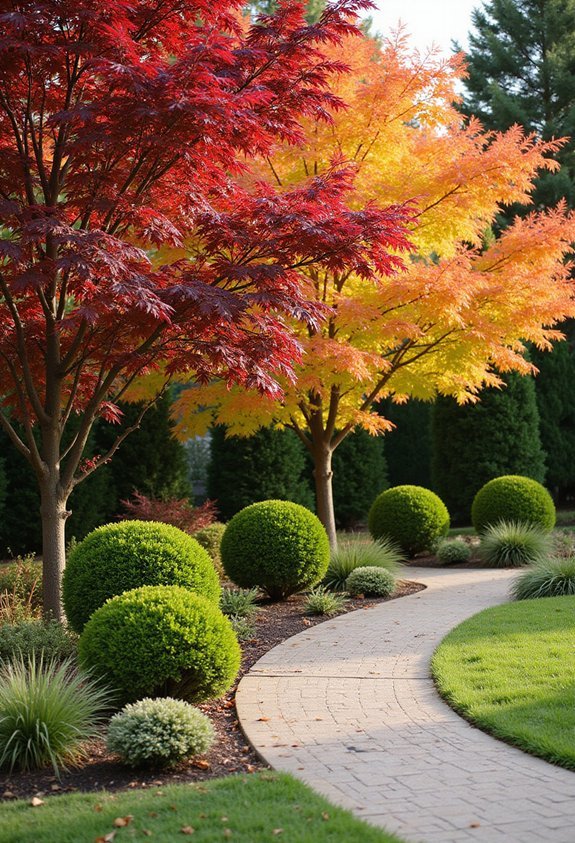
Japanese maple varieties offer you an elegant alternative to traditional shrubs, providing exceptional ornamental value through their distinctive leaf shapes, vibrant seasonal colors, and graceful branching patterns that create visual interest throughout the entire year. You’ll find popular cultivars like ‘Bloodgood’ with deep red foliage, ‘Emperor I’ featuring purple-red leaves, and ‘Coral Bark’ displaying striking winter stems. These compact trees typically reach 6-15 feet, making them perfect for front yard focal points. You can expect spring’s fresh green growth, summer’s rich colors, autumn’s brilliant reds and oranges, and winter’s architectural silhouette to create continuous seasonal drama.
Barberry: Colorful Purple And Gold Foliage
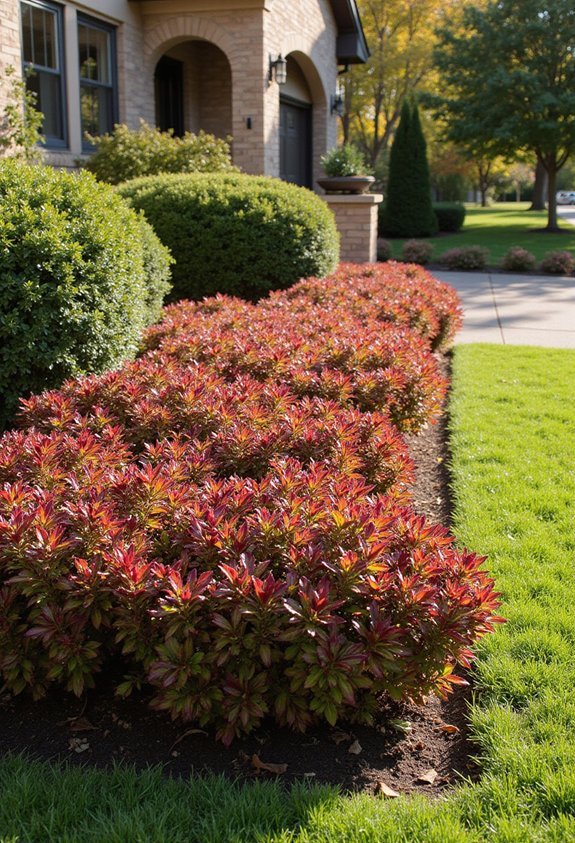
Barberry shrubs deliver striking foliage colors that range from deep burgundy and rich purple to bright golden yellow, creating dramatic visual contrast in your front yard landscape design. You’ll find these hardy shrubs maintain their vibrant colors throughout the growing season, with some varieties displaying color changes from spring through fall. Plant barberry in full sun to partial shade for ideal color development, spacing them three to four feet apart depending on the variety’s mature size. Choose compact cultivars like ‘Crimson Pygmy’ or ‘Golden Ruby’ for smaller spaces, while larger varieties work well as foundation plantings or privacy screens.
Nandina: Fine-Textured Leaves With Bright Red Berries
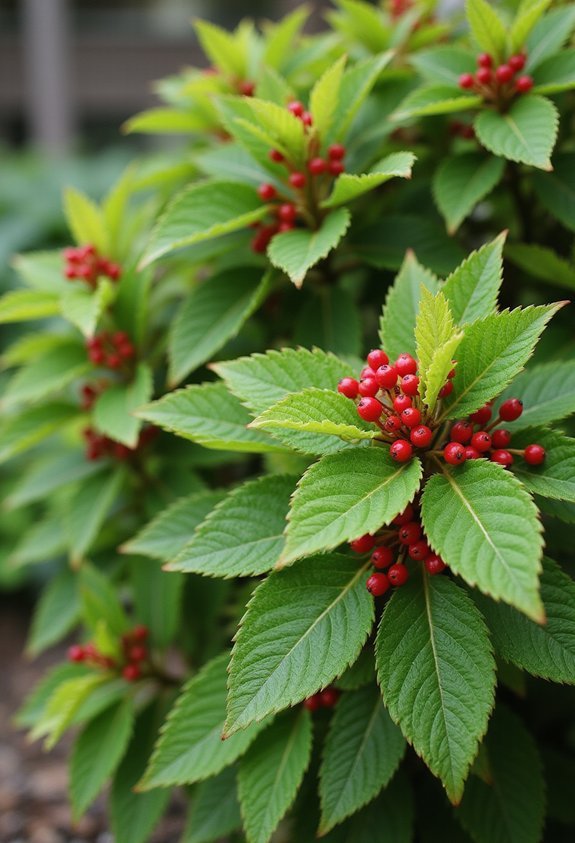
While barberry offers bold, colorful foliage as its main attraction, nandina provides a completely different aesthetic appeal through its delicate, bamboo-like leaves and spectacular clusters of bright red berries that persist throughout winter months. You’ll appreciate nandina’s fine-textured compound leaves that create an elegant, airy appearance in your landscape design. The shrub’s foliage transforms from green to bronze-red during fall, adding seasonal interest before the berries become the focal point. You can plant nandina in partial shade to full sun conditions, and it’ll reach heights of four to eight feet with minimal maintenance requirements for your front yard.
Ninebark: White Flowers Plus Interesting Peeling Bark
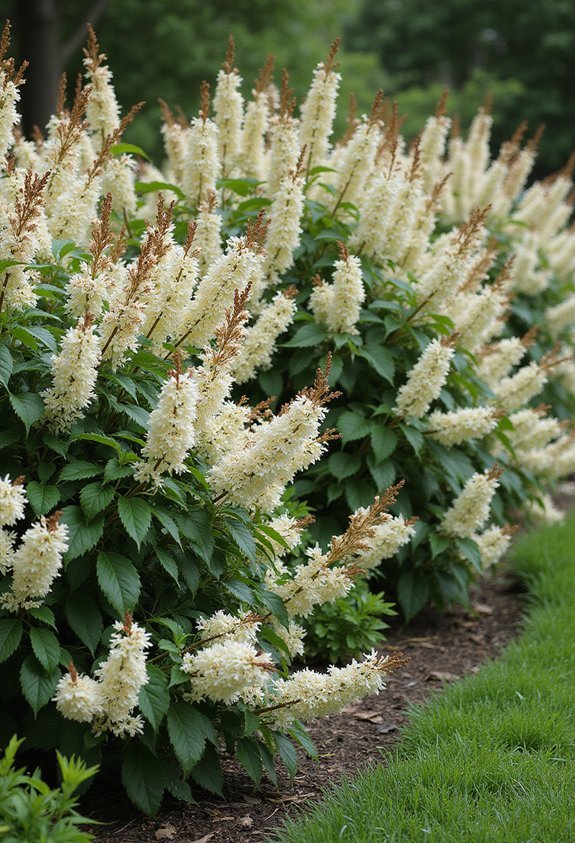
Two distinct ornamental features make ninebark an exceptional choice for front yard landscaping, as this hardy shrub produces clusters of small white flowers in late spring and showcases distinctive bark that peels away in thin strips to reveal multiple colors underneath. You’ll appreciate ninebark’s low-maintenance requirements, since it tolerates poor soil conditions, drought, and various light exposures from full sun to partial shade. The shrub typically reaches four to eight feet in height and width, creating an excellent foundation planting or hedge. You can plant ninebark in spring or fall for ideal establishment.
Camellia: Spectacular Blooms In The Dead Of Winter
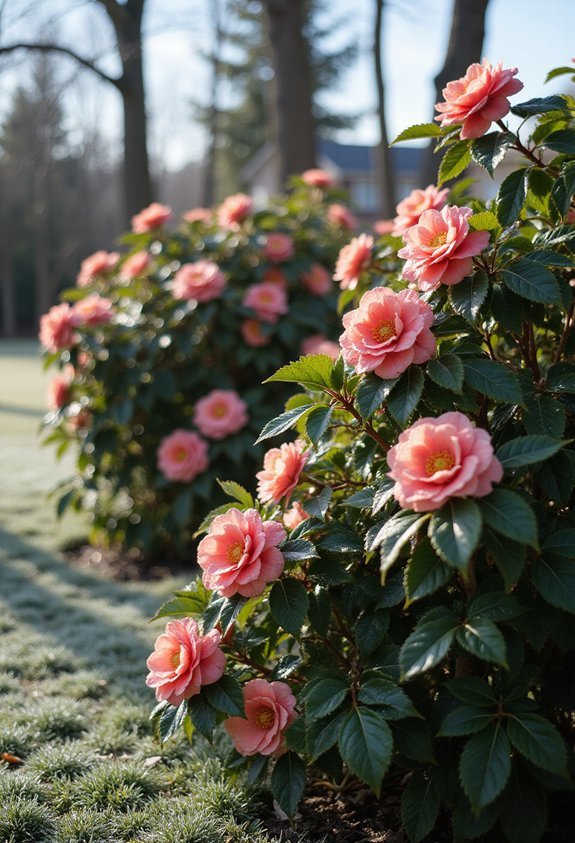
When most flowering shrubs have finished their blooming cycle and entered winter dormancy, camellias provide a stunning display of large, rose-like flowers that can brighten your front yard landscape from late fall through early spring. You’ll find camellia blooms in shades of white, pink, red, and yellow, with some varieties producing flowers that measure up to six inches across. These evergreen shrubs thrive in partial shade with well-draining, acidic soil, and they’re particularly well-suited for southern climates where winter temperatures don’t drop below ten degrees Fahrenheit, making them perfect statement pieces for your front yard design.
Viburnum: Fragrant Spring Clusters And Brilliant Fall Color
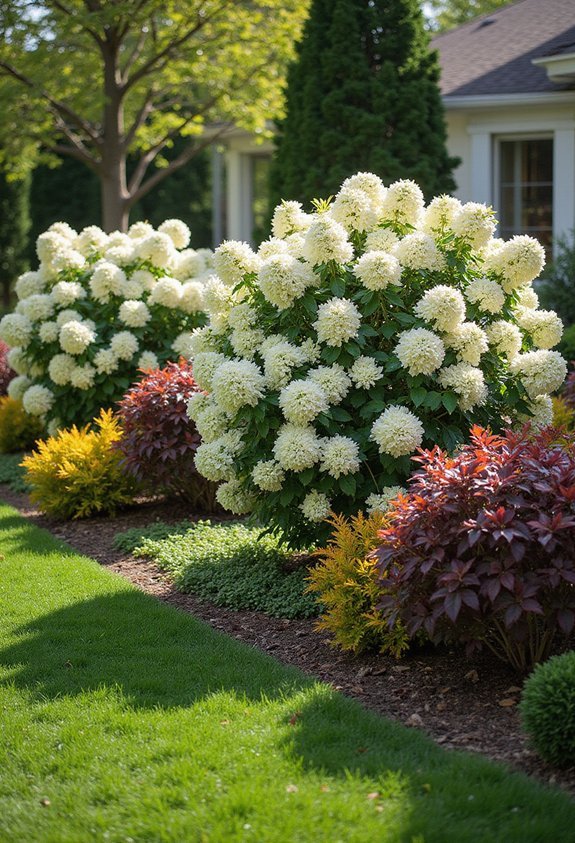
After enjoying the winter beauty that camellias provide, you’ll discover that viburnum shrubs offer a completely different seasonal appeal that spans from spring through fall in your front yard landscape. These versatile shrubs produce clusters of small, fragrant white or pink flowers during spring months, creating an aromatic focal point near walkways and entrances. You’ll appreciate their dense, oval-shaped leaves that transform into brilliant shades of red, orange, and burgundy throughout autumn. Most viburnum varieties grow between four and eight feet tall, adapting well to partial shade conditions while requiring minimal maintenance once established in your garden.
Conclusion
You’ll discover that selecting the right bushes and shrubs transforms your front yard into an expensive-looking landscape without breaking your budget. These twenty-three varieties provide year-round visual interest through evergreen foliage, seasonal blooms, and colorful berries that enhance your home’s curb appeal. You can mix different textures, heights, and flowering periods to create a sophisticated design that’ll increase your property value while requiring minimal maintenance throughout the seasons.