
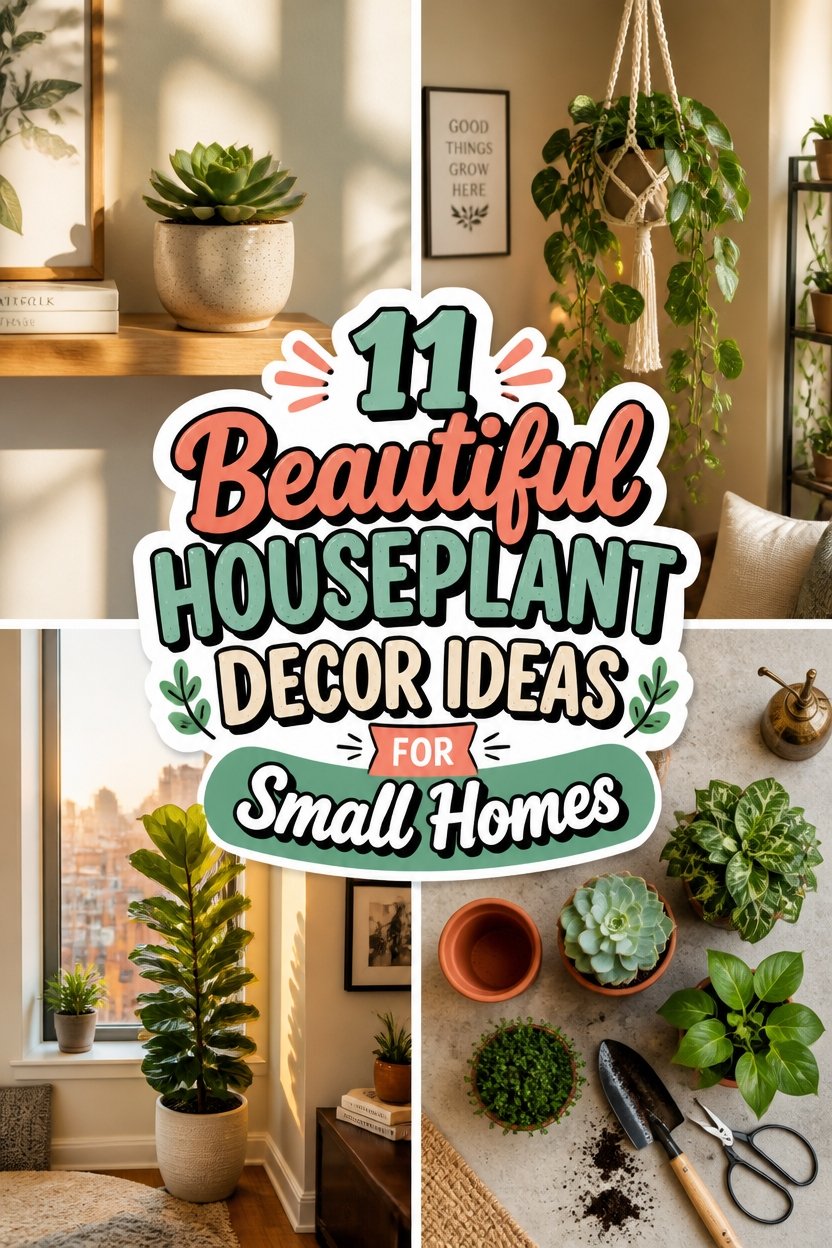
Small apartments and lush greenery aren’t as incompatible as they seem. With a bit of creativity, even the tiniest studio can feel like a genuine indoor jungle without a single cluttered surface.
I turned an empty stretch of wall in my old one-bedroom into a mini living wall of pothos, and it remains the compliment I get most whenever anyone visits.
The trick is really just learning to look up instead of out. Wall-mounted planters, hanging baskets, and tiered stands all draw the eye upward while keeping your floors completely clear, and a well-placed mirror can double the visual impact without adding a single new plant.
Windowsills and floating shelves become natural homes for trailing varieties like pothos, their vines spilling gently over the edge. Even your existing furniture can join in, with side tables and bookshelves doubling easily as display spots.
A Few Things Worth Knowing First
Weight and wall type matter before you start drilling anything into place. Check what your walls can actually support before committing to a heavier hanging setup.
Light exposure still rules everything, even in a small space. A plant tucked into a dim corner needs a different variety than one sitting right in a sunny windowsill.
Airflow between grouped plants prevents more problems than people expect. Clustering pots too tightly can trap moisture and invite mold, so leave a little breathing room even in tight arrangements.
12 Small Space Houseplant Ideas
Making a small space feel green really comes down to using walls, shelves, and furniture you already have instead of adding more floor clutter. Some of these ideas take an afternoon with basic hardware, while others, like a full living wall, reward a bit more planning.
I’ve covered everything from wall-mounted planters to mirror tricks that make a modest collection look fuller, so you can build a setup that fits your actual square footage.
Take a look through and see which idea makes the most sense for the space you’re working with.
Maximize Vertical Space With Wall-Mounted Planters
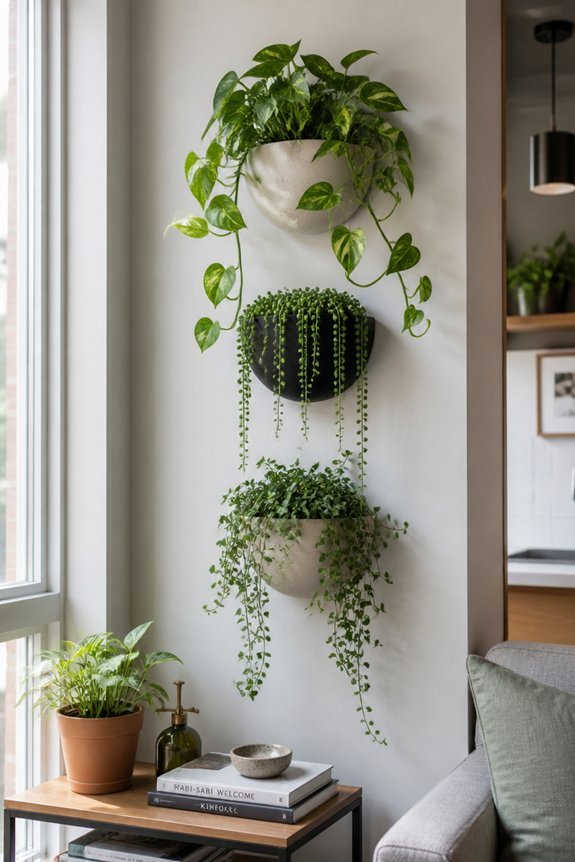
Wall-mounted planters turn empty walls into living displays. They work especially well in compact homes where floor space is limited.
These fixtures come in several styles. Hanging pockets work great for trailing plants. Shelving systems hold multiple pots at once. Bracket-mounted containers offer a clean, minimal look.
Popular plant choices include pothos, string of pearls, and ferns. These varieties adapt well to vertical growing conditions. They forgive occasional neglect too.
Installation calls for basic hardware. Anchors, screws, and brackets suited to your wall type get the job done. Check your wall material before buying supplies.
Consider three factors when choosing locations. Light exposure keeps plants healthy. Proper drainage prevents water damage. Weight capacity ensures your setup stays secure.
Wall planters clear clutter from floors and tables. Rooms instantly feel more open. They fit naturally in entryways, bathrooms, and kitchens.
Ongoing care is straightforward. Check soil moisture regularly. Allow enough airflow between plants. This simple step prevents mold and keeps your green wall thriving.
Also read: 9 Kitchen Houseplants That Add Fresh Green Style
Create a Living Wall With Climbing Plants
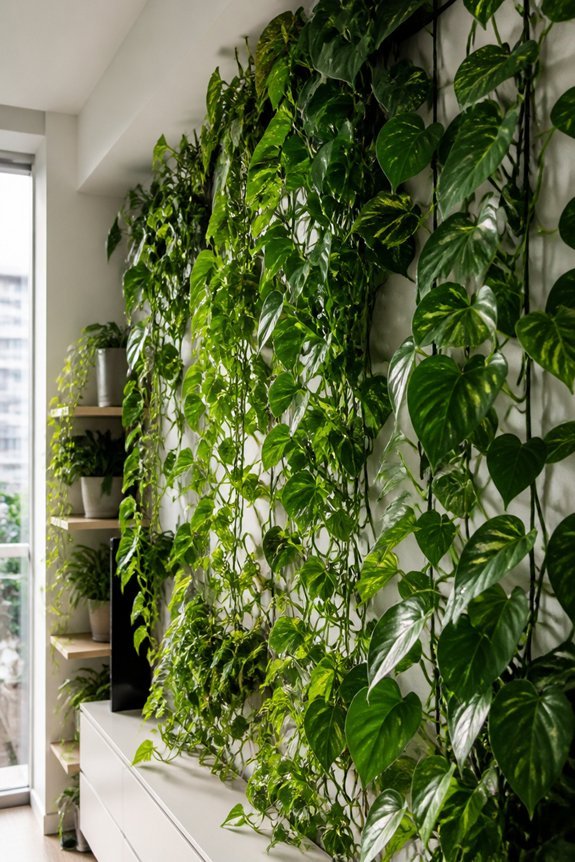
Climbing plants turn bare walls into lush, green surfaces. They soften harsh lines and add texture to small spaces.
Pothos, philodendron, and ivy varieties suit indoor walls well. They need minimal care and handle low light without fuss.
These plants climb on their own. You can also guide them along trellises, wire frames, or fishing line attached to walls.
Regular watering and occasional pruning keep them healthy. Indirect sunlight helps them thrive.
Living walls clean the air and free up floor space. They use vertical surfaces instead.
Layered foliage adds visual interest. It can also divide rooms nicely.
Renters have options too. Removable plant stands with climbing vines create similar effects. No permanent installation needed. No wall damage to worry about.
Use Hanging Planters to Free Up Floor Space
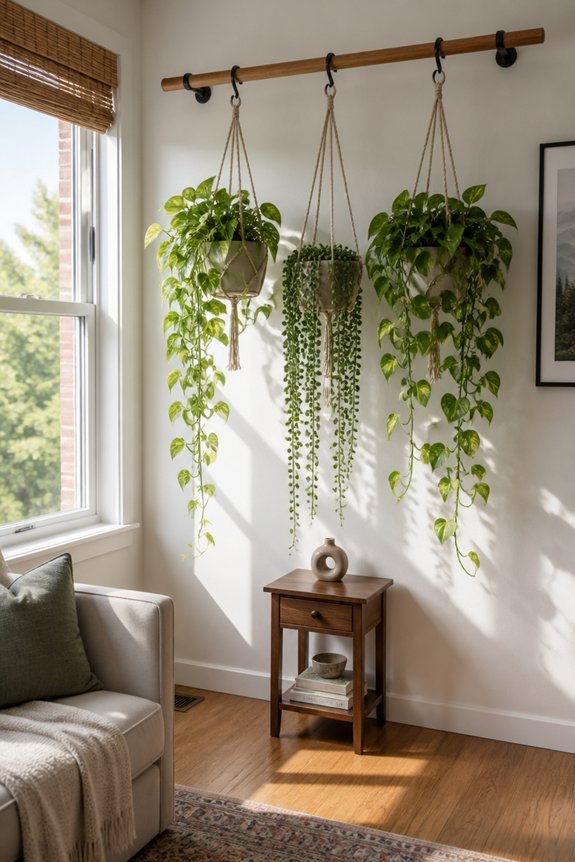
Small homes need smart solutions. Hanging planters help by using your walls and ceiling instead of precious floor space.
You have plenty of options. Macramé hangers add a cozy touch. Wall-mounted shelves keep plants at eye level. Ceiling hooks work great for larger pots.
Trailing varieties thrive overhead. Pothos spills down beautifully. String of pearls looks like tiny green beads. Philodendron grows long and lush. All three handle indoor life well.
These plants bring green into your space without cluttering your floors.
Find your wall studs or ceiling joists first. Secure hooks there so everything stays put. Place planters near windows for natural light.
Entryways, bathrooms, and empty corners love hanging arrangements. Floor space stays clear. Your rooms feel bigger and more open.
Display Plants on Tiered Plant Stands
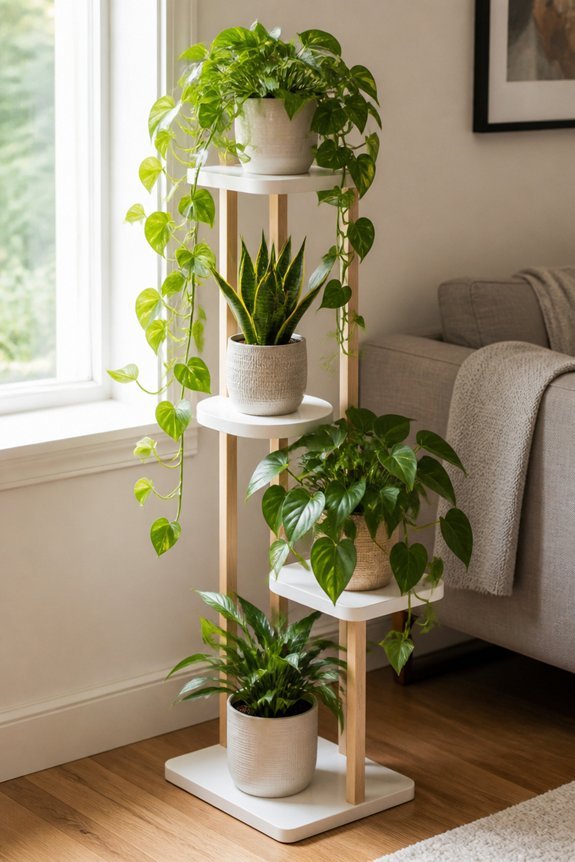
Tiered plant stands offer another effective way to maximize vertical space in small homes. These stands feature multiple levels, allowing you to display several plants in a compact footprint. Metal, wood, and plastic options come in various heights and widths.
Small plants like succulents, pothos, and snake plants thrive on these stands. They fit neatly in corners, against walls, or near windows. You can keep your plants organized while still reaching them easily for watering and care.
The varied heights create natural visual interest through foliage textures. Group plants by their water needs to simplify your routine. Tiered displays also keep surfaces clear and protect your furniture and floors from water damage.
Incorporate Plants Into Your Window Sill
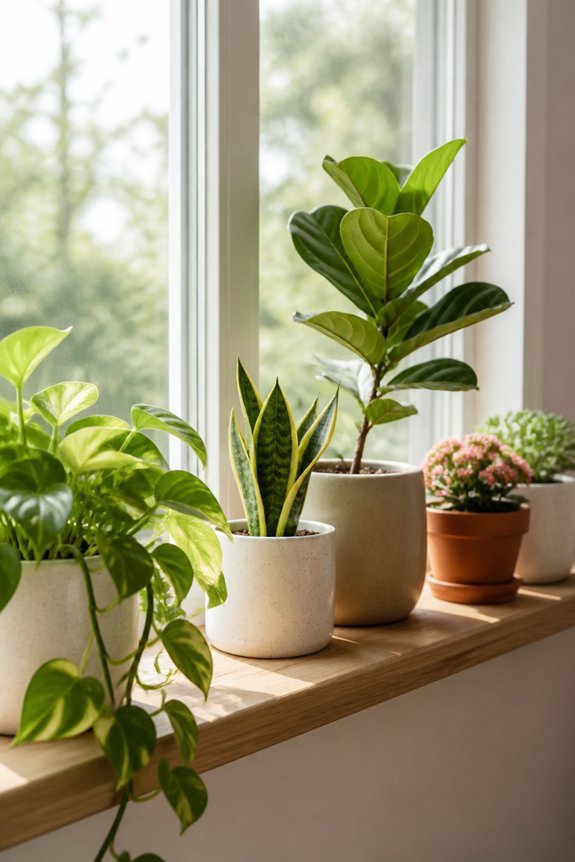
Window sills offer prime real estate for small potted plants. They catch natural light, which makes them perfect for houseplants in tight spaces. Succulents, pothos, and snake plants love these spots. They need little care while bringing life to your room.
Plants on window sills add vertical interest without taking up floor space. The steady sunlight helps them grow strong. You won’t need extra lamps. Line up a few small pots for a simple, cohesive look.
Think about which way your window faces. South-facing windows blast intense light. Save these for sun-loving plants. North-facing windows stay softer. These work better for shade-tolerant varieties. Turn your pots now and then. This keeps growth even on all sides.
Window sills keep plants safe from busy feet and curious pets. You’ll enjoy practical protection plus a greener view right where you can see it.
Choose Compact Plants for Tight Corners
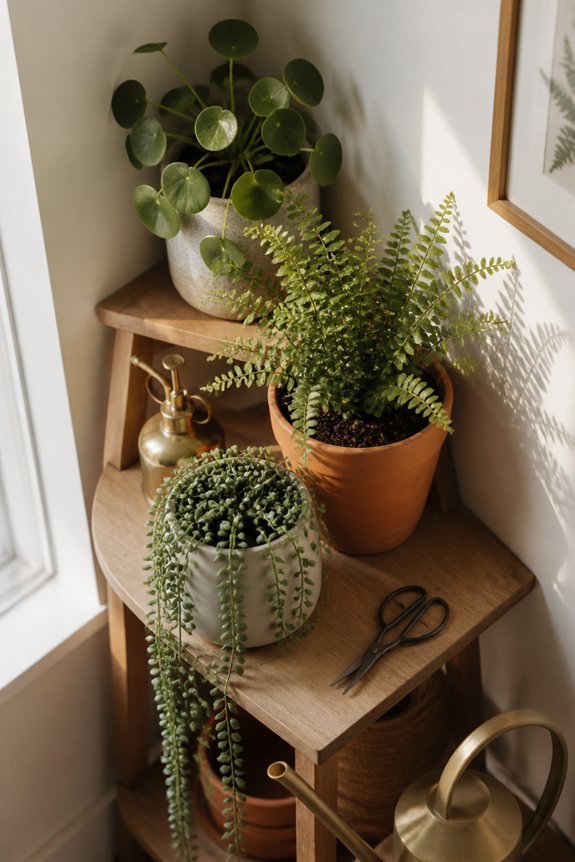
Compact plants work well in corners where window sills don’t reach. These smaller varieties fit into tight spaces and make use of otherwise empty areas.
Snake plants, pothos, and ZZ plants are excellent choices. They tolerate the low light conditions typically found in corners. Peperomia and parlor palms also thrive in confined spaces without sprawling outward.
Placing compact plants on stands or shelves elevates them. This improves both light exposure and visual interest. Corner placements benefit from plants with vertical growth patterns. These draw the eye upward rather than outward.
Watering requires extra attention in corners. These locations often receive less air circulation, which can slow evaporation. Rotating plants every few weeks ensures even growth on all sides. This prevents them from leaning toward available light sources.
Cluster Small Plants in Decorative Groupings
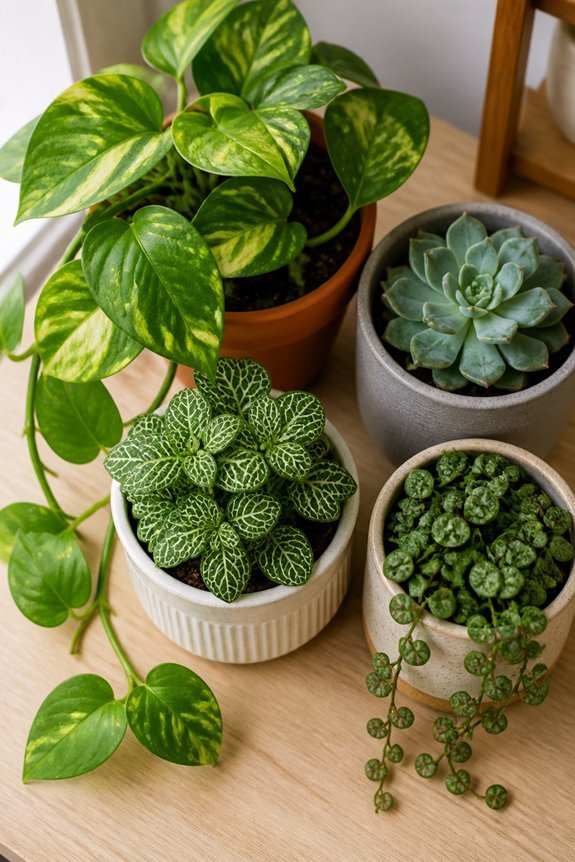
Small plants gain visual power when grouped together. This approach suits compact homes perfectly. You combine beauty with smart space use.
Mix heights for the best effect. Try pothos vines with upright snake plants. Add low succulents to fill gaps. This layering draws the eye without demanding extra room.
Shelves, windowsills, and plant stands become mini gardens. Gathering pots in one spot beats scattering them around. You create green focal points instead of clutter.
Watering gets simpler when thirsty plants live near each other. Similar moisture needs mean easier routines. Your plants stay healthier with less effort.
Pick pots that work together. Matching colors or materials pull the look tight. Rotating plants every few weeks keeps growth even and lights balanced.
Intentional clustering turns tight corners into living displays. You get cleaner air, cohesive style, and spaces that feel open yet alive.
Layer Plants at Different Heights for Visual Interest
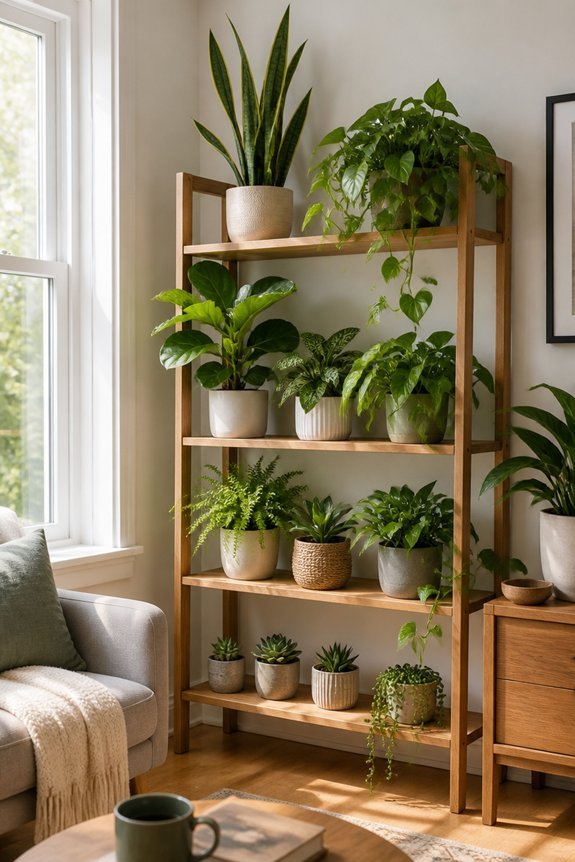
Varying plant heights adds depth to compact spaces. Position tall plants toward the back, medium ones in the middle, and shorter varieties up front. This simple arrangement builds dimension and avoids a flat, crowded look.
Shelving units create natural levels for your collection. Wall-mounted shelves, plant stands, and hanging baskets all offer unique vertical spots. Low growers like succulents and pothos thrive on windowsills. Taller options such as snake plants and dracaena suit floor placement or raised stands.
Vertical layering stretches limited square footage further. Your eye travels upward and outward, which visually expands the room. Different heights also help each plant get proper light. Everyone in the grouping stays happier and healthier.
Style Floating Shelves With Trailing Greenery
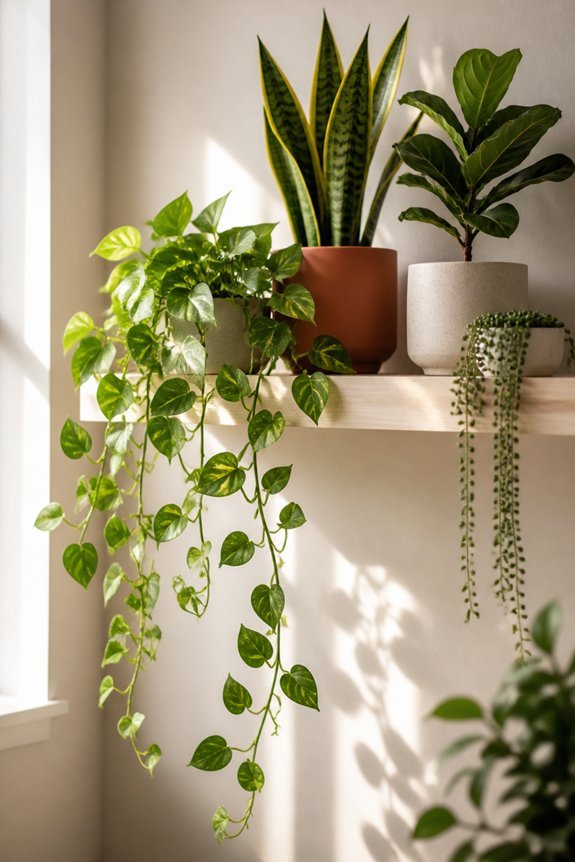
Floating shelves look great with trailing plants. The vines add softness to small rooms. They make spaces feel more natural and relaxed.
Pothos works well for beginners. String of pearls offers a unique look. Philodendrons trail beautifully too. These plants cascade downward with ease.
Place plants on upper shelves when possible. This draws the eye upward. Ceilings appear higher as a result. Vertical space gets used fully this way.
Space shelves twelve to eighteen inches apart. This gives vines room to grow. Walls won’t look crowded.
Mix trailing and upright plants together. This creates visual variety. Texture becomes more interesting too.
Check light needs before placing plants. Some need bright light. Others tolerate lower light levels. Position shelves near windows when you can.
Watering schedules will vary. Soil type matters. Humidity and seasons play a role too.
Blank walls become green displays with this setup. The result is both pretty and practical.
Use Mirrors to Amplify Your Plant Display
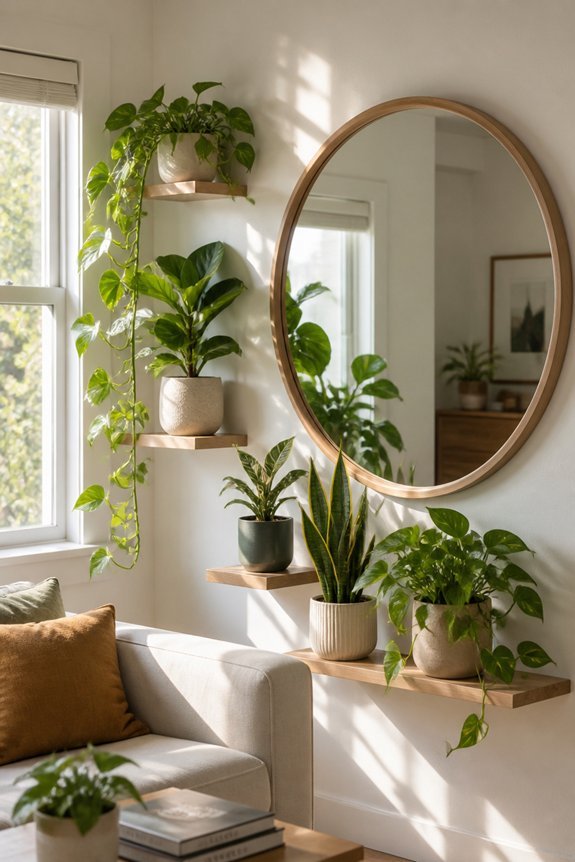
Mirrors can transform how your plants look in a small home. They create the illusion of more greenery without adding a single new pot.
Reflective surfaces bounce light onto leaves. This simple trick makes your collection appear fuller than it really is. Position a mirror behind a potted plant or beside a shelf. The reflection instantly doubles what you see.
Trailing plants work especially well here. Pothos and string of pearls cascade beautifully in mirrors. Their flowing shapes create dynamic, layered reflections.
Light-starved corners benefit too. Mirrors push natural light deeper into rooms. Plants far from windows get a second chance at sunshine. A wall-mounted mirror near a windowsill can redirect rays to nearby houseplants.
This approach asks little of you. Yet it delivers maximum visual impact in tight spaces. Compact arrangements suddenly feel lush and substantial.
Turn Furniture Into Plant Display Stands
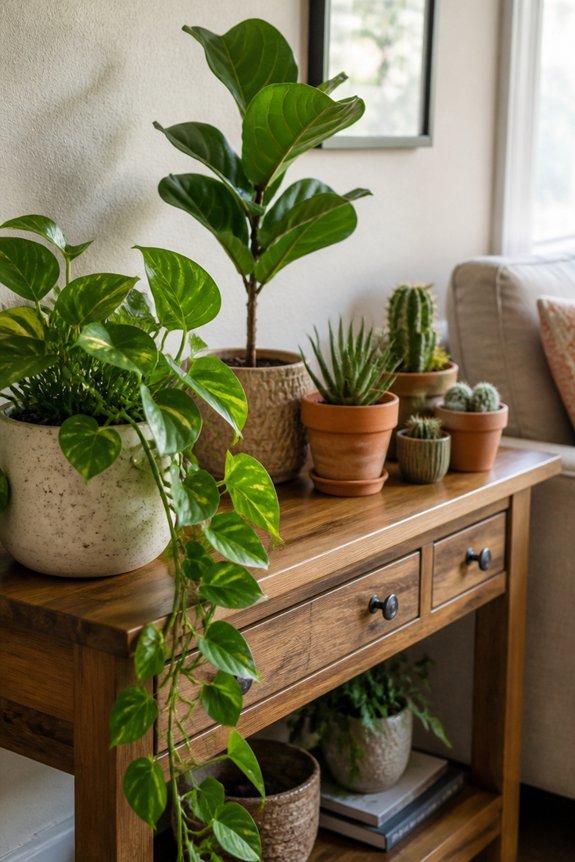
Everyday furniture can pull double duty as plant display space in small homes. Shelving units, nightstands, and side tables become practical plant platforms when arranged with intention.
Ladder-style shelves give you multiple tiers for different plant sizes. This maximizes vertical space without eating up your floor area.
Windowsills offer natural light and keep surfaces clear. Bookcases work beautifully for trailing plants on upper shelves, letting vines spill downward.
Plant stands, wall-mounted brackets, and floating shelves serve the same purpose with minimal footprint. Coffee tables suit low-growing varieties or decorative centerpieces.
Stackable storage cubes create modular options that adapt as your room changes. These pieces spread plants throughout your space, adding visual interest while keeping your layout functional.
Frequently Asked Questions
How Often Should I Water Houseplants in Small Spaces With Limited Air Circulation?
Confined spaces with poor airflow tend to hold onto moisture longer than you’d expect. That means you can generally water less frequently, letting the soil dry out more between waterings.
Checking soil moisture before you water rather than sticking to a fixed schedule helps prevent overwatering and the root rot that often follows in these tighter conditions.
What’s the Best Lighting Solution for Houseplants in Apartments Without Windows?
LED grow lights are honestly your best option here. Full-spectrum LEDs positioned six to twelve inches above your plants, running for 12 to 16 hours a day, effectively replace natural sunlight for most indoor varieties.
This setup works especially well for apartments with little to no natural light. It takes a small upfront investment, but it opens up a lot more plant options than you’d have relying on ambient light alone.
Which Plants Are Safest for Homes With Pets or Small Children?
Spider plants, Boston ferns, African violets, and parlor palms are all solid, non-toxic choices. They’re a good starting point if you’ve got curious pets or kids who like to touch everything within reach.
None of these contain compounds that pose a real danger if nibbled on, which gives you some peace of mind while still filling your space with greenery.
How Do I Prevent Root Rot in Small Containers With Frequent Watering?
Drainage holes are non-negotiable here, so make sure every container you’re using actually has them. Well-draining potting soil matters just as much as the holes themselves.
Letting the top inch of soil dry out between waterings gives roots the chance to breathe. Overwatering causes far more root decay than underwatering ever does, so when in doubt, wait a bit longer before watering again.
What’s the Ideal Humidity Level for Tropical Plants in Compact Living Areas?
Somewhere between 50 and 70 percent humidity keeps most tropical plants genuinely happy. That range mimics the conditions they’d naturally experience in their native environments.
Grouping plants together is one of the easiest ways to boost humidity in a compact space, since they create a bit of a shared microclimate. Pebble trays with water or a small humidifier work well too if you want more consistent control.
CONCLUSION
A small space doesn’t have to stay sparse just because square footage is limited. Sometimes the most impressive plant collections come from apartments smaller than you’d expect.
That little living wall of pothos I built in my old one-bedroom taught me that vertical space is often the most underused real estate in a small home. It completely changed how full the room felt.
Wall-mounted planters, tiered stands, floating shelves, there’s a lot you can do without ever touching your actual floor space. The goal is really just training your eye to look up and around rather than assuming you’ve run out of room.
Mirrors deserve more credit than they usually get too. A well-placed one can make a modest plant collection look twice as lush without spending a dime on new greenery.
Don’t feel pressured to fill every surface right away either. Start with one or two well-placed plants and build from there as you get a feel for your space’s light and airflow.
I’d love to hear how you’ve made the most of a small space with plants, or which of these ideas you’re planning to try. Leave a comment and let me know.