
You’ll transform your home’s curb appeal when you understand that a cohesive front yard design starts with matching your landscape choices to your house’s architectural style. Whether you’re working with a traditional Colonial that needs symmetrical plantings and formal walkways, or a modern home that benefits from clean geometric lines, the key lies in creating intentional connections between your hardscape materials, plant selections, and color schemes. These strategic decisions will determine whether your front yard looks professionally designed or simply thrown together.
Plan Your Front Yard Layout Using Your Home’s Architecture
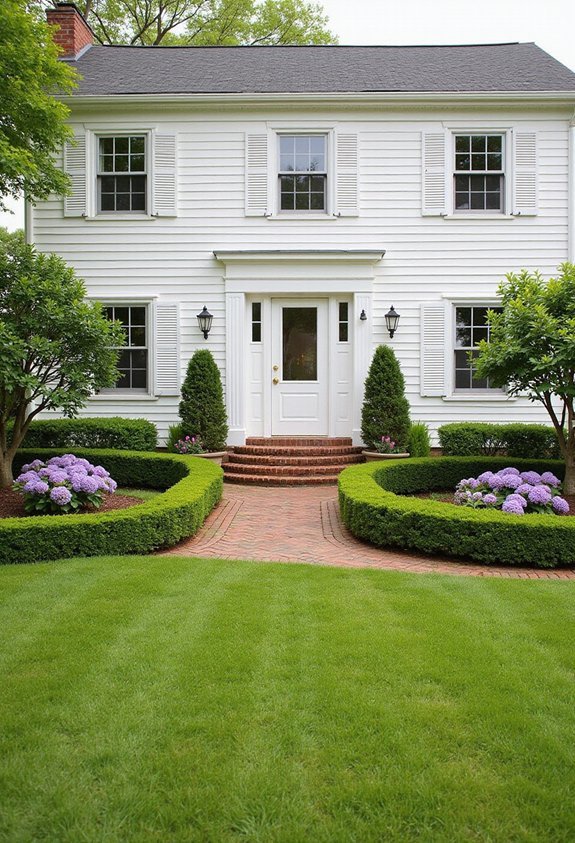
When designing your front yard, you must first examine your home’s architectural style because this foundation will guide every landscaping decision you make. Colonial homes require symmetrical plantings with structured hedges and formal pathways, while ranch-style houses benefit from horizontal landscaping elements that emphasize their low, sprawling profiles. Victorian homes demand ornate gardens with curved walkways and layered flower beds that match their decorative details. Modern homes need clean lines, geometric shapes, and minimal plant varieties to complement their sleek facades. Your landscaping should enhance, not compete with, your home’s existing architectural features.
Also read: 19 FRONT YARD WATER FEATURE Styles That Feel Luxurious!
Choose Plants and Materials That Match Your Home’s Style
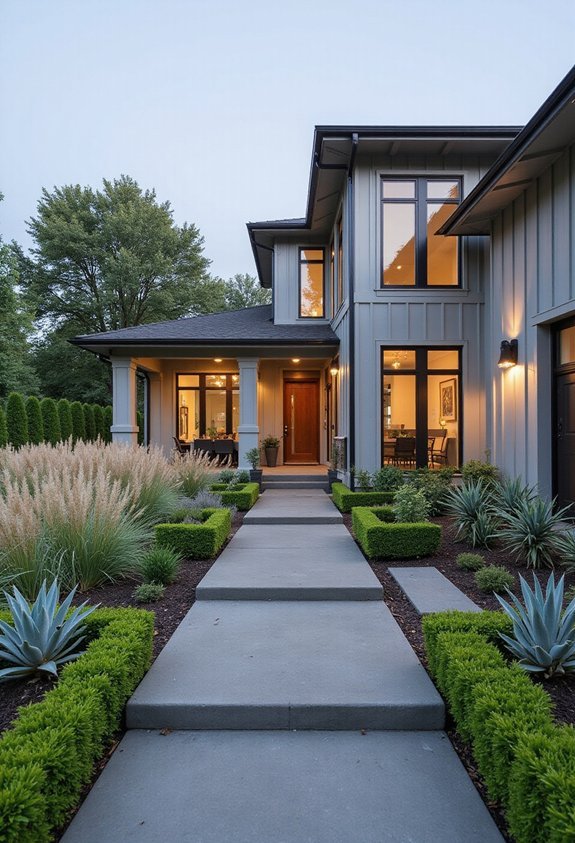
After you’ve established your home’s architectural foundation, you must select specific plants and hardscape materials that reinforce your house’s design language through color, texture, and form. Colonial homes require symmetrical plantings with boxwood hedges, brick walkways, and traditional perennials like hostas and hydrangeas. Modern houses need clean-lined plants such as ornamental grasses, succulents, and architectural specimens like Japanese maples, paired with concrete pavers or steel edging. Victorian styles demand romantic, cottage-garden plants including roses, lavender, and climbing vines, complemented by wrought iron fencing and natural stone pathways that echo the home’s ornate detailing and historical character.
Design a Front Yard Color Scheme That Works Year-Round
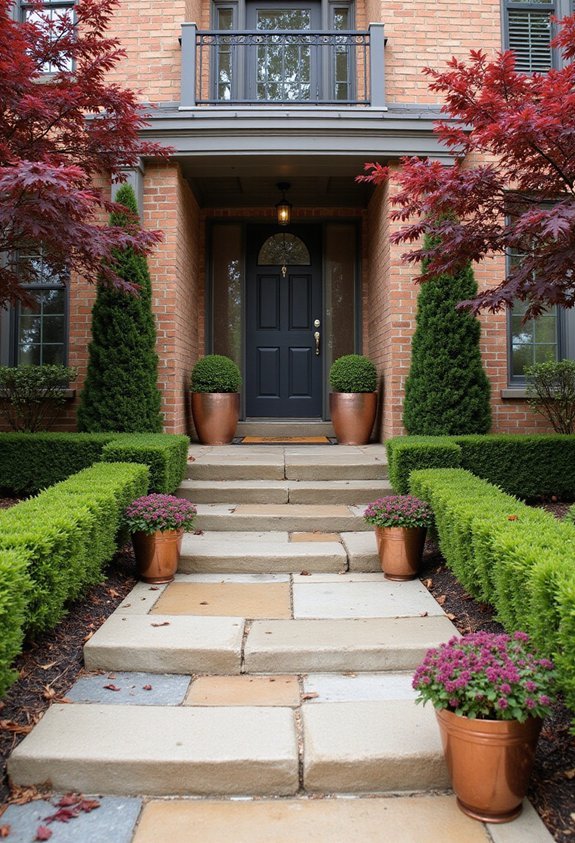
Successful front yard color schemes typically incorporate plants that provide visual interest across all four seasons, creating a cohesive palette that enhances your home’s exterior while maintaining appeal throughout the year. You’ll want to select evergreen shrubs as your foundation, then add deciduous plants with varying bloom times, foliage colors, and bark textures. Consider spring bulbs for early color, summer perennials for sustained blooms, autumn-foliage trees for fall interest, and plants with colorful winter berries or striking bark. Choose three to four complementary colors maximum, ensuring they harmonize with your home’s exterior paint, roofing materials, and architectural details.
Create an Inviting Walkway to Your Front Door
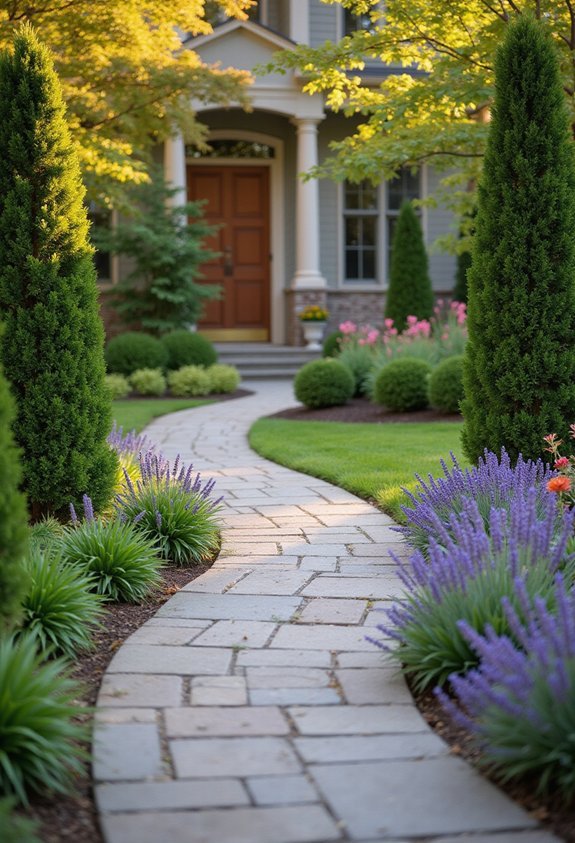
Your front walkway serves as the primary pathway that guides visitors from the street to your front door, making it one of the most important design elements in creating a welcoming first impression. Select materials that complement your home’s architectural style, such as brick pavers for traditional homes or concrete slabs for modern designs. Guarantee your walkway measures at least four feet wide to accommodate comfortable two-person walking. Add landscape lighting along the edges for safety and nighttime appeal. Frame both sides with consistent plantings, low hedges, or decorative borders to create visual continuity and professional appearance.
Frame Your Home With Strategic Foundation Plantings
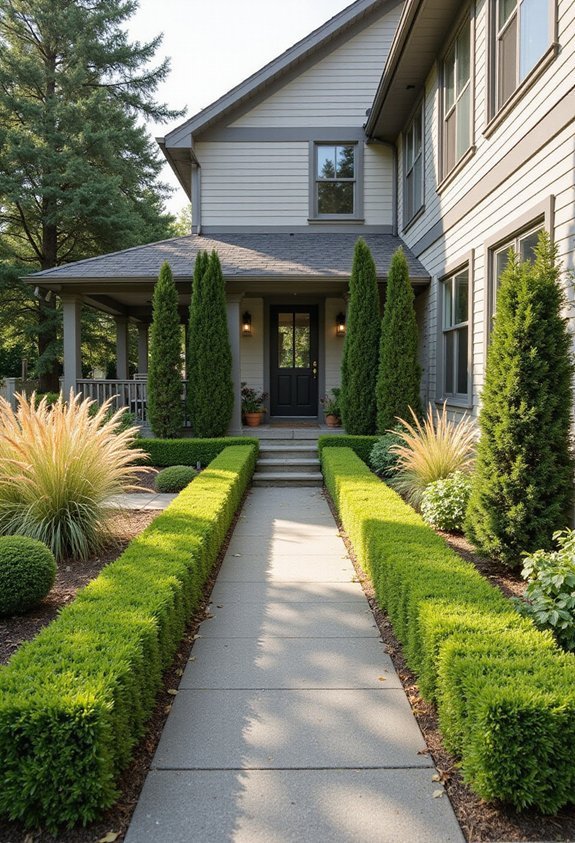
Strategic foundation plantings create the essential framework that connects your house to the surrounding landscape while softening harsh architectural lines and adding year-round visual interest to your front yard. You’ll want to layer different plant heights, starting with taller shrubs near corners and gradually decreasing to smaller plants toward windows and walkways. Choose evergreen varieties like boxwood, holly, or dwarf conifers for consistent structure throughout seasons, then add deciduous plants for seasonal color and texture changes. Space plants according to their mature size, considering both width and height, to prevent overcrowding and guarantee proper air circulation around your home’s foundation.
Use Symmetry to Make Your Front Yard Look Professional
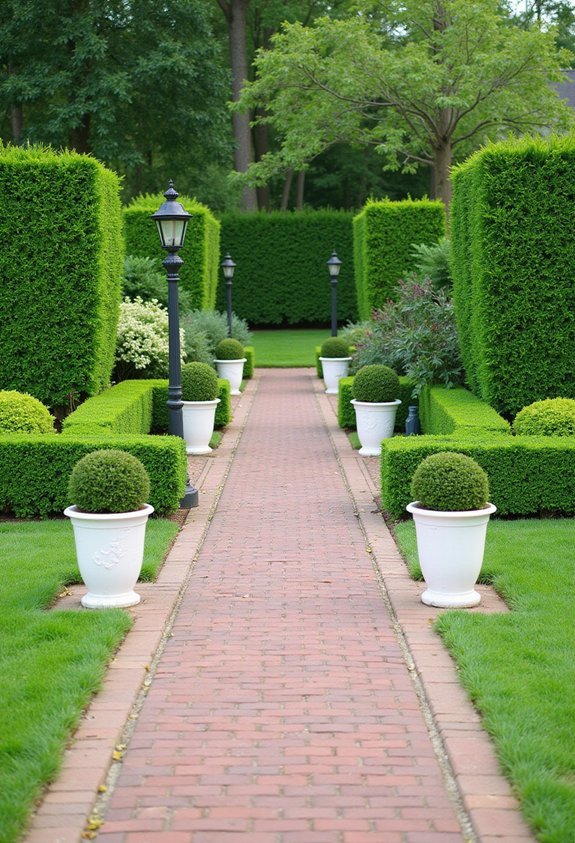
Balanced plantings and matching elements on both sides of your front entrance create an instant sense of order that elevates your home’s curb appeal from amateur to polished. You’ll achieve this professional look by placing identical shrubs, planters, or decorative features at equal distances from your door. Consider positioning two matching evergreen topiaries flanking your entrance, or install identical lamp posts on each side of your walkway. Mirror your plantings by selecting the same varieties, heights, and spacing on both sides. This symmetrical approach creates visual harmony that makes your front yard appear thoughtfully designed rather than randomly planted.
Add Depth With Layered Planting Beds and Varying Heights
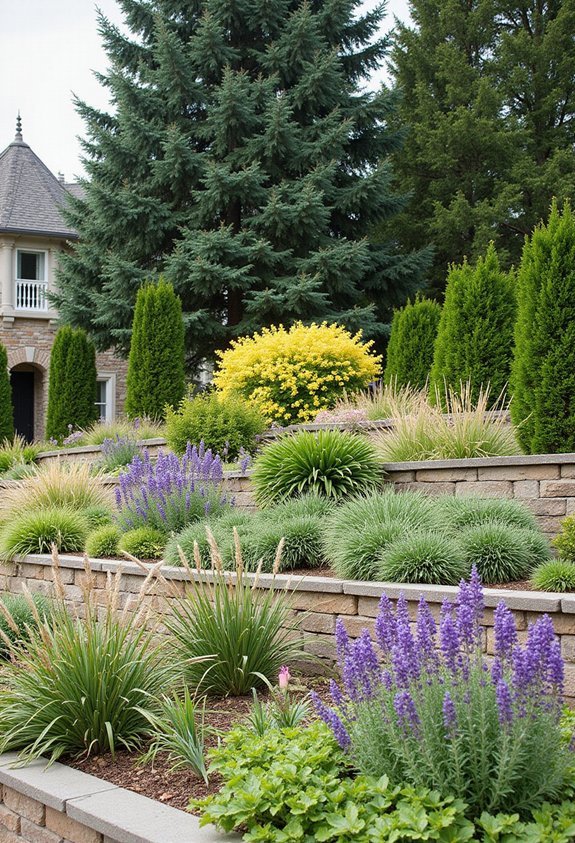
While flat landscapes create a monotonous appearance that lacks visual interest, you can transform your front yard into a dynamic display by creating planting beds with multiple layers that guide the eye from ground level to eye level and beyond. Start with low-growing groundcover plants in the front, place medium-height shrubs in the middle section, and position tall plants or small trees in the back. This tiered arrangement creates natural depth and prevents taller plants from blocking shorter ones. You’ll achieve maximum visual impact by selecting plants with different textures, leaf sizes, and seasonal colors within each layer.
Select the Right Trees for Your Front Yard’s Size and Style

The foundation tree you choose for your front yard will considerably impact your home’s curb appeal, property value, and long-term maintenance requirements, making it essential to match the tree’s mature size with your available space and architectural style. Small yards need compact trees like Japanese maples or ornamental cherries that won’t overwhelm your home’s proportions or interfere with power lines. Larger properties can accommodate oak trees or maples that provide substantial shade and visual weight. Consider your home’s architecture when selecting species, choosing formal evergreens for traditional styles and flowing deciduous trees for casual, contemporary designs.
Cover Bare Spots With Low-Maintenance Ground Cover Options
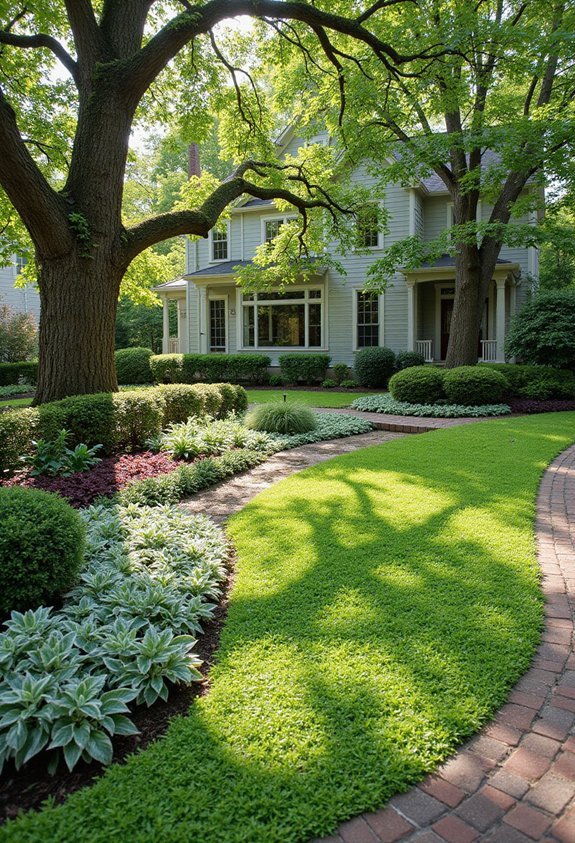
After establishing your front yard’s foundation with properly sized trees, you’ll likely notice areas where grass struggles to grow or simply won’t take root, creating unsightly bare patches that detract from your landscaping efforts. Ground cover plants offer an effective solution for these problematic zones, requiring minimal maintenance once established. Consider creeping phlox for sunny slopes, pachysandra for shaded areas under trees, or ajuga for moderate light conditions. These hardy perennials spread naturally, suppress weeds, and provide seasonal interest through flowers or colorful foliage, transforming bare soil into attractive, cohesive landscape elements.
Define Garden Borders With Clean Hardscaping Elements
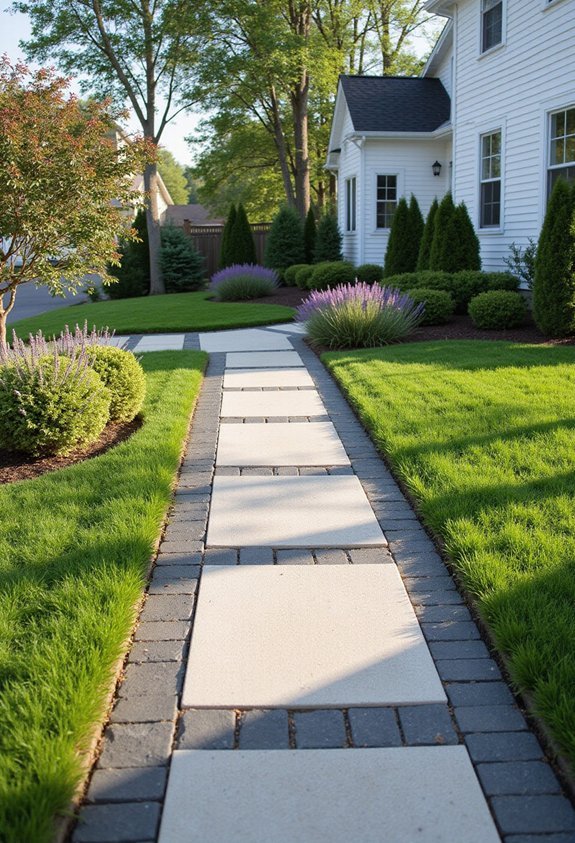
Once you’ve addressed bare spots with ground cover, establishing clear boundaries between different areas of your front yard becomes essential for creating a polished, organized appearance that guides the eye and defines distinct landscape zones. Install stone or brick edging along flower beds to separate plantings from lawn areas, creating crisp visual lines that prevent grass from encroaching into garden spaces. Use metal landscape strips for curved borders, as they’re flexible and maintain clean edges with minimal maintenance. Concrete pavers work well for straight boundaries, while natural stone provides texture and complements both traditional and contemporary home styles effectively.
Install Front Yard Lighting to Highlight Key Features
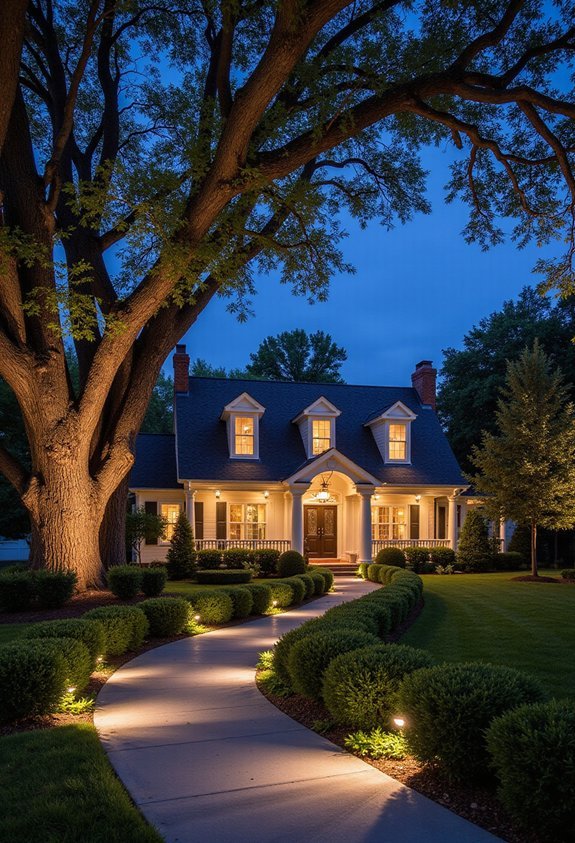
While well-defined borders create visual structure during daylight hours, strategic lighting transforms your front yard into an inviting landscape that showcases your home’s best features throughout the evening and nighttime hours. You’ll want to install path lights along walkways to guarantee safe navigation while creating warm, welcoming ambiance for guests and family members. Position spotlights to highlight architectural details, mature trees, or sculptural plants that serve as focal points in your design. Consider uplighting techniques for dramatic shadow effects, and use soft accent lighting near entryways to create depth and visual interest in your landscaping composition.
Create Eye-Catching Focal Points That Welcome Visitors
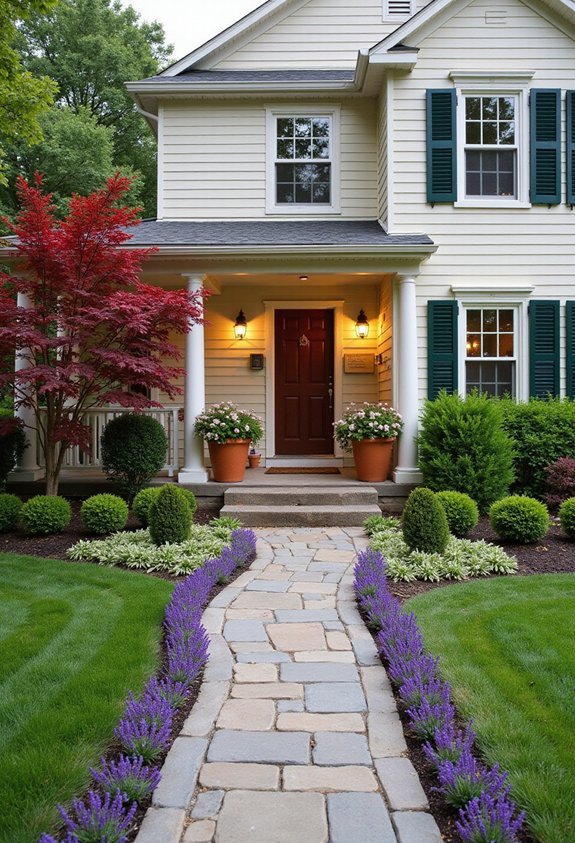
Since your front yard serves as the first impression visitors receive of your home, you’ll need to establish one or more striking focal points that draw the eye and create visual interest from the street. Position a decorative water fountain, sculptural planter, or ornamental tree as your primary focal point along the main walkway or near your entrance. You can also create secondary focal points using colorful flower beds, unique architectural elements, or statement plants like ornamental grasses. Arrange these features at varying heights and distances to guide visitors’ eyes naturally toward your front door while maintaining balanced visual composition.
Add Architectural Interest With Window Boxes and Planters
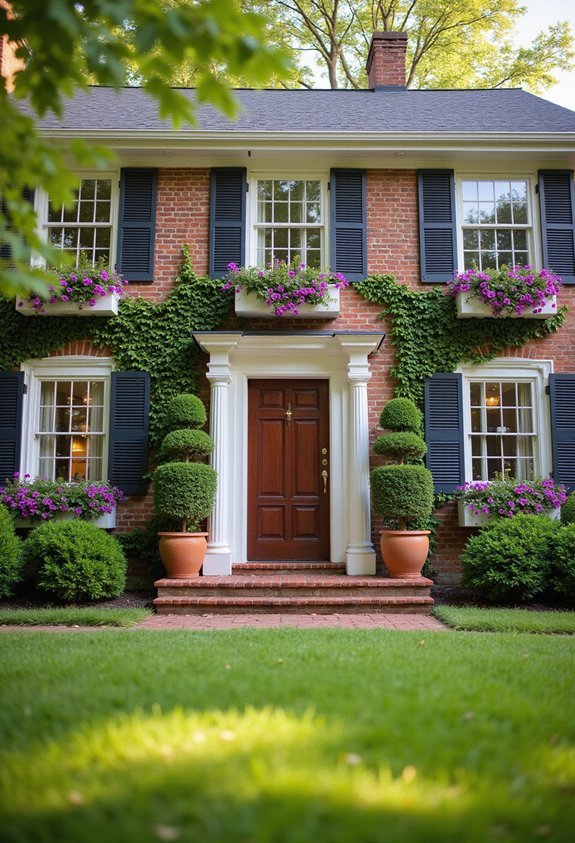
Window boxes and planters transform your home’s architectural features into living design elements that add depth, color, and visual appeal to your front yard landscape. You’ll create instant curb appeal by mounting window boxes beneath ground-floor windows, choosing materials that complement your home’s exterior like cedar for traditional styles or sleek metal for modern designs. Place large planters strategically along walkways, near entryways, or flanking your front door to frame architectural elements and guide visitors’ eyes toward your home’s best features. Select plants with varying heights, textures, and seasonal colors to maintain year-round interest and visual impact.
Use Mulch and Stone to Give Your Front Yard a Finished Look
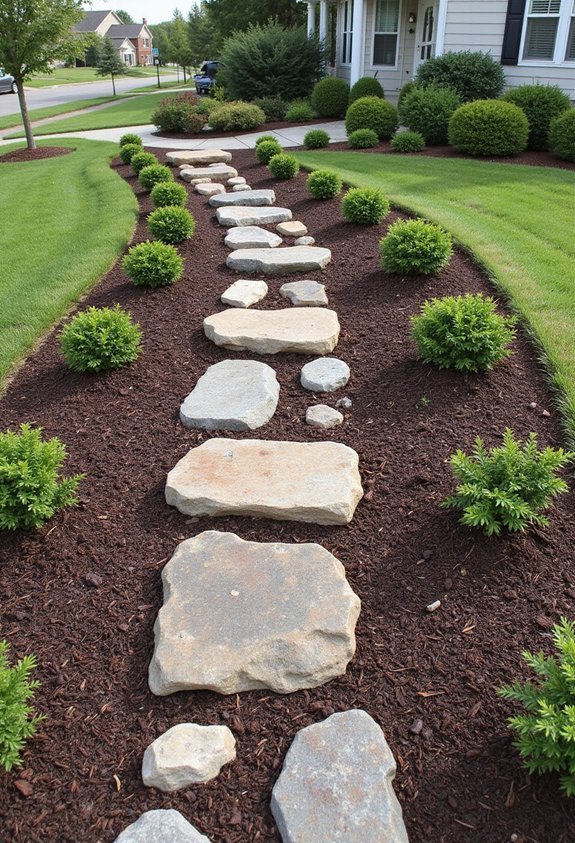
Although many homeowners focus primarily on plants and flowers when designing their front yards, incorporating mulch and stone creates the polished foundation that ties all your landscape elements together into a cohesive, professional-looking design. You’ll want to apply a two-to-three-inch layer of organic mulch around trees, shrubs, and flower beds to suppress weeds, retain moisture, and provide visual continuity. Stone borders and pathways define planting areas while adding texture and structure to your landscape. Choose materials that complement your home’s exterior colors and architectural style, ensuring the mulch and stone enhance rather than compete with your plantings.
Plant Evergreens for Front Yard Color in Every Season
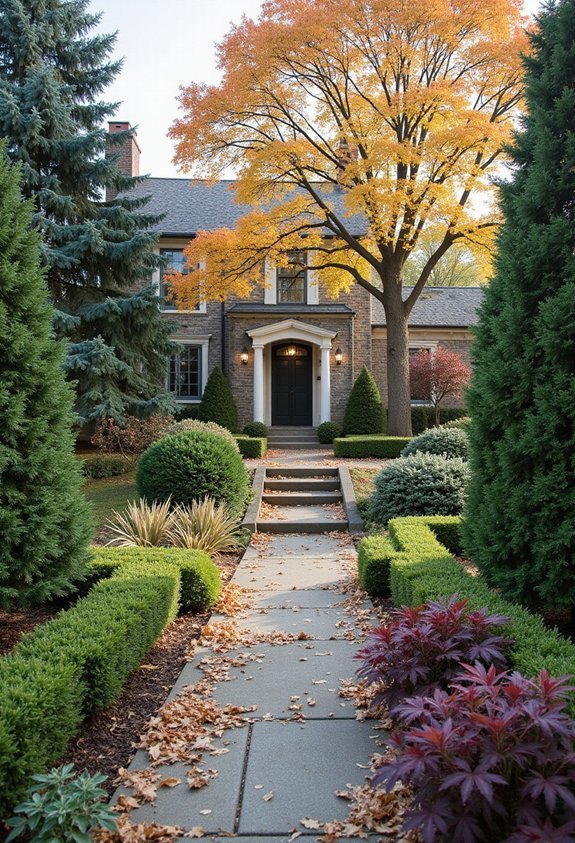
While mulch and stone provide the structural foundation for your landscape design, evergreen plants deliver the visual backbone that keeps your front yard attractive throughout every season of the year. You’ll want to select evergreens based on your climate zone, available space, and desired mature height. Consider boxwood shrubs for low borders, juniper varieties for medium-height plantings, and pine or spruce trees for vertical focal points. Plant evergreens in groups of odd numbers to create natural-looking arrangements, and space them according to their mature width to prevent overcrowding as they grow over time.
Add Pops of Seasonal Color Without Overwhelming Your Design
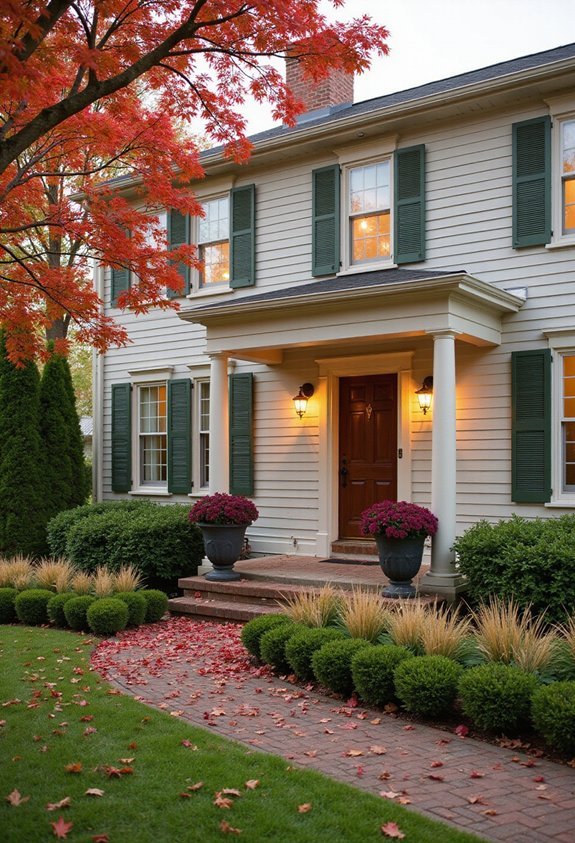
Once you’ve established your evergreen foundation, you can introduce seasonal color through strategic plantings that enhance rather than compete with your landscape’s permanent structure. Choose annual flowers in coordinating colors that complement your home’s exterior, placing them in designated areas like planters, borders, or designated beds. Select three colors maximum to maintain visual cohesion, and vary bloom times to guarantee continuous color throughout growing seasons. Plant bulbs for spring interest, summer annuals for peak color, and mums or ornamental kale for fall displays. This approach creates dynamic seasonal interest while preserving your landscape’s overall design integrity.
Create Front Yard Privacy That Still Looks Welcoming
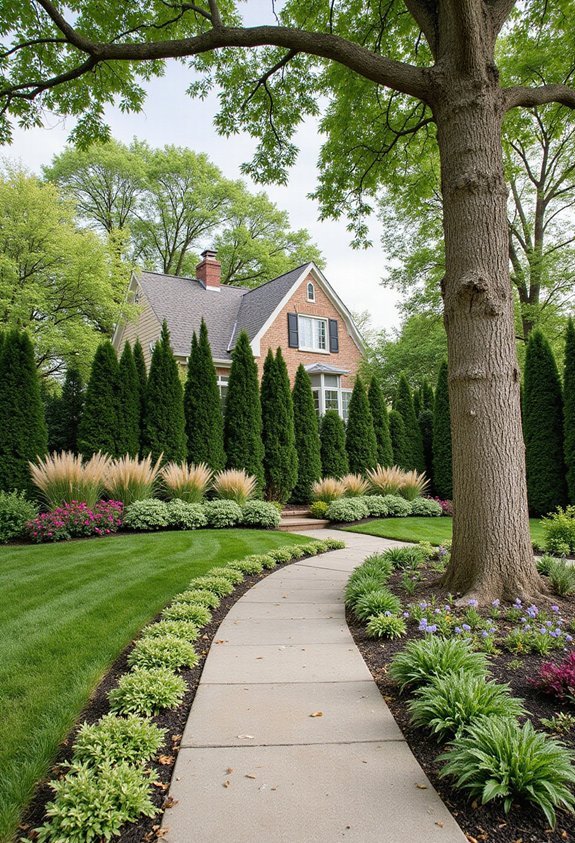
When you need to establish privacy in your front yard without creating an unwelcoming fortress-like appearance, you’ll want to focus on layered screening techniques that maintain visual appeal and neighborhood friendliness. Install medium-height hedges like boxwood or privet that create boundaries while allowing glimpses of your home’s architecture. Incorporate decorative fencing with open slat designs or lattice panels that provide partial screening without blocking airflow or natural light. Add ornamental grasses and flowering shrubs in front of these barriers to soften harsh lines, creating depth and visual interest that makes your privacy solutions appear intentional rather than defensive.
Install Smart Irrigation to Keep Everything Looking Lush
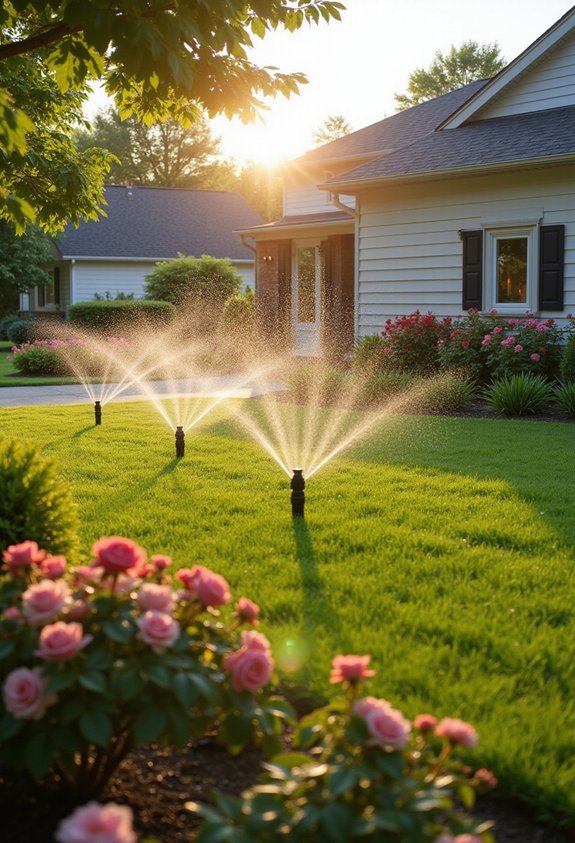
Because maintaining a beautiful front yard requires consistent watering that adapts to seasonal changes and weather patterns, you’ll want to invest in a smart irrigation system that automatically adjusts water delivery based on soil moisture levels, rainfall data, and plant-specific needs. These systems connect to your home’s Wi-Fi network, allowing you to monitor and control watering schedules through smartphone apps. Install moisture sensors throughout planted areas to prevent overwatering, while drip irrigation lines deliver targeted water directly to root zones. Smart controllers integrate local weather forecasts, automatically skipping watering cycles during rainy periods and increasing frequency during drought conditions.
Balance Plant Sizes With Hardscape Elements for Best Proportions
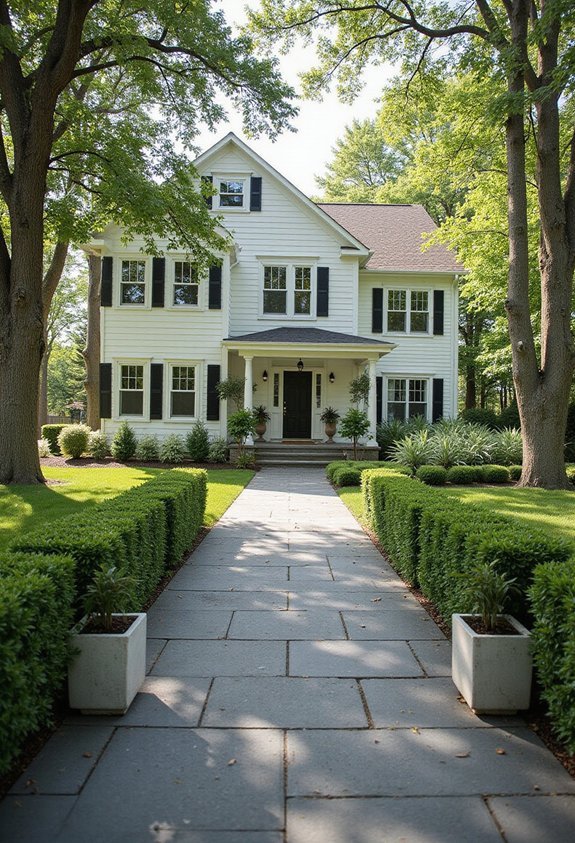
How do you create visual harmony between living plants and structural elements in your front yard design? You’ll need to match plant heights with nearby hardscape features, ensuring tall shrubs complement large retaining walls while shorter plants work alongside pathways and borders. Position medium-sized plants between these extremes to create smooth transitions that guide the eye naturally through your landscape. Consider the mature size of each plant when planning, because proper spacing prevents overcrowding that disrupts proportional balance. Use the rule of thirds by placing your largest elements at one-third intervals to achieve professional-looking symmetry.
Maintain Your Front Yard Design With Seasonal Care Routines
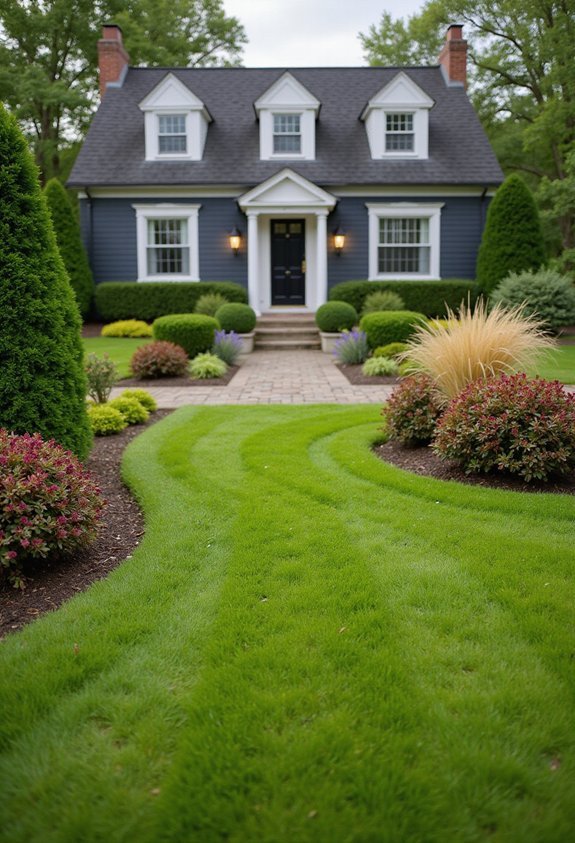
A well-proportioned front yard design requires ongoing maintenance throughout the year to preserve its visual appeal and structural integrity. You’ll need to establish specific seasonal routines that address different maintenance requirements as weather conditions change. During spring, focus on pruning damaged branches, applying fresh mulch, and planting new additions before peak growing season begins. Summer maintenance involves consistent watering schedules, deadheading flowers, and monitoring plant health for pest issues. Fall tasks include leaf removal, winterizing sensitive plants, and preparing hardscape elements for cold weather. Winter requires minimal intervention, primarily focusing on snow removal and protecting vulnerable plantings from harsh conditions.
Conclusion
You’ve learned essential strategies to create a cohesive front yard design that enhances your home’s curb appeal and value. By matching your landscaping choices to your home’s architectural style, planning proper plant placement, and maintaining consistent care routines, you’ll achieve a polished appearance that welcomes visitors. Remember to ponder year-round color, appropriate walkway width, and balanced proportions between plants and hardscape elements for the most successful results.