


Something happens in a backyard once you add a fire pit. People stop scrolling their phones and start pulling chairs closer together.
Gravel makes that upgrade so much easier than you’d expect. No poured concrete, no weekend lost to heavy equipment, just a solid base and a few smart choices.
I redid my own side yard with a simple gravel ring two summers ago, and it’s still the spot everyone gravitates toward at dinner parties.
Whether you’re picturing a sunken pit tucked into a slope or a tidy raised island by the patio, the options here fit yards of every size and style.
Your budget, your maintenance tolerance, and how much digging you’re willing to do will point you toward the right setup.
A Few Things Worth Knowing First
Before you buy a single bag of gravel, think about drainage. Water pooling near your fire pit turns a nice feature into a muddy mess fast.
Gravel depth matters more than people realize. Skimp on it and you’ll be topping off bare patches within a year.
Your yard’s slope, soil type, and how close you sit to the house should shape your design before you fall in love with a Pinterest photo.
11 Gravel Fire Pit Area Ideas
Every yard has its own quirks, and honestly, that’s what makes this fun. A sloped lot might lead you toward a sunken design, while a tight patio calls for something scaled way down.
I’ve grouped these ideas by style, size, and effort level so you can find the version that actually fits how you use your outdoor space.
Take your time with this list and pick the one that matches your yard, not just the one that photographs best.
Choose the Right Style for Your Space
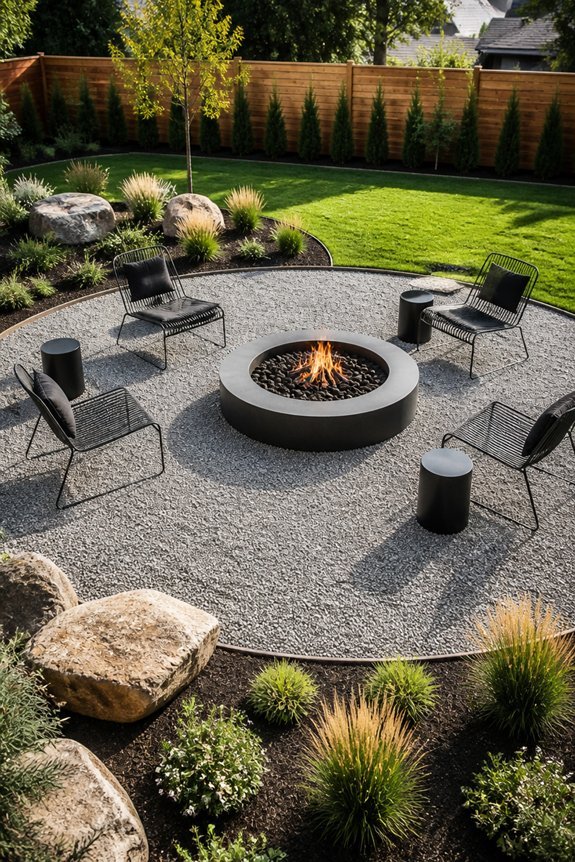
Match Your Setting
Start with your landscape, home style, and what feels right to you. Each fire pit style serves a different mood and space.
Rustic and Natural
Rustic designs fit wooded backyards with relaxed layouts. They feel at home among trees and uneven terrain.
Clean and Modern
Contemporary styles pair well with modern homes. Think clean lines and simple gravel patterns.
Old-World Charm
Mediterranean looks use stone borders and decorative touches around the pit. They bring warmth and texture.
Cozy and Casual
Cottage styles mix curved edges with varied materials. The feel is informal and inviting.
Regional Character
Southwestern designs feature colored gravel and clay accents. They reflect local heritage and landscape.
Tying It Together
Pick a style that matches your siding, roof, and overall exterior look. Check your yard size, existing trees, and distance from structures. The right choice balances beauty with safety.
The Simplest Setup: Circular Gravel Ring With Seating
The Basics
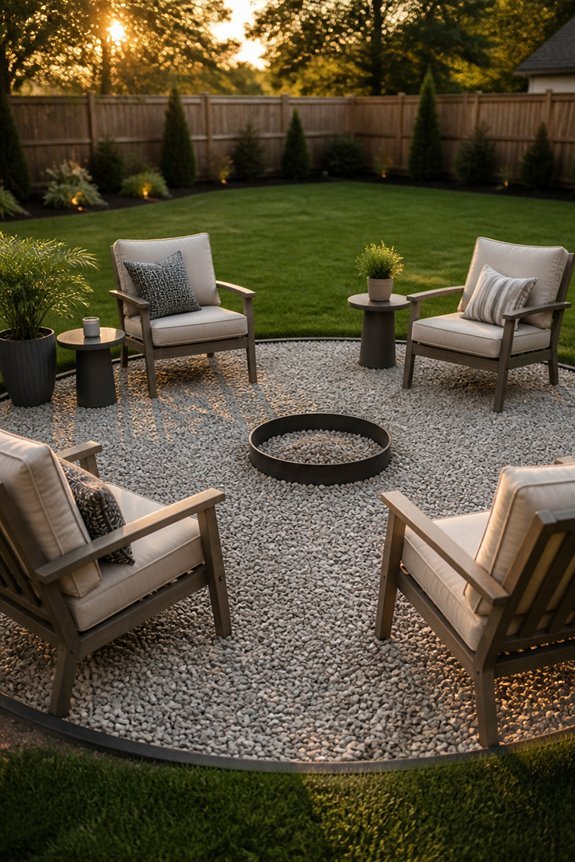
A circular gravel ring keeps things simple. It needs minimal materials and labor. Homeowners gather landscape fabric, gravel, and some seating options.
Size and Setup
The ring usually spans 8 to 12 feet across. This gives everyone room to gather safely. Landscape fabric goes down first. It stops gravel from sinking into the soil.
Add 3 to 4 inches of gravel on top. Pea gravel or crushed stone both work well. This creates a clean, defined border.
Seating and Enjoyment
Seating choices are flexible. Built-in benches, portable chairs, or logs around the edge all fit nicely. The circular shape sparks conversation. Heat spreads evenly across the entire space. Cleanup stays easy, and future changes remain simple to make.
Modern Look: Minimal Borders and Clean Lines
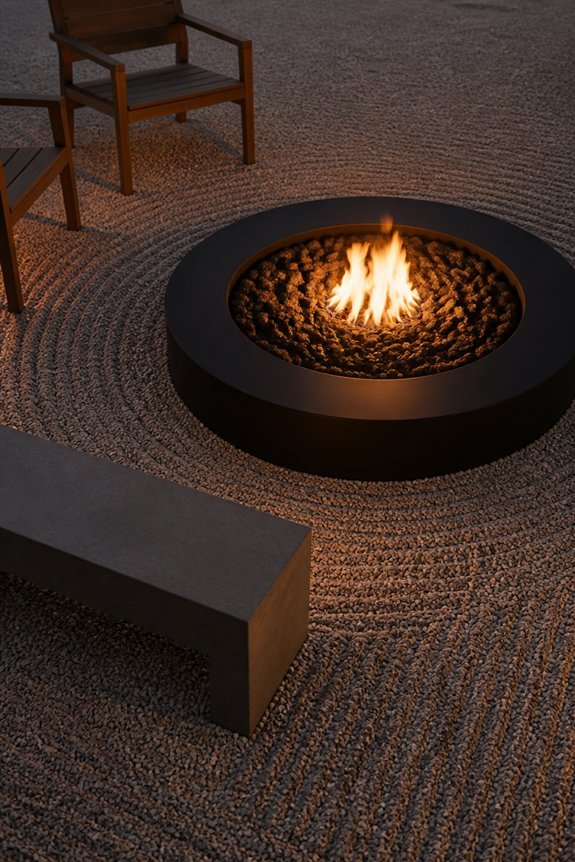
Modern fire pit designs embrace straight edges and geometric shapes. They skip the curved simplicity of traditional rings. Clean lines and rectangular borders dominate this style. These elements pair naturally with contemporary homes.
Steel or composite edging creates crisp boundaries. These materials avoid visual clutter while defining the space. Gravel fills the interior efficiently. It provides drainage and a neutral backdrop that lets the architecture shine.
Seating follows minimalist principles. Low-profile benches or modern chairs sit at precise angles around the pit. Metal grates or simple stone platforms serve as functional bases. Recessed fixtures or linear LED strips integrate subtle lighting into the design.
This style needs less upkeep than ornate alternatives. It also adapts well to small or narrow yards. Space optimization becomes simple with this approach.
Rustic Appeal: Stone and Gravel Blend
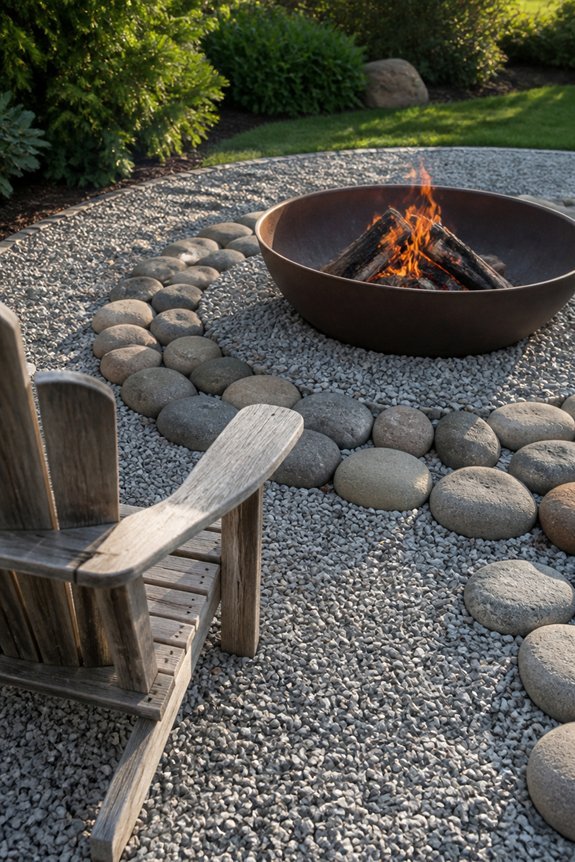
Rustic fire pit areas embrace organic shapes and natural materials. They skip the sharp lines of modern designs in favor of something more relaxed.
Various stone sizes, river rocks, and gravel blend together for a weathered look. Homeowners usually start with larger stones as borders. Then they fill the inside with smaller gravel and pea stone.
The uneven placement adds character and visual depth. Natural stone benches or log seating pair well with the gravel base. Moss and lichen often grow on the rocks over time. This aged look is part of the charm.
Ornamental grasses and native shrubs fit right into this style. The rustic approach needs little formal structure. You can adjust the design easily as your landscape changes and settles.
Elevated Design: Sunken Pit vs. Raised Island
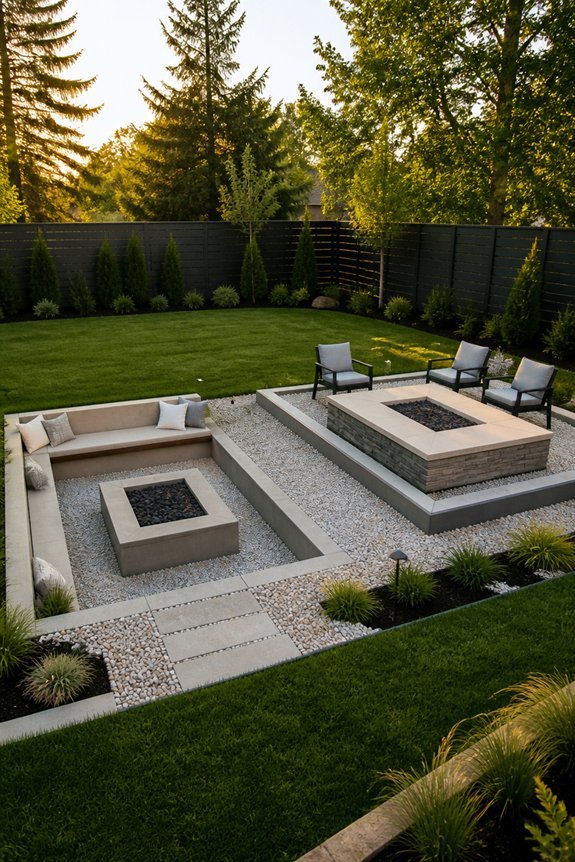
Fire pit elevation shapes both how your space works and how it looks. Your choice between sunken and raised designs brings different benefits to your yard.
Sunken Pits
These sit below ground level. They block wind well and hold heat where you need it. Heat rises naturally in this setup.
You will need to dig. Plan for drainage and lay a gravel base. This stops water from collecting at the bottom. Sloped yards work great for this style. The ground around the edge becomes natural seating.
Raised Islands
These rest on built platforms, usually 12 to 24 inches up. No digging required.
They are easier to reach. Air flows better underneath. Gravel goes in simply. The raised edge clearly marks your gathering spot. Flat yards with drainage problems suit this option best.
Both styles work with gravel surrounds. Raised designs need borders to keep stones in place.
Multi-Zone Layouts: Gravel Patio With Seating Areas
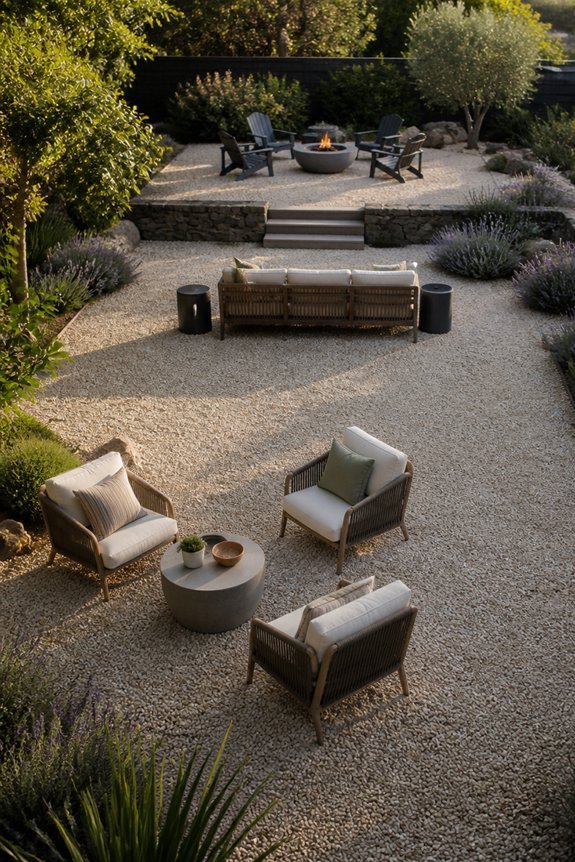
Large fire pit areas work better when split into separate spaces. A three-part layout keeps things organized and flowing.
Start with the fire pit as your anchor point. Add a seating ring about 15 feet out. This distance keeps everyone warm without feeling overwhelmed by heat.
Set up a dining or games area roughly 20 feet away. Smoke stays out of your meals at this spacing. Connect everything with compacted gravel paths so guests know where to walk.
Gravel makes these divisions clear without blocking water or adding upkeep. You get more usable space for bigger groups. Everything stays neat and purposeful across your yard.
Low-Effort Upkeep: Fabric and Permeable Solutions
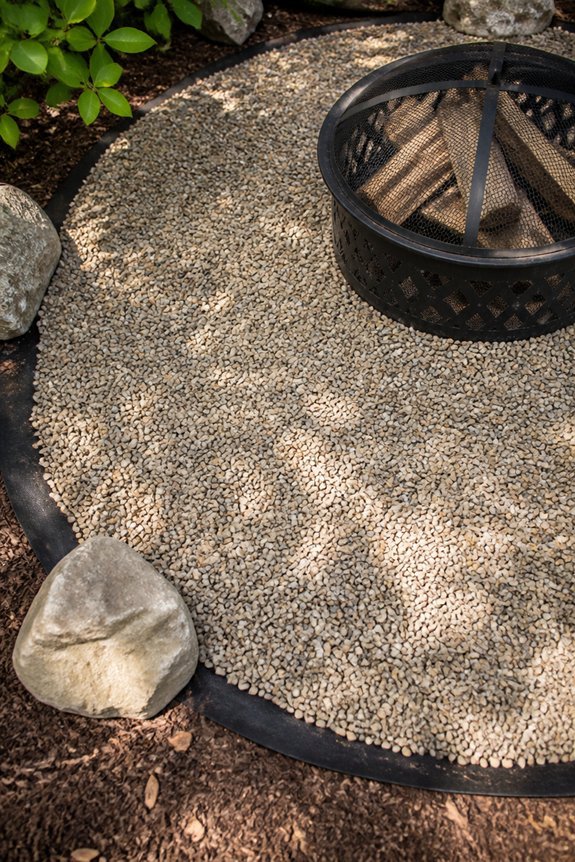
Gravel fire pit areas stay easy to maintain with the right foundation. Proper underlayment systems cut down on upkeep significantly.
Landscape fabric blocks weeds before they start. It stops sunlight from reaching the soil beneath. Water still drains through easily, so you avoid pooling and erosion. This simple layer solves multiple problems at once.
Permeable base layers add another level of protection. Crushed stone or recycled asphalt works well here. These materials support your decorative gravel while keeping drainage efficient. The result is a surface that lasts with minimal attention.
Your ongoing maintenance stays light. Occasional raking and top-ups keep everything looking fresh.
Choose your materials carefully. Pick heavy-duty fabric with UV protection made for outdoor use. Stack your base layers in the right order. These small choices at the start pay off in performance and years of use.
Small-Space Solution: Fire Pits for Tight Yards
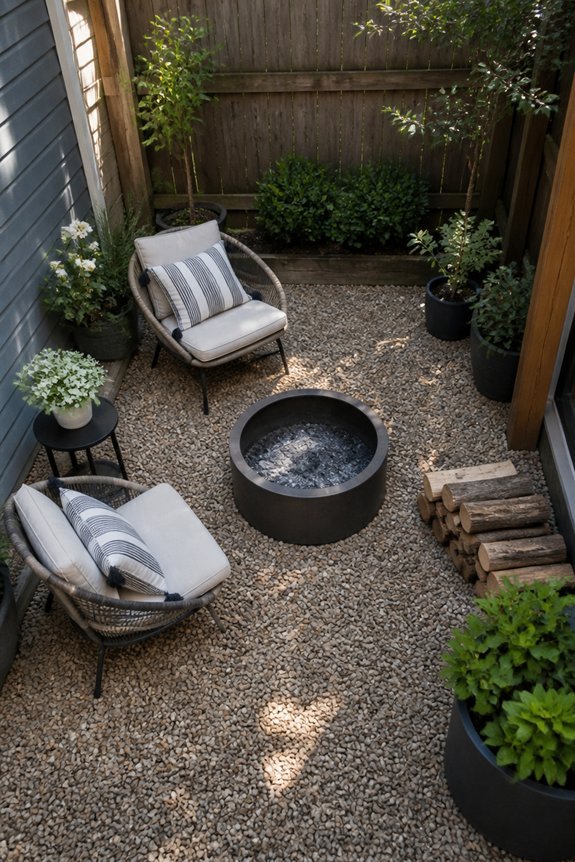
Compact yards call for smart fire pit choices. Scaled-down designs save space without sacrificing warmth or safety.
Tabletop fire bowls work beautifully in tight spots. At 24 to 30 inches across, they rest easily on existing patios. No bulky footprint required.
Portable metal pits add welcome flexibility. Move them where you need them, when you need them. Store them away during off-seasons.
Gravel rings define seating areas without eating up square footage. Corner placement against fences or walls frees up the center of your yard. These tucked-away nooks feel surprisingly intimate.
Linear and rectangular pits suit narrow yards better than round ones. They need less clearance on the sides while still radiating plenty of heat.
Lighter gravel colors serve double duty in small spaces. They brighten dim corners and bounce warmth back toward guests.
Compact designs prove that limited outdoor areas can still host memorable evenings. Thoughtful planning keeps safety front and center.
Beyond Gravel: Mix in Rock Features and Pathways
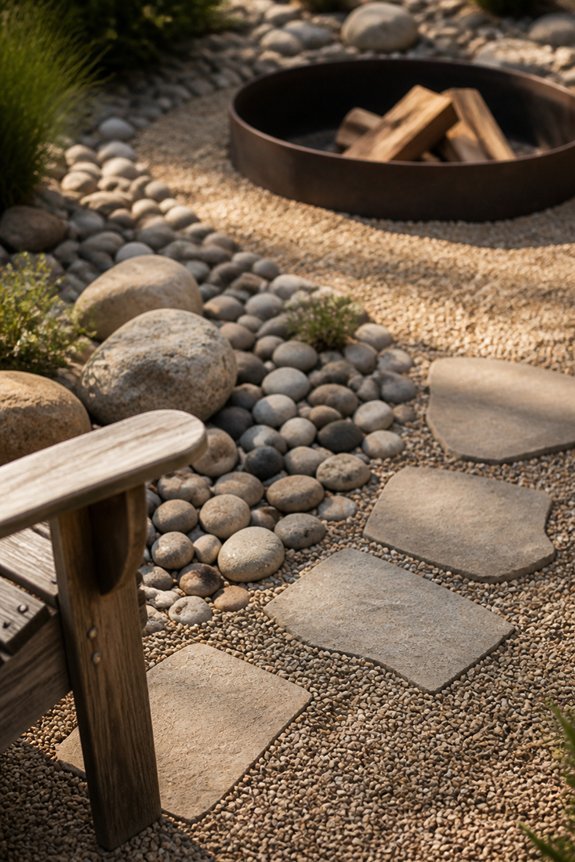
Rocks and defined pathways take your fire pit area beyond a simple gravel ring. They add visual interest and create clear boundaries for your space.
Larger boulders and flagstone pieces anchor the design. River rocks bring organic shapes that soften the look. Mix rock sizes from pea gravel up to 6-inch stones for texture and depth.
Stepping stones guide visitors safely from patio to seating. Loose gravel alone can cause tripping hazards. A solid path solves this while adding structure to your layout.
Slate pieces work beautifully for edging. Crushed limestone offers pleasing contrast against darker rocks. Each material brings its own color and texture to the mix.
Rocks define your gathering area naturally. They reduce maintenance needs over time. Larger specimens around the perimeter create distinct zones for seating or traffic flow.
This layered approach transforms a basic fire pit. You get a cohesive outdoor living space. The result feels intentional, welcoming, and built to last.
Decorative Touches: Patterns That Define Your Pit
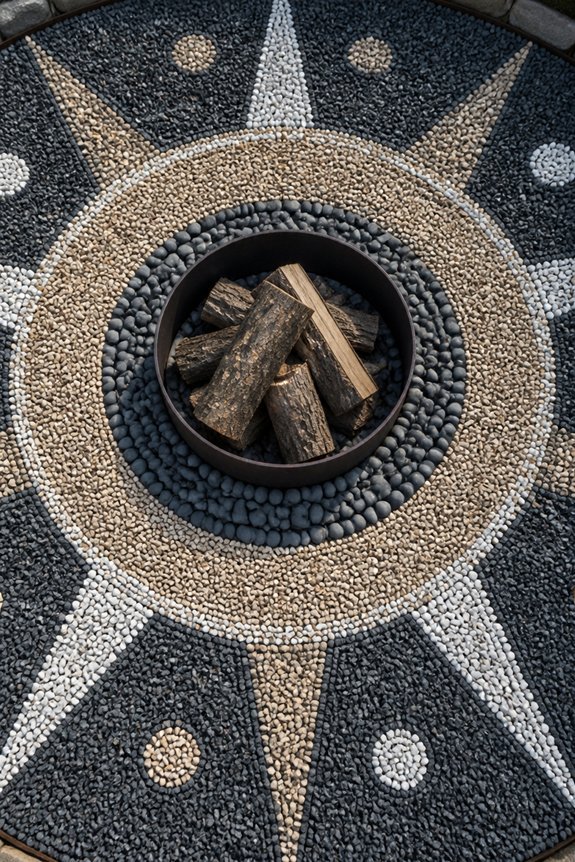
Patterns created with different gravel colors and stone arrangements transform a functional fire pit into a designed focal point.
Homeowners can arrange light tan gravel in geometric shapes. Darker stones outline circular or square designs around the pit perimeter. Concentric rings alternate between pea gravel and larger river rocks. This creates visual interest and clear definition.
Radiating lines of white quartz extend outward from the center. They resemble sun rays spreading across the ground. Contrasting dark mulch or slate chips establish clean boundaries nearby.
Checkerboard patterns combine alternating squares of different gravel types. This provides structure and organization to the seating area. Guests can easily see where the fire zone begins and ends.
These decorative arrangements require minimal maintenance. They establish clear visual separation between the fire pit zone and surrounding landscaping.
Quick Comparison: Maintenance, Cost, and Installation
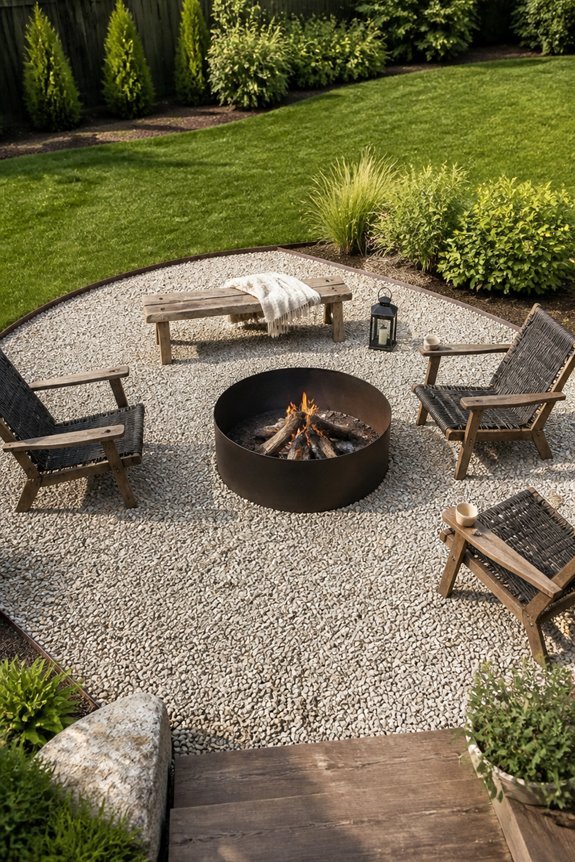
Decorative gravel patterns look beautiful. But each material handles maintenance, cost, and installation differently. Here’s what to expect with popular options.
Pea gravel spreads quickly. You can finish installation in one afternoon. It does require regular raking though. Most homeowners spend $50 to $100 yearly on replenishment.
Crushed stone lasts longer with less upkeep. It does settle unevenly over time. Base preparation extends your installation timeline. Still, the durability pays off for many.
Marble chips create stunning visual appeal. They demand careful weeding to stay tidy. Initial costs run $200 to $400. Many find the elegance worth the extra attention.
Decomposed granite needs containment edging. Without it, the material spreads everywhere. Plan for this extra step in your installation.
Total project costs range from $150 to $600. Your final number depends on material choice and pit size. Balance upfront spending against long-term maintenance and replacement needs.
Frequently Asked Questions
How Do I Prevent Gravel From Spreading Into My Lawn Around the Fire Pit?
Metal or landscape edging around the perimeter is your best defense here. It gives the gravel a clear boundary so it stops creeping into the grass.
Underneath, lay down ground cloth or landscape fabric. That extra layer keeps stones from working their way into the soil over time.
A little routine raking goes a long way too. It’s a small habit that keeps the line between gravel and lawn looking crisp.
What Type of Gravel Is Safest to Use Near an Active Fire Pit?
Pea gravel and river rock are your safest bets. They’re non-porous, so they won’t trap moisture or gases that could cause problems near heat.
Steer clear of anything containing limestone or shale. Those types can actually crack or pop when they get hot, which isn’t something you want near your seating area.
Larger stones also help keep everything in place instead of scattering with foot traffic.
Can I Install a Gravel Fire Pit Area on an Existing Patio?
I’d hold off on that one. Heat from an active fire pit can seriously damage the material underneath, even through a gravel layer.
Your better move is setting up a separate spot nearby instead. Give it proper clearance and a solid foundation built specifically for the heat.
It takes a bit more planning, but it protects your existing patio and keeps things safer overall.
How Often Should I Replace Gravel in My Fire Pit Seating Area?
Most gravel areas need a refresh every one to two years. Exactly when depends on how much foot traffic you get and what your weather throws at it.
Heavy use and frequent rain will wear things down faster. If you’re hosting often or live somewhere rainy, expect to top things off sooner rather than later.
Keeping an eye on it seasonally makes the job easier when it does come around.
Are There Fire Pit Gravel Options That Won’t Shift or Settle Over Time?
Larger crushed stone mixed with polymeric sand holds its shape really well. That combination resists the shifting you often see with looser gravel types.
Adding metal or fabric edging helps too, since it keeps everything contained instead of spreading outward.
A compacted base layer underneath makes the biggest difference of all. It’s the part nobody sees, but it’s doing most of the work.
CONCLUSION
A gravel fire pit doesn’t need to be complicated to feel special. Some of the coziest setups I’ve seen were just a ring of stone, a few mismatched chairs, and good company.
My own backyard project started as a weekend fix for a bare patch of dirt. It ended up becoming the one spot in the house everyone asks to sit in.
Circular rings, sunken pits, raised islands, whatever direction you lean toward, the real win is picking something you’ll actually use on a regular Tuesday night, not just for special occasions.
Gravel gives you room to adjust as you go too. You can swap seating, add stone accents, or change the pattern without starting from scratch.
Cost and maintenance matter, sure, but don’t let them talk you out of something simple that brings people together.
I’d love to hear which style caught your eye, or if you’ve already got a gravel fire pit going in your own yard. Drop a comment and tell me about it.