


My home office sat empty and lifeless for a solid year before I finally admitted the problem was obvious.
There was nothing living in the room, and it showed in how little I wanted to spend time there.
Houseplants fix that fast. They soften the hard edges of a desk setup and give your eyes somewhere to rest between emails.
Snake plants, ZZ plants, and pothos handle low light and forgetfulness without complaint.
Peace lilies and calatheas add a bit more personality if your corner could use some movement.
Where Most People Go Wrong
A lot of home office plant disasters start the same way, someone picks a plant based on looks alone and ignores the light the room actually gets.
Match the plant to your corner’s real conditions first, dim, bright, drafty, whatever it is, and the rest of the care gets a lot easier.
If your desk sits far from a window, don’t fight it. Lean into the shade-tolerant options instead.
9 Home Office Plant Ideas for Every Corner
Some of these plants ask for almost nothing and just keep growing in the background while you work.
Others bring a bit more personality to a desk that’s starting to feel too sterile, with bold leaves or the occasional bloom.
Take a look and find the ones that fit both your light and your energy level.
Snake Plant: The Low-Maintenance Air Purifier
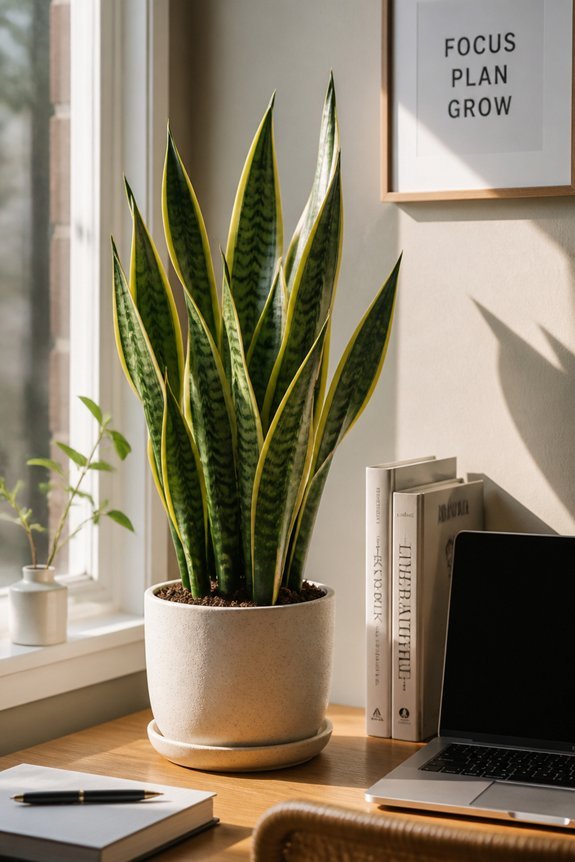
Why Snake PlantsWork for Busy Home Offices
Many home office workers need plants that handle neglect and low light. The snake plant delivers on both counts.
It tolerates irregular watering and indirect sunlight. Temperatures between 60 and 75 degrees suit it just fine.
Snake plants remove toxins like formaldehyde and benzene from your air. Your office space gets cleaner without any extra effort from you.
Simple Care, Lasting Results
Water every three to four weeks during growing seasons. Cut back even more in winter.
These plants grow slowly. You’ll repot only every two to three years.
Their vertical shape fits corners perfectly. You gain greenery without sacrificing floor space.
Beautiful Varieties to Choose From
Try the Laurentii for yellow-edged leaves. The Moonshine offers silvery-green foliage instead.
Both bring the same resilience and air-purifying benefits. Pick the look that matches your space.
Also read: 9 Signs Your Houseplant Needs Repotting
Pothos: The Low-Light Plant That Tolerates Neglect
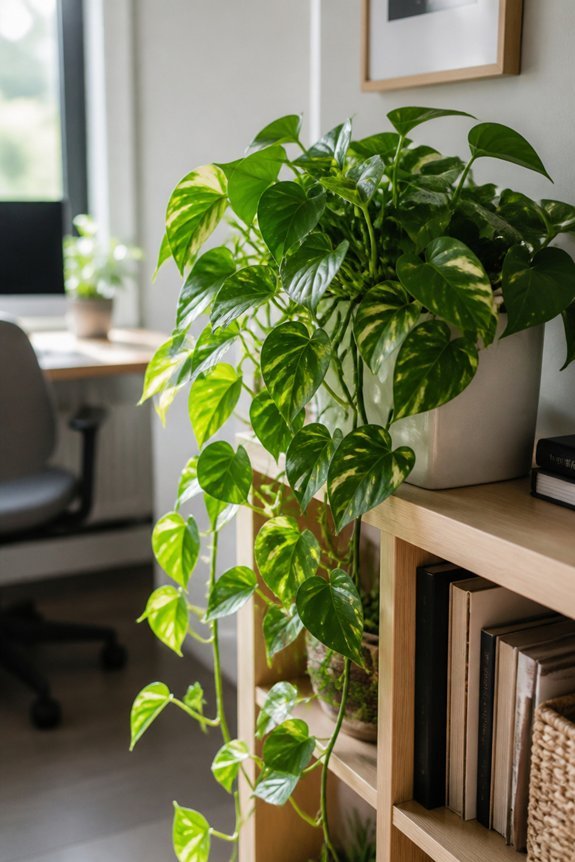
Pothos plants are wonderfully forgiving. They thrive in conditions that stress many other houseplants. Low light, irregular watering, and temperature swings don’t bother them. North-facing corners, artificial light, and windowless spaces all work well. Placement is truly flexible.
Water only when soil feels dry. This usually means every two to three weeks. Overwatering causes more harm than underwatering. Keep temperatures between 60 and 75 degrees Fahrenheit.
The trailing vines cascade beautifully from shelves. They can also climb small moss poles. The plant adapts to whatever space you have.
Golden Pothos and Marble Queen offer lovely variety in leaf patterns. Occasional pruning creates fuller, bushier growth. For busy people in office environments, Pothos remains one of the most reliable choices.
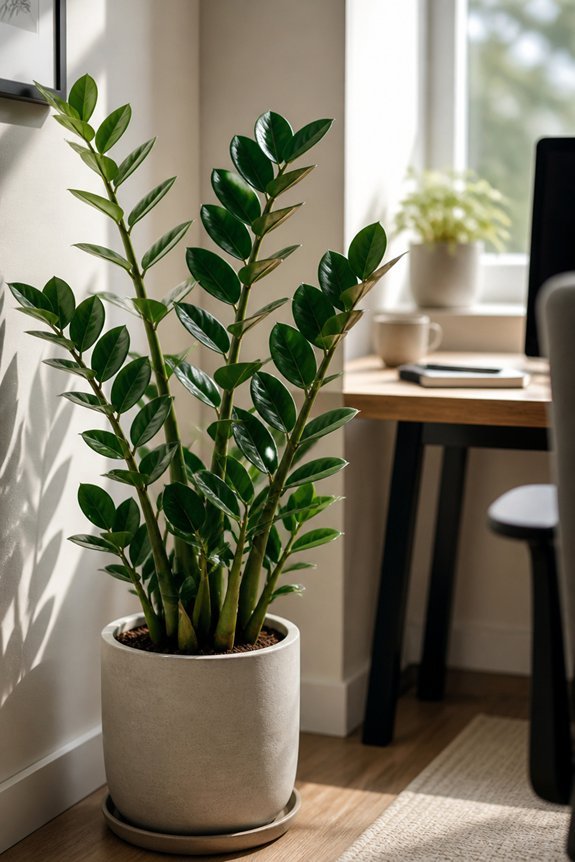
ZZ Plant: Elegant, Nearly Impossible to Kill
A Reliable Alternative
Pothos handles neglect well, but the ZZ plant offers something similar. Its glossy, compound leaflets line upright stems for a clean, formal look. Office corners suit it perfectly.
Built for Busy Spaces
Low light? No problem. Irregular watering? It adapts. Temperature swings common in offices? It endures them all. Underground rhizomes store water, so skipped waterings won’t faze it.
Simple Care
Overwatering causes the only real trouble. Root rot develops when soil stays soggy. Growth stays slow and contained. Check soil dryness weekly or biweekly.
Bright corners near windows work best. Shadier spots away from direct sun still succeed. For professionals wanting easy, lasting greenery, this plant delivers.
Peace Lily: The Plant That Tells You When It’s Thirsty
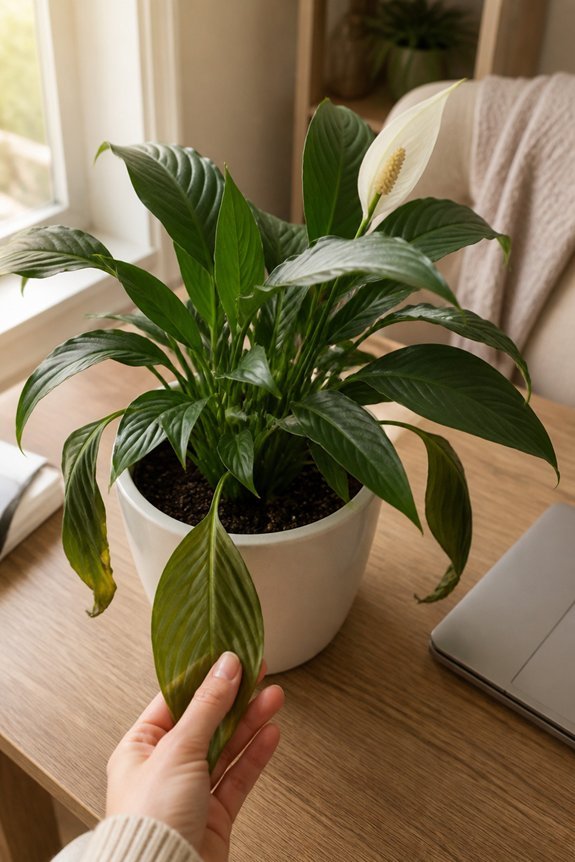
Many office workers love the peace lily for one simple reason. It shows you exactly when it needs water.
The leaves droop noticeably when thirsty. This visible signal takes away all the guesswork. Busy professionals can skip rigid watering schedules. The plant waits patiently until you’re ready.
Easy Growing Conditions
Peace lilies thrive in the indirect, medium light found in most offices. They handle lower humidity without complaint. Temperature changes rarely bother them.
White flowers appear from time to time. These add a nice touch without demanding attention.
Watch the Water
Root rot from overwatering is the main danger. Let the soil dry slightly between waterings. This simple habit keeps your plant healthy.
Standard potting soil works fine. Regular office containers suit them perfectly. Growth stays moderate, so repotting happens rarely. Less work for you.
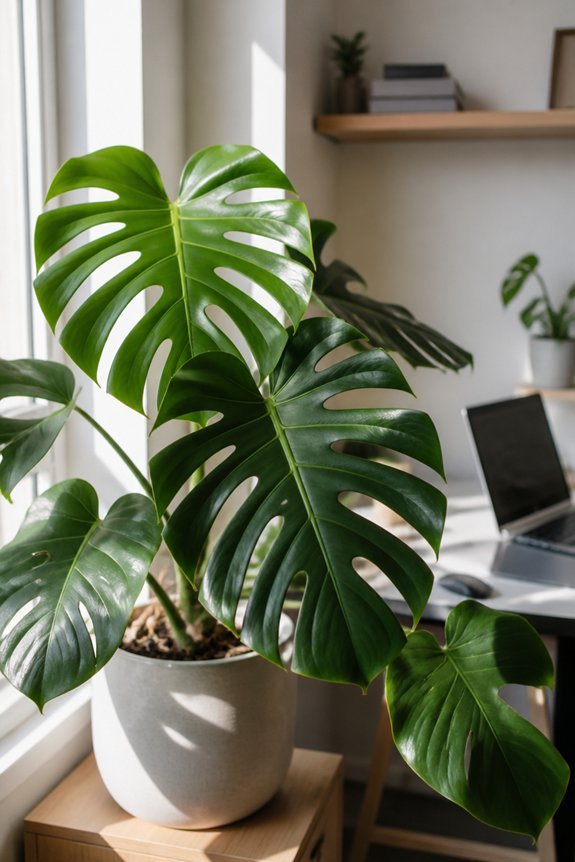
Monstera Deliciosa: Bold Statement Plant for Bright Offices
Light & Space
The monstera deliciosa craves brighter conditions than the peace lily. Its large, split leaves create instant visual drama. Place it near a window with bright, indirect light. Consistent daylight keeps this plant happy.
Fast growth is part of its charm. Indoors, it reaches six to eight feet tall. Give it room to spread and develop those signature fenestrated leaves.
Care & Environment
Water when the top inch of soil dries out. This usually means every one to two weeks. Seasons and humidity will affect your timing.
Use well-draining potting mix. Feed monthly during growing season. Brown edges? Check humidity levels and watering consistency.
Temperature flexibility is another plus. Sixty-five to eighty-five degrees suits it fine. Most offices fit right into that range.
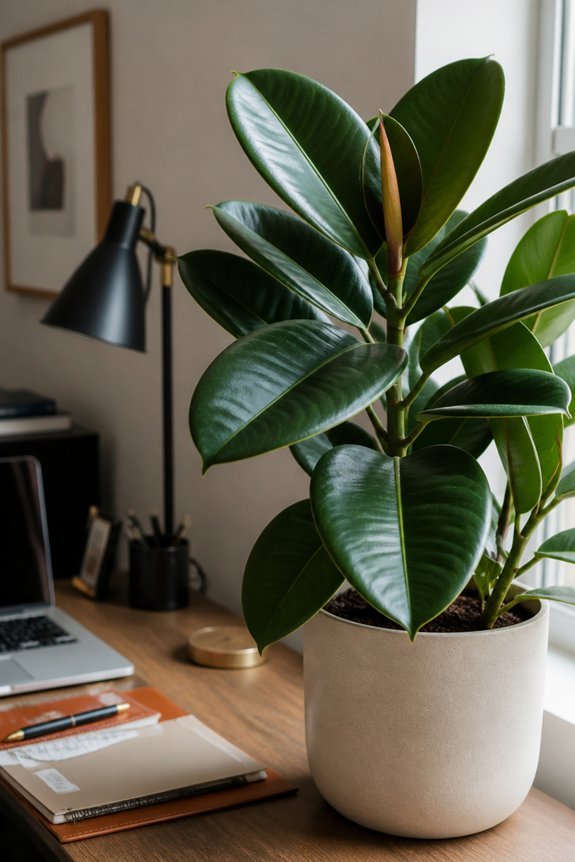
Rubber Plant: Deep Green Focal Point for Your Desk
A Natural Focal Point
The rubber plant catches the eye with its large, glossy leaves. It stands four to six feet tall indoors. This makes it perfect for corners near your desk.
The deep green foliage anchors your space without cluttering it. You get visual impact without sacrificing room to work.
Light and Water Needs
Bright, indirect light keeps this plant happy. East or west-facing windows work well. Let the top inch of soil dry out between waterings. That usually means watering every one to two weeks.
The rubber plant forgives the occasional missed watering. Busy schedules pose no problem here.
Simple Care, Added Benefits
Thick stems keep the structure sturdy. You’ll mainly dust the leaves now and then. The plant also filters toxins from your air.
Tuck it in a corner for maximum effect. It takes little floor space but delivers big presence.
Parlor Palm: Tropical Vibes Without the Fuss
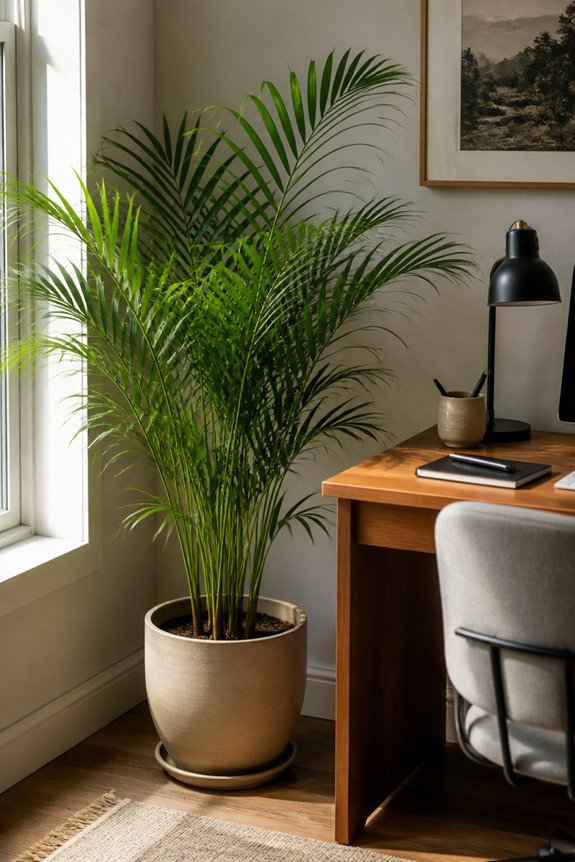
Parlor palms bring tropical energy to home offices with minimal effort. Their feathery, arching fronds catch the eye in any corner.
Medium, indirect light suits these palms perfectly. Dark offices without big windows? No problem.
Keep soil consistently moist, but don’t stress over missed waterings. Parlor palms forgive occasional neglect better than pickier plants.
Growth stays slow and manageable. Most reach three to four feet indoors over time.
Average humidity and room temperatures between sixty and seventy-five degrees suit them fine.
Watch for spider mites and scale insects now and then. A quick inspection prevents bigger headaches.
These palms also clean your air by filtering indoor toxins.
Their upright, vertical shape fills empty corners beautifully. You gain greenery without sacrificing precious floor space.
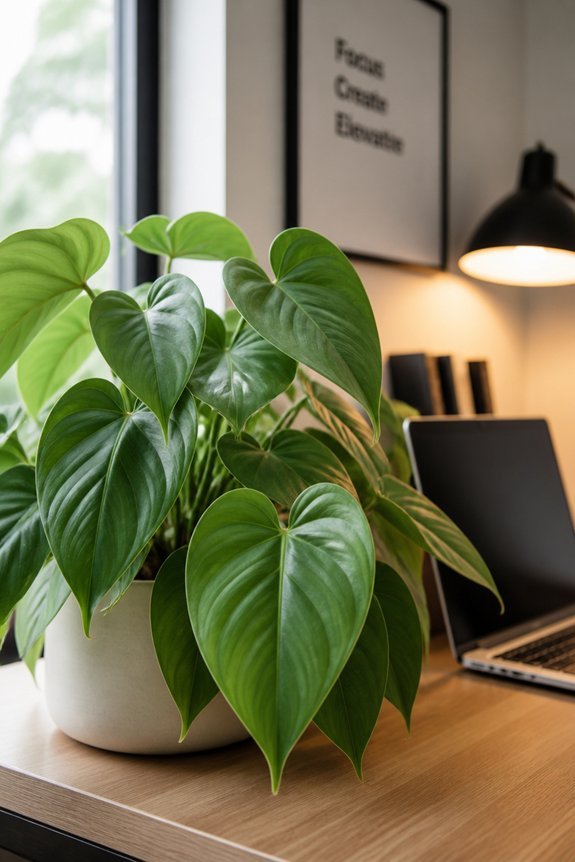
Philodendron: Thrives in Any Office Lighting
Light Conditions
Philodendrons work well in most office corners. They handle low, medium, or bright indirect light with ease. You can place them near windows or in dim spaces away from natural light. Placement options stay flexible. Popular choices include heartleaf and Brasil varieties. Both share this adaptable nature.
Growth and Care
These plants trail or climb based on type. Water when the soil feels dry, usually every one to two weeks. Root rot from overwatering poses the main risk to plant health.
Office Environment
Philodendrons tolerate variable humidity and temperature shifts. A little fertilizer during growing seasons keeps them happy. This resilience makes them great fits for home offices with limited natural light.
Spider Plant: The Nearly Indestructible Desk Companion
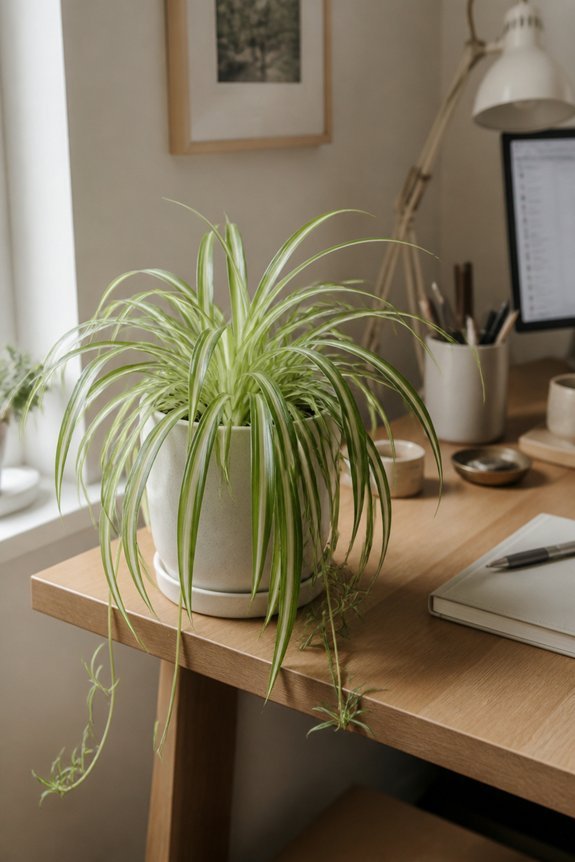
Spider plants handle neglect better than most houseplants. They tolerate shifting light and temperature swings with ease. Their arching leaves grow in soft, fountain-like shapes. This makes them perfect for livening up quiet workspace corners.
These plants prefer indirect light and room temperatures around 65 to 75 degrees. Check the soil with your finger before watering. Dry soil means it is time to add water, usually every week or two. Humidity affects this timing, so adjust as needed. Too much water causes root rot, so err on the side of caution.
Baby spider plants sprout on trailing runners. Snip these off and root them in water for free additions to other rooms. Spider plants also pull common pollutants from the air. This natural filtration benefits small, enclosed offices especially well.
Calathea: Striking Patterns for Dim Corners
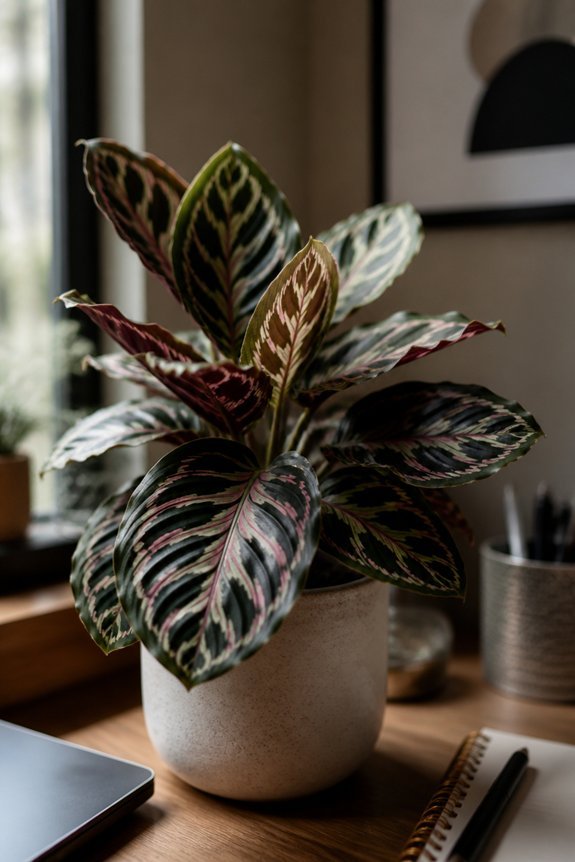
Calathea plants bring distinctive foliage to any space. Their leaves show intricate patterns in deep purples, greens, bold stripes, and spots.
These plants thrive in low-light corners. They do well away from direct sunlight, making them perfect for office spaces with limited natural light.
Popular varieties add unique character to your setup. Calathea orbifolia offers silvery-green leaves with dark stripes. Calathea roseopicta brings pink and cream markings to the mix.
Care requirements stay simple and manageable. Keep the soil consistently moist but not waterlogged. Maintain steady humidity levels for best results.
Growth remains slow and compact. Most calatheas reach between one and three feet tall. Place them where they’ll receive filtered or indirect light to keep their colors vibrant.
Ambient office lighting suits them perfectly. You won’t need to worry about finding sunny spots for these shade-loving plants.
Frequently Asked Questions
How Often Should I Repot My Office Plants to Maintain Their Health?
Most office plants only need repotting every 12 to 18 months, ideally in spring or early summer. That’s usually enough time for roots to settle in and outgrow their pot.
Faster growing plants might need it every year. Slower ones, like your ZZ plant or snake plant, can go a lot longer between repottings without any issue.
What’s the Best Way to Clean Houseplant Leaves Without Damaging Them?
A soft, damp cloth is really all you need. Wipe gently and support the leaf from underneath so you don’t accidentally tear it.
Distilled water works best if you’re worried about mineral spots. Skip the commercial leaf shine products too, they tend to clog the pores on the leaf rather than help anything.
Can I Use Regular Potting Soil for All My Office Corner Plants?
Not really, different plants want different soil. Succulents need something sandy and well-draining, while ferns prefer a mix that holds onto moisture longer.
Tropical plants tend to do best in richer, more nutrient-dense soil. Matching the mix to the plant makes a bigger difference than people expect.
How Do I Prevent Common Pests Like Spider Mites on Office Plants?
Keeping humidity up and misting regularly goes a long way toward keeping spider mites away in the first place. Dry office air is basically an invitation for them.
Check any new plant closely before you bring it into the room too. If something does show up, isolate that plant right away so it doesn’t spread to everything else on your desk.
What’s the Ideal Humidity Level for Tropical Plants in Office Environments?
Tropical plants like your calathea or monstera do best somewhere between 50 and 70 percent humidity. Most offices run drier than that, so a little help goes a long way.
Grouping plants together raises humidity naturally around them. A pebble tray with water or a small humidifier works too if you want more control.
CONCLUSION
A desk with even one healthy plant on it feels like a completely different room.
I noticed the shift in my own office almost immediately, the space stopped feeling like a place I was just passing through and started feeling like somewhere I actually wanted to sit down and work.
Snake plants, pothos, and ZZ plants do the heavy lifting if you want something that basically takes care of itself.
Peace lilies, calatheas, and monsteras are worth adding once you’re ready for a bit more color and texture.
Spider plants and philodendrons round things out nicely if you’ve still got an empty corner or shelf.
Which one is going on your desk first? Let me know in the comments, I always like hearing which plants people trust with their workspace.