

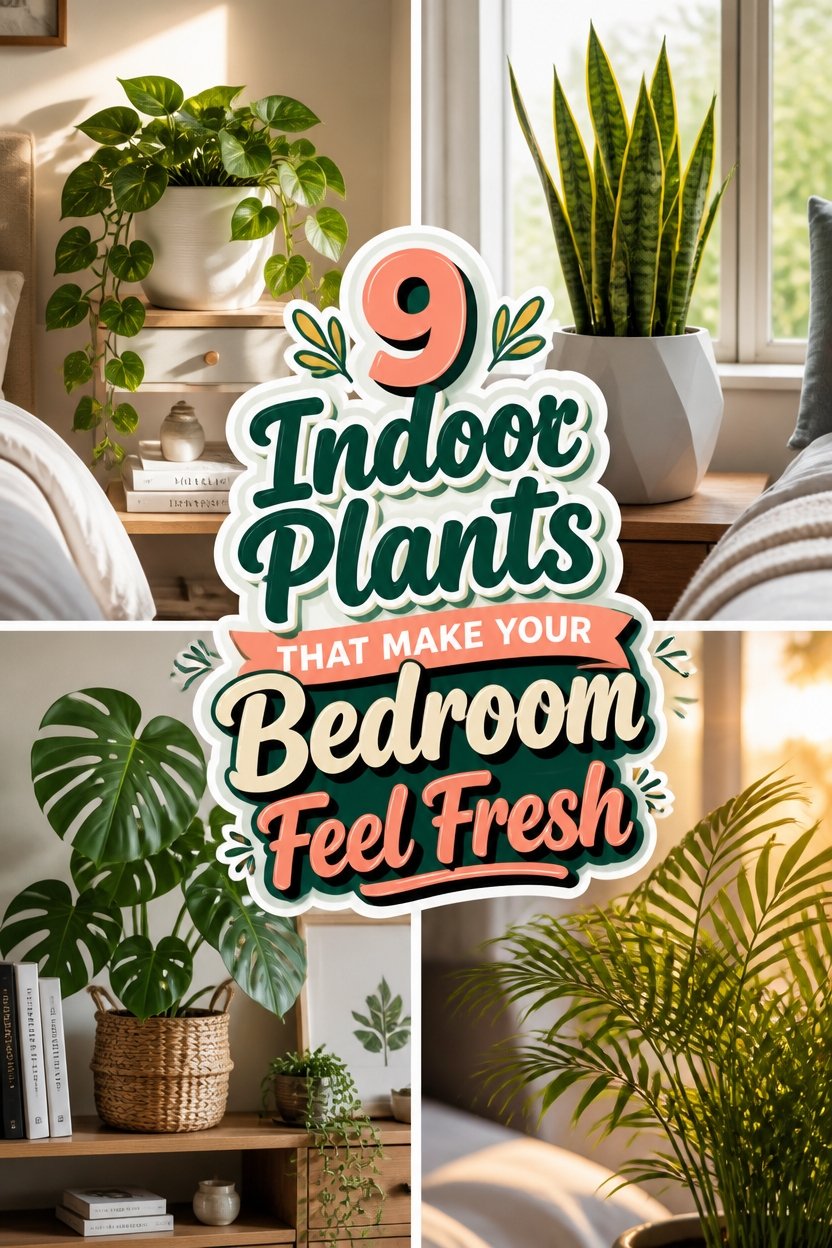
Bedroom plants do more than look pretty. They quietly clean the air while you sleep and bring a sense of calm to your space.
Snake plants, pothos, and peace lilies are perfect starting points. They filter toxins from the air and forgive you if you forget to water them now and then.
For something with a little more presence, monstera deliciosa and philodendrons fill empty corners beautifully. Their trailing vines and sculptural leaves add layers without trying too hard.
ZZ plants and spider plants are the true survivors. They handle low light and irregular care with ease.
Choosing the right one comes down to how much sun your room gets and how much attention you can give.
How to Choose the Right Bedroom Plant
Start with Light
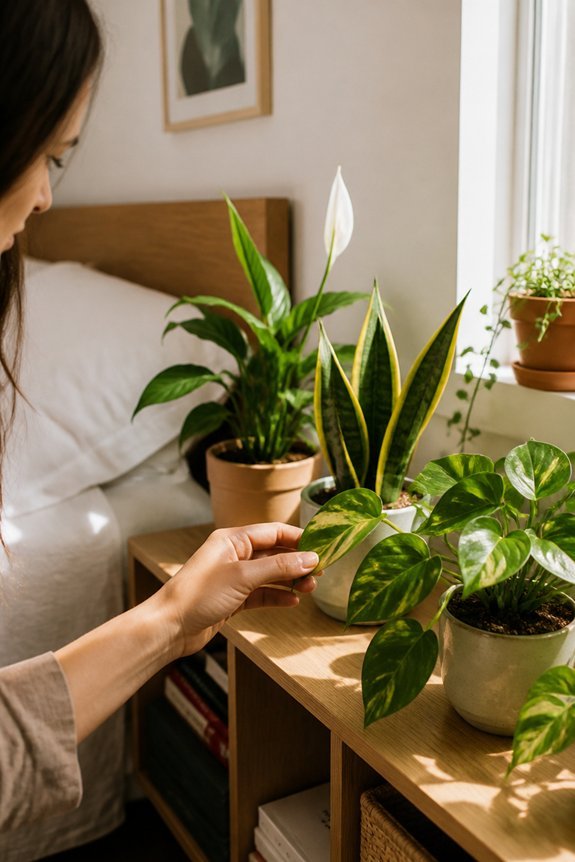
When selecting a bedroom plant, first look at your light conditions. Low-light areas suit pothos, snake plants, and peace lilies. Moderate indirect sunlight works well for philodendrons, dracaenas, and ZZ plants.
Bright windows are perfect for succulents, aloe, and jade plants.
Check Your Humidity
Humidity matters more than you might expect. Bathrooms with higher moisture levels support ferns and calatheas beautifully. Dry bedrooms need drought-tolerant species like snake plants or succulents.
Pick plants that actually match your air quality.
Mind the Temperature
Most indoor plants prefer 65-75 degrees Fahrenheit. Avoid placing plants near heating vents, air conditioners, or cold windows.
Sudden temperature swings stress plants quickly.
Choose the Right Pot
Pot size should match the plant’s root system. Containers need drainage holes to prevent root rot. Lightweight pots make placement and maintenance easier.
Consider your bedroom’s décor when selecting colors and materials.
Best Bedroom Plants for Low Light
Why Low-Light Plants Matter
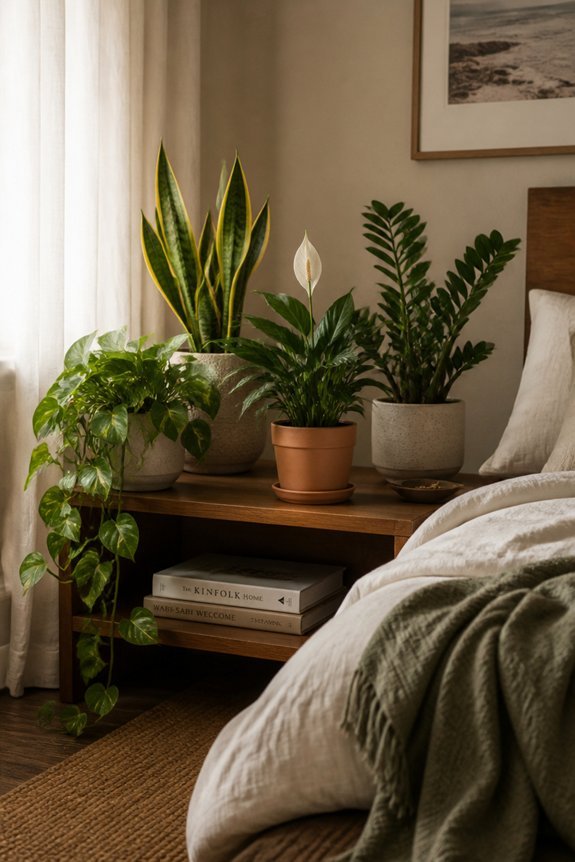
Most bedrooms don’t get much bright, direct sunlight. That’s completely normal. The key is choosing plants that actually prefer these conditions.
Top Picks for Dim Spaces
Pothos handles neglect like a champ. It needs little water and forgives low light.
Snake plants are similarly tough. They adapt to almost any light level and rarely need attention.
Philodendrons fill shadowy corners with steady growth. ZZ plants thrive on minimal care and minimal light.
Peace lilies offer a perk: drooping leaves tell you exactly when to water.
Simple Care Tips
Water about once weekly. Adjust based on your room’s humidity and temperature.
Overwatering causes more problems than underwatering in low-light spots. Root rot is the common enemy.
North-facing bedrooms see the biggest benefits from these resilient choices. Even in dark rooms, place plants near windows to catch every bit of available light.
Pothos: The Forgiving Air-Purifier
A Plant That Works for You
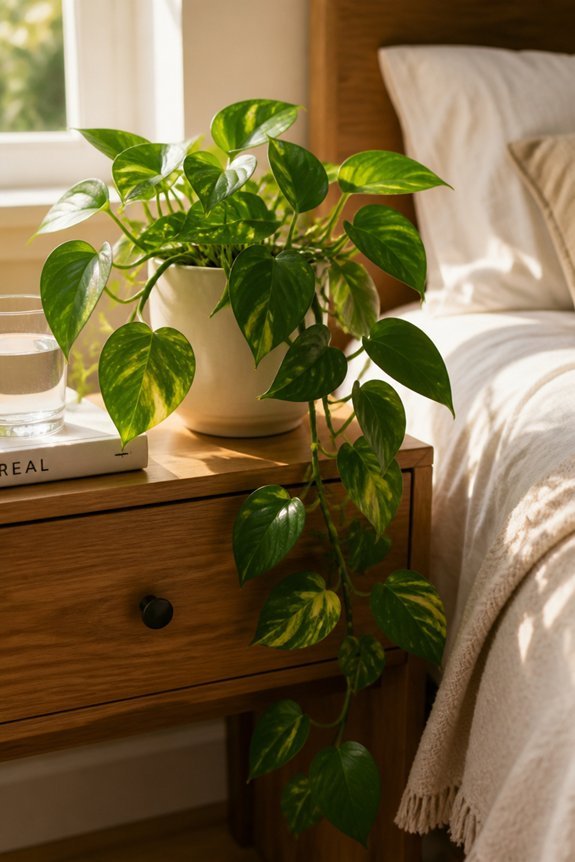
Pothos stands out among bedroom plants for two simple reasons. It cleans your air and forgives your forgetfulness.
This trailing vine removes toxins like formaldehyde and xylene from indoor air. Better air circulation means better sleep quality.
Pothos thrives in low-light conditions. It suits bedrooms with limited windows perfectly. The plant needs very little water. Check the soil and water only when it feels dry.
Watch your leaves for clues. Yellow leaves mean you are watering too much. Brown tips mean you are watering too little.
Easy Placement and Growth
Pothos grows quickly on shelves, dressers, or hanging baskets. It adapts to whatever space you have available.
The vining structure wraps easily around bedroom furniture. You can place it almost anywhere without worry.
Rarely does this plant need pruning. When you do cut it back, you can use those cuttings to grow new plants.
These traits make pothos ideal for busy people. You get cleaner air and greenery without demanding care routines.
Peace Lily: Elegant and Shade-Tolerant
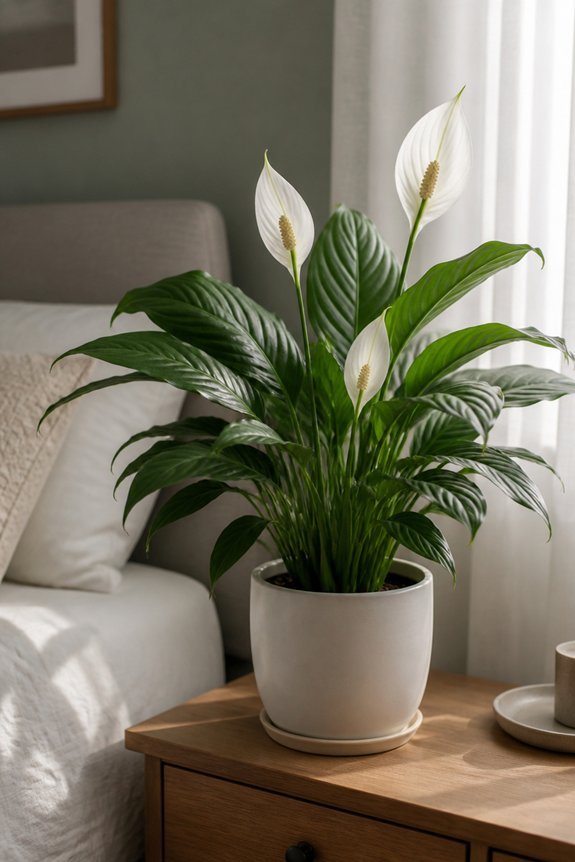
Peace lily brings quiet elegance to bedrooms. Its white flowers stand out against deep green leaves. Unlike hanging vines, it grows upright with a polished look.
Most houseplants struggle in dim corners. Peace lily handles shade surprisingly well. Filtered light from a small window keeps it happy.
Watering stays simple with this plant. The leaves droop gently when it needs a drink. Keep soil moist but never soggy.
Size works well for typical rooms. Most reach two to four feet tall. Toxins like formaldehyde and benzene get filtered from your air.
New plant owners appreciate its forgiving nature. Occasional pruning keeps the shape tidy. Flowers come more often with a quick trim.
Snake Plant: Oxygen Production While You Sleep
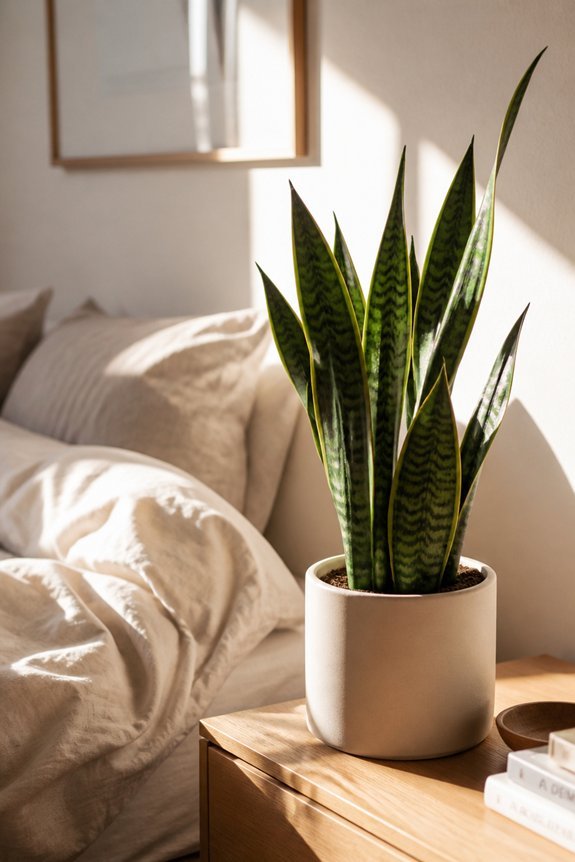
The snake plant works differently than most bedroom greenery. It releases oxygen at night instead of consuming it. This happens through CAM metabolism. Your air stays fresher while you rest.
Most plants stop producing oxygen after dark. Snake plants keep going. They improve air quality in closed bedrooms naturally.
These plants forgive forgetful owners. Water them every two to three weeks. They accept low light and varying temperatures. Bedroom placement stays flexible.
Well-draining soil keeps them happy. Indirect sunlight works best.
Key benefits include:
- Nighttime oxygen output
- Toxin removal from air
- Minimal watering needs
- Compact size for small spaces
Snake plants grow one to four feet tall. Choose a variety that fits your room. Nightstands and shelves both work well.
Best Bedroom Plants for Bright Corners
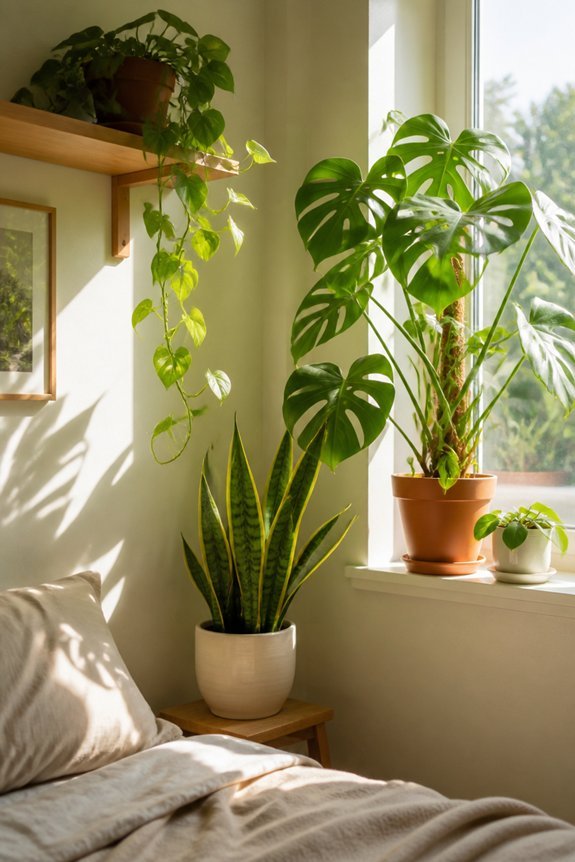
Bright corners offer different conditions than low-light spaces. These spots get more sun throughout the day. Plants here need higher light exposure and can handle direct or indirect sunlight.
Pothos adapts well to these areas. This trailing vine has heart-shaped leaves and grows quickly. Water it when the soil feels dry.
Philodendron varieties work similarly. They handle bright conditions with ease. Both plants are forgiving if you miss a watering now and then.
Succulents thrive in bright corners. Jade plants and aloe vera store water in their leaves. They need less frequent watering than most houseplants.
Kalanchoe adds color with its small flowers. It tolerates consistent bright light without complaint.
African violets also fit here. Just keep them away from harsh afternoon sun.
These plants keep your bedroom air fresh and your space looking lively.
Monstera Deliciosa: Statement Plant That Purifies Air
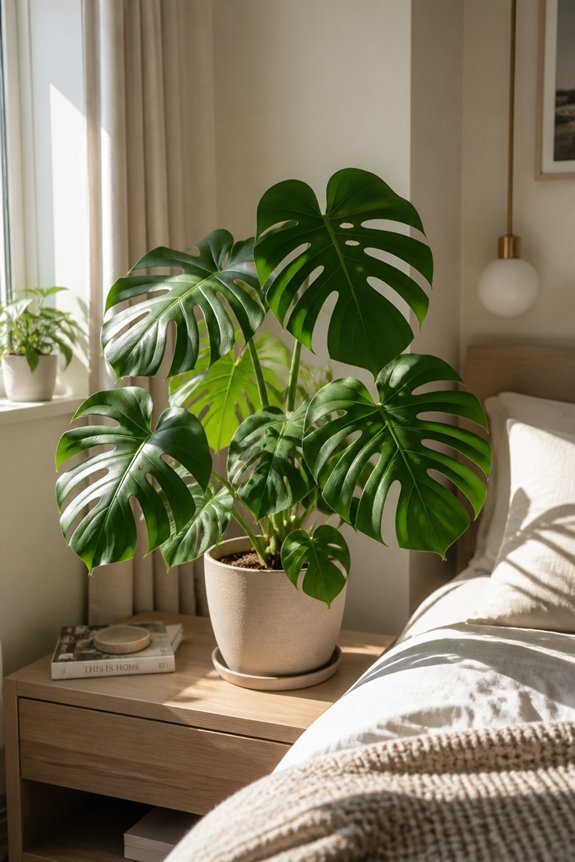
Monstera deliciosa brings serious drama to any bedroom. Its large, split leaves create instant visual impact without much effort.
This tropical plant grows fast indoors. It typically reaches 3 to 8 feet tall and develops natural holes called fenestrations as it ages. These distinctive splits make each leaf unique.
Your indoor air gets a boost too. Monstera leaves filter out formaldehyde and other common toxins found in homes and furniture.
Place yours near an east or west-facing window with bright, indirect light. It handles lower light spots, though growth slows down there.
For best results, use well-draining soil and water moderately when the top inch feels dry. Aim for humidity around 60 percent if possible.
Wipe the leaves regularly. Clean foliage works harder at purifying your air.
Monsteras settle happily into bedroom spaces. They look striking and serve a real purpose beyond decoration.
Philodendron: Climbing Vine for Vertical Interest
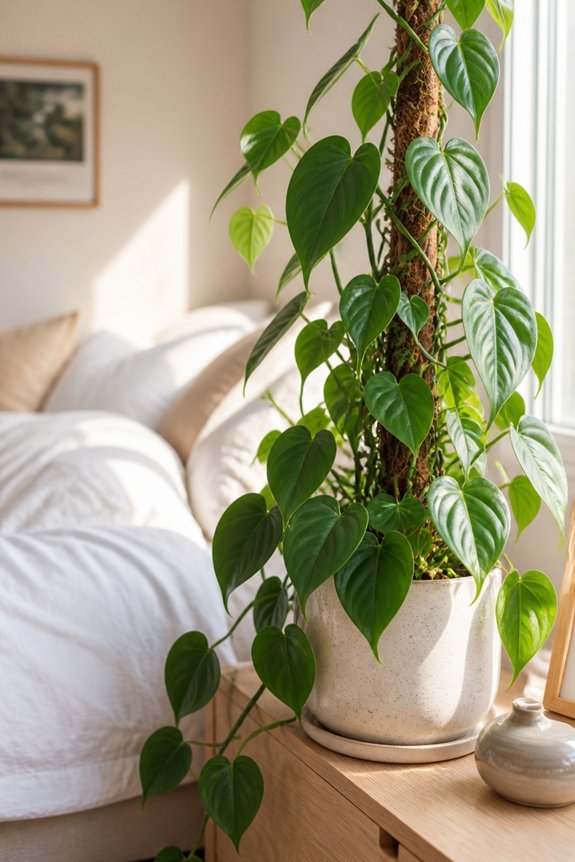
Monstera deliciosa makes a bold statement. Philodendrons charm in a quieter way. They climb and trail instead of spreading outward.
These vines work beautifully in bedrooms. Let them wind along walls or cascade from shelves. Hanging baskets suit them equally well.
You will find lovely varieties to choose from. The heartleaf type features small, heart-shaped leaves. Climbing types reach upward with proper support. Moss poles or simple trellises guide their growth.
Both kinds forgive less-than-perfect care. Low light does not bother them. They also handle occasional missed waterings.
Philodendrons filter toxins from your air. They also draw the eye upward. This adds welcome vertical interest to flat spaces.
Care stays refreshingly simple. Water when the soil feels dry to the touch. Trim now and then to direct growth and maintain shape.
Low-Maintenance Bedroom Plants That Thrive on Neglect
Perfect Choices for Busy People
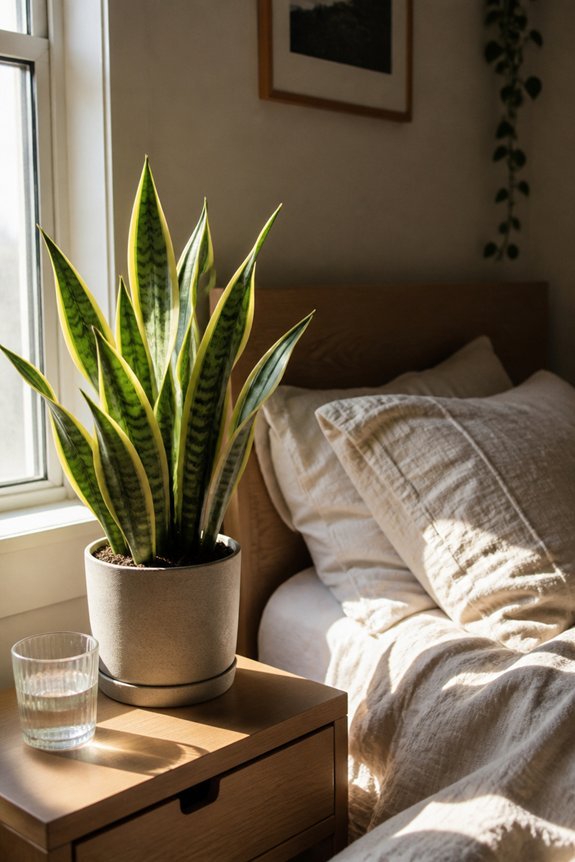
Some plants actually prefer being left alone. Snake plants, pothos, and ZZ plants handle irregular watering without complaint. They store water in their leaves and roots, so skipping a week or two won’t hurt them.
Plants That Handle Neglect Well
Spider plants keep going strong even when forgotten. They’ll even make new plantlets on their own. Succulents like aloe vera need very little water and love bright spots. Cast iron plants truly deserve their name. They push through poor conditions and messy schedules without fuss.
Easy Bedroom Adaptations
Dracaena varieties adjust to different light levels and handle dry bedroom air. These forgiving options work great for travelers, beginners, or anyone with a packed calendar. They just need occasional water and basic conditions to stay happy.
Frequently Asked Questions
How Often Should I Water My Bedroom Plants to Prevent Overwatering?
Most bedroom plants require watering when the top inch of soil feels dry to the touch, typically once weekly. However, frequency varies by species and humidity levels. One should check soil moisture regularly rather than following a fixed schedule to prevent overwatering.
What Is the Best Temperature Range for Indoor Bedroom Plants?
Most indoor bedroom plants thrive in temperatures between 65-75°F (18-24°C). They prefer consistent conditions away from drafts, heating vents, and air conditioning units. Nighttime temperatures slightly cooler than daytime optimize plant health and growth.
Can Bedroom Plants Help Improve Sleep Quality and Reduce Stress?
Research suggests bedroom plants may improve sleep quality by increasing oxygen levels and reducing carbon dioxide. Studies indicate plants reduce stress through visual appeal and air purification, promoting relaxation and better rest.
How Do I Repot My Plants Without Making a Mess Indoors?
One should repot plants outdoors or in a bathtub to contain soil spillage. Lay newspaper underneath, use a larger container with drainage holes, gently remove the plant, loosen roots, add fresh soil, and water thoroughly afterward.
What Pests Commonly Affect Indoor Bedroom Plants and How Do I Treat Them?
Common bedroom plant pests include spider mites, mealybugs, and scale insects. Treatment involves isolating affected plants, spraying with neem oil or insecticidal soap, and wiping leaves regularly with diluted alcohol solutions.
Conclusion
A bedroom filled with snake plants, pothos, peace lilies, and monsteras transforms into a green sanctuary. Lush foliage filters the air, oxygen gently circulates while occupants sleep, and soft shadows play across walls. Low-light varieties tolerate neglect, thriving in corners and shelves. The layered textures and subtle movement of climbing vines create depth, establishing a calming environment that supports both restful sleep and improved air quality.