

Small front yards often appear cramped and unwelcoming, yet strategic design choices can transform these limited spaces into open, inviting environments. By manipulating visual perception through vertical elements, curved pathways, and carefully selected proportions, homeowners create the illusion of depth where none exists. The following twenty-two methods demonstrate how compact boundaries dissolve when specific techniques replace traditional layouts. Each approach relies on precise spatial relationships rather than expensive expansions. Several solutions will contradict common assumptions about necessary features.
Start With Structure: Replace Solid Fencing With Open Panels
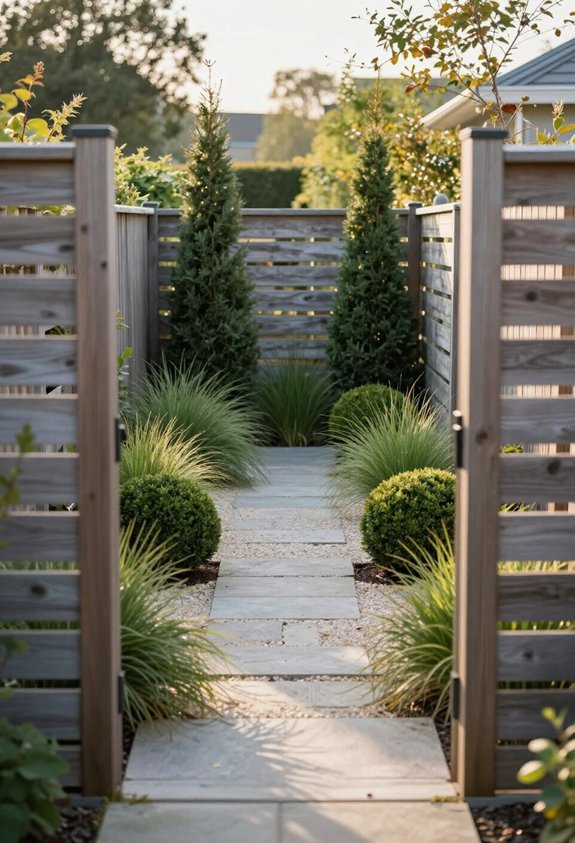
Although solid fencing may seem like an obvious choice for boundary definition, it often creates a visual barrier that makes small front yards feel confined and disconnected from their surroundings. Open panels offer a structural alternative that maintains boundaries without sacrificing visual flow.
Horizontal slat fencing, spaced two inches apart, permits light and air to pass through while clearly marking property lines. Metal or wood lattice panels achieve similar results, their geometric patterns creating partial screening that softens rather than hardens spatial edges. Vertical picket arrangements, set with deliberate gaps, extend sightlines beyond the yard’s perimeter, effectively borrowing adjacent landscape as an apparent extension of the limited ground.
Installation requires attention to height proportion: panels between thirty and forty-eight inches preserve openness without undermining security. Posts anchored in concrete guarantee stability against wind load through perforated surfaces.
Also read: 18 FRONT YARD PARTY SET UP Ideas For Hosting!
Anchor the Entry: Paint Your Door a Deep, Saturated Color
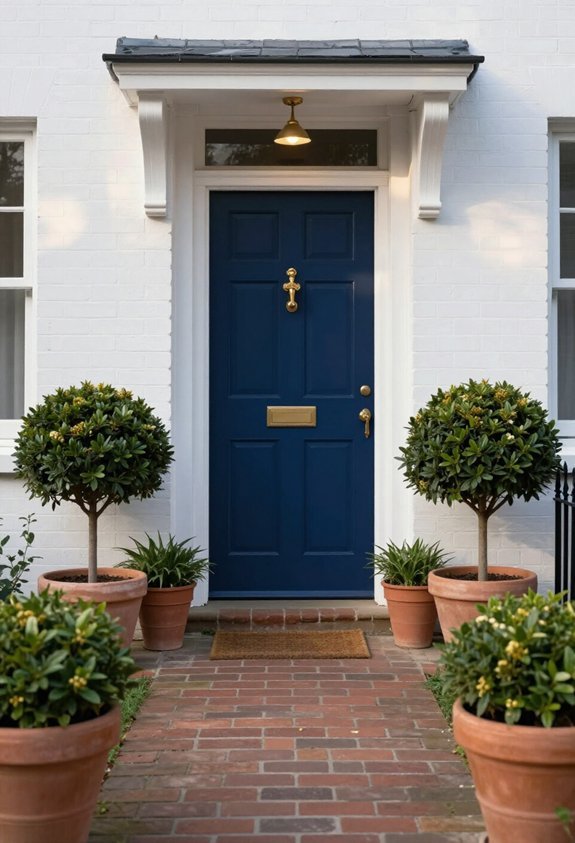
Once the boundary structure permits visual connection with the surrounding area, attention shifts toward establishing a clear focal point that orients visitors and defines the threshold. A deep, saturated door color achieves this function with minimal spatial demand.
Navy, forest green, or burgundy absorb light rather than reflect it, creating visual depth that appears to recede. This optical effect draws the eye forward, elongating the perceived depth of the yard. Matte or eggshell finishes reduce glare, maintaining color integrity under direct sunlight.
Preparation requires sanding existing surfaces, applying primer suited to the door material, and coating with exterior-grade paint. Two layers guarantee durability against moisture and temperature fluctuation. Adjacent trim in white or pale gray provides contrast, heightening the door’s prominence without adding physical elements. The result structures limited space through color alone.
Build Upward: Stack a Vertical Garden on Your Entry Wall
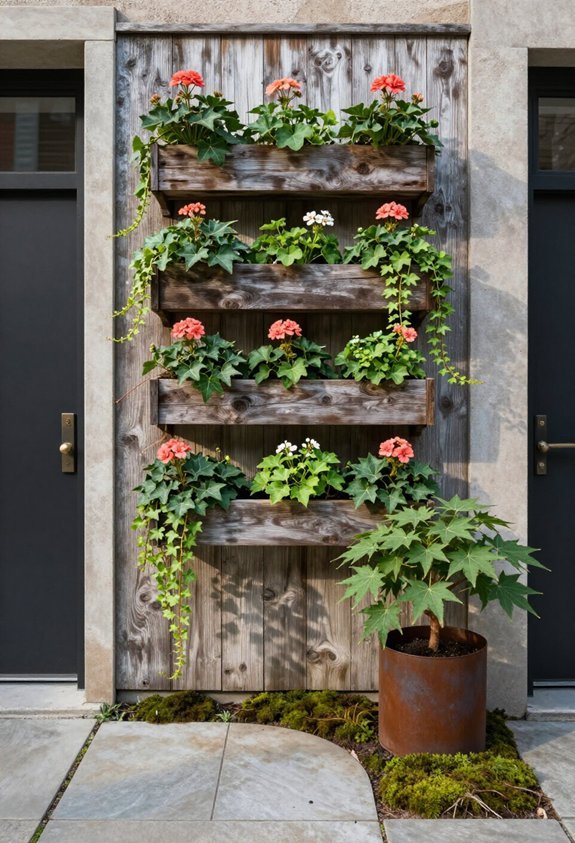
Exploit vertical surfaces when horizontal ground is insufficient, transforming walls into living display planes without consuming footpaths. Modular planting systems, comprising stacked containers or pocket panels, attach directly to masonry or siding, creating tiered vegetation columns. These assemblies accommodate herbs, succulents, trailing vines, or compact flowering species, selected for compatible light exposure and moisture requirements. Irrigation lines thread discreetly behind modules, delivering water efficiently without surface pooling. Proper anchoring demands corrosion-resistant brackets rated for saturated soil loads, preventing structural failure during storms. Growth habits determine placement: cascading varieties occupy upper tiers, while upright forms anchor lower sections, establishing visual rhythm. Maintenance access requires removable panels or hinged frameworks. This configuration multiplies planting area exponentially, introducing biodiversity, texture variation, and seasonal color shifts within minimal spatial footprints.
Ditch the Lawn: Plant Low Groundcover for Zero Mowing
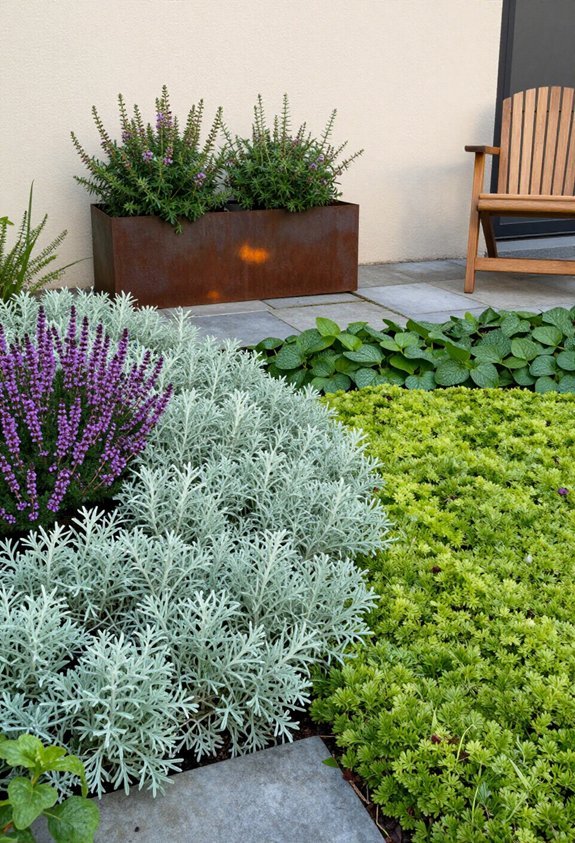
Vertical gardens maximize limited surfaces overhead, yet many property owners prefer solutions at ground level that eliminate repetitive maintenance tasks entirely. Low groundcover plants replace traditional turf with dense, living mats that require no mowing, edging, or frequent watering once established. Suitable varieties include creeping thyme, sedum, mazus, and dwarf mondo grass, each spreading horizontally to form continuous coverage without exceeding six inches in height. These plants tolerate moderate foot traffic, suppress weed growth through dense root systems, and reduce soil erosion on sloped areas. Installation involves removing existing sod, amending soil with compost, and spacing starter plants twelve to eighteen inches apart to allow for natural spread over two growing seasons. Regular watering during establishment shifts to occasional rainfall dependence, creating permanent, self-sustaining ground coverage that remains tidy without mechanical intervention.
Slow the Approach: Curve Your Path From Gate to Door
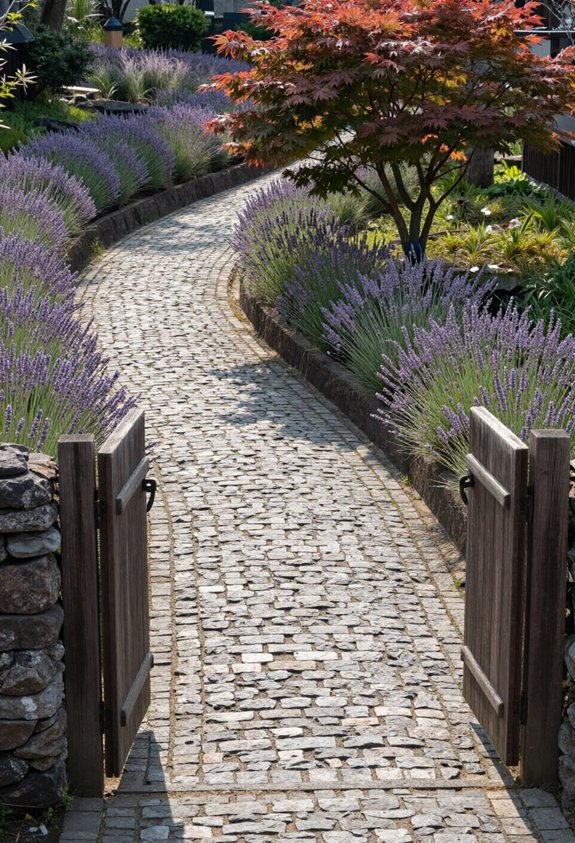
Every straight path from gate to door asks visitors to hurry across the yard without noticing anything around them, but a curved walkway forces a slower, more deliberate pace through the space. A curved path extends the perceived distance between entry and entrance, making the small yard feel larger than its actual dimensions. The gentle arc creates natural pockets for planting on either side, breaking the space into distinct areas that reward closer inspection. Materials matter: irregular flagstones or gravel encourage careful footsteps, while uniform pavers suggest rushed movement. The curve should remain modest, avoiding tight turns that feel inefficient or wastes space in already limited areas. Position the bend to frame a view of a specimen plant, a bench, or an architectural detail of the home itself. This intentional slowing transforms a mere passage into an experience.
Scale Up: Hang One Oversized Light Fixture at Eye Level
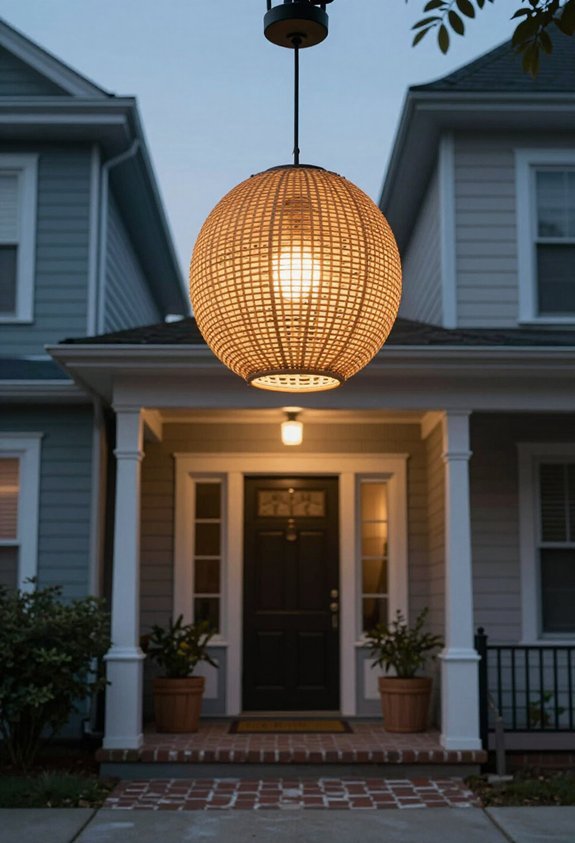
A single oversized light fixture, hung precisely at eye level, commands attention in a way that multiple smaller fixtures cannot achieve in limited square footage. This approach draws the gaze upward and outward, creating vertical emphasis that distracts from horizontal constraints. The fixture should measure approximately one-third the width of the door it illuminates, establishing proportional balance without overwhelming the entry. Placement at sixty-six inches from the ground guarantees illumination falls where visitors stand, eliminating shadows that shrink perceived space. Materials warrant consideration: open-frame designs in matte black, aged brass, or weathered bronze permit light to pass through, preventing visual heaviness. Glass elements, whether clear or seeded, amplify brightness by reflecting and refracting illumination across the small area. Installation requires a joist-mounted electrical box rated for exterior use, with adequate weatherproofing to prevent moisture damage. The result replaces cluttered, dim corners with a single, purposeful focal point.
Fake More Space: Install a Weatherproof Mirror on Your House Wall
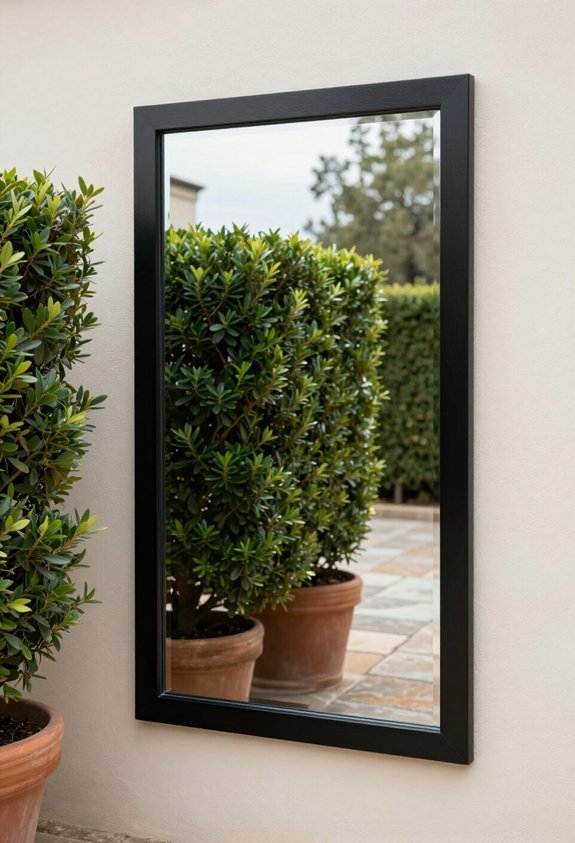
While light fixtures draw the eye upward, mirrors extend sightlines outward, effectively doubling visual depth in cramped front yards. Installing a weatherproof mirror on an exterior house wall creates this illusion by reflecting the opposite side of the space, making boundaries appear farther away than they actually are. Gardeners should select mirrors specifically designed for outdoor use, with sealed edges and rust-resistant frames that withstand rain, humidity, and temperature fluctuations. Positioning matters: placing the mirror where it captures open sky, greenery, or a decorative element maximizes the spatial expansion effect. The mirror’s size should relate proportionally to the wall space available, with larger surfaces producing more dramatic results. Framing the mirror with climbing vines or slender planters softens the installation, integrating it naturally into the landscape while maintaining its primary function of artificial depth generation.
Hide the Boundaries: Plant Tall, Slim Greenery at Property Edges
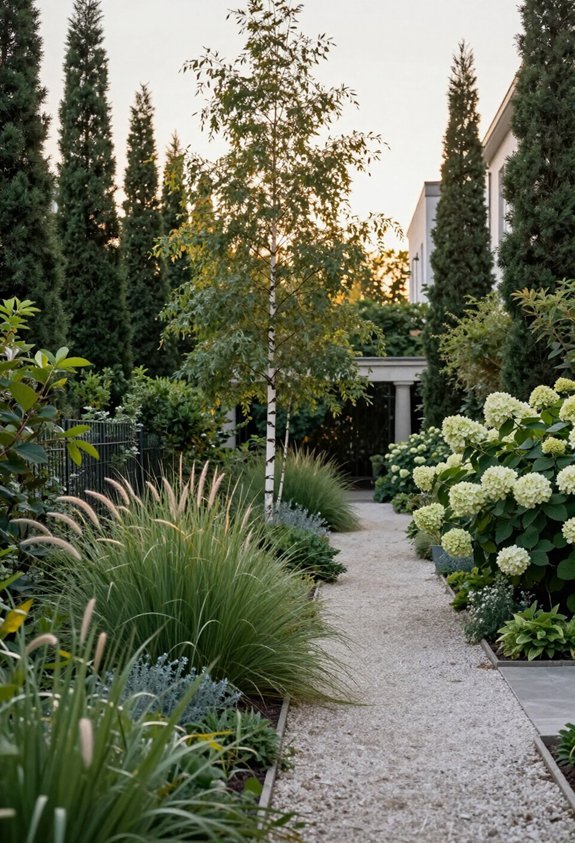
Solid visual barriers at property edges reinforce the sense of enclosure in small front yards, but tall, slim greenery offers an alternative that preserves openness while masking fixed boundaries. Columnar evergreens, such as Italian cypress or sky pencil holly, grow upward without spreading outward, creating vertical screens that occupy minimal ground area. These plants draw the eye skyward, extending perceived height while their narrow profiles leave horizontal sightlines intact. Positioned along fences or walls, they interrupt the hard lines that define property limits, softening edges without adding bulk. Root systems remain compact, preventing encroachment on limited square footage. Regular pruning maintains slender silhouettes, ensuring continued spatial efficiency. This approach transforms rigid borders into layered, living elements that suggest depth beyond the actual perimeter, expanding visual territory without physical expansion.
Float Your Seating: Build a Wall-Mounted Entry Bench
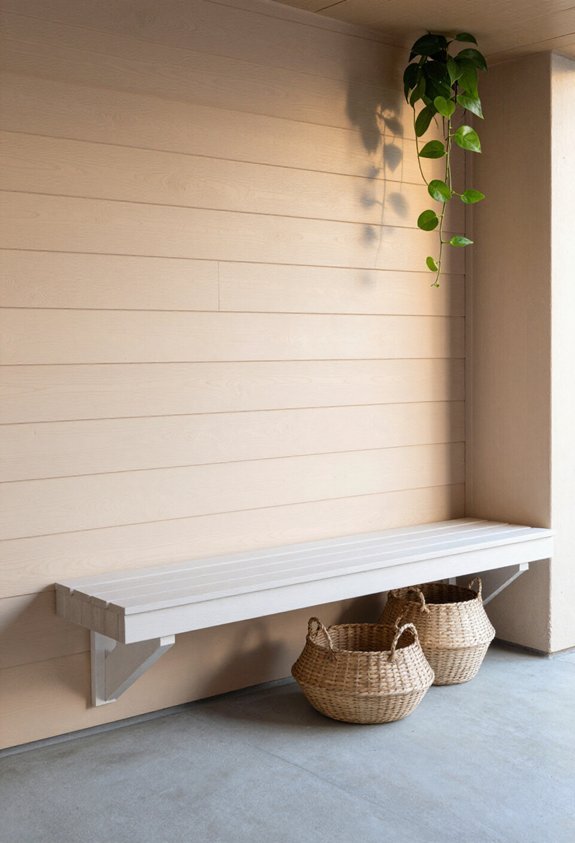
Few seating options demand less floor space than a bench fixed directly to a wall, making this approach particularly suitable for tiny front yards where every square inch carries weight. A wall-mounted entry bench hovers above the ground, leaving the area beneath completely open for foot traffic, storage bins, or low plantings that maintain visual flow. Builders typically anchor these benches to masonry or reinforced siding using heavy-duty brackets rated for substantial weight loads, ensuring stability without intrusive legs that fragment the space. Materials range from weather-treated lumber to powder-coated metal, each selected for durability against rain and sun exposure. The bench depth rarely exceeds sixteen inches, preserving pathway width while offering sufficient surface for removing shoes or resting packages. Installation requires precise leveling, as even slight tilts compromise both function and longevity.
One Material, Many Uses: Match Pavers, Steps, and Planter Walls
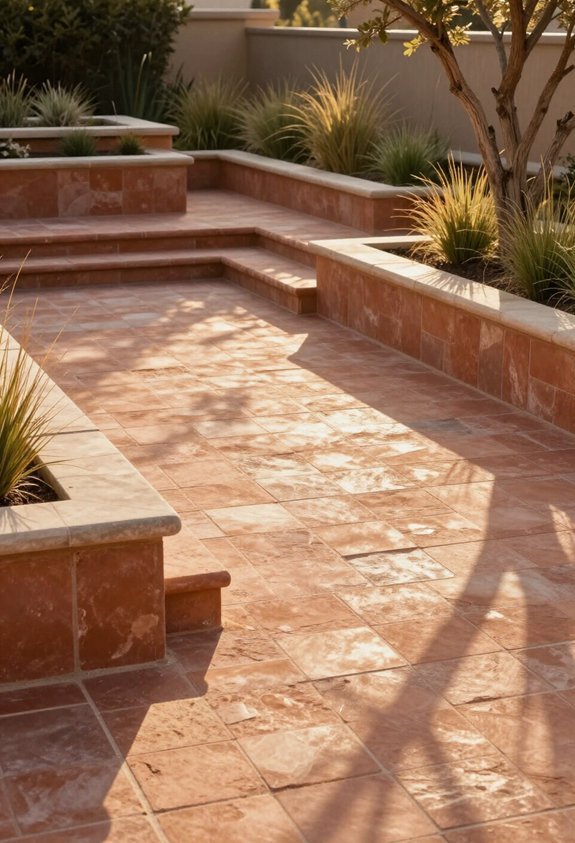
Visual consistency in a confined front yard depends heavily on limiting the number of competing materials, and a single surface treatment applied across multiple elements creates an impression of intentional design rather than accidental accumulation.
When concrete pavers shape the walkway, step treads, and planter retaining walls, the eye reads these features as belonging to one continuous system, which softens boundaries between circulation routes, vertical changes, and planted zones. This technique works with cut stone, brick, or cast concrete, provided the color range remains narrow and joint patterns align. Matching materials establish rhythm through repetition, allowing the small space to feel larger because visual information processes quickly without interruption. The method also reduces construction complexity, as sourcing and installation address one material specification rather than several, streamlining both budget and timeline for compact residential entries.
Let Texture Do the Work: Combine Rough Stone, Smooth Wood, Soft Leaves
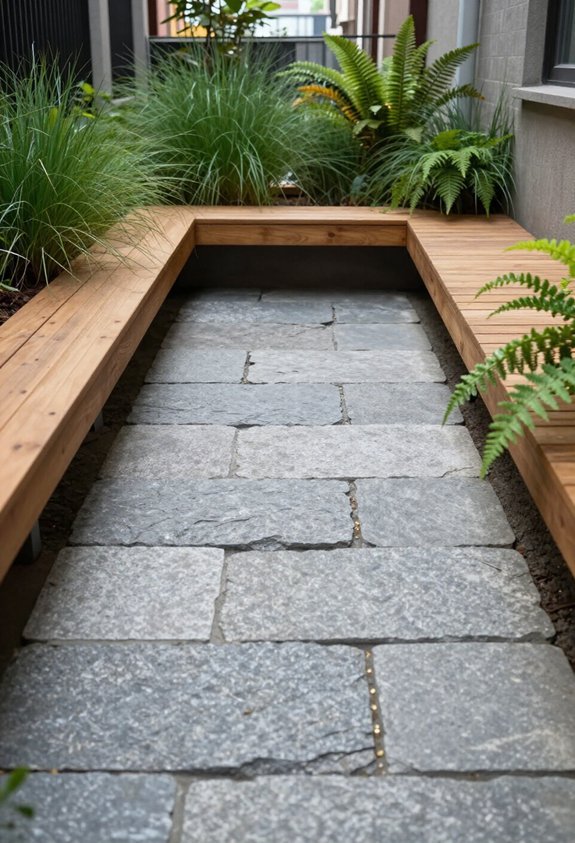
Where the previous strategy relied on uniformity to expand perceived space, this approach achieves spatial depth through deliberate contrast, layering tactile surfaces that engage the senses and break the flatness of small front yards into distinct experiential zones. Rough-cut limestone pavers ground the entry with visual weight, their irregular edges catching shadow and light across the path. Smooth cedar benches, sanded to satin, provide horizontal rest that calms the eye between stone masses. Soft-leaved hostas and lamb’s ear soften perimeter bed edges, their fuzzy surfaces creating intimate thresholds that separate walking zones from planted areas. The combination works sequentially: foot meets hard roughness, then yielding wood, then brushing pliant foliage. Each texture marks progression through limited square footage without requiring additional space. Materials remain simple—three varieties total—to prevent fragmentation that would compress the yard further. Strategic placement matters most, positioning contrasts where movement naturally slows.
Add Sound, Not Size: Tuck In a Bubbling Stone Fountain
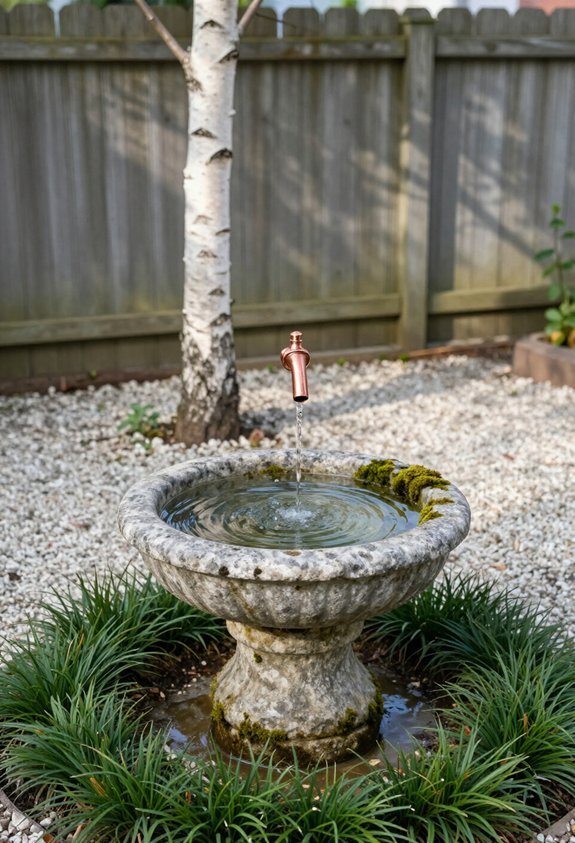
Tuck a small fountain between stones or near a seating area to mask street noise and extend the usable sense of space without expanding physical boundaries. The gentle sound of bubbling water draws attention outward, creating the impression of depth where none exists physically. Water features need not occupy large footprints; stacked stone columns with narrow basins, wall-mounted spouts, or disappearing reservoirs tucked beneath gravel all function effectively in zones under four square feet. Solar-powered pumps eliminate electrical trenching, while recirculating systems minimize maintenance and water consumption. Placement matters strategically: positioning the fountain at the yard’s far edge directs perception toward that boundary, effectively doubling perceived depth through auditory perspective. The continuous, soft white noise also camouflages traffic, voices, and other intrusions that shrink a space psychologically. Select rough-hewn stone over polished surfaces to maintain textural continuity with natural surroundings.
Arrange Plants in Threes: Stagger Heights for Visual Depth
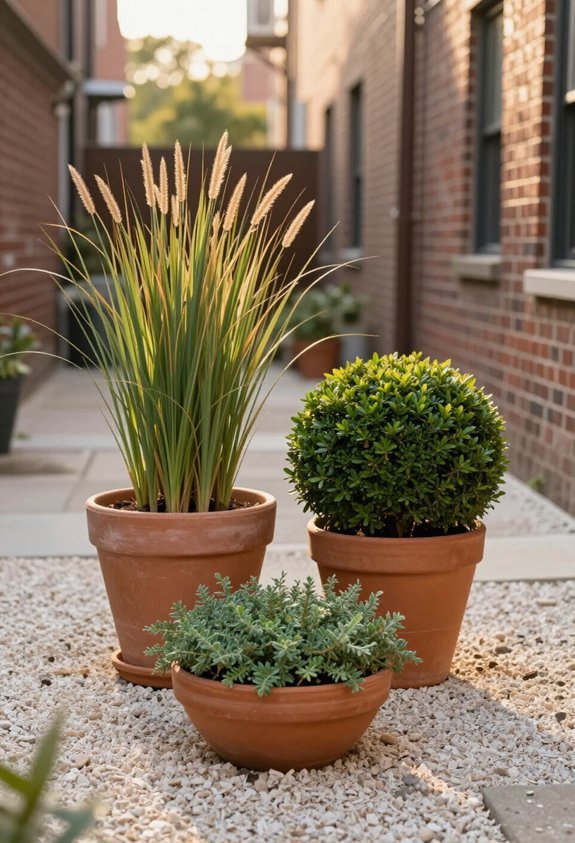
Group plants in clusters of three, positioning each at a different height to create the illusion of distance in a confined space. Place the tallest specimen at the rear, a medium-sized plant in the middle, and the lowest-growing variety at the front. This triangular formation draws the eye upward and outward, making boundaries appear farther away than they actually are. Select plants with complementary foliage textures and staggered bloom times to maintain continuous visual interest throughout the growing season. For example, combine a slender ornamental grass, a rounded shrub, and a spreading ground cover in a single grouping. Repeat this three-tier pattern across the yard at measured intervals to establish rhythm without overcrowding. Avoid aligning plants in straight rows, which flatten perception and emphasize spatial limitations. Instead, offset each cluster slightly to suggest natural, layered growth that recedes into an implied background.
Claim a Corner: Build a Bench-and-Planter Nook for Two
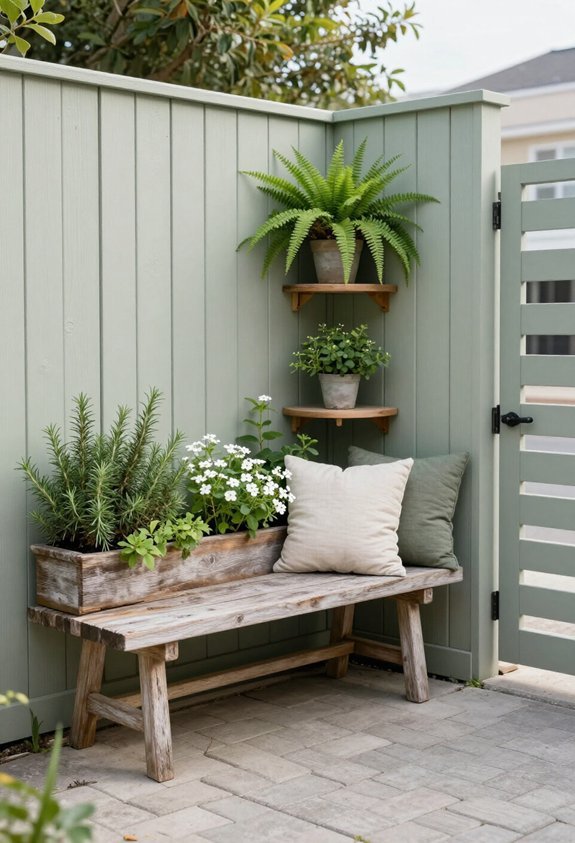
A single corner of a small front yard, when developed with intention, can accommodate both seating and greenery without consuming excessive ground area. An L-shaped bench built against two converging boundaries creates a defined nook that seats two people comfortably while leaving the central yard open. Flanking the bench with raised planters, approximately eighteen inches high, integrates vegetation at arm’s reach without requiring separate garden beds. The planters may contain compact shrubs, trailing vines, or seasonal flowers selected for their vertical growth habits. Materials such as cedar, composite decking, or powder-coated steel withstand weather exposure and require minimal maintenance. The bench backrest, positioned at a slight angle, improves comfort during extended sitting. This configuration transforms an underutilized corner into a functional destination, establishing visual structure that makes the entire yard appear larger through deliberate spatial organization.
Hide the Mess: Choose Seating With Built-In Storage Below
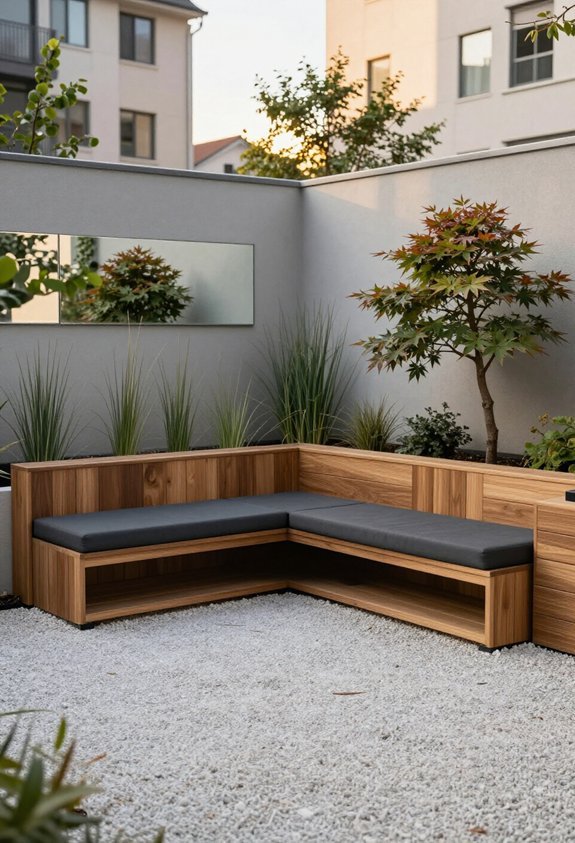
Every small front yard accumulates items that disrupt visual order, from garden tools and hoses to cushions and outdoor dishes, yet seating with integrated storage beneath its surface offers a direct solution to this common problem.
Benches with hinged lids or pull-out drawers beneath their seats transform otherwise unused space into concealed compartments. Wooden storage benches withstand weather exposure when properly sealed, while resin models resist moisture without additional treatment. Lid-support hinges prevent abrupt closures that risk injury.
Placement against a wall or railing maximizes floor space while keeping stored items accessible. Cushions, watering cans, and folding chairs disappear from sight, reducing visual clutter that makes small areas feel cramped. This approach eliminates the need for separate sheds or containers that consume valuable square footage.
Selection of weatherproof materials guarantees contents remain dry and functional across seasons.
Brighten the Ground: Pick Light Pavers That Reflect Sunlight
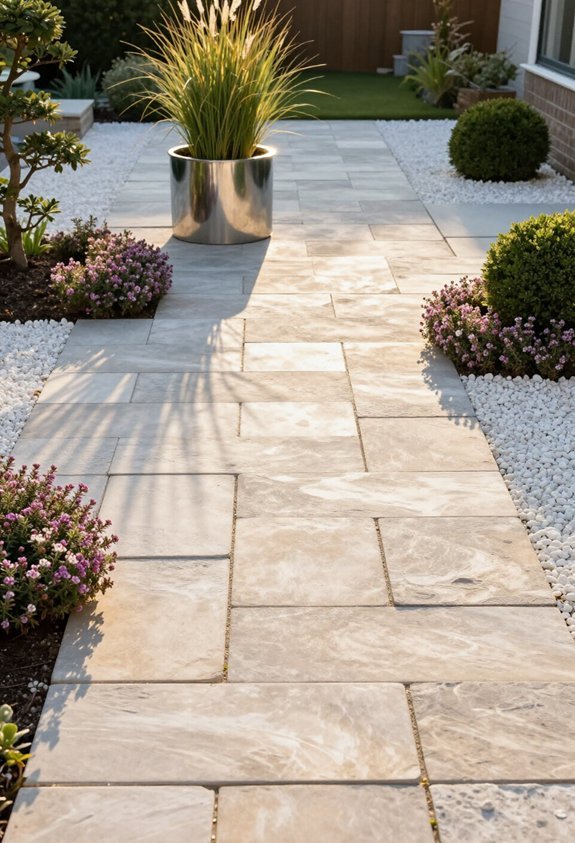
Many small front yards struggle with limited natural light, which makes dark, absorbent paving materials particularly problematic as they absorb rather than distribute available illumination. Light-colored pavers, such as those in pale gray, ivory, or sandstone tones, function differently by reflecting sunlight upward and outward, thereby expanding the perceived boundaries of confined spaces. This reflective quality reduces shadows and creates visual continuity between ground surfaces and surrounding structures. When selecting materials, one should consider smooth finishes like honed concrete or polished limestone, which maximize light dispersion compared to rough textures. Porcelain tiles with high Light Reflectance Value ratings offer another effective option, particularly in north-facing yards where direct sun remains minimal. Proper installation with tight joints prevents dark gaps from interrupting the luminous effect. Sealing the surface enhances reflectivity while protecting against staining. The cumulative result transforms dim, compressed areas into visually open environments without structural modification.
Flank the Door: Stack Matching Pots as Vertical Columns
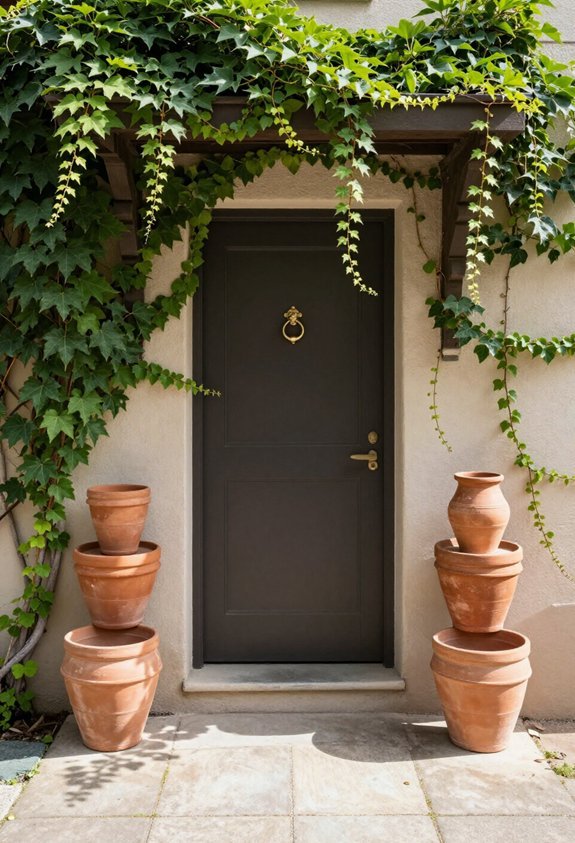
The arrangement of identical containers stacked in vertical formation on either side of an entrance establishes symmetrical framing that draws the eye toward the doorway while elevating plant material into the visible sightline. This technique transforms limited ground space into an opportunity for height, directing attention upward rather than outward. Gardeners select matching pots in graduated sizes, placing the largest at the base and tapering toward the top, securing each tier to prevent toppling. The vertical columns create visual boundaries that define the entry zone without consuming walkway width. Plant selection follows a structured approach: structural specimens occupy upper levels for visibility, while compact varieties fill middle and lower sections. This method produces immediate architectural presence, lending order and intentionality to compact frontage where horizontal expansion remains impossible.
Soften Hard Edges: Let Trailing Plants Spill Over Path Corners
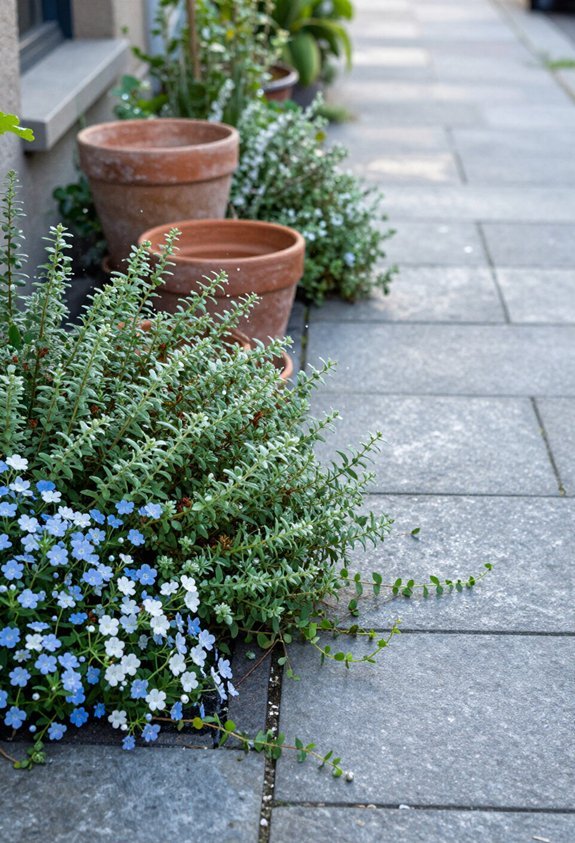
Where rigid pathways meet planting beds, abrupt lines create visual tension that can make small front yards feel constrained and artificial. Trailing plants positioned at path corners gradually blur these boundaries, allowing foliage to cascade onto stone or concrete surfaces. This technique introduces organic curves that interrupt the eye’s perception of fixed borders, effectively expanding the visual field through gentle transformation rather than sharp division. Suitable selections include creeping thyme, sedum, or trailing rosemary, each offering low-growing habit and minimal maintenance requirements. Installation requires minimal soil depth, often achievable in narrow gaps between pavers and bed edges. As plants mature, their spreading form creates the impression that garden areas extend beyond their actual limits. The resulting softness reduces geometric rigidity, producing spatial continuity that reads as expansiveness within limited square footage.
Look Up: Prune One Small Tree Into an Entry Canopy
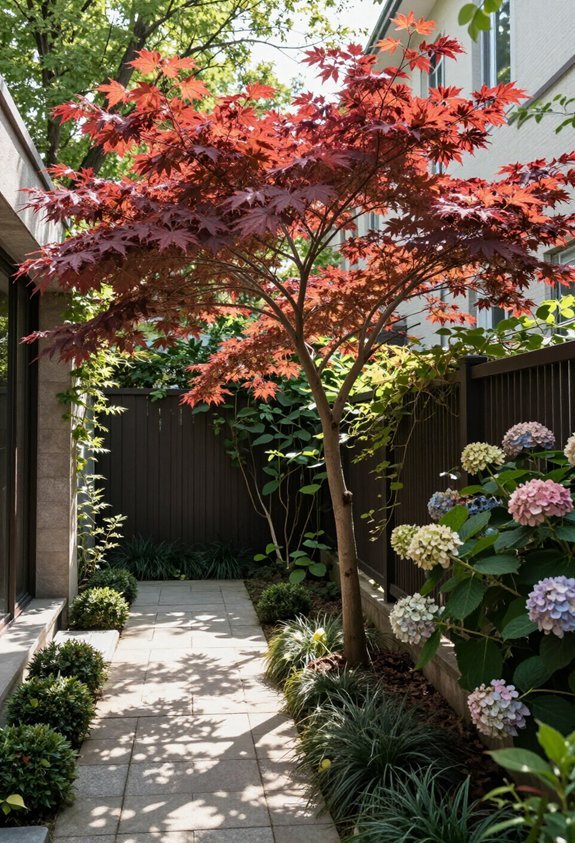
Position a small deciduous or ornamental tree near the front entry, then prune its lower branches to create a living canopy that frames the doorway without blocking it. This vertical strategy draws the eye upward, expanding perceived space in tight front yards where horizontal room is scarce. Suitable species include Japanese maple, crape myrtle, or small flowering cherry, which respond well to careful structural pruning and develop graceful branch architecture over time.
Remove lower limbs gradually, allowing the trunk to reach six to eight feet before branching begins. This lifted silhouette permits clear sightlines to the entry while casting dappled shade overhead. Seasonal leaf changes add temporal variation without demanding additional square footage. The canopy functions as outdoor ceiling, defining an intimate threshold zone that feels sheltered yet open, proving that spatial generosity in small landscapes depends more on thoughtful vertical manipulation than on ground area alone.
Blend House and Yard: Match Trim Color to Your Main Hardscape
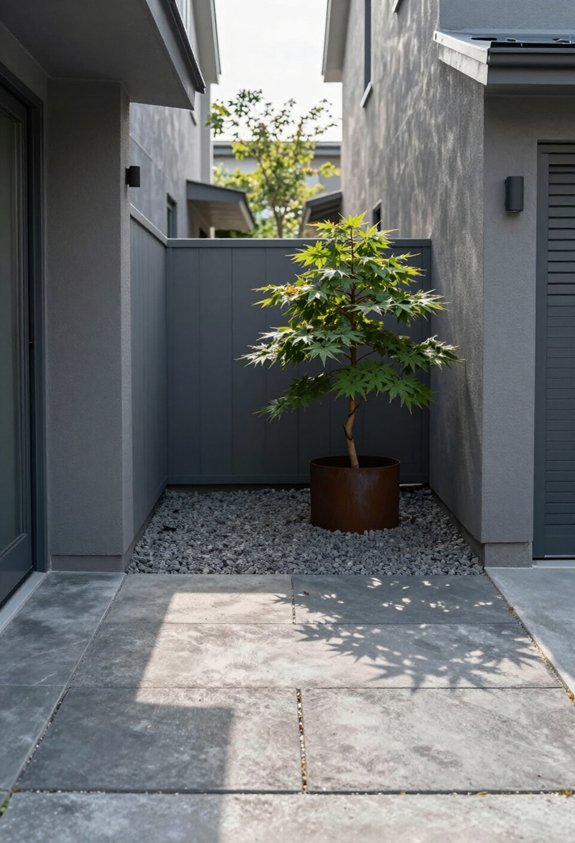
While vertical elements draw the gaze upward to expand spatial perception, horizontal cohesion between built and planted surfaces anchors the composition at eye level. Matching exterior trim color to the dominant hardscape material—whether concrete pavers, bluestone, or brick—creates visual continuity that dissolves boundaries between structure and site. When window frames, door casings, or fascia boards echo the warm gray of limestone or the terracotta of clay pavers, the eye registers a unified plane rather than competing zones. This technique proves especially effective in compact front yards where abrupt color shifts fragment limited square footage. Selecting paint swatches directly from hardscape samples guarantees accurate tonal alignment, avoiding the discord that arises from approximations. The result extends perceived ground area, allowing the yard to read as an intentional extension of architectural form rather than an isolated afterthought.
Stretch Sideways: Add a Narrow Reflecting Pool Along One Edge
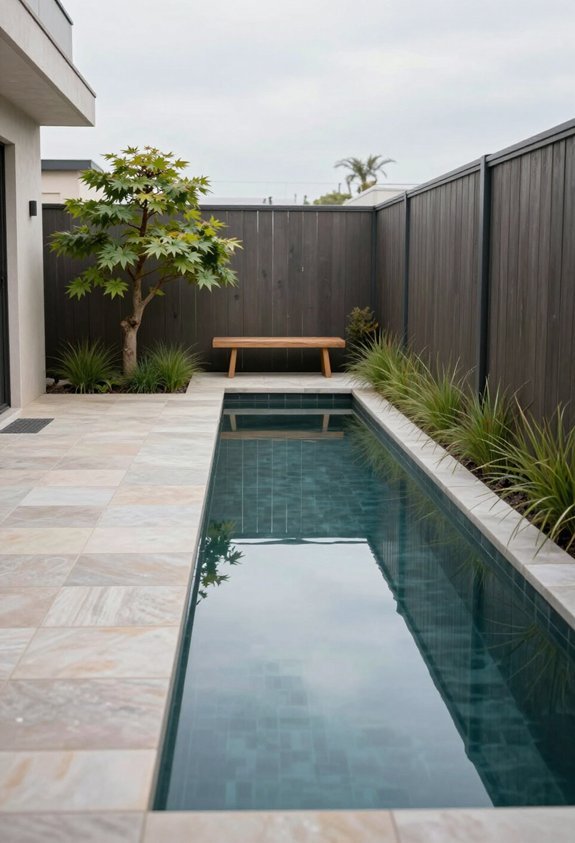
Water has a unique ability to make spaces feel larger than they actually are, and a narrow reflecting pool placed along one edge of a tiny front yard uses this property to maximum effect. Positioned flush against a property boundary, sidewalk, or fence line, this slender water feature draws the eye horizontally across the entire lot, creating an illusion of extended width through mirrored surface and continuous line.
The pool need measure only eighteen to twenty-four inches across to deliver visual impact without consuming valuable open area. Dark interior finishes, whether black stone tile or tinted plaster, deepen reflections and amplify the doubling effect of adjacent architecture or sky. Recirculating systems with submerged pumps eliminate external mechanical housing, maintaining clean edges. Minimal planting along the opposite margin guarantees sightlines remain unobstructed, allowing the water element to function as a continuous plane that stretches perceived boundaries.
Get the Ratio Right: Balance 60% Plants Against 40% Hardscape
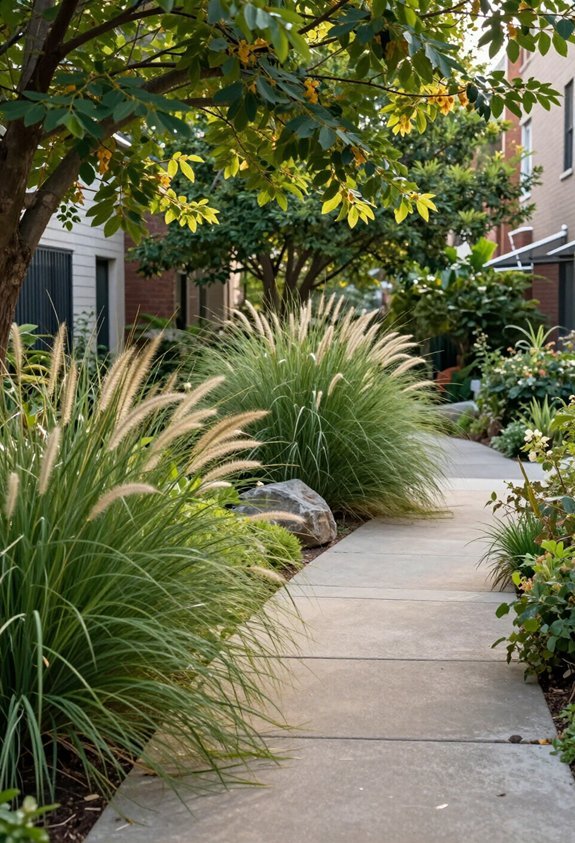
Proportion serves as the silent architect of visual harmony in confined outdoor spaces, where every square foot carries disproportionate weight in the overall composition. The sixty-forty division establishes equilibrium between organic growth and constructed elements, preventing either from overwhelming the limited canvas. Soft vegetation, comprising sixty percent, introduces depth and movement, while forty percent hardscape provides necessary structure and circulation paths. This balance guarantees the yard breathes without sacrificing practicality. Designers allocate the vegetated majority to layered plantings of varying heights—groundcover, shrubs, and small trees—creating vertical interest that draws the eye upward and outward. The remaining hardscape accommodates walkways, seating, or decorative stonework, each element measured against the total area. Deviation from this ratio risks visual clutter or institutional sterility, common errors in compact designs where margins for mistake remain narrow.
Frequently Asked Questions
What Permits Are Needed for Front Yard Water Features?
Municipal permits vary by location; generally, plumbing, electrical, and building permits apply. Homeowners’ associations may require approval. Environmental permits apply if connecting to stormwater systems. Contractors typically handle permit acquisition.
How Do I Maintain Vertical Gardens in Winter?
One protects vertical gardens in winter by insulating root zones with mulch, installing wind barriers, selecting cold-hardy species, reducing irrigation to prevent freeze damage, and covering delicate plants with frost cloth during severe temperature drops.
Where Do I Dispose of Removed Lawn Safely?
Municipal composting facilities accept removed lawn. Some areas permit curbside green waste collection. Local agricultural extension offices often provide disposal guidelines. Burning may be restricted. Landfills typically accept yard waste as last resort.
Can Renters Install Wall-Mounted Benches?
Renters may install wall-mounted benches only with explicit landlord permission, typically requiring written consent. Lease agreements often prohibit structural modifications. Temporary, freestanding alternatives remain advisable for avoiding deposit deductions or violation disputes.
How Often Should I Prune Entry Canopy Trees?
Entry canopy trees require pruning every three to five years to maintain structure and clearance. Younger specimens need more frequent attention, while mature trees benefit from less intervention. Seasonal timing depends on species.
Conclusion
Implementing these compact front yard strategies enables homeowners to maximize limited square footage through deliberate spatial planning. Vertical elements draw the eye upward, reducing horizontal clutter perception, while curved pathways and reflective water features create optical illusions of depth. Material continuity between house trim and hardscape unifies boundaries, and the sixty-forty plant-to-hardscape ratio guarantees greenery predominates without overwhelming walkways. Consistent application yields measurable perceptual expansion exceeding actual dimensions.