
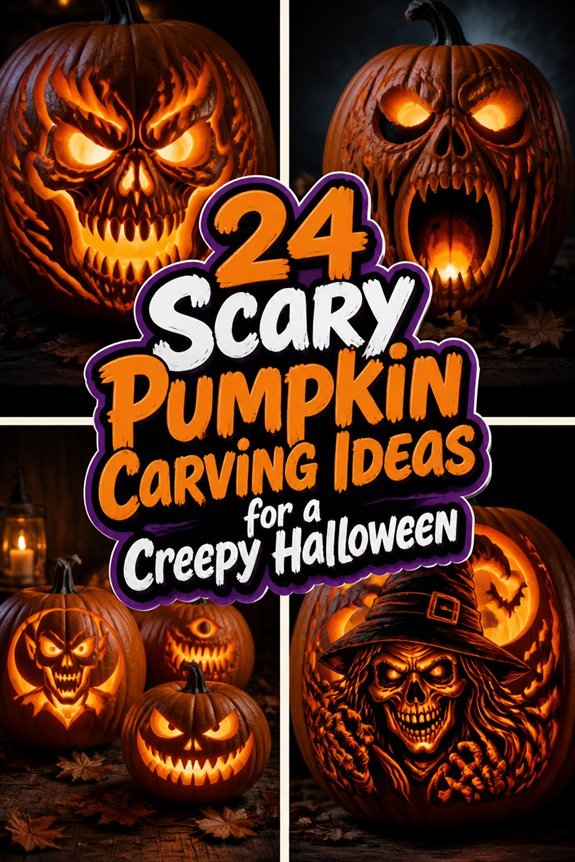
There’s something almost meditative about carving pumpkins for Halloween. I always start simple—classic skull faces or grinning jack-o’-lanterns never fail to impress the neighborhood kids. These designs need just basic tools and patience.
Feeling ambitious last year, I attempted a grim reaper portrait. The intricate shading took hours, but the terrified gasps from trick-or-treaters made every cramp worthwhile. Whether you’ve got twenty minutes or a whole afternoon, there’s a perfect creepy design waiting for your porch.
Skull Face: Bold and Classic
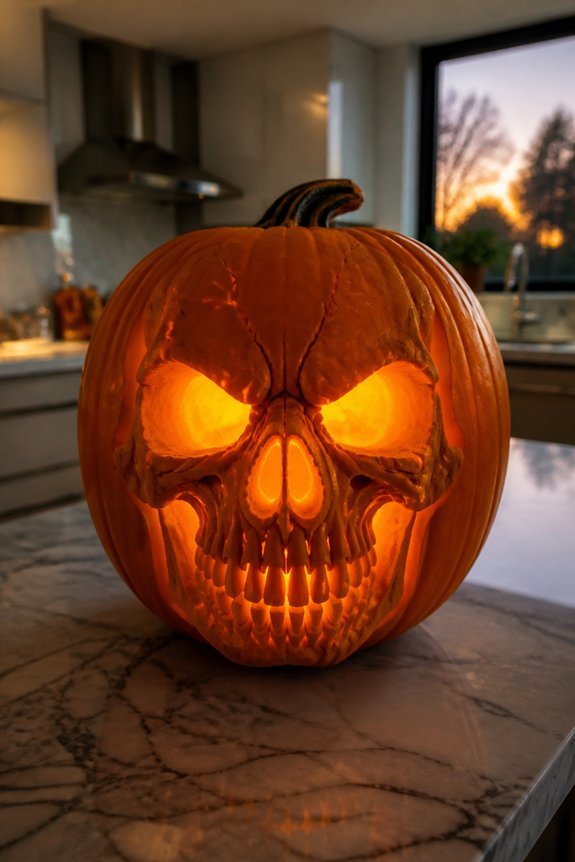
A skull design remains one of the most straightforward pumpkin carving options, requiring only basic shapes and symmetrical placement.
Carvers typically create two large eye sockets, a triangular nose cavity, and a teeth-filled mouth section.
This design works well because the natural pumpkin shape accommodates facial proportions effectively.
Dark interiors enhance the skeletal appearance when illuminated from within.
Ghostly Grin: Simple and Haunting
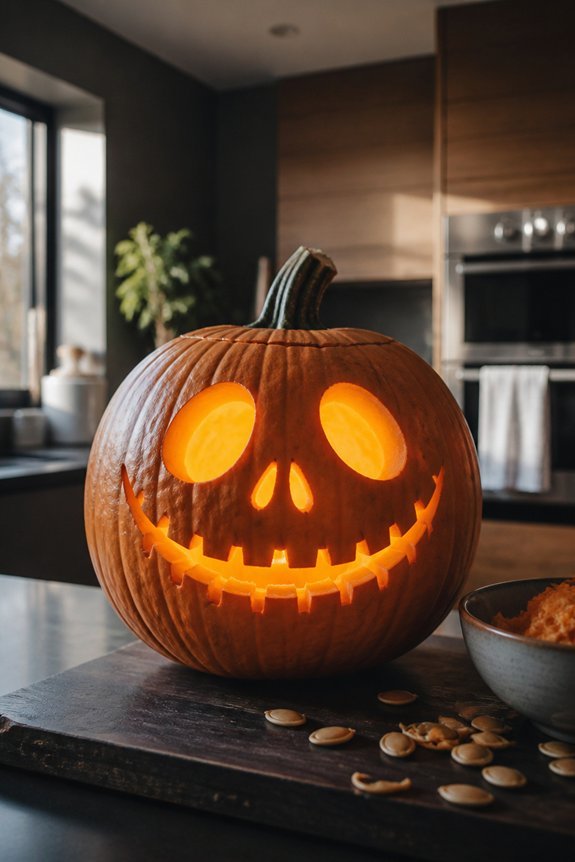
The ghostly grin design offers carvers an uncomplicated yet effective alternative to more detailed patterns. This approach requires carving two oval eye holes and a curved mouth line into the pumpkin surface.
The simplicity allows carvers to complete the project quickly while still achieving a recognizable haunting appearance.
Lighting from within emphasizes the carved features, creating contrast between illuminated interior and darkened exterior sections.
Vampire Fangs: Elegant Evil
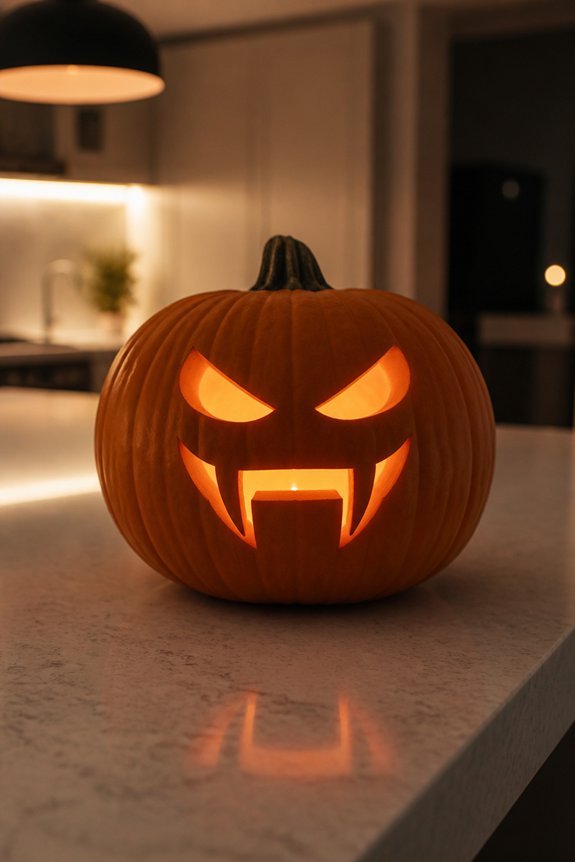
Vampire fangs carved into a pumpkin create an elegant and menacing appearance through strategic cuts along the pumpkin’s mouth area.
Carvers should create two pointed triangular shapes, positioning them symmetrically in the upper portion of the mouth opening. White paint or pumpkin flesh exposure enhances visibility.
This design works effectively on medium to large pumpkins, offering a sophisticated alternative to traditional spooky expressions.
Pumpkin Jack-o’-Lantern: The Menacing Grin
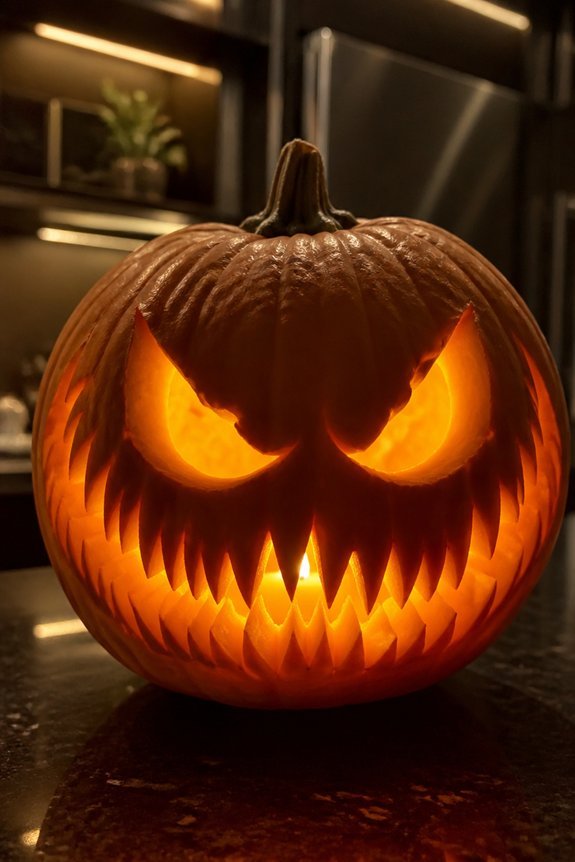
Creating a jack-o’-lantern involves carving a distinctive facial expression featuring a wide, angular mouth that conveys menace through sharp, downward-slanting eyes and an exaggerated grin. The carved features cast shadows inside the pumpkin, intensifying the menacing appearance when illuminated.
Carvers typically use triangular eye shapes, curved nose openings, and jagged mouth designs. A larger pumpkin provides better surface area for detailed carving.
Placement near entryways increases visibility of the finished effect.
Demon Eyes: Glowing Intensity
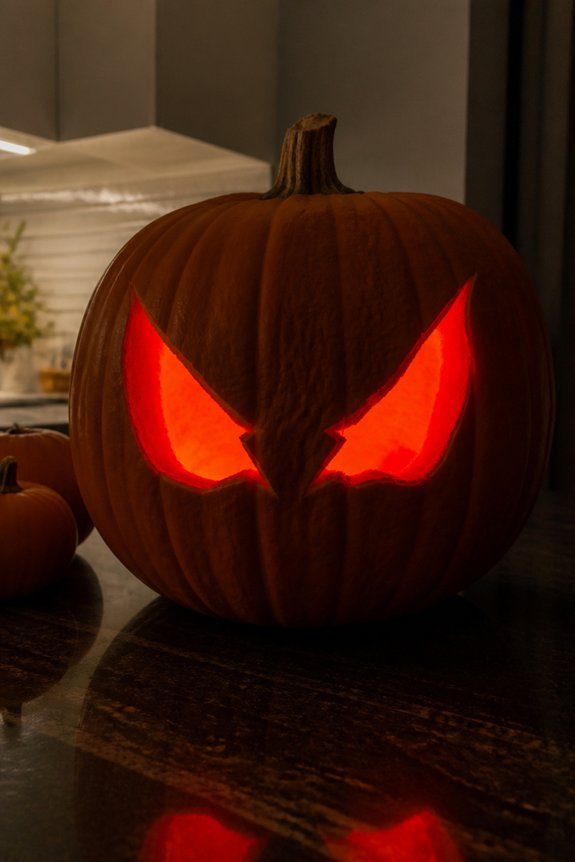
While jack-o’-lanterns rely on facial expressions and shadow play, demon eyes carving shifts focus to intense, piercing stares that glow when backlit.
Carvers create elongated, almond-shaped eyes using narrow vertical cuts. Placing lights directly behind the eye openings produces an eerie glow effect.
This technique works best on larger pumpkins, allowing adequate space for proper eye placement and illumination visibility.
Witch’s Cackling Face: Mischievous Malice
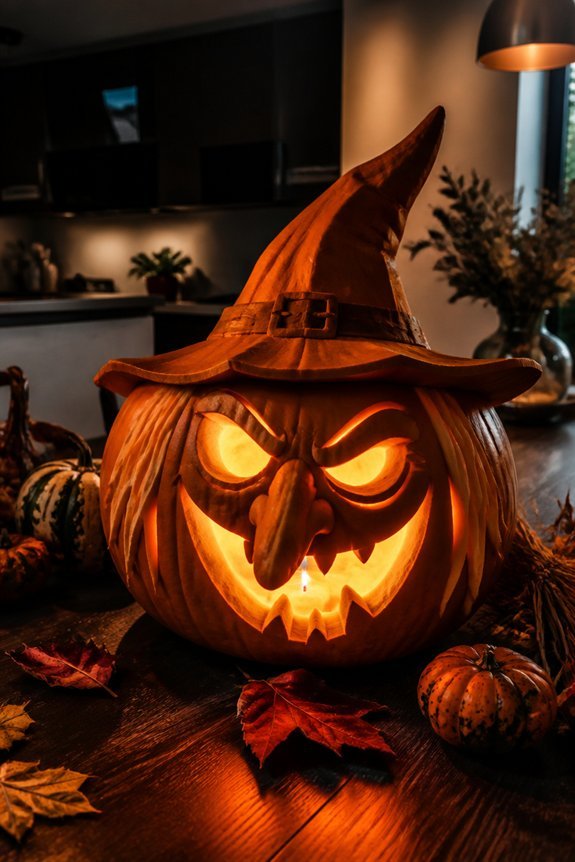
A mischievous expression defines the witch’s cackling face design, which emphasizes an exaggerated grin, crooked nose, and asymmetrical features.
Carvers can create this effect by cutting uneven eye holes, tilting the mouth upward on one side, and making the nose jagged or bent.
Adding sharp angles around the cheekbones enhances the malevolent appearance.
This design works well on larger pumpkins, allowing for more detailed facial carving.
Zombie Bite: Gruesome Appeal
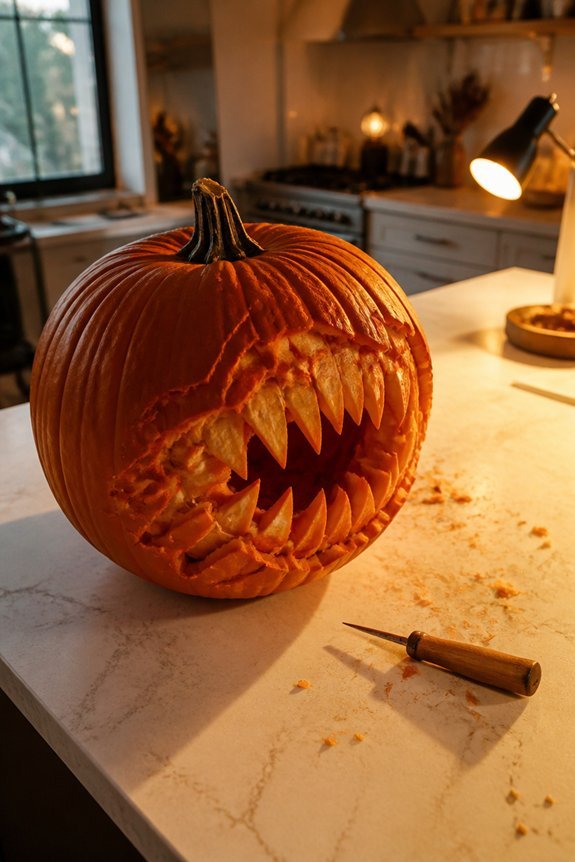
For carvers seeking designs beyond witchy expressions, zombie bite designs offer a different approach to pumpkin carving horror themes.
The design features a large, jagged bite mark removed from the pumpkin’s side, creating an open wound appearance. Carvers can add details like exposed flesh layers, dripping effects, and darkened edges around the bite.
This design requires removing significant pumpkin sections, making it suitable for experienced carvers.
Skeletal Jaw: Split-Face Drama
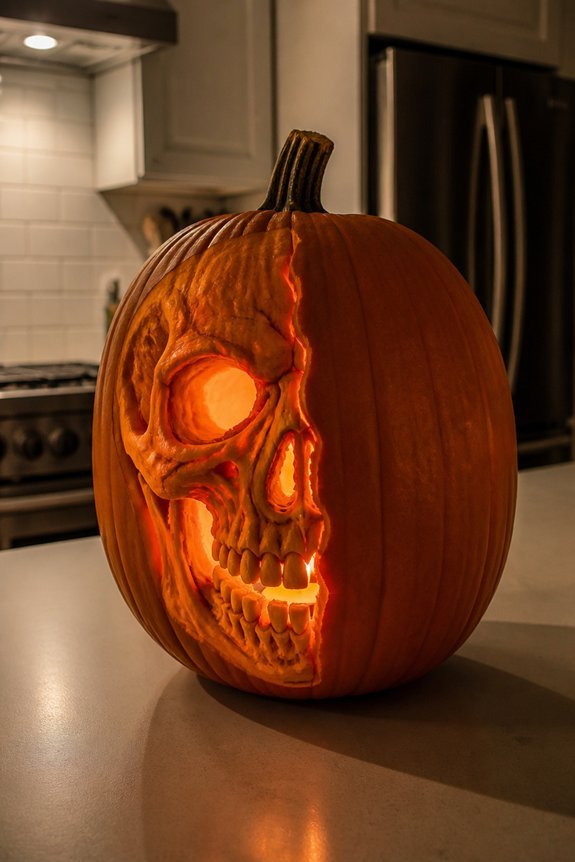
Creating a skeletal jaw design involves carving a skull face across the pumpkin’s front, with the lower half featuring an exaggerated, gaping jaw that appears to split the pumpkin in two.
The eye sockets should be large and hollow, while the teeth are carved as individual rectangular notches along the jaw line.
This design requires a sturdy pumpkin with thick walls to support the extensive carving without structural failure.
Mummy Wrapped in Bandages: Ancient Curse
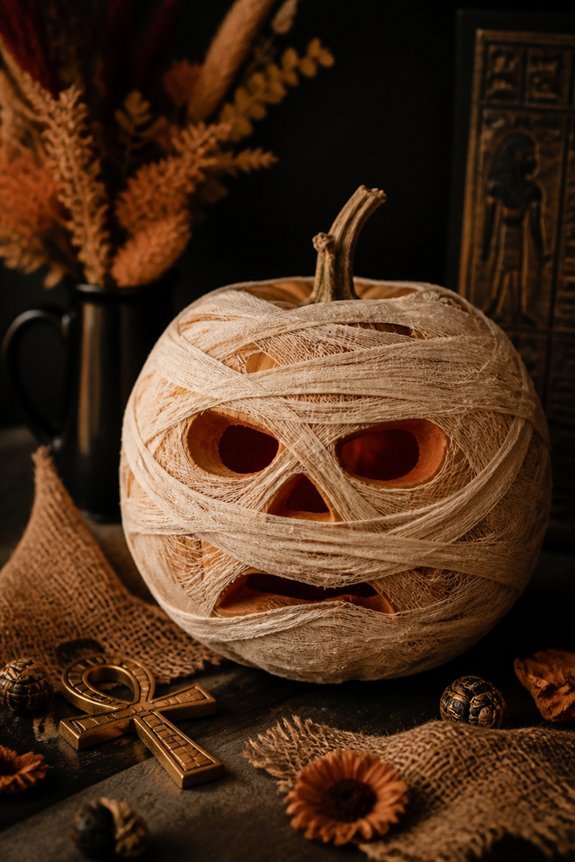
While skeletal designs rely on carved-out details, mummy pumpkins take a different approach by using surface-level additions rather than removal.
White gauze strips, medical tape, or torn fabric wrap around the pumpkin’s exterior, creating layered, tattered effects.
Carve small eye holes or use painted circles for eye sockets. This method requires minimal carving skill, making it accessible for various ability levels.
The wrapped appearance suggests age and decay effectively.
Michael Myers’ Blank Stare: Unsettling Simplicity
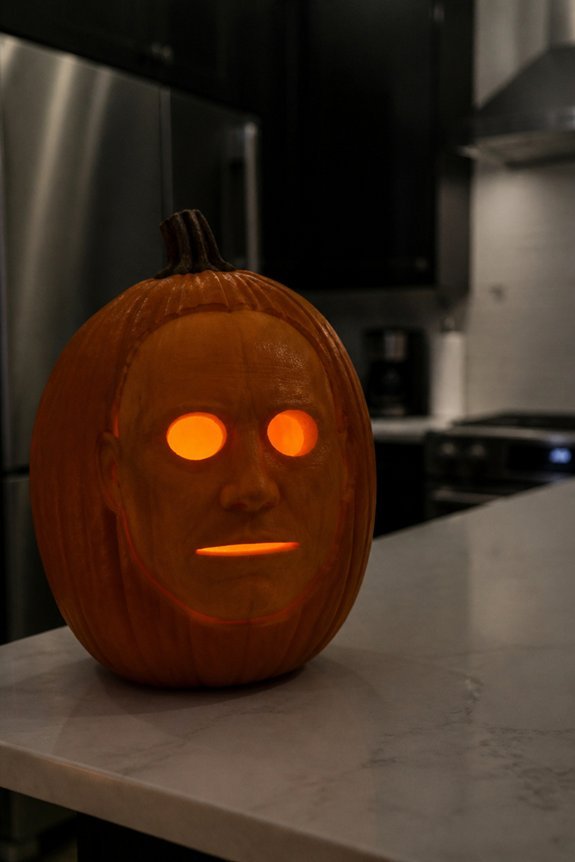
The Michael Myers mask design presents an efficient carving option that relies on minimal detail and maximum impact. The pattern requires basic shapes: two eye holes, a nose cavity, and a mouth opening.
Carvers can execute this design using straight cuts and simple curves.
The blank expression creates an unsettling effect through geometric simplicity rather than intricate detailing, making it accessible for various skill levels.
Jason Voorhees Mask: Slasher Icon
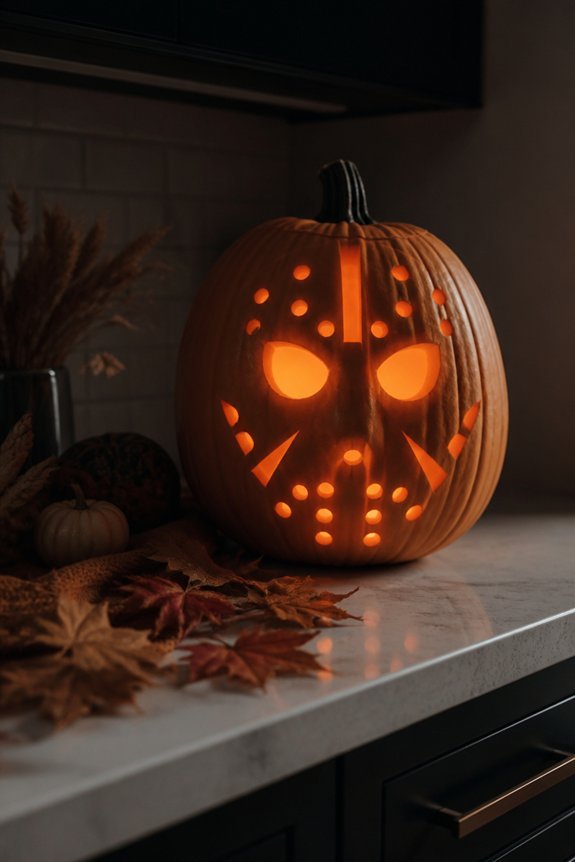
Jason Voorhees’ hockey mask design offers carvers a moderately complex pumpkin pattern that balances detail with feasibility.
The mask features a distinct rectangular shape, angular eye holes, and a vertical stripe down the center.
Carvers can use stencils to outline these elements, then carve away the outer pumpkin flesh. This design produces strong visual impact with manageable difficulty.
Freddy Krueger’s Scarred Face: Nightmare Fuel
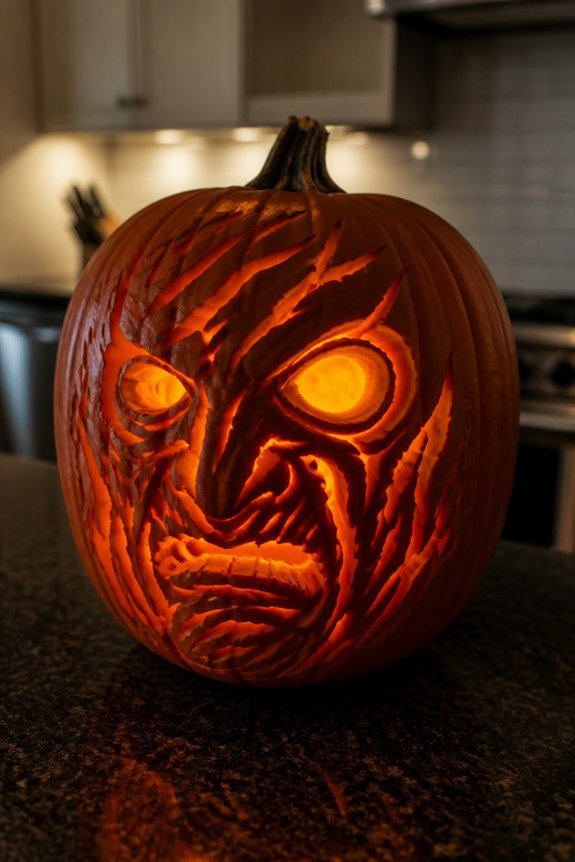
Freddy Krueger’s burned and scarred visage presents a challenging carving project that requires attention to facial asymmetry, deep wrinkles, and irregular surface texture.
Carvers should focus on the distinctive fedora outline, sunken eye sockets, and the severe scarring across his face.
Using various knife depths creates dimensional wrinkles. The leather glove remains optional but recognizable.
This design demands moderate skill and steady hand control throughout execution.
Scream Ghost Face: Pop Culture Dread
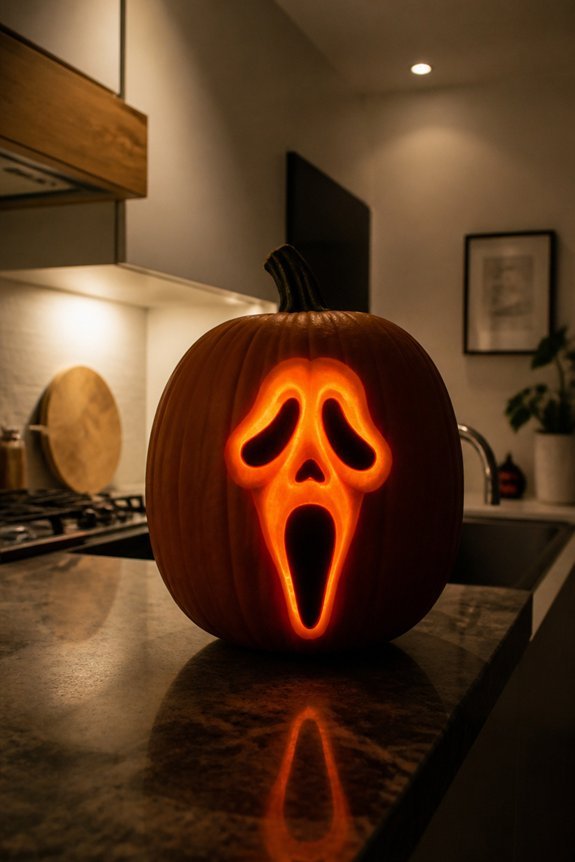
Moving from detailed facial scarring to a simpler silhouette, Ghostface from the Scream franchise offers a more straightforward carving alternative.
The design features a stark white oval face, black eye holes, and a screaming mouth.
Carvers can achieve this pattern by removing the pumpkin skin to expose the lighter flesh beneath, creating high contrast suitable for nighttime display and recognizable to viewers immediately.
Frankenstein’s Monster: Stitched and Sinister
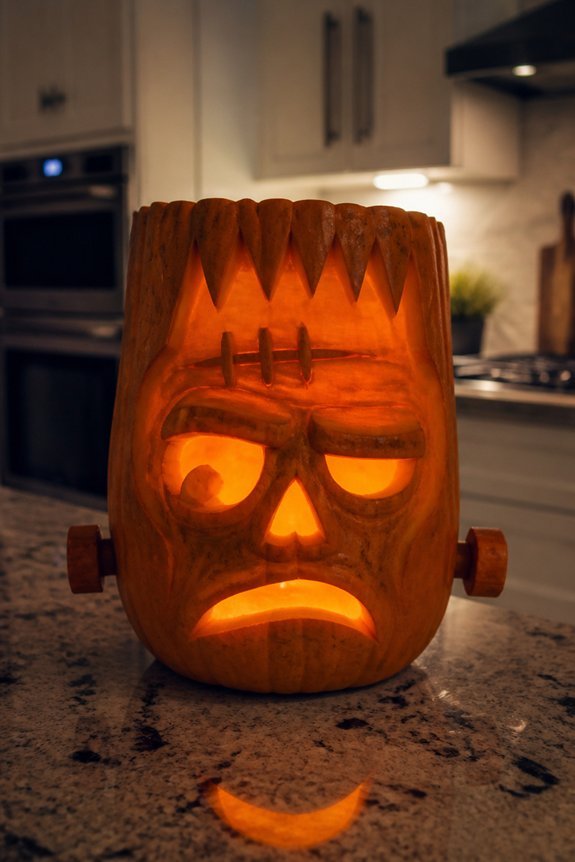
Frankenstein’s Monster presents a carving design that emphasizes flat, geometric features and distinctive stitching patterns across the face.
The design includes a rectangular head shape, with horizontal lines representing neck bolts. Carvers should add a flat-top hairline and sunken eye sockets.
Stitching marks extend from the forehead down the cheeks, creating symmetrical patterns.
This design requires moderate precision and basic carving tools.
Possessed Doll Face: Uncanny Creepy
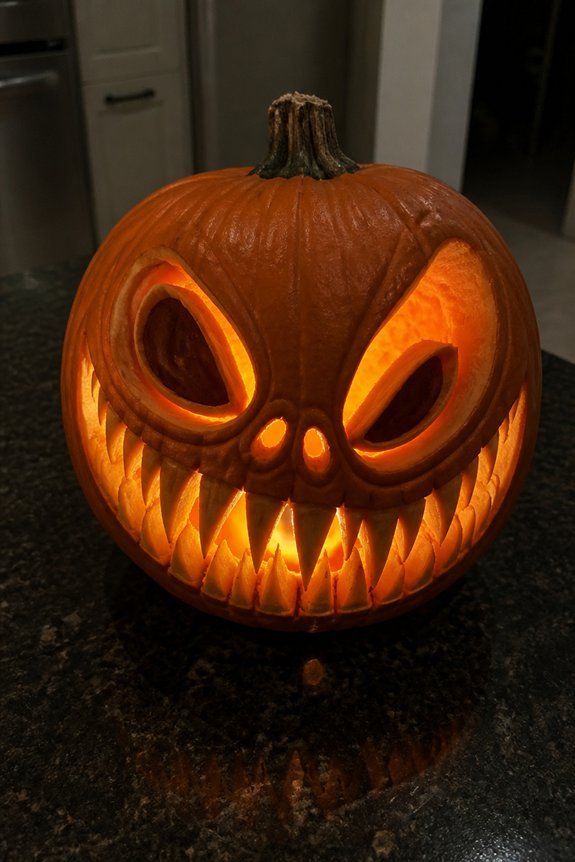
A possessed doll face carving uses exaggerated facial features, including wide-set eyes, an unnaturally large grin, and high cheekbones to create an unsettling appearance.
Carvers should angle the eyes downward and outward, emphasizing asymmetry for maximum effect. The mouth requires a curved, skeletal quality with visible teeth patterns.
Shading techniques around the eye sockets and cheekbones enhance the disturbing quality. This design works particularly well on medium to large pumpkins.
Werewolf Transformation: Primal Beast
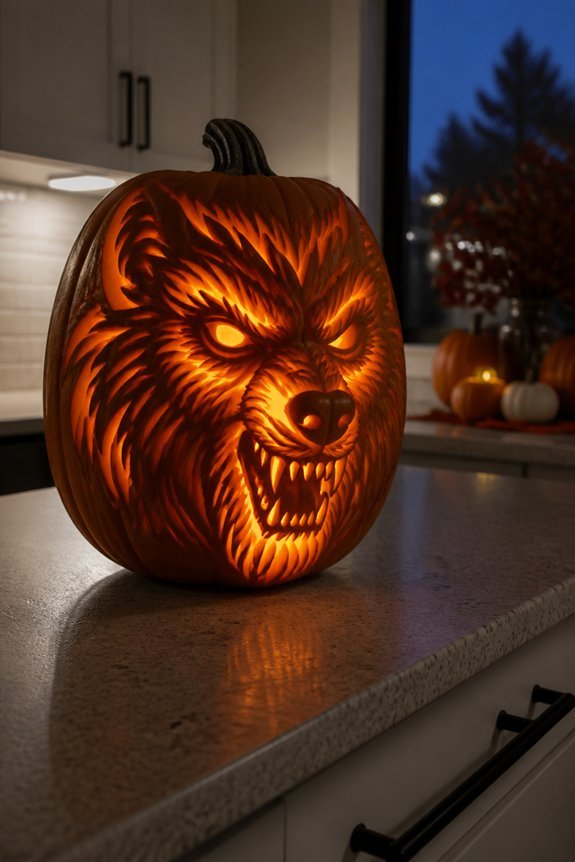
While the possessed doll emphasizes disturbing facial distortion, the werewolf design focuses on animalistic aggression and wild features.
Carvers should depict elongated snouts, prominent fangs, and furrowed brows. The design benefits from asymmetrical patterns, jagged edges, and shadowed eye sockets.
Creating fur texture through multiple carved lines enhances the primal appearance. This pumpkin style requires moderate carving skill and substantial detail work for realistic results.
Creepy Clown: Twisted Menace
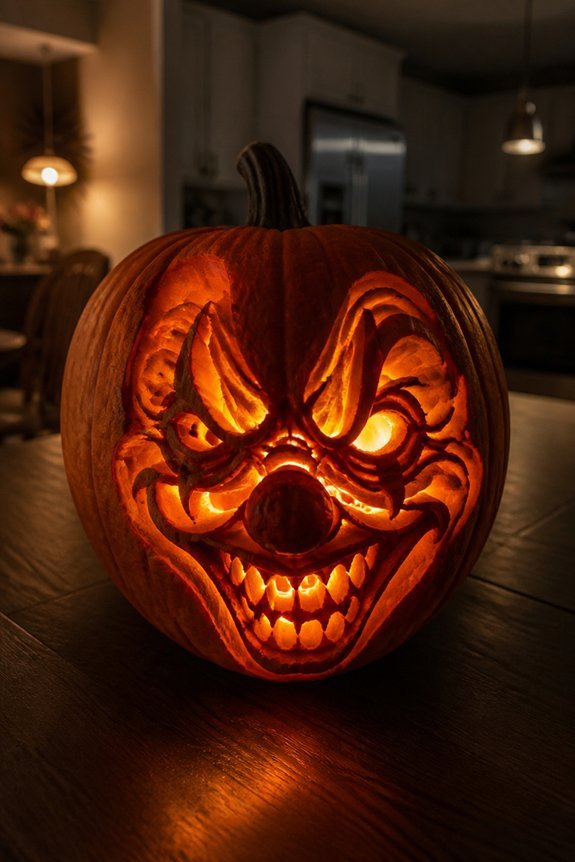
Clown designs offer a distinct approach to pumpkin carving, emphasizing exaggerated facial features and unsettling expressions rather than animalistic qualities.
Carvers can depict wide grins with downturned mouths, asymmetrical eyes, and prominent nose areas. Red nose placement, exaggerated cheek markings, and striped patterns create the twisted menace effect.
Solid carving produces starker results, while partial etching allows for detailed makeup elements and facial distortions effectively.
Haunted House Scene: Layered Landscape
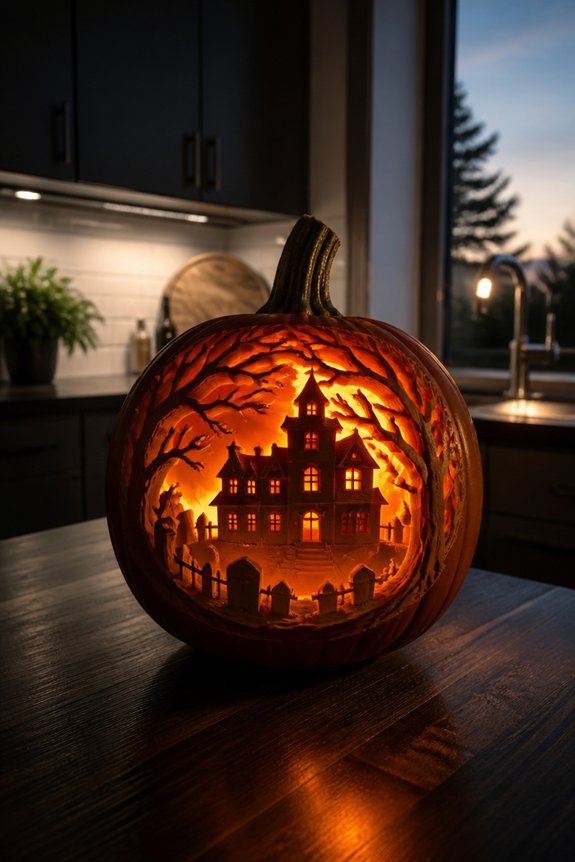
Haunted house scenes transform pumpkins into multi-layered landscapes, combining architectural elements, atmospheric details, and depth through carving techniques.
Carvers create multiple depth levels by removing outer skin for highlights, then cutting through to the inner cavity for shadows.
Windows, doors, bare trees, and gravestones serve as focal points.
This approach requires careful planning and pattern placement to achieve dimensional effects.
To enhance the spooky atmosphere, carvers can incorporate ground-level lighting near the base of the pumpkin to cast dramatic shadows across the carved surfaces, mimicking the eerie illumination techniques used in professional yard displays.
Creeping Graveyard: Tombstones and Spirits
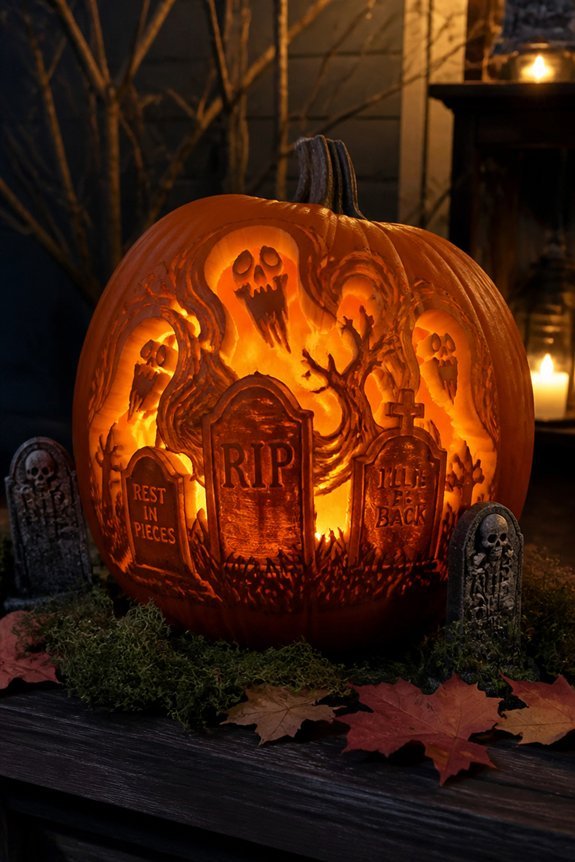
Graveyard designs expand upon the layered depth concepts of haunted houses, focusing specifically on cemetery elements rather than architectural structures.
Carvers create tombstones by etching rectangular shapes, adding crosses or epitaphs for detail. Spirits emerge through transparent ghost figures floating above graves.
Bare tree silhouettes frame the composition, while fog effects enhance atmosphere.
These designs combine multiple elements into cohesive scenes.
For a more immersive display, consider incorporating Halloween tree decorations with hanging figures and draped fabric to create ethereal suspended spirits throughout your graveyard scene.
Spider Web Invasion: Intricate Webbing
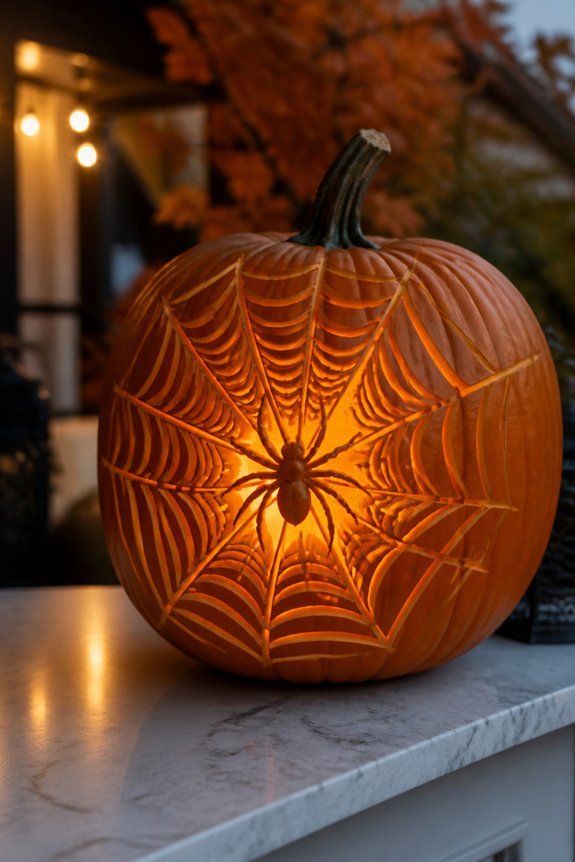
Webbing patterns offer an alternative approach to pumpkin carving, shifting focus from singular figures to interconnected geometric designs.
Carvers can create concentric circular webs or angular zigzag patterns across the pumpkin’s surface.
Using thin carving tools produces delicate lines that resemble actual spider silk.
This technique requires steady hand control and patience, but results in distinctive jack-o’-lanterns suitable for Halloween displays.
Reaper’s Skull and Scythe: Death Personified
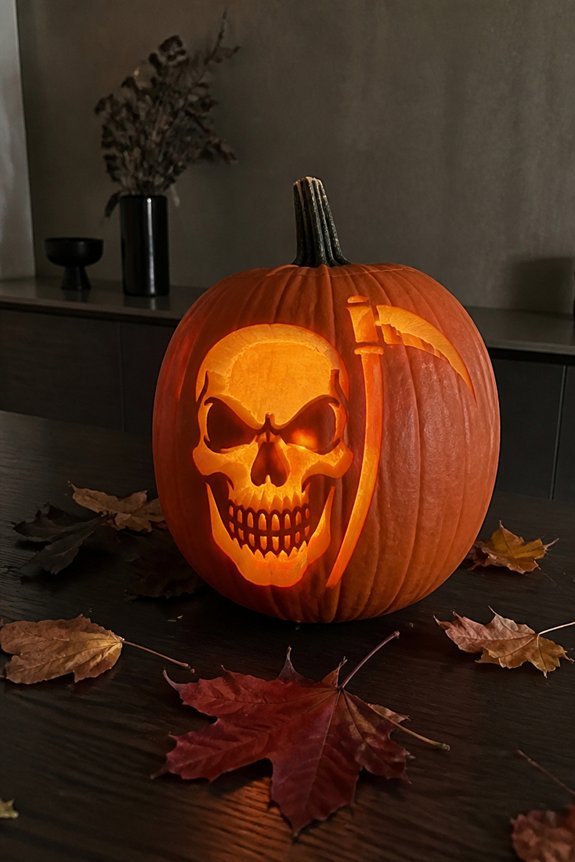
A skeletal figure wielding a curved blade represents one of Halloween’s most recognizable symbols, and carvers can translate this imagery onto pumpkins through strategic design choices.
The design requires a skull template, positioned centrally, with hollow eye sockets and a defined jawline. A curved scythe appears beside or behind the skull.
Carvers should use stencils for accuracy, employ varying depths for dimension, and consider adding a hooded silhouette around the composition for enhanced effect. For maximum impact after dark, place LED strip lighting beneath or behind the carved pumpkin to create an eerie glowing effect that highlights the reaper’s menacing features.
Pentagram and Flames: Dark Magic
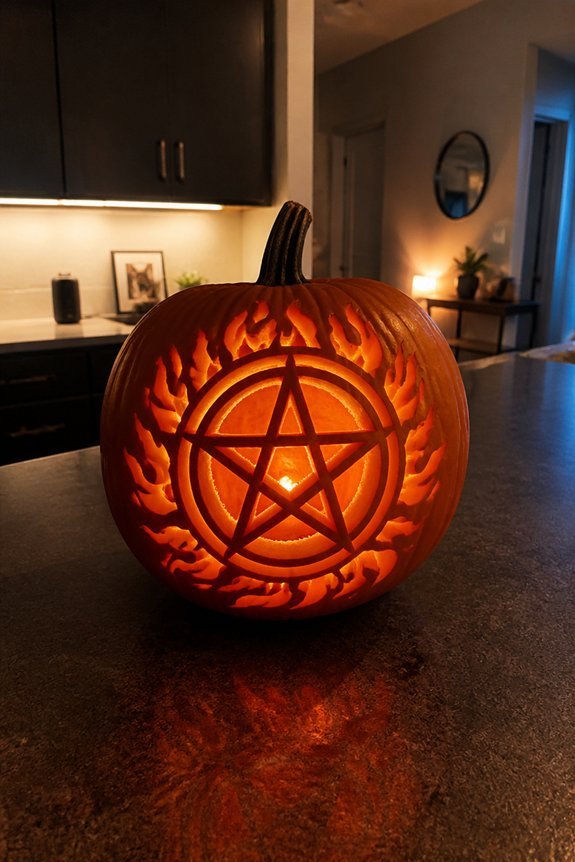
For those seeking designs beyond skeletal imagery, mystical symbols offer darker aesthetic options on pumpkins. A five-pointed pentagram carved into the pumpkin surface creates a recognizable occult symbol.
Adding flame designs around the pentagram intensifies the dark magic theme.
Carvers can use a drill for the star outline, then etch smaller flame patterns along the edges using standard carving tools for layered visual effect.
Grim Reaper Portrait: Hooded Shadow
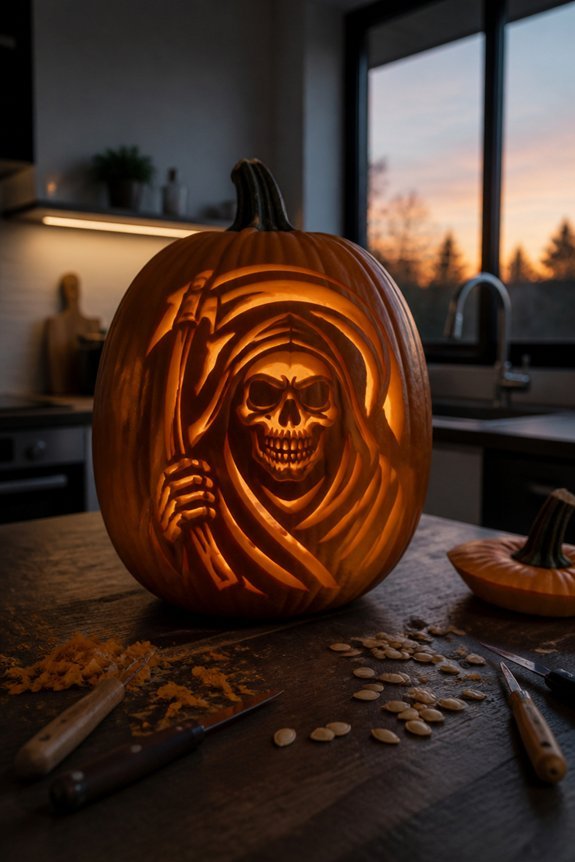
The Grim Reaper portrait presents a classic Halloween image suitable for pumpkin carving, involving a hooded skeletal figure emerging from darkness.
Carvers should sketch a large hood, deep eye sockets, and a prominent jawline before cutting.
The design benefits from shading techniques, using varying depths to create shadow effects. A scythe or skeletal hands add detail, making the portrait more recognizable and appropriately menacing for Halloween displays.
Alien Head: Otherworldly Visitor
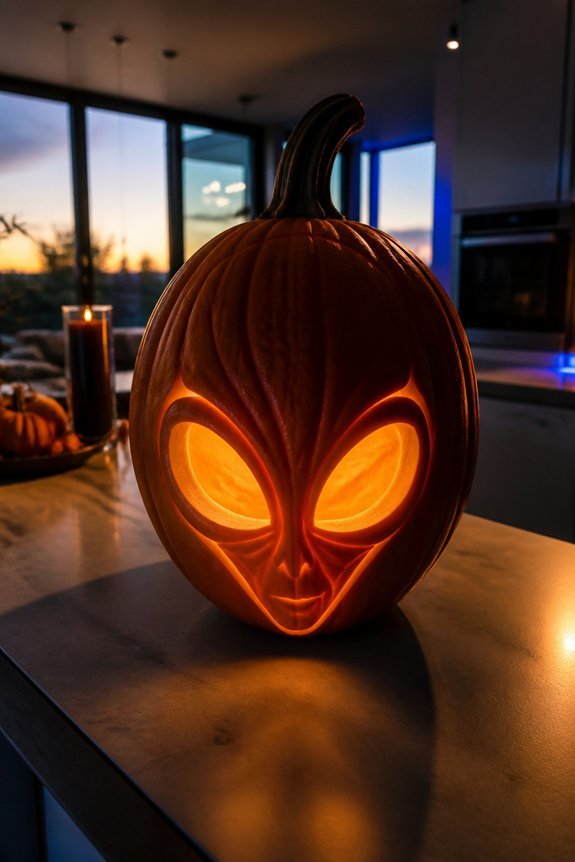
Since extraterrestrial designs offer distinctive visual appeal, carvers can create recognizable alien heads by emphasizing elongated skulls, large almond-shaped eyes, and small slits for mouths.
Using a drill or knife, carvers produce the eye sockets and mouth openings with precision.
Backlighting the pumpkin enhances the otherworldly effect, casting shadows that accentuate facial features and create an unsettling appearance suitable for Halloween displays.
Frequently Asked Questions
What Tools Do I Need to Safely Carve Intricate Pumpkin Designs Without Injuring Myself?
One requires a sharp pumpkin carving knife, a sturdy scoop for seed removal, and a detailed pattern template. Wearing cut-resistant gloves protects fingers while carving. A well-lit workspace and proper hand positioning behind the blade prevent injuries effectively.
How Long Will Carved Pumpkin Designs Last Before Rotting or Deteriorating?
Like autumn leaves surrendering to winter’s grip, carved pumpkins typically endure five to ten days before decay claims them. Factors such as temperature, humidity, and exposure to sunlight determine whether one’s creations flourish or crumble into orange dust.
Can I Use Artificial Pumpkins for Carving These Scary Designs Instead?
One can certainly carve artificial pumpkins for scary designs. They offer advantages such as durability, longevity, and no rotting concerns. However, they carve differently than real pumpkins and may not achieve authentic aesthetic effects that traditional pumpkins provide.
What Lighting Options Work Best to Illuminate Carved Pumpkins at Night?
“The early bird catches the worm” applies to lighting choices—planning ahead matters. Traditional candles offer classic ambiance, while LED lights provide safer, longer-lasting alternatives. Battery-operated lights, glow sticks, and colored LEDs create varied atmospheric effects for nighttime pumpkin displays.
How Do I Preserve Carved Pumpkins to Extend Their Display Lifespan?
One can extend a carved pumpkin’s display lifespan by applying petroleum jelly to cut edges, refrigerating it overnight, misting it with water daily, and keeping it away from direct sunlight and heat sources to slow decomposition.
Conclusion
As darkness falls, carved pumpkins line porches and yards, their flickering flames casting shadows across neighborhoods. Each design—skulls, demons, reapers, aliens—serves a purpose beyond decoration. These carved faces, ranging from simple to complex, transform ordinary gourds into focal points of Halloween displays. The choice of design reflects personal style and skill level, whether selecting classic Jack-o’-Lanterns or intricate portraits. Ultimately, these pumpkins mark the season’s arrival, signaling something approaches.