

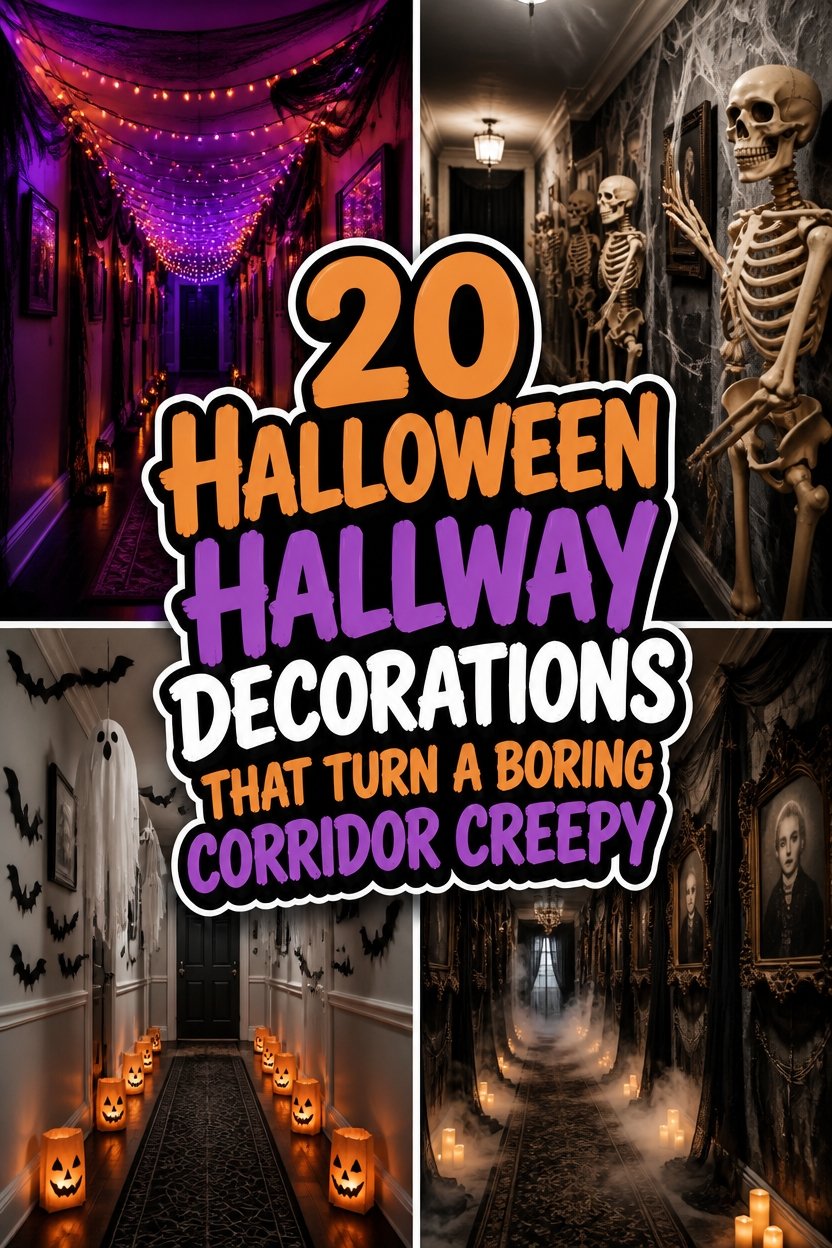
Turning a plain hallway into something spine-chilling takes a lot less effort than you’d think. What works best for me is layering. I start with floating ghosts overhead, then add dangling bones and paper bats at different heights so the space has depth.
Motion sensors are my secret weapon. Nothing beats watching a guest jump when a pair of glowing eyes lights up in the dark.
Add purple string lights and fake cobwebs hanging from the door frames, and the atmosphere is there straight away.
For the finishing touch, I go down to floor level. A cardboard coffin leaning against the wall or a few foam headstones in a corner ground the whole scene, and they make the walk to the bathroom properly unnerving.
Halloween Hallway Decorations to Turn Your Corridor Into a Haunted Walkway
A hallway is narrow, so most of these ideas use the ceiling and walls and leave the floor clear. Pick one or two ceiling ideas, a wall idea, and some lighting, and you’ll have plenty.
Hanging Witch Hats and Floating Candles
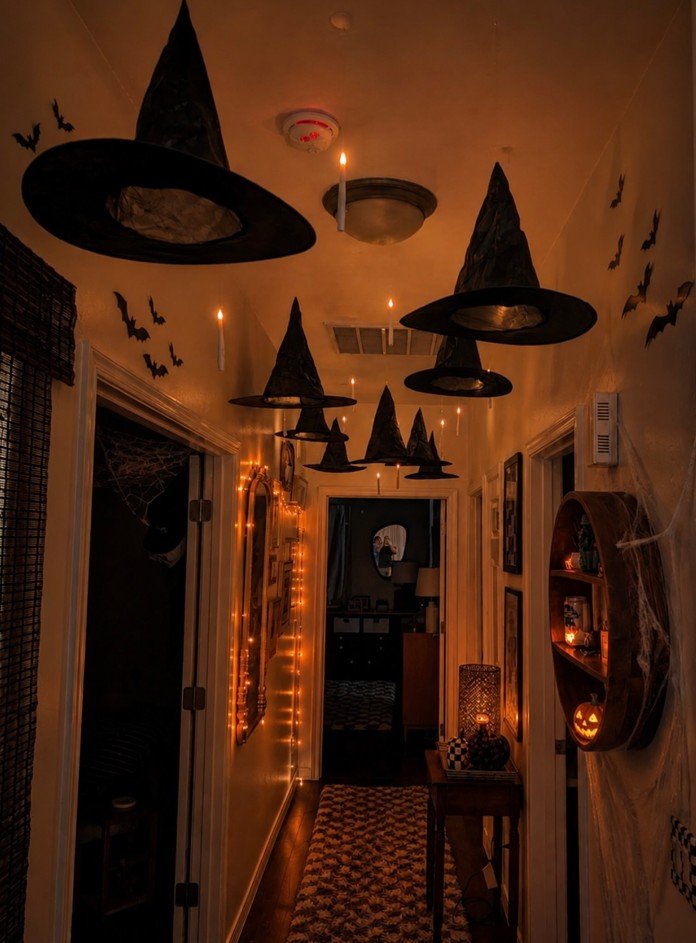
Witch hats hung from the ceiling look like they’re floating, and a glowing flameless taper candle beside each one makes the hallway feel a little magical. Black bat silhouettes on the walls, warm orange string lights, fake cobwebs, and a few small glowing pumpkins fill in the rest.
Dark trim around the doorways and low amber light keep it moody. None of it takes up floor space, so it’s a good pick for a narrow hallway you want to turn into a witchy passage from one end to the other.
Creepy Cobwebs and Spiders Overhead
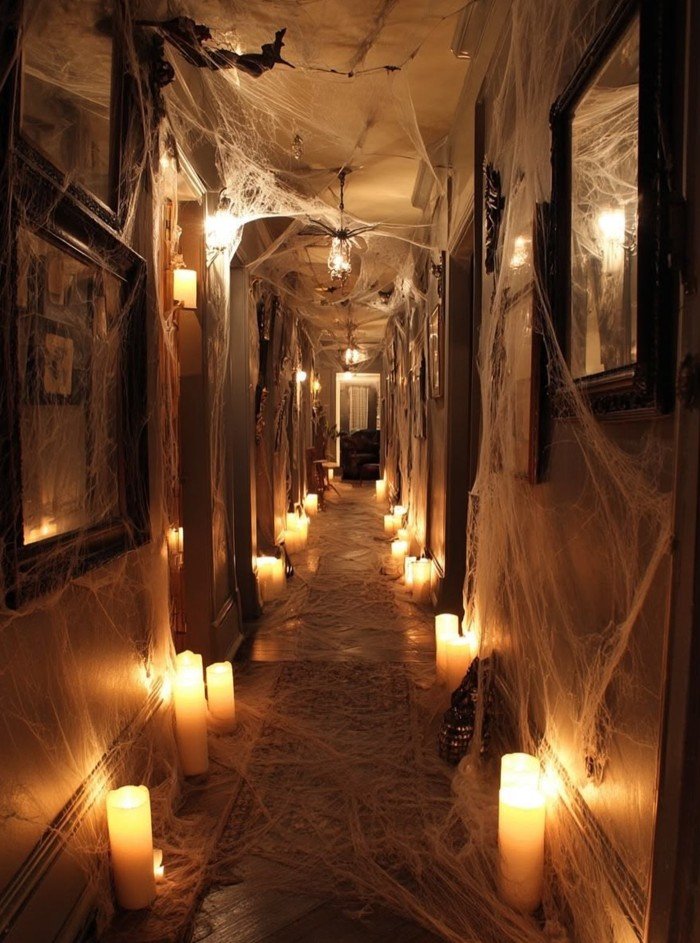
When floor space is tight, hang your ghosts. The basic version needs only a white bedsheet, fishing line, and a styrofoam head. If you’d rather buy them, inflatable ghosts and LED-lit figures both work.
Hang them from ceiling hooks, track lighting, or door frames. Set them at different heights so guests meet ghost after ghost as they walk down the corridor.
Floating Ghost Figures for Maximum Corridor Impact
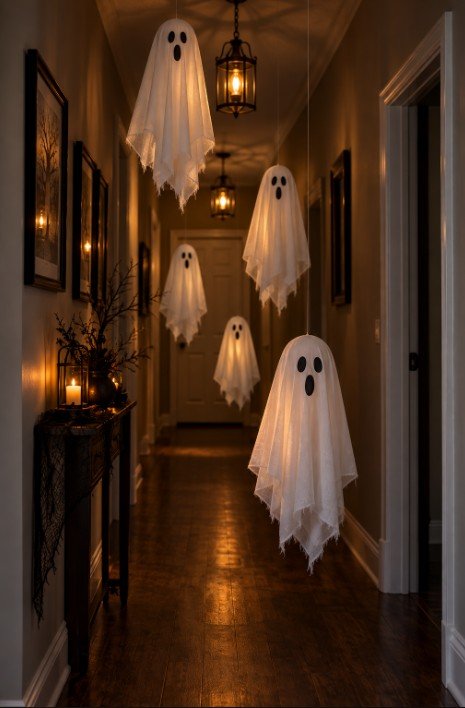
When hallway space feels limited, floating ghost figures offer an effective decorating solution that uses vertical space rather than floor area. White bedsheets, fishing line, and styrofoam heads create basic versions.
Commercial options include inflatable ghosts and LED-lit figures. Suspending these decorations from ceiling hooks, track lighting, or doorways maximizes visual impact. Spacing figures at varying heights produces a layered effect throughout the corridor.
Also read: 23 Pirate Halloween Decorations for a Haunted Ship Vibe
Paper Bats Suspended From Your Ceiling
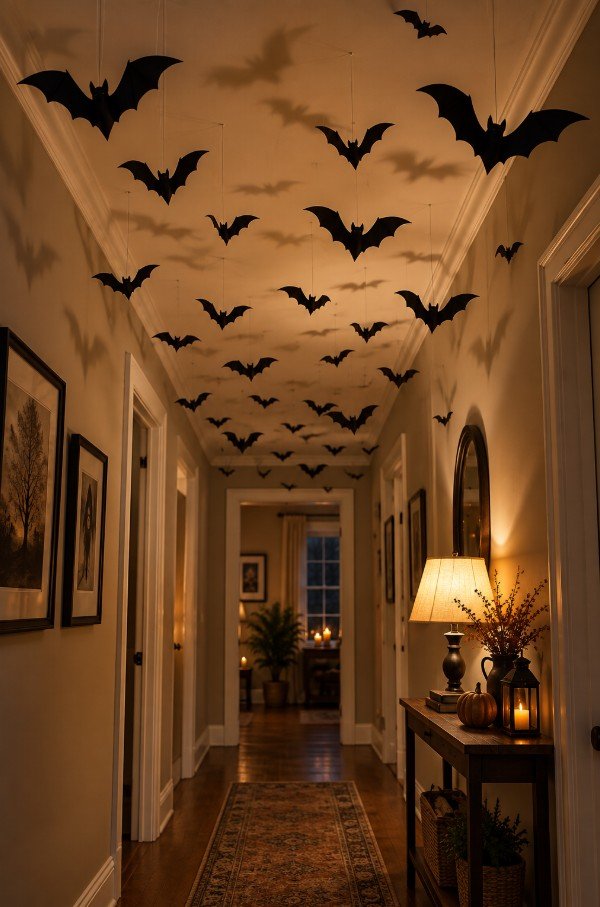
Paper bats offer an accessible decoration method for hallway ceilings, requiring minimal materials and installation effort. Black construction paper, templates, and fishing line serve as basic supplies.
Bats can be cut in various sizes, then suspended at different heights using clear thread or tape. This approach creates depth and visual interest without permanent damage to walls or ceilings. For a cohesive look, consider overlapping strokes of varying bat sizes to build layered dimension similar to painting techniques that maximize visual impact.
Skeleton Garland Draped Across Hallway Walls
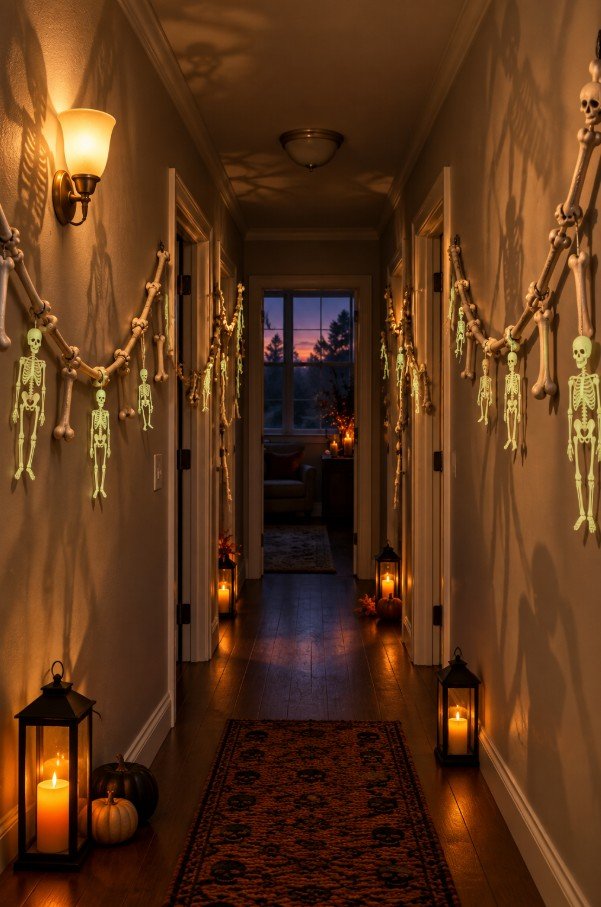
A skeleton garland is a string of connected bones or little skeleton cutouts, which makes it ideal for long walls and doorways. Most are plastic or paper and run about 6 to 12 feet. Tape, adhesive strips, or a few small nails will hold one up.
You’ll find them in white, black, and glow-in-the-dark. Hang the garland in swoops for a playful look, or pull it straight for something neater.
Zombie Handprints Climbing Up Your Walls
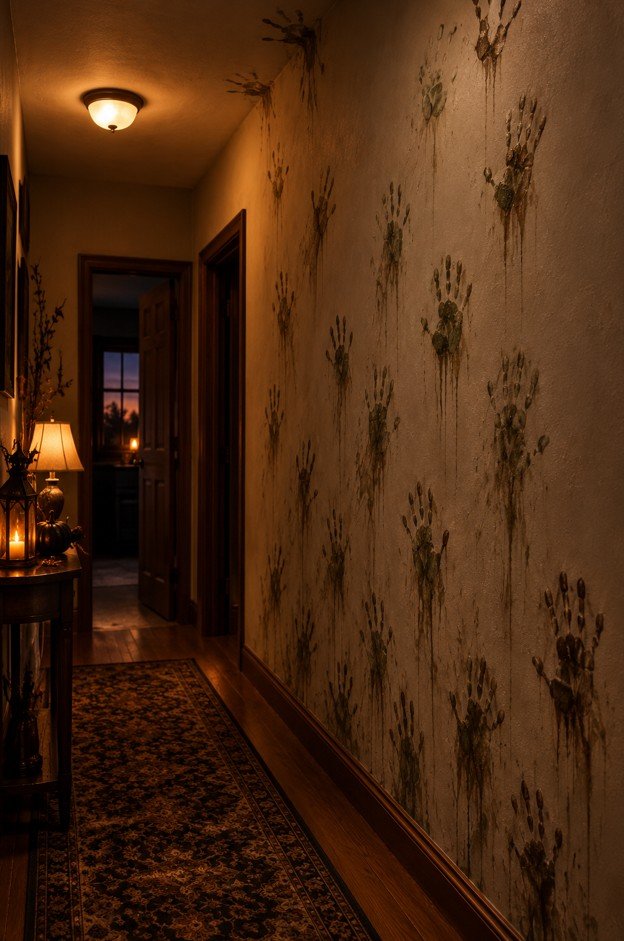
Handprints positioned along hallway walls create a climbing zombie effect, mimicking undead figures ascending toward the ceiling. Paint or sticker handprints in gray, green, and brown hues, spacing them approximately two feet apart vertically. Position prints at varying angles and heights to suggest movement and struggle.
This decoration works effectively in stairwells and narrow corridors, establishing an unsettling atmosphere throughout the space. For a more permanent and dramatic transformation, consider painting an accent wall with bold color behind the handprints to intensify the eerie ambiance.
Bloody Handprint Stencils on Light Switches
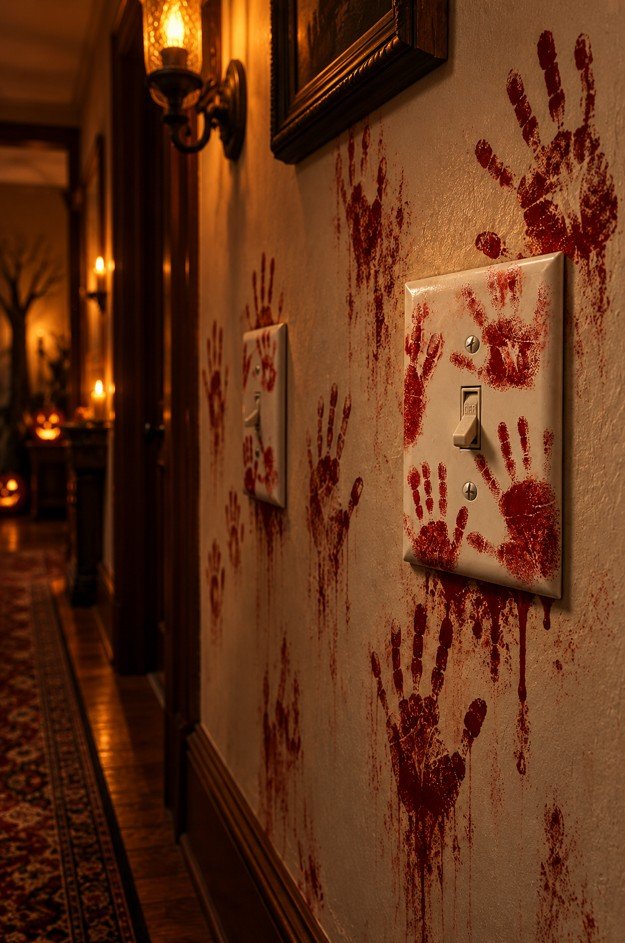
A practical way to enhance hallway light switches involves applying bloody handprint stencils around the switch plates and surrounding wall areas. Using red, dark red, or brown paint, individuals apply stencils to create handprints that appear to grasp or climb toward switches.
This technique requires minimal materials: stencils, paint, and brushes. The effect makes ordinary switches appear menacing and reinforces the zombie climbing theme established elsewhere in hallways. Thoughtful decor transforms walls from background to focal point, making even functional elements like light switches part of the immersive Halloween experience.
Creepy Portrait Eyes That Follow Visitors
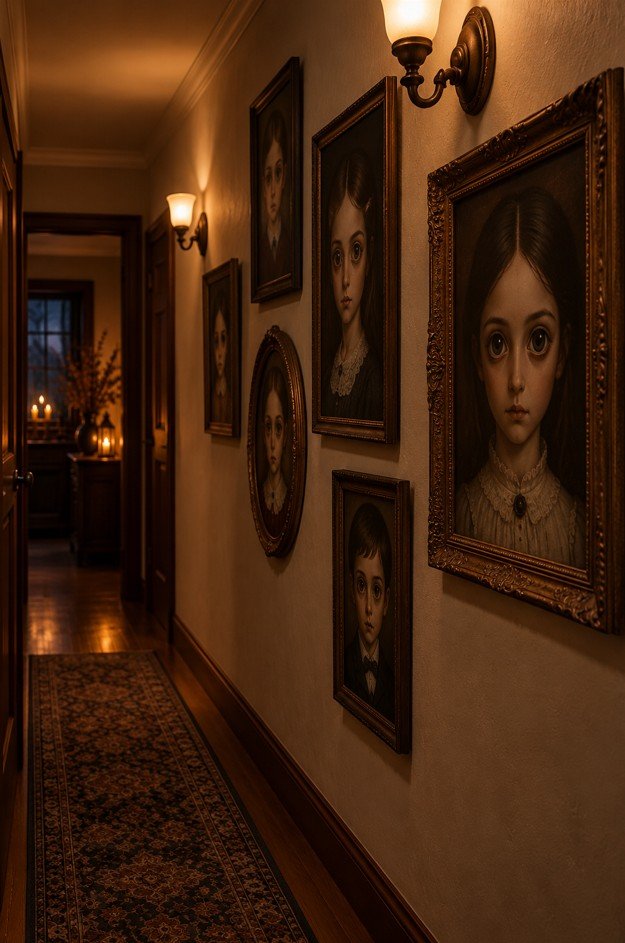
While bloody handprints direct attention toward light switches, creepy portrait eyes offer another method for unsettling hallway visitors. Large printed eyes, positioned at various heights, create an illusion of movement and surveillance.
Placing these portraits on walls, inside frames, or attached to cardboard cutouts produces an effective psychological effect. Visitors experience discomfort from the perceived gaze following their movement through corridors.
Much like gallery walls with mixed frames, arranging these portraits at varying heights and in different frame styles can amplify their unsettling impact.
Severed Hand Props Reaching Out From Corners
From corners and wall alcoves, severed hand props create a startling visual effect that encourages visitors to maintain alertness while traversing the hallway. Rubber or foam hands, positioned at varying heights, work effectively in shadowed areas.
Realistic latex models with extended fingers produce stronger reactions than simplified versions. Mounting props on shelves, behind furniture, or within doorway frames maximizes their impact.
Headstone Cutouts Lining Both Hallway Sides
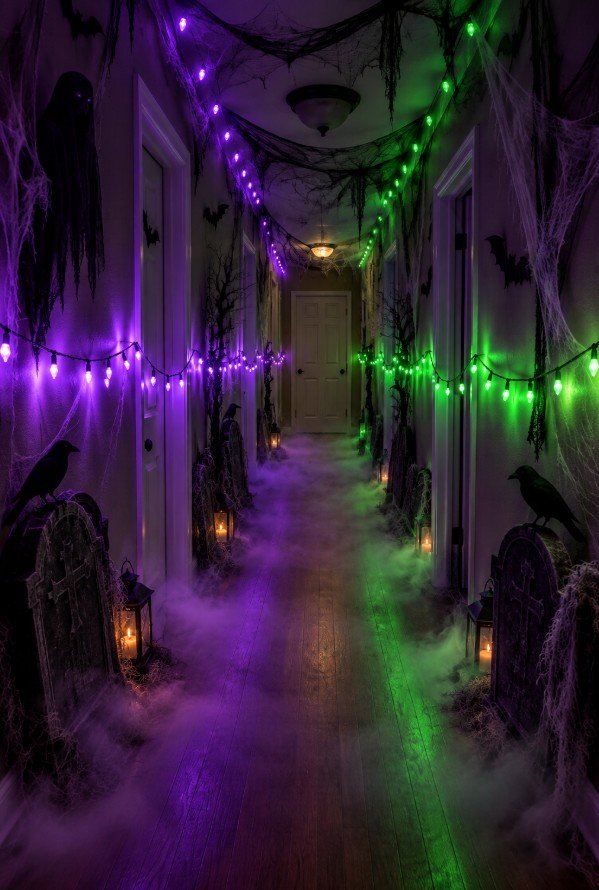
Headstone cutouts positioned along hallway walls create a cemetery atmosphere that complements the severed hand props mentioned previously. Cardboard or foam cutouts, painted gray or black, work effectively.
Arrange them alternately on both sides, spacing them two to three feet apart. Add details like names, dates, and epitaphs using markers or paint. This configuration maximizes visual impact while maintaining hallway functionality for foot traffic. The epitaphs and accents serve as personalized elements that transform simple cutouts into convincing memorial markers.
Glow-in-the-Dark Skull Decorations for Nighttime Drama
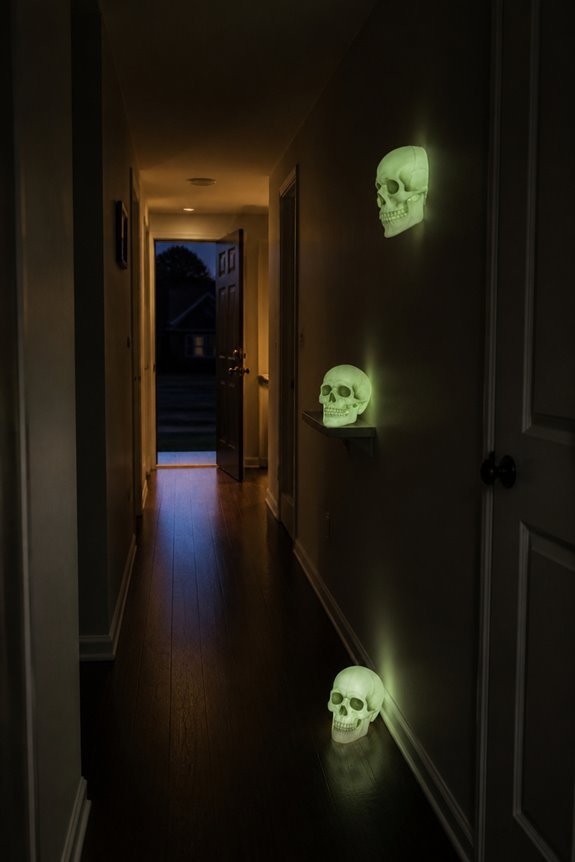
Glow-in-the-dark skull decorations amplify the nighttime impact of a Halloween hallway by providing self-illuminating focal points that require no additional light sources. These skulls, available in various sizes, charge during daylight hours and emit visible light after dark.
Positioning them along walls, shelves, or corners creates visual interest. Options include plastic skulls, foam versions, and resin models, each offering different durability levels for temporary or permanent hallway installations. Mirrors reflect movement and can be strategically placed near these skulls to amplify their eerie glow throughout the corridor.
Flickering Candles and Lighting Tricks
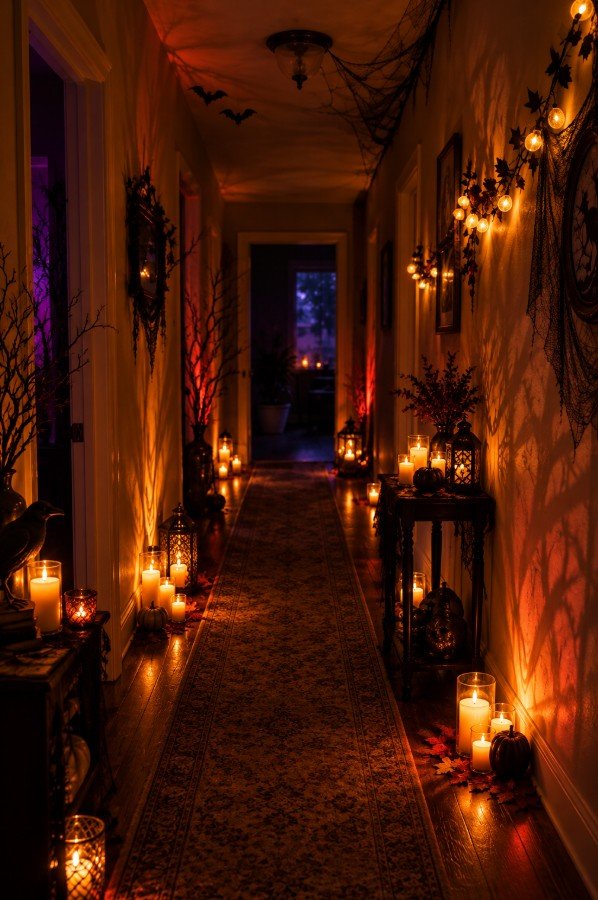
Flickering candles create an atmosphere of uncertainty and movement in a Halloween hallway, drawing attention through their dynamic light patterns rather than static glow. LED flameless candles, string lights, and strobe effects produce similar results without fire hazards.
Positioning lights at varying heights creates depth, while colored bulbs in amber, purple, or red enhance the spooky environment effectively. For a more curated and intentional display, group your flameless candles in odd numbers and vary their heights to foster eye engagement throughout the corridor.
Red String Spider Web Installation
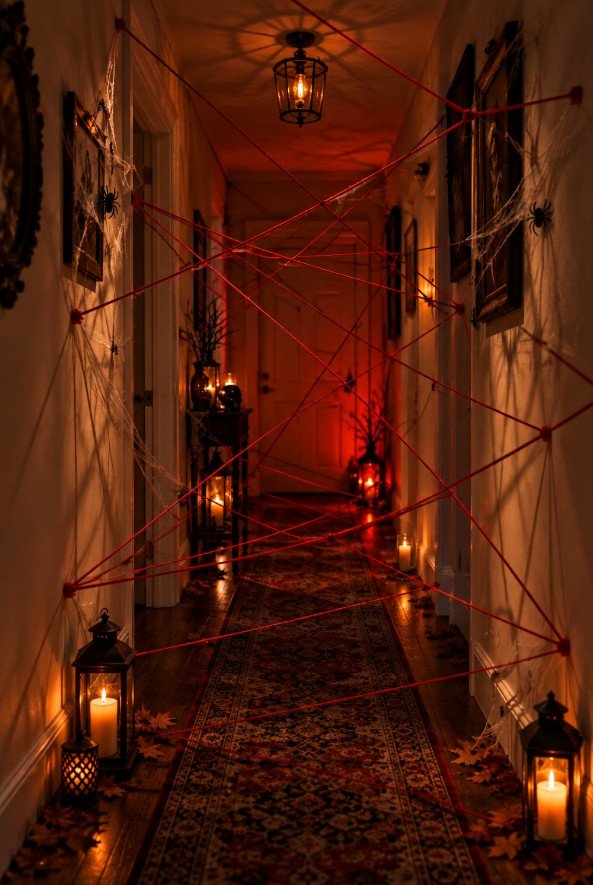
Stretching red string across hallway corners and along walls creates a web-like pattern that fills vertical and horizontal space. The installer anchors string to corners using tape or tacks, then crisscrosses additional strands to form interconnected sections.
Red string contrasts effectively against white or neutral walls, enhancing visibility. This method requires minimal materials: red string, tape, and mounting hardware.
Cardboard Coffins Positioned as Obstacles
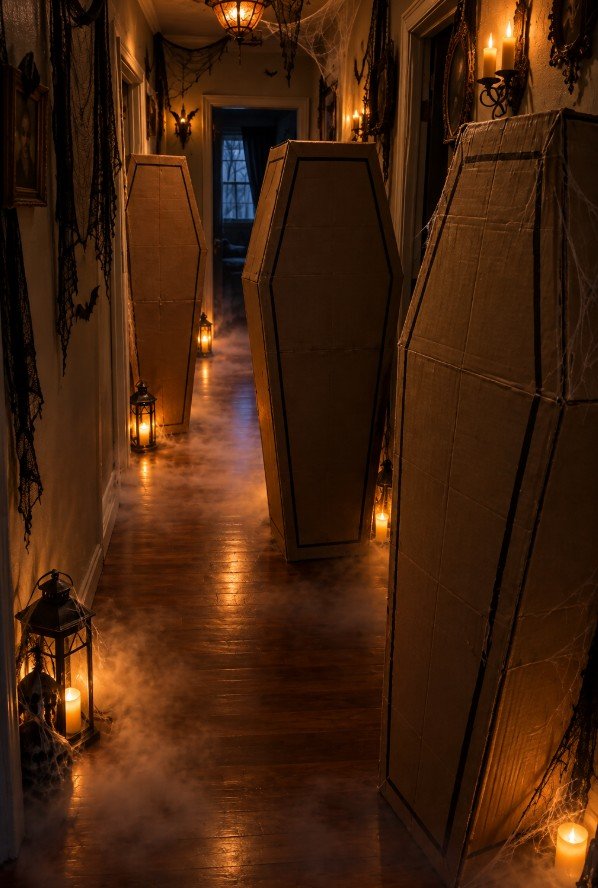
While hallway decorations often hang from walls or corners, cardboard coffins serve as floor-level barriers that physically block pathways. These structures, constructed from standard cardboard boxes, create obstacles that redirect foot traffic and establish designated routes through corridors.
Positioning coffins at intervals along hallways forces visitors to navigate around them, enhancing the overall unsettling atmosphere. This approach combines visual impact with functional space management.
Hanging Skeleton Bones Creating a Graveyard Effect
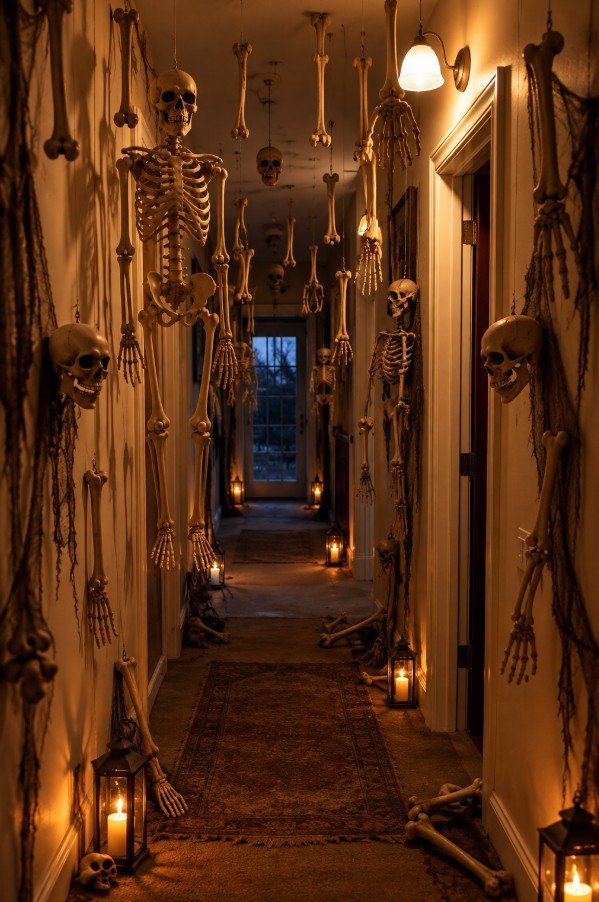
Because hallway ceilings provide substantial vertical real estate, hanging skeleton bones effectively transforms corridors into graveyard scenes. Plastic bone sets, suspended from fishing line or wire, create layered depth throughout the space.
Positioning bones at varying heights, from seven to nine feet, establishes visual interest. Grouping clusters near corners and doorways enhances the graveyard atmosphere, while individual bones scattered along the ceiling add complexity and environmental authenticity to hallway decorations.
Just as floating shelves utilize vertical wall space to maximize display areas without consuming floor room, these suspended bones demonstrate how overhead spaces can be transformed into dramatic design elements.
Frequently Asked Questions
How Can I Safely Secure Heavy Decorations to Hallway Walls Without Damaging Paint?
One can secure heavy decorations using damage-free adhesive strips, which hold substantial weight without marking walls. Alternatively, decorators might employ tension rods, removable hooks, or lean decorations against walls. Command strips represent the safest option for preserving paint integrity.
What’s the Best Budget-Friendly Way to Create a Professional-Looking Haunted Corridor?
Like shadows stretched across moonlit pavement, budget-friendly haunted corridors emerge through strategic layering. One achieves professional results by combining black fabric draping, LED string lights, and cardboard cutouts. Dollar stores and thrift shops provide affordable props that transform spaces dramatically.
How Do I Make Decorations Pet-Safe for Homes With Cats or Dogs?
One should choose pet-safe decorations by avoiding toxic materials like certain plants and chemicals. Secure all decorations firmly to prevent choking hazards, use battery-operated lights instead of candles, and select non-toxic paints and adhesives for Halloween hallway displays.
Can These Decorations Work in Narrow Hallways With Limited Floor Space?
Despite lacking smartphones in the 1950s, modern decorators know narrow corridors thrive with wall-mounted garlands, hanging paper bats, and vertical string lights. These space-conscious approaches maximize creepy ambiance without cluttering floors, making compact hallways ideal for immersive seasonal transformations.
What’s the Easiest Way to Quickly Remove Halloween Decorations After the Holiday?
One can efficiently remove Halloween hallway decorations by working systematically from top to bottom, carefully storing reusable items in labeled bins for next year, and promptly disposing of damaged or single-use materials to restore the corridor’s original appearance quickly.
Conclusion
Transforming a corridor into a haunted space requires layered visual elements, atmospheric effects, and interactive components. Suspended ghosts, hanging skeletons, and paper bats create depth through vertical placement. Cobwebs, string lights, and fog machines establish an unsettling environment. Motion sensors and creepy portraits trigger psychological responses in visitors. Physical props like coffins and headstones anchor the graveyard theme. This combination of decorative, lighting, and sensory elements effectively converts ordinary hallways into immersive, disturbing spaces.