

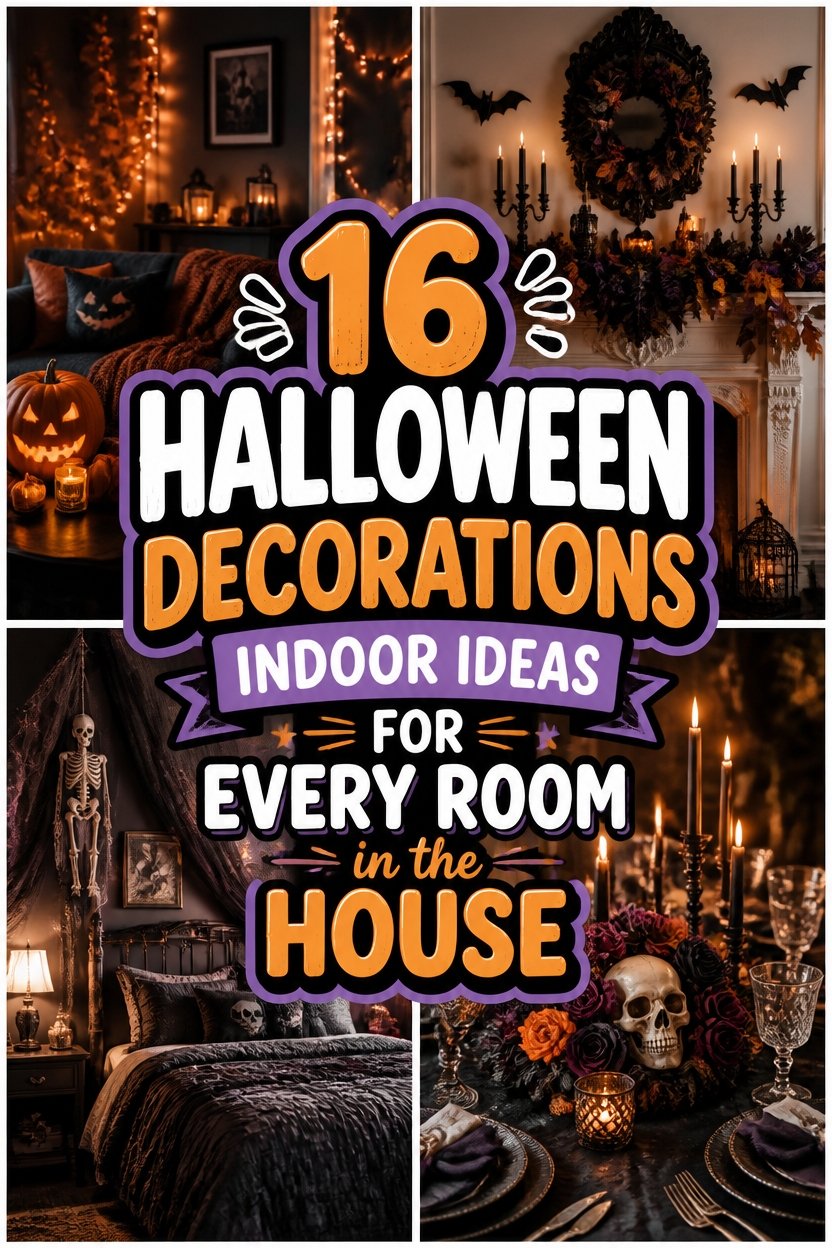
I always start my Halloween decorating in the entryway. A black doormat sets the mood, while hanging bats overhead give guests that first little jolt of surprise.
Living rooms are where I go all out. Fog machines and draped fabric transform the space into something truly eerie.
My bedroom stays more subtle with dim lighting and dark tapestries that help me sleep with the spooky vibe.
Don’t overlook basements and staircases! Projections and animatronics create those immersive scares everyone remembers.
The trick is balancing the creepy stuff with spaces you can actually live in. Layer cobwebs carefully, position your monsters where they’ll catch people off guard, and your whole house becomes an experience.
Spooky Entryway Displays to Greet Your Guests
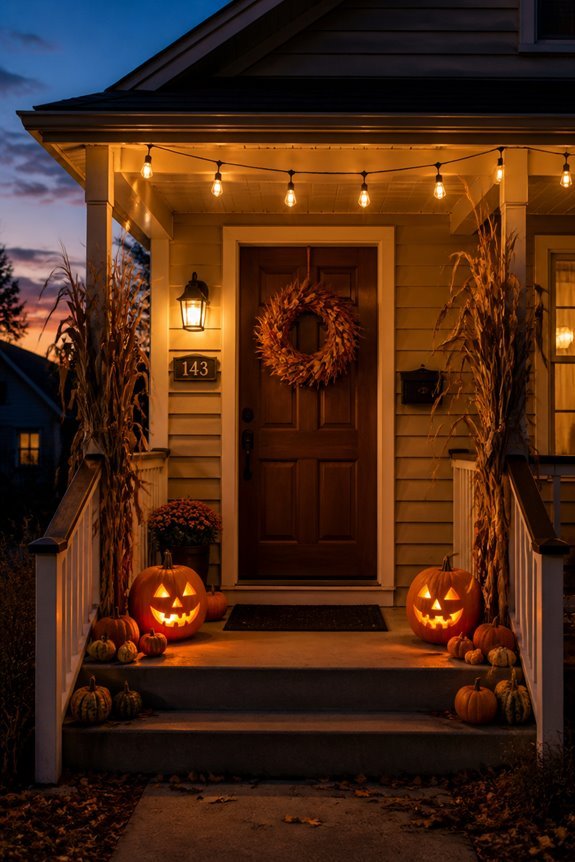
Upon entering a home during Halloween, guests encounter the entryway first, making it an ideal location for seasonal decorations.
A black doormat, orange pumpkins, and artificial cobwebs create an immediate seasonal impression. Hanging paper bats, string lights, and a decorative wreath on the door serve practical purposes while establishing atmosphere. A small table displaying candles, skulls, or gourds completes the entryway display effectively. Consider using potted evergreens flanking your door as a versatile base that transitions seamlessly from Halloween to the winter holidays.
Haunted Living Room Transformations
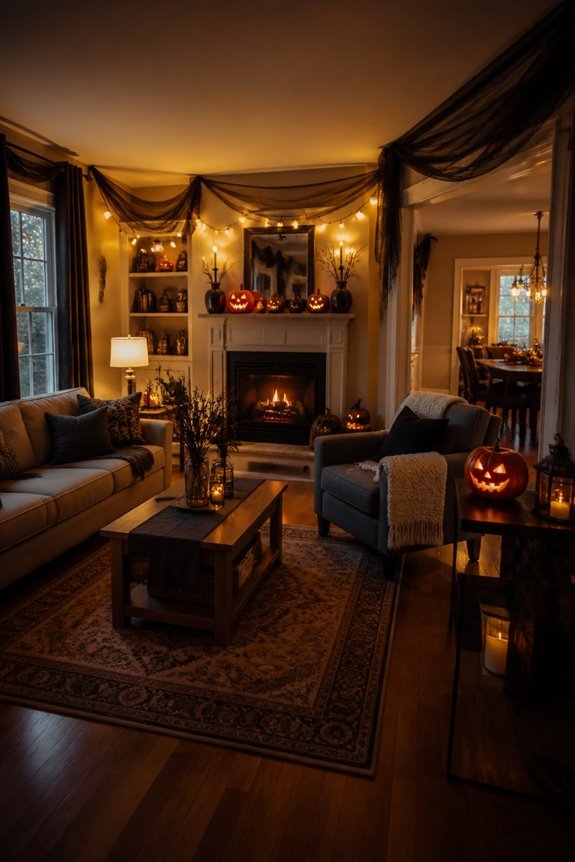
The living room serves as the central gathering space during Halloween celebrations, making it an effective area for seasonal transformations. Consider using black tablecloths, orange string lights, and artificial cobwebs to establish atmosphere.
Strategically place props like plastic skeletons, fog machines, and inflatable ghosts throughout the room. Drape dark fabric over furniture to create dramatic silhouettes and enhance the haunted effect. For an additional layer of ambiance, incorporate fairy lights in corners behind furniture or along mantelpieces to cast eerie shadows and create a magical, otherworldly glow throughout the space.
Eerie Bedroom Atmospheres for Maximum Effect
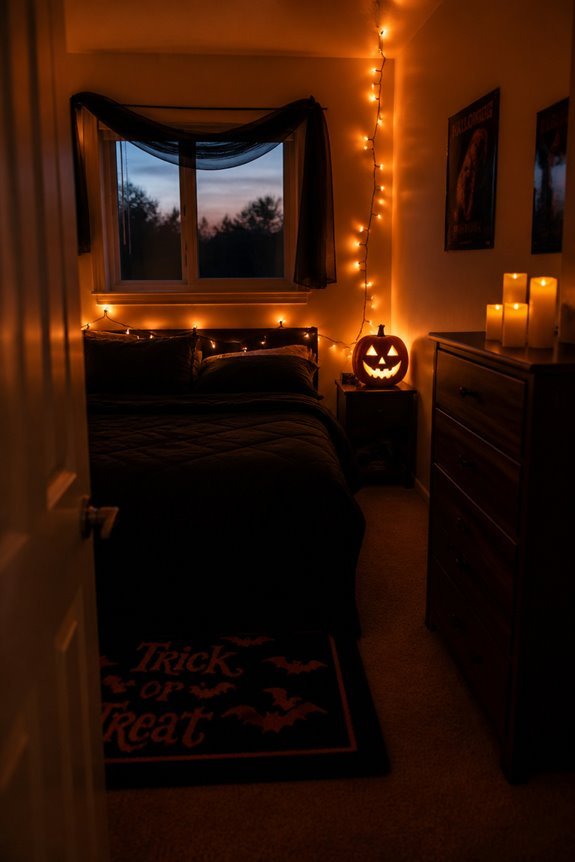
Bedrooms offer an intimate space for Halloween decoration that differs from common living areas, requiring careful consideration of lighting, textiles, and spatial arrangement.
Dim overhead lights, use string lights with orange or purple bulbs, and drape black or deep red fabric across walls. Position artificial fog machines in corners, place skeleton figures on shelves, and hang bat cutouts from ceilings for atmospheric effect. Incorporate layered textiles and fabric art such as dark tapestries or macramé wall hangings in black and deep purple to add warmth, texture, and sound absorption while enhancing the eerie ambiance.
Kitchen and Dining Room Fright Ideas
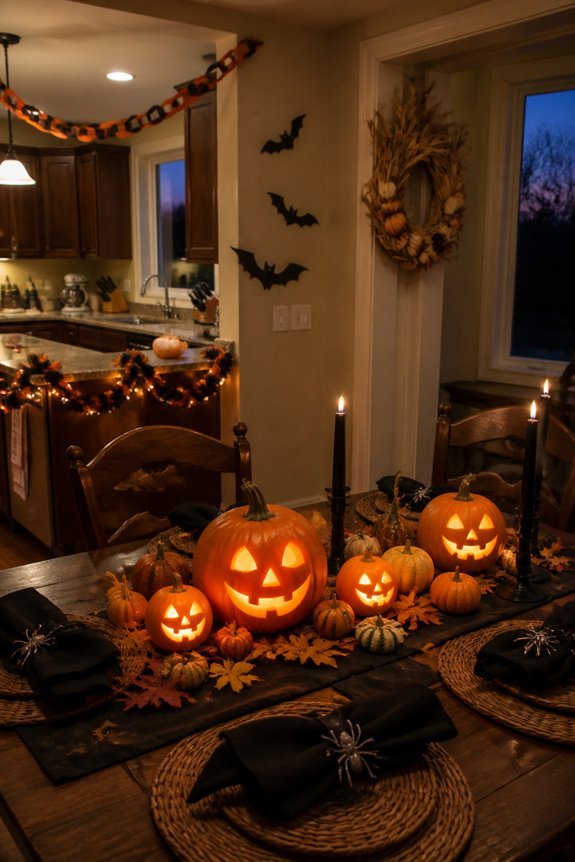
Since kitchens and dining rooms serve as gathering spaces during Halloween events, they require decorations that balance atmosphere with functionality. Black tablecloths, orange centerpieces, and artificial spider webs work effectively without obstructing movement or food preparation.
Plastic skulls, candles, and themed serving dishes add visual interest. Wall projections displaying bats or shadows create ambient effects. These additions maintain practical use while establishing appropriate seasonal aesthetics for entertaining guests. Consider swapping kitchen dish towels for Halloween-themed designs featuring spooky patterns or autumn colors to instantly transform the space with minimal effort.
Bathroom Horror Touches That Won’t Disappoint
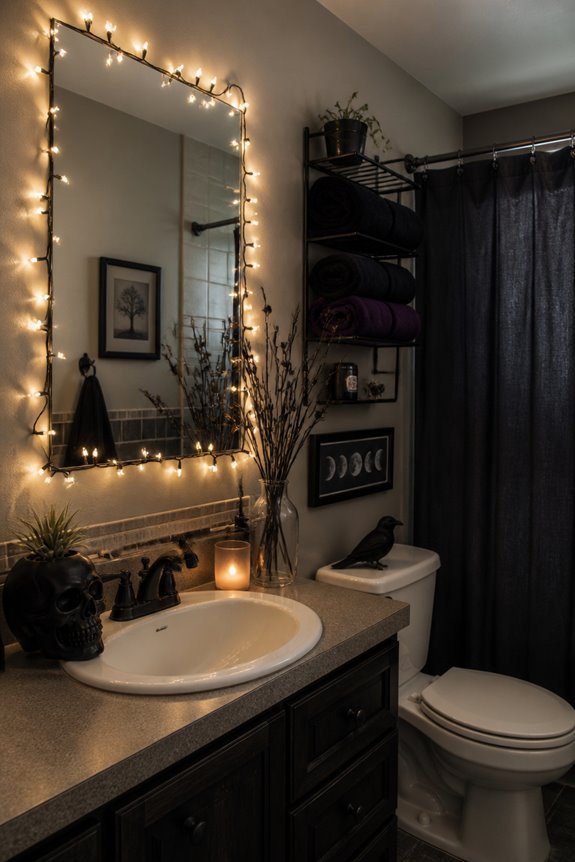
Bathrooms present a contained space where Halloween decorations can achieve notable impact without requiring extensive modifications. Black shower curtains with skeleton prints, fake spiders in corners, and orange lighting create an unsettling atmosphere.
Temporary window clings depicting zombies or ghosts add visual interest. Placing battery-operated candles on shelves provides ambient lighting. Layered lighting around the mirror can amplify the eerie glow while avoiding harsh shadows that break the spooky spell. These additions transform the bathroom into a functional yet decorated space.
Basement Dungeon Setups
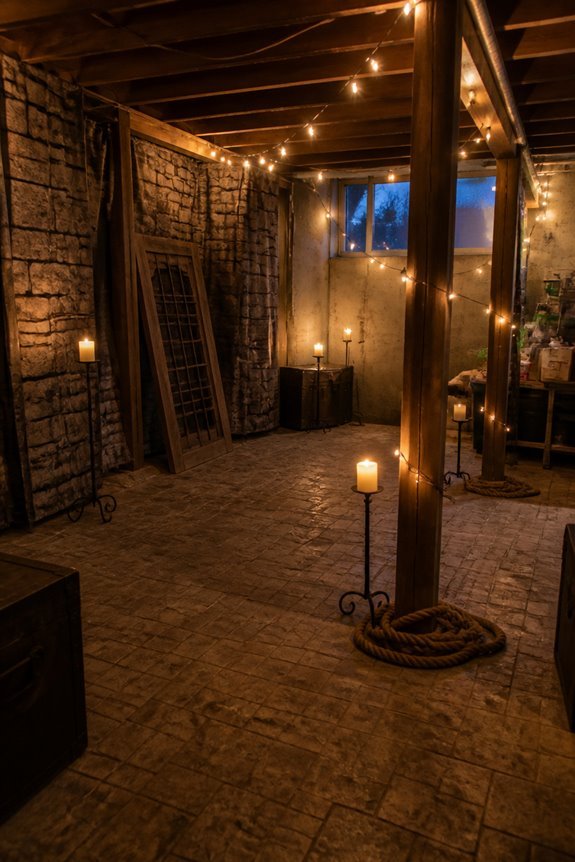
Basement spaces provide ideal environments for creating immersive Halloween dungeons, as they naturally lack natural light and offer larger areas for decoration. Stone-textured wall panels, chains, and iron cage props establish authenticity. Dim lighting through colored bulbs or candles enhances the atmosphere. Fog machines, skeletal remains, and torture device replicas complete the effect. Visitors navigate through connected rooms, each featuring distinct dungeon elements and themed props. Since basements often struggle with moisture control, incorporating dehumidifiers ensures your dungeon props stay dry and your fog effects remain atmospheric rather than clammy.
Staircase and Hallway Scares
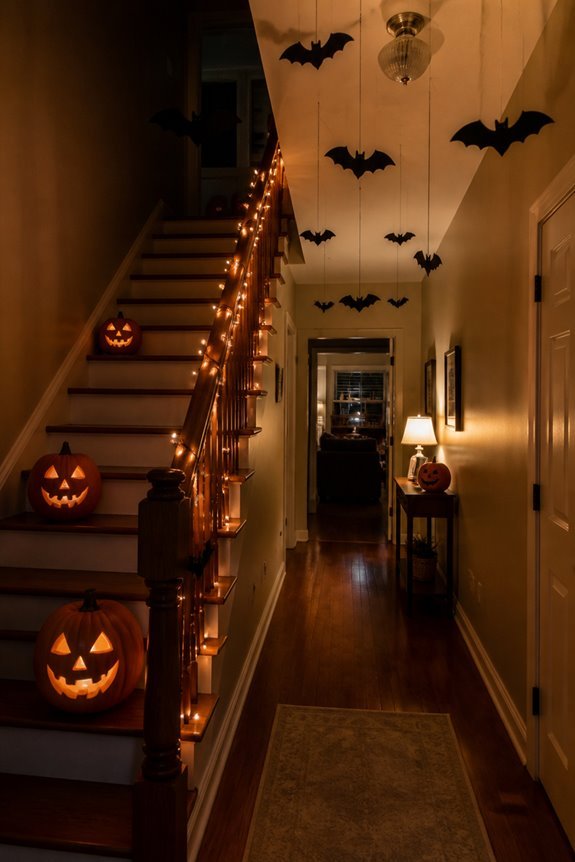
While basement dungeons create immersive environments for extended exploration, staircases and hallways serve as high-traffic pathways where concentrated scares prove most effective. Motion-activated lights, strategically placed animatronics, and hanging decorations create startling moments. Narrow spaces amplify psychological tension.
Consider fog machines, projection mapping, and sudden sound effects. Positioning decorations at eye level maximizes impact. These confined areas facilitate repeated scares for multiple visitors throughout Halloween night.
Project Horror Scenes on Walls and Windows
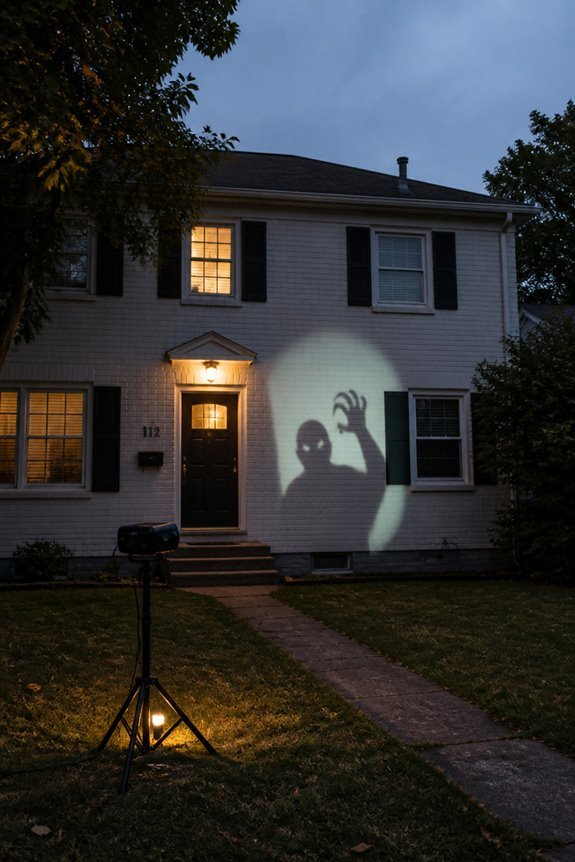
Projection mapping transforms flat surfaces into dynamic horror displays without requiring permanent alterations to a home’s interior. Projectors cast animated scenes, including haunted mansions, creeping shadows, and flying creatures, onto walls and windows. Popular options include fog effects, zombie animations, and bleeding wall projections.
Setup requires a projector, screen surface, and compatible media files. This method provides customizable, reusable decorations for multiple rooms.
Float Ghosts From Ceilings and Corners
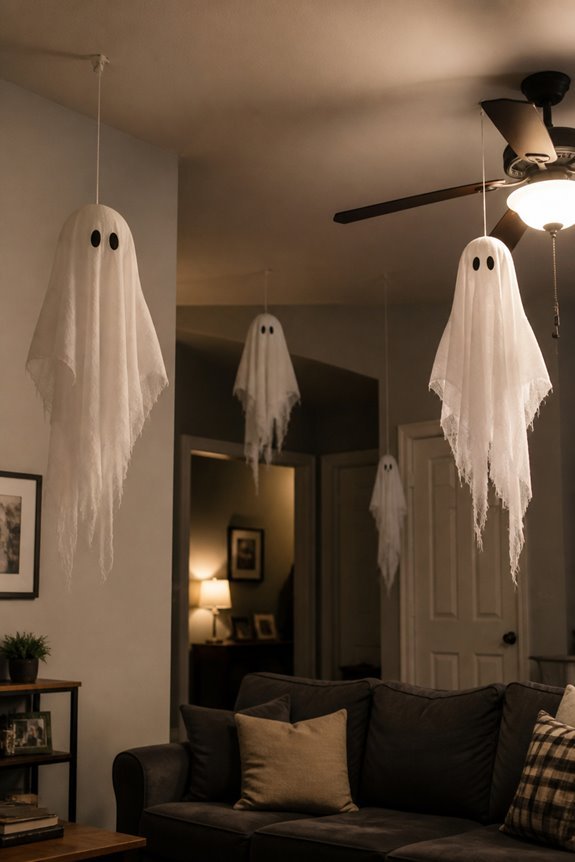
Floating ghost decorations commonly hang from ceiling fixtures, doorways, and upper wall corners to create eerie vertical displays throughout indoor spaces. White cloth stretched over balloons or foam forms produces traditional ghost shapes. Fishing line secures these figures invisibly to fixtures.
Varying heights and positions throughout rooms, such as hallways and stairwells, establishes dimensional depth. LED lights inside enhance visibility in darker areas.
Layer Lighting Effects Across All Rooms
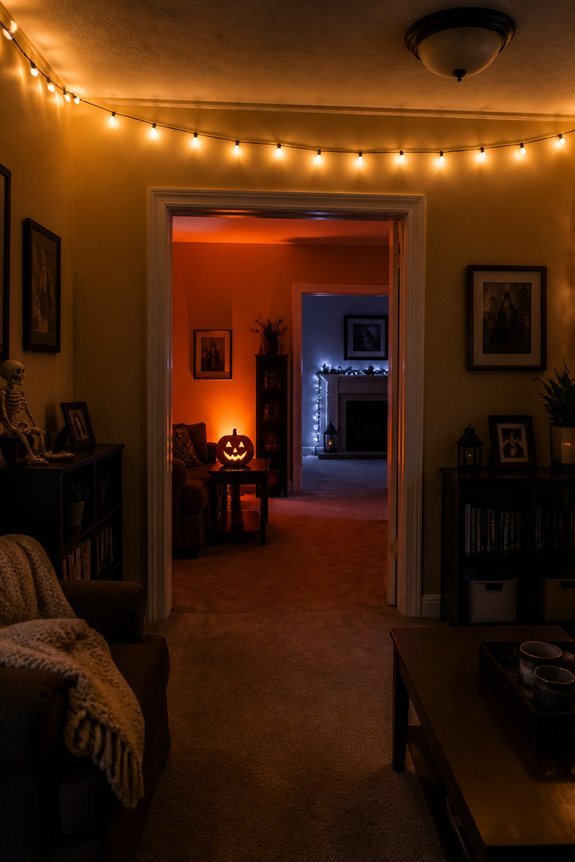
Layering lighting effects creates atmosphere throughout multiple rooms by combining different light sources, colors, and intensities. Orange string lights, purple LED bulbs, and flickering candles work together effectively.
Placing lights in entryways, hallways, and living spaces guides visitors through the home. Dimmer switches control brightness levels, allowing adjustments for different areas and effects throughout the evening. This approach mirrors layered lighting principles that blend ambient, task, and accent sources for adjustable brightness as needed.
Display Gravestones and Skeletons Indoors
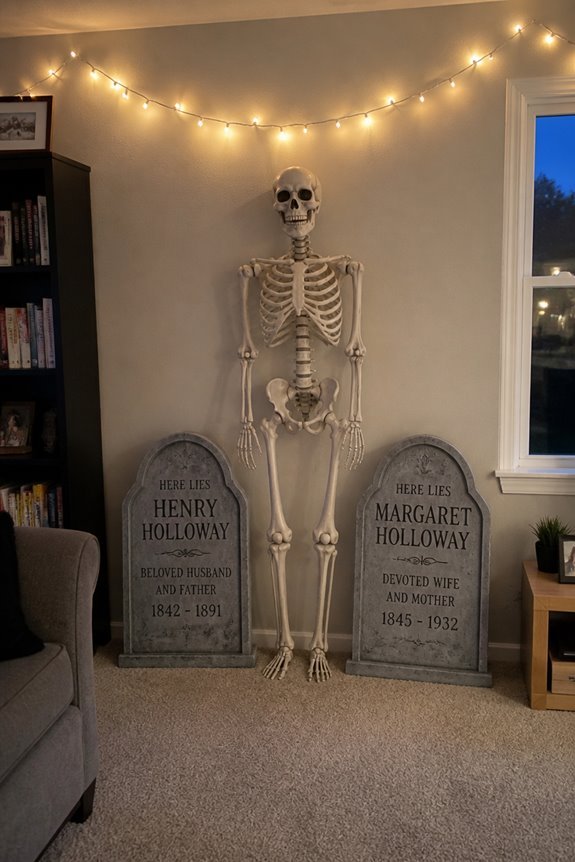
While lighting establishes mood and guides movement through indoor spaces, physical props like gravestones and skeletons provide focal points that anchor Halloween themes in specific rooms.
Homeowners can position foam gravestones in entryways or living rooms, arrange skeleton figures in corners or doorways, and place smaller skull decorations on shelves and tables. These props create visual interest and reinforce thematic consistency throughout the home. Similar to how garland and ribbon create visual flow in Christmas entryway decor, strategic placement of Halloween props can guide the eye through your haunted home.
Drape Cobwebs and Place Spiders Strategically
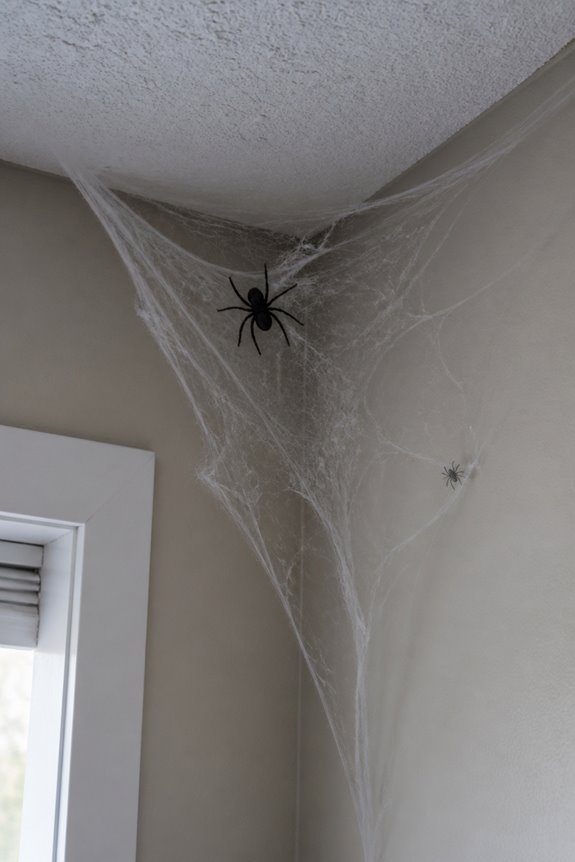
Cobwebs and spiders, when positioned throughout a home, create an atmosphere of abandonment and decay that complements other Halloween elements. Drape synthetic webs across corners, doorways, and furniture edges. Place plastic spiders on webs, windowsills, and shelves.
Consider using glow-in-the-dark spiders for nighttime visibility. Layer multiple webs in areas like bathrooms and basements for enhanced effect. For a captivating display that encourages guests to stop and admire, vary the density and placement of webs to create depth and dimension throughout different rooms.
Position Monsters for Maximum Scares
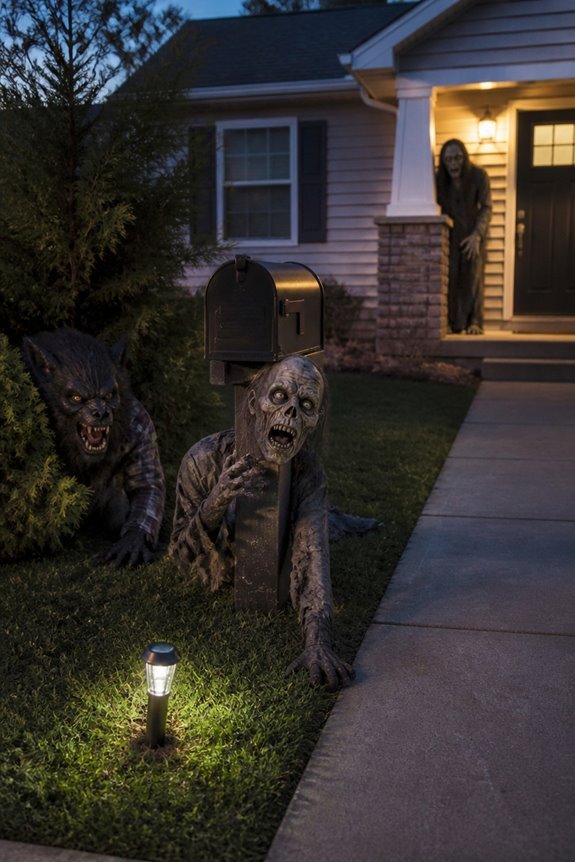
To maximize the startling effect of Halloween decorations, monster figures should be positioned in unexpected locations throughout the home. Doorways, dark hallways, and behind furniture create effective surprise points. Placing monsters at eye level near entryways increases impact.
Attic corners, basement stairs, and closet shelves work well for secondary scares. Varying heights and angles throughout rooms maintains tension and prevents predictability among visitors. For smaller spaces, applying strategic planning principles ensures each monster placement delivers maximum fright without overwhelming the room’s flow.
Decorate Mantels With Themed Centerpieces
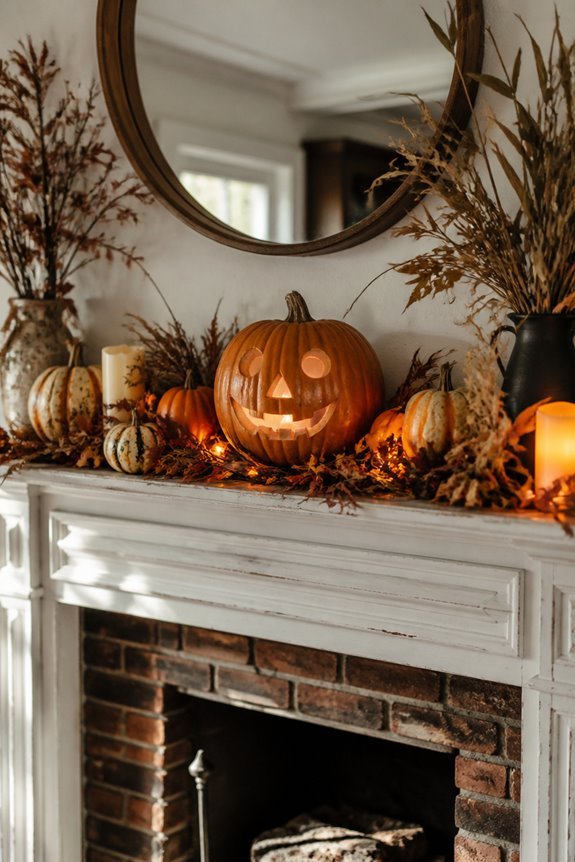
Mantels serve as natural focal points for Halloween displays, making them ideal locations for themed centerpieces that coordinate with overall home decoration plans. Homeowners can arrange black candles, artificial ravens, and orange pumpkins along the mantel surface.
Adding string lights, fake cobwebs, or small skeleton figurines creates cohesive scenes. Layering items at varying heights produces visual interest and draws attention upward, enhancing the room’s overall aesthetic impact.
Add Spooky Soundtracks and Scents
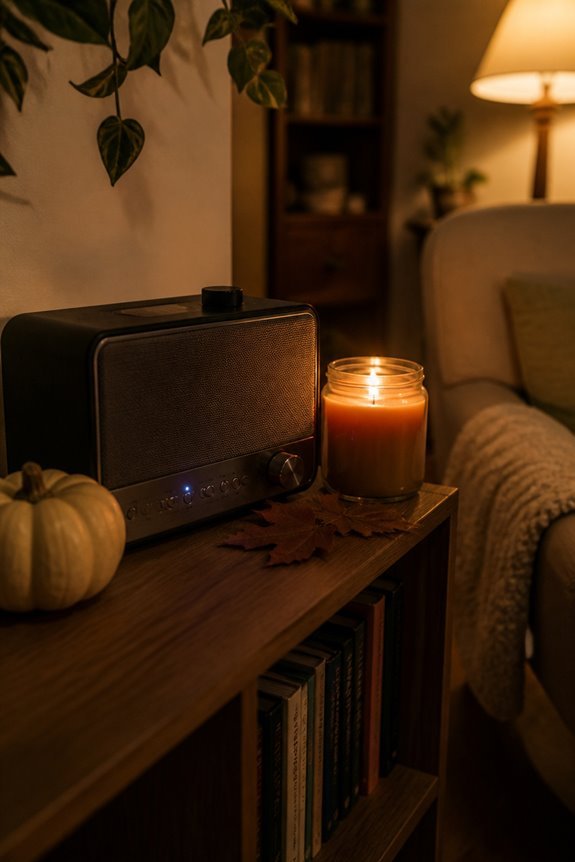
Beyond visual elements, audio and olfactory components enhance the Halloween atmosphere throughout a home. Homeowners can play ambient horror soundtracks, creaking doors, or eerie music in background areas.
Simultaneously, scented candles, diffusers, or simulated fog machines releasing autumn fragrances like cinnamon, pumpkin spice, or vanilla create multisensory experiences. These combined elements engage visitors’ senses, establishing immersive Halloween environments across living spaces.
Save Money With DIY Household Hacks
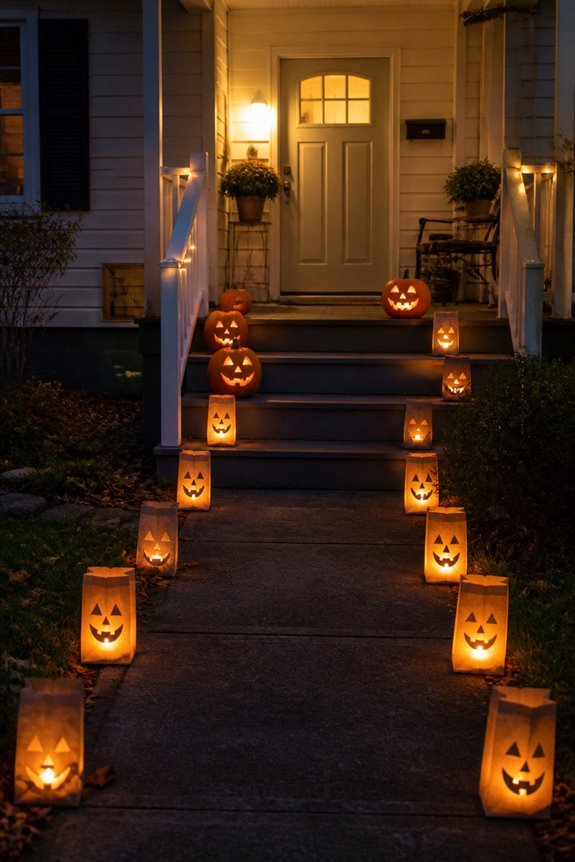
Creating Halloween decorations from household items reduces expenses while maintaining visual impact. Old sheets become ghosts, black markers create facial features, and white pillowcases transform into decorative elements. Cardboard boxes construct tombstones, painted gray or black. Mason jars hold candles for ambient lighting.
Newspaper stuffed into clothing forms scarecrows. Brown paper bags become luminarias with cutout designs. These approaches eliminate purchasing commercial decorations while producing effective results.
Frequently Asked Questions
How Far in Advance Should I Start Planning and Purchasing Halloween Decorations?
One should begin shopping for Halloween decorations in late August or early September to secure the best selection and prices. Starting two months in advance allows adequate time for planning, purchasing, and organizing supplies before the holiday arrives.
What’s the Best Way to Store Halloween Decorations After the Season Ends?
One often assumes cardboard boxes suffice for decoration storage; however, research reveals that sealed plastic containers with clear labels preserve items better, preventing moisture damage and pest infiltration. Organizing by room guarantees efficient setup next season.
Are There Pet-Safe Halloween Decoration Options for Homes With Animals?
Pet-safe Halloween decoration options exist for households with animals. One should select non-toxic materials, avoid small choking hazards, and choose decorations without sharp edges. Soft fabric decorations, LED lights, and pet-friendly artificial plants prove excellent alternatives to potentially harmful traditional options.
How Can I Make Halloween Decorations Work in Rental Apartments or Homes?
Renters can craft compelling, colorful displays using removable, damage-free solutions. Adhesive hooks, fabric drapes, and battery-powered lights require no permanent installation. Command strips, tape, and portable props transform spaces temporarily, ensuring landlords remain satisfied while maintaining festive flair throughout rental residences.
What Budget Should I Allocate for a Fully Decorated Haunted House?
One should expect to invest between $500 and $3,000 for all-encompassing haunted house decoration, depending on scale and quality. Budget-conscious decorators might spend $500-$1,000, while elaborate productions requiring professional-grade effects typically exceed $2,000-$3,000.
Conclusion
A fully decorated haunted house requires strategic planning across multiple spaces. Combining fog machines, projections, animatronics, and themed textiles creates an immersive environment. Entryways, living rooms, bedrooms, and basements each serve specific purposes in the overall experience. Can layering cobwebs, adjusting lighting, and positioning monsters throughout transform an ordinary home into an effective haunted attraction? Budget-friendly DIY elements, sound design, and scent amplify the effect without requiring expensive purchases.