


A boho canopy has a way of framing the “I do” moment like nothing else can. Whether crafted from weathered wood trailing with roses or a simple metal arch swathed in whisper-thin fabric, it grounds the entire ceremony space instantly.
Creative couples make these personal in ways that go far beyond a standard arch. Old ladders become rustic backdrops, painted pallets transform into budget-friendly showstoppers, and tipi frames lend that effortless festival vibe.
Dreamcatchers woven with fresh greenery add a layer of texture that few other elements can match.
Venue quirks and weather deserve real consideration before falling hard for one style, since some canopies laugh off wind while others need serious anchoring.
The right choice ultimately comes down to what feels authentically true to the couple exchanging vows beneath it.
A Few Things Worth Knowing First
Venue conditions should guide the canopy choice more than aesthetics alone. Open, windy spaces favor sturdier frames and secured fabric, while sheltered garden settings allow more delicate, flowing designs to shine.
Budget doesn’t have to limit the final look. A simple PVC or wooden frame layered with the right fabric and greenery can read just as luxe as an expensive custom structure.
Weight and wind matter more than most couples expect. Heavier elements like macramé, moss, or florals need reinforced anchoring, especially for outdoor ceremonies exposed to the elements.
15 Boho Wedding Canopy Ideas
Each idea below brings its own texture to the ceremony space, whether through natural wood, flowing fabric, or layered botanicals.
Some of these styles come together with a weekend of DIY effort, while others call for professional florists or rental companies to execute well.
Work through the list below and picture which combination feels right for the ceremony being planned.
Wooden Frame Canopy With Live Greenery and Vines
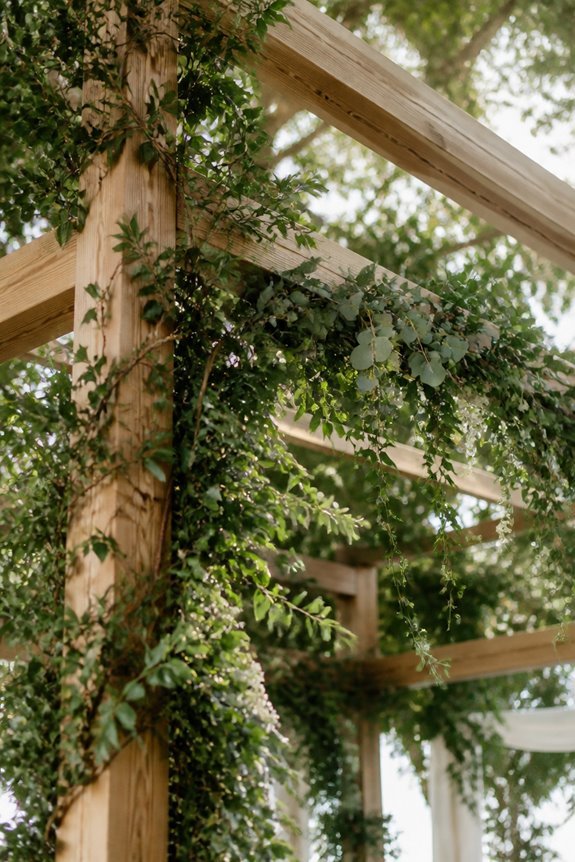
A wooden frame canopy forms the structural foundation for this boho wedding style, combining rustic appeal with natural elements. Couples typically select wood types like birch, pine, or reclaimed timber, which provide durability and aesthetic warmth. Live greenery and vines wrap around the frame, including eucalyptus, ivy, and jasmine varieties. These plants create layered texture and soften the canopy’s geometric lines.
The arrangement requires securing vines with floral wire or natural twine at intervals. Greenery placement focuses on corners, sides, and overhead areas for balanced coverage. Fresh flowers, such as garden roses or peonies, intersperse throughout the foliage.
This combination establishes an intimate ceremony backdrop while maintaining an organic, undone appearance typical of boho aesthetics. The natural materials gradually shift throughout the day, creating subtle visual variations.
Also read: 18 Boho Canopy Bed Ideas for a Relaxed Bedroom
Boho Metal Frame Softened With Flowing Fabrics
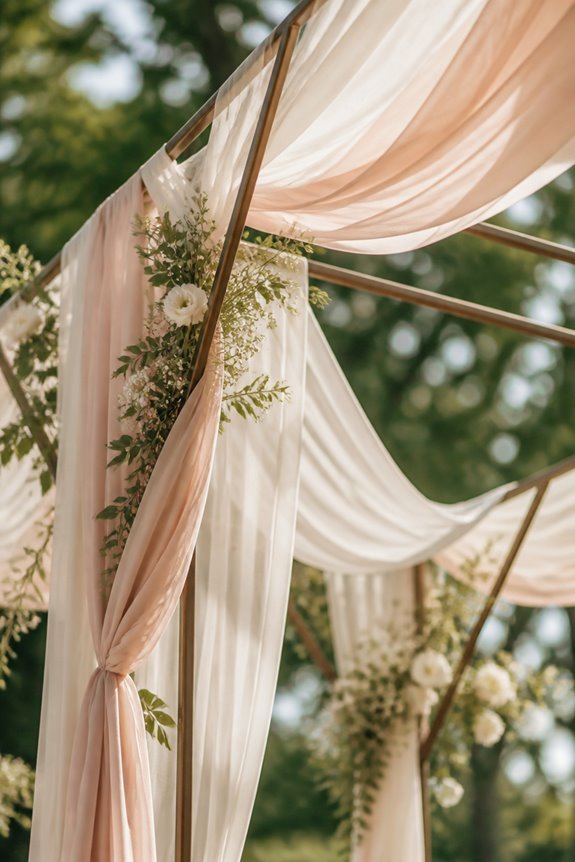
Metal frame canopies offer an alternative to wooden structures, providing clean lines and modern geometry while still accommodating boho design elements. These frames, typically constructed from steel or aluminum, create a sturdy foundation for layered fabrics and decorative draping.
Flowing materials like chiffon, gauze, and linen soften the industrial appearance of metal frameworks. Suspended fabrics in cream, blush, or ivory tones drape from the frame’s top and sides, creating movement and visual interest. Sheer overlays allow light to filter through, establishing an ethereal atmosphere.
Designers often layer multiple fabric types for depth and texture. Metal frames support heavier fabric loads compared to some alternatives, enabling abundant draping. This combination balances modern structural elements with romantic, flowing aesthetics typical of boho style.
Natural Branch Archway for Minimalist Boho
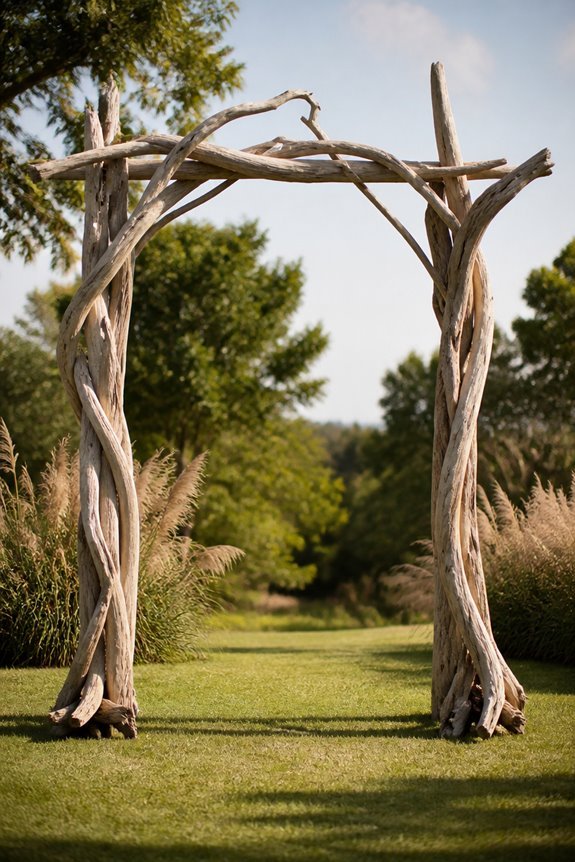
Branches and twigs offer a pared-down approach to boho canopy design, eliminating unnecessary ornamentation while maintaining organic aesthetics. This style suits couples preferring understated elegance over elaborate decoration.
Natural wood archways require minimal additional elements. Gatherers can source sturdy branches from forests or purchase pre-arranged structures from event suppliers. Birch branches, willow limbs, and driftwood serve as reliable options for framework construction.
The minimalist approach allows focal points to emerge naturally. Draping light fabrics such as cheesecloth or linen across the frame adds softness without visual clutter. String lights woven through branches provide ambient illumination during evening ceremonies.
Plants complement branch archways effectively. Potted greenery positioned at the base, climbing ivy trained along the structure, or hanging eucalyptus clusters enhance the natural aesthetic while requiring minimal maintenance during setup and use.
Repurposed Ladder or Pallet Frame Canopy
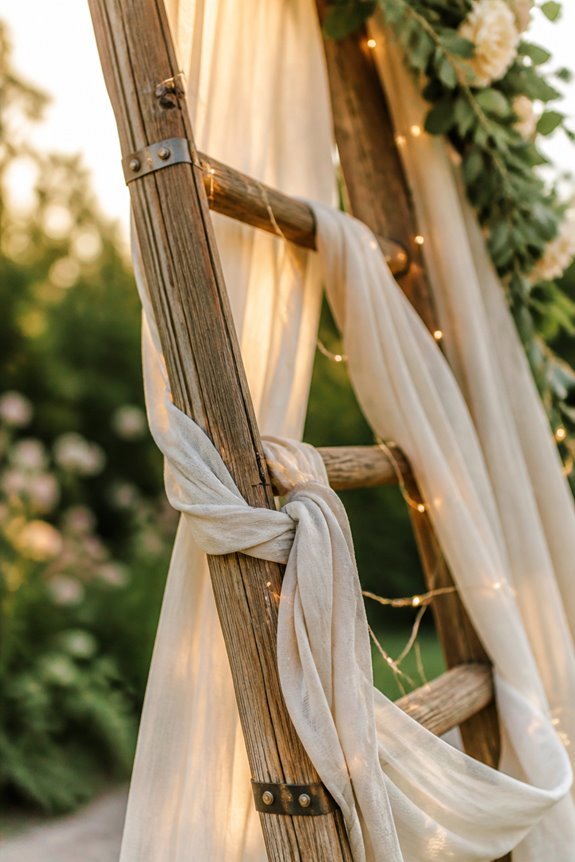
Repurposed household items like wooden ladders and shipping pallets provide budget-friendly frameworks for boho wedding canopies. These materials create sturdy structures that require minimal modification before use.
Wooden ladders, when positioned at angles or arranged in A-frame configurations, support fabric draping effectively. Shipping pallets can be stacked, reinforced with cross-beams, and fitted with wheels for mobility. Both options accommodate fabric attachment through multiple points along their frames.
Decorative elements such as greenery, string lights, and flowing textiles enhance the aesthetic appeal. Eucalyptus garlands, dried pampas grass, and macramé hangings coordinate well with ladder or pallet structures.
The durability of these materials allows reuse for future events or repurposing in home settings afterward. This approach reduces waste while maintaining authentic bohemian style.
Tipi-Inspired Canopy for Full Coverage
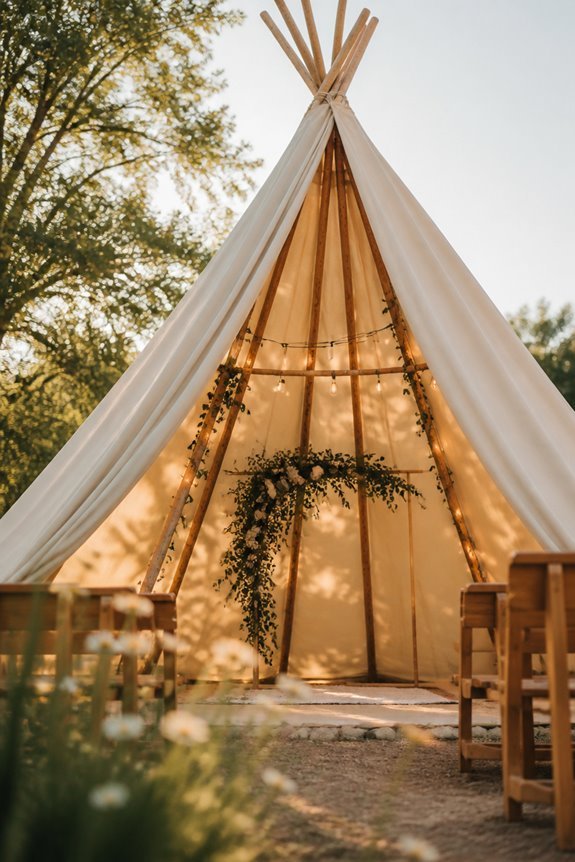
For couples seeking complete weather protection and a more enclosed atmosphere, tipi-inspired canopies offer an alternative to open-frame structures. These cone-shaped designs feature fabric panels stretched across tall wooden or metal poles, creating a unified shelter from rain and wind. The fabric typically consists of canvas, linen, or polyester blends in neutral tones like cream, beige, or white.
Tipi canopies range from 20 to 40 feet in diameter, accommodating various guest counts and ceremony layouts. Installation requires level ground, proper anchoring, and professional setup assistance. Interior space allows for seating arrangements, an altar placement, and comfortable movement.
The enclosed design naturally creates intimate acoustics, reducing the need for amplified sound systems. These structures work well for spring or autumn weddings when weather unpredictability is a concern.
Macramé Canopy With Cascading Fabric Draping
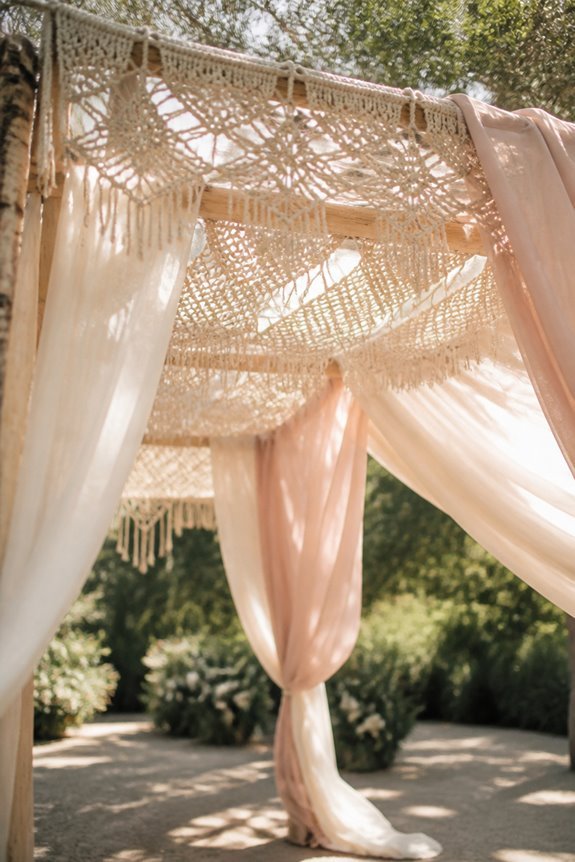
Macramé canopies create a boho aesthetic through hand-knotted rope work, typically crafted from cotton or jute cord in cream, tan, or natural fiber tones. Cascading fabric draping enhances the structure, adding movement and softness to the overhead framework.
The combination involves suspending lightweight fabrics, such as gauze, muslin, or raw silk, from the macramé knots. Ivory, blush, and champagne colors complement the natural rope tones effectively. The fabric should hang loosely, creating gentle waves rather than rigid panels.
This design suits garden and outdoor venues where wind movement showcases the flowing textiles. Installation requires securing the macramé base to sturdy overhead supports or trees, then attaching fabric lengths at intervals. The result provides partial shade while maintaining the bohemian atmosphere through layered textures and organic materials.
Sheer Curtains With Twinkling String Lights
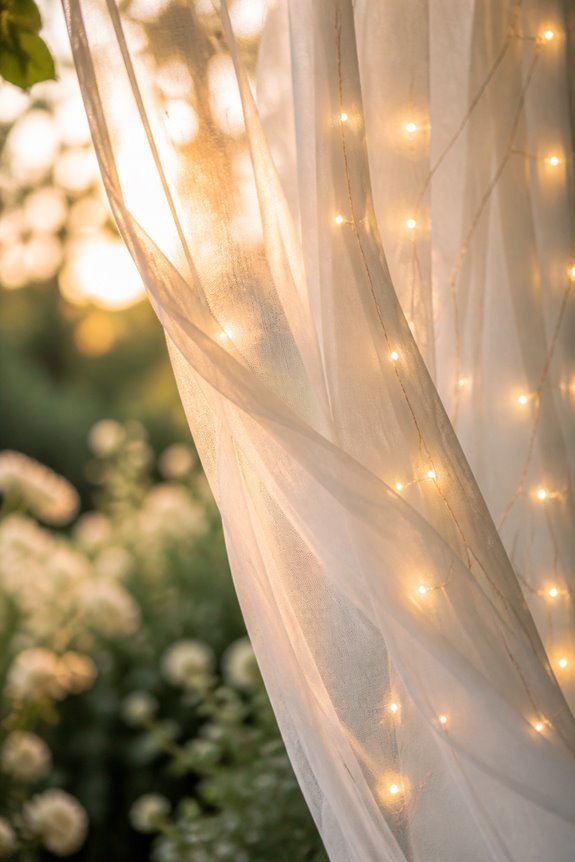
Sheer curtains paired with string lights offer a straightforward approach to creating romantic overhead ambiance at boho weddings. The combination uses lightweight fabric suspended from a frame or tree branches, then draped with warm white or soft amber lights throughout. This setup produces gentle illumination while maintaining the airy aesthetic common in bohemian design.
Practical considerations include choosing durable, weather-resistant fabrics like polyester or cotton blends. Battery-operated lights reduce electrical complexity and safety hazards. Spacing lights approximately 12 inches apart creates adequate coverage without clustering.
Popular configurations feature the sheer material forming a canopy shape, with lights woven through the fabric or suspended separately below. Draping the curtains asymmetrically adds visual interest and movement. This method works effectively for both ground-level and elevated installations, accommodating various venue sizes and layouts.
Vintage Rugs and Tapestries as Your Backdrop
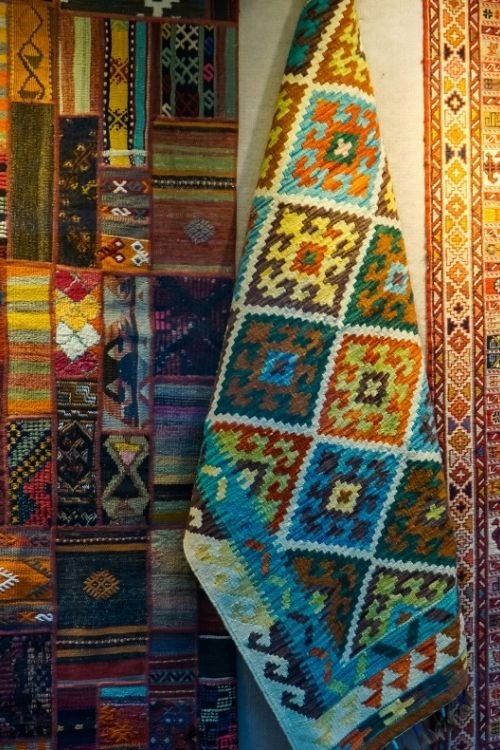
Vintage rugs and tapestries offer a textured, layered alternative to lightweight fabrics and string lights for boho wedding backdrops. These textiles provide depth, color, and visual interest through their intricate patterns, weaves, and age-worn appearance.
Kilim rugs, Persian textiles, and macramé wall hangings work effectively as canopy materials, creating focal points without requiring additional decoration. They can be hung from wooden frames, draped over PVC pipes, or secured to existing structures using rope or clips. The fabrics’ natural imperfections and fading enhance the bohemian aesthetic.
Sourcing vintage pieces from antique markets, thrift stores, or online retailers offers cost-effective options. Multiple tapestries layered together create dimension and richness, accommodating various color palettes and design preferences while maintaining authentic boho styling.
Boho Textiles and Peacock Feathers
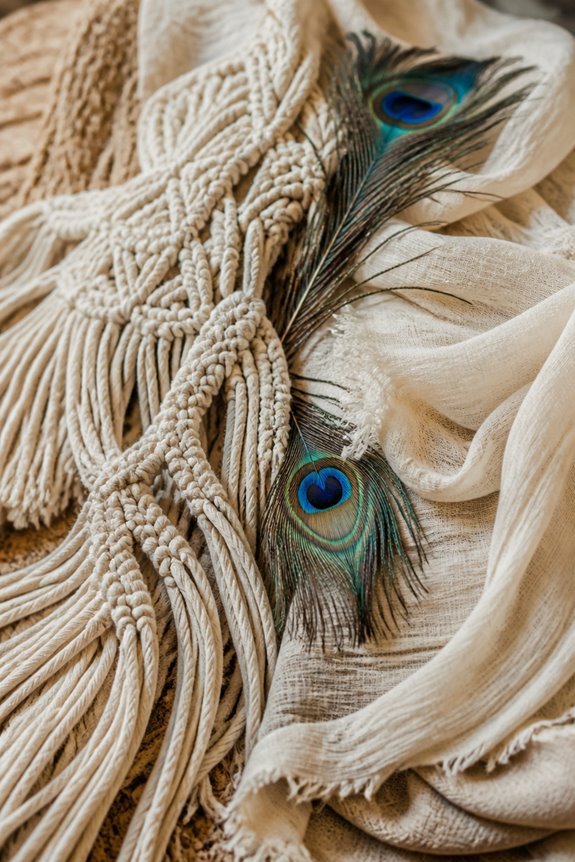
When combined with peacock feathers, boho textiles create layered canopy designs with visual texture and movement. Couples can drape lightweight fabrics like cotton muslin, linen, and silk chiffon across wooden or metal frames. Peacock feathers add iridescent blue, green, and bronze tones to the structure.
Hanging techniques include securing textiles with twine, wire, or fabric clips. Feathers can be attached to fabric panels, woven into garland strands, or positioned at canopy corners. Macramé accents complement both materials effectively.
Color combinations work well: cream textiles with teal feathers, ivory fabrics with emerald accents, or blush tones with bronze feathers. Wind and weather considerations require secured fastening methods and sturdy support poles. This approach creates an ornate focal point suitable for outdoor ceremonies in various seasonal settings.
Flower Wall Canopy With Mixed Blooms
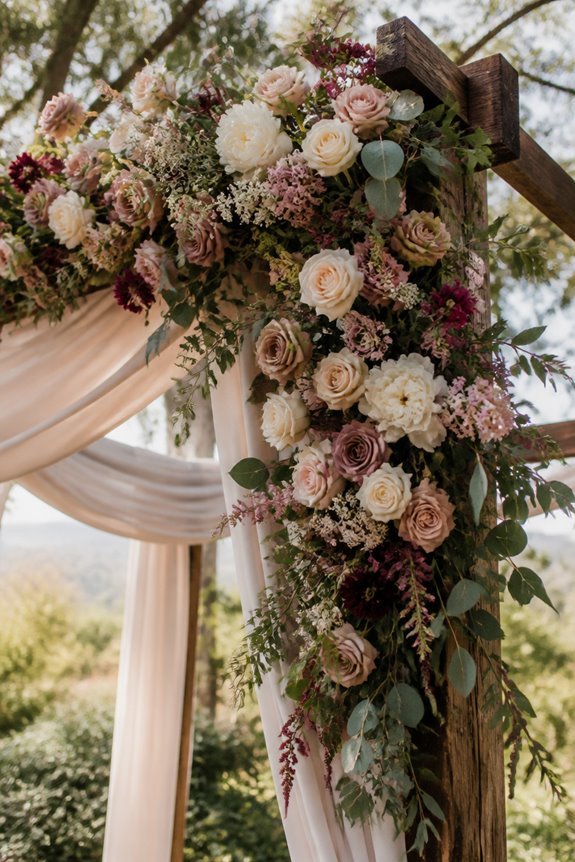
A flower wall canopy uses blooms in various colors, sizes, and types to create a dense, ornamental backdrop for wedding ceremonies. This structure typically incorporates roses, peonies, hydrangeas, and eucalyptus branches arranged on a wooden or metal frame. The mixed blooms provide visual depth and texture through layered placement.
Designers often select complementary color palettes such as blush and cream, or jewel tones like burgundy and navy. Flowers positioned at varying heights create dimension and visual interest. Fresh blooms require daily misting and proper hydration systems to maintain appearance throughout the event.
The canopy framework can measure eight to twelve feet wide and seven to ten feet tall. Mixed bloom arrangements work well for both intimate ceremonies and larger celebrations, offering flexibility in design customization.
Suspended Florals and Hanging Botanicals
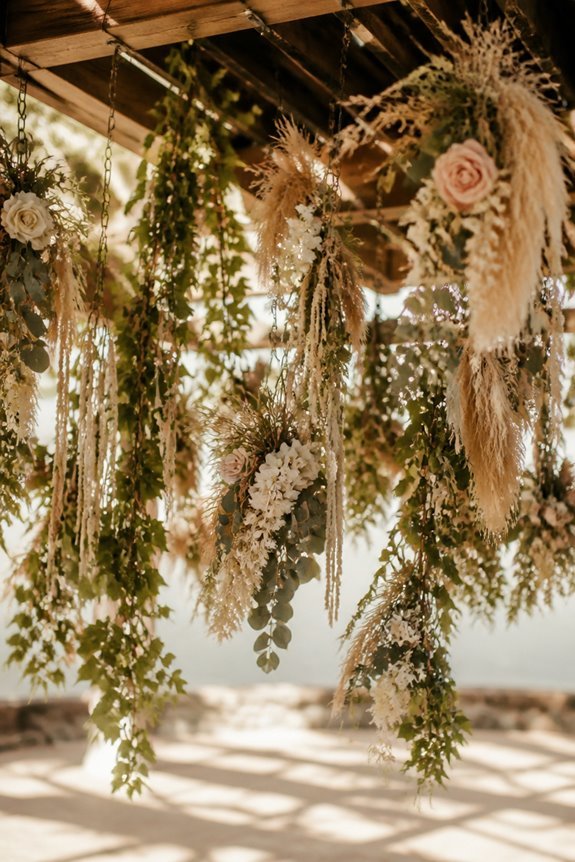
Suspended florals and hanging botanicals create overhead focal points by anchoring flowers, greenery, and branches from above the ceremony space. This approach uses existing structures like trees, pergolas, or installed frames to support floral installations.
Common options include hanging eucalyptus garlands, which drape naturally and require minimal arrangement. Pampas grass bundles add texture and movement when suspended from above. Wisteria vines, either fresh or artificial, create cascading effects over the canopy structure.
Hanging arrangements work best when distributed unevenly across the space, mimicking natural growth patterns. Metal chains, fishing line, or floral wire secure materials to overhead beams.
Weight distribution matters considerably to guarantee safety and structural integrity throughout the ceremony. This style complements boho aesthetics while providing practical shade and visual interest simultaneously.
Oversized Paper Flowers for Maximum Impact
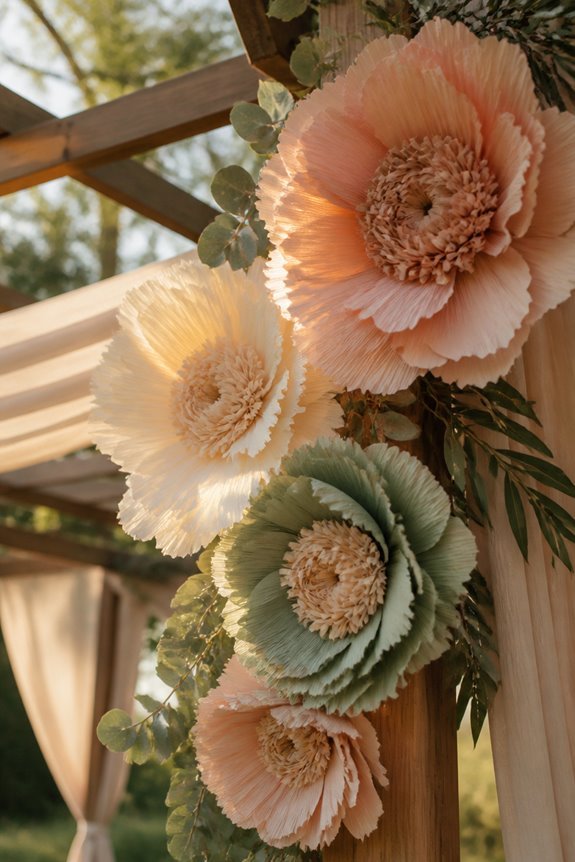
Because paper flowers can be scaled to dramatic proportions, they serve as striking focal points within boho wedding canopies. Large blooms crafted from tissue paper, cardstock, or crepe paper create visual interest without the expense of fresh florals. Peonies, dahlias, and roses work well when enlarged to two to four feet in diameter. These flowers attach to canopy frames using floral wire, fishing line, or adhesive dots.
Paper flowers offer practical advantages: they withstand outdoor conditions better than fresh alternatives, require no water maintenance, and allow advance preparation. Couples can coordinate colors with their wedding palette precisely. White, blush, terracotta, and sage options complement boho aesthetics effectively. Combining oversized blooms with smaller filler flowers and greenery creates balanced, layered canopy designs that photograph well.
Dreamcatcher Canopy With Layered Textures
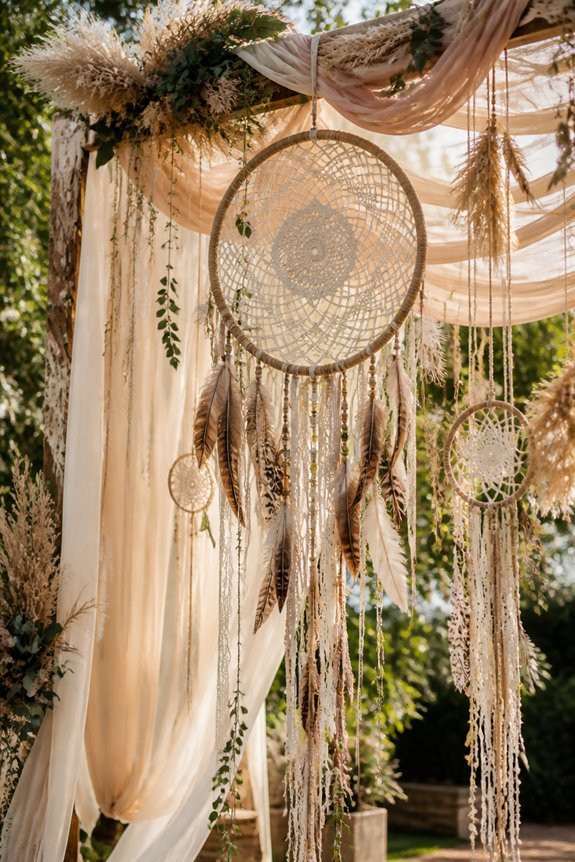
Dreamcatchers bring textural variety to boho canopy designs, moving beyond the flat visual quality of paper flowers alone. Layered dreamcatchers create depth, dimension, and visual interest through multiple hanging elements.
Designers combine large central hoops with smaller secondary rings, macramé webbing, feathers, and beaded strands. Fabric strips, leather cords, and jute rope add tactile contrast. Natural materials like eucalyptus branches, dried grasses, and wood beads integrate with woven elements.
Hanging dreamcatchers at varying heights produces a cascading effect throughout the canopy structure. Different sized hoops range from 12 inches to 36 inches in diameter. Neutral tones, cream, tan, and soft brown shades complement outdoor settings.
This approach maintains boho aesthetics while offering substantial visual complexity and sophisticated layering that engages multiple senses.
Wood Slice Canopy Base With Living Moss
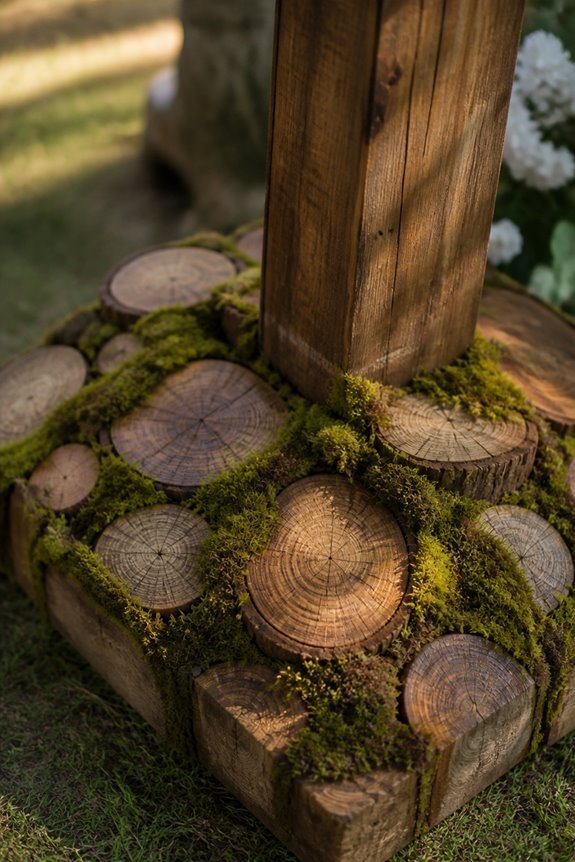
Natural wood elements provide a sturdy, organic foundation for boho wedding canopies, particularly when combined with living moss accents. Wood slices, typically ranging from 12 to 24 inches in diameter, create a rustic base structure that supports fabric draping and decorative materials.
Living moss adds texture, color, and botanical interest to the canopy design. Preserved moss varieties require minimal maintenance compared to fresh moss options. Designers can arrange moss around wooden beams, along support posts, or in clusters across horizontal surfaces.
The combination serves practical purposes beyond aesthetics. Wood provides stability and load-bearing capacity, while moss insulation offers mild temperature regulation.
This approach suits outdoor venues with natural landscapes, garden settings, and woodland locations.
Wood slice bases typically cost between $200 and $600, depending on size and wood type selected.
Budget Canopies That Look Luxe
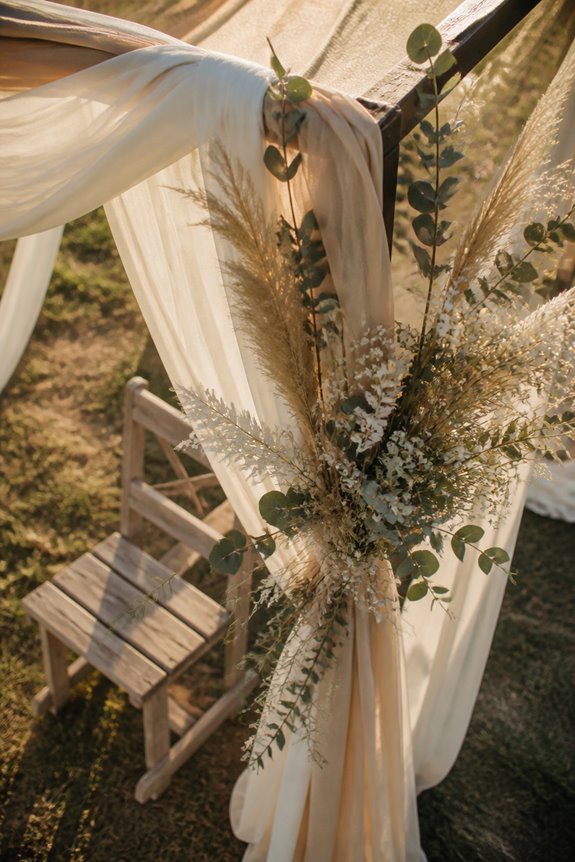
Creating an elegant wedding canopy requires strategic choices about materials, fabrics, and design elements rather than excessive spending. Budget-conscious couples can achieve luxe results by selecting affordable base structures, then layering inexpensive embellishments strategically.
PVC pipe frames, metal conduit, or wooden dowels serve as economical foundations. Sheer fabrics like tulle, muslin, or lightweight cotton draping cost considerably less than silk, yet create sophisticated visual impact when arranged thoughtfully. Adding greenery, string lights, or paper flowers enhances perceived value without substantial expense.
Renting existing structures proves cheaper than purchasing new materials. Combining neutral tones with strategic accent pieces, such as a single statement floral arrangement or metallic accents, elevates the overall aesthetic. Simple geometric designs often appear more refined than overly ornate approaches.
Frequently Asked Questions
How Do I Secure a Boho Canopy Safely in Windy Outdoor Conditions?
Weighted bases, ground stakes, or sandbags placed at each corner make a real difference when wind becomes a factor.
Guy-lines anchored to the ground add another layer of stability, especially for taller or heavier canopy structures.
Choosing a professional-grade frame designed specifically for outdoor use gives extra peace of mind, particularly for venues known to get breezy.
What Is the Average Cost Range for Building a DIY Boho Wedding Canopy?
A DIY boho canopy typically lands somewhere between $200 and $800, with the final number depending heavily on materials chosen.
Basic wooden frames paired with simple fabric draping stay on the lower end of that range, keeping the project accessible for most budgets.
More elaborate designs incorporating macramé, fresh flowers, or premium textiles push costs higher, so it helps to decide early which elements matter most.
How Far in Advance Should I Book or Create My Ceremony Canopy?
Three to six months before the wedding date is the general sweet spot for booking or building a ceremony canopy.
That window allows enough time for proper planning, material sourcing, and construction without feeling rushed in the final weeks before the event.
Popular vendors and rental structures tend to book up fast, so earlier planning rarely hurts and often pays off.
Can a Boho Canopy Be Reused for Other Events After the Wedding?
Absolutely, a boho canopy can go on to serve plenty of other occasions beyond the wedding day itself.
Its versatile design fits naturally into engagements, anniversaries, garden parties, and other outdoor celebrations without needing major changes.
Proper storage and a bit of ongoing maintenance go a long way toward making that reuse possible for years to come.
What Permits or Venue Restrictions Apply to Installing Outdoor Wedding Canopies?
Local zoning laws and venue-specific restrictions are worth checking well before finalizing any canopy design.
Permits often come into play for larger structures, along with height limitations, wind load assessments, and fire safety compliance depending on the location.
Reaching out to the venue coordinator early clears up most of these details and prevents last-minute surprises closer to the wedding.
Conclusion
Choosing a boho wedding canopy really comes down to balancing natural materials, flowing fabric, and the small decorative touches that make a space feel personal.
Wooden frames, metal structures, branches, and repurposed items like ladders or pallets all serve as strong foundations, each bringing its own texture and story to the ceremony.
Fresh flowers, paper blooms, dreamcatchers, and living moss add the kind of visual interest that photographs beautifully and lingers in memory long after the day ends.
Budget-conscious couples shouldn’t feel boxed in either. Strategic fabric and lighting choices consistently prove that an elevated look doesn’t require an elevated price tag.
The best canopy design is ultimately the one that reflects the couple’s personal style while honoring the outdoor setting through organic, layered textures.
Which of these boho styles feels closest to the vision for your own ceremony? Share your thoughts in the comments below.