


Canopy beds carry a certain dreamy quality that plenty of people love, even when a full frame isn’t in the budget.
The good news is that no new frame is actually needed. A simple ceiling hook paired with lightweight fabric works surprising magic on any ordinary bed.
Sheer voile floats beautifully in smaller spaces, while linen adds a cozy, lived-in texture that suits larger rooms just as well.
Muslin sits right in the middle, offering something soft, affordable, and easy to drape without much fuss.
The real secret lives in the hardware. Cheap hooks sag over time, while quality ceiling mounts hold strong, and once that part is right, the fabric does the rest.
A Few Things Worth Knowing First
Hardware quality matters more than fabric choice in the long run. A beautiful sheer panel hung from a flimsy hook will sag within weeks, no matter how well it was draped initially.
Room size should guide fabric weight more than personal taste alone. Sheer, lightweight fabrics keep small rooms feeling open, while heavier textures like linen or velvet suit larger spaces better.
Anchor type needs to match the ceiling or wall material being used. A toggle bolt rated for drywall behaves very differently than one meant for a solid joist, so it’s worth confirming before drilling anything.
The Best Fabrics for a DIY Canopy Bed

Fabric choice plays a major role in how a DIY canopy bed looks and functions. Lightweight fabrics like sheer voile, chiffon, and muslin drape well and create an airy, soft appearance. Heavier options like velvet, linen, and cotton canvas add structure and a more formal look.
Sheer fabrics work best in small rooms, since they allow light to pass through without making the space feel smaller. Darker, heavier fabrics suit larger rooms and cooler climates.
Color and pattern also matter. Neutral tones like ivory, white, and soft gray blend easily with most bedroom styles. Bold patterns can overwhelm a small space.
Washability is another practical factor. Cotton and polyester blends are easier to clean than delicate silks or heavily textured weaves.
Also read: 14 Small Backyard Canopy Ideas for Tight Outdoor Spaces
Tools and Materials You’ll Actually Need
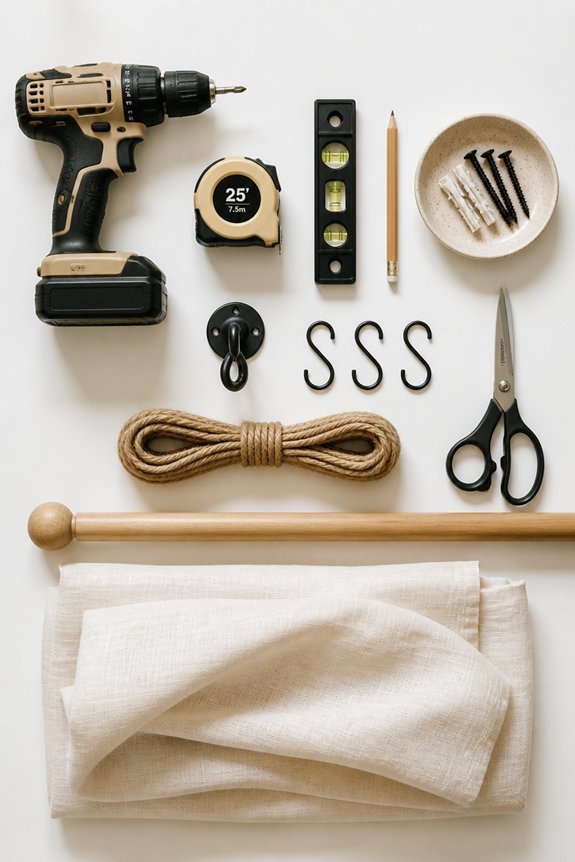
Building a canopy bed frame or hanging system requires a short list of tools and materials, most of which are available at any hardware or home goods store. Basic tools include a drill, a stud finder, a level, and a measuring tape. A hammer and screwdriver may also be necessary, depending on the chosen hanging method.
Key materials include ceiling hooks or curtain rod brackets, a tension or ceiling-mounted curtain rod, and sturdy anchor screws rated for overhead use. Toggle bolts work well for drywall installations without stud access. Fabric panels, sheer curtains, or a canopy kit provide the visual element. Command hooks offer a no-drill alternative for lighter fabric options.
Having all materials gathered before starting reduces interruptions and keeps the process efficient.
Ceiling-Mounted Hoops and Rings
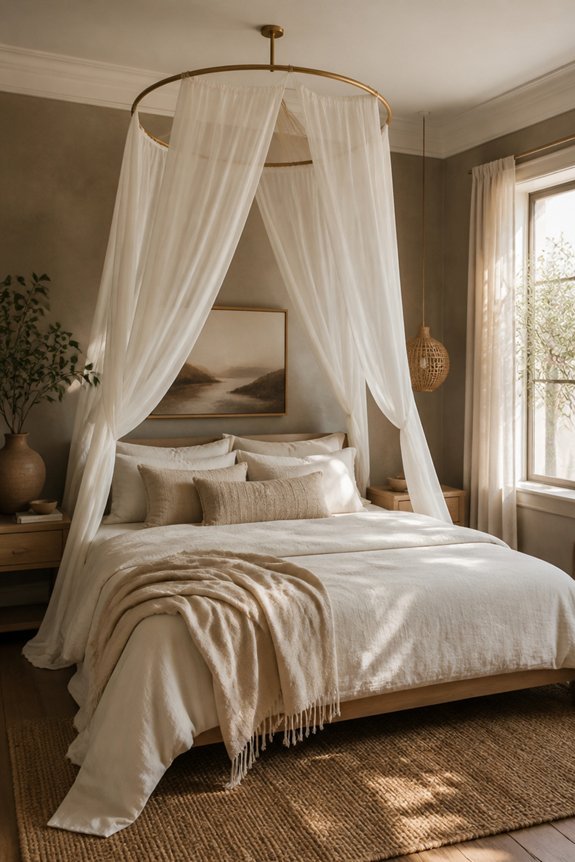
Simplicity defines the appeal of ceiling-mounted hoops and rings, which create a draped canopy effect without requiring a full bed frame. A single embroidery hoop, curtain ring, or decorative metal hoop is anchored to the ceiling directly above the bed’s center. Fabric panels, sheer curtains, or lightweight canopy fabric are then gathered through or around the hoop, falling down on all sides.
Common options include wooden macramé hoops, brass curtain rings, and purpose-built canopy ceiling hooks. The hoop should be secured into a ceiling joist or with a toggle bolt rated for the fabric’s weight. Diameter matters, as larger hoops create a wider drape spread. Most setups use a single anchor point, making installation manageable without specialized tools or extensive ceiling modifications.
How to Hang a Canopy Without a Bed Frame
Several methods exist for hanging a canopy without a bed frame, each relying on ceiling or wall anchors instead of structural bed hardware. A single ceiling hook centered above the mattress can support a gathered fabric panel or a sheer curtain draped in a tent shape.
Tension rods mounted between two walls work well in smaller rooms, holding lightweight fabric across the sleeping area. Wall-mounted curtain brackets, placed on opposite sides of the bed, create a similar effect with more stability.
Command hooks offer a damage-free option for renters, though weight limits apply. Swag hooks allow fabric to drape naturally from multiple anchor points, adding visual depth.
Each method requires matching the anchor type to the ceiling or wall material for safe installation.
Canopy Bed Styles That Work for Any Room Size
Many canopy bed styles can fit rooms of different sizes, from compact studio apartments to large primary bedrooms.
A minimalist frame with sheer panels works well in small spaces, because it adds visual height without crowding the floor area. Four-poster canopy frames suit larger rooms, where scale and proportion allow bolder designs.
For medium-sized rooms, a half-canopy mounted on the wall behind the headboard offers balance and structure. Crown canopies, which attach to the ceiling above the bed, take up minimal space and work across most room sizes.
Floating canopy panels hung from ceiling hooks also adapt easily to different layouts. Choosing lighter fabrics, such as linen, voile, or cotton gauze, keeps any style from feeling heavy, regardless of room size.
Keeping Your Canopy Bed Looking Neat and Polished
Once a canopy style is chosen and set up, keeping it looking neat becomes the next priority. Fabric panels should be straightened daily, especially sheer or lightweight materials that shift easily. Wrinkles in draping fabric can be removed with a handheld steamer, which works faster and more safely than a traditional iron.
Tiebacks, if used, should be repositioned at a consistent height on both sides to maintain symmetry. Dust collects quickly on fabric near ceiling height, so panels should be removed and washed monthly. Velcro strips, curtain rings, and tension rods should be checked periodically for slipping or misalignment.
A canopy that sags or bunches on one side draws attention away from the bed’s overall appearance and disrupts the polished look the style is meant to create.
Common Canopy Bed Mistakes and How to Fix Them
Even well-planned canopy beds can develop problems over time, and most issues trace back to a few recurring mistakes.
Fabric that sags in the middle usually means the anchor points are spaced too far apart or the tension is uneven. Adding a center hook or tightening the mounting hardware often resolves this quickly. Sheer panels that look flat or lifeless typically need more volume, so doubling the fabric width helps.
Curtains that slide or bunch unevenly benefit from curtain clips spaced no more than six inches apart. Color combinations that feel overwhelming usually result from using too many competing patterns, and swapping one element for a solid neutral corrects the imbalance. Addressing these specific issues keeps the canopy looking intentional, structured, and visually clean.
Frequently Asked Questions
Can a Canopy Bed Setup Work in a Shared or Rental Space?
Yes, a canopy bed setup can absolutely work in a shared or rental space without causing any issues with a lease.
Tension rods, removable hooks, and freestanding curtain frames all avoid permanent alterations while still creating that elegant, personal feel in the room.
This approach means renters don’t have to choose between the look they want and keeping their security deposit intact.
Are Canopy Beds Safe for Young Children or Toddlers?
Canopy beds do carry real safety risks for young children and toddlers, so extra caution is worth taking here.
Hanging fabric, loose draping, and decorative elements can create suffocation or entanglement hazards, which is a serious concern for little ones who move around a lot during sleep.
Holding off on canopy setups for cribs or toddler beds until children are older and better supervised is generally the safer route.
How Do Canopy Beds Affect Heating and Cooling in a Room?
Draped fabric panels do trap a bit of body heat underneath, which can reduce airflow around the bed compared to an open frame.
This tends to make a canopy bed feel warmer during winter months, which some people genuinely enjoy for the extra coziness.
Summer is where it can become less comfortable, so choosing lighter, more breathable fabric helps offset that effect during warmer seasons.
Can Canopy Setups Accommodate Adjustable or Mechanical Bed Bases?
Yes, canopy setups work just fine with adjustable or mechanical bed bases, since the two systems operate independently of each other.
Ceiling-mounted or wall-attached canopy hardware doesn’t interfere with the base at all, allowing full mechanical functionality to continue as normal.
The fabric draping simply creates the desired look from above while the bed itself adjusts however it needs to underneath.
Do Canopy Beds Work Well With Bunk Beds or Loft Beds?
Canopy beds can work with bunk and loft beds, though space limitations do apply more here than with a standard bed.
Lightweight fabric draped from ceiling hooks above the top bunk tends to work best, creating that ethereal look without eating into headroom clearance.
Keeping the fabric simple and the anchor points secure matters even more in this setup, since safety takes priority over anything purely decorative.
Conclusion
A canopy bed look is well within reach, even without buying a new frame or committing to a full renovation.
The right fabric, a few properly installed ceiling hooks, and consistent tension can transform an ordinary bed into something that feels genuinely styled.
Small details make the biggest difference here. A well-chosen hook rated for the fabric’s weight will always outperform an aesthetically nice one that can’t actually hold up over time.
Renters in particular benefit from how flexible this approach is, since none of these methods require permanent changes to walls or ceilings.
Whether the final choice is sheer voile, cozy linen, or something in between, the result is a bedroom corner that feels intentional and entirely personal.
Have questions about setting up your own DIY canopy bed? Share the details in the comments below.