

Small porch entrances present a unique shading challenge, since limited square footage often rules out bulkier structures.
Fixed awnings and retractable canopies solve this in different ways, one offering permanent coverage and the other flexible, on-demand protection.
Material choice carries just as much weight as style in this decision. Metal frames and polycarbonate panels handle weather extremes well, while bamboo adds warmth without adding bulk.
The right canopy ultimately comes down to three factors: available space, whether permanence is preferred, and budget.
These fourteen ideas show how each of those priorities can guide the final choice.
A Few Things Worth Knowing First
Space constraints should shape the decision before style does. A narrow entryway calls for wedge or corner-mounted designs rather than anything that extends far from the wall.
Permanence matters more for homeowners than for renters. Fixed structures suit long-term properties well, while portable or magnetic options make more sense for anyone who may need to relocate.
Budget can stretch further than expected. PVC and bamboo builds deliver real shade and weather protection at a fraction of the cost of a fixed metal or polycarbonate system.
14 Small Porch Canopy Ideas
Each idea below approaches the same limited space differently, whether through fixed installation, portable design, or natural materials.
Some options suit renters who need mobility and no permanent fixtures, while others are better matched to homeowners planning a long-term addition.
Review the list below to find the design that best fits the entrance in question.
Fixed Awnings: Classic Shelter That Stays Put
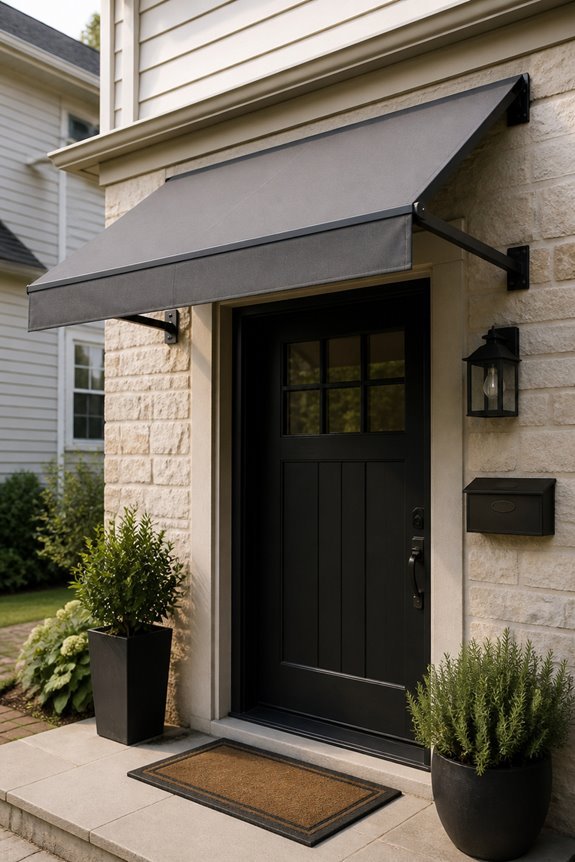
Permanence defines fixed awnings, structures that attach securely to a home’s exterior and remain in place year-round. These installations use metal frames, typically aluminum or steel, paired with durable fabric or rigid panels. Canvas, acrylic, and polycarbonate represent common material choices, each offering different protection levels and maintenance requirements.
Fixed awnings provide consistent shade and weather protection, reducing heat gain during summer months and deflecting rain from entryways. Installation requires professional assessment of mounting surfaces, weight capacity, and local building codes. Homeowners select from solid colors, stripes, and patterns to complement exterior aesthetics.
Maintenance involves periodic cleaning and inspection for fabric wear or frame corrosion. These structures suit small porches, offering functional shelter without requiring storage or seasonal adjustments.
Also read: 25 Dreamy Canopy Bed Ideas for a Cozy Bedroom
Retractable Canopies: Flexibility When You Need It
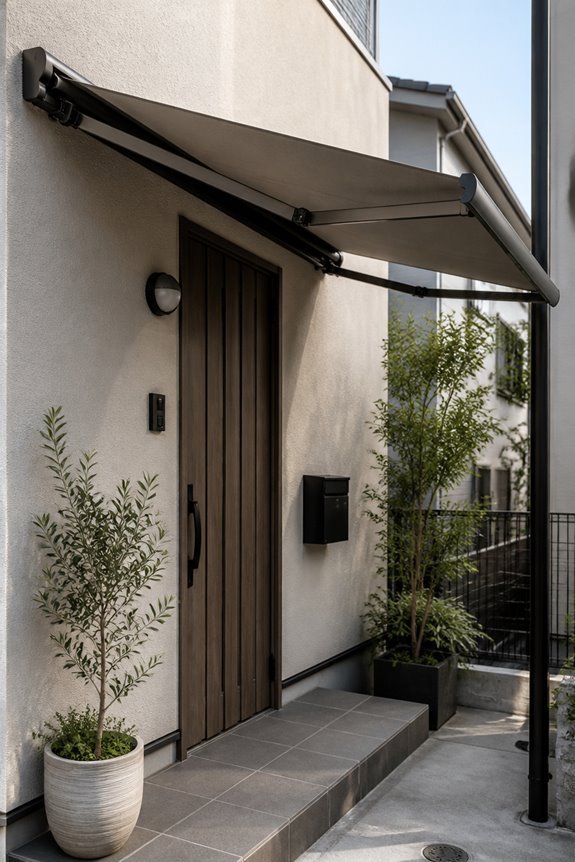
Unlike fixed awnings that remain permanently installed, retractable canopies offer adjustable shade and protection through motorized or manual mechanisms. These systems extend when needed and retract when not in use, making them ideal for small porches with limited space.
Manual options use hand cranks or pulleys, while motorized versions operate via remote control or wall switches. Popular materials include acrylic fabric, polyester, and vinyl, each offering different durability and weather resistance levels. Retractable canopies work well over doorways, seating areas, and entryways.
Installation requires sturdy mounting brackets secured to walls or posts. Consider wind speed ratings and rainfall capacity when selecting models. These canopies cost more initially than fixed awnings but provide flexibility for homeowners wanting seasonal adjustments or temporary shade solutions.
Fabric Umbrellas: Portable Shade on Demand
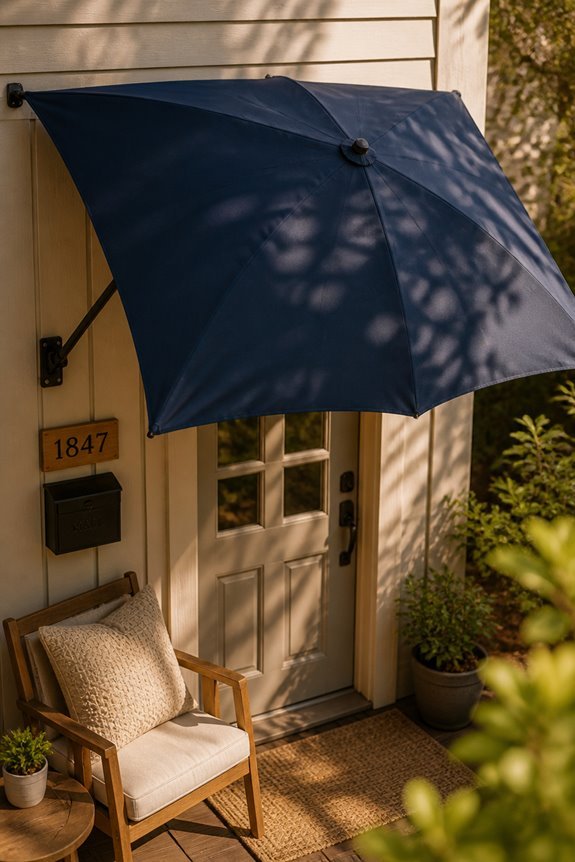
Fabric umbrellas offer portable shade solutions for porches, patios, and outdoor seating areas without requiring permanent installation. These umbrellas come in various sizes, typically ranging from 6 to 9 feet in diameter, accommodating different porch dimensions. Common fabric options include polyester, acrylic, and canvas, each offering different durability levels and UV protection ratings.
Cantilever umbrellas provide offset poles, maximizing shaded areas on compact porches. Market umbrellas feature center poles and work well for small entryways.
Users can easily relocate umbrellas based on seasonal sun angles or weather conditions. Weighted bases or ground anchors prevent tipping during wind. Maintenance involves occasional cleaning and storage during harsh weather.
Fabric umbrellas cost less than permanent canopy installations, making them budget-friendly options for renters and homeowners seeking flexible shade solutions.
Metal Frame Structures: Durable Minimalist Design
Metal frame structures offer a permanent alternative to portable umbrellas, providing shade that remains fixed to the porch regardless of weather or season. These designs typically use aluminum or steel frames, materials chosen for their strength and low maintenance requirements. Aluminum resists rust and corrosion, making it suitable for various climates. Steel offers greater durability but requires periodic treatment to prevent oxidation.
Minimalist metal frames feature clean lines and simple geometric shapes, complementing modern home aesthetics. Common configurations include pergola-style frames with horizontal slats, flat canopy designs with solid panels, and arched structures for visual interest.
Installation requires concrete footings or wall-mounted brackets for stability. These structures accommodate fabric or polycarbonate panels, providing customizable shade coverage while maintaining an uncluttered appearance suitable for small porches.
Polycarbonate Panels: Clear Protection Without Bulk
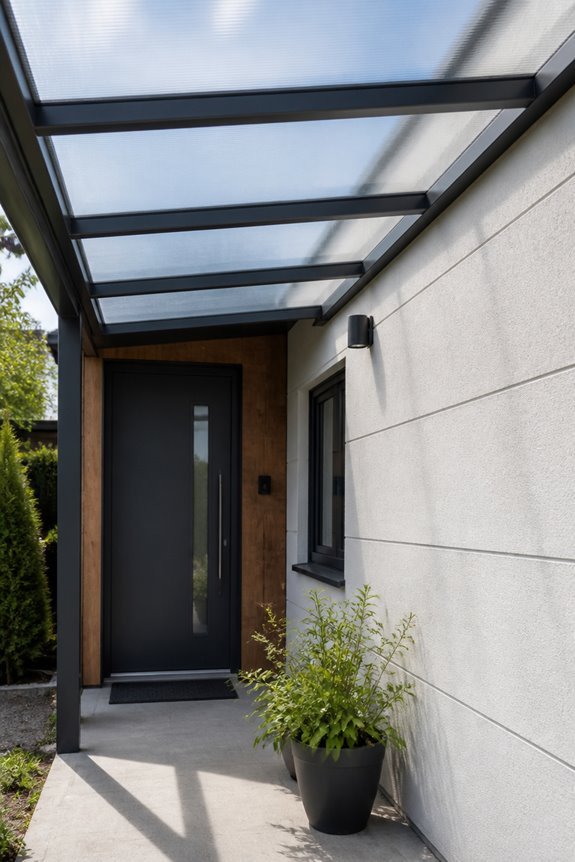
Transparency combined with structural strength makes polycarbonate an effective canopy material for porches that require both shade and natural light. This plastic material blocks ultraviolet rays while allowing sunlight to pass through, protecting inhabitants without creating dark entryways.
Polycarbonate panels resist impact better than glass, making them suitable for areas prone to hail or debris. Installation requires minimal framing since panels span wider distances than traditional materials. The material weighs considerably less than glass or metal, reducing structural demands on the porch.
Homeowners can select from clear, frosted, or tinted options depending on privacy needs. Panels typically last fifteen to twenty years with occasional cleaning. Cost falls between budget and premium options, offering reasonable value for durable weather protection.
Climbing Vine Canopies: Natural Beauty With Shade
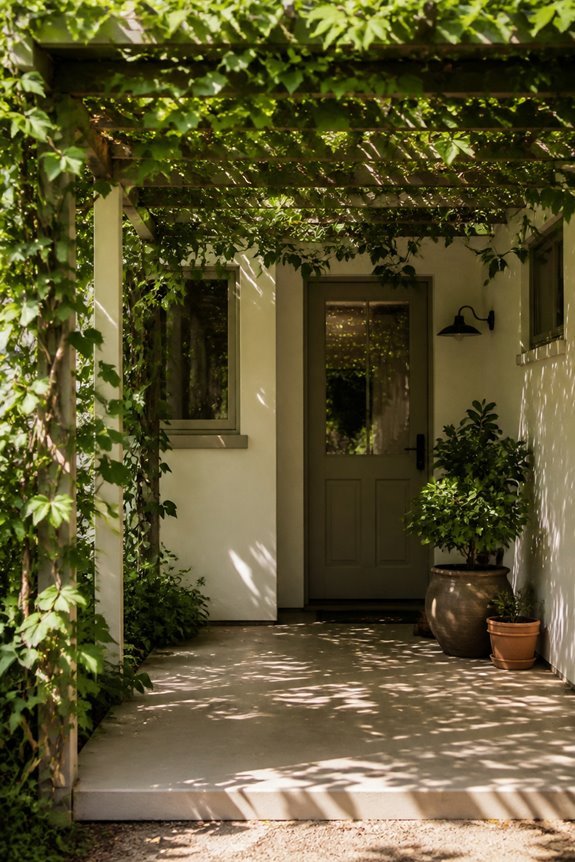
Living vines offer homeowners a natural alternative to manufactured canopy materials, providing shade through foliage while enhancing porch aesthetics. Climbing plants like clematis, ivy, and honeysuckle create dense coverage over wooden or metal frameworks attached to porch structures. These vines establish gradually, requiring two to three years for full maturity and maximum shade density.
The setup involves installing a sturdy trellis or pergola system against the porch entrance. Vines attach using natural tendrils or trained stems secured with soft ties. Regular pruning maintains desired coverage patterns and prevents overgrowth onto windows or doors.
Key advantages include improved air quality, natural insulation during warmer months, and minimal maintenance after establishment. Disadvantages involve slower shade development, seasonal leaf loss in deciduous varieties, and potential pest habitation within dense foliage.
Magnetic Shade Sails: Minimalist Coverage for Compact Entries
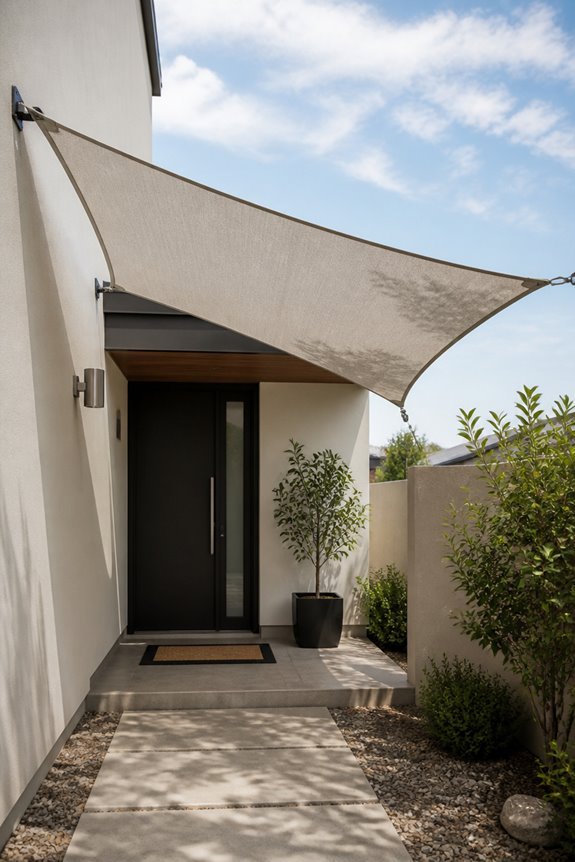
For homeowners with limited porch space, magnetic shade sails provide an efficient canopy solution that attaches directly to existing structures using magnetic strips rather than permanent installation methods. These lightweight fabric panels mount quickly to metal door frames, gutters, or brackets without drilling or fastening hardware.
The sails come in neutral colors like tan, gray, and beige, offering UV protection while maintaining a clean aesthetic. Installation requires minimal tools and takes approximately 30 minutes. Magnetic shade sails work best on porches with metal surfaces or supplementary metal strips.
Homeowners can adjust or remove them seasonally as needed. Typical costs range from $150 to $400 depending on size and material quality. The system accommodates small entry spaces effectively without structural modification.
Canvas Drop Curtains: Weather Control on Your Terms
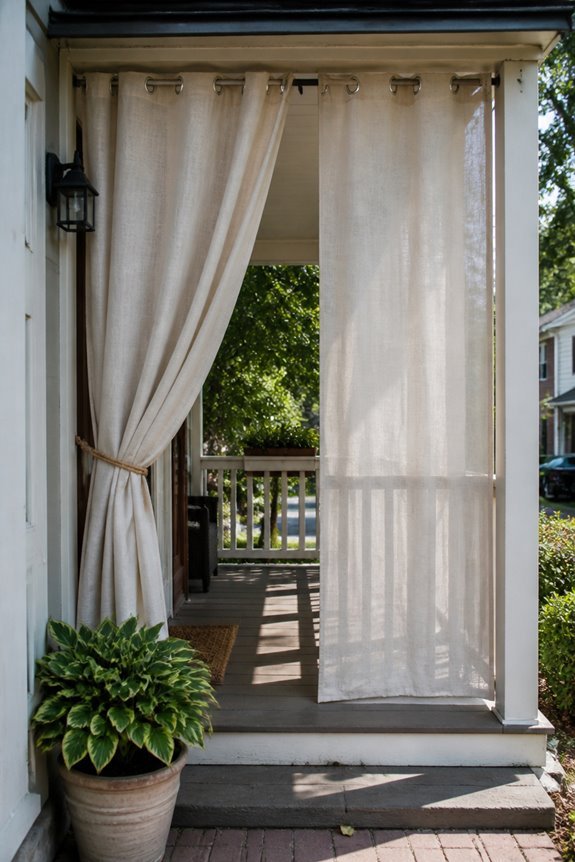
Canvas drop curtains offer homeowners a flexible porch canopy solution that can be raised, lowered, or removed based on weather conditions and seasonal needs. These curtains attach to existing porch structures, providing adjustable protection from rain, wind, and sun exposure.
Materials include solution-dyed acrylic canvas or polyester blends, which resist fading and moisture damage. Installation requires mounting hardware, typically installed along porch beams or frame edges. Users operate curtains manually with tie-downs or using motorized systems for convenience.
Benefits include seasonal storage capability, cost-effectiveness compared to permanent structures, and customizable coverage amounts. Canvas curtains accommodate various porch sizes, from small entryways to larger covered areas.
Maintenance involves occasional cleaning with mild soap and water, along with proper storage during off-seasons to extend durability.
Corner-Mounted Canopies: Shelter Without Floor Space
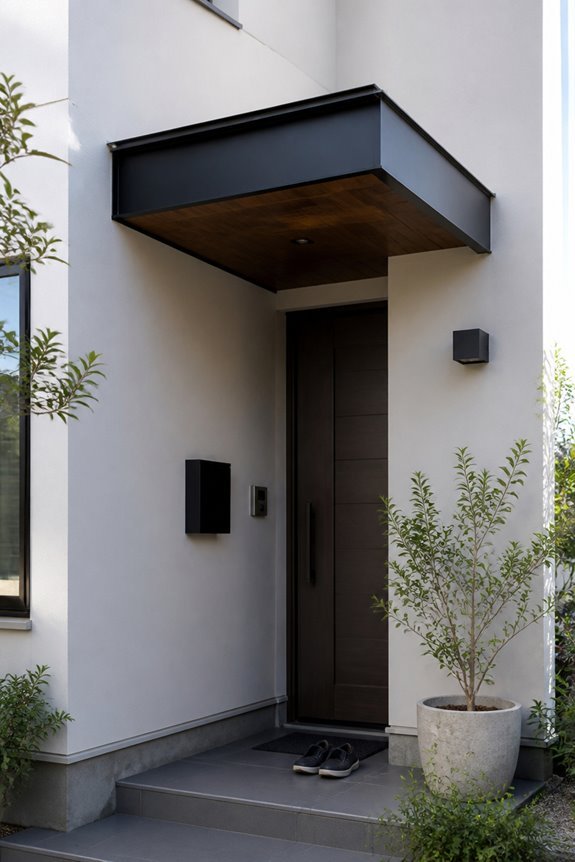
Corner-mounted canopies attach directly to porch corners, utilizing vertical space rather than consuming floor area. These structures mount to existing walls and support posts, anchoring securely at two points for stability.
Installation requires minimal structural modification. Metal brackets fasten to corner framing, supporting fabric or rigid panels overhead. The angled design sheds water effectively while providing shade coverage.
Common materials include aluminum frames with polyester fabric, offering durability and weather resistance. Retractable corner models allow flexibility, extending or retracting as needed. Fixed versions provide permanent shelter.
Benefits include preserved floor space for furniture and entry traffic, protection from rain and sun exposure, lower cost than full-sized canopies, and simplified installation compared to freestanding structures.
Homeowners with compact porches gain functional protection without sacrificing usable area. Corner-mounted options work particularly well for narrow entrances and covered walkways.
PVC Canopies: Protection on a Tight Budget
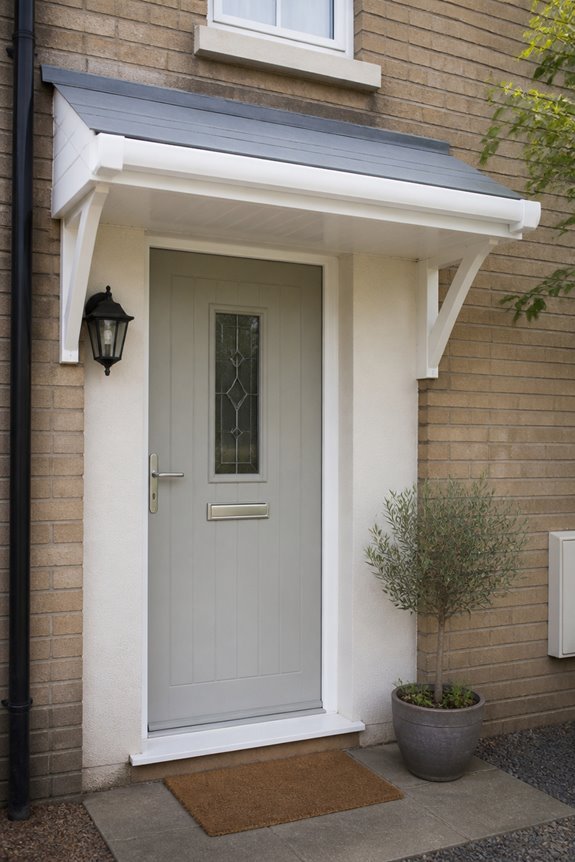
PVC pipe structures offer an economical alternative to aluminum and fabric systems, making shade and weather protection accessible for homeowners with limited budgets. These canopies utilize lightweight plastic piping, connectors, and fittings to create functional frameworks.
PVC canopies require basic materials: schedule 40 PVC pipes, slip fittings, and waterproof fabric or polycarbonate panels. Assembly involves cutting pipes to length, connecting pieces with fittings, and securing fabric covering. Installation typically demands minimal tools and technical skill.
Advantages include affordability, ease of modification, and resistance to rust and rot. PVC structures accommodate various sizes and shapes for different porch configurations.
Disadvantages involve lower durability compared to metal systems and potential UV degradation over time.
Regular maintenance, including fabric inspection and connector tightening, extends canopy lifespan. Many homeowners complete PVC canopy projects independently, reducing labor expenses considerably.
Compact Pergola Designs: Open-Air Style Without the Footprint
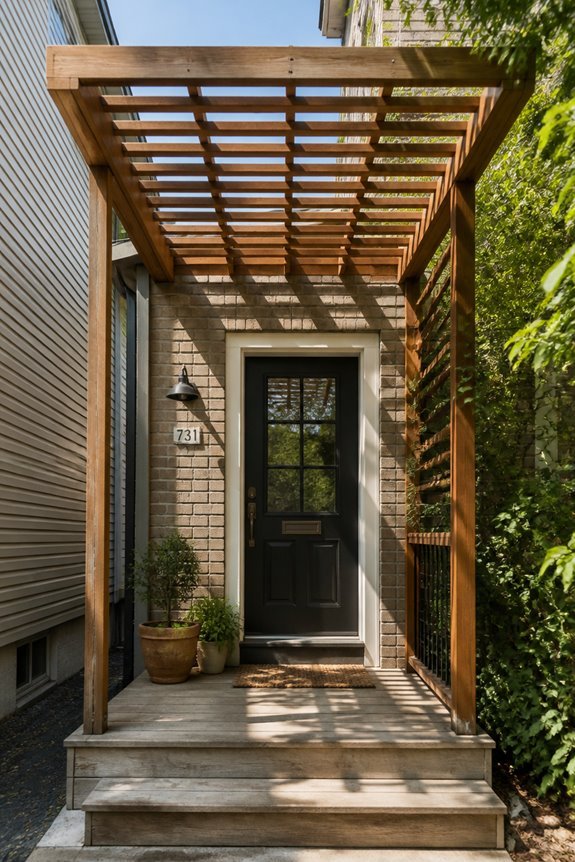
Pergolas designed for smaller spaces offer an alternative approach to porch shade, utilizing open slat construction rather than solid coverage. These structures filter sunlight while maintaining visibility and airflow, making them ideal for compact entrances.
Compact pergola designs typically measure four by six feet or six by eight feet, fitting neatly above doorways without overwhelming the space. Materials include vinyl, cedar, and aluminum, each offering different durability and maintenance profiles. Vinyl requires minimal upkeep, cedar provides natural aesthetics, and aluminum offers lightweight strength.
Vining plants like clematis and climbing jasmine can enhance pergolas, adding filtered shade and visual interest. Installation options range from attached designs anchored to porch framing to freestanding models positioned slightly forward. This flexible approach allows homeowners to customize coverage levels based on sun exposure and personal preference.
Wedge Canopies: Maximum Coverage in Minimal Width
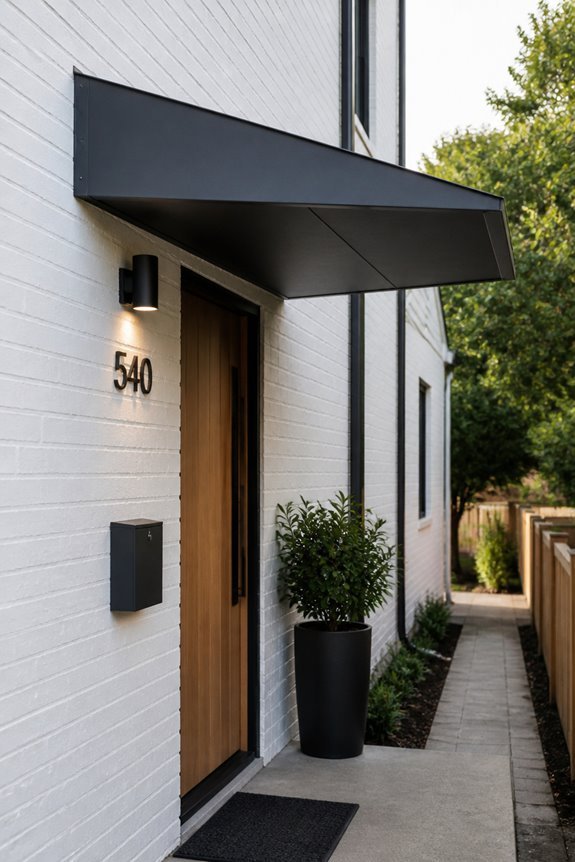
Shape determines efficiency when porch space runs narrow or depth matters more than width. Wedge canopies feature a triangular design, concentrating coverage where it’s needed most while occupying minimal footprint space.
These canopies work well for side entrances, apartment stoops, and porches with limited square footage. The angled structure sheds water effectively and provides overhead protection without extending far from the wall or support posts.
Installation typically involves mounting to existing structures or using lightweight frame systems. Materials include fabric, polycarbonate, or metal panels, each offering different durability and maintenance requirements.
Wedge canopies scale from small desk-sized units covering single doorways to larger versions protecting seating areas. The design accommodates tight spaces while maintaining functional shelter, making them practical for urban settings and compact home entrances where standard rectangular canopies would prove impractical.
Bamboo Canopies: Natural Materials, Natural Appeal
While wedge canopies prioritize compact efficiency through geometric design, bamboo canopies offer an alternative approach by emphasizing natural materials and aesthetic integration with outdoor spaces. Bamboo structures blend seamlessly with vegetation and landscaping elements, creating cohesive outdoor environments.
These canopies utilize bamboo poles or panels as primary construction materials, providing shade while maintaining visual lightness compared to solid alternatives. Bamboo options include lattice designs, woven panels, and pole frameworks. The material naturally weathers to gray tones, reducing maintenance requirements.
Homeowners appreciate bamboo canopies for their sustainability and organic appearance. Installation involves securing bamboo components to existing porch structures or ground-level supports. Proper treatment prevents rot and extends lifespan.
Bamboo canopies typically cost between $500 and $2,000, depending on size and construction complexity.
Hybrid Canopies: Mix Materials, Maximize Function
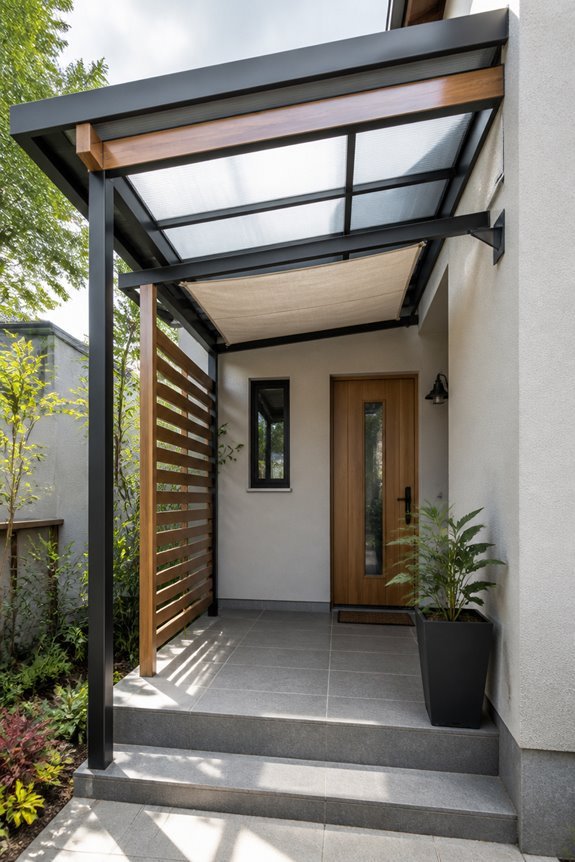
Hybrid canopies combine materials from different categories, such as bamboo frames with metal reinforcements, wood supports with fabric panels, or aluminum structures with natural wood accents. This approach balances aesthetic appeal with durability and practical function.
Metal components provide structural strength and weather resistance, extending the canopy’s lifespan considerably. Natural materials like wood or bamboo add visual warmth and blend with residential architecture. Fabric or polycarbonate panels offer shade and rain protection while remaining lightweight.
For small porches, hybrid designs maximize limited space by combining lightweight frames with sturdy supports. A galvanized steel post paired with woven bamboo panels creates an efficient shelter. Aluminum beams with cedar slats offer both longevity and traditional appearance. These combinations reduce maintenance needs while delivering reliable performance across seasons.
Frequently Asked Questions
How Much Does a Small Porch Canopy Typically Cost to Install?
Installation costs for a small porch canopy generally fall between $1,500 and $5,000, with the final number depending heavily on size, material, and complexity.
Basic fabric options sit at the lower end of that range, while metal or polycarbonate structures push costs higher.
Professional installation adds a meaningful amount on top of material costs, so it’s worth factoring that into any budget from the start.
What Permits or Regulations Apply to Adding a Canopy to My Porch?
Structural additions like these typically require a permit, since local building codes exist to keep the finished result safe and up to standard.
Zoning restrictions and setback requirements can also come into play depending on the property, so checking with the local municipal office early saves time later.
Architectural guidelines may apply as well, particularly in neighborhoods with an established look or homeowners association rules.
How Do I Choose the Right Canopy Size for My Specific Entrance?
Measuring the entrance width and depth is the natural starting point, with an extra twelve to twenty-four inches added on each side for adequate coverage.
Height matters just as much as width, since the canopy needs enough clearance to keep doorways functional and foot traffic unobstructed.
Existing architectural elements and proportions should factor into the final size too, so the canopy complements the entrance rather than overwhelming it.
What Maintenance Is Required to Keep a Porch Canopy in Good Condition?
Regular cleaning to clear away debris is the simplest and most effective maintenance step, and it prevents buildup that can shorten a canopy’s lifespan.
Periodic inspection for damage catches small issues before they become bigger repairs, and repainting or resealing every few years keeps materials like wood and metal in good shape.
Checking structural supports each quarter and confirming proper drainage rounds out the maintenance routine, helping prevent water accumulation and deterioration over time.
Can I Install a Canopy Myself, or Do I Need Professional Help?
Simple canopy kits are well within reach for anyone with basic tools and some carpentry experience, making a DIY approach realistic for smaller projects.
Structural modifications or more complex designs are a different matter. Those situations typically call for professional installation to guarantee proper support and safety compliance.
Weighing the complexity of the chosen design against personal skill level is usually the deciding factor between a weekend project and a hired job.
Conclusion
Small porch entrances often get written off as too limited for meaningful shade, but that assumption doesn’t hold up once the right canopy style enters the picture.
Fixed awnings, retractable systems, and portable umbrellas each solve the same core problem in a different way, giving homeowners and renters alike a workable option regardless of their situation.
Material choice plays a bigger role than many expect. Metal and polycarbonate hold up best against harsh weather, while bamboo offers a lighter, more natural alternative for those prioritizing aesthetics.
Budget flexibility is one of the more encouraging aspects of this category. PVC builds and bamboo structures prove that solid protection doesn’t require a large investment.
Ultimately, the decision comes down to available space, how permanent the solution needs to be, and what budget feels reasonable. These fourteen ideas offer a strong starting point for narrowing that choice down.
Which of these approaches fits your entrance best? Share your thoughts in the comments below.