

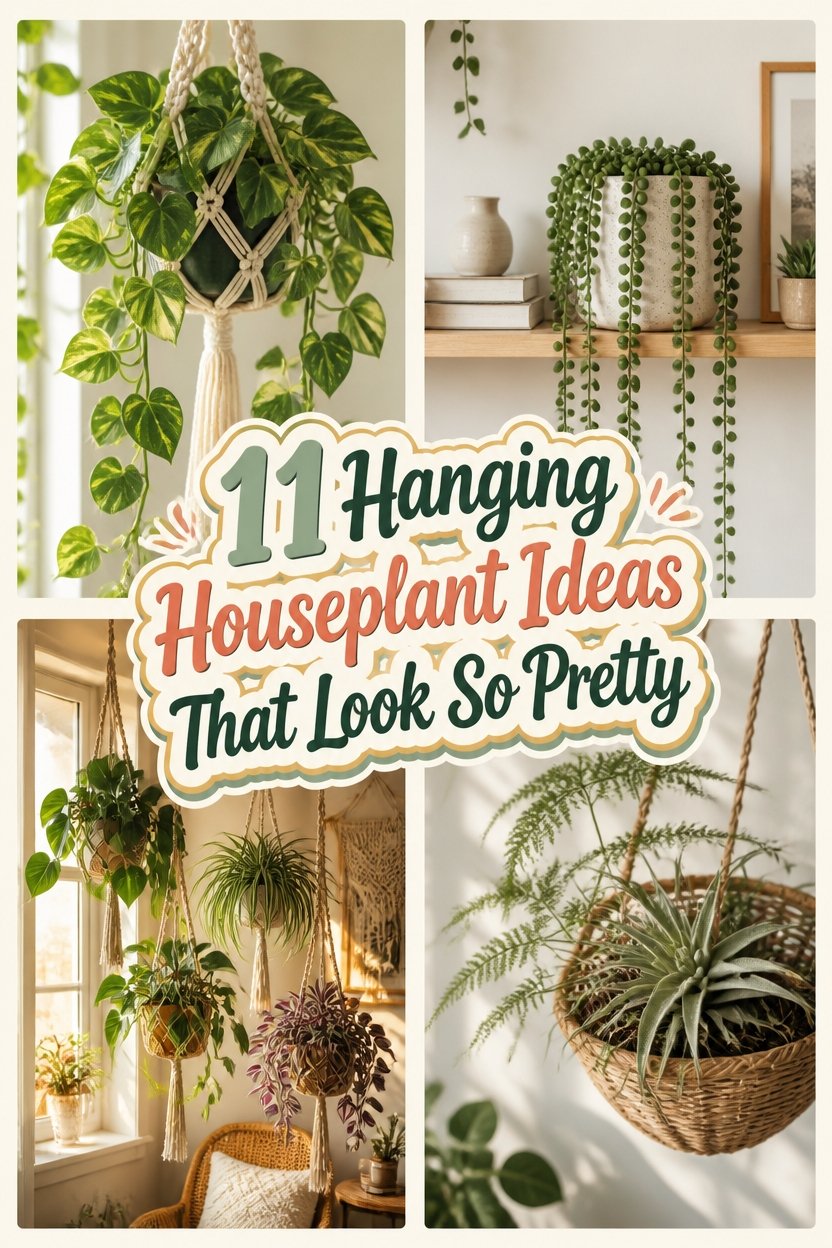
Hanging plants bring life to rooms without taking up precious floor space.
They’re the perfect solution for cozy corners, bare walls, or that awkward spot near the window.
Pothos, philodendron, and devil’s ivy are forgiving choices if you’re new to plant care.
They tolerate low light and missed waterings, so you can learn as you go.
For something sculptural, string of pearls and burro’s tail offer cascading shapes and soft textures.
These succulents like to dry out between drinks, making them ideal if you travel often.
Smaller spaces still have options.
Air plants and string of hearts stay compact while adding quiet charm to shelves or tight nooks.
Each plant asks for something slightly different, but finding your match is part of the fun.
Pothos: The Unstoppable Beginner’s Vine
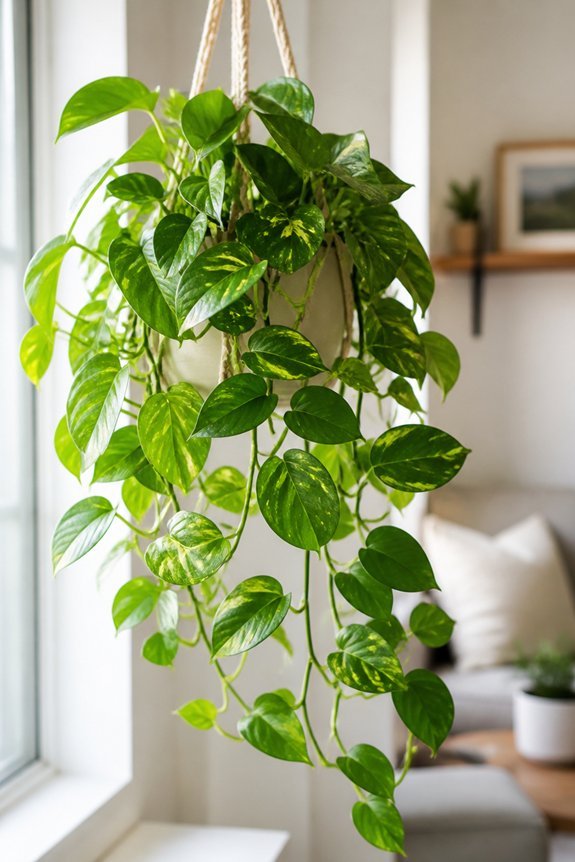
Pothos plants are wonderfully forgiving houseplants. They thrive in various light conditions, irregular watering, and even neglect. The vine produces heart-shaped leaves in green or variegated patterns. It grows several feet long when suspended from shelves or wall hooks.
Light
Pothos tolerates low, medium, or bright indirect light. Variegated varieties show better color in brighter spots.
Watering
Water when soil feels dry to the touch. This typically means every one to two weeks, depending on temperature and humidity.
Feeding
Minimal fertilization keeps this plant happy. Apply diluted liquid fertilizer once monthly during growing seasons.
Popular Varieties
Golden pothos features yellow-tinged leaves. Marble queen offers white variegation. Neon pothos stands out with bright chartreuse coloration.
Propagation
Stem cuttings root easily in water or soil. New plants establish quickly with little effort.
Also read: 9 Kitchen Houseplants That Add Fresh Green Style
Philodendron: Heart-Shaped Leaves, Zero Fuss
Philodendron: Heart-Shaped Leaves, Zero Fuss
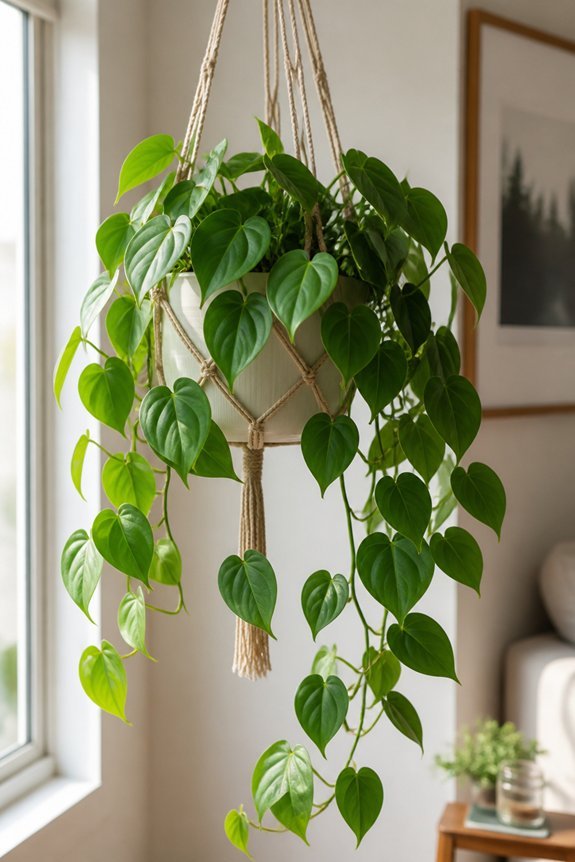
Another forgiving vine, the philodendron shares similarities with pothos. Yet it carries its own distinct charm. The leaves are heart-shaped and usually larger than pothos. Growth is slightly slower, which keeps maintenance manageable.
Philodendrons handle low to medium light well. Bright, indirect sunlight brings out their best. Water when the soil feels dry to the touch. Typically this means every one to two weeks. Humidity is rarely an issue. Most indoor spaces suit them fine.
A little pruning goes a long way. Occasional trims encourage fuller, bushier growth. Without them, vines can turn leggy. Popular picks include the red-leaf and heartleaf varieties. Both trail beautifully in hanging baskets or across shelves.
Devil’s Ivy: Fast-Growing, Shade-Tolerant Coverage
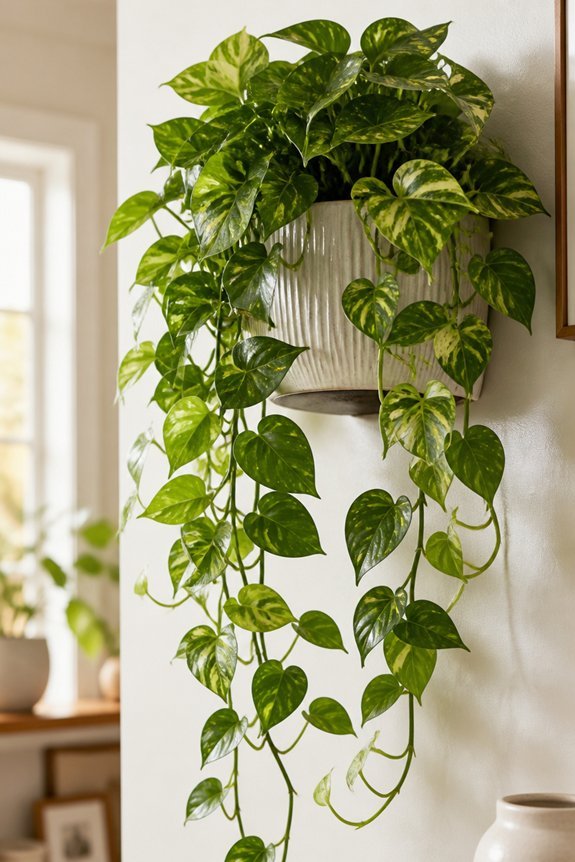
Devil’s ivy grows fast. It covers walls and shelves within weeks. This trailing vine fills bare spots where other plants fail.
It tolerates low light better than most hanging plants. Offices, bathrooms, and dim corners suit it fine. You get green coverage without bright windows.
Care stays simple. Water when the soil feels dry. Miss a watering? The plant forgives you. Humidity swings won’t slow it down either.
Heart-shaped leaves resemble philodendron. But devil’s ivy pushes out new growth much faster. Snip a cutting and root it in water or soil. Propagation couldn’t be easier.
Hang it in baskets or macramé holders. Train it up a moss pole. This adaptable vine works anywhere in your home.
Tradescantia: Colorful Foliage for Low Light
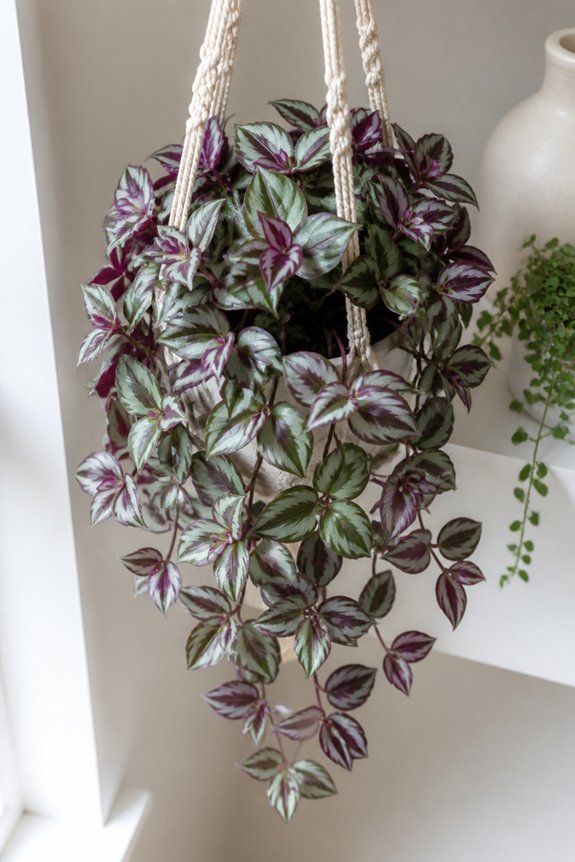
Tradescantia offers some of the most eye-catching foliage among hanging plants. Its leaves show off deep purple undersides, silver stripes, and variegated patterns.
This plant handles low light with ease. That makes it a great fit for offices, bathrooms, and other spaces with little natural sunlight.
Growth and Care
Tradescantia grows fast and trails beautifully from hanging pots. Water it when the soil feels dry. Snip the vines occasionally to keep the plant full and bushy.
Popular Varieties
Tradescantia zebrina pairs purple with green. Tradescantia pallida stands out with solid purple leaves. Both bring bold color indoors.
Conditions and Health
This plant adapts to average temperatures and humidity. Use well-draining soil and water regularly to keep colors bright.
String of Pearls: Delicate Beads for Bright Corners
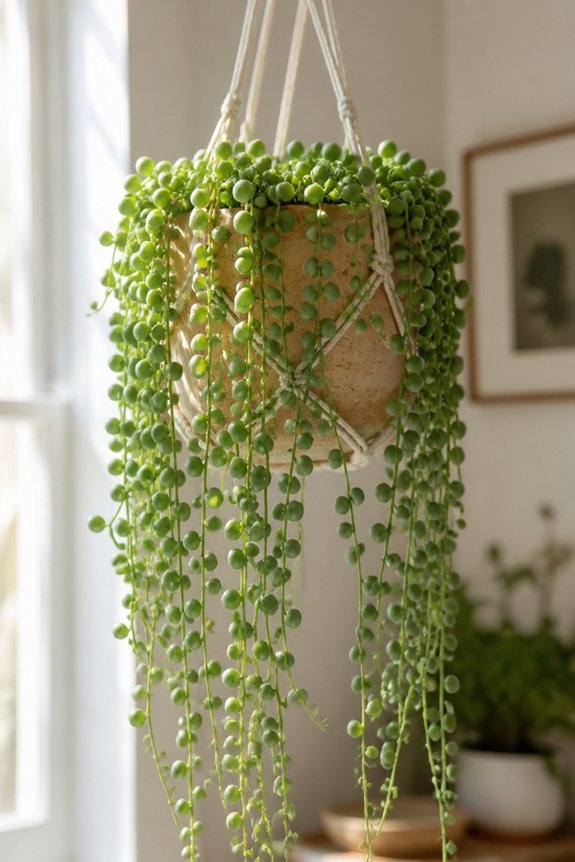
Small round leaves trail along thin vines like tiny green beads. This succulent brings a playful, unexpected shape to any room.
Light needs are simple but specific. Bright, indirect light keeps the plant happiest. South or west-facing windows usually do the trick. Direct harsh sun can scorch the delicate leaves.
Soil and water require some attention. Well-draining soil is essential because soggy roots rot quickly. Let the soil dry out completely between waterings. Every two to three weeks works for most homes.
Growth stays slow and steady. Vines spread outward rather than upward. Hanging baskets and high shelves let them cascade naturally. The trailing habit creates a lovely green curtain over time.
Temperature flexibility helps this plant adapt. Anything between 50 and 80 degrees suits it fine. Most indoor environments fall right in that range.
New plants start easily from stem cuttings. Simply lay cuttings on dry soil and wait. Roots form without much fuss.
Check leaves occasionally for spider mites. These tiny pests show up now and then. A quick look during regular watering catches any problems early.
Hoya: Waxy Blooms With Effortless Care
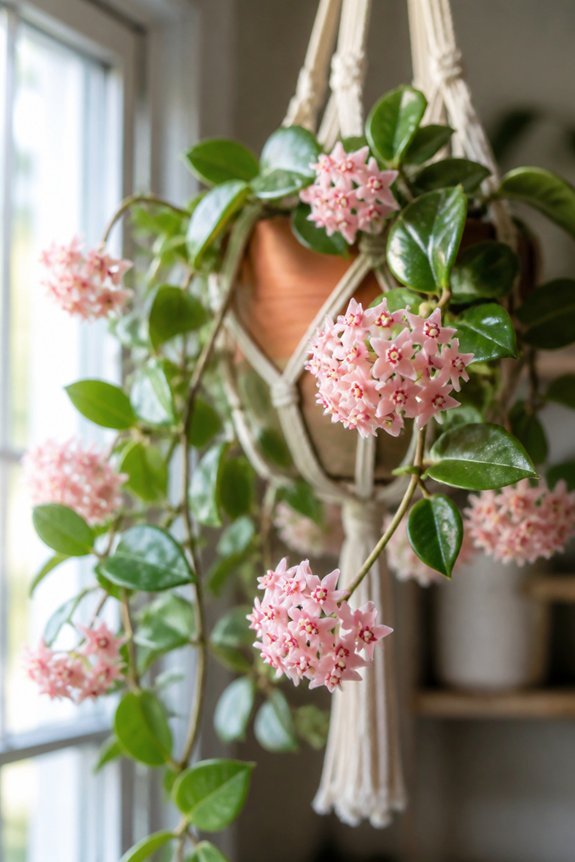
Hoya plants produce clusters of star-shaped flowers with a waxy, almost plastic-like appearance. These trailing vines grow well in hanging baskets. They suit indoor spaces with moderate to bright indirect light.
Hoya needs infrequent watering. The plant prefers drying out between waterings. Too much water causes root rot, a common issue with this species.
These plants tolerate various humidity levels. They thrive in temperatures between 60 and 75 degrees Fahrenheit. Propagation happens easily through stem cuttings placed in water or soil.
Popular varieties include Hoya carnosa, which has pink-tinged flowers. Hoya compacta displays tightly coiled leaves. Both flower reliably with little effort. This makes them practical choices for gardeners seeking low-maintenance hanging options.
Boston Fern: Lush Fronds for Bathrooms
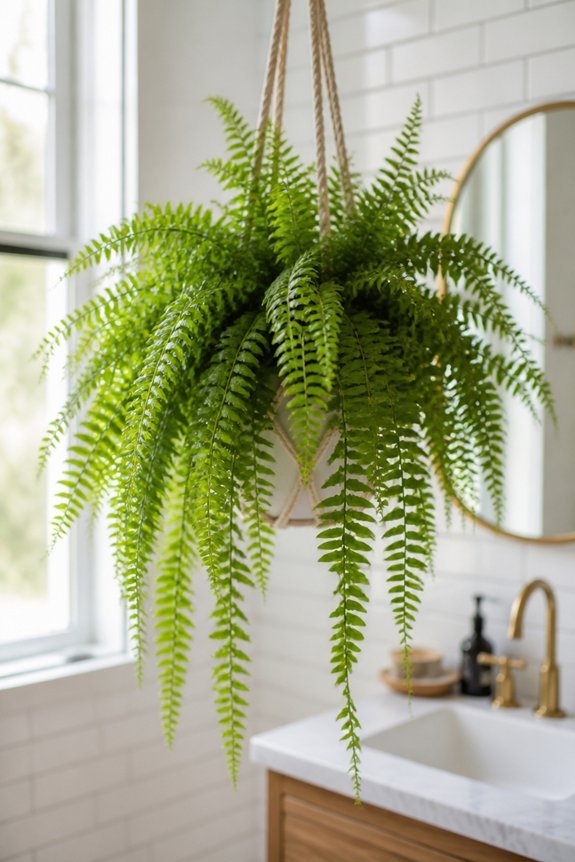
Boston ferns bring dense, feathery fronds to hanging baskets. They love bathrooms and humid spaces. These plants thrive in indirect light and moisture-rich environments. Keep soil consistently moist. Mist leaves regularly to prevent browning. Aim for temperatures between 60 and 70 degrees Fahrenheit. Humidity levels above 50 percent keep them happiest.
Finding the Right Spot
Placement matters greatly for these plants. Hang them near bathroom windows for gentle light. Showers create the humidity they crave. Keep them away from direct sunlight. It scorches delicate fronds easily.
Watering and Care
Water when soil feels slightly dry. Maintain even moisture without waterlogging. Repot every spring as growth picks up. Brown leaflets sometimes appear from dry air or missed waterings. New fronds usually emerge healthy with steady care.
Burro’s Tail: Dramatic Draping That Rewards Patience
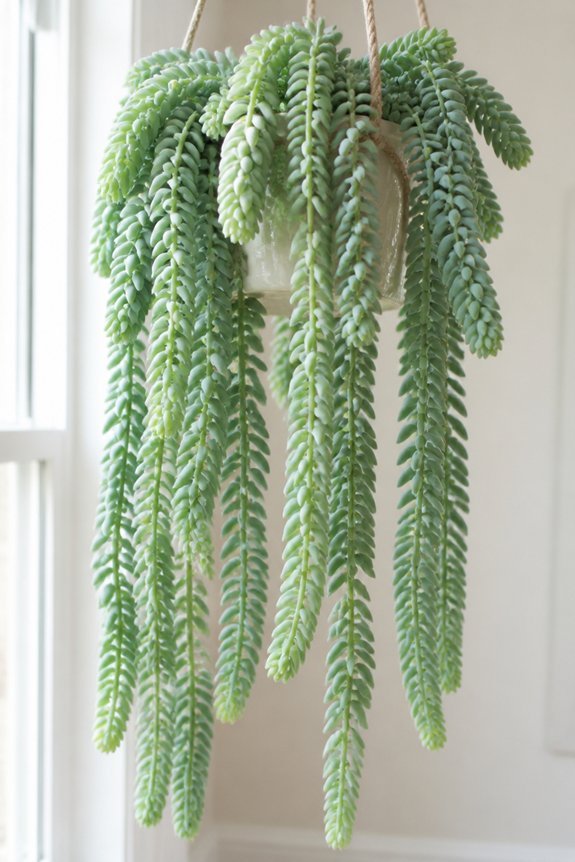
Burro’s tail offers dramatic cascading strands. Patient growers enjoy striking visual impact once the plant matures.
This succulent features thick, fleshy leaves along trailing stems. The result is a lovely waterfall effect in hanging containers. Bright, indirect light and well-draining soil help it thrive.
Water only when soil dries completely. This usually means every two to three weeks. The plant grows slowly, so patience matters. Full, impressive length takes time to achieve.
Small pink or red flowers appear in spring. Hanging baskets suit it best. Stems drape freely without obstruction.
This succulent tolerates neglect well. Forgetful owners need not worry much. Keep temperatures consistent and protect from frost. Long-term health depends on these simple steps.
Hanging Succulents: Bold Plants for Sunny Spots
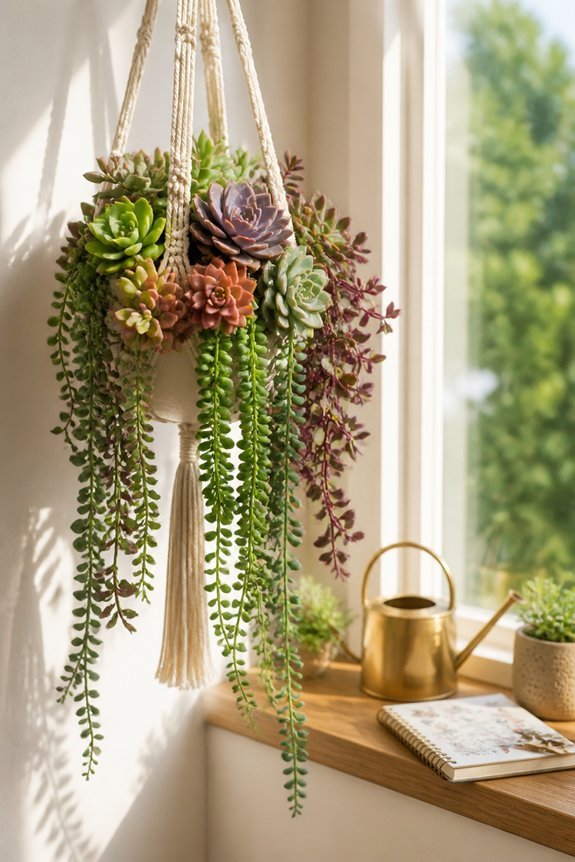
What makes hanging succulents ideal for sunny locations? These plants love bright conditions. They need less water and care than most houseplants.
Succulents store water in their leaves, stems, and roots. This makes them drought-tolerant. They handle direct sunlight on windowsills with ease.
Popular Hanging Varieties
String of Pearls offers cascading bead-like foliage. Donkey Tail trails with thick, fleshy stems. Jade plants and Echeveria also do well in hanging containers.
Essential Care Tips
These plants need soil that drains quickly. This prevents root rot from too much moisture. Clay pots with drainage holes work best.
Water only when the soil feels completely dry. This usually means every two to three weeks during growing seasons. Cut back even more during winter months.
String of Hearts: Thin Chains for Tiny Shelves
Light and Space
While hanging succulents love bright sun, String of Hearts prefers softer, indirect light. This makes it perfect for smaller spaces that lack intense brightness.
Features and Growth
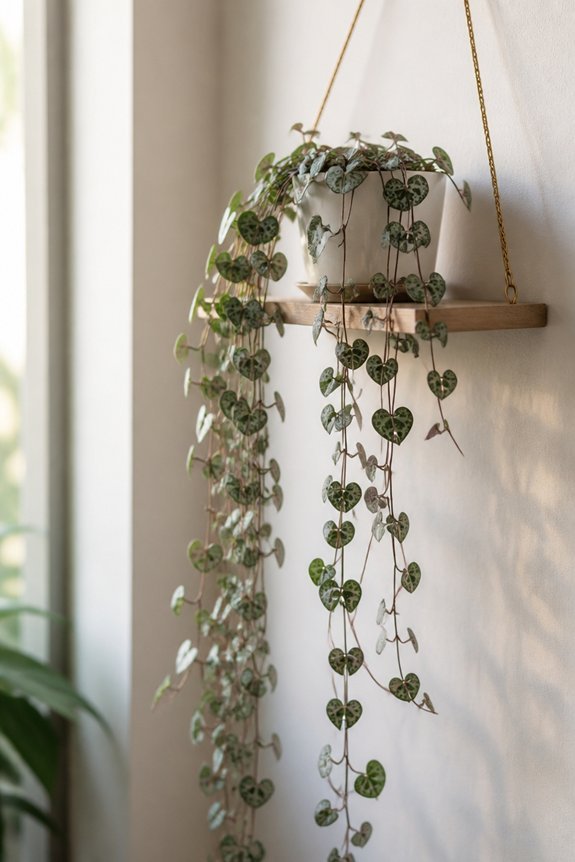
The plant has thin, heart-shaped leaves on delicate vines. These narrow strands fit beautifully on slim shelves or tight corners. Growth stays slow and manageable. You will only need to water when the soil feels dry.
Care Basics
Average indoor temperatures between 60 and 75 degrees suit this plant well. Bright indirect light brings out pink or cream edges on the leaves. The vines reach 12 to 18 inches long. This adds visual interest without crowding your space.
Display Ideas
Small hanging baskets work wonderfully. Mounted planters also show off the trailing pattern nicely.
Air Plants: Sculptural Displays, No Soil Needed
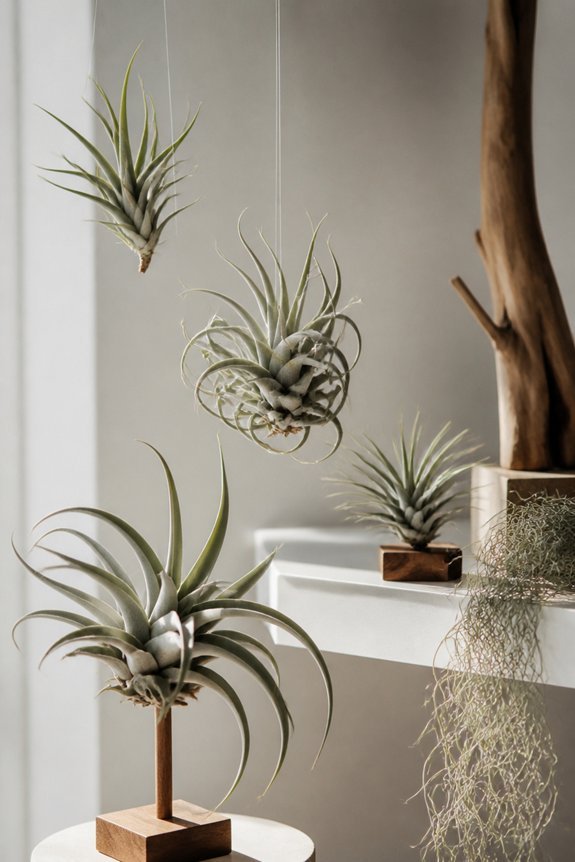
Air plants are perfect for indoor gardening without the mess of soil. They absorb water and nutrients through their leaves instead. This lets you display them in creative ways that traditional plants can’t match.
Popular varieties include Tillandsia ionantha, Tillandsia xerographica, and Tillandsia stricta. Each brings its own unique look to your space.
Try hanging them in glass orbs or macramé holders. Driftwood mounts work beautifully too. These sculptural forms need no pots, so you get a clean, minimalist look.
Place your air plants near indirect light. Mist them every week or two to keep them happy. They do best where air moves freely, like on shelves or windowsills.
Small apartments benefit especially from these lightweight options. You’ll skip the heavy planters and still enjoy living greenery.
Frequently Asked Questions
How Often Should I Water Hanging Houseplants, and Does Frequency Vary by Plant Type?
Hanging houseplants typically require watering once weekly, though frequency varies considerably by plant type. Succulents need less frequent watering, while ferns and tropical plants prefer consistently moist soil. Always check soil moisture before watering.
What Size Pot and Hanging Mechanism Work Best for Different Plant Varieties?
Pot size depends on plant root systems; trailing varieties need 6-8 inch containers, while compact plants thrive in smaller pots. Sturdy hooks support heavier soil, whereas lightweight S-hooks work for trailing succulents and ferns.
How Do I Propagate Hanging Plants to Expand My Collection Affordably?
Growers can propagate hanging plants through stem cuttings placed in water or soil until roots develop, then transplant them. Leaf cuttings and division work for specific varieties, offering economical collection expansion without purchasing new specimens.
What Pests Commonly Affect Hanging Plants, and How Do I Treat Infestations?
Why do spider mites and mealybugs so frequently target hanging plants? Common pests include spider mites, mealybugs, and scale insects. Treatment involves spraying affected foliage with neem oil or insecticidal soap, isolating infested plants immediately, and monitoring regularly.
Can I Move Hanging Plants Between Rooms With Different Light Conditions Safely?
Yes, hanging plants can be moved between rooms with different light conditions, though gradual acclimation is recommended. Plants need time to adjust to new environments. Moving them too abruptly may cause stress, leaf drop, or growth problems.
Conclusion
Hanging houseplants genuinely improve indoor air quality, though their contribution remains modest compared to overall ventilation. Plants like Pothos, Philodendron, and Air Plants absorb minor toxins while producing oxygen. The real benefit lies in their low maintenance and visual appeal across various light conditions. For practical purposes, selecting shade-tolerant varieties such as Tradescantia or Devil’s Ivy guarantees reliable growth in most homes.