

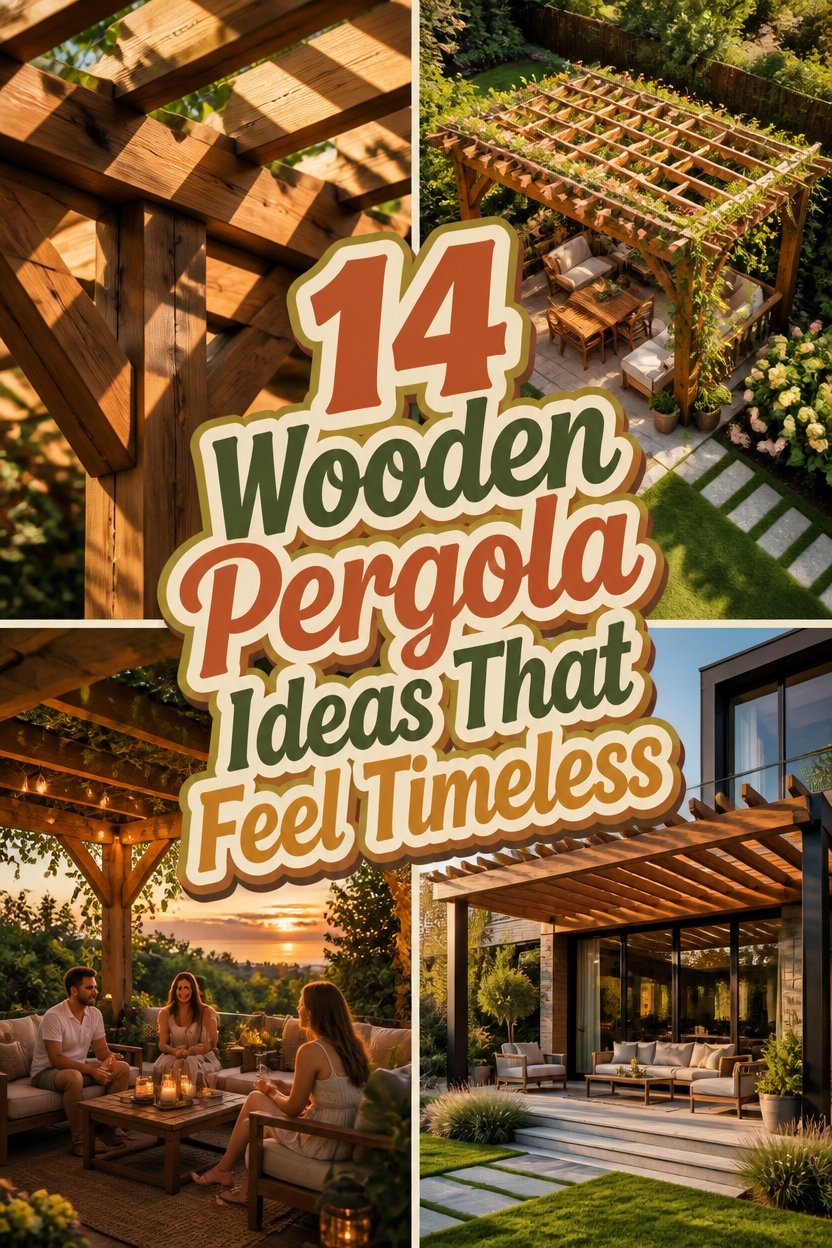
A wooden pergola has a way of transforming a backyard into something that feels finished. It offers shade without blocking the light entirely, and over time, it becomes even more beautiful as plants find their way up the posts.
The best part is how versatile these structures can be. Some lean traditional with lattice tops and decorative brackets, while others embrace clean lines and an almost sculptural simplicity. Your choice depends less on following trends and more on how you actually live outside.
Before committing to a design, it helps to think through the practicalities.
Wood type, placement, and installation all shift what works for your space. Getting clear on those details early makes the difference between a pergola you admire and one you use constantly.
Classic Lattice: The Timeless Design
Why It Lasts
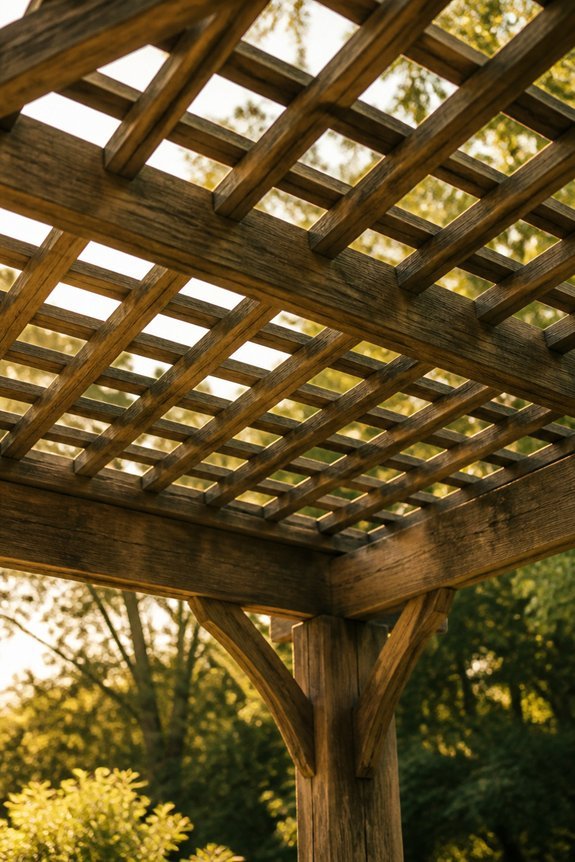
The classic lattice design has stayed popular for good reason. Its interlocking diamond or square pattern gives you shade without blocking your view. You get both beauty and function in one simple structure.
Wooden lattice pergolas usually come in pressure-treated pine, cedar, or redwood. Each option brings durability and a look that never goes out of style.
How You Can Use It
The framework supports climbing plants like clematis, jasmine, and grape vines. These vines create natural cooling as they grow. The crossed wood strips filter sunlight well. They cut glare without making the space feel closed in.
Installation is simple enough for anyone with basic carpentry skills. Standard tools get the job done.
Keeping It Looking Good
Wood lattice needs staining or sealing every two to three years. This prevents rot and weathering. Cedar resists decay naturally but costs more than pine. The classic lattice design keeps meeting residential and commercial needs through proven function and easy construction.
Also read: 10 Garden Pergola Ideas for a Relaxing Corner
Modern Minimalist: Clean Lines and Simplicity
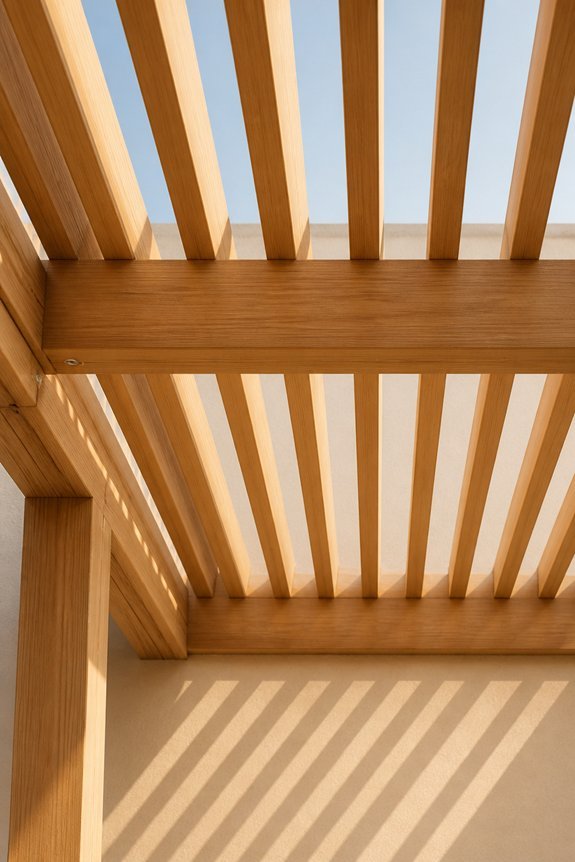
Modern minimalist pergolas strip away ornamental details. They focus on clean horizontal and vertical lines. These create geometric visual interest with straightforward beam arrangements.
Cedar or composite materials work best in this style. Neutral tones like gray or natural wood keep the look cohesive.
Design Priorities
This style puts functionality first. You won’t find curves or embellishments here. Evenly spaced slats sit in simple patterns. Flat roofing keeps everything crisp and uncluttered.
Minimal carving or extra ornamentation appears. The structure blends naturally with contemporary architecture.
Where They Work Best
Urban settings suit these pergolas perfectly. Contemporary homes gain shade without visual weight. The structure stays uncluttered while doing its job.
Materials and proportions become the main attraction. Decorative elements step aside. Homeowners get efficient outdoor spaces that match current trends.
Attached Pergola: Extending From Your Home
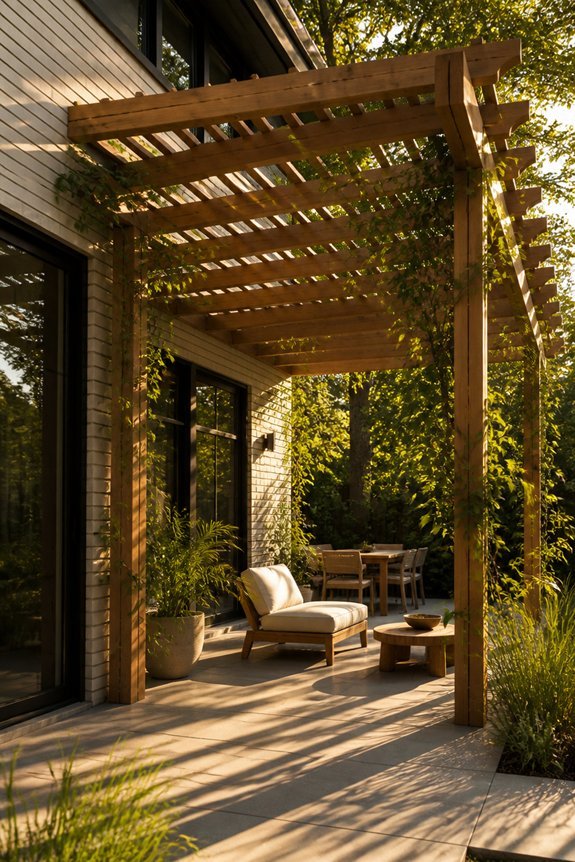
Attached pergolas connect directly to your home’s exterior wall. They create an extended outdoor living space. This setup acts as a natural bridge between indoor and outdoor areas.
These structures attach securely to your house framing. Most use ledger boards bolted to the rim joist. Popular materials include pressure-treated lumber, cedar, and composite wood alternatives.
You’ll find several practical benefits with attached pergolas. They provide partial shade over patios. They support climbing vines nicely. They also create defined entertaining zones.
Common dimensions range from eight by twelve feet to sixteen by twenty feet. Your available wall space and budget will guide your choice.
Installation requires a structural assessment first. This guarantees proper weight distribution. Homeowners often position these pergolas over decks, patios, or entryways. This placement maximizes functionality. It also strengthens the visual connection between living spaces.
Freestanding Pergola: Anchor Your Garden
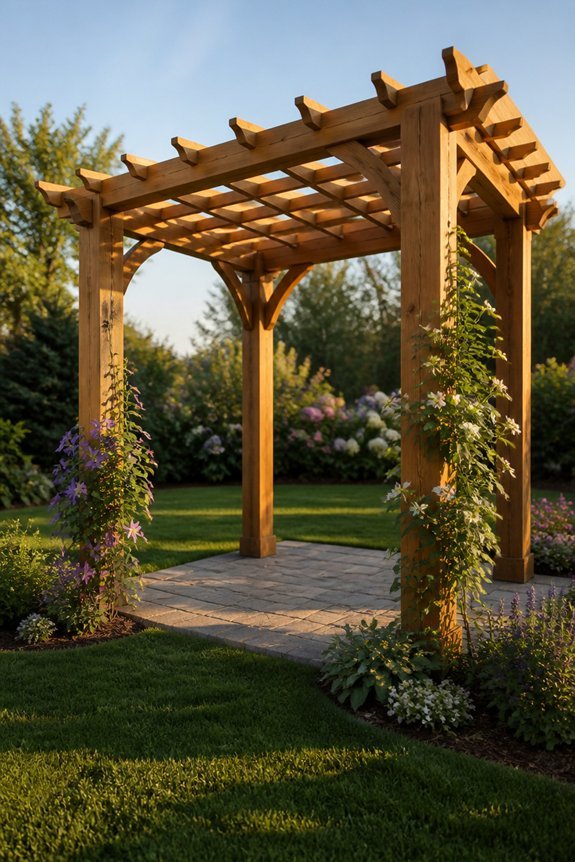
Freestanding pergolas stand alone in your yard or garden. They provide shade and create visual interest without attaching to your house.
You can place these structures almost anywhere. Position one near your patio, pool, or flower beds. Move it later if your needs change. Most use pressure-treated wood, cedar, or composite lumber to withstand weather.
A solid foundation keeps your pergola stable in wind. Use concrete footings, ground anchors, or weighted bases. Common sizes range from 8×8 feet up to 12×16 feet. This fits most outdoor spaces.
These pergolas make excellent gathering spots. Train climbing vines up the posts. Or use one to mark a garden entrance. They work as standalone features. No home modifications needed.
Pergola Entryway: Frame Your Entrance
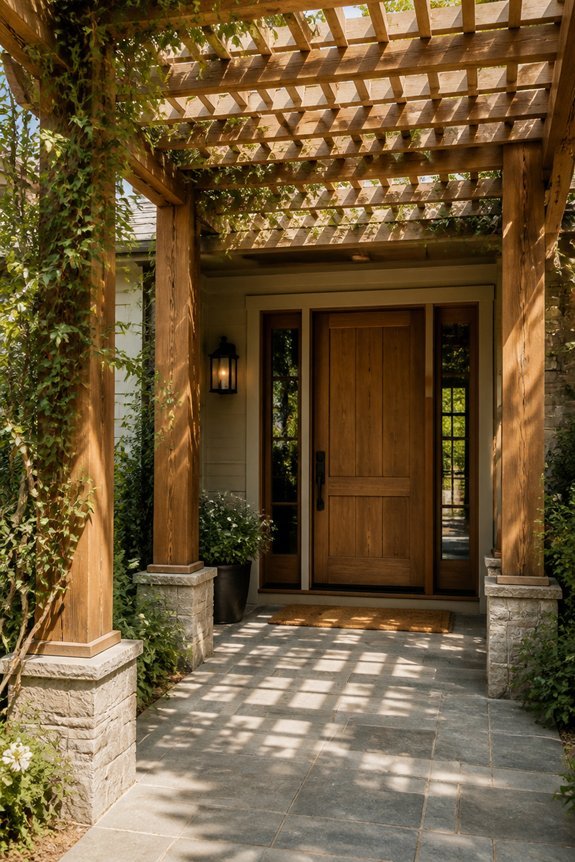
Why Choose a Pergola Entryway
Pergola entryways frame your garden paths, home entrances, or property lines. They mark clear transitions between spaces. They also add visual interest right where guests arrive.
Size and Materials
Most entryways span 4 to 8 feet wide. This gives enough room for comfortable passage. It also sets a clear threshold. Cedar and pressure-treated lumber are popular choices. Composite wood works well too.
Softening the Structure
Climbing vines bring life to the frame. Clematis and jasmine grow beautifully over time. They soften hard lines naturally.
Where to Place Your Entryway
Check sight lines from the street first. Align with existing pathways for flow. Consider your foundation type carefully.
Building for Stability
Concrete footings anchor the structure well. Dig them 2 to 3 feet deep. This depth prevents shifting or wobbling.
Added Features
Benches give visitors a place to pause. Lighting extends usability into evening hours. Gates add privacy and charm.
Seating Nook Beneath a Pergola
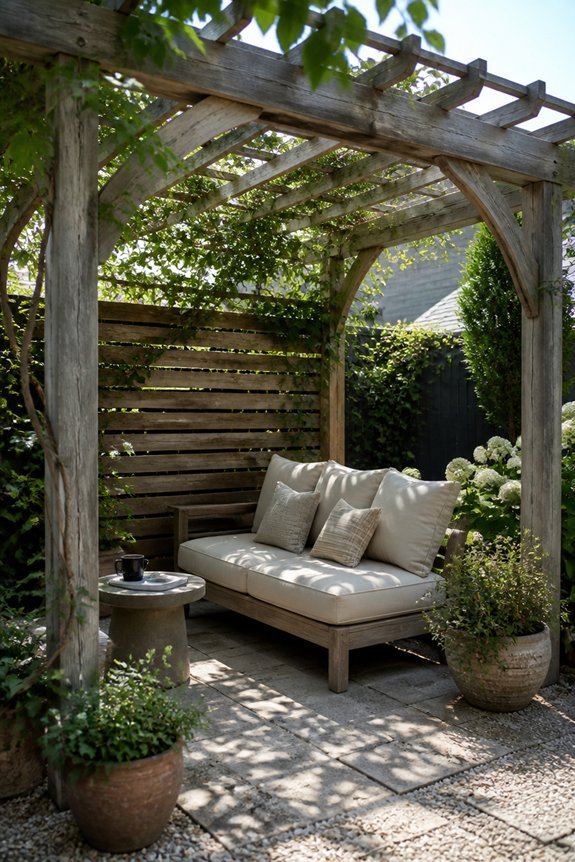
A Cool Spot Under the Beams
A pergola offers the perfect middle ground. You get shade from the overhead slats, but breezes can still pass through. It’s a simple setup that works hard during warm afternoons.
Wood beams overhead filter sunlight without blocking it completely. That dappled light feels gentle on hot days. Air moves freely, so the space stays cooler than full sun spots.
Setting Up Your Space
Start with furniture built for outdoor life. Look for pieces rated to handle rain and sun without quick wear.
Add cushions to soften hard seats. A small side table keeps drinks and books within arm’s reach. These small touches turn basic seating into somewhere you actually want to linger.
Simple Upgrades That Help
Train vines up the posts for extra shade as they grow. Solar lights along the base extend use into evening hours.
These details add up. Each one makes the nook feel more finished without complicated work.
Keeping It Going
Check the wood yearly for splinters or loose joints. A quick sanding and sealant touch-up prevents bigger problems later.
Your pergola seating stays safe and welcoming with just a little attention each season.
Natural Shade: Pergola With Climbing Vines
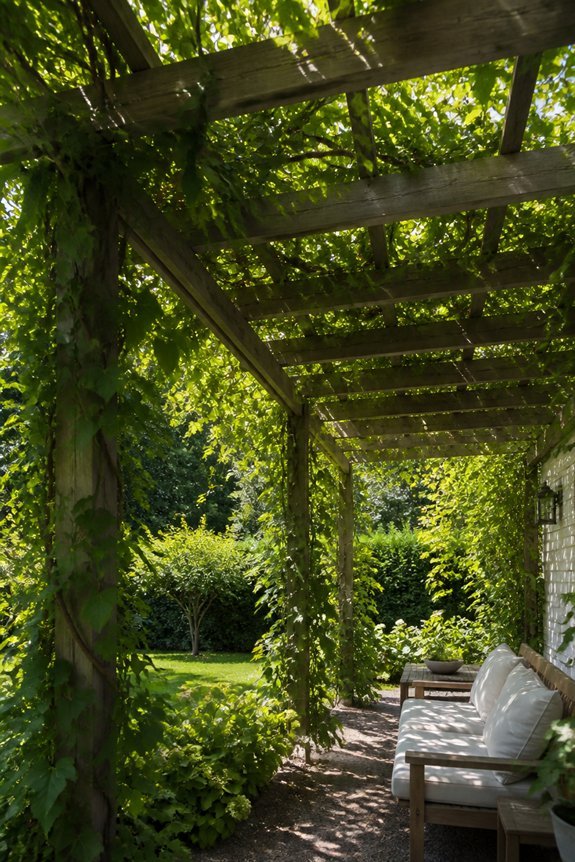
How Vines Create Shade
Climbing vines transform wooden pergolas over time. Ivy, clematis, and climbing jasmine attach to beams and fill gaps gradually. The result is lovely filtered sunlight below.
Keeping Your Vines Healthy
Regular pruning keeps growth in check. Train vines along the framework for even coverage. Most species need steady moisture during growing seasons, though exact amounts vary.
Why Natural Shade Works
Temperatures drop noticeably under a leaf-covered pergola. This setup suits patios, garden paths, and outdoor dining spots well. Layered shade softens hard lines and adds visual depth season after season.
Dining Area With Overhead Pergola Shade
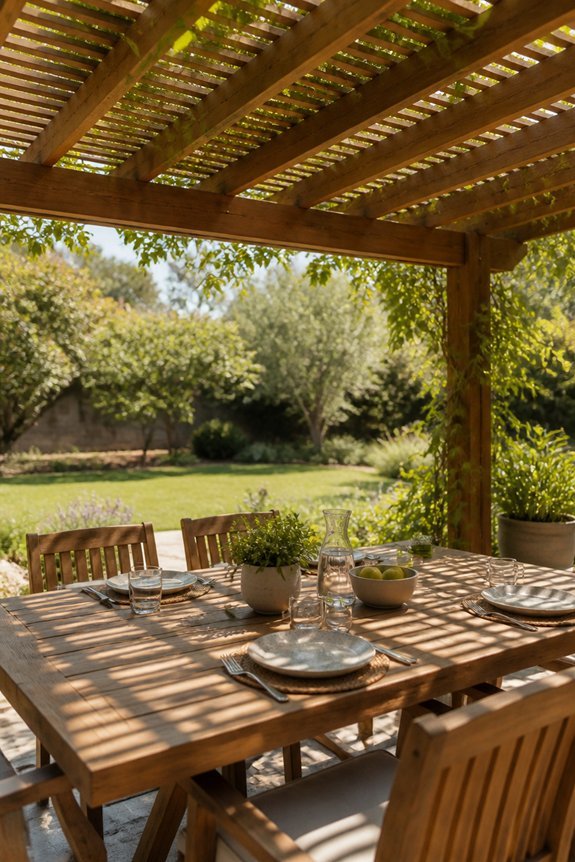
Managing Sunlight in Outdoor Dining Spaces
Overhead pergola shade offers a practical fix for dining areas that bake in direct sun. A wooden pergola above your table filters harsh light while keeping air moving. The open slats create gentle, dappled patterns across your seating area. Meals feel more relaxed when guests aren’t squinting or overheating.
Smart Placement and Materials
Position your pergola to block afternoon sun when temperatures peak. This timing matters more than you might think. Cedar and pressure-treated lumber hold up well against rain and sun exposure. Both options age nicely with minimal upkeep.
Adding Natural Shade
Climbing plants like jasmine or clematis weave through the slats over time. They soften the structure and boost coverage as they mature. The added greenery also invites pollinators and pleasant scents to your dining space.
Built for Daily Use
Standard tables and chairs fit comfortably beneath most pergola designs. Leave room for serving space and easy movement between seats. Secure post anchors and proper fastening keep the structure steady through wind and shifting seasons.
Overhead Lighting: Pergola for Evening Use
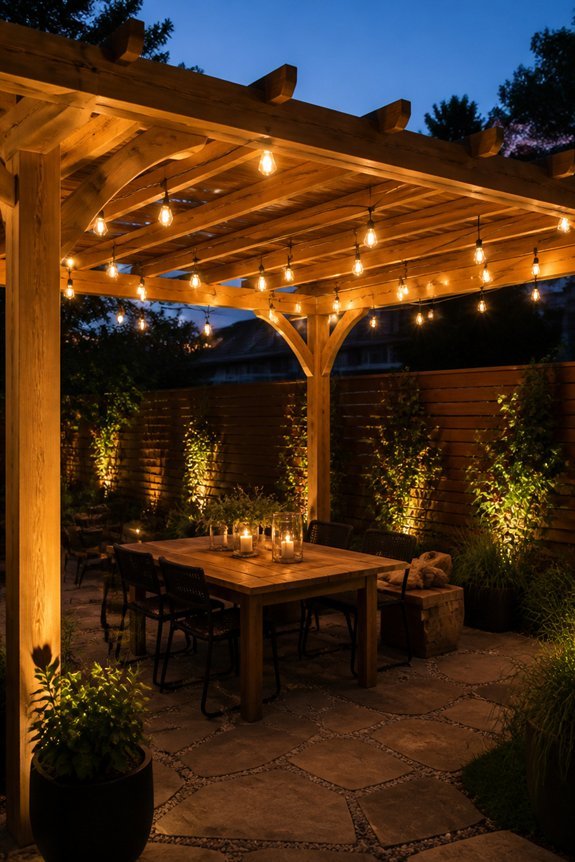
Creating Evening Ambiance
A pergola comes alive after dark with the right lighting. Strategic overhead fixtures turn this outdoor structure into a welcoming evening retreat. String lights, pendant lamps, and recessed bulbs provide practical illumination for meals and conversation.
Choosing Your Light Sources
LED bulbs save energy and last longer than traditional options. Warm tones between 2700K and 3000K feel cozy and avoid harsh glare. Solar-powered fixtures cut electricity costs and simplify installation.
Controlling the Mood
Dimmer switches let you adjust brightness for any occasion. Lower light works for intimate dinners. Brighter settings suit lively gatherings with friends.
Adding Layers of Light
Pathway lighting around the edges improves safety and defines the space. Uplighting aimed at wooden beams or vines creates depth and visual interest.
Extending Your Outdoor Hours
Thoughtful overhead lighting stretches your pergola’s usefulness well past sunset. You get more value from your outdoor space and more time to enjoy it.
Rustic Reclaimed Wood: Character and History
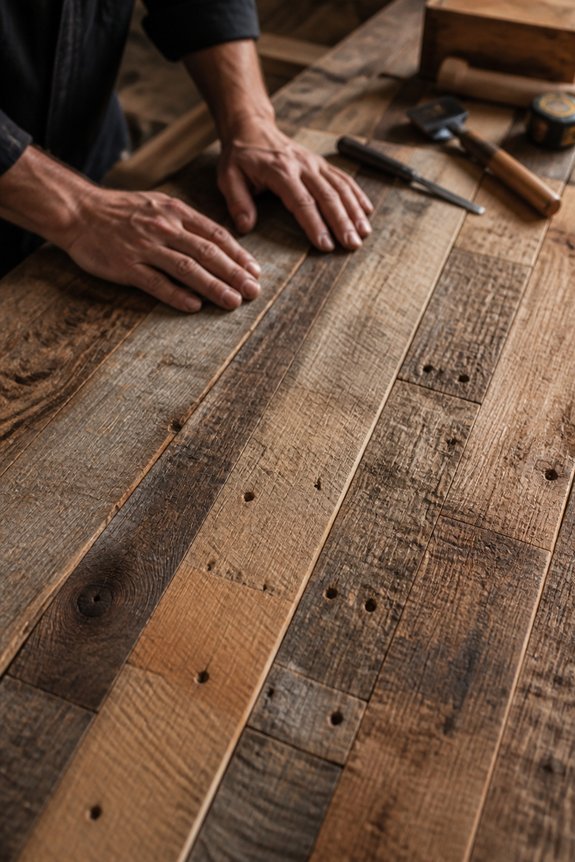
Reclaimed wood gives your pergola a story that new lumber simply cannot match. It carries decades of life in its grain, weathering, and patina. Each piece from old barns, factories, or warehouses holds visible history.
You can source these materials through architectural salvage yards, demolition sites, or specialty suppliers. Barn beams, old-growth timber, and reclaimed flooring boards are popular choices. Expect natural character marks, nail holes, and rich color variations throughout.
The benefits run deep. Reclaimed wood offers proven durability, one-of-a-kind beauty, and genuine environmental value through reuse. Always inspect for structural soundness, previous chemical treatments, and hidden fasteners before building.
Pricing sits above standard lumber, from moderate to premium based on wood type and scarcity. Regular sealing and inspection will protect your investment for years to come.
Curved Beams: Softened Lines and Flow
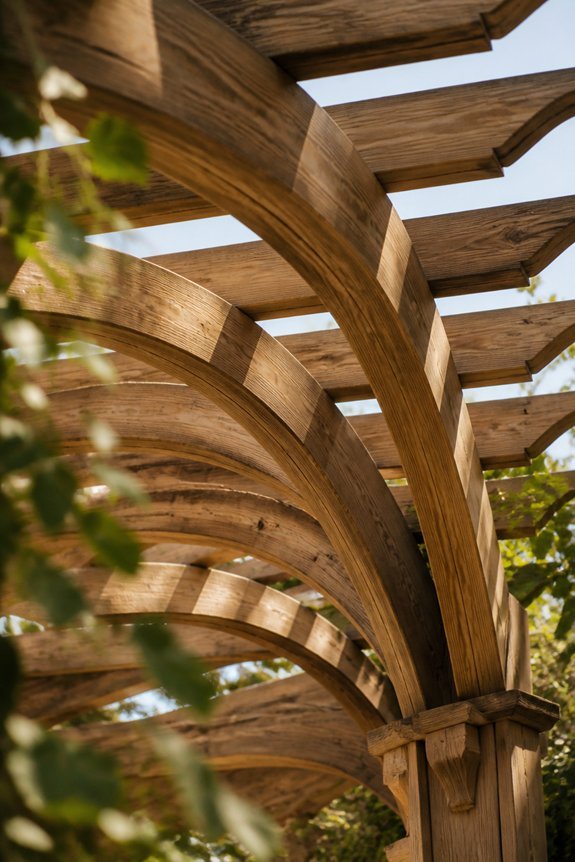
A Softer Take on Structure
Most traditional pergolas rely on straight lines and sharp angles. Curved beams offer something different. They create gentler connections between parts and cut down on that rigid look.
Arched beams fit beautifully in Mediterranean and contemporary spaces. They complement flowing landscapes and guide the eye naturally. You get visual movement and rhythm without trying too hard. Cedar and laminated wood bend well, so you can choose gentle arcs or something more dramatic.
Practical Benefits
Curved beams handle weight better. Stress spreads evenly across supports instead of piling up in one spot. Vines love them too. Plants follow those curves without any fuss.
The result is a softer outdoor space. You keep all the strength and weather resistance of wood, just with a more inviting feel.
Pergola With Integrated Planters
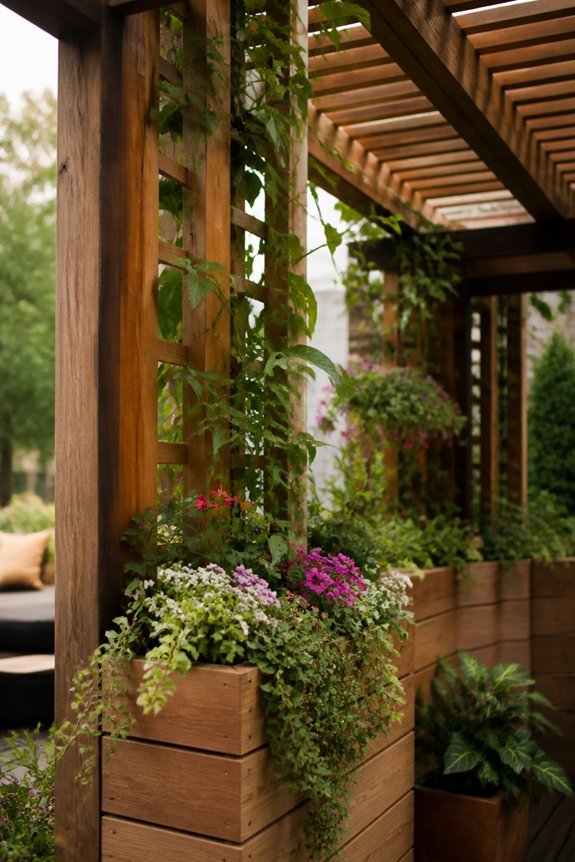
Bring Your Pergola to Life
A pergola can do more than shade your space. Integrated planters let you grow climbing vines, flowers, or herbs right in the structure. Built-in boxes attach to posts, railings, or base frames. This creates a living, breathing outdoor feature.
Choose the Right Materials
Cedar and redwood handle moisture well. They resist damage from soil and watering over time. Treated lumber works too. It keeps costs down while staying durable enough for planters.
Smart Placement and Design
Position planters along the sides or underneath your pergola. This maximizes growing space without throwing off the look. Plan your drainage carefully. Good drainage stops water from pooling near wooden supports.
Plants That Thrive
Clematis and jasmine climb up through the beams. Trailing plants spill from elevated boxes. The result is layered greenery that enhances the whole structure.
Water Feature Integration
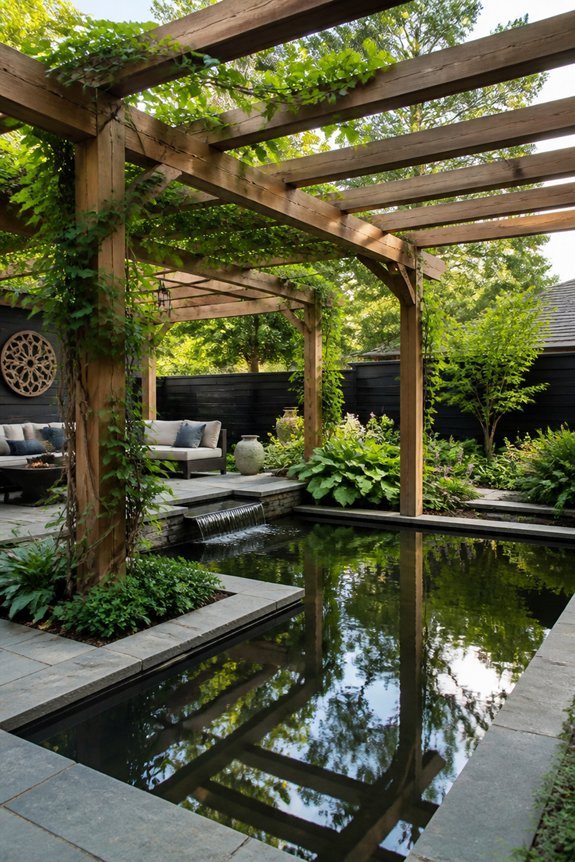
Water can transform a wooden pergola into a refreshing outdoor retreat. A well-placed water feature adds both beauty and comfort to your space.
Cool Comfort Beneath the Structure
Water features fit naturally under pergolas. Fountains, small ponds, and water walls create cooling through evaporation. The sound of moving water also blocks unwanted noise from streets or neighbors. Your pergola becomes a quieter, more comfortable place to relax.
Choosing the Right Feature
Recirculating fountains use minimal water and work almost anywhere. Shallow reflecting pools mirror the overhead beams beautifully. Wall-mounted features save valuable ground space in smaller areas.
Protecting Your Wood
Wood and water need careful planning together. Good drainage prevents rot and extends your pergola’s life. Treated lumber or composite materials handle moisture better than untreated wood. Position water features thoughtfully. Too much moisture will damage wooden supports over time.
Planning Your Pergola: Materials, Space, and Installation
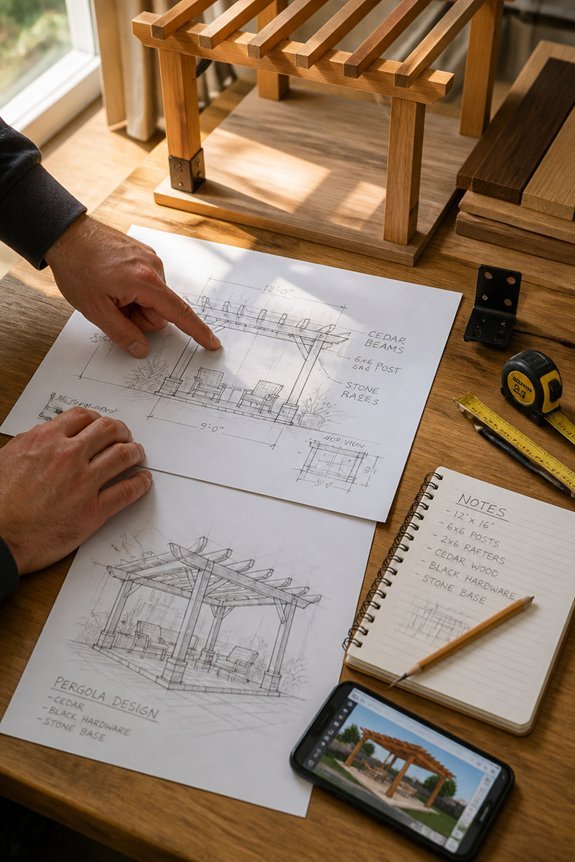
Material Selection
Choosing the right wood makes all the difference for your pergola. Pressure-treated lumber stands up well against rot and insects. It also costs less than premium options.
Cedar and redwood bring natural beauty to your yard. These woods resist decay moderately well. They weather to a soft gray over time if left untreated.
Your budget will guide this decision. Balance upfront costs against how long you want your structure to last.
Space Assessment
Start by measuring your intended location carefully. Note how sun moves across the area throughout the day. Wind patterns matter too, especially for stability.
Check distances from your house, fences, and garden beds. Roots from nearby trees can complicate footing placement. Allow room for plants to grow around the posts.
Mark out the full dimensions with stakes and string. This simple step lets you visualize the finished space before committing.
Installation Planning
Contact your local building department early in the process. Some areas require permits for attached pergolas. Freestanding structures often face fewer restrictions.
Decide honestly about your skill level and available time. DIY saves money but demands precision and patience. Professionals handle permits, engineering, and warranties.
Prepare your site thoroughly before any posts go in. Level the ground and check drainage patterns. Solid preparation prevents leaning, settling, or water damage later.
Frequently Asked Questions
How Long Does a Wooden Pergola Typically Last Before Needing Replacement or Major Repairs?
Wooden pergolas typically last 10-15 years before requiring major repairs, depending on wood type, climate conditions, and maintenance. Treated wood lasts longer than untreated. Regular staining, sealing, and inspections extend lifespan considerably.
What Is the Average Cost to Build a Custom Wooden Pergola for a Residential Property?
Custom wooden pergolas typically range from $3,000 to $12,000 for residential properties. Costs vary based on size, wood quality, design complexity, and local labor rates. Simple structures cost less; elaborate designs with premium materials command higher prices.
Do I Need a Building Permit to Install a Pergola in My Backyard?
Building permit requirements for pergola installation vary by location and local jurisdiction. Homeowners should contact their municipal building department to determine specific regulations, as factors like size, permanent foundation, and electrical components influence permit necessity.
How Much Maintenance Is Required Annually to Keep a Wooden Pergola in Good Condition?
Wooden pergolas require annual maintenance including inspection for rot and insect damage, resealing or staining every two to three years, cleaning debris, and checking structural integrity. Regular upkeep extends their lifespan considerably.
Can a Pergola Provide Enough Shade to Reduce Cooling Costs During Summer Months?
A pergola provides moderate shade reduction, typically lowering temperatures by 5-10 degrees Fahrenheit beneath its structure. This modest cooling effect can decrease air conditioning usage and lower energy costs, though results vary based on climate, orientation, and vine coverage density.
Conclusion
Wooden pergolas remain popular outdoor additions, with surveys showing 68% of homeowners consider them worthwhile investments. These structures offer practical shade, climbing plant support, and aesthetic enhancement. Whether choosing classic lattice, modern minimalist, or curved beam designs, homeowners can select options matching their space, budget, and style preferences. Proper material selection and installation planning guarantee long-term durability and functionality in any garden setting.