


The pizza stains on your sweatpants don’t care about your sofa. But you probably should. Picking the right couch feels oddly permanent. It’s the piece you’ll fight over, nap on, and curse when moving day comes.
Sectionals own their space unapologetically. They swallow corners whole. Families pile onto them like islands during movie nights. But they demand real estate. Small rooms need not apply.
Loveseats keep their ego in check. Two people fit perfectly. Three gets cozy fast. They’re the quiet heroes of studio apartments and reading nooks everywhere.
Then comes the wild territory. Modular pieces rearrange themselves like furniture yoga. Chaises invite leg-draping laziness.
Each choice whispers something different about how you actually live. Not how you imagine living. How you really do.
Sectional Sofas: Maximum Seating for Open Spaces
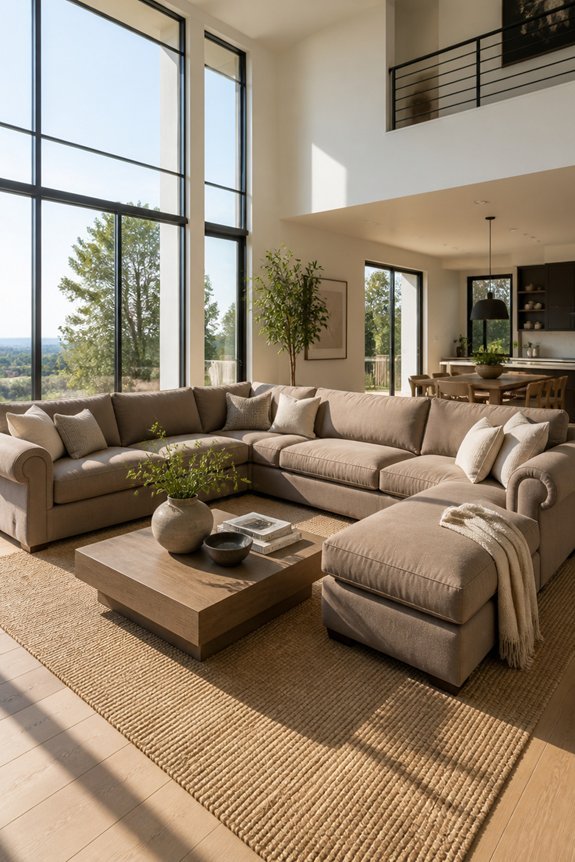
Got a crowd to seat? You need a sectional.
These L-shaped sofas stretch 8 to 10 feet. Five people fit easily. No lap-sitting required.
Open spaces love sectionals. They carve out cozy zones without walls. Everything looks intentional.
Gray hides pizza stains. Cream looks elegant until juice happens. Pick your battle.
You can rearrange the pieces anytime. Corner seats, chaises, modular bits—mix them how you want. Sprawl like a starfish. No one judges.
Families and friend groups thrive here. Sectionals say yes to everyone.
Also read: 18 LIVING ROOM DESIGNS Modern & Stunning!
Compact Loveseats: Perfect for Small Living Rooms
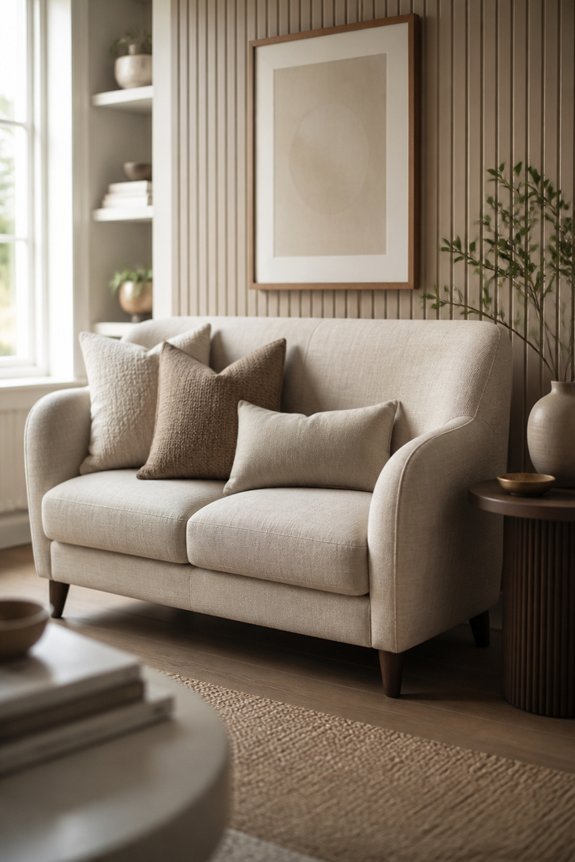
Cramped living room? You’re not alone. A loveseat might be your new best friend.
These compact sofas run 50-65 inches wide. That’s small enough for tight apartments. But big enough for two people—or one person who loves to sprawl.
You have options. Grey linen keeps things modern. Deep blue velvet feels luxurious. Cream leather wipes clean after movie nights. Prices beat full sectionals, too.
Try this: Place your loveseat perpendicular to the TV. Or face it toward a window. Both setups maximize coziness. Add a small side table within arm’s reach. Drape a throw blanket over one arm. Instant relaxation station.
Small spaces demand smart choices. A loveseat proves you don’t need massive furniture to live well.
Modular Seating: Build Your Own Layout
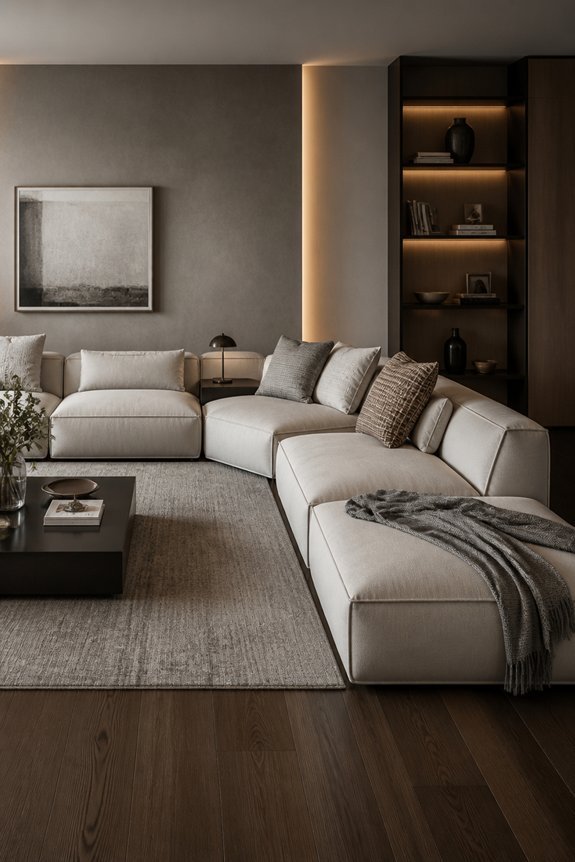
You love your loveseat. But what happens when you want something different next month?
Modular seating fixes that. Think of it as adult Lego for your living room. Each piece snaps together like puzzle blocks. You get an L-shape today. You get a U-shape tomorrow. The sections run 30 to 40 inches wide. They fit through doorways easily. No disassembling your whole apartment. No frustration.
Colors go from calm gray to bold blue. You pick your vibe. Your furniture moves with your life. Not the other way around.
Spill pizza sauce on one cushion? Replace that piece only. Not the whole sofa. Flexible. Practical. Kind of genius, actually.
Classic Leather: The Investment That Ages Well
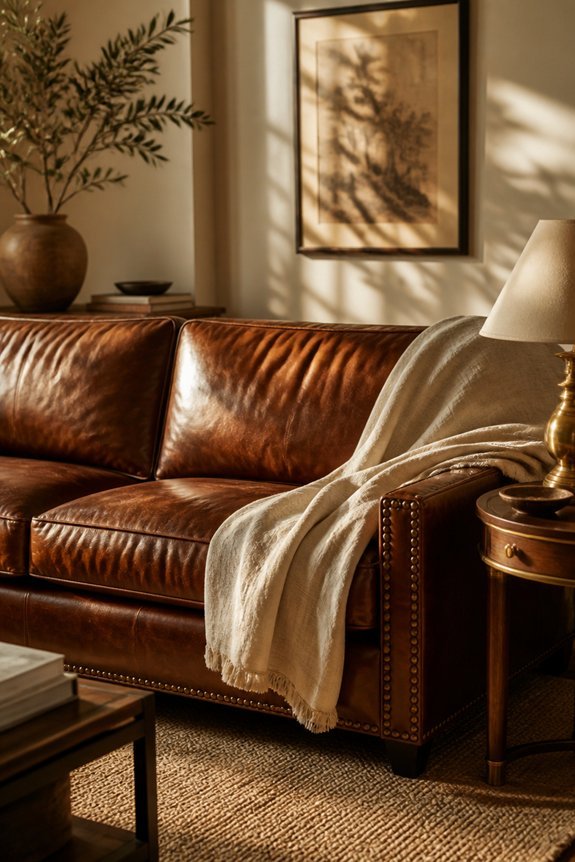
You know that friend who looks better every year? That’s leather.
Drop $2,000 to $5,000 on a quality 84-inch sofa. Sounds steep. But you’ll bury three fabric couches before this one quits. Spaghetti night? Red wine? Wipe it. Done. Fabric remembers everything. Leather forgives.
The brown and tan shades shift over time. Scratches become stories. That worn-in look? It’s called patina. Designers fake it. Yours earns it. Condition it twice yearly. Skip this step and you’ll own a giant raisin. Treat it right and your grandkids fight over who gets it.
Fabric Choices: Which Materials Actually Hold Up
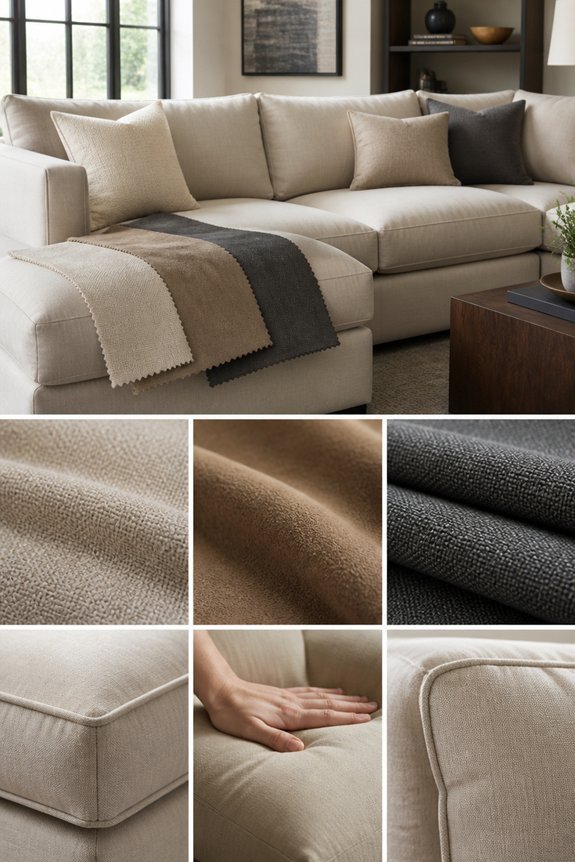
You’ve definitely stared at a stain wondering what went wrong. We’ve all been there. That gorgeous sofa looked bulletproof in the showroom.
Microfiber is your pizza night champion. Spills bead up. Pet hair brushes right off. Performance fabric works the same magic—stains disappear with barely any effort.
Skip linen if you hate maintenance. It wrinkles if you look at it wrong. Velvet traps everything. Every breadcrumb, every memory of your messy life.
Cotton blends meet you halfway. They look nice. They forgive small accidents. Solution-dyed fabrics are the real secret weapon. Color runs through every fiber, so spills can’t sink in. They just sit there waiting for your napkin.
Forget silk unless you live alone and eat nothing. Your couch should match your actual days, not your Pinterest dreams.
Sleeper Sofas: Guest Bed Built Into Your Seating
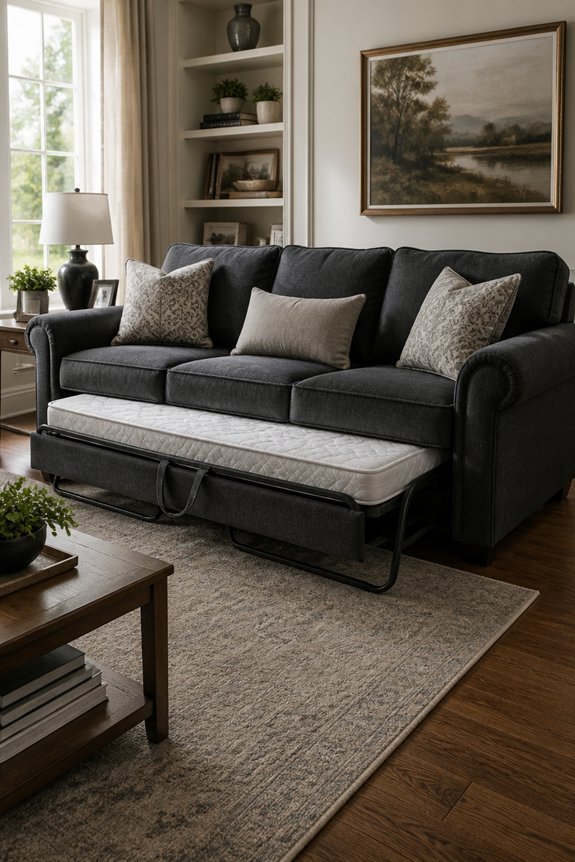
Ever had a guest crash on your floor? You know the drill. Crooked neck. Bad sleep. Awkward morning coffee.
A sleeper sofa fixes that. It’s your couch at lunch. Your guest bed by dinner. Magic without the wand.
Pick your size based on your guest list. Twin for solo visitors. Queen for couples who don’t mind cuddling. Some hide memory foam mattresses. Your back will thank you. So will your friends.
You save a room. You keep your dignity. Pull it out, add sheets, done. That slight squeak? Just blame the cat.
Low-Profile Styles for Modern Minimalist Homes
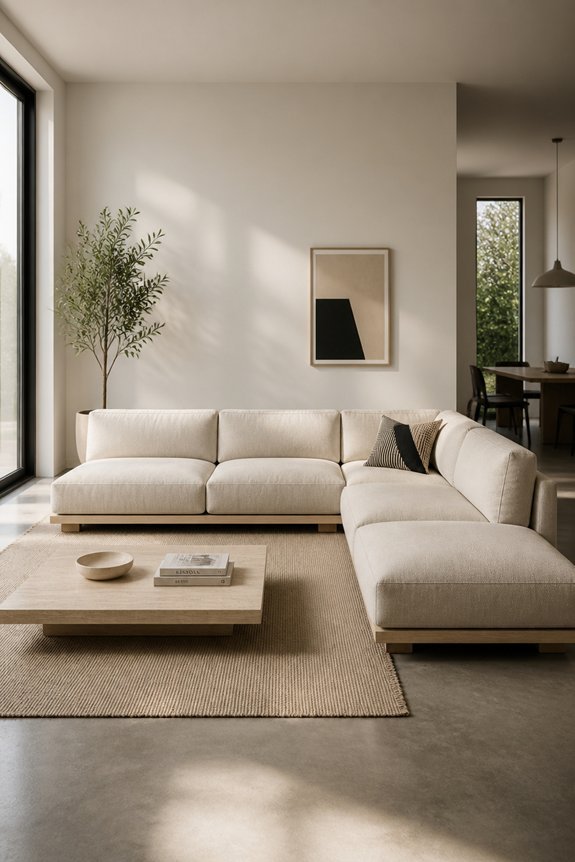
Tired of your living room feeling cramped? You’re not alone. Bulky furniture eats up space fast. Low-profile sofas solve this. They sit just 12-16 inches off the ground. They stretch wide and hug the floor. Your room instantly feels bigger.
Here’s what makes them work. Clean lines. Simple frames. No ornate legs stealing attention. Stick to gray, black, or white fabrics. You’ll get that calm, zen vibe you’re after. Push one against a bare wall. Watch your space open up.
Low-profile sofas prove minimalism has edge. They rebel against fussy design. They choose function over fluff. Your living room becomes a sanctuary. You can finally breathe. No clutter. No chaos. Just honest furniture doing its job beautifully.
Chesterfield Sofas: Timeless Details and Deep Comfort
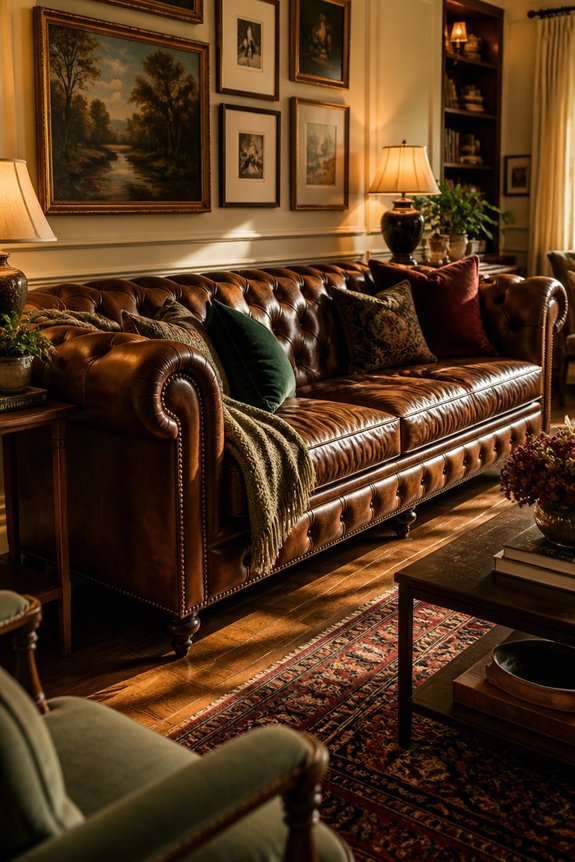
Craving furniture that actually feels like home? Chesterfield sofas deliver. They’ve been around for centuries, and here’s why they still matter to you.
You’ll spot them instantly. Rolled arms, deep button tufting, and seats you disappear into. Most stretch 84 inches—plenty of room to stretch out solo or pile in with friends. Leather stays classic, but velvet or linen works if you want softer vibes. Try burgundy, chocolate brown, or navy for instant warmth.
Pair yours with sleek modern pieces. The contrast pops. One heads-up: these sofas run deep. Getting up takes effort. Your guests will notice. They’ll also stay for hours.
Curved Designs: Statement Shapes That Define a Room
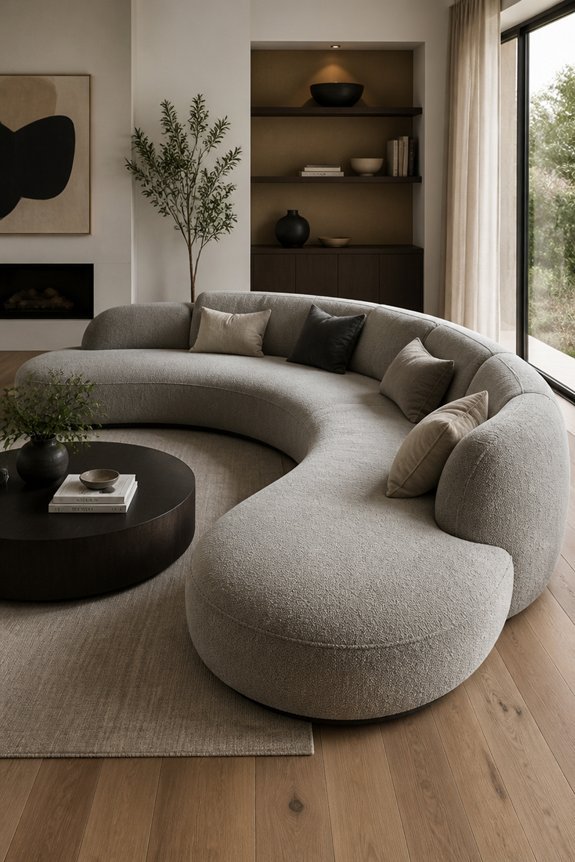
Tired of living rooms that feel like waiting areas? You’re not alone. Straight sofas have their place. But they don’t spark joy.
A curved sofa changes everything. It hugs your space. It invites conversation. You get cozy nooks for lounging, reading, or Sunday naps.
Picture this: a 90-inch cream sectional wrapping your corner like a warm embrace. Guests linger longer. Your room feels softer, friendlier, less boxy.
Try charcoal or deep navy for instant drama. These pieces become your room’s natural focal point. No extra effort needed.
You soften hard edges without knocking down walls. You make a statement without shouting. The best part? You’re still getting full functionality. Just with way more personality.
Recliners: Built-In Comfort for Movie Night
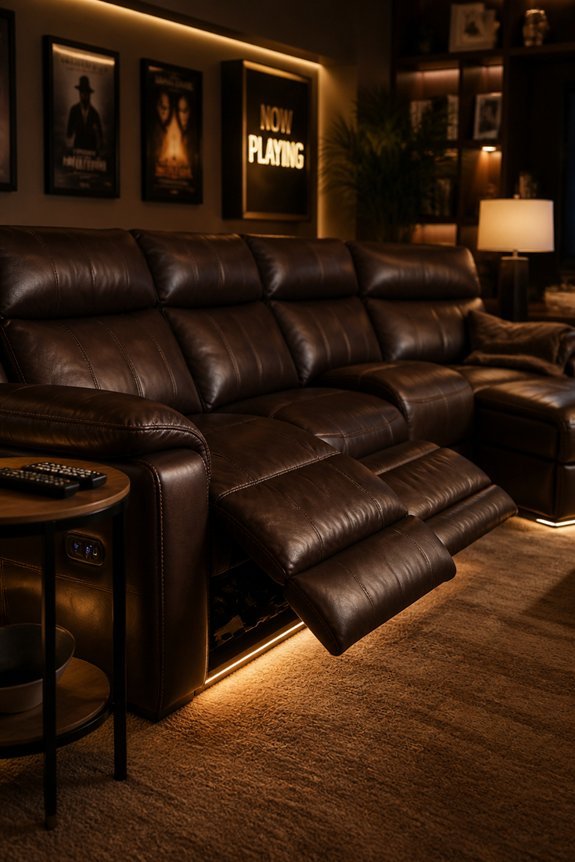
You know that stiff feeling after a long movie? Regular sofas do that to you.
Recliners fix everything. Push one button. Your feet lift up. Your back tilts back. Done.
Picture this. You sink into soft leather. The chair wraps around you like a good friend. Built-in cup holders keep your drink close. Side pockets hold your snacks and remotes. Some even heat up. Perfect for cold nights.
Your back stops aching. Your legs finally relax. You might never want to get up. That’s the point.
Pit Sofas: Extra-Deep Seating for Serious Lounging
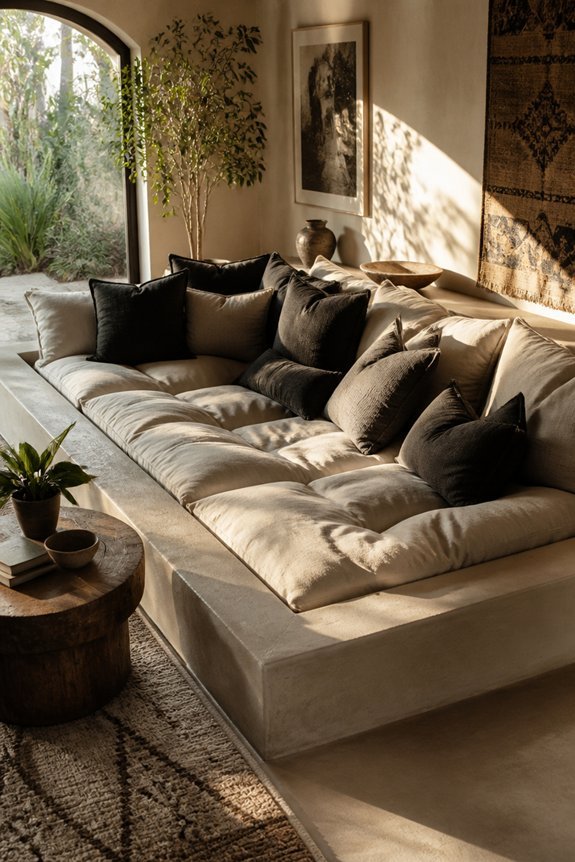
Most sofas force you to sit. Pit sofas let you *lounge*.
Think about it. Regular couch? Your feet hit the floor. Your back stays tense. You’re always “on.” But pit sofas sink you 40 inches deep. Your legs stretch out. Your shoulders drop. You actually disappear into the cushions.
Colors range from charcoal gray to cream to navy. Most span 8-10 feet wide, so plan your space accordingly.
Fair warning: standing up takes work. You’ll roll sideways. You might grab the armrest for leverage. But that struggle? It means you’ve truly relaxed. And isn’t that the whole point?
Daybeds: When Your Sofa Doubles as a Guest Bed
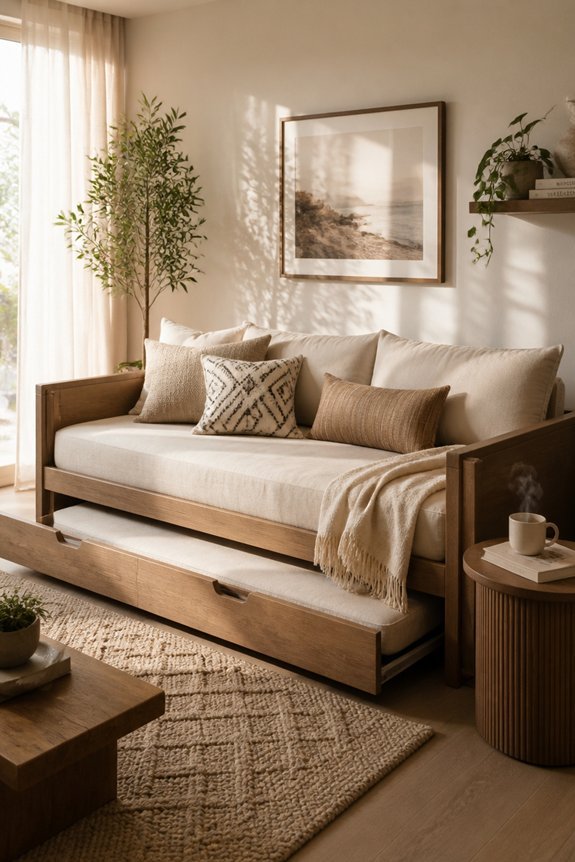
Ever had a guest show up last minute with nowhere to sleep? Your couch wasn’t built for that. A daybed solves this without trying too hard.
It’s a twin bed in disguise. Around 39 inches wide and 75 inches long. Three sides frame it like a proper sofa. No metal rails screaming “spare room.” Just a clean, intentional look.
Style it up. Stack some textured pillows. Drape a chunky knit throw. Now you’ve got seating that actually photographs well. Your living room wins. Your Instagram wins.
Aunt Linda arrives unannounced. No panic. No air mattress inflation drama. Pull out the trundle or unfold the mattress. Done.
Dual-purpose furniture usually looks like a compromise. Daybeds don’t. They’re practical without the apology.
Corner Solutions: Smart Layouts for Awkward Spaces
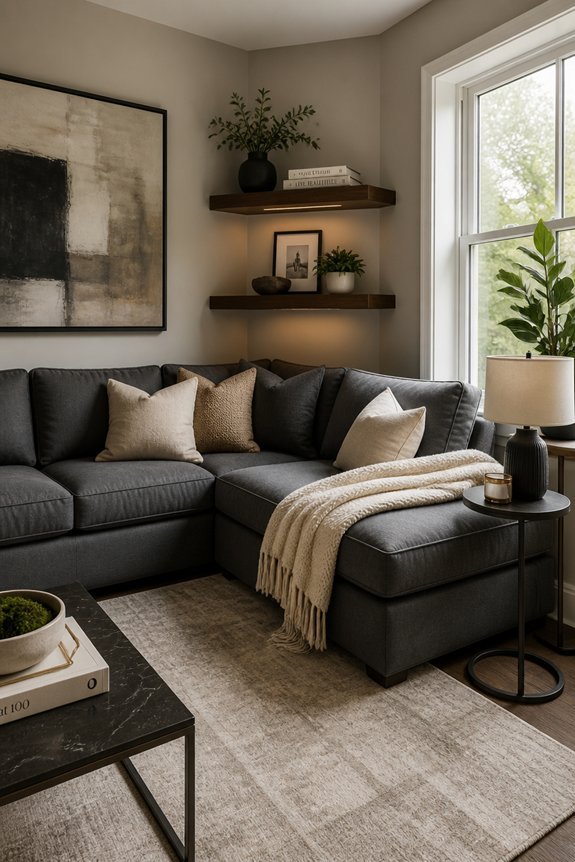
You know that one corner in your living room? The one that just sits there, all pointy and useless?
It’s not actually useless. It’s furniture gold. You just need to be brave enough to use it.
An L-shaped sectional is your corner’s best friend. It fills that awkward space without making things weird. About 8 feet by 8 feet, and suddenly you’ve got real seating where dead space used to live.
Want something cozier? Try a reading nook. Plop down a small armchair. Add a side table. Boom—instant hideaway. Tall plants help too. Think 4-5 feet. They soften hard edges and make corners look intentional, not forgotten.
Corner shelving works wonders. Mount some floating wood shelves. That angry corner becomes a display spot for books or plants.
Corners aren’t problems. They’re opportunities wearing disguises.
Mid-Century Modern: Retro-Cool Charm With Clean Lines
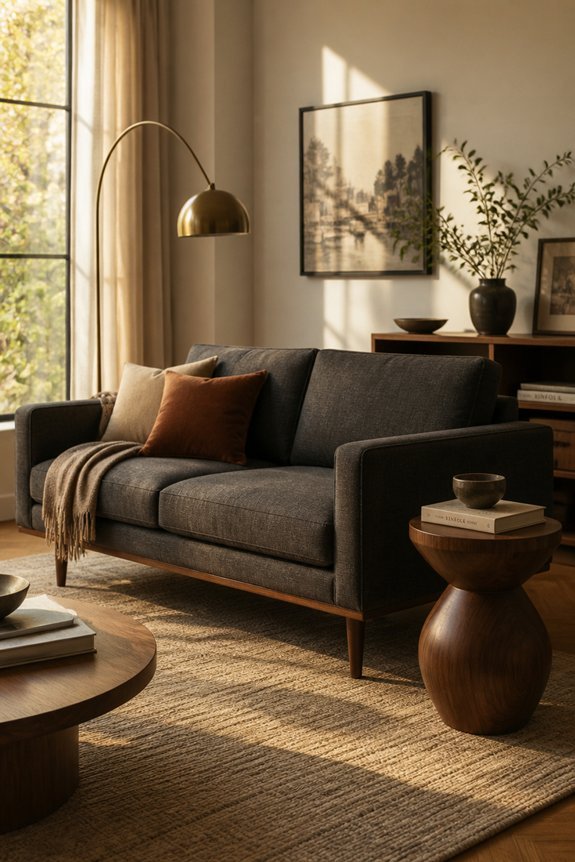
Want a living room that feels stylish without trying too hard? Mid-century modern might be your answer.
These sofas bring serious retro charm. You’ll spot them by their clean lines and tapered wooden legs. Grey, tan, or burnt orange frames work with simple geometric patterns. The cushions stay firm. You won’t sink into them like quicksand.
Small space? Perfect. A 72-inch sofa hugs your wall tight. It keeps that vintage vibe without eating your whole room. You get intentional style, not accidental clutter.
Microfiber: Budget-Friendly Durability for Families
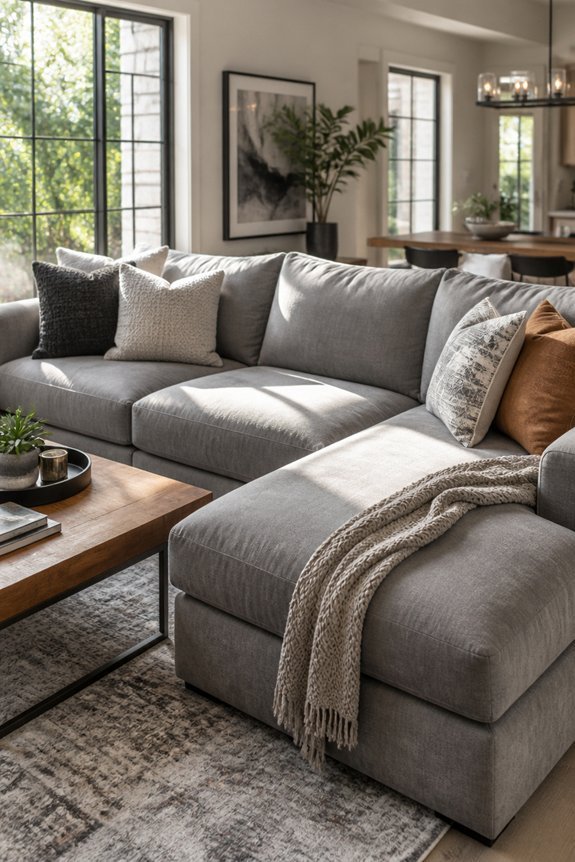
You want a magazine-worthy sofa. But your kids see furniture as a science experiment.
Microfiber gets it. This fabric laughs at spills, stains, and mystery sticky spots. It comes in smart colors like gray, chocolate brown, and navy. Dirt hides like a champion.
The material feels soft. Almost like a cloud that won’t judge your snack habits.
Your wallet stays happy too. An 84-inch microfiber sofa costs hundreds less than leather. Traditional fabric can’t compete either.
Cleaning? Just grab a damp cloth. Wipe the spill. Watch it vanish.
Parents everywhere quietly celebrate. Microfiber survives real life without breaking the bank.
Sectionals With Chaise: The Ultimate Footrest Solution
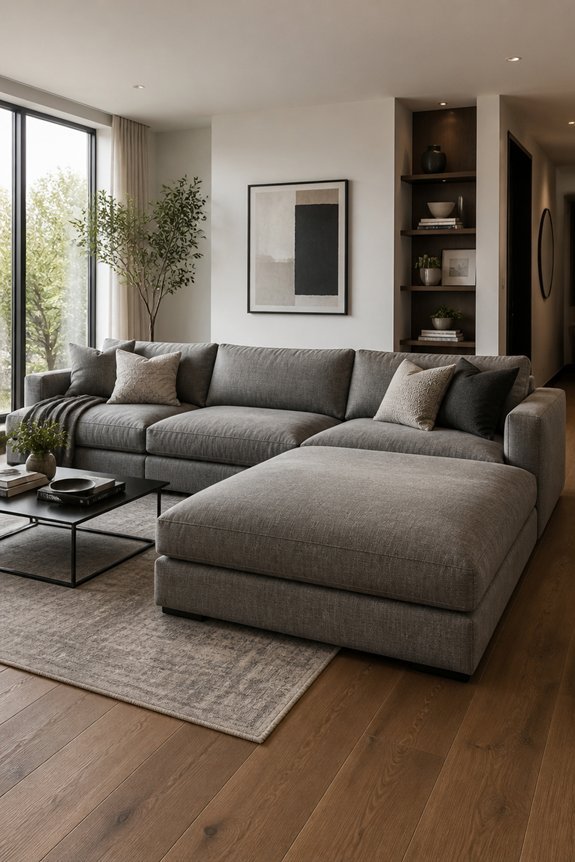
Your body knows the truth. After a day at your desk, you need to stretch. You need to stop feeling like a compressed spring.
Enter the sectional with chaise.
You get a built-in footrest that’s sixty inches of pure relief. No ottoman to chase around. No corners digging into your calves. Just you, reclined, legs supported like they finally matter.
Picture this: gray sectional, evening light, feet up. Your lower back unclenches. Your knees thank you quietly.
Families love these because territory disputes disappear. Everyone claims their space. No armrest wars. No legroom negotiations.
Frequently Asked Questions
How Often Should I Clean and Maintain My Sofa to Extend Its Lifespan?
One should vacuum the sofa weekly to remove dust and debris. Monthly spot-cleaning of stains is recommended, while professional deep cleaning every 12-18 months helps preserve the fabric and extend the furniture’s overall lifespan considerably.
What’s the Average Cost Range for Quality Sofas Across Different Styles?
Quality sofas typically range from $800 to $3,000 for mid-range options. Contemporary styles cost $1,500–$2,500, while traditional pieces average $1,200–$2,800. Designer sofas exceed $4,000. Budget options start around $500, though durability may suffer considerably.
How Do I Measure My Doorways to Ensure My Sofa Fits Through?
One should measure doorway height and width at their widest points, then compare these dimensions against the sofa’s height, width, and depth. Accounting for diagonal angles during entry guarantees successful furniture placement through tight spaces.
Which Sofa Style Works Best With Pets and High Traffic Households?
Leather and microfiber sofas suit pet-friendly homes best, offering durability and easy cleaning. Sectionals with performance fabrics withstand heavy use effectively. Dark colors conceal stains, while tight weaves resist claws and damage from active households.
Can I Return or Exchange a Sofa if It Doesn’t Fit My Space?
Most retailers offer return or exchange policies within specific timeframes, typically 30-90 days. Customers should verify measurements beforehand and review the store’s terms. Some companies provide free returns, while others charge restocking fees or require purchase of delivery services.
Conclusion
Picking the right sofa is like finding your perfect snack—it’s gotta fit your style and your space. Whether you want a giant sectional for movie marathons or a tiny loveseat that doesn’t eat your whole room, there’s a couch out there with your name on it. The key? Think about how you actually use your living room, grab something durable, and get ready to become best friends with your new furniture.