

There’s something magical about cooking outdoors while staying protected from rain and harsh sun. A covered outdoor kitchen becomes your favorite entertaining space, letting you host gatherings comfortably regardless of weather. Think of it as extending your home’s living area into nature while maintaining all the convenience and comfort you’d want.
Start simple: you need shelter, cooking equipment, and maybe some counter space nearby. A pergola with weatherproof panels works beautifully, or consider a traditional roof structure if your budget allows. Keep your appliances minimal at first—perhaps just a grill and sink—then add features as you discover what you actually use and enjoy.
The real magic happens when you set it up to match how you actually cook and entertain. Some people love outdoor pizza ovens, others prefer built-in grills. Some want full bars and seating, others just need a small prep area. Design around your actual lifestyle, not magazine pictures, and you’ll create a space you genuinely use constantly.
Budget-Friendly Tent Structure for Temporary Coverage
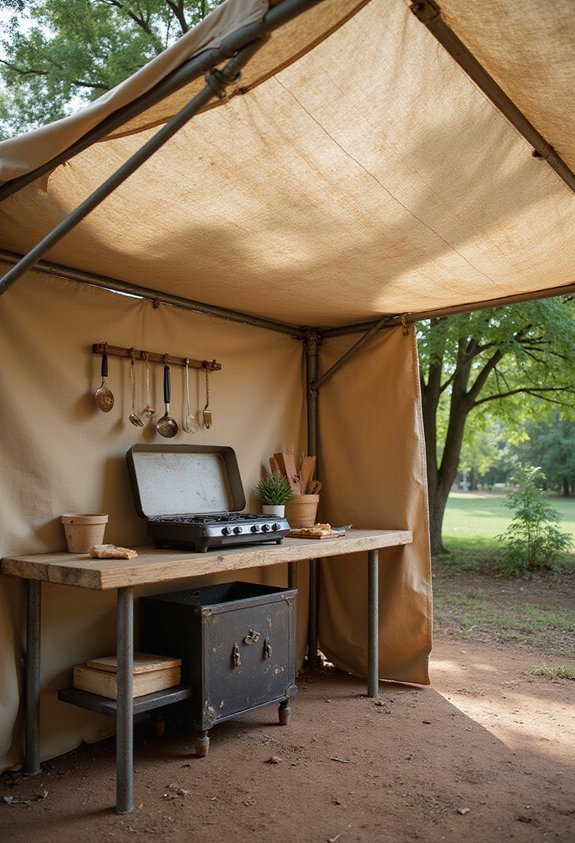
If you’re looking to protect your outdoor kitchen without breaking the bank, a tent structure offers an affordable, flexible solution. You’ll find quality camping or event tents in various sizes that fit most budgets and cooking spaces.
Setup’s straightforward—most models require basic assembly with minimal tools. You’ll gain shelter from rain and sun while maintaining easy access to your cooking area. These structures accommodate grills, countertops, and prep stations effectively.
The temporary nature works in your favor. You can adjust coverage seasonally, relocate as needed, or upgrade later without major investment. Durable polyester or canvas materials withstand weather well when properly maintained.
Consider anchoring systems carefully to prevent wind damage. Quality tent structures typically last several years with reasonable care, making them an excellent starter solution for covered outdoor cooking.
Also read: 12 Kitchen Picture Wall Ideas
Retractable Awning Over Existing Patio Space
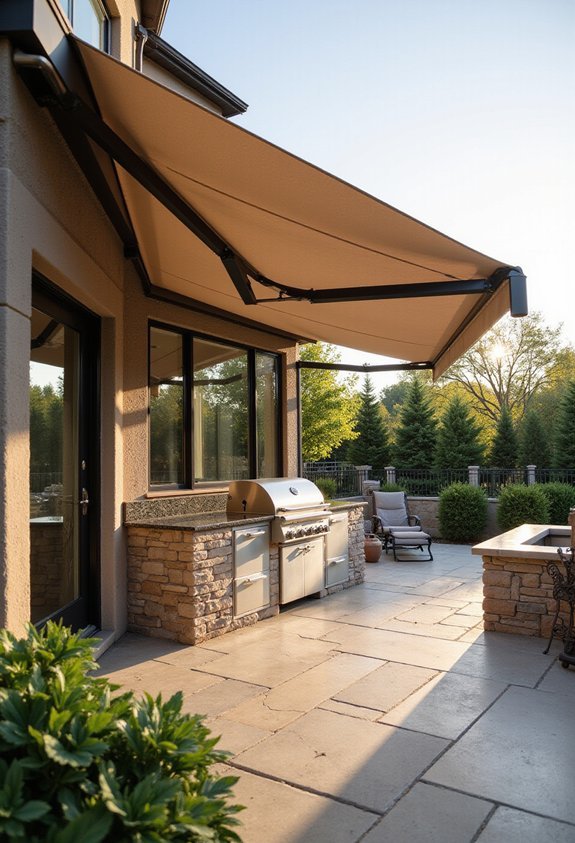
While tent structures provide temporary flexibility, a retractable awning delivers a more permanent, polished solution for your existing patio. You’ll appreciate the seamless integration with your home’s aesthetic, as awnings come in various colors and styles that complement your architecture.
Installation is straightforward since you’re utilizing existing patio space. You’ll need proper mounting points on your home or nearby posts, which a professional can assess quickly. The motorized or manual operation gives you control over sun exposure and weather protection.
Retractable awnings offer durability and longevity, typically lasting 10-15 years with minimal maintenance. You can extend or retract them based on your needs, protecting your outdoor kitchen from harsh sun while preserving yard views when retracted. This flexibility makes them ideal for year-round use.
Pergola With Shade Cloth and Retractable Canopy
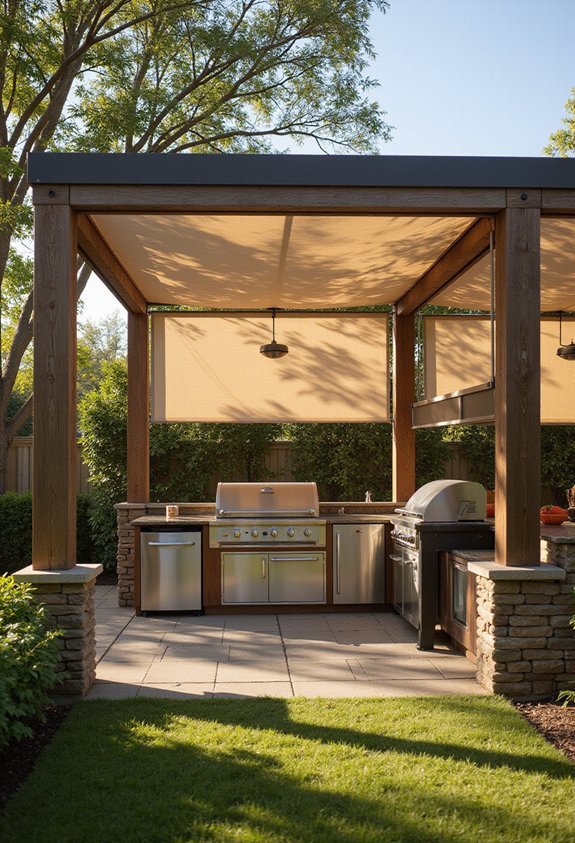
A pergola paired with shade cloth and a retractable canopy gives you the best of both worlds—structural elegance combined with practical sun control. You’ll enjoy open-air ambiance on cooler days while deploying the canopy during peak heat or unexpected rain.
This hybrid approach lets you customize your coverage instantly. The shade cloth provides consistent UV protection and diffused lighting, while the retractable canopy offers complete coverage when needed. You’re not locked into one aesthetic or functional option.
Installation works well over existing patios or new spaces. The pergola’s framework supports both elements without overwhelming your kitchen area. You’ll appreciate the flexibility year-round, adapting to seasonal changes effortlessly. This solution balances design sophistication with everyday functionality, making outdoor cooking comfortable regardless of weather conditions.
Adjustable Louvered Roof Over Your Outdoor Kitchen
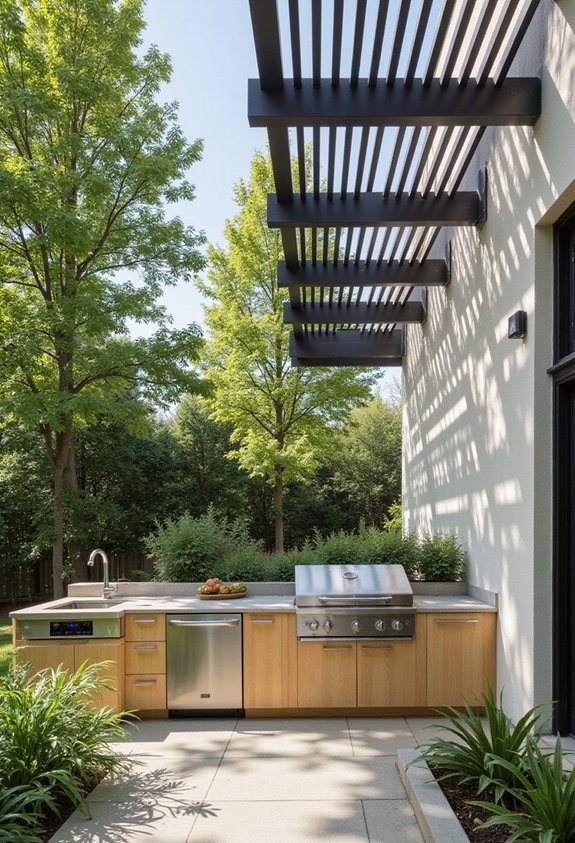
An adjustable louvered roof steps up your outdoor kitchen’s versatility by letting you control sunlight and ventilation with precision. You’ll appreciate how motorized slats open to allow airflow on hot days or close to provide full shade when needed. This system adapts to weather conditions throughout the day, protecting your cooking area from unexpected rain while maintaining natural light.
Installation requires structural support and electrical work, making professional setup worthwhile. You can adjust the louvers manually or via remote control, offering convenient operation during meal preparation. The contemporary design complements modern outdoor spaces elegantly.
While pricier than fixed covers, louvered roofs deliver superior functionality and aesthetic appeal, transforming your outdoor kitchen into an all-weather entertainment hub that adapts to your preferences.
Polycarbonate Roof Kitchen for Year-Round Durability
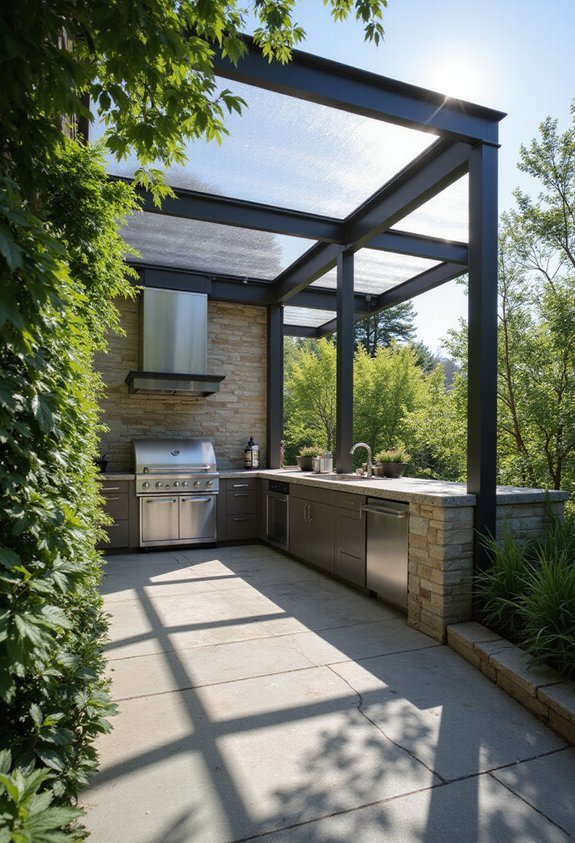
Polycarbonate roofs offer exceptional durability for outdoor kitchens that’ll withstand harsh weather year-round. You’ll appreciate how this material resists UV rays, preventing discoloration and degradation that plague traditional coverings.
Unlike glass, polycarbonate won’t shatter from impact or temperature fluctuations, making it safer for your cooking space. You can install panels that diffuse light beautifully while protecting your appliances and food prep areas from direct sun exposure.
The material’s lightweight construction means you’ll need less structural support than heavier alternatives. Installation remains straightforward, and maintenance requires only occasional cleaning with mild soap and water.
You’ll find polycarbonate roofs cost-effective compared to other durable options. They’re transparent or tinted, letting you customize the ambiance while enjoying reliable protection. This solution delivers longevity without compromising functionality or aesthetics.
Lean-To Structure Against Your Home
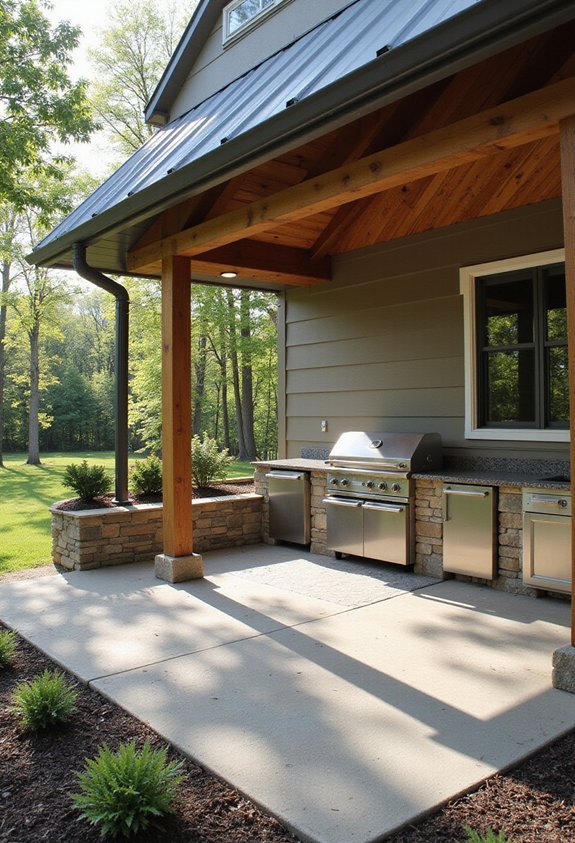
When you’re looking to maximize space efficiency, a lean-to structure attached directly to your home’s exterior wall offers an ideal solution for your outdoor kitchen. This design leverages your existing home as one structural support, reducing construction costs and materials needed. You’ll gain protection from rain and sun while maintaining an open-air feel that traditional covered patios provide.
The lean-to’s sloped roof design naturally channels water away from your home’s foundation, preventing moisture damage. You can customize the roof pitch based on your climate—steeper angles work better in heavy rainfall areas. Installation becomes simpler since you’re anchoring to established walls rather than building freestanding supports.
This configuration keeps your outdoor kitchen functionally connected to your indoor spaces, making it convenient for entertaining and meal preparation.
Rustic Timber Frame With Natural Aesthetics
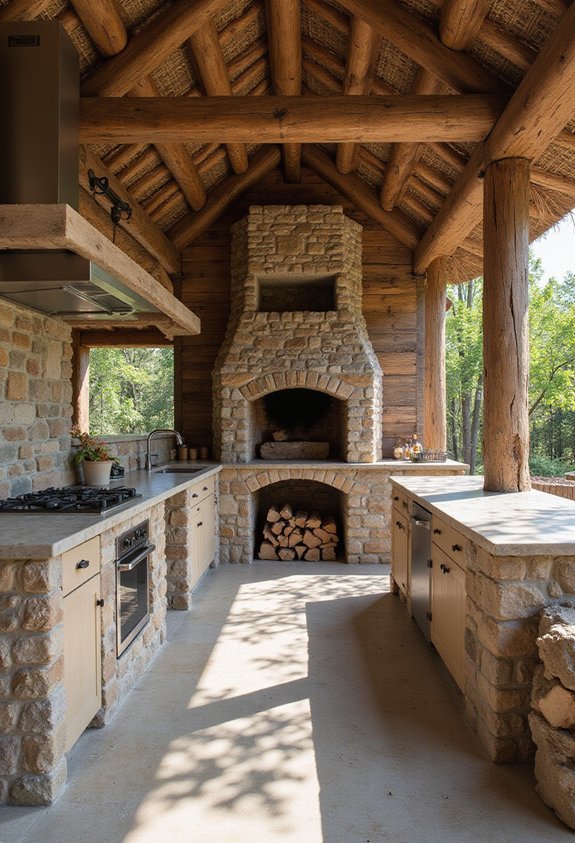
If you’re drawn to warmth and character in your outdoor kitchen design, a rustic timber frame delivers both aesthetic appeal and structural integrity. Heavy wooden beams create a striking focal point while naturally complementing landscaping and stone elements.
You’ll appreciate how timber frames age beautifully, developing a rich patina that enhances their charm over time. The open design allows excellent airflow, keeping your cooking area comfortable during hot months. You can customize the spacing between beams to accommodate your preferred roofing material—whether polycarbonate panels, metal sheets, or thatch.
Reclaimed or locally sourced wood adds authenticity and sustainability to your project. These structures withstand harsh weather when properly treated with protective stains and sealants. You’ll create an inviting gathering space that blends seamlessly with nature while providing reliable shelter for outdoor cooking and entertaining.
Freestanding Gazebo With Built-In Outdoor Kitchen
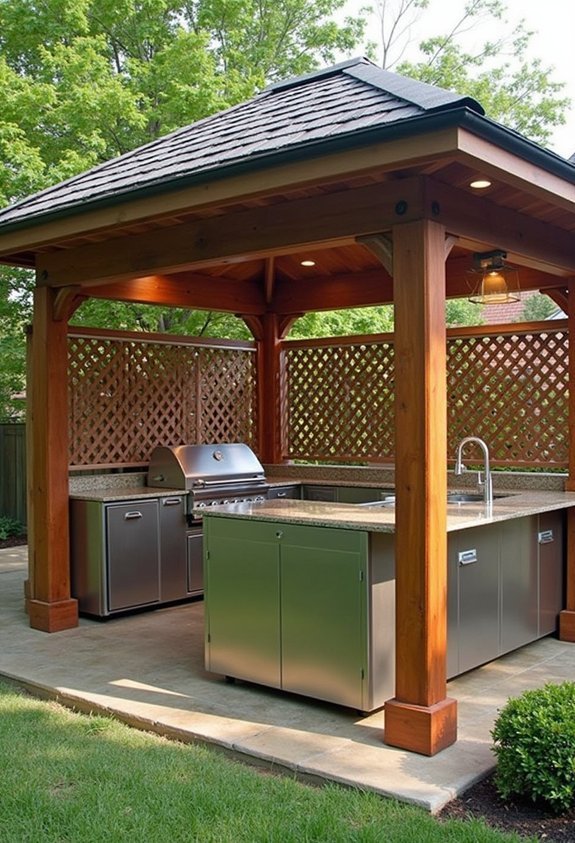
A freestanding gazebo offers you the ultimate flexibility in outdoor kitchen design, combining shelter and cooking functionality in one elegant structure. You’ll appreciate how it stands independently, requiring no attachment to your home, which simplifies installation and allows strategic placement anywhere on your property.
Within the gazebo’s protective frame, you can install a full cooking setup—grill, cooktop, sink, and counter space—all shielded from weather and sun. The open-sided design promotes excellent airflow, preventing heat and smoke buildup while keeping you comfortable during meal preparation.
You’ll find gazebos available in various materials: wood for warmth, metal for durability, or vinyl for minimal maintenance. The roofing options range from solid panels to retractable fabric, giving you control over shade and ventilation based on your needs and preferences.
Open-Air Pavilion With Full Kitchen Setup
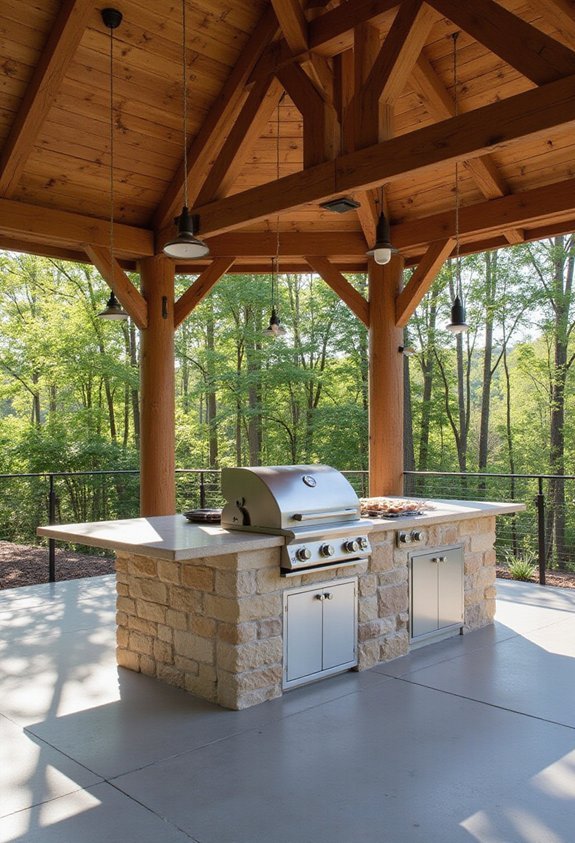
While gazebos prioritize portability and independence, open-air pavilions offer a more permanent, expansive solution that seamlessly extends your home’s living space. You’ll appreciate the generous square footage these structures provide, accommodating multiple cooking stations, dining areas, and entertainment zones simultaneously.
When you install a full kitchen setup beneath your pavilion, you’re creating a sophisticated outdoor entertaining hub. You can incorporate built-in grills, refrigeration units, sinks, and countertops that rival indoor kitchens. The open-sided design keeps you connected to your landscape while protecting you from weather elements.
You’ll find that pavilions handle higher wind loads and heavier equipment than gazebos, making them ideal for permanent installations. Your investment in a pavilion pays dividends through increased home value and year-round usability.
Gable Roof Kitchen for Year-Round Protection
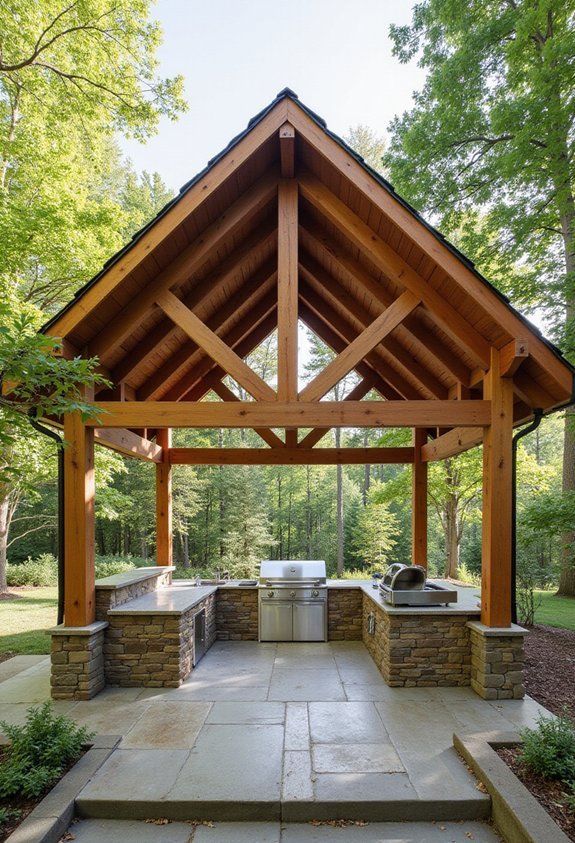
How can you maximize your outdoor kitchen’s usability throughout changing seasons? A gable roof kitchen delivers thorough protection that lets you cook year-round without compromise.
Unlike flat-roof designs, gable roofs shed water efficiently, preventing pooling during heavy rainfall. The peaked structure creates superior ventilation, directing smoke away from your cooking area while maintaining comfortable temperatures. You’ll appreciate the additional headroom, which accommodates taller appliances and reduces heat accumulation during summer months.
Install the roof with a slight overhang extending 2-3 feet beyond your kitchen perimeter. This shields your countertops, grills, and seating from direct exposure to elements. Consider adding gutters and downspouts to manage water runoff effectively.
The gable design’s structural strength handles wind loads better than alternatives, making it ideal for regions with variable weather. Your investment guarantees consistent outdoor cooking opportunities regardless of season.
Glass Enclosure for True Indoor-Outdoor Flow
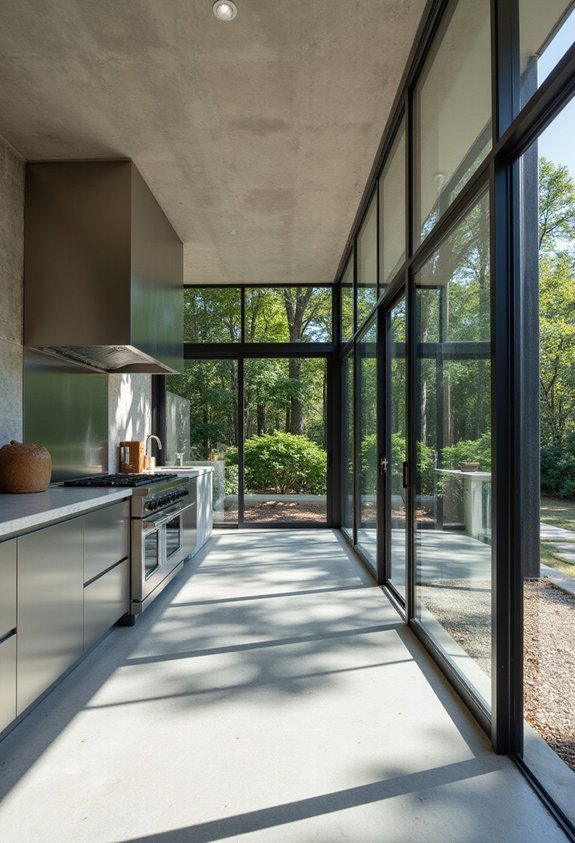
Taking your outdoor kitchen beyond seasonal limitations, glass enclosures create an entirely new dimension of usability and comfort. You’ll enjoy seamless changes between your indoor and outdoor spaces while maintaining weather protection year-round.
Glass panels shield you from wind, rain, and cold without blocking natural light or your views. You can cook and entertain regardless of weather conditions, extending your outdoor living season considerably. The transparent design preserves the open-air ambiance you love while providing insulation benefits.
You’ll appreciate the versatility glass offers. Unlike solid roofs, glass allows you to adjust your enclosure through operable panels or retractable sections. This flexibility lets you control ventilation and temperature throughout the day.
Installation does require professional assessment of your existing structure’s load capacity and local building codes. However, the investment pays dividends through enhanced functionality and property value.
Hybrid Coverage: Mixing Shade Solutions for Maximum Flexibility
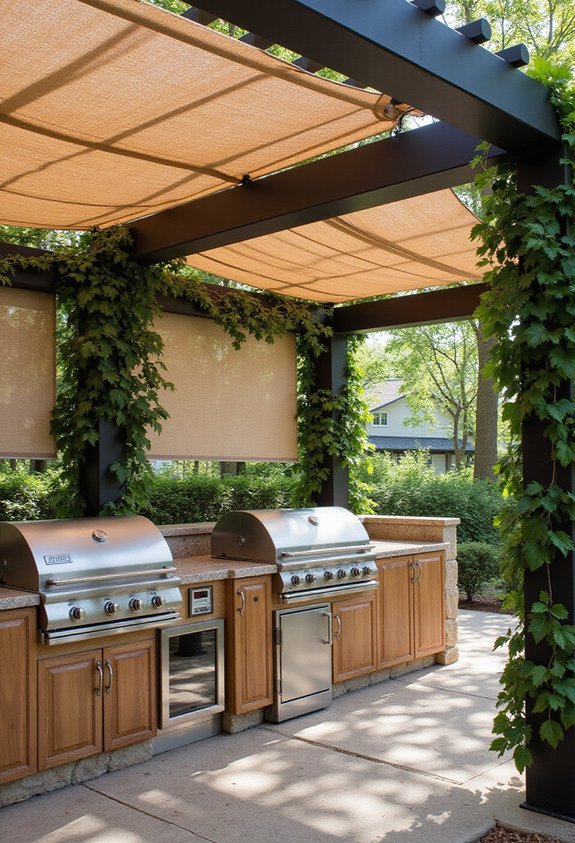
By combining multiple coverage types, you’ll create an outdoor kitchen that adapts to your needs throughout the day and seasons. You might pair a permanent pergola with retractable awnings to control sun exposure precisely. Add shade sails for flexible coverage that you can adjust seasonally, then install a polycarbonate panel section for weather protection during storms.
This hybrid approach lets you maximize usable space without committing entirely to one solution. During summer, you’ll appreciate the layered shade options that keep temperatures manageable. Winter brings the flexibility to remove or adjust coverings as daylight changes. You can also combine different materials—wood beams, fabric, and metal—creating visual interest while serving distinct functions.
This strategy balances permanent investment with adaptable elements, giving you year-round comfort and functionality.
Frequently Asked Questions
What Permits and Building Codes Apply to Installing a Covered Outdoor Kitchen?
You’ll need to check your local building codes and obtain permits for your covered outdoor kitchen project. Most jurisdictions require permits for electrical, plumbing, and structural work. You should contact your city’s building department to learn specific requirements for your area.
How Much Does It Cost to Build a Fully Covered Outdoor Kitchen Structure?
You’ll typically spend $3,000 to $15,000+ building a fully covered outdoor kitchen structure. Costs depend on size, materials, complexity, and whether you’re hiring professionals or doing DIY work. Custom designs and premium materials substantially/considerably/markedly increase your total investment.
What Materials Are Most Durable and Low-Maintenance for Outdoor Kitchen Coverings?
You’ll find that polycarbonate and aluminum are your best bets for durability and low maintenance. They’re weather-resistant, won’t rot or rust easily, and you can clean them with just water and soap. Metal roofing also works great for long-lasting protection.
How Do I Protect My Covered Kitchen From Wind, Rain, and Snow?
You’ll protect your covered kitchen by installing weatherproof panels, sealing gaps with caulk, adding gutters for drainage, and using heavy-duty tarps during severe weather. You should also guarantee proper ventilation to prevent moisture buildup and water damage.
Can I Install Electrical Outlets and Gas Lines Under a Covered Outdoor Kitchen?
Yes, you can install electrical outlets and gas lines under your covered outdoor kitchen. You’ll need to hire licensed professionals who follow local building codes and obtain proper permits to guarantee safe, compliant installations that withstand outdoor conditions.
Conclusion
You’ve got plenty of options to transform your outdoor kitchen into a year-round gathering space. Whether you’re working with a tight budget or ready to invest in a permanent structure, you’ll find a solution that fits your needs. Mix and match these ideas to create the perfect covered outdoor kitchen that suits your climate, style, and lifestyle. Your ideal entertaining space is just one decision away.

