
Kitchen picture walls create focal points through carefully arranged photographs, artwork, and meaningful displays. Symmetrical layouts, coordinated frames, and strategic spacing establish organized, intentional aesthetic appeal. Designing gallery walls transforms blank kitchen spaces into personalized showcases celebrating family, memories, and individual taste.
Organized picture wall designs feature coordinated frames, balanced layouts, and purposeful arrangement intentionally. Matching frame colors create cohesion, symmetrical spacing establishes order, quality artwork adds visual interest. These structured choices prove picture walls become impressive focal points when designed with thoughtful arrangement and coordinated aesthetic throughout.
Your well-designed picture wall becomes genuinely beautiful through careful planning and coordinated styling. Select quality frames, arrange thoughtfully, and maintain visual balance throughout your display. This organized approach proves picture walls enhance kitchens beautifully when designed celebrating both personal meaning and aesthetic excellence genuinely.
Family Photo Gallery Walls for Kitchens
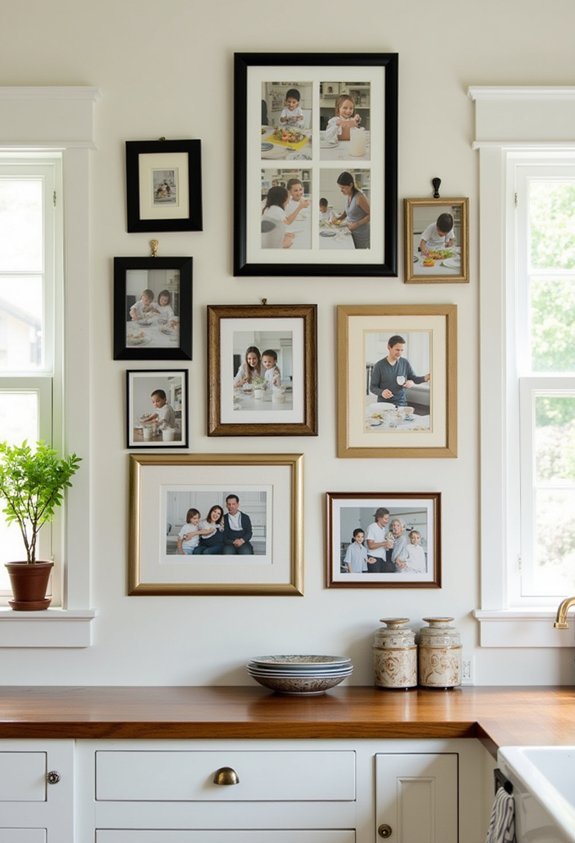
Since your kitchen’s walls often go overlooked as decorative space, a family photo gallery wall can transform this functional room into a personalized hub that celebrates your loved ones. You’ll create visual interest while cooking and dining by displaying cherished memories.
Start by selecting a prominent wall—ideally visible from multiple angles. You can arrange photos in a grid pattern for modern appeal or an eclectic mix for bohemian charm. Mix frame sizes and styles to add dimension and personality.
Include a variety of photos: family portraits, candid moments, and special occasions. You might incorporate children’s artwork or meaningful quotes alongside images. Consider adding small shelves to display photos with mementos or plants.
This approach transforms your kitchen into a warm, inviting space that tells your family’s story.
Also read: 11 One Wall Kitchen Ideas
Vintage Recipe Cards and Culinary Prints
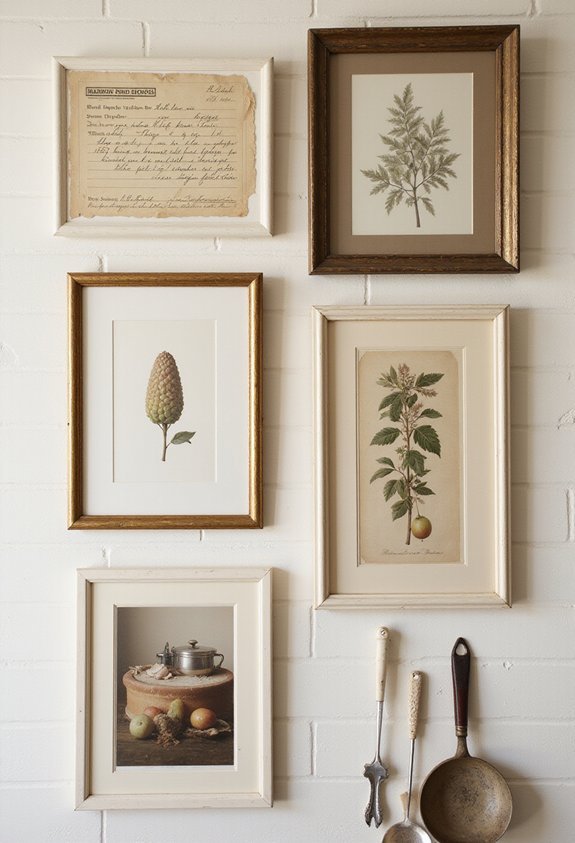
Vintage recipe cards and culinary prints bring warmth and nostalgia to your kitchen walls while celebrating your love of cooking. You can frame handwritten family recipes passed down through generations, creating meaningful displays that honor culinary heritage. Search for antique recipe cards at flea markets, estate sales, or online retailers to find authentic pieces with character and history.
Culinary prints featuring vintage cookbooks, kitchen utensils, or food illustrations add visual interest and thematic cohesion. You’ll find options ranging from botanical herb drawings to retro advertisement posters. Mix and match different frame styles and sizes to create an eclectic gallery that reflects your personal aesthetic.
This approach transforms your kitchen into a space that’s both functional and emotionally resonant, sparking conversations about cherished recipes and cooking memories.
Botanical Prints for Kitchen Picture Walls
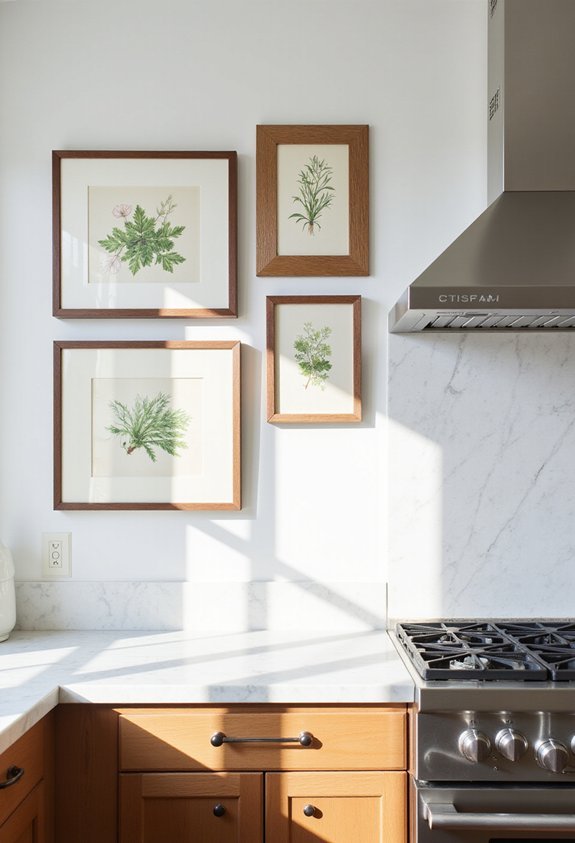
Botanical prints bring natural elegance and organic beauty to your kitchen walls while complementing culinary themes. You’ll find these illustrations of herbs, vegetables, and fruits create a cohesive design that connects your décor to the culinary purpose of the space.
Consider selecting prints featuring fresh herbs like basil, rosemary, and thyme—plants you might actually use in cooking. Vintage botanical illustrations offer timeless appeal, while modern minimalist versions provide contemporary style. You can mix various sizes and frame styles to create visual interest without overwhelming the space.
Layer botanical prints with your existing kitchen artwork for depth. You’ll appreciate how these natural elements soften hard kitchen surfaces and introduce warmth. Frame them in wood or metal that matches your kitchen’s aesthetic for a polished, intentional look.
Floating Shelves Mixing Photos and Décor
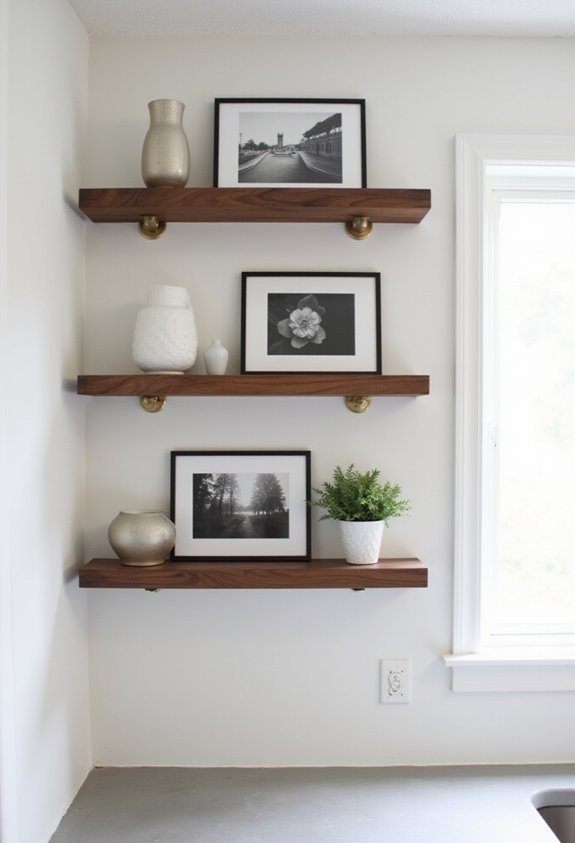
While framed prints establish a solid foundation for your kitchen walls, floating shelves offer you a dynamic way to display both personal photographs and decorative objects. You can arrange family photos alongside cookbooks, vintage kitchen tools, and small plants to create visual interest and depth. Mix different frame styles and sizes to avoid a monotonous appearance. Vary your spacing between items so the display feels intentional rather than cluttered. Consider incorporating objects that reflect your personality—perhaps a treasured recipe card holder or ceramic pieces that complement your kitchen’s color palette. Floating shelves transform your picture wall into a functional, personalized space that tells your story while remaining practical for everyday use.
Framed Cookbook Covers and Food Photography
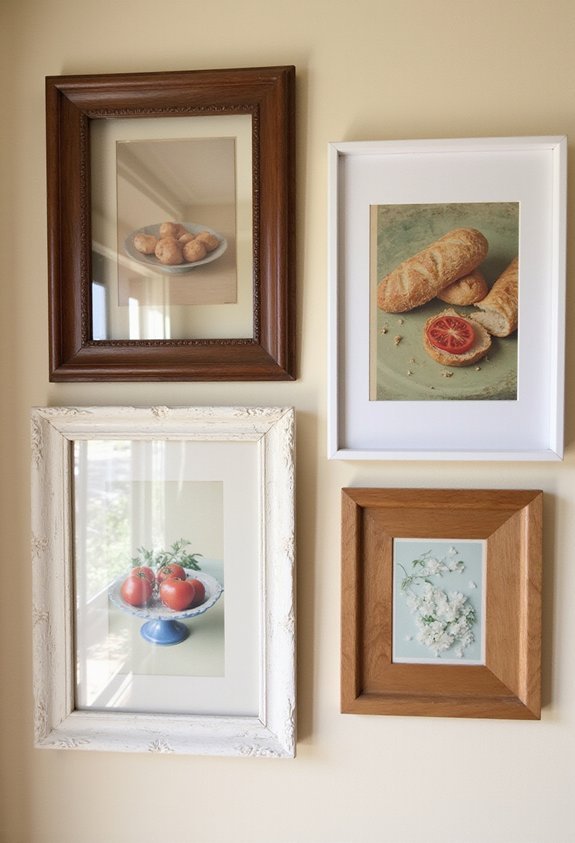
If you’re looking to infuse your kitchen walls with culinary inspiration, framed cookbook covers and food photography offer an excellent avenue. You can select classic cookbook covers from your favorite culinary authors, creating a gallery that reflects your cooking interests and style preferences.
High-quality food photography prints add visual appeal while celebrating dishes you love preparing. Consider mixing vintage cookbook covers with modern food imagery for dynamic contrast. You’ll want to choose frames that complement your kitchen’s aesthetic—whether that’s rustic wood, sleek metal, or painted finishes.
Arrange these pieces in a cohesive grid or salon-style layout to maximize visual impact. This approach transforms your kitchen into a personalized culinary gallery that’s both functional and decorative, inspiring you daily while entertaining guests.
Chalkboard and Whiteboard Wall Designs
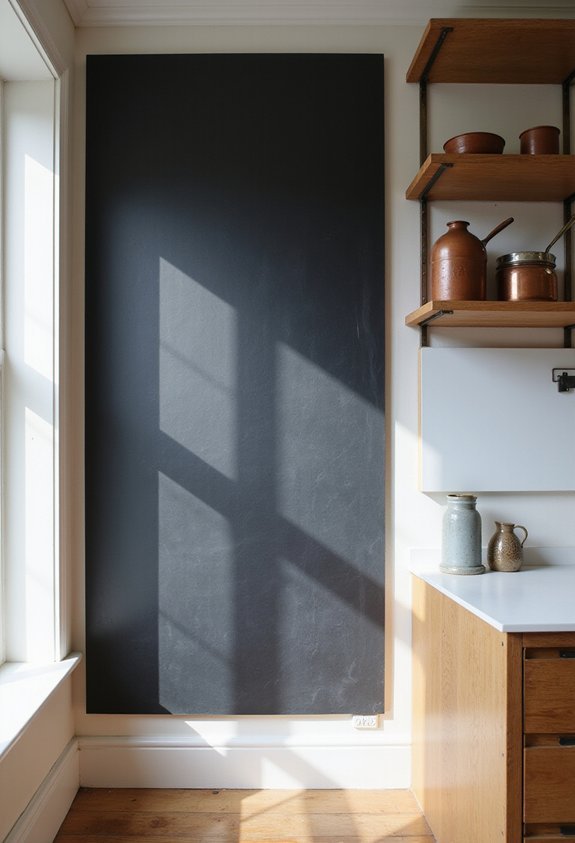
Beyond static artwork, you’ll find that interactive wall surfaces bring dynamic functionality to your kitchen. Chalkboard and whiteboard walls transform your space into a living canvas for daily needs and creative expression.
You can use chalkboard surfaces to display weekly menus, grocery lists, or inspirational cooking quotes. Whiteboard walls offer similar versatility with easier erasure and a cleaner aesthetic. Both options allow you to update your kitchen’s visual narrative without permanent commitment.
Install these surfaces above countertops, near dining areas, or on accent walls. You’ll appreciate the practical benefits—jotting down recipes, noting meal plans, or sketching kitchen ideas—while maintaining an organized, stylish appearance. Consider framing your chalkboard or whiteboard in decorative trim to elevate the design and create a polished focal point.
Metal and Rustic Farmhouse Picture Displays
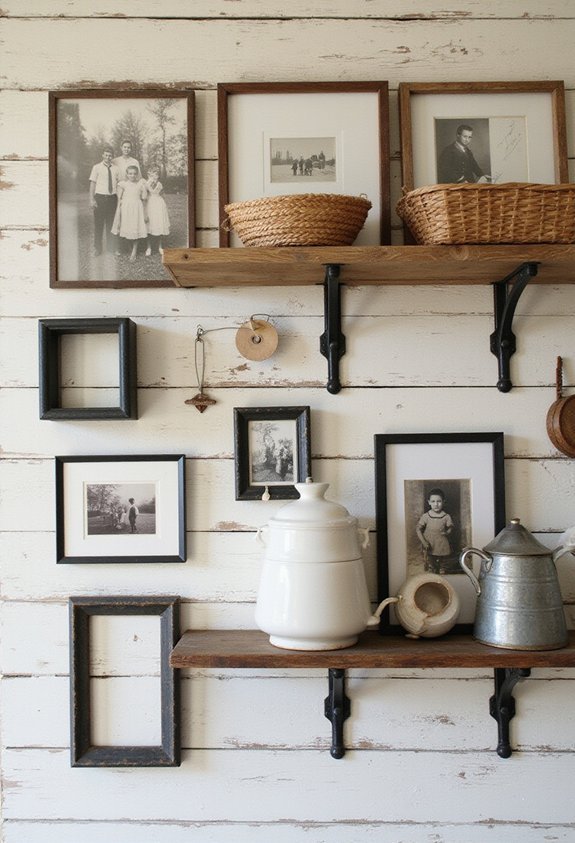
For a kitchen that channels countryside charm, metal and rustic farmhouse displays offer authentic character that complements both traditional and modern aesthetics. You can hang photographs using vintage-style metal frames, wire grids, or industrial clips that add visual interest while maintaining that weathered appeal. Consider installing a reclaimed wood board with metal brackets to create a sturdy backdrop for your images. Metal wire baskets work wonderfully for rotating seasonal photos without permanent wall damage. You’ll find that mixing black-and-white prints with sepia-toned photographs enhances the nostalgic feel. Galvanized tin containers can hold small framed prints on shelves below your display. These rustic elements encourage a cozy, lived-in atmosphere that makes your kitchen feel genuinely welcoming and personal.
Clean, Simple Black and White Picture Walls
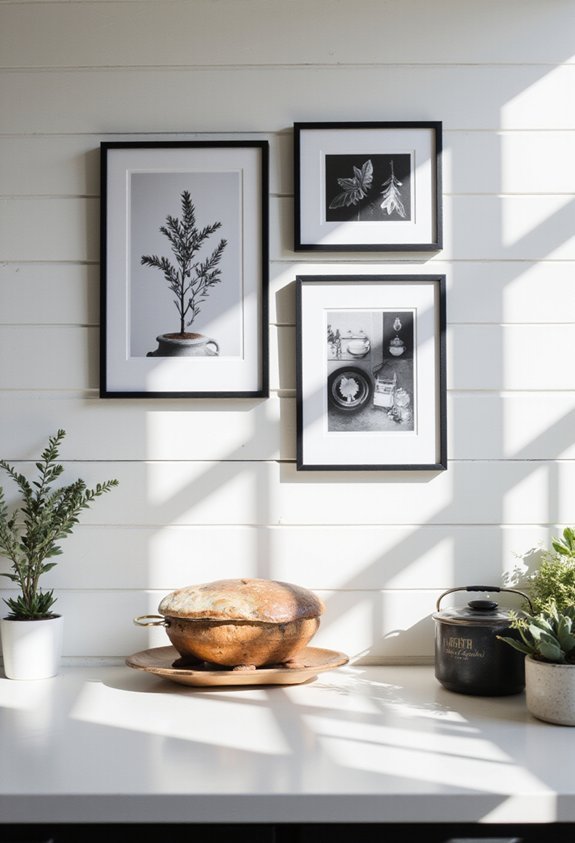
While rustic farmhouse aesthetics celebrate weathered charm, black and white photography offers a strikingly different approach that brings sophistication and visual clarity to your kitchen. You’ll create a timeless gallery by selecting monochrome images that emphasize contrast, texture, and composition over color distraction.
Black and white photos work beautifully in modern, minimalist, or contemporary kitchens. You can display vintage kitchen prints, architectural shots, or abstract compositions that complement your décor without clashing. Uniform frames in white, black, or natural wood enhance the cohesive aesthetic.
This style demands intentional curation. You’ll arrange your pieces in grids, linear patterns, or asymmetrical layouts that showcase clean lines and balanced spacing. The result? A gallery wall that feels curated, elegant, and effortlessly sophisticated—elevating your kitchen’s visual impact.
Open Shelving With Styled Kitchen Accessories
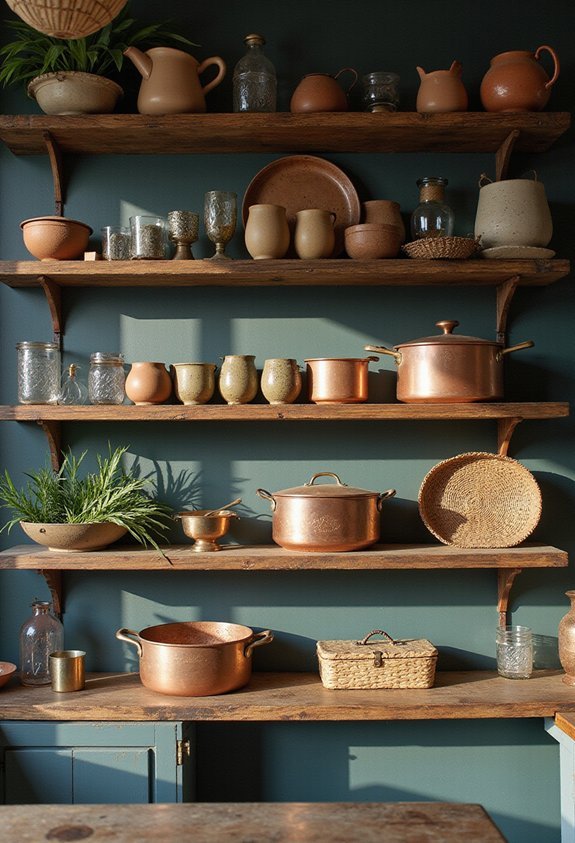
If you’re drawn to displaying functional pieces as décor, open shelving offers the perfect canvas for curating a kitchen that’s both beautiful and practical. You can arrange vintage cookbooks, ceramic bowls, and glass jars to create visual interest while keeping essentials within arm’s reach. Mix textures by combining matte and glossy finishes, and vary heights with stacked plates and standalone serving pieces. Incorporate plants or fresh herbs in small pots to add greenery and life. The key’s maintaining balance—don’t overcrowd shelves, as white space prevents a cluttered appearance. Rotate seasonal items to keep your display fresh. This approach transforms everyday kitchen tools into an intentional design statement that reflects your personal style while maximizing functionality.
Vintage Kitchen Signs and Retro Posters
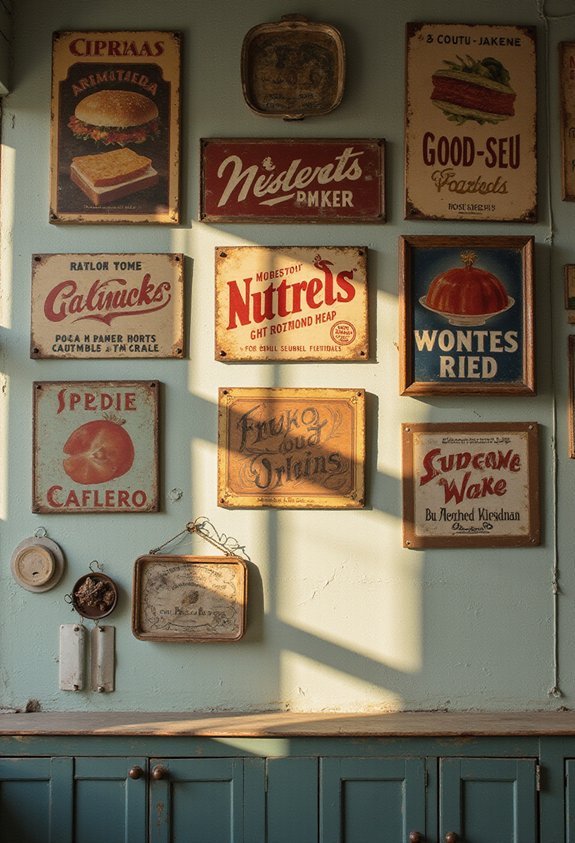
Beyond functional pieces, vintage kitchen signs and retro posters offer a nostalgic way to infuse personality into your picture wall without competing for counter or shelf space. You can source authentic mid-century advertisements, classic Coca-Cola signs, or reproduction posters featuring vintage recipes and cooking tips. Mix different styles—enamel signs alongside colorful print posters—to create visual interest and depth.
Consider arranging them in a grid pattern for cohesion or scatter them asymmetrically for an eclectic vibe. Vintage signs work particularly well in farmhouse, industrial, or retro-themed kitchens, grounding your design in a specific era. Frame some pieces in matching frames to unify the display, or leave others unframed for an authentic, flea-market aesthetic. This approach transforms your wall into a curated collection that celebrates kitchen culture.
Blending Décor With Functional Storage and Organization
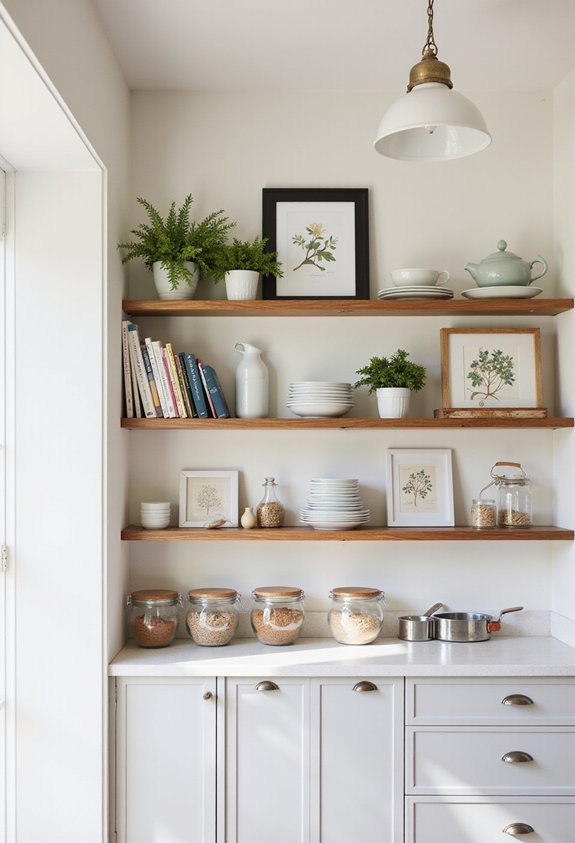
As your picture wall takes shape, you’ll discover that the most effective kitchen displays don’t just look good—they work harder by incorporating storage and organization elements. Consider pairing framed prints with floating shelves that hold cookbooks or decorative jars. Wall-mounted pegboards let you display both artwork and frequently used utensils, maximizing vertical space while maintaining visual interest. You can also integrate small baskets or wire organizers between picture frames to store recipe cards, kitchen towels, or spices. This hybrid approach transforms your picture wall from purely decorative to genuinely functional. By blending aesthetics with practicality, you create a kitchen feature that’s both beautiful and purposeful, proving that style and organization aren’t mutually exclusive.
How to Arrange and Hang Your Kitchen Picture Wall?
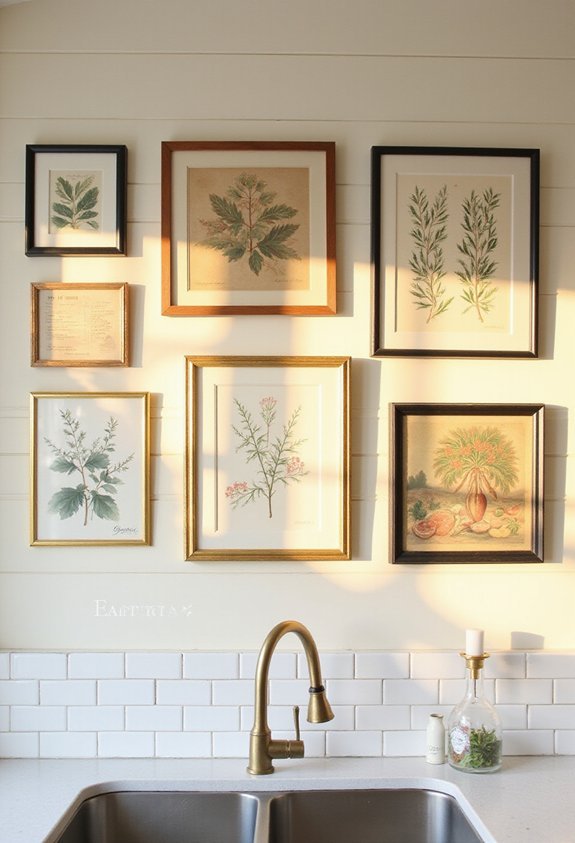
Once you’ve selected your frames and artwork, the real work begins: planning your layout. Start by arranging your pieces on the floor to visualize different configurations before making any holes. Consider creating a gallery wall with uniform spacing or an eclectic salon-style arrangement that feels more casual.
Measure your wall space carefully and mark positions lightly with pencil. Use painter’s tape to outline frame placements, allowing you to adjust before committing. Install hanging hardware appropriate for your wall type—drywall anchors for standard walls, appropriate fasteners for tile or backsplash areas.
Hang pieces at eye level, typically 57-60 inches from floor to center point. Verify straight alignment using a level. Start from the center and work outward, maintaining consistent spacing between frames for a polished, intentional appearance.
Frequently Asked Questions
What Is the Ideal Height to Hang Kitchen Picture Walls Above Countertops or Dining Tables?
You’ll want to hang your kitchen picture wall 18-24 inches above countertops or dining tables. This height guarantees you’re not creating visual obstruction while keeping artwork at a comfortable viewing level. You’ll achieve the best balance between accessibility and aesthetic appeal with this range.
How Do I Protect Artwork From Kitchen Moisture, Steam, and Cooking Splashes?
You’ll protect your artwork by using moisture-resistant glass or acrylic frames, applying protective varnish to prints, and positioning pieces away from direct steam and splashes. You can also install exhaust fans to reduce humidity near your kitchen walls.
What Type of Frame Material Works Best for Humid Kitchen Environments?
You’ll want to choose aluminum or stainless steel frames for your kitchen—they’re moisture-resistant and won’t warp or rust. Avoid wood frames unless you’re treating them with protective sealant. You should also use UV-protective glass to shield your artwork.
Can I Use Adhesive Strips Instead of Nails for Hanging Kitchen Wall Art?
You can use adhesive strips for lightweight kitchen art, but they’re not ideal for humid environments. Moisture weakens the adhesive bond over time. For durability, you’ll want to use nails or wall anchors instead, especially in kitchens with high steam exposure.
How Often Should I Update or Rotate Kitchen Picture Wall Displays Seasonally?
You should rotate your kitchen picture wall displays seasonally—roughly every three to four months. This keeps your space feeling fresh and allows you to showcase different artwork that matches seasonal themes, colors, and moods throughout the year.
Conclusion
You’ll transform your kitchen into a personalized gallery that reflects your style and memories. Whether you’re displaying family photos, vintage recipe cards, or botanical prints, you’ve got endless options to create a visually striking space. Mix and match layouts, blend functional storage with décor, and don’t hesitate to experiment. Your kitchen walls can become a warm, inviting backdrop that tells your unique culinary story.