

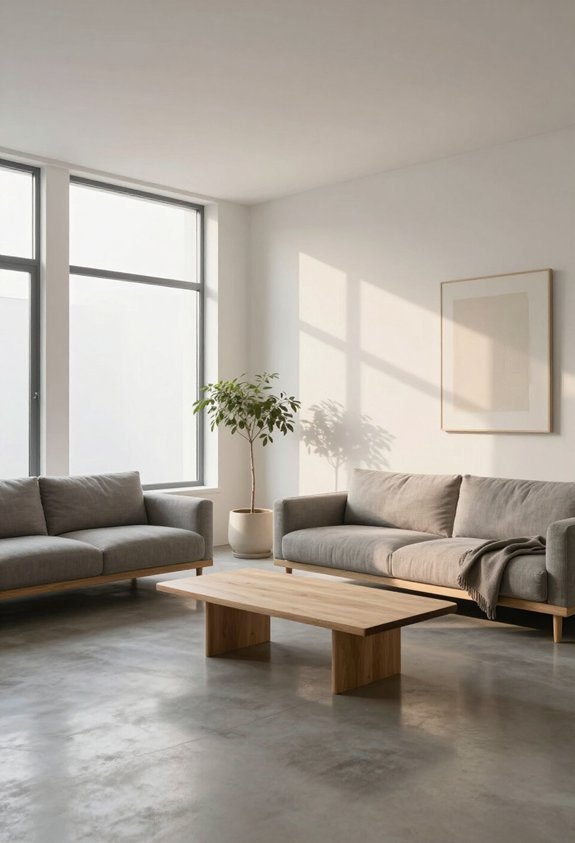
Tripping over the same pile of shoes for the third time in a week was what finally pushed me to clear out my living room completely. I didn’t realize how much that pile had been weighing on me until it was gone.
Minimalism isn’t about owning nothing, it’s about keeping only what you use and love, then giving it room to be noticed. The calmest rooms are full of warmth, just without visual noise.
I cleared my space down to almost nothing and felt strangely lighter that evening. Let’s get into what actually makes minimalism work.
Where Most People Go Wrong
The biggest mistake in minimalist design is confusing empty with intentional. A bare room with nothing meaningful in it feels cold, while a sparse room built around a few cherished pieces feels calm and considered.
Color matters more than people expect in minimalist spaces. An entirely gray and beige room can feel flat fast, so one accent color or texture goes a long way toward keeping things from feeling lifeless.
Storage needs to be planned before you declutter, not after. Without somewhere for things to actually live, clutter creeps back in within weeks no matter how good your initial purge felt.
14 Minimalist Living Room Ideas
This list covers everything from core principles and color palettes to furniture selection, lighting, and the small details like art and plants that keep a minimalist room from feeling sterile. Some ideas are mindset shifts, others are practical changes you can make this weekend.
I tried to include enough variety that whether you’re starting completely from scratch or just refining a space that already leans minimal, there’s something useful here for you.
Pick a few ideas that resonate and start building toward the calm, breathable room you’re after.
Core Principles of Minimalism
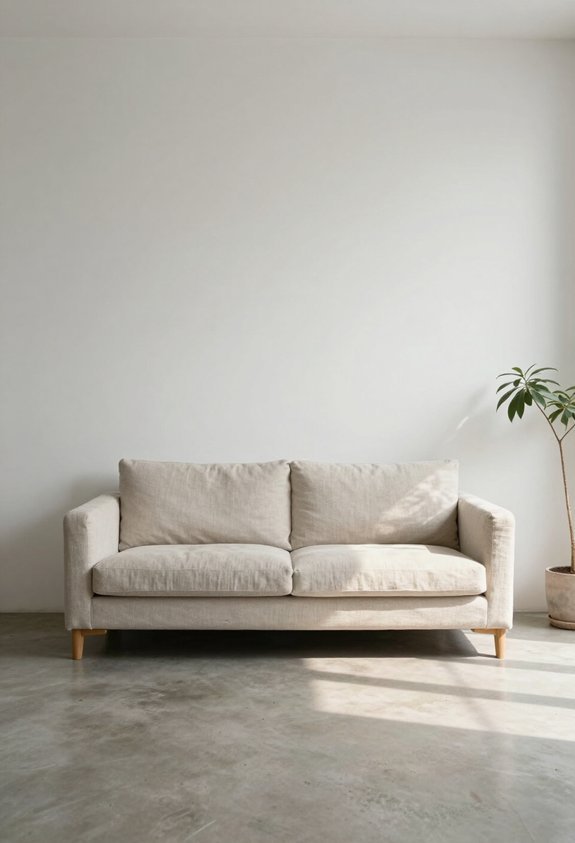
When you’ve finally had enough of tripping over stuff you forgot you owned, minimalism might just be your answer. It’s basically keeping only what you actually use and love. Sounds simple? It totally is, but it requires backbone.
First up: question everything. Does that lamp spark joy or just collect dust? Keep it only if it earns its spot. Second principle is ruthless honesty. You won’t wear those neon pants from 2015, and that’s okay.
Third, embrace empty space. Blank walls and open floors aren’t lonely—they’re peaceful. Your living room becomes a breathing room, not a storage unit.
Finally, before buying anything new, ask yourself: do I need this, or am I just filling a void? Spoiler alert: retail therapy only works temporarily. Real happiness? That comes from less stuff and more room to actually live.
Also read: 16 LIVING ROOM CURTAINS Window & Elegant!
Neutral Color Palettes for Minimalist Living Rooms
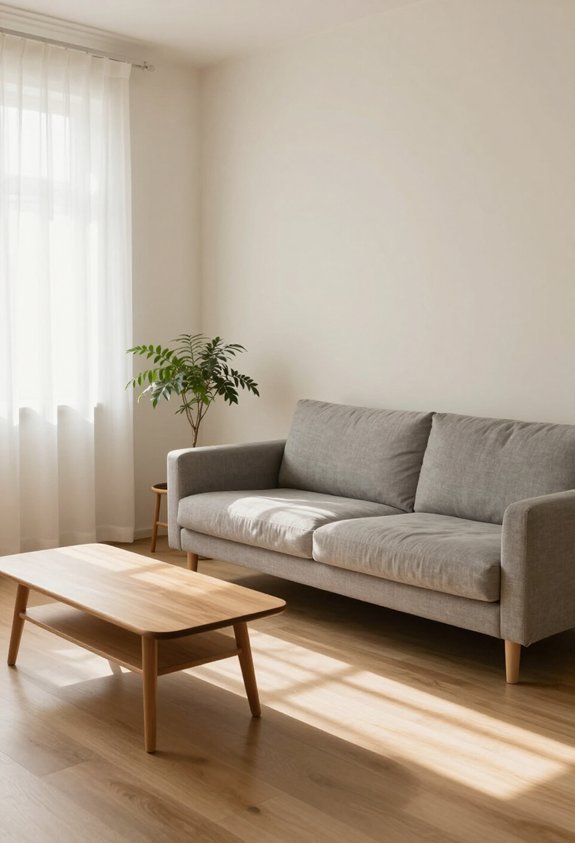
Now that you’ve decluttered your space down to the essentials, it’s time to paint the walls—metaphorically and literally. You’ll want to stick with neutrals like white, beige, gray, or soft taupe.
These colors don’t scream for attention and won’t make your brain work overtime. Think of them as the vanilla ice cream of interior design, boring sounds bad, but honestly? It’s delicious and pairs with everything.
Light grays and warm whites reflect natural light and make rooms feel bigger. Beige adds subtle warmth without being loud. The beauty here is that neutral walls become the perfect backdrop for your few meaningful pieces. Your minimalist space stays calm and collected, letting whatever you do display become the real star of the show.
Selecting Minimalist Furniture for Your Living Room
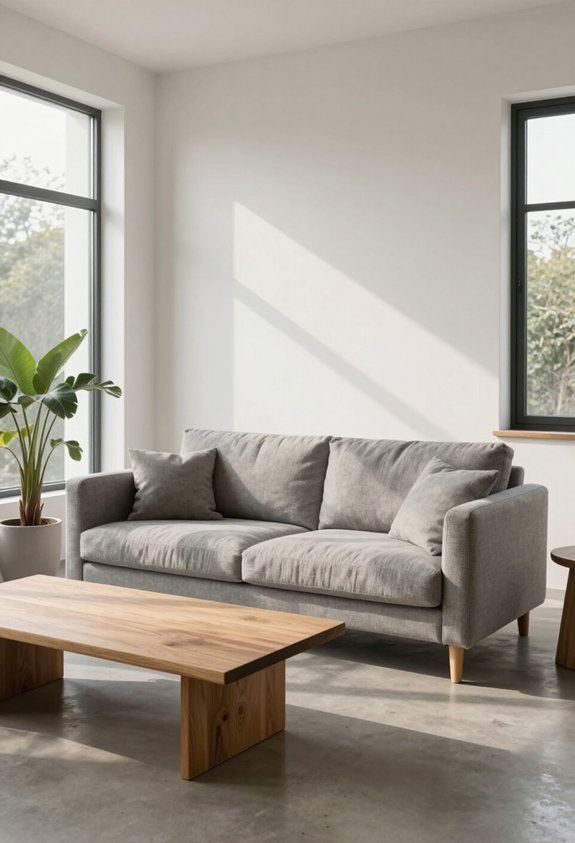
Once you’ve got those calming neutral walls in place, it’s furniture time—and this is where minimalism shows its true superpower. You’ll want pieces that actually do stuff instead of just sitting around looking pretty (unlike me on Sundays).
A sleek gray sofa, maybe 84 inches long, paired with one simple wooden coffee table beats a room stuffed with ten random chairs.
Choose furniture with clean lines and zero fussy details. That means no carved legs or unnecessary cushions taking up real estate. Think low-profile designs that don’t block sightlines.
One good lamp beats five mediocre ones. Your goal? Each piece earns its spot by being useful and beautiful. Quality over quantity always wins this game.
Using Empty Space to Your Advantage
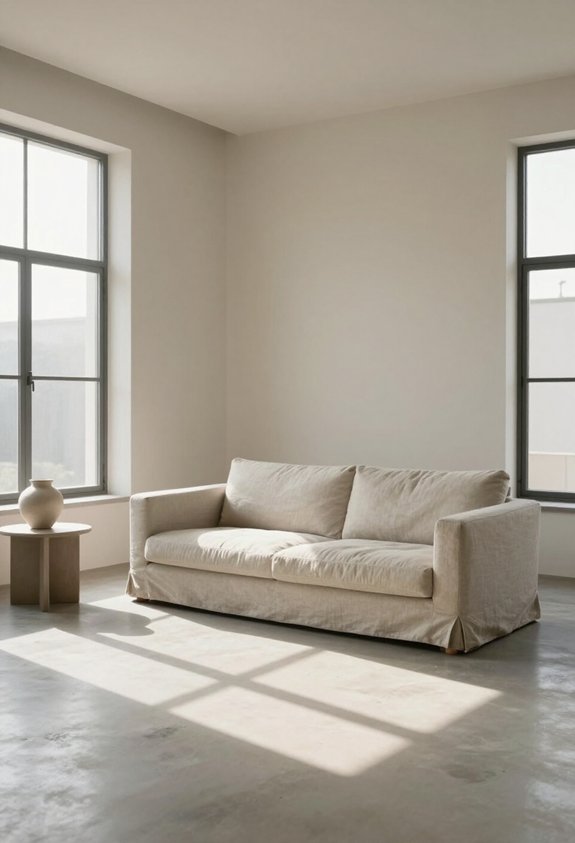
As counterintuitive as it sounds, the empty space in your living room is just as important as the stuff you put in it. You’re probably thinking, “Wait, nothing is still something?” Exactly! That blank wall isn’t lazy—it’s breathing room for your eyes. Think of it like your lungs: they need air to function, and your room needs space to feel calm.
Let those 3-foot gaps between furniture exist without guilt. Don’t panic-fill them with random stuff. A simple wooden side table or two creates intentional breathing room without cluttering things up.
Your minimalist living room thrives on what you leave out, not what you cram in. Less furniture means more visual peace. Your brain actually relaxes when it’s not drowning in visual noise. That’s the magic happening right there.
Decluttering Strategies That Actually Stick
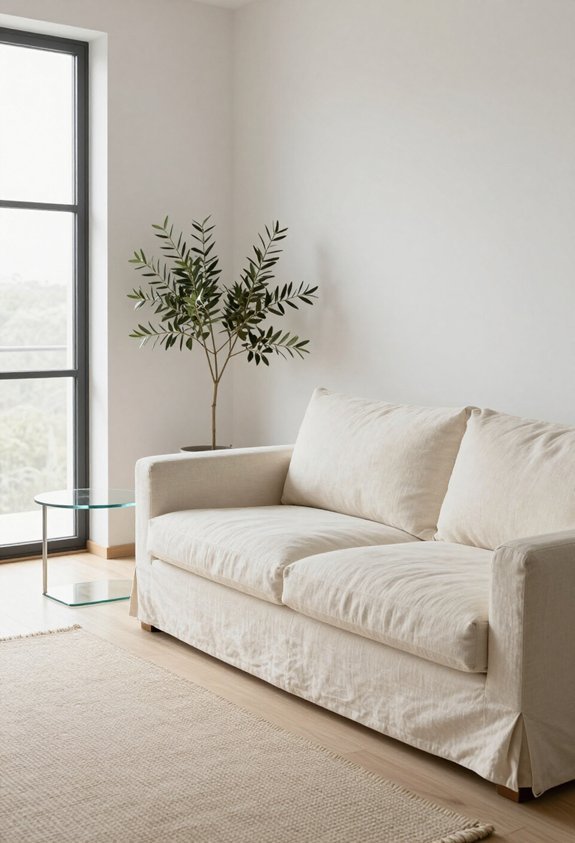
How’d you like to declutter without undecluttering three weeks later?
The secret’s simple: one in, one out. You grab something new, and something old hits the road. It’s like a revolving door for your stuff, but way less dizzy.
Try the “maybe box” trick. Toss questionable items into a labeled container and stash it for three months. If you don’t miss that purple lamp or those ceramic cats, donate them guilt-free.
Set a timer for fifteen minutes daily. Short bursts beat marathon sessions that leave you emotionally exhausted and buried in piles.
Be honest about what you actually use. That fancy bread maker collecting dust? It’s not happening. Your future self will thank you for the real estate you’re freeing up.
Lighting for Minimalist Living Rooms
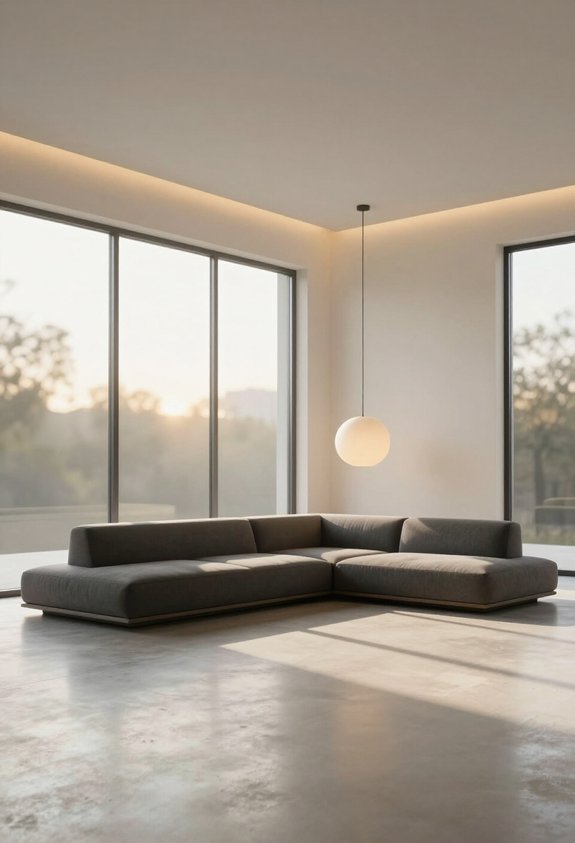
Now that you’ve ditched the clutter, your living room’s got breathing room—and that’s where lighting swoops in to save the day. You’ll want soft, warm bulbs (around 2700K) that don’t make you look like a zombie at 6 p.m.
Floor lamps work brilliantly in corners, and pendant lights hanging 18-24 inches above side tables create cozy spots for reading. Skip the harsh overhead stuff—it’s basically the enemy of chill vibes.
Layer your lighting with table lamps, wall sconces, and maybe some ambient strips behind floating shelves. The goal? You want to actually see your minimalist masterpiece without feeling like you’re in a hospital waiting room. Your eyes, and your décor, will thank you.
Hidden Storage Solutions That Reduce Visual Clutter
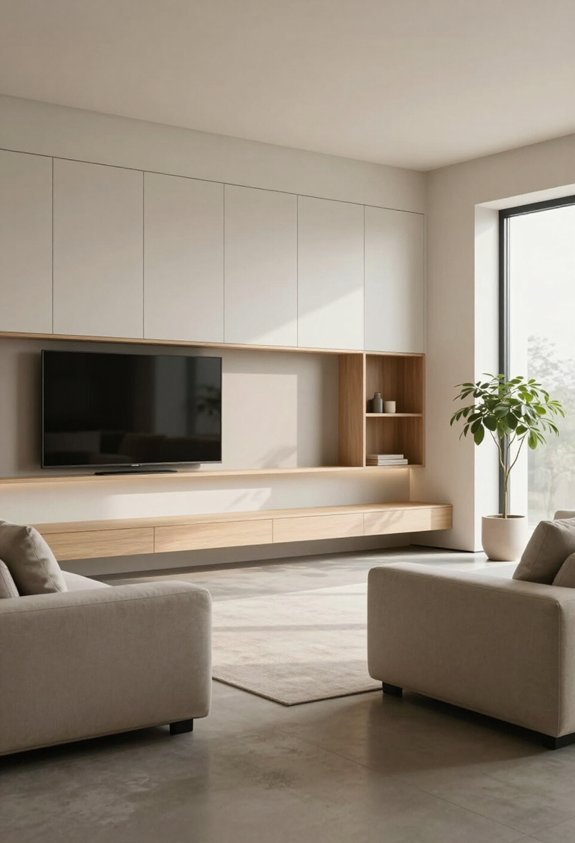
Three words’ll change your minimalist game: hidden storage rules. You’ll love built-in shelving behind your couch, and it’s basically furniture’s way of playing hide-and-seek. Wall-mounted cabinets in soft white or gray keep stuff invisible while looking super clean.
Under-sofa drawers? They’re like secret treasure chests for blankets and magazines. Ottoman storage benches work double duty—comfy seating plus sneaky space inside.
Floating shelves behind doors store items without screaming “clutter!” Vertical wall cabinets save floor space and don’t make you trip over anything. The trick is keeping everything organized so you don’t forget what you hid. Your living room stays zen, your guests stay impressed, and you remember where your stuff actually lives.
Textures and Materials for Minimalist Interiors
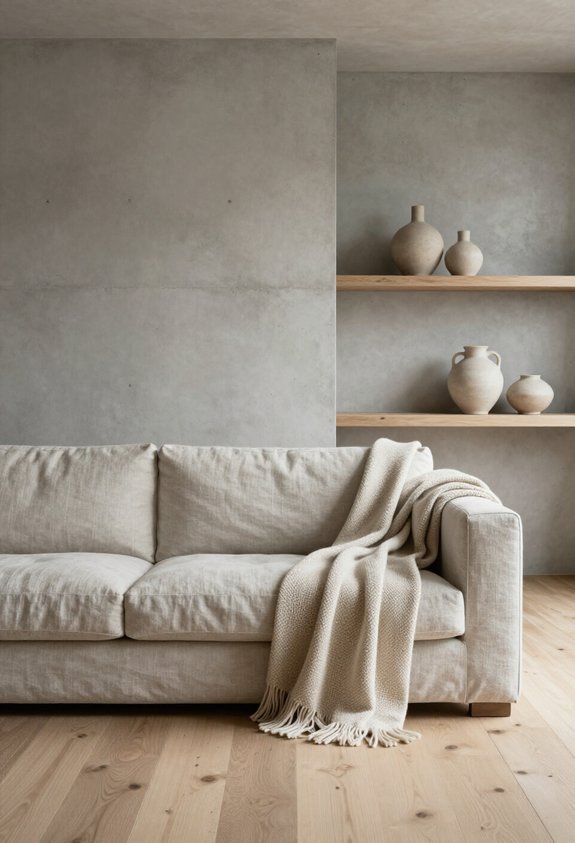
While hidden storage keeps your stuff out of sight, textures and materials are what actually make your minimalist space feel alive instead of sterile and boring.
You’ve gotta mix things up! Pair smooth white walls with a chunky knit throw blanket and you’re golden. Natural wood furniture, raw concrete accents, and soft linen cushions create depth without cluttering your room.
Think of textures like your space’s personality, nobody wants a friend who’s completely flat and one-dimensional, right? Layer in a woven jute rug, some sleek metal frames, and maybe cool stone accessories.
These materials whisper sophistication while keeping your aesthetic clean. Your eyes actually need something interesting to land on. Trust us, your minimalist room will thank you for the textural variety!
Choosing Art That Reinforces Simplicity
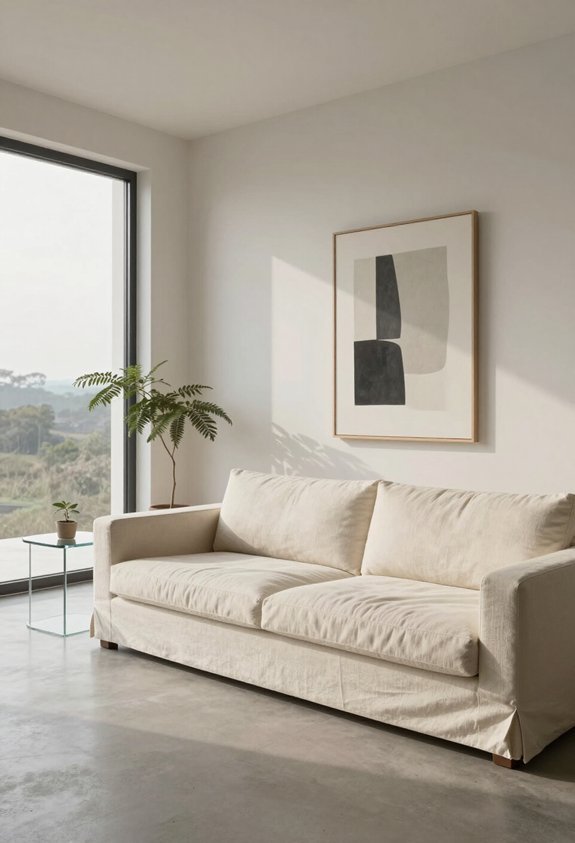
How do you fill your minimalist walls without making them scream for attention like a toddler in a grocery store?
Pick art that whispers instead. One large black-and-white photograph or abstract piece works better than seventeen tiny prints fighting for space. You want your eye to rest, not run a marathon across the wall.
Choose neutral colors—think whites, grays, and soft blacks. A simple 24×36 inch canvas feels way less cluttered than a chaotic gallery wall. Let negative space breathe around your selection.
Frame your pieces simply. Thin metal or natural wood frames keep things calm and collected. Skip ornate gold borders; they’ll totally wreck your zen vibe.
Trust me, less really is more. Your walls will thank you by not giving you a headache.
Flooring and Window Treatments That Support Minimalism
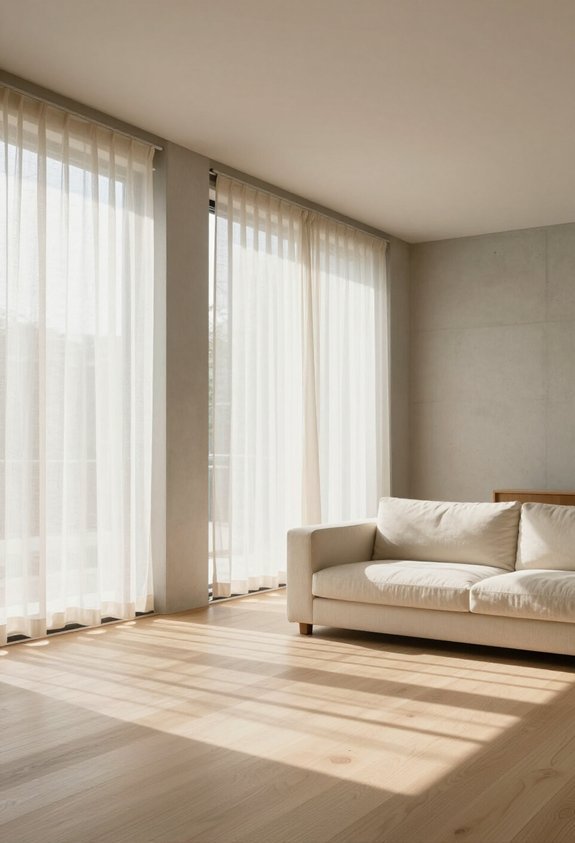
Your floors and windows deserve the same quiet treatment you’ve given your walls. Skip the busy patterns and loud colors that’ll make your eyes work overtime.
Pick light wood or polished concrete floors instead. They’re sleek, they’re easy to clean, and they won’t scream for attention. For windows, go neutral. Think soft whites, grays, or natural linen. Roller shades or simple curtains work great because they’re not fussy.
Avoid heavy drapes that collect dust like it’s their job. Keep things airy and breathable. Your minimalist space shouldn’t feel like a stuffy museum or your grandmother’s living room. Let natural light flood in. It’s free decoration, and honestly, it makes everything look less cluttered and more intentional.
Layouts That Keep Your Living Room Feeling Spacious
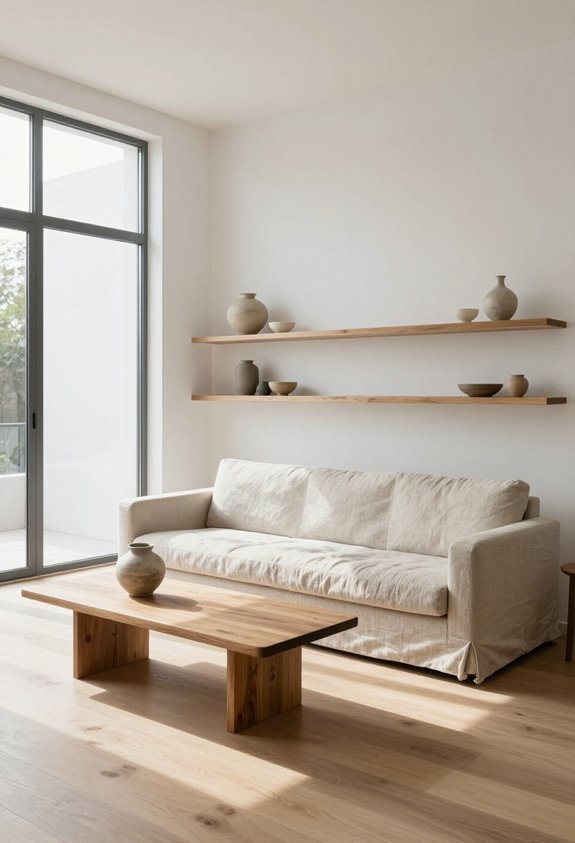
Now that you’ve nailed the easy stuff—light floors and breezy windows—it’s time to talk about how you actually arrange your furniture, because even the prettiest minimalist room feels cramped when your couch’s blocking the whole space like it’s guarding treasure.
Here’s the secret: float your furniture away from walls. Seriously. That three-feet clearance around your sofa? It’s basically magic. Your brain stops freaking out and actually relaxes.
Keep pathways wide. You shouldn’t have to perform yoga moves to reach the kitchen. Fewer pieces help too—pick essential items only.
One statement chair. Maybe a sleek table. That’s it.
Position everything to create natural traffic flow, and watch your room suddenly breathe. It’ll feel twice as big without feeling empty.
Adding Plants to Your Minimalist Living Room
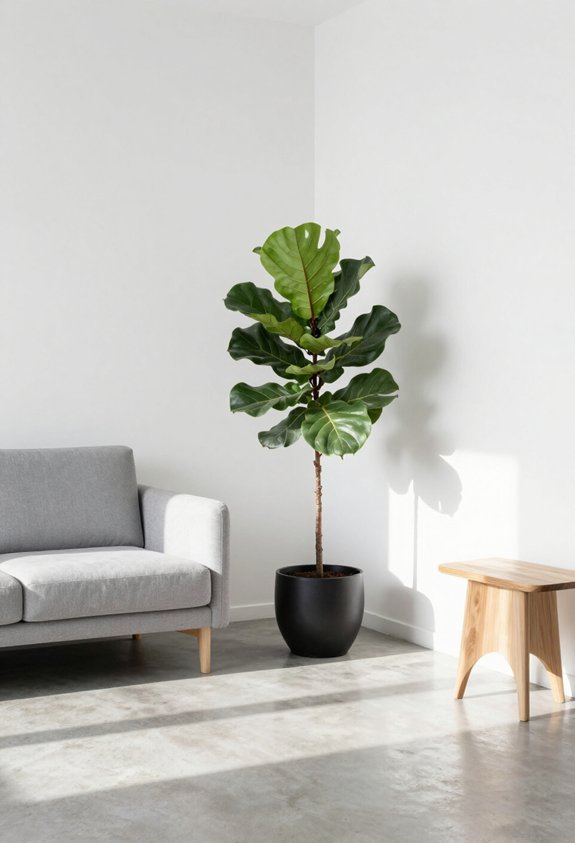
What’s the one thing that’ll make your sparse living room feel alive without cluttering it up? Plants, my friend! They’re basically nature’s air fresheners—minus the weird chemical smell.
Toss a tall fiddle leaf fig in the corner and watch it work magic. It’s like having a living, breathing roommate who never complains or eats your snacks. Go for one or two statement plants instead of turning your space into a jungle.
A sleek white pot near your sofa? Chef’s kiss. Green leaves pop beautifully against minimal walls. Your plants’ll grow faster than your to-do list, too. They’ll literally photosynthesize happiness into your room while you’re just vibing on the couch. That’s pretty neat, honestly.
Common Mistakes to Avoid in Minimal Design
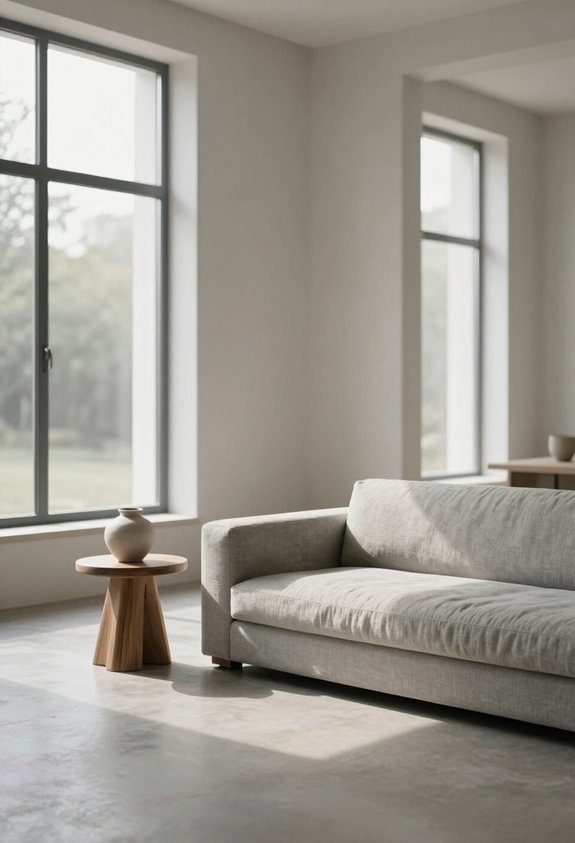
Because it’s so easy to mess up minimalism, we’ve gotta talk about the sneaky mistakes that’ll turn your zen space into a depressing empty room.
First up: going too bare. Your living room shouldn’t feel like a abandoned warehouse, and that’s no joke. Leave yourself some breathing room, but add a few meaningful pieces you actually love.
Second mistake? Ignoring color entirely. Gray walls and beige furniture sound minimal, but they’re boring as watching paint dry. Throw in one accent color—maybe a mustard yellow pillow or deep blue rug. Third, don’t overcomplicate things with too many storage systems.
Simple beats complicated every single time. Keep it real, keep it intentional, and your space’ll feel genuinely peaceful instead of just empty and sad.
Maintaining Your Minimalist Living Room Long-Term
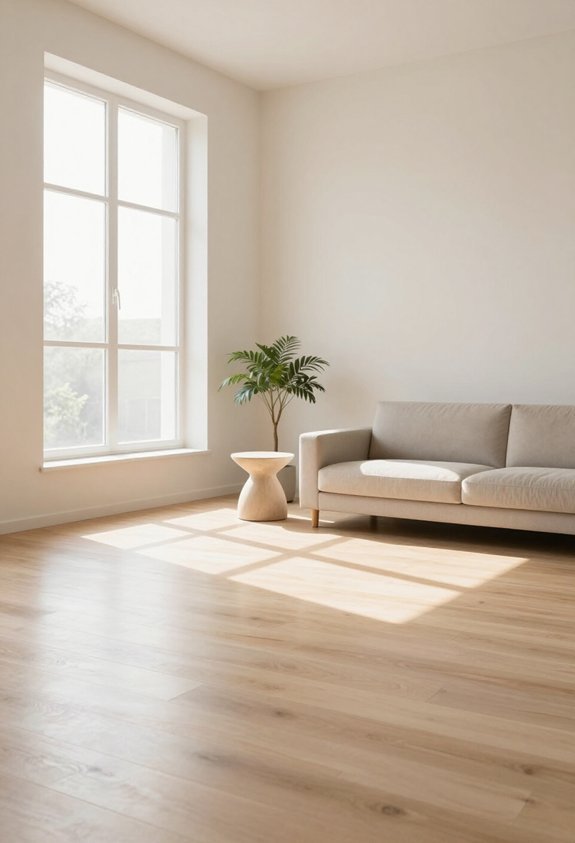
You’ve nailed the basics, but here’s the thing: keeping your minimalist living room feeling fresh actually takes some work. Dust loves empty spaces—seriously, it’s like the stuff multiplies overnight.
Wipe down your surfaces weekly, and don’t let clutter sneak back in like an unwanted houseguest. Those magazines you swear you’ll read? Donate them. Your living room isn’t a storage unit, people. Rotate your few decorative pieces every season so things feel new without buying more stuff.
Keep your white walls pristine with magic erasers. Check under furniture monthly for dust bunnies plotting their escape. Honestly, minimalism isn’t about doing nothing—it’s about doing less but doing it right. Your future self will thank you for staying disciplined now.
Frequently Asked Questions
How Do I Transition My Family to Minimalist Living Without Causing Resistance or Conflict?
Involving your family in the decisions from the start makes a huge difference in how smoothly this goes. People resist change far less when they feel like they had a say in it.
Starting small with just one room rather than overhauling the whole house at once helps everyone adjust gradually. Explaining the actual benefits clearly, rather than just declaring a new rule, gives people a reason to buy in.
Letting each person declutter their own belongings rather than doing it for them respects their autonomy and cuts down on conflict significantly. You’ll find far less pushback when everyone chooses what stays rather than having it decided for them.
What’s the Budget Required to Redesign a Living Room With Minimalist Principles?
You genuinely don’t need a large budget to pull this off. Decluttering what you already own costs nothing and often does more visual work than buying new furniture ever could.
Once you’ve cleared things out, investing strategically in a few quality pieces you’ll actually use makes the biggest difference. It’s better to spend on one great chair than five mediocre ones.
Most full transformations land somewhere between 500 and 2,000 dollars, depending heavily on your current furniture and how much you want to upgrade. Plenty of people achieve a beautiful minimalist look spending closer to the lower end of that range.
Can Minimalist Design Work in Small Apartments or Studios With Limited Space?
Absolutely, and small spaces often benefit the most from this approach. Eliminating clutter and choosing multifunctional furniture maximizes every square foot you have available.
Keeping walls mostly bare contributes to that open, airy feeling that makes a small studio read as larger than it actually is. Visual clutter shrinks a room more than people realize.
The peaceful feeling minimalism creates tends to matter even more in tight quarters, where every item competes for attention in a limited footprint. A small space done well can feel more spacious than a larger one crammed full of stuff.
How Do I Prevent My Minimalist Living Room From Feeling Cold or Unwelcoming?
Soft textures are your best tool here. Throw blankets and area rugs add warmth instantly without introducing visual clutter into the space.
Ambient lighting through table lamps and floor lamps does a lot of the heavy lifting too. It softens a room in a way that overhead lighting simply can’t replicate.
Displaying personal photos or meaningful artwork rounds out the effect by giving the space a sense of identity. You’re creating intentional coziness rather than sterile emptiness, and that distinction matters a lot.
What’s the Best Timeline for Implementing Minimalist Changes Throughout My Living Room?
Spreading the process out over four to six weeks tends to work better than trying to tackle everything in one overwhelming weekend. Decluttering in phases keeps the whole project from feeling exhausting.
Start by clearing out one section of the room before moving to the next. This gradual approach lets you actually live with each change and adjust as you go.
Introducing intentional pieces slowly after the decluttering phase gives you time to be selective rather than rushing to fill empty space. That patience usually results in a room you’re happier with long term.
Conclusion
Clearing out my living room taught me that less really does change how a space feels, in ways I genuinely didn’t expect going into it. The room felt bigger, calmer, and somehow more like mine once the excess was gone.
Minimalism isn’t about deprivation or living in an empty box. It’s about being deliberate with what you keep and giving those things enough breathing room to actually matter.
Neutral colors, quality furniture, and a few meaningful personal touches go a long way toward making a sparse room feel warm rather than cold. The balance takes a little practice to find, but it’s worth the effort.
I still catch myself tempted to fill empty corners with things I don’t need, and resisting that urge has become its own kind of practice. Old habits creep back if you’re not paying attention.
Whatever pace you take this at, remember the goal is a room that feels peaceful to come home to, not a showroom you’re afraid to actually live in. Comfort and simplicity were never meant to be opposites.
I’d love to hear which idea you’re starting with, or how your own minimalist living room is coming together. Leave a comment below and let me know.