


Wall paneling completely changes how a living room feels.
I recently helped a friend install shiplap in her farmhouse, and the warmth it added was instant. For sleeker spaces, geometric panels create that modern edge without feeling cold.
Budget doesn’t have to limit creativity.
Peel-and-stick options have come incredibly far—I used them in my rental with zero regrets. Wood finishes and 3D textures bring genuine character that paint simply cannot match.
Some choices serve double duty.
Built-in shelving displays treasures while saving floor space. Acoustic panels? A game-changer for noisy households like mine. Just weigh installation time against long-term upkeep before committing.
Before choosing a panel style, look at your living room’s proportions, natural light, and existing furniture. Vertical boards can emphasize height, while horizontal layouts can make a narrow wall feel wider.
Consider how permanent you want the change to be too. Traditional timber paneling creates lasting architectural character, while peel-and-stick options give you more flexibility if you rent or like changing your decor.
Keep the finish connected to the rest of your room. Repeating wood tones, paint colors, or hardware finishes can help the paneling feel like part of the space rather than an add-on.
20 Living Room Wall Paneling Ideas
The best living room wall paneling ideas can add texture, depth, and architectural interest without requiring a complete room makeover. Your choice can be as subtle as soft neutral beadboard or as dramatic as floor-to-ceiling black panels.
Wood finishes bring warmth, geometric designs introduce a contemporary edge, and functional options can even incorporate shelving or improve room acoustics.
Use these ideas to find a paneling style that suits your living room, budget, and the amount of installation work you are comfortable taking on.
Classic Shiplap for Timeless Elegance
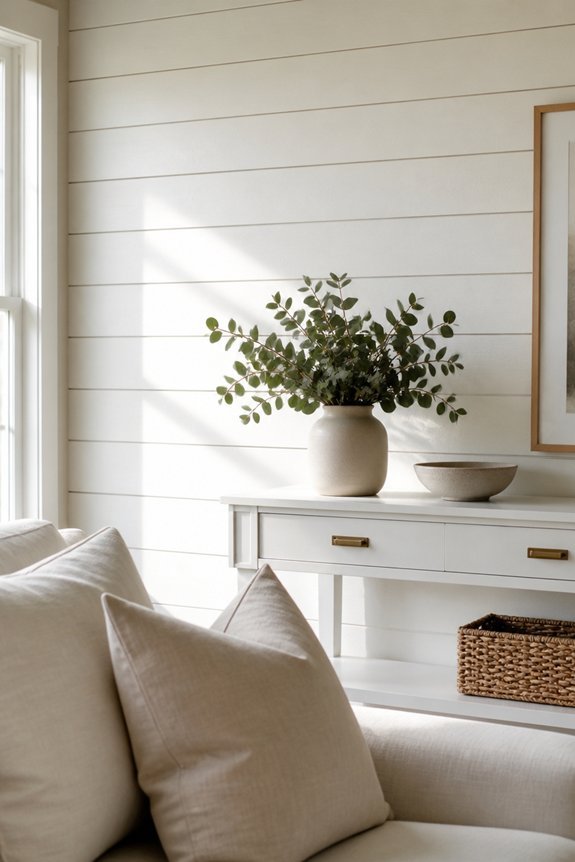
Shiplap paneling consists of wooden boards that overlap slightly, creating a clean and uniform wall surface. The boards, typically made from pine or spruce, measure about one inch thick and six inches wide.
Homeowners install shiplap horizontally or vertically, depending on desired visual effects. Horizontal installation elongates rooms, while vertical placement adds height. The overlapping design allows for natural wood movement without visible gaps.
Shiplap works well in various settings: farmhouse interiors, coastal designs, and modern minimalist spaces. Finishing options include white paint for brightness, natural stain for warmth, or gray tones for contemporary appeal. Installation requires basic carpentry skills and appropriate fasteners.
Modern Geometric Wall Panels for Contemporary Spaces
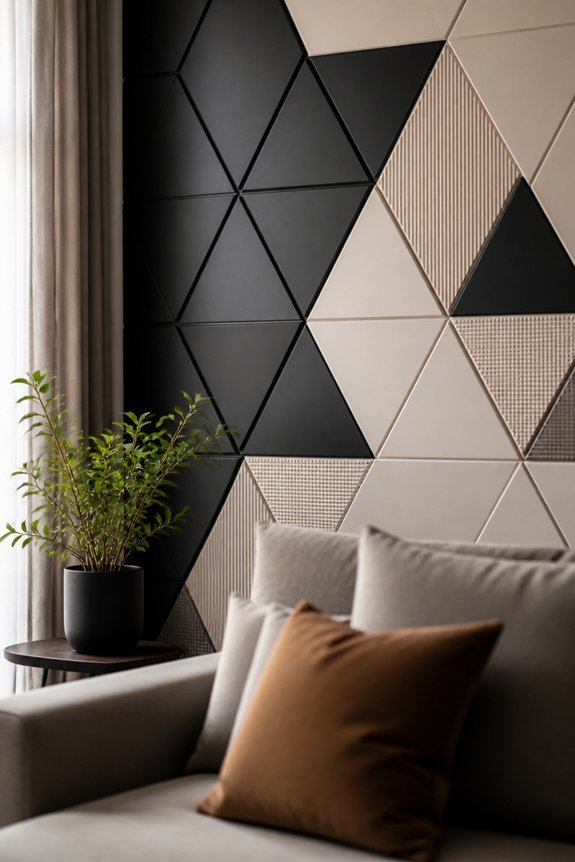
While classic shiplap emphasizes natural wood textures and traditional aesthetics, modern geometric wall panels offer a different design approach for contemporary homes. These panels feature angular shapes, including hexagons, triangles, and diamonds, creating visual interest through dimensional surfaces. Materials range from MDF and wood to 3D plastic options.
Popular configurations include staggered layouts, which maximize shadow effects, and symmetrical arrangements for balanced appearances. Color choices span from neutral whites and grays to bold blacks and metallics. Installation typically involves adhesive or mounting systems.
Geometric panels work effectively as accent walls, particularly in living rooms, home offices, and entertainment areas. They pair well with minimalist furnishings and modern décor styles.
Budget-Friendly Paneling Solutions Without Sacrifice
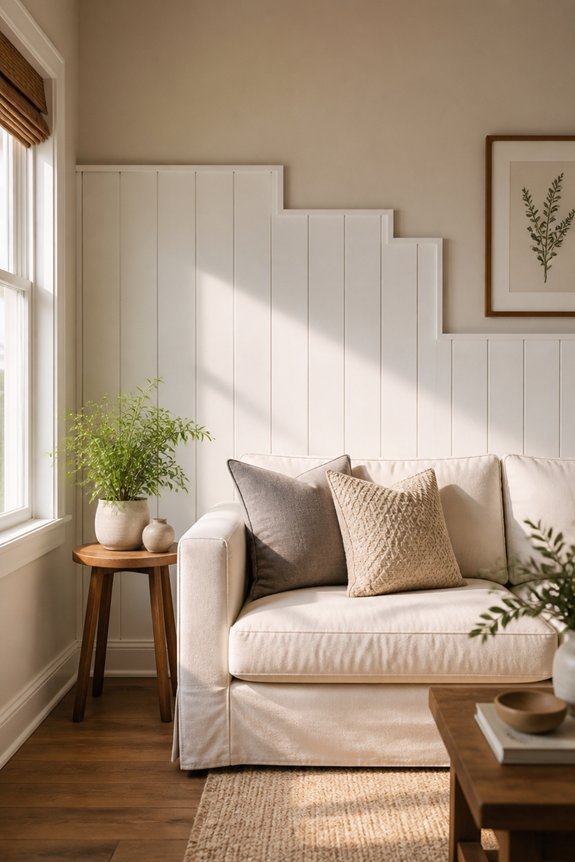
Achieving wall paneling effects on a limited budget requires strategic material selection and creative installation approaches. Peel-and-stick wallpaper mimicking wood or shiplap patterns offers affordable alternatives to traditional panels. Reclaimed wood sourcing from salvage yards, pallets, or construction sites provides authentic materials at reduced costs.
Paint techniques, including color blocking and stenciling, create paneled appearances without physical installation. Beadboard sheets, less expensive than premium options, deliver classic aesthetics when properly finished. Foam panels designed to resemble stone or wood textures weigh less, reducing installation complexity and labor expenses. These methods maintain visual impact while preserving budget constraints effectively.
Luxurious 3D Textured Walls for Dimension

Three-dimensional wall treatments elevate living spaces through tactile surfaces and visual depth. Materials like brick veneer, stone panels, and geometric wall tiles create layered effects that enhance room dimensions without major renovations.
Textured options include shiplap alternatives, foam panels, and embossed wallpapers designed for dimensional appeal. These surfaces catch light differently, producing shadows that add visual interest throughout the day. Installation typically involves adhesive application or mounting systems, depending on material type.
Popular choices combine neutral tones with subtle patterns, allowing flexibility in décor changes. Three-dimensional paneling works effectively as accent walls or full-room applications, offering durability and aesthetic sophistication.
Warm Wood Paneling With Natural Finishes
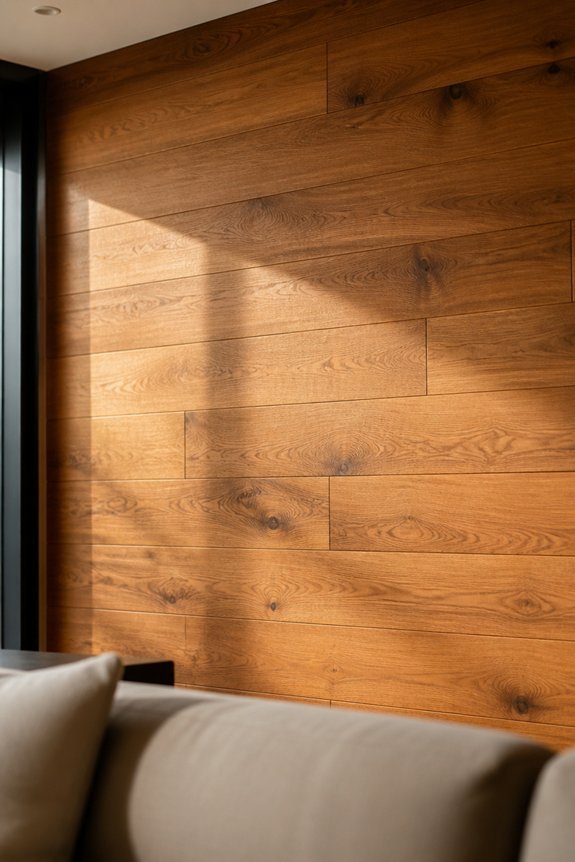
Natural wood paneling offers a warm aesthetic that complements various interior styles, providing an alternative to the dimensional surface treatments discussed previously. Homeowners can select from several wood types, including pine, oak, and cedar, each offering distinct grain patterns and color variations.
Finishes range from matte to glossy, with options like natural stain, whitewash, and honey tones available. Wood paneling works well in traditional, rustic, and contemporary settings. Installation typically covers accent walls or entire rooms.
Maintenance involves regular dusting and occasional polishing to preserve the finish. Wood paneling costs vary based on material quality and coverage area needed.
Painted Shiplap in Bold Statement Colors

Shiplap painted in bold colors transforms living room walls into striking focal points, offering a modern alternative to the natural wood finishes previously discussed. Deep navy, charcoal gray, and forest green create dramatic backdrops suitable for contemporary and transitional spaces. Lighter shades like soft white or cream provide subtle visual interest while maintaining openness.
Bold colors work best on accent walls rather than entire rooms, preventing overwhelming effects. Matte finishes reduce gloss and enhance color depth, while satin finishes offer durability for high-traffic areas. Proper primer application guarantees even coverage and color accuracy.
This approach combines shiplap’s textural appeal with personalized color expression, accommodating various design preferences and existing décor schemes effectively.
Reclaimed Wood Accent Walls for Character

Reclaimed wood accent walls offer authentic character and visual depth, moving beyond the painted finishes of previous options. These walls incorporate salvaged wood from barns, factories, or old houses, creating unique surface textures and natural color variations.
Popular wood types include weathered oak, chestnut, and barn wood, each displaying distinctive grain patterns and aging marks. Installation involves securing boards horizontally or in mixed patterns to create visual interest. Reclaimed wood works well in modern, rustic, and farmhouse-style living rooms.
Maintenance requires occasional dusting and periodic sealing to protect the wood. Cost varies depending on wood sourcing and installation complexity.
Wainscoting for Traditional Charm
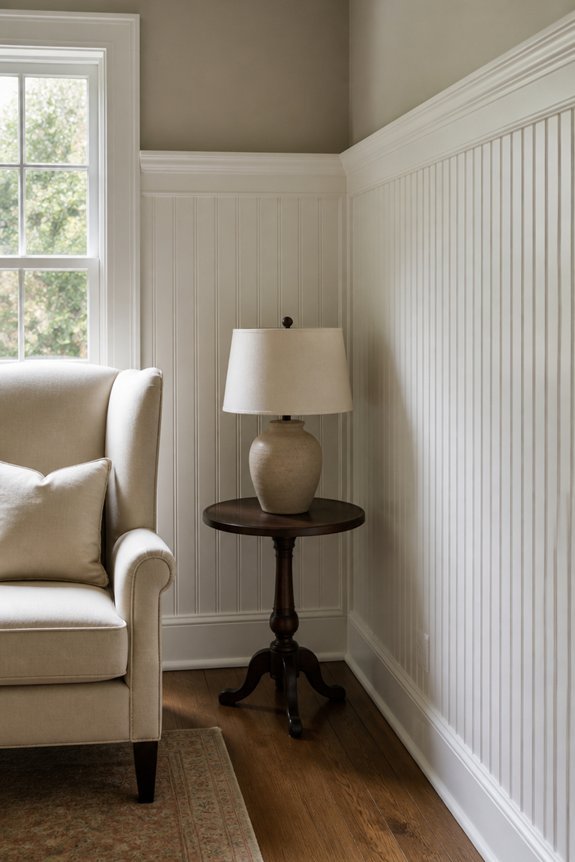
Elegant wall treatments that combine practical protection with visual sophistication, wainscoting consists of wooden panels covering the lower portion of interior walls, typically rising 36 to 48 inches from the floor. This paneling style creates defined, structured spaces with traditional appeal.
Common materials include beadboard, shaker-style panels, and raised-panel designs, each offering distinct aesthetic qualities. Homeowners typically paint wainscoting white or cream, contrasting with darker upper walls. Installation requires careful measurement, proper adhesive application, and finished trim work.
Wainscoting protects walls from damage, hides imperfections, and provides functional design elements in living rooms, dining areas, and entryways seeking classic interiors.
Beadboard Paneling in Soft Neutrals
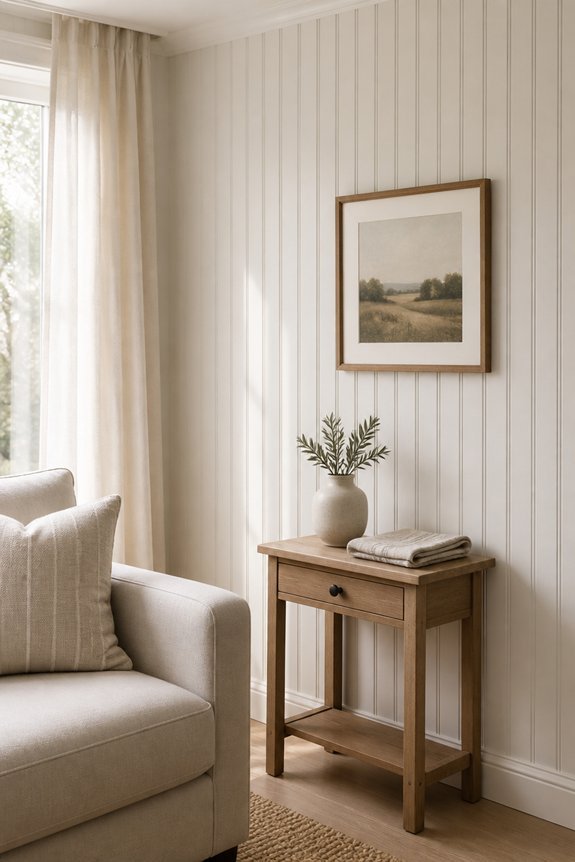
Vertical grooves running along wooden boards create the distinctive texture of beadboard, a practical choice for living rooms seeking understated sophistication. Soft neutral tones, including cream, pale gray, and warm white, complement various décor styles without demanding attention.
Beadboard works effectively on accent walls or as full-room installations, depending on space size and natural lighting. The material resists moisture better than standard drywall, making it suitable for various climates.
Installation typically involves securing boards horizontally or vertically to wall studs. Maintenance requires occasional dusting and gentle cleaning with mild soap. Beadboard pairs well with traditional furnishings, farmhouse aesthetics, and contemporary minimalist designs.
Floor-to-Ceiling Paneling for Maximum Drama
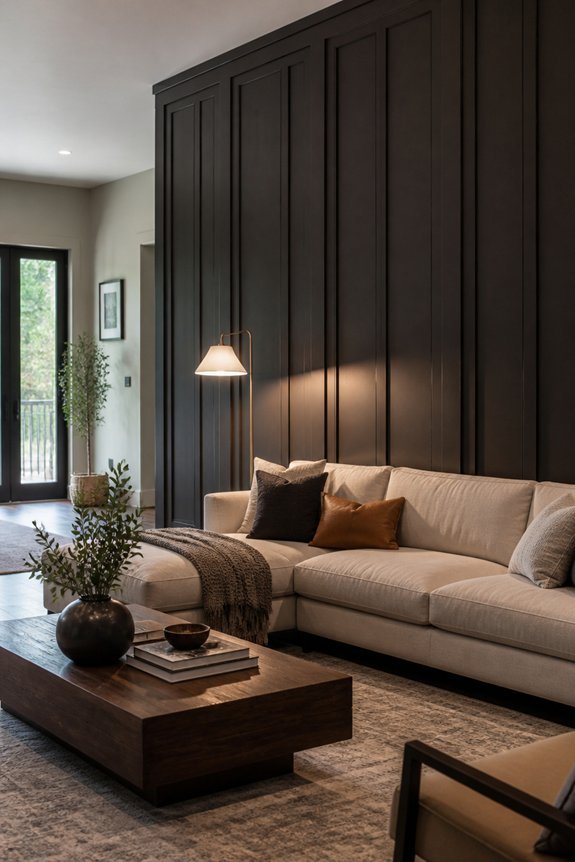
From wall base to ceiling line, full-height paneling creates a bold visual impact that transforms living room proportions and presence. This approach works well with shiplap, wainscoting, or board-and-batten styles, extending vertically across all wall surfaces.
Dark wood paneling makes rooms feel intimate and sophisticated, while white or cream options maintain brightness and openness. Combining paneling with matching trim unifies the space effectively.
Floor-to-ceiling designs work best in rooms with adequate ceiling height, typically eight feet or higher. This treatment suits traditional, farmhouse, and contemporary aesthetics. Adding complementary furniture and artwork completes the dramatic effect without overwhelming the space.
Single-Wall Paneling for Focused Accent Impact
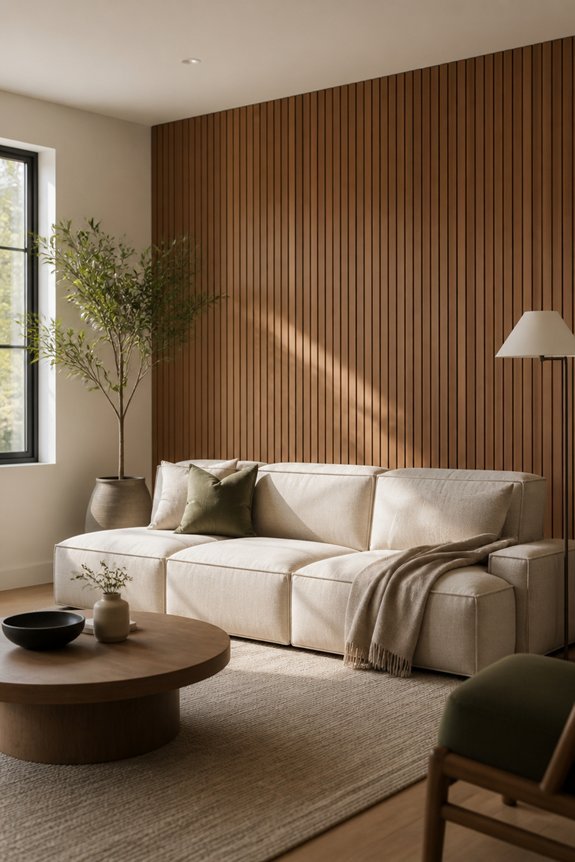
Single-wall paneling offers a more restrained approach than full-height installations, applying decorative wall treatment to just one surface in the living room. This method draws attention to a specific area, such as behind a sofa or fireplace wall.
Shiplap, beadboard, and geometric patterns work effectively for accent walls. The technique requires less material and labor than full-room coverage, making it budget-friendly. Homeowners can paint the paneling in contrasting colors, like navy or charcoal, to enhance visual impact.
This focused application balances aesthetic interest with spatial restraint, avoiding overwhelming the room while maintaining design sophistication and functionality.
Vertical Planks to Enhance Height and Flow
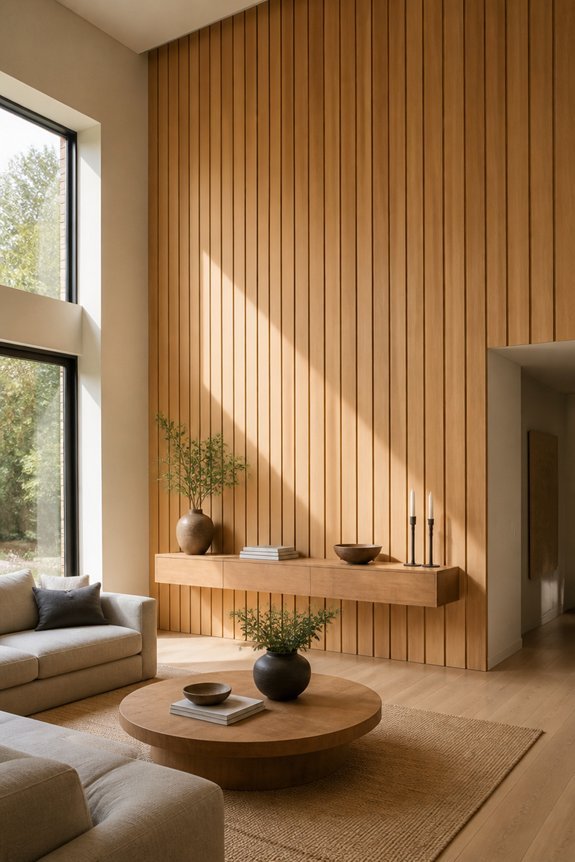
Planks arranged in a vertical orientation create the visual illusion of increased ceiling height, making living rooms feel more spacious and open. This arrangement directs the eye upward, enhancing the perception of vertical space.
Shiplap, tongue-and-groove boards, and modern slat panels work effectively in this configuration. Vertical paneling suits various aesthetics, from farmhouse to contemporary styles. The continuous lines guide natural traffic flow throughout the room, creating visual continuity.
Light-colored vertical planks amplify the height effect further. Dark finishes add sophistication while maintaining the upward visual direction. This approach works particularly well in rooms with standard or lower ceilings.
Horizontal Panels for Width and Coziness
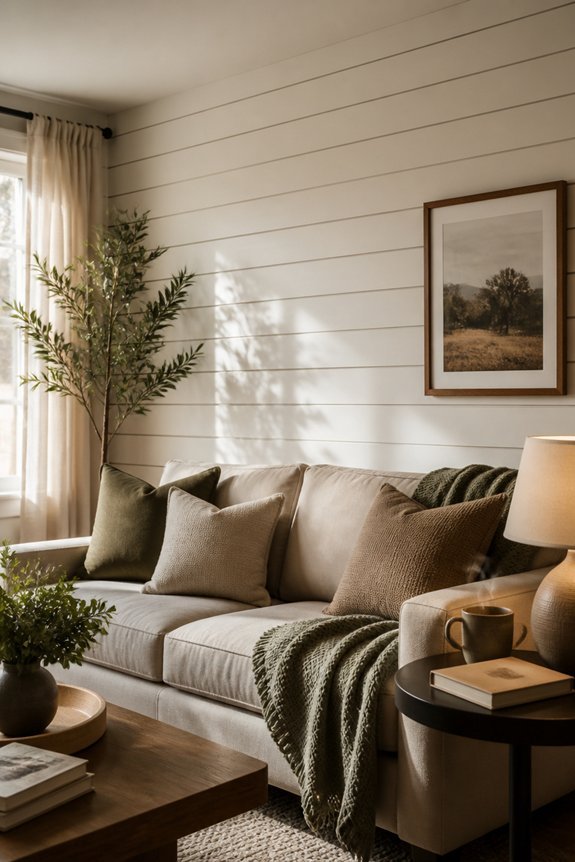
Horizontal paneling creates the opposite effect of vertical arrangements, expanding wall width and fostering intimate, enclosed environments. This layout style makes rooms feel wider while establishing a sense of coziness and containment.
Common applications include wainscoting, which covers lower wall portions with horizontal boards, full-wall treatments using shiplap or beadboard, and mixed-height panels combining horizontal and solid sections.
Horizontal panels work effectively in living rooms, bedrooms, and dining areas. They pair well with warm paint colors, creating layered visual interest. The arrangement suits traditional, farmhouse, and cottage design styles. Installation heights vary, though mid-wall placement around three feet offers balanced proportions for standard ceiling heights.
Combining Wood and Geometric Panels for Texture

Mixing wood panels with geometric designs creates visual depth and interest on living room walls. This combination pairs natural wood textures with bold patterns, producing sophisticated contrast.
Wood paneling provides warmth and traditional appeal, while geometric elements add modern visual structure. Common approaches include alternating wood strips with painted geometric shapes, incorporating geometric inlays within wood frameworks, or placing geometric accent panels beside natural wood sections.
Materials like reclaimed wood, shiplap, and painted MDF work effectively with triangle, hexagon, and chevron patterns. This hybrid method suits contemporary, transitional, and eclectic design styles, offering flexibility in color selection and pattern complexity.
Black or Dark Paneling for Modern Sophistication
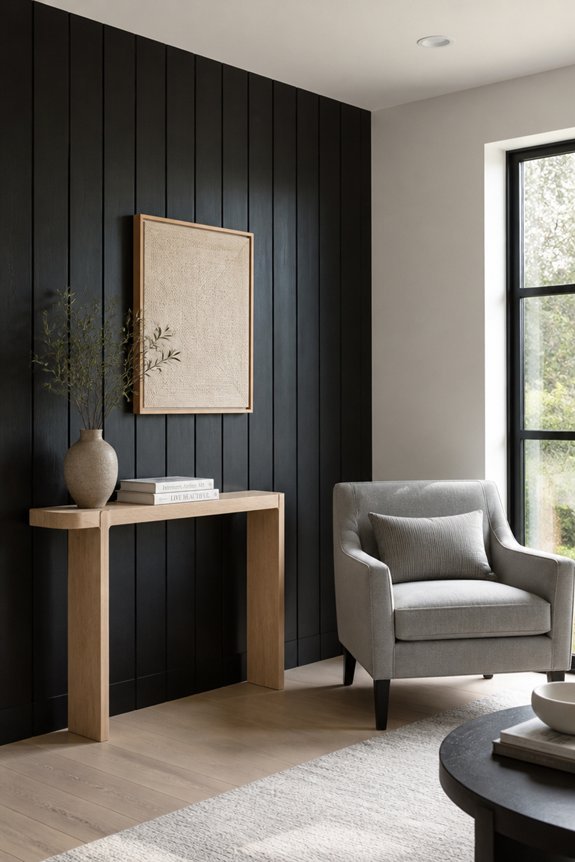
Dark paneling, particularly in black or charcoal tones, offers a striking alternative to the lighter wood and geometric combinations discussed previously. This approach creates a modern, sophisticated aesthetic suitable for contemporary living spaces.
Black panels work well with minimalist furniture and metallic accents, establishing dramatic focal points. Charcoal options provide slightly softer contrast while maintaining elegance. Dark paneling pairs effectively with light flooring, artwork, and neutral upholstery to prevent rooms from feeling cramped.
Matte finishes reduce glare, whereas satin finishes add subtle dimension. This style suits accent walls, full room coverage, or floor-to-ceiling installations depending on space size and lighting conditions.
Paneling Around a Fireplace Feature Wall

A fireplace creates a natural focal point for wall paneling, offering an opportunity to enhance the room’s visual structure and warmth. Paneling directly around the fireplace draws attention upward, framing the hearth effectively. Designers often use shiplap, board-and-batten, or geometric paneling styles to complement brick, stone, or tile surrounds.
Vertical paneling extends the eye upward, while horizontal patterns create balance. Paint selection matters: white paneling brightens spaces, while darker tones add depth. Extending paneling partially up the wall, stopping at chair rail height, maintains proportion. This approach works with various fireplace materials, creating cohesive, intentional living spaces that balance aesthetic appeal with functional room design.
Peel-and-Stick Panels for Renter-Friendly Installations
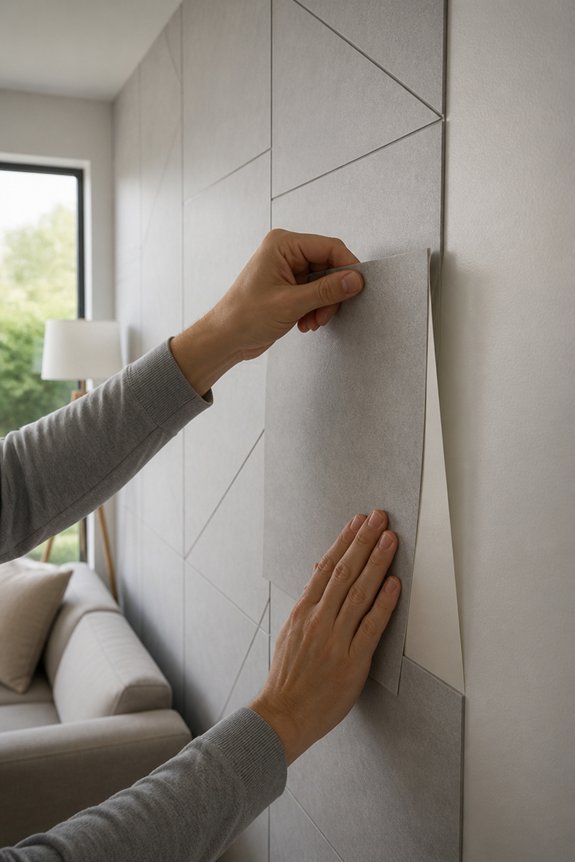
Peel-and-stick panels offer a practical solution for renters seeking polished wall paneling without permanent damage to rental properties. These adhesive-backed products mimic wood, shiplap, and tile finishes, requiring no nails or paint. Popular brands include Aspect and Smart Tiles.
Installation involves cleaning walls, measuring spaces, and pressing panels firmly into place. Removal leaves minimal residue when done carefully. Renters can transform living rooms, accent walls, or fireplace surrounds temporarily. This method works on drywall and smooth surfaces.
Peel-and-stick options cost less than traditional paneling. They provide design flexibility, allowing easy updates without landlord approval complications.
Paneling With Built-In Shelving for Function
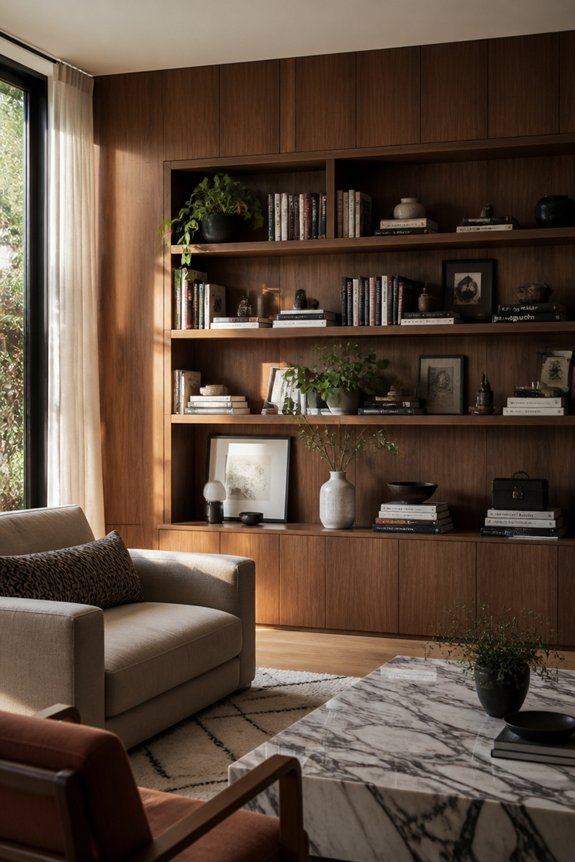
Combining wall paneling with integrated shelving maximizes living room storage while maintaining a cohesive design aesthetic. Homeowners can install wooden shelves directly into paneled walls, creating display and storage spaces without additional furniture.
Floating shelves work well with shiplap or beadboard paneling, offering clean lines and modern appeal. Built-in cubbies paired with panel frameworks provide organized compartments for books, decorative items, and household objects. This approach reduces visual clutter, improves room functionality, and adds architectural interest.
Materials like oak, pine, or composite panels coordinate with shelf finishes for unified appearances. Proper installation guarantees shelves support adequate weight while complementing overall living room design goals.
Acoustic Paneling That Looks Like Décor

Modern acoustic panels serve dual purposes in living rooms, absorbing sound while functioning as wall décor. These panels reduce noise from traffic, conversations, and equipment while adding visual interest to spaces.
Available in various materials, acoustic panels come in fabric-wrapped fiberglass, cork, and wool options. Popular designs include geometric patterns, wood finishes, and neutral colors that coordinate with existing furniture.
Brands like Primacoustic and GIK Acoustics offer stylish alternatives to traditional panels. Installation involves mounting directly onto walls using adhesive or brackets, requiring minimal tools or expertise.
Acoustic panels work effectively in combination with other sound-dampening materials like rugs and curtains, creating functional and attractive living environments.
Installation Difficulty and Maintenance Considerations
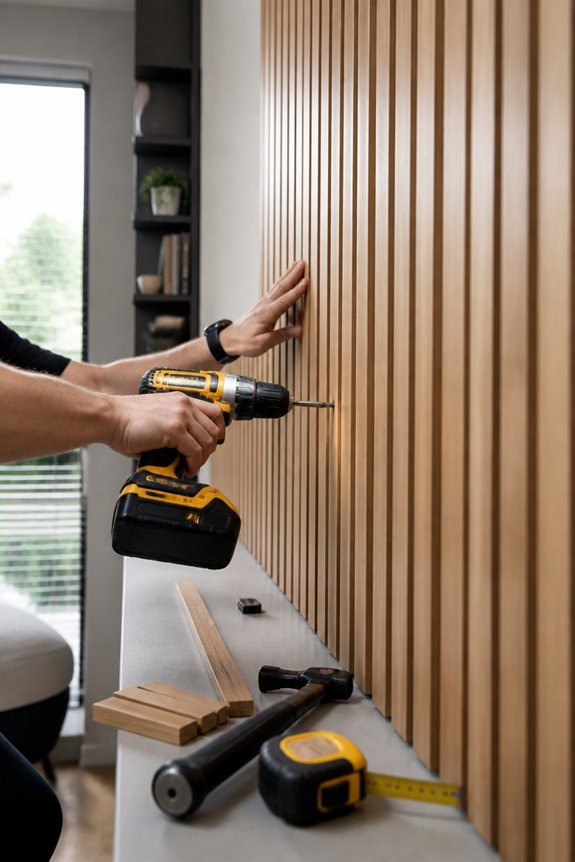
While acoustic panels offer aesthetic appeal and functional benefits, their installation and upkeep require consideration before commitment. Most fabric-wrapped panels mount directly to walls using adhesive strips or brackets, which demands surface preparation and precise placement.
Maintenance involves regular vacuuming to prevent dust accumulation on fiberglass cores. Stains on fabric coverings prove difficult to remove completely, requiring spot-cleaning with mild solutions. Wood-framed panels need occasional inspection for warping or damage. Repositioning panels leaves adhesive residue or wall marks. Homeowners should evaluate their tolerance for these practical demands when selecting acoustic solutions for living spaces.
Frequently Asked Questions
How Do I Remove Wall Paneling Without Damaging the Drywall Underneath?
One should carefully pry paneling away from the wall using a flat pry bar, working slowly along seams and edges. Applying heat with a heat gun can soften adhesive. Removing nails incrementally while supporting the panel prevents drywall damage underneath.
Can Wall Paneling Help With Soundproofing or Acoustic Issues in Living Rooms?
Wall paneling can moderately improve acoustic properties. Thicker, denser panels absorb some sound, reducing echo and noise reflection. However, professional acoustic treatments typically prove more effective for serious soundproofing needs.
What’s the Average Cost Difference Between DIY Installation Versus Hiring a Professional?
DIY installation typically costs 30-50% less than professional services, varying by material and room size. Homeowners save on labor expenses but invest time and require tools. Professional installation guarantees quality finishes and structural integrity, justifying higher costs.
How Often Should Wall Paneling Be Refinished or Repainted for Maintenance?
Wall paneling requires refinishing every five to ten years, depending on traffic patterns, climate exposure, and finish quality. High-traffic areas demand more frequent maintenance, while protected spaces need less attention. Regular cleaning extends intervals between refinishing cycles.
Will Adding Wall Paneling Affect Home Resale Value or Buyer Appeal?
Wall paneling typically enhances home appeal and resale value when executed with modern design sensibilities. Quality installation, contemporary finishes, and strategic placement in key living spaces attract buyers seeking distinctive architectural features and sophisticated aesthetics.
Conclusion
Wall paneling transforms living rooms through various styles, materials, and budgets. Shiplap, geometric panels, wood finishes, and 3D textures each serve different aesthetic goals. Peel-and-stick options suit renters, while built-in shelving adds functionality. Acoustic panels provide sound control alongside visual appeal. Installation difficulty varies by type; maintenance depends on material selection. Which paneling style aligns best with your space’s existing design and practical needs?