

Kitchen tile floors take serious abuse—spilled wine, dropped dishes, constant foot traffic—so you need something genuinely tough that looks good doing it. Ceramic and porcelain tiles handle kitchen punishment beautifully, and honestly, they’re way more forgiving than stone or wood when life happens in your kitchen.
The real question is figuring out what you actually like looking at every single day. Big tiles feel modern and streamlined, small tiles create visual texture and pattern interest, and mixing sizes lets you get creative without overwhelming the space. Light tiles brighten kitchens and show dirt (obviously), dark tiles hide messes but can feel heavy, and neutral tones work with basically any décor you throw at them.
Don’t overthink the grout color—lighter grout makes tiles pop visually, darker grout hides stains better. Matte finishes feel friendlier underfoot and hide water spots, glossy tiles look sleeker but get slippery when wet. Pick something you genuinely enjoy looking at, ensure it’s actually slip-resistant (safety matters), and install it properly so you’re not dealing with cracking years later.
Set Your Budget: Kitchen Tile Price Tiers
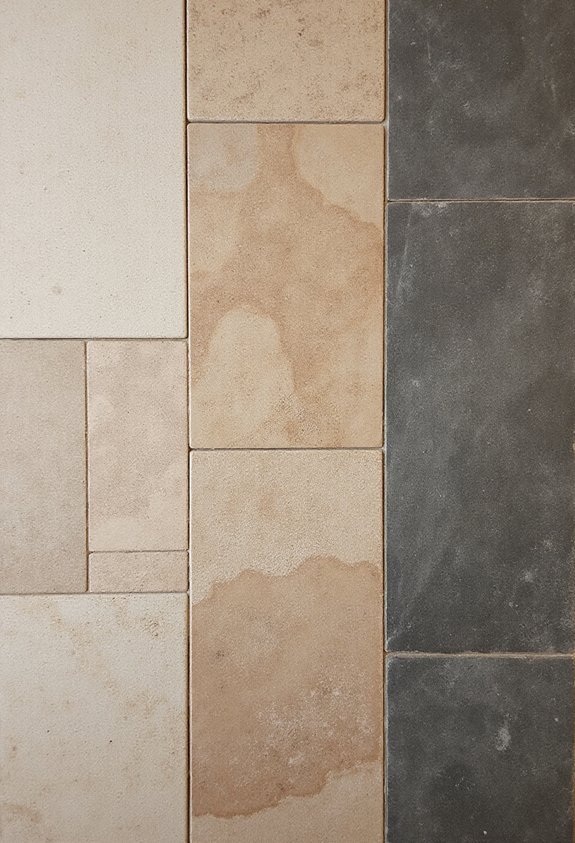
Kitchen tiles span a wide range of prices, so you’ll want to establish your budget before shopping. Budget-friendly ceramic and porcelain tiles cost $1-$3 per square foot, making them ideal if you’re working with limited funds. Mid-range options like natural stone or high-quality porcelain run $3-$10 per square foot, offering better durability and aesthetic appeal. Premium tiles—including marble, granite, or specialty designs—exceed $10 per square foot and demand professional installation.
Don’t forget to factor in labor costs, which typically range from $5-$15 per square foot depending on your region and project complexity. Consider your kitchen’s square footage and layout when calculating total expenses. Setting a realistic budget upfront helps you narrow your choices and avoid overspending on materials or installation.
Also read: 12 Kitchen Picture Wall Ideas
Classic White Subway Tiles
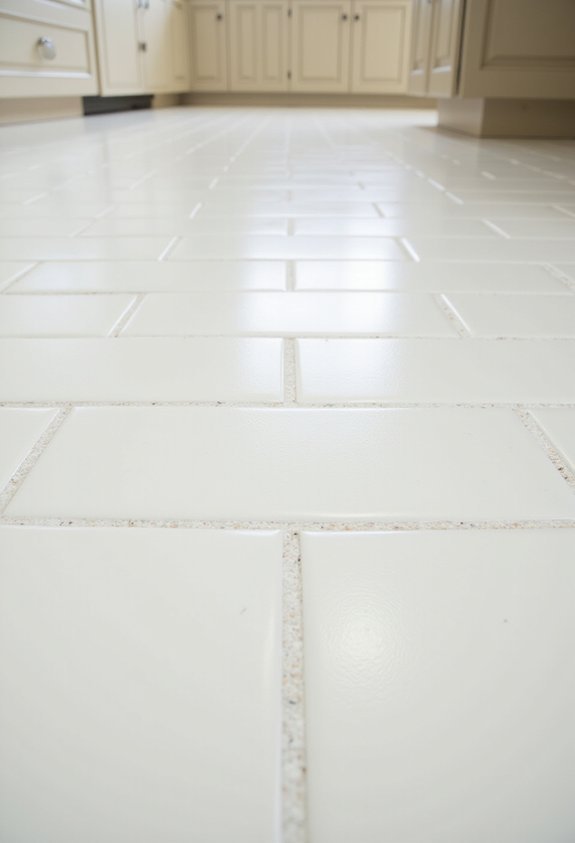
Because they’ve remained a design staple for over a century, white subway tiles offer timeless elegance that won’t feel dated. You’ll appreciate their versatility—they complement virtually any kitchen style, from modern minimalist to traditional farmhouse.
These rectangular tiles are budget-friendly and widely available, making them an economical choice for large floor areas. You can install them in classic running bond patterns or experiment with herringbone and chevron layouts for visual interest.
White subway tiles also hide dust and debris effectively compared to darker options. Their glossy finish reflects light, brightening your kitchen naturally. If you’re concerned about maintenance, you’ll find they’re incredibly easy to clean and resistant to staining.
For a fresh, cohesive look that stands the test of time, white subway tiles remain an unbeatable foundation.
Warm Terracotta and Earthy Tones
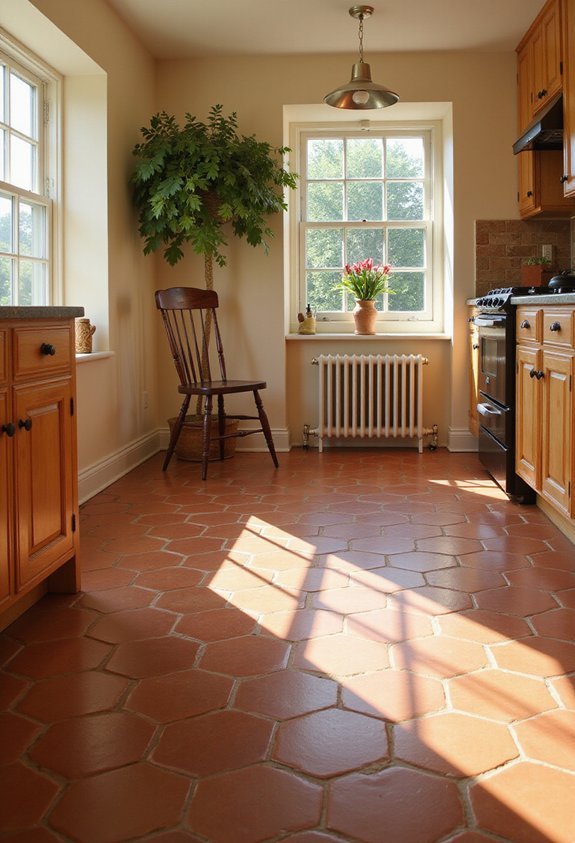
If you’re drawn to warmth and natural aesthetics, terracotta and earthy tile tones‘ll transform your kitchen into an inviting, grounded space. These warm hues—ranging from burnt orange to ochre and sandy brown—complement wood cabinetry and natural stone countertops beautifully.
Terracotta tiles bring rustic charm and authenticity, evoking Mediterranean or Southwestern design influences. You’ll appreciate their durability and timeless appeal. Earthy tones create visual warmth without overwhelming smaller kitchens, making spaces feel cozier and more intimate.
Consider mixing various earth-toned tiles to add depth and visual interest. Pair them with neutral grout for seamless flow, or choose contrasting grout to emphasize individual tiles. These warm flooring options work exceptionally well with stainless steel appliances and light-colored walls, balancing modern elements with traditional comfort.
Elegant Marble and Veining
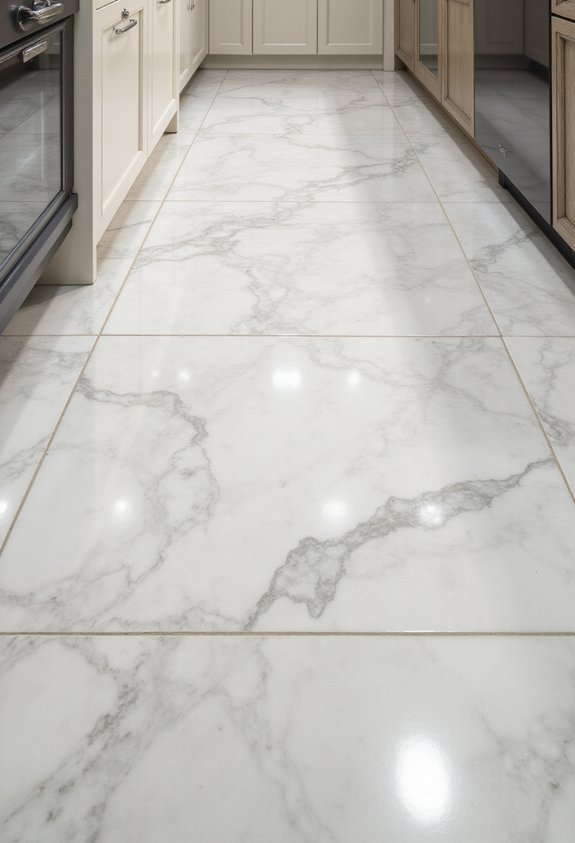
When you’re seeking timeless sophistication, marble tiles deliver unmatched elegance to your kitchen floor. The natural veining patterns create visual depth and luxury that synthetic materials can’t replicate.
You’ll find marble available in various finishes—polished, honed, or tumbled—each offering distinct aesthetics. Polished marble gleams brilliantly, while honed finishes provide understated elegance with a matte appearance. Tumbled options deliver rustic charm through softened edges.
Consider your lifestyle before installing marble. You’ll need to seal it regularly since marble’s porous nature makes it susceptible to staining and etching from acidic substances. Despite maintenance requirements, marble’s durability lasts decades when properly cared for.
Pair marble with neutral cabinetry to showcase its natural beauty, or contrast it with bold fixtures for dramatic impact. Your investment in marble transforms your kitchen into a sophisticated sanctuary.
Matte Black or Dark Tiles
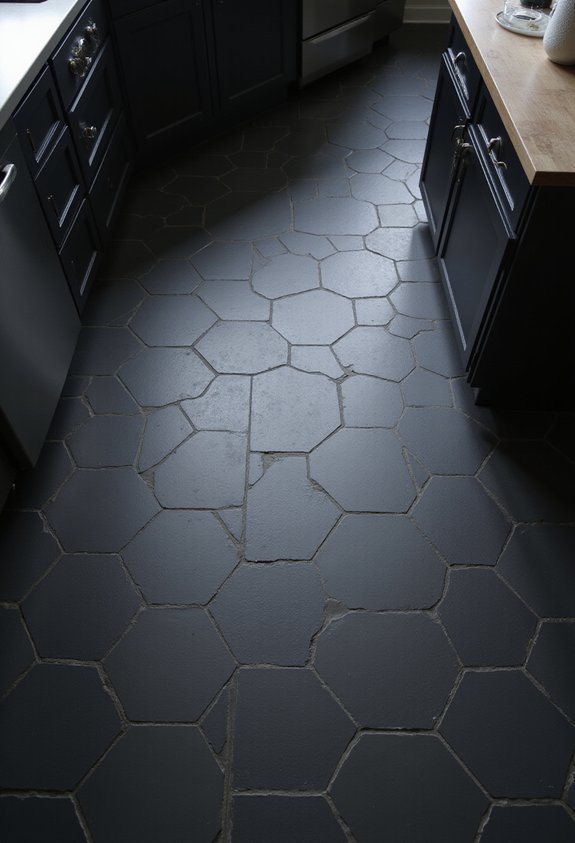
Dark tiles bring striking contrast and contemporary flair to your kitchen floor. Matte black or charcoal options create a sophisticated, modern aesthetic that complements various design styles. You’ll appreciate how these tiles hide dust and fingerprints better than lighter alternatives, reducing visible wear between cleanings.
Dark tiles work particularly well in kitchens with stainless steel appliances or white cabinetry, creating dramatic visual balance. They pair beautifully with bright countertops and backsplashes, allowing those elements to stand out. Consider your lighting carefully—darker floors can make smaller kitchens feel cozier but may require brighter overhead lighting to prevent the space from feeling dim.
Matte finishes provide slip-resistant surfaces, essential in kitchens where spills occur frequently. You’ll find these tiles durable and low-maintenance, making them a practical choice for busy households.
Wood-Look Ceramic Tiles
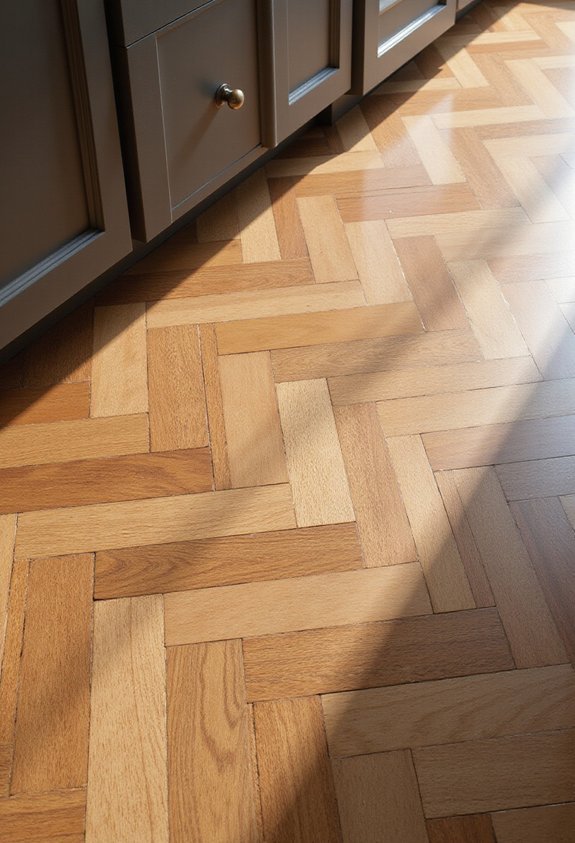
While maintaining the durability of ceramic, wood-look tiles bring warmth and natural beauty to your kitchen floor without the maintenance demands of authentic hardwood. You’ll appreciate how these tiles resist moisture, stains, and scratches—crucial for high-traffic kitchen spaces.
Wood-look ceramic tiles come in various styles, from rustic reclaimed finishes to sleek modern planks. You can choose different wood species appearances, including oak, walnut, and pine, allowing you to match your kitchen’s aesthetic perfectly.
Installation is straightforward, and you’ll find these tiles more affordable than genuine hardwood. They’re also easier to clean and don’t require sealing or refinishing. The textured surfaces provide slip resistance, making them safer than polished wood floors. You’re fundamentally getting the look you want with practical, durable performance.
Large Format Porcelain Tiles
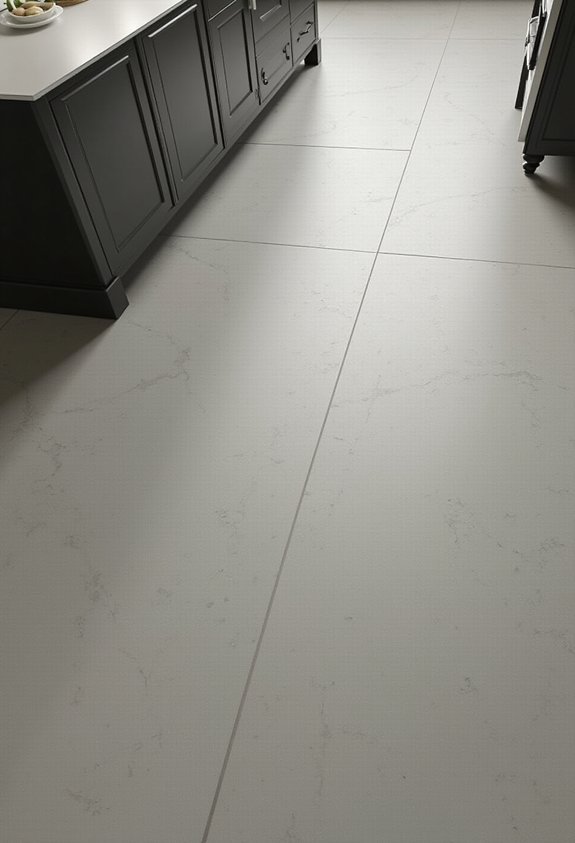
Because they minimize grout lines and create seamless visual expanses, large format porcelain tiles instantly modernize your kitchen aesthetic. These oversized tiles, typically measuring 24×24 inches or larger, offer exceptional durability and superior stain resistance compared to ceramic alternatives. You’ll appreciate their low-maintenance nature—fewer grout lines mean less cleaning and reduced mold growth. Large format tiles work particularly well in contemporary and minimalist kitchens, where their clean lines complement modern cabinetry. They’re also practical for smaller spaces, as the expansive surface creates an illusion of increased square footage. Installation requires precision and professional expertise, so budget accordingly. Available in various finishes—matte, polished, or textured—these tiles provide versatile design flexibility while delivering long-lasting performance in high-traffic kitchen environments.
Hexagonal and Geometric Patterns
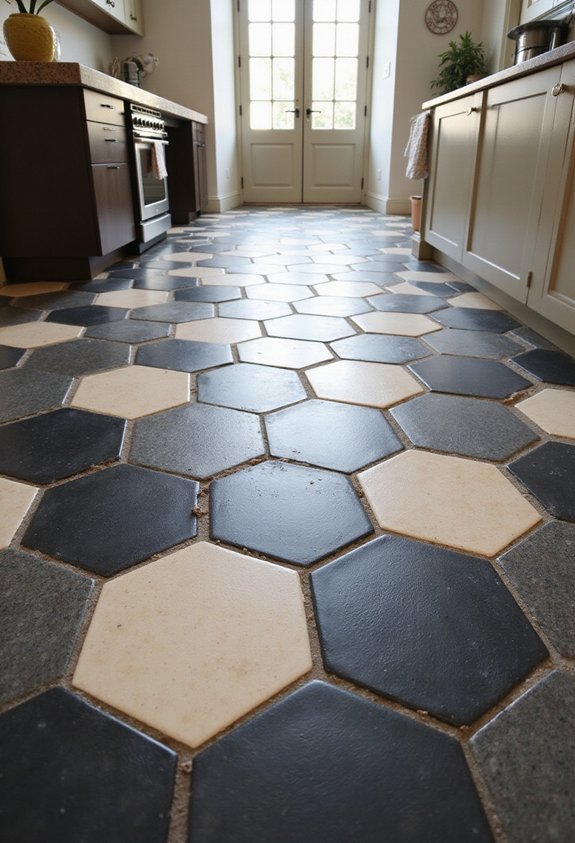
Hexagonal and geometric patterns offer you a stylish alternative to the minimalist aesthetic of large format tiles. You’ll find that these designs inject personality and visual interest into your kitchen while maintaining sophistication.
Hexagonal tiles create a honeycomb effect that draws the eye and adds dimension to your floor. You can choose monochromatic schemes for subtlety or bold color combinations for dramatic impact. Geometric patterns—including triangles, diamonds, and interlocking shapes—allow you to express creativity within a structured framework.
These patterns work particularly well in contemporary and eclectic kitchens. You’ll appreciate how they complement both modern cabinetry and vintage elements. The varied layout naturally disguises dirt and wear better than solid-color tiles, making them practical for high-traffic areas. You can mix multiple colors or stick with neutral tones for a timeless look that transforms your kitchen floor into an artistic statement.
Patterned Cement Tiles
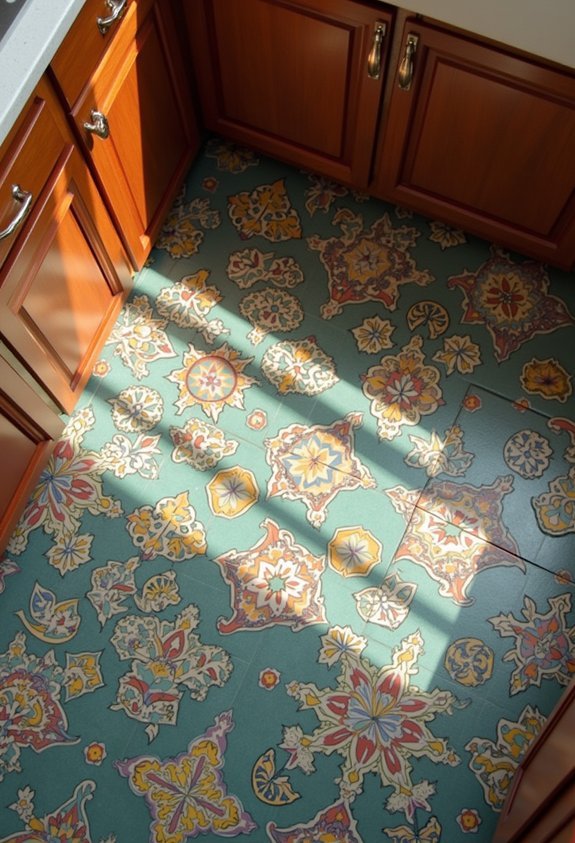
Patterned cement tiles deliver authentic, handcrafted character that sets them apart from mass-produced alternatives. You’ll appreciate their unique, artisanal appeal and rich color variations that develop naturally during production. These versatile tiles work beautifully in traditional, bohemian, or eclectic kitchen designs.
You can choose from countless geometric patterns, florals, and intricate motifs that won’t fade or wear away. Unlike printed tiles, the patterns run completely through the material. Installation requires proper sealing to protect against stains and moisture, which is essential in kitchen environments.
You might pair patterned cement tiles with neutral cabinetry to let them shine as focal points. Their durability and timeless aesthetic make them a smart investment that’ll maintain visual interest for decades while requiring minimal maintenance beyond regular cleaning.
Natural Stone and Slate
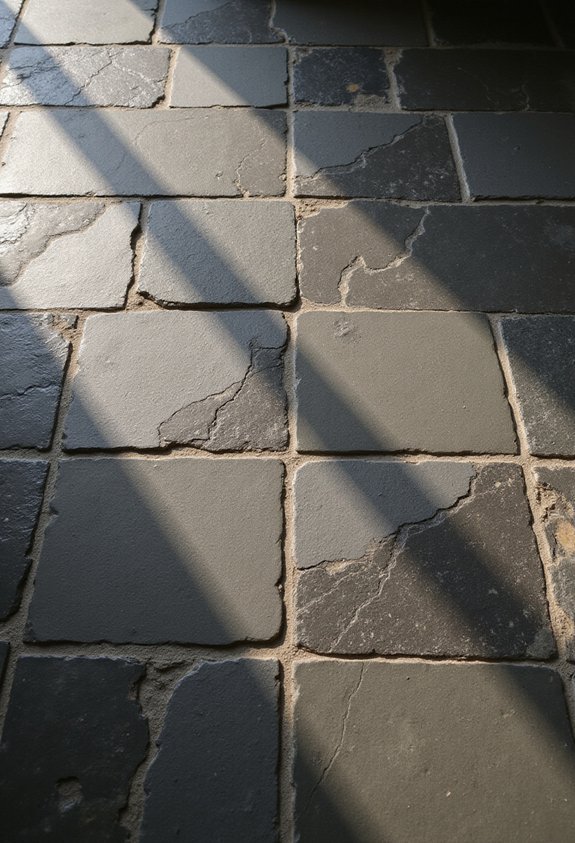
Natural stone and slate bring timeless elegance to your kitchen floor while offering unmatched durability. You’ll appreciate how these materials develop character over time, with each stone displaying unique variations in color and texture. Slate particularly shines in rustic and contemporary kitchens, providing excellent slip resistance—a vital safety feature in food preparation areas.
These surfaces require proper sealing to prevent staining and moisture damage. You should plan for regular maintenance, including periodic resealing and gentle cleaning with pH-neutral products. Installation costs run higher than ceramic alternatives, but the longevity justifies the investment.
You’ll find that natural stone and slate complement various design styles effortlessly. Their organic beauty creates a sophisticated foundation for your kitchen while guaranteeing a floor that withstands years of heavy use.
One-of-a-Kind Handmade Tiles
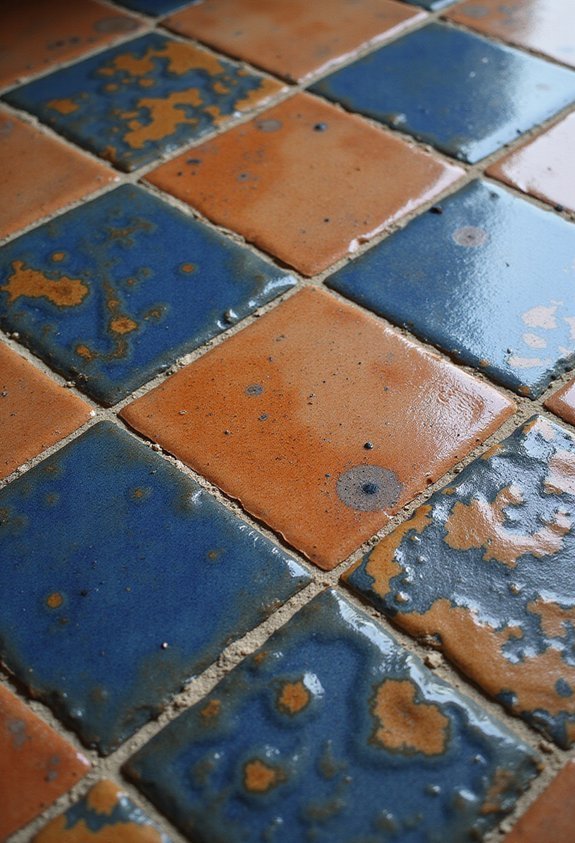
Every handmade tile you select brings distinct artistry and personality to your kitchen floor. These unique pieces offer character that mass-produced alternatives simply can’t match. You’ll appreciate the subtle variations in color, glaze, and texture that make each tile special.
Artisan craftspeople create handmade tiles using traditional techniques, often incorporating regional influences and modern designs. You can find glazed ceramic tiles, rustic terracotta, or intricately patterned Moroccan styles. Each piece reflects the maker’s skill and creative vision.
When you choose handmade tiles, you’re investing in durability alongside beauty. These tiles typically feature thicker construction and higher-quality materials. You’ll enjoy a one-of-a-kind floor that becomes a focal point in your kitchen, sparking conversation while standing up to daily wear and tear.
Grout-Friendly Options: Porcelain That Resists Stains
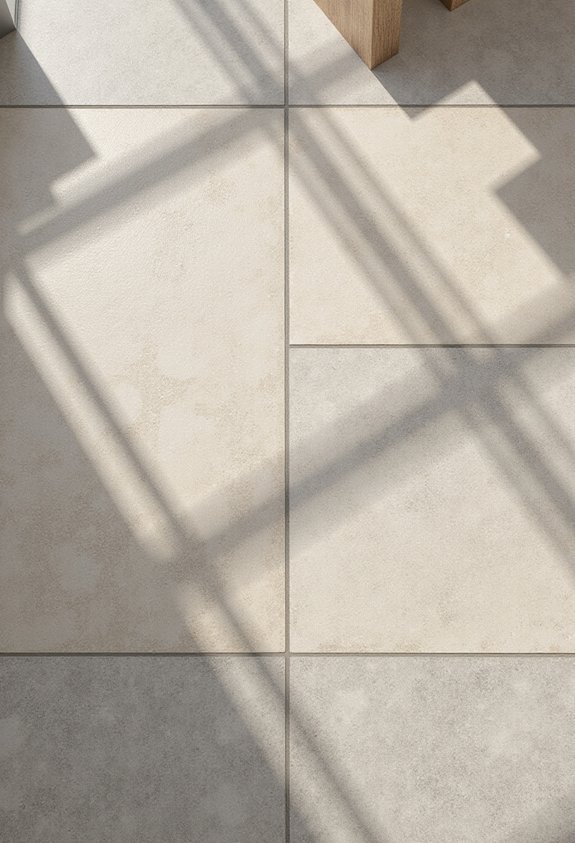
While handmade tiles offer undeniable charm, porcelain provides a practical complement in high-traffic kitchen areas. You’ll appreciate porcelain’s non-porous surface, which naturally safeguards against staining and moisture absorption—critical features for kitchens prone to spills and splashes.
When selecting grout-friendly porcelain options, you should consider large-format tiles that minimize grout lines. Fewer seams mean less opportunity for dirt accumulation and staining. Porcelain’s durability also means your grout stays cleaner longer since the tiles won’t crack or chip, causing grout degradation.
You can opt for darker grout colors that mask minor discoloration, or invest in epoxy-based grout formulas that resist staining better than traditional cement grout. This combination guarantees your kitchen floor maintains its polished appearance with minimal maintenance, making porcelain an economical long-term choice.
Mixing Tiles: Borders, Accents, and Blended Materials
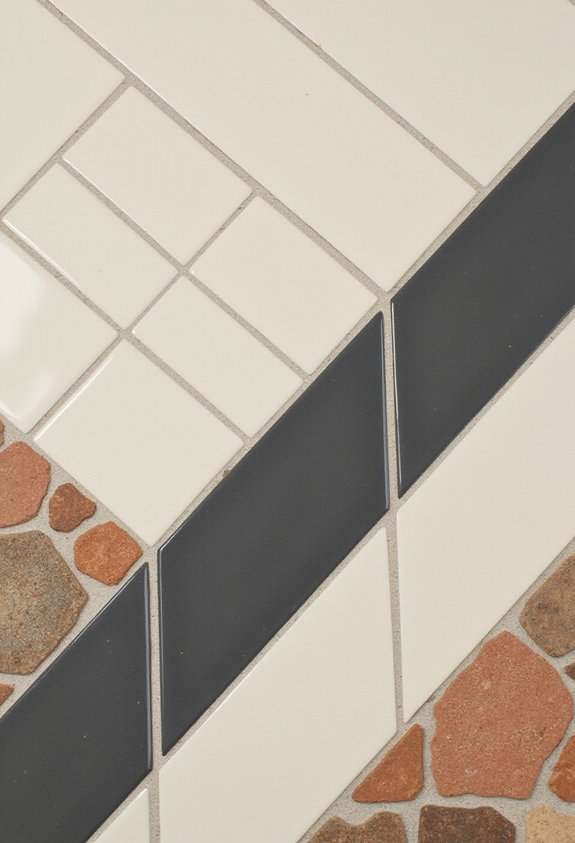
Once you’ve established your foundation with durable porcelain, you can elevate your kitchen’s visual interest by layering different tile styles strategically. Consider introducing decorative borders that frame your main floor tiles, creating definition without overwhelming the space. You might incorporate glass or metallic accent tiles to catch light and add sophistication.
Blending materials works exceptionally well in kitchens. Pair matte porcelain with glossy ceramic accents, or combine large-format tiles with smaller mosaic details around islands or entryways. This mixed approach prevents monotony while maintaining cohesion through a consistent color palette.
Don’t shy away from geometric patterns or mixed textures. A simple checkerboard layout or subtle linear patterns can transform an ordinary floor into a design statement. The key is balancing boldness with restraint—let your accents complement, not compete with, your kitchen’s overall aesthetic.
Frequently Asked Questions
How Often Should Kitchen Tile Floors Be Sealed or Resealed for Protection?
You should seal your kitchen tile floors every one to three years, depending on foot traffic and wear. You’ll want to reapply sealant more frequently in high-traffic areas. You can test your floor’s condition by sprinkling water to see if it beads up properly.
What Is the Best Way to Clean and Maintain Kitchen Tile Floors Long-Term?
You’ll maintain your kitchen tile floors best by sweeping daily, mopping weekly with pH-neutral cleaner, and avoiding acidic products. You should promptly wipe spills, use grout sealer regularly, and reseal every one to three years for lasting protection.
Can Existing Kitchen Tile Floors Be Refinished or Updated Without Full Replacement?
Yes, you can refinish your existing kitchen tile floors without replacing them. You’ll want to ponder, deliberate, or reflect on re-grouting, applying sealers, or using tile paint. These updates’ll refresh your space affordably while preserving your current tiles.
How Do I Ensure Kitchen Tiles Won’t Crack Under Heavy Foot Traffic?
You’ll prevent cracking by installing tiles on a properly prepared, level subfloor with thin-set mortar. Choose durable porcelain or stone tiles, apply grout correctly, and use expansion joints. You’ll also want quality underlayment to absorb impact from heavy foot traffic effectively.
What Underlayment or Subfloor Preparation Is Necessary Before Installing Kitchen Tiles?
You’ll need a stable, level subfloor—concrete or cement backer board work best. Install a moisture barrier to prevent water damage. Guarantee proper slope for drainage in wet areas. Use quality thin-set mortar for secure tile adhesion.
Conclusion
You’ll find the perfect tile to match your style and budget. Whether you’re drawn to timeless subway tiles, sophisticated marble, or bold black finishes, you’ve got endless options. Don’t overlook natural stone, handmade tiles, or creative mixing techniques that’ll elevate your space. Consider your lifestyle and maintenance preferences carefully. With thoughtful selection, you’ll transform your kitchen into a stunning, functional area you’ll love for years.

